

Haploinsufficiency of the autism-associated Shank3 gene leads to deficits in synaptic function, social interaction, and social communication
Open accessThe DOI matches its Crossref record; 64 of the 64 references it cites were found in a registry or an index; 11 of the 40 sources its claims cite were checked for support.
Abstract
Background: SHANK3 is a protein in the core of the postsynaptic density (PSD) and has a critical role in recruiting many key functional elements to the PSD and to the synapse, including components of α-amino-3-hydroxyl-5-methyl-4-isoxazole-propionic acid (AMPA), metabotropic glutamate (mGlu) and N -methyl-D-aspartic acid (NMDA) glutamate receptors, as well as cytoskeletal elements. Loss of a functional copy of the SHANK3 gene leads to the neurobehavioral manifestations of 22q13 deletion syndrome and/or to autism spectrum disorders. The goal of this study was to examine the effects of haploinsufficiency of full-length Shank3 in mice, focusing on synaptic development, transmission and plasticity, as well as on social behaviors, as a model for understanding SHANK3 haploinsufficiency in humans. Methods: We used mice with a targeted disruption of Shank3 in which exons coding for the ankyrin repeat domain were deleted and expression of full-length Shank3 was disrupted. We studied synaptic transmission and plasticity by multiple methods, including patch-clamp whole cell recording, two-photon time-lapse imaging and extracellular recordings of field excitatory postsynaptic potentials. We also studied the density of GluR1-immunoreactive puncta in the CA1 stratum radiatum and carried out assessments of social behaviors. Results: In Shank3 heterozygous mice, there was reduced amplitude of miniature excitatory postsynaptic currents from hippocampal CA1 pyramidal neurons and the input-output (I/O) relationship at Schaffer collateral-CA1 synapses in acute hippocampal slices was significantly depressed; both of these findings indicate a reduction in basal neurotransmission. Studies with specific inhibitors demonstrated that the decrease in basal transmission reflected reduced AMPA receptor-mediated transmission. This was further supported by the observation of reduced numbers of GluR1-immunoreactive puncta in the stratum radiatum. Long-term potentiation (LTP), induced either with θ-burst pairing (TBP) or high-frequency stimulation, was impaired in Shank3 heterozygous mice, with no significant change in long-term depression (LTD). In concordance with the LTP results, persistent expansion of spines was observed in control mice after TBP-induced LTP; however, only transient spine expansion was observed in Shank3 heterozygous mice. Male Shank3 heterozygotes displayed less social sniffing and emitted fewer ultrasonic vocalizations during interactions with estrus female mice, as compared to wild-type littermate controls. Conclusions: We documented specific deficits in synaptic function and plasticity, along with reduced reciprocal social interactions in Shank3 heterozygous mice. Our results are consistent with altered synaptic development and function in Shank3 haploinsufficiency, highlighting the importance of Shank3 in synaptic function and supporting a link between deficits in synapse function and neurodevelopmental disorders. The reduced glutamatergic transmission that we observed in the Shank3 heterozygous mice represents an interesting therapeutic target in Shank3 -haploinsufficiency syndromes.
Overview
CoChat Summary
TL;DR
Shank3 heterozygous mice show reduced AMPA receptor-mediated basal synaptic transmission, impaired LTP and spine stabilization, and fewer GluR1-immunoreactive puncta, alongside reduced male–female social sniffing and ultrasonic vocalizations. The findings support Shank3 haploinsufficiency as a model for synaptic and social deficits relevant to SHANK3-associated neurodevelopmental disorders.
Key findings
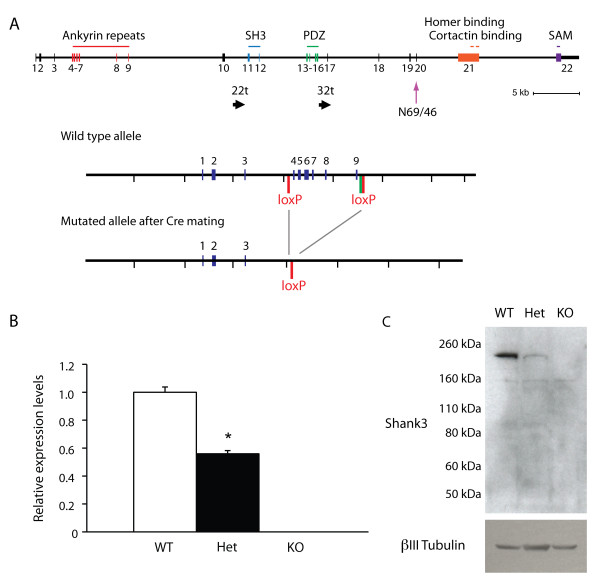
- Shank3 heterozygotes had a 50% reduction in full-length Shank3 mRNA, with reduced full-length Shank3 protein in PSD fractions; knockout mice showed no full-length protein.
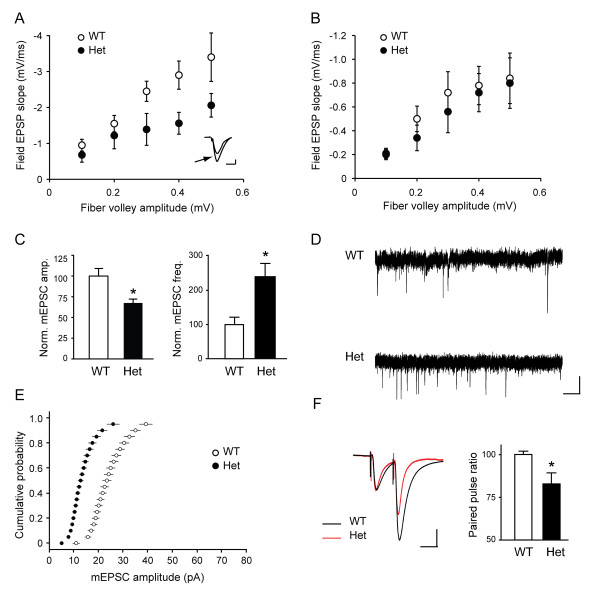
- AMPA receptor-mediated field potentials were reduced, reflected as a 50% decrease in average I/O slope versus wild-type (n = 4 mice/genotype, 2–3 slices/mouse; P = 0.001), while NMDA receptor-mediated responses did not differ (P = 0.1).
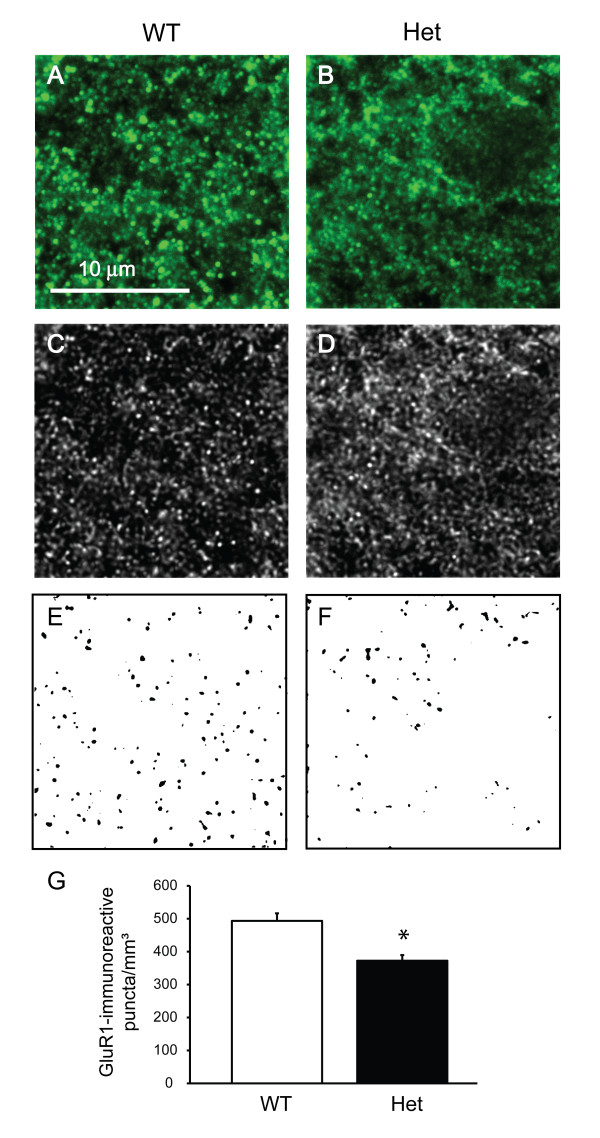
- mEPSC amplitude was smaller (n = 7 WT, n = 8 Het; P < 0.01), mEPSC frequency was higher (P < 0.03), paired-pulse ratio was decreased (n = 6 WT, n = 7 Het; P < 0.05), and GluR1-immunoreactive puncta were fewer (P < 0.005).
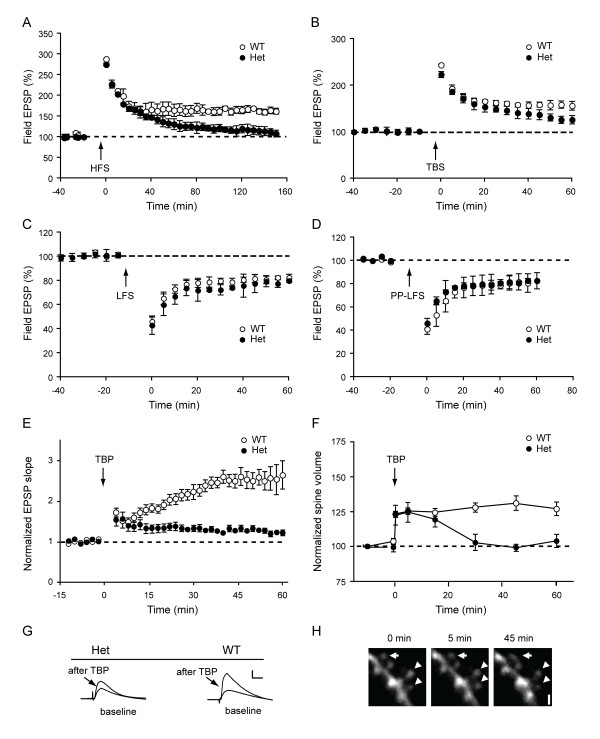
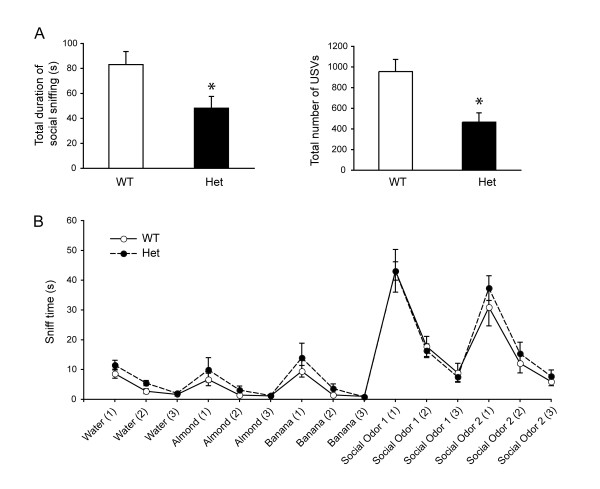
- LTP was impaired after high-frequency stimulation (120 min: 165.1 ± 8.8% WT vs 117.1 ± 9.5% Het, P = 0.004) and after TBS (60 min: 156.3 ± 9.2% WT vs 126.0 ± 8.9% Het, P = 0.007); LTD was not significantly changed. Male heterozygotes showed less social sniffing (P = 0.02) and fewer ultrasonic vocalizations (P = 0.003) than wild-type littermates (n = 12 WT, n = 14 Het).
Methods
- Generated a Shank3-deficient mouse line by gene targeting in Bruce4 C57BL/6 ES cells, inserting loxP sites before exon 4 and after exon 9 and excising exons 4–9 with CMV-Cre; studies focused on Shank3 heterozygotes versus wild-type littermates.
- Used qPCR and immunoblotting of PSD fractions; extracellular fEPSP recordings at Schaffer collateral–CA1 synapses; whole-cell patch-clamp mEPSC recordings; two-photon time-lapse imaging of spine volume; LTP/LTD induction protocols; and confocal quantification of GluR1-immunoreactive puncta.
- Behavioral testing included a 5-min male–female social interaction with an estrus female, ultrasonic vocalization recording, a three-chamber social approach task, olfactory habituation/dishabituation, and developmental milestone assessments.
Limitations
- Stated: the model targets full-length Shank3, but shorter 22t and 32t forms may still be expressed, so deficits seen with deletion of the entire SHANK3 gene may not be fully recapitulated; comprehensive study of knockout mice from heterozygote–heterozygote matings was still in progress.
- Stated: social deficits were not observed in the three-chamber social approach task, implying specificity of the social alterations; systems outside the hippocampus involved in social behavior were not examined, and additional brain regions and larger behavioral studies were underway.
- Evident from the text: most experiments used heterozygotes only, some electrophysiology samples were small (for example, n = 4 mice/genotype for I/O), and the ultrasonic vocalization equipment could not distinguish calls emitted by the male subject from those of the female partner.
Model-written summary. Check it against the paper before relying on it.
Integrity signals
Registry
Cites
Statistics
Figures
Verification
Claims the paper makes
6 Valid · 0 Not valid · 16 Not checked · 66 Own results and interpretations
Every source the paper cites for this claim was checked and supports it.
In the paper
“Furthermore, inhibition of Shank3 expression has been shown to reduce numbers of spines in hippocampal neurons in culture”
§ Haploinsufficiency of the autism-associated Shank3 gene leads to deficits in synaptic function, social interaction, and social communication > Background > Shank proteins in synaptic biology
What the sources say
- Supportedcites [19] 19. Roussignol G Ango F Romorini S Tu JC Sala C Worley PF Bockaert J Fagni L Shank expression is sufficient to induce functional dendritic spine synapses in aspiny neurons J Neurosci 2005 25 3560 3570 10.1523/JNEUROSCI.4354-04.2005 15814786 PMC6725374 source
In the section “Involvement of Shank3 in dendritic spine induction and maintenance,” the paper reports that siRNA inhibition of Shank3 decreased the number of dendritic spines in cultured hippocampal neurons. The same section reports that a siRNA-resistant Shank3 plasmid rescued the spine phenotype. (LLM, conf=0.94)
plainstates a cause- Asserted: passes — The authors put it forward as true.
- Checkable: passes — It can be checked against evidence.
- Load-bearing: passes — The paper’s conclusions depend on it.
- Based: passes — The paper gives a reason why it holds.
- Supported
Every source the paper cites for this claim was checked and supports it.
In the paper
“Transfection of Shank3 into aspiny cerebellar granule cells has been shown to induce an increase in the AMPA component of mEPSCs [19], and Shank3 is colocalized with GluR1-containing AMPA receptor in typical spines [53].”
§ Haploinsufficiency of the autism-associated Shank3 gene leads to deficits in synaptic function, social interaction, and social communication > Discussion > Synaptic development and function in Shank3 heterozygotes
What the sources say
- Supportedcites [19] 19. Roussignol G Ango F Romorini S Tu JC Sala C Worley PF Bockaert J Fagni L Shank expression is sufficient to induce functional dendritic spine synapses in aspiny neurons J Neurosci 2005 25 3560 3570 10.1523/JNEUROSCI.4354-04.2005 15814786 PMC6725374 source
In “Shank3 induces formation of new functional synapses,” the paper reports that Shank3-transfected cerebellar granule cells had an increased fast AMPAR component of mEPSCs, while the slow NMDAR component did not increase. This directly supports the part of the citing sentence attributed to this source; the separate colocalization claim is attributed to another citation. (LLM, conf=0.94)
boostedstates a cause- Asserted: passes — The authors put it forward as true.
- Checkable: passes — It can be checked against evidence.
- Load-bearing: unclear — It is unclear whether the paper’s conclusions depend on it.
- Based: passes — The paper gives a reason why it holds.
- Supported
The cited sources support only part of this claim — read each source’s verdict below.
In the paper
“We first established that spines from wild-type mice were capable of structural modification by simultaneously monitoring spine size and synaptic responses in CA1 neurons before and after TBP [34,35].”
§ Haploinsufficiency of the autism-associated Shank3 gene leads to deficits in synaptic function, social interaction, and social communication > Results > Long-term potentiation is impaired in Shank3 heterozygous mice
What the sources say
- Partly supportedcites [34] 34. Yang Y Wang XB Frerking M Zhou Q Spine expansion and stabilization associated with long-term potentiation J Neurosci 2008 28 5740 5751 10.1523/JNEUROSCI.3998-07.2008 18509035 PMC2561912 sourceExperimental — accuracy not yet measured
Our copy confirms the methodological core: the Abstract and Results describe simultaneous monitoring of EPSPs and dendritic spines by combined patch-clamp and two-photon time-lapse imaging in CA1 pyramidal neurons of acute hippocampal slices before and after theta-burst pairing (TBP), and Figure 1 (p. Results) shows TBP-induced, NMDAR-dependent spine expansion. However, the Materials and Methods state that slices were taken from postnatal day 13–18 Sprague Dawley rat pups, not wild-type mice, so the species/genotype qualifier attributed to this source is unsupported by our copy (the companion citation [35] may be the mouse study, but that is outside what this source says). (LLM, conf=0.85)
- Supportedcites [35] 35. Bozdagi O Wang XB Nikitczuk JS Anderson TR Bloss EB Radice GL Zhou Q Benson DL Huntley GW Persistence of coordinated long-term potentiation and dendritic spine enlargement at mature hippocampal CA1 synapses requires N-cadherin J Neurosci 2010 30 9984 9989 10.1523/JNEUROSCI.1223-10.2010 20668183 PMC2921177 source
The Results section 'N-cadherin is required for persistence of synaptic structural and functional plasticity' states almost verbatim that the authors 'first established that mature control spines are capable of LTP-associated structural modification by simultaneously monitoring spine size and synaptic responses in CA1 neurons before and after applying TBP', with persistent spine volume increase concurrent with EPSP slope increase (Fig. 2A-C). The only divergence is the genotype label: our copy's control animals are floxed littermates/Cre mice (Methods, 'Whole-cell recording, two-photon image acquisition and analysis'), described as 'control', not literally 'wild-type', and the claim drops the 'mature/LTP-associated' specification that the adult CA1/TBP design carries. Substance — establishing structural plasticity in non-knockout spines under paired TBP recording/imaging — is what this source reports. (LLM, conf=0.85)
plainstates a cause- Asserted: passes — The authors put it forward as true.
- Checkable: passes — It can be checked against evidence.
- Load-bearing: passes — The paper’s conclusions depend on it.
- Based: passes — The paper gives a reason why it holds.
- Partly supported
A result the paper reports from its own data — it cites no other source for it, so there is none to check. The quote shows it is in the paper.
In the paper
“the maintenance of LTP was clearly impaired in the heterozygous mice (average percentage of baseline 120 min after tetanus: 165.1 ± 8.8% in wild-type and 117.1 ± 9.5% in heterozygous mice, P = 0.004; Figure 3A).”
§ Haploinsufficiency of the autism-associated Shank3 gene leads to deficits in synaptic function, social interaction, and social communication > Results > Long-term potentiation is impaired in Shank3 heterozygous mice
boostedstates a cause- Asserted: passes — The authors put it forward as true.
- Checkable: passes — It can be checked against evidence.
- Load-bearing: passes — The paper’s conclusions depend on it.
- Based: passes — The paper gives a reason why it holds.
A result the paper reports from its own data — it cites no other source for it, so there is none to check. The quote shows it is in the paper.
In the paper
“however, only transient spine expansion was observed in Shank3 heterozygous mice”
§ Haploinsufficiency of the autism-associated Shank3 gene leads to deficits in synaptic function, social interaction, and social communication > Abstract > Results
plain- Asserted: passes — The authors put it forward as true.
- Checkable: passes — It can be checked against evidence.
- Load-bearing: passes — The paper’s conclusions depend on it.
- Based: passes — The paper gives a reason why it holds.
53 more claims
Create a free account to see all 88 claims and to verify the 29 references still open.
- It may state two separate claims as one. 20
- Probably not a substantial claim. 13
- The quote only partly states this claim. 1
Claims other papers make about this one
Each is checked against this paper’s own text: does it say what the citing paper says it does?
The source backs part of the claim, not all of it — or backs it for a different population, condition or comparison.
In the citing paper
“emerging animal models of ASD, with mutations in ASD-relevant neural cell adhesion molecules, have shown deficits in both the development of social affiliative behaviors and in glutamatergic synaptic structure in various brain regions, including circuits that may involve reward pathways [83,84]”
From The social motivation theory of autism (2012) · cites this paper as [84]
Experimental — accuracy not yet measuredThe source backs part of the claim, not all of it — or backs it for a different population, condition or comparison.
In the citing paper
“The AMPA receptor subunit GluA1 was reduced in hippocampal neurons examined in culture and hippocampal tissues from Δex4-9J−/− (Wang et al., 2011) and Δex4-9B+/− mice (Bozdagi et al., 2010)”
From Modeling Autism by SHANK Gene Mutations in Mice (2013) · cites this paper as Bozdagi et al., 2010
Experimental — accuracy not yet measuredThe source backs part of the claim, not all of it — or backs it for a different population, condition or comparison.
In the citing paper
“Hippocampal LTP was reduced at CA1 synapses of Δex4-9J−/− and Δex4-9B but not examined in Δex11−/− and Δex13-16−/− animals”
From Modeling Autism by SHANK Gene Mutations in Mice (2013) · cites this paper as Bozdagi et al., 2010
Experimental — accuracy not yet measuredThe cited source says what the claim attributes to it.
In the citing paper
“The mutations in these mice include deletions of exons 4-9 by two groups with slightly different design [(Δex4-9Buxbaum(B)) (Bozdagi et al., 2010) and Δex4-9Jiang (J) (Wang et al., 2011)], deletion of exons 4-7(Δex4-7) (Peca et al., 2011) encoding the ANK repeat domain, deletion of exon 11(Δex11) encoding the SH3 domain (Schmeisser et al., 2012), and deletion of exons 13-16 (Δex13-16) encoding the”
From Modeling Autism by SHANK Gene Mutations in Mice (2013) · cites this paper as Bozdagi et al., 2010
The cited source says what the claim attributes to it.
In the citing paper
“Five lines of Shank3 mutant mice carrying different mutations in Shank3 have been reported (Bozdagi et al., 2010; Peca et al., 2011; Schmeisser et al., 2012; Wang et al., 2011)”
From Modeling Autism by SHANK Gene Mutations in Mice (2013) · cites this paper as Bozdagi et al., 2010
15 more claims about this paper
Create a free account to see every claim other papers make about this one.
Self-check
Percentages, sums and reported differences re-computed from the paper’s own numbers.
Each contradiction between two passages listed here was confirmed by an independent check.
Rated major: it would touch a result — a value a result rests on, reported and recomputed p-values on opposite sides of the significance level, two passages that conflict with no sign which is right, or a cited work retracted before this paper was published.
In the paper
§ Haploinsufficiency of the autism-associated Shank3 gene leads to deficits in synaptic function, social interaction, and social communication > Methods > Hippocampal slice electrophysiology
“LTP was induced by either a high-frequency stimulus (four trains of 100-Hz, 1-s stimulations separated by 5 min) or TBS (15 bursts of four pulses at 100 Hz separated by 200 ms).”
§ Haploinsufficiency of the autism-associated Shank3 gene leads to deficits in synaptic function, social interaction, and social communication > Results > Long-term potentiation is impaired in Shank3 heterozygous mice
“TBS LTP (10 bursts of four pulses at 100 Hz separated by 200 ms)”
Rated minor: it would not touch a result — a value no result rests on, a p-value that stays on the same side of the significance level, or a conflict that is clerical, resolved elsewhere in the paper, or outside its own findings.
In the paper
§ Haploinsufficiency of the autism-associated Shank3 gene leads to deficits in synaptic function, social interaction, and social communication > Results > Long-term potentiation is impaired in Shank3 heterozygous mice
“P > 0.1; Figure 3G) or paired-pulse LFS (PP-LFS) stimulation (81.6 ± 6% of baseline in wild-type and 82.7 ± 1.9% in heterozygous mice, P > 0.1; Figure 3H)”
§ Haploinsufficiency of the autism-associated Shank3 gene leads to deficits in synaptic function, social interaction, and social communication > Results > Long-term potentiation is impaired in Shank3 heterozygous mice
“(C) Long-term depression (LTD) following low-frequency stimulation (LFS), an NMDA receptor-dependent form of LTD. (D) LTD following paired-pulse low-frequency stimulation (PP-LFS), a protein synthesis-dependent form of LTD.”
Citations
Cites
Hellemans, J., Mortier, G., De Paepe, A., Speleman, F., & Vandesompele, J. (2007) · Genome Biology · doi:10.1186/gb-2007-8-2-r19 · Cited by 4,023
AMPA Receptor Trafficking and Synaptic Plasticity
Malinow, R., & Malenka, R. C. (2002) · Annual Review of Neuroscience · doi:10.1146/annurev.neuro.25.112701.142758 · Cited by 2,588 · cited 2×
“AMPA receptor trafficking is involved in activity-induced changes in synaptic strength associated with learning and memory [54], and synaptic insertion of GluR1-containing AMPA receptors is required [55,56].”
BackgroundStructural basis of long-term potentiation in single dendritic spines
Matsuzaki, M., Honkura, N., Ellis-Davies, G. C. R., & Kasai, H. (2004) · Nature · doi:10.1038/nature02617 · Cited by 2,483 · cited 1×
“Previous studies have shown that LTP is accompanied by spine enlargement [35, 48 ].”
ResultMcDonald-McGinn, D. M., Sullivan, K. E., Marino, B., Philip, N., Swillen, A., Vorstman, J. A. S., Zackai, E. H., Emanuel, B. S., Vermeesch, J. R., Morrow, B. E., et al. (2015) · Nature Reviews Disease Primers · doi:10.1038/nrdp.2015.71 · Cited by 2,236
Functional impact of global rare copy number variation in autism spectrum disorders
Pinto, D., Pagnamenta, A. T., Klei, L., Anney, R., Merico, D., Regan, R., Conroy, J., Magalhaes, T. R., Correia, C., Abrahams, B. S., et al. (2010) · Nature · doi:10.1038/nature09146 · Cited by 2,013 · cited 1×
“recently been associated with ASDs and/or intellectual disability [29-31].”
BackgroundConserved role of intragenic DNA methylation in regulating alternative promoters
Maunakea, A. K., Nagarajan, R. P., Bilenky, M., Ballinger, T. J., D’Souza, C., Fouse, S. D., Johnson, B. E., Hong, C., Nielsen, C., Zhao, Y., et al. (2010) · Nature · doi:10.1038/nature09165 · Cited by 1,743 · cited 1×
“A recent report has indicated that there are additional start sites in the human and mouse SHANK3 gene that may lead to shorter products, truncated at the N terminus (termed 22t and 32t in that report [51]).”
BackgroundDurand, C. M., Betancur, C., Boeckers, T. M., Bockmann, J., Chaste, P., Fauchereau, F., Nygren, G., Rastam, M., Gillberg, I. C., Anckarsäter, H., et al. (2007) · Nature Genetics · doi:10.1038/ng1933 · Cited by 1,602 · cited 6×
“Neurobehavioral phenotypes associated with mutation or deletion of SHANK3 are here referred to as SHANK3-haploinsufficiency syndromes and, as noted above, can be associated with ASDs.”
BackgroundInfluentialThe mGluR theory of fragile X mental retardation
Bear, M. F., Huber, K. M., & Warren, S. T. (2004) · Trends in Neurosciences · doi:10.1016/j.tins.2004.04.009 · Cited by 1,580 · cited 1×
“Recently, the field has begun to see the evaluation of therapies targeted to etiology (that is, “personalized medicine”) using models of neurodevelopmental disorders including fragile X, tuberous sclerosis, and Rett syndromes (see, for example, [61-64]).”
BackgroundBehavioural phenotyping assays for mouse models of autism
Silverman, J. L., Yang, M., Lord, C., & Crawley, J. N. (2010) · Nature Reviews Neuroscience · doi:10.1038/nrn2851 · Cited by 1,462 · cited 1×
“5-4 months using methods previously described [44,46,47].”
Self-citationPSD-95 Involvement in Maturation of Excitatory Synapses
El-Husseini, A. E.-D., Schnell, E., Chetkovich, D. M., Nicoll, R. A., & Bredt, D. S. (2000) · Science · doi:10.1126/science.290.5495.1364 · Cited by 1,303 · cited 1×
“The quantity of surface receptors controls synaptic strength [57-59]; therefore, reduction of both synaptic transmission and plasticity in the Shank3 heterozygotes would support a mechanism involving altered AMPA receptor trafficking.”
Background
Research works printed but not linked: 1
- 42. Dumutriu D Hara Y Berger S Wadsworth S Morrison J Volume assisted measurement of puncta in 2 dimensions (VAMP2D): A new tool for accurate size quantification in fluorescent imaging Society for Neurosience Annual Meeting 2009 Chicago, IL: Society for Neuroscience Abstracts
Cited by
Items 201–300 of 606
Hussein, Y., Tripathi, U., Choudhary, A., Nayak, R., Peles, D., Rosh, I., Rabinski, T., Djamus, J., Vatine, G. D., Spiegel, R., et al. (2023) · Translational Psychiatry · doi:10.1038/s41398-023-02535-x · Cited by 59
“Mutations in this gene have been linked to de fi cits in synaptic function and plasticity, accompanied by lower reciprocal social interactions [18, 20 – 23], ASD, and other neurodevelopmental symptoms [21, 24].”
Recent developments in neuropathology of autism spectrum disorders
Polšek, D., Jagatic, T., Cepanec, M., Hof, P. R., & Šimić, G. (2011) · Translational Neuroscience · doi:10.2478/s13380-011-0024-3 · Cited by 63
“…Mediates synapse formation and dendritic spine maturation, connects neurotransmitter receptors Bangash et al. 2011[77] Peça et al. 2011 [78] Bozdagi et al. 2010 [79] NL3 Mediates synapse formation and remodeling Ellegood et al. 2011[80]Gutierrez et al. 2009 [81] NL4 Mediates synapse…”
Self-citationThanseem, I., Anitha, A., Nakamura, K., Suda, S., Iwata, K., Matsuzaki, H., Ohtsubo, M., Ueki, T., Katayama, T., Iwata, Y., et al. (2011) · Biological Psychiatry · doi:10.1016/j.biopsych.2011.09.020 · Cited by 53
Gong, X., Jiang, Y.-W., Zhang, X., An, Y., Zhang, J., Wu, Y., Wang, J., Sun, Y., Liu, Y., Gao, X., et al. (2012) · PLoS ONE · doi:10.1371/journal.pone.0034739 · Cited by 46
“The study of Shank3 heterozygous mice also found that haploinsufficiency of Shank3 resulted in a decrease in synaptic transmission, altered functional and structural plasticity of synapses and reduced social behaviors [24].”
BackgroundResultBiamino, E., Gregorio, E. D., Belligni, E. F., Keller, R., Riberi, E., Gandione, M., Calcia, A., Mancini, C., Giorgio, E., Cavalieri, S., et al. (2015) · American Journal of Medical Genetics Part B Neuropsychiatric Genetics · doi:10.1002/ajmg.b.32406 · Cited by 51
Coba, M. P., Ramaker, M. J., Ho, E. V., Thompson, S. L., Komiyama, N. H., Grant, S. G. N., Knowles, J. A., & Dulawa, S. C. (2018) · Scientific Reports · doi:10.1038/s41598-018-20610-y · Cited by 59
“Furthermore, haploinsufficiency of the ASD/SCZ associated gene Shank3 leads to reduced sociability in mice 72 .”
BackgroundActivation of basolateral amygdala in juvenile C57BL/6J mice during social approach behavior
Ferri, S. L., Kreibich, A. S., Torre, M., Piccoli, C. T., Dow, H., Pallathra, A. A., Li, H., Bilker, W. B., Gur, R. C., Abel, T., et al. (2016) · Neuroscience · doi:10.1016/j.neuroscience.2016.08.006 · Cited by 48
“…a modified version of the Social Approach Test (SAT), an assay that has been widely used to assess sociability in mice, including mouse models relevant to ASD (Brodkin et al., 2004; Moy et al., 2004; Tabuchi et al., 2007; Fairless et al., 2012; Peñagarikano and Geschwind, 2012; Won et al., 2012).”
Specific Roles of NMDA Receptor Subunits in Mental Disorders
Yamamoto, H., Hagino, Y., Kasai, S., & Ikeda, K. (2015) · Current Molecular Medicine · doi:10.2174/1566524015666150330142807 · Cited by 56
“Several lines of Shank3 mutant mice shows reduced social interaction and affiliation behaviors [126-129].”
BackgroundMatosin, N., Fernandez, F., Lum, J. S., & Newell, K. A. (2015) · Neuropharmacology · doi:10.1016/j.neuropharm.2015.08.003 · Cited by 52
Jaramillo, T. C., Xuan, Z., Reimers, J. M., Escamilla, C. O., Liu, S., & Powell, C. M. (2020) · eNeuro · doi:10.1523/eneuro.0332-19.2020 · Cited by 50
“Additionally, other studies in similar Shank3 mouse models have replicated these findings in addition to observing decreased hippocampal long-term potentiation, morphologic and structural abnormalities like reduced spine density and longer dendritic length, along with a reduction in synaptic proteins that associate wi…”
BackgroundOaks, A. W., Zamarbide, M., Tambunan, D. E., Santini, E., Costanzo, S. D., Pond, H. L., Johnson, M. W., Lin, J. C.-F., Gonzalez, D. M., Boehler, J., et al. (2016) · Cerebral Cortex · doi:10.1093/cercor/bhw009 · Cited by 53
“In Shank3 heterozygotes, reduced social interaction is accompanied by a reduced number of USVs elicited by exposure of males to a female in estrus (Bozdagi et al. 2010), similar to what we find with Cc2d1a cKOmice, and reduced female–female vocalizations have been observed in Shank2 KO mice…”
ResultActin-Dependent Alterations of Dendritic Spine Morphology in Shankopathies
Sarowar, T., & Grabrucker, A. M. (2016) · Neural Plasticity · doi:10.1155/2016/8051861 · Cited by 46
“Twomouse models harbor deletion of exons 4–9 in the ANK domain [136, 138].”
de Chaumont, F., Lemière, N., Coqueran, S., Bourgeron, T., & Ey, E. (2021) · Frontiers in Behavioral Neuroscience · doi:10.3389/fnbeh.2021.735920 · Cited by 50
Translational neurobiology in Shank mutant mice - Model systems for neuropsychiatric disorders
Schmeißer, M. J. (2015) · Annals of Anatomy - Anatomischer Anzeiger · doi:10.1016/j.aanat.2015.03.006 · Cited by 48
Heterogeneity and convergence: the synaptic pathophysiology of autism
Baudouin, S. J. (2014) · European Journal of Neuroscience · doi:10.1111/ejn.12498 · Cited by 46
Zeng, M., Shang, Y., Guo, T., He, Q., Yung, W.-H., Liu, K., & Zhang, M. (2016) · Proceedings of the National Academy of Sciences · doi:10.1073/pnas.1523265113 · Cited by 44
The Synapse as a Central Target for Neurodevelopmental Susceptibility to Pesticides
Vester, A. I., & Caudle, W. M. (2016) · Toxics · doi:10.3390/toxics4030018 · Cited by 49
“In mouse models carrying SHANK3 mutations and deletions, investigators identified synaptic deficiencies in the hippocampus and striatum with concomitant increases in repetitive behaviors, social behavior deficits, impaired learning and memory, alterations in spine morphology, and glutamate receptor changes [25–34].”
BackgroundLuo, J., Norris, R. H., Gordon, S. L., & Nithianantharajah, J. (2018) · Progress in Neuro-Psychopharmacology and Biological Psychiatry · doi:10.1016/j.pnpbp.2017.12.001 · Cited by 39
“Mild impairments in reciprocal social interactions have however been consistently observed in male and female Shank3A and Shank3A mice (Bozdagi et al., 2010; Wang et al., 2011; Yang et al., 2012) and male Shank3B mice (Peca et al.”
Synapse-to-nucleus communication: from developmental disorders to Alzheimer's disease
Marcello, E. E., Luca, M. D., & Gardoni, F. (2018) · Current Opinion in Neurobiology · doi:10.1016/j.conb.2017.12.017 · Cited by 49
Breen, M. S., Browne, A., Hoffman, G. E., Stathopoulos, S., Brennand, K., Buxbaum, J. D., & Drapeau, E. (2020) · Molecular Autism · doi:10.1186/s13229-020-00355-0 · Cited by 54
“We and others have shown that mice with a disruption in Shank3 have altered 80 glutamatergic signaling and synaptic dysfunction, as well as altered motor, social and repetitive 81 behaviors [11, 15-26].”
BackgroundSelf-citationQin, L., Ma, K., & Yan, Z. (2021) · Neuropsychopharmacology · doi:10.1038/s41386-021-01212-1 · Cited by 46
Long, J., Li, H., Liu, Y., Liao, X., Tang, Z., Han, K., Chen, J., & Zhang, H. (2024) · Frontiers in Psychiatry · doi:10.3389/fpsyt.2024.1364858 · Cited by 49
Liu, Y., Du, Y., Liu, W., Yang, C., Liú, Y., Wang, H., & Gong, X. (2013) · PLoS ONE · doi:10.1371/journal.pone.0056639 · Cited by 47
“Shank3 mutant mice display autistic-like behaviors and have severely synaptic dysfunction [28,29].”
BackgroundClinical and Neurobiological Relevance of Current Animal Models of Autism Spectrum Disorders
Kim, K. C., Gonzales, E. L., Lázaro, M. T., Choi, C. S., Bahn, G. H., Yoo, H. J., & Shin, C. Y. (2016) · Biomolecules & Therapeutics · doi:10.4062/biomolther.2016.061 · Cited by 49
“One important aspect of this model is the role that synaptic activity modulators have in the overall E/I state, as they become key determinants of whether or not autistic behaviors arise, in a way that might involve the metaplastic regulation of LTP and LTD (Abraham, 2008; Turrigiano, 2012).”
BackgroundInfluentialHagmeyer, S., Sauer, A. K., & Grabrucker, A. M. (2018) · Frontiers in Synaptic Neuroscience · doi:10.3389/fnsyn.2018.00011 · Cited by 45
“…using IGF-1 and CDPPB, a mGluR5 positive allosteric modulator, were partly successful in restoring function in Shank3 deletion model systems (Bozdagi et al., 2010; Verpelli et al., 2011; Wang et al., 2016; Vicidomini et al., 2017), the regulation of Shank2 and Shank3 by zinc may be another…”
Balaan, C., Corley, M. J., Eulalio, T. Y., Yo, K. L.-A., Pang, A. P. S., Fang, R., Khadka, V. S., Maunakea, A. K., & Ward, M. A. (2018) · Behavioural Brain Research · doi:10.1016/j.bbr.2018.08.005 · Cited by 48
Copping, N. A., Adhikari, A., Petkova, S. P., & Silverman, J. L. (2019) · Epilepsy & Behavior · doi:10.1016/j.yebeh.2019.106547 · Cited by 45
“F, degrees of freedom, and p-values are reported, as previously illustrated [38, 45, 47, 50]”
MethodSelf-citationCerebellar Dysfunction, Cerebro-cerebellar Connectivity and Autism Spectrum Disorders
Su, L., Xu, F., Wang, X., Cai, X., & Shen, Y. (2020) · Neuroscience · doi:10.1016/j.neuroscience.2020.05.028 · Cited by 49
Self-citationJung, S., & Park, M. (2022) · Pharmacological Research · doi:10.1016/j.phrs.2022.106340 · Cited by 42
Addressing the Genetics of Human Mental Health Disorders in Model Organisms
McCammon, J. M., & Sive, H. L. (2015) · Annual Review of Genomics and Human Genetics · doi:10.1146/annurev-genom-090314-050048 · Cited by 44
Using genetic findings in autism for the development of new pharmaceutical compounds
Vorstman, J. A. S., Spooren, W., Persico, A. M., Collier, D. A., Aigner, S., Jagasia, R., Glennon, J. C., & Buitelaar, J. K. (2014) · Psychopharmacology · doi:10.1007/s00213-013-3334-z · Cited by 38
New Experimental Treatments for Core Social Domain in Autism Spectrum Disorders
Canitano, R. (2014) · Frontiers in Pediatrics · doi:10.3389/fped.2014.00061 · Cited by 47
“Studies of Shank3 heterozygous mice detected a reduction in basal neurotransmission, reflecting reduced AMPA receptor-mediated transmission, which was targeted with insulin growth factor (IGF-1) treatment (20, 21).”
BackgroundHypothesis‐driven investigations of diverse pharmacological targets in two mouse models of autism
Rhine, M. A., Parrott, J. M., Schultz, M. N., Kazdoba, T. M., & Crawley, J. N. (2019) · Autism Research · doi:10.1002/aur.2066 · Cited by 47
“Dependent on the specific mutation, and the brain region containing the mutation in cases of conditional knockouts, Shank3 mutant mice displayed reduced frequency and amplitude of miniature excitatory postsynaptic currents [Bozdagi et al., 2010; Peca et al., 2011], reduced glutamatergic transmission and impaired long-…”
BackgroundSelf-citationAbnormal electrophysiological phenotypes and sleep deficits in a mouse model of Angelman Syndrome
Copping, N. A., & Silverman, J. L. (2021) · Molecular Autism · doi:10.1186/s13229-021-00416-y · Cited by 44
Self-citationPre-clinical models of neurodevelopmental disorders: focus on the cerebellum
Shevelkin, A. V., Ihenatu, C., & Pletnikov, M. V. (2014) · Reviews in the Neurosciences · doi:10.1515/revneuro-2013-0049 · Cited by 43
Sudarov, A., Gooden, F., Tseng, D., Gan, W., & Ross, M. E. (2013) · EMBO Molecular Medicine · doi:10.1002/emmm.201202106 · Cited by 41
“Mutations of glutamatergic postsynaptic proteins ProSap2/Shank3 and Pro-Sap1/Shank2 in mice lead to distinct disturbances in excitatory synapses and profound defects in social interaction behaviour (Bozdagi et al, 2010; Peca et al, 2011; Schmeisser et al, 2012).”
The Role of Zinc and NMDA Receptors in Autism Spectrum Disorders
Lee, K. C., Mills, Z., Cheung, P. Y., Cheyne, J. E., & Montgomery, J. M. (2022) · Pharmaceuticals · doi:10.3390/ph16010001 · Cited by 43
Baig, D. N., Yanagawa, T., & Tabuchi, K. (2016) · Brain Research Bulletin · doi:10.1016/j.brainresbull.2016.10.006 · Cited by 47
Brown, E. A., Lautz, J. D., Davis, T. R., Gniffke, E. P., VanSchoiack, A. A. W., Neier, S. C., Tashbook, N., Nicolini, C., Fahnestock, M., Schrum, A. G., et al. (2018) · Molecular Autism · doi:10.1186/s13229-018-0229-1 · Cited by 39
“Hippocampal electrophysiology in this model indicated reduced basal AMPAmediated transmission, and a failure of hippocampal LTP that was correlated with failure to maintain spine expansion following a tetanizing stimulation [28].”
BackgroundMethodInfluentialYoo, Y.-E., Yoo, T., Lee, S., Lee, J., Kim, D., Han, H.-M., Bae, Y.-C., & Kim, E. (2019) · Frontiers in Molecular Neuroscience · doi:10.3389/fnmol.2019.00155 · Cited by 44
“…and point mutations in Shank3, have been generated and characterized, providing information about normal and disease-related functions of Shank3 (Bozdagi et al., 2010; Peca et al., 2011; Wang et al., 2011; Schmeisser et al., 2012; Yang et al., 2012; Han et al., 2013; Kouser et al., 2013; Lee et…”
BackgroundYoo, T., Cho, H., Park, H., Lee, J., & Kim, E. (2019) · Frontiers in Cellular Neuroscience · doi:10.3389/fncel.2019.00458 · Cited by 49
Lord, J. S., Gay, S. M., Harper, K. M., Nikolova, V. D., Smith, K. M., Moy, S. S., & Diering, G. H. (2022) · Molecular Autism · doi:10.1186/s13229-022-00514-5 · Cited by 46
Schwartzer, J. J., Koenig, C. M., & Berman, R. F. (2013) · Neurotoxicology and Teratology · doi:10.1016/j.ntt.2012.08.007 · Cited by 39
Ornoy, A., Echefu, B., & Becker, M. (2024) · International Journal of Molecular Sciences · doi:10.3390/ijms251910469 · Cited by 41
“Male heterozygous mice ( Shank3 +/- ) also showed reduced sniffing time and a reduced number of emitted ultrasonic vocalizations in reciprocal social interaction with the estrus female [112].”
BackgroundInfluentialO'Connor, E. C., Bariselli, S., & Bellone, C. (2014) · European Journal of Neuroscience · doi:10.1111/ejn.12510 · Cited by 38
Genotype and phenotype correlations for SHANK3 de novo mutations in neurodevelopmental disorders
Li, Y., Jia, X., Wu, H., Xun, G., Ou, J., Zhang, Q., Li, H., Bai, T., Hu, Z., Zou, X., et al. (2018) · American Journal of Medical Genetics Part A · doi:10.1002/ajmg.a.40666 · Cited by 43
Kajiwara, Y., McKenzie, A. T., Dorr, N. P., Sosa, M. A. G., Elder, G. A., Schmeidler, J., Dickstein, D. L., Bozdagi, O., Zhang, B., & Buxbaum, J. D. (2016) · Human Molecular Genetics · doi:10.1093/hmg/ddw265 · Cited by 45
Self-citationSHANK genes in autism: Defining therapeutic targets
Mossa, A., Giona, F., Pagano, J., Sala, C., & Verpelli, C. (2017) · Progress in Neuro-Psychopharmacology and Biological Psychiatry · doi:10.1016/j.pnpbp.2017.11.019 · Cited by 46
Developmental impaired Akt signaling in the Shank1 and Shank3 double knock-out mice
Mossa, A., Pagano, J., Ponzoni, L., Tozzi, A., Vezzoli, E., Sciaccaluga, M., Costa, C., Beretta, S., Francolini, M., Sala, M., et al. (2021) · Molecular Psychiatry · doi:10.1038/s41380-020-00979-x · Cited by 39
A systematic-review of olfactory deficits in neurodevelopmental disorders: From mouse to human
Lyons-Warren, A. M., Herman, I., Hunt, P. J., & Arenkiel, B. R. (2021) · Neuroscience & Biobehavioral Reviews · doi:10.1016/j.neubiorev.2021.02.024 · Cited by 41
Wan, L., Ai, J.-Q., Yang, C. G., Jiang, J., Zhang, Q., Luo, Z., Huang, R., Tu, T., Pan, A., Tu, E., et al. (2021) · Frontiers in Aging Neuroscience · doi:10.3389/fnagi.2021.717263 · Cited by 41
“…more recently, rats and macaques have been generated to understand the underlying pathogenic cellular, molecular, and neurocircuitry mechanisms (Bozdagi et al., 2010; Peça et al., 2011; Wang et al., 2011; Kouser et al., 2013; Lee et al., 2015; Jaramillo et al., 2016; Wang et al., 2016, 2017;…”
BackgroundLee, Y., Kang, H., Lee, B., Zhang, Y., Kim, Y., Kim, S., Kim, W.-K., & Han, K. (2017) · Frontiers in Molecular Neuroscience · doi:10.3389/fnmol.2017.00110 · Cited by 42
“This was supported by some phenotypic differences observed among Shank3 “partial” knock-out (KO) mice generated by deletions of different exons of the gene (Bozdagi et al., 2010; Peca et al., 2011; Wang et al., 2011; Schmeisser et al., 2012; Yang et al., 2012; Kouser et al., 2013; Lee et al., 2015; Speed et al., 2015).”
BackgroundUrrutia‐Ruiz, C., Rombach, D., Cursano, S., Gerlach-Arbeiter, S., Schoen, M., Bockmann, J., Demestre, M., & Boeckers, T. M. (2022) · International Journal of Molecular Sciences · doi:10.3390/ijms23116081 · Cited by 38
“Therefore, Shank3 knockout animals support these findings, exhibiting dendritic spine remodeling impairments [9,17], decreased spine density [10,13], longer dendritic spines and unaltered [13] or smaller PSDs [10].”
BackgroundResultInfluentialHuman Inducible Pluripotent Stem Cells and Autism Spectrum Disorder: Emerging Technologies
Nestor, M. W., Phillips, A. W., Artimovich, E., Nestor, J. E., Hussman, J. P., & Blatt, G. J. (2016) · Autism Research · doi:10.1002/aur.1570 · Cited by 35
“Additionally, these mice showed a significant decrease in social communication and interaction [Bozdagi et al., 2010].”
BackgroundWang, S., Tan, N., Zhu, X., Yao, M., Wang, Y., Zhang, X., & Xu, Z. (2018) · Cell Reports · doi:10.1016/j.celrep.2018.11.044 · Cited by 38
“, 2014), and there are many examples of haploinsufficiency in mice leading to ASD, including SHANK3, CHD8, or NUAK1 (Bozdagi et al., 2010; Courchet et al., 2018; Katayama et al., 2016).”
BackgroundThe impact of oxytocin on neurite outgrowth and synaptic proteins in Magel2 ‐deficient mice
Reichova, A., Schaller, F., Bukatová, S., Bačová, Z., Muscatelli, F., & Bakoš, J. (2021) · Developmental Neurobiology · doi:10.1002/dneu.22815 · Cited by 37
The Neurological Manifestations of Phelan-McDermid Syndrome
Frank, Y. (2021) · Pediatric Neurology · doi:10.1016/j.pediatrneurol.2021.06.002 · Cited by 40
Pharmacological Modulation of AMPAR Rescues Intellectual Disability-Like Phenotype in Tm4sf2−/y Mice
Murru, L., Vezzoli, E., Longatti, A., Ponzoni, L., Falqui, A., Folci, A., Moretto, E., Bianchi, V., Braida, D., Sala, M., et al. (2017) · Cerebral Cortex · doi:10.1093/cercor/bhx221 · Cited by 39
Howell, B. W., & Smith, K. M. (2019) · Pharmacological Research · doi:10.1016/j.phrs.2018.11.019 · Cited by 35
USP8 Deubiquitinates SHANK3 to Control Synapse Density and SHANK3 Activity-Dependent Protein Levels
Campbell, M. K., & Sheng, M. (2018) · Journal of Neuroscience · doi:10.1523/jneurosci.3305-17.2018 · Cited by 39
“…groups have found that the deletion or mutation of Shank3 causes significant changes to the composition of synaptic proteins, alters synapse number and morphology, and impairs animal behavior (Bozdagi et al., 2010; Peça et al., 2011; Wang et al., 2011; Yang et al., 2012; Mei et al., 2016).”
BackgroundPrenatal Zinc Deficient Mice as a Model for Autism Spectrum Disorders
Sauer, A. K., Hagmeyer, S., & Grabrucker, A. M. (2022) · International Journal of Molecular Sciences · doi:10.3390/ijms23116082 · Cited by 35
“Reference [61,62,85] [64] [63] [65,73] [66] [67] [67] [63] [86] [71] [53,54]”
BackgroundModeling autism spectrum disorders with human neurons
Beltrão-Braga, P. C. B., & Muotri, A. R. (2016) · Brain Research · doi:10.1016/j.brainres.2016.01.057 · Cited by 45
Zhu, M., Idikuda, V. K., Wang, J., Wei, F., Kumar, V., Shah, N., Waite, C. B., Liu, Q., & Zhou, L. (2018) · The Journal of Physiology · doi:10.1113/jp275147 · Cited by 37
“…and deletions in the SHANK3 gene discovered from human patients, which have been modelled by over a dozen knockout or transgenic mouse lines (Bozdagi et al. 2010; Peca et al. 2011; Yang et al. 2012; Han et al. 2013; Jiang & Ehlers, 2013; Shcheglovitov et al. 2013; Speed et al. 2015; Hulbert…”
BackgroundSilverman, J. L., & Ellegood, J. (2018) · Current Opinion in Neurology · doi:10.1097/wco.0000000000000537 · Cited by 39
Self-citationSchoen, M., Asoglu, H., Bauer, H. F., Müller, H., Abaei, A., Sauer, A. K., Zhang, R., Song, T.-J., Bockmann, J., Kassubek, J., et al. (2019) · Frontiers in Neural Circuits · doi:10.3389/fncir.2019.00006 · Cited by 38
“…in Neural Circuits | www.frontiersin.org 8 February 2019 | Volume 13 | Article 6 brain areas, to even interact molecularly, and a reduction of both players seems to result in an overlapping phenotype (Bozdagi et al., 2010; Peça et al., 2011; Schmeisser et al., 2012; Grabrucker et al., 2014).”
BackgroundInfluentialQin, Y., Du, Y., Chen, L., Liu, Y., Xu, W., Liu, Y., Li, Y., Leng, J., Wang, Y., Zhang, X., et al. (2022) · Molecular Psychiatry · doi:10.1038/s41380-022-01539-1 · Cited by 35
Lee, D. K., Li, S. W., Bounni, F., Friedman, G., Jamali, M., Strahs, L., Zeliger, O., Gabrieli, P., Stankovich, M. A., Demaree, J., et al. (2021) · Nature Neuroscience · doi:10.1038/s41593-021-00888-4 · Cited by 33
Bucher, M., Niebling, S., Han, Y., Molodenskiy, D., Hassani Nia, F., Kreienkamp, H.-J., Svergun, D., Kim, E., Kostyukova, A. S., Kreutz, M. R., et al. (2021) · eLife · doi:10.7554/elife.66165 · Cited by 33
“SHANK3 missense mutants exhibit altered localization and residing time at the synapse As SHANK3 is critically involved in regulating synaptic structure and function, neurons are sensitive to altered gene dosage, which has been pointed out by several studies (Bozdagi et al., 2010; Durand et al., 2007; Wang et al., 2020…”
BackgroundGranon, S., Faure, A., Chauveau, F., Cressant, A., & Ey, E. (2018) · Handbook of Behavioral Neuroscience · doi:10.1016/b978-0-12-809600-0.00040-8 · Cited by 33
Brief Report: Sensory Reactivity in Children with Phelan–McDermid Syndrome
Mieses, A. M., Tavassoli, T., Li, E. A., Soorya, L. V., Lurie, S., Wang, A. T., Siper, P. M., & Kolevzon, A. (2016) · Journal of Autism and Developmental Disorders · doi:10.1007/s10803-016-2754-0 · Cited by 34
“Mice with SHANK3 deletions have reduced number of GluR1-immunoreactive puncta and reduced glutamatergic transmission (Bozdagi et al. 2010).”
Autism Spectrum Disorder and miRNA: An Overview of Experimental Models
Schepici, G., Cavalli, E., Bramanti, P., & Mazzon, E. (2019) · Brain Sciences · doi:10.3390/brainsci9100265 · Cited by 43
“[30], using SHANK3-KO mice with a deletion of exons 4–9, observed normal interest sociability in behavioral tests in mouse puppies.”
MethodSensory Reactivity Phenotype in Phelan–McDermid Syndrome Is Distinct from Idiopathic ASD
Tavassoli, T., Layton, C., Levy, T., Rowe, M. A., George-Jones, J., Zweifach, J., Lurie, S., Buxbaum, J. D., Kolevzon, A., & Siper, P. M. (2021) · Genes · doi:10.3390/genes12070977 · Cited by 33
“SHANK3 encodes a scaffolding protein in glutamate synapses, with animal models indicating glutamatergic dysregulation in PMS [8,9].”
BackgroundSelf-citationUltrastructural analyses in the hippocampus CA1 field in Shank3-deficient mice
Uppal, N., Puri, R., Yuk, F., Janssen, W. G. M., Bozdagi-Gunal, O., Harony-Nicolas, H., Dickstein, D. L., Buxbaum, J. D., & Hof, P. R. (2015) · Molecular Autism · doi:10.1186/s13229-015-0036-x · Cited by 32
“In fact, a decrease in GluA1-immunoreactive puncta in CA1 was previously reported in Shank3 heterozygous mice, indicating a decrease in AMPA receptors [27].”
BackgroundResultSelf-citationBaecker, T., Mangus, K., Pfaender, S., Chhabra, R., Boeckers, T. M., & Grabrucker, A. M. (2014) · BioMetals · doi:10.1007/s10534-014-9764-1 · Cited by 36
Neurobiology and treatment of social cognition in schizophrenia: Bridging the bed-bench gap
Kimoto, S., Makinodan, M., & Kishimoto, T. (2018) · Neurobiology of Disease · doi:10.1016/j.nbd.2018.10.022 · Cited by 34
Iyer, J. S., & Girirajan, S. (2015) · Briefings in Functional Genomics · doi:10.1093/bfgp/elv018 · Cited by 35
Arakawa, H. (2020) · Frontiers in Psychiatry · doi:10.3389/fpsyt.2020.592408 · Cited by 32
“documented deficits in glutamatergic transmission (122, 124) and reduced pain sensitivity (123, 125).”
BackgroundScheefhals, N., Catsburg, L. A. E., Westerveld, M. L., Blanpied, T. A., Hoogenraad, C. C., & MacGillavry, H. D. (2019) · Cell Reports · doi:10.1016/j.celrep.2019.08.102 · Cited by 33
“, 2011), Shank knockout mouse models (Bozdagi et al., 2010; Duffney et al., 2015; Kouser et al., 2013; Schmeisser et al., 2012), and neurons expressing ASD-associated Shank mutations (Lee et al.”
BackgroundA review of ultrasonic vocalizations in mice and how they relate to human speech
Yao, K., Bergamasco, M., Scattoni, M. L., & Vogel, A. P. (2023) · The Journal of the Acoustical Society of America · doi:10.1121/10.0020544 · Cited by 38
Self-citationGlutamatergic candidate genes in autism spectrum disorder: an overview
Chiocchetti, A. G., Bour, H. S., & Freitag, C. M. (2014) · Journal of Neural Transmission · doi:10.1007/s00702-014-1161-y · Cited by 34
Dosage-sensitive genes in autism spectrum disorders: From neurobiology to therapy
Javed, S., Selliah, T., Lee, Y., & Huang, W. (2020) · Neuroscience & Biobehavioral Reviews · doi:10.1016/j.neubiorev.2020.08.009 · Cited by 36
Modeling SHANK3-associated autism spectrum disorder in Beagle dogs via CRISPR/Cas9 gene editing
Tian, R., Li, Y., Zhao, H., Lyu, W., Zhao, J., Wang, X., Lu, H., Xu, H., Ren, W., Tan, Q.-Q., et al. (2023) · Molecular Psychiatry · doi:10.1038/s41380-023-02276-9 · Cited by 35
“Animals of each group were randomly selected and tested.”
Self-citationNeurodevelopmental Consequences of Dietary Zinc Deficiency: A Status Report
Ross, M. M., Hernández-Espinosa, D. R., & Aizenman, E. (2023) · Biological Trace Element Research · doi:10.1007/s12011-023-03630-2 · Cited by 32
Neuroligin1 Drives Synaptic and Behavioral Maturation through Intracellular Interactions
Hoy, J. L., Haeger, P. A., Constable, J. R. L., Arias, R. J., McCallum, R., Kyweriga, M., Davis, L., Schnell, E., Wehr, M., Castillo, P. E., et al. (2013) · Journal of Neuroscience · doi:10.1523/jneurosci.4660-12.2013 · Cited by 35
Modeling Social Communication Deficits in Mouse Models of Autism
Michetti, C. (2012) · Autism - Open Access · doi:10.4172/2165-7890.s1-007 · Cited by 32
Siper, P. M., Zemon, V. M., Gordon, J., George-Jones, J., Lurie, S., Zweifach, J., Tavassoli, T., Wang, A. T., Jamison, J., Buxbaum, J. D., et al. (2016) · PLoS ONE · doi:10.1371/journal.pone.0164422 · Cited by 32
“There is considerable evidence, ranging from cellular studies to human studies, supporting theories of enhanced excitation and suppressed inhibition as markers of ASD [21–26] However, our current understanding of single-gene causes of ASD, based in large part on findings from animal models, suggests that glutamatergic…”
BackgroundSelf-citationMale-predominant galanin mediates androgen-dependent aggressive chases in medaka
Yamashita, J., Takeuchi, A., Hosono, K., Fleming, T., Nagahama, Y., & Okubo, K. (2020) · eLife · doi:10.7554/elife.59470 · Cited by 31
“Haploinsufficiency causing similar behavioral phenotypes in heterozygotes and homozygotes has been reported for several genes relevant to social interaction and communication, including Shank3 (encoding an excitatory synapse scaffolding protein) and Sh3rf2 (encoding a putative ubiquitin E3 ligase) (Bozdagi et al., 201…”
BackgroundSynapse alterations in autism: Review of animal model findings
Zatkova, M., Bakos, J., Hodosy, J., & Ostatnikova, D. (2016) · Biomedical Papers · doi:10.5507/bp.2015.066 · Cited by 27
Golden, C. E. M., Breen, M. S., Koro, L., Sonar, S., Niblo, K., Browne, A., Burlant, N., Di Marino, D., De Rubeis, S., Baxter, M. G., et al. (2019) · Cerebral Cortex · doi:10.1093/cercor/bhz029 · Cited by 29
“Immunoblotting was performed using a standard protocol (Bozdagi et al. 2010).”
MethodSelf-citationNuclear receptor corepressors in intellectual disability and autism
Kong, Y., Zhou, W., & Sun, Z. (2020) · Molecular Psychiatry · doi:10.1038/s41380-020-0667-y · Cited by 31
Lee, K., Vyas, Y., Garner, C. C., & Montgomery, J. M. (2019) · Synapse · doi:10.1002/syn.22097 · Cited by 31
“…and others has shown that ASD‐associated mutations in Shank3 induce significant changes in both presynaptic and postsynaptic excitatory synapse structure and function (Arons et al., 2016, 2012; Bozdagi et al., 2010; Peça et al., 2011; Schmeisser et al., 2012; Speed et al., 2015; Wang et al., 2011).”
BackgroundBariselli, S., Contestabile, A., Tzanoulinou, S., Musardo, S., & Bellone, C. (2018) · Frontiers in Molecular Neuroscience · doi:10.3389/fnmol.2018.00360 · Cited by 28
“…with targeted mutation within the exon 4–9 sequence displayed sociability impairments (Wang et al., 2011) and altered male-female interaction (Bozdagi et al., 2010), while mice lacking Shank3 Pro-rich domain and exon 13 displayed altered social novelty recognition (Kouser et al., 2013;…”
BackgroundQi, C., Sima, W., Mao, H., Hu, E., Ge, J., Deng, M., Chen, A., Ye, W., Xue, Q., Wang, W., et al. (2025) · Nature Communications · doi:10.1038/s41467-025-59473-z · Cited by 32
The Human Model: Changing Focus on Autism Research
Muotri, A. R. (2015) · Biological Psychiatry · doi:10.1016/j.biopsych.2015.03.012 · Cited by 30
Lee, Y., Yu, N., Chun, J., Yang, J.-E., Lim, C., Kim, H., Park, G., Lee, J., Lee, K., Kaang, B., et al. (2020) · Molecular Brain · doi:10.1186/s13041-020-00595-4 · Cited by 29
A randomized controlled trial of intranasal oxytocin in Phelan-McDermid syndrome
Fastman, J., Foss‐Feig, J. H., Frank, Y., Halpern, D. B., Harony‐Nicolas, H., Layton, C., Sandin, S., Siper, P. M., Tang, L., Trelles, M. P., et al. (2021) · Molecular Autism · doi:10.1186/s13229-021-00459-1 · Cited by 27
Self-citationThe complexity of ventral CA1 and its multiple functionalities
Hong, I., & Kaang, B. (2022) · Genes Brain & Behavior · doi:10.1111/gbb.12826 · Cited by 35
“reported that by deleting Shank3 gene in mice resulted in higher levels of self-grooming alongside social behaviour and novel object recognition impairment.(50,51) Impairment in long-term social memory (24 h) was observed in Shank3 KO mice, whilst the social memory was maintained in the short term (30 min).”
BackgroundSynaptic Plasticity in Mouse Models of Autism Spectrum Disorders
Chung, L., Bey, A. L., & Jiang, Y. (2012) · Korean Journal of Physiology and Pharmacology · doi:10.4196/kjpp.2012.16.6.369 · Cited by 31
Novel Therapeutic Approach for Autism Spectrum Disorder: Focus on SHANK3
Uchino, S., & Waga, C. (2015) · Current Neuropharmacology · doi:10.2174/1570159x13666151029105547 · Cited by 30
“first generated Shank3-deficient mice with targeted disruption from exon 4 to exon 9 [22].”
BackgroundLeithead, A. B., Tasker, J. G., & Harony‐Nicolas, H. (2021) · Journal of Neuroendocrinology · doi:10.1111/jne.13061 · Cited by 26
Metadata
- Authors
- Bozdagi, O., Sakurai, T., Papapetrou, D., Wang, X., Dickstein, D. L., Takahashi, N., Kajiwara, Y., Yang, M., Katz, A. M., Scattoni, M. L., Harris, M. J., Saxena, R., Silverman, J. L., Crawley, J. N., Zhou, Q., Hof, P. R., & Buxbaum, J. D.
- Affiliations
- Icahn School of Medicine at Mount Sinai (US)
- National Institute of Mental Health (US)
- Genentech (US)
- Corresponding author
- Buxbaum, Joseph D
- ORCID
- Venue
- Molecular Autism
- Published
- 2010-12
- Volume
- 1
- Issue
- 1
- Pages
- 15-15
- ISSN
- 2040-2392 (ISSN-L)
- PMC
- PMC3019144
- OpenAlex
- W2146727059
- Cited by
- 584
- References
- 64
- Citations by year
- 2026: 26 · 2025: 26 · 2024: 29 · 2023: 27 · 2022: 46 · 2021: 49 · 2020: 30 · 2019: 43 · 2018: 42 · 2017: 34 · 2016: 50 · 2015: 46 · 2014: 36 · 2013: 40 · 2012: 38
- FWCI
- 18.01
- Type
- journal article
- Language
- en
- Open access
- gold
- doi.org
- Licence
- cc-by
- Locations
- Molecular Autism (publishedVersion, cc-by)
- PubMed Central (publishedVersion, cc-by)
- PubMed (publishedVersion)
- DOAJ (DOAJ: Directory of Open Access Journals) (submittedVersion)
- Funders
- Simons Foundation
- National Institute of Mental Health (R01MH093725)
- Topics
- Life Sciences › Biochemistry, Genetics and Molecular Biology › Genetics › Genetics and Neurodevelopmental Disorders
- Life Sciences › Neuroscience › Cellular and Molecular Neuroscience › Neuroscience and Neuropharmacology Research
- Life Sciences › Neuroscience › Cognitive Neuroscience › Autism Spectrum Disorder Research
- Keywords
- SHANK3, haploinsufficiency, autism spectrum disorder, 22q13 deletion syndrome, postsynaptic density, AMPA receptors, GluR1, synaptic transmission, long-term potentiation, long-term depression, dendritic spine morphology, social behavior, social communication, social interaction, Schaffer collateral-CA1 synapses, hippocampus, ankyrin repeat domain
About these checks
Registry, retraction, Cites and statistics results are computed, not judged, with one exception: a printed reference that no index lists is read once by a model before it counts as a citation error. Claims are extracted by a model and kept only when their quote appears verbatim in the text; each cited source is then checked, with a model’s help, for whether it says what the claim relies on. Those verdicts can be wrong — read the claim’s quote and the cited source before relying on one.
The claim verdicts this report counts are experimental: their accuracy is not yet measured.
A language model drew the claims from the paper on 2026-10-05, under version 3 of the claim definition (model deepseek-v4.1-flash, prompt extract-v3).
A second model labelled each claim on 2026-10-05 (model jev-1.13-20260917, definition revision gold-guideline-v0.2).
Cited sources are checked with a language model’s help (gpt-6-sol and qwen3.8-omni-flash).
Statistics and arithmetic are recomputed, not judged.
Confidence bands are shown only for fields calibrated on our annotated test set. None is calibrated yet, so no band is shown.
What counts as a claim ›How we measure confidence ›How we check this ›
Are you an author, or do you see a problem with this page? Request a review
Data sources
Bibliographic data: Semantic Scholar, OpenAlex, Crossref.
Contains information from the Semantic Scholar Academic Graph Datasets, made available under the ODC Attribution License (ODC-BY 1.0).
Semantic Scholar’s data is described in: Kinney, R., et al. (2023). The Semantic Scholar Open Data Platform. arXiv:2301.10140.
