

Risk of bias: a simulation study of power to detect study-level moderator effects in meta-analysis
Open accessThe DOI matches its Crossref record; 32 of the 34 references it cites were found in a registry or an index.
Abstract
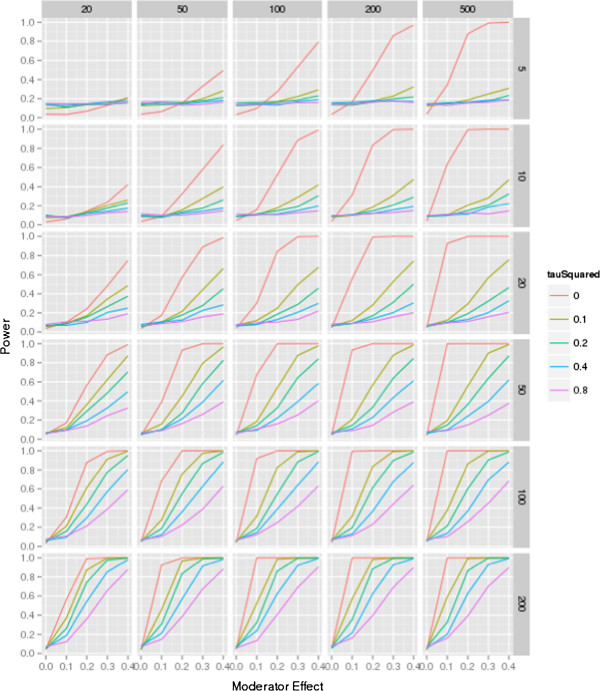
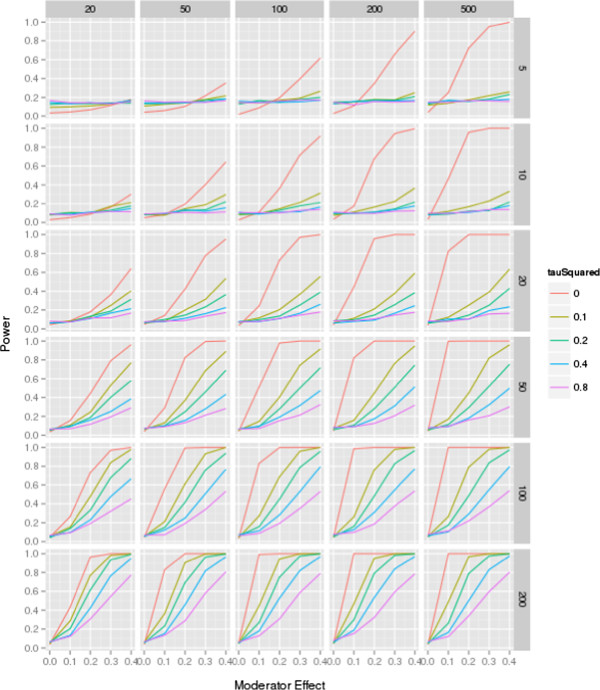
BACKGROUND: There are both theoretical and empirical reasons to believe that design and execution factors are associated with bias in controlled trials. Statistically significant moderator effects, such as the effect of trial quality on treatment effect sizes, are rarely detected in individual meta-analyses, and evidence from meta-epidemiological datasets is inconsistent. The reasons for the disconnect between theory and empirical observation are unclear. The study objective was to explore the power to detect study level moderator effects in meta-analyses. METHODS: We generated meta-analyses using Monte-Carlo simulations and investigated the effect of number of trials, trial sample size, moderator effect size, heterogeneity, and moderator distribution on power to detect moderator effects. The simulations provide a reference guide for investigators to estimate power when planning meta-regressions. RESULTS: The power to detect moderator effects in meta-analyses, for example, effects of study quality on effect sizes, is largely determined by the degree of residual heterogeneity present in the dataset (noise not explained by the moderator). Larger trial sample sizes increase power only when residual heterogeneity is low. A large number of trials or low residual heterogeneity are necessary to detect effects. When the proportion of the moderator is not equal (for example, 25% 'high quality', 75% 'low quality' trials), power of 80% was rarely achieved in investigated scenarios. Application to an empirical meta-epidemiological dataset with substantial heterogeneity (I(2) = 92%, τ(2) = 0.285) estimated >200 trials are needed for a power of 80% to show a statistically significant result, even for a substantial moderator effect (0.2), and the number of trials with the less common feature (for example, few 'high quality' studies) affects power extensively. CONCLUSIONS: Although study characteristics, such as trial quality, may explain some proportion of heterogeneity across study results in meta-analyses, residual heterogeneity is a crucial factor in determining when associations between moderator variables and effect sizes can be statistically detected. Detecting moderator effects requires more powerful analyses than are employed in most published investigations; hence negative findings should not be considered evidence of a lack of effect, and investigations are not hypothesis-proving unless power calculations show sufficient ability to detect effects.
Overview
The claims and statistics of this paper haven’t been checked yet.
Free: it reads the open-access text and checks the first 5 claims that cite a source we can check. Create a free account to check every claim.
Integrity signals
Registry
Cites
Statistics
Figures
Verification
Claims the paper makes
The claims and statistics of this paper haven’t been checked yet.
Free: it reads the open-access text and checks the first 5 claims that cite a source we can check. Create a free account to check every claim.
Claims other papers make about this one
Each is checked against this paper’s own text: does it say what the citing paper says it does?
The cited source says what the claim attributes to it.
In the citing paper
“However, subgroup and moderator analyses usually lack power (54).”
From Efficacy of mindfulness- and acceptance-based cognitive-behavioral therapies for bodily distress in adults: a meta-analysis (2023) · cites this paper as [54]
In the citing paper
“It could therefore be that this moderator analysis was rendered insensitive due to the imbalance in number of effect sizes between condition being compared”
From A systematic and meta-analytic review of the impact of sleep restriction on memory formation. (2024) · cites this paper as Hempel et al., 2013
In the citing paper
“moderator analyses are highly sensitive to statistical power because they depend on smaller subsets of data and are impacted by number of effect sizes, number of participants per effect size, residual heterogeneity, and imbalance in the number of effect sizes between moderator levels (Hempel et al., 2013).”
From A systematic and meta-analytic review of the impact of sleep restriction on memory formation. (2024) · cites this paper as Hempel et al., 2013
In the citing paper
“the current sleep restriction meta-analysis and the total sleep deprivation after encoding meta-analysis in Newbury et al. (2021) are comparable across a number of factors known to affect statistical power of moderating effects including number of effect sizes and balance in the number of effect sizes between moderator levels”
From A systematic and meta-analytic review of the impact of sleep restriction on memory formation. (2024) · cites this paper as Hempel et al., 2013
In the citing paper
“It is possible that this moderating effect could change with a more balanced set of studies”
From A systematic and meta-analytic review of the impact of sleep restriction on memory formation. (2024) · cites this paper as Hempel et al., 2013
1 more claim about this paper
Create a free account to see every claim other papers make about this one.
Self-check
Percentages, sums and reported differences re-computed from the paper’s own numbers.
The self-check needs the paper’s full text.
Citations
Cites
Statistical Power Analysis for the Behavioral Sciences
Muller, K. (1989) · Technometrics · doi:10.1080/00401706.1989.10488618 · Cited by 99,167
Statistical power analysis for the behavioral sciences
(1990) · Computers, Environment and Urban Systems · doi:10.1016/0198-9715(90)90050-4 · Cited by 65,269
Measuring inconsistency in meta-analyses
Higgins, J. P. T., Thompson, S. G., Deeks, J. J., & Altman, D. G. (2003) · BMJ · doi:10.1136/bmj.327.7414.557 · Cited by 63,139 · cited 1×
“Of note, the heterogeneity measure I(2), represents 1 minus the proportion of the total variation that is due to chance, thus equal amounts of heterogeneity (τ(2)) give rise to different proportions of variation that is not due to chance (I(2)) [28].”
BackgroundConducting Meta-Analyses in R with the metafor Package
Viechtbauer, W. (2010) · Journal of Statistical Software · doi:10.18637/jss.v036.i03 · Cited by 20,464 · cited 1×
“Data analysis was carried out using the Metafor package [30].”
MethodSchulz (1995) · doi:10.1001/jama.1995.03520290060030 · Cited by 5,634 · cited 3×
“Some analyses have demonstrated that low quality trials exaggerate treatment effects [9,10]; for example, low quality trials and those with inadequate treatment allocation concealment showed an increased effect size in a large dataset reported by Moher et al.”
BackgroundMethodRequired sample size to detect the mediated effect
Fritz, M. S., & MacKinnon, D. P. (2007) · Psychological Science · doi:10.1111/j.1467-9280.2007.01882.x · Cited by 4,810
Moher, D., Pham, B., Jones, A., Cook, D. J., Jadad, A. R., Moher, M., Tugwell, P., & Klassen, T. P. (1998) · The Lancet · doi:10.1016/s0140-6736(98)01085-x · Cited by 3,560
Assessing the quality of controlled clinical trials
Jüni, P., Altman, D. G., & Egger, M. (2001) · BMJ · doi:10.1136/bmj.323.7303.42 · Cited by 3,309 · cited 1×
“[17] reported associations of effect sizes with allocation concealment and double blinding, whereas the generation of treatment allocation did not show a statistically significant effect across datasets.”
BackgroundWood, L., Egger, M., Gluud, L. L., Schulz, K. F., Jüni, P., Altman, D. G., Gluud, C., Martin, R. M., Wood, A. J. G., & Sterne, J. A. C. (2008) · BMJ · doi:10.1136/bmj.39465.451748.ad · Cited by 2,538 · cited 2×
“Only a few characteristics, such as the type of outcome measure, seem to be reliably related to the detection of quality effects [19].”
BackgroundMethodEgger, M., Jüni, P., Bartlett, C., Holenstein, F., & Sterne, J. (2003) · Health Technology Assessment · doi:10.3310/hta7010 · Cited by 1,181 · cited 1×
“[19] used three meta-epidemiological datasets to explore the associations of quality features and effect sizes [10,15,20] and investigated whether the nature of the intervention and the type of outcome measure influence the effect of allocation concealment and blinding.”
Method
Research works printed but not linked: 5
- Holmes R The Age of Wonder: The Romantic Generation and the Discovery of the Beauty and Terror of Science 2009 London: Random House Digital, Inc
- Kjaergard LL Villumsen J Gluud C Quality of randomised clinical trials affects estimates of intervention efficacy Proceedings of the 7th Cochrane colloquium Universita STommaso D’Aquino 1999 Rome: Centro Cochrane Italiano 57 poster B10
- Juni P Tallon D Egger M Garbage in - garbage out? Assessment of the quality of controlled trials in meta-analyses published in leading journals Proceedings of the 3rd symposium on systematic reviews: beyond the basics. St Catherine’s College 2000 Oxford: Centre for Statistics in Medicine
- Development Core Team Manual R: A Language and Environment for Statistical Computing 2011 Vienna: R Foundation for Statistical Computing
- Higgins J Green S Cochrane handbook for systematic reviews of interventions version 5.1.0. [updated March 2011] 2011 Oxford: The Cochrane Collaboration
Cited by
Effects of flipping the classroom on learning outcomes and satisfaction: A meta-analysis
van Alten, D. C. D., Phielix, C., Janssen, J., & Kester, L. (2019) · Educational Research Review · doi:10.1016/j.edurev.2019.05.003 · Cited by 546
“Moderator analyses in a meta-analysis have certain statistical limitations (Hempel et al., 2013).”
BackgroundMethodInfluentialEmotion regulation and posttraumatic stress symptoms: a meta-analysis
Seligowski, A. V., Lee, D. J., Bardeen, J. R., & Orcutt, H. K. (2015) · Cognitive Behaviour Therapy · doi:10.1080/16506073.2014.980753 · Cited by 408
Kaner, E. F., Beyer, F. R., Garnett, C., Crane, D., Brown, J., Muirhead, C., Redmore, J., O'Donnell, A., Newham, J. J., de Vocht, F., et al. (2017) · Cochrane Database of Systematic Reviews · doi:10.1002/14651858.cd011479.pub2 · Cited by 308
Wittgens, C., Fischer, M. M., Buspavanich, P., Theobald, S., Schweizer, K., & Trautmann, S. (2022) · Acta Psychiatrica Scandinavica · doi:10.1111/acps.13405 · Cited by 284
Virtual reality exposure therapy for posttraumatic stress disorder (PTSD): a meta-analysis
Kothgassner, O. D., Goreis, A., Kafka, J. X., Van Eickels, R. L., Plener, P. L., & Felnhofer, A. (2019) · European Journal of Psychotraumatology · doi:10.1080/20008198.2019.1654782 · Cited by 246
“We were unable to analyse potential confounders (e.g. via meta-regression) due to the small sample of eligible studies and the resulting low power (Hempel et al., 2013).”
BackgroundWang, L., Alammar, N., Singh, R., Nanavati, J., Song, Y., Chaudhary, R., & Mullin, G. E. (2020) · Journal of the Academy of Nutrition and Dietetics · doi:10.1016/j.jand.2019.05.015 · Cited by 209
Fiction reading has a small positive impact on social cognition: A meta-analysis.
Dodell-Feder, D., & Tamir, D. I. (2018) · Journal of Experimental Psychology: General · doi:10.1037/xge0000395 · Cited by 223
“…simulations have shown that when the proportion of the moderator is not equal among effect sizes (e.g., 28% no reading comparison vs. 72% nonfiction comparison) and heterogeneity is high, power is substantially compromised even in the case of a strong moderator effect (Hempel et al., 2013).”
White, C. A., Uttl, B., & Holder, M. D. (2019) · PLOS ONE · doi:10.1371/journal.pone.0216588 · Cited by 200
Whitfield, T., Barnhofer, T., Acabchuk, R., Cohen, A., Lee, M., Schlosser, M., Arenaza-Urquijo, E. M., Böttcher, A., Britton, W., Coll-Padros, N., et al. (2022) · Neuropsychology Review · doi:10.1007/s11065-021-09519-y · Cited by 195
Compernolle, S., DeSmet, A., Poppe, L., Crombez, G., De Bourdeaudhuij, I., Cardon, G., van der Ploeg, H. P., & Van Dyck, D. (2019) · International Journal of Behavioral Nutrition and Physical Activity · doi:10.1186/s12966-019-0824-3 · Cited by 186
Virtual reality improves emotional but not cognitive empathy: A meta-analysis.
Martingano, A. J., Hererra, F., & Konrath, S. (2021) · Technology, Mind, and Behavior · doi:10.1037/tmb0000034 · Cited by 178
“However, unlike the main effect, for moderator analyses theN is much closer to the number of studies, rather than the number of participants (Hempel et al., 2013).”
BackgroundWakelin, K. E., Perman, G., & Simonds, L. M. (2022) · Clinical Psychology & Psychotherapy · doi:10.1002/cpp.2586 · Cited by 170
“In relation to the five variables that were not found to significantly moderate effects, it is noted that the retrospective power estimate of the subgroup analyses was low (Hedges & Pigott, 2004; Hempel et al., 2013).”
BackgroundInfluentialTo Flip or Not to Flip? A Meta-Analysis of the Efficacy of Flipped Learning in Higher Education
Bredow, C. A., Roehling, P. V., Knorp, A. J., & Sweet, A. M. (2021) · Review of Educational Research · doi:10.3102/00346543211019122 · Cited by 162
“Third, given the notorious difficulty of detecting small moderation effects in highly heterogeneous meta-analytic samples (Hempel et al., 2013), the relative dearth of moderation effects for intra-/interpersonal skills and satisfaction should be interpreted with caution.”
BackgroundAcute analgesic effects of nicotine and tobacco in humans: a meta-analysis
Ditre, J. W., Heckman, B. W., Zale, E. L., Kosiba, J. D., & Maisto, S. A. (2016) · Pain · doi:10.1097/j.pain.0000000000000572 · Cited by 159
Rhodes, R. E., Kaushal, N., & Quinlan, A. (2016) · Health Psychology Review · doi:10.1080/17437199.2016.1143334 · Cited by 188
“Sample power and stability suggestions by Hempel et al. (2013) were considered when conducting the moderation analyses, and moderator sub-groupings were used if a 30:70 ratio or greater was present.”
MethodAssociation Between Insight and Outcome of Psychotherapy: Systematic Review and Meta-Analysis
Jennissen, S., Huber, J., Ehrenthal, J. C., Schauenburg, H., & Dinger, U. (2018) · American Journal of Psychiatry · doi:10.1176/appi.ajp.2018.17080847 · Cited by 184
Newbury, C. R., Crowley, R., Rastle, K., & Tamminen, J. (2021) · Psychological Bulletin · doi:10.1037/bul0000348 · Cited by 142
“Based on power simulations, Hempel et al. (2013) provide estimations of the approximate number of studies and participants required to detect categorical moderator effects of different effect sizes.”
BackgroundInfluentialThe relationship between purpose in life and depression and anxiety: A meta‐analysis
Boreham, I. D., & Schutte, N. S. (2023) · Journal of Clinical Psychology · doi:10.1002/jclp.23576 · Cited by 198
“Another concern may be the inadequate power of moderator analysis with Hempel et al. (2013) suggesting upward of 200 samples to achieve 80% power when heterogeneity is high (>92%).”
BackgroundDeSmet, A., Thompson, D., Baranowski, T., Palmeira, A., Verloigne, M., & De Bourdeaudhuij, I. (2016) · Journal of Medical Internet Research · doi:10.2196/jmir.4444 · Cited by 138
“It should be emphasized, however, that this sample size may still be underpowered to detect small or heterogeneous moderator effects, and not finding significant moderator effects should hence not be interpreted as evidence for no effect [46].”
BackgroundWang, L. A. L., Petrulla, V., Zampella, C., Waller, R. E., & Schultz, R. T. (2022) · Psychological Bulletin · doi:10.1037/bul0000358 · Cited by 179
Chiang, J. J., Lam, P. H., Chen, E., & Miller, G. E. (2022) · Psychological Bulletin · doi:10.1037/bul0000351 · Cited by 152
“Meta-analysis offers a complementary means for addressing this question, but it requires a large pool of effect sizes1 and variability in life stage (Hedges & Pigott, 2004; Hempel et al., 2013).”
BackgroundWeb-Based Bereavement Care: A Systematic Review and Meta-Analysis
Wagner, B., Rosenberg, N., Hofmann, L., & Maass, U. (2020) · Frontiers in Psychiatry · doi:10.3389/fpsyt.2020.00525 · Cited by 117
“no exposure) are true effects or whether our analyses were underpowered (42, 77).”
BackgroundHeterogeneity of Striatal Dopamine Function in Schizophrenia: Meta-analysis of Variance
Brugger, S. P., Angelescu, I., Abi-Dargham, A., Mizrahi, R., Shahrezaei, V., & Howes, O. D. (2020) · Biological Psychiatry · doi:10.1016/j.biopsych.2019.07.008 · Cited by 114
Self-criticism and psychotherapy outcome: A systematic review and meta-analysis
Löw, C. A., Schauenburg, H., & Dinger, U. (2020) · Clinical Psychology Review · doi:10.1016/j.cpr.2019.101808 · Cited by 111
Time trajectories in the transcriptomic response to exercise - a meta-analysis
Amar, D., Lindholm, M. E., Norrbom, J., Wheeler, M. T., Rivas, M. A., & Ashley, E. A. (2021) · Nature Communications · doi:10.1038/s41467-021-23579-x · Cited by 108
Psaki, S. R., Chuang, E. K., Melnikas, A., Wilson, D. B., & Mensch, B. (2019) · SSM - Population Health · doi:10.1016/j.ssmph.2019.100386 · Cited by 127
“However, none of the four variables included were significant moderators of the estimated relationship between grade attainment and age at marriage at the study level, possibly due to the small number of studies included in the analyses (see Table 8) (Hempel et al., 2013).”
BackgroundPsychological treatment of perinatal depression: a meta-analysis
Cuijpers, P., Franco, P., Ciharova, M., Miguel, C., Segre, L., Quero, S., & Karyotaki, E. (2023) · Psychological Medicine · doi:10.1017/s0033291721004529 · Cited by 103
“However, the number of studies in subgroups was relatively small, and may very well be chance findings, because moderator analyses need large sample sizes, especially when heterogeneity is high (Hempel et al., 2013).”
BackgroundClinton‐Lisell, V., Taylor, T. O., Bajpayee, S., Davison, M. L., Carlson, S. E., & Seipel, B. (2020) · Reading and Writing · doi:10.1007/s11145-020-10044-2 · Cited by 145
Evangeli, M., Pady, K., & Wroe, A. L. (2015) · AIDS and Behavior · doi:10.1007/s10461-015-1246-0 · Cited by 122
Academic achievement and schizophrenia: a systematic meta-analysis
Dickson, H., Hedges, E. P., Ma, S. Y., Cullen, A. E., MacCabe, J. H., Kempton, M. J., Downs, J. M., & Laurens, K. R. (2020) · Psychological Medicine · doi:10.1017/s0033291720002354 · Cited by 119
“(2013) Study participants recruited from outpatient services of GGZ inGeest, community centers and local newspaper advertising in catchment area of southern district of Amsterdam, Netherlands 67 Patients with a diagnosis of schizophrenia 69 Healthy controls with no history of psychiatric or substance-related disorders…”
BackgroundA Meta-Analytic Review of the Benefit of Spacing out Retrieval Practice Episodes on Retention
Latimier, A., Peyre, H., & Ramus, F. (2021) · Educational Psychology Review · doi:10.1007/s10648-020-09572-8 · Cited by 96
“The consequence is that we cannot ensure that an effect is not significant due to a true lack of effect or a lack of power (Hempel et al., 2013).”
BackgroundClinton‐Lisell, V., & Khan, S. (2019) · AERA Open · doi:10.1177/2332858419872212 · Cited by 129
Efficacy of group psychotherapy for anxiety disorders: A systematic review and meta-analysis
Barkowski, S., Schwartze, D., Strauss, B., Burlingame, G. M., & Rosendahl, J. (2020) · Psychotherapy Research · doi:10.1080/10503307.2020.1729440 · Cited by 95
Childhood socioeconomic status and inflammation: A systematic review and meta-analysis
Milaniak, I., & Jaffee, S. R. (2019) · Brain Behavior and Immunity · doi:10.1016/j.bbi.2019.01.018 · Cited by 109
Dose–response relationships of psilocybin-induced subjective experiences in humans
Hirschfeld, T., & Schmidt, T. T. (2021) · Journal of Psychopharmacology · doi:10.1177/0269881121992676 · Cited by 93
“Hempel et al. (2013) consider heterogeneity to be the most important factor in assessing power in meta-analyses.”
BackgroundSaltaji, H., Armijo-Olivo, S., Cummings, G. G., Amin, M., da Costa, B. R., & Flores-Mir, C. (2018) · BMC Medical Research Methodology · doi:10.1186/s12874-018-0491-0 · Cited by 85
van den Akker, O. R., van Assen, M. A. L. M., van Vugt, M., & Wicherts, J. M. (2020) · Journal of Economic Psychology · doi:10.1016/j.joep.2020.102329 · Cited by 99
Garnett, C. V., Crane, D., Brown, J., Kaner, E. F. S., Beyer, F. R., Muirhead, C. R., Hickman, M., Beard, E., Redmore, J., de Vocht, F., et al. (2018) · Annals of Behavioral Medicine · doi:10.1093/abm/kax029 · Cited by 79
Deng, J., Yang, I. X., Ling, R. R., Syn, N. L. X., Poon, W. H., Murughan, K., Tan, C. S., Choong, A. M. T. L., MacLaren, G., & Ramanathan, K. R. (2020) · Critical Care Medicine · doi:10.1097/ccm.0000000000004688 · Cited by 82
“Meta-regression analyses are also inherently constrained by a lack of power, resulting in an increased risk of type II errors (76).”
BackgroundHwang, H., Cabell, S. Q., & Joyner, R. E. (2021) · Scientific Studies of Reading · doi:10.1080/10888438.2021.1954005 · Cited by 120
“As most moderators with sufficient power had imbalanced proportions of studies for each category of the moderators, the moderators might not actually have had the 80% power (Hempel et al., 2013).”
BackgroundLou, X., & Li, L. M. W. (2022) · European Journal of Social Psychology · doi:10.1002/ejsp.2879 · Cited by 88
Sala, G., Aksayli, N. D., Tatlidil, K. S., Gondo, Y., & Gobet, F. (2019) · Intelligence · doi:10.1016/j.intell.2019.101386 · Cited by 72
A systematic and meta-analytic review of the impact of sleep restriction on memory formation.
Crowley, R., Alderman, E., Javadi, A.-H., & Tamminen, J. (2024) · Neuroscience & Biobehavioral Reviews · doi:10.1016/j.neubiorev.2024.105929 · Cited by 61
“…total sleep deprivation after encoding meta-analysis in Newbury et al. (2021) are comparable across a number of factors known to affect statistical power of moderating effects including number of effect sizes and balance in the number of effect sizes between moderator levels (Hempel et al., 2013).”
BackgroundInfluentialUsing the bayesmeta R package for Bayesian random-effects meta-regression
Röver, C., & Friede, T. (2022) · Computer Methods and Programs in Biomedicine · doi:10.1016/j.cmpb.2022.107303 · Cited by 65
“With that, the statistical power to identify covariables will commonly also tend to be low [33].”
BackgroundTreatments for ADHD in Children and Adolescents: A Systematic Review
Peterson, B. S., Trampush, J. W., Maglione, M., Bolshakova, M., Rozelle, M., Miles, J. N. V., Pakdaman, S., Brown, M., Yagyu, S., Motala, A., et al. (2024) · PEDIATRICS · doi:10.1542/peds.2024-065787 · Cited by 107
Ramanathan, K. R., Yeo, N., Alexander, P. M. A., Raman, L., Barbaro, R. P., Tan, C. S., Schlapbach, L. J., & MacLaren, G. (2020) · Critical Care · doi:10.1186/s13054-020-03418-z · Cited by 62
Tsoli, S., Sutton, S., & Kassavou, A. (2018) · BMJ Open · doi:10.1136/bmjopen-2017-018974 · Cited by 55
“The meta-regression findings Open Access also need to be interpreted with caution due to the small number of studies 51 and the high correlation of the BCTs.”
Alrawashdeh, G. S., Fyffe, S., Azevedo, R. F. L., & Castillo, N. M. (2023) · Educational Research Review · doi:10.1016/j.edurev.2023.100587 · Cited by 93
Graf, B., & Antoni, C. H. (2023) · European Journal of Work and Organizational Psychology · doi:10.1080/1359432x.2022.2118051 · Cited by 52
“Moreover, the mostly uneven distribution of subgroups may lower the statistical power to detect moderator effects (Hempel et al., 2013).”
BackgroundSubregional prefrontal cortex recruitment as a function of inhibitory demand: an fMRI metanalysis
Gavazzi, G., Giovannelli, F., Noferini, C., Cincotta, M., Cavaliere, C., Salvatore, M., Mascalchi, M., & Viggiano, M. P. (2023) · Neuroscience & Biobehavioral Reviews · doi:10.1016/j.neubiorev.2023.105285 · Cited by 56
Zhang, J. J. Y., Ong, J. A. H., Syn, N. L. X., Lorusso, R., Tan, C. S., MacLaren, G., & Ramanathan, K. R. (2019) · Journal of Intensive Care Medicine · doi:10.1177/0885066619892826 · Cited by 52
“Agerstrand et al(19) 2016 18 33 (26-39) 4 pregnant, 14 postpartum 29 17 ARDS, 3 ECPR, 2 PE, 2 AFE, 1 PH 1 VA, 15 VV, 2 VAV Biderman et al(20) 2017 11 36 (30-40) 3 pregnant, 3 intrapartum, 5 postpartum 20 (17-27) 3 AFE, 3 pneumonia, 2 ARDS, 2 CS, 1 TSS 7 VA, 4 VV”
Shah, R., Rogers, K. C., Matin, K., Askari, R., & Rao, S. V. (2015) · American Heart Journal · doi:10.1016/j.ahj.2015.10.006 · Cited by 51
“of GPI, radial access, or P2Y12 inhibitors on safety outcomes.(10)”
Manipulating Belief in Free Will and Its Downstream Consequences: A Meta-Analysis
Genschow, O., Cracco, E., Schneider, J., Protzko, J., Wisniewski, D., Brass, M., & Schooler, J. (2022) · Personality and Social Psychology Review · doi:10.1177/10888683221087527 · Cited by 45
“Finally, meta-analytical moderator analyses are known to often be underpowered (Hempel et al., 2013).”
BackgroundResultInfluentialWillmott, T., Pang, B., Rundle-Thiele, S., & Badejo, A. (2019) · Health Psychology Review · doi:10.1080/17437199.2019.1625280 · Cited by 47
“Research suggests that more than 200 studies are required for 80% power to detect modest associations in meta-regressions (Hempel et al., 2013).”
BackgroundBergman, H., Walker, D.-M., Nikolakopoulou, A., Soares-Weiser, K., & Adams, C. E. (2017) · Health Technology Assessment · doi:10.3310/hta21430 · Cited by 45
Stiwi, K., & Rosendahl, J. (2022) · Complementary Therapies in Clinical Practice · doi:10.1016/j.ctcp.2022.101552 · Cited by 83
Maas genannt Bermpohl, F., Hülsmann, L., & Martin, A. (2023) · Frontiers in Psychiatry · doi:10.3389/fpsyt.2023.1160908 · Cited by 44
“However, subgroup and moderator analyses usually lack power (54).”
BackgroundWilliams, R. T., Citkowicz, M., Miller, D. I., Lindsay, J., & Walters, K. (2022) · Journal of Research on Educational Effectiveness · doi:10.1080/19345747.2021.2009072 · Cited by 60
“Though the large scale of our review was a strength, power to detect moderator effects in meta-analysis tends to be low, even with many included studies (Hempel et al., 2013, Hedges & Pigott, 2001).”
BackgroundBernard, P., Savard, J., Steindorf, K., Sweegers, M. G., Courneya, K. S., Newton, R. U., Aaronson, N. K., Jacobsen, P. B., May, A. M., Galvao, D. A., et al. (2019) · Journal of Psychosomatic Research · doi:10.1016/j.jpsychores.2019.109746 · Cited by 54
“, cancer type which was in large part breast cancer) [57].”
BackgroundGarnett, C. V., Crane, D., Brown, J., Kaner, E., Beyer, F. R., Muirhead, C. R., Hickman, M., Redmore, J., de Vocht, F., Beard, E., et al. (2018) · Journal of Medical Internet Research · doi:10.2196/jmir.8807 · Cited by 49
“It is estimated that more than 200 studies are required for 80% power to detect modest associations [45].”
Adams, N. L., Rose, T. C., Hawker, J. I., Violato, M., O’Brien, S. J., Barr, B., Howard, V., Whitehead, M. M., Harris, R., & Taylor-Robinson, D. C. (2018) · PLoS ONE · doi:10.1371/journal.pone.0191633 · Cited by 58
“It should be noted, however, that the large amount of heterogeneity may have reduced the power to detect statistically significant modifiers in the meta-regression (Table 3), and therefore nonsignificance should not necessarily be interpreted as evidence that a potential modifier had no effect on the relationship betw…”
ResultBernardino, J., Martins, R. C., Bispo, R., & Moreira, F. (2019) · Journal of Environmental Management · doi:10.1016/j.jenvman.2019.109651 · Cited by 38
Protogerou, C., Fleeman, N., Dwan, K. M., Richardson, M., Dundar, Y., & Hagger, M. S. (2015) · Behaviour Research and Therapy · doi:10.1016/j.brat.2015.08.004 · Cited by 48
Rojo, I., Sánchez‐Meca, J., & García‐Charton, J. A. (2019) · Marine Environmental Research · doi:10.1016/j.marenvres.2019.06.005 · Cited by 48
Acetyl-L-carnitine for patients with hepatic encephalopathy
Martí-Carvajal, A. J., Gluud, C. N., Arévalo-Rodríguez, I., & Martí-Amarista, C. E. (2019) · Cochrane Database of Systematic Reviews · doi:10.1002/14651858.cd011451.pub2 · Cited by 43
“[PUBMED: 22359777] Hempel 2013 Hempel S, Miles JN, Booth MJ, Wang Z, Morton SC, Shekelle PG. Risk of bias: a simulation study of power to detect studylevel moderator eLects in meta-analysis.”
BackgroundLooming Cognitive Style and Its Associations with Anxiety and Depression: A Meta-analysis
Yeo, G. C., Hong, R. Y. S., & Riskind, J. H. (2020) · Cognitive Therapy and Research · doi:10.1007/s10608-020-10089-1 · Cited by 36
More alike than different? A comparison of variance explained by cross-cultural models
Field, J. G., Bosco, F. A., Kraichy, D., Uggerslev, K. L., & Geiger, M. K. (2021) · Journal of International Business Studies · doi:10.1057/s41267-021-00428-z · Cited by 35
Improving the Meta-Analytic Assessment of Effect Size Variance With an Informed Bayesian Prior
Steel, P., Kammeyer‐Mueller, J. D., & Paterson, T. A. (2014) · Journal of Management · doi:10.1177/0149206314551964 · Cited by 36
“Third, even when substantive threats to validity are present in the literature and are reported, meta-analyses rarely have adequate statistical power to detect moderator effects in any case (Hempel et al., 2013).”
BackgroundKaminski, J. A., Mascarell-Maricic, L., Fukuda, Y., Katthagen, T., Heinz, A., & Schlagenhauf, F. (2020) · Biological Psychiatry · doi:10.1016/j.biopsych.2020.09.001 · Cited by 34
Sohn, M., Dietrich, J. W., Nauck, M. A., & Lim, S. K. (2023) · Cardiovascular Diabetology · doi:10.1186/s12933-023-01877-6 · Cited by 35
“First, the relatively small number of studies is likely to reduce the power needed to find significance between subgroups, particularly in meta-regression analysis [34].”
BackgroundRiet, J. V. ‘., Crutzen, R., & Lu, A. S. (2014) · Games for Health Journal · doi:10.1089/g4h.2014.0005 · Cited by 33
“It should be noted, however, that the statistical power of moderator analyses in meta-analysis is not always high(40) and that a large number of studies is generally needed to detect effects.(41) Given that research about active videogames is still in its infancy, so that not many published studies exist,(9,16) the re…”
Acetyl-L-carnitine for patients with hepatic encephalopathy
Martí-Carvajal, A. J., Gluud, C. N., & Arévalo-Rodríguez, I. (2014) · Cochrane Database of Systematic Reviews · doi:10.1002/14651858.cd011451 · Cited by 30
Veroniki, A. A., Antony, J., Straus, S. E., Ashoor, H. M., Finkelstein, Y., Khan, P. A., Ghassemi, M., Blondal, E., Ivory, J. D., Hutton, B., et al. (2018) · PLoS ONE · doi:10.1371/journal.pone.0198447 · Cited by 33
A meta-analysis of fMRI studies of semantic cognition in children
Enge, A., Rahman, R. A., & Skeide, M. A. (2021) · NeuroImage · doi:10.1016/j.neuroimage.2021.118436 · Cited by 27
How Reliable Are Therapeutic Competence Ratings? Results of a Systematic Review and Meta-Analysis
Kühne, F., Meister, R., Maass, U., Paunov, T., & Weck, F. (2019) · Cognitive Therapy and Research · doi:10.1007/s10608-019-10056-5 · Cited by 20
“Although no moderators proved significant in our first exploration of moderators, this finding does not indicate their unimportance; moderator analyses require larger samples, especially if studies with varying quality are included (Hempel et al. 2013).”
BackgroundDoes parochial cooperation exist in childhood and adolescence? A meta‐analysis
Lazić, A., Purić, D., & Krstić, K. (2021) · International Journal of Psychology · doi:10.1002/ijop.12791 · Cited by 27
Sleep management in posttraumatic stress disorder: a systematic review and meta-analysis
Maher, A. R., Apaydin, E. A., Hilton, L. G., Chen, C., Troxel, W., Hall, O., Azhar, G. S., Larkin, J., Motala, A., & Hempel, S. (2021) · Sleep Medicine · doi:10.1016/j.sleep.2021.08.016 · Cited by 25
A meta-analysis on the effect of expertise on eye movements during music reading
Perra, J., Latimier, A., Poulin-Charronnat, B., Baccino, T., & Drai-Zerbib, V. (2022) · Journal of Eye Movement Research · doi:10.16910/jemr.15.4.1 · Cited by 26
“The consequence is that we cannot be sure whether the lack of significance of a given effect is due to the genuine absence of that effect or to a lack of power (Hempel et al., 2013).”
BackgroundHou, J., Falconier, M. K., Tam, W., Cheung, M. W. ‐., Fu, R., Bu, H., & Yu, N. X. (2025) · Clinical Psychology Review · doi:10.1016/j.cpr.2025.102587 · Cited by 29
Mistry, D., Stallard, N., & Underwood, M. R. (2018) · Statistics in Medicine · doi:10.1002/sim.7609 · Cited by 23
“9 (large) as these values are inside the range of the typical between‐trial heterogeneity found in IPD meta‐analyses.(38,39) These values equate to an intra‐cluster correlation coefficient (ICC) of approximately 0.”
BackgroundFrampton, J., Izzi‐Engbeaya, C. N., Salem, V., Murphy, K. G., Tan, T., & Chambers, E. S. (2022) · International Journal of Obesity · doi:10.1038/s41366-022-01223-y · Cited by 23
“Therefore, when considering the small number of studies and large degree of statistical heterogeneity, a moderating effect of administration route or glucagon dose on glucose and insulin responses cannot be excluded as such analyses are likely inadequately powered to detect small to moderate effects [64].”
BackgroundManipulating belief in free will and its downstream consequences: A meta-analysisPreprint
Genschow, O., Cracco, E., Schneider, J., Protzko, J., Wisniewski, D., Braß, M., & Schooler, J. W. (2021) · doi:10.31234/osf.io/quwgr · Cited by 21
Khatib, L. A., Li, Y., Geary, D. C., & Popov, V. (2021) · Educational Research Review · doi:10.1016/j.edurev.2021.100412 · Cited by 41
Efficacy of psychological interventions for dysmenorrhea: a meta-analysis
Rogers, S. K., Galloway, A., Hirsh, A. T., Zapolski, T. C. B., Chen, C. X., & Rand, K. L. (2023) · Pain Medicine · doi:10.1093/pm/pnad058 · Cited by 25
Using digital devices to help people lose weight: a systematic review
Besson, M., Gurviez, P., & Carins, J. (2020) · Journal of Social Marketing · doi:10.1108/jsocm-07-2019-0115 · Cited by 16
Knogler, M., Hetmanek, A., & Seidel, T. (2022) · Frontiers in Psychology · doi:10.3389/fpsyg.2022.873995 · Cited by 28
“However, a common problem in meta-analyses—particularly in moderator tests—is the issue of low statistical power due to the small numbers of available effect sizes from primary research, which brings an increased likelihood of false negatives or type II errors when applying statistical significance tests (Cafri et al.…”
BackgroundKöcher, L. M., Schneider, K. S., & Christiansen, H. (2021) · World Journal of Psychiatry · doi:10.5498/wjp.v11.i9.635 · Cited by 25
Abdominal Wall Reconstruction Risk Stratification Tools: A Systematic Review of the Literature
Bernardi, K., Adrales, G. L., Hope, W. W., Keith, J. N., Kuhlens, H., Martindale, R. G., Melin, A. A., Orenstein, S. B., Roth, J. S., Shah, S. K., et al. (2018) · Plastic & Reconstructive Surgery · doi:10.1097/prs.0000000000004833 · Cited by 16
The effect of funding sources on donepezil randomised controlled trial outcome: a meta-analysis
Killin, L. O. J., Russ, T. C., Starr, J. M., Abrahams, S., & Sala, S. D. (2014) · BMJ Open · doi:10.1136/bmjopen-2013-004083 · Cited by 15
“This possibility is supported by a recent review which simulated the power of moderator analyses given the number of studies in a meta-analysis, the number of participants in these studies and the expected moderator effect size.(25) With reference to their findings, a meta-analysis of the current study’s size may not…”
Zhou, J., Wang, H., Zhao, Y., Shao, J., Jiang, M., Yue, S., Lin, L., Wang, L., Xu, Q., Guo, X., et al. (2023) · Journal of the American Heart Association · doi:10.1161/jaha.123.029571 · Cited by 14
Meta-regression of genome-wide association studies to estimate age-varying genetic effects
Pagoni, P., Higgins, J. P. T., Lawlor, D. A., Stergiakouli, E., Warrington, N. M., Morris, T., & Tilling, K. M. (2024) · European Journal of Epidemiology · doi:10.1007/s10654-023-01086-1 · Cited by 13
“This is in line with simulation studies reporting that the statistical power to identify moderator effects in meta-regression depends on the number of trials, the spread of study means, sample sizes and residual heterogeneity [24, 29].”
ResultRetest Reliability of Situational Judgment Tests: A Meta-Analysis
Harenbrock, J., Forthmann, B., & Holling, H. (2023) · Journal of Personnel Psychology · doi:10.1027/1866-5888/a000323 · Cited by 20
Claxton, J., Vibhakar, V., Allen, L. R., Finn, J., Gee, B., & Meiser‐Stedman, R. (2021) · Journal of Affective Disorders Reports · doi:10.1016/j.jadr.2021.100150 · Cited by 20
Pfund, G. N., Bastarache, E. D., Willroth, E. C., Huisman, M. A., Spiro, A., Luo, J., Graham, E. K., & Mroczek, D. K. (2024) · European Journal of Personality · doi:10.1177/08902070241293967 · Cited by 14
“Second, the current study was generally underpowered (k = 14) to test meta-analytic moderators (Hedges & Pigott, 2004; Hempel et al., 2013); thus, we must interpret differences among samples with caution.”
Göbel, K., Hensel, L., Schultheiss, O. C., & Niessen, C. (2022) · Applied Cognitive Psychology · doi:10.1002/acp.3952 · Cited by 15
Clients’ resilience and distress in psychotherapy: a preliminary meta-analysis
Bartholomew, T. T., Robbins, K. A., Joy, E. E., Kang, E., & Aguiñiga, S. M. (2020) · Counselling Psychology Quarterly · doi:10.1080/09515070.2020.1777389 · Cited by 17
“…with smaller study samples may produce less reliable findings (see Lipsey, 2003 for discussion on moderator variables) and lack necessary statistical power to make inferences about moderators (see Hempel et al., 2013 for a simulation study about statistical power and moderators in meta-analysis).”
BackgroundMind over chronic pain: A meta-analysis of cognitive restructuring in chronically ill adults
Pintea, S., & Maier, P. (2024) · Journal of Psychosomatic Research · doi:10.1016/j.jpsychores.2024.111837 · Cited by 12
Badenes‐Ribera, L., Navarro, M. D. F., Iotti, N. O., Campos, A. B., & Longobardi, C. (2018) · Frontiers in Psychology · doi:10.3389/fpsyg.2018.00996 · Cited by 11
“In addition, meta-analytic studies can provide a definitive answer about the nature of an effect when there are contradictory results (Glass, 1976; Borenstein et al., 2009; Hempel et al., 2013).”
ResultTonin, F. S., Lopes, L. A. A., Rotta, I., Bonetti, A. D. F., Pontarolo, R., Correr, C. J., & Fernández-Llimós, F. (2019) · International Journal of Clinical Pharmacy · doi:10.1007/s11096-019-00818-2 · Cited by 9
McIsaac, D. I., Hutton, B., Veroniki, A., Gill, M., Boland, L., Branje, K., Grudzinski, A. L., Hladkowicz, E., Shaw, J., & Gillis, C. (2022) · BMJ Open · doi:10.1136/bmjopen-2022-068797 · Cited by 7
Metadata
- Authors
- Hempel, S., Miles, J. N., Booth, M. J., Wang, Z., Morton, S. C., & Shekelle, P. G.
- Affiliations
- RAND Corporation (US)
- Mayo Clinic (US)
- University of Pittsburgh (US)
- Corresponding author
- Hempel, Susanne
- Venue
- Systematic Reviews
- Published
- 2013-11-28
- Volume
- 2
- Issue
- 1
- Pages
- 107-107
- ISSN
- 2046-4053 (ISSN-L)
- PMC
- PMC4219184
- OpenAlex
- W2152530611
- Cited by
- 137
- References
- 34
- Citations by year
- 2026: 9 · 2025: 7 · 2024: 7 · 2023: 14 · 2022: 14 · 2021: 19 · 2020: 16 · 2019: 20 · 2018: 13 · 2017: 2 · 2016: 5 · 2015: 5 · 2014: 6
- FWCI
- 5.81
- Type
- journal article
- Language
- en
- Open access
- gold
- doi.org
- Licence
- cc-by
- creativecommons.org/licenses/by/2.0 (tdm)
- Locations
- Systematic Reviews (publishedVersion, cc-by)
- PubMed Central (publishedVersion, cc-by)
- PubMed (publishedVersion)
- D-Scholarship@Pitt (University of Pittsburgh) (acceptedVersion)
- eScholarship (California Digital Library) (submittedVersion)
- eScholarship (California Digital Library) (submittedVersion, cc-by)
- Funders
- U.S. Department of Veterans Affairs
- RAND Corporation
- Agency for Healthcare Research and Quality
- U.S. Public Health Service (290-2007-10062-I)
- Topics
- Social Sciences › Decision Sciences › Statistics, Probability and Uncertainty › Meta-analysis and systematic reviews
- Physical Sciences › Mathematics › Statistics and Probability › Statistical Methods in Clinical Trials
- Physical Sciences › Mathematics › Statistics and Probability › Statistical Methods in Epidemiology
- Keywords
- statistical power, meta-regression, residual heterogeneity, trial quality, meta-epidemiology, sample size determination, number of trials, trial size, negative results, risk of bias
- MeSH terms
- Computer Simulation, Humans, Monte Carlo Method, Research Design, Risk Factors, Meta-Analysis as Topic, Bias, Effect Modifier, Epidemiologic, Randomized Controlled Trials as Topic
About these checks
Registry, retraction, Cites and statistics results are computed, not judged, with one exception: a printed reference that no index lists is read once by a model before it counts as a citation error. Claims are extracted by a model and kept only when their quote appears verbatim in the text; each cited source is then checked, with a model’s help, for whether it says what the claim relies on. Those verdicts can be wrong — read the claim’s quote and the cited source before relying on one.
Statistics and arithmetic are recomputed, not judged.
Confidence bands are shown only for fields calibrated on our annotated test set. None is calibrated yet, so no band is shown.
What counts as a claim ›How we measure confidence ›How we check this ›
Are you an author, or do you see a problem with this page? Request a review
Data sources
Bibliographic data: Semantic Scholar, OpenAlex, Crossref.
Contains information from the Semantic Scholar Academic Graph Datasets, made available under the ODC Attribution License (ODC-BY 1.0).
Semantic Scholar’s data is described in: Kinney, R., et al. (2023). The Semantic Scholar Open Data Platform. arXiv:2301.10140.
