

Stool substitute transplant therapy for the eradication of Clostridium difficile infection: ‘RePOOPulating’ the gut
Open accessThe DOI matches its Crossref record; 27 of the 27 references it cites were found in a registry or an index.
Abstract
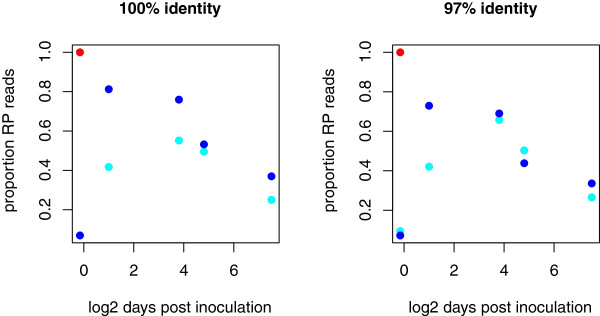
BACKGROUND: Fecal bacteriotherapy ('stool transplant') can be effective in treating recurrent Clostridium difficile infection, but concerns of donor infection transmission and patient acceptance limit its use. Here we describe the use of a stool substitute preparation, made from purified intestinal bacterial cultures derived from a single healthy donor, to treat recurrent C. difficile infection that had failed repeated standard antibiotics. Thirty-three isolates were recovered from a healthy donor stool sample. Two patients who had failed at least three courses of metronidazole or vancomycin underwent colonoscopy and the mixture was infused throughout the right and mid colon. Pre-treatment and post-treatment stool samples were analyzed by 16 S rRNA gene sequencing using the Ion Torrent platform. RESULTS: Both patients were infected with the hyper virulent C. difficile strain, ribotype 078. Following stool substitute treatment, each patient reverted to their normal bowel pattern within 2 to 3 days and remained symptom-free at 6 months. The analysis demonstrated that rRNA sequences found in the stool substitute were rare in the pre-treatment stool samples but constituted over 25% of the sequences up to 6 months after treatment. CONCLUSION: This proof-of-principle study demonstrates that a stool substitute mixture comprising a multi-species community of bacteria is capable of curing antibiotic-resistant C. difficile colitis. This benefit correlates with major changes in stool microbial profile and these changes reflect isolates from the synthetic mixture. CLINICAL TRIAL REGISTRATION NUMBER: CinicalTrials.gov NCT01372943.
Overview
The claims and statistics of this paper haven’t been checked yet.
Free: it reads the open-access text and checks the first 5 claims that cite a source we can check. Create a free account to check every claim.
Integrity signals
Registry
Cites
Statistics
Figures
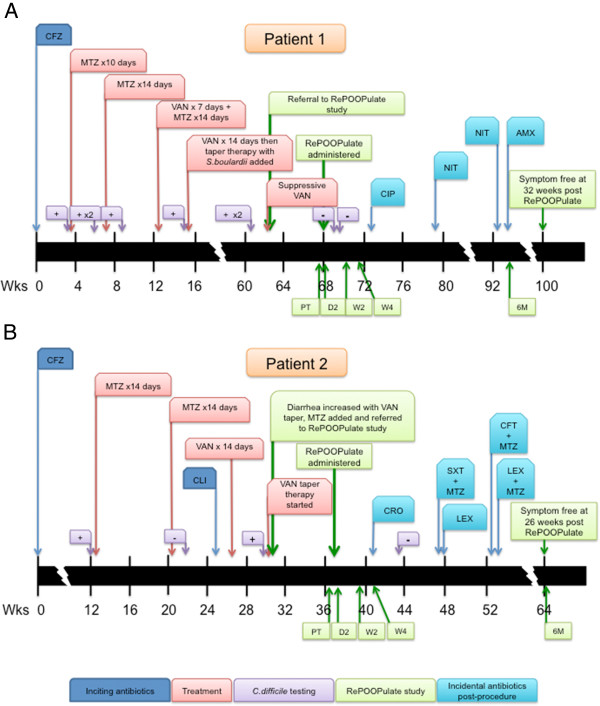
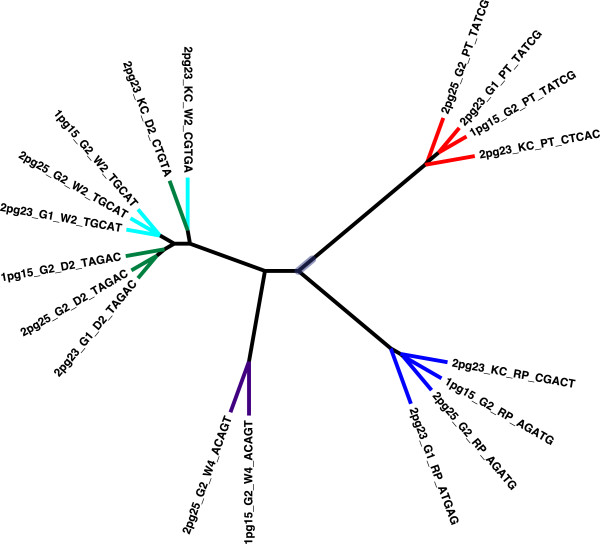
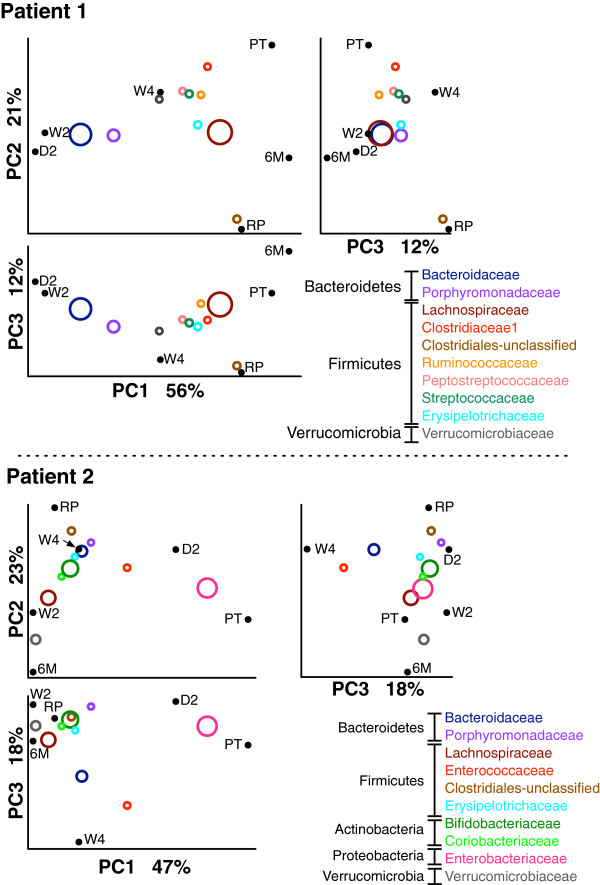
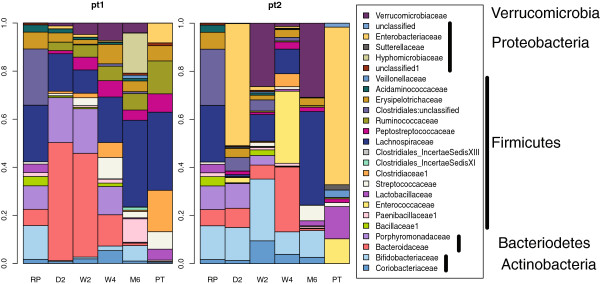
Verification
Claims the paper makes
The claims and statistics of this paper haven’t been checked yet.
Free: it reads the open-access text and checks the first 5 claims that cite a source we can check. Create a free account to check every claim.
Claims other papers make about this one
Each is checked against this paper’s own text: does it say what the citing paper says it does?
The source backs part of the claim, not all of it — or backs it for a different population, condition or comparison.
In the citing paper
“Microbial Ecosystem Therapeutic 4 (MET4) is an orally delivered defined mixture of pure live cultures of intestinal bacteria isolated from the stool of a healthy donor, purified and grown in conditions modeling those of the human distal gut.8”
From First-in-class Microbial Ecosystem Therapeutic 4 (MET4) in combination with immune checkpoint inhibitors in patients with advanced solid tumors (MET4-IO trial) (2023) · cites this paper as [8]
Experimental — accuracy not yet measuredThe check wasn’t confident either way, so it gives no verdict — never disputed.
In the citing paper
“In 2010, Russell et al. report the first pediatric patient treated with FMT via nasogastric tube.118”
From Update on Fecal Microbiota Transplantation 2015: Indications, Methodologies, Mechanisms, and Outlook (2015) · cites this paper as [118]
Experimental — accuracy not yet measuredIn the citing paper
“Microbial consortia (multi-species mixtures of cultivated microbes) represent an intermediate approach intended to balance the ecological and functional complexity of FMT and the practical advantages of cultivated microbes, and have been successfully used as alternatives to FMT for other indications such as Clostridioides difficile infection, 8,9”
In the citing paper
“In children with recurrent CDI and underlying IBD, the data the data is mixed, highlighting the difficulty in distinguishing a clinical response to an infection that may have the same symptoms as the underlying disease.118, 121, 124”
From Update on Fecal Microbiota Transplantation 2015: Indications, Methodologies, Mechanisms, and Outlook (2015) · cites this paper as [118]
In the citing paper
“The case involved a 2 year old child with recalcitrant CDI that had failed an exhaustive course, including probiotics, metronidazole, pulsed-dose vancomycin, rifaximin, and nitazoxanide, who experienced complete resolution of symptoms within 36 hours of FMT.”
From Update on Fecal Microbiota Transplantation 2015: Indications, Methodologies, Mechanisms, and Outlook (2015) · cites this paper as [118]
Self-check
Percentages, sums and reported differences re-computed from the paper’s own numbers.
The self-check needs the paper’s full text.
Citations
Cites
MUSCLE: multiple sequence alignment with high accuracy and high throughput
Edgar, R. C. (2004) · Nucleic Acids Research · doi:10.1093/nar/gkh340 · Cited by 44,662 · cited 1×
“Sequence alignments were built using Muscle [16] and a neighbor-joining tree was generated by ClustalW2 [17].”
MethodQIIME allows analysis of high-throughput community sequencing data
Caporaso, J. G., Kuczynski, J., Stombaugh, J., Bittinger, K., Bushman, F. D., Costello, E. K., Fierer, N., Peña, A. G., Goodrich, J. K., Gordon, J. I., et al. (2010) · Nature Methods · doi:10.1038/nmeth.f.303 · Cited by 34,887 · cited 1×
“0 [15] as follows.”
Clustal W and Clustal X version 2.0
Larkin, M. A., Blackshields, G., Brown, N. P., Chenna, R., McGettigan, P. A., McWilliam, H., Valentin, F., Wallace, I. M., Wilm, A., Lopez, R., et al. (2007) · Bioinformatics · doi:10.1093/bioinformatics/btm404 · Cited by 28,358
UCHIME improves sensitivity and speed of chimera detection
Edgar, R. C., Haas, B. J., Clemente, J. C., Quince, C., & Knight, R. (2011) · Bioinformatics · doi:10.1093/bioinformatics/btr381 · Cited by 15,114
Greengenes, a Chimera-Checked 16S rRNA Gene Database and Workbench Compatible with ARB
DeSantis, T. Z., Hugenholtz, P., Larsen, N., Rojas, M., Brodie, E. L., Keller, K., Huber, T., Dalevi, D., Hu, P., & Andersen, G. L. (2006) · Applied and Environmental Microbiology · doi:10.1128/aem.03006-05 · Cited by 10,891
UniFrac: a New Phylogenetic Method for Comparing Microbial Communities
Lozupone, C., & Knight, R. (2005) · Applied and Environmental Microbiology · doi:10.1128/aem.71.12.8228-8235.2005 · Cited by 8,227 · cited 1×
“Beta-diversity was calculated by the UniFrac algorithm [18].”
MethodEnterotypes of the human gut microbiome
MetaHIT Consortium (additional members), Arumugam, M., Raes, J., Pelletier, E., Le Paslier, D., Yamada, T., Mende, D. R., Fernandes, G. R., Tap, J., Bruls, T., et al. (2011) · Nature · doi:10.1038/nature09944 · Cited by 7,548 · cited 1×
“Similarly, the relevance of patient enterotype [24], which may turn out to be more important than age-matching, has not been fully explored.”
BackgroundCohen, S. H., Gerding, D. N., Johnson, S., Kelly, C. P., Loo, V. G., McDonald, L. C., Pepin, J., & Wilcox, M. H. (2010) · Infection Control & Hospital Epidemiology · doi:10.1086/651706 · Cited by 2,942
NAST: a multiple sequence alignment server for comparative analysis of 16S rRNA genes
DeSantis, T. Z., Hugenholtz, P., Keller, K., Brodie, E. L., Larsen, N., Piceno, Y. M., Phan, R., & Andersen, G. L. (2006) · Nucleic Acids Research · doi:10.1093/nar/gkl244 · Cited by 1,035
Decreased Diversity of the Fecal Microbiome in Recurrent Clostridium difficile–Associated Diarrhea
Chang, J. Y., Antonopoulos, D. A., Kalra, A., Tonelli, A., Khalife, W. T., Schmidt, T. M., & Young, V. B. (2008) · The Journal of Infectious Diseases · doi:10.1086/525047 · Cited by 1,010 · cited 2×
“An association has been made between recurrent disease and intestinal dysbiosis [4], and an inability of certain individuals to reestablish their normal intestinal bacteria is thought to play a leading role in recurrence.”
Background
Cited by
Items 701–746 of 746
Davidovics, Z. H. (2021) · Elsevier eBooks · doi:10.1016/b978-0-323-67293-1.00093-1
C. difficile Microbiome Manipulation
Penney, J. A., Wick, J., Basein, T., & Doron, S. (2022) · Springer eBooks · doi:10.1007/978-3-030-98427-4_16
Key model systems in animal–microbe beneficial interactions
Sarkar, P. (2023) · Elsevier eBooks · doi:10.1016/b978-0-323-99334-0.00021-9
Bacterial internalization in cancer and other medical conditions: Intracellular pathogens
Paley, E. L. (2023) · Elsevier eBooks · doi:10.1016/b978-0-443-19122-0.00006-6
Data from The Microbiome and Cancer: Creating Friendly Neighborhoods and Removing the Foes Within
Parida, S., & Sharma, D. (2023) · doi:10.1158/0008-5472.c.6512508.v1
Non-LAB Bacterial Probiotic: Next-Generation Probiotic, Bacillus Spp., Clostridium butyricum
Khomeiri, M., Taheri, S., & Nasrollahzadeh, A. (2023) · Springer eBooks · doi:10.1007/978-3-030-81404-5_42-1
Applications of Microbial Fermentation to Food Products, Chemicals and Pharmaceuticals
Lee, B. H. (2021) · Wiley eBooks · doi:10.1002/9781119042792.part2
(2023) · The MIT Press eBooks · doi:10.7551/mitpress/14255.003.0015
Ramachandra, M., Baker, C. C., Alward, T. A., Ucciferri, L., Innis, J., He, S.-M., Sheth, P. M., Lomax, A. E., & Ross, A. C. (2024) · ChemRxiv · doi:10.26434/chemrxiv-2024-l0vll
Current insights into microbiome-based therapy. Review
Ткач, С. М., Dorofeyev, A. E., & Lm, R. (2024) · Modern Gastroenterology · doi:10.30978/mg-2024-1-73
Customised Microbiome Restoration Approaches in Older People: Perspectives and Therapeutic Prospects
Rajalakshmi, M., Vijayalakshmi, P., & Indu, S. (2024) · Springer eBooks · doi:10.1007/978-981-99-8803-7_10 · Cited by 1
Microbiome-Based Therapeutics for the Management of Cancer
Munir, M. U., Javed, I., Butt, M. H., Khan, Y. H., Salman, M., Rehman, Z. U., Khan, F. U., Shamsi, S. S., & Mallhi, T. H. (2024) · Springer eBooks · doi:10.1007/978-981-97-3790-1_14 · Cited by 1
Exploiting bacteriophages to tackle Clostridium difficile infection
Meader, E. J. (2013) · UEA Digital Repository (University of East Anglia)
Romero, R., Zarzycka, A., Preußner, M., Fischer, F., Hain, T., Herrmann, J.-P., Roth, K., Keber, C. U., Suryamohan, K., Raifer, H., et al. (2022) · Figshare · doi:10.6084/m9.figshare.21228706
Clinical and microbiological studies of faecal microbiota transplantation in ulcerative colitis
Paramsothy, S. (2018) · UNSWorks (University of New South Wales, Sydney, Australia) · doi:10.26190/unsworks/3506
Romero, R., Zarzycka, A., Preußner, M., Fischer, F., Hain, T., Herrmann, J.-P., Roth, K., Keber, C. U., Suryamohan, K., Raifer, H., et al. (2022) · Figshare · doi:10.6084/m9.figshare.21228712
Onderzoek naar microbiële interactie netwerken van heterotrofe bacteriën in rivierwater
Bonal, M. (2023) · Lirias
Study of microbial interaction networks among heterotrophic bacteria from river waters
Bonal, M. (2023) · Dépôt institutionnel de l'Université libre de Bruxelles (Université Libre de Bruxelles)
Westfall, S. (2018) · eScholarship@McGill (McGill) · doi:10.82308/37892
O microbioma intestinal e as suas implicações na obesidade
Martins, A. R. S. (2015) · Repositório Comum (Repositório Científico de Acesso Aberto de Portugal) · Cited by 4
Rooney, A. M. (2022) · TSpace (University of Toronto)
Friend and Foe: Microbes in Orchestrating Immunity and Shaping Infection Dynamics
Nair, A. V. (2026) · ACS Infectious Diseases · doi:10.1021/acsinfecdis.5c00709
Ramírez, K. A. H., & Boschini, M. M. R. (2024) · Investigative News in Education (Universidad de Costa Rica)
Caractérisation du microbiote intestinal des enfants atteints de la malnutrition aigüe sévère
Pham, T. P. T. (2019) · theses.fr (ABES) · doi:10.70675/003bce66z53a3z4bf4zb0dez43e6bb672e0f
Exploration du microbiote digestif par des approches multi-OMICS
Ngom, I. I. (2019) · theses.fr (ABES) · doi:10.70675/5cd8042ezb909z42b5z9024z3cb428057fe3
Bioinformatics and biostatistical studies of the mosaic structures of microbial genomes
Tall, M. L. (2020) · theses.fr (ABES) · doi:10.70675/fb252c16z71b2z4b3dza1ccza62d6af2142f
Contribution de la culturomique dans l'élucidation de la Dark Matter de la métagénomique bactérienne
Diakite, A. (2020) · theses.fr (ABES) · doi:10.70675/1b38578aze081z4ba9z9dd6ze92f8bbde90c
Yimagou, E. K. (2020) · theses.fr (ABES) · doi:10.70675/7089ba6dz2f1cz48d1z8a2bz9718d85e5985
Impact des Antibiotiques sur le microbiote digestif et l’émergence de bactéries multirésistantes
Pilmis, B. (2021) · theses.fr (ABES) · doi:10.70675/cc6341f0zcafez43aez9abbz382265008c57 · Cited by 1
Gomes, P. (2023) · theses.fr (ABES) · doi:10.70675/e62ef6fczef8az47c7za3b7ze3f8b24127a4 · Cited by 1
Optimisation de la fermentation de la biomasse végétale par Lachnoclostridium phytofermentans
Zaplana, T. (2024) · theses.fr (ABES) · doi:10.70675/41e351e0z0ff9z4432zb6cdz17cb0e593450
Bactériothérapie dans le traitement des infections à Clostridioides difficile
Kieu, H. T. (2023) · theses.fr (ABES) · doi:10.70675/f92bac63z436ez469ezb930zad31878a55eb
Safety, Standardization, and Policy Development
Sobti, R. C., Negi, R. K., & Rana, A. (2026) · Springer eBooks · doi:10.1007/978-981-95-9031-5_11
Microbiome-Driven Neurobiology Understanding of the Gut-Brain Communication Network
Khanam, H., & Bhandari, K. (2026) · International Journal of Innovative Science and Research Technology (IJISRT) · doi:10.38124/ijisrt/26may280
Fit for purpose: evaluation and evolution of agricultural bioinoculants across production landscapes
Hemara, L. M., Doyle, R., diCenzo, G. C., Bakker, M. G., Hopkins, K. R., Lee, J., Oresnik, I. J., & Bell, T. H. (2026) · ISME Communications · doi:10.1093/ismeco/ycag190
“In medicine, inoculated microbes have led to reliable improvements in human health status, including the use of fecal transplants to successfully treat recurrent Clostridioides difficile infection [ 3].”
Huang, Q., Huifei, X., Qiaoyun, L., Zhang, Y., Zou, J., Gao, Z., Yang, L., Zeng, H., & Liu, J. (2026) · Frontiers in Oncology · doi:10.3389/fonc.2026.1913974
“Its perioperative application has expanded rapidly (20 – 22), and next-generation therapeutics — de fi ned microbial consortia and lytic bacteriophage preparations — have entered clinical trials (23 – 26).”
Vijverman, L., Maddalena, T., Delrue, C., & Speeckaert, M. M. (2026) · Biomedicines · doi:10.3390/biomedicines14102143
“Defined microbial consortia composed of cultured bacterial strains aim to replicate the therapeutic effects of FMT while avoiding the variability associated with donor-derived stool [171].”
Bacteriotherapy reintroduces “old friends” in IBD
Nanki, K., Naganuma, M., Mizuno, S., Matsuoka, K., & Kanai∥, T. (2015) · Inflammation and Regeneration · doi:10.2492/inflammregen.35.122
Metadata
- Authors
- Petrof, E. O., Gloor, G. B., Vanner, S. J., Weese, S. J., Carter, D., Daigneault, M. C., Brown, E. M., Schroeter, K., & Allen-Vercoe, E.
- Affiliations
- Queen's University (CA)
- Western University (CA)
- University of Guelph (CA)
- Robarts Research Institute (CA)
- Corresponding author
- Petrof, Elaine O
- Venue
- Microbiome
- Published
- 2013-01-09
- Volume
- 1
- Issue
- 1
- Pages
- 3-3
- ISSN
- 2049-2618 (ISSN-L)
- PMC
- PMC3869191
- OpenAlex
- W2140714996
- Cited by
- 731
- References
- 27
- Citations by year
- 2026: 16 · 2025: 19 · 2024: 25 · 2023: 37 · 2022: 40 · 2021: 52 · 2020: 60 · 2019: 63 · 2018: 58 · 2017: 69 · 2016: 87 · 2015: 73 · 2014: 74 · 2013: 56
- FWCI
- 70.52
- Type
- journal article
- Language
- en
- Open access
- gold
- doi.org
- Licence
- cc-by
- creativecommons.org/licenses/by/2.0 (tdm)
- Locations
- Microbiome (publishedVersion, cc-by)
- Europe PMC (PubMed Central) (publishedVersion, cc-by)
- PubMed Central (publishedVersion, cc-by)
- PubMed (publishedVersion)
- Funders
- Physicians' Services Incorporated Foundation
- Canadian Institutes of Health Research
- Topics
- Health Sciences › Medicine › Infectious Diseases › Clostridium difficile and Clostridium perfringens research
- Life Sciences › Biochemistry, Genetics and Molecular Biology › Molecular Biology › Gut microbiota and health
- Health Sciences › Medicine › Gastroenterology › Gastrointestinal motility and disorders
- Keywords
- Clostridium difficile infection, fecal microbiota transplantation, recurrent Clostridium difficile infection, hypervirulent strains, ribotype 078, gut microbiota, metronidazole, vancomycin, 16S rRNA gene sequencing
About these checks
Registry, retraction, Cites and statistics results are computed, not judged, with one exception: a printed reference that no index lists is read once by a model before it counts as a citation error. Claims are extracted by a model and kept only when their quote appears verbatim in the text; each cited source is then checked, with a model’s help, for whether it says what the claim relies on. Those verdicts can be wrong — read the claim’s quote and the cited source before relying on one.
Statistics and arithmetic are recomputed, not judged.
Confidence bands are shown only for fields calibrated on our annotated test set. None is calibrated yet, so no band is shown.
What counts as a claim ›How we measure confidence ›How we check this ›
Are you an author, or do you see a problem with this page? Request a review
Data sources
Bibliographic data: Semantic Scholar, OpenAlex, Crossref.
Contains information from the Semantic Scholar Academic Graph Datasets, made available under the ODC Attribution License (ODC-BY 1.0).
Semantic Scholar’s data is described in: Kinney, R., et al. (2023). The Semantic Scholar Open Data Platform. arXiv:2301.10140.
