

An improved dual-indexing approach for multiplexed 16S rRNA gene sequencing on the Illumina MiSeq platform
Open accessThe DOI matches its Crossref record; 14 of the 14 references it cites were found in a registry or an index.
Abstract
BACKGROUND: To take advantage of affordable high-throughput next-generation sequencing technologies to characterize microbial community composition often requires the development of improved methods to overcome technical limitations inherent to the sequencing platforms. Sequencing low sequence diversity libraries such as 16S rRNA amplicons has been problematic on the Illumina MiSeq platform and often generates sequences of suboptimal quality. RESULTS: Here we present an improved dual-indexing amplification and sequencing approach to assess the composition of microbial communities from clinical samples using the V3-V4 region of the 16S rRNA gene on the Illumina MiSeq platform. We introduced a 0 to 7 bp "heterogeneity spacer" to the index sequence that allows an equal proportion of samples to be sequenced out of phase. CONCLUSIONS: Our approach yields high quality sequence data from 16S rRNA gene amplicons using both 250 bp and 300 bp paired-end MiSeq protocols and provides a flexible and cost-effective sequencing option.
Overview
The claims and statistics of this paper haven’t been checked yet.
Free: it reads the open-access text and checks the first 5 claims that cite a source we can check. Create a free account to check every claim.
Integrity signals
Registry
Cites
Statistics
Figures
Verification
Claims the paper makes
The claims and statistics of this paper haven’t been checked yet.
Free: it reads the open-access text and checks the first 5 claims that cite a source we can check. Create a free account to check every claim.
Claims other papers make about this one
Each is checked against this paper’s own text: does it say what the citing paper says it does?
In the citing paper
“choices of 16S rRNA gene variable region primers may enable improved detection or differentiation of microbes16; for example, Propionibacterium spp. abundant on the skin are often undetected by V4 primers29, and Lactobacillus spp. in the vagina are better differentiated by including V321.”
From Assessment of variation in microbial community amplicon sequencing by the Microbiome Quality Control (MBQC) project consortium (2017) · cites this paper as [21]
Self-check
Percentages, sums and reported differences re-computed from the paper’s own numbers.
The self-check needs the paper’s full text.
Citations
Cites
Fast and accurate short read alignment with Burrows-Wheeler transform
Li, H., & Durbin, R. (2009) · Bioinformatics · doi:10.1093/bioinformatics/btp324 · Cited by 58,607
QIIME allows analysis of high-throughput community sequencing data
Caporaso, J. G., Kuczynski, J., Stombaugh, J., Bittinger, K., Bushman, F. D., Costello, E. K., Fierer, N., Peña, A. G., Goodrich, J. K., Gordon, J. I., et al. (2010) · Nature Methods · doi:10.1038/nmeth.f.303 · Cited by 34,887 · cited 1×
“0,) [10] and included additional quality trimming, demultiplexing, and taxonomic assignments.”
Search and clustering orders of magnitude faster than BLAST
Edgar, R. C. (2010) · Bioinformatics · doi:10.1093/bioinformatics/btq461 · Cited by 20,826
Naïve Bayesian Classifier for Rapid Assignment of rRNA Sequences into the New Bacterial Taxonomy
Wang, Q., Garrity, G. M., Tiedje, J. M., & Cole, J. R. (2007) · Applied and Environmental Microbiology · doi:10.1128/aem.00062-07 · Cited by 19,885 · cited 1×
“2 [15] trained on the Greengenes database”
FLASH: fast length adjustment of short reads to improve genome assemblies
Magoč, T., & Salzberg, S. L. (2011) · Bioinformatics · doi:10.1093/bioinformatics/btr507 · Cited by 15,366 · cited 4×
“The final sequence length after barcode, heterogeneity spacer, and primer removal was 429 ± 7 bp and 429 ± 6.7 bp for PANDAseq and FLASH, respectively, with an average of approximately 11,600 reads per sample.”
InfluentialUCHIME improves sensitivity and speed of chimera detection
Edgar, R. C., Haas, B. J., Clemente, J. C., Quince, C., & Knight, R. (2011) · Bioinformatics · doi:10.1093/bioinformatics/btr381 · Cited by 15,114
Structure, function and diversity of the healthy human microbiome
The Human Microbiome Project Consortium (2012) · Nature · doi:10.1038/nature11234 · Cited by 11,726
Ultra-high-throughput microbial community analysis on the Illumina HiSeq and MiSeq platforms
Caporaso, J. G., Lauber, C. L., Walters, W. A., Berg-Lyons, D., Huntley, J., Fierer, N., Owens, S. M., Betley, J., Fraser, L., Bauer, M., et al. (2012) · The ISME Journal · doi:10.1038/ismej.2012.8 · Cited by 8,839 · cited 3×
“quencing strategies include a single- [2,3] or a recently”
MethodKozich, J. J., Westcott, S. L., Baxter, N. T., Highlander, S. K., & Schloss, P. D. (2013) · Applied and Environmental Microbiology · doi:10.1128/aem.01043-13 · Cited by 7,112 · cited 2×
“developed dual-indexing [4] approach targeting the V4 hypervariable region of the 16S rRNA gene.”
Base-Calling of Automated Sequencer Traces Using Phred. I. Accuracy Assessment
Ewing, B., Hillier, L., Wendl, M. C., & Green, P. (1998) · Genome Research · doi:10.1101/gr.8.3.175 · Cited by 6,967 · cited 1×
“Additional sequence read pre-processing included: 1) removal of primer sequence; 2) truncation of sequence reads not having an average quality of 20 over a 30 bp sliding window based on the phred algorithm [6,7] implemented previously [8,9]; and 3) removal of trimmed reads having less than 75% of their original length…”
Cited by
Items 901–1,000 of 1,000
Effects of host species on microbiota composition in Phlebotomus and Lutzomyia sand flies
Tabbabi, A., Mizushima, D., Yamamoto, D. S., & Kato, H. (2023) · Parasites & Vectors · doi:10.1186/s13071-023-05939-2 · Cited by 15
“However, studies investigating the bacterial load separately did not find any significant impact on infection rates [34].”
BackgroundMethodBacterial Microbiota Composition in Hidradenitis Suppurativa Differs per Skin Layer
Pardo, L. M., Wang, C., Ardon, C. B., Kraaij, R., Prens, E. P., & van Straalen, K. R. (2023) · Journal of Investigative Dermatology · doi:10.1016/j.jid.2023.08.017 · Cited by 15
Longitudinal study of the interplay between the skin barrier and facial microbiome over 1 year
Seo, J. Y., You, S. W., Gu, K., Kim, H., Shin, J., Leem, S., Hwang, B. K., Kim, Y., & Kang, N. G. (2023) · Frontiers in Microbiology · doi:10.3389/fmicb.2023.1298632 · Cited by 16
“Pooled final library was loaded into MiSeq Reagent Kit v3 (600-cycle) (Illumina) and was sequenced on an Illumina MiSeq with 2 × 300 bp paired-end read chemistry (Illumina) (Fadrosh et al., 2014).”
MethodBacillus amyloliquefaciens Probiotics Mix Supplementation in a Broiler Leaky Gut Model
Horyanto, D., Bajagai, Y. S., Kayal, A., von Hellens, J., Chen, X., Van, T. T. H., Radovanović, A., & Stanley, D. (2024) · Microorganisms · doi:10.3390/microorganisms12020419 · Cited by 17
“The sequencing library was prepared by amplifying the V3-V4 region of the 16S rRNA gene using primer pairs pro341F (5 ′ -CCTACGGGNBGCASCAG-3 ′ ) and pro805R (5 ′ -GACTACNVGGGTATCTAATCC-3 ′ ) with index, heterogeneity spacer and Illumina sequencing linkers [44].”
MethodCarvalho, C. O., Pazirgiannidi, M., Ravelomanana, T., Andriambelomanana, F., Schrøder‐Nielsen, A., Ready, J. S., de Boer, H., Fusari, C.-E., & Mauvisseau, Q. (2024) · Scientific Reports · doi:10.1038/s41598-024-71398-z · Cited by 15
“Amplicon libraries with MiFish, Riaz and Tele02 primers were conducted with indexed primers following Fadrosh et al. 54 .”
van Gogh, M., Louwers, J. M., Celli, A., Gräve, S., Viveen, M. C., Bosch, S., de Boer, N. K. H., Verheijden, R. J., Suijkerbuijk, K. P. M., Brand, E. C., et al. (2024) · Microbiome · doi:10.1186/s40168-024-01923-9 · Cited by 15
“For 16S rRNA gene sequencing, the V3 and V4 hyper-variable regions of the 16S rRNA gene were amplified and sequenced using the Illumina MiSeq instrument and Reagent Kit v3 (600 cycles) according to Fadrosh et al. [42].”
MethodDifferences in foot skin microbiomes between patients with type 2 diabetes and healthy individuals
Han, S. H., Lee, J. S., Song, K., Choe, Y. B., Ahn, K. J., & Lee, Y. W. (2019) · Mycoses · doi:10.1111/myc.13046 · Cited by 15
Malayil, L., Chattopadhyay, S., Kulkarni, P., Hittle, L. E., Clark, P. I., Mongodin, E. F., & Sapkota, A. R. (2020) · Applied Microbiology and Biotechnology · doi:10.1007/s00253-020-10681-1 · Cited by 17
Neijat, M., Habtewold, J. Z., Li, S., Jing, M.-Y., & House, J. D. (2020) · Prostaglandins Leukotrienes and Essential Fatty Acids · doi:10.1016/j.plefa.2020.102182 · Cited by 17
Xie, F., Zhang, G., Zheng, Q., Liu, K., Yin, X., Sun, X., Saud, S., Shi, Z., Yuan, R., Deng, W., et al. (2020) · Frontiers in Microbiology · doi:10.3389/fmicb.2020.556118 · Cited by 16
Zheng, R., Wu, M., Wang, H., Chai, L., & Peng, J. (2021) · Ecotoxicology · doi:10.1007/s10646-021-02356-y · Cited by 16
Breast milk flora plays an important role in infantile eczema: cohort study in Northeast China
Wu, Y., Zhou, X. H., Zhang, X., Niu, H., Lyu, L., Liang, C., Chen, S., Gong, P., Pan, J., Li, Y., et al. (2021) · Journal of Applied Microbiology · doi:10.1111/jam.15076 · Cited by 15
Liang, Z., Mo, X., Zhang, C., Yang, L., & Wang, X. (2021) · Food Science and Technology · doi:10.1590/fst.61521 · Cited by 15
Борисовна, Л. С., Baturina, O. A., Naumova, N., Lescheva, N., Pleshakova, V. I., & Kabilov, M. R. (2021) · Agriculture · doi:10.3390/agriculture12010024 · Cited by 15
“16S rRNA Gene Amplification and Sequencing The 16S DNA region was amplified with the primer pair F343 (5′-TACGGRAGGCAGC AG-3′) and R803 (5′-CTACCAGGGTATCTAATCC-3′) combined with Illumina adapter sequences [31].”
MethodOuverson, T., Boss, D. L., Eberly, J. O., Seipel, T. F., Menalled, F. D., & Ishaq, S. L. (2022) · Frontiers in Sustainable Food Systems · doi:10.3389/fsufs.2022.911199 · Cited by 16
“Primers included the MiSeq adaptors (A for forward, B for reverse), the sample index/barcodes, the two-nucleotide linker, and primers 341F (5 ′ -ACTCCTACGGGAGGCAGCAG-3 ′ ) (Fadrosh et al., 2014) and 806R (5 ′ -GGACTACHVGGGTWTCTAAT-3 ′ ) (Caporaso et al., 2011).”
BackgroundGunter, H. M., Youlten, S. E., Madala, B. S., Reis, A. L. M., Stevanovski, I., Wong, T., Kummerfield, S., Deveson, I. W., Santini, N. S., Marcellin, E., et al. (2022) · Nature Communications · doi:10.1038/s41467-022-34028-8 · Cited by 17
“Unique molecular identi fi ers enable consensus error-correction strategies and can mitigate duplication artefacts resulting from the PCR ampli fi cation of low input samples 2 – 5 .”
BackgroundKovalev, А. A., Kovalev, D. A., Zhuravleva, E. A., Laikova, А. А., Shekhurdina, S. V., Vivekanand, V., & Litti, Y. (2023) · Bioresource Technology · doi:10.1016/j.biortech.2023.128919 · Cited by 15
Wu, B., Xu, Y., Ban, Y., Zhang, M., Sun, Z., Cai, Y., Li, J., Hao, Y., Ouyang, Q., Hu, L., et al. (2023) · Frontiers in Cellular and Infection Microbiology · doi:10.3389/fcimb.2023.1159238 · Cited by 15
“A predominance of the Th1 immune response accelerates apoptosis of thyroid cells mediated by Fas and TRAIL, which causes an immune imbalance and enhanced inflammatory response, ultimately leading to thyroid tissue injury (Stassi and De Maria, 2002; Fountoulakis et al., 2008).”
BackgroundRaclariu-Manolică, A. C., Mauvisseau, Q., de Paranaíba, R. T. F., de Boer, H., & Socaciu, C. (2023) · BMC Complementary Medicine and Therapies · doi:10.1186/s12906-023-04091-9 · Cited by 20
Zhou, L., Bai, C., Cai, J. R., Hu, Y., Shao, K., Gao, G., Jeppesen, E., & Tang, X. (2018) · Environmental Science and Pollution Research · doi:10.1007/s11356-018-2697-4 · Cited by 15
Characterization of the Blood Microbiota in Korean Females with Rosacea
Yun, Y., Kim, H., Chang, Y., Lee, Y., Ryu, S., Shin, H., Kim, W.-S., Kim, H., & Nam, J. (2019) · Dermatology · doi:10.1159/000496968 · Cited by 15
In Vitro Fermentation of Sheep and Cow Milk Using Infant Fecal Bacteria
Ahlborn, N. G., Young, W., Mullaney, J. A., & Samuelsson, L. M. (2020) · Nutrients · doi:10.3390/nu12061802 · Cited by 16
“The extracted metagenomic DNA was sequenced by the Massey Genome Service (Massey University, Palmerston North, New Zealand) using Illumina MiSeq paired-end 2 × 250 bp amplicon sequencing of the V3 to V4 region of the bacterial 16S rRNA gene [22].”
MethodEffect of Diet on the Enteric Microbiome of the Wood-Eating Catfish Panaque nigrolineatus
McDonald, R. C., Watts, J. E. M., & Schreier, H. J. (2019) · Frontiers in Microbiology · doi:10.3389/fmicb.2019.02687 · Cited by 16
“For the second feeding study, the standard Illumina primers for V3-V4 were modified to include a unique trinucleotide sequence (Table 1) between the overhang adapter and the 16S rRNA primer, which allowed for double-dual indexing of the samples (Fadrosh et al., 2014).”
MethodKraege, A., Punt, W., Doddi, A., Zhu, J., Schmitz, N., Snelders, N. C., & Thomma, B. P. H. J. (2025) · New Phytologist · doi:10.1111/nph.70686 · Cited by 14
“Sample barcoding was done as described previously (Fadrosh et al ., 2014).”
Soh, M., Miyake, S., Lim, A., Ding, Y., & Seedorf, H. (2019) · INTERNATIONAL JOURNAL OF SYSTEMATIC AND EVOLUTIONARY MICROBIOLOGY · doi:10.1099/ijsem.0.003671 · Cited by 14
Park, S.-Y., Jeon, B. S., Gu, Y. M., Park, J. Y., Kim, H., Sang, B., Kan, E., Choi, O., & Lee, J. H. (2023) · Energies · doi:10.3390/en16145415 · Cited by 14
“The total carbon and nitrogen contents of the samples were measured using an elemental analyzer (CS744, LECO Co., St. Joseph, MI, USA) compliant with ISO standards [28].”
MethodSynthesis and application of a compound microbial inoculant for effective soil remediation
Zhao, S., Wang, H., & Wang, J. (2023) · Environmental Science and Pollution Research · doi:10.1007/s11356-023-30887-w · Cited by 14
“…Genomic DNA Extraction Kit provided by Tiangen Bio-chemical Technology Co. Bacterial V3-V4 region-specific primers were used for PCR amplification (Fadrosh et al. 2014), and all primers were synthesized by Beijing Ovison Gene Technology Co. Sequencing libraries were constructed according to the…”
MethodBizzozzero, M. R., Altermatt, F., Cicciarella, R., Walser, J., Willems, E. P., & Krützen, M. (2024) · Environmental DNA · doi:10.1002/edn3.570 · Cited by 14
“A heterogeneity spacer was introduced at the 5 ′ - end (Blackman et al., 2021; Fadrosh et al., 2014; Galan et al., 2018).”
Outgrowth of Escherichia is susceptible to aggravation of systemic lupus erythematosus
Gui, L., Zuo, X., Feng, J., Wang, M., Chen, Z., Sun, Y., Qi, J., Chen, Z., Pathak, J. L., Zhang, Y., et al. (2024) · Arthritis Research & Therapy · doi:10.1186/s13075-024-03413-7 · Cited by 14
“For bacterial profiling, V3–V4 variable region of the 16S rRNA gene were selected and amplified by using polymerase chain reaction method as previously described [19].”
MethodYao, K., Wang, G., Zhang, W., Liu, Q., Hu, J., Ye, M., & Jiang, X. S. (2024) · Journal of Environmental Management · doi:10.1016/j.jenvman.2024.123360 · Cited by 16
Rossi, M., Vergara, A., Troisi, R., Alberico, M., Carraturo, F., Salamone, M., Giordano, S., Capozzi, F., Spagnuolo, V., de Magistris, F. A., et al. (2025) · Journal of Hazardous Materials · doi:10.1016/j.jhazmat.2025.137468 · Cited by 14
Zhang, Y., Hu, M., Li, P., Wang, X., & Meng, Q. (2015) · Applied Microbiology and Biotechnology · doi:10.1007/s00253-015-6480-x · Cited by 14
“The Illumina MiSeq platform (San Diego, CA, USA) provides researchers with a scalable, high-throughput and streamlined sequencing platform to survey community composition from environmental samples (Fadrosh et al. 2012; Gitipour et al. 2013; Liang et al. 2014).”
Liu, B., Li, Y.-W., Guo, J.-J., Xiang, L., Zhao, H.-M., Feng, N.-X., Li, H., Cai, Q.-Y., Mo, C.-H., & Wong, M. H. (2021) · Geoderma · doi:10.1016/j.geoderma.2021.114980 · Cited by 14
Babich, T. L., Semenova, E. M., Sokolova, D. S., Tourova, T. P., Bidzhieva, S. K., Лойко, Н. Г., Авдонин, Г. И., Lutsenko, N. I., & Nazina, T. N. (2021) · Microbiology · doi:10.1134/s0026261721040032 · Cited by 14
Li, X., Zhang, Y., Yi, Y., Shan, Y., Liu, B., Zhou, Y., Wang, X., & Lü, X. (2021) · LWT · doi:10.1016/j.lwt.2021.113014 · Cited by 15
Taubenheim, J., Miklós, M., Tökölyi, J., & Fraune, S. (2022) · Frontiers in Microbiology · doi:10.3389/fmicb.2022.799333 · Cited by 14
Soil Mycobiome Diversity under Different Tillage Practices in the South of West Siberia
Naumova, N., Barsukov, P., Baturina, O. A., Rusalimova, O. A., & Kabilov, M. R. (2022) · Life · doi:10.3390/life12081169 · Cited by 16
“The OTU sequences were assigned a taxonomy using the SINTAX [14] and ITS UNITE USEARCH/UTAX v.”
MethodInfluentialMicrobial Associations With Microscopic Colitis
Sun, S., Blakley, I., Fodor, A. A., Keku, T. O., Woosley, J. T., Peery, A. F., & Sandler, R. S. (2022) · Clinical and Translational Gastroenterology · doi:10.14309/ctg.0000000000000528 · Cited by 14
Yuan, Z., Zhong, L., Du, H., Feng, J., Liu, X., Yuan, H., Guo, J., Liu, P., & Zhang, M. (2022) · Molecular Ecology · doi:10.1111/mec.16775 · Cited by 15
“+23.64 Kj g ×CP%+39.54 Kj g ×CF% bacterial primer set: 341F and 805R (Burgener & Hübner, 1998; Hsieh et al., 2001), with slight modification to mitigate the issues caused by low sequence diversity amplicons (Fadrosh et al., 2014).”
BackgroundInfluentialMicrobial Composition and Stool Short Chain Fatty Acid Levels in Fibromyalgia
Kim, Y., Kim, G.-T., & Kang, J. (2023) · International Journal of Environmental Research and Public Health · doi:10.3390/ijerph20043183 · Cited by 16
“Pooled stool samples were sequenced on an Illumina MiSeq platform (Illumina, San Diego, CA, USA) according to the manufacturer’s instructions [15,16].”
MethodJang, S., Cho, S.-Y., Li, C., Zhou, Y., Wang, H., Sun, J., Patra, A. K., & Won, Y. (2023) · Frontiers in Marine Science · doi:10.3389/fmars.2023.1139190 · Cited by 15
Gut Microbiota Dysbiosis and Increased NLRP3 Levels in Patients with Pregnancy-Induced Hypertension
Wu, J., Zhang, D., Zhao, M., & Zheng, X. (2023) · Current Microbiology · doi:10.1007/s00284-023-03252-w · Cited by 16
Stege, P. B., Hordijk, J., Sandholt, A. K. S., Zomer, A., Viveen, M. C., Rogers, M. R. C., Salomons, M., Wagenaar, J. A., Mughini‐Gras, L., Willems, R. J. L., et al. (2023) · Microbiology Spectrum · doi:10.1128/spectrum.00063-23 · Cited by 14
Restoring ecological properties of acidic soils contaminated with elemental sulfur
McTee, M. R., Lekberg, Y., Bullington, L. S., Rummel, A., Mummey, D. L., Ramsey, P. W., & Hinman, N. W. (2017) · The Science of The Total Environment · doi:10.1016/j.scitotenv.2017.02.110 · Cited by 15
Bacteria of the Genus Shewanella from Radionuclide-Contaminated Groundwater
Babich, T. L., Safonov, A. V., Grouzdev, D. S., Andryuschenko, N. D., Zakharova, E. V., & Nazina, T. N. (2019) · Microbiology · doi:10.1134/s0026261719040039 · Cited by 15
Zerumbone Restores Gut Microbiota Composition in ETBF Colonized AOM/DSS Mice
Cho, H., Rhee, K., & Eom, Y. (2020) · Journal of Microbiology and Biotechnology · doi:10.4014/jmb.2006.06034 · Cited by 16
Gelpi, M., Vestad, B., Raju, S. C., Hansen, S. H., Høgh, J., Midttun, Ø., Ueland, P. M., Ueland, T., Benfield, T., Kofoed, K. F., et al. (2022) · The Journal of Infectious Diseases · doi:10.1093/infdis/jiac018 · Cited by 16
Bioleaching of Au-Containing Ore Slates and Pyrite Wastes
Daibova, E. B., Лущаева, И. В., Vi, S., Karakchieva, N. I., Orlov, V. V., Medvedev, R. O., Nefedov, R. A., Shplis, O. N., & Sodnam, N. I. (2019) · Minerals · doi:10.3390/min9100643 · Cited by 14
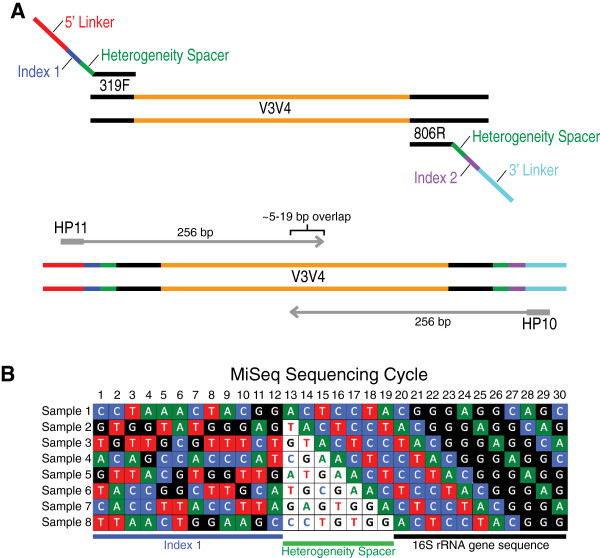
“To obtain amplicons, the following primer set was used: the forward primer (5′-CAAGCAGA AGACGGCATACGAGATGTGACTGGAGTTCAGACGTGTGCTCTTCCGATCT XXXXXXXXXXXX ZZZZ CCTAYGGGDBGCWSCAG-3′) consisting, respectively, of “5′ Illumina Linker Sequence”, “Index 1”, “Heterogeneity Spacer” [19], and the Pro-mod-341F primer sequence [20…”
MethodMeidrops, K., Groma, V., Goldiņš, N. R., Apine, L., Skuja, S., Svirskis, Š., Gudrā, D., Frīdmanis, D., & Stradiņš, P. (2023) · Cells · doi:10.3390/cells13010043 · Cited by 13
“Primers were designed for PCR amplification of the 16S rRNA gene V3-V4 region specific to the domain bacteria (341F and 805R, respectively) [27] containing Illumina overhang adapters (Table 1).”
MethodMicrobial diversity of hot springs of the Kuril Islands
Karaseva, A. I., Elcheninov, A. G., Prokofeva, M. I., Klyukina, A. A., & Kochetkova, T. V. (2024) · BMC Microbiology · doi:10.1186/s12866-024-03704-8 · Cited by 14
“Amplicon libraries of V4 hypervariable region of 16S rRNA gene were prepared as described in [17] with the following universal primers 515F (5’-GTG BCA GCM GCC GCG GTA A-3’) and 806R (5 ′ - GAC TAC NVG GGT MTC TAA TCC-3 ′ ) [18, 19] including Illumina technical sequences [20].”
InfluentialNassazzi, W., Bezabhe, Y. H., Guo, C., Tapase, S. R., Jaffe, B. D., Key, T. A., Lai, F. Y., Jaß, J., & Ahrens, L. (2025) · Environmental Technology & Innovation · doi:10.1016/j.eti.2025.104048 · Cited by 14
Chen, F., Lu, J., Liu, T., Shi, X., Zhao, S., Lv, C., Shi, Y., Zhang, Z., Jin, Y., Pang, J., et al. (2025) · Ecotoxicology and Environmental Safety · doi:10.1016/j.ecoenv.2025.117819 · Cited by 13
eDNA Replicates, Polymerase and Amplicon Size Impact Inference of Richness Across Habitats
Anmarkrud, J. A., Rosa, F. D. A. S., Thorbek, L., Schrøder‐Nielsen, A., Sviggum, S. M., Ready, J. S., de Boer, H., & Mauvisseau, Q. (2025) · Environmental DNA · doi:10.1002/edn3.70095 · Cited by 13
Makizaki, Y., Maeda, A., Oikawa, Y., Tamura, S., Tanaka, Y., Nakajima, S., Ohno, H., & Yamamura, H. (2019) · Microbiology and Immunology · doi:10.1111/1348-0421.12743 · Cited by 13
“Sequencing of the V3–V4 region of 16S rRNA gene was performed using the MiSeq platform (Illumina) according to the method by Fadrosh et al.(14) The sequence read data obtained from MiSeq were analyzed using the QIIME pipeline.”
MethodInfluentialKleinteich, J., Hilt, S., Hoppe, A., & Zarfl, C. (2019) · Limnology and Oceanography · doi:10.1002/lno.11352 · Cited by 13
“For prokaryote 16S rRNA gene amplification the primer pair F319 (50-ACTCCTACGGGAGGCAGCAG-30) and R806 (50-GGACTACHVGGGTWTCTAAT-30) (Fadrosh et al. 2014), which targets the V3-V4 region, was used.”
MethodTabbabi, A., Watanabe, S., Mizushima, D., Cáceres, A. G., Gómez, E. A., Yamamoto, D. S., Cui, L., Hashiguchi, Y., & Kato, H. (2020) · Microorganisms · doi:10.3390/microorganisms9010068 · Cited by 13
“These regions were recommended by the Illumina protocol manual [35], and yielded high-quality sequence data, as previously reported [36].”
MethodEvaluation of 12-hour in situ bacterial colonization on smooth restorative material surfaces
Hu, H.-Y., Burrow, M. F., & Leung, W. K. (2022) · Journal of Dentistry · doi:10.1016/j.jdent.2022.104071 · Cited by 13
Zhang, Y., Yang, Y., Yu, L., Wang, A., Xue, C., Zhang, J., Duan, A., & Zhao, M. (2022) · Plant Signaling & Behavior · doi:10.1080/15592324.2022.2034271 · Cited by 15
Lin, F., Li, X., Guo, X. L., Lu, X.-C., Han, X., Xu, G., Du, P., & An, L. (2022) · Food Science & Nutrition · doi:10.1002/fsn3.3052 · Cited by 14
“Intestinal microflora is considered to be involved in lipid metabolism, and the intestinal absorption is the basis for Chinese medicines to exert their effects, so intestinal flora is likely to be a new target for regulating lipid metabolism disorders (Fadrosh et al., 2014).”
BackgroundRapid Evaluation of Staple Placement in Stabilized α Helices Using Bacterial Surface Display
Case, M., Navaratna, T. A., Vinh, J., & Thurber, G. M. (2023) · ACS Chemical Biology · doi:10.1021/acschembio.3c00048 · Cited by 14
Biodiversity and Potential Activity of Microorganisms in Underground Gas Storage Horizons
Nazina, T. N., Абукова, Л. А., Tourova, T. P., Babich, T. L., Bidzhieva, S. K., Лойко, Н. Г., Filippova, D. S., & Сафарова, Е. А. (2023) · Sustainability · doi:10.3390/su15139945 · Cited by 15
Gharti, K., Yan, L., Li, K., Boonpeng, N., & Liu, L. (2023) · Water · doi:10.3390/w15091771 · Cited by 14
Clinical Relevance of Gastrointestinal Microbiota During Pregnancy: A Primer for Nurses
Chung, S.-Y., Ravel, J., & Regan, M. B. (2017) · Biological Research For Nursing · doi:10.1177/1099800417732412 · Cited by 16
“…the microbes and isolate the physiologic functions they initiate in the human host (Caporaso et al., 2010; Cho & Blaser, 2012; Cole et al., 2009; Fadrosh et al., 2014; Kozich, Westcott, Baxter, Highlander, & Schloss, 2013; Kuczynski et al., 2012; Lasken & McLean, 2014; Q. Wang, Garrity, Tiedje,…”
BackgroundSelf-citationLu, G., Hua, X.-M., Liang, L., Wen, Z., Du, M., Meng, F.-F., Pang, Y.-J., Qi, J., Tang, C., & Yang, Y. (2018) · Genes · doi:10.3390/genes9040214 · Cited by 15
“Subsequently, Illumina MiSeq has also been applied to study the effect of some transgenic plants on microbial communities [18,37–39].”
MethodInfluentialDuroy, P., Bosshard, S., Schmid‐Siegert, E., Neuenschwander, S., Arib, G., Mercier, P. L., Masternak, J., Roesch, L., Buron, F., Girod, P., et al. (2019) · Biotechnology and Bioengineering · doi:10.1002/bit.27200 · Cited by 15
“Degenerate primers contained various 0–3 bp heterogeneity spacers to increase template complexity (Fadrosh et al., 2014), and Myr or PPYP primers were mixed at the predicted genomic frequency.”
Doherty, J. R., Crouch, J. A., & Roberts, J. (2020) · Agrosystems Geosciences & Environment · doi:10.1002/agg2.20038 · Cited by 13
Shen, L., Liu, X., Wu, H., Tian, M.-H., Ran, P., Liu, J., Yang, Y., Yang, W., & Wang, H.-Y. (2020) · European Journal of Soil Biology · doi:10.1016/j.ejsobi.2020.103206 · Cited by 13
Wang, C., Feng, S., Xiao, Y., Pan, M., Zhao, J., Zhang, H., Zhai, Q., & Chen, W. (2020) · Microbial Biotechnology · doi:10.1111/1751-7915.13651 · Cited by 13
“…based on a high throughput, long sequence read length and high level of accuracy, including single- (Caporaso et al., 2012) and dual(Kozich et al., 2013) indexing methods targeting the hypervariable region of the 16S rRNA gene, have been developed and are used widely (Fadrosh et al., 2014).”
MethodImpact of Dietary Fiber on West Nile Virus Infection
Ni, D., Tan, J., Niewold, P., Spiteri, A. G., Pinget, G. V., Stanley, D., King, N. J. C., & Macia, L. (2022) · Frontiers in Immunology · doi:10.3389/fimmu.2022.784486 · Cited by 14
Storm-Larsen, C., Hande, L. N., Kummen, M., Thunhaug, H., Vestad, B., Hansen, S. H., Hovland, A., Trøseid, M., Lappegård, K. T., & Hov, J. R. (2022) · Scandinavian Journal of Clinical and Laboratory Investigation · doi:10.1080/00365513.2022.2102540 · Cited by 13
Li, J., Zhang, Y., Zhou, Y., & Wang, M. (2017) · Annals of Microbiology · doi:10.1007/s13213-017-1276-0 · Cited by 13
“In addition, bacterial PCR amplicon libraries were constructed for Illumina MiSeq high throughput sequencing by Shanghai Majorbio (Shanghai, China) as previously described (Kozich et al. 2013; Fadrosh et al. 2014).”
MethodXiao, X., Shi, W., & Ruan, W. (2019) · Processes · doi:10.3390/pr7120879 · Cited by 13
Fakunle, A. G., Olusola, B. A., Jafta, N., Faneye, A. O., Heederik, D. J. J., Smit, L. A. M., & Naidoo, R. N. (2020) · International Journal of Environmental Research and Public Health · doi:10.3390/ijerph17061857 · Cited by 16
“Extracted DNA will then be amplified with polymerase chain reaction (PCR) targeting the V3–V4 hypervariable regions of the 16S rRNA gene as described in reference [30].”
MethodMa, X., Du, M., Liu, P., Tang, Y., Li, H., Yuan, Q., Ruan, Y., Meng, L., Zhang, J., Lin, M., et al. (2020) · Archives of Microbiology · doi:10.1007/s00203-020-02086-5 · Cited by 14
Anaerobic Biohydrogenation of Isoprene by Acetobacterium wieringae Strain Y
Jin, H., Li, X., Wang, H., Cápiro, N. L., Li, X., Löffler, F. E., Yan, J., & Yang, Y. (2022) · mBio · doi:10.1128/mbio.02086-22 · Cited by 12
Marshall-Jones, Z. V., Patel, K. V., Fernandez, J. C., Lonsdale, Z. N., Haydock, R., Staunton, R. H., Amos, G. C. A., & Watson, P. (2024) · Scientific Reports · doi:10.1038/s41598-024-51338-7 · Cited by 14
“Amplification of the 16S rRNA gene from extracted faecal DNA was conducted by PCR using dual-indexed primers targeting the V4 region (319F/806R primer pairs) according to Fadrosh et al. 49 .”
MethodSchuster, H. J., Breedveld, A. C., Matamoros, S., van EEKELEN, R., Painter, R. C., Kok, M., Hajenius, P. J., Savelkoul, P. H. M., van Egmond, M., & van Houdt, R. (2024) · Microbiome · doi:10.1186/s40168-024-01787-z · Cited by 13
“We used dual indexed universal primers (319F and 806R) for PCR amplification of the V3–V4 regions of the 16S rRNA genes, as described by Fadrosh et al. [32].”
MethodTabbabi, A., Mizushima, D., Yamamoto, D. S., Zhioua, E., & Kato, H. (2024) · PLoS neglected tropical diseases · doi:10.1371/journal.pntd.0012458 · Cited by 12
“These regions were recommended by the Illumina protocol manual and showed high-quality sequence data, as previously reported [46].”
MethodРавилевна, М. Э., Katraeva, I. V., Kovalev, А. A., Shekhurdina, S. V., Zhuravleva, E. A., Laikova, А. А., Kovalev, D. A., & Litti, Y. (2024) · International Journal of Hydrogen Energy · doi:10.1016/j.ijhydene.2024.09.213 · Cited by 12
Kim, E.-J., Lee, S.-H., Kim, T. H., Lee, J., Choi, C., & Lee, S.-J. (2024) · International Journal of Biological Macromolecules · doi:10.1016/j.ijbiomac.2024.138168 · Cited by 12
Barekatain, R., Inhuber, V., Sharma, N. K., Nowland, T. L., Van, T. T. H., Moore, R. J., & Cadogan, D. J. (2025) · Poultry Science · doi:10.1016/j.psj.2025.104792 · Cited by 12
Bae, W., Nguyen, U. T. T., Le, T. A. N., Tran, S. H., Lee, S., Hong, S.-C., Hyun, K., Choi, I.-D., & Kang, K. (2025) · Food & Function · doi:10.1039/d5fo01239b · Cited by 12
Zhao, N., Khamash, D. F., Koh, H., Voskertchian, A., Egbert, E. R., Mongodin, E. F., White, J. R., Hittle, L. E., Colantuoni, E., & Milstone, A. M. (2021) · Open Forum Infectious Diseases · doi:10.1093/ofid/ofab475 · Cited by 13
“DNA were isolated as previously described [27–29], after which the V3V4 16S hypervariable regions of the 16S rRNA gene were PCR amplified using the universal primers 319F and 806R [28, 30].”
MethodAnkley, P. J., Graves, S. D., Xie, Y., DeBofsky, A., Weber, A., Brinkmann, M., Palace, V. P., Liber, K., Hecker, M., Janz, D. M., et al. (2022) · Environmental Research · doi:10.1016/j.envres.2022.113151 · Cited by 12
“…using unique dual-tagged primer set targeting the V3 – V4 hypervariable region of the 16S rRNA gene, with the forward primer Bact-341: (5 ′ - CCTACGGGNGGCWGCAG-3 ′ ) (Klindworth et al., 2013) and reverse primer Bact-806: (5 ′ -GGACTACNVGGGTWTCTAAT-3 ′ ) (Fadrosh et al., 2014; Apprill et al., 2015).”
Лойко, Н. Г., Kanunnikov, O., Serdyukov, D. V., Axelrod, V., Терешкин, Э. В., Vishnyakova, A., & Litti, Y. (2022) · Biology · doi:10.3390/biology11091332 · Cited by 12
“Libraries of 16S rRNA fragments were prepared by amplification according to [51].”
MethodPino, V., Fajardo, M., McBratney, A. B., Minasny, B., Wilson, N. J., & Baldock, C. (2023) · Molecular Ecology · doi:10.1111/mec.16911 · Cited by 12
“Primers Pro341F/805R (V3– V4 regions) and ITS3_KYO2-F/ITS4-R (ITS2 region) (Takahashi et al., 2014 ; Toju et al., 2012 ) were designed in combination with heterogeneity spacers of 6 bp (Fadrosh et al., 2014 ).”
BackgroundZhao, L., Lu, J., Jiang, L., Wang, X., Wu, F., Luo, Z., Yang, L., & Yang, L. (2023) · Rhizosphere · doi:10.1016/j.rhisph.2023.100779 · Cited by 14
A Bioleaching Process for Sustainable Recycling of Complex Structures with Multi-Metal Layers
Pakostová, E., & Herath, A. (2023) · Sustainability · doi:10.3390/su151914068 · Cited by 12
“The sequences were processed using a pipeline described by Fadrosh et al. [35] and the DADA2 plugin for Qiime2 (v2021.”
MethodMück, F., Scotti, F., Mauvisseau, Q., Raclariu-Manolică, A. C., Schrøder‐Nielsen, A., Wangensteen, H., & de Boer, H. (2023) · Frontiers in Pharmacology · doi:10.3389/fphar.2023.1305410 · Cited by 15
Shevchenko, A., Shalaginova, I. G., Katserov, D., Matskova, L. V., Shiryaeva, N., & Dyuzhikova, N. A. (2023) · PLoS ONE · doi:10.1371/journal.pone.0295709 · Cited by 15
Amato-Menker, C. J., Hopen, Q., Pettit, A., Gandhi, J., Hu, G., Schafer, R., & Franko, J. (2024) · Biology of Sex Differences · doi:10.1186/s13293-024-00597-0 · Cited by 12
“[55].”
Fang, P., Konyali, D., Fischer, E. V., Mayer, R. P., Huang, J., Elena, A., Orzechowski, G. H., Tony-Odigie, A., Kneis, D., Dalpke, A. H., et al. (2025) · Environmental Health Perspectives · doi:10.1289/ehp14704 · Cited by 14
Ramprasath, V. R., Thandapilly, S. J., Yang, S., Abraham, A., Jones, P. J. H., & Ames, N. P. (2015) · Trials · doi:10.1186/s13063-015-1014-5 · Cited by 14
Zhang, H., Susanto, T. T., Wan, Y., & Chen, S. L. (2016) · Proceedings of the National Academy of Sciences · doi:10.1073/pnas.1522958113 · Cited by 13
Meyer, K., Hopple, A. M., Klein, A. M., Morris, A. H., Bridgham, S. D., & Bohannan, B. J. M. (2020) · Molecular Ecology · doi:10.1111/mec.15442 · Cited by 12
Lipid antigens in bile from patients with chronic liver diseases activate natural killer T cells
Valestrand, L., Berntsen, N. L., Zheng, F., Schrumpf, E., Hansen, S. H., Karlsen, T. H., Blumberg, R. S., Hov, J. R., Jiang, X., & Melum, E. (2020) · Clinical & Experimental Immunology · doi:10.1111/cei.13541 · Cited by 13
Effects of fish farm activities on the sponge Weberella bursa, and its associated microbiota
Laroche, O., Meier, S., Mjøs, S. A., & Keeley, N. (2021) · Ecological Indicators · doi:10.1016/j.ecolind.2021.107879 · Cited by 15
Harrison, J. G., Randolph, G. D., & Buerkle, C. A. (2021) · mSystems · doi:10.1128/msystems.00294-21 · Cited by 13
The impact of dromedary camel milk on mice gut microbiota
Sheikh, A., Almathen, F. S., & Alfattah, M. A. (2022) · Applied Biological Chemistry · doi:10.1186/s13765-022-00699-6 · Cited by 12
“Bioinformatics To obtain clean and reliable reads, the bioinformatics analyses [20] filtered out: (i) trimmed short sequences with that were determined to be of lower quality based on the phred algorithm and trimmed reads that were 75% smaller than the original length along the paired end; (ii) impure reads derived fr…”
MethodGoodwin, K. B., Hutchinson, J. D., & Gompert, Z. (2022) · Frontiers in Microbiology · doi:10.3389/fmicb.2022.1020329 · Cited by 23
Metadata
- Authors
- Fadrosh, D. W., Ma, B., Gajer, P., Sengamalay, N., Ott, S., Brotman, R. M., & Ravel, J.
- Affiliations
- University of Maryland, Baltimore (US)
- Corresponding author
- Ravel, Jacques
- Venue
- Microbiome
- Published
- 2014-02-24
- Volume
- 2
- Issue
- 1
- Pages
- 6-6
- ISSN
- 2049-2618 (ISSN-L)
- PMC
- PMC3940169
- OpenAlex
- W2165722876
- Semantic Scholar
- 7f8859a57e35c66164678710187d4374822411d8
- Cited by
- 1,698
- References
- 14
- Citations by year
- 2026: 83 · 2025: 129 · 2024: 148 · 2023: 171 · 2022: 167 · 2021: 235 · 2020: 218 · 2019: 164 · 2018: 169 · 2017: 104 · 2016: 62 · 2015: 37 · 2014: 11
- FWCI
- 29.23
- Type
- journal article
- Language
- en
- Open access
- gold
- doi.org
- Licence
- cc-by
- Locations
- Microbiome (publishedVersion, cc-by)
- Europe PMC (PubMed Central) (publishedVersion, cc-by)
- PubMed Central (publishedVersion, cc-by)
- PubMed (publishedVersion)
- Funders
- National Institutes of Health
- National Institute of Allergy and Infectious Diseases (R01AI089878, U19AI084044, UH2AI083264)
- Topics
- Life Sciences › Biochemistry, Genetics and Molecular Biology › Molecular Biology › Genomics and Phylogenetic Studies
- Physical Sciences › Environmental Science › Ecology › Microbial Community Ecology and Physiology
- Life Sciences › Biochemistry, Genetics and Molecular Biology › Molecular Biology › Gut microbiota and health
- Keywords
- 16S rRNA gene sequencing, multiplexed sequencing, V3-V4 region, microbial community composition, clinical samples, paired-end sequencing, sequencing data quality
About these checks
Registry, retraction, Cites and statistics results are computed, not judged, with one exception: a printed reference that no index lists is read once by a model before it counts as a citation error. Claims are extracted by a model and kept only when their quote appears verbatim in the text; each cited source is then checked, with a model’s help, for whether it says what the claim relies on. Those verdicts can be wrong — read the claim’s quote and the cited source before relying on one.
Statistics and arithmetic are recomputed, not judged.
Confidence bands are shown only for fields calibrated on our annotated test set. None is calibrated yet, so no band is shown.
What counts as a claim ›How we measure confidence ›How we check this ›
Are you an author, or do you see a problem with this page? Request a review
Data sources
Bibliographic data: Semantic Scholar, OpenAlex, Crossref.
Contains information from the Semantic Scholar Academic Graph Datasets, made available under the ODC Attribution License (ODC-BY 1.0).
Semantic Scholar’s data is described in: Kinney, R., et al. (2023). The Semantic Scholar Open Data Platform. arXiv:2301.10140.
