

An improved dual-indexing approach for multiplexed 16S rRNA gene sequencing on the Illumina MiSeq platform
Open accessThe DOI matches its Crossref record; 14 of the 14 references it cites were found in a registry or an index.
Abstract
BACKGROUND: To take advantage of affordable high-throughput next-generation sequencing technologies to characterize microbial community composition often requires the development of improved methods to overcome technical limitations inherent to the sequencing platforms. Sequencing low sequence diversity libraries such as 16S rRNA amplicons has been problematic on the Illumina MiSeq platform and often generates sequences of suboptimal quality. RESULTS: Here we present an improved dual-indexing amplification and sequencing approach to assess the composition of microbial communities from clinical samples using the V3-V4 region of the 16S rRNA gene on the Illumina MiSeq platform. We introduced a 0 to 7 bp "heterogeneity spacer" to the index sequence that allows an equal proportion of samples to be sequenced out of phase. CONCLUSIONS: Our approach yields high quality sequence data from 16S rRNA gene amplicons using both 250 bp and 300 bp paired-end MiSeq protocols and provides a flexible and cost-effective sequencing option.
Overview
The claims and statistics of this paper haven’t been checked yet.
Free: it reads the open-access text and checks the first 5 claims that cite a source we can check. Create a free account to check every claim.
Integrity signals
Registry
Cites
Statistics
Figures
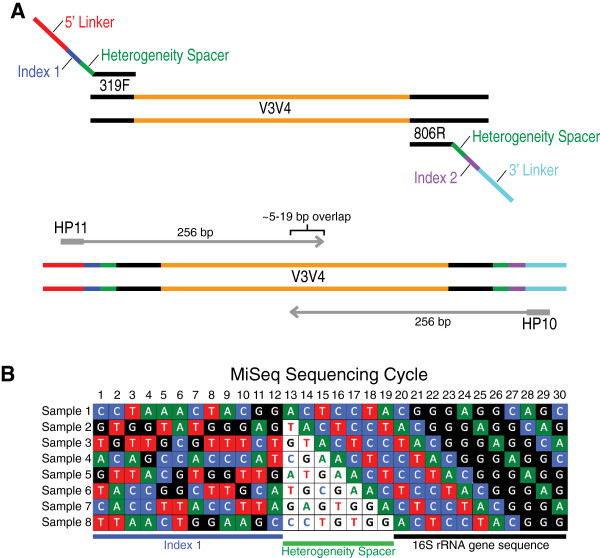
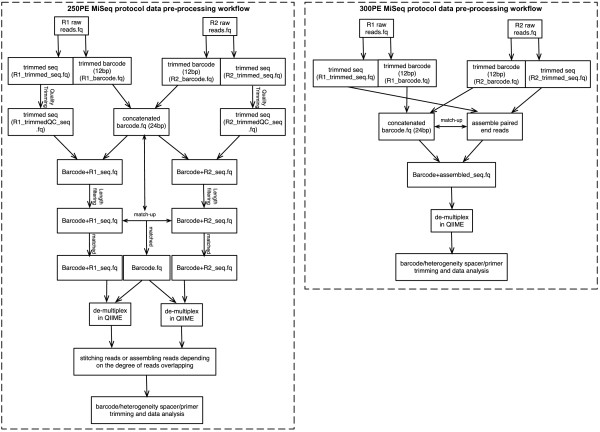
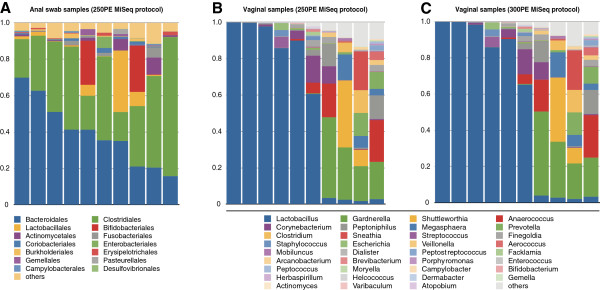
Verification
Claims the paper makes
The claims and statistics of this paper haven’t been checked yet.
Free: it reads the open-access text and checks the first 5 claims that cite a source we can check. Create a free account to check every claim.
Claims other papers make about this one
Each is checked against this paper’s own text: does it say what the citing paper says it does?
In the citing paper
“choices of 16S rRNA gene variable region primers may enable improved detection or differentiation of microbes16; for example, Propionibacterium spp. abundant on the skin are often undetected by V4 primers29, and Lactobacillus spp. in the vagina are better differentiated by including V321.”
From Assessment of variation in microbial community amplicon sequencing by the Microbiome Quality Control (MBQC) project consortium (2017) · cites this paper as [21]
Self-check
Percentages, sums and reported differences re-computed from the paper’s own numbers.
The self-check needs the paper’s full text.
Citations
Cites
Fast and accurate short read alignment with Burrows-Wheeler transform
Li, H., & Durbin, R. (2009) · Bioinformatics · doi:10.1093/bioinformatics/btp324 · Cited by 58,607
QIIME allows analysis of high-throughput community sequencing data
Caporaso, J. G., Kuczynski, J., Stombaugh, J., Bittinger, K., Bushman, F. D., Costello, E. K., Fierer, N., Peña, A. G., Goodrich, J. K., Gordon, J. I., et al. (2010) · Nature Methods · doi:10.1038/nmeth.f.303 · Cited by 34,887 · cited 1×
“0,) [10] and included additional quality trimming, demultiplexing, and taxonomic assignments.”
Search and clustering orders of magnitude faster than BLAST
Edgar, R. C. (2010) · Bioinformatics · doi:10.1093/bioinformatics/btq461 · Cited by 20,826
Naïve Bayesian Classifier for Rapid Assignment of rRNA Sequences into the New Bacterial Taxonomy
Wang, Q., Garrity, G. M., Tiedje, J. M., & Cole, J. R. (2007) · Applied and Environmental Microbiology · doi:10.1128/aem.00062-07 · Cited by 19,885 · cited 1×
“2 [15] trained on the Greengenes database”
FLASH: fast length adjustment of short reads to improve genome assemblies
Magoč, T., & Salzberg, S. L. (2011) · Bioinformatics · doi:10.1093/bioinformatics/btr507 · Cited by 15,366 · cited 4×
“The final sequence length after barcode, heterogeneity spacer, and primer removal was 429 ± 7 bp and 429 ± 6.7 bp for PANDAseq and FLASH, respectively, with an average of approximately 11,600 reads per sample.”
InfluentialUCHIME improves sensitivity and speed of chimera detection
Edgar, R. C., Haas, B. J., Clemente, J. C., Quince, C., & Knight, R. (2011) · Bioinformatics · doi:10.1093/bioinformatics/btr381 · Cited by 15,114
Structure, function and diversity of the healthy human microbiome
The Human Microbiome Project Consortium (2012) · Nature · doi:10.1038/nature11234 · Cited by 11,726
Ultra-high-throughput microbial community analysis on the Illumina HiSeq and MiSeq platforms
Caporaso, J. G., Lauber, C. L., Walters, W. A., Berg-Lyons, D., Huntley, J., Fierer, N., Owens, S. M., Betley, J., Fraser, L., Bauer, M., et al. (2012) · The ISME Journal · doi:10.1038/ismej.2012.8 · Cited by 8,839 · cited 3×
“quencing strategies include a single- [2,3] or a recently”
MethodKozich, J. J., Westcott, S. L., Baxter, N. T., Highlander, S. K., & Schloss, P. D. (2013) · Applied and Environmental Microbiology · doi:10.1128/aem.01043-13 · Cited by 7,112 · cited 2×
“developed dual-indexing [4] approach targeting the V4 hypervariable region of the 16S rRNA gene.”
Base-Calling of Automated Sequencer Traces Using Phred. I. Accuracy Assessment
Ewing, B., Hillier, L., Wendl, M. C., & Green, P. (1998) · Genome Research · doi:10.1101/gr.8.3.175 · Cited by 6,967 · cited 1×
“Additional sequence read pre-processing included: 1) removal of primer sequence; 2) truncation of sequence reads not having an average quality of 20 over a 30 bp sliding window based on the phred algorithm [6,7] implemented previously [8,9]; and 3) removal of trimmed reads having less than 75% of their original length…”
Cited by
Items 201–300 of 1,000
Microbiota mediated plasticity promotes thermal adaptation in the sea anemone Nematostella vectensis
Baldassarre, L., Ying, H., Reitzel, A. M., Franzenburg, S., & Fraune, S. (2022) · Nature Communications · doi:10.1038/s41467-022-31350-z · Cited by 94
Association of Systemic Antibiotic Treatment of Acne With Skin Microbiota Characteristics
Chien, A. L.-L., Tsai, J., Leung, S. G., Mongodin, E. F., Nelson, A. M., Kang, S., & Garza, L. A. (2019) · JAMA Dermatology · doi:10.1001/jamadermatol.2018.5221 · Cited by 109
Hughes, R., Horn, W. H., Finnegan, P., Newman, J. W. I., Marco, M. L., Keim, N. L., & Kable, M. E. (2021) · Nutrients · doi:10.3390/nu13020645 · Cited by 93
“A barcoded forward primer 319F (5’-ACTCCTACGGGAGGCAGCAG-3’) and the reverse primer 806R (5’-GGACTACHVGGGTWTCTAAT-3’) were used to amplify a 484 bp region spanning the V3 and V4 regions of the 16S rRNA gene sequence [23].”
MethodDunlop, A. L., Satten, G. A., Hu, Y., Knight, A. K., Hill, C. C., Wright, M. L., Smith, A. K., Read, T. D., Pearce, B. D., & Corwin, E. J. (2021) · Frontiers in Cellular and Infection Microbiology · doi:10.3389/fcimb.2021.641005 · Cited by 104
Song, H. S., Lee, S. H., Ahn, S. W., Kim, J. Y., Rhee, J., & Roh, S. W. (2021) · Food Research International · doi:10.1016/j.foodres.2021.110668 · Cited by 90
Nested PCR Biases in Interpreting Microbial Community Structure in 16S rRNA Gene Sequence Datasets
Yu, G., Fadrosh, D., Goedert, J. J., Ravel, J., & Goldstein, A. M. (2015) · PLoS ONE · doi:10.1371/journal.pone.0132253 · Cited by 92
Self-citationPollen metabarcoding as a tool for tracking long‐distance insect migrations
Suchan, T., Talavera, G., Sáez, L., Ronikier, M., & Vila, R. (2018) · Molecular Ecology Resources · doi:10.1111/1755-0998.12948 · Cited by 92
Donovan, M., Mackey, C. S., Platt, G. N., Rounds, J., Brown, A. N., Trickey, D. J., Liu, Y., Jones, K. M., & Wang, Z. (2020) · Neurobiology of Stress · doi:10.1016/j.ynstr.2020.100278 · Cited by 85
Kulkarni, P., Olson, N. D., Paulson, J. N., Pop, M., Maddox, C., Claye, E., Goldstein, R. E. R., Sharma, M., Gibbs, S. G., Mongodin, E. F., et al. (2018) · The Science of The Total Environment · doi:10.1016/j.scitotenv.2018.05.178 · Cited by 85
Fukui, H., Oshima, T., Tanaka, Y., Oikawa, Y., Makizaki, Y., Ohno, H., Tomita, T., Watari, J., & Miwa, H. (2018) · Scientific Reports · doi:10.1038/s41598-018-30943-3 · Cited by 81
Allali, I., Abotsi, R. E., Tow, L. A., Thabane, L., Zar, H. J., Mulder, N., & Nicol, M. P. (2021) · Microbiome · doi:10.1186/s40168-021-01195-7 · Cited by 96
Relationship between vitamin D status and the vaginal microbiome during pregnancy
Jefferson, K. K., Parikh, H. I., Garcia, E. M., Edwards, D. J., Serrano, M. G., Hewison, M., Shary, J. R., Powell, A. M., Hollis, B. W., Fettweis, J. M., et al. (2019) · Journal of Perinatology · doi:10.1038/s41372-019-0343-8 · Cited by 84
Zou, Y., Ju, X., Chen, W., Yuan, J., Wang, Z., Aluko, R. E., & He, R. (2020) · Food & Function · doi:10.1039/c9fo01524h · Cited by 92
Chernikova, T. N., Bargiela, R., Toshchakov, S. V., Shivaraman, V., Lunev, E. A., Yakimov, M. M., Thomas, D. N., & Golyshin, P. N. (2020) · Frontiers in Microbiology · doi:10.3389/fmicb.2020.572931 · Cited by 80
“Extracted DNA samples were used to amplify the V4 region of 16S rRNA gene using fusion dual-barcoded primers (Fadrosh et al., 2014) with slight modifications: the rRNAannealing part of the forward primer corresponded to F515 (5'-GTGCCAGCMGCCGCGGTAA-3'; Turner et al., 1999) and the reverse primer…”
MethodRosacea and its association with enteral microbiota in Korean females
Nam, J., Yun, Y., Kim, H., Kim, H., Jung, H. J., Chang, Y., Ryu, S., Shin, H., Kim, H., & Kim, W. (2017) · Experimental Dermatology · doi:10.1111/exd.13398 · Cited by 85
Chandra, H., Sharma, K. K., Tuovinen, O. H., Sun, X., & Shukla, P. (2021) · Gut Microbes · doi:10.1080/19490976.2021.1979882 · Cited by 88
Conversion of grassland to arable decreases microbial diversity and alters community composition
French, K. E., Tkacz, A., & Turnbull, L. A. (2016) · Applied Soil Ecology · doi:10.1016/j.apsoil.2016.10.015 · Cited by 89
Gut, oral and skin microbiome of Indian patrilineal families reveal perceptible association with age
Chaudhari, D. S., Dhotre, D. P., Agarwal, D. M., Gaike, A. H., Bhalerao, D., Jadhav, P., Mongad, D., Lubree, H., Sinkar, V. P., Patil, U. K., et al. (2020) · Scientific Reports · doi:10.1038/s41598-020-62195-5 · Cited by 89
Microbial diversity and autotrophic activity in Kamchatka hot springs
Merkel, A. Y., Пименов, Н. В., Rusanov, I. I., Slobodkin, A. I., Slobodkina, G. B., Tarnovetckii, I. Y., Frolov, E. N., Dubin, A. V., Perevalova, A. A., & Bonch-Osmolovskaya, E. A. (2016) · Extremophiles · doi:10.1007/s00792-016-0903-1 · Cited by 82
Viral Encephalitis of Unknown Cause: Current Perspective and Recent Advances
Kennedy, P. G. E., Quan, P., & Lipkin, W. I. (2017) · Viruses · doi:10.3390/v9060138 · Cited by 87
“Accordingly, we typically sequence libraries prepared following 16S rRNA (bacteria) [28], internal transcribed spacer (ITS, fungi) region amplification [29,30], or selection using biotinylated probes to viruses (VirCapSeq-VERT).”
MethodZhang, Y., Yu, X., Yu, E., Wang, N., Cai, Q.-C., Shuai, Q., Yan, F., Jiang, L., Wang, H., Liu, J., et al. (2018) · BMC Microbiology · doi:10.1186/s12866-018-1232-6 · Cited by 86
Yang, T.-W., Lee, W.-H., Tu, S.-J., Huang, W.-C., Chen, H., Sun, T.-H., Tsai, M.-C., Wang, C., Chen, H., Huang, C., et al. (2019) · Scientific Reports · doi:10.1038/s41598-019-45588-z · Cited by 87
Vestad, B., Ueland, T., Lerum, T. V., Dahl, T. B., Holm, K., Barratt‐Due, A., Kåsine, T., Dyrhol‐Riise, A. M., Stiksrud, B., Tonby, K., et al. (2022) · Journal of Internal Medicine · doi:10.1111/joim.13458 · Cited by 86
Yang, Y., Hu, Y., Wang, Z., & Zeng, Z. (2018) · Environmental Science and Pollution Research · doi:10.1007/s11356-018-1548-7 · Cited by 81
“Processing of Illumina MiSeq sequencing data Raw FASTQ files were de-multiplexed and quality-filtered using QIIME (version 1.8.0) (Fadrosh et al. 2014).”
MethodInfluentialThe canine oral microbiome: variation in bacterial populations across different niches
Ruparell, A., Inui, T., Staunton, R. H., Wallis, C. V., Deusch, O., & Holcombe, L. J. (2020) · BMC Microbiology · doi:10.1186/s12866-020-1704-3 · Cited by 89
Plant biodiversity assessment through soil eDNA reflects temporal and local diversity
Ariza, M., Fouks, B., Mauvisseau, Q., Halvorsen, R., Alsos, I. G., & de Boer, H. (2022) · Methods in Ecology and Evolution · doi:10.1111/2041-210x.13865 · Cited by 89
“Forward and reverse primers were tagged with a unique 12 bp oligonucleotide on the 5′ end (Fadrosh et al., 2014).”
MethodMu, Y., Su, W., Mu, Y., & Jiang, L. (2020) · Frontiers in Microbiology · doi:10.3389/fmicb.2019.03012 · Cited by 80
“Then, the taxonomy of each sequence was analyzed by Ribosomal Database Project (RDP) Classifier against the Silva (SSU123) database using confidence threshold of 80% (Fadrosh et al., 2014).”
MethodLi, S., Li, J., Mao, G., Wu, T., Hu, Y., Ye, X., Ding, T., Linhardt, R. J., & Chen, S. (2018) · Food & Function · doi:10.1039/c8fo01174e · Cited by 81
Topical ozone therapy restores microbiome diversity in atopic dermatitis
Zeng, J., Dou, J., Gao, L., Xiang, Y., Huang, J., Ding, S., Chen, J., Zeng, Q., Luo, Z., Tan, W., et al. (2020) · International Immunopharmacology · doi:10.1016/j.intimp.2020.106191 · Cited by 70
Gong, X., Jarvie, S., Wen, J., Su, N., Yan, Y., Liu, Q., & Zhang, Q. (2024) · Journal of Environmental Management · doi:10.1016/j.jenvman.2024.120379 · Cited by 78
van der Veer, C., Bruisten, S. M., van der Helm, J. J., de Vries, H. J. C., & van Houdt, R. (2016) · Clinical Infectious Diseases · doi:10.1093/cid/ciw586 · Cited by 89
“16S rRNA Gene Amplification and Illumina MiSeq Sequencing Dual indexed universal primers 319F and 806R were used for polymerase chain reaction (PCR) amplification of the V3–V4 hypervariable regions of the 16S rRNA genes, as previously described by Fadrosh et al [16].”
MethodSafonov, A. V., Babich, T. L., Sokolova, D. S., Grouzdev, D. S., Tourova, T. P., Poltaraus, A. B., Zakharova, E. V., Merkel, A. Y., Novikov, A. P., & Nazina, T. N. (2018) · Frontiers in Microbiology · doi:10.3389/fmicb.2018.01985 · Cited by 78
“To obtain the library of the 16S rRNA gene fragments, the V3–V4 hypervariable region of the gene was amplified, and the libraries were created using double barcoding, as described previously (Fadrosh et al., 2014).”
MethodZhang, X., Liao, Q., Wang, F., & Li, D. (2018) · Medicine · doi:10.1097/md.0000000000011891 · Cited by 77
“Raw sequencing data were processed by removing low-quality reads to acquire clean data.([34]) Then, the Fast Length Adjustment of Short reads, v1.”
MethodGholami, F., Mosmeri, H., Shavandi, M., Dastgheib, S. M. M., & Amoozegar, M. A. (2018) · The Science of The Total Environment · doi:10.1016/j.scitotenv.2018.11.253 · Cited by 76
Li, N., Bai, C., Zhao, L., Sun, Z., Ge, Y., & Li, X. (2021) · Frontiers in Oncology · doi:10.3389/fonc.2021.781697 · Cited by 83
The gastrointestinal tract microbiota of the Japanese quail, Coturnix japonica
Wilkinson, N., Hughes, R., Aspden, W. J., Chapman, J., Moore, R. J., & Stanley, D. (2016) · Applied Microbiology and Biotechnology · doi:10.1007/s00253-015-7280-z · Cited by 76
“Sequencing was performed on an Illumina MiSeq system (2 × 300 bp) using the dual-indexing, variable spacer, method detailed by Fadrosh et al. (2014).”
MethodOnywera, H., Williamson, A., Mbulawa, Z. Z. A., Coetzee, D. J., & Meiring, T. L. (2019) · Papillomavirus Research · doi:10.1016/j.pvr.2019.04.006 · Cited by 80
Bacterial interspecies interactions modulate pH-mediated antibiotic tolerance
Aranda-Díaz, A., Obadia, B., Dodge, R., Thomsen, T., Hallberg, Z. F., Güvener, Z. T., Ludington, W. B., & Huang, K. C. (2020) · eLife · doi:10.7554/elife.51493 · Cited by 78
Characterization and Analysis of the Skin Microbiota in Rosacea: A Case–Control Study
Rainer, B. M., Thompson, K. G., Antonescu, C. M., Florea, L., Mongodin, E. F., Bui, J., Fischer, A. H., Pasieka, H. B., Garza, L. A., Kang, S., et al. (2019) · American Journal of Clinical Dermatology · doi:10.1007/s40257-019-00471-5 · Cited by 83
Tang, X., Xie, G., Shao, K., Tian, W., Gao, G., & Qin, B. (2021) · Microorganisms · doi:10.3390/microorganisms9020208 · Cited by 81
“The V3– V4 hypervariable regions of the bacterial 16S rRNA genes were amplified using the primer set 338F (5′-ACTCCTACGGGAGGCAGCAG-3′) and 806R (5′-GGACTACHVGGGTWTCTAAT-3′) [32].”
MethodSingle-cell analysis reveals context-dependent, cell-level selection of mtDNA
Kotrys, A. V., Durham, T., Guo, X. A., Vantaku, V. R., Parangi, S., & Mootha, V. K. (2024) · Nature · doi:10.1038/s41586-024-07332-0 · Cited by 76
Successful Therapy of Clostridium Difficile Infection with Fecal Microbiota Transplantation
Konturek, P. C., Dieterich, W., Neurath, M., & Zopf, Y. (2017) · Gastroenterology · doi:10.1016/s0016-5085(17)31403-8 · Cited by 76
Kleinteich, J., Hildebrand, F., Bahram, M., Voigt, A. Y., Wood, S. A., Jungblut, A. D., Küpper, F. C., Quesada, A., Camacho, A., Pearce, D. A., et al. (2017) · Frontiers in Ecology and Evolution · doi:10.3389/fevo.2017.00137 · Cited by 87
“…communities found in the terrestrial and lacustrine environments of both polar regions are those forming “macro-biofilms,” which are highly organized structures which can have vertical differentiation of functional and physiological assemblages (Fernández-Valiente et al., 2007; Mohit et al., 2017).”
BackgroundResponses of the submerged macrophyte Vallisneria natans to a water depth gradient
Li, H., Li, Q., Luo, X., Fu, J., & Zhang, J. (2019) · The Science of The Total Environment · doi:10.1016/j.scitotenv.2019.134944 · Cited by 75
Kozhieva, M. K., Naumova, N., Alikina, T. Y., Boyко, A., Vlassov, V. V., & Kabilov, M. R. (2019) · BMC Microbiology · doi:10.1186/s12866-019-1685-2 · Cited by 81
Xu, L., Chen, X., Wang, Y., Jiang, W. H., Wang, S., Ling, Z., & Chen, H. (2018) · Frontiers in Physiology · doi:10.3389/fphys.2018.00342 · Cited by 81
“The Illumina MiSeq platform is superior to older Frontiers in Physiology | www.frontiersin.org 6 April 2018 | Volume 9 | Article 342 technologies such as Roche/454 pyrosequencing since it provides a similar read length at a fraction of the cost (Fadrosh et al., 2014).”
MethodBromberg, J. S., Hittle, L., Xiong, Y., Saxena, V., Smyth, E. M., Li, L., Zhang, T., Wagner, C., Fricke, W. F., Simon, T., et al. (2018) · JCI Insight · doi:10.1172/jci.insight.121045 · Cited by 73
McColl‐Gausden, E. F., Weeks, A. R., Coleman, R. A., Robinson, K. L., Song, S. V., Raadik, T. A., & Tingley, R. (2020) · Molecular Ecology · doi:10.1111/mec.15644 · Cited by 78
Makizaki, Y., Uemoto, T., Yokota, H., Yamamoto, M., Tanaka, Y., & Ohno, H. (2021) · PLOS ONE · doi:10.1371/journal.pone.0248584 · Cited by 71
Kennedy, S. R., Prost, S., Overcast, I., Rominger, A. J., Gillespie, R. G., & Krehenwinkel, H. (2020) · Development Genes and Evolution · doi:10.1007/s00427-020-00652-x · Cited by 77
“This allows library preparation to be accomplished in a single PCR (Kozich et al. 2013; Fadrosh et al. 2014) but limits the flexibility to target multiple amplicons.”
BackgroundGao, J., Lin, L., Chen, Z., Cai, Y., Xiao, C., Zhou, F., Sun, B., & Zhao, M. (2019) · Journal of Agricultural and Food Chemistry · doi:10.1021/acs.jafc.9b00970 · Cited by 72
Li, H., Wu, Z., Yang, X., An, X., Ren, Y., & Su, J. (2021) · Environment International · doi:10.1016/j.envint.2021.106539 · Cited by 76
Amino acid utilization allows intestinal dominance of Lactobacillus amylovorus
Jing, Y., Mu, C., Wang, H., Shen, J., Zoetendal, E. G., & Zhu, W. (2022) · The ISME Journal · doi:10.1038/s41396-022-01287-8 · Cited by 78
“The V3–V4 region of the bacterial 16S rRNA gene was amplified by PCR using universal bacterial primers (F: 5′-barcode-TAC GGR AGG CAG CAG-3′; R: 5′-AGG GTA TCT AAT CCT-3′) [15], where the barcode is an eight-base sequence unique to each sample [16].”
MethodPark, S. H., Lee, S. I., & Ricke, S. C. (2016) · PLoS ONE · doi:10.1371/journal.pone.0151944 · Cited by 72
Li, Q., Lei, Z., Song, X., Zhang, Z., Ying, Y., & Peng, C. (2018) · Environmental Research Letters · doi:10.1088/1748-9326/aab53a · Cited by 67
“Sequenceanalysiswascarriedoutusing thesoftware QIIME (Quantitative Insights into Microbial Ecology) as described by Fadrosh et al (2014).”
MethodZhang, B., Xu, X., & Zhu, L. (2018) · AMB Express · doi:10.1186/s13568-018-0714-0 · Cited by 72
The Impact of Cholecystectomy on the Gut Microbiota: A Case-Control Study
Yoon, W. J., Kim, H., Park, E., Ryu, S., Chang, Y., Shin, H., Kim, H., & Yi, S. Y. (2019) · Journal of Clinical Medicine · doi:10.3390/jcm8010079 · Cited by 84
“After PCR clean-up and index PCR, sequencing was performed on the Illumina MiSeq platform following the manufacturer’s instructions [20,21].”
MethodHuang, Y., Lv, H., Song, Y., Sun, C., Zhang, Z., & Chen, S. (2021) · Poultry Science · doi:10.1016/j.psj.2021.01.019 · Cited by 77
“Raw data were processed and filtered (Fadrosh et al., 2014) to yield clean reads that were then assembled with Fast Length Adjustment of Short Reads, v1.”
MethodDeciphering host-parasitoid interactions and parasitism rates of crop pests using DNA metabarcoding
Sow, A., Brévault, T., Benoit, L., Chapuis, M., Galan, M., d'Acier, A. C., Delvare, G., Sembène, M., & Haran, J. (2019) · Scientific Reports · doi:10.1038/s41598-019-40243-z · Cited by 63
Microbial Biomarkers of Intestinal Barrier Maturation in Preterm Infants
Ma, B., McComb, E. J., Gajer, P., Yang, H., Humphrys, M. S., Okogbule-Wonodi, A. C., Fasano, A., Ravel, J., & Viscardi, R. M. (2018) · Frontiers in Microbiology · doi:10.3389/fmicb.2018.02755 · Cited by 75
Self-citationLi, N., He, F., Liao, B., Zhou, Y., Li, B., & Ran, P. (2017) · Respiratory Research · doi:10.1186/s12931-017-0626-6 · Cited by 71
“The V3–V4 regions of the 16S rRNA gene were amplified and sequenced on an Illumina MiSeq instrument (San Diego, CA, USA) using the 300 paired-end protocol at the Ribobo Genome Center (Guangzhou, China) as described previously [21].”
MethodPlummer, E. L., Vodstrcil, L. A., Danielewski, J., Murray, G. L., Fairley, C. K., Garland, S. M., Hocking, J. S., Tabrizi, S. N., & Bradshaw, C. S. (2018) · PLoS ONE · doi:10.1371/journal.pone.0190199 · Cited by 75
Mosmeri, H., Gholami, F., Shavandi, M., Dastgheib, S. M. M., & Alaie, E. (2019) · Journal of Hazardous Materials · doi:10.1016/j.jhazmat.2019.02.071 · Cited by 70
Chi, L., Xiao, C., Lin, L., Yang, T., Sun, J., Feng, Y., Liang, F., Pei, Z., & Teng, W. (2021) · Frontiers in Cellular and Infection Microbiology · doi:10.3389/fcimb.2021.755925 · Cited by 79
“OTU taxonomy was divided on the basis of comparison with the Greengenes database (Fadrosh et al., 2014).”
MethodZhuravleva, E. A., Shekhurdina, S. V., Kotova, I., Лойко, Н. Г., Popova, N., Kryukov, E., Kovalev, А. A., Kovalev, D. A., & Litti, Y. (2022) · The Science of The Total Environment · doi:10.1016/j.scitotenv.2022.156073 · Cited by 71
Radulovic, K., Normand, S., Rehman, A., Delanoye, A., Chatagnon, J., Delacre, M., Waldschmitt, N., Poulin, L. F., Iovanna, J., Ryffel, B., et al. (2017) · Mucosal Immunology · doi:10.1038/mi.2017.87 · Cited by 74
Human defects in STAT3 promote oral mucosal fungal and bacterial dysbiosis
Abusleme, L., Diaz, P. I., Freeman, A. F., Greenwell‐Wild, T., Brenchley, L., Desai, J. V., Ng, W.-I., Holland, S. M., Lionakis, M. S., Segre, J. A., et al. (2018) · JCI Insight · doi:10.1172/jci.insight.122061 · Cited by 69
Analysis of gut microbiome and metabolite characteristics in patients with slow transit constipation
Tian, H., Chen, Q., Yang, B., Qin, H., & Li, N. (2021) · Digestive Diseases and Sciences · doi:10.1007/s10620-020-06500-2 · Cited by 68
Bajagai, Y. S., Van, T. T. H., Joat, N., Chousalkar, K. K., Moore, R. J., & Stanley, D. (2024) · Journal of Animal Science and Biotechnology/Journal of animal science and biotechnology · doi:10.1186/s40104-023-00979-1 · Cited by 68
“The V3–V4 variable regions of the 16S rRNA gene were PCR amplified using dual indexing, variable spacer primer pair 338F (5´-ACT CCT ACG GGA GGC AGC AG-3´) and 806R (5´-GGA CTA CHVGGG TWT CTAAT-3´) [12].”
MethodScreening of a microbial consortium for selective degradation of lignin from tree trimmings
Fang, X., Li, Q., Lin, Y., Lin, X., Dai, Y., Guo, Z., & Pan, D. (2018) · Bioresource Technology · doi:10.1016/j.biortech.2018.01.058 · Cited by 68
Yao, N., Qi, J., Dobbins, M. T., Liang, X. T., Wang, J., Chen, S., Ma, J., & Jiang, G. (2020) · Frontiers in Microbiology · doi:10.3389/fmicb.2020.01665 · Cited by 73
“…encompassing the V3 and V4 hypervariable of the 16S rRNA gene using the universal bacteria primer set 338F (5'-ACTCCTA CGGGAGGCAGCAG-3') and 806R (5'-GGACTACHVGGGTW TCTAAT-3') and was slightly modified to mitigate the issues caused by low sequence diversity amplicons (Fadrosh et al., 2014).”
MethodBiodiversity Soup II: A bulk‐sample metabarcoding pipeline emphasizing error reduction
Yang, C., Bohmann, K., Wang, X., Cai, W., Wales, N., Ding, Z., Gopalakrishnan, S., & Yu, D. W. (2021) · Methods in Ecology and Evolution · doi:10.1111/2041-210x.13602 · Cited by 70
“We added one or two ‘heterogeneity spacer’ nucleotides to the 5' end of the forward and reverse primers (De Barba et al., 2014; Fadrosh et al., 2014), which cause sets of amplicons to be se - quenced out of phase on the Illumina plate, reducing basecalling errors.”
BackgroundMu, Y., Lin, X., Wang, Z., Hou, Q., Wang, Y., & Hu, Z. (2018) · MicrobiologyOpen · doi:10.1002/mbo3.673 · Cited by 74
“sequencing The raw data were filtered to eliminate the adapter pollution and low quality to obtain clean reads (Douglas et al., 2014).”
MethodMao, Z., Li, Y., Dong, T., Zhang, L., Zhang, Y., Li, S., Hu, H., Sun, C., & Xia, Y. (2019) · Nanoscale Research Letters · doi:10.1186/s11671-018-2834-5 · Cited by 67
Wang, W., Li, Q., Chai, W., Sun, C., Zhang, T., Zhao, C., Yuan, Y., Wang, X., Liu, H., & Ye, H. (2019) · Food Science & Nutrition · doi:10.1002/fsn3.1118 · Cited by 71
“The V3-V4 region of the prokaryotic (bacterial and archaeal) small-subunit (16S) rRNA gene was amplified with slightly modified versions of primers 338F (5'‐ACTCCTACGGGAGGCAGCAG‐3') and 806R (5'-GGACTACHVGGGTWTCTAAT-3') (Fadrosh et al., 2014).”
MethodTaraskina, A. N., Ignatyeva, O. A., Lisovaya, D., Ivanov, M., Ivanova, L. G., Golovicheva, V., Baydakova, G., Silachev, D. N., Popkov, V. A., Ivanets, T. Y., et al. (2022) · Cells · doi:10.3390/cells11091409 · Cited by 71
“Primary processing (extraction of barcodes) was conducted as described earlier [31].”
MethodApatzidou, D. A., Lappin, D. F., Hamilton, G. M., Papadopoulos, C. A., Konstantinidis, A., & Riggio, M. P. (2017) · Archives of Oral Biology · doi:10.1016/j.archoralbio.2017.07.007 · Cited by 66
“Primers containing Illumina adaptors (P5 and P7), as well as unique barcodes for multiplexing (Fadrosh et al., 2014), were used to generate amplicons from the V3 and V4 regions of bacterial 16S rRNA genes using the following thermal cycling conditions: 30 s hot start at 98 °C followed by 30 cycles…”
MethodLiu, S.-X., Li, Y.-H., Dai, W.-K., Li, X.-S., Qiu, C.-Z., Ruan, M.-L., Zou, B., Dong, C., Liu, Y.-H., He, J.-Y., et al. (2017) · World Journal of Gastroenterology · doi:10.3748/wjg.v23.i48.8570 · Cited by 66
Liu, H., Li, J., Guo, X., Liang, Y., & Wang, W. (2018) · Microbial Biotechnology · doi:10.1111/1751-7915.13261 · Cited by 72
Disordered cutaneous microbiota in systemic lupus erythematosus
Huang, C., Yi, X., Long, H., Zhang, G., Wu, H., Zhao, M., & Lu, Q. (2020) · Journal of Autoimmunity · doi:10.1016/j.jaut.2019.102391 · Cited by 63
Dynamic Changes in the Microbiome of Rice During Shoot and Root Growth Derived From Seeds
Wang, M., Eyre, A. W., Thon, M. R., Oh, Y., & Dean, R. A. (2020) · Frontiers in Microbiology · doi:10.3389/fmicb.2020.559728 · Cited by 80
“The amplification was carried out using primers modified from Fadrosh et al. (2014).”
MethodXu, C., Du, C., Jian, J., Hou, L., Wang, Z., Wang, Q., & Geng, Z. (2021) · Scientific Reports · doi:10.1038/s41598-021-84217-6 · Cited by 70
Amino acid metabolic signaling influences Aedes aegypti midgut microbiome variability
Short, S. M., Mongodin, E. F., MacLeod, H. J., Talyuli, O. A. C., & Dimopoulos, G. (2017) · PLoS neglected tropical diseases · doi:10.1371/journal.pntd.0005677 · Cited by 67
“16S rRNA gene sequencing was performed using Illumina MiSeq as previously described [46].”
The Microbiome in Primary Sclerosing Cholangitis: Current Evidence and Potential Concepts
Hov, J., & Karlsen, T. (2017) · Seminars in Liver Disease · doi:10.1055/s-0037-1608801 · Cited by 65
Lee, J., Jang, J., Kwon, M., Lim, S. K., Kim, N., Lee, J., Park, H. K., Yun, M., Shin, M., Jo, H. E., et al. (2018) · Molecular Nutrition & Food Research · doi:10.1002/mnfr.201800329 · Cited by 68
Wu, Z., Gao, G., & Wang, Y. (2019) · Ecotoxicology and Environmental Safety · doi:10.1016/j.ecoenv.2019.05.027 · Cited by 66
Thompson, K. G., Rainer, B. M., Antonescu, C. M., Florea, L., Mongodin, E. F., Kang, S., & Chien, A. L.-L. (2020) · Annals of Dermatology · doi:10.5021/ad.2020.32.1.21 · Cited by 71
Characterization of the Vaginal Microbiome in Women of Reproductive Age From 5 Regions in Brazil
Marconi, C., El‐Zein, M., Ravel, J., Ma, B., de Lima, M. D., de Carvalho, N. S., Alves, R. R. F., Pàrada, C. M. G. D. L., Leite, S. H. M., Giraldo, P. C., et al. (2020) · Sexually Transmitted Diseases · doi:10.1097/olq.0000000000001204 · Cited by 73
“Amplicon libraries were sequenced using 300 PE protocol on a MiSeq instrument (Illumina, San Diego, CA), as described previously.(12) Raw reads were processed (full description in in Supplemental document) and the sequences retrievedwere assigned to species and genera, using our in-house fifth-order Markov Chain model…”
MethodSelf-citationMonteleone, A. M., Troisi, J., Fasano, A., Grave, R. D., Marciello, F., Serena, G., Calugi, S., Scala, G., Corrivetti, G., Cascino, G., et al. (2020) · Clinical Nutrition · doi:10.1016/j.clnu.2020.07.021 · Cited by 71
Intricacies of assessing the human microbiome in epidemiologic studies
Robinson, C. K., Brotman, R. M., & Ravel, J. (2016) · Annals of Epidemiology · doi:10.1016/j.annepidem.2016.04.005 · Cited by 83
Self-citationSong, H., Xu, J., Lavoie, M., Fan, X., Liu, G., Sun, L., Fu, Z., & Qian, H. (2016) · Applied Microbiology and Biotechnology · doi:10.1007/s00253-016-7968-8 · Cited by 65
Dai, Z., Hu, J., Xu, X., Zhang, L., Brookes, P. C., He, Y., & Xu, J. M. (2016) · Scientific Reports · doi:10.1038/srep36101 · Cited by 67
Feng, Q., Liu, W., Baker, S. S., Li, H., Chen, C., Liu, Q., Tang, S., Guan, L., Tsompana, M., Kozielski, R., et al. (2017) · Oncotarget · doi:10.18632/oncotarget.15482 · Cited by 70
Marshall, N. T., & Stepien, C. A. (2019) · Ecology and Evolution · doi:10.1002/ece3.4985 · Cited by 68
“The spacer region increased nt diversity of sequence reads and enhanced cluster formation, improving sequencing quality (Fadrosh et al., 2014; Wu et al., 2015).”
BackgroundButowski, C. F., Thomas, D. G., Young, W., Cave, N., McKenzie, C. M., Rosendale, D., & Bermingham, E. N. (2019) · PLoS ONE · doi:10.1371/journal.pone.0216072 · Cited by 71
Yu, X., Kang, X., Li, Y., Cui, Y., Tu, W., Shen, T., Yan, M., Gu, Y., Zou, L., Ma, M., et al. (2019) · Environmental Pollution · doi:10.1016/j.envpol.2019.113167 · Cited by 67
Scheelings, T. F., Moore, R. J., Van, T. T. H., Klaassen, M., & Reina, R. D. (2020) · Animal Microbiome · doi:10.1186/s42523-020-00034-8 · Cited by 66
Guo, W., Li, Y., Wang, L., Wang, J., Xu, Q., Yan, T., & Bai, X. (2015) · Anaerobe · doi:10.1016/j.anaerobe.2015.04.010 · Cited by 69
Chopyk, J., Chattopadhyay, S., Kulkarni, P., Smyth, E. M., Hittle, L. E., Paulson, J. N., Pop, M., Buehler, S., Clark, P. I., Mongodin, E. F., et al. (2017) · Frontiers in Microbiology · doi:10.3389/fmicb.2017.00358 · Cited by 65
“After screening 16S rRNA gene reads for low quality bases and short read lengths (Fadrosh et al., 2014) paired-end read pairs were then assembled using PANDAseq (Masella et al., 2012), de-multiplexed, trimmed of artificial barcodes and primers, and assessed for chimeras using UCHIME in de-novo mode…”
MethodInfluentialEffects of hexavalent chromium on intestinal histology and microbiota in Bufo gargarizans tadpoles
Yao, Q., Yang, H., Wang, X., & Wang, H. (2018) · Chemosphere · doi:10.1016/j.chemosphere.2018.10.147 · Cited by 66
Metadata
- Authors
- Fadrosh, D. W., Ma, B., Gajer, P., Sengamalay, N., Ott, S., Brotman, R. M., & Ravel, J.
- Affiliations
- University of Maryland, Baltimore (US)
- Corresponding author
- Ravel, Jacques
- Venue
- Microbiome
- Published
- 2014-02-24
- Volume
- 2
- Issue
- 1
- Pages
- 6-6
- ISSN
- 2049-2618 (ISSN-L)
- PMC
- PMC3940169
- OpenAlex
- W2165722876
- Semantic Scholar
- 7f8859a57e35c66164678710187d4374822411d8
- Cited by
- 1,698
- References
- 14
- Citations by year
- 2026: 83 · 2025: 129 · 2024: 148 · 2023: 171 · 2022: 167 · 2021: 235 · 2020: 218 · 2019: 164 · 2018: 169 · 2017: 104 · 2016: 62 · 2015: 37 · 2014: 11
- FWCI
- 29.23
- Type
- journal article
- Language
- en
- Open access
- gold
- doi.org
- Licence
- cc-by
- Locations
- Microbiome (publishedVersion, cc-by)
- Europe PMC (PubMed Central) (publishedVersion, cc-by)
- PubMed Central (publishedVersion, cc-by)
- PubMed (publishedVersion)
- Funders
- National Institutes of Health
- National Institute of Allergy and Infectious Diseases (R01AI089878, U19AI084044, UH2AI083264)
- Topics
- Life Sciences › Biochemistry, Genetics and Molecular Biology › Molecular Biology › Genomics and Phylogenetic Studies
- Physical Sciences › Environmental Science › Ecology › Microbial Community Ecology and Physiology
- Life Sciences › Biochemistry, Genetics and Molecular Biology › Molecular Biology › Gut microbiota and health
- Keywords
- 16S rRNA gene sequencing, multiplexed sequencing, V3-V4 region, microbial community composition, clinical samples, paired-end sequencing, sequencing data quality
About these checks
Registry, retraction, Cites and statistics results are computed, not judged, with one exception: a printed reference that no index lists is read once by a model before it counts as a citation error. Claims are extracted by a model and kept only when their quote appears verbatim in the text; each cited source is then checked, with a model’s help, for whether it says what the claim relies on. Those verdicts can be wrong — read the claim’s quote and the cited source before relying on one.
Statistics and arithmetic are recomputed, not judged.
Confidence bands are shown only for fields calibrated on our annotated test set. None is calibrated yet, so no band is shown.
What counts as a claim ›How we measure confidence ›How we check this ›
Are you an author, or do you see a problem with this page? Request a review
Data sources
Bibliographic data: Semantic Scholar, OpenAlex, Crossref.
Contains information from the Semantic Scholar Academic Graph Datasets, made available under the ODC Attribution License (ODC-BY 1.0).
Semantic Scholar’s data is described in: Kinney, R., et al. (2023). The Semantic Scholar Open Data Platform. arXiv:2301.10140.
