

An improved dual-indexing approach for multiplexed 16S rRNA gene sequencing on the Illumina MiSeq platform
Open accessThe DOI matches its Crossref record; 14 of the 14 references it cites were found in a registry or an index.
Abstract
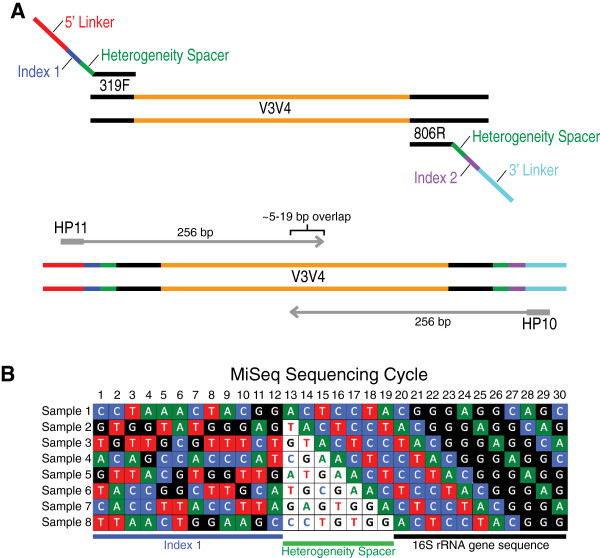
BACKGROUND: To take advantage of affordable high-throughput next-generation sequencing technologies to characterize microbial community composition often requires the development of improved methods to overcome technical limitations inherent to the sequencing platforms. Sequencing low sequence diversity libraries such as 16S rRNA amplicons has been problematic on the Illumina MiSeq platform and often generates sequences of suboptimal quality. RESULTS: Here we present an improved dual-indexing amplification and sequencing approach to assess the composition of microbial communities from clinical samples using the V3-V4 region of the 16S rRNA gene on the Illumina MiSeq platform. We introduced a 0 to 7 bp "heterogeneity spacer" to the index sequence that allows an equal proportion of samples to be sequenced out of phase. CONCLUSIONS: Our approach yields high quality sequence data from 16S rRNA gene amplicons using both 250 bp and 300 bp paired-end MiSeq protocols and provides a flexible and cost-effective sequencing option.
Overview
The claims and statistics of this paper haven’t been checked yet.
Free: it reads the open-access text and checks the first 5 claims that cite a source we can check. Create a free account to check every claim.
Integrity signals
Registry
Cites
Statistics
Figures
Verification
Claims the paper makes
The claims and statistics of this paper haven’t been checked yet.
Free: it reads the open-access text and checks the first 5 claims that cite a source we can check. Create a free account to check every claim.
Claims other papers make about this one
Each is checked against this paper’s own text: does it say what the citing paper says it does?
In the citing paper
“choices of 16S rRNA gene variable region primers may enable improved detection or differentiation of microbes16; for example, Propionibacterium spp. abundant on the skin are often undetected by V4 primers29, and Lactobacillus spp. in the vagina are better differentiated by including V321.”
From Assessment of variation in microbial community amplicon sequencing by the Microbiome Quality Control (MBQC) project consortium (2017) · cites this paper as [21]
Self-check
Percentages, sums and reported differences re-computed from the paper’s own numbers.
The self-check needs the paper’s full text.
Citations
Cites
Fast and accurate short read alignment with Burrows-Wheeler transform
Li, H., & Durbin, R. (2009) · Bioinformatics · doi:10.1093/bioinformatics/btp324 · Cited by 58,607
QIIME allows analysis of high-throughput community sequencing data
Caporaso, J. G., Kuczynski, J., Stombaugh, J., Bittinger, K., Bushman, F. D., Costello, E. K., Fierer, N., Peña, A. G., Goodrich, J. K., Gordon, J. I., et al. (2010) · Nature Methods · doi:10.1038/nmeth.f.303 · Cited by 34,887 · cited 1×
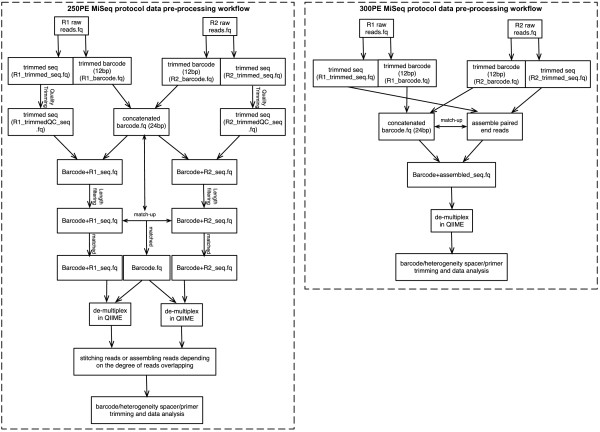
“0,) [10] and included additional quality trimming, demultiplexing, and taxonomic assignments.”
Search and clustering orders of magnitude faster than BLAST
Edgar, R. C. (2010) · Bioinformatics · doi:10.1093/bioinformatics/btq461 · Cited by 20,826
Naïve Bayesian Classifier for Rapid Assignment of rRNA Sequences into the New Bacterial Taxonomy
Wang, Q., Garrity, G. M., Tiedje, J. M., & Cole, J. R. (2007) · Applied and Environmental Microbiology · doi:10.1128/aem.00062-07 · Cited by 19,885 · cited 1×
“2 [15] trained on the Greengenes database”
FLASH: fast length adjustment of short reads to improve genome assemblies
Magoč, T., & Salzberg, S. L. (2011) · Bioinformatics · doi:10.1093/bioinformatics/btr507 · Cited by 15,366 · cited 4×
“The final sequence length after barcode, heterogeneity spacer, and primer removal was 429 ± 7 bp and 429 ± 6.7 bp for PANDAseq and FLASH, respectively, with an average of approximately 11,600 reads per sample.”
InfluentialUCHIME improves sensitivity and speed of chimera detection
Edgar, R. C., Haas, B. J., Clemente, J. C., Quince, C., & Knight, R. (2011) · Bioinformatics · doi:10.1093/bioinformatics/btr381 · Cited by 15,114
Structure, function and diversity of the healthy human microbiome
The Human Microbiome Project Consortium (2012) · Nature · doi:10.1038/nature11234 · Cited by 11,726
Ultra-high-throughput microbial community analysis on the Illumina HiSeq and MiSeq platforms
Caporaso, J. G., Lauber, C. L., Walters, W. A., Berg-Lyons, D., Huntley, J., Fierer, N., Owens, S. M., Betley, J., Fraser, L., Bauer, M., et al. (2012) · The ISME Journal · doi:10.1038/ismej.2012.8 · Cited by 8,839 · cited 3×
“quencing strategies include a single- [2,3] or a recently”
MethodKozich, J. J., Westcott, S. L., Baxter, N. T., Highlander, S. K., & Schloss, P. D. (2013) · Applied and Environmental Microbiology · doi:10.1128/aem.01043-13 · Cited by 7,112 · cited 2×
“developed dual-indexing [4] approach targeting the V4 hypervariable region of the 16S rRNA gene.”
Base-Calling of Automated Sequencer Traces Using Phred. I. Accuracy Assessment
Ewing, B., Hillier, L., Wendl, M. C., & Green, P. (1998) · Genome Research · doi:10.1101/gr.8.3.175 · Cited by 6,967 · cited 1×
“Additional sequence read pre-processing included: 1) removal of primer sequence; 2) truncation of sequence reads not having an average quality of 20 over a 30 bp sliding window based on the phred algorithm [6,7] implemented previously [8,9]; and 3) removal of trimmed reads having less than 75% of their original length…”
Cited by
Items 701–800 of 1,000
Abate, T. A., Desta, A. F., & Love, N. G. (2020) · Water Environment Research · doi:10.1002/wer.1364 · Cited by 25
“Quality filtered sequences were assigned to taxonomic identities by reference database project (RDP) classifiers (Fadrosh et al., 2014), and sequences were clustered into OTUs at a 97% similarity threshold level using the UCLUST algorithm.”
MethodWang, G., Yi, Y., Huang, L., Wang, J., & Fang, Z. (2020) · Journal of Water Process Engineering · doi:10.1016/j.jwpe.2020.101799 · Cited by 24
Functional shifts of soil microbial communities associated with Alliaria petiolata invasion
Duchesneau, K., Golemiec, A., Colautti, R. I., & Antunes, P. M. (2020) · Pedobiologia · doi:10.1016/j.pedobi.2020.150700 · Cited by 29
Effects of compound deer bone extract on osteoporosis model mice and intestinal microflora
Xue, C., Pan, W., Lu, X., Guo, J., Xu, G., Sheng, Y., Yuan, G., Zhao, N., Sun, J., Guo, X. L., et al. (2021) · Journal of Food Biochemistry · doi:10.1111/jfbc.13740 · Cited by 25
Antibiotic Intervention Affects Maternal Immunity During Gestation in Mice
Benner, M., Lopez‐Rincon, A., Thijssen, S., Garssen, J., Ferwerda, G., Joosten, I., Molen, R. G. V. D., & Hogenkamp, A. (2021) · Frontiers in Immunology · doi:10.3389/fimmu.2021.685742 · Cited by 26
Khomyakova, M. A., Merkel, A. Y., Kopitsyn, D. S., & Slobodkin, A. I. (2022) · Systematic and Applied Microbiology · doi:10.1016/j.syapm.2022.126304 · Cited by 29
Bellec, L., Du-Carrée, J. L., Almeras, F., Durand, L., Cambon‐Bonavita, M., Danion, M., & Morin, T. (2022) · FEMS Microbiology Ecology · doi:10.1093/femsec/fiac076 · Cited by 25
The Threat of Potentially Pathogenic Bacteria in the Feces of Bats
Huang, Y., Sun, Y., Huang, Q., Lv, X., Pu, J., Zhu, W., Lu, S., Jin, D., Liu, L., Shi, Z., et al. (2022) · Microbiology Spectrum · doi:10.1128/spectrum.01802-22 · Cited by 27
Zavarzina, D. G., Merkel, A. Y., Klyukina, A. A., Elizarov, I. M., Pikhtereva, V. A., Rusakov, V. S., Chistyakova, N. I., Ziganshin, R., Maslov, А. А., & Gavrilov, S. N. (2023) · Frontiers in Microbiology · doi:10.3389/fmicb.2023.1108245 · Cited by 26
Thomasdotter, A., Shum, P., Mugnai, F., Vingiani, M., Dubut, V., Marschal, F., Abbiati, M., Chenuil, A., & Costantini, F. (2023) · Molecular Ecology Resources · doi:10.1111/1755-0998.13836 · Cited by 26
“After decontamination, spurious haplotypes remained and the haplotype table was, therefore, further curated using lulu (Frøslev et al., 2017) in R with default settings (84% similarity threshold, 95% co- occurrence ratio).”
MethodWang, Z., Guo, L. J., Ding, X., Li, F., Xu, H., Li, S., Wang, X., Li, K., & Yue, X. (2023) · Meat Science · doi:10.1016/j.meatsci.2023.109342 · Cited by 25
Wang, S., Lin, Y., Gifford, S., Eveleth, R., & Cassar, N. (2018) · The ISME Journal · doi:10.1038/s41396-018-0163-4 · Cited by 28
Sun, Y., Liu, T., Si, Y., Cao, B., Zhang, Y. L., Zheng, X., & Feng, W. (2019) · Artificial Cells Nanomedicine and Biotechnology · doi:10.1080/21691401.2019.1649271 · Cited by 24
“The V3-V4 region of the prokaryotic (bacterial and archaeal) small sub-unit (16S) rRNA gene was amplified with slightly modified versions of primers 338 F (50-ACTCCTACGGGAGGCAGCAG30) and 806R (50-GGACTACHVGGGTWTCTAAT-30) [19].”
MethodMuravyov, M. I., & Panyushkina, A. (2020) · Microorganisms · doi:10.3390/microorganisms8030386 · Cited by 24
“Demultiplexing was performed as previously described [17].”
Jaspers, C., Weiland‐Bräuer, N., Rühlemann, M. C., Baines, J. F., Schmitz, R. A., & Reusch, T. B. H. (2020) · The Science of The Total Environment · doi:10.1016/j.scitotenv.2020.139471 · Cited by 24
“The 16S rRNA gene was amplified using uniquely barcoded primers, whichflank the V1 - V2 hypervariable regions (27F-338R) and are fused to MiSeq adapters and heterogeneity spacers (Fadrosh et al., 2014).”
MethodLim, J. W., Wong, S. W. K., Dai, Y., & Tong, Y. W. (2020) · Energy · doi:10.1016/j.energy.2020.117922 · Cited by 24
Undisturbed Soil Pedon under Birch Forest: Characterization of Microbiome in Genetic Horizons
Naumova, N., Петрович, Б. И., Alikina, T. Y., & Kabilov, M. R. (2021) · Soil Systems · doi:10.3390/soilsystems5010014 · Cited by 25
“The 16S rRNA genes and ITS2 regions were amplified with the primer pairs V3/V4 343F (5’-CTCCTACGGRRSGCAGCAG-3’) and 806R (5’-GGACTACNVGGGTWTCTAAT3’), and ITS3_KYO2 (5’¬GATGAAGAACGYAGYRAA-3’) and ITS4 (5’-TCC TCC GCT TAT TGA TAT GC-3’), respectively, combined with Illumina adapter sequences [11].”
MethodVectors as Sentinels: Rising Temperatures Increase the Risk of Xylella fastidiosa Outbreaks
Farigoule, P., Chartois, M., Mesmin, X., Lambert, M., Rossi, J., Rasplus, J., & Cruaud, A. (2022) · Biology · doi:10.3390/biology11091299 · Cited by 25
Xiao, S., Yang, Z., Yan, H., Chen, G., Zhong, S., Chen, P., Zhong, H., Yang, H., Jia, Y., Yin, Z., et al. (2024) · Translational Psychiatry · doi:10.1038/s41398-024-03012-9 · Cited by 23
“Clean reads were generated after removing adaptor sequences, short length, ambiguous bases and low complexity [46].”
MethodTomita, T., Fukui, H., Morishita, D., Maeda, A., Makizaki, Y., Tanaka, Y., Ohno, H., Oshima, T., & Miwa, H. (2023) · Journal of Neurogastroenterology and Motility · doi:10.5056/jnm22027 · Cited by 23
Unravelling the key factors for the dominance of Leuconostoc starters during kimchi fermentation
Lee, J., Lee, M. J., Jung, M., Kim, Y. B., Roh, S. W., Ryu, B. H., Jeon, C. O., Choi, H.-J., Whon, T. W., & Lee, S. H. (2025) · npj Science of Food · doi:10.1038/s41538-025-00415-w · Cited by 24
“…isomerase (54, K01804); L -ribulokinase (55, K00853); ascorbate PTS system EIIA component (56, K02821); ascorbate PTS system EIIB component (57, K02822); L -ascorbate 6-phosphate lactonase (58, K03476); 3-dehydro-L -gulonate-6-phosphate decarboxylase (59, K03078); and L…”
Qi, J., Yuan, H., Sun, S.-C., Zama, E. F., Tao, B., Jin, L., & Zhang, B. (2025) · Frontiers in Microbiology · doi:10.3389/fmicb.2025.1563712 · Cited by 23
“Protocols by Fadrosh et al. (2014) were used to process raw sequencing read.”
Yang, Y., Nie, J., Wang, S., Shi, L., Li, Z., Zeng, Z., & Zang, H. (2020) · Archives of Agronomy and Soil Science · doi:10.1080/03650340.2020.1714032 · Cited by 23
“The raw fastq files were de-multiplexed and quality-filtered using QIIME 1.8.0 (Fadrosh et al. 2014).”
MethodInfluentialJohnson, J. E., Dellon, E. S., McCoy, A. N., Sun, S., Jensen, E. T., Fodor, A. A., & Keku, T. O. (2021) · Journal of Gastrointestinal and Liver Diseases · doi:10.15403/jgld-3049 · Cited by 23
Jiang, H., Yang, B., Wang, H., Chen, Q., Cao, X., Gao, Y., Zhao, C., & Yin, K. (2021) · Journal of Soils and Sediments · doi:10.1007/s11368-021-02947-6 · Cited by 23
Biobeneficiation of bulk copper-zinc and copper-nickel concentrates at different temperatures
Muravyov, M. I., Panyushkina, A., Булаев, А. Г., & Фомченко, Н. В. (2021) · Minerals Engineering · doi:10.1016/j.mineng.2021.107040 · Cited by 23
Bindari, Y. R., Moore, R. J., Van, T. T. H., Walkden-Brown, S. W., & Gerber, P. F. (2021) · Animal Microbiome · doi:10.1186/s42523-021-00127-y · Cited by 23
Qi, B., Zhang, K., Qin, S., Lyu, D., & He, J. (2022) · PLoS ONE · doi:10.1371/journal.pone.0262691 · Cited by 26
Ferreira, C. S. T., Marconi, C., Pàrada, C. M. G. D. L., Ravel, J., & da Silva, M. G. (2022) · Frontiers in Cellular and Infection Microbiology · doi:10.3389/fcimb.2021.813520 · Cited by 23
“Molecular analysis was performed at the Institute for Genomic Sciences of University of Maryland (Baltimore, MD), according to Fadrosh et al. (2014) and a previous study (Marconi et al., 2020).”
MethodSelf-citationMcDavid, A., Laniewski, N. G., Grier, A., Gill, A. L., Kessler, H. A., Huyck, H. L., Carbonell, E., Holden‐Wiltse, J., Bandyopadhyay, S., Carnahan, J. A., et al. (2022) · iScience · doi:10.1016/j.isci.2022.104007 · Cited by 24
Ma, C., Liu, D., Hao, H., & Wu, X. (2022) · Foods · doi:10.3390/foods11142148 · Cited by 24
“Using the extracted DNA, 16S rRNA genes were amplified and sequenced using next-generation sequencing with the Illumina platform (Illumina, San Diego, CA, USA) [33,34].”
MethodDutta, S., Choi, S. Y., & Lee, Y. H. (2022) · Frontiers in Microbiology · doi:10.3389/fmicb.2022.877781 · Cited by 23
“Seed microbiota composition influences the structure of plantassociated microbial communities through the order and timing of species immigration during community assembly (Fukami, 2015).”
BackgroundJones, D. L., Grimsley, J. M. S., Kevill, J. L., Williams, R. J., Pellett, C., Lambert-Slosarska, K., Singer, A. C., Williams, G. B., Bargiela, R., Brown, R. W., et al. (2022) · Water · doi:10.3390/w14213568 · Cited by 25
Barekatain, R., Chrystal, P. V., Nowland, T. L., Moss, A. F., Howarth, G. S., Van, T. T. H., & Moore, R. J. (2023) · Animal nutrition · doi:10.1016/j.aninu.2023.01.011 · Cited by 25
“As per Fadrosh et al. (2014), primers also contained barcodes, spacer sequences, and Illumina sequencing linkers.”
BackgroundMusa, J., Maïga, M., Green, S. J., Magaji, F. A., Maryam, A. J., Okolo, M. O., Nyam, C. J., Cosmas, N. T., Silas, O. A., Imade, G., et al. (2023) · BMC Cancer · doi:10.1186/s12885-023-11187-5 · Cited by 25
Rajasekaran, S., Vasudevan, G., Tangavel, C., Ramachandran, K., Nayagam, S. M., Muthurajan, R., Gopalakrishnan, C., Anand, K. S. S. V., Shetty, A. P., & Kanna, R. M. (2024) · The Spine Journal · doi:10.1016/j.spinee.2024.06.020 · Cited by 26
Rekdal, S. L., Anmarkrud, J. A., Johnsen, A., & Lifjeld, J. T. (2018) · Ecology and Evolution · doi:10.1002/ece3.3757 · Cited by 25
“…and the amplicon sequencing was conducted on an Ion PGM. Additionally, MHCII β e2 amplicons were generated by including Illumina Linker sequences, barcodes, and heterogeneity spacer motif (Fadrosh et al., 2014) on both forward and re-vers primers, and sequenced on Illumina MiSeq (see Figure 1).”
Xue, Z., Zhang, J., Zhang, R., Huang, Z., Wan, Q., & Zhang, Z. (2019) · FEMS Microbiology Letters · doi:10.1093/femsle/fnz126 · Cited by 23
Rekdal, S. L., Anmarkrud, J. A., Lifjeld, J. T., & Johnsen, A. (2019) · Molecular Ecology · doi:10.1111/mec.15273 · Cited by 25
“All DNA samples were amplified in duplicates using the primers MHCIIFihy‐E2CF and MHCIIFihy‐E2CR (Canal, Alcaide, Anmarkrud, & Potti, 2010) and the sample indexing setup described by Fadrosh et al. (2014).”
MethodJiang, X., Liu, S., Zhang, Y., Ji, Y., Sohail, A., Cao, C., Wang, P., & Xiao, H. (2020) · Analytical Chemistry · doi:10.1021/acs.analchem.0c02627 · Cited by 24
Distaso, M. A., Bargiela, R., Brailsford, F. L., Williams, G. B., Wright, S., Lunev, E. A., Toshchakov, S. V., Yakimov, M. M., Jones, D. L., Golyshin, P. N., et al. (2020) · Frontiers in Microbiology · doi:10.3389/fmicb.2020.576520 · Cited by 23
“Raw sequencing reads were processed according to previously described protocols (Fadrosh et al., 2014; Korzhenkov et al., 2019).”
MethodInfluentialDoherty, J. R., Crouch, J. A., & Roberts, J. (2021) · Phytobiomes Journal · doi:10.1094/pbiomes-03-21-0021-r · Cited by 27
Xie, M., Zhang, S., Xu, L., Wu, Z., Yuan, J. F., & Chen, X. (2021) · Frontiers in Microbiology · doi:10.3389/fmicb.2021.696281 · Cited by 27
“To obtain more accurate and reliable results in the subsequent bioinformatic analysis (Fadrosh et al., 2014), the data were preprocessed.”
MethodLuo, Y., Pang, J., Li, C., Sun, J., Xu, Q. Q., Ye, J., Wu, H., Wan, Y., & Shi, J. (2021) · The Science of The Total Environment · doi:10.1016/j.scitotenv.2021.151933 · Cited by 23
Bivalve microbiomes are shaped by host species, size, parasite infection, and environment
Gignoux‐Wolfsohn, S., Ruiz, M. G., Barron, D. P., Ruiz, G. M., & Lohan, K. M. P. (2024) · PeerJ · doi:10.7717/peerj.18082 · Cited by 23
“Four sets of these primers were used that have 0 – 3 ‘ N ’ base pairs added onto the 3 ′ end before the adapter to increase library heterogeneity and sequencing success (Table S1; Fadrosh et al., 2014 ).”
MethodKim, E.-J., Jeong, H., Park, J., Je, J., Choi, C., & Lee, S. (2024) · Journal of Controlled Release · doi:10.1016/j.jconrel.2024.12.041 · Cited by 22
Pinna, N. K., Dutta, A., Haque, M. M., & Mande, S. S. (2019) · Frontiers in Genetics · doi:10.3389/fgene.2019.00653 · Cited by 37
“Similar longer reads may also be targeted using a paired-end sequencing protocol on Illumina platforms (Fadrosh et al., 2014).”
BackgroundFuyuki, A., Higurashi, T., Kessoku, T., Ashikari, K., Yoshihara, T., Misawa, N., Iwaki, M., Kobayashi, T., Ohkubo, H., Yoneda, M., et al. (2021) · Bioscience of Microbiota Food and Health · doi:10.12938/bmfh.2020-073 · Cited by 22
Quinteros, J. A., Scott, P. C., Wilson, T. B., Anwar, A. M., Scott, T., Muralidharan, C., Van, T. T. H., & Moore, R. J. (2021) · Poultry Science · doi:10.1016/j.psj.2021.101423 · Cited by 23
“Amplicons of the V3-V4 region of 16S rRNA genes were produced with Q5 high fidelity polymerase (New England BioLabs, Ipswich, MA) using forward (ACTCCTACGGGAGGCAGCAG) and reverse (GGACTACHVGGGTWTCTAAT) primers containing barcodes, spacer sequences, and Illumina sequencing linkers (Fadrosh et al., 2014).”
MethodAfonso, E., Fu, R., Dupaix, A., Goydadin, A.-C., Yu, Z., Callou, C., Villette, P., Giraudoux, P., & Li, L. (2021) · Scientific Reports · doi:10.1038/s41598-021-95166-5 · Cited by 22
Vaginal Microbiome Components as Correlates of Cervical Human Papillomavirus Infection
Morales, J. A. P., Marconi, C., El‐Zein, M., Ravel, J., Pinto, G. V. D. S., da Silveira, R. C. V., Lima, M. D., de Carvalho, N. S., Alves, R. R. F., Pàrada, C. M. G. D. L., et al. (2021) · The Journal of Infectious Diseases · doi:10.1093/infdis/jiab547 · Cited by 22
Self-citationMicrobial associations of shallow-water Mediterranean marine cave Solenogastres (Mollusca)
Vortsepneva, E., Chevaldonné, P., Klyukina, A. A., Naduvaeva, E., Todt, C., Zhadan, A., Tzetlin, A. B., & Kublanov, I. V. (2021) · PeerJ · doi:10.7717/peerj.12655 · Cited by 22
“The primers for the V4 region of 16S rRNA gene (Fadrosh et al., 2014) contained the Illumina TruSeq sequencing primer adapters and 515F/Pro-mod-805R primer sequences (Hugerth et al., 2014;Merkel et al., 2019) were used for the first amplification step: forward primer (5′-TCG TCG GCA GCG TCA GAT GTG…”
MethodMicrobiological profile of peri‐implantitis: Analyses of microbiome within dental implants
Kensara, A. A., Saito, H., Mongodin, E. F., & Masri, R. M. (2023) · Journal of Prosthodontics · doi:10.1111/jopr.13653 · Cited by 24
Unlocking foraminiferal genetic diversity on estuarine mudflats with eDNA metabarcoding
Singer, D., Fouet, M. P. A., Schweizer, M., Mouret, A., Quinchard, S., & Jorissen, F. J. (2023) · The Science of The Total Environment · doi:10.1016/j.scitotenv.2023.165983 · Cited by 22
“We also improved the overall quality of our sequencing by including 1 – 4 nucleotides as spacers to increase the heterogeneity of the libraries (Fadrosh et al., 2014).”
BackgroundBosnjak, M., Karpe, A. V., Van, T. T. H., Kotsanas, D., Jenkin, G., Costello, S. P., Johanesen, P., Moore, R. J., Beale, D. J., Srikhanta, Y. N., et al. (2023) · Nature Communications · doi:10.1038/s41467-023-43671-8 · Cited by 23
Alquria, T., Acharya, A., Tordik, P. A., Griffin, I. L., & Martinho, F. C. (2024) · International Endodontic Journal · doi:10.1111/iej.14074 · Cited by 23
Liu, W., Zhu, Z., Lu, Z., Oladele, O. P., Dang, Y. P., Zhao, X., & Zhang, H. (2024) · Land Degradation and Development · doi:10.1002/ldr.5249 · Cited by 23
Zheng, X., Dai, X., & Huang, L. (2016) · Frontiers in Marine Science · doi:10.3389/fmars.2016.00017 · Cited by 22
McMurray, C. L., Hardy, K. J., Calus, S., Loman, N. J., & Hawkey, P. M. (2016) · Microbiome · doi:10.1186/s40168-016-0210-1 · Cited by 23
“Amplicon sequencing targeted a 412-bp staphylococcus specific region of the tuf gene using previously published primers [9], with the inclusion of a heterogeneity spacer, Illumina adapter and linker [10] (see Additional file 1: Table S1).”
MethodMetagenomic Analysis of Silage
Tennant, R., Sambles, C., Diffey, G. E., Moore, K., & Love, J. (2017) · Journal of Visualized Experiments · doi:10.3791/54936 · Cited by 24
Intestinal Epithelial Cell–Derived LKB1 Suppresses Colitogenic Microbiota
Liu, X., Lü, J., Liu, Z., Zhao, J., Sun, H., Wu, N., Liu, H., Liu, W., Hu, Z., Meng, G., et al. (2018) · The Journal of Immunology · doi:10.4049/jimmunol.1700547 · Cited by 23
Gamallat, Y., Ren, X., Meyiah, A., Li, M., Ren, X., Jamalat, Y., Song, S., Xie, L., Ahmad, B., Shopit, A., et al. (2018) · Journal of Functional Foods · doi:10.1016/j.jff.2018.12.029 · Cited by 22
Zavarzina, D. G., Gavrilov, S. N., Chistyakova, N. I., Antonova, A. V., Gracheva, M., Merkel, A. Y., Perevalova, A. A., Чернов, М. С., Zhilina, T. N., Bychkov, A. Y., et al. (2019) · The ISME Journal · doi:10.1038/s41396-019-0527-4 · Cited by 24
“The libraries were prepared using polymerase chain reaction with universal primers to the V3-V4 region of 16S rRNA gene in accordance with the previously described technique [36].”
Effect of soil microbial feeding on gut microbiome and cadmium toxicity in Caenorhabditis elegans
Lee, S., Kim, Y., & Choi, J. (2019) · Ecotoxicology and Environmental Safety · doi:10.1016/j.ecoenv.2019.109777 · Cited by 24
Ren, X., Gamallat, Y., Liu, D., Zhu, Y., Meyiah, A., Yan, C., Shang, D., & Xin, Y. (2020) · Microbial Pathogenesis · doi:10.1016/j.micpath.2020.104062 · Cited by 23
Methanogenesis in the Lake Elton saline aquatic system
Kallistova, A. Y., Merkel, A. Y., Kanapatskiy, T. A., Boltyanskaya, Y. V., Tarnovetskii, I. Y., Perevalova, A. A., Kevbrin, V. V., Samylina, O. S., & Пименов, Н. В. (2020) · Extremophiles · doi:10.1007/s00792-020-01185-x · Cited by 22
“The libraries were prepared using polymerase chain reaction with universal primers to the V4 region of 16S rRNA gene in accordance with the previously described technique (Fadrosh et al. 2014).”
MethodZhang, J., Song, H. S., Zhang, C., Kim, Y. B., Roh, S. W., & Liu, D. (2021) · Archives of Microbiology · doi:10.1007/s00203-021-02375-7 · Cited by 24
Association of Fusobacterium nucleatum infection and colorectal cancer: A Mexican study
Cuellar‐Gomez, H., Ocharan-Hernández, M. E., Calzada‐Mendoza, C. C., & Comoto-Santacruz, D. A. (2021) · Revista de Gastroenterología de México (English Edition) · doi:10.1016/j.rgmxen.2021.07.001 · Cited by 27
Kim, D. D., Wan, L., Cao, X., Klisarova, D., Gerdzhikov, D., Zhou, Y., Song, C., & Yoon, S. (2021) · Water Research · doi:10.1016/j.watres.2021.117625 · Cited by 23
Tulloch, C. L., Bargiela, R., Williams, G. B., Chernikova, T. N., Cotterell, B. M., Wellington, E. M. H., Christie‐Oleza, J. A., Thomas, D. N., Jones, D. L., & Golyshin, P. N. (2024) · Environmental Microbiome · doi:10.1186/s40793-024-00569-2 · Cited by 21
“16S rRNA gene amplicons were produced using duplicate amplification with double-indexed fusion primers as reported previously [32].”
MethodShen, Z., Xie, G., Gong, Y., Shao, K., Gao, G., & Tang, X. (2024) · Environmental Research · doi:10.1016/j.envres.2024.120031 · Cited by 21
Justice, N. B., Sczesnak, A., Hazen, T. C., & Arkin, A. P. (2017) · Applied and Environmental Microbiology · doi:10.1128/aem.01253-17 · Cited by 21
“Both forward and reverse primers contained TruSeq Illumina adapters, barcodes, phasing, and linker sequences and are similar to previously described designs (40, 41), with the exception that the barcodes here were included so as to be part of a sequencing read instead of a separate indexing read.”
MethodZhang, X., Hou, Z., Xu, B., Xie, C., Wang, Z., Yu, X., Wu, D., Yan, X., & Dai, Q. (2020) · Frontiers in Microbiology · doi:10.3389/fmicb.2020.544097 · Cited by 21
“The V3–V4 region of the bacterial 16S rRNA gene was amplified with slightly modified versions of the 338F forward (5′-ACTCCTACGGGAGGCAGCAG-3′) and 806R reverse (5′- GGACTACHVGGGTWTCTAAT-3′) primers (Fadrosh et al., 2014).”
MethodChemical and microbiological characterization of pig manures and digestates
Sun, K., Jiang, L., Ye, Q., Wang, Q., Liao, D., Chang, X., Xi, S., & He, R. (2021) · Environmental Technology · doi:10.1080/09593330.2021.2016993 · Cited by 21
Sapozhnikov, D. M., & Szyf, M. (2022) · Nature Protocols · doi:10.1038/s41596-022-00741-3 · Cited by 22
Dixon, M. A., Dunlop, A. L., Corwin, E. J., & Kramer, M. R. (2023) · Frontiers in Public Health · doi:10.3389/fpubh.2023.1029741 · Cited by 23
Bubeck, A. M., Urbain, P., Sommersten, C. H., Jung, A., Ferrari, L., Ruple, H. K., Podlesny, D., Zorn, S., Laupsa‐Borge, J., Jensen, C., et al. (2023) · iScience · doi:10.1016/j.isci.2023.107697 · Cited by 22
Tao, X., Guo, F., Zhou, Q., Hu, F., Xiang, H., Xiao, G. G., & Shang, D. (2019) · RSC Advances · doi:10.1039/c8ra09547g · Cited by 21
Bacterial decomposition of insects post-Metarhizium infection: Possible influence on plant growth
Kryukov, V. Y., Kabilov, M. R., Смирнова, Н. В., Tomilova, O. G., Tyurin, M. V., Akhanaev, Y. B., Polenogova, O. V., Danilov, V. P., Zhangissina, S., Alikina, T. Y., et al. (2019) · Fungal Biology · doi:10.1016/j.funbio.2019.09.012 · Cited by 21
Semenova, E. M., Ershov, A. P., Sokolova, D. S., Tourova, T. P., & Nazina, T. N. (2020) · Microbiology · doi:10.1134/s0026261720060168 · Cited by 21
Kong, J., Zhang, G., Xia, K., Diao, C., Yang, X., Zuo, X., Li, Y., & Liang, X. (2021) · 3 Biotech · doi:10.1007/s13205-021-02699-7 · Cited by 22
Cao, H., Yan, Y., Wang, L., Dong, L., Xue-liang, P., Tang, S., Li, A., Xiang, A., Zhang, L., & Zheng, B. (2021) · Food Science of Animal Resources · doi:10.5851/kosfa.2021.e10 · Cited by 21
Singer, M., Koedooder, R., Bos, M. P., Poort, L., Schoenmakers, S., Savelkoul, P. H. M., Laven, J. S. E., de Jonge, J. D., Morré, S. A., & Budding, A. E. (2021) · BMC Microbiology · doi:10.1186/s12866-021-02149-7 · Cited by 23
Dalton, K. R., Ruble, K., Redding, L. E., Morris, D. O., Mueller, N. T., Thorpe, R. J., Agnew, J., Carroll, K. C., Planet, P. J., Rubenstein, R. C., et al. (2021) · Microorganisms · doi:10.3390/microorganisms9051054 · Cited by 24
“The V1-3 region of the 16S rRNA gene was amplified using barcoded primers (27F, 534R) for the Illumina platform as previously described (Fadrosh et al., 2014).”
MethodGao, J., Zhou, N., Wu, Y., Lu, M., Wang, Q., Xia, C., Zhou, M., & Xu, Y. (2021) · Journal of Translational Medicine · doi:10.1186/s12967-021-03032-9 · Cited by 22
Yoshihara, T., Kioi, M., Baba, J., Usuda, H., Kessoku, T., Iwaki, M., Takatsu, T., Misawa, N., Ashikari, K., Matsuura, T., et al. (2021) · Scientific Reports · doi:10.1038/s41598-021-03083-4 · Cited by 25
Sun, Z., Sun, W., An, J., Xu, H., Liu, Y., & Yan, C. (2022) · Ecotoxicology and Environmental Safety · doi:10.1016/j.ecoenv.2022.114027 · Cited by 21
Hu, K., Zheng, J., Yu, Z., Chen, Z., Cheng, H., Pan, W., Yang, W.-Z., Wang, H., Deng, Q.-W., & Zeng, Z. (2014) · International Journal of Infectious Diseases · doi:10.1016/j.ijid.2014.12.040 · Cited by 21
Sun, H., Kang, B., Chai, Z., Sun, H., Du, H., Gao, J., Feng, Q., Zhang, C., Cao, Q., & Guo, L. (2017) · Annals of Microbiology · doi:10.1007/s13213-017-1285-z · Cited by 21
“An improved daul-index pair-end sequencing approach was performed on the IlluminaMiSeq platform (Fadrosh et al. 2014), with the sequencing strategy PE250 (MiSeq Reagent kit v3; Illumina, USA).”
Li, C., Wang, L., & Liu, H. (2018) · Applied Microbiology and Biotechnology · doi:10.1007/s00253-018-9158-3 · Cited by 21
Bacillus-Based Probiotic Treatment Modified Bacteriobiome Diversity in Duck Feces
Naumova, N., Alikina, T. Y., Zolotova, N. S., Konev, A. V., Pleshakova, V. I., Lescheva, N., & Kabilov, M. R. (2021) · Agriculture · doi:10.3390/agriculture11050406 · Cited by 21
“16S rRNA Gene Amplification and Sequencing The 16S DNA region was amplified with the primer pair F343 (5′-TACGGRAGGCAG CAG-3′) and R803 (5′-CTACCAGGGTATCTAATCC-3′) combined with Illumina adapter sequences [19].”
MethodBerbers, R.-M., Paganelli, F. L., van Montfrans, J. M., Ellerbroek, P. M., Viveen, M. C., Rogers, M. R. C., Salomons, M., Schuurmans, J., Thans, M. V. S., Vanmaris, R. M. M., et al. (2025) · Microbiome · doi:10.1186/s40168-024-01982-y · Cited by 20
“The 469 basepair V3 and V4 hypervariable regions of the 16S rRNA gene were amplified and sequenced using the Illumina MiSeq instrument and Reagent Kit v3 (600 cycle) according to Fadrosh et al. [28].”
Yoon, H., Kim, H., Bang, J.-I., Lim, W., Moon, B.-I., Paik, N. S., Kim, B. S., & Kim, H. (2019) · Scientific Reports · doi:10.1038/s41598-019-54680-3 · Cited by 20
Semenova, E. M., Grouzdev, D. S., Tourova, T. P., & Nazina, T. N. (2019) · Microbiology · doi:10.1134/s0026261719060171 · Cited by 20
“To obtain the library of the 16S rRNA genes of the oil-grown enrichment culture, the V3–V4 hypervariable region of this gene was amplified and libraries were prepared on the basis of double barcoding, as described earlier (Fadrosh et al., 2014).”
MethodNi, H., Zhang, Y., Yang, Y., Li, Y., Li, Y., Sun, X., Xie, H., Zheng, J., Dong, L., Diao, J., et al. (2022) · Animals · doi:10.3390/ani12141815 · Cited by 22
“The bacterial 16S rRNA hypervariable V3-V4 region was amplified using 341F CCTAYGGGRBGCASCAG and 806R GGACTACNNGGGTATCTAAT primers [16].”
MethodAir pollution from livestock farms and the oropharyngeal microbiome of COPD patients and controls
van Kersen, W., Bossers, A., Piters, W. A. A. D. S., de Rooij, M. M. T., Bonten, M. J. M., Fluit, A. C., Heederik, D. J. J., Paganelli, F. L., Rogers, M. R. C., Viveen, M. C., et al. (2022) · Environment International · doi:10.1016/j.envint.2022.107497 · Cited by 20
Distinct Growth Responses of Tundra Soil Bacteria to Short-Term and Long-Term Warming
Propster, J., Schwartz, E., Hayer, M., Miller, S. N., Monsaint-Queeney, V. L., Koch, B. J., Morrissey, E. M., Mack, M. C., & Hungate, B. A. (2023) · Applied and Environmental Microbiology · doi:10.1128/aem.01543-22 · Cited by 20
Soto, D. F., Gómez, I., & Huovinen, P. S. (2023) · Microbiome · doi:10.1186/s40168-023-01643-6 · Cited by 21
Holcomb, L. E., Holman, J. M., Hurd, M., Lavoie, B. A., Colucci, L., Hunt, B., Hunt, T., Kinney, M. S., Pathak, J., Mawe, G. M., et al. (2023) · mSystems · doi:10.1128/msystems.00688-23 · Cited by 21
“Samples underwent DNA amplicon sequencing of the 16S rRNA gene V3-V4 region, using primers 341F (101) and 806R”
Wang, X., Jiang, L., Gai, Z., Tao, F., Tang, H., & Xu, P. (2018) · Journal of Hazardous Materials · doi:10.1016/j.jhazmat.2018.06.049 · Cited by 20
Metadata
- Authors
- Fadrosh, D. W., Ma, B., Gajer, P., Sengamalay, N., Ott, S., Brotman, R. M., & Ravel, J.
- Affiliations
- University of Maryland, Baltimore (US)
- Corresponding author
- Ravel, Jacques
- Venue
- Microbiome
- Published
- 2014-02-24
- Volume
- 2
- Issue
- 1
- Pages
- 6-6
- ISSN
- 2049-2618 (ISSN-L)
- PMC
- PMC3940169
- OpenAlex
- W2165722876
- Semantic Scholar
- 7f8859a57e35c66164678710187d4374822411d8
- Cited by
- 1,698
- References
- 14
- Citations by year
- 2026: 83 · 2025: 129 · 2024: 148 · 2023: 171 · 2022: 167 · 2021: 235 · 2020: 218 · 2019: 164 · 2018: 169 · 2017: 104 · 2016: 62 · 2015: 37 · 2014: 11
- FWCI
- 29.23
- Type
- journal article
- Language
- en
- Open access
- gold
- doi.org
- Licence
- cc-by
- Locations
- Microbiome (publishedVersion, cc-by)
- Europe PMC (PubMed Central) (publishedVersion, cc-by)
- PubMed Central (publishedVersion, cc-by)
- PubMed (publishedVersion)
- Funders
- National Institutes of Health
- National Institute of Allergy and Infectious Diseases (R01AI089878, U19AI084044, UH2AI083264)
- Topics
- Life Sciences › Biochemistry, Genetics and Molecular Biology › Molecular Biology › Genomics and Phylogenetic Studies
- Physical Sciences › Environmental Science › Ecology › Microbial Community Ecology and Physiology
- Life Sciences › Biochemistry, Genetics and Molecular Biology › Molecular Biology › Gut microbiota and health
- Keywords
- 16S rRNA gene sequencing, multiplexed sequencing, V3-V4 region, microbial community composition, clinical samples, paired-end sequencing, sequencing data quality
About these checks
Registry, retraction, Cites and statistics results are computed, not judged, with one exception: a printed reference that no index lists is read once by a model before it counts as a citation error. Claims are extracted by a model and kept only when their quote appears verbatim in the text; each cited source is then checked, with a model’s help, for whether it says what the claim relies on. Those verdicts can be wrong — read the claim’s quote and the cited source before relying on one.
Statistics and arithmetic are recomputed, not judged.
Confidence bands are shown only for fields calibrated on our annotated test set. None is calibrated yet, so no band is shown.
What counts as a claim ›How we measure confidence ›How we check this ›
Are you an author, or do you see a problem with this page? Request a review
Data sources
Bibliographic data: Semantic Scholar, OpenAlex, Crossref.
Contains information from the Semantic Scholar Academic Graph Datasets, made available under the ODC Attribution License (ODC-BY 1.0).
Semantic Scholar’s data is described in: Kinney, R., et al. (2023). The Semantic Scholar Open Data Platform. arXiv:2301.10140.
