

An improved dual-indexing approach for multiplexed 16S rRNA gene sequencing on the Illumina MiSeq platform
Open accessThe DOI matches its Crossref record; 14 of the 14 references it cites were found in a registry or an index.
Abstract
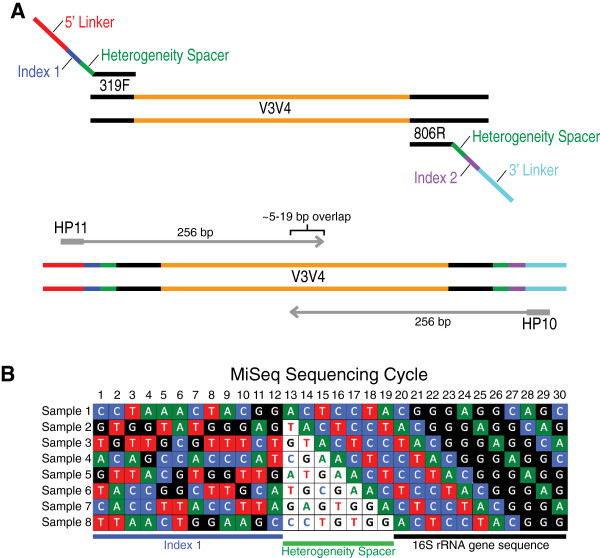
BACKGROUND: To take advantage of affordable high-throughput next-generation sequencing technologies to characterize microbial community composition often requires the development of improved methods to overcome technical limitations inherent to the sequencing platforms. Sequencing low sequence diversity libraries such as 16S rRNA amplicons has been problematic on the Illumina MiSeq platform and often generates sequences of suboptimal quality. RESULTS: Here we present an improved dual-indexing amplification and sequencing approach to assess the composition of microbial communities from clinical samples using the V3-V4 region of the 16S rRNA gene on the Illumina MiSeq platform. We introduced a 0 to 7 bp "heterogeneity spacer" to the index sequence that allows an equal proportion of samples to be sequenced out of phase. CONCLUSIONS: Our approach yields high quality sequence data from 16S rRNA gene amplicons using both 250 bp and 300 bp paired-end MiSeq protocols and provides a flexible and cost-effective sequencing option.
Overview
The claims and statistics of this paper haven’t been checked yet.
Free: it reads the open-access text and checks the first 5 claims that cite a source we can check. Create a free account to check every claim.
Integrity signals
Registry
Cites
Statistics
Figures
Verification
Claims the paper makes
The claims and statistics of this paper haven’t been checked yet.
Free: it reads the open-access text and checks the first 5 claims that cite a source we can check. Create a free account to check every claim.
Claims other papers make about this one
Each is checked against this paper’s own text: does it say what the citing paper says it does?
In the citing paper
“choices of 16S rRNA gene variable region primers may enable improved detection or differentiation of microbes16; for example, Propionibacterium spp. abundant on the skin are often undetected by V4 primers29, and Lactobacillus spp. in the vagina are better differentiated by including V321.”
From Assessment of variation in microbial community amplicon sequencing by the Microbiome Quality Control (MBQC) project consortium (2017) · cites this paper as [21]
Self-check
Percentages, sums and reported differences re-computed from the paper’s own numbers.
The self-check needs the paper’s full text.
Citations
Cites
Fast and accurate short read alignment with Burrows-Wheeler transform
Li, H., & Durbin, R. (2009) · Bioinformatics · doi:10.1093/bioinformatics/btp324 · Cited by 58,607
QIIME allows analysis of high-throughput community sequencing data
Caporaso, J. G., Kuczynski, J., Stombaugh, J., Bittinger, K., Bushman, F. D., Costello, E. K., Fierer, N., Peña, A. G., Goodrich, J. K., Gordon, J. I., et al. (2010) · Nature Methods · doi:10.1038/nmeth.f.303 · Cited by 34,887 · cited 1×
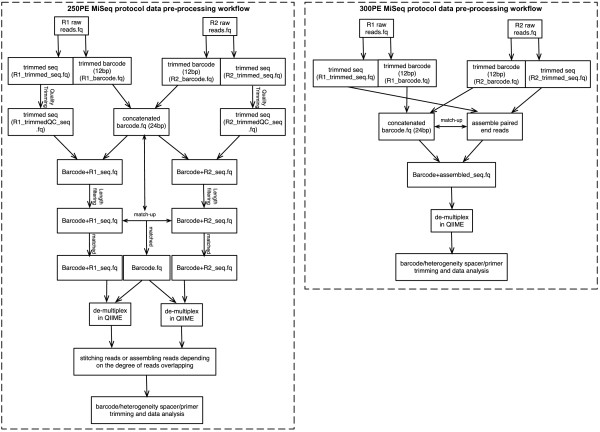
“0,) [10] and included additional quality trimming, demultiplexing, and taxonomic assignments.”
Search and clustering orders of magnitude faster than BLAST
Edgar, R. C. (2010) · Bioinformatics · doi:10.1093/bioinformatics/btq461 · Cited by 20,826
Naïve Bayesian Classifier for Rapid Assignment of rRNA Sequences into the New Bacterial Taxonomy
Wang, Q., Garrity, G. M., Tiedje, J. M., & Cole, J. R. (2007) · Applied and Environmental Microbiology · doi:10.1128/aem.00062-07 · Cited by 19,885 · cited 1×
“2 [15] trained on the Greengenes database”
FLASH: fast length adjustment of short reads to improve genome assemblies
Magoč, T., & Salzberg, S. L. (2011) · Bioinformatics · doi:10.1093/bioinformatics/btr507 · Cited by 15,366 · cited 4×
“The final sequence length after barcode, heterogeneity spacer, and primer removal was 429 ± 7 bp and 429 ± 6.7 bp for PANDAseq and FLASH, respectively, with an average of approximately 11,600 reads per sample.”
InfluentialUCHIME improves sensitivity and speed of chimera detection
Edgar, R. C., Haas, B. J., Clemente, J. C., Quince, C., & Knight, R. (2011) · Bioinformatics · doi:10.1093/bioinformatics/btr381 · Cited by 15,114
Structure, function and diversity of the healthy human microbiome
The Human Microbiome Project Consortium (2012) · Nature · doi:10.1038/nature11234 · Cited by 11,726
Ultra-high-throughput microbial community analysis on the Illumina HiSeq and MiSeq platforms
Caporaso, J. G., Lauber, C. L., Walters, W. A., Berg-Lyons, D., Huntley, J., Fierer, N., Owens, S. M., Betley, J., Fraser, L., Bauer, M., et al. (2012) · The ISME Journal · doi:10.1038/ismej.2012.8 · Cited by 8,839 · cited 3×
“quencing strategies include a single- [2,3] or a recently”
MethodKozich, J. J., Westcott, S. L., Baxter, N. T., Highlander, S. K., & Schloss, P. D. (2013) · Applied and Environmental Microbiology · doi:10.1128/aem.01043-13 · Cited by 7,112 · cited 2×
“developed dual-indexing [4] approach targeting the V4 hypervariable region of the 16S rRNA gene.”
Base-Calling of Automated Sequencer Traces Using Phred. I. Accuracy Assessment
Ewing, B., Hillier, L., Wendl, M. C., & Green, P. (1998) · Genome Research · doi:10.1101/gr.8.3.175 · Cited by 6,967 · cited 1×
“Additional sequence read pre-processing included: 1) removal of primer sequence; 2) truncation of sequence reads not having an average quality of 20 over a 30 bp sliding window based on the phred algorithm [6,7] implemented previously [8,9]; and 3) removal of trimmed reads having less than 75% of their original length…”
Cited by
Walters, W., Hyde, E. R., Berg-Lyons, D., Ackermann, G., Humphrey, G., Parada, A., Gilbert, J. A., Jansson, J. K., Caporaso, J. G., Fuhrman, J. A., et al. (2016) · mSystems · doi:10.1128/msystems.00009-15 · Cited by 2,191
“This approach is advantageous over that of popular dual-bar-coding schemes (15, 16), which do not allow the flexibility that single-ended forward bar coding does, due to the necessity of a variety of bar codes for both the forward and reverse primers.”
BackgroundNakatsuji, T., Chen, T. H., Narala, S., Chun, K. A., Two, A. M., Yun, T., Shafiq, F., Kotol, P. F., Bouslimani, A., Melnik, A. V., et al. (2017) · Science Translational Medicine · doi:10.1126/scitranslmed.aah4680 · Cited by 1,095
Systematic improvement of amplicon marker gene methods for increased accuracy in microbiome studies
Gohl, D. M., Vangay, P., Garbe, J., MacLean, A., Hauge, A., Becker, A., Gould, T. J., Clayton, J. B., Johnson, T. J., Hunter, R., et al. (2016) · Nature Biotechnology · doi:10.1038/nbt.3601 · Cited by 819
Jiao, N., Baker, S. S., Chapa-Rodriguez, A., Liu, W., Nugent, C. A., Tsompana, M., Mastrandrea, L., Buck, M. J., Baker, R. D., Genco, R. J., et al. (2018) · Gut · doi:10.1136/gutjnl-2017-314307 · Cited by 737
Microbiome Helper: a Custom and Streamlined Workflow for Microbiome Research
Comeau, A. M., Douglas, G. M., & Langille, M. G. I. (2017) · mSystems · doi:10.1128/msystems.00127-16 · Cited by 679
“An alternative approach that used heterogeneity spacers within the barcode provided an improvement to low sequence diversity (12) but required custom barcodes and more-complicated demultiplexing during bioinformatic analysis.”
BackgroundMethodOtt, S. J., Waetzig, G. H., Rehman, A., Moltzau-Anderson, J., Bharti, R., Grasis, J. A., Cassidy, L., Tholey, A., Fickenscher, H., Seegert, D., et al. (2017) · Gastroenterology · doi:10.1053/j.gastro.2016.11.010 · Cited by 695
Self-citationMariño, E., Richards, J. L., McLeod, K. H., Stanley, D., Yap, Y. A., Knight, J., McKenzie, C., Kranich, J., Oliveira, A. C., Rossello, F. J., et al. (2017) · Nature Immunology · doi:10.1038/ni.3713 · Cited by 686
Increased Tryptophan Metabolism Is Associated With Activity of Inflammatory Bowel Diseases
Nikolaus, S., Schulte, B., Al-Massad, N., Thieme, F., Schulte, D. M., Bethge, J., Rehman, A., Tran, F., Aden, K., Häsler, R., et al. (2017) · Gastroenterology · doi:10.1053/j.gastro.2017.08.028 · Cited by 602
Recovery of ethanol-induced Akkermansia muciniphila depletion ameliorates alcoholic liver disease
Grander, C., Adolph, T. E., Wieser, V., Lowe, P., Wrzosek, L., Gyongyosi, B., Ward, D. V., Grabherr, F., Gerner, R. R., Pfister, A., et al. (2018) · Gut · doi:10.1136/gutjnl-2016-313432 · Cited by 618
“Sequencing as described previously by Fadrosh et al 32 was completed at the Cincinnati University, Children’s Hospital Medical Center.”
Method16S rRNA Gene Analysis with QIIME2
Hall, M., & Beiko, R. G. (2018) · Methods in Molecular Biology · doi:10.1007/978-1-4939-8728-3_8 · Cited by 611
The Microbiome Quality Control Project Consortium, Sinha, R., Abu-Ali, G., Vogtmann, E., Fodor, A. A., Ren, B., Amir, A., Schwager, E., Crabtree, J., Ma, S., et al. (2017) · Nature Biotechnology · doi:10.1038/nbt.3981 · Cited by 587
The Madness of Microbiome: Attempting To Find Consensus “Best Practice” for 16S Microbiome Studies
Pollock, J., Glendinning, L., Wisedchanwet, T., & Watson, M. (2018) · Applied and Environmental Microbiology · doi:10.1128/aem.02627-17 · Cited by 575
Deciphering microbial interactions in synthetic human gut microbiome communities
Venturelli, O. S., Carr, A. V., Fisher, G., Hsu, R. H., Lau, R., Bowen, B. P., Hromada, S., Northen, T., & Arkin, A. P. (2018) · Molecular Systems Biology · doi:10.15252/msb.20178157 · Cited by 544
Biocontainment of genetically modified organisms by synthetic protein design
Mandell, D. J., Lajoie, M. J., Mee, M. T., Takeuchi, R., Kuznetsov, G., Norville, J. E., Gregg, C. J., Stoddard, B. L., & Church, G. M. (2015) · Nature · doi:10.1038/nature14121 · Cited by 470
Translocation and dissemination of commensal bacteria in post-stroke infection
Stanley, D., Mason, L. J., Mackin, K. E., Srikhanta, Y. N., Lyras, D., Prakash, M. D., Nurgali, K., Venegas, A., Hill, M. D., Moore, R. J., et al. (2016) · Nature Medicine · doi:10.1038/nm.4194 · Cited by 464
France, M. T., Ma, B., Gajer, P., Brown, S., Humphrys, M. S., Holm, J. B., Waetjen, L. E., Brotman, R. M., & Ravel, J. (2020) · Microbiome · doi:10.1186/s40168-020-00934-6 · Cited by 441
Self-citationLeaf bacterial diversity mediates plant diversity and ecosystem function relationships
Laforest-Lapointe, I., Paquette, A., Messier, C., & Kembel, S. W. (2017) · Nature · doi:10.1038/nature22399 · Cited by 418
Zhou, J., Guan, D., Zhou, B., Zhao, B., Ma, M., Qin, J., Jiang, X., Chen, S., Cao, F., Shen, D., et al. (2015) · Soil Biology and Biochemistry · doi:10.1016/j.soilbio.2015.07.005 · Cited by 411
Trøseid, M., Andersen, G. Ø., Broch, K., & Hov, J. R. (2020) · EBioMedicine · doi:10.1016/j.ebiom.2020.102649 · Cited by 408
Yu, G., Gail, M. H., Consonni, D., Carugno, M., Humphrys, M., Pesatori, A. C., Caporaso, N. E., Goedert, J. J., Ravel, J., & Landi, M. T. (2016) · Genome Biology · doi:10.1186/s13059-016-1021-1 · Cited by 405
Self-citationBest practices in metabarcoding of fungi: From experimental design to results
Tedersoo, L., Bahram, M., Zinger, L., Nilsson, R. H., Kennedy, P. G., Yang, T., Anslan, S., & Mikryukov, V. (2022) · Molecular Ecology · doi:10.1111/mec.16460 · Cited by 343
“The quality of Illumina sequencing benefits from heterogeneity spacers added to the indexes (Figure 2; Fadrosh et al., 2014).”
BackgroundGoedert, J. J., Jones, G., Hua, X., Xu, X., Yu, G., Flores, R., Falk, R. T., Gail, M. H., Shi, J., Ravel, J., et al. (2015) · JNCI: Journal of the National Cancer Institute · doi:10.1093/jnci/djv147 · Cited by 393
Self-citationElovitz, M. A., Gajer, P., Riis, V., Brown, A. G., Humphrys, M. S., Holm, J. B., & Ravel, J. (2019) · Nature Communications · doi:10.1038/s41467-019-09285-9 · Cited by 370
Self-citationIntestinal microbiome composition and its relation to joint pain and inflammation
Boer, C. G., Radjabzadeh, D., Medina-Gomez, C., Garmaeva, S., Schiphof, D., Arp, P., Koet, T., Kurilshikov, A., Fu, J., Ikram, M. A., et al. (2019) · Nature Communications · doi:10.1038/s41467-019-12873-4 · Cited by 329
Drewes, J. L., White, J. R., Dejea, C. M., Fathi, P., Iyadorai, T., Vadivelu, J., Roslani, A. C., Wick, E. C., Mongodin, E. F., Loke, M. F., et al. (2017) · npj Biofilms and Microbiomes · doi:10.1038/s41522-017-0040-3 · Cited by 335
“High-throughput next-generation sequencing of the V3-V4 hypervariable region of the 16S rRNA gene was performed using 319 F (5′-ACTCCTACGGGAGGCAGCAG-3′) and 806 R (5′-GGACTACHVGGGTWTCTAAT-3′) universal primers containing a linker sequence required for Illumina MiSeq 300 bp paired-end sequencing and a 12-bp heterogenei…”
MethodRau, M., Rehman, A., Dittrich, M., Groen, A. K., Hermanns, H. M., Seyfried, F., Beyersdorf, N., Dandekar, T., Rosenstiel, P., & Geier, A. (2018) · United European Gastroenterology Journal · doi:10.1177/2050640618804444 · Cited by 334
Liu, X., Shao, L., Liu, X., Ji, F., Mei, Y., Cheng, Y., Liu, F., Yan, C., Li, L., & Ling, Z. (2019) · EBioMedicine · doi:10.1016/j.ebiom.2018.12.034 · Cited by 322
“Amplicon libraries were constructedwith Illumina sequencing-compatible andbarcode-indexed bacterial PCR primers 319F/806R, which target the V3-V4 regions of 16S rRNA gene [23].”
MethodSalipante, S. J., Kawashima, T., Rosenthal, C., Hoogestraat, D. R., Cummings, L. A., Sengupta, D. J., Harkins, T. T., Cookson, B. T., & Hoffman, N. G. (2014) · Applied and Environmental Microbiology · doi:10.1128/aem.02206-14 · Cited by 301
Quantitative Microbial Ecology through Stable Isotope Probing
Hungate, B. A., Mau, R. L., Schwartz, E., Caporaso, J. G., Dijkstra, P., van Gestel, N., Koch, B. J., Liu, C. M., McHugh, T. A., Marks, J. C., et al. (2015) · Applied and Environmental Microbiology · doi:10.1128/aem.02280-15 · Cited by 305
Bradley, I. M., Pinto, A. J., & Guest, J. S. (2016) · Applied and Environmental Microbiology · doi:10.1128/aem.01630-16 · Cited by 280
Phasing amplicon sequencing on Illumina Miseq for robust environmental microbial community analysis
Wu, L., Wen, C., Qin, Y., Yin, H., Tu, Q., Van Nostrand, J. D., Yuan, T., Yuan, M., Deng, Y., & Zhou, J. (2015) · BMC Microbiology · doi:10.1186/s12866-015-0450-4 · Cited by 290
Jiao, N., Baker, S. S., Nugent, C. A., Tsompana, M., Cai, L., Wang, Y., Buck, M. J., Genco, R. J., Baker, R. D., Zhu, R., et al. (2018) · Physiological Genomics · doi:10.1152/physiolgenomics.00114.2017 · Cited by 275
The microbiome quality control project: baseline study design and future directions
Sinha, R., Abnet, C. C., White, O., Knight, R., & Huttenhower, C. (2015) · Genome Biology · doi:10.1186/s13059-015-0841-8 · Cited by 265
“This resulted in data from seven different DNA extraction kits and two different 16S hypervariable region primers (V4 515 F/806R [5, 6] and V3-4 318 F/806R [7]), and while the majority of labs (12 of 16) reported using homogenization during DNA extraction, not all labs included this step.”
Xue, H., Chen, X., Yu, C., Deng, Y., Zhang, Y., Chen, S., Chen, X., Chen, K., Yang, Y., & Ling, W. (2022) · Circulation Research · doi:10.1161/circresaha.122.321253 · Cited by 268
Xiong, W., Wang, Y., Sun, Y., Ma, L., Zeng, Q., Jiang, X., Li, A., Zeng, Z., & Zhang, T. (2018) · Microbiome · doi:10.1186/s40168-018-0419-2 · Cited by 274
Humans differ in their personal microbial cloud
Meadow, J. F., Altrichter, A. E., Bateman, A. C., Stenson, J., Brown, G., Green, J. L., & Bohannan, B. J. M. (2015) · PeerJ · doi:10.7717/peerj.1258 · Cited by 266
“Air filters and settling dishes from both experiments were all processed using methods specifically for low-biomass samples adapted from Kwan et al. (2011), and amplicon libraries were constructed following methods from Caporaso et al. (2012), and Fadrosh et al. (2014).”
MethodTargeting the gut microbiome to treat the osteoarthritis of obesity
Schott, E. M., Farnsworth, C. W., Grier, A., Lillis, J. A., Soniwala, S., Dadourian, G. H., Bell, R. D., Doolittle, M. L., Villani, D. A., Awad, H., et al. (2018) · JCI Insight · doi:10.1172/jci.insight.95997 · Cited by 268
“Reads were multiplexed using a configuration described previously (74).”
MethodLee, S., Yun, Y., Kim, S., Lee, E.-J., Chang, Y., Ryu, S., Shin, H., Kim, H.-L., Kim, H.-N., & Lee, J. (2018) · Journal of Clinical Medicine · doi:10.3390/jcm7090282 · Cited by 255
“All samples were pooled for sequencing on the Illumina Miseq platform (Illumina, San Diego, CA, USA) according to the manufacturer’s specifications [20,21].”
MethodDickson, L. B., Jiolle, D., Minard, G., Moltini-Conclois, I., Volant, S., Ghozlane, A., Bouchier, C., Ayala, D., Paupy, C., Moro, C. V., et al. (2017) · Science Advances · doi:10.1126/sciadv.1700585 · Cited by 254
Why the COI barcode should be the community DNA metabarcode for the metazoa
Andújar, C., Arribas, P., Yu, D. W., Vogler, A. P., & Emerson, B. C. (2018) · Molecular Ecology · doi:10.1111/mec.14844 · Cited by 236
“…limitations of widely used parallel‐sequencing methods (e.g. a maximum read length of 300 bp of the Illumina technology, limiting paired‐sequencing to amplicons of maximally ≈450 bp; e.g. Fadrosh et al., 2014), and potential co‐ amplification of concomitant microbial DNA (e.g. Stat et al., 2017).”
MethodStructural and Functional Dysbiosis of Fecal Microbiota in Chinese Patients With Alzheimer's Disease
Ling, Z., Zhu, M., Yan, X., Cheng, Y., Shao, L., Liu, X., Jiang, R., & Wu, S. (2021) · Frontiers in Cell and Developmental Biology · doi:10.3389/fcell.2020.634069 · Cited by 241
“Amplicon libraries were constructed with Illumina sequencingcompatible and barcode-indexed bacterial PCR primers 341F (5′-CCTACGGGNGGCWGCAG-3′)/785R (5′- ACTACHVGGGTATCTAATCC-3′), which target the V3–V4 regions of the 16S rRNA gene (Fadrosh et al., 2014).”
MethodZhang, P., Ren, C., Sun, H., & Min, L. (2018) · Science of The Total Environment · doi:10.1016/j.scitotenv.2017.09.097 · Cited by 244
Rausch, P., Rühlemann, M., Hermes, B. M., Doms, S., Dagan, T., Dierking, K., Domin, H., Fraune, S., von Frieling, J., Hentschel, U., et al. (2019) · Microbiome · doi:10.1186/s40168-019-0743-1 · Cited by 222
Gut Microbiota Composition Is Related to AD Pathology
Verhaar, B. J. H., Hendriksen, H. M. A., de Leeuw, F. A., Doorduijn, A. S., van Leeuwenstijn, M., Teunissen, C. E., Barkhof, F., Scheltens, P., Kraaij, R., van Duijn, C. M., et al. (2022) · Frontiers in Immunology · doi:10.3389/fimmu.2021.794519 · Cited by 224
“MMSE 161 29 [26, 30] 21 [19, 24] 27 [25, 29] 29 [28, 30] <0.”
Ziklo, N., Vidgen, M. E., Taing, K., Huston, W. M., & Timms, P. (2018) · Frontiers in Cellular and Infection Microbiology · doi:10.3389/fcimb.2018.00001 · Cited by 232
“The raw MiSeq data files were pre-processed using the method previously described (Fadrosh et al., 2014), with PEAR for merging the paired end reads (Zhang et al., 2014), CutAdapt for trimming barcode/primer (Martin, 2011), and vsearch for detection and removal of chimeric sequences (Rognes et al.,…”
MethodAnalysis of the mouse gut microbiome using full-length 16S rRNA amplicon sequencing
Shin, J., Lee, S., Go, M.-J., Lee, S. Y., Kim, S. C., Lee, C.-H., & Cho, B.-K. (2016) · Scientific Reports · doi:10.1038/srep29681 · Cited by 224
“To this end, the V3–V4 hypervariable region (approximately 469 bp) of the 16S rRNA gene, which has been used for taxonomic classification of the microbial community in human microbiome studies, was amplified using a two-step PCR method (see the Materials and Methods for experimental details) 22 .”
Role of root microbiota in plant productivity
Tkacz, A., & Poole, P. (2015) · Journal of Experimental Botany · doi:10.1093/jxb/erv157 · Cited by 225
Group B Streptococcus and the Vaginal Microbiota
Rosen, G. H., Randis, T. M., Desai, P. V., Sapra, K. J., Ma, B., Gajer, P., Humphrys, M. S., Ravel, J., Gelber, S. E., & Ratner, A. J. (2017) · The Journal of Infectious Diseases · doi:10.1093/infdis/jix395 · Cited by 243
“Quality control of the BV-IDEAS sequence dataset was performed as previously described [14].”
Self-citationMao, G., Li, S., Orfila, C., Shen, X., Zhou, S., Linhardt, R. J., Ye, X., & Chen, S. (2019) · Food & Function · doi:10.1039/c9fo01534e · Cited by 225
Association of HPV infection and clearance with cervicovaginal immunology and the vaginal microbiota
Shannon, B., Yi, T. J., Perusini, S., Gajer, P., Ma, B., Humphrys, M. S., Thomas-Pavanel, J., Chieza, L., Janakiram, P., Saunders, M., et al. (2017) · Mucosal Immunology · doi:10.1038/mi.2016.129 · Cited by 226
“A dual-barcode system with fusion primers 338F and 806R was used to amplify the V3-V4 regions of the 16S rRNA gene according to Fadrosh et al.(45) and subsequently sequenced on an Illumina MiSeq instrument (Illumina, San Diego, CA) using the 300 bp paired-end protocol at the Genomic Resource Center at the University o…”
Self-citationRose, D. R., Yang, H., Serena, G., Sturgeon, C., Ma, B., Careaga, M., Hughes, H. K., Angkustsiri, K., Rose, M., Hertz-Picciotto, I., et al. (2018) · Brain, Behavior, and Immunity · doi:10.1016/j.bbi.2018.03.025 · Cited by 227
Self-citationSubchronic Exposure of Mice to Cadmium Perturbs Their Hepatic Energy Metabolism and Gut Microbiome
Zhang, S., Jin, Y., Zeng, Z., Liu, Z., & Fu, Z. (2015) · Chemical Research in Toxicology · doi:10.1021/acs.chemrestox.5b00237 · Cited by 220
Lee, P.-C., Wu, C.-J., Hung, Y.-W., Lee, C. J., Chi, C.-T., Lee, I.-C., Yu-Lun, K., Chou, S.-H., Luo, J.-C., Hou, M.-C., et al. (2022) · Journal for ImmunoTherapy of Cancer · doi:10.1136/jitc-2022-004779 · Cited by 217
Yang, H., Huang, X., Fang, S., He, M., Zhao, Y., Wu, Z., Yang, M., Zhang, Z., Chen, C., & Huang, L. (2017) · Frontiers in Microbiology · doi:10.3389/fmicb.2017.01555 · Cited by 198
“To obtain the clean sequence reads, the primer and barcode sequences, and the low quality reads were filtered out from raw data (Fadrosh et al., 2014).”
MethodDing, J., Jiang, X., Ma, M., Zhou, B., Guan, D., Zhao, B., Zhou, J., Cao, F., Li, L., & Li, J. (2016) · Applied Soil Ecology · doi:10.1016/j.apsoil.2016.04.010 · Cited by 211
Galan, M., Pons, J., Tournayre, O., Pierre, É., Leuchtmann, M., Pontier, D., & Charbonnel, N. (2018) · Molecular Ecology Resources · doi:10.1111/1755-0998.12749 · Cited by 195
“The alternative bases between the partial adaptors and the target-specific primers correspond to a 0 to 5 bp “heterogeneity spacer” designed to mitigate the issues caused by low sequence diversity in Illumina amplicon sequencing (Fadrosh et al., 2014).”
BackgroundBacterial carbon use plasticity, phylogenetic diversity and the priming of soil organic matter
Morrissey, E. M., Mau, R. L., Schwartz, E., McHugh, T. A., Dijkstra, P., Koch, B. J., Marks, J. C., & Hungate, B. A. (2017) · The ISME Journal · doi:10.1038/ismej.2017.43 · Cited by 204
“For fractions containing DNA (9–15 fractions per sample), bacterial 16S rRNA genes were amplified using 338F and 806R primers and sequenced using dual indexing (Fadrosh et al., 2014) and 300-bp paired-end read chemistry on an Illumina MiSeq (Illumina, Inc., San Diego, CA, USA).”
MethodInfluentialDisordered intestinal microbes are associated with the activity of Systemic Lupus Erythematosus
Li, Y., Wang, H.-F., Li, X., Li, H.-X., Zhang, Q., Zhou, H.-W., He, Y., Li, P., Fu, C., Zhang, X.-H., et al. (2019) · Clinical Science · doi:10.1042/cs20180841 · Cited by 202
“The forward primer (5’-ACT CCT ACG GGA GGC AGC AG-3’) and reverse primer (5’-GGA CTA CHV GGG TWT CTA AT-3’) were used to amplify the 16S rRNA gene V3-V4 variable region from the bacteria by polymerase chain reaction (PCR) as described previously (22).”
MethodKlymus, K. E., Marshall, N. T., & Stepien, C. A. (2017) · PLOS ONE · doi:10.1371/journal.pone.0177643 · Cited by 186
Proctor, D. M., Dangana, T., Sexton, D. J., Fukuda, C., Yelin, R. D., Stanley, M., Bell, P. B., Baskaran, S., Deming, C., Chen, Q., et al. (2021) · Nature Medicine · doi:10.1038/s41591-021-01383-w · Cited by 198
Nunn, K. L., Wang, Y.-Y., Harit, D., Humphrys, M. S., Ma, B., Cone, R., Ravel, J., & Lai, S. K. (2015) · mBio · doi:10.1128/mbio.01084-15 · Cited by 194
Self-citationPanek, M., Čipčić Paljetak, H., Barešić, A., Perić, M., Matijašić, M., Lojkić, I., Vranešić Bender, D., Krznarić, Ž., & Verbanac, D. (2018) · Scientific Reports · doi:10.1038/s41598-018-23296-4 · Cited by 186
The association between ethnicity and vaginal microbiota composition in Amsterdam, the Netherlands
Borgdorff, H., van der Veer, C., van Houdt, R., Alberts, C. J., de Vries, H. J., Bruisten, S. M., Snijder, M. B., Prins, M., Geerlings, S. E., Schim van der Loeff, M. F., et al. (2017) · PLOS ONE · doi:10.1371/journal.pone.0181135 · Cited by 190
The effect of cigarette smoking on the oral and nasal microbiota
Yu, G., Phillips, S., Gail, M. H., Goedert, J. J., Humphrys, M. S., Ravel, J., Ren, Y., & Caporaso, N. E. (2017) · Microbiome · doi:10.1186/s40168-016-0226-6 · Cited by 182
“5Institute for Genome Sciences, University of Maryland School of Medicine, Baltimore, MD, USA.”
MethodInfluentialSelf-citationZhang, P., Sun, H., Min, L., & Ren, C. (2018) · Environmental Pollution · doi:10.1016/j.envpol.2018.01.030 · Cited by 190
Diversity, compositional and functional differences between gut microbiota of children and adults
Radjabzadeh, D., Boer, C. G., Beth, S. A., van der Wal, P., Kiefte-De Jong, J. C., Jansen, M. A. E., Konstantinov, S. R., Peppelenbosch, M. P., Hays, J. P., Jaddoe, V. W. V., et al. (2020) · Scientific Reports · doi:10.1038/s41598-020-57734-z · Cited by 184
Bradley, C. W., Morris, D. O., Rankin, S. C., Cain, C. L., Misic, A. M., Houser, T., Mauldin, E. A., & Grice, E. A. (2016) · Journal of Investigative Dermatology · doi:10.1016/j.jid.2016.01.023 · Cited by 172
“The V1eV3 hypervariable region of the 16S rRNA gene was amplified using a barcoding strategy as described (Fadrosh et al., 2014) and primers 27F (50-AGAGTTTGATCCTGGCTCAG-30) and 534R (50-ATTACCGCGGCTGCTGG-30).”
MethodWhy do microbes exhibit weak biogeographic patterns?
Meyer, K. M., Memiaghe, H., Korte, L., Kenfack, D., Alonso, A., & Bohannan, B. J. M. (2018) · The ISME Journal · doi:10.1038/s41396-018-0103-3 · Cited by 187
Salivary Microbiome Diversity in Caries-Free and Caries-Affected Children
Jiang, S., Gao, X., Jin, L., & Lo, E. (2016) · International Journal of Molecular Sciences · doi:10.3390/ijms17121978 · Cited by 171
Xia, J., Jin, C., Pan, Z., Sun, L., Fu, Z., & Jin, Y. (2018) · Science of The Total Environment · doi:10.1016/j.scitotenv.2018.03.053 · Cited by 181
Jeong, J., Yun, K., Mun, S., Chung, W.-H., Choi, S.-Y., Nam, Y.-D., Lim, M. Y., Hong, C. P., Park, C., Ahn, Y. J., et al. (2021) · Scientific Reports · doi:10.1038/s41598-020-80826-9 · Cited by 176
Guzman, A., Montes, M., Hutchins, L., DeLaCerda, G., Yang, P., Kakouridis, A., Dahlquist‐Willard, R. M., Firestone, M. K., Bowles, T., & Kremen, C. (2021) · New Phytologist · doi:10.1111/nph.17306 · Cited by 165
“The (5.8S) forward and (ITS4) reverse primers contained a 29 (forward) or 25 (reverse) base linker, a 12 base barcode, a 29 (forward) or 34 (reverse) base pad, and a 0–8 base heterogeneity spacer (Fadrosh et al., 2014).”
BackgroundComplementary combination of multiplex high‐throughput DNA sequencing for molecular phylogeny
Suyama, Y., Hirota, S. K., Matsuo, A., Tsunamoto, Y., Mitsuyuki, C., Shimura, A., & Okano, K. (2022) · Ecological Research · doi:10.1111/1440-1703.12270 · Cited by 164
Xu, Y., Wang, N., Tan, H.-Y., Li, S., Zhang, C., Zhang, Z., & Feng, Y. (2020) · Theranostics · doi:10.7150/thno.47746 · Cited by 173
An insight into intestinal mucosal microbiota disruption after stroke
Stanley, D., Moore, R. J., & Wong, C. H. Y. (2018) · Scientific Reports · doi:10.1038/s41598-017-18904-8 · Cited by 172
Ko, C.-Y., Liu, Q.-Q., Su, H.-Z., Zhang, H.-P., Fan, J.-M., Yang, J.-H., Hu, A.-K., Liu, Y.-Q., Chou, D., & Zeng, Y.-M. (2019) · Clinical Science · doi:10.1042/cs20180891 · Cited by 172
Bisphenol A alters gut microbiome: Comparative metagenomics analysis
Lai, K.-P., Chung, Y.-T., Li, R., Wan, H.-T., & Wong, C. K.-C. (2016) · Environmental Pollution · doi:10.1016/j.envpol.2016.08.039 · Cited by 175
“Moreover, many studies demonstrated that DMSO has no effects on microbiota (Ansel et al., 1969; Fedorka-Cray et al., 1988).”
BackgroundFecal Microbiota Transplantation as New Therapeutic Avenue for Human Diseases
Biazzo, M., & Deidda, G. (2022) · Journal of Clinical Medicine · doi:10.3390/jcm11144119 · Cited by 185
Mucosa-Associated Microbiota in Gastric Cancer Tissues Compared With Non-cancer Tissues
Chen, X.-H., Wang, A., Chu, A.-N., Gong, Y.-H., & Yuan, Y. (2019) · Frontiers in Microbiology · doi:10.3389/fmicb.2019.01261 · Cited by 165
“The low quality and short sequences were filtered out with the following criteria (Gill et al., 2006; Fadrosh et al., 2014): sequence reads with average Phred score ≤19, length less than 150 bp; paired reads having at least one with length less than 75% of their original length; reads with…”
MethodSugahara, H., Odamaki, T., Fukuda, S., Kato, T., Xiao, J.-Z., Abe, F., Kikuchi, J., & Ohno, H. (2015) · Scientific Reports · doi:10.1038/srep13548 · Cited by 169
Herbold, C. W., Pelikan, C., Kuzyk, O., Hausmann, B., Angel, R., Berry, D., & Loy, A. (2015) · Frontiers in Microbiology · doi:10.3389/fmicb.2015.00731 · Cited by 165
“This so-called barcoding or indexing is commonly achieved by performing PCR with large (>50 nucleotide) fusion primers that consist of the original gene-specific primer, linkers, barcodes, and sequencing platform-specific adapter sequences (Sogin et al., 2006; Fadrosh et al., 2014).”
BackgroundMethodMehrpouya-Bahrami, P., Chitrala, K. N., Ganewatta, M. S., Tang, C., Murphy, E. A., Enos, R. T., Velazquez, K. T., McCellan, J., Nagarkatti, M., & Nagarkatti, P. (2017) · Scientific Reports · doi:10.1038/s41598-017-15154-6 · Cited by 161
Graspeuntner, S., Loeper, N., Künzel, S., Baines, J. F., & Rupp, J. (2018) · Scientific Reports · doi:10.1038/s41598-018-27757-8 · Cited by 159
Guo, Z., Han, J., Li, J., Xu, Y., & Wang, X. (2019) · PLoS ONE · doi:10.1371/journal.pone.0211163 · Cited by 166
Lin, R., Piao, M., & Song, Y. (2019) · Frontiers in Microbiology · doi:10.3389/fmicb.2019.01092 · Cited by 158
“The samples were combined and subjected to sequencing on the Illumina MiSeq platform in accordance with the manufacturer's instructions (Fadrosh et al., 2014) .”
MethodCorato, U. D. (2020) · Chemical and Biological Technologies in Agriculture · doi:10.1186/s40538-020-00183-7 · Cited by 172
Active pathways of anaerobic methane oxidation across contrasting riverbeds
Shen, L., Ouyang, L., Zhu, Y., & Trimmer, M. (2018) · The ISME Journal · doi:10.1038/s41396-018-0302-y · Cited by 162
GBSX: a toolkit for experimental design and demultiplexing genotyping by sequencing experiments
Herten, K., Hestand, M. S., Vermeesch, J. R., & Houdt, J. K. J. V. (2015) · BMC Bioinformatics · doi:10.1186/s12859-015-0514-3 · Cited by 177
Song, H. S., Whon, T. W., Kim, J., Lee, S. H., Kim, J. Y., Kim, Y. B., Choi, H.-J., Rhee, J., & Roh, S. W. (2020) · Food Chemistry · doi:10.1016/j.foodchem.2020.126481 · Cited by 157
Molecular Characterization of the Human Stomach Microbiota in Gastric Cancer Patients
Yu, G., Torres, J., Hu, N., Medrano-Guzman, R., Herrera-Goepfert, R., Humphrys, M. S., Wang, L., Wang, C., Ding, T., Ravel, J., et al. (2017) · Frontiers in Cellular and Infection Microbiology · doi:10.3389/fcimb.2017.00302 · Cited by 152
Self-citationNext-Generation Sequencing: A Review of Technologies and Tools for Wound Microbiome Research
Hodkinson, B. P., & Grice, E. A. (2015) · Advances in Wound Care · doi:10.1089/wound.2014.0542 · Cited by 149
Hong, X., Chen, J., Liu, L., Wu, H. G., Tan, H.-Q., Xie, G., Xu, Q., Zou, H., Yu, W., Wang, L., et al. (2016) · Scientific Reports · doi:10.1038/srep26621 · Cited by 158
Impact of prematurity and nutrition on the developing gut microbiome and preterm infant growth
Grier, A., Qiu, X., Bandyopadhyay, S., Holden-Wiltse, J., Kessler, H. A., Gill, A. L., Hamilton, B., Huyck, H., Misra, S., Mariani, T. J., et al. (2017) · Microbiome · doi:10.1186/s40168-017-0377-0 · Cited by 149
Expanded skin virome in DOCK8-deficient patients
Tirosh, O., Conlan, S., Deming, C., Lee-Lin, S.-Q., Huang, X., Program, N. C. S., Barnabas, B. B., Bouffard, G. G., Brooks, S. Y., Marfani, H., et al. (2018) · Nature Medicine · doi:10.1038/s41591-018-0211-7 · Cited by 166
Holm, J. B., Humphrys, M. S., Robinson, C. K., Settles, M. L., Ott, S. H., Fu, L., Yang, H., Gajer, P., He, X., McComb, E. J., et al. (2019) · mSystems · doi:10.1128/msystems.00029-19 · Cited by 174
Self-citationHigh‐throughput monitoring of wild bee diversity and abundance via mitogenomics
Tang, M., Hardman, C. J., Ji, Y., Meng, G., Liu, S., Tan, M., Yang, S., Moss, E. D., Wang, J., Yang, C., et al. (2015) · Methods in Ecology and Evolution · doi:10.1111/2041-210x.12416 · Cited by 160
Cao, X., Wang, Y., He, J., Luo, X., & Zheng, Z. (2016) · Environmental Pollution · doi:10.1016/j.envpol.2016.06.017 · Cited by 155
Jayawardena, R. S., Purahong, W., Zhang, W., Wubet, T., Li, X., Liu, M., Zhao, W., Hyde, K. D., Liu, J., & Yan, J. (2018) · Fungal Diversity · doi:10.1007/s13225-018-0398-4 · Cited by 164
“However, it has been recognized that the actual number of microbes in nature, often exceed the number of microbes identified by traditional methods (Fadrosh et al. 2014).”
BackgroundDiverse Human Skin Fungal Communities in Children Converge in Adulthood
Jo, J.-H., Deming, C., Kennedy, E. A., Conlan, S., Polley, E. C., Ng, W.-I., Segre, J. A., & Kong, H. H. (2016) · Journal of Investigative Dermatology · doi:10.1016/j.jid.2016.05.130 · Cited by 139
“For Illumina MiSeq sequencing, the ITS1 region was amplified with the primers 18S-F and 5.8S-1R using the strategy described (Fadrosh et al., 2014).”
MethodInoue, R., Sakaue, Y., Sawai, C., Sawai, T., Ozeki, M., Romero-Pérez, G. A., & Tsukahara, T. (2016) · Bioscience, Biotechnology, and Biochemistry · doi:10.1080/09168451.2016.1222267 · Cited by 148
Metadata
- Authors
- Fadrosh, D. W., Ma, B., Gajer, P., Sengamalay, N., Ott, S., Brotman, R. M., & Ravel, J.
- Affiliations
- University of Maryland, Baltimore (US)
- Corresponding author
- Ravel, Jacques
- Venue
- Microbiome
- Published
- 2014-02-24
- Volume
- 2
- Issue
- 1
- Pages
- 6-6
- ISSN
- 2049-2618 (ISSN-L)
- PMC
- PMC3940169
- OpenAlex
- W2165722876
- Semantic Scholar
- 7f8859a57e35c66164678710187d4374822411d8
- Cited by
- 1,698
- References
- 14
- Citations by year
- 2026: 83 · 2025: 129 · 2024: 148 · 2023: 171 · 2022: 167 · 2021: 235 · 2020: 218 · 2019: 164 · 2018: 169 · 2017: 104 · 2016: 62 · 2015: 37 · 2014: 11
- FWCI
- 29.23
- Type
- journal article
- Language
- en
- Open access
- gold
- doi.org
- Licence
- cc-by
- Locations
- Microbiome (publishedVersion, cc-by)
- Europe PMC (PubMed Central) (publishedVersion, cc-by)
- PubMed Central (publishedVersion, cc-by)
- PubMed (publishedVersion)
- Funders
- National Institutes of Health
- National Institute of Allergy and Infectious Diseases (R01AI089878, U19AI084044, UH2AI083264)
- Topics
- Life Sciences › Biochemistry, Genetics and Molecular Biology › Molecular Biology › Genomics and Phylogenetic Studies
- Physical Sciences › Environmental Science › Ecology › Microbial Community Ecology and Physiology
- Life Sciences › Biochemistry, Genetics and Molecular Biology › Molecular Biology › Gut microbiota and health
- Keywords
- 16S rRNA gene sequencing, multiplexed sequencing, V3-V4 region, microbial community composition, clinical samples, paired-end sequencing, sequencing data quality
About these checks
Registry, retraction, Cites and statistics results are computed, not judged, with one exception: a printed reference that no index lists is read once by a model before it counts as a citation error. Claims are extracted by a model and kept only when their quote appears verbatim in the text; each cited source is then checked, with a model’s help, for whether it says what the claim relies on. Those verdicts can be wrong — read the claim’s quote and the cited source before relying on one.
Statistics and arithmetic are recomputed, not judged.
Confidence bands are shown only for fields calibrated on our annotated test set. None is calibrated yet, so no band is shown.
What counts as a claim ›How we measure confidence ›How we check this ›
Are you an author, or do you see a problem with this page? Request a review
Data sources
Bibliographic data: Semantic Scholar, OpenAlex, Crossref.
Contains information from the Semantic Scholar Academic Graph Datasets, made available under the ODC Attribution License (ODC-BY 1.0).
Semantic Scholar’s data is described in: Kinney, R., et al. (2023). The Semantic Scholar Open Data Platform. arXiv:2301.10140.
