

The DOI matches its Crossref record; 92 of the 93 references it cites were found in a registry or an index, and 1 are not checked yet.
The prion hypothesis in Parkinson's disease: Braak to the future
Open accessAbstract
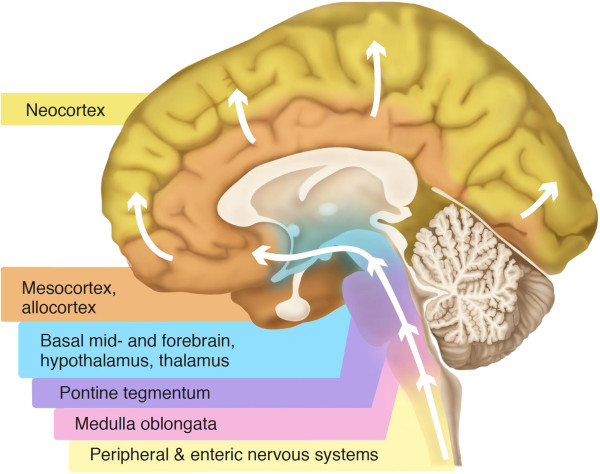
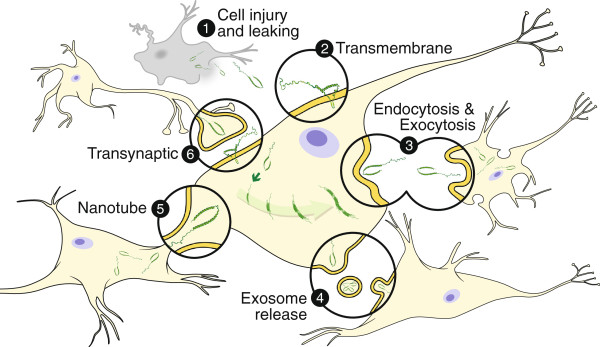
Parkinson's disease (PD) is a progressive neurodegenerative disorder typified by the presence of intraneuronal inclusions containing aggregated alpha synuclein (αsyn). The progression of parkinsonian pathology and clinical phenotype has been broadly demonstrated to follow a specific pattern, most notably described by Braak and colleagues. In more recent times it has been hypothesized that αsyn itself may be a critical factor in mediating transmission of disease pathology from one brain area to another. Here we investigate the growing body of evidence demonstrating the ability of αsyn to spread transcellularly and induce pathological aggregation affecting neurons by permissive templating and provide a critical analysis of some irregularities in the hypothesis that the progression of PD pathology may be mediated by such a prion-like process. Finally we discuss some key questions that remain unanswered which are vital to determining the potential contribution of a prion-like process to the pathogenesis of PD.
Overview
The claims and statistics of this paper haven’t been checked yet.
Run the check — free, no account needed. It reads the open-access text and checks the sources it cites.
Integrity signals
Registry
Cites
Statistics
Figures
Verification
Claims the paper makes
The claims and statistics of this paper haven’t been checked yet.
Run the check — free, no account needed. It reads the open-access text and checks the sources it cites.
Claims other papers make about this one
Each is checked against this paper’s own text: does it say what the citing paper says it does?
In the citing paper
“It has been suggested that alpha-synuclein could act like a prion protein during PD pathogenesis.In this theory pathologic, misfolded alpha-synuclein is an 'infectious' protein spreading pathology by forming a template that seeds misfolding for nearby alpha-synuclein protein, turning the previously healthy protein into a pathogenic protein (Jucker and Walker, 2013;Visanji et al., 2013).”
From The Gut-Brain Axis in Parkinson’s Disease: Possibilities for Food-Based Therapies (2017) · cites this paper as Visanji et al., 2013
Self-check
Percentages, sums and reported differences re-computed from the paper’s own numbers.
The self-check needs the paper’s full text.
Citations
Cites
Staging of brain pathology related to sporadic Parkinson’s disease
Braak, H., Tredici, K. D., Rüb, U., de Vos, R. A. I., Jansen Steur, E. N. H., & Braak, E. (2003) · Neurobiology of Aging · doi:10.1016/s0197-4580(02)00065-9 · Cited by 10,777
Prusiner, S. B. (1998) · Proceedings of the National Academy of Sciences · doi:10.1073/pnas.95.23.13363 · Cited by 5,373
Novel Proteinaceous Infectious Particles Cause Scrapie
Prusiner, S. B. (1982) · Science · doi:10.1126/science.6801762 · Cited by 5,221
Luk, K. C., Kehm, V., Carroll, J., Zhang, B., O’Brien, P., Trojanowski, J. Q., & Lee, V. M.-Y. (2012) · Science · doi:10.1126/science.1227157 · Cited by 2,563
Pan, K. M., Baldwin, M. A., Nguyen, J. T., Gasset, M., Serban, A. V., Groth, D., Mehlhorn, I., Huang, Z., Fletterick, R. J., & Cohen, F. E. (1993) · Proceedings of the National Academy of Sciences · doi:10.1073/pnas.90.23.10962 · Cited by 2,281
Li, J.-Y., Englund, E., Holton, J. L., Soulet, D., Hagell, P., Lees, A. J., Lashley, T., Quinn, N. P., Rehncrona, S., Björklund, A., et al. (2008) · Nature Medicine · doi:10.1038/nm1746 · Cited by 1,845
Lewy body–like pathology in long-term embryonic nigral transplants in Parkinson's disease
Kordower, J. H., Chu, Y., Hauser, R. A., Freeman, T. B., & Olanow, C. W. (2008) · Nature Medicine · doi:10.1038/nm1747 · Cited by 1,722
Braak, H., R�b, U., Gai, W. P., & Del Tredici, K. (2003) · Journal of Neural Transmission · doi:10.1007/s00702-002-0808-2 · Cited by 1,683
Inclusion formation and neuronal cell death through neuron-to-neuron transmission of α-synuclein
Desplats, P., Lee, H.-J., Bae, E.-J., Patrick, C., Rockenstein, E., Crews, L., Spencer, B., Masliah, E., & Lee, S.-J. (2009) · Proceedings of the National Academy of Sciences · doi:10.1073/pnas.0903691106 · Cited by 1,485
Braak, H., de Vos, R. A. I., Bohl, J., & Del Tredici, K. (2006) · Neuroscience Letters · doi:10.1016/j.neulet.2005.11.012 · Cited by 1,354
Luk, K. C., Kehm, V. M., Zhang, B., O’Brien, P., Trojanowski, J. Q., & Lee, V. M. ‐. (2012) · The Journal of Experimental Medicine · doi:10.1084/jem.20112457 · Cited by 1,136
Parkinson's disease: a dual‐hit hypothesis
Hawkes, C. H., Del Tredici, K., & Braak, H. (2007) · Neuropathology and Applied Neurobiology · doi:10.1111/j.1365-2990.2007.00874.x · Cited by 1,021
Gastrointestinal Dysfunction in Parkinson’s Disease
Fasano, A., Visanji, N. P., Liu, L. W. C., Lang, A. E., & Pfeiffer, R. F. (2015) · The Lancet Neurology · doi:10.1016/s1474-4422(15)00007-1 · Cited by 1,016
Self-citationPapp, M. I., Kahn, J. E., & Lantos, P. L. (1989) · Journal of the Neurological Sciences · doi:10.1016/0022-510x(89)90219-0 · Cited by 991
A Clinicopathologic Study of 100 Cases of Parkinson's Disease
Hughes, A. J., Daniel, S. E., Blankson, S., & Lees, A. J. (1993) · Archives of Neurology · doi:10.1001/archneur.1993.00540020018011 · Cited by 945
Luk, K. C., Song, C., O'Brien, P., Stieber, A., Branch, J. R., Brunden, K. R., Trojanowski, J. Q., & Lee, V. M.-Y. (2009) · Proceedings of the National Academy of Sciences · doi:10.1073/pnas.0908005106 · Cited by 938
Gastrointestinal dysfunction in Parkinson's disease
Pfeiffer, R. F. (2003) · The Lancet Neurology · doi:10.1016/s1474-4422(03)00307-7 · Cited by 933
Arizona Parkinson’s Disease Consortium, Beach, T. G., Adler, C. H., Sue, L. I., Vedders, L., Lue, L., White III, C. L., Akiyama, H., Caviness, J. N., Shill, H. A., et al. (2010) · Acta Neuropathologica · doi:10.1007/s00401-010-0664-3 · Cited by 911
Kordower, J. H., Freeman, T. B., Snow, B. J., Vingerhoets, F. J. G., Mufson, E. J., Sanberg, P. R., Hauser, R. A., Smith, D. A., Nauert, G. M., Perl, D. P., et al. (1995) · New England Journal of Medicine · doi:10.1056/nejm199504273321702 · Cited by 858
Hansen, C., Angot, E., Bergström, A.-L., Steiner, J. A., Pieri, L., Paul, G., Outeiro, T. F., Melki, R., Kallunki, P., Fog, K., et al. (2011) · Journal of Clinical Investigation · doi:10.1172/jci43366 · Cited by 842
Frequency of Bowel Movements and the Future Risk of Parkinson’s Disease
Abbott, R. D., Petrovitch, H., White, L. R., Masaki, K. H., Tanner, C. M., Curb, J. D., Grandinetti, A., Blanchette, P. L., Popper, J. S., & Ross, G. W. (2001) · Neurology · doi:10.1212/wnl.57.3.456 · Cited by 839
Intravesicular Localization and Exocytosis of α-Synuclein and its Aggregates
Lee, H.-J., Patel, S. S., & Lee, S. (2005) · Journal of Neuroscience · doi:10.1523/jneurosci.0692-05.2005 · Cited by 824
Prion-like transmission of protein aggregates in neurodegenerative diseases
Brundin, P., Melki, R., & Kopito, R. (2010) · Nature Reviews Molecular Cell Biology · doi:10.1038/nrm2873 · Cited by 778
Prion-like mechanisms in neurodegenerative diseases
Frost, B., & Diamond, M. I. (2010) · Nature Reviews Neuroscience · doi:10.1038/nrn2786 · Cited by 776
Fiber diffraction of synthetic α-synuclein filaments shows amyloid-like cross-β conformation
Serpell, L. C., Berriman, J. A., Jakes, R., Goedert, M., & Crowther, R. A. (2000) · Proceedings of the National Academy of Sciences · doi:10.1073/pnas.97.9.4897 · Cited by 755
α-Synuclein Fibrillogenesis Is Nucleation-dependent
Wood, S. J., Wypych, J., Steavenson, S., Louis, J., Citron, M., & Biere, A. L. (1999) · Journal of Biological Chemistry · doi:10.1074/jbc.274.28.19509 · Cited by 733
the Arizona Parkinson’s Disease Consortium, Beach, T. G., Adler, C. H., Lue, L., Sue, L. I., Bachalakuri, J., Henry-Watson, J., Sasse, J., Boyer, S., Shirohi, S., et al. (2009) · Acta Neuropathologica · doi:10.1007/s00401-009-0538-8 · Cited by 698
Pathoanatomy of Parkinson’s disease
Braak, H., & Braak, E. (2000) · Journal of Neurology · doi:10.1007/pl00007758 · Cited by 693
α-Synuclein immunoreactivity in glial cytoplasmic inclusions in multiple system atrophy
Wakabayashi, K., Yoshimoto, M., Tsuji, S., & Takahashi, H. (1998) · Neuroscience Letters · doi:10.1016/s0304-3940(98)00407-8 · Cited by 643
Kramer, M. L., & Schulz-Schaeffer, W. J. (2007) · The Journal of Neuroscience · doi:10.1523/jneurosci.4564-06.2007 · Cited by 571
Cognitive status correlates with neuropathologic stage in Parkinson disease
Braak, H., Rüb, U., Steur, E. N. H. J., Tredici, K. D., & de Vos, R. A. I. (2005) · Neurology · doi:10.1212/01.wnl.0000158422.41380.82 · Cited by 566
Parkinson's disease: the presence of Lewy bodies in Auerbach's and Meissner's plexuses
Wakabayashi, K., Takahashi, H., Takeda, S., Ohama, E., & Ikuta, F. (1988) · Acta Neuropathologica · doi:10.1007/bf00687767 · Cited by 528
Pan-Montojo, F., Anichtchik, O., Dening, Y., Knels, L., Pursche, S., Jung, R., Jackson, S., Gille, G., Spillantini, M. G., Reichmann, H., et al. (2010) · PLoS ONE · doi:10.1371/journal.pone.0008762 · Cited by 524
Lewy bodies and parkinsonism in families with parkin mutations
Farrer, M. J., Chan, P., Chen, R., Tan, L. C. S., Lincoln, S., Hernandez, D. G., Forno, L. S., Gwinn, K. A., Petrucelli, L., Hussey, J., et al. (2001) · Annals of Neurology · doi:10.1002/ana.1132 · Cited by 483
The Transcellular Spread of Cytosolic Amyloids, Prions, and Prionoids
Aguzzi, A., & Rajendran, L. (2009) · Neuron · doi:10.1016/j.neuron.2009.12.016 · Cited by 473
Assembly-dependent endocytosis and clearance of extracellular a-synuclein
Lee, H.-J., Suk, J.-E., Bae, E.-J., Lee, J.-H., Paik, S. R., & Lee, S.-J. (2008) · The International Journal of Biochemistry & Cell Biology · doi:10.1016/j.biocel.2008.01.017 · Cited by 470
Alpha-synuclein in colonic submucosa in early untreated Parkinson’s disease
Shannon, K. M., Keshavarzian, A., Mutlu, E., Dodiya, H. B., Daian, D., Jaglin, J. A., & Kordower, J. H. (2012) · Movement Disorders · doi:10.1002/mds.23838 · Cited by 469
Mendez, I. M., Viñuela, Á., Astradsson, A., Mukhida, K., Hallett, P. J., Robertson, H. A., Tierney, T. S., Holness, R. O., Dagher, A., Trojanowski, J. Q., et al. (2008) · Nature Medicine · doi:10.1038/nm1752 · Cited by 442
Aggresomes Formed by α-Synuclein and Synphilin-1 Are Cytoprotective
Tanaka, M., Kim, Y. M., Lee, G., Junn, E., Iwatsubo, T., & Mouradian, M. M. (2004) · Journal of Biological Chemistry · doi:10.1074/jbc.m310994200 · Cited by 434
Lebouvier, T., Neunlist, M., Bruley des Varannes, S., Coron, E., Drouard, A., N'Guyen, J.-M., Chaumette, T., Tasselli, M., Paillusson, S., Flamand, M., et al. (2010) · PLoS ONE · doi:10.1371/journal.pone.0012728 · Cited by 427
The progression of pathology in longitudinally followed patients with Parkinson’s disease
Halliday, G. M., Hely, M. A., Reid, W. G. J., & Morris, J. G. (2008) · Acta Neuropathologica · doi:10.1007/s00401-008-0344-8 · Cited by 410
Prion-like acceleration of a synucleinopathy in a transgenic mouse model
Mougenot, A.-L. J., Nicot, S., Bencsik, A. A., Morignat, E., Verchère, J., Lakhdar, L., Legastelois, S., & Baron, T. (2011) · Neurobiology of Aging · doi:10.1016/j.neurobiolaging.2011.06.022 · Cited by 399
Neuron‐to‐neuron transmission of α‐synuclein fibrils through axonal transport
Freundt, E. C., Maynard, N., Clancy, E. K., Roy, S., Bousset, L., Sourigues, Y., Covert, M. W., Melki, R., Kirkegaard, K., & Brahic, M. (2012) · Annals of Neurology · doi:10.1002/ana.23747 · Cited by 394
The Seeds of Neurodegeneration: Prion-like Spreading in ALS
Polymenidou, M., & Cleveland, D. W. (2011) · Cell · doi:10.1016/j.cell.2011.10.011 · Cited by 382
Parkkinen, L., Pirttilä, T., & Alafuzoff, I. I. (2008) · Acta Neuropathologica · doi:10.1007/s00401-008-0346-6 · Cited by 377
Pathologic and biochemical studies of juvenile parkinsonism linked to chromosome 6q
Mori, H., Kondo, T., Yokochi, M., Matsumine, H., Nakagawa-Hattori, Y., Miyake, T., Suda, K., & Mizuno, Y. (1998) · Neurology · doi:10.1212/wnl.51.3.890 · Cited by 370
Evidence that incidental Lewy body disease is pre-symptomatic Parkinson’s disease
Dickson, D. W., Fujishiro, H., DelleDonne, A., Menke, J., Ahmed, Z., Klos, K. J., Josephs, K. A., Frigerio, R., Burnett, M., Parisi, J. E., et al. (2008) · Acta Neuropathologica · doi:10.1007/s00401-008-0345-7 · Cited by 364
Bloch, A., Probst, A., Bissig, H., Adams, H., & Tolnay, M. (2006) · Neuropathology and Applied Neurobiology · doi:10.1111/j.1365-2990.2006.00727.x · Cited by 337
α‐Synuclein pathology does not predict extrapyramidal symptoms or dementia
Parkkinen, L., Kauppinen, T., Pirttilä, T., Autere, J. M., & Alafuzoff, I. I. (2004) · Annals of Neurology · doi:10.1002/ana.20321 · Cited by 328
Lewy-body formation is an aggresome-related process: a hypothesis
Olanow, C. W., Perl, D. P., Demartino, G., & McNaught, K. S. P. (2004) · The Lancet Neurology · doi:10.1016/s1474-4422(04)00827-0 · Cited by 312
α‐Synuclein oligomers and clinical implications for Parkinson disease
Kalia, L. V., Kalia, S. K., McLean, P. J., Lozano, A. M., & Lang, A. E. (2012) · Annals of Neurology · doi:10.1002/ana.23746 · Cited by 310
Self-citationTransplanted dopaminergic neurons develop PD pathologic changes: A second case report
Kordower, J. H., Chu, Y., Hauser, R. A., Olanow, C. W., & Freeman, T. B. (2008) · Movement Disorders · doi:10.1002/mds.22369 · Cited by 301
Nanomedicine in the diagnosis and therapy of neurodegenerative disorders
Kabanov, A. V., & Gendelman, H. E. (2007) · Progress in Polymer Science · doi:10.1016/j.progpolymsci.2007.05.014 · Cited by 279
Is Parkinson's disease a prion disorder?
Olanow, C. W., & Prusiner, S. B. (2009) · Proceedings of the National Academy of Sciences · doi:10.1073/pnas.0906759106 · Cited by 278
Seeding induced by α‐synuclein oligomers provides evidence for spreading of α‐synuclein pathology
Danzer, K. M., Krebs, S. K., Wolff, M., Birk, G., & Hengerer, B. (2009) · Journal of Neurochemistry · doi:10.1111/j.1471-4159.2009.06324.x · Cited by 276
Alpha-synuclein cell-to-cell transfer and seeding in grafted dopaminergic neurons in vivo
Angot, E., Steiner, J. A., Lema Tomé, C. M., Ekström, P., Mattsson, B., Björklund, A., & Brundin, P. (2012) · PLoS ONE · doi:10.1371/journal.pone.0039465 · Cited by 270
Familial juvenile Parkinsonism.
Carlier, G., & Jm, D. (1979) · PubMed · Cited by 261
Familial juvenile parkinsonism
Takahashi, H., Ohama, E., Suzuki, S. O., Horikawa, Y., Ishikawa, A., Morita, T., Tsuji, S., & 文昭, 生. (1994) · Neurology · doi:10.1212/wnl.44.3_part_1.437 · Cited by 256
Clinical and pathologic abnormalities in a family with parkinsonism and parkin gene mutations
van de Warrenburg, B. P. C., Lammens, M. M. Y., Lücking, C. B., Denèfle, P., Wesseling, P., Booij, J., Praamstra, P., Quinn, N. P., Brice, A., & Horstink, M. W. I. M. (2001) · Neurology · doi:10.1212/wnl.56.4.555 · Cited by 253
Patterns and stages of α-synucleinopathy
ZACCAI, J. H., Brayne, C., McKeith, I. G., Matthews, F. E., & Ince, P. G. (2008) · Neurology · doi:10.1212/01.wnl.0000306697.48738.b6 · Cited by 249
Kalaitzakis, M. E., Graeber, M. B., Gentleman, S., & Pearce, R. K. B. (2007) · Neuropathology and Applied Neurobiology · doi:10.1111/j.1365-2990.2007.00923.x · Cited by 243
Degeneration of Cardiac Sympathetic Nerve Begins in the Early Disease Process of Parkinson’s Disease
Orimo, S., Takahashi, A., Uchihara, T., Mori, F., Kakita, A., Wakabayashi, K., & Takahashi, H. (2007) · Brain Pathology · doi:10.1111/j.1750-3639.2006.00032.x · Cited by 243
A critical reappraisal of current staging of Lewy-related pathology in human brain
Jellinger, K. A. (2008) · Acta Neuropathologica · doi:10.1007/s00401-008-0406-y · Cited by 240
Pathological lesions in colonic biopsies during Parkinson’s disease
Lebouvier, T., Chaumette, T., Damier, P., Coron, E., Touchefeu, Y., Vrignaud, S., Naveilhan, P., Galmiche, J.-P., Varannes, S. B. D., Derkinderen, P., et al. (2008) · Gut · doi:10.1136/gut.2008.162503 · Cited by 237
Alpha‐Synuclein Stimulation of Astrocytes: Potential Role for Neuroinflammation and Neuroprotection
Lee, H.-J., Kim, C., & Lee, S. (2010) · Oxidative Medicine and Cellular Longevity · doi:10.4161/oxim.3.4.12809 · Cited by 199
Contribution of somal Lewy bodies to neuronal death
Tompkins, M. M., & Hill, W. (1997) · Brain Research · doi:10.1016/s0006-8993(97)00874-3 · Cited by 185
Biere, A. L., Wood, S. J., Wypych, J., Steavenson, S., Jiang, Y., Anafi, D., Jacobsen, F. W., Jarosinski, M. A., Wu, G., Louis, J., et al. (2000) · Journal of Biological Chemistry · doi:10.1074/jbc.m005514200 · Cited by 181
Oligodendroglial Microtubular Tangles in Olivopontocerebellar Atrophy
Nakazato, Y., Yamazaki, H., Hirato, J., Ishida, Y., & Yamaguchi, H. (1990) · Journal of Neuropathology & Experimental Neurology · doi:10.1097/00005072-199009000-00007 · Cited by 181
Poor and protracted myelination as a contributory factor to neurodegenerative disorders
Braak, H., & Tredici, K. D. (2003) · Neurobiology of Aging · doi:10.1016/j.neurobiolaging.2003.04.001 · Cited by 179
Spinal cord lesions in sporadic Parkinson’s disease
Tredici, K. D., & Braak, H. (2012) · Acta Neuropathologica · doi:10.1007/s00401-012-1028-y · Cited by 169
Induction of neuronal death by α‐synuclein
Saha, R. A., Ninkina, N. N., Hanger, D. P., Anderton, B. H., Davies, A. M., & Buchman, V. L. (2000) · European Journal of Neuroscience · doi:10.1046/j.1460-9568.2000.00210.x · Cited by 169
Gasser, T., Hardy, J., & Mizuno, Y. (2011) · Movement Disorders · doi:10.1002/mds.23637 · Cited by 169
Lewy pathology is not the first sign of degeneration in vulnerable neurons in Parkinson disease
Milber, J. M., Noorigian, J. V., Morley, J. F., Petrovitch, H., White, L., Ross, G. W., & Duda, J. E. (2012) · Neurology · doi:10.1212/wnl.0b013e318278fe32 · Cited by 163
Disentangling the Relationship between Lewy Bodies and Nigral Neuronal Loss in Parkinson's Disease
Parkkinen, L., O’Sullivan, S. S., Collins, C., Petrie, A., Holton, J. L., Révész, T., & Lees, A. J. (2011) · Journal of Parkinson s Disease · doi:10.3233/jpd-2011-11046 · Cited by 159
Crowther, R. A., Daniel, S. E., & Goedert, M. (2000) · Neuroscience Letters · doi:10.1016/s0304-3940(00)01440-3 · Cited by 154
Brain stem pathology in Parkinson's disease: An evaluation of the Braak staging model
Kingsbury, A. E., Bandopadhyay, R., Silveira‐Moriyama, L., Ayling, H., Kallis, C., Sterlacci, W., Maeir, H., Poewe, W. H., & Lees, A. J. (2010) · Movement Disorders · doi:10.1002/mds.23305 · Cited by 152
Incidence and Extent of Lewy Body-Related α-Synucleinopathy in Aging Human Olfactory Bulb
Sengoku, R., Saito, Y., Ikemura, M., Hatsuta, H., Sakiyama, Y., Kanemaru, K., Arai, T., Sawabe, M., Tanaka, N., Mochizuki, H., et al. (2008) · Journal of Neuropathology & Experimental Neurology · doi:10.1097/nen.0b013e31818b4126 · Cited by 132
Preliminary diagnosis of Parkinson's disease by olfactory bulb pathology
Daniel, S. E., & Hawkes, C. (1992) · The Lancet · doi:10.1016/0140-6736(92)93275-r · Cited by 125
Kurowska, Z., Englund, E. M., Widner, H., Lindvall, O., Li, J., & Brundin, P. (2011) · Journal of Parkinson s Disease · doi:10.3233/jpd-2011-11004 · Cited by 124
Regional differences in the severity of Lewy body pathology across the olfactory cortex
Silveira‐Moriyama, L., Holton, J. L., Kingsbury, A. E., Ayling, H., Petrie, A., Sterlacci, W., Poewe, W. H., Maier, H., Lees, A. J., & Révész, T. (2009) · Neuroscience Letters · doi:10.1016/j.neulet.2009.02.006 · Cited by 123
Konno, M., Hasegawa, T., Baba, T., Miura, E., Sugeno, N., Kikuchi, A., Fiesel, F. C., Sasaki, T., Aoki, M., Itoyama, Y., et al. (2012) · Molecular Neurodegeneration · doi:10.1186/1750-1326-7-38 · Cited by 122
Yonetani, M., Nonaka, T., Masuda, M., Inukai, Y., Oikawa, T., Hisanaga, S., & Hasegawa, M. (2009) · Journal of Biological Chemistry · doi:10.1074/jbc.m807482200 · Cited by 109
Alpha‐synuclein pathology in the olfactory pathways of dementia patients
Hubbard, P. S., Esiri, M. M., Reading, M. C., McShane, R. H., & Nagy, Z. (2007) · Journal of Anatomy · doi:10.1111/j.1469-7580.2007.00748.x · Cited by 98
The dorsal motor nucleus of the vagus is not an obligatory trigger site of Parkinson's disease
Attems, J., & Jellinger, K. A. (2008) · Neuropathology and Applied Neurobiology · doi:10.1111/j.1365-2990.2008.00937.x · Cited by 96
Olfactory pathogenesis of idiopathic Parkinson disease revisited
Lerner, A., & Bagic, A. I. (2008) · Movement Disorders · doi:10.1002/mds.22066 · Cited by 73
Parallel manifestations of neuropathologies in the enteric and central nervous systems
Natale, G., Pasquali, L., Paparelli, A., & Fornai, F. (2011) · Neurogastroenterology & Motility · doi:10.1111/j.1365-2982.2011.01794.x · Cited by 70
Generalization of the Prion Hypothesis to Other Neurodegenerative Diseases: An Imperfect Fit
Guest, W. C., Silverman, J. M., Pokrishevsky, E., O’Neill, M. A., Grad, L. I., & Cashman, N. R. (2011) · Journal of Toxicology and Environmental Health · doi:10.1080/15287394.2011.618967 · Cited by 67
Do neuronal inclusions kill the cell?
Terry, R. (2000) · Springer eBooks · doi:10.1007/978-3-7091-6781-6_12 · Cited by 48
Howard Henry Tooth (1856-1925)
Pearce, J. (2000) · Journal of Neurology · doi:10.1007/s004150050002 · Cited by 46
Gertz, H., Siegers, A., & Kuchinke, J. (1994) · Brain Research · doi:10.1016/0006-8993(94)91257-2 · Cited by 43
Transmission of prions within the gut and towards the central nervous system
Natale, G., Ferrucci, M., Lazzeri, G., Paparelli, A., & Fornai, F. (2011) · Prion · doi:10.4161/pri.5.3.16328 · Cited by 31
Pmid, P., Kenney, C., Jankovic, J. J., & Tatter, S. B. (2009) · Cited by 23
Correction for Sehnal et al., An organometallic route to long helicenes
(2009) · Proceedings of the National Academy of Sciences · doi:10.1073/pnas.0909220106 · Cited by 8
Cited by
Sorted by citations
Kalia, L. V., & Lang, A. E. (2015) · The Lancet · doi:10.1016/s0140-6736(14)61393-3 · Cited by 6,184
Self-citationGastrointestinal Dysfunction in Parkinson’s Disease
Fasano, A., Visanji, N. P., Liu, L. W. C., Lang, A. E., & Pfeiffer, R. F. (2015) · The Lancet Neurology · doi:10.1016/s1474-4422(15)00007-1 · Cited by 1,016
Self-citationMicroglial exosomes facilitate α-synuclein transmission in Parkinson’s disease
Guo, M., Wang, J., Zhao, Y., Feng, Y., Han, S., Dong, Q., Cui, M., & Tieu, K. (2020) · Brain · doi:10.1093/brain/awaa090 · Cited by 522
Exploring Braak’s hypothesis of Parkinson’s disease
Rietdijk, C. D., Perez-Pardo, P., Garssen, J., van Wezel, R. J. A., & Kraneveld, A. D. (2017) · Frontiers in Neurology · doi:10.3389/fneur.2017.00037 · Cited by 395
Are dementia with Lewy bodies and Parkinson’s disease dementia the same disease?
Jellinger, K. A., & Korczyn, A. D. (2018) · BMC Medicine · doi:10.1186/s12916-018-1016-8 · Cited by 406
Metadata
- Authors
- Visanji, N. P., Brooks, P. L., Hazrati, L.-N., & Lang, A. E.
- Affiliations
- Toronto Western Hospital (CA)
- University of Toronto (CA)
- Corresponding author
- Lang, Anthony E
- Venue
- Acta Neuropathologica Communications
- Published
- 2013-05-08
- Volume
- 1
- Issue
- 1
- Pages
- 2-2
- ISSN
- 2051-5960 (ISSN-L)
- PMC
- PMC3776210
- OpenAlex
- W2159340140
- Cited by
- 278
- References
- 92
- Citations by year
- 2026: 11 · 2025: 20 · 2024: 23 · 2023: 23 · 2022: 27 · 2021: 23 · 2020: 29 · 2019: 22 · 2018: 18 · 2017: 20 · 2016: 21 · 2015: 22 · 2014: 14 · 2013: 5
- FWCI
- 2.69
- Type
- journal article
- Language
- en
- Open access
- gold
- doi.org
- Licence
- cc-by
- Locations
- Acta Neuropathologica Communications (publishedVersion, cc-by)
- Europe PMC (PubMed Central) (publishedVersion, cc-by)
- PubMed Central (publishedVersion, cc-by)
- PubMed (publishedVersion)
- TSpace (University of Toronto) (submittedVersion)
- eScholarship@McGill (McGill) (submittedVersion, cc-by)
- Topics
- Health Sciences › Medicine › Clinical Neurology › Parkinson's Disease Mechanisms and Treatments
- Life Sciences › Neuroscience › Cellular and Molecular Neuroscience › Alzheimer's disease research and treatments
- Life Sciences › Biochemistry, Genetics and Molecular Biology › Molecular Biology › Nuclear Receptors and Signaling
- Keywords
- Parkinson's disease, prion hypothesis, alpha-synuclein, prion-like propagation, templating, Braak staging, neurodegeneration, alpha-synuclein aggregation, disease progression
- MeSH terms
- Animals, Humans, Models, Neurological, Parkinson Disease, Prions, Severity of Illness Index
About these checks
Registry, retraction, Cites and statistics results are computed, not judged, with one exception: a printed reference that no index lists is read once by a model before it counts as a citation error. Claims are extracted by a model and kept only when their quote appears verbatim in the text; each cited source is then checked, with a model’s help, for whether it says what the claim relies on. Those verdicts can be wrong — read the claim’s quote and the cited source before relying on one.
Statistics and arithmetic are recomputed, not judged.
Confidence bands are shown only for fields calibrated on our annotated test set. None is calibrated yet, so no band is shown.
What counts as a claim ›How we measure confidence ›How we check this ›
Are you an author, or do you see a problem with this page? Request a review
