

The DOI matches its Crossref record; 92 of the 93 references it cites were found in a registry or an index, and 1 are not checked yet.
The prion hypothesis in Parkinson's disease: Braak to the future
Open accessAbstract
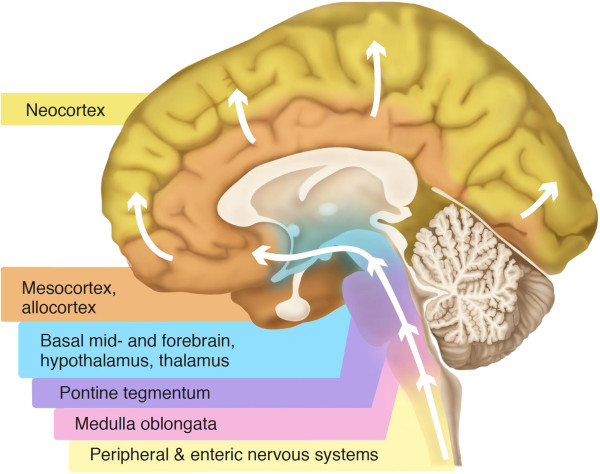
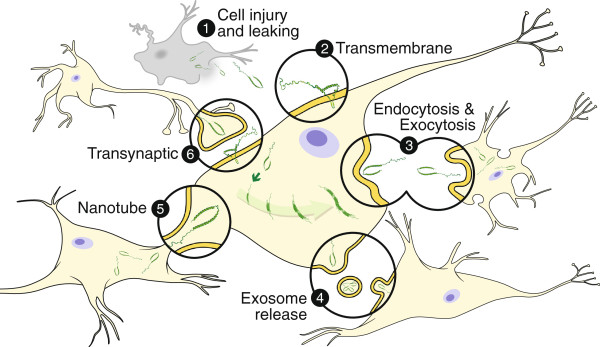
Parkinson's disease (PD) is a progressive neurodegenerative disorder typified by the presence of intraneuronal inclusions containing aggregated alpha synuclein (αsyn). The progression of parkinsonian pathology and clinical phenotype has been broadly demonstrated to follow a specific pattern, most notably described by Braak and colleagues. In more recent times it has been hypothesized that αsyn itself may be a critical factor in mediating transmission of disease pathology from one brain area to another. Here we investigate the growing body of evidence demonstrating the ability of αsyn to spread transcellularly and induce pathological aggregation affecting neurons by permissive templating and provide a critical analysis of some irregularities in the hypothesis that the progression of PD pathology may be mediated by such a prion-like process. Finally we discuss some key questions that remain unanswered which are vital to determining the potential contribution of a prion-like process to the pathogenesis of PD.
Overview
The claims and statistics of this paper haven’t been checked yet.
Run the check — free, no account needed. It reads the open-access text and checks the sources it cites.
Integrity signals
Registry
Cites
Statistics
Figures
Verification
Claims the paper makes
The claims and statistics of this paper haven’t been checked yet.
Run the check — free, no account needed. It reads the open-access text and checks the sources it cites.
Claims other papers make about this one
Each is checked against this paper’s own text: does it say what the citing paper says it does?
In the citing paper
“It has been suggested that alpha-synuclein could act like a prion protein during PD pathogenesis.In this theory pathologic, misfolded alpha-synuclein is an 'infectious' protein spreading pathology by forming a template that seeds misfolding for nearby alpha-synuclein protein, turning the previously healthy protein into a pathogenic protein (Jucker and Walker, 2013;Visanji et al., 2013).”
From The Gut-Brain Axis in Parkinson’s Disease: Possibilities for Food-Based Therapies (2017) · cites this paper as Visanji et al., 2013
Self-check
Percentages, sums and reported differences re-computed from the paper’s own numbers.
The self-check needs the paper’s full text.
Citations
Cites
Staging of brain pathology related to sporadic Parkinson’s disease
Braak, H., Tredici, K. D., Rüb, U., de Vos, R. A. I., Jansen Steur, E. N. H., & Braak, E. (2003) · Neurobiology of Aging · doi:10.1016/s0197-4580(02)00065-9 · Cited by 10,777
Prusiner, S. B. (1998) · Proceedings of the National Academy of Sciences · doi:10.1073/pnas.95.23.13363 · Cited by 5,373
Novel Proteinaceous Infectious Particles Cause Scrapie
Prusiner, S. B. (1982) · Science · doi:10.1126/science.6801762 · Cited by 5,221
Luk, K. C., Kehm, V., Carroll, J., Zhang, B., O’Brien, P., Trojanowski, J. Q., & Lee, V. M.-Y. (2012) · Science · doi:10.1126/science.1227157 · Cited by 2,563
Pan, K. M., Baldwin, M. A., Nguyen, J. T., Gasset, M., Serban, A. V., Groth, D., Mehlhorn, I., Huang, Z., Fletterick, R. J., & Cohen, F. E. (1993) · Proceedings of the National Academy of Sciences · doi:10.1073/pnas.90.23.10962 · Cited by 2,281
Li, J.-Y., Englund, E., Holton, J. L., Soulet, D., Hagell, P., Lees, A. J., Lashley, T., Quinn, N. P., Rehncrona, S., Björklund, A., et al. (2008) · Nature Medicine · doi:10.1038/nm1746 · Cited by 1,845
Lewy body–like pathology in long-term embryonic nigral transplants in Parkinson's disease
Kordower, J. H., Chu, Y., Hauser, R. A., Freeman, T. B., & Olanow, C. W. (2008) · Nature Medicine · doi:10.1038/nm1747 · Cited by 1,722
Braak, H., R�b, U., Gai, W. P., & Del Tredici, K. (2003) · Journal of Neural Transmission · doi:10.1007/s00702-002-0808-2 · Cited by 1,683
Inclusion formation and neuronal cell death through neuron-to-neuron transmission of α-synuclein
Desplats, P., Lee, H.-J., Bae, E.-J., Patrick, C., Rockenstein, E., Crews, L., Spencer, B., Masliah, E., & Lee, S.-J. (2009) · Proceedings of the National Academy of Sciences · doi:10.1073/pnas.0903691106 · Cited by 1,485
Braak, H., de Vos, R. A. I., Bohl, J., & Del Tredici, K. (2006) · Neuroscience Letters · doi:10.1016/j.neulet.2005.11.012 · Cited by 1,354
Cited by
Sorted by citations
Kalia, L. V., & Lang, A. E. (2015) · The Lancet · doi:10.1016/s0140-6736(14)61393-3 · Cited by 6,184
Self-citationGastrointestinal Dysfunction in Parkinson’s Disease
Fasano, A., Visanji, N. P., Liu, L. W. C., Lang, A. E., & Pfeiffer, R. F. (2015) · The Lancet Neurology · doi:10.1016/s1474-4422(15)00007-1 · Cited by 1,016
Self-citationMicroglial exosomes facilitate α-synuclein transmission in Parkinson’s disease
Guo, M., Wang, J., Zhao, Y., Feng, Y., Han, S., Dong, Q., Cui, M., & Tieu, K. (2020) · Brain · doi:10.1093/brain/awaa090 · Cited by 522
Exploring Braak’s hypothesis of Parkinson’s disease
Rietdijk, C. D., Perez-Pardo, P., Garssen, J., van Wezel, R. J. A., & Kraneveld, A. D. (2017) · Frontiers in Neurology · doi:10.3389/fneur.2017.00037 · Cited by 395
Are dementia with Lewy bodies and Parkinson’s disease dementia the same disease?
Jellinger, K. A., & Korczyn, A. D. (2018) · BMC Medicine · doi:10.1186/s12916-018-1016-8 · Cited by 406
Vagal neurocircuitry and its influence on gastric motility
Travagli, R. A., & Anselmi, L. (2016) · Nature Reviews Gastroenterology & Hepatology · doi:10.1038/nrgastro.2016.76 · Cited by 323
The Brainstem Pathologies of Parkinson's Disease and Dementia with Lewy Bodies
Seidel, K., Mahlke, J., Siswanto, S., Krüger, R., Heinsen, H., Auburger, G. W. J., Bouzrou, M., Grinberg, L. T., Wicht, H., Korf, H., et al. (2014) · Brain Pathology · doi:10.1111/bpa.12168 · Cited by 301
The vermiform appendix impacts the risk of developing Parkinson’s disease
Killinger, B. A., Madaj, Z., Sikora, J. W., Rey, N. L., Haas, A. J., Vepa, Y., Lindqvist, D., Chen, H., Thomas, P. M., Brundin, P., et al. (2018) · Science Translational Medicine · doi:10.1126/scitranslmed.aar5280 · Cited by 287
Pellegrini, C., Antonioli, L., Colucci, R., Blandizzi, C., & Fornai, M. (2018) · Acta Neuropathologica · doi:10.1007/s00401-018-1856-5 · Cited by 270
Disease‐modifying strategies for Parkinson's disease
Kalia, L. V., Kalia, S. K., & Lang, A. E. (2015) · Movement Disorders · doi:10.1002/mds.26354 · Cited by 254
Self-citationThe clinical characteristics of dementia with Lewy bodies and a consideration of prodromal diagnosis
Donaghy, P. C., & McKeith, I. G. (2014) · Alzheimer s Research & Therapy · doi:10.1186/alzrt274 · Cited by 253
α-Synuclein in gut endocrine cells and its implications for Parkinson’s disease
Chandra, R., Hiniker, A., Kuo, Y.-M., Nussbaum, R. L., & Liddle, R. A. (2017) · JCI Insight · doi:10.1172/jci.insight.92295 · Cited by 236
Chidambaram, S. B., Essa, M. M., Rathipriya, A. G., Bishir, M., Ray, B., Mahalakshmi, A. M., Tousif, A. H., Sakharkar, M. K., Kashyap, R. S., Friedland, R. P., et al. (2022) · Pharmacology & Therapeutics · doi:10.1016/j.pharmthera.2021.107988 · Cited by 204
The Gut-Brain Axis in Parkinson’s Disease: Possibilities for Food-Based Therapies
Perez-Pardo, P., Kliest, T., Dodiya, H. B., Broersen, L. M., Garssen, J., Keshavarzian, A., & Kraneveld, A. D. (2017) · European Journal of Pharmacology · doi:10.1016/j.ejphar.2017.05.042 · Cited by 203
“In this theory pathologic, misfolded alpha-synuclein is an ‘infectious’ protein spreading pathology by forming a template that seeds misfolding for nearby alpha-synuclein protein, turning the previously healthy protein into a pathogenic protein (Jucker and Walker, 2013; Visanji et al., 2013).”
BackgroundThe Threshold Theory for Parkinson's Disease
Engelender, S., & Ole Isacson, A. (2016) · Trends in Neurosciences · doi:10.1016/j.tins.2016.10.008 · Cited by 196
Gastrointestinal involvement in Parkinson’s disease: pathophysiology, diagnosis, and management
Warnecke, T., Schäfer, K., Claus, I., Tredici, K. D., & Jost, W. H. (2022) · npj Parkinson s Disease · doi:10.1038/s41531-022-00295-x · Cited by 200
Ashique, S., Mohanto, S., Ahmed, M. G., Mishra, N., Garg, A., Chellappan, D. K., Omara, T., Iqbal, S., & Kahwa, I. (2024) · Heliyon · doi:10.1016/j.heliyon.2024.e34092 · Cited by 205
RetractedEffect of ultra-processed diet on gut microbiota and thus its role in neurodegenerative diseases
Leo, E. E. M., & Campos, M. R. S. (2019) · Nutrition · doi:10.1016/j.nut.2019.110609 · Cited by 196
The Gut–Brain Axis and Its Relation to Parkinson’s Disease: A Review
Klann, E. M., Dissanayake, U., Gurrala, A., Farrer, M. J., Shukla, A. W., Ramirez‐Zamora, A., Mai, V., & Vedam‐Mai, V. (2022) · Frontiers in Aging Neuroscience · doi:10.3389/fnagi.2021.782082 · Cited by 198
Neuropathology of multiple system atrophy: New thoughts about pathogenesis
Jellinger, K. A. (2014) · Movement Disorders · doi:10.1002/mds.26052 · Cited by 181
Parkinson disease and the gut: new insights into pathogenesis and clinical relevance
Travagli, R. A., Browning, K. N., & Camilleri, M. (2020) · Nature Reviews Gastroenterology & Hepatology · doi:10.1038/s41575-020-0339-z · Cited by 181
Karampetsou, M., Ardah, M. T., Semitekolou, M., Polissidis, A., Samiotaki, M. K., Kalomoiri, M., Majbour, N. K., Xanthou, G., El‐Agnaf, O. M. A., & Vekrellis, K. (2017) · Scientific Reports · doi:10.1038/s41598-017-15813-8 · Cited by 184
Manganese promotes the aggregation and prion-like cell-to-cell exosomal transmission of α-synuclein
Harischandra, D. S., Rokad, D., Neal, M. P., Ghaisas, S., Manne, S., Sarkar, S., Panicker, N., Zenitsky, G. D., Jin, H., Lewis, M. M., et al. (2019) · Science Signaling · doi:10.1126/scisignal.aau4543 · Cited by 171
Neuroimaging Advances in Parkinson's Disease and Atypical Parkinsonian Syndromes
Saeed, U., Lang, A. E., & Masellis, M. (2020) · Frontiers in Neurology · doi:10.3389/fneur.2020.572976 · Cited by 156
Self-citationPathogenesis-Targeted, Disease-Modifying Therapies in Parkinson Disease
AlDakheel, A., Kalia, L. V., & Lang, A. E. (2013) · Neurotherapeutics · doi:10.1007/s13311-013-0218-1 · Cited by 164
Self-citationColonic mucosal α-synuclein lacks specificity as a biomarker for Parkinson disease
Visanji, N. P., Marras, C., Kern, D. S., AlDakheel, A., Gao, A. F., Liu, L. W. C., Lang, A. E., & Hazrati, L. (2015) · Neurology · doi:10.1212/wnl.0000000000001240 · Cited by 150
Self-citationKoszła, O., & Sołek, P. (2024) · Cell Communication and Signaling · doi:10.1186/s12964-024-01791-8 · Cited by 164
Alpha-Synuclein: Mechanisms of Release and Pathology Progression in Synucleinopathies
Brás, I. C., & Outeiro, T. F. (2021) · Cells · doi:10.3390/cells10020375 · Cited by 136
Disease modification and biomarker development in Parkinson disease
Espay, A. J., Kalia, L. V., Gan‐Or, Z., Williams‐Gray, C. H., Bedard, P. L., Rowe, S. M., Morgante, F., Fasano, A. A., Stecher, B., Kauffman, M., et al. (2020) · Neurology · doi:10.1212/wnl.0000000000009107 · Cited by 137
Self-citationConstipation in Parkinson's Disease
Stocchi, F., & Torti, M. (2017) · International review of neurobiology · doi:10.1016/bs.irn.2017.06.003 · Cited by 135
Zhang, L., Yu, X., Ji, M., Liu, S., Wu, X., Wang, Y., & Liu, R. (2018) · Food & Function · doi:10.1039/c8fo00964c · Cited by 132
Parkinson's disease: convergence on synaptic homeostasis
Soukup, S., Vanhauwaert, R., & Verstreken, P. (2018) · The EMBO Journal · doi:10.15252/embj.201898960 · Cited by 131
Clinical and Pathological Features of Parkinson’s Disease
Schneider, S. A., & Obeso, J. A. (2014) · Current topics in behavioral neurosciences · doi:10.1007/7854_2014_317 · Cited by 131
Kovács, G. G., Breydo, L., Green, R. J., Kis, V., Puska, G., Lőrincz, P., Perju‐Dumbrava, L., Giera, R., Pirker, W., Lutz, M. I., et al. (2014) · Neurobiology of Disease · doi:10.1016/j.nbd.2014.05.020 · Cited by 131
Is Braak staging valid for all types of Parkinson’s disease?
Jellinger, K. A. (2018) · Journal of Neural Transmission · doi:10.1007/s00702-018-1898-9 · Cited by 135
Schofield, D. J., Irving, L. M., Calò, L., Bogstedt, A., Rees, G., Nuccitelli, A., Narwal, R., Petrone, M., Roberts, J., Brown, L., et al. (2019) · Neurobiology of Disease · doi:10.1016/j.nbd.2019.104582 · Cited by 122
Petrović, S., Arsić, A., Ristić-Medić, D., Cvetković, Z., & Vučić, V. (2020) · Antioxidants · doi:10.3390/antiox9111128 · Cited by 123
Seeding variability of different alpha synuclein strains in synucleinopathies
Candelise, N., Schmitz, M., Llorens, F., Villar‐Piqué, A., Cramm, M., Thom, T., Correia, S., da Cunha, J. E. G., Möbius, W., Outeiro, T. F., et al. (2019) · Annals of Neurology · doi:10.1002/ana.25446 · Cited by 122
Neuropathogenesis-on-chips for neurodegenerative diseases
Amartumur, S., Nguyen, H. M., Huynh, T., Kim, T. S., Woo, R., Oh, E., Kim, K. K., Lee, L. P., & Heo, C. (2024) · Nature Communications · doi:10.1038/s41467-024-46554-8 · Cited by 131
Sun, Y., Sommerville, N. R., Liu, J. Y. H., Ngan, M. P., Poon, D., Ponomarev, E. D., Lu, Z., Kung, J. S. C., & Rudd, J. A. (2020) · The Journal of Physiology · doi:10.1113/jp279919 · Cited by 118
Jiang, P., Gan, M., Yen, S.-H., McLean, P. J., & Dickson, D. W. (2017) · Scientific Reports · doi:10.1038/s41598-017-08149-w · Cited by 115
Structural and Functional Insights into α-Synuclein Fibril Polymorphism
Mehra, S., Gadhe, L. G., Bera, R., Sawner, A. S., & Maji, S. K. (2021) · Biomolecules · doi:10.3390/biom11101419 · Cited by 111
Huang, H.-K., Wang, J.-H., Lei, W.-Y., Chen, C.-L., Chang, C.-Y., & Liou, L.-S. (2018) · Parkinsonism & Related Disorders · doi:10.1016/j.parkreldis.2017.11.331 · Cited by 106
When Do α-Synucleinopathies Start? An Epidemiological Timeline
Savica, R., Boeve, B. F., & Mielke, M. M. (2018) · JAMA Neurology · doi:10.1001/jamaneurol.2017.4243 · Cited by 112
A Nigro−Vagal Pathway Controls Gastric Motility and Is Affected in a Rat Model of Parkinsonism
Anselmi, L., Toti, L., Bove, C., Hampton, J., & Travagli, R. A. (2017) · Gastroenterology · doi:10.1053/j.gastro.2017.08.069 · Cited by 105
Constipation: an emerging risk factor for Parkinson's disease?
Stirpe, P., Hoffman, M., Badiali, D., & Colosimo, C. (2016) · European Journal of Neurology · doi:10.1111/ene.13082 · Cited by 94
Grotemeyer, A., McFleder, R. L., Wu, J., Wischhusen, J., & Ip, C. W. (2022) · Frontiers in Immunology · doi:10.3389/fimmu.2022.878771 · Cited by 93
Chorell, E., Andersson, E. K., Evans, M. L., Jain, N., Götheson, A., Ådén, J., Chapman, M. R., Almqvist, F., & Wittung-Stafshede, P. E. (2015) · PLoS ONE · doi:10.1371/journal.pone.0140194 · Cited by 88
Alimentary, my dear Watson? The challenges of enteric α‐synuclein as a Parkinson's disease biomarker
Visanji, N. P., Marras, C., Hazrati, L., Liu, L. W. C., & Lang, A. E. (2013) · Movement Disorders · doi:10.1002/mds.25789 · Cited by 91
Self-citationEbrahimi‐Fakhari, D., Saidi, L.-J., & Wahlster, L. (2013) · Acta Neuropathologica Communications · doi:10.1186/2051-5960-1-79 · Cited by 89
Predictive model of spread of Parkinson's pathology using network diffusion
Pandya, S., Zeighami, Y., Freeze, B. S., Dadar, M., Collins, D. L., Dagher, A., & Raj, A. (2019) · NeuroImage · doi:10.1016/j.neuroimage.2019.03.001 · Cited by 90
ɑ‐Synuclein strains and the variable pathologies of synucleinopathies
Peelaerts, W., & Baekelandt, V. (2016) · Journal of Neurochemistry · doi:10.1111/jnc.13595 · Cited by 96
Proposal for a Biologic Staging System of Parkinson’s Disease
Chahine, L. M., Merchant, K., Siderowf, A. D., Sherer, T., Tanner, C. M., MAREK, K. L., & Simuni, T. (2023) · Journal of Parkinson s Disease · doi:10.3233/jpd-225111 · Cited by 86
Tan, H. Y., Cho, H., & Lee, L. P. (2020) · Nature Biomedical Engineering · doi:10.1038/s41551-020-00643-3 · Cited by 87
Bae, E.-J., Choi, M.-S., Kim, J. T., Kim, D., Jung, M. K., Kim, C., Kim, T.-K., Lee, J. S., Jung, B. C., Shin, S. J., et al. (2022) · Experimental & Molecular Medicine · doi:10.1038/s12276-022-00789-x · Cited by 81
The Promise and Challenges of Developing miRNA-Based Therapeutics for Parkinson’s Disease
Titze-de-Almeida, S. S., Soto‐Sánchez, C., Fernández, E., Koprich, J. B., Brotchie, J. M., & Titze‐de‐Almeida, R. (2020) · Cells · doi:10.3390/cells9040841 · Cited by 81
Role of neurotoxicants and traumatic brain injury in α-synuclein protein misfolding and aggregation
Rokad, D., Ghaisas, S., Harischandra, D. S., Jin, H., Anantharam, V., Kanthasamy, A., & Kanthasamy, A. G. (2016) · Brain Research Bulletin · doi:10.1016/j.brainresbull.2016.12.003 · Cited by 76
Propagation of tau and α-synuclein in the brain: therapeutic potential of the glymphatic system
Lopes, D. M., Llewellyn, S. K., & Harrison, I. F. (2022) · Translational Neurodegeneration · doi:10.1186/s40035-022-00293-2 · Cited by 75
Gastric motor dysfunctions in Parkinson's disease: Current pre-clinical evidence
Pellegrini, C., Antonioli, L., Colucci, R., Ballabeni, V., Barocelli, E., Bernardini, N., Blandizzi, C., & Fornai, M. (2015) · Parkinsonism & Related Disorders · doi:10.1016/j.parkreldis.2015.10.011 · Cited by 75
FTY720/Fingolimod Reduces Synucleinopathy and Improves Gut Motility in A53T Mice
Vidal-Martínez, G., Vargas‐Medrano, J., Gil-Tommee, C., Medina, D. X., Garza, N. T., Yang, B. C., Segura‐Ulate, I., Dominguez, S. J., & Perez, R. G. (2016) · Journal of Biological Chemistry · doi:10.1074/jbc.m116.744029 · Cited by 72
The pathomechanisms underlying Parkinson's disease
Jellinger, K. A. (2014) · Expert Review of Neurotherapeutics · doi:10.1586/14737175.2014.877842 · Cited by 74
Riederer, P. F., Nagatsu, T., Youdim, M. B. H., Wulf, M., Dijkstra, J. M., & Sian‐Hülsmann, J. (2023) · Journal of Neural Transmission · doi:10.1007/s00702-023-02630-9 · Cited by 71
Rani, L., & Mondal, A. C. (2019) · Mitochondrion · doi:10.1016/j.mito.2019.09.010 · Cited by 68
New hope for Parkinson’s disease treatment: Targeting gut microbiota
Fan, H., Sheng, S., & Zhang, F. (2022) · CNS Neuroscience & Therapeutics · doi:10.1111/cns.13916 · Cited by 66
Neuroprotection in Parkinson’s disease: facts and hopes
Salamon, A., Zádori, D., Szpisjak, L., Klivènyi, P., & Vécsei, L. (2019) · Journal of Neural Transmission · doi:10.1007/s00702-019-02115-8 · Cited by 67
An Update on Medical and Surgical Treatments of Parkinson’s Disease
Nemade, D., Subramanian, T., & Shivkumar, V. (2021) · Aging and Disease · doi:10.14336/ad.2020.1225 · Cited by 66
Parkinson’s Disease and the Gut: Symptoms, Nutrition, and Microbiota
Yemula, N., Dietrich, C. M., Dostal, V., & Hornberger, M. (2021) · Journal of Parkinson s Disease · doi:10.3233/jpd-212707 · Cited by 71
Appendectomy in mid and later life and risk of Parkinson's disease: A population‐based study
Marras, C., Lang, A. E., Austin, P. C., Lau, C., & Urbach, D. R. (2016) · Movement Disorders · doi:10.1002/mds.26670 · Cited by 60
Self-citationUversky, V. N. (2017) · F1000Research · doi:10.12688/f1000research.10536.1 · Cited by 59
Defining Parkinson’s Disease: Past and Future
Kulcsárová, K., Škorvánek, M., Postuma, R. B., & Berg, D. (2024) · Journal of Parkinson s Disease · doi:10.3233/jpd-230411 · Cited by 73
Labrie, V., & Brundin, P. (2017) · Journal of Innate Immunity · doi:10.1159/000479653 · Cited by 60
Li, D., Mastaglia, F. L., Fletcher, S., & Wilton, S. D. (2020) · Medicinal Research Reviews · doi:10.1002/med.21718 · Cited by 59
Sun, Z., Gu, P., Xu, H., Zhao, W., Zhou, Y., Zhou, L., Zhang, Z., Wang, W., Han, R., Chai, X.-Q., et al. (2022) · Frontiers in Cell and Developmental Biology · doi:10.3389/fcell.2021.808905 · Cited by 57
Constipation in Parkinson’s Disease: A Systematic Review and Meta-Analysis
Yao, L., Liang, W., Chen, J., Wang, Q., & Huang, X. (2022) · European Neurology · doi:10.1159/000527513 · Cited by 63
Protein Transmission, Seeding and Degradation: Key Steps for α-Synuclein Prion-Like Propagation
Oueslati, A., Ximerakis, M., & Vekrellis, K. (2014) · Experimental Neurobiology · doi:10.5607/en.2014.23.4.324 · Cited by 58
Deshayes, N., Arkan, S., & Hansen, C. (2019) · International Journal of Molecular Sciences · doi:10.3390/ijms20184495 · Cited by 54
Choudhury, S. P., Bano, S., Sen, S., Suchal, K., Kumar, S., Nikolajeff, F., Dey, S. K., & Sharma, V. (2022) · npj Parkinson's Disease · doi:10.1038/s41531-022-00324-9 · Cited by 52
Miller, M. I., Ratnanather, J. T., Tward, D. J., Brown, T., Lee, D. S., Ketcha, M. D., Mori, K., Wang, M., Mori, S., Albert, M., et al. (2015) · Frontiers in Bioengineering and Biotechnology · doi:10.3389/fbioe.2015.00054 · Cited by 53
Taymans, J.-M., Nkiliza, A., & Chartier-Harlin, M.-C. (2015) · Trends in Molecular Medicine · doi:10.1016/j.molmed.2015.05.004 · Cited by 50
Fatty Acid Binding Protein 3 Enhances the Spreading and Toxicity of α-Synuclein in Mouse Brain
Yabuki, Y., Matsuo, K., Kawahata, I., Fukui, N., Mizobata, T., Kawata, Y., Owada, Y., Shioda, N., & Fukunaga, K. (2020) · International Journal of Molecular Sciences · doi:10.3390/ijms21062230 · Cited by 49
Chemical Probes for Visualizing Intact Animal and Human Brain Tissue
Lai, H. M., Ng, W., Gentleman, S., & Wu, W. (2017) · Cell chemical biology · doi:10.1016/j.chembiol.2017.05.015 · Cited by 48
Bayati, A., & McPherson, P. S. (2024) · Journal of Biological Chemistry · doi:10.1016/j.jbc.2024.107742 · Cited by 47
What Is the Evidence that Parkinson’s Disease Is a Prion Disorder, Which Originates in the Gut?
Kujawska, M., & Jodynis‐Liebert, J. (2018) · International Journal of Molecular Sciences · doi:10.3390/ijms19113573 · Cited by 48
Ependymal cells and neurodegenerative disease: outcomes of compromised ependymal barrier function
Nelles, D. G., & Hazrati, L. (2022) · Brain Communications · doi:10.1093/braincomms/fcac288 · Cited by 51
Self-citationStem cell transplantation therapy in Parkinson’s disease
Fu, M., Li, C.-L., Lin, H.-L. H., Chen, P., Calkins, M. J., Chang, Y.-F., Cheng, P., & Yang, S. (2015) · SpringerPlus · doi:10.1186/s40064-015-1400-1 · Cited by 47
Spreading of alpha‐synuclein – relevant or epiphenomenon?
Killinger, B. A., & Kordower, J. H. (2019) · Journal of Neurochemistry · doi:10.1111/jnc.14779 · Cited by 46
Lewy body disease and dementia with Lewy bodies
Kosaka, K. (2014) · Proceedings of the Japan Academy Series B · doi:10.2183/pjab.90.301 · Cited by 45
Gaertner, Z. A., Azcorra, M., Dombeck, D. A., & Awatramani, R. B. (2022) · Neurobiology of Disease · doi:10.1016/j.nbd.2022.105925 · Cited by 45
The Presence of Alpha‐Synuclein in Skin from Melanoma and Patients with Parkinson's Disease
Rodríguez‐Leyva, I., Chi-Ahumada, É., Mejía, M., Castanedo-Cázares, J. P., Eng, W., Saikaly, S. K., Carrizales-Rodríguez, J., Levine, T., Norman, R. A., & Jiménez-Capdeville, M. E. (2017) · Movement Disorders Clinical Practice · doi:10.1002/mdc3.12494 · Cited by 43
Visanji, N. P., Lang, A. E., & Muñoz, D. G. (2017) · Neuroscience Letters · doi:10.1016/j.neulet.2017.11.001 · Cited by 43
Self-citationChronic Care Nursing: A Framework for Practice
Malone, L., & Anderson, J. (2016) · Cited by 40
Hikishima, K., Ando, K., Yano, R., Kawai, K., Komaki, Y., Inoue, T., Itoh, T., Yamada, M., Momoshima, S., Okano, H. J., et al. (2015) · Radiology · doi:10.1148/radiol.14140601 · Cited by 41
Reuland, C. J., & Church, F. (2020) · Medical Hypotheses · doi:10.1016/j.mehy.2020.109602 · Cited by 40
The Crosstalk between Microbiome and Mitochondrial Homeostasis in Neurodegeneration
Borbolis, F., Mytilinaiou, E., & Palikaras, K. (2023) · Cells · doi:10.3390/cells12030429 · Cited by 42
Singh, Y., Trautwein, C., Romani, J., Salker, M. S., Neckel, P. H., Fraccaroli, I., Abeditashi, M., Woerner, N., Admard, J., Dhariwal, A., et al. (2023) · Molecular Neurodegeneration · doi:10.1186/s13024-023-00628-1 · Cited by 41
Dopaminergic Axons: Key Recitalists in Parkinson’s Disease
Mishra, A. K., & Dixit, A. (2021) · Neurochemical Research · doi:10.1007/s11064-021-03464-1 · Cited by 37
The relevance of pre-motor symptoms in Parkinson’s disease
Visanji, N. P., & Marras, C. (2015) · Expert Review of Neurotherapeutics · doi:10.1586/14737175.2015.1083423 · Cited by 36
Self-citationMarshall, M. S., & Bongarzone, E. R. (2016) · Journal of Neuroscience Research · doi:10.1002/jnr.23751 · Cited by 38
Kumari, S., Taliyan, R., & Dubey, S. K. (2023) · ACS Chemical Neuroscience · doi:10.1021/acschemneuro.2c00730 · Cited by 40
The neuromicrobiology of Parkinson’s disease: A unifying theory
Muñoz, M., Empadinhas, N., & Cardoso, S. M. (2021) · Ageing Research Reviews · doi:10.1016/j.arr.2021.101396 · Cited by 38
Metadata
- Authors
- Visanji, N. P., Brooks, P. L., Hazrati, L.-N., & Lang, A. E.
- Affiliations
- Toronto Western Hospital (CA)
- University of Toronto (CA)
- Corresponding author
- Lang, Anthony E
- Venue
- Acta Neuropathologica Communications
- Published
- 2013-05-08
- Volume
- 1
- Issue
- 1
- Pages
- 2-2
- ISSN
- 2051-5960 (ISSN-L)
- PMC
- PMC3776210
- OpenAlex
- W2159340140
- Cited by
- 278
- References
- 92
- Citations by year
- 2026: 11 · 2025: 20 · 2024: 23 · 2023: 23 · 2022: 27 · 2021: 23 · 2020: 29 · 2019: 22 · 2018: 18 · 2017: 20 · 2016: 21 · 2015: 22 · 2014: 14 · 2013: 5
- FWCI
- 2.69
- Type
- journal article
- Language
- en
- Open access
- gold
- doi.org
- Licence
- cc-by
- Locations
- Acta Neuropathologica Communications (publishedVersion, cc-by)
- Europe PMC (PubMed Central) (publishedVersion, cc-by)
- PubMed Central (publishedVersion, cc-by)
- PubMed (publishedVersion)
- TSpace (University of Toronto) (submittedVersion)
- eScholarship@McGill (McGill) (submittedVersion, cc-by)
- Topics
- Health Sciences › Medicine › Clinical Neurology › Parkinson's Disease Mechanisms and Treatments
- Life Sciences › Neuroscience › Cellular and Molecular Neuroscience › Alzheimer's disease research and treatments
- Life Sciences › Biochemistry, Genetics and Molecular Biology › Molecular Biology › Nuclear Receptors and Signaling
- Keywords
- Parkinson's disease, prion hypothesis, alpha-synuclein, prion-like propagation, templating, Braak staging, neurodegeneration, alpha-synuclein aggregation, disease progression
- MeSH terms
- Animals, Humans, Models, Neurological, Parkinson Disease, Prions, Severity of Illness Index
About these checks
Registry, retraction, Cites and statistics results are computed, not judged, with one exception: a printed reference that no index lists is read once by a model before it counts as a citation error. Claims are extracted by a model and kept only when their quote appears verbatim in the text; each cited source is then checked, with a model’s help, for whether it says what the claim relies on. Those verdicts can be wrong — read the claim’s quote and the cited source before relying on one.
Statistics and arithmetic are recomputed, not judged.
Confidence bands are shown only for fields calibrated on our annotated test set. None is calibrated yet, so no band is shown.
What counts as a claim ›How we measure confidence ›How we check this ›
Are you an author, or do you see a problem with this page? Request a review
