

Very Long (> 48 hours) Shifts and Cardiovascular Strain in Firefighters: a Theoretical Framework
Open accessThe DOI matches its Crossref record; 95 of the 95 references it cites were found in a registry or an index.
Abstract
Shift work and overtime have been implicated as important work-related risk factors for cardiovascular disease (CVD). Many firefighters who contractually work on a 24-hr work schedule, often do overtime (additional 24-hr shifts) which can result in working multiple, consecutive 24-hr shifts. Very little research has been conducted on firefighters at work that examines the impact of performing consecutive 24-hr shifts on cardiovascular physiology. Also, there have been no standard field methods for assessing in firefighters the cardiovascular changes that result from 24-hr shifts, what we call "cardiovascular strain". The objective of this study, as the first step toward elucidating the role of very long (> 48 hrs) shifts in the development of CVD in firefighters, is to develop and describe a theoretical framework for studying cardiovascular strain in firefighters on very long shifts (i.e., > 2 consecutive 24-hr shifts). The developed theoretical framework was built on an extensive literature review, our recently completed studies with firefighters in Southern California, e-mail and discussions with several firefighters on their experiences of consecutive shifts, and our recently conducted feasibility study in a small group of firefighters of several ambulatory cardiovascular strain biomarkers (heart rate, heart rate variability, blood pressure, salivary cortisol, and salivary C-reactive protein). The theoretical framework developed in this study will facilitate future field studies on consecutive 24-hr shifts and cardiovascular health in firefighters. Also it will increase our understanding of the mechanisms by which shift work or long work hours can affect CVD, particularly through CVD biological risk factors, and thereby inform policy about sustainable work and rest schedules for firefighters.
Overview
The claims and statistics of this paper haven’t been checked yet.
Free: it reads the open-access text and checks the first 5 claims that cite a source we can check. Create a free account to check every claim.
Integrity signals
Registry
Cites
Statistics
Figures
Verification
Claims the paper makes
The claims and statistics of this paper haven’t been checked yet.
Free: it reads the open-access text and checks the first 5 claims that cite a source we can check. Create a free account to check every claim.
Claims other papers make about this one
Each is checked against this paper’s own text: does it say what the citing paper says it does?
The source backs part of the claim, not all of it — or backs it for a different population, condition or comparison.
In the citing paper
“The lack of research is a contributing factor in absent nationwide regulation for the work and rest schedules of Canadian firefighters [8,26].”
From Mental Health of Canadian Firefighters: The Impact of Sleep (2021) · cites this paper as [8]
Experimental — accuracy not yet measuredThe cited source says what the claim attributes to it.
In the citing paper
“In firefighting and in medicine, 24‐hour shifts are common (Choi 2014; Nasca 2010).”
From Adapting shift work schedules for sleep quality, sleep duration, and sleepiness in shift workers (2023) · cites this paper as Choi 2014
The cited source says what the claim attributes to it.
In the citing paper
“Shift duration can vary widely, with some shifts lasting as long as 24 or 48 hours, as in firefighting work (Choi 2014).”
From Adapting shift work schedules for sleep quality, sleep duration, and sleepiness in shift workers (2023) · cites this paper as Choi 2014
Self-check
Percentages, sums and reported differences re-computed from the paper’s own numbers.
The self-check needs the paper’s full text.
Citations
Cites
Heart Rate Variability: Standards of Measurement, Physiological Interpretation, and Clinical Use
Electrophysiology, T. F. O. T. E. S. O. C. T. N. A. (1996) · Circulation · doi:10.1161/01.cir.93.5.1043 · Cited by 17,159
Heart rate variability: Standards of measurement, physiological interpretation, and clinical use
Malik, M., Bigger, J. T., Camm, A. J., Kleiger, R. E., Malliani, A., Moss, A. J., & Schwartz, P. J. (1996) · European Heart Journal · doi:10.1093/oxfordjournals.eurheartj.a014868 · Cited by 15,289
Associations of depression with C-reactive protein, IL-1, and IL-6: a meta-analysis.
Howren, M. B., Lamkin, D. M., & Suls, J. (2009) · Psychosomatic Medicine · doi:10.1097/psy.0b013e3181907c1b · Cited by 2,766 · cited 1×
“heart rate, blood pressure, cortisol, and CRP) are influenced by psychological strain, sleep, and health behaviors and that vice versa is true [67,76-78].”
BackgroundOrganization for physiological homeostasis
Cannon, W. B. (1929) · Physiological Reviews · doi:10.1152/physrev.1929.9.3.399 · Cited by 1,844 · cited 1×
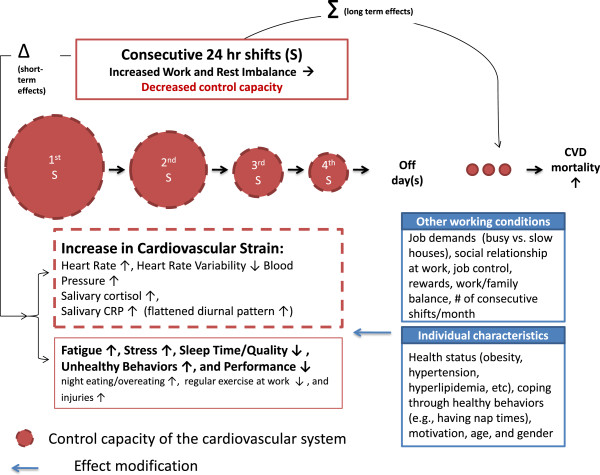
“We suppose that a firefighter has his/her own capacity (“the maximum capacity of a person”) [67] to perform given tasks while maintaining internal psychological and physiological homeostasis [68,69] (hereafter called, “control capacity” in Figure 1).”
BackgroundMcEWEN, B. S., & SEEMAN, T. (1999) · Annals of the New York Academy of Sciences · doi:10.1111/j.1749-6632.1999.tb08103.x · Cited by 1,824 · cited 1×
“responses to environmental stressors [27-29] because”
Heart rate and cardiovascular mortality: The Framingham study
Kannel, W. B., Kannel, C., Paffenbarger, R. S., & Cupples, L. A. (1987) · American Heart Journal · doi:10.1016/0002-8703(87)90666-1 · Cited by 1,290 · cited 3×
“The decision was made based on 1) the relevance of the parameters to CVD: all of the 5 parameters - heart rate [34-38], heart rate variability [39,40], blood pressure [41-43], cortisol [52,53], and C-reactive protein [54] have been reported as important CVD risk factors, and 2) the diverse physiological functions that…”
BackgroundEffect of sleep loss on C-reactive protein, an inflammatory marker of cardiovascular risk
Meier-Ewert, H. K., Ridker, P. M., Rifai, N., Regan, M. M., Price, N. J., Dinges, D. F., & Mullington, J. M. (2004) · Journal of the American College of Cardiology · doi:10.1016/j.jacc.2003.07.050 · Cited by 1,195 · cited 2×
“For instance, one experimental study [77] in 10 healthy young adults reported that when they did not have any sleep for 3 days their systolic and diastolic blood pressure and pulse rate dramatically increased from Day 1 to Day 3.”
BackgroundPsychological Aspects of Workload
Meijman, T. F. (1998) · University of Groningen research database (University of Groningen / Centre for Information Technology) · doi:10.4324/9780203765425-6 · Cited by 1,145 · cited 1×
“Researchers [63-65] have proposed several mechanisms whereby shift-work could affect CVD.”
BackgroundEpel, E., Lapidus, R., McEwen, B., & Brownell, K. (2001) · Psychoneuroendocrinology · doi:10.1016/s0306-4530(00)00035-4 · Cited by 1,060 · cited 1×
“High cortisol reactors to a given stressor consumed more calories compared to low cortisol reactors [79].”
BackgroundCortisol awakening response and psychosocial factors: a systematic review and meta-analysis
Chida, Y., & Steptoe, A. (2009) · Biological Psychology · doi:10.1016/j.biopsycho.2008.10.004 · Cited by 1,032
Melamed, S., Shirom, A., Toker, S., Berliner, S., & Shapira, I. (2006) · Psychological Bulletin · doi:10.1037/0033-2909.132.3.327 · Cited by 943 · cited 2×
“Depression and exhaustion have been suggested as possible CVD risk factors [20,21] that could disturb several internal physiological systems (e.”
BackgroundExtended Work Shifts and the Risk of Motor Vehicle Crashes among Interns
Barger, L. K., Cade, B. E., Ayas, N. T., Cronin, J. W., Rosner, B., Speizer, F. E., & Czeisler, C. A. (2005) · New England Journal of Medicine · doi:10.1056/nejmoa041401 · Cited by 928
Depression as a Risk Factor for Coronary Artery Disease: Evidence, Mechanisms, and Treatment
Lett, H. S., Blumenthal, J. A., Babyak, M. A., Sherwood, A., Strauman, T., Robins, C., & Newman, M. F. (2004) · Psychosomatic Medicine · doi:10.1097/00006842-200405000-00004 · Cited by 848 · cited 1×
“Depression and exhaustion have been suggested as possible CVD risk factors [20,21] that could disturb several internal physiological systems (e.”
BackgroundA Handbook of Work and Organizational Psychology
(2013) · Psychology Press eBooks · doi:10.4324/9780203765432 · Cited by 670
Influence of heart rate on mortality among persons with hypertension: The Framingham Study
Gillman, M. W., Kannel, W. B., Belanger, A., & D'Agostino, R. B. (1993) · American Heart Journal · doi:10.1016/0002-8703(93)90128-v · Cited by 621 · cited 2×
“The decision was made based on 1) the relevance of the parameters to CVD: all of the 5 parameters - heart rate [34-38], heart rate variability [39,40], blood pressure [41-43], cortisol [52,53], and C-reactive protein [54] have been reported as important CVD risk factors, and 2) the diverse physiological functions that…”
BackgroundEmergency Duties and Deaths from Heart Disease among Firefighters in the United States
Kales, S. N., Soteriades, E. S., Christophi, C. A., & Christiani, D. C. (2007) · New England Journal of Medicine · doi:10.1056/nejmoa060357 · Cited by 619 · cited 1×
“Firefighters have a high risk for on-duty cardiovascular disease (CVD) mortality [2,3] and have a high prevalence of CVD biological risk factors (obesity, hypertension, and hyperlipidemia) [2-6].”
Backgroundvan der Hulst, M. (2003) · Scandinavian Journal of Work, Environment & Health · doi:10.5271/sjweh.720 · Cited by 614 · cited 3×
“In addition, long working hours (overtime) can aggravate the aforementioned effects of shift work and may significantly increase the risk of CVD when combined with decreased recovery, particularly insufficient sleep [27,66].”
BackgroundMancia, G., Zanchetti, A., Agebiti-Rosei, E., Benemio, G., De Cesaris, R., Fogari, R., Pessino, A., Porcellati, C., Salvetti, A., & Trimarco, B. (1997) · Circulation · doi:10.1161/01.cir.95.6.1464 · Cited by 596
Shift work and cardiovascular disease – pathways from circadian stress to morbidity
Puttonen, S., Härmä, M., & Hublin, C. (2010) · Scandinavian Journal of Work, Environment & Health · doi:10.5271/sjweh.2894 · Cited by 560 · cited 2×
“, fatigue and distress), sleep disturbance, unhealthy behaviors, and decreased performance at work among firefighters in line with existing literature on long work hours and shift work [25,74,75].”
BackgroundSingh, J. P., Larson, M. G., Tsuji, H., Evans, J. C., O’Donnell, C. J., & Levy, D. (1998) · Hypertension · doi:10.1161/01.hyp.32.2.293 · Cited by 559
DYER, A. R., PERSKY, V., STAMLER, J., PAUL, O., SHEKELLE, R. B., BERKSON, D. M., LEPPER, M., SCHOENBERGER, J. A., & LINDBERG, H. A. (1980) · American Journal of Epidemiology · doi:10.1093/oxfordjournals.aje.a113046 · Cited by 554 · cited 2×
“The decision was made based on 1) the relevance of the parameters to CVD: all of the 5 parameters - heart rate [34-38], heart rate variability [39,40], blood pressure [41-43], cortisol [52,53], and C-reactive protein [54] have been reported as important CVD risk factors, and 2) the diverse physiological functions that…”
BackgroundImpact of Extended-Duration Shifts on Medical Errors, Adverse Events, and Attentional Failures
Barger, L. K., Ayas, N. T., Cade, B. E., Cronin, J. W., Rosner, B., Speizer, F. E., & Czeisler, C. A. (2006) · PLoS Medicine · doi:10.1371/journal.pmed.0030487 · Cited by 533 · cited 1×
“A number of occupations already have nationwide regulations on work and rest schedules, such as drivers (continuous driving time, ≤10 hrs) [11], young doctors (Accreditation Council for Graduate Medical Education, continuous working time, ≤ 30 hrs) [12], and ambulance workers (American Ambulance Association, continuou…”
BackgroundValidity of the Polar S810 Heart Rate Monitor to Measure R-R Intervals at Rest
GAMELIN, F. X., BERTHOIN, S., & BOSQUET, L. (2006) · Medicine & Science in Sports & Exercise · doi:10.1249/01.mss.0000218135.79476.9c · Cited by 509 · cited 2×
“The Polar S810 heart rate monitor can measure not only heart rate, but also heart rate (beat-to-beat) variability with a resolution of 1 ms [55].”
BackgroundMethodEvaluation of human work: A practical ergonomics methodology
Wilson, J. R., & Corlett, E. N. (1991) · Applied Ergonomics · doi:10.1016/0003-6870(91)90014-9 · Cited by 497
Cardiovascular Disease in US Firefighters: A Systematic Review
Soteriades, E. S., Smith, D. L., Tsismenakis, A. J., Baur, D. M., & Kales, S. N. (2011) · Cardiology in Review · doi:10.1097/crd.0b013e318215c105 · Cited by 419 · cited 3×
“Firefighters have a high risk for on-duty cardiovascular disease (CVD) mortality [2,3] and have a high prevalence of CVD biological risk factors (obesity, hypertension, and hyperlipidemia) [2-6].”
BackgroundCooney, M. T., Vartiainen, E., Laakitainen, T., Juolevi, A., Dudina, A., & Graham, I. M. (2010) · American Heart Journal · doi:10.1016/j.ahj.2009.12.029 · Cited by 416 · cited 2×
“The decision was made based on 1) the relevance of the parameters to CVD: all of the 5 parameters - heart rate [34-38], heart rate variability [39,40], blood pressure [41-43], cortisol [52,53], and C-reactive protein [54] have been reported as important CVD risk factors, and 2) the diverse physiological functions that…”
BackgroundHeart rate variability in obesity and the effect of weight loss
Karason, K., Mølgaard, H., Wikstrand, J., & Sjöström, L. (1999) · The American Journal of Cardiology · doi:10.1016/s0002-9149(99)00066-1 · Cited by 402 · cited 1×
“It has been reported that increased resting heart rate is associated with obesity [86,87] and high triglyceride and cholesterol [88] and low heart rate variability is associated with obesity [89], hypertension [90], and hyperlipidemia [91].”
BackgroundC-Reactive Protein Is Associated With Arterial Stiffness in Apparently Healthy Individuals
Yasmin, McEniery, C. M., Wallace, S., Mackenzie, I. S., Cockcroft, J. R., & Wilkinson, I. B. (2004) · Arteriosclerosis, Thrombosis, and Vascular Biology · doi:10.1161/01.atv.zhq0504.0173 · Cited by 400 · cited 1×
“, cortisol [32] and C-reactive protein (CRP) [33].”
Workhours in relation to work stress, recovery and health
Härmä, M. (2006) · Scandinavian Journal of Work, Environment & Health · doi:10.5271/sjweh.1055 · Cited by 387 · cited 1×
“In addition, long working hours (overtime) can aggravate the aforementioned effects of shift work and may significantly increase the risk of CVD when combined with decreased recovery, particularly insufficient sleep [27,66].”
BackgroundHuikuri, H. V., Niemelä, M. J., Ojala, S., Rantala, A., Ikäheimo, M. J., & Airaksinen, K. E. (1994) · Circulation · doi:10.1161/01.cir.90.1.121 · Cited by 304 · cited 2×
“The decision was made based on 1) the relevance of the parameters to CVD: all of the 5 parameters - heart rate [34-38], heart rate variability [39,40], blood pressure [41-43], cortisol [52,53], and C-reactive protein [54] have been reported as important CVD risk factors, and 2) the diverse physiological functions that…”
BackgroundValidity and Reliability of Short-Term Heart-Rate Variability from the Polar S810
NUNAN, D., DONOVAN, G., JAKOVLJEVIC, D. G., HODGES, L. D., SANDERCOCK, G. R. H., & BRODIE, D. A. (2009) · Medicine & Science in Sports & Exercise · doi:10.1249/mss.0b013e318184a4b1 · Cited by 302 · cited 1×
“The Polar S810 heart rate monitor was validated against an ECG monitors by several investigators [55,56].”
MethodRidker, P. M. (2004) · American Heart Journal · doi:10.1016/j.ahj.2004.04.028 · Cited by 290 · cited 1×
“The decision was made based on 1) the relevance of the parameters to CVD: all of the 5 parameters - heart rate [34-38], heart rate variability [39,40], blood pressure [41-43], cortisol [52,53], and C-reactive protein [54] have been reported as important CVD risk factors, and 2) the diverse physiological functions that…”
Background(2018) · Psychology Press eBooks · doi:10.4324/9781315791265 · Cited by 269
Frost, P., Kolstad, H. A., & Bonde, J. P. (2009) · Scandinavian Journal of Work, Environment & Health · doi:10.5271/sjweh.1319 · Cited by 245
Blood Pressure in Firefighters, Police Officers, and Other Emergency Responders
Kales, S. N., Tsismenakis, A. J., Zhang, C., & Soteriades, E. S. (2009) · American Journal of Hypertension · doi:10.1038/ajh.2008.296 · Cited by 211 · cited 3×
“Firefighters have a high risk for on-duty cardiovascular disease (CVD) mortality [2,3] and have a high prevalence of CVD biological risk factors (obesity, hypertension, and hyperlipidemia) [2-6].”
BackgroundPalatini, P., Benetos, A., Grassi, G., Julius, S., Kjeldsen, S. E., Mancia, G., Narkiewicz, K., Parati, G., Pessina, A. C., Ruilope, L. M., et al. (2006) · Journal of Hypertension · doi:10.1097/01.hjh.0000217838.49842.1e · Cited by 199 · cited 2×
“The decision was made based on 1) the relevance of the parameters to CVD: all of the 5 parameters - heart rate [34-38], heart rate variability [39,40], blood pressure [41-43], cortisol [52,53], and C-reactive protein [54] have been reported as important CVD risk factors, and 2) the diverse physiological functions that…”
BackgroundRelationship between maximum acceptable work time and physical workload
Wu, H.-C., & Wang, M.-J. J. (2002) · Ergonomics · doi:10.1080/00140130210123499 · Cited by 185 · cited 2×
“[51] demonstrated that “longhour shifts (> 10 hr) should assign a lower work intensity than for an 8-hr workday”.”
BackgroundBarger, L. K., Lockley, S. W., Rajaratnam, S. M. W., & Landrigan, C. P. (2009) · Current Neurology and Neuroscience Reports · doi:10.1007/s11910-009-0024-7 · Cited by 184 · cited 1×
“[25], although some studies have examined the risks of very long shifts for injury and fatigue [95].”
BackgroundValidation of a high-sensitivity assay for C-reactive protein in human saliva
Ouellet-Morin, I., Danese, A., Williams, B., & Arseneault, L. (2011) · Brain, Behavior, and Immunity · doi:10.1016/j.bbi.2010.12.020 · Cited by 180 · cited 1×
“correlation between serum and saliva CRP levels [60]”
BackgroundDefining stress as a prelude to mapping its neurocircuitry: No help from allostasis
Day, T. A. (2005) · Progress in Neuro-Psychopharmacology and Biological Psychiatry · doi:10.1016/j.pnpbp.2005.08.005 · Cited by 179 · cited 1×
“We suppose that a firefighter has his/her own capacity (“the maximum capacity of a person”) [67] to perform given tasks while maintaining internal psychological and physiological homeostasis [68,69] (hereafter called, “control capacity” in Figure 1).”
BackgroundEvidence for a positive linear relation between blood pressure and mortality in elderly people
Glynn, R. J., Field, T. S., Hebert, P. R., Taylor, J. O., Hennekens, C. H., Rosner, B., Rosner, B., & Hennekens, C. H. (1995) · The Lancet · doi:10.1016/s0140-6736(95)92964-9 · Cited by 177 · cited 1×
“Heart rate and blood pressure are also linearly associated with CV events [36,44].”
BackgroundA Handbook of Work and Organizational Psychology
(2013) · Psychology Press eBooks · doi:10.4324/9780203765449 · Cited by 164
Predictors of On-Duty Coronary Events in Male Firefighters in the United States
Geibe, J. R., Holder, J., Peeples, L., Kinney, A. M., Burress, J. W., & Kales, S. N. (2008) · The American Journal of Cardiology · doi:10.1016/j.amjcard.2007.10.017 · Cited by 164 · cited 1×
“Firefighters have a high risk for on-duty cardiovascular disease (CVD) mortality [2,3] and have a high prevalence of CVD biological risk factors (obesity, hypertension, and hyperlipidemia) [2-6].”
BackgroundSalivary Cortisol Is Related to Atherosclerosis of Carotid Arteries
Dekker, M. J. H. J., Koper, J. W., van Aken, M. O., Pols, H. A. P., Hofman, A., de Jong, F. H., Kirschbaum, C., Witteman, J. C. M., Lamberts, S. W. J., & Tiemeier, H. (2008) · The Journal of Clinical Endocrinology & Metabolism · doi:10.1210/jc.2008-0496 · Cited by 154 · cited 1×
“The decision was made based on 1) the relevance of the parameters to CVD: all of the 5 parameters - heart rate [34-38], heart rate variability [39,40], blood pressure [41-43], cortisol [52,53], and C-reactive protein [54] have been reported as important CVD risk factors, and 2) the diverse physiological functions that…”
BackgroundEffect of Overtime Work on 24-Hour Ambulatory Blood Pressure
Hayashi, T., Kobayashi, Y., Yamaoka, K., & Yano, E. (1996) · Journal of Occupational & Environmental Medicine · doi:10.1097/00043764-199610000-00010 · Cited by 151 · cited 2×
“[93], there was a higher reactivity of 24-hr heart rate to”
BackgroundResultSothmann, M. S., Saupe, K., Jasenof, D., & Blaney, J. (1992) · Journal of Occupational and Environmental Medicine · doi:10.1097/00043764-199208000-00014 · Cited by 143 · cited 1×
“A few physiological studies [45-48] have shown a significant increase in heart rate when a firefighter responds to a call and also demonstrated a significant increase in heart rate variability when a favorable (fatigue-reducing) work schedule was introduced at night, but none of them extended their assessment beyond o…”
BackgroundHeart rate and ECG responses of fire fighters.
Barnard, R. J., & Duncan, H. W. (1975) · PubMed · Cited by 140
Omboni, S., Riva, I., Giglio, A., Caldara, G., Groppelli, A., & Parati, G. (2007) · Blood Pressure Monitoring · doi:10.1097/mbp.0b013e32813fa386 · Cited by 129 · cited 1×
“Wrist blood pressure monitors with advanced positing sensor (APS) have been validated against mercury sphygmomanometers according to the International Protocol of the European Society of Hypertension [57,58].”
MethodAn acceptable workload for Indian workers
SAHA, P. N., DATTA, S. R., BANERJEE, P. K., & NARAYANE, G. G. (1979) · Ergonomics · doi:10.1080/00140137908924680 · Cited by 123 · cited 1×
“About 30-40% of the VO2max of a worker has been used as an acceptable physical workload in occupational ergonomics [49-51]; however, the cut-point of 30-40% of VO2max is determined based on the assumption that a worker does physical tasks for 8 hours a day.”
BackgroundOne-step homogeneous C-reactive protein assay for saliva
Punyadeera, C., Dimeski, G., Kostner, K., Beyerlein, P., & Cooper-White, J. J. (2011) · Journal of Immunological Methods · doi:10.1016/j.jim.2011.07.013 · Cited by 121 · cited 1×
“and a significant difference in salivary cortisol between healthy and cardiac patients [61] and between non-smokers”
BackgroundExploring Occupational and Health Behavioral Causes of Firefighter Obesity: A Qualitative Study
Dobson, M., Choi, B., Schnall, P. L., Wigger, E., García-Rivas, J., Israel, L., & Baker, D. B. (2013) · American Journal of Industrial Medicine · doi:10.1002/ajim.22151 · Cited by 117 · cited 1×
“In our recent survey of 365 firefighters [4,10] who were employed at a fire department in Southern California, firefighters worked on average thirteen 24-hr shifts per month which is 2–3 more shifts per month than required by contract.”
BackgroundSelf-citationShort-term stability of resting heart rate variability: influence of position and gender.
Young, F. L. S., & Leicht, A. S. (2011) · Applied Physiology, Nutrition, and Metabolism · doi:10.1139/h10-103 · Cited by 105 · cited 1×
“heart rate, blood pressure, cortisol, and CRP) are influenced by psychological strain, sleep, and health behaviors and that vice versa is true [67,76-78].”
BackgroundStriking a chord: Moods, blood pressure, and heart rate in everyday life
SHAPIRO, D., JAMNER, L. D., GOLDSTEIN, I. B., & DELFINO, R. J. (2001) · Psychophysiology · doi:10.1017/s004857720199225x · Cited by 96 · cited 1×
“Some studies have reported that exhaustion [21] and fatigue [80] are negatively associated with blood pressure (that is, the fatigued have lower blood pressure compared to the non-fatigued).”
BackgroundTask Force IV: Clinical use of ambulatory blood pressure monitoring
Staessen, J. A., Beilin, L., Parati, G., Waeber, B., & White, W. (1999) · Blood Pressure Monitoring · doi:10.1097/00126097-199912000-00005 · Cited by 95
Techniques in mental workload assessment.
Meshkati, N., Hancock, P. A., Rahimi, M., & Dawes, S. M. (1995) · Cited by 95
Psychosocial working conditions and active leisure-time physical activity in middle-aged us workers
Choi, B., Schnall, P., Yang, H., Dobson, M., Landsbergis, P., Israel, L., Karasek, R., & Baker, D. (2010) · International Journal of Occupational Medicine and Environmental Health · doi:10.2478/v10001-010-0029-0 · Cited by 94 · cited 1×
“, job strain, effort-reward imbalance, poor social relationships at work, work and family conflict, and frequent consecutive shifts per month) will also increase cardiovascular strain directly through stress [82-84] or indirectly through changes in health behaviors [85].”
BackgroundSelf-citationSaijo, Y., Ueno, T., & Hashimoto, Y. (2008) · American Journal of Industrial Medicine · doi:10.1002/ajim.20571 · Cited by 92 · cited 2×
“Only two studies [17,18] examined”
Occupational Mortality Among Firefighters
Guidotti, T. L., & Brandt‐Rauf, P. W. (1995) · Journal of Occupational and Environmental Medicine · doi:10.1097/00043764-199512000-00004 · Cited by 87 · cited 1×
“Despite numerous epidemiological studies [13-15] on the causes of CVD-related mortality in firefighters, no studies”
BackgroundA process model of shiftwork and health.
Smith, C. S., Robie, C., Folkard, S., Barton, J., Macdonald, I., Smith, L., Spelten, E. R., Totterdell, P., & Costa, G. (1999) · Journal of Occupational Health Psychology · doi:10.1037//1076-8998.4.3.207 · Cited by 85 · cited 1×
“Researchers [63-65] have proposed several mechanisms whereby shift-work could affect CVD.”
BackgroundMing, E. E., Adler, G. K., Kessler, R. C., Fogg, L. F., Matthews, K. A., Herd, J. A., & Rose, R. M. (2004) · Psychosomatic Medicine · doi:10.1097/01.psy.0000132872.71870.6d · Cited by 83 · cited 1×
“One study [92] among air-traffic controllers reported that a higher cardiovascular reactivity”
BackgroundFirefighters?? Reaction to Alarm, an ECG and Heart Rate Study
Kuorinka, I., & Korhonen, O. (1981) · Journal of Occupational and Environmental Medicine · doi:10.1097/00043764-198111000-00010 · Cited by 83 · cited 1×
“A few physiological studies [45-48] have shown a significant increase in heart rate when a firefighter responds to a call and also demonstrated a significant increase in heart rate variability when a favorable (fatigue-reducing) work schedule was introduced at night, but none of them extended their assessment beyond o…”
BackgroundKarasek, R. A. (2008) · Research at the University of Copenhagen (University of Copenhagen) · Cited by 82
Choi, B., Östergren, P., Canivet, C. A., Moghaddassi, M., Lindeberg, S. I., Karasek, R. A., & Isacsson, S. (2010) · International Archives of Occupational and Environmental Health · doi:10.1007/s00420-010-0554-y · Cited by 78 · cited 1×
“, job strain, effort-reward imbalance, poor social relationships at work, work and family conflict, and frequent consecutive shifts per month) will also increase cardiovascular strain directly through stress [82-84] or indirectly through changes in health behaviors [85].”
BackgroundSelf-citationAsmar, R. G., Khabouth, J., Topouchian, J. A., Feghali, R. E., & Mattar, J. (2010) · Blood Pressure Monitoring · doi:10.1097/mbp.0b013e3283354b11 · Cited by 76 · cited 1×
“Wrist blood pressure monitors with advanced positing sensor (APS) have been validated against mercury sphygmomanometers according to the International Protocol of the European Society of Hypertension [57,58].”
MethodFagard, R. H., Staessen, J. A., & Thijs, L. (1997) · Journal of Hypertension · doi:10.1097/00004872-199715120-00018 · Cited by 75 · cited 2×
“The decision was made based on 1) the relevance of the parameters to CVD: all of the 5 parameters - heart rate [34-38], heart rate variability [39,40], blood pressure [41-43], cortisol [52,53], and C-reactive protein [54] have been reported as important CVD risk factors, and 2) the diverse physiological functions that…”
BackgroundCardiovascular Risks in Firefighters: Implications for Occupational Health Nurse Practice
Byczek, L., Walton, S. M., Conrad, K. M., Reichelt, P. A., & Samo, D. G. (2004) · AAOHN Journal · doi:10.1177/216507990405200205 · Cited by 71 · cited 1×
“Despite numerous epidemiological studies [13-15] on the causes of CVD-related mortality in firefighters, no studies”
BackgroundTakeyama, H., Itani, T., Tachi, N., Sakamura, O., Murata, K., Inoue, T., Takanishi, T., Suzumura, H., & Niwa, S. (2005) · Ergonomics · doi:10.1080/00140130412331303920 · Cited by 71 · cited 1×
“A few physiological studies [45-48] have shown a significant increase in heart rate when a firefighter responds to a call and also demonstrated a significant increase in heart rate variability when a favorable (fatigue-reducing) work schedule was introduced at night, but none of them extended their assessment beyond o…”
BackgroundBoulding, K. E. (2011) · The New Palgrave Dictionary of Economics · doi:10.1057/9780230226203.2629 · Cited by 70
Outcome expectancy as a moderator of mental fatigue influence on cardiovascular response
Stewart, C. C., Wright, R. A., Hui, S. A., & Simmons, A. (2009) · Psychophysiology · doi:10.1111/j.1469-8986.2009.00862.x · Cited by 68 · cited 1×
“[81] pointed out, that the effect of exhaustion or fatigue on blood pressure at least partly depends on whether the fatigued are willing to or are forced to make more effort given their fatigued status.”
BackgroundChoi, B. C. K. (2000) · Journal of Occupational and Environmental Medicine · doi:10.1097/00043764-200010000-00009 · Cited by 68 · cited 1×
“Despite numerous epidemiological studies [13-15] on the causes of CVD-related mortality in firefighters, no studies”
BackgroundSelf-citationConflict between the work and family domains and exhaustion among vocationally active men and women
Canivet, C. A., Östergren, P., Lindeberg, S. I., Choi, B., Karasek, R. A., Moghaddassi, M., & Isacsson, S. (2010) · Social Science & Medicine · doi:10.1016/j.socscimed.2009.12.029 · Cited by 67 · cited 1×
“, job strain, effort-reward imbalance, poor social relationships at work, work and family conflict, and frequent consecutive shifts per month) will also increase cardiovascular strain directly through stress [82-84] or indirectly through changes in health behaviors [85].”
BackgroundSelf-citationStaessen, J. A., Beilin, L., Parati, G., Waeber, B., & White, W. (1999) · Blood Pressure Monitoring · doi:10.1097/00126097-199900460-00005 · Cited by 67
Lindeberg, S. I., Rosvall, M., Choi, B., Canivet, C., Isacsson, S.-O., Karasek, R., & Ostergren, P.-O. (2011) · The European Journal of Public Health · doi:10.1093/eurpub/ckq039 · Cited by 57 · cited 1×
“, job strain, effort-reward imbalance, poor social relationships at work, work and family conflict, and frequent consecutive shifts per month) will also increase cardiovascular strain directly through stress [82-84] or indirectly through changes in health behaviors [85].”
BackgroundSelf-citationCortisol in urine and saliva: relations to the intima media thickness, IMT
Eller, N. H., Netterstrøm, B., & Hansen, Å. M. (2001) · Atherosclerosis · doi:10.1016/s0021-9150(01)00487-7 · Cited by 54 · cited 1×
“The decision was made based on 1) the relevance of the parameters to CVD: all of the 5 parameters - heart rate [34-38], heart rate variability [39,40], blood pressure [41-43], cortisol [52,53], and C-reactive protein [54] have been reported as important CVD risk factors, and 2) the diverse physiological functions that…”
BackgroundKoc, M., Karaarslan, O., Abalı, G., & Batur, M. K. (2010) · Europe PMC (PubMed Central) · Cited by 49
Effects of Sleep Schedules on Commercial Motor Vehicle Driver Performance
Balkin, T. J., Thome, D. R., Sing, H. C., Thomas, M. A., Redmond, D. P., Wesensten, N. J., Williams, J., Hall, S. W., Belenky, G. L., & Walter Reed Army Institute of Research: Division of Neuropsychiatry (2010) · ROSA P · doi:10.21949/1503015 · Cited by 48
Choi, B., Schnall, P. L., Dobson, M., Israel, L., Landsbergis, P. A., Galassetti, P. R., Pontello, A. M., Kojaku, S., & Baker, D. B. (2011) · Safety and Health at Work · doi:10.5491/shaw.2011.2.4.301 · Cited by 45 · cited 5×
“Shift work and overtime (additional 24-hr shifts) are very common among firefighters in the US [4,6,7] and have been implicated as important”
BackgroundInfluentialSelf-citationKapit, W., Macey, R. I., & Meisami, E. (1997) · Medical Entomology and Zoology · Cited by 44
Azar, R., & Richard, A. (2011) · Journal of Inflammation · doi:10.1186/1476-9255-8-37 · Cited by 42 · cited 1×
“and smokers [62].”
Resting heart rate as a predictor of metabolic dysfunctions in obese children and adolescents
Júnior, I. F. F., Monteiro, P. A., Silveira, L. S., Cayres, S. U., Antunes, B. M., Bastos, K. D. N., Codogno, J. S., Sabino, J. P. J., & Fernandes, R. A. (2012) · BMC Pediatrics · doi:10.1186/1471-2431-12-5 · Cited by 41 · cited 1×
“It has been reported that increased resting heart rate is associated with obesity [86,87] and high triglyceride and cholesterol [88] and low heart rate variability is associated with obesity [89], hypertension [90], and hyperlipidemia [91].”
BackgroundPostprandial Vascular Reactivity in Obese and Normal Weight Young Adults
Ayer, J. G., Harmer, J. A., Steinbeck, K. S., & Celermajer, D. S. (2010) · Obesity · doi:10.1038/oby.2009.331 · Cited by 38 · cited 1×
“It has been reported that increased resting heart rate is associated with obesity [86,87] and high triglyceride and cholesterol [88] and low heart rate variability is associated with obesity [89], hypertension [90], and hyperlipidemia [91].”
BackgroundPhysical load on the cardiovascular system in different work tasks.
Ilmarinen, J. (1984) · Scandinavian Journal of Work Environment & Health · doi:10.5271/sjweh.2303 · Cited by 35 · cited 1×
“About 30-40% of the VO2max of a worker has been used as an acceptable physical workload in occupational ergonomics [49-51]; however, the cut-point of 30-40% of VO2max is determined based on the assumption that a worker does physical tasks for 8 hours a day.”
BackgroundBemelmans, R. H. H., van der Graaf, Y., Nathoe, H. M., Wassink, A. M. J., Vernooij, J. W. P., Spiering, W., Visseren, F. L. J., & On behalf of the SMART Study Group (2011) · Obesity · doi:10.1038/oby.2011.321 · Cited by 29 · cited 1×
“It has been reported that increased resting heart rate is associated with obesity [86,87] and high triglyceride and cholesterol [88] and low heart rate variability is associated with obesity [89], hypertension [90], and hyperlipidemia [91].”
BackgroundInternational Standards on Mental Work-Load. The ISO 10 075 Serie.
Nachreiner, F. (1999) · Industrial Health · doi:10.2486/indhealth.37.125 · Cited by 29 · cited 1×
“the classical stress–strain workload model [30,31].”
The Mode of Action and Use of Chlorothiazide and Related Compounds
Laragh, J. H. (1962) · Circulation · doi:10.1161/01.cir.26.1.121 · Cited by 26
Effect of overtime work on 24-hour ambulatory blood pressure
Hayashi, T., Kobayashi, Y., Yamaoka, K., & Yano, E. (1997) · Excerpta medica. Section 35, Occupational health and industrial medicine · Cited by 22
Rudyk, O., Makra, P., Jansen, E. H. J. M., Shattock, M. J., Poston, L., & Taylor, P. D. (2011) · PLoS ONE · doi:10.1371/journal.pone.0025250 · Cited by 20 · cited 1×
“A recent experimental animal study [94] reported that obese rats showed a higher cardiovascular reactivity (of heart rate and blood pressure) to the stress of immobilization than non-obese rats.”
BackgroundOverweight, dyslipoproteinemia, and heart rate variability measures.
Doncheva, N. I., Nikolova, R., & Danev, S. (2003) · PubMed · Cited by 16
Ergonomic design for people at work. Volume 1
(1983) · Applied Ergonomics · doi:10.1016/0003-6870(83)90090-x · Cited by 10
Ventricular arrhythmias in congestive heart failure: clinical significance and management.
Khoshnevis, G., & Massumi, A. (1999) · Europe PMC (PubMed Central) · Cited by 7
Increased water drinking follwing repeated exposures to toluene vapor in rats.
Arito, H., & TSURUTA, H. (1988) · Industrial Health · doi:10.2486/indhealth.26.125 · Cited by 4
Slipping, tripping and falling accidents: an introduction
Davis, P. R. (1983) · Ergonomics · doi:10.1080/00140138308963307 · Cited by 4
A CASE PRESENTING OSSIFICATION OF THE ARTERIES OF THE PANCREAS.
Wolff, J. (1836) · The Lancet · doi:10.1016/s0140-6736(02)86135-9 · Cited by 1
Research works printed but not linked: 4
- Choi B Dobson M Schnall P Israel L Baker D Frequent consecutive 24-hr shift work and exhaustion in firefighters [abstract] Washington, DC: Presented at the The 2011 American Public Health Association Conference, October 29 to November 2, 2011 http://apha.confex.com/apha/139am/webprogram/Paper241575.html · DOI
- Maslach C Jackson SE Leiter MP Schaufeli WB Schwab RL Maslach Burnout Inventory 3rd Edition Manual 1996 Consulting Psychologists Press
- Steenland K Shift work, long hours, and cardiovascular disease: a review Occ Med 2000 26 7 17
- Kroemer KE Kroemer H Kroemer-Elbert K Ergonomics: How to Design for the Ease & Efficiency 1994 Englewood Cliffs (NJ): Prentice Hall
Cited by
Globalization, Work, and Cardiovascular Disease
Schnall, P. L., Dobson, M., & Landsbergis, P. (2016) · International Journal of Health Services · doi:10.1177/0020731416664687 · Cited by 160
“Fortunately, innovative ways of measuring changes in psychosocial stressors at work or evaluation of more intermediate physiological outcomes, such as changes in blood pressure, cortisol, or other markers of cardiovascular strain, can be utilized.(169) On the other hand, legislation has already successfully produced s…”
BackgroundSelf-citationNon-Accidental Health Impacts of Wildfire Smoke
Youssouf, H., Liousse, C., Roblou, L., Assamoi, E.-M., Salonen, R., Maesano, C., Banerjee, S., & Annesi-Maesano, I. (2014) · International Journal of Environmental Research and Public Health · doi:10.3390/ijerph111111772 · Cited by 131
“According to the 2010 firefighter fatality report of the US Fire Administration, sudden cardiac death accounts for 49% of total firefighter fatalities at work [86].”
BackgroundChoi, B., Schnall, P. L., & Dobson, M. (2016) · International Archives of Occupational and Environmental Health · doi:10.1007/s00420-016-1151-5 · Cited by 68
“Generally, the firefighters reported high job control, high psychological job demands, high physical job demand, high extrinsic effort, and high job reward (Choi et al. 2014a).”
BackgroundMethodInfluentialSelf-citation24‐hour work shifts, sedentary work, and obesity in male firefighters
Choi, B., Dobson, M., Schnall, P. L., & García-Rivas, J. (2016) · American Journal of Industrial Medicine · doi:10.1002/ajim.22572 · Cited by 50
Self-citationHuntsman, D., Greer, A., Murphy, H., & Haynes, S. R. (2020) · Safety Science · doi:10.1016/j.ssci.2020.105060 · Cited by 45
Metadata
- Authors
- Choi, B., Schnall, P. L., Dobson, M., Garcia-Rivas, J., Kim, H., Zaldivar, F., Israel, L., & Baker, D.
- Affiliations
- Korea University (KR)
- University of California, Irvine (US)
- Corresponding author
- Choi, BongKyoo
- Venue
- Annals of Occupational and Environmental Medicine
- Published
- 2014-03-06
- Volume
- 26
- Issue
- 1
- Pages
- 5-5
- ISSN
- 2052-4374 (ISSN-L)
- PMC
- PMC3995990
- OpenAlex
- W2146549968
- Cited by
- 37
- References
- 95
- Citations by year
- 2026: 1 · 2025: 2 · 2024: 2 · 2023: 7 · 2022: 2 · 2021: 3 · 2020: 3 · 2019: 1 · 2018: 1 · 2017: 4 · 2016: 6 · 2015: 2 · 2014: 3
- FWCI
- 6.94
- Type
- journal article
- Language
- en
- Open access
- gold
- doi.org
- Licence
- Locations
- Annals of Occupational and Environmental Medicine (publishedVersion, cc-by)
- Europe PMC (PubMed Central) (publishedVersion, cc-by)
- PubMed Central (publishedVersion, cc-by)
- PubMed (publishedVersion)
- eScholarship (California Digital Library) (submittedVersion)
- eScholarship (California Digital Library) (submittedVersion, cc-by)
- Funders
- National Institutes of Health (UL1TR000153)
- Centers for Disease Control and Prevention
- National Center for Research Resources
- National Institute for Occupational Safety and Health (5r21oh009911-02)
- National Center for Advancing Translational Sciences
- Topics
- Social Sciences › Psychology › Experimental and Cognitive Psychology › Sleep and Work-Related Fatigue
- Health Sciences › Medicine › Public Health, Environmental and Occupational Health › Occupational Health and Performance
- Health Sciences › Medicine › Public Health, Environmental and Occupational Health › Workplace Health and Well-being
- Keywords
- firefighters, cardiovascular strain, cardiovascular disease, shift work, overtime, heart rate, heart rate variability, blood pressure, salivary cortisol, salivary C-reactive protein, biological risk factors, work-rest schedule, occupational health
About these checks
Registry, retraction, Cites and statistics results are computed, not judged, with one exception: a printed reference that no index lists is read once by a model before it counts as a citation error. Claims are extracted by a model and kept only when their quote appears verbatim in the text; each cited source is then checked, with a model’s help, for whether it says what the claim relies on. Those verdicts can be wrong — read the claim’s quote and the cited source before relying on one.
Statistics and arithmetic are recomputed, not judged.
Confidence bands are shown only for fields calibrated on our annotated test set. None is calibrated yet, so no band is shown.
What counts as a claim ›How we measure confidence ›How we check this ›
Are you an author, or do you see a problem with this page? Request a review
Data sources
Bibliographic data: Semantic Scholar, OpenAlex, Crossref.
Contains information from the Semantic Scholar Academic Graph Datasets, made available under the ODC Attribution License (ODC-BY 1.0).
Semantic Scholar’s data is described in: Kinney, R., et al. (2023). The Semantic Scholar Open Data Platform. arXiv:2301.10140.
