

The DOI matches its Crossref record; 102 of the 133 references it cites were found in a registry or an index.
Photodegradation and photostabilization of polymers, especially polystyrene: review
Open accessAbstract
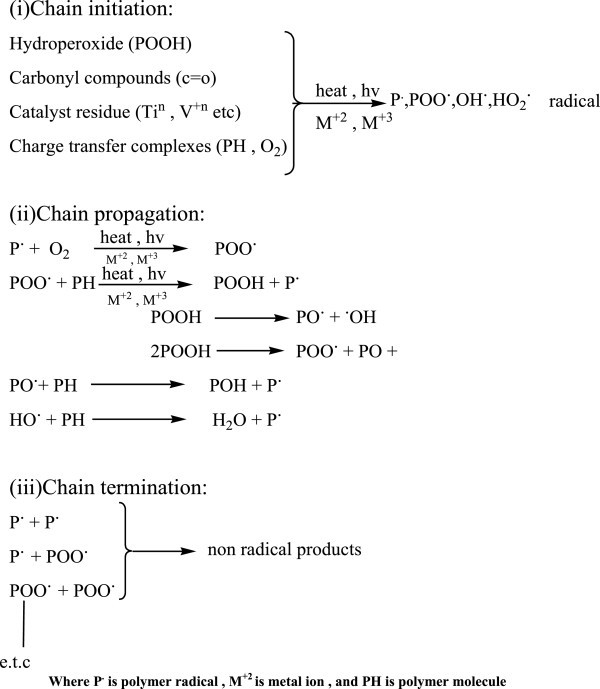
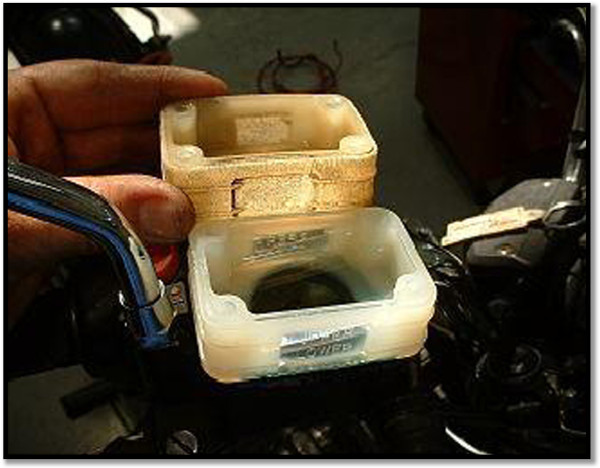
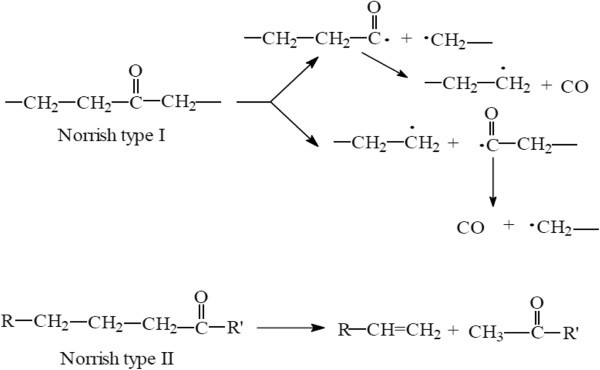
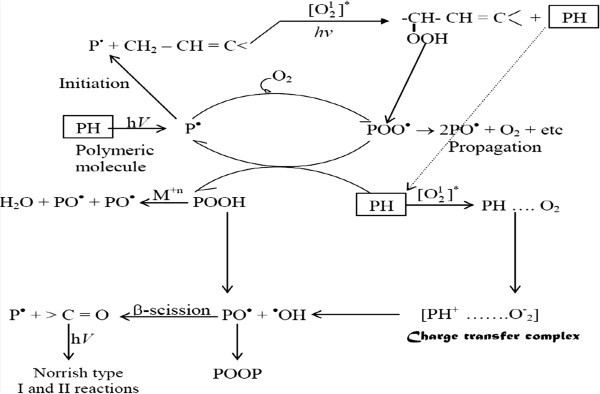
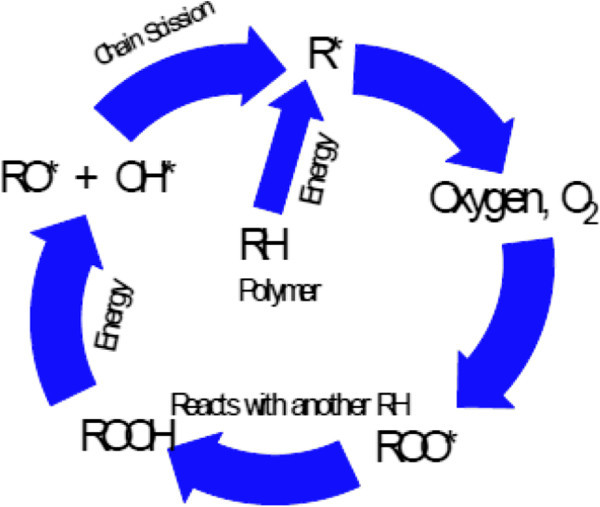
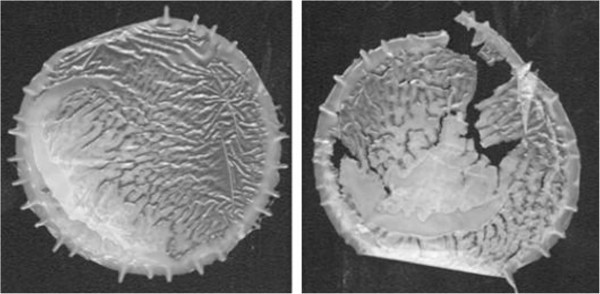
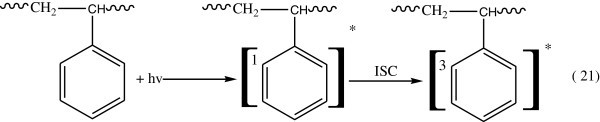
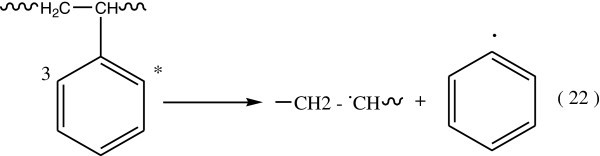
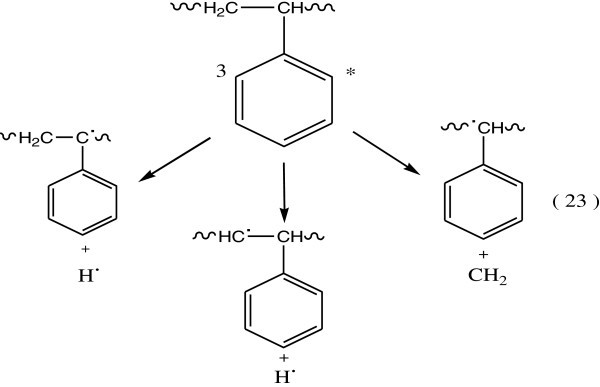
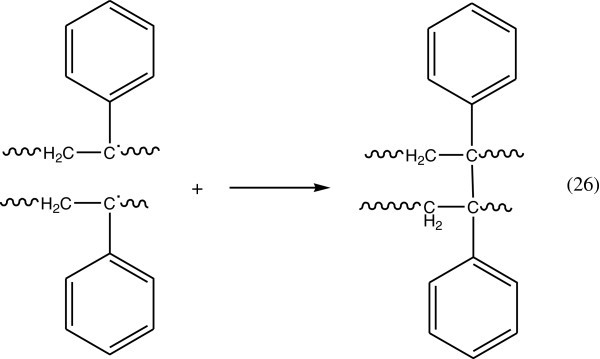
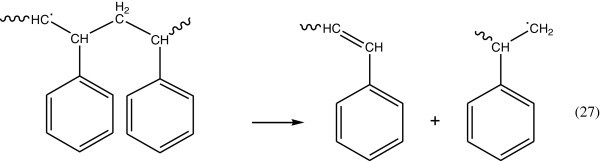
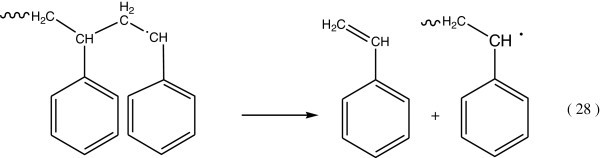
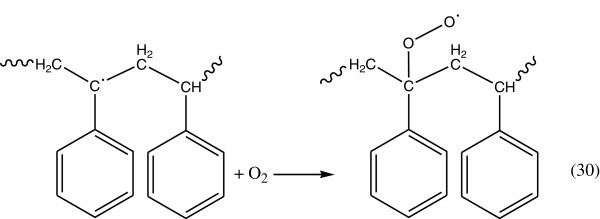
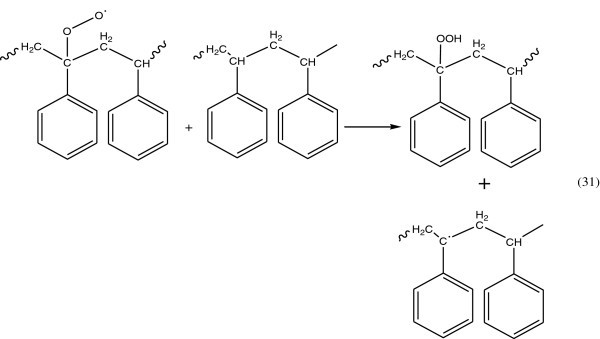
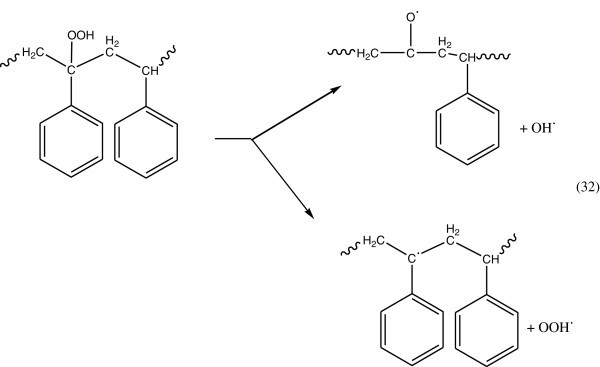
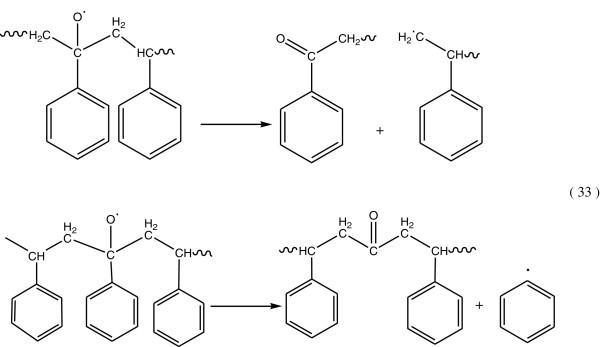
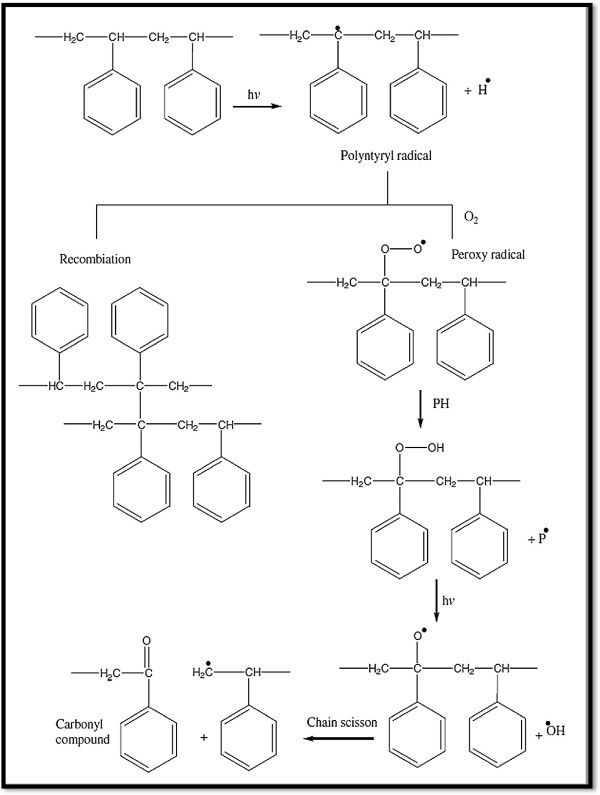
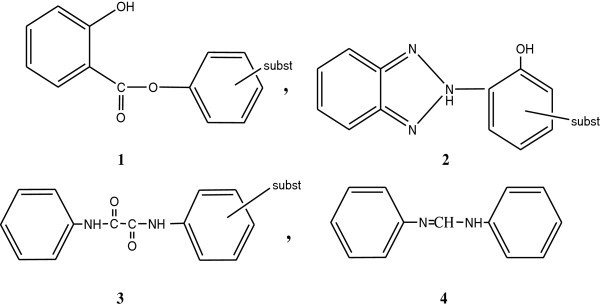
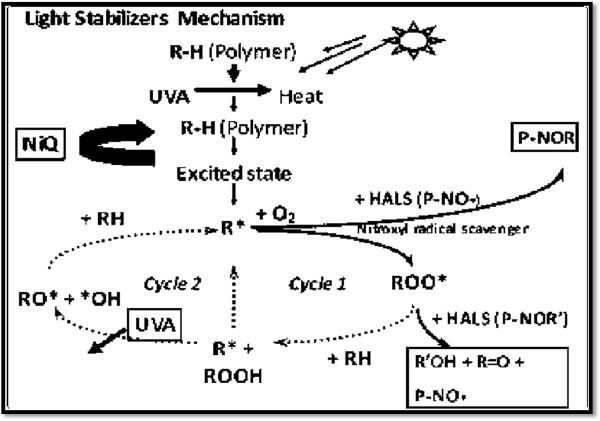
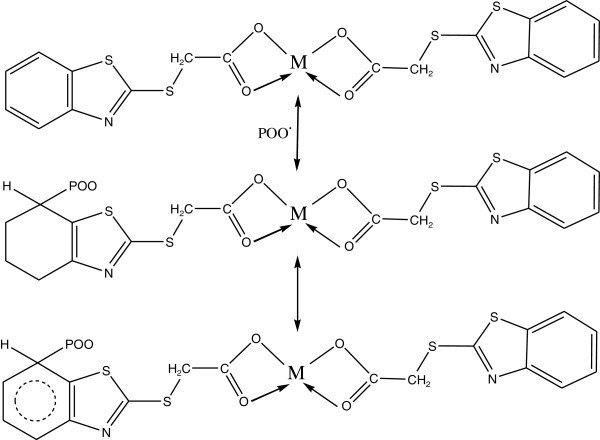
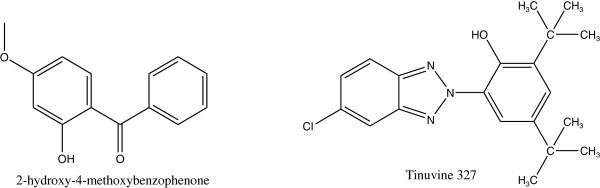
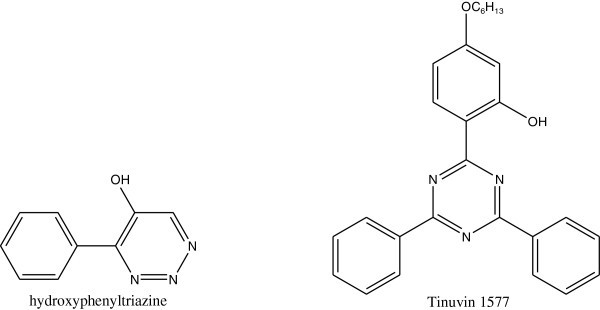
Exposure to ultraviolet (UV) radiation may cause the significant degradation of many materials. UV radiation causes photooxidative degradation which results in breaking of the polymer chains, produces free radical and reduces the molecular weight, causing deterioration of mechanical properties and leading to useless materials, after an unpredictable time. Polystyrene (PS), one of the most important material in the modern plastic industry, has been used all over the world, due to its excellent physical properties and low-cost. When polystyrene is subjected to UV irradiation in the presence of air, it undergoes a rapid yellowing and a gradual embrittlement. The mechanism of PS photolysis in the solid state (film) depends on the mobility of free radicals in the polymer matrix and their bimolecular recombination. Free hydrogen radicals diffuse very easily through the polymer matrix and combine in pairs or abstract hydrogen atoms from polymer molecule. Phenyl radical has limited mobility. They may abstract hydrogen from the near surrounding or combine with a polymer radical or with hydrogen radicals. Almost all synthetic polymers require stabilization against adverse environmental effects. It is necessary to find a means to reduce or prevent damage induced by environmental components such as heat, light or oxygen. The photostabilization of polymers may be achieved in many ways. The following stabilizing systems have been developed, which depend on the action of stabilizer: (1) light screeners, (2) UV absorbers, (3) excited-state quenchers, (4) peroxide decomposers, and (5) free radical scavengers; of these, it is generally believed that excited-state quenchers, peroxide decomposers, and free radical scavengers are the most effective. Research into degradation and ageing of polymers is extremely intensive and new materials are being synthesized with a pre-programmed lifetime. New stabilizers are becoming commercially available although their modes of action are sometimes not thoroughly elucidated. They target the many possible ways of polymer degradation: thermolysis, thermooxidation, photolysis, photooxidation, radiolysis etc. With the goal to increase lifetime of a particular polymeric material, two aspects of degradation are of particular importance: Storage conditions, and Addition of appropriate stabilizers. A profound knowledge of degradation mechanisms is needed to achieve the goal.
Overview
The claims and statistics of this paper haven’t been checked yet.
Run the check — free, no account needed. It reads the open-access text and checks the sources it cites.
Integrity signals
Registry
Cites
Statistics
Figures

Verification
Claims the paper makes
The claims and statistics of this paper haven’t been checked yet.
Run the check — free, no account needed. It reads the open-access text and checks the sources it cites.
Claims other papers make about this one
Each is checked against this paper’s own text: does it say what the citing paper says it does?
The source backs part of the claim, not all of it — or backs it for a different population, condition or comparison.
In the citing paper
“Physical and chemical changes in polymers can be caused by environmental factors including light (photo-oxidation), heat (photothermal oxidation), mechanical abrasion, moisture, chemical conditions or biological activity (fungi, bacteria, yeasts, algae, and their enzymes) 24,37,38 .”
From Environmental Deterioration of Biodegradable, Oxo-biodegradable, Compostable, and Conventional Plastic Carrier Bags in the Sea, Soil, and Open-Air Over a 3-Year Period (2019) · cites this paper as [38]
Experimental — accuracy not yet measured
Self-check
Percentages, sums and reported differences re-computed from the paper’s own numbers.
The self-check needs the paper’s full text.
Citations
Cites
MacKnight, W. (1976) · Science · doi:10.1126/science.191.4233.1260-a · Cited by 9,566 · cited 1×
“…degradation of polymers, which include processes such as chain scission, crosslinking and secondary oxidative reactions, and takes place via radical processes , similar to thermal oxidation reactions (Ranby and Rabek 1981; Carlsson et al. 1976; Mc Kellar & Allen 1979; Rnby and Lucki 1980).”
Comprehensive Chemical Kinetics
Bamford, C., & Tipper, C. F. H. (1976) · doi:10.1016/s0069-8040(03)80001-8 · Cited by 1,705 · cited 1×
“Photooxidative degradation includes the following steps: (Rabek 1994; Rabek 1974; Guillet 1972a, 1972b).”
Physical properties of polymers handbook
Mark, J. (2007) · Springer eBooks · doi:10.1007/978-0-387-69002-5 · Cited by 1,670
Mechanistic implications of plastic degradation
Singh, B., & Sharma, N. (2008) · Polymer Degradation and Stability · doi:10.1016/j.polymdegradstab.2007.11.008 · Cited by 1,569 · cited 1×
“Its hardness, hydrophobic nature and chemical composition cause it to persist in nature without any decomposition for long period of time thus cause environmental pollution Singh and Sharma (2008).”
Thermal characterization of polymeric materials
Turi, E. (1981) · Choice Reviews Online · doi:10.5860/choice.35-0290 · Cited by 1,472 · cited 4×
“from electronically excited carbonyl group to dissolved molecular oxygen Heskins and Guillet (1968). The quenching of [(1)O2] is also necessary for effective stabilization. Nickel chelates have been proven to be very effective quenchers for the excited state of [(1)O2] Schmitt and Hirt (1963).”
InfluentialPolymer Science and Technology
Fried, J. (1995) · Chemistry International · doi:10.1515/ci.2010.32.3.32a · Cited by 1,105
Physical properties of polymers handbook
(1996) · Choice Reviews Online · doi:10.5860/choice.34-2186 · Cited by 1,056 · cited 2×
“The decomposition of hydroperoxide in polymer to non radical derivatives was first demonstrated Carlsson and Wiles (1974). Many metal complexes of sulphur containing ligands such as dialkylthiocarbonate and dialkylthiophosphate not only decompose hydroxide in PE film but are also effective in UV stabilization (as UV a…”
Polymer Degradation and Stability
Peacock, A. J., & Calhoun, A. (2006) · doi:10.3139/9783446433434.009 · Cited by 607 · cited 1×
“Industrially, the yellow discoloration is an important adverse effect of the ageing of polystyrene, e.g. during exposure outdoors (Geuskens et al. 1978a, 1978b; Weir 1978; Lucki and Rnby 1979; Rnby and Lucki 1980).”
Synthesis and Characterization
Behrens, S., Bönnemann, H., Modrow, H., Kempter, V., Riehemann, W., Wiedenmann, A., Odenbach, S., Will, S., Thrams, L., Hergt, R., et al. (2009) · doi:10.1007/978-3-540-85387-9_1 · Cited by 555
Polymer Degradation and Stabilization
Hawkins, W. (1984) · Der Umweltschutz · doi:10.1007/978-3-642-69376-2 · Cited by 492
Research works printed but not linked: 49
- Abd MA, Abdul Zahra AAI, Shenta AA: Photostabilization of polystyrene films by anthraquinones derivatives and their complexes with copper (II), oxovanadium (IV) and nickel (II) ions. Journal of Basrah Researches 2009, 35(3):81-97.
- Aliwi SM: Photostabilization of low density polyethylene for green house application. Nat J chem 2001, 2: 280-302.
- Aliwi SM, AL-Ani RR, Awad DAJ: Photostabilization of polystyrene films by Nickel and Copper tetradentate Shiff base complexes. Iraqi journal polymer 2001, 5(1):15-30.
- Andrady AL: Advance Polymer Science.. 1997, 128: 49-94.
- Baloglu R, Fisch M: Polymer Degradation Stabilization. 1994, 45: 30-35.
- Beavan SW, Phillips D: Photostabilizing of macromolecule by excited state qyencher. Journal Photochem 1974, 3: 3149363. · DOI
- Bottino FA, Bottino G d P, Antonino P, Antonino R: Surface photostabilization of polystyrene by Tinuvin 1577. J of Appl Polym Sci 1999, 69(6):1251-1256. · DOI
- Bottino FA, Cinquegrani AR, Di Pasquale G, Leonardi L, Pollicino A: Chemical modification, mechanical properties and surface photooxidation of films of polystyrene. polymer testing. 2003, 12: 405-411.
- Bottino FA, Cinquegrani AR, Giovanna DD, Leonardi L, Antnino PA: Study on chemical modification, mechanical properties and surface photooxidation of films of polystyrene stabilized by hinderd amines (HAS), polymer testing. 2004, 23: 779-789.
- Cheremision NP: Hand Book of Engineering Polymeric Materials, chapter 8. New York; 1997. · DOI
- Dan E, Somersall AC, Guillet JE: Macromolecules, New York. 1973, 6: 228-230.
- Galdi A, Foltis P, Shah A: UV protecting composition and methods of use. Application: US patent; 2010:2010-118415.
- Geuskens G, David C: Polymer photodegradation: mechanisms and experimental methods. Pure Appl Chem 1979b, 51: 233-240. · DOI
- Gugumus F: Development in Polymer Stabilization-1. Edited by: Scott G. London: Applied Science Publishers Ltd; 1979:261.
- Gugumus F, Gachter R, Muller H (Eds): Plastics Additives. 2nd edition. Munich: Hanser; 1987:97-185.
- Guillet JE: Polymer photodegradation: mechanisms and experimental methods. Pure and ppl Chem 1972, 30: 135-144. · DOI
- Guillet J: Polymer Photophysics and Photochemistry. Cambridge University Press; 1985.
- Heller HJ: Photochemistry of dyed and pigmented polymers. Eurp Polymer J Supplement 1969, 99-105.
- Klopffer W: Polymer photodegradation: mechanisms and experimental methods. Eurpolym J 1975, 11: 203.
- Lamolla AA: Energy Transfer and Organic Photochemistry, chapter 2. In Technique of Organic Chemistry. Edited by: Lamolla AA, Turro NJ. New York: Wiley; 1969.
- Lawrence JB, Weir NA: Polymer photodegradation: mechanisms and experimental methods. J Polym Sci Al 1973, 11: 105-431.
- Mc Kellar JF, Allen NS: Photochemistry of Man-Made Polymers, Ltd. London 306 S: Applied Science Published; 1979:138.
- Mill TR, Richarason H, Mayo FR: J. Polym. Sci. Al. 1978, 11: 2899-2908.
- Patel P: Additive primer, blown films, cast films and extraction coating, PLACK conference. 2007, 16-20.
- Pospisil J, Habicher W, Zweifel H, Pilar J, Nespurek S, Piringer O: Polymer and polymer composites. AAA 2002, 10: 37-42.
- Potts JE: Plastic environmentally degradation, The Kirk-Othmer Encyclopedia of Chemical Technology. 3rd edition. 1991. Supp. Vol
- Rabek JF: Mechanism of Photophysical Process and Photochemical Reaction in polymers. New York: John Wiley and Sons; 1987.
- Rabek JF: Polymer photodegradation–mechanism and experimental methods. London: Chapman and Haal; 1993.
- Rabek JF: Polymer Degradation Mechanisms and experimental methods. Stocholm: Springer; 1994.
- Rabek JF: Polymer photodegradation-mechanisms and experimental methods. Cambridge: Chapman Hall; 1995. · DOI
- Rabek JF: Polymer photodegradation of polymers: physical characteristic and applications. Beelin: Springer- verlag; 1996. · DOI
- Rabek JF, Ranby B: Polymer photophysics and photochemistry: an introduction to the study of Photoprocess of macromolecules. J Polym Sci Al 1974, 12: 273-281.
- Rabek JF, Ranby B: Photodegradation, photooxidation and Photostabilization of Polymers. New York: John Wiley; 1975.
- Rabie ST, Mahran AM, Kamel EM, Abdel Hamid NH: Photodegradation of polystyrene stabilized with uracil derivative. Journal of applied sciences research 2008, 4(12):2015-2026.
- Ranby BG, Rabek JF: Photodegradation, Photooxidation and Photostabilization of Polymers. London: John Wiley & Sons; 1975:101-102.
- Ranby B, Rabek JF: Photodegradation, Photooxidation and Photostabilization of Polymers. Wiley periodicals, Inc; 1975b:165-184.
- Ruoko : Uv light induced degradation of polyethylene and polystyrene – spectroscopic and DSC study. Msc thesis: Tampere University of Technology; 2012.
- Safy Eldin NM, El-laithy SA: Photooxidative degradation of polystyrene of cover signals lamp of some automobile. Journal of applied polymer science 1994, 55: 47-54.
- Sastre R, Catalina F, Mateo JL, Claremunt R, Santa-Maria MD, Catalan J: Mechanism of photostabilization of polystyrene film by dihydroxypirazoles. J of Polym Sci Part A: Polym Chem 2003, 28(13):3661-3668. · DOI
- Schnabel W: Polymer Degradation: Principle and Practical Applications. Chapter 14. München: Hanser Int; 1981.
- Senna M, Hamid H, Hussein M: Nuclear instrument methods. Phys Res Section B 2002, 187: 48-55.
- Strlic M, Kolar J: Aging and stabilization of papers. Turjaška 1, 1000 Slovenia: Distributed by the National and university Library; 2005.
- Trozzolo AM, Winslow FH: Macromolecules. American chemical society publishing 1968., 98:
- Watson WF: Principles of polymer engineering rheology. Trans IRI 1953, 29: 29-32.
- Willis PB: Investigation of test method material properties and processes for solar cell in capsulation, eighth annual report. 1984.
- Wypych G: Handbook of material weathering. 4th edition. Toronto: Chemtec Publishing; 2008.
- Yousif E: Photostabilization of PVC by inorganic complexes. LAP LAMBERT academic publishing; 2010.
- Yousif E: Photostabilization of thermoplastic polymers. Germany: Lambert Academic Publishing; 2012.
- Yousif E, Salimon J, Salih N: Photostability of poly (vinyl chloride). VDM Verlag: Dr. Muller publisher; 2011b. B
Cited by
Sorted by citations
Items 901–1,000 of 1,001
Additives for ultraviolet‐induced oxidative degradation of low‐density polyethylene
Oluz, Z., & Tinçer, T. (2016) · doi:10.1002/app.43354 · Cited by 5
Ultra-violet spectra studies of photodegradation of PVC films in presence of Fe(III) chelate complex
Yousif, E., Haddad, R. A., Ameer, A. A., & Win, Y. (2014) · doi:10.5155/eurjchem.5.4.607-611.1102 · Cited by 5
Self-citationQin, S., Chen, R., Zhu, K., Liu, L., Ma, Y., Xu, W., & Wan, J. (2026) · Coordination Chemistry Reviews · doi:10.1016/j.ccr.2026.217806 · Cited by 5
Kokilathasan, N., Raoof, B., & Dittrich, M. (2025) · Environmental Science Nano · doi:10.1039/d4en01223b · Cited by 5
Mansoor, H., Alsayed, R., Abdallh, M., Ahmed, D., Bufaroosha, M. S., Salihe, N., & Yousif, E. (2021) · doi:10.1016/j.sajce.2020.11.003 · Cited by 5
Self-citationLiang, S., Li, H., Wang, C., 王, X. G. 晓. W., Jin, X., Chen, X., Chu, L., Chen, Z., & Gu, C. (2026) · Environmental Science & Technology · doi:10.1021/acs.est.6c03431 · Cited by 4
Kabir, A. H. M. E., & Örmeci, B. (2026) · Polymer Degradation and Stability · doi:10.1016/j.polymdegradstab.2026.112238 · Cited by 4
Ecotoxicological effects of traditional and emerging microplastics on marine zooplankton: A review
Yoo, J.-W., Jung, J.-H., Won, E., & Lee, Y.-M. (2026) · Ecotoxicology and Environmental Safety · doi:10.1016/j.ecoenv.2026.120028 · Cited by 5
Rahman, M., Sauvageau, D., & Elias, A. L. (2026) · ACS Applied Polymer Materials · doi:10.1021/acsapm.5c04371 · Cited by 4
Health risk analysis of micro-and nanoplastic exposure via the microbiota-gut-brain axis
Wang, X., Yu, H., Li, J., Han, S., & Chi, Y. (2026) · Frontiers in Immunology · doi:10.3389/fimmu.2026.1762813 · Cited by 6
“These free radicals within the polymer chains can react with atmospheric oxygen to produce polymeric peroxy radicals (73, 74).”
Asfaw, T. D., Muleta, A., & Awlachew, Z. T. (2026) · Discover Environment · doi:10.1007/s44274-026-00540-7 · Cited by 3
“Another study similarly reported that these bands indicated the oxidation of LDPE by fungi-mediated enzymes [43].”
Scott, J., Pereira-Pinto, E., Forsythe, K., Hess, K. Z., Belden, J. B., González-Estrella, J., & Minghetti, M. (2025) · Environmental Science & Technology · doi:10.1021/acs.est.5c14140 · Cited by 6
Liquid Crystal Display-Based 3D Printing of Polylactic Acid/Microcrystalline Cellulose Composites
da Silva, J. A., Nascimento, N. R. D., Pino, G. G. D., Rivera, J. L. V., Fernández, M. V., da Silva, W. V., & de Macêdo, J. C. (2025) · Polymers · doi:10.3390/polym17243311 · Cited by 4
“It is noted that, in all samples, there was only one degradation event, referring to the decomposition of the polymer chain, between the range of 250 and 500 ◦ C, which was already expected, based on other works in the literature [43,44].”
Membrane-based nanopurification for plastic recycling
Laviolette, J.-P., Eslami, A., & Doucet, J. (2025) · Communications Chemistry · doi:10.1038/s42004-025-01728-3 · Cited by 4
“• Given that PS2 had undergone degradation through use and recycling, it likely developed oxygenated functional groups - such as ketones and aldehydes - that increase polarity and promote poor solubility and aggregation in the solvent 35 – 37 .”
Biotechnological innovations for microplastic degradation: A synthetic biology perspective
Yadav, P., Yadav, C., Joshi, A., Meena, M., & Arora, J. (2025) · Next research. · doi:10.1016/j.nexres.2025.100878 · Cited by 5
Zhang, H., Sun, Y., Chen, G., Zeng, D., Cheng, Z., Yan, B., & Chen, G. (2025) · Journal of Hazardous Materials · doi:10.1016/j.jhazmat.2025.139370
Chen, G., Zhang, H., Sun, Y., Tao, J., Chen, L., Geem, K. M. V., Li, N., Cheng, Z., & Yan, B. (2025) · Chemical Engineering Journal · doi:10.1016/j.cej.2025.164867 · Cited by 4
Li, R., Zhi, L., Wei, X., Gong, H., & Wang, J. (2025) · Environmental Chemistry and Ecotoxicology · doi:10.1016/j.enceco.2025.06.018 · Cited by 5
Rus, A. Z. M., Wahab, H. A., Saif, Y., Marsi, N., Zaliran, M. T., Alamshah, M. H., Mariza, I., Rus, S. M., Al-Alimi, S., & Zhou, W. (2025) · Journal of polymer research · doi:10.1007/s10965-025-04307-1 · Cited by 4
“There are studies that state the interconnected pore size of foam composites is less likely to be directly affected by UV radiation, where the interconnected pores are a fundamental and relatively stable aspect of foam materials [42, 43].”
Structural Health Monitoring in Epoxy/CNT Composites Exposed to High Doses of UV Radiation
Cunningham, J. E., Segal, B., Talluru, V., & Seidel, G. D. (2025) · AIAA SCITECH 2025 Forum · doi:10.2514/6.2025-0136 · Cited by 4
Comparative Analysis of Ground-Based and Satellite-Derived UV Index Levels in Natal, Brazil
dos Reis, G. C. G., Bencherif, H., da Silva, R., Peres, L., dos Reis, M. A. G., Pinheiro, D., da Silva, F. D., Lamy, K., & Portafaix, T. (2024) · Remote Sensing · doi:10.3390/rs16244687 · Cited by 4
Przepiórska-Drońska, K., Lach, A., Pietrzak-Wawrzyńska, B., Rzemieniec, J., Kajta, M., Wawrzczak-Bargieła, A., Bilecki, W., Noworyta, K., & Wnuk, A. (2024) · Toxics · doi:10.3390/toxics12120906 · Cited by 4
“The knowledge of dangers associated with overexposure to sun radiation has become increasingly common [1–6], followed by increased demand and consumption of products protecting us from such rays.”
Nanoconfinement-induced shift in photooxidative degradation pathway of polystyrene.
Kim, B. Q., Ren, T., Majumder, A., & Lee, D. (2024) · Journal of Colloid and Interface Science · doi:10.1016/j.jcis.2024.12.115 · Cited by 4
Williams, W. A., Arunprasad, A., & Aravamudhan, S. (2024) · ENVIRONMENTAL SYSTEMS RESEARCH · doi:10.1186/s40068-024-00384-1 · Cited by 5
“…changes could occur for many different types of polymers owing to byproducts elucidated in other studies (Wang et al. 2023; Qian et al. 2011; Yousif and Haddad 2013; Nakatani et al. 2021; Zhang et al. 2021; Wochnowski et al. 2000, 2005; Tuna and Benkreira 2018; Gonçalves et al. 2007;…”
Aretxabaleta, M. A., Barandika, G., Minguez, R., & Lizundia, E. (2024) · Biomacromolecules · doi:10.1021/acs.biomac.4c00846 · Cited by 4
Yastrebinsky, R. N., Yastrebinskaya, A. V., Gorodov, A. I., & Akimenko, A. V. (2024) · Journal of Composites Science · doi:10.3390/jcs8090372 · Cited by 3
Martins, G. R., Rodrigues, E. J. D. R., Neto, R. P. C., & Tavares, M. I. B. (2024) · Polymer Degradation and Stability · doi:10.1016/j.polymdegradstab.2024.110728 · Cited by 12
Systemically Understanding Aqueous Photocatalytic Upgrading of Microplastic to Fuels
Kan, M., Tao, M., Zhuang, W., Wu, S., Ye, Z., & Zhang, J. (2023) · Solar RRL · doi:10.1002/solr.202300411 · Cited by 11
UV Irradiation of Wood Surface: Bonding Properties
Gržan, T., Grieco, L., Živković, V., & Mihulja, G. (2023) · Polymers · doi:10.3390/polym15112552 · Cited by 4
In situ droplet-based on-tissue chemical derivatization for lipid isomer characterization using LESA
Freitas, D. P., Chen, X., Hirtzel, E. A., Edwards, M. E., Kim, J., Wang, H., Sun, Y., Kocurek, K. I., Russell, D. H., & Yan, X. (2023) · Analytical and Bioanalytical Chemistry · doi:10.1007/s00216-023-04653-3 · Cited by 4
Bibi, A., Tsai, E., Lan, Y., Chang, K., & Yeh, J.-M. (2022) · Molecules · doi:10.3390/molecules27217581 · Cited by 4
Hydrophilization of Hydrophobic Mesoporous High-Density Polyethylene Membranes via Ozonation
Tyubaeva, P., Tyubaev, M. A., Podmasterev, V., Bolshakova, A. V., & Arzhakova, O. (2022) · Membranes · doi:10.3390/membranes12080733 · Cited by 4
Lin, Y.-S., Wu, T., & Wan, H. (2022) · Journal of Adhesion Science and Technology · doi:10.1080/01694243.2022.2084272 · Cited by 4
“Nevertheless, UV and ozone can break the carbon bonds in the backbone of the polymer, eventually leading to degradation and failure [5].”
BackgroundMeasurement of polystyrene photodegradation rate using a quartz crystal microbalance
Alodhayb, A. (2022) · IET Nanobiotechnology · doi:10.1049/nbt2.12076 · Cited by 4
“Another study reported that the UV light causes photooxidative degradation that causes breakage of polymer chains, which reduces the molecular weight of the thin film [8].”
BackgroundPhotostability of white oak wood stained with metal salts during indoor sunlight exposure
Dagher, R., Stevanović, T., & Landry, V. (2022) · European Journal of Wood and Wood Products · doi:10.1007/s00107-021-01775-2 · Cited by 5
Furuya, T., Nakai, T., Imai, M., & Kameda, M. (2021) · Italian National Conference on Sensors · doi:10.3390/s21248177 · Cited by 4
Luminescence switching in polymerically confined carbon nanoparticles triggered by UV-light.
Srivastava, I., Moitra, P., Sar, D., Wang, K., Alafeef, M., Scott, J., & Pan, D. (2021) · Nanoscale · doi:10.1039/d1nr02786g · Cited by 4
Hering, H., Zoschke, C., König, F. R., Kühn, M., Luch, A., & Schreiver, I. (2021) · Toxicology · doi:10.1016/j.tox.2021.152872 · Cited by 4
Gomez, N., Silva, G. M., & Wypych, F. (2021) · Polymer Bulletin · doi:10.1007/s00289-021-03640-x · Cited by 4
“Probably mineral fillers act as protective barriers to oxygen, preventing it from attacking the targets for radicals such as the loosely bound tertiary hydrogens attached to branch points in the LDPE molecular chain, and thus decreasing the rate of hydroperoxide formation, and also hindering the mobility of free radic…”
BackgroundUp-to-date Notions of Polystyrene Nanocomposite Nanofibers
Kausar, A. (2021) · Materials research innovations (Print) · doi:10.1080/14328917.2021.1880737 · Cited by 4
Matrix Decomposition of Carbon-Fiber-Reinforced Plastics via the Activation of Semiconductors
Böhnke, P. R. C., Kruppke, I., Hoffmann, D., Richter, M., Häntzsche, E., Gereke, T., Kruppke, B., & Cherif, C. (2020) · Materials · doi:10.3390/ma13153267 · Cited by 4
POTENSI LOGAM OKSIDA SEBAGAI FOTOKATALIS DEGRADASI PLASTIK DI AIR LAUT
Safaat, M. (2020) · OSEANA · doi:10.14203/oseana.2020.vol.45no.1.54 · Cited by 5
“Proses ini tergantung pada struktur polimer dan faktor-faktor lain seperti panas, cahaya, ion radiasi, tindakan mekanik, biologis dan enzimatik (Yousif & Haddad, 2013).”
Biomonomers for Green Polymers: Introduction
Visakh, P. M. (2019) · Wiley eBooks · doi:10.1002/9781119301714.ch1 · Cited by 3
Zhang, Q., Gu, Q., Leroux, F., Tang, P.-G., Li, D.-Q., & Feng, Y.-J. (2018) · Beilstein Journal of Nanotechnology · doi:10.3762/bjnano.9.277 · Cited by 4
Soares, E., Tonani, R., Contente, M., de Arruda, C. N. F., & Pires-de-Souza, F. D. C. P. (2018) · doi:10.1002/col.22224 · Cited by 4
Photo-oxidation stability of microcapsules in thermochromic prints
Rožić, M., & Vukoje, M. (2018) · doi:10.25027/agj2017.28.v28i3.138 · Cited by 4
“…the initiation of photodegradation, the molecule must absor light 110 Acta Graphica Vol 28, No 3 (2017) ; 109-116 energy, which means that molecules must contain chemical structures that absorb light in the electromagnetic spectrum (Yousif and Haddad, 2013; Anna et al., 2001; Zahra et al. , 2008).”
BackgroundMultiscale design and optimization of polymer-based photonic crystals for solar shielding
Bensaid, M., Miloua, R., Ghalouci, L., Godey, F., & Soldera, A. (2017) · doi:10.1016/j.solmat.2017.06.016 · Cited by 4
Evolution of color centers in UV-irradiated syndiotactic polystyrene at elevated temperatures
Li, M.-Y., Chuang, Y.-F., Yang, F.-Q., & Lee, S. (2017) · doi:10.1088/2053-1591/aa5cd8 · Cited by 4
“When PS is subjected to the irradiation of UV light in oxygen, chain scission is dominant even though there exist crosslinks [13, 14].”
BackgroundTortolano, L., Hammami, S., Manerlax, K., Do, B., & Yagoubi, N. (2016) · Journal of chromatography. B, Analytical technologies in the biomedical and life sciences · doi:10.1016/j.jchromb.2016.10.020 · Cited by 4
“A yellow color has appeared, which could be the consequence of the styrene depolymerization or the acrylic alkyl chains recombination and/or scission [20].”
BackgroundFunctionalized hexagonal boron nitride nano-coatings for protection of transparent plastics
Tran, T. V., Usta, A., & Asmatulu, R. (2016) · SPIE Smart Structures and Materials + Nondestructive Evaluation and Health Monitoring · doi:10.1117/12.2235331 · Cited by 4
“Plastics usually offer excellent properties, such as light weightiness, formability, shatter resistance and transparency, and are generally considered low cost materials [1-6].”
BackgroundZhang, X., Lin, Y., Zhao, M., Zhu, M., Cao, T., Hofmann, T., & Chen, W. (2026) · Environmental and Biogeochemical Processes · doi:10.48130/ebp-0026-0004 · Cited by 4
García, J., di Luca, C., Bru, A., Muñoz, M., Casas, J. A., & de Pedro, Z. M. (2026) · Chemical Engineering Science · doi:10.1016/j.ces.2026.124478 · Cited by 4
Harnessing harshness: Leveraging extreme space conditions for self-healing polymer materials
Ye, L., Zhao, G., Yu, K., Wu, Y., Wang, G., Xue, X., Qi, X., Zhang, Q., Cheng, M., & Feng, S. (2026) · Advances in Colloid and Interface Science · doi:10.1016/j.cis.2026.103945 · Cited by 3
Investigation of the Degradation Behavior of 3D Printed Polymer Parts for Marine Applications
Çakır, A., & Erçetin, A. (2026) · Journal of Bio- and Tribo-Corrosion · doi:10.1007/s40735-026-01143-8 · Cited by 3
“In addition, ultraviolet (UV) radiation from sunlight causes photodegradation, which breaks polymer chains and leads to microcracks and brittleness on the material’s surface [5].”
Shueb, M. I., Mohamad, N., Talip, N., Umar, K. N. K., Mahmud, M., Halin, D. S. C., Manaf, M. E. A., Mohamed, M., Sandu, A., Vizureanu, P., et al. (2026) · Radiation Physics and Chemistry · doi:10.1016/j.radphyschem.2026.113875 · Cited by 3
Badawy, S., & Hashem, A. (2026) · Air Quality, Atmosphere & Health · doi:10.1007/s11869-026-01956-z · Cited by 3
Advanced photocatalytic materials for micro/nanoplastic degradation: A comprehensive review
Dutta, M., Kumar, S., Bhimireddi, R., Shukla, M., Koparkar, A., Sharma, K. P., Varma, R. S., Gupta, R., Kumar, R., & Singh, L. (2026) · Environmental Surfaces and Interfaces · doi:10.1016/j.esi.2026.02.001 · Cited by 4
Orçati, M. Z., de Moraes, M. D., & Beppu, M. M. (2026) · ACS Omega · doi:10.1021/acsomega.5c11597 · Cited by 3
Li, K., Li, W.-Y., Chen, X., Ye, Z., & Chen, Z. (2025) · Journal of Environmental Chemical Engineering · doi:10.1016/j.jece.2025.120196 · Cited by 3
Impact of ultraviolet radiation on graphene structure and PnBMA-graphene antistatic coating
Tamboura, M., Gosteva, E., & Chichkov, M. (2025) · Modern Electronic Materials · doi:10.3897/j.moem.11.4.174536 · Cited by 3
Navarro-Espinoza, S., Meza-Figueroa, D., Grijalva-Noriega, F., Silva-Campa, E., Álvarez-Bajo, O., Sarabía-Sainz, A., Acosta-Elías, M., Burgara-Estrella, A., & Bojorquez-Baltierrez, B. (2025) · Environmental Pollution · doi:10.1016/j.envpol.2025.127274 · Cited by 3
Sow, A. C., Palleau, É., Fabre‐Francke, I., & Ressier, L. (2025) · Advanced Materials Interfaces · doi:10.1002/admi.202500805 · Cited by 3
Afzalina, B., & Nurhafizah, M. D. (2025) · Polymer · doi:10.1016/j.polymer.2025.129211 · Cited by 3
Pleskytė, S., Uogintė, I., Stanionytė, S., Selskienė, A., & Byčenkienė, S. (2025) · International Journal of Environmental Science and Technology · doi:10.1007/s13762-025-06752-3 · Cited by 3
“Hydroperoxide is the main intermediate of polymer photodegradation, causing the chain scission and alteration of the polymer’s molecular structure (Yousif and Haddad 2013).”
Namathoti, S., Sahu, S. K., Sreekanth, P. S. R., Vakkalagadda, M., & Olejník, R. (2025) · Journal of polymer research · doi:10.1007/s10965-025-04585-9 · Cited by 3
Comparison of the Properties of Compostable and Conventional LDPE Films
Krupińska, K., & Korzeniowska, M. (2025) · Sustainability · doi:10.3390/su17177867 · Cited by 3
Mayer-Trzaskowska, P., Ferraris, M., Perero, S., & Robakowska, M. (2025) · Coatings · doi:10.3390/coatings15060677 · Cited by 3
Mourad, A., & Aigbedion, N. J. (2025) · Energy Efficiency · doi:10.1007/s12053-025-10331-3 · Cited by 3
“This phenomenon is often referred to as photo-degradation and it is the main problem associated with polymers such as plastics (Yousif & Haddad, 2013).”
Spectrophotomaterically study for PS and MO/PS composites as high-doses dosimeters.
Hussein, S. M., Hameed, N., & Salim, E. (2025) · Applied Radiation and Isotopes · doi:10.1016/j.apradiso.2025.111935 · Cited by 3
In situ plastic fragmentation between two contrasting ecosystems in the Atlantic
Pereira, M. F. B. C., Filho, J. E. M., López‐Ibáñez, S., Salazar, C. G., & Beiras, R. (2025) · Marine Environmental Research · doi:10.1016/j.marenvres.2025.107131 · Cited by 3
Oxidative Functionalization of Solvent-Pretreated Polyethylene by Ozone
Zhu, H., Jackson, T. A., Teator, A. J., & Subramaniam, B. (2025) · ACS Sustainable Chemistry & Engineering · doi:10.1021/acssuschemeng.4c09279 · Cited by 3
TOWARDS BLAST SAFETY OF GLASS FACADES: RESEARCH ADVANCES AND PROSPECTS
Chen, S.-W., Chen, X., Lu, Y.-J., Guo, X., Yi, S., & Luo, Y. (2025) · Thin-walled structures · doi:10.1016/j.tws.2025.113213 · Cited by 3
Kawakita, R., Sperger, D., Chal, B., Fogarty, J., McCormick, M., To, D., Ferrizzi, D., & Rajabi-Siahboomi, A. (2025) · Journal of Pharmacy and Science · doi:10.1016/j.xphs.2025.103778 · Cited by 3
Emerging Material Design Trends in Photothermal Water Vapor Generation
Hasan, N., Bari, G. A. K. M. R., & Jeong, J.-H. (2025) · International Journal of Energy Research · doi:10.1155/er/9016908 · Cited by 4
Zuo, Z., Gu, G.-X., & Zhou, S. (2024) · Polymer · doi:10.1016/j.polymer.2024.127735 · Cited by 3
Song, J., Li, X., Zhang, S., Li, Y., Chen, L., Wang, Z., Cheng, G., Yu, Q. B., & Han, Y. (2024) · Journal of Polymer Research · doi:10.1007/s10965-024-04191-1 · Cited by 2
Benmammar, R. K., Bouberka, Z., Malas, C., Carpentier, Y., Haider, K., Mundlapati, V. R., Ziskind, M., Focsa, C., Khelifi, S., Poutch, F., et al. (2024) · Molecules · doi:10.3390/molecules29215037 · Cited by 3
Cao, W., Li, X.-W., Luo, C., Wang, Q., Yin, J.-N., Zhang, Y., & Zhuang, T. (2024) · Journal of Physics D: Applied Physics · doi:10.1088/1361-6463/ad5601 · Cited by 3
“They may be in coordination or competition with each other [12, 13].”
Shi, Y., Zheng, L., Huang, H., Shi, L., Gong, Z., Ye, K., Chen, X., & Gao, S. (2024) · Chemosphere · doi:10.1016/j.chemosphere.2024.142165 · Cited by 5
Role of Functionalized Polypropylene on Chemo-Mechanics of Ductility-Enhanced Cement Beams
Soman, S., Hung, A. M., Mardambek, K., Fini, E. H., & Hoover, C. G. (2023) · Journal of Materials in Civil Engineering · doi:10.1061/jmcee7.mteng-16569 · Cited by 2
Utilizing Hydrodynamic Cavitation with Variable Orifice Patterns for Textile Wastewater Treatment
Gajbhiye, P., Shah, V., Mehta, J. P., Panchal, H., & Metre, A. V. (2024) · Tikrit Journal of Engineering Sciences · doi:10.25130/tjes.31.1.4 · Cited by 3
Mapfumo, E., Hemmerling, D., Bukutu, C., Acharya, S., Paterson, E., Nobert, S., MacElheren, M., & Golizeh, M. (2024) · FACETS · doi:10.1139/facets-2023-0075 · Cited by 5
Aging of Environmentally Friendly Alkyd Coating Containing Tinuvin 292 under Effect of UV Radiation
Trung, T. N. (2023) · Hue University Journal of Science: Natural Science · doi:10.26459/hueunijns.v132i1d.6897 · Cited by 3
“TiO 2 worked as an UV-absorber and a photocatalyst [21, 22].”
BackgroundOpportunities and challenges with advanced greenhouse glazing materials
Stallknecht, E. J., & Runkle, E. (2023) · Acta Horticulturae · doi:10.17660/actahortic.2023.1377.25 · Cited by 3
Arraq, R., Hadi, A. G., Kadhom, M., Mohammed, S., Bufaroosha, M. S., Ahmed, D., Hashim, H., Husain, A., Ahmed, A. A. E., Alamiery, A., et al. (2023) · Journal of polymer research · doi:10.1007/s10965-023-03748-w · Cited by 3
Self-citationEffect of heat and UV-irradiation on chitosan film doped with BODIPY dyes
Smolarkiewicz-Wyczachowski, A., Kaczmarek, H., Piskorz, J., & Ziegler-Borowska, M. (2023) · Polymer · doi:10.1016/j.polymer.2023.126324 · Cited by 3
Sommer, C., Nguyen, J., Menzel, T., Ruckdäschel, H., & Koch, M. (2023) · Chemosphere · doi:10.1016/j.chemosphere.2023.140105 · Cited by 3
Wang, L., Cao, S., Shen, Y., & Wang, W.-J. (2023) · International Journal of Electrochemical Science · doi:10.1016/j.ijoes.2023.100339 · Cited by 3
Effect of UV Exposure on the Mechanical Properties of Polyurethane-Coated Fabrics
Üzümcü, B., Sari, B., & Temel, E. (2023) · TEKSTİL VE KONFEKSİYON · doi:10.32710/tekstilvekonfeksiyon.1168629 · Cited by 3
Deocaris, C., Fernández, M., Lee, A. R., Miao, S.-L., & Padolina, J. B. P. (2023) · Nature Environment and Pollution Technology · doi:10.46488/nept.2023.v22i02.055 · Cited by 3
“The prolonged mechanical stresses and photodegradation weather plastic and its byproducts (Yousif & Haddad 2013).”
Leubner, N., Pawlowski, S., Salinas, E., Wigh, A., Dammann, M., Preibisch, A., & Schmitt, C. (2023) · Journal of Applied Toxicology · doi:10.1002/jat.4461 · Cited by 3
“However, as these synthetic polymers are subjected to prolonged sun exposure, weathering resistance plays an important role in enhancing durability (Pickett, 2018; Yousif & Haddad, 2013).”
BackgroundLin, Q., Aihara, M., Shirai, A., Tanaka, A., Takebayashi, K., Yoshimura, N., Torigoe, N., Nagahara, M., Minamikawa, T., & Otoi, T. (2022) · Theriogenology · doi:10.1016/j.theriogenology.2022.12.015 · Cited by 5
Wang, Y.-H., Lee, K.-C., Wei, W.-C., Wang, C.-H., Liu, H.-J., Hou, J.-R., Hsieh, T.-C., Chen, J.-K., Chen, T.-Y., Liaw, S., et al. (2022) · Italian National Conference on Sensors · doi:10.3390/s22228978 · Cited by 3
Weizman, O., Uziel, A., Mead, J., Dodiuk, H., Ophir, A., & Kenig, S. (2022) · Polymers for Advanced Technologies · doi:10.1002/pat.5791 · Cited by 3
Breaking C–C Bonds via Electrochemically Mediated Hydrogen Atom Transfer Reactions
Yan, B., Shi, C.-X., Beckham, G., Chen, E., & Román-Leshkov, Y. (2021) · doi:10.26434/chemrxiv.14525619.v1 · Cited by 3
Kajian Fragmentasi Polypropylene Akibat Radiasi Sinar Ultraviolet dan Kecepatan Aliran Air
Susanto, S., & Trihadiningrum, Y. (2021) · Jurnal Teknik ITS · doi:10.12962/j23373539.v9i2.53583 · Cited by 3
“merupakan salah satu syarat terjadinya proses fotooksidasi [22].”
BackgroundCreep deformation of poly(methyl methacrylate)-multiwalled carbon nanotube composites
Chang, M.-F., Yang, F.-Q., & Lee, S. (2020) · Journal of polymer research · doi:10.1007/s10965-019-1932-0 · Cited by 3
Comparison of GOME‐2 UVA Satellite Data to Ground‐Based UVA Measurements in South Africa
du Preez, D. J., Parisi, A. V., Millar, D. A., Benchérif, H., & Wright, C. Y. (2020) · Photochemistry and Photobiology · doi:10.1111/php.13308 · Cited by 5
Masruroh, Wibowo, G. S., & Santjojo, D. (2020) · Journal of Physics, Conference Series · doi:10.1088/1742-6596/1528/1/012007 · Cited by 3
Innovative polymeric air–air heat recovery system — Life cycle assessment
Marques, H., Oliveira, M., & Martins, N. (2020) · Energy Reports · doi:10.1016/j.egyr.2019.08.084 · Cited by 3
Metadata
- Authors
- Yousif, E., & Haddad, R.
- Affiliations
- Nahrain University (IQ)
- Corresponding author
- Yousif, Emad
- ORCID
- Yousif, Emad
- Venue
- SpringerPlus
- Published
- 2013-08-23
- Volume
- 2
- Issue
- 1
- Pages
- 398-398
- ISSN
- 2193-1801 (ISSN-L)
- PMC
- PMC4320144
- OpenAlex
- W2122404351
- Cited by
- 1,503
- References
- 133
- Citations by year
- 2026: 182 · 2025: 215 · 2024: 211 · 2023: 192 · 2022: 157 · 2021: 162 · 2020: 131 · 2019: 95 · 2018: 60 · 2017: 43 · 2016: 31 · 2015: 15 · 2014: 8 · 2013: 1
- FWCI
- 1.54
- Type
- journal article
- Language
- en
- Open access
- diamond
- doi.org
- Licence
- Locations
- SpringerPlus (publishedVersion, cc-by)
- Europe PMC (PubMed Central) (publishedVersion, cc-by)
- PubMed Central (publishedVersion, cc-by)
- PubMed (publishedVersion)
- Funders
- Al-Nahrain University
- Topics
- Physical Sciences › Materials Science › Polymers and Plastics › Polymer Science and PVC
- Physical Sciences › Chemistry › Organic Chemistry › Photopolymerization techniques and applications
- Physical Sciences › Chemistry › Organic Chemistry › Free Radicals and Antioxidants
- Keywords
- photodegradation, photostabilization, polystyrene, ultraviolet radiation, photooxidation, free radicals, yellowing, embrittlement, photolysis mechanism, polymer stabilizers, UV absorbers, radical scavengers, polymer aging, storage conditions
About these checks
Registry, retraction, Cites and statistics results are computed, not judged, with one exception: a printed reference that no index lists is read once by a model before it counts as a citation error. Claims are extracted by a model and kept only when their quote appears verbatim in the text; each cited source is then checked, with a model’s help, for whether it says what the claim relies on. Those verdicts can be wrong — read the claim’s quote and the cited source before relying on one.
Statistics and arithmetic are recomputed, not judged.
Confidence bands are shown only for fields calibrated on our annotated test set. None is calibrated yet, so no band is shown.
What counts as a claim ›How we measure confidence ›How we check this ›
Are you an author, or do you see a problem with this page? Request a review
