

The DOI matches its Crossref record; 102 of the 133 references it cites were found in a registry or an index.
Photodegradation and photostabilization of polymers, especially polystyrene: review
Open accessAbstract
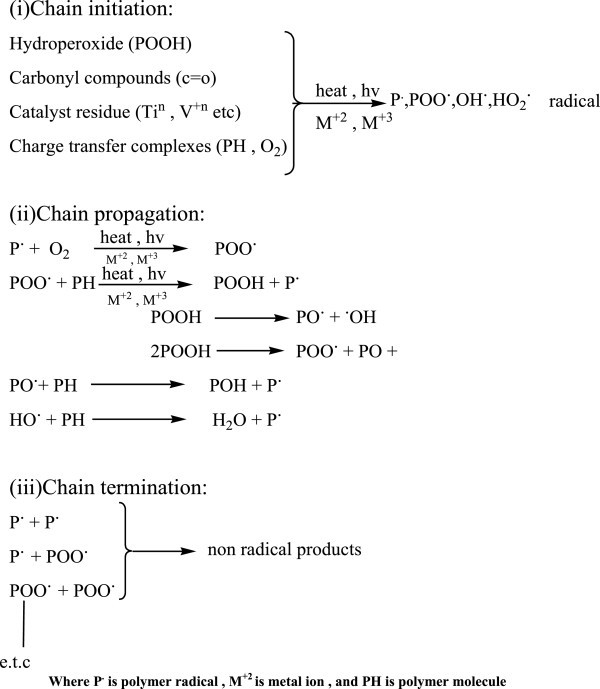
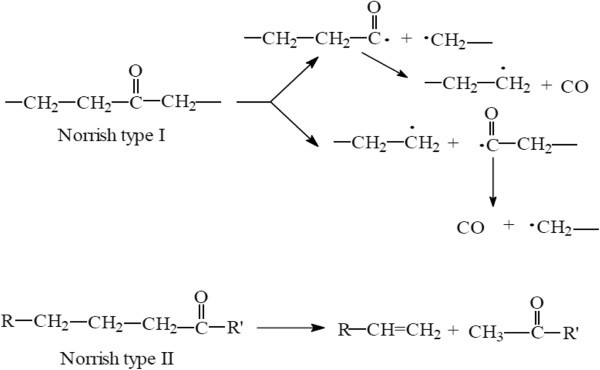
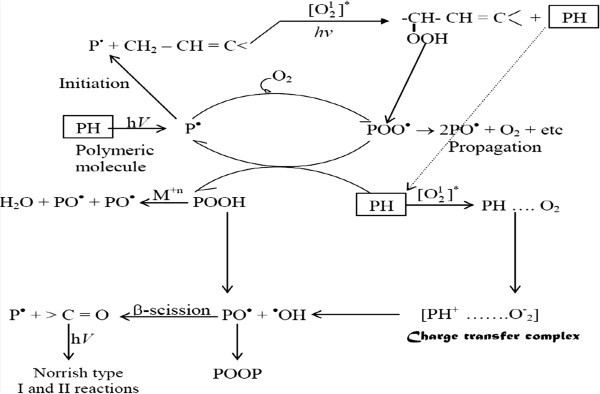
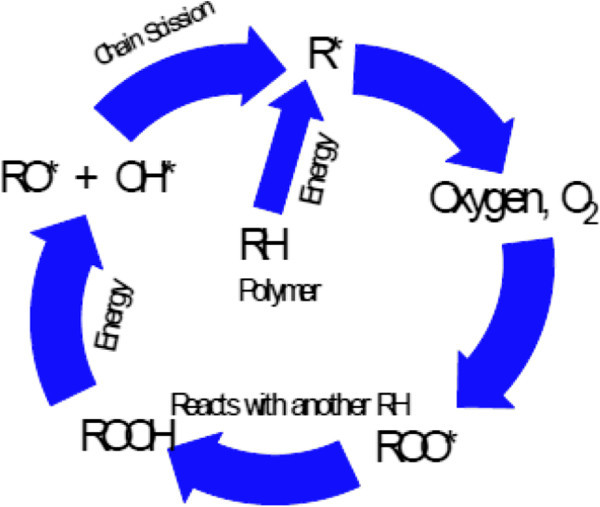
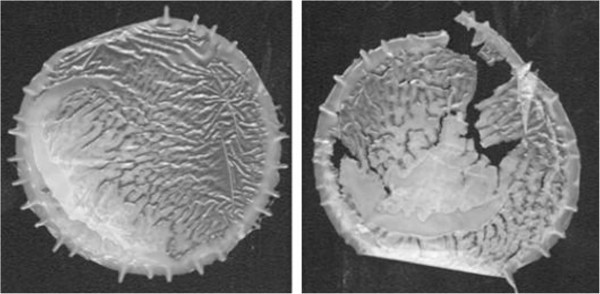
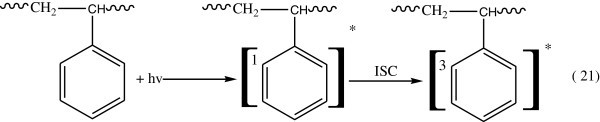
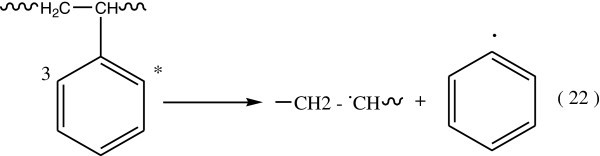
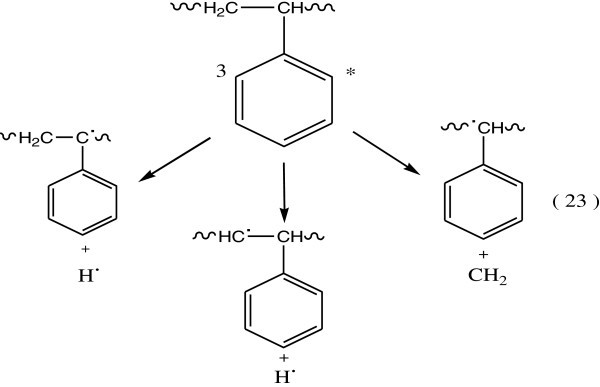
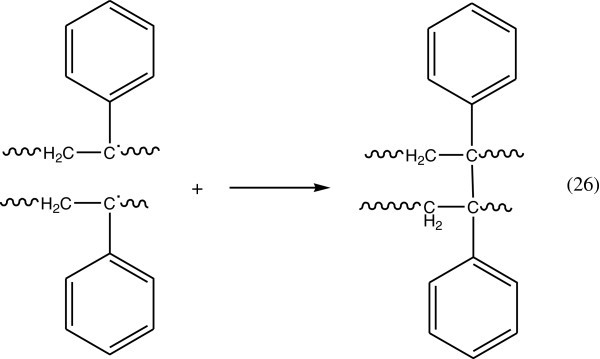
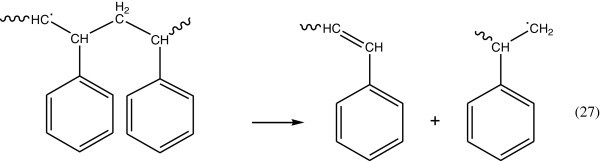
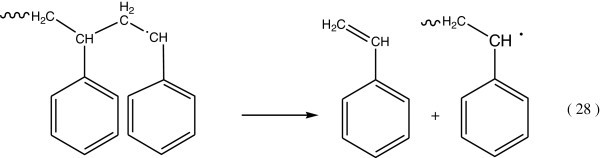
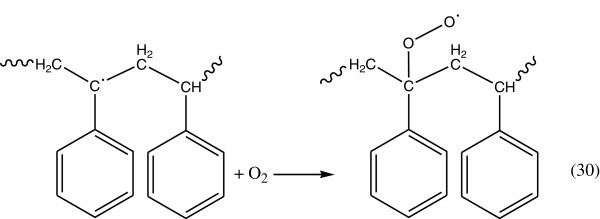
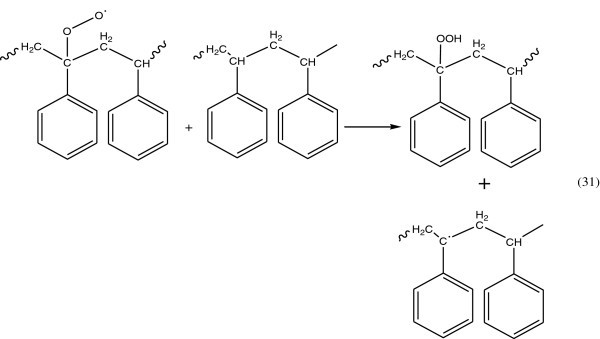
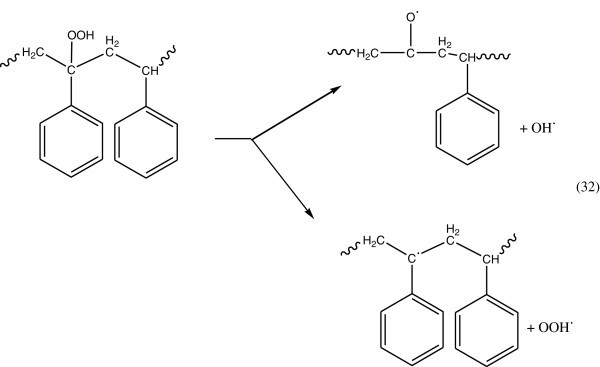
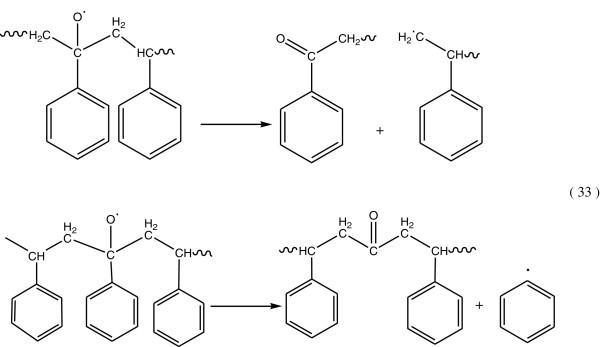
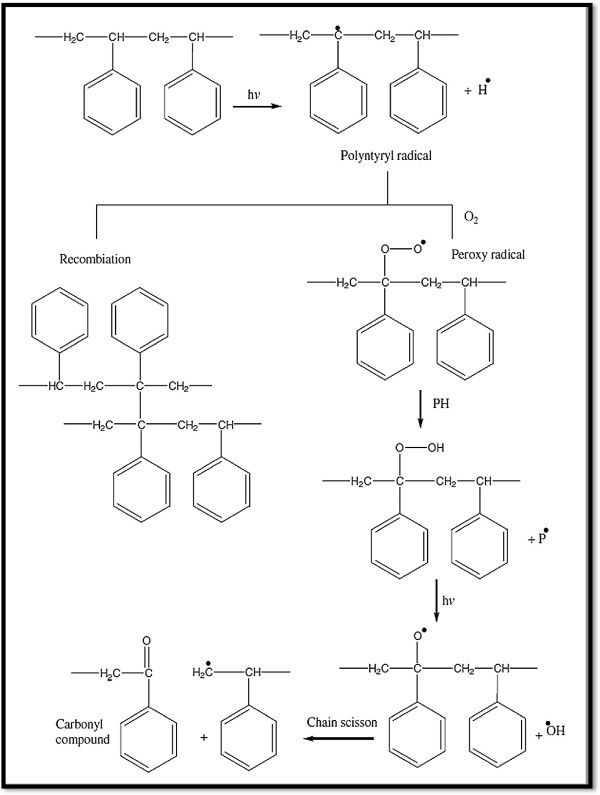
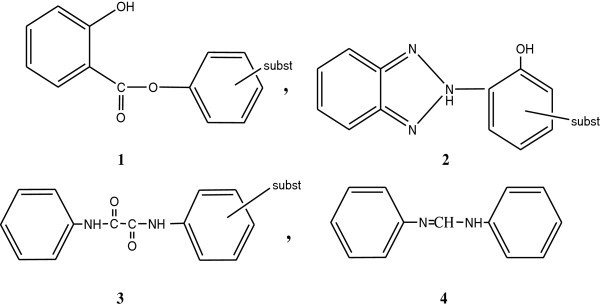
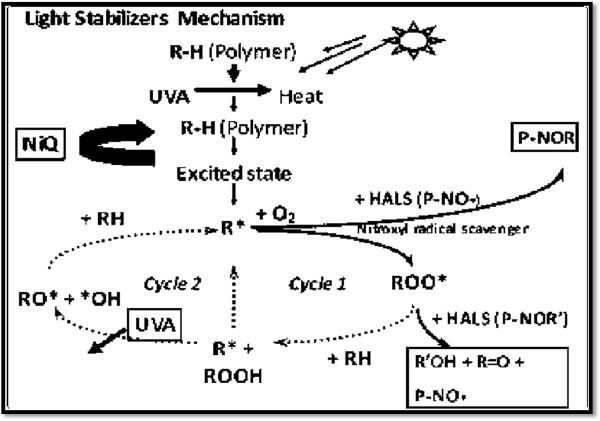
Exposure to ultraviolet (UV) radiation may cause the significant degradation of many materials. UV radiation causes photooxidative degradation which results in breaking of the polymer chains, produces free radical and reduces the molecular weight, causing deterioration of mechanical properties and leading to useless materials, after an unpredictable time. Polystyrene (PS), one of the most important material in the modern plastic industry, has been used all over the world, due to its excellent physical properties and low-cost. When polystyrene is subjected to UV irradiation in the presence of air, it undergoes a rapid yellowing and a gradual embrittlement. The mechanism of PS photolysis in the solid state (film) depends on the mobility of free radicals in the polymer matrix and their bimolecular recombination. Free hydrogen radicals diffuse very easily through the polymer matrix and combine in pairs or abstract hydrogen atoms from polymer molecule. Phenyl radical has limited mobility. They may abstract hydrogen from the near surrounding or combine with a polymer radical or with hydrogen radicals. Almost all synthetic polymers require stabilization against adverse environmental effects. It is necessary to find a means to reduce or prevent damage induced by environmental components such as heat, light or oxygen. The photostabilization of polymers may be achieved in many ways. The following stabilizing systems have been developed, which depend on the action of stabilizer: (1) light screeners, (2) UV absorbers, (3) excited-state quenchers, (4) peroxide decomposers, and (5) free radical scavengers; of these, it is generally believed that excited-state quenchers, peroxide decomposers, and free radical scavengers are the most effective. Research into degradation and ageing of polymers is extremely intensive and new materials are being synthesized with a pre-programmed lifetime. New stabilizers are becoming commercially available although their modes of action are sometimes not thoroughly elucidated. They target the many possible ways of polymer degradation: thermolysis, thermooxidation, photolysis, photooxidation, radiolysis etc. With the goal to increase lifetime of a particular polymeric material, two aspects of degradation are of particular importance: Storage conditions, and Addition of appropriate stabilizers. A profound knowledge of degradation mechanisms is needed to achieve the goal.
Overview
The claims and statistics of this paper haven’t been checked yet.
Run the check — free, no account needed. It reads the open-access text and checks the sources it cites.
Integrity signals
Registry
Cites
Statistics
Figures

Verification
Claims the paper makes
The claims and statistics of this paper haven’t been checked yet.
Run the check — free, no account needed. It reads the open-access text and checks the sources it cites.
Claims other papers make about this one
Each is checked against this paper’s own text: does it say what the citing paper says it does?
The source backs part of the claim, not all of it — or backs it for a different population, condition or comparison.
In the citing paper
“Physical and chemical changes in polymers can be caused by environmental factors including light (photo-oxidation), heat (photothermal oxidation), mechanical abrasion, moisture, chemical conditions or biological activity (fungi, bacteria, yeasts, algae, and their enzymes) 24,37,38 .”
From Environmental Deterioration of Biodegradable, Oxo-biodegradable, Compostable, and Conventional Plastic Carrier Bags in the Sea, Soil, and Open-Air Over a 3-Year Period (2019) · cites this paper as [38]
Experimental — accuracy not yet measured
Self-check
Percentages, sums and reported differences re-computed from the paper’s own numbers.
The self-check needs the paper’s full text.
Citations
Cites
MacKnight, W. (1976) · Science · doi:10.1126/science.191.4233.1260-a · Cited by 9,566 · cited 1×
“…degradation of polymers, which include processes such as chain scission, crosslinking and secondary oxidative reactions, and takes place via radical processes , similar to thermal oxidation reactions (Ranby and Rabek 1981; Carlsson et al. 1976; Mc Kellar & Allen 1979; Rnby and Lucki 1980).”
Comprehensive Chemical Kinetics
Bamford, C., & Tipper, C. F. H. (1976) · doi:10.1016/s0069-8040(03)80001-8 · Cited by 1,705 · cited 1×
“Photooxidative degradation includes the following steps: (Rabek 1994; Rabek 1974; Guillet 1972a, 1972b).”
Physical properties of polymers handbook
Mark, J. (2007) · Springer eBooks · doi:10.1007/978-0-387-69002-5 · Cited by 1,670
Mechanistic implications of plastic degradation
Singh, B., & Sharma, N. (2008) · Polymer Degradation and Stability · doi:10.1016/j.polymdegradstab.2007.11.008 · Cited by 1,569 · cited 1×
“Its hardness, hydrophobic nature and chemical composition cause it to persist in nature without any decomposition for long period of time thus cause environmental pollution Singh and Sharma (2008).”
Thermal characterization of polymeric materials
Turi, E. (1981) · Choice Reviews Online · doi:10.5860/choice.35-0290 · Cited by 1,472 · cited 4×
“from electronically excited carbonyl group to dissolved molecular oxygen Heskins and Guillet (1968). The quenching of [(1)O2] is also necessary for effective stabilization. Nickel chelates have been proven to be very effective quenchers for the excited state of [(1)O2] Schmitt and Hirt (1963).”
InfluentialPolymer Science and Technology
Fried, J. (1995) · Chemistry International · doi:10.1515/ci.2010.32.3.32a · Cited by 1,105
Physical properties of polymers handbook
(1996) · Choice Reviews Online · doi:10.5860/choice.34-2186 · Cited by 1,056 · cited 2×
“The decomposition of hydroperoxide in polymer to non radical derivatives was first demonstrated Carlsson and Wiles (1974). Many metal complexes of sulphur containing ligands such as dialkylthiocarbonate and dialkylthiophosphate not only decompose hydroxide in PE film but are also effective in UV stabilization (as UV a…”
Polymer Degradation and Stability
Peacock, A. J., & Calhoun, A. (2006) · doi:10.3139/9783446433434.009 · Cited by 607 · cited 1×
“Industrially, the yellow discoloration is an important adverse effect of the ageing of polystyrene, e.g. during exposure outdoors (Geuskens et al. 1978a, 1978b; Weir 1978; Lucki and Rnby 1979; Rnby and Lucki 1980).”
Synthesis and Characterization
Behrens, S., Bönnemann, H., Modrow, H., Kempter, V., Riehemann, W., Wiedenmann, A., Odenbach, S., Will, S., Thrams, L., Hergt, R., et al. (2009) · doi:10.1007/978-3-540-85387-9_1 · Cited by 555
Polymer Degradation and Stabilization
Hawkins, W. (1984) · Der Umweltschutz · doi:10.1007/978-3-642-69376-2 · Cited by 492
Research works printed but not linked: 49
- Abd MA, Abdul Zahra AAI, Shenta AA: Photostabilization of polystyrene films by anthraquinones derivatives and their complexes with copper (II), oxovanadium (IV) and nickel (II) ions. Journal of Basrah Researches 2009, 35(3):81-97.
- Aliwi SM: Photostabilization of low density polyethylene for green house application. Nat J chem 2001, 2: 280-302.
- Aliwi SM, AL-Ani RR, Awad DAJ: Photostabilization of polystyrene films by Nickel and Copper tetradentate Shiff base complexes. Iraqi journal polymer 2001, 5(1):15-30.
- Andrady AL: Advance Polymer Science.. 1997, 128: 49-94.
- Baloglu R, Fisch M: Polymer Degradation Stabilization. 1994, 45: 30-35.
- Beavan SW, Phillips D: Photostabilizing of macromolecule by excited state qyencher. Journal Photochem 1974, 3: 3149363. · DOI
- Bottino FA, Bottino G d P, Antonino P, Antonino R: Surface photostabilization of polystyrene by Tinuvin 1577. J of Appl Polym Sci 1999, 69(6):1251-1256. · DOI
- Bottino FA, Cinquegrani AR, Di Pasquale G, Leonardi L, Pollicino A: Chemical modification, mechanical properties and surface photooxidation of films of polystyrene. polymer testing. 2003, 12: 405-411.
- Bottino FA, Cinquegrani AR, Giovanna DD, Leonardi L, Antnino PA: Study on chemical modification, mechanical properties and surface photooxidation of films of polystyrene stabilized by hinderd amines (HAS), polymer testing. 2004, 23: 779-789.
- Cheremision NP: Hand Book of Engineering Polymeric Materials, chapter 8. New York; 1997. · DOI
- Dan E, Somersall AC, Guillet JE: Macromolecules, New York. 1973, 6: 228-230.
- Galdi A, Foltis P, Shah A: UV protecting composition and methods of use. Application: US patent; 2010:2010-118415.
- Geuskens G, David C: Polymer photodegradation: mechanisms and experimental methods. Pure Appl Chem 1979b, 51: 233-240. · DOI
- Gugumus F: Development in Polymer Stabilization-1. Edited by: Scott G. London: Applied Science Publishers Ltd; 1979:261.
- Gugumus F, Gachter R, Muller H (Eds): Plastics Additives. 2nd edition. Munich: Hanser; 1987:97-185.
- Guillet JE: Polymer photodegradation: mechanisms and experimental methods. Pure and ppl Chem 1972, 30: 135-144. · DOI
- Guillet J: Polymer Photophysics and Photochemistry. Cambridge University Press; 1985.
- Heller HJ: Photochemistry of dyed and pigmented polymers. Eurp Polymer J Supplement 1969, 99-105.
- Klopffer W: Polymer photodegradation: mechanisms and experimental methods. Eurpolym J 1975, 11: 203.
- Lamolla AA: Energy Transfer and Organic Photochemistry, chapter 2. In Technique of Organic Chemistry. Edited by: Lamolla AA, Turro NJ. New York: Wiley; 1969.
- Lawrence JB, Weir NA: Polymer photodegradation: mechanisms and experimental methods. J Polym Sci Al 1973, 11: 105-431.
- Mc Kellar JF, Allen NS: Photochemistry of Man-Made Polymers, Ltd. London 306 S: Applied Science Published; 1979:138.
- Mill TR, Richarason H, Mayo FR: J. Polym. Sci. Al. 1978, 11: 2899-2908.
- Patel P: Additive primer, blown films, cast films and extraction coating, PLACK conference. 2007, 16-20.
- Pospisil J, Habicher W, Zweifel H, Pilar J, Nespurek S, Piringer O: Polymer and polymer composites. AAA 2002, 10: 37-42.
- Potts JE: Plastic environmentally degradation, The Kirk-Othmer Encyclopedia of Chemical Technology. 3rd edition. 1991. Supp. Vol
- Rabek JF: Mechanism of Photophysical Process and Photochemical Reaction in polymers. New York: John Wiley and Sons; 1987.
- Rabek JF: Polymer photodegradation–mechanism and experimental methods. London: Chapman and Haal; 1993.
- Rabek JF: Polymer Degradation Mechanisms and experimental methods. Stocholm: Springer; 1994.
- Rabek JF: Polymer photodegradation-mechanisms and experimental methods. Cambridge: Chapman Hall; 1995. · DOI
- Rabek JF: Polymer photodegradation of polymers: physical characteristic and applications. Beelin: Springer- verlag; 1996. · DOI
- Rabek JF, Ranby B: Polymer photophysics and photochemistry: an introduction to the study of Photoprocess of macromolecules. J Polym Sci Al 1974, 12: 273-281.
- Rabek JF, Ranby B: Photodegradation, photooxidation and Photostabilization of Polymers. New York: John Wiley; 1975.
- Rabie ST, Mahran AM, Kamel EM, Abdel Hamid NH: Photodegradation of polystyrene stabilized with uracil derivative. Journal of applied sciences research 2008, 4(12):2015-2026.
- Ranby BG, Rabek JF: Photodegradation, Photooxidation and Photostabilization of Polymers. London: John Wiley & Sons; 1975:101-102.
- Ranby B, Rabek JF: Photodegradation, Photooxidation and Photostabilization of Polymers. Wiley periodicals, Inc; 1975b:165-184.
- Ruoko : Uv light induced degradation of polyethylene and polystyrene – spectroscopic and DSC study. Msc thesis: Tampere University of Technology; 2012.
- Safy Eldin NM, El-laithy SA: Photooxidative degradation of polystyrene of cover signals lamp of some automobile. Journal of applied polymer science 1994, 55: 47-54.
- Sastre R, Catalina F, Mateo JL, Claremunt R, Santa-Maria MD, Catalan J: Mechanism of photostabilization of polystyrene film by dihydroxypirazoles. J of Polym Sci Part A: Polym Chem 2003, 28(13):3661-3668. · DOI
- Schnabel W: Polymer Degradation: Principle and Practical Applications. Chapter 14. München: Hanser Int; 1981.
- Senna M, Hamid H, Hussein M: Nuclear instrument methods. Phys Res Section B 2002, 187: 48-55.
- Strlic M, Kolar J: Aging and stabilization of papers. Turjaška 1, 1000 Slovenia: Distributed by the National and university Library; 2005.
- Trozzolo AM, Winslow FH: Macromolecules. American chemical society publishing 1968., 98:
- Watson WF: Principles of polymer engineering rheology. Trans IRI 1953, 29: 29-32.
- Willis PB: Investigation of test method material properties and processes for solar cell in capsulation, eighth annual report. 1984.
- Wypych G: Handbook of material weathering. 4th edition. Toronto: Chemtec Publishing; 2008.
- Yousif E: Photostabilization of PVC by inorganic complexes. LAP LAMBERT academic publishing; 2010.
- Yousif E: Photostabilization of thermoplastic polymers. Germany: Lambert Academic Publishing; 2012.
- Yousif E, Salimon J, Salih N: Photostability of poly (vinyl chloride). VDM Verlag: Dr. Muller publisher; 2011b. B
Cited by
Sorted by citations
Items 601–700 of 1,001
A Review for Prioritizing Microplastic Regulation and Research: An Integral Approach
Arredondo-Navarro, A., Dronjak, L., Rovira, J., Amador, R. N., Martínez-Tavera, E., & Flores‐Cervantes, D. X. (2024) · Air Soil and Water Research · doi:10.1177/11786221241257367 · Cited by 16
“Photooxidation may occur in polymers with light active functional groups (Decker, 1984; Yousif & Haddad, 2013), such as the phenyl ring in the case of PET or the presence of alkyl halides in PVC.”
Improvement in Thermochromic Offset Print UV Stability by Applying PCL Nanocomposite Coatings
Vukoje, M., Kulčar, R., Itrić, K., Bota, J., & Cigula, T. (2022) · Polymers · doi:10.3390/polym14071484 · Cited by 15
Characterization of weathered MCC / nutshell reinforced composites
Torun, S. B., Tomak, E. D., Cavdar, A., & Mengeloğlu, F. (2021) · doi:10.1016/j.polymertesting.2021.107290 · Cited by 15
The potential of the organic micropollutants emission from swimming accessories into pool water.
Lempart, A., Kudlek, E., & Dudziak, M. (2020) · Environment International · doi:10.1016/j.envint.2019.105442 · Cited by 15
Biofilm–microplastic interactions in food safety: mechanisms, risks, and control strategies
Rahman, M. A., Akter, S., Ashrafudoulla, M., Chowdhury, M. A. H., Yoon, H. J., & Ha, S. (2025) · Critical Reviews in Food Science and Nutrition · doi:10.1080/10408398.2025.2517825 · Cited by 13
“UV radiation breaks down polymer chains through a process called photo-oxidation, where the energy from UV light excites the polymer bonds, forming free radicals that disrupt molecular integrity (Yousif and Haddad 2013).”
Lee, S.-W., Kim, H.-Y., Jang, S., Kim, W., Kim, C., Lee, J., Ryoo, Z. Y., Han, J. E., Baek, S.-M., Park, J.-K., et al. (2025) · Journal of environmental chemical engineering · doi:10.1016/j.jece.2025.115473 · Cited by 17
Shekhar, S., & Sarkar, S. (2025) · Chemosphere · doi:10.1016/j.chemosphere.2025.144256 · Cited by 17
Vázquez-Vázquez, B., Lazzari, M., & Hospido, A. (2025) · Waste Management · doi:10.1016/j.wasman.2025.02.008 · Cited by 18
Cong, Q., Ren, Z., Zheng, Y., Wang, L., & Lu, H. B. (2025) · Water · doi:10.3390/w17020229 · Cited by 15
Erol, İ., Khamidov, G., Efe, E., Yurdakal, S., & Palmisano, L. (2024) · Research on Chemical Intermediates · doi:10.1007/s11164-024-05391-6 · Cited by 14
Yousef, E., Taha, M. M., Ali, M. K., & Allam, N. K. (2024) · ACS Applied Polymer Materials · doi:10.1021/acsapm.4c01778 · Cited by 14
Sasikala, V., Sarala, S., Karthik, P., Prakash, N., & Mukkannan, A. (2024) · Nanotechnology · doi:10.1088/1361-6528/ad71d7 · Cited by 14
Review of Soil Microplastic Degradation Pathways and Remediation Techniques
Xu, T., Wang, X., Shi, Q., Liu, H., Chen, Y., & Liu, J. (2024) · International Journal of Environmental Research · doi:10.1007/s41742-024-00615-4 · Cited by 15
“…oxidation of plastics occurs at high temperatures, and the long chains within the structure break when sufficient heat is absorbed, resulting in the production of free radicals, which react with oxygen to form peroxyl radicals (Yousif and Haddad 2013), followed by chain breaking and cross-linking.”
Hu, Y., Ying, S., & Huang, Y. (2023) · Chemical Research in Chinese Universities · doi:10.1007/s40242-023-3052-y · Cited by 16
Lee, S., Alam, M. B., Jung, M., Lee, S., Liu, K., Lee, S., & Kim, S. (2022) · Frontiers in Environmental Science · doi:10.3389/fenvs.2022.938120 · Cited by 15
“The styrene bond in EPS can be degraded by sunlight via photocatalytic oxidation (Yousif and Haddad, 2013; Gewert et al., 2015) and fragmented into smaller particles (Song et al., 2020).”
BackgroundFabrication of Highly Photostable Polystyrene Films Embedded with Organometallic Complexes
Ahmed, D., Mohammed, A., Husain, A., El-Hiti, G. A., Kadhom, M., Kariuki, B., & Yousif, E. (2022) · Polymers · doi:10.3390/polym14051024 · Cited by 14
Self-citationThe effect of nanoparticles on the loss of UV stabilizers in polyethylene films
Weizman, O., Mead, J., Dodiuk, H., Ophir, A., & Kenig, S. (2021) · Polymer degradation and stability · doi:10.1016/j.polymdegradstab.2021.109811 · Cited by 14
Kistler, T. A., Zeng, G.-S., Young, J. L., Weng, L., Aldridge, C. W., Wyatt, K., Steiner, M., Solorzano, O., Houle, F., Toma, F., et al. (2020) · Advanced Energy Materials · doi:10.1002/aenm.202002706 · Cited by 14
Experimental Analysis of the Physical Degradation of Polymers – The Case of Polymethyl Methacrylate
Kaddouri, A., Serier, B., Kaddouri, K., & Belhouari, M. (2020) · doi:10.3221/igf-esis.53.06 · Cited by 14
“[18] reported that when the polymer is exposed to UV radiation, photo-degradation is the main cause of deterioration of aging resistance.”
BackgroundAnti-Yellowing UV-Curable hybrid coatings prepared by the Sol–Gel method on polystyrene
Balbay, Ş., & Acikgoz, C. (2020) · doi:10.1016/j.porgcoat.2019.105499 · Cited by 14
Moudoud, M., Hedir, A., Lamrous, O., Diaham, S., & Touam, T. (2019) · Materials Research Express · doi:10.1088/2053-1591/ab316f · Cited by 14
Effects of de-polymerized lignin content on thermo-oxidative and thermal stability of polyethylene
Kabir, A. S., Li, H., Yuan, H., Kuboki, T., & Xu, C. C. (2019) · Journal of Analytical and Applied Pyrolysis · doi:10.1016/j.jaap.2019.04.023 · Cited by 16
Dzinun, H., Othman, M. H., Ismail, A., Matsuura, T., Puteh, M., Rahman, M., & Jaafar, J. (2018) · Polymer testing · doi:10.1016/j.polymertesting.2018.03.048 · Cited by 14
Annatto-colored Poly(3-hydroxybutyrate): A Comprehensive Study on Photodegradation
Pagnan, C. S., Mottin, A. C., Oréfice, R., Ayres, E., & Câmara, J. (2018) · Journal of Polymers and the Environment · doi:10.1007/s10924-017-1026-1 · Cited by 14
The graphene oxide evolution: Tailoring molecular architecture for next-gen nanocomposites
Bohra, B. S., Karakoti, M., Rana, A., Matiyani, M., Arya, T., Zhang, H., Strachota, A., & Bose, S. (2026) · Advanced Composites and Hybrid Materials · doi:10.1007/s42114-026-01742-6 · Cited by 12
Wechselberger, C., Lang, T., Popadić, S., & Lipp, A.-M. (2026) · Microplastics · doi:10.3390/microplastics5010040 · Cited by 14
“However, photodegradation is inefficient and often results in the formation of microplastics that persist in ecosystems and can interact with biological systems in harmful ways, potentially causing oxidative stress, DNA damage, and other cellular disruptions [32,33].”
Ma, W., Liang, X., Ding, C., Ye, Y., & Li, J. (2026) · Toxics · doi:10.3390/toxics14020120 · Cited by 17
“Its efficiency depends on light intensity, polymer type, color, and additives [123].”
Leśniowski, J., Stawiarski, A., & Barski, M. (2025) · Materials · doi:10.3390/ma18225185 · Cited by 16
“Concurrently, they observed a significant weakening and eventual disappearance of the characteristic absorption bands for butadiene (at 965 cm − 1 and 910 cm − 1 ), providing clear chemical evidence of the preferential photo-oxidation of the PB phase [2,112–115].”
A self-regulating shuttle for autonomous seek and destroy of microplastics from wastewater
Kollofrath, D., Kuhlmann, F., Requardt, S., Krysiak, Y., & Polarz, S. (2025) · Nature Communications · doi:10.1038/s41467-025-61899-4 · Cited by 16
“Additionally, porphyrins have proven effective in decomposing polystyrene 63 – 68 and are known to have low cytotoxicity, making them ideal candidates for environmental applications 69 – 71 .”
Radwan, A., Ibrahim, M. A., Ismail, E., Zagho, M., El-Hout, S., Hassan, M. K., Al-Qahtani, N. H., & Santo, L. (2025) · Industrial & Engineering Chemistry Research · doi:10.1021/acs.iecr.4c03665 · Cited by 13
Chen, M., Liu, S., Guo, F., Qu, H., Liu, T., Chen, Z., & Chen, Y. (2024) · Journal of environmental chemical engineering · doi:10.1016/j.jece.2024.115189 · Cited by 11
Study on pyrolysis characteristics of typical thermal insulation materials under light aging
Zhang, W., Pan, R.-K., Wang, J., Lu, C., Liu, M.-L., & Ding, Y.-M. (2025) · Energy · doi:10.1016/j.energy.2025.135238 · Cited by 13
Nano-scale dangers: Unravelling the impact of nanoplastics on human trophoblast invasion
Nacka-Aleksić, M., Vilotić, A., Pirković, A., Živanović, M., Ljujić, B., & Krivokuća, M. J. (2024) · Chemico-Biological Interactions · doi:10.1016/j.cbi.2024.111317 · Cited by 12
Costa, T., Sampaio‐Marques, B., Neves, N. M., Aguilar, H., & Fraga, A. G. (2024) · Frontiers in Bioengineering and Biotechnology · doi:10.3389/fbioe.2024.1390513 · Cited by 16
Agarwal, T., Atray, N., & Sharma, J. G. (2024) · Future Journal of Pharmaceutical Sciences · doi:10.1186/s43094-024-00645-x · Cited by 20
“Polymers such as polyethylene, polypropylene, and polystyrene mostly break down in the presence of oxygen and exposure to UV radiation [66].”
BackgroundChen, H., Huang, J.-D., Zhang, C., Gao, P., Huang, H., Li, J.-L., & Liu, J.-C. (2024) · Chemical Engineering Journal · doi:10.1016/j.cej.2024.151598 · Cited by 13
Indumathi, S. M., Vardhan, M. K. H., Kumar, R. S. R., Rohinth, M., Ahmed, Z. H. T., Prakash, P., & Kumar, J. A. (2024) · Environmental Quality Management · doi:10.1002/tqem.22186 · Cited by 14
Makki, M., Ayoub, G. Y., Pannier, C. P., Dargazany, R., Kadri, R., Naït‐Abdelaziz, M., & Nouri, H. (2023) · International Journal of Non-Linear Mechanics · doi:10.1016/j.ijnonlinmec.2023.104456 · Cited by 13
Ng, G., Wu, Z.-L., Zhang, T., Dang, A., Yao, Y., Nelson, A. R. J., Prescott, S. W., Postma, A., Moad, G., Hawker, C., et al. (2023) · Macromolecules · doi:10.1021/acs.macromol.3c01469 · Cited by 13
Huang, Z., & Wang, H. (2023) · Environmental Science and Pollution Research · doi:10.1007/s11356-023-29012-8 · Cited by 15
“This may be because the benzene ring can be excited by UV energy and the excitation energy is transferred to nearby carbon atoms, thereby increasing the generation of polymer free radicals (Yousif and Haddad 2013).”
BackgroundBiopolymers-based skin-interfaced triboelectric sensors
Xu, S., Barbosa, P. H. D. S., & Wu, W. (2023) · Nano Research · doi:10.1007/s12274-023-5784-x · Cited by 14
Martínez-Manuel, L., González-Canché, N. G., López-Sosa, L. B., Carrillo, J. G., Wang, W.-J., Pineda-Arellano, C., Cervantes, F., Gil, J. J. A., & Peña-Cruz, M. (2022) · Solar Energy · doi:10.1016/j.solener.2022.05.015 · Cited by 13
Tomić, N., Saeedifar, M., Saleh, M. N., Marinković, A., Zarouchas, D., & de Freitas, S. T. (2022) · Polymer testing · doi:10.1016/j.polymertesting.2021.107444 · Cited by 13
Derdar, H., Meghabar, R., Benachour, M., Mitchell, G., Bacharı, K., Belbachir, M., Cherifi, Z., Baghdadli, M. C., & Harrane, A. (2021) · Polymer Science Series A · doi:10.1134/s0965545x21050023 · Cited by 13
Investigations on the aging behavior of transparent bioplastics for optical applications
Baltscheit, J., Schmidt, N., Schröder, F., & Meyer, J. (2020) · doi:10.1002/inf2.12065 · Cited by 13
Effects of interfacial modification for vapor phase polymerized PEDOT on glass substrate
Li, B., Skorenko, K., Qiu, H.-A., Mativetsky, J., Dwyer, D. B., Bernier, W. E., & Jones, W. E. (2020) · doi:10.1016/j.synthmet.2020.116293 · Cited by 13
Aphinyan, S., Geethalakshmi, K., Yeo, J., Shakouri, A., & Ng, T. (2017) · doi:10.1002/pat.3995 · Cited by 13
Haddad, R. A., Yousif, E., & Yusop, R. (2014) · doi:10.13005/ojc/300415 · Cited by 13
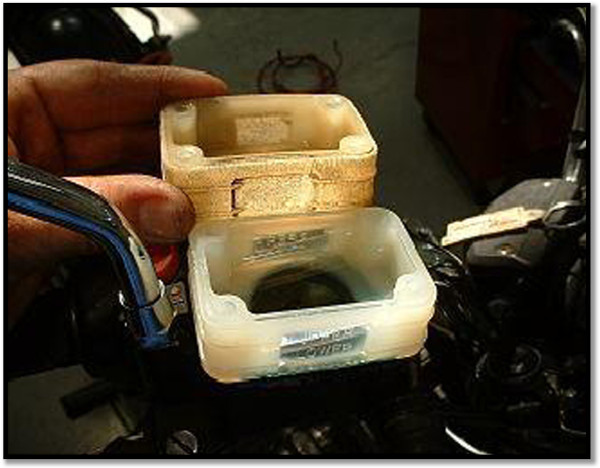
“One of the important uses of PS is in the manufacture of cover signal lamps of some automobiles (Safy Eldin and El-laithy, 1994), (Yousif et al. 2013 (A)).”
BackgroundMethodInfluentialSelf-citationOverview of Silane-Based Polymer Coatings and Their Applications
Sano, K., Kanematsu, H., & Tanaka, T. (2016) · doi:10.1007/978-3-319-26893-4_23 · Cited by 13
Fakhrizada, H., & Dahman, Y. (2025) · Molecules · doi:10.3390/molecules30214301 · Cited by 14
“Abiotic degradation predominantly occurs through photo-oxidation induced by ultra-violet (UV) radiation in sunlight [13,15,16].”
Hsieh, C.-T., Wu, W.-D., Eeso, K., Chen, Z.-T., Leisen, J., Filippas, A., Lehmann, M., Yang, G., & Liu, N. (2025) · JACS Au · doi:10.1021/jacsau.5c00552 · Cited by 12
Research progress on photocatalytic degradation of microplastics by graphitic carbon nitride
Zhang, Y., Yu, C., Peng, X., Yan, H. J., Xu, D., & Lin, Y. (2024) · Research on Chemical Intermediates · doi:10.1007/s11164-024-05405-3 · Cited by 14
Unveiling the protective role of biofilm formation on the photoaging of microplastics
Zhang, H., Liu, P., Zhang, J., Dai, J., Zhang, X.-E., Zhang, Z., & Jia, H. (2024) · Science China Technological Sciences · doi:10.1007/s11431-024-2721-5 · Cited by 12
“Based on the wide use of peak intensity (Table S4), the CI was calculated by the maximum intensity of carbonyl (I 1719 for PPMPs and I 1725 for PSMPs) relative to methylene (I 974 for PPMPs and I 1452 for PSMPs) [44,45].”
Aloisi, M., Grifoni, D., Zarivi, O., Colafarina, S., Morciano, P., & Poma, A. M. G. (2024) · International Journal of Molecular Sciences · doi:10.3390/ijms25147965 · Cited by 11
“The main degradation pathways from macro-to micro-and nano-plastics are induced by chemical and physical sources such as UV rays, heat, pH, and salinity through a radical-dependent process [21,22].”
BackgroundEffect of Abiotic Treatments on Agricultural Plastic Waste: Efficiency of the Degradation Processes
Marco, Z. E. B., Sáez, J. A. L., Andreu‐Rodríguez, F. J., Peñalver, R., Pastor, M. R., Eißenberger, K., Cinelli, P., Bustamante, M. A., & Moral, R. (2024) · Polymers · doi:10.3390/polym16030359 · Cited by 12
Ni, Y., Bisel, T. T., Hasan, M. K., Li, D., Fuchs, W. K., Cooley, S. K., Nichols, L., Pharr, M., Dupuy, N., Marque, S. R. A., et al. (2023) · npj Materials Degradation · doi:10.1038/s41529-023-00413-x · Cited by 15
Barakat, N., Irfan, O., & Mohamed, O. A. (2023) · PLoS ONE · doi:10.1371/journal.pone.0287424 · Cited by 12
“Moreover, photo degradation can also be brought on by other types of electromagnetic radiation [12].”
BackgroundPhoto-response of polylactide-poly(methyl methacrylate) blends: Effect of ultraviolet irradiation
Huang, P.-Y., Zhang, Y., Ouyang, H., Yang, F., & Lee, S. (2021) · Materials Chemistry and Physics · doi:10.1016/j.matchemphys.2021.125528 · Cited by 13
Prak, L., Sumranwanich, T., & Tangtermsirikul, S. (2022) · Journal of Adhesion Science and Technology · doi:10.1080/01694243.2022.2026707 · Cited by 13
Heuschkel, I., Dagini, R., Karande, R., & Bühler, K. (2020) · Frontiers in Bioengineering and Biotechnology · doi:10.3389/fbioe.2020.588729 · Cited by 12
“However, it is subjected to rapid yellowing and embrittlement under UV light, limiting long-term outdoor applications (Yousif and Haddad, 2013).”
BackgroundPhotoswitchable Solubility of Fullerene-Doped Polymer Thin Films.
Wong, H. C., Wang, Q., Speller, E. M., Li, Z., Cabral, J., & Low, H. (2020) · ACS Nano · doi:10.1021/acsnano.0c03450 · Cited by 12
Tripathi, P. K., Durbach, S. H., & Coville, N. J. (2019) · Applied Sciences · doi:10.3390/app9122451 · Cited by 15
Bubev, E., Georgiev, A., & Machkova, M. (2016) · doi:10.1016/j.molstruc.2016.04.013 · Cited by 12
Improving the Delivery System and Bioavailability of Beverages Through Nanoencapsulation
Muhamad, I., Zaidel, D. N. A., Hashim, Z., Mohammad, N., & Bakar, N. F. A. (2020) · doi:10.1016/b978-0-12-816677-2.00010-7 · Cited by 12
Production of Materials from Sustainable Biomass Resources
Fang, Z., Smith, R., & Tian, X.-F. (2019) · Biofuels and Biorefineries · doi:10.1007/978-981-13-3768-0 · Cited by 12
Ye, Q., Xu, H., Hunter, T. N., Harbottle, D., Kale, G. M., & Tillotson, M. R. (2025) · Journal of environmental chemical engineering · doi:10.1016/j.jece.2025.118907 · Cited by 11
Priyanka, R. N., & Govindarajulu, B. (2025) · Water Air & Soil Pollution · doi:10.1007/s11270-025-07849-8 · Cited by 12
“10(b The MP/NP surface becomes brittle and breaks (Ng et al., 2018), resulting in visible small microcracks (Yousif & Haddad, 2013).”
Zhang, W., Pan, R.-K., Wang, J., Shan, W., & Ding, Y.-M. (2025) · Journal of Building Engineering · doi:10.1016/j.jobe.2025.112346 · Cited by 11
Microplastics in gully pot sediment in urban areas: Presence, quantities and characteristics
Öborn, L., Österlund, H., & Viklander, M. (2024) · Environmental Pollution · doi:10.1016/j.envpol.2024.124155 · Cited by 16
A critical review on the development and technology of aerostat and airship hull material
Joshi, M., Chatterjee, U., Adak, B., Tiwari, R., Mandlekar, N., Chouhan, S., & Butola, B. S. (2024) · Journal of the Textile Institute · doi:10.1080/00405000.2024.2343123 · Cited by 11
“…exploration, offering cost-effective and flexible solutions with extended flight capabilities (Adak & Joshi, 2018; Dynamics & Breukels, 2018; Gao et al., 2024; Joshi, 2022; Kumar et al., 2016; Lv et al., 2022; Mandlekar et al., 2022; Shi et al., 2018; Yousif & Haddad, 2013; Zhai & Euler, 2005).”
Asphaltenes from Heavy Crude Oil as Ultraviolet Stabilizers against Polypropylene Aging
Melekhina, V. Y., Vlasova, A. V., & Ilyin, S. (2023) · Polymers · doi:10.3390/polym15214313 · Cited by 11
Single Elementary Charge Fluctuations on Nanoparticles in Aqueous Solution.
Ussembayev, Y., Beunis, F., Oorlynck, L., Bahrami, M., Strubbe, F., & Neyts, K. (2023) · ACS Nano · doi:10.1021/acsnano.3c08161 · Cited by 11
Barkane, A., Platnieks, O., Vecstaudza, J., & Gaidukovs, S. (2023) · Materials Today Chemistry · doi:10.1016/j.mtchem.2023.101737 · Cited by 11
Nguyen, A. S., Dong, T. Q., Doan, M. Q., Nguyen, N. H., Anh, N. T., Dinh, N. X., Pham, A., & Le, A.-T. (2023) · RSC Advances · doi:10.1039/d3ra03762b · Cited by 17
Khosrovyan, A., Melkonyan, H., Rshtuni, L., Gabrielyan, B. K., & Kahru, A. (2023) · Water · doi:10.3390/w15112133 · Cited by 15
Umakanthan, & Mathi, M. (2022) · Heliyon · doi:10.1016/j.heliyon.2022.e11338 · Cited by 11
Mujbil, H. H., Jebur, L. A. A., Yousif, E. A., Kadhom, M. A., Mohammed, A. J., Ahmed, D. S., Ali, M. A., & Hashim, H. (2022) · Metals · doi:10.3390/met12091413 · Cited by 9
Self-citationMohammadi-Alamuti, M., Shahabi-Ghahfarrokhi, I., & Shaterian, M. (2022) · Environmental science and pollution research international · doi:10.1007/s11356-022-22049-1 · Cited by 11
“These changes after an unpredictable period, cause weak mechanical properties, low molecular weight polymers and produce useless materials (Yousif and Haddad 2013).”
BackgroundGolonka, I., Kizior, B., Szyja, B. M., Damek, M. P., & Musiał, W. (2022) · International Journal of Molecular Sciences · doi:10.3390/ijms23158759 · Cited by 12
Aboamer, M. A., Elgohary, D. H., Almukil, A. A., Aboamer, A. A., Alarifi, I. M., Bakouri, M., & Mohamed, N. A. R. (2022) · Journal of Mechanical Science and Technology · doi:10.1007/s12206-022-0616-6 · Cited by 10
Lee, J., Baek, S., Moon, H. H., Son, S. U., & Song, C. (2021) · ACS Applied Polymer Materials · doi:10.1021/acsapm.1c01005 · Cited by 22
Geisler, M., Pal, T. S., Arnhold, K., Malanin, M., Müller, M., Voit, B., Pionteck, J., & Lederer, A. (2020) · Polymer degradation and stability · doi:10.26434/chemrxiv.12918959 · Cited by 11
Ishida, T., Kitagaki, R., Hagihara, H., & Elakneswaran, Y. (2020) · doi:10.1016/j.polymer.2019.122035 · Cited by 11
Colorimetric and photometric characterisation of clear and coloured pavements for urban spaces
Autelitano, F., Maternini, G., & Giuliani, F. (2019) · International Journal on Road Materials and Pavement Design · doi:10.1080/14680629.2019.1662832 · Cited by 11
Gomez, N., & Wypych, F. (2019) · Journal of polymer research · doi:10.1007/s10965-019-1868-4 · Cited by 11
“The band located at 1714 cm refers to the carbonyl group of the oxidation products generated after the accelerated aging [19, 20].”
BackgroundChemical effect of photo-irradiation in expanded polystyrene studied by XPS
Mejía-Torres, I. S., Colín-Orozco, E., Olayo, M., Martínez, I. G., Valdovinos-Rosas, R. M., Sánchez-Pozos, M., & Cruz, G. J. (2018) · Polymer Bulletin · doi:10.1007/s00289-018-2349-3 · Cited by 11
Afshar, A., Mihut, D., Hill, S., & Baqersad, J. (2018) · doi:10.1177/0021998318770244 · Cited by 11
Sakti, S. P., Amaliya, L., Khusnah, N. F., & Masruroh, M. (2017) · doi:10.11113/jt.v79.9961 · Cited by 11
Development of Lignin-Based Antioxidants for Polymers
Kabir, A. S., Yuan, Z., Kuboki, T., & Xu, C. C. (2019) · Biofuels and biorefineries · doi:10.1007/978-981-13-3768-0_2 · Cited by 16
Aging processes and microplastic release behavior of aquaculture implements
Duan, Y., Wang, X., Song, K., Wang, S., Wang, L., Yang, G., & Feng, Z. (2026) · Environmental Pollution · doi:10.1016/j.envpol.2025.127620 · Cited by 12
Nano-safety guardians: Surface engineering strategies for building hemocompatible shields
Cai, X., Chen, H., Peng, Z., Li, Y., Tan, S., Li, D., Dai, T., Qiu, H., Maitz, M. F., & Li, X. (2025) · Applied Surface Science Advances · doi:10.1016/j.apsadv.2025.100891 · Cited by 8
Lim, K. M., Khoo, V., & Ong, W. (2025) · Exploration · doi:10.1002/exp.20240344 · Cited by 16
“On the other hand, the metal catalysts, peroxides, quinones, and benzophenones have been widely used as photoinitiators to facilitate the polymer backbone oxidation through HAT process under UV irradiation [218–221].”
Zhang, Y., Zhang, S., Li, X., Wang, Z.-Y., & Qu, R.-J. (2024) · Environmental Science and Technology · doi:10.1021/acs.est.4c04681 · Cited by 10
Performance stability of plastics for neutron-gamma pulse shape discrimination
Zaitseva, N., Carman, L., Glenn, A., Kim, Y., Ford, M., Eccleston, G., Hurlbut, C. R., & Shipp, K. (2024) · Nuclear Instruments and Methods in Physics Research Section A : Accelerators, Spectrometers, Detectors and Associated Equipment · doi:10.1016/j.nima.2024.169731 · Cited by 10
Dahal, Y., & Babel, S. (2024) · Air Quality Atmosphere & Health · doi:10.1007/s11869-024-01652-w · Cited by 10
“Increased temperature and humidity also accelerate the degradation rate of plastics in the out-door environment (Chamas et al. 2020 ; Yousif and Haddad 2013 ).”
Effects of Titanium Dioxide (TiO2) on Physico-Chemical Properties of Low-Density Polyethylene
Ndibewu, P. P., Lefakane, T. E., & Netshiozwi, T. E. (2024) · Polymers · doi:10.3390/polym16192788 · Cited by 12
“This is further divided into three regions namely, UV-C ranging from 100 to 280 nm, UV-B from 280 to 315 nm and UV-A from 315 to 400 nm wavelength [12,16,17].”
BackgroundInfluentialEco-Corona Formation on Photooxidized Plastics Exposed to Mixed Organic Matter
McColley, C. J., & Nason, J. A. (2024) · Environmental Engineering Science · doi:10.1089/ees.2024.0103 · Cited by 12
“Throughout photooxidation, polymer chains are broken and form peroxy radicals when exposed to oxygen, resulting in changes in surface chemistry, charge, roughness, porosity, polarity, and hydrophobicity of MPs (H € uffer et al., 2018; Mao et al., 2020; Ouyang et al., 2021; Yousif and Haddad, 2013).”
InfluentialKucher, M., Johst, P., Lizaranzu, M., Lahuerta, F., & Böhm, R. (2023) · Materials Circular Economy · doi:10.1007/s42824-023-00088-4 · Cited by 10
“Thereby, the term degradation describes all processes which lead to a decline of polymer’s and composite’s properties, and the term aging denotes a long-term change of polymer properties and may involve degradation processes (Yousif and Haddad 2013).”
InfluentialWysocka, I., Karczewski, J., Maciejewski, M., Kościelska, B., Kubiak, A., Rogala, A., & Gębicki, J. (2023) · Journal of Environmental Chemical Engineering · doi:10.1016/j.jece.2023.111298 · Cited by 10
Chen, H., Hou, J.-P., Lee, S.-Y., & Lin, Y.-M. (2023) · Journal of Dental Sciences · doi:10.1016/j.jds.2023.08.026 · Cited by 10
“19 In our previous study, we assessed the cytotoxicity of two provisional 3D printing resins (AA TEMP; Enlighten Materials, and C&B; NextDent).”
Method
Metadata
- Authors
- Yousif, E., & Haddad, R.
- Affiliations
- Nahrain University (IQ)
- Corresponding author
- Yousif, Emad
- ORCID
- Yousif, Emad
- Venue
- SpringerPlus
- Published
- 2013-08-23
- Volume
- 2
- Issue
- 1
- Pages
- 398-398
- ISSN
- 2193-1801 (ISSN-L)
- PMC
- PMC4320144
- OpenAlex
- W2122404351
- Cited by
- 1,503
- References
- 133
- Citations by year
- 2026: 182 · 2025: 215 · 2024: 211 · 2023: 192 · 2022: 157 · 2021: 162 · 2020: 131 · 2019: 95 · 2018: 60 · 2017: 43 · 2016: 31 · 2015: 15 · 2014: 8 · 2013: 1
- FWCI
- 1.54
- Type
- journal article
- Language
- en
- Open access
- diamond
- doi.org
- Licence
- Locations
- SpringerPlus (publishedVersion, cc-by)
- Europe PMC (PubMed Central) (publishedVersion, cc-by)
- PubMed Central (publishedVersion, cc-by)
- PubMed (publishedVersion)
- Funders
- Al-Nahrain University
- Topics
- Physical Sciences › Materials Science › Polymers and Plastics › Polymer Science and PVC
- Physical Sciences › Chemistry › Organic Chemistry › Photopolymerization techniques and applications
- Physical Sciences › Chemistry › Organic Chemistry › Free Radicals and Antioxidants
- Keywords
- photodegradation, photostabilization, polystyrene, ultraviolet radiation, photooxidation, free radicals, yellowing, embrittlement, photolysis mechanism, polymer stabilizers, UV absorbers, radical scavengers, polymer aging, storage conditions
About these checks
Registry, retraction, Cites and statistics results are computed, not judged, with one exception: a printed reference that no index lists is read once by a model before it counts as a citation error. Claims are extracted by a model and kept only when their quote appears verbatim in the text; each cited source is then checked, with a model’s help, for whether it says what the claim relies on. Those verdicts can be wrong — read the claim’s quote and the cited source before relying on one.
Statistics and arithmetic are recomputed, not judged.
Confidence bands are shown only for fields calibrated on our annotated test set. None is calibrated yet, so no band is shown.
What counts as a claim ›How we measure confidence ›How we check this ›
Are you an author, or do you see a problem with this page? Request a review
