

Ets-1 is a transcriptional mediator of oncogenic nitric oxide signaling in estrogen receptor-negative breast cancer
Open accessThe DOI matches its Crossref record; 61 of the 61 references it cites were found in a registry or an index.
Abstract
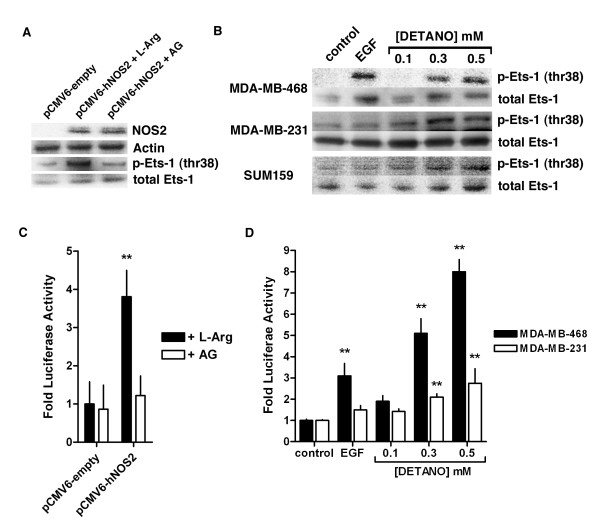
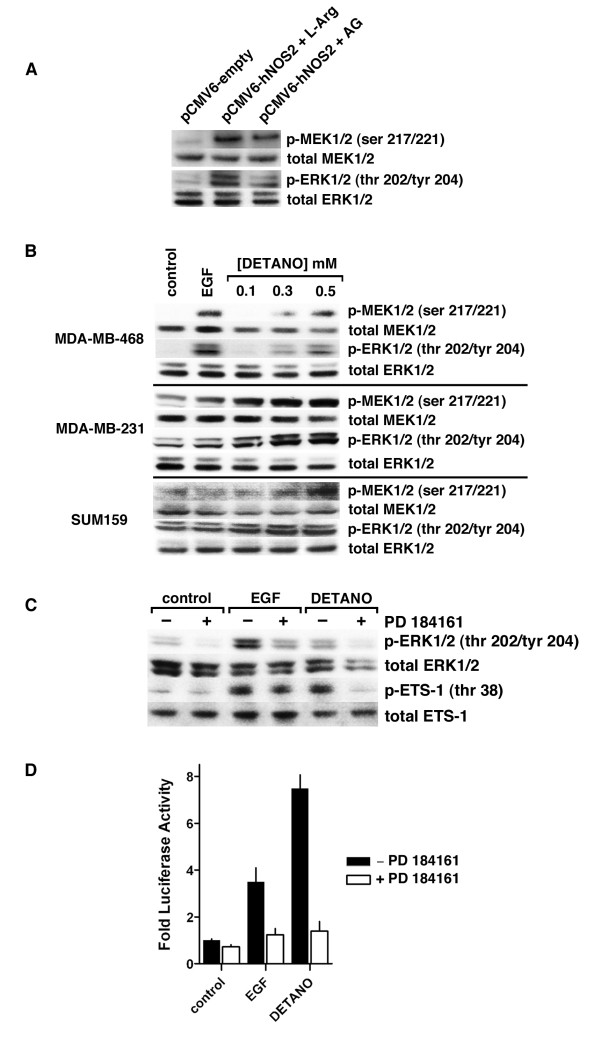
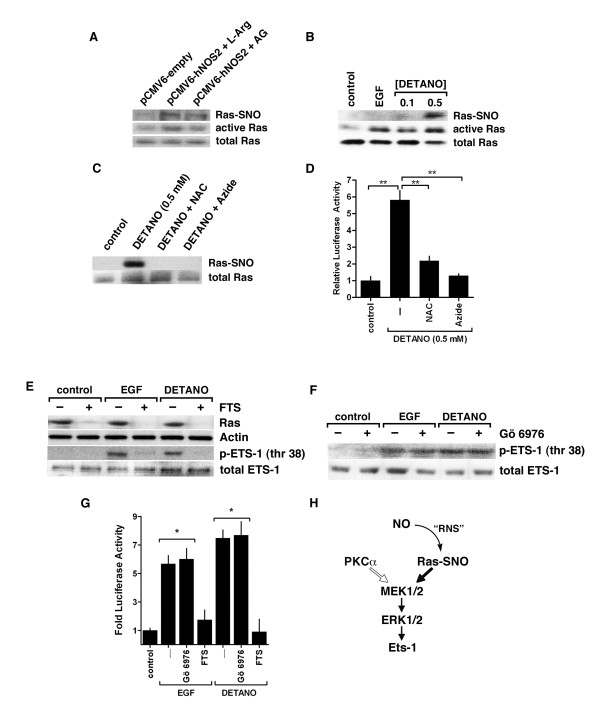
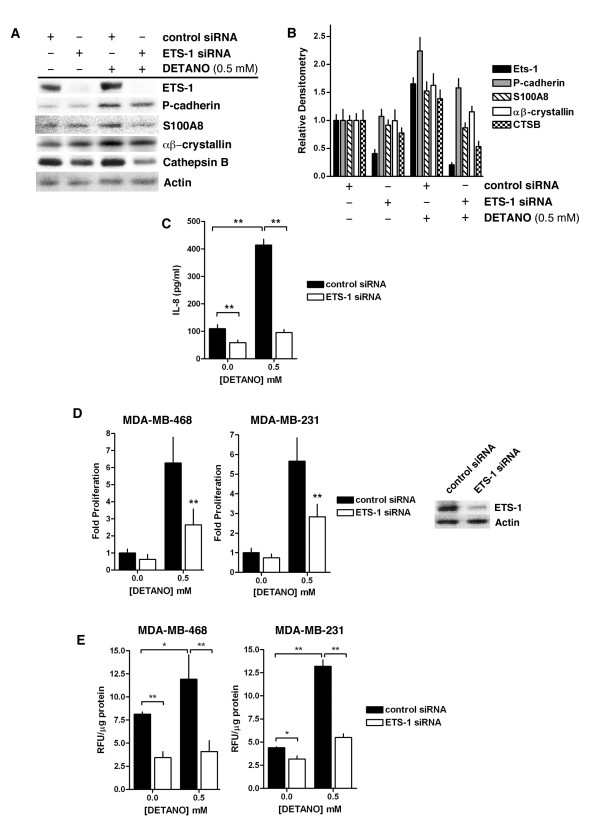
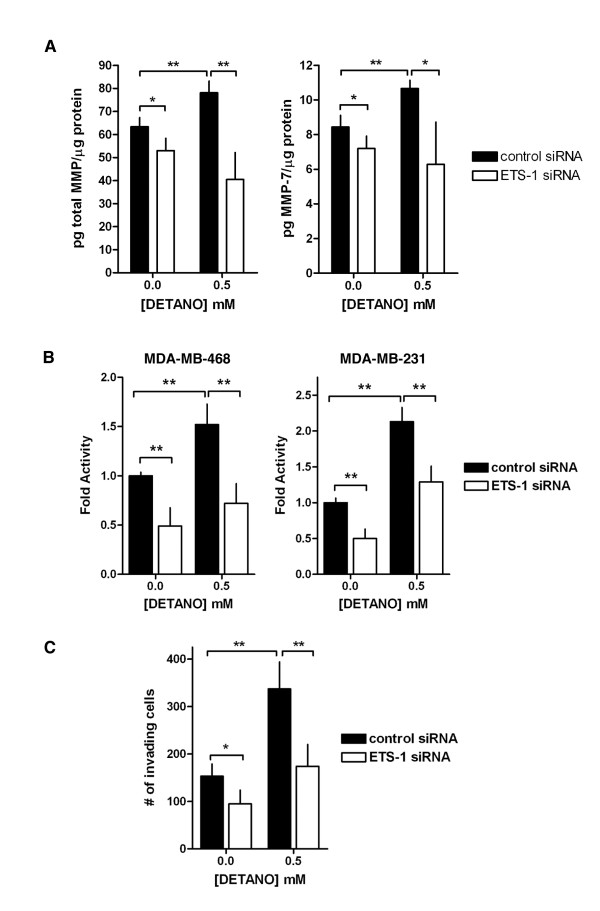
INTRODUCTION: The Ets-1 transcription factor is a candidate breast cancer oncogene that regulates the expression of genes involved in tumor progression and metastasis. Ets-1 signaling has also been linked to the development of a basal-like breast cancer phenotype. We recently described a nitric oxide (NO)-induced gene signature that is associated with poor disease outcome in estrogen receptor-negative (ER-) breast cancer and contains both stem cell-like and basal-like components. Thus, we examined the role of Ets-1 in NO signaling and NO-induced phenotypes in ER- human breast cancer cells. METHODS: Promoter region analyses were performed on genes upregulated in inducible nitric oxide synthase (NOS2) high expressing tumors for Ets-binding sites. In vitro mechanisms were examined in human basal-like breast cancer cells lines. NO signaling effects were studied using either forced NOS2 expression or the use of a chemical NO-donor, diethlylenetriamine NONOate (DETANO). RESULTS: Promoter region analysis of genes that are up-regulated in human ER-negative breast tumors with high NOS2 expression revealed that the Ets-binding sequence is the only common promoter element present in all of these genes, indicating that Ets-1 is the key transcriptional factor down-stream of oncogenic NOS2-signaling. Accordingly, both forced NOS2 over-expression and exposure to NO-donors resulted in significant Ets-1 transcriptional activation in ER- breast cancer cells. Functional studies showed that NO activated Ets-1 transcriptional activity via a Ras/MEK/ERK signaling pathway by a mechanism that involved Ras S-nitrosylation. RNA knock-down of Ets-1 suppressed NO-induced expression of selected basal-like breast cancer markers such as P-cadherin, S100A8, IL-8 and αβ-crystallin. Additionally, Ets-1 knock-down reduced NO-mediated cellular proliferation, matrix metalloproteinase and cathepsin B activities, as well as matrigel invasion. CONCLUSIONS: These data show that Ets-1 is a key transcriptional mediator of oncogenic NO signaling that promotes the development of an aggressive disease phenotype in ER- breast cancer in an Ets-1 and Ras-dependent manner, providing novel clues of how NOS2 expression in human breast tumors is functionally linked to poor patient survival.
Overview
The claims and statistics of this paper haven’t been checked yet.
Free: it reads the open-access text and checks the first 5 claims that cite a source we can check. Create a free account to check every claim.
Integrity signals
Registry
Cites
Statistics
Figures
Verification
Claims the paper makes
The claims and statistics of this paper haven’t been checked yet.
Free: it reads the open-access text and checks the first 5 claims that cite a source we can check. Create a free account to check every claim.
Claims other papers make about this one
Each is checked against this paper’s own text: does it say what the citing paper says it does?
The source backs part of the claim, not all of it — or backs it for a different population, condition or comparison.
In the citing paper
“Recent studies have shown that levels of NO around 300 nM (300 μM DETA/NO) lead to increased S-nitrosation and activation of these targets [57, 58].”
From Signaling and stress: The redox landscape in NOS2 biology (2015) · cites this paper as [58]
Experimental — accuracy not yet measured
Self-check
Percentages, sums and reported differences re-computed from the paper’s own numbers.
The self-check needs the paper’s full text.
Citations
Cites
Sørlie, T., Perou, C. M., Tibshirani, R., Aas, T., Geisler, S., Johnsen, H., Hastie, T., Eisen, M. B., van de Rijn, M., Jeffrey, S. S., et al. (2001) · Proceedings of the National Academy of Sciences · doi:10.1073/pnas.191367098 · Cited by 10,938
Meaningful relationships: the regulation of the Ras/Raf/MEK/ERK pathway by protein interactions
Kölch, W. (2000) · Biochemical Journal · doi:10.1042/0264-6021:3510289 · Cited by 1,441 · cited 1×
“Ras is a major activator of MEK/ERK signaling [32], therefore the role of Ras signaling in mediating NOS2 and NO-induced Ets-1 activation was examined.”
BackgroundProtein kinase Cα activates RAF-1 by direct phosphorylation
Kolch, W., Heidecker, G., Kochs, G., Hummel, R., Vahidi, H., Mischak, H., Finkenzeller, G., Marmé, D., & Rapp, U. R. (1993) · Nature · doi:10.1038/364249a0 · Cited by 1,277
The role of nitric oxide in tumour progression
Fukumura, D., Kashiwagi, S., & Jain, R. K. (2006) · Nature Reviews Cancer · doi:10.1038/nrc1910 · Cited by 1,259 · cited 1×
“effects in cancer cells [8-11].”
Basal-Like Breast Cancer: A Critical Review
Rakha, E. A., Reis-Filho, J. S., & Ellis, I. O. (2008) · Journal of Clinical Oncology · doi:10.1200/jco.2007.13.1748 · Cited by 1,164 · cited 2×
“Basal-like tumors commonly present as the triple-negative disease, which limits the therapeutic options for the affected patients [6,7].”
BackgroundThe chemical biology of nitric oxide: Implications in cellular signaling
Thomas, D. D., Ridnour, L. A., Isenberg, J. S., Flores-Santana, W., Switzer, C. H., Donzelli, S., Hussain, P., Vecoli, C., Paolocci, N., Ambs, S., et al. (2008) · Free Radical Biology and Medicine · doi:10.1016/j.freeradbiomed.2008.03.020 · Cited by 975 · cited 1×
“effects in cancer cells [8-11].”
Triple negative tumours: a critical review
Reis‐Filho, J. S., & Tutt, A. N. J. (2008) · Histopathology · doi:10.1111/j.1365-2559.2007.02889.x · Cited by 884 · cited 3×
“Basal-like tumors commonly present as the triple-negative disease, which limits the therapeutic options for the affected patients [6,7].”
BackgroundNitric oxide and redox mechanisms in the immune response
Wink, D. A., Hines, H. B., Cheng, R. Y. S., Switzer, C. H., Flores-Santana, W., Vitek, M. P., Ridnour, L. A., & Colton, C. A. (2011) · Journal of Leukocyte Biology · doi:10.1189/jlb.1010550 · Cited by 765 · cited 1×
“Inducible nitric oxide synthase (NOS2) is a pro-inflammatory enzyme generally with a key function in the innate immune response [1].”
BackgroundSelf-citationKeefer, L. K., Nims, R. W., Davies, K. M., & Wink, D. A. (1996) · Methods in Enzymology · doi:10.1016/s0076-6879(96)68030-6 · Cited by 670 · cited 2×
“The applied donor concentrations generate actual NO concentrations that are in the physiological nanomolar concentration range because of the slow release rate of NO from this donor [see Additional file 2: Figure S1] [31].”
BackgroundSelf-citationMetalloproteinases: role in breast carcinogenesis, invasion and metastasis
Duffy, M. J., Maguire, T. M., Hill, A., McDermott, E., & O'Higgins, N. (2000) · Breast Cancer Research · doi:10.1186/bcr65 · Cited by 628
Cited by
Nitric oxide and cancer: a review
Korde Choudhari, S., Chaudhary, M., Bagde, S., Gadbail, A. R., & Joshi, V. (2013) · World Journal of Surgical Oncology · doi:10.1186/1477-7819-11-118 · Cited by 634
The yin and yang of nitric oxide in cancer progression
Burke, A. J., Sullivan, F. J., Giles, F. J., & Glynn, S. A. (2013) · Carcinogenesis · doi:10.1093/carcin/bgt034 · Cited by 370
“This mechanism of action by NO is mediated in part by the Ets-1 transcription factor in a Ras-dependent manner (41).”
BackgroundNitric oxide: what’s new to NO?
Ghimire, K., Altmann, H. M., Straub, A. C., & Isenberg, J. S. (2017) · American Journal of Physiology-Cell Physiology · doi:10.1152/ajpcell.00315.2016 · Cited by 233
Inhibition of iNOS as a novel effective targeted therapy against triple-negative breast cancer
Granados-Principal, S., Liu, Y., Guevara, M. L., Blanco, E., Choi, D. S., Qian, W., Patel, T., Rodriguez, A. A., Cusimano, J., Weiss, H. L., et al. (2015) · Breast Cancer Research · doi:10.1186/s13058-015-0527-x · Cited by 221
“Increased iNOS expression has recently been postulated as a prognostic factor for reduced survival in patients with basal-like ER α -negative breast cancer through the induction of interleukin-8 ( IL-8 ), CD44 , c-Myc [7] and partially due to the activation of the transcription factor Ets-1 [14].”
Molecular Mechanisms of Nitric Oxide in Cancer Progression, Signal Transduction, and Metabolism
Somasundaram, V., Basudhar, D., Bharadwaj, G., No, J. H., Ridnour, L. A., Cheng, R. Y. S., Fujita, M., Thomas, D. D., Anderson, S. K., McVicar, D. W., et al. (2019) · Antioxidants & Redox Signaling · doi:10.1089/ars.2018.7527 · Cited by 213
“This ERK activation further induces c-Myc while inhibiting RAS and leading to suppression of PI3K/Akt and MAPK signaling pathways (148).”
BackgroundThe role of the transcription factor Ets1 in carcinoma
Dittmer, J. (2015) · Seminars in Cancer Biology · doi:10.1016/j.semcancer.2015.09.010 · Cited by 212
Targeted Therapy and Mechanisms of Drug Resistance in Breast Cancer
Kinnel, B., Singh, S. K., Oprea-Ilies, G., & Singh, R. (2023) · Cancers · doi:10.3390/cancers15041320 · Cited by 184
“In patients that are ERα-negative, high iNOS expression has been seen to cause poor survival via the induction of interleukin-8 (IL-8), CD44, c-Myc, and the activation of ETS-1 [81,84].”
BackgroundTumor microenvironment-based feed-forward regulation of NOS2 in breast cancer progression
Heinecke, J. L., Ridnour, L. A., Cheng, R. Y. S., Switzer, C. H., Lizardo, M. M., Khanna, C., Glynn, S. A., Hussain, S. P., Young, H. A., Ambs, S., et al. (2014) · Proceedings of the National Academy of Sciences · doi:10.1073/pnas.1401799111 · Cited by 177
“NO augments tumor cell survival, implicating NOS2 as a mediator of tumor survival under these conditions (4, 20, 34, 35).”
BackgroundSelf-citationP-cadherin and the journey to cancer metastasis
Vieira, A. F., & Paredes, J. (2015) · Molecular Cancer · doi:10.1186/s12943-015-0448-4 · Cited by 164
“pathway by NO, which in turn leads to the activation of Ets-1, a transcription factor that is implicated in metastasis, tumour progression and causes P-cadherin upregulation [87].”
BackgroundSignaling and stress: The redox landscape in NOS2 biology
Thomas, D. D., Heinecke, J. L., Ridnour, L. A., Cheng, R. Y., Kesarwala, A. H., Switzer, C. H., McVicar, D. W., Roberts, D. D., Glynn, S., Fukuto, J. M., et al. (2015) · Free Radical Biology and Medicine · doi:10.1016/j.freeradbiomed.2015.06.002 · Cited by 150
“Recent studies have shown that levels of NO around 300 nM (300 μM DETA/NO) lead to increased S-nitrosation and activation of these targets [57, 58].”
BackgroundSelf-citationCancer cell metabolism and the modulating effects of nitric oxide
Chang, C.-F., Diers, A. R., & Hogg, N. (2015) · Free Radical Biology and Medicine · doi:10.1016/j.freeradbiomed.2014.11.012 · Cited by 102
Nitric Oxide Synthase-2-Derived Nitric Oxide Drives Multiple Pathways of Breast Cancer Progression
Basudhar, D., Somasundaram, V., de Oliveira, G. A., Kesarwala, A. H., Heinecke, J. L., Cheng, R. Y. S., Glynn, S. A., Ambs, S., Wink, D. A., & Ridnour, L. A. (2017) · Antioxidants and Redox Signaling · doi:10.1089/ars.2016.6813 · Cited by 101
“Moreover, RAS inhibitors prevented ERK-dependent Ets-1 activation in NO-treated MB231 and MB-468 cells (134).”
BackgroundGrimm, E. A., Sikora, A. G., & Ekmekcioglu, S. (2013) · Clinical Cancer Research · doi:10.1158/1078-0432.ccr-12-1554 · Cited by 91
Biological signaling by small inorganic molecules
Basudhar, D., Ridnour, L. A., Cheng, R. Y. S., Kesarwala, A. H., Heinecke, J. L., & Wink, D. A. (2015) · Coordination Chemistry Reviews · doi:10.1016/j.ccr.2015.06.001 · Cited by 97
Posttranslational Modifications of RAS Proteins
Ahearn, I., Zhou, M., & Philips, M. R. (2018) · Cold Spring Harbor Perspectives in Medicine · doi:10.1101/cshperspect.a031484 · Cited by 86
“S-nitrosylation of RAS on cys118 has been shown to increase GDP/GTP exchange (Lander et al. 1995b; Williams et al. 2003) and has been implicated in breast cancer in which nitric oxide synthase 2 has been shown to be up-regulated (Switzer et al. 2012).”
BackgroundTargeting Nitric Oxide: Say NO to Metastasis
Reddy, T. P., Glynn, S. A., Billiar, T. R., Wink, D. A., & Chang, J. C. (2022) · Clinical Cancer Research · doi:10.1158/1078-0432.ccr-22-2791 · Cited by 77
“Switzer and colleagues discovered that in NOS2-high estrogen receptor (ER)negative breast tumors, a subset of upregulated genes have binding sites for the Ets transcription factor (35).”
BackgroundVasudevan, D., Hickok, J. R., Bovee, R. C., Pham, V., Mantell, L. L., Bahroos, N., Kanabar, P. N., Cao, X.-J., Maienschein‐Cline, M., Garcia, B. A., et al. (2015) · Cancer Research · doi:10.1158/0008-5472.can-15-1582 · Cited by 67
“Ets-1 is a transcription factor known to activate numerous oncogenes (40) and has been implicated in the mechanism of •NO-induced proliferation of MDA-MB-231 cells (41).”
BackgroundINPP4B is an oncogenic regulator in human colon cancer
Guo, S., Chi, M. N., Yang, R. H., Guo, X., Zan, L. K., Wang, C. Y., Xi, Y., Jin, L., Croft, A. J., Tseng, H.-Y., et al. (2015) · Oncogene · doi:10.1038/onc.2015.361 · Cited by 70
Mechanism-Based Triarylphosphine-Ester Probes for Capture of Endogenous RSNOs
Seneviratne, U. I., Godoy, L. C., Wishnok, J. S., Wogan, G. N., & Tannenbaum, S. R. (2013) · Journal of the American Chemical Society · doi:10.1021/ja401565w · Cited by 64
S-Nitrosylation in Tumor Microenvironment
Sharma, V., Fernando, V., Letson, J., Walia, Y., Zheng, X., Fackelman, D., & Furuta, S. (2021) · International Journal of Molecular Sciences · doi:10.3390/ijms22094600 · Cited by 65
“Sci. 2021, 22, 4600 21 of 32 CAV1 Caveolin-1 CDK5 Cyclin-dependent kinase 5 cGMP Cyclic guanosine monophosphate Cys Cysteine DETA-NO Diethylenetriamine/nitric oxide ECM Extracellular matrix eNOS/NOS3 Endothelial NOS ERK Extracellular signal-regulated Kinase ETC Electron transport chain ETS1 ETS Proto-Oncogene 1 FAK1 F…”
BackgroundNitric Oxide and S-Nitrosylation in Cancers: Emphasis on Breast Cancer
Mishra, D., Patel, V., & Banerjee, D. (2020) · Breast Cancer Basic and Clinical Research · doi:10.1177/1178223419882688 · Cited by 73
Linking signaling pathways to transcriptional programs in breast cancer
Osmanbeyoglu, H. U., Pelossof, R., Bromberg, J., & Leslie, C. S. (2014) · Genome Research · doi:10.1101/gr.173039.114 · Cited by 61
“like breast cancer phenotype (Span et al. 2002; Mylona et al. 2006; Switzer et al. 2012); CEBPB, which has been associated with tumor”
BackgroundThe Breast Cancer Oncogene EMSY Represses Transcription of Antimetastatic microRNA miR-31
Viré, E. A., Curtis, C. N., Dávalos, V., Git, A., Robson, S. C., Villanueva, A., Vidal, A., Barbieri, I., Aparicio, S. A. J. R., Esteller, M., et al. (2014) · Molecular Cell · doi:10.1016/j.molcel.2014.01.029 · Cited by 60
“Of particular relevance is the fact that ETS-1 is defined as a candidate breast cancer oncogene involved in the regulation of the expression of genes involved in tumor progression and metastasis (Switzer et al., 2012) and that the expression of ETS-1 correlates with higher incidence of metastasis and poorer prognosis…”
BackgroundNOS Inhibition Modulates Immune Polarization and Improves Radiation-Induced Tumor Growth Delay
Ridnour, L. A., Cheng, R. Y. S., Weiss, J. M., Kaur, S., Soto‐Pantoja, D. R., Basudhar, D., Heinecke, J. L., Stewart, C. A., DeGraff, W., Sowers, A. L., et al. (2015) · Cancer Research · doi:10.1158/0008-5472.can-14-3011 · Cited by 54
Walsh, E. M., Keane, M., Wink, D. A., Callagy, G. M., & Glynn, S. A. (2016) · Critical Reviews™ in Oncogenesis · doi:10.1615/critrevoncog.2017021307 · Cited by 60
Endogenously produced nitric oxide mitigates sensitivity of melanoma cells to cisplatin
Godoy, L. C., Anderson, C. T. M., Chowdhury, R., Trudel, L. J., & Wogan, G. N. (2012) · Proceedings of the National Academy of Sciences · doi:10.1073/pnas.1218938109 · Cited by 49
“described in breast cancer, colon cancer, lung cancer, and melanoma, among many other cancers (15, 18, 21, 34, 35).”
BackgroundNitric Oxide and Cancer: When to Give and When to Take Away?
Miranda, K. M., Ridnour, L. A., McGinity, C. L., Bhattacharyya, D., & Wink, D. A. (2021) · Inorganic Chemistry · doi:10.1021/acs.inorgchem.1c02434 · Cited by 51
Nitrosative Stress and Human Disease: Therapeutic Potential of Denitrosylation
Yoon, S., Eom, G. H., & Kang, G. (2021) · International Journal of Molecular Sciences · doi:10.3390/ijms22189794 · Cited by 56
“The S-nitrosylation of p21(ras) elicits an oncogenic progression through Ets-1 transcription in triple negative breast cancer [105].”
BackgroundApplications for nitric oxide in halting proliferation of tumor cells
Reynolds, M. M., Witzeling, S. D., Damodaran, V. B., Medeiros, T. N., Knodle, R. D., Edwards, M. A., Lookian, P. P., & Brown, M. A. (2013) · Biochemical and Biophysical Research Communications · doi:10.1016/j.bbrc.2013.01.041 · Cited by 47
S-nitrosylation and its role in breast cancer angiogenesis and metastasis
Ehrenfeld, P., Cordova, F., Durán, W. N., & Sánchez, F. A. (2019) · Nitric Oxide · doi:10.1016/j.niox.2019.03.002 · Cited by 44
Melatonin, Its Metabolites and Their Interference with Reactive Nitrogen Compounds
Hardeland, R. (2021) · Molecules · doi:10.3390/molecules26134105 · Cited by 48
Nitric Oxide Modulates Metabolic Processes in the Tumor Immune Microenvironment
McGinity, C. L., Palmieri, E. M., Somasundaram, V., Bhattacharyya, D. D., Ridnour, L. A., Cheng, R. Y. S., Ryan, A. E., Glynn, S. A., Thomas, D. D., Miranda, K. M., et al. (2021) · International Journal of Molecular Sciences · doi:10.3390/ijms22137068 · Cited by 45
Computational Structural Biology of S-nitrosylation of Cancer Targets
Bignon, E., Allega, M. F., Lucchetta, M., Tiberti, M., & Papaleo, E. (2018) · Frontiers in Oncology · doi:10.3389/fonc.2018.00272 · Cited by 42
“…ER-breast tumors showing high levels of NOS2 expression, Switzer et al. observed that the common denominator of the promoters of these genes was the presence of the Ets-binding sequence, pointing at the role of this transcription factor in the NOS2 (and thus NO)-dependent oncogenic signaling (72).”
BackgroundSwitzer, C., Ridnour, L. A., Cheng, R. Y. S., Heinecke, J. L., Burke, A. J., Glynn, S. A., Ambs, S., & Wink, D. A. (2012) · Forum on Immunopathological Diseases and Therapeutics · doi:10.1615/forumimmundisther.2012006108 · Cited by 39
ETS1 is associated with cisplatin resistance through IKKα/NF-κB pathway in cell line MDA-MB-231
Zhang, Y., Wu, J., Ye, M., Wang, B., Sheng, J., Shi, B., & Chen, H. (2018) · Cancer Cell International · doi:10.1186/s12935-018-0581-4 · Cited by 36
Meckbach, C., Tacke, R., Hua, X., Waack, S., Wingender, E., & Gültaş, M. (2015) · BMC Bioinformatics · doi:10.1186/s12859-015-0827-2 · Cited by 34
Zhang, H., Wang, Q., Gu, J., Yin, L., Liang, S., Wu, L., Xu, H., Zhao, C., & Gu, Y. (2018) · Oncogene · doi:10.1038/s41388-018-0139-x · Cited by 32
The Breast Cancer Protooncogenes HER2, BRCA1 and BRCA2 and Their Regulation by the iNOS/NOS2 Axis
Lin, K., Baritaki, S., Vivarelli, S., Falzone, L., Scalisi, A., Libra, M., & Bonavida, B. (2022) · Antioxidants · doi:10.3390/antiox11061195 · Cited by 43
Altinoz, M. A., & Elmacı, İ. (2017) · Nitric Oxide · doi:10.1016/j.niox.2017.10.001 · Cited by 30
Insights on the functional dualism of nitric oxide in the hallmarks of cancer
Panneerselvan, P., Vasanthakumar, K., Muthuswamy, K., Vasanth, K., & Selvakumar, S. (2023) · Biochimica et Biophysica Acta (BBA) - Reviews on Cancer · doi:10.1016/j.bbcan.2023.189001 · Cited by 29
Gasotransmitters in the tumor microenvironment: Impacts on cancer chemotherapy (Review)
Salihi, A. B., Al-Naqshabandi, M. A., Khudhur, Z. O., Housein, Z., Hama, H. A., Abdullah, R. M., Hussen, B. M., & Alkasalias, T. (2022) · Molecular Medicine Reports · doi:10.3892/mmr.2022.12749 · Cited by 29
ETS-1 Induces Endothelial-Like Differentiation and Promotes Metastasis in Non-Small Cell Lung Cancer
Zhou, X., Zhou, R., Zhou, H., Li, Q., Hong, J., Meng, R., Zhu, F., Zhang, S., Dai, X., Peng, G., et al. (2018) · Cellular Physiology and Biochemistry · doi:10.1159/000487874 · Cited by 31
Nitric oxide donor hybrid compounds as promising anticancer agents
Ding, Q., Zang, J., Gao, S., Gao, Q., Duan, W., Li, X., Xu, W., & Zhang, Y. (2016) · Drug Discoveries & Therapeutics · doi:10.5582/ddt.2016.01067 · Cited by 25
“These effectors lead to a cascade of effects including smooth muscle relaxation, inflammatory pain and platelet anticoagulation (9).”
BackgroundOkoro, E. E., Osoniyi, O. R., Jabeen, A., Shams, S., Choudhary, M. I., & Onajobi, F. D. (2019) · Clinical Phytoscience · doi:10.1186/s40816-019-0143-x · Cited by 22
“Nitric oxide (NO) is a short-lived pleiotropic regulator, that plays critical roles in numerous physiological as well as pathological processes [7].”
BackgroundHu, Q., Shi, J., Zhang, J., Wang, Y., Guo, Y., & Zhang, Z. (2021) · Advanced Therapeutics · doi:10.1002/adtp.202100032 · Cited by 25
S-Nitrosylation at the intersection of metabolism and autophagy: Implications for cancer
Guil‐Luna, S., Sánchez-Montero, M. T., & Rodríguez‐Ariza, A. (2023) · Biochimica et Biophysica Acta (BBA) - Reviews on Cancer · doi:10.1016/j.bbcan.2023.189012 · Cited by 25
Decreased tumorigenesis in mice with a Kras point mutation at C118
Huang, L., Carney, J., Cardona, D. M., & Counter, C. M. (2014) · Nature Communications · doi:10.1038/ncomms6410 · Cited by 22
Cheng, R. Y. S., Ridnour, L. A., Wink, A. L., González, A. L., Femino, E. L., Rittscher, H., Somasundaram, V., Heinz, W. F., Coutinho, L. L., Rangel, M. C., et al. (2023) · Cell Death and Disease · doi:10.1038/s41419-023-05834-9 · Cited by 21
“When considered collectively, these fi ndings suggest that these regions of high-density NOS2-expressing cells have larger NO fl ux, which can trigger oncogenic mechanisms that take place in the range of 100 – 300 nM NO in the petri dish [32 – 34].”
S-nitrosylation of Ras in breast cancer
Marshall, H. E., & Foster, M. W. (2012) · Breast Cancer Research · doi:10.1186/bcr3331 · Cited by 20
“Switzer and colleagues identify a role for S-nitrosylation of wild-type Ras in ERnegative breast cancer [1].”
BackgroundMethodInfluentialHu, X., Li, Y., Cao, Y., Shi, F., & Li, S. (2024) · Biochimica et Biophysica Acta (BBA) - Reviews on Cancer · doi:10.1016/j.bbcan.2024.189156 · Cited by 25
Zhu, W., Yang, B., Fu, H., Ma, L., Liu, T., Chai, R., Zheng, Z., Zhang, Q., & Li, G. (2015) · Biochemical and Biophysical Research Communications · doi:10.1016/j.bbrc.2015.01.154 · Cited by 18
Palczewski, M. B., Kuschman, H. P., Hoffman, B. M., Kathiresan, V., Yang, H., Glynn, S. A., Wilson, D. L., Kool, E. T., Montfort, W. R., Chang, J. C., et al. (2025) · Nature Communications · doi:10.1038/s41467-025-56928-1 · Cited by 21
Nitric oxide inhibits FTO demethylase activity to regulate N6-methyladenosine mRNA methylation
Kuschman, H. P., Palczewski, M. B., Hoffman, B. M., Menhart, M., Wang, X., Glynn, S. A., Islam, A. B. M. M. K., Benevolenskaya, E. V., & Thomas, D. D. (2023) · Redox Biology · doi:10.1016/j.redox.2023.102928 · Cited by 17
Sridhar, S., Rajesh, C., Jishnu, P. V., Jayaram, P., & Kabekkodu, S. P. (2019) · Breast Cancer Research and Treatment · doi:10.1007/s10549-019-05477-5 · Cited by 18
Palczewski, M. B., Kuschman, H. P., Bovee, R. C., Hickok, J. R., & Thomas, D. D. (2021) · Biological Chemistry · doi:10.1515/hsz-2020-0323 · Cited by 15
Miranda, K. M., Ridnour, L. A., Cheng, R. Y. S., Wink, D. A., & Thomas, D. D. (2023) · Critical Reviews™ in Oncogenesis · doi:10.1615/critrevoncog.2023047302 · Cited by 13
Liang, F., Wang, M., Li, J., & Guo, J. (2024) · Cancer Cell International · doi:10.1186/s12935-024-03568-y · Cited by 15
Castellano, I., Ercolesi, E., Romano, G., Ianora, A., & Palumbo, A. (2015) · Open Biology · doi:10.1098/rsob.140182 · Cited by 14
Switzer, C. (2024) · British Journal of Pharmacology · doi:10.1111/bph.16302 · Cited by 11
Koning, T., Cordova, F., Aguilar, G., Sarmiento, J., Mardones, G. A., Borić, M. P., Varas‐Godoy, M., Lladser, Á., Durán, W. N., Ehrenfeld, P., et al. (2023) · Biological Research · doi:10.1186/s40659-023-00461-2 · Cited by 13
“Research in breast cancer has focused mainly on tumor cells, where it has been demonstrated that S -nitrosyla- tion of tumor proteins leads to the activation of early steps in the metastasis, such as epithelial to mesenchymal transition, migration and invasion [11, 18, 25, 50, 53, 67–69 , 77 ].”
BackgroundPillars and Gaps of S-Nitrosylation-Dependent Epigenetic Regulation in Physiology and Cancer
Salvatori, L., Spallotta, F., Gaetano, C., & Illi, B. (2021) · Life · doi:10.3390/life11121424 · Cited by 13
Martins-Filho, A., Jammal, M. P., Côbo, E. D. C., Silveira, T. P., Adad, S. J., Murta, E. F. C., & Nomelini, R. S. (2014) · Immunology Letters · doi:10.1016/j.imlet.2014.01.005 · Cited by 11
Itinéraire d’un agent double: NO, S-nitrosylation et cancer
Plenchette, S., Romagny, S., Laurens, V., & Bettaïeb, A. (2016) · médecine/sciences · doi:10.1051/medsci/20163206027 · Cited by 11
“De la même façon, il a été montré dans un modèle utilisant des cellules de cancer du sein RE- que la S-nitrosylation de Ras sur la cystéine située en position 118 (Cys118) stimule l’échange de nucléotide guanine et conduit à la phosphorylation et à l’activation du facteur de transcription Est-1 par la cascade de signa…”
BackgroundSegura‐Bautista, D., Olivares, A., Casas-González, P., Bonilla, E., Salazar, Z., & P�rez‐Solis, M. (2020) · Oncology Reports · doi:10.3892/or.2020.7540 · Cited by 10
Activation of Ras by Post-Translational Modifications
Xiang, S., Bai, W., Bepler, G., & Zhang, X. (2016) · Elsevier eBooks · doi:10.1016/b978-0-12-803505-4.00006-0 · Cited by 9
The role of ral signaling and post translational modifications (PTMs) of Ras in cancer
Zinatizadeh, M. R., Zarandi, P. K., Keshavarz‐Fathi, M., Yousefi, M. H., & Rezaei, N. (2022) · Genome Instability & Disease · doi:10.1007/s42764-022-00059-0 · Cited by 6
“NO activates Ras/MEK/ERK signaling pathway at estrogen-receptor in breast cancer and thereby induces phosphorylation and activation of Est-1 translation (Switzer et al., 2012).”
BackgroundGumanova, N. G., Vasilyev, D. K., Bogdanova, N. L., & Drapkina, O. M. (2024) · Journal of Clinical Medicine · doi:10.3390/jcm13216293 · Cited by 7
“RNA knock-down of Ets-1 suppresses the expression of cadherin-P induced by NO [21,30].”
BackgroundNicolas, F., Wu, C., Bukhari, S. Q., Toledo, S. D., Li, H., Shibata, M., & Azzam, E. I. (2015) · Proteomes · doi:10.3390/proteomes3020056 · Cited by 6
“On the other hand, aberrant Snitrosylation has been implicated in oncogene activation [24] and in neurodegenerative diseases [25].”
BackgroundBui, I., Baritaki, S., Libra, M., Zaravinos, A., & Bonavida, B. (2023) · Antioxidants and Redox Signaling · doi:10.1089/ars.2023.0250 · Cited by 6
Wu, Y., Li, Y., Wu, T., & Yang, H. (2024) · Cancer Insight · doi:10.58567/ci03020005 · Cited by 7
“S-nitrosylation of Ras leads to activation of Ets-1, which is caused by MAPK-dependent phosphorylation and results in an aggressive breast cancer phenotype [105,106].”
BackgroundGrimm, E. A. (2016) · Critical Reviews™ in Oncogenesis · doi:10.1615/critrevoncog.2016016901 · Cited by 5
Santos, E. D. C., Melo, G. I. V., Santana, P. V. B., Quadros, I. G. S., Yahouédéhou, S. C. M. A., da Guarda, C. C., Santiago, R. P., Fiuza, L. M., Carvalho, S. P., Adôrno, E. V., et al. (2022) · Biomolecules · doi:10.3390/biom12020317 · Cited by 6
“The specific association of miR-126 and HU in SLU+ patients is controversy due to protective role of HU and miR-126 in vascular damage [9,16,18].”
BackgroundTargeting Epithelial-to-Mesenchymal Transition for Breast Cancer Stem Cells Therapeutics
Suthakaran, S., Singh, D., Deshmukh, R. K., & Das, A. (2022) · Handbook of Oxidative Stress in Cancer: Therapeutic Aspects · doi:10.1007/978-981-16-5422-0_241 · Cited by 6
Mechanisms of Nitric Oxide-Dependent Regulation of Tumor Invasion and Metastasis
Ryan, A. E., Burke, A. J., Giles, F. J., Sullivan, F. J., & Glynn, S. A. (2015) · Springer eBooks · doi:10.1007/978-3-319-13611-0_4 · Cited by 4
“This mechanism of action by NO is mediated in part by the Ets-1 transcription factor in a Ras-dependent manner [29].”
BackgroundAfshari-Behbahanizadeh, S., & Bonab, S. F. (2019) · International Journal of Advanced Biological and Biomedical Research · doi:10.33945/sami/ijabbr.2019.2.7 · Cited by 3
Clinical Value and Potential Mechanism of miRNA-33a-5p in Lung Squamous Cell Carcinoma
Wang, X., Chen, S., Chen, G., Zhou, H., Gan, T., Zeng, J., & Li, Z.-Y. (2021) · Analytical Cellular Pathology · doi:10.1155/2021/6614331 · Cited by 3
Choi, D. S., Rosato, R. R., & Chang, J. C. (2016) · Springer eBooks · doi:10.1007/978-3-319-41761-5_10 · Cited by 3
Кушлинский, Н. Е., Kovaleva, O. V., Gratchev, A. N., Kulikova, S. E., Gugnin, F. A., Nezhdanova, S. Y., Tsekatunov, D. A., Ryzhavskaya, I. B., Kushlinskiy, D. N., Zybina, N. N., et al. (2025) · Almanac of Clinical Medicine · doi:10.18786/2072-0505-2025-53-001 · Cited by 2
NO in Cancer—Carcinogenesis, Metastasis, and Therapy
Somasundaram, V., Basudhar, D., Greer, M., Cheng, R. Y. S., Ridnour, L. A., & Wink, D. A. (2017) · Elsevier eBooks · doi:10.1016/b978-0-12-804273-1.00028-4 · Cited by 4
Targeting Epithelial-to-Mesenchymal Transition for Breast Cancer Stem Cells Therapeutics
Suthakaran, S., Singh, D., Deshmukh, R. K., & Das, A. (2021) · Handbook of Oxidative Stress in Cancer: Therapeutic Aspects · doi:10.1007/978-981-16-1247-3_241-1 · Cited by 2
Coutinho, L. L., Palmieri, E. M., Ridnour, L. A., Cheng, R. Y. S., Heinz, W. F., Anderson, S. K., Billiar, T. R., Chang, J. C., Lockett, S., Rangel, M. C., et al. (2026) · Redox Biology · doi:10.1016/j.redox.2026.104245 · Cited by 4
“NO-dependent signaling further converges on ERK via nitrosation and activation of RAS [87].”
Role of Nitric Oxide in Breast Cancer
Khan, E. A., & Parwez, A. (2022) · BENTHAM SCIENCE PUBLISHERS eBooks · doi:10.2174/9781681089522112010008 · Cited by 1
The involvement of nitric oxide in bovine follicular development and ovulation
Zamberlam, G. (2013) · doi:10.71781/3897 · Cited by 3
Nitric Oxide and Nitric Oxide Donors in Preclinical Studies of Breast and Prostate Cancer
Garrido, P., Walsh, E. M., & Glynn, S. A. (2017) · Elsevier eBooks · doi:10.1016/b978-0-12-811020-1.00004-1
Meckbach, C. (2019) · eDiss (Georg-August-Universität Göttingen) · doi:10.53846/goediss-7595
Buszko, M., Jones, M., Chempati, S., Morina, L., Ward, K., Habte, H. H., Dziegielewski, M., & Shevach, E. M. (2025) · Oncotarget · doi:10.18632/oncotarget.28752 · Cited by 1
The Role of Redox-dependent Reactions with Kras Cysteine 118 in Tumorigenesis
Huang, L. (2015) · DukeSpace (Duke University)
Bouaouiche, S. (2018) · theses.fr (ABES) · doi:10.70675/85185e48z640cz4823z8ea3z8f24dc88fcdd
Shayan, S., Kuschman, H. P., Kevil, C. G., & Thomas, D. D. (2026) · Redox Biology · doi:10.1016/j.redox.2026.104344
Mukherjee, S. S., Mishra, S., Junkers, T., Bhat, R., & Madhavan, N. (2026) · Chemistry - A European Journal · doi:10.1002/chem.71794
Metadata
- Authors
- Switzer, C. H., Cheng, R. Y.-S., Ridnour, L. A., Glynn, S. A., Ambs, S., & Wink, D. A.
- Affiliations
- National Institutes of Health (US)
- Corresponding author
- Switzer, Christopher H
- Venue
- Breast Cancer Research
- Published
- 2012-09-12
- Volume
- 14
- Issue
- 5
- Pages
- R125-R125
- ISSN
- 1465-5411 (ISSN-L)
- 1465-542X
- PMC
- PMC4053102
- OpenAlex
- W2012161562
- Cited by
- 91
- References
- 61
- Citations by year
- 2026: 3 · 2025: 3 · 2024: 4 · 2023: 9 · 2022: 7 · 2021: 11 · 2020: 2 · 2019: 5 · 2018: 7 · 2017: 3 · 2016: 8 · 2015: 14 · 2014: 6 · 2013: 6 · 2012: 3
- FWCI
- 3.07
- Type
- journal article
- Language
- en
- Open access
- gold
- doi.org
- Licence
- cc-by
- creativecommons.org/licenses/by/2.0/ (tdm)
- creativecommons.org/licenses/by/2.0/ (vor)
- Locations
- Breast Cancer Research (publishedVersion, cc-by)
- PubMed Central (publishedVersion, cc-by)
- PubMed (publishedVersion)
- ARAN (University of Galway Research Repository) (Ollscoil na Gaillimhe – University of Galway) (acceptedVersion, cc-by-nc-nd)
- Arrow@dit (Dublin Institute of Technology) (submittedVersion)
- ARAN (University of Galway Research Repository) (Ollscoil na Gaillimhe – University of Galway) (submittedVersion, cc-by-nc-nd)
- ARAN (University of Galway Research Repository) (Ollscoil na Gaillimhe – University of Galway) (submittedVersion, cc-by-nc)
- Lenus, The Irish Health Repository (Dr Steevens Hospital Library) (submittedVersion)
- Research Repository UCD (University College Dublin) (cc-by-nc)
- Funders
- National Institutes of Health
- National Cancer Institute
- Topics
- Life Sciences › Biochemistry, Genetics and Molecular Biology › Cancer Research › Breast Cancer Treatment Studies
- Life Sciences › Biochemistry, Genetics and Molecular Biology › Endocrinology › Estrogen and related hormone effects
- Health Sciences › Medicine › Physiology (medical) › Nitric Oxide and Endothelin Effects
- Keywords
- ETS1, nitric oxide signaling, estrogen receptor-negative breast cancer, basal-like breast cancer, inducible nitric oxide synthase, NOS2, Ras/MEK/ERK pathway, transcriptional activation, Ets binding site, tumor invasion, matrix metalloproteinases, cathepsin B, P-cadherin, S100A8, interleukin-8, stem cell-like phenotype
- MeSH terms
- Breast Neoplasms, Female, Humans, Nitric Oxide, Phenotype, Receptors, Estrogen, Transcription, Genetic, Signal Transduction, Gene Expression Regulation, Neoplastic, ras Proteins, Matrix Metalloproteinases, MAP Kinase Signaling System, Cell Line, Tumor, Proto-Oncogene Protein c-ets-1, Nitric Oxide Synthase Type II
About these checks
Registry, retraction, Cites and statistics results are computed, not judged, with one exception: a printed reference that no index lists is read once by a model before it counts as a citation error. Claims are extracted by a model and kept only when their quote appears verbatim in the text; each cited source is then checked, with a model’s help, for whether it says what the claim relies on. Those verdicts can be wrong — read the claim’s quote and the cited source before relying on one.
Statistics and arithmetic are recomputed, not judged.
Confidence bands are shown only for fields calibrated on our annotated test set. None is calibrated yet, so no band is shown.
What counts as a claim ›How we measure confidence ›How we check this ›
Are you an author, or do you see a problem with this page? Request a review
Data sources
Bibliographic data: Semantic Scholar, OpenAlex, Crossref.
Contains information from the Semantic Scholar Academic Graph Datasets, made available under the ODC Attribution License (ODC-BY 1.0).
Semantic Scholar’s data is described in: Kinney, R., et al. (2023). The Semantic Scholar Open Data Platform. arXiv:2301.10140.
