

Ets-1 is a transcriptional mediator of oncogenic nitric oxide signaling in estrogen receptor-negative breast cancer
Open accessThe DOI matches its Crossref record; 61 of the 61 references it cites were found in a registry or an index.
Abstract
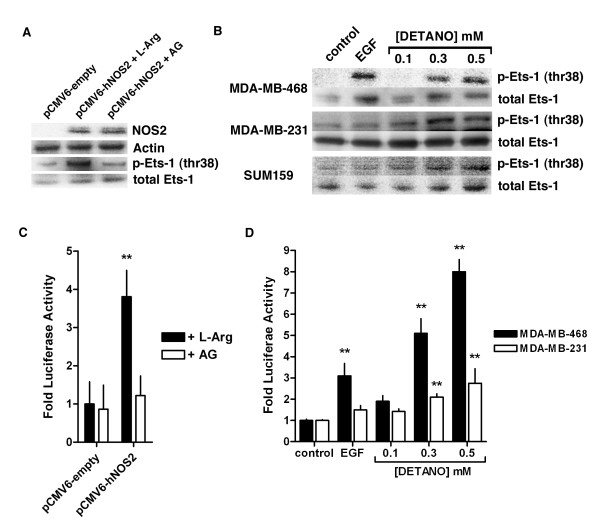
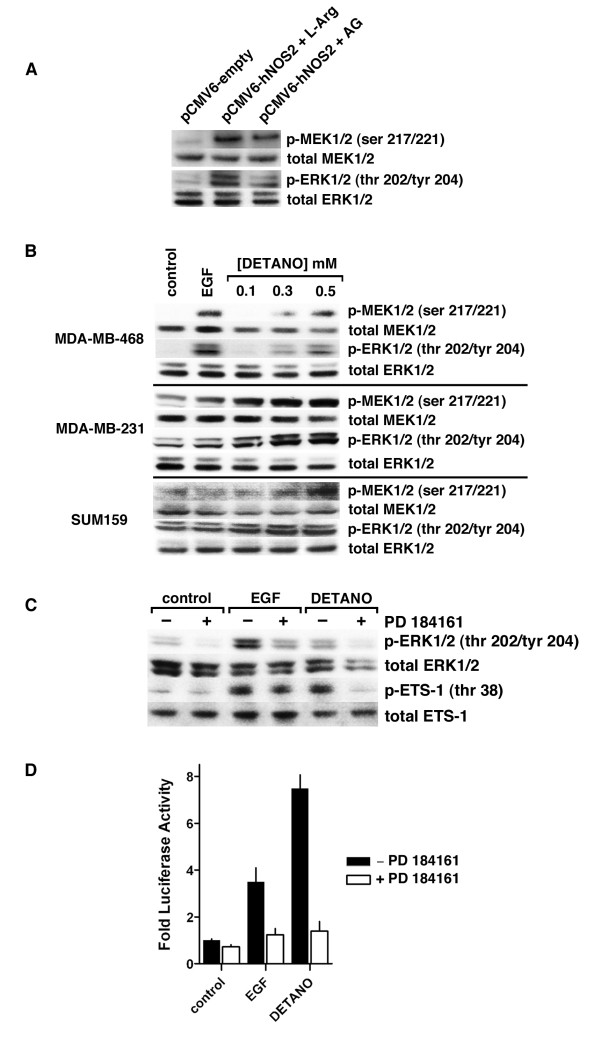
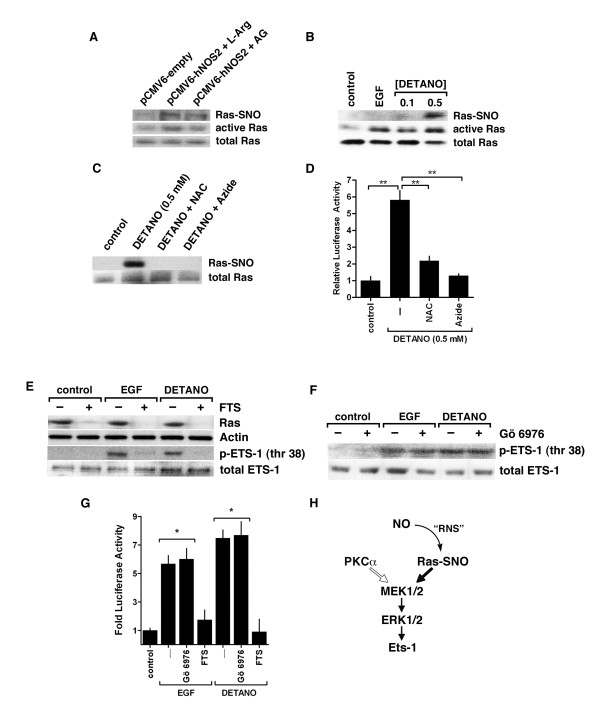
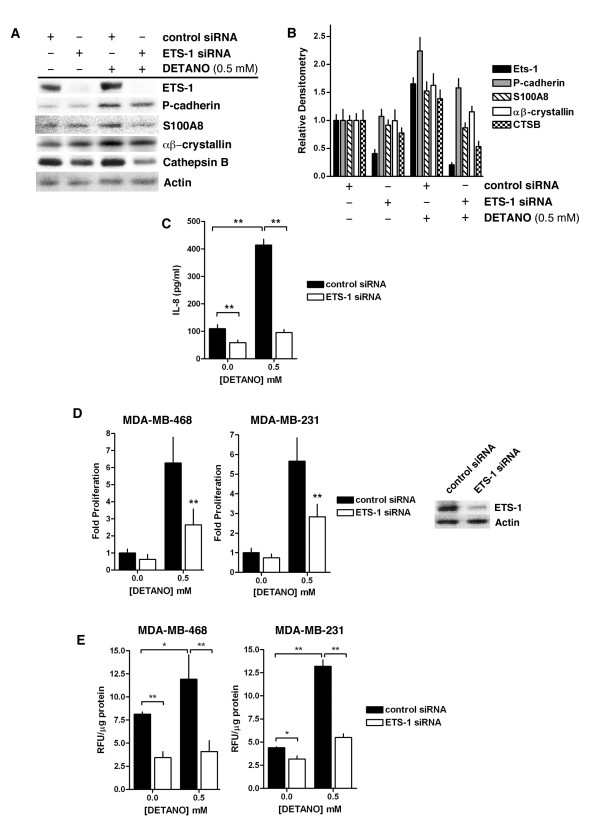
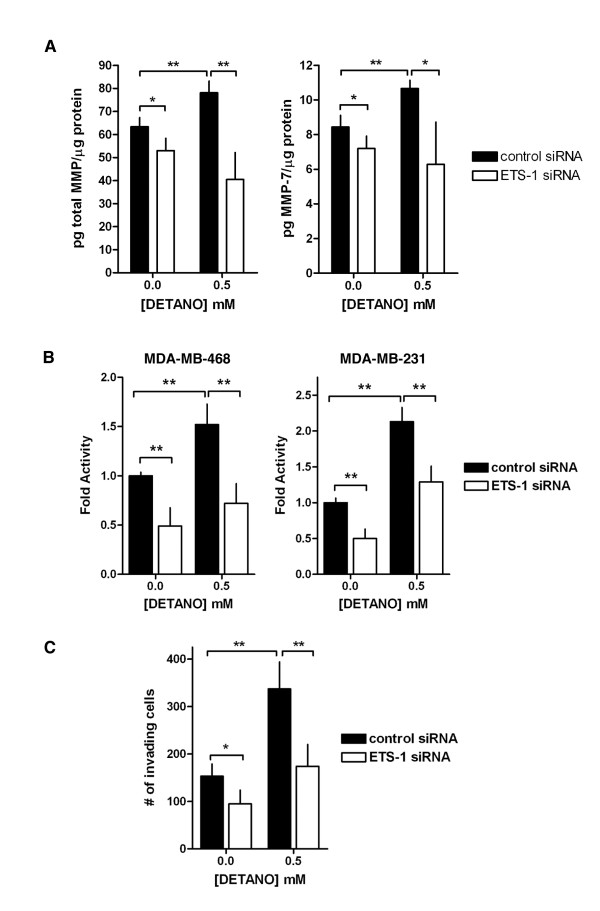
INTRODUCTION: The Ets-1 transcription factor is a candidate breast cancer oncogene that regulates the expression of genes involved in tumor progression and metastasis. Ets-1 signaling has also been linked to the development of a basal-like breast cancer phenotype. We recently described a nitric oxide (NO)-induced gene signature that is associated with poor disease outcome in estrogen receptor-negative (ER-) breast cancer and contains both stem cell-like and basal-like components. Thus, we examined the role of Ets-1 in NO signaling and NO-induced phenotypes in ER- human breast cancer cells. METHODS: Promoter region analyses were performed on genes upregulated in inducible nitric oxide synthase (NOS2) high expressing tumors for Ets-binding sites. In vitro mechanisms were examined in human basal-like breast cancer cells lines. NO signaling effects were studied using either forced NOS2 expression or the use of a chemical NO-donor, diethlylenetriamine NONOate (DETANO). RESULTS: Promoter region analysis of genes that are up-regulated in human ER-negative breast tumors with high NOS2 expression revealed that the Ets-binding sequence is the only common promoter element present in all of these genes, indicating that Ets-1 is the key transcriptional factor down-stream of oncogenic NOS2-signaling. Accordingly, both forced NOS2 over-expression and exposure to NO-donors resulted in significant Ets-1 transcriptional activation in ER- breast cancer cells. Functional studies showed that NO activated Ets-1 transcriptional activity via a Ras/MEK/ERK signaling pathway by a mechanism that involved Ras S-nitrosylation. RNA knock-down of Ets-1 suppressed NO-induced expression of selected basal-like breast cancer markers such as P-cadherin, S100A8, IL-8 and αβ-crystallin. Additionally, Ets-1 knock-down reduced NO-mediated cellular proliferation, matrix metalloproteinase and cathepsin B activities, as well as matrigel invasion. CONCLUSIONS: These data show that Ets-1 is a key transcriptional mediator of oncogenic NO signaling that promotes the development of an aggressive disease phenotype in ER- breast cancer in an Ets-1 and Ras-dependent manner, providing novel clues of how NOS2 expression in human breast tumors is functionally linked to poor patient survival.
Overview
The claims and statistics of this paper haven’t been checked yet.
Free: it reads the open-access text and checks the first 5 claims that cite a source we can check. Create a free account to check every claim.
Integrity signals
Registry
Cites
Statistics
Figures
Verification
Claims the paper makes
The claims and statistics of this paper haven’t been checked yet.
Free: it reads the open-access text and checks the first 5 claims that cite a source we can check. Create a free account to check every claim.
Claims other papers make about this one
Each is checked against this paper’s own text: does it say what the citing paper says it does?
The source backs part of the claim, not all of it — or backs it for a different population, condition or comparison.
In the citing paper
“Recent studies have shown that levels of NO around 300 nM (300 μM DETA/NO) lead to increased S-nitrosation and activation of these targets [57, 58].”
From Signaling and stress: The redox landscape in NOS2 biology (2015) · cites this paper as [58]
Experimental — accuracy not yet measured
Self-check
Percentages, sums and reported differences re-computed from the paper’s own numbers.
The self-check needs the paper’s full text.
Citations
Cites
Sørlie, T., Perou, C. M., Tibshirani, R., Aas, T., Geisler, S., Johnsen, H., Hastie, T., Eisen, M. B., van de Rijn, M., Jeffrey, S. S., et al. (2001) · Proceedings of the National Academy of Sciences · doi:10.1073/pnas.191367098 · Cited by 10,938
Meaningful relationships: the regulation of the Ras/Raf/MEK/ERK pathway by protein interactions
Kölch, W. (2000) · Biochemical Journal · doi:10.1042/0264-6021:3510289 · Cited by 1,441 · cited 1×
“Ras is a major activator of MEK/ERK signaling [32], therefore the role of Ras signaling in mediating NOS2 and NO-induced Ets-1 activation was examined.”
BackgroundProtein kinase Cα activates RAF-1 by direct phosphorylation
Kolch, W., Heidecker, G., Kochs, G., Hummel, R., Vahidi, H., Mischak, H., Finkenzeller, G., Marmé, D., & Rapp, U. R. (1993) · Nature · doi:10.1038/364249a0 · Cited by 1,277
The role of nitric oxide in tumour progression
Fukumura, D., Kashiwagi, S., & Jain, R. K. (2006) · Nature Reviews Cancer · doi:10.1038/nrc1910 · Cited by 1,259 · cited 1×
“effects in cancer cells [8-11].”
Basal-Like Breast Cancer: A Critical Review
Rakha, E. A., Reis-Filho, J. S., & Ellis, I. O. (2008) · Journal of Clinical Oncology · doi:10.1200/jco.2007.13.1748 · Cited by 1,164 · cited 2×
“Basal-like tumors commonly present as the triple-negative disease, which limits the therapeutic options for the affected patients [6,7].”
BackgroundThe chemical biology of nitric oxide: Implications in cellular signaling
Thomas, D. D., Ridnour, L. A., Isenberg, J. S., Flores-Santana, W., Switzer, C. H., Donzelli, S., Hussain, P., Vecoli, C., Paolocci, N., Ambs, S., et al. (2008) · Free Radical Biology and Medicine · doi:10.1016/j.freeradbiomed.2008.03.020 · Cited by 975 · cited 1×
“effects in cancer cells [8-11].”
Triple negative tumours: a critical review
Reis‐Filho, J. S., & Tutt, A. N. J. (2008) · Histopathology · doi:10.1111/j.1365-2559.2007.02889.x · Cited by 884 · cited 3×
“Basal-like tumors commonly present as the triple-negative disease, which limits the therapeutic options for the affected patients [6,7].”
BackgroundNitric oxide and redox mechanisms in the immune response
Wink, D. A., Hines, H. B., Cheng, R. Y. S., Switzer, C. H., Flores-Santana, W., Vitek, M. P., Ridnour, L. A., & Colton, C. A. (2011) · Journal of Leukocyte Biology · doi:10.1189/jlb.1010550 · Cited by 765 · cited 1×
“Inducible nitric oxide synthase (NOS2) is a pro-inflammatory enzyme generally with a key function in the innate immune response [1].”
BackgroundSelf-citationKeefer, L. K., Nims, R. W., Davies, K. M., & Wink, D. A. (1996) · Methods in Enzymology · doi:10.1016/s0076-6879(96)68030-6 · Cited by 670 · cited 2×
“The applied donor concentrations generate actual NO concentrations that are in the physiological nanomolar concentration range because of the slow release rate of NO from this donor [see Additional file 2: Figure S1] [31].”
BackgroundSelf-citationMetalloproteinases: role in breast carcinogenesis, invasion and metastasis
Duffy, M. J., Maguire, T. M., Hill, A., McDermott, E., & O'Higgins, N. (2000) · Breast Cancer Research · doi:10.1186/bcr65 · Cited by 628
Gene expression profiling of breast cell lines identifies potential new basal markers
Charafe-Jauffret, E., Ginestier, C., Monville, F., Finetti, P., Adélaïde, J., Cervera, N., Fekairi, S., Xerri, L., Jacquemier, J., Birnbaum, D., et al. (2006) · Oncogene · doi:10.1038/sj.onc.1209254 · Cited by 569 · cited 1×
“NO activation of Ets-1 resulted in the cellular expression of basal-like markers (P-cadherin, S100A8, IL-8 and ab-crystallin) [46-48] as well as molecules associated with the metastatic process (CTSB and MMP-7) [49,50] indicating that this signaling mechanism contributes to the observed clinical features of aggressive…”
BackgroundDittmer, J. (2003) · Molecular Cancer · doi:10.1186/1476-4598-2-29 · Cited by 509 · cited 1×
“Ets-1 regulates the expression of various proteases that are critical to matrix reorganization and cancer cell invasion [41].”
BackgroundA Molecular Redox Switch on p21
Lander, H. M., Hajjar, D. P., Hempstead, B. L., Mirza, U. A., Chait, B. T., Campbell, S., & Quilliam, L. A. (1997) · Journal of Biological Chemistry · doi:10.1074/jbc.272.7.4323 · Cited by 488 · cited 1×
“Because NO activates Ras via SNO post-translational modification [33,34], Ras-SNO formation was measured by the biotin-switch assay [35].”
MethodWink, D. A., Nims, R. W., Darbyshire, J. F., Christodoulou, D., Hanbauer, I., Cox, G. W., Laval, F., Laval, J., & Cook, J. A. (1994) · Chemical Research in Toxicology · doi:10.1021/tx00040a007 · Cited by 378 · cited 1×
“profile of NO (Figure 3B) [36].”
A clinically relevant gene signature in triple negative and basal-like breast cancer
Rody, A., Karn, T., Liedtke, C., Pusztai, L., Ruckhaeberle, E., Hanker, L., Gaetje, R., Solbach, C., Ahr, A., Metzler, D., et al. (2011) · Breast Cancer Research · doi:10.1186/bcr3035 · Cited by 338 · cited 1×
“NO activation of Ets-1 resulted in the cellular expression of basal-like markers (P-cadherin, S100A8, IL-8 and ab-crystallin) [46-48] as well as molecules associated with the metastatic process (CTSB and MMP-7) [49,50] indicating that this signaling mechanism contributes to the observed clinical features of aggressive…”
BackgroundYang, B.-S., Hauser, C. A., Henkel, G., Colman, M. S., Beveren, C. V., Stacey, K. J., Hume, D. A., Maki, R. A., & Ostrowski, M. C. (1996) · Molecular and Cellular Biology · doi:10.1128/mcb.16.2.538 · Cited by 333
Glioma Stem Cell Proliferation and Tumor Growth Are Promoted by Nitric Oxide Synthase-2
Eyler, C. E., Wu, Q., Yan, K., MacSwords, J. M., Chandler-Militello, D., Misuraca, K. L., Lathia, J. D., Forrester, M. T., Lee, J., Stamler, J. S., et al. (2011) · Cell · doi:10.1016/j.cell.2011.06.006 · Cited by 309 · cited 2×
“We propose that the NO/Ets-1 signaling axis first described here may promote disease progression in other tumors that overexpress NOS2, such as glioma and melanoma [2,57], and tumors with impaired SNO metabolism, such as lung and hepatocellular carcinoma [55,58].”
BackgroundThomas, D. D., Espey, M. G., Ridnour, L. A., Hofseth, L. J., Mancardi, D., Harris, C. C., & Wink, D. A. (2004) · Proceedings of the National Academy of Sciences · doi:10.1073/pnas.0400453101 · Cited by 289
Self-citationIwasaka, C., Tanaka, K., Abe, M., & Sato, Y. (1996) · Journal of Cellular Physiology · doi:10.1002/(sici)1097-4652(199612)169:3<522::aid-jcp12>3.0.co;2-7 · Cited by 278 · cited 1×
“Ets-1 regulates numerous genes involved in proliferation, angiogenesis, and metastasis [27].”
BackgroundIncreased NOS2 predicts poor survival in estrogen receptor-negative breast cancer patients
Glynn, S. A., Boersma, B. J., Dorsey, T. H., Yi, M., Yfantis, H. G., Ridnour, L. A., Martin, D. N., Switzer, C. H., Hudson, R. S., Wink, D. A., et al. (2010) · Journal of Clinical Investigation · doi:10.1172/jci42059 · Cited by 254 · cited 11×
“For example, NO activates signaling through epidermanl growth factor receptor (EGFR), PI3K/Akt, HIF-1, and Src [5,12-15].”
BackgroundMethodSelf-citationInvolvement of cathepsins in the invasion, metastasis and proliferation of cancer cells
Nomura, T., & Katunuma, N. (2005) · The Journal of Medical Investigation · doi:10.2152/jmi.52.1 · Cited by 244 · cited 2×
“NO activation of Ets-1 resulted in the cellular expression of basal-like markers (P-cadherin, S100A8, IL-8 and ab-crystallin) [46-48] as well as molecules associated with the metastatic process (CTSB and MMP-7) [49,50] indicating that this signaling mechanism contributes to the observed clinical features of aggressive…”
BackgroundRidnour, L. A., Windhausen, A. N., Isenberg, J. S., Yeung, N., Thomas, D. D., Vitek, M. P., Roberts, D. D., & Wink, D. A. (2007) · Proceedings of the National Academy of Sciences · doi:10.1073/pnas.0702761104 · Cited by 219 · cited 1×
“Total MMP activity was measured by the MCa assay as previously described [30].”
MethodSelf-citationEkmekçioglu, S., Ellerhorst, J. A., Smid, C. M., Prieto, V. G., Munsell, M. F., Buzaid, A. C., & Grimm, E. A. (2000) · PubMed · Cited by 214
Cathepsin B Inhibition Limits Bone Metastasis in Breast Cancer
Withana, N. P., Blum, G., Sameni, M., Slaney, C., Anbalagan, A., Olive, M. B., Bidwell, B. N., Edgington, L., Wang, L., Moin, K., et al. (2012) · Cancer Research · doi:10.1158/0008-5472.can-11-2759 · Cited by 202 · cited 2×
“NO activation of Ets-1 resulted in the cellular expression of basal-like markers (P-cadherin, S100A8, IL-8 and ab-crystallin) [46-48] as well as molecules associated with the metastatic process (CTSB and MMP-7) [49,50] indicating that this signaling mechanism contributes to the observed clinical features of aggressive…”
BackgroundMolecular mechanisms for discrete nitric oxide levels in cancer
Ridnour, L. A., Thomas, D. D., Switzer, C., Flores-Santana, W., Isenberg, J. S., Ambs, S., Roberts, D. D., & Wink, D. A. (2008) · Nitric Oxide · doi:10.1016/j.niox.2008.04.006 · Cited by 196 · cited 1×
“Therefore, the activation of Ras/Ets-1 is a contributing signaling axis induced by oncogenic levels of NO [8,51].”
BackgroundDislodgment and Accelerated Degradation of Ras
Haklai, R., Weisz, M. G., Elad, G., Paz, A., Marciano, D., Egozi, Y., Ben-Baruch, G., & Kloog, Y. (1998) · Biochemistry · doi:10.1021/bi972032d · Cited by 194 · cited 1×
“protein susceptible to proteasomal degradation [37].”
Ras activation in human breast cancer
von Lintig, F. C., Dreilinger, A. D., Varki, N. M., Wallace, A. M., Casteel, D. E., & Boss, G. R. (2000) · Breast Cancer Research and Treatment · doi:10.1023/a:1006491619920 · Cited by 184 · cited 1×
“While mutated and constitutively active Ras is often observed in human malignancy, breast tumors harboring Ras mutations are rare, accounting for >5% of all breast tumors [52,53].”
BackgroundThe Biotin Switch Method for the Detection of S-Nitrosylated Proteins
Jaffrey, S. R., & Snyder, S. H. (2001) · Science Signaling · doi:10.1126/scisignal.862001pl1 · Cited by 176
Paumelle, R., Tulashe, D., Kherrouche, Z., Plaza, S., Leroy, C., Reveneau, S., Vandenbunder, B., & Fafeur, V. (2002) · Oncogene · doi:10.1038/sj.onc.1205297 · Cited by 158 · cited 2×
“Ets-1 is phosphorylated and activated by the MEK/ERK signaling pathway [26].”
BackgroundS -Nitrosylation from GSNOR Deficiency Impairs DNA Repair and Promotes Hepatocarcinogenesis
Wei, W., Li, B., Hanes, M. A., Kakar, S., Chen, X., & Liu, L. (2010) · Science Translational Medicine · doi:10.1126/scitranslmed.3000328 · Cited by 146
Span, P. N., Manders, P., Heuvel, J. J. T. M., Thomas, C. M. G., Bosch, R. R., Beex, L. V. A. M., & Sweep, F. C. G. J. (2002) · Oncogene · doi:10.1038/sj.onc.1206040 · Cited by 137 · cited 1×
“Furthermore, tumor Ets-1 expression is linked to basal-like tumors and poor disease survival [19,22,23].”
BackgroundPervin, S., Singh, R., Hernandez, E., Wu, G., & Chaudhuri, G. (2007) · Cancer Research · doi:10.1158/0008-5472.can-05-4623 · Cited by 135 · cited 1×
“Ras activation by NO in breast cancer cells has been described to proceed in a cGMP-independnet mechanism and our data showing NO-mediated SNO of Ras is consistent with this previous report [56].”
ResultBehrens, P., Rothe, M., Wellmann, A., Krischler, J., & Wernert, N. (2001) · The Journal of Pathology · doi:10.1002/path.844 · Cited by 131 · cited 1×
“Ets-1 regulates the expression of many proteases of the MMP family [17,42,43], which accelerate tumor cell invasion and metastasis [44].”
BackgroundMirza, U. A., Chait, B. T., & Lander, H. M. (1995) · Journal of Biological Chemistry · doi:10.1074/jbc.270.29.17185 · Cited by 121 · cited 1×
“Because NO activates Ras via SNO post-translational modification [33,34], Ras-SNO formation was measured by the biotin-switch assay [35].”
MethodThe Ets-1 transcription factor is involved in the development and invasion of malignant melanoma
Rothhammer-Hampl, T., Hahne, J. C., Florin, A., Poser, I., Soncin, F., Wernert, N., & Bosserhoff, A. (2004) · Cellular and Molecular Life Sciences · doi:10.1007/s00018-003-3337-8 · Cited by 119
Rahman, M. A., Senga, T., Ito, S., Hyodo, T., Hasegawa, H., & Hamaguchi, M. (2010) · Journal of Biological Chemistry · doi:10.1074/jbc.m109.059782 · Cited by 105
Wasylyk, C., Bradford, A. P., Gutierrez-Hartmann, A., & Wasylyk, B. (1997) · Oncogene · doi:10.1038/sj.onc.1200914 · Cited by 101 · cited 1×
“While Ets-1 is overexpressed in many tumors, its transcriptional activity is regulated at the phosphorylation level by extracellular signal-regulated protein kinases 1 and 2 (ERK1/2) [24-26].”
BackgroundChen, Z.-Q., Fisher, R. J., Riggs, C. W., Rhim, J. S., & Lautenberger, J. A. (1997) · PubMed · Cited by 95
Inflammation and IGF‐I activate the Akt pathway in breast cancer
Prueitt, R. L., Boersma, B. J., Howe, T. M., Goodman, J. E., Thomas, D. D., Ying, L., Pfiester, C. M., Yfantis, H. G., Cottrell, J. R., Lee, D. H., et al. (2007) · International Journal of Cancer · doi:10.1002/ijc.22336 · Cited by 91 · cited 3×
“Rahman MA, Senga T, Ito S, Hyodo T, Hasegawa H, Hamaguchi M: Snitrosylation at cysteine 498 of c-Src tyrosine kinase regulates nitric oxide-mediated cell invasion.”
BackgroundRecruitment and Activation of Raf-1 Kinase by Nitric Oxide-Activated Ras
Deora, A. A., Hajjar, D. P., & Lander, H. M. (2000) · Biochemistry · doi:10.1021/bi992954b · Cited by 80
Hahne, J. C., Okuducu, A. F., Kaminski, A., Florin, A., Soncin, F., & Wernert, N. (2005) · Oncogene · doi:10.1038/sj.onc.1208761 · Cited by 77 · cited 1×
“Ets-1 is an oncogenic transcription factor involved in the progression of breast cancer [16-21].”
BackgroundNO News is not Necessarily Good News in Cancer
Ekmekcioglu, S., Tang, C.-H., & Grimm, E. (2005) · Current Cancer Drug Targets · doi:10.2174/1568009053202072 · Cited by 75
Switzer, C. H., Glynn, S. A., Ridnour, L. A., Cheng, R. Y.-S., Vitek, M. P., Ambs, S., & Wink, D. A. (2011) · Trends in Pharmacological Sciences · doi:10.1016/j.tips.2011.07.001 · Cited by 74 · cited 4×
“Rahman MA, Senga T, Ito S, Hyodo T, Hasegawa H, Hamaguchi M: Snitrosylation at cysteine 498 of c-Src tyrosine kinase regulates nitric oxide-mediated cell invasion.”
BackgroundSasaki, H., Yukiue, H., Moiriyama, S., Kobayashi, Y., Nakashima, Y., Kaji, M., Kiriyama, M., Fukai, I., Yamakawa, Y., & Fujii, Y. (2001) · Journal of Surgical Research · doi:10.1006/jsre.2001.6279 · Cited by 68 · cited 1×
“Ets-1 regulates the expression of many proteases of the MMP family [17,42,43], which accelerate tumor cell invasion and metastasis [44].”
BackgroundOverexpression of the Ets-1 transcription factor in human breast cancer
Buggy, Y., Maguire, T. M., McGreal, G. T., McDermott, E. W. M., Hill, A. D. K., O’Higgins, N. J., & Duffy, M. J. (2004) · British Journal of Cancer · doi:10.1038/sj.bjc.6602128 · Cited by 68 · cited 1×
“Ets-1 is an oncogenic transcription factor involved in the progression of breast cancer [16-21].”
BackgroundαB-crystallin: A novel marker of invasive basal-like and metaplastic breast carcinomas
Sitterding, S. M., Wiseman, W. R., Schiller, C. L., Luan, C., Chen, F., Moyano, J. V., Watkin, W. G., Wiley, E. L., Cryns, V. L., & Diaz, L. K. (2007) · Annals of Diagnostic Pathology · doi:10.1016/j.anndiagpath.2007.02.004 · Cited by 60
Lack of evidence for KRAS oncogenic mutations in triple-negative breast cancer
Sánchez-Muñoz, A., Gallego, E., de Luque, V., Pérez-Rivas, L. G., Vicioso, L., Ribelles, N., Lozano, J., & Alba, E. (2010) · BMC Cancer · doi:10.1186/1471-2407-10-136 · Cited by 59 · cited 1×
“While mutated and constitutively active Ras is often observed in human malignancy, breast tumors harboring Ras mutations are rare, accounting for >5% of all breast tumors [52,53].”
BackgroundDefining ETS transcription regulatory networks and their contribution to breast cancer progression
Turner, D. P., Findlay, V. J., Moussa, O., & Watson, D. K. (2007) · Journal of Cellular Biochemistry · doi:10.1002/jcb.21494 · Cited by 55 · cited 1×
“Ets-1 is an oncogenic transcription factor involved in the progression of breast cancer [16-21].”
BackgroundLee, H.-C., An, S., Lee, H., Woo, S.-H., Jin, H.-O., Seo, S.-K., Choe, T.-B., Yoo, D.-H., Lee, S.-J., Hong, Y.-J., et al. (2008) · Molecular Cancer Research · doi:10.1158/1541-7786.mcr-08-0113 · Cited by 50 · cited 1×
“For example, NO activates signaling through epidermanl growth factor receptor (EGFR), PI3K/Akt, HIF-1, and Src [5,12-15].”
BackgroundThe transcription factor Ets-1 in breast cancer
David, W. L. I. (2005) · Frontiers in bioscience · doi:10.2741/1546 · Cited by 49
Furlan, A., Vercamer, C., Desbiens, X., & Pourtier, A. (2008) · Journal of Cellular Physiology · doi:10.1002/jcp.21360 · Cited by 39 · cited 2×
“Ets-1 regulates the expression of many proteases of the MMP family [17,42,43], which accelerate tumor cell invasion and metastasis [44].”
BackgroundS-Nitrosoglutathione Reductase in Human Lung Cancer
Marozkina, N. V., Wei, C. H., Yemen, S., Wallrabe, H. K., Nagji, A. S., Liu, L., Morozkina, T. S., Jones, D. R., & Gaston, B. M. (2012) · American Journal of Respiratory Cell and Molecular Biology · doi:10.1165/rcmb.2011-0147oc · Cited by 38 · cited 2×
“The involvement of Ras SNO described here in ER- breast cancer cells is consistent with previous reports in T lymphocytes and lung tumors [54,55].”
BackgroundResultNitric Oxide (NO) and Cancer: Prognosis, Prevention, and Therapy
Bonavida, B. (2010) · Springer eBooks · doi:10.1007/978-1-4419-1432-3 · Cited by 36
Protein kinase Cα regulates Ets1 transcriptional activity in invasive breast cancer cells
Lindemann, R. K., Braig, M., Ballschmieter, P., Guise, T. A., Nordheim, A., & Dittmer, J. (2003) · International Journal of Oncology · doi:10.3892/ijo.22.4.799 · Cited by 34 · cited 1×
“An alternative activator of MEK-1/2 signaling is protein kinase Ca (PKCa) [38-40].”
BackgroundEts-1 Proto-Oncogene as a Potential Predictor for Poor Prognosis of Lung Adenocarcinoma
Yamaguchi, E., Nakayama, T., Nanashima, A., Matsumoto, K., Yasutake, T., Sekine, I., & Nagayasu, T. (2007) · The Tohoku Journal of Experimental Medicine · doi:10.1620/tjem.213.41 · Cited by 32 · cited 1×
“Ets-1 has also been linked to melanoma and lung tumor metastasis [59,60].”
BackgroundSahin, A., Velten, M., Pietsch, T., Knuefermann, P., Okuducu, A. F., Hahne, J. C., & Wernert, N. (2005) · International Journal of Molecular Medicine · doi:10.3892/ijmm.15.5.771 · Cited by 31 · cited 1×
“For example, Ets-1 activity upregulates vascular endothelial growth factor (VEGF) [28] and matrix metalloproteinases (MMP) [29].”
BackgroundEts1 is an effector of protein kinase Cα in cancer cells
Vetter, M., Blumenthal, S. G., Lindemann, R. K., Manns, J., Wesselborg, S., Thomssen, C., & Dittmer, J. (2004) · Oncogene · doi:10.1038/sj.onc.1208234 · Cited by 30 · cited 1×
“An alternative activator of MEK-1/2 signaling is protein kinase Ca (PKCa) [38-40].”
BackgroundRegulation of αB-crystallin gene expression by the transcription factor Ets1 in breast cancer
Bosman, J. D., Yehiely, F., Evans, J. R., & Cryns, V. L. (2009) · Breast Cancer Research and Treatment · doi:10.1007/s10549-009-0330-4 · Cited by 27 · cited 2×
“Furthermore, tumor Ets-1 expression is linked to basal-like tumors and poor disease survival [19,22,23].”
BackgroundNO to Breast: When, Why and Why Not?
Pervin, S., Chaudhuri, G., & Singh, R. (2010) · Current Pharmaceutical Design · doi:10.2174/138161210790232130 · Cited by 22 · cited 1×
“effects in cancer cells [8-11].”
Nitric Oxide and Cancer: An Overview
Cheng, R. Y. S., Ridnour, L. A., Glynn, S. A., Switzer, C., Flores‐Santana, W., Hussain, S. P., Thomas, D. D., Ambs, S., Harris, C. C., & Wink, D. A. (2010) · Springer eBooks · doi:10.1007/978-1-4419-1432-3_1 · Cited by 21 · cited 1×
“However, NOS2 expression is up-regulated and associated with poor outcome in many human cancers, such as melanoma, glioma and colon cancer [2-4].”
BackgroundMylona, E. E., Alexandrou, P. T., Giannopoulou, I., Rafailidis, P. I., Markaki, S., Keramopoulos, A., & Nakopoulou, L. L. (2006) · Cancer Detection and Prevention · doi:10.1016/j.cdp.2006.03.006 · Cited by 13 · cited 2×
“Ets-1 is an oncogenic transcription factor involved in the progression of breast cancer [16-21].”
Background
Cited by
Nitric oxide and cancer: a review
Korde Choudhari, S., Chaudhary, M., Bagde, S., Gadbail, A. R., & Joshi, V. (2013) · World Journal of Surgical Oncology · doi:10.1186/1477-7819-11-118 · Cited by 634
The yin and yang of nitric oxide in cancer progression
Burke, A. J., Sullivan, F. J., Giles, F. J., & Glynn, S. A. (2013) · Carcinogenesis · doi:10.1093/carcin/bgt034 · Cited by 370
“This mechanism of action by NO is mediated in part by the Ets-1 transcription factor in a Ras-dependent manner (41).”
BackgroundNitric oxide: what’s new to NO?
Ghimire, K., Altmann, H. M., Straub, A. C., & Isenberg, J. S. (2017) · American Journal of Physiology-Cell Physiology · doi:10.1152/ajpcell.00315.2016 · Cited by 233
Inhibition of iNOS as a novel effective targeted therapy against triple-negative breast cancer
Granados-Principal, S., Liu, Y., Guevara, M. L., Blanco, E., Choi, D. S., Qian, W., Patel, T., Rodriguez, A. A., Cusimano, J., Weiss, H. L., et al. (2015) · Breast Cancer Research · doi:10.1186/s13058-015-0527-x · Cited by 221
“Increased iNOS expression has recently been postulated as a prognostic factor for reduced survival in patients with basal-like ER α -negative breast cancer through the induction of interleukin-8 ( IL-8 ), CD44 , c-Myc [7] and partially due to the activation of the transcription factor Ets-1 [14].”
Molecular Mechanisms of Nitric Oxide in Cancer Progression, Signal Transduction, and Metabolism
Somasundaram, V., Basudhar, D., Bharadwaj, G., No, J. H., Ridnour, L. A., Cheng, R. Y. S., Fujita, M., Thomas, D. D., Anderson, S. K., McVicar, D. W., et al. (2019) · Antioxidants & Redox Signaling · doi:10.1089/ars.2018.7527 · Cited by 213
“This ERK activation further induces c-Myc while inhibiting RAS and leading to suppression of PI3K/Akt and MAPK signaling pathways (148).”
Background
Metadata
- Authors
- Switzer, C. H., Cheng, R. Y.-S., Ridnour, L. A., Glynn, S. A., Ambs, S., & Wink, D. A.
- Affiliations
- National Institutes of Health (US)
- Corresponding author
- Switzer, Christopher H
- Venue
- Breast Cancer Research
- Published
- 2012-09-12
- Volume
- 14
- Issue
- 5
- Pages
- R125-R125
- ISSN
- 1465-5411 (ISSN-L)
- 1465-542X
- PMC
- PMC4053102
- OpenAlex
- W2012161562
- Cited by
- 91
- References
- 61
- Citations by year
- 2026: 3 · 2025: 3 · 2024: 4 · 2023: 9 · 2022: 7 · 2021: 11 · 2020: 2 · 2019: 5 · 2018: 7 · 2017: 3 · 2016: 8 · 2015: 14 · 2014: 6 · 2013: 6 · 2012: 3
- FWCI
- 3.07
- Type
- journal article
- Language
- en
- Open access
- gold
- doi.org
- Licence
- cc-by
- creativecommons.org/licenses/by/2.0/ (tdm)
- creativecommons.org/licenses/by/2.0/ (vor)
- Locations
- Breast Cancer Research (publishedVersion, cc-by)
- PubMed Central (publishedVersion, cc-by)
- PubMed (publishedVersion)
- ARAN (University of Galway Research Repository) (Ollscoil na Gaillimhe – University of Galway) (acceptedVersion, cc-by-nc-nd)
- Arrow@dit (Dublin Institute of Technology) (submittedVersion)
- ARAN (University of Galway Research Repository) (Ollscoil na Gaillimhe – University of Galway) (submittedVersion, cc-by-nc-nd)
- ARAN (University of Galway Research Repository) (Ollscoil na Gaillimhe – University of Galway) (submittedVersion, cc-by-nc)
- Lenus, The Irish Health Repository (Dr Steevens Hospital Library) (submittedVersion)
- Research Repository UCD (University College Dublin) (cc-by-nc)
- Funders
- National Institutes of Health
- National Cancer Institute
- Topics
- Life Sciences › Biochemistry, Genetics and Molecular Biology › Cancer Research › Breast Cancer Treatment Studies
- Life Sciences › Biochemistry, Genetics and Molecular Biology › Endocrinology › Estrogen and related hormone effects
- Health Sciences › Medicine › Physiology (medical) › Nitric Oxide and Endothelin Effects
- Keywords
- ETS1, nitric oxide signaling, estrogen receptor-negative breast cancer, basal-like breast cancer, inducible nitric oxide synthase, NOS2, Ras/MEK/ERK pathway, transcriptional activation, Ets binding site, tumor invasion, matrix metalloproteinases, cathepsin B, P-cadherin, S100A8, interleukin-8, stem cell-like phenotype
- MeSH terms
- Breast Neoplasms, Female, Humans, Nitric Oxide, Phenotype, Receptors, Estrogen, Transcription, Genetic, Signal Transduction, Gene Expression Regulation, Neoplastic, ras Proteins, Matrix Metalloproteinases, MAP Kinase Signaling System, Cell Line, Tumor, Proto-Oncogene Protein c-ets-1, Nitric Oxide Synthase Type II
About these checks
Registry, retraction, Cites and statistics results are computed, not judged, with one exception: a printed reference that no index lists is read once by a model before it counts as a citation error. Claims are extracted by a model and kept only when their quote appears verbatim in the text; each cited source is then checked, with a model’s help, for whether it says what the claim relies on. Those verdicts can be wrong — read the claim’s quote and the cited source before relying on one.
Statistics and arithmetic are recomputed, not judged.
Confidence bands are shown only for fields calibrated on our annotated test set. None is calibrated yet, so no band is shown.
What counts as a claim ›How we measure confidence ›How we check this ›
Are you an author, or do you see a problem with this page? Request a review
Data sources
Bibliographic data: Semantic Scholar, OpenAlex, Crossref.
Contains information from the Semantic Scholar Academic Graph Datasets, made available under the ODC Attribution License (ODC-BY 1.0).
Semantic Scholar’s data is described in: Kinney, R., et al. (2023). The Semantic Scholar Open Data Platform. arXiv:2301.10140.
