

AceView: a comprehensive cDNA-supported gene and transcripts annotation
Open accessThe DOI matches its Crossref record; 23 of the 23 references it cites were found in a registry or an index.
Abstract
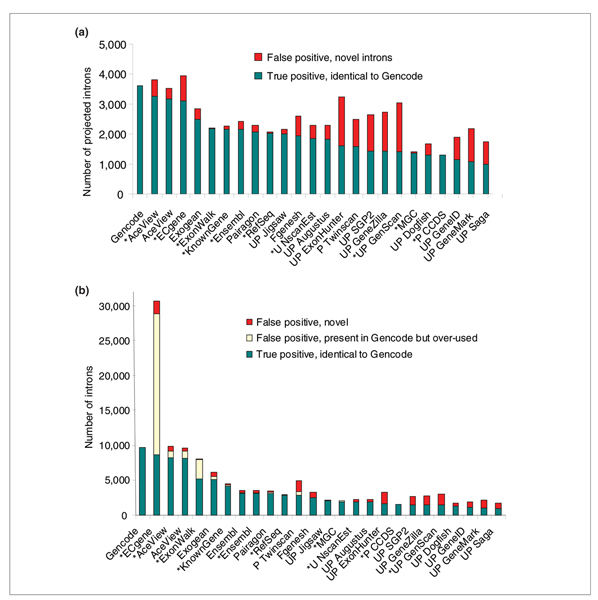
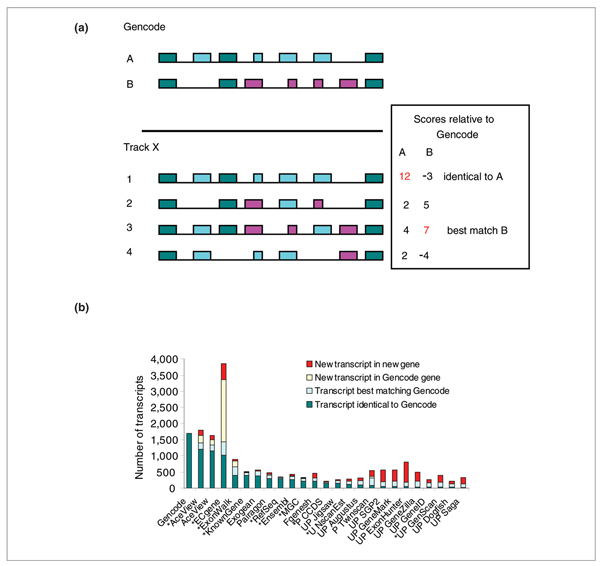
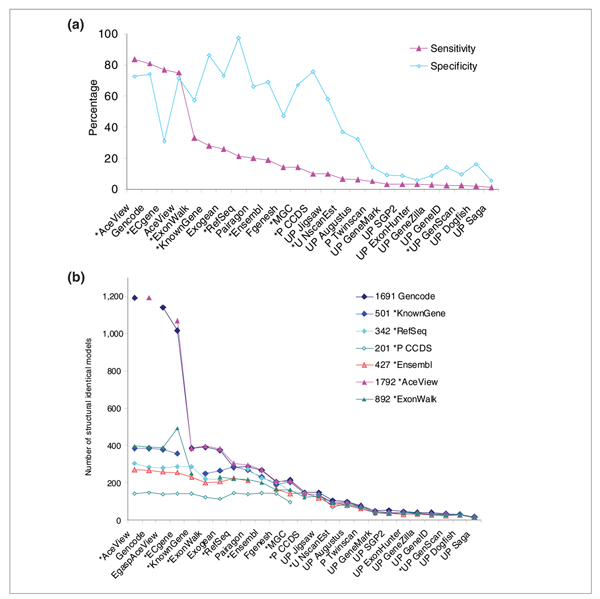
Background: Regions covering one percent of the genome, selected by ENCODE for extensive analysis, were annotated by the HAVANA/Gencode group with high quality transcripts, thus defining a benchmark. The ENCODE Genome Annotation Assessment Project (EGASP) competition aimed at reproducing Gencode and finding new genes. The organizers evaluated the protein predictions in depth. We present a complementary analysis of the mRNAs, including alternative transcript variants. Results: We evaluate 25 gene tracks from the University of California Santa Cruz (UCSC) genome browser. We either distinguish or collapse the alternative splice variants, and compare the genomic coordinates of exons, introns and nucleotides. Whole mRNA models, seen as chains of introns, are sorted to find the best matching pairs, and compared so that each mRNA is used only once. At the mRNA level, AceView is by far the closest to Gencode: the vast majority of transcripts of the two methods, including alternative variants, are identical. At the protein level, however, due to a lack of experimental data, our predictions differ: Gencode annotates proteins in only 41% of the mRNAs whereas AceView does so in virtually all. We describe the driving principles of AceView, and how, by performing hand-supervised automatic annotation, we solve the combinatorial splicing problem and summarize all of GenBank, dbEST and RefSeq into a genome-wide non-redundant but comprehensive cDNA-supported transcriptome. AceView accuracy is now validated by Gencode. Conclusion: Relative to a consensus mRNA catalog constructed from all evidence-based annotations, Gencode and AceView have 81% and 84% sensitivity, and 74% and 73% specificity, respectively. This close agreement validates a richer view of the human transcriptome, with three to five times more transcripts than in UCSC Known Genes (sensitivity 28%), RefSeq (sensitivity 21%) or Ensembl (sensitivity 19%).
Overview
The claims and statistics of this paper haven’t been checked yet.
Free: it reads the open-access text and checks the first 5 claims that cite a source we can check. Create a free account to check every claim.
Integrity signals
Registry
Cites
Statistics
Figures
Verification
Claims the paper makes
The claims and statistics of this paper haven’t been checked yet.
Free: it reads the open-access text and checks the first 5 claims that cite a source we can check. Create a free account to check every claim.
Claims other papers make about this one
Each is checked against this paper’s own text: does it say what the citing paper says it does?
The check wasn’t confident either way, so it gives no verdict — never disputed.
In the citing paper
“We also observed substantial but 12% lower agreement with TopHat2, regardless of whether it was run with or without gene model guided alignment 17 (Supplementary Figure 5a), giving a total of 1,110,550 junctions consistently found by all five analysis variants.”
From A comprehensive assessment of RNA-seq accuracy, reproducibility and information content by the Sequencing Quality Control Consortium (2014) · cites this paper as [17]
Experimental — accuracy not yet measured
Self-check
Percentages, sums and reported differences re-computed from the paper’s own numbers.
The self-check needs the paper’s full text.
Citations
Cites
Finishing the euchromatic sequence of the human genome
International Human Genome Sequencing Consortium (2004) · Nature · doi:10.1038/nature03001 · Cited by 4,971
The ENCODE (ENCyclopedia Of DNA Elements) Project
(2004) · Science · doi:10.1126/science.1105136 · Cited by 2,390 · cited 1×
“project [1], launched by the National Human Genome Research Institute, encourages a concentration of international efforts and expertise on 1% of the human genome, in 44 carefully selected regions taken as representative of the whole genome, in the hope that mature annotation techniques will be developed, validated, a…”
BackgroundThe UCSC Genome Browser Database: update 2006
Hinrichs, A. S. (2006) · Nucleic Acids Research · doi:10.1093/nar/gkj144 · Cited by 1,646 · cited 1×
“The UCSC genome browser [2] provides fast and open access to a highly configurable view of a wealth of sequence-based genome annotations.”
BackgroundFrom Birth to Death: The Complex Lives of Eukaryotic mRNAs
Moore, M. J. (2005) · Science · doi:10.1126/science.1111443 · Cited by 1,010 · cited 4×
“Indeed, activation of mRNA degradation by this pathway requires a pioneering round of translation that, due to the dual role of NMD proteins in activating translation, should be very efficient on transcripts still decorated with exon junction complexes (reviewed in [10,11]).”
BackgroundInfluentialComplete sequencing and characterization of 21,243 full-length human cDNAs
Ota, T., Suzuki, Y., Nishikawa, T., Otsuki, T., Sugiyama, T., Irie, R., Wakamatsu, A., Hayashi, K., Sato, H., Nagai, K., et al. (2004) · Nature Genetics · doi:10.1038/ng1285 · Cited by 925 · cited 1×
“Indeed, we compared the high quality full-length cDNA libraries made by Sugano using the oligo-capping method in either the nematode Caenorhabditis elegans or human (all sequences are in GenBank [7,9]).”
MethodPushing the limits of the scanning mechanism for initiation of translation
Kozak, M. (2002) · Gene · doi:10.1016/s0378-1119(02)01056-9 · Cited by 919 · cited 3×
“But it is difficult to conceive how the ribosomes would be aware of these rules, instead of following the scanning mechanism experimentally established by Kozak [14].”
BackgroundInfluentialMendell, J. T., Sharifi, N. A., Meyers, J. L., Martinez-Murillo, F., & Dietz, H. C. (2004) · Nature Genetics · doi:10.1038/ng1429 · Cited by 876
Kimura, K., Wakamatsu, A., Suzuki, Y., Ota, T., Nishikawa, T., Yamashita, R., Yamamoto, J.-I., Sekine, M., Tsuritani, K., Wakaguri, H., et al. (2006) · Genome Research · doi:10.1101/gr.4039406 · Cited by 506 · cited 1×
“…almost linearly with new cDNA sequences: the addition to GenBank in January 2006 of close to two million 5’ complete capped ESTs by the Japanese FLJ group [26] proportionately increased by 26% the number of alternative variants, and added 7% new spliced genes to the AceView collection [7].”
BackgroundKozak, M. (1989) · Molecular and Cellular Biology · doi:10.1128/mcb.9.11.5073 · Cited by 478 · cited 1×
“But if the mRNA appears to be complete, the CDS starts at the first AUG codon, unless there is, in the correct environment, an in frame NUG or ANG codon [14,17-20] at least 180 bp upstream of the first AUG.”
BackgroundEGASP: the human ENCODE Genome Annotation Assessment Project.
Guigó, R., Flicek, P., Abril, J. F., Reymond, A., Lagarde, J., Denœud, F., Antonarakis, S. E., Ashburner, M., Bajić, V. B., Birney, E., et al. (2006) · Genome biology · doi:10.1186/gb-2006-7-s1-s2 · Cited by 370
Cited by
Items 101–200 of 650
Koirala, S., & Corfas, G. (2010) · PLoS ONE · doi:10.1371/journal.pone.0009198 · Cited by 92
RNA-Seq investigations of human post-mortem trigeminal ganglia
LaPaglia, D. M., Sapio, M. R., Burbelo, P. D., Thierry‐Mieg, J., Thierry‐Mieg, D., Raithel, S. J., Ramsden, C. E., Iadarola, M. J., & Mannes, A. J. (2017) · Cephalalgia · doi:10.1177/0333102417720216 · Cited by 101
Self-citationTranscription factor YY1 expression in human gastrointestinal cancer cells
Weber (2009) · International Journal of Oncology · doi:10.3892/ijo_00000270 · Cited by 97
Neil3, the final frontier for the DNA glycosylases that recognize oxidative damage
Liu, M., Doublié, S., & Wallace, S. S. (2013) · Mutation Research - Fundamental and Molecular Mechanisms of Mutagenesis · doi:10.1016/j.mrfmmm.2012.12.003 · Cited by 87
Tumour homing peptide-functionalized porous silicon nanovectors for cancer therapy
Kinnari, P., Hyvönen, M. L. K., Mäkilä, E. M., Kaasalainen, M. H., Rivinoja, A., Salonen, J., Hirvonen, J. J., Laakkonen, P. M., & Santos, H. A. (2013) · Biomaterials · doi:10.1016/j.biomaterials.2013.08.034 · Cited by 87
Pharmacological targeting and the diverse functions of the metastasis suppressor, NDRG1, in cancer
Park, K. C., Paluncic, J., Kovačević, Ž., & Richardson, D. R. (2019) · Free Radical Biology and Medicine · doi:10.1016/j.freeradbiomed.2019.05.020 · Cited by 93
The Emerging Role of TYRO3 as a Therapeutic Target in Cancer
Smart, S. K., Vasileiadi, E., Wang, X., DeRyckere, D., & Graham, D. K. (2018) · Cancers · doi:10.3390/cancers10120474 · Cited by 82
“Next generation computational modeling methods that rely on publicly-available cDNA and mRNA data predicted the existence of up to 9 TYRO3 splice variants containing overlapping exons, alternative splicing or intron retention, although these have not been verified in cell-based assays [13].”
MethodWang, C., Su, P., Du, X., Kuo, M., Lin, C., Yang, C., Chan, H., Chang, S., Kuo, C. J., Kyunga, S., et al. (2009) · Journal of Cellular Physiology · doi:10.1002/jcp.21990 · Cited by 96
“The key functional domain on TSP1 responsible for regulating angiogenesis is located at its thrombospondin type I repeats (TSRs) (Tolsma et al., 1993; Iruela-Arispe et al., 1999).”
BackgroundMane, S. P., Evans, C., Cooper, K. L., Crasta, O. R., Folkerts, O., Hutchison, S. K., Harkins, T. T., Thierry-Mieg, D., Thierry-Mieg, J., & Jensen, R. V. (2009) · BMC Genomics · doi:10.1186/1471-2164-10-264 · Cited by 83
“We have also used the AceView alignment software [18] to co-align these 3.”
MethodInfluentialSelf-citationHigh-throughput quantification of splicing isoforms
Brosseau, J.-P., Lucier, J.-F., Lapointe, E., Durand, M., Gendron, D., Gervais-Bird, J., Tremblay, K., Perreault, J.-P., & Elela, S. A. (2010) · RNA · doi:10.1261/rna.1877010 · Cited by 87
“…edu) or NCBI BLAST (Altschul et al. 1997) as a script parameter on an in-house transcript database based on the Aceview annotation (Thierry-Mieg and Thierry-Mieg 2006), for giving low primer pair penalties according to Primer3 and no mispriming when checked against the Primer3…”
MethodHrdličková, R., Nehyba, J., Bargmann, W., & Bose, H. R. (2014) · PLoS ONE · doi:10.1371/journal.pone.0086990 · Cited by 91
The non-human primate reference transcriptome resource (NHPRTR) for comparative functional genomics
Pipes, L., Li, S., Bozinoski, M., Palermo, R., Peng, X., Blood, P., Kelly, S., Weiss, J. M., Thierry-Mieg, J., Thierry-Mieg, D., et al. (2013) · Nucleic Acids Research · doi:10.1093/nar/gks1268 · Cited by 83
“Next, additional alignments from the AceView aligner (22) will be added, which will be very useful for defining the non-coding RNAs of the transcriptome and also the exon–intron junctions, along with the outputs from Tophat and BWA.”
MethodSelf-citationHeap, L. A., Goh, C. C., Kassahn, K. S., & Scott, E. K. (2013) · Frontiers in Neural Circuits · doi:10.3389/fncir.2013.00053 · Cited by 79
“, 2010), as well as skeletal muscle (Thierry-Mieg and Thierry-Mieg, 2006).”
BackgroundPP4R4/KIAA1622 Forms a Novel Stable Cytosolic Complex with Phosphoprotein Phosphatase 4
Chen, G. I., Tisayakorn, S., Jorgensen, C., D'Ambrosio, L. M., Goudreault, M., & Gingras, A.-C. (2008) · Journal of Biological Chemistry · doi:10.1074/jbc.m803443200 · Cited by 81
Role of H1 linker histones in mammalian development and stem cell differentiation
Pan, C., & Fan, Y. (2015) · Biochimica et Biophysica Acta (BBA) - Gene Regulatory Mechanisms · doi:10.1016/j.bbagrm.2015.12.002 · Cited by 98
Review of the literature examining the correlation among DNA microarray technologies
Yauk, C. L., & Berndt, M. L. (2007) · Environmental and Molecular Mutagenesis · doi:10.1002/em.20290 · Cited by 79
Shumay, E., Fowler, J. S., & Volkow, N. D. (2010) · PLoS ONE · doi:10.1371/journal.pone.0011067 · Cited by 79
“denotes ten putative TSSs with comparable low scores and the AceView”
BackgroundPolyester type polyHIPE scaffolds with an interconnected porous structure for cartilage regeneration
Naranđa, J., Sušec, M., Maver, U., Gradišnik, L., Gorenjak, M., Vukasović, A., Ivković, A., Rupnik, M. S., Vogrin, M., & Krajnc, P. (2016) · Scientific Reports · doi:10.1038/srep28695 · Cited by 85
A systems approach for discovering linoleic acid derivatives that potentially mediate pain and itch
Ramsden, C. E., Domenichiello, A. F., Yuan, Z., Sapio, M. R., Keyes, G. S., Mishra, S. K., Gross, J. R., Majchrzak‐Hong, S. F., Zamora, D., Horowitz, M. S., et al. (2017) · Science Signaling · doi:10.1126/scisignal.aal5241 · Cited by 79
“SRA and other human data were aligned and quantified using the MAGIC pipeline (45) and a genome target built in March 2016 based on RefSeq and AceView annotations (46).”
MethodTan, T. C. J., Knight, J., Sbarrato, T., Dudek, K., Willis, A. E., & Zamoyska, R. (2017) · Proceedings of the National Academy of Sciences · doi:10.1073/pnas.1700939114 · Cited by 79
Leiden open variation database of the MUTYH gene
Out, A. A., Tops, C. M. J., Nielsen, M., Weiss, M. M., van Minderhout, I. J. H. M., Fokkema, I. F. A. C., Buisine, M.-P., Claes, K., Colas, C., Fodde, R., et al. (2010) · Human Mutation · doi:10.1002/humu.21343 · Cited by 77
Transcriptional regulation of mammalian selenoprotein expression
Stoytcheva, Z. R., & Berry, M. J. (2009) · Biochimica et Biophysica Acta (BBA) - General Subjects · doi:10.1016/j.bbagen.2009.05.012 · Cited by 76
Knouf, E. C., Garg, K., Arroyo, J. D., Correa, Y., Sarkar, D., Parkin, R. K., Wurz, K., O’Briant, K. C., Godwin, A. K., Urban, N. D., et al. (2012) · Nucleic Acids Research · doi:10.1093/nar/gkr731 · Cited by 72
“There are currently more than 8 million ESTs in dbEST and notably approximately 2 million 50 capped ESTs in Genbank submitted by Kimura et al. (55).”
MethodInfluentialICE1 promotes the link between splicing and nonsense-mediated mRNA decay
Baird, T. D., Cheng, K. C.-C., Chen, Y.-C., Buehler, E., Martin, S. E., Inglese, J., & Hogg, J. R. (2018) · eLife · doi:10.7554/elife.33178 · Cited by 76
“Consistent with this hypothesis, stable overexpression of the (3XFLAG-MIF4G) protein used for immunoprecipitation experiments caused a reproducible several-fold increase in levels of two mRNAs that responded strongly to both ICE1 and UPF1 knockdown in RNAseq and qRT-PCR experiments, ANXA1 (which contains a putative uO…”
Andrew, T., Maniatis, N., Carbonaro, F., Liew, S. H. M., Lau, W., Spector, T. D., & Hammond, C. J. (2008) · PLoS Genetics · doi:10.1371/journal.pgen.1000220 · Cited by 77
“... Map 2 data was estimated to be at 182,595 kb with a 95% confidence interval of 182,533–182,688 kb (Table 3). This location is approximately 156 kb upstream (59) from the alternate-splicing ncRNA gene SOX2OT and 317 kb from the SOX2 transcription start sites (Figure 4). The confidence interval includes no known gen…”
BackgroundInfluentialMACC1—the first decade of a key metastasis molecule from gene discovery to clinical translation
Radhakrishnan, H., Walther, W., Zincke, F., Kobelt, D., Imbastari, F., Erdem, M., Kortüm, B., Dahlmann, M., & Stein, U. (2018) · Cancer and Metastasis Reviews · doi:10.1007/s10555-018-9771-8 · Cited by 84
TDP‐1, the Caenorhabditis elegans ortholog of TDP‐43, limits the accumulation of double‐stranded RNA
Saldi, T. K., Ash, P. E., Wilson, G., Gonzales, P., Garrido‐Lecca, A., Roberts, C. M., Dostal, V., Gendron, T. F., Stein, L. D., Blumenthal, T., et al. (2014) · The EMBO Journal · doi:10.15252/embj.201488740 · Cited by 71
“While about 8% of the worm genome is arranged antisense to another gene (Thierry-Mieg & Thierry-Mieg, 2006), approximately 35% of increased and decreased transcripts were arranged in this manner, representing a highly significant enrichment ( P = 5.3 × 10 (cid:1) 181 , hyper-geometric distribution…”
InfluentialHoenicka, J., Quiñones‐Lombraña, A., España‐Serrano, L., Alvira-Botero, X., Kremer, L., Pérez‐González, R., Rodríguez–Jiménez, R., Jiménez‐Arriero, M. Á., Ponce, G., & Palomo, T. (2009) · Biological Psychiatry · doi:10.1016/j.biopsych.2009.08.012 · Cited by 80
Peng, X., Thierry‐Mieg, J., Thierry‐Mieg, D., Nishida, A., Pipes, L., Bozinoski, M., Thomas, M. J., Kelly, S. M., Weiss, J. M., Raveendran, M., et al. (2014) · Nucleic Acids Research · doi:10.1093/nar/gku1110 · Cited by 77
“org and (13)) (Supplementary Figure S1).”
Self-citationThe landscape of human mutually exclusive splicing
Hatje, K., Rahman, R., Vidal, R. O., Simm, D., Hammesfahr, B., Bansal, V., Rajput, A., Mickael, M., Sun, T., Bonn, S., et al. (2017) · Molecular Systems Biology · doi:10.15252/msb.20177728 · Cited by 74
“Therefore, we obtained alternative protein sequence datasets from Aceview (Thierry-Mieg & Thierry-Mieg, 2006) and Ensembl (Yates et al, 2016).”
MethodInfluentialAnticancer drugs affect the alternative splicing of Bcl-x and other human apoptotic genes
Shkreta, L., Froehlich, U., Paquet, É. R., Toutant, J., Elela, S. A., & Chabot, B. (2008) · Molecular Cancer Therapeutics · doi:10.1158/1535-7163.mct-08-0192 · Cited by 69
“Bioinformatic Analysis and Data Processing A set of 96 alternative splicing units from human apoptotic genes was selected from the AceView database (32).”
MethodMACC1 — more than metastasis? Facts and predictions about a novel gene
Stein, U., Dahlmann, M., & Walther, W. (2009) · Journal of Molecular Medicine · doi:10.1007/s00109-009-0537-1 · Cited by 79
“b Schematic structure of the primary transcript of MACC1 with seven exons and six introns (I) and alternative splice variants (II–VI) in a 5′ to 3′ alignment, according to [12].”
BackgroundIntergenic disease-associated regions are abundant in novel transcripts
Bartoniček, N., Clark, M. B., Quek, X. C., Torpy, J., Pritchard, A. L., Mååg, J. L. V., Gloss, B., Crawford, J., Taft, R. J., Hayward, N. K., et al. (2017) · Genome biology · doi:10.1186/s13059-017-1363-3 · Cited by 76
Barrett, C. L., DeBoever, C., Jepsen, K., Saenz, C. C., Carson, D. A., & Frazer, K. A. (2015) · Proceedings of the National Academy of Sciences · doi:10.1073/pnas.1508057112 · Cited by 72
Müller, R., Jenny, A., & Stanley, P. (2013) · PLoS ONE · doi:10.1371/journal.pone.0062835 · Cited by 75
Zhang, P. G. Y., Huang, S. Z., Pin, A.-L., & Adams, K. L. (2010) · Molecular Biology and Evolution · doi:10.1093/molbev/msq054 · Cited by 74
Eykelenboom, J. E., Briggs, G. J., Bradshaw, N. J., Soares, D. C., Ogawa, F., Christie, S., Malavasi, E. L. V., Makedonopoulou, P., Mackie, S., Malloy, M. P., et al. (2012) · Human Molecular Genetics · doi:10.1093/hmg/dds169 · Cited by 76
“Thus, the disrupted gene on chromosome 11 has been officially named DISC1 Fusion Partner 1 (DISC1FP1) (12) to reflect this biological mechanism, although it has also been referred to using the AceView (13) name Boymaw (11).”
BackgroundBushel, P. R., Paules, R. S., & Auerbach, S. S. (2018) · Frontiers in Genetics · doi:10.3389/fgene.2018.00485 · Cited by 69
HORDE: Comprehensive Resource for Olfactory Receptor Genomics
Olender, T., Nativ, N., & Lancet, D. (2013) · Methods in molecular biology · doi:10.1007/978-1-62703-377-0_2 · Cited by 70
Zhang, D., Guelfi, S., Garcia-Ruiz, S., Costa, B., Reynolds, R. H., D’Sa, K., Liu, W., Courtin, T., Peterson, A., Jaffe, A. E., et al. (2020) · Science Advances · doi:10.1126/sciadv.aay8299 · Cited by 66
The role of junctophilin proteins in cellular function
Lehnart, S. E., & Wehrens, X. H. T. (2022) · Physiological Reviews · doi:10.1152/physrev.00024.2021 · Cited by 67
“Various sequence annotation viewers including Entrez, Ensembl, and AceView suggest that human JPH genes can be alternatively spliced (20).”
BackgroundPlasschaert, R. N., Vigneau, S., Tempera, I., Gupta, R., Maksimoska, J., Everett, L., Davuluri, R., Mamorstein, R., Lieberman, P. M., Schultz, D., et al. (2014) · Nucleic Acids Research · doi:10.1093/nar/gkt910 · Cited by 62
Cross-study validation and combined analysis of gene expression microarray data
Garrett-Mayer, E. S., Parmigiani, G., Zhong, X., Cope, L., & Gabrielson, E. W. (2007) · Biostatistics · doi:10.1093/biostatistics/kxm033 · Cited by 67
UDP-glucuronosyltransferases (UGTs) in neuro-olfactory tissues: expression, regulation, and function
Heydel, J., Holsztynska, E. J., Legendre, A., Thiebaud, N., Artur, Y., & Bon, A. L. (2009) · Drug Metabolism Reviews · doi:10.3109/03602530903208363 · Cited by 73
“In the mouse brain, the genes closest to human UGT2B7 (according to BlastP analysis; AceView) (Thierry-Mieg and Thierry-Mieg, 2006) show the highest expression in the olfactory area (ABA), in the order of Ugt2b34>> 2b38> 2b35 (Figure 3).”
BackgroundCombining RT-PCR-seq and RNA-seq to catalog all genic elements encoded in the human genome
Howald, C., Tanzer, A., Chrast, J., Kokocinski, F., Derrien, T., Walters, N., Gonzalez, J. M., Frankish, A., Aken, B. L., Hourlier, T., et al. (2012) · Genome Research · doi:10.1101/gr.134478.111 · Cited by 60
WDR72 models of structure and function: A stage-specific regulator of enamel mineralization
Katsura, K. A., Horst, J. A., Chandra, D., Le, T. Q., Nakano, Y., Zhang, Y., Horst, O. V., Zhu, L., Le, M. H., & DenBesten, P. K. (2014) · Matrix Biology · doi:10.1016/j.matbio.2014.06.005 · Cited by 63
“P A A uthor M anuscript 5′UTRs and 3′UTRs (AceView) (Thierry-Mieg and Thierry-Mieg, 2006).”
BackgroundInfluentialStudying alternative splicing regulatory networks through partial correlation analysis
Chen, L., & Zheng, S. (2009) · Genome Biology · doi:10.1186/gb-2009-10-1-r3 · Cited by 59
“Other datasets and analysis Non-redundant human transcript annotations were assembled based on AceView gene [59], AUGUSTUS gene [60], CCDS gene [61,62], Ensembl gene [61], Geneid gene, Genescan gene [63], MGC gene, N-SCAN gene [64], ORFeome gene, RefSeq gene [62], SGP gene, SIB gene [65], UCSC genes [66], and ASTD gen…”
MethodDrgonova, J., Walther, D., Wang, K. J., Hartstein, G. L., Lochte, B., Troncoso, J., Uetani, N., Iwakura, Y., & Uhl, G. R. (2015) · Molecular Medicine · doi:10.2119/molmed.2015.00017 · Cited by 60
Snaptron: querying splicing patterns across tens of thousands of RNA-seq samples
Wilks, C., Gaddipati, P., Nellore, A., & Langmead, B. (2017) · Bioinform. · doi:10.1093/bioinformatics/btx547 · Cited by 48
EMA Review of Axicabtagene Ciloleucel (Yescarta) for the Treatment of Diffuse Large B-Cell Lymphoma
Papadouli, I., Mueller-Berghaus, J., Beuneu, C., Ali, S., Hofner, B., Pétavy, F., Tzogani, K., Miermont, A. M., Norga, K., Kholmanskikh, O., et al. (2020) · The Oncologist · doi:10.1634/theoncologist.2019-0646 · Cited by 71
“The human CD19 antigen is a 95-kD transmembrane glycoprotein belonging to the immunoglobulin superfamily [11, 12].”
BackgroundLiu, W., Kovačević, Ž., Peng, Z., Jin, R., Wang, P., Yue, F., Zheng, M., Huang, M., Jansson, P. J., Richardson, V., et al. (2015) · Oncotarget · doi:10.18632/oncotarget.5849 · Cited by 67
“2 in the AceView database [139]) [140] and encodes a stable protein which is ubiquitously expressed and predominantly cytosolic [24].”
BackgroundRosa, B. A., Jasmer, D. P., & Mitreva, M. (2014) · PLoS neglected tropical diseases · doi:10.1371/journal.pntd.0002678 · Cited by 74
Integrated cross-species transcriptional network analysis of metastatic susceptibility
Hu, Y., Wu, G., Rusch, M., Lukes, L., Buetow, K. H., Zhang, J., & Hunter, K. W. (2012) · Proceedings of the National Academy of Sciences · doi:10.1073/pnas.1117872109 · Cited by 59
Raulic, S., Ramos-Valdes, Y., & DiMattia, G. E. (2008) · Journal of Endocrinology · doi:10.1677/joe-08-0043 · Cited by 62
“Our data agree with previously published data showing several STC2 transcripts in human tissue and cell line RNAs (Chang & Reddel 1998, DiMattia et al. 1998, Moore et al. 1999) likely arising from the use of alternative polyadenylation signals in the O3 kb 3 0-untranslated region of the mRNA as predicted by Aceview (T…”
MethodHungate, E. A., Vora, S., Gamazon, E. R., Moriyama, T., Best, T., Hulur, I., Lee, Y., Evans, T., Ellinghaus, E., Stanulla, M., et al. (2016) · Nature Communications · doi:10.1038/ncomms10635 · Cited by 59
Endometriosis risk alleles at 1p36.12 act through inverse regulation of CDC42 and LINC00339
Powell, J. E., Fung, J. N., Shakhbazov, K., Sapkota, Y., Cloonan, N., Hemani, G., Hillman, K. M., Kaufmann, S., Luong, H. T., Bowdler, L., et al. (2016) · Human Molecular Genetics · doi:10.1093/hmg/ddw320 · Cited by 58
Szafron, L. M., Balcerak, A., Grzybowska, E. A., Pieńkowska‐Grela, B., Felisiak-Gołąbek, A., Podgórska, A., Kulesza, M., Nowak, N., Pomorski, P., Wysocki, J., et al. (2015) · PLoS ONE · doi:10.1371/journal.pone.0127475 · Cited by 61
“It is conceivable that the CRNDE gene may be regulated in a similar way, given that this gene encodes over 10 different splice variants, according to the AceView database [27].”
BackgroundShi, J., Chatterjee, N., Rotunno, M., Wang, Y., Pesatori, A. C., Consonni, D., Li, P., Wheeler, W., Broderick, P., Henrion, M., et al. (2011) · Cancer Discovery · doi:10.1158/2159-8290.cd-11-0246 · Cited by 64
Expression analysis of novel striatal-enriched genes in Huntington disease
Mazarei, G., Neal, S. J., Bečanović, K., Luthi‐Carter, R., Simpson, E. M., & Leavitt, B. R. (2009) · Human Molecular Genetics · doi:10.1093/hmg/ddp527 · Cited by 68
“AceView prediction (16) of alternate splicing exists (Table 2).”
BackgroundFlanagan, S. E., Patch, A., Locke, J. M., Akçay, T., Şimşek, E., Alaei, M., Yekta, Z., Desai, M. P., Kapoor, R. R., Hussain, K., et al. (2011) · The Journal of Clinical Endocrinology & Metabolism · doi:10.1210/jc.2010-1906 · Cited by 58
Neuhaus, C., Lang‐Roth, R., Zimmermann, U., Heller, R., Eisenberger, T., Weikert, M., Markus, S., Knipper, M., & Bolz, H. J. (2016) · Clinical Genetics · doi:10.1111/cge.12915 · Cited by 63
Lu, J., Lee, J. C., Salit, M., & Cam, M. C. (2007) · BMC Bioinformatics · doi:10.1186/1471-2105-8-108 · Cited by 62
Banlaki, Z., Elek, Z., Nanasi, T., Szekely, A., Nemoda, Z., Sasvari-Szekely, M., & Ronai, Z. (2015) · PLOS ONE · doi:10.1371/journal.pone.0117792 · Cited by 55
“Thus, it would be intriguing to explore possible interaction of ESD with neurobiological aspects and behavioral traits, especially as it is expressed all across the brain in considerable amounts according to AceView and TiGER databases [112,113].”
Costantini, T. W., Dang, X., Coimbra, R. S. M., Eliceiri, B. P., & Baird, A. (2014) · Journal of Leukocyte Biology · doi:10.1189/jlb.4ru0814-381r · Cited by 60
“predicted dupa7nAChR/CHRFAM7A protein encoded by a “mRNA-b transcript” has been described in some curated genomic databases, such as AceView [73], but its existence has”
BackgroundInfluentialTrans-Ancestral Studies Fine Map the SLE-Susceptibility Locus TNFSF4
Manku, H., Langefeld, C. D., Guerra, S. G., Malik, T. H., Alarcón-Riquelme, M. E., Anaya, J., Bae, S., Boackle, S. A., Brown, E. E., Criswell, L. A., et al. (2013) · PLoS Genetics · doi:10.1371/journal.pgen.1003554 · Cited by 61
“Primer3 was used to design gene specific primers suitable for four alternative splicing variants predicted by the Aceview alternative splicing modelling tool [34].”
MethodVariants Affecting Exon Skipping Contribute to Complex Traits
Lee, Y., Gamazon, E. R., Rebman, E., Lee, Y., Lee, S., Dolan, M. E., Cox, N. J., & Lussier, Y. A. (2012) · PLoS Genetics · doi:10.1371/journal.pgen.1002998 · Cited by 62
“edu/goldenPath/hg18/database/, 8/11/ 2010) [58]: 1) mRNAs from GenBank [59], 2) Ensembl Gene Predictions [60], 3) AceView Gene Models [61], and 4) UCSC known genes [62].”
BackgroundSjögren’s syndrome-associated microRNAs in CD14+ monocytes unveils targeted TGFβ signaling
Williams, A. E. G., Choi, K., Chan, A. L., Lee, Y. J., Reeves, W. H., Bubb, M., Stewart, C. M., & Cha, S. (2016) · Arthritis Research & Therapy · doi:10.1186/s13075-016-0987-0 · Cited by 59
“(PDF 68 kb) Abbreviations ANOVA: analysis of variance; BAFF: B cell-activating factor; BMP-2: bone morphogenetic protein 2; CREB1: cAMP response element binding-1; DC: dendritic cell; HC: healthy control; Hsa: Homo sapiens; IFN: interferon; IL: interleukin; IκBα: nuclear factor of kappa light polypeptide gene enhancer…”
BackgroundMethodInfluentialHigh-Resolution Profiling of Novel Transcribed Regions During Rat Spermatogenesis1
Chalmel, F., Lardenois, A., Evrard, B., Rolland, A. D., Sallou, O., Dumargne, M.-C., Coiffec, I., Collin, O., Primig, M., & Jégou, B. (2014) · Biology of Reproduction · doi:10.1095/biolreprod.114.118166 · Cited by 62
Kristiansen, G., Hu, J., Wichmann, D., Stiehl, D. P., Rose, M., Gerhardt, J., Bohnert, A., ten Haaf, A., Moch, H., Raleigh, J. A., et al. (2011) · Journal of Biological Chemistry · doi:10.1074/jbc.m111.227553 · Cited by 56
Genomewide association study of body weight traits in Baluchi sheep
Gholizadeh, M., Rahimi-Mianji, G., & Nejati‐Javaremi, A. (2015) · Journal of Genetics · doi:10.1007/s12041-015-0469-1 · Cited by 52
“Putative protein interactions have been described (ING4, ING5 and MYST2) (Thierry-Mieg and Thierry-Mieg 2006).”
Velmeshev, D., Magistri, M., & Faghihi, M. A. (2013) · Molecular Autism · doi:10.1186/2040-2392-4-32 · Cited by 52
“Bioinformatic identification of ASD-related noncoding RNAs AceView is a transcriptome database created and supported by the National Center for Biotechnology Information (NCBI) that represents a curated non-redundant collection of RNA transcripts derived from public cDNA collections (mRNAs from GenBank or RefSeq, and…”
MethodChurch, R. J., Wu, H., Mosedale, M., Sumner, S., Pathmasiri, W., Kurtz, C. L., Pletcher, M. T., Eaddy, J. S., Pandher, K., Singer, M. M., et al. (2014) · Toxicological Sciences · doi:10.1093/toxsci/kfu094 · Cited by 52
“…Mouse Genome 430 2.0 probe sequences were aligned to the NCBI Build 37 version of the mouse genome as part of the AceView annotation project (Thierry-Mieg and Theirry-Mieg, 2006), and genomic locations were downloaded from AceView (http:// www.ncbi.nlm.nih.gov/IEB/Research/Acembly/; version…”
InfluentialBatista, F., Lu, L., Williams, S. A., & Stanley, P. (2012) · Biology of Reproduction · doi:10.1095/biolreprod.111.098103 · Cited by 56
Eid, L. E., Reynolds, C. A., Tomás, A., & Jones, B. J. (2022) · Pharmacological Research · doi:10.1016/j.phrs.2022.106411 · Cited by 57
TCF4 (e2‐2; ITF2): A schizophrenia‐associated gene with pleiotropic effects on human disease
Navarrete, K., Pedroso, I., de Jong, S., Stefánsson, H., Steinberg, S., Stefánsson, K., Ophoff, R. A., Schalkwyk, L. C., & Collier, D. A. (2012) · American Journal of Medical Genetics Part B Neuropsychiatric Genetics · doi:10.1002/ajmg.b.32109 · Cited by 59
“Likewise, two transcripts of human TCF4 are annotated in the NCBI Entrez database, but four in Ensembl, 10 in UCSC and 38 in NCBI AceView database (version April 2007) [Thierry-Mieg and Thierry-Mieg, 2006].”
BackgroundASPicDB: a database of annotated transcript and protein variants generated by alternative splicing
Martelli, P. L., D’Antonio, M., Bonizzoni, P., Castrignanò, T., D’Erchia, A. M., Meo, P. D. D., Fariselli, P., Finelli, M., Licciulli, F., Mangiulli, M., et al. (2010) · Nucleic Acids Research · doi:10.1093/nar/gkq1073 · Cited by 51
“(1) Gene information reports a summary of the genomic and transcript data used by ASPIC to generate the prediction, downloadable by the user and links to other popular prediction programs such as ASAP2 (21), ASD (20) and ACEVIEW (41) as well as to ASPIC results for orthologous genes in other species.”
MethodDykstra-Aiello, C., Jickling, G. C., Ander, B. P., Zhan, X., Liu, D., Hull, H., Orantia, M., Ho, C., & Stamova, B. S. (2015) · Translational Stroke Research · doi:10.1007/s12975-015-0407-9 · Cited by 54
“They were generated from aligned bam files using featureCounts against AceView (NCBI 37) [11] with options allowing for any and multiple overlaps [12].”
MethodModern origin of numerous alternatively spliced human introns from tandem arrays
Zhuo, D., Madden, R., Elela, S. A., & Chabot, B. (2007) · Proceedings of the National Academy of Sciences · doi:10.1073/pnas.0604777104 · Cited by 53
Assessing the impact of human genome annotation choice on RNA-seq expression estimates
Wu, P.-Y., Phan, J. H., & Wang, M. D. (2013) · BMC Bioinformatics · doi:10.1186/1471-2105-14-s11-s8 · Cited by 54
“We compare six human genome annotations from various databases, including the AceView database [9], the Ensembl database [12], the H-InvDB database [13], the RefSeq database [10], the UCSC Known Genes database [14], and the Vega database [15].”
BackgroundMethodInfluentialVertebrate nucleoplasmin and NASP: egg histone storage proteins with multiple chaperone activities
Finn, R. M., Ellard, K., Eirin-Lopez, J. M., & Ausió, J. (2012) · The FASEB Journal · doi:10.1096/fj.12-216663 · Cited by 51
“variants potentially encoding proteins (45), although”
BackgroundInfluentialCharacterizing and annotating the genome using RNA-seq data
Chen, G., Shi, T., & Shi, L. M. (2016) · Science China Life Sciences · doi:10.1007/s11427-015-0349-4 · Cited by 62
Tensor Factorization for Precision Medicine in Heart Failure with Preserved Ejection Fraction
Luo, Y., Ahmad, F. S., & Shah, S. J. (2017) · Journal of Cardiovascular Translational Research · doi:10.1007/s12265-016-9727-8 · Cited by 49
“such as STRING [34], KEGG [35], InterPro [36], Aceview [37], and Pfam [38].”
Ustinova, K., Nováková, Z., Saito, M., Meleshin, M., Mikesova, J., Kutil, Z., Baranová, P., Havlínová, B., Schutkowski, M., Matthias, P., et al. (2020) · Journal of Biological Chemistry · doi:10.1074/jbc.ra119.011243 · Cited by 52
“Thirty-three alternatively spliced mRNA variants of human HDAC6 are predicted to exist (52) although the evidence for the existence of the translated protein species in vivo is missing.”
BackgroundASPicDB: A database resource for alternative splicing analysis
Castrignanò, T., D’Antonio, M., Anselmo, A., Carrabino, D., Meo, A. D. D., D’Erchia, A. M., Licciulli, F., Mangiulli, M., Mignone, F., Pavesi, G., et al. (2008) · Bioinformatics · doi:10.1093/bioinformatics/btn113 · Cited by 50
“…and databases is currently available for genome-wide investigation and prediction of alternative splicing in human and other organisms: ASD (Stamm et al ., 2006), ECgene (Lee et al ., 2007), ASAP2 (Kim et al ., 2007), Hollywood (Holste et al ., 2006), AceView (Thierry-Mieg and Thierry-Mieg, 2006).”
BackgroundMethodInfluentialVasiliou, V., Sandoval, M., Backos, D. S., Jackson, B. C., Chen, Y., Reigan, P., Lanaspa, M. A., Johnson, R. J., Koppaka, V., & Thompson, D. C. (2013) · Chemico-Biological Interactions · doi:10.1016/j.cbi.2012.12.018 · Cited by 48
“Ten splice variants for ALDH16A1 are listed in the AceView database [35] and one of them has been included in the NCBI Gene database that we named as ALDH16A1_v2 (Fig.”
BackgroundA testis-specific regulator of complex and hybrid N-glycan synthesis
Huang, H.-H., & Stanley, P. (2010) · The Journal of Cell Biology · doi:10.1083/jcb.201004102 · Cited by 51
“In addition, glycosyltransferase genes give rise to numerous splice forms that may produce enzymes of different activity or specificity (Thierry-Mieg and Thierry-Mieg, 2006).”
Fine mapping of the Asian soybean rust resistance gene Rpp2 from soybean PI 230970
Yu, N., Kim, M.-S., King, Z. R., Harris, D. K., Buck, J. W., Li, Z., & Diers, B. W. (2014) · Theoretical and Applied Genetics · doi:10.1007/s00122-014-2438-0 · Cited by 46
“1 but shows differences in expression level, number of GT-AG introns, and alternative splicing products in Arabidopsis (Thierry-Mieg and Thierry-Mieg 2006).”
BackgroundECgene: an alternative splicing database update
Lee, Y., Lee, Y., Kim, B., Shin, Y., Nam, S., Kim, N., Kim, N., Chung, W., Kim, J., & Lee, S. (2006) · Nucleic Acids Research · doi:10.1093/nar/gkl992 · Cited by 51
“AceView provides a comprehensive overview of functional and structural aspects of alternatively spliced genes for human, worm and Arabidopsis genomes (10).”
BackgroundAmarillo, I. E., Li, W. L., Li, X., Vilain, E. J. N., & Kantarci, S. (2014) · American Journal of Medical Genetics Part A · doi:10.1002/ajmg.a.36393 · Cited by 53
“[Thierry-Mieg and Thierry-Mieg, 2006].”
Impact of RNA-seq data analysis algorithms on gene expression estimation and downstream prediction
Li, T., Wu, P.-Y., Phan, J. H., Hassazadeh, H., Jones, W. D., Shi, L. M., Fischer, M., Mason, C. E., Li, S., Xu, J., et al. (2020) · Scientific Reports · doi:10.1038/s41598-020-74567-y · Cited by 51
Self-citationRecount: expectation maximization based error correction tool for next generation sequencing data.
Wijaya, E., Frith, M. C., Suzuki, Y., & Horton, P. (2009) · PubMed · Cited by 50
Relatively frequent switching of transcription start sites during cerebellar development
Zhang, P. G. Y., Dimont, E., Ha, T. J., Swanson, D. J., Hide, W., & Goldowitz, D. (2017) · BMC Genomics · doi:10.1186/s12864-017-3834-z · Cited by 49
“gov/IEB/Research/Acembly/ [19]) as well as functional domains of their protein products from protein domain database PhosphoSitePlus (http://www.”
BackgroundSchmitt, C. A., Service, S. K., Jasinska, A. J., Dyer, T. D., Jorgensen, M. J., Cantor, R. M., Weinstock, G. M., Blangero, J., Kaplan, J. R., & Freimer, N. B. (2017) · International Journal of Obesity · doi:10.1038/ijo.2017.301 · Cited by 45
Loan, J. J., Kirby, C., Emelianova, K., Dando, O., Poon, M. T. C., Pimenova, L., Hardingham, G. E., McColl, B. W., Klijn, C. J. M., Salman, R. A., et al. (2021) · Journal of Neurology Neurosurgery & Psychiatry · doi:10.1136/jnnp-2021-327098 · Cited by 43
Annalora, A. J., Marcus, C. B., & Iversen, P. L. (2017) · Drug Metabolism and Disposition · doi:10.1124/dmd.116.073254 · Cited by 50
“database (Thierry-Mieg and Thierry-Mieg, 2006) indicate that some P450 variants may be targeted to the nucleus, peroxisome, plasma membrane, or vacuole compartments, in addition to classic targets in the ER, mitochondria, or cytoplasm.”
BackgroundHolmes, R. S., VandeBerg, J. L., & Cox, L. A. (2011) · 3 Biotech · doi:10.1007/s13205-011-0013-9 · Cited by 48
“genes to interrogate the database of human mRNA sequences (Thierry-Mieg and Thierry-Mieg 2006) (http:// www.”
Gordon, P., Hingula, L., Krasny, M. L., Swienckowski, J. L., Pokrywka, N. J., & Raley-Susman, K. M. (2008) · Development Genes and Evolution · doi:10.1007/s00427-008-0250-z · Cited by 44
“The six putative isoforms of PTL-1 differ in the number of the microtubule-binding repeats, having either three or four of these regions (Thierry-Mieg and Thierry-Mieg 2006).”
Chowdhury, R., Chowdhury, A., & Maranas, C. D. (2015) · Metabolites · doi:10.3390/metabo5040536 · Cited by 51
SysZNF: the C2H2 zinc finger gene database
Ding, G., Lorenz, P., Kreutzer, M., Li, Y., & Thiesen, H.-J. (2008) · Nucleic Acids Research · doi:10.1093/nar/gkn782 · Cited by 48
“(i) Protein sequences and gene model information of human and mouse were downloaded from AceView (20).”
BackgroundMethodInfluentialLocke, J. M., Xavier, G. D. S., Rutter, G. A., & Harries, L. W. (2011) · Diabetologia · doi:10.1007/s00125-011-2290-6 · Cited by 48
“kr/ECgene/gbr/; accessed 18 July 2011) and AceView [11] (www.”
Background
Metadata
- Authors
- Thierry-Mieg, D., & Thierry-Mieg, J.
- Venue
- Genome Biology
- Published
- 2006-08-07
- Volume
- 7
- Issue
- S1
- Pages
- S12.1-14
- ISSN
- 1465-6906 (ISSN-L)
- 1474-760X
- PMC
- PMC1810549
- OpenAlex
- W2095907724
- Semantic Scholar
- 4337ea68f0395c054a12a88f1927f1ad98176606
- Cited by
- 629
- References
- 23
- Citations by year
- 2025: 10 · 2024: 22 · 2023: 21 · 2022: 22 · 2021: 26 · 2020: 23 · 2019: 15 · 2018: 21 · 2017: 45 · 2016: 39 · 2015: 40 · 2014: 58 · 2013: 47 · 2012: 57
- FWCI
- 12.36
- Type
- journal article
- Language
- en
- Open access
- gold
- doi.org
- Licence
- cc-by
- creativecommons.org/licenses/by/2.0/ (tdm)
- creativecommons.org/licenses/by/2.0/ (vor)
- Locations
- Genome biology (publishedVersion, cc-by)
- PubMed Central (publishedVersion, cc-by)
- PubMed (publishedVersion)
- Funders
- National Institutes of Health
- U.S. National Library of Medicine
- Topics
- Life Sciences › Biochemistry, Genetics and Molecular Biology › Molecular Biology › Genomics and Phylogenetic Studies
- Life Sciences › Biochemistry, Genetics and Molecular Biology › Molecular Biology › RNA Research and Splicing
- Life Sciences › Biochemistry, Genetics and Molecular Biology › Molecular Biology › Genomics and Chromatin Dynamics
- Keywords
- genome annotation, transcript annotation, alternative splicing, human transcriptome, ENCODE, GENCODE, UCSC Genome Browser, exon-intron structure
- MeSH terms
- Exons, Genes, Humans, Introns, Models, Genetic, Nucleotides, RNA, Messenger, Software, Sequence Analysis, DNA, Sequence Analysis, RNA, DNA, Complementary, Computational Biology, Sequence Analysis, Protein, Genomics
About these checks
Registry, retraction, Cites and statistics results are computed, not judged, with one exception: a printed reference that no index lists is read once by a model before it counts as a citation error. Claims are extracted by a model and kept only when their quote appears verbatim in the text; each cited source is then checked, with a model’s help, for whether it says what the claim relies on. Those verdicts can be wrong — read the claim’s quote and the cited source before relying on one.
Statistics and arithmetic are recomputed, not judged.
Confidence bands are shown only for fields calibrated on our annotated test set. None is calibrated yet, so no band is shown.
What counts as a claim ›How we measure confidence ›How we check this ›
Are you an author, or do you see a problem with this page? Request a review
Data sources
Bibliographic data: Semantic Scholar, OpenAlex, Crossref.
Contains information from the Semantic Scholar Academic Graph Datasets, made available under the ODC Attribution License (ODC-BY 1.0).
Semantic Scholar’s data is described in: Kinney, R., et al. (2023). The Semantic Scholar Open Data Platform. arXiv:2301.10140.
