

AceView: a comprehensive cDNA-supported gene and transcripts annotation
Open accessThe DOI matches its Crossref record; 23 of the 23 references it cites were found in a registry or an index.
Abstract
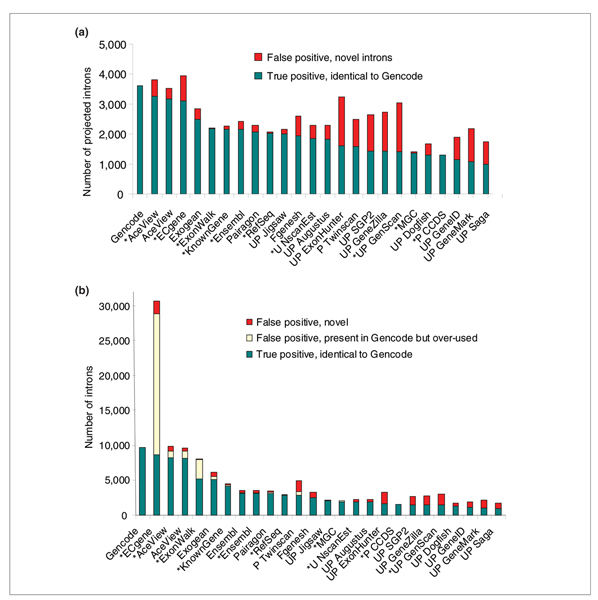
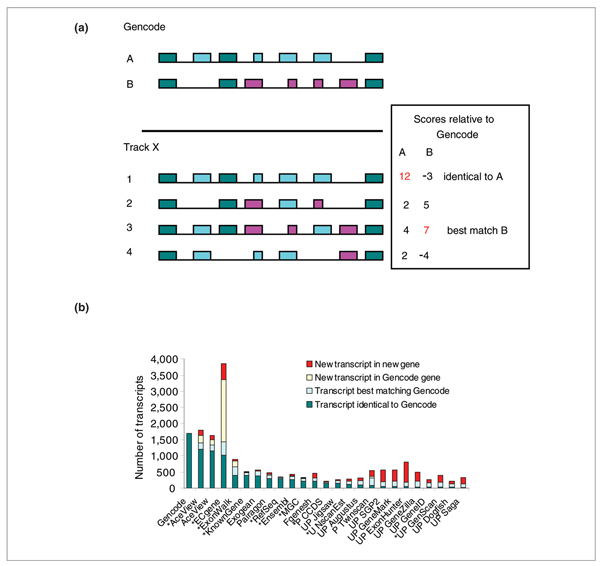
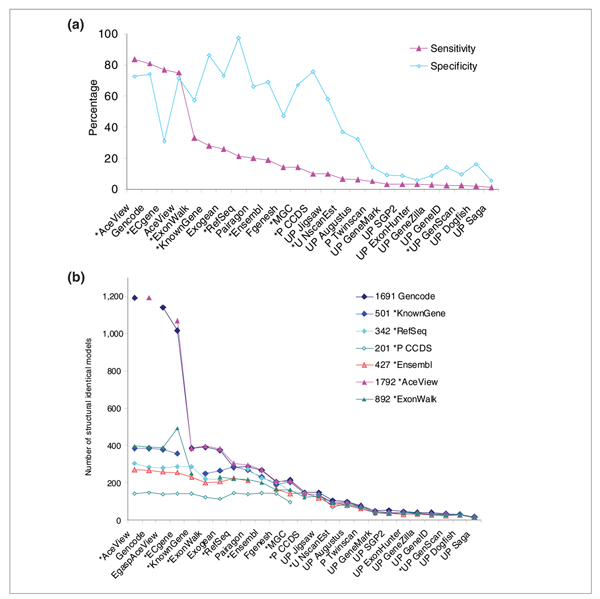
Background: Regions covering one percent of the genome, selected by ENCODE for extensive analysis, were annotated by the HAVANA/Gencode group with high quality transcripts, thus defining a benchmark. The ENCODE Genome Annotation Assessment Project (EGASP) competition aimed at reproducing Gencode and finding new genes. The organizers evaluated the protein predictions in depth. We present a complementary analysis of the mRNAs, including alternative transcript variants. Results: We evaluate 25 gene tracks from the University of California Santa Cruz (UCSC) genome browser. We either distinguish or collapse the alternative splice variants, and compare the genomic coordinates of exons, introns and nucleotides. Whole mRNA models, seen as chains of introns, are sorted to find the best matching pairs, and compared so that each mRNA is used only once. At the mRNA level, AceView is by far the closest to Gencode: the vast majority of transcripts of the two methods, including alternative variants, are identical. At the protein level, however, due to a lack of experimental data, our predictions differ: Gencode annotates proteins in only 41% of the mRNAs whereas AceView does so in virtually all. We describe the driving principles of AceView, and how, by performing hand-supervised automatic annotation, we solve the combinatorial splicing problem and summarize all of GenBank, dbEST and RefSeq into a genome-wide non-redundant but comprehensive cDNA-supported transcriptome. AceView accuracy is now validated by Gencode. Conclusion: Relative to a consensus mRNA catalog constructed from all evidence-based annotations, Gencode and AceView have 81% and 84% sensitivity, and 74% and 73% specificity, respectively. This close agreement validates a richer view of the human transcriptome, with three to five times more transcripts than in UCSC Known Genes (sensitivity 28%), RefSeq (sensitivity 21%) or Ensembl (sensitivity 19%).
Overview
The claims and statistics of this paper haven’t been checked yet.
Free: it reads the open-access text and checks the first 5 claims that cite a source we can check. Create a free account to check every claim.
Integrity signals
Registry
Cites
Statistics
Figures
Verification
Claims the paper makes
The claims and statistics of this paper haven’t been checked yet.
Free: it reads the open-access text and checks the first 5 claims that cite a source we can check. Create a free account to check every claim.
Claims other papers make about this one
Each is checked against this paper’s own text: does it say what the citing paper says it does?
The check wasn’t confident either way, so it gives no verdict — never disputed.
In the citing paper
“We also observed substantial but 12% lower agreement with TopHat2, regardless of whether it was run with or without gene model guided alignment 17 (Supplementary Figure 5a), giving a total of 1,110,550 junctions consistently found by all five analysis variants.”
From A comprehensive assessment of RNA-seq accuracy, reproducibility and information content by the Sequencing Quality Control Consortium (2014) · cites this paper as [17]
Experimental — accuracy not yet measured
Self-check
Percentages, sums and reported differences re-computed from the paper’s own numbers.
The self-check needs the paper’s full text.
Citations
Cites
Finishing the euchromatic sequence of the human genome
International Human Genome Sequencing Consortium (2004) · Nature · doi:10.1038/nature03001 · Cited by 4,971
The ENCODE (ENCyclopedia Of DNA Elements) Project
(2004) · Science · doi:10.1126/science.1105136 · Cited by 2,390 · cited 1×
“project [1], launched by the National Human Genome Research Institute, encourages a concentration of international efforts and expertise on 1% of the human genome, in 44 carefully selected regions taken as representative of the whole genome, in the hope that mature annotation techniques will be developed, validated, a…”
BackgroundThe UCSC Genome Browser Database: update 2006
Hinrichs, A. S. (2006) · Nucleic Acids Research · doi:10.1093/nar/gkj144 · Cited by 1,646 · cited 1×
“The UCSC genome browser [2] provides fast and open access to a highly configurable view of a wealth of sequence-based genome annotations.”
BackgroundFrom Birth to Death: The Complex Lives of Eukaryotic mRNAs
Moore, M. J. (2005) · Science · doi:10.1126/science.1111443 · Cited by 1,010 · cited 4×
“Indeed, activation of mRNA degradation by this pathway requires a pioneering round of translation that, due to the dual role of NMD proteins in activating translation, should be very efficient on transcripts still decorated with exon junction complexes (reviewed in [10,11]).”
BackgroundInfluentialComplete sequencing and characterization of 21,243 full-length human cDNAs
Ota, T., Suzuki, Y., Nishikawa, T., Otsuki, T., Sugiyama, T., Irie, R., Wakamatsu, A., Hayashi, K., Sato, H., Nagai, K., et al. (2004) · Nature Genetics · doi:10.1038/ng1285 · Cited by 925 · cited 1×
“Indeed, we compared the high quality full-length cDNA libraries made by Sugano using the oligo-capping method in either the nematode Caenorhabditis elegans or human (all sequences are in GenBank [7,9]).”
MethodPushing the limits of the scanning mechanism for initiation of translation
Kozak, M. (2002) · Gene · doi:10.1016/s0378-1119(02)01056-9 · Cited by 919 · cited 3×
“But it is difficult to conceive how the ribosomes would be aware of these rules, instead of following the scanning mechanism experimentally established by Kozak [14].”
BackgroundInfluentialMendell, J. T., Sharifi, N. A., Meyers, J. L., Martinez-Murillo, F., & Dietz, H. C. (2004) · Nature Genetics · doi:10.1038/ng1429 · Cited by 876
Kimura, K., Wakamatsu, A., Suzuki, Y., Ota, T., Nishikawa, T., Yamashita, R., Yamamoto, J.-I., Sekine, M., Tsuritani, K., Wakaguri, H., et al. (2006) · Genome Research · doi:10.1101/gr.4039406 · Cited by 506 · cited 1×
“…almost linearly with new cDNA sequences: the addition to GenBank in January 2006 of close to two million 5’ complete capped ESTs by the Japanese FLJ group [26] proportionately increased by 26% the number of alternative variants, and added 7% new spliced genes to the AceView collection [7].”
BackgroundKozak, M. (1989) · Molecular and Cellular Biology · doi:10.1128/mcb.9.11.5073 · Cited by 478 · cited 1×
“But if the mRNA appears to be complete, the CDS starts at the first AUG codon, unless there is, in the correct environment, an in frame NUG or ANG codon [14,17-20] at least 180 bp upstream of the first AUG.”
BackgroundEGASP: the human ENCODE Genome Annotation Assessment Project.
Guigó, R., Flicek, P., Abril, J. F., Reymond, A., Lagarde, J., Denœud, F., Antonarakis, S. E., Ashburner, M., Bajić, V. B., Birney, E., et al. (2006) · Genome biology · doi:10.1186/gb-2006-7-s1-s2 · Cited by 370
Cited by
Items 301–400 of 650
Choi, M.-K., Son, S., Hong, M., Choi, M. S., Kwon, J. Y., & Lee, J. (2016) · Genetics · doi:10.1534/genetics.115.179705 · Cited by 23
“Among other PTR proteins in C. elegans, only PTR-6 has a potential to contain a coiled-coil motif (Thierry-Mieg and Thierry-Mieg 2006).”
BackgroundRelationship of neuropeptide FF receptors with pubertal maturation of gilts †
Thorson, J. F., Heidorn, N. L., Ryu, V., Czaja, K., Nonneman, D., Barb, C. R., Hausman, G. J., Rohrer, G. A., Prezotto, L. D., McCosh, R. B., et al. (2017) · Biology of Reproduction · doi:10.1095/biolreprod.116.144998 · Cited by 23
Bánlaki, Z., Cimarelli, G., Virányi, Z., Kubinyi, E., Sasvári‐Székely, M., & Rónai, Z. (2017) · Molecular Genetics and Genomics · doi:10.1007/s00438-017-1305-5 · Cited by 27
Matone, A., Derlindati, E., Marchetti, L., Spigoni, V., Dei, A., Montanini, B., Ardigò, D., Zavaroni, I., Priami, C., & Bonadonna, R. C. (2017) · PLoS ONE · doi:10.1371/journal.pone.0182559 · Cited by 24
Plk2 Regulated by miR-128 Induces Ischemia-Reperfusion Injury in Cardiac Cells
Zhao, D., Shun, E., Ling, F., Liu, Q., Warsi, A., Wang, B., Zhou, Q., Zhu, C., Zheng, H., Liu, K., et al. (2019) · Molecular Therapy — Nucleic Acids · doi:10.1016/j.omtn.2019.11.029 · Cited by 24
ABCB5 gene amplification in human leukemia cells
Frank, N. Y., & Frank, M. H. (2009) · Leukemia Research · doi:10.1016/j.leukres.2009.04.035 · Cited by 23
Holmes, R. S., & Reeves, K. D. S. (2016) · Journal of Phylogenetics & Evolutionary Biology · doi:10.4172/2329-9002.1000167 · Cited by 22
Jakka, P., Bhargavi, B., Namani, S., Murugan, S., Splitter, G. A., & Radhakrishnan, G. (2017) · The Journal of Immunology · doi:10.4049/jimmunol.1601559 · Cited by 24
“26 kb, and the locus is reported to be complex (35).”
Li, T., Roberts, R. A., Liu, Z., & Tong, W. (2023) · Chemical Research in Toxicology · doi:10.1021/acs.chemrestox.3c00037 · Cited by 25
Tevž, G., McGrath, S. D., Demeter, R., Magrini, V. J., Jeet, V., Rockstroh, A., McPherson, S. J., Lai, J., Bartoniček, N., An, J., et al. (2015) · Molecular and Cellular Endocrinology · doi:10.1016/j.mce.2015.10.011 · Cited by 24
“There are several more transcript variants predicted by automated computational analysis that are supported by mRNA and EST data as annotated in the Aceview database (Thierry-Mieg and Thierry-Mieg, 2006).”
MethodAutophagy and 3-Phosphoinositide-Dependent Kinase 1 (PDK1)-Related Kinome in Pagetic Osteoclasts
McManus, S., Bisson, M., Chamberland, R., Roy, M., Nazari, S., & Roux, S. (2016) · Journal of Bone and Mineral Research · doi:10.1002/jbmr.2806 · Cited by 26
“All the primers were designed based on sequences reported in the Aceview database((16)) (Supplemental Table S2).”
MethodKulkarni, P., Orban, J. P., Dunker, A. K., & Weninger, K. (2016) · Asian Journal of Andrology · doi:10.4103/1008-682x.181818 · Cited by 24
Hess, J., Quinn, T. P., Akbarian, S., & Glatt, S. J. (2014) · American Journal of Medical Genetics Part B Neuropsychiatric Genetics · doi:10.1002/ajmg.b.32284 · Cited by 23
“The read fragments previously sequenced were assembled into transcripts using the AceView annotation [Thierry-Mieg and Thierry-Mieg, 2006] and quantified as normalized units of expression for RNA-seq: reads per kilobase per million mapped reads (RPKM).”
BackgroundMethodNatural selection and the molecular basis of electrophoretic variation at the coagulation F13B locus
Ryan, A. W., Hughes, D. A., Tang, K., Kelleher, D. P., Ryan, T., McManus, R., & Stoneking, M. (2008) · European Journal of Human Genetics · doi:10.1038/ejhg.2008.137 · Cited by 21
Lee, W., Yue, P., & Zhang, Z. (2009) · Human Genetics · doi:10.1007/s00439-009-0677-y · Cited by 23
“…identify each of the non-coding functional regions, such as exonic splicing enhancers (Cartegni et al. 2003), splice junctions (Stamm et al. 2006; Thierry-Mieg and Thierry-Mieg 2006), polyad-enylation sites (Lambert et al. 2004; Tabaska and Zhang 1999)…”
BackgroundInfluentialA new class of mammalian carboxylesterase CES6
Holmes, R. S., Cox, L. A., & VandeBerg, J. L. (2009) · Comparative Biochemistry and Physiology Part D Genomics and Proteomics · doi:10.1016/j.cbd.2009.03.002 · Cited by 22
“…responsible for drug clearance from the body and first pass metabolism of drugs in the digestive system, respectively, mammalian CES6 is predominantly expressed in peripheral tissues, including brain, lung and melanocytes (Thierry-Mieg and Thierry-Mieg, 2006) and is likely a secreted form of CES.”
InfluentialHolmes, R. S., & Cox, L. A. (2011) · Cholesterol · doi:10.1155/2011/781643 · Cited by 26
Strategies to identify natural antisense transcripts
Sun, Y., Li, D., Zhang, R., Shang, P., Zhang, G., Yang, T., & Qian, A. (2016) · Biochimie · doi:10.1016/j.biochi.2016.11.006 · Cited by 22
The tweety Gene Family: From Embryo to Disease
Nalamalapu, R., Yue, M., Stone, A. R., Murphy, S. H., & Saha, M. S. (2021) · Frontiers in Molecular Neuroscience · doi:10.3389/fnmol.2021.672511 · Cited by 28
“In other primate species, RNA-Seq analysis reports a wide tissue distribution of expression that varies among species (Thierry-Mieg and Thierry-Mieg, 2006).”
BackgroundLu, J., & Bushel, P. R. (2013) · Gene · doi:10.1016/j.gene.2013.06.052 · Cited by 25
“Again the observed shortened and full length 3′ UTRs seem to match the APA sites from the annotation in PolyA_DB and some annotated transcript ends from AceView (Thierry-Mieg and Thierry-Mieg, 2006).”
BackgroundMeeting report: a workshop on Best Practices in Genome Annotation
Madupu, R., Brinkac, L. M., Harrow, J., Wilming, L. G., Böhme, U., Lamesch, P., & Hannick, L. I. (2010) · Database · doi:10.1093/database/baq001 · Cited by 26
MicroRNAs and other mechanisms regulate interleukin-17 cytokines and receptors
Mai, J. (2011) · Frontiers in Bioscience-Elite · doi:10.2741/474 · Cited by 19
“To test this hypothesis, we examined the AceView-NCBI database, the NIHsupported, most comprehensive database of alternative promoters and alternatively spliced isoforms of genes based on experimental data of cDNA cloning and DNA sequencing analysis of tissue mRNA transcriptomes(58).”
MethodPollak, A., Lechowicz, U., Pienkowski, V. M., Stawiński, P., Kosińska, J., Skarżyńśki, H., Ołdak, M., & Płoski, R. (2017) · BMC Medical Genetics · doi:10.1186/s12881-017-0499-z · Cited by 21
“Such a variety of isoforms derived from a single gene may be explained by the presence of six putative alternative promoters [7].”
BackgroundStandardizing the Next Generation of Bioinformatics Software Development with BioHDF (HDF5)
Mason, C. E., Zumbo, P., Sanders, S., Folk, M., Robinson, D. E., Aydt, R. A., Gollery, M., Welsh, M., Olson, N. E., & Smith, T. M. F. (2010) · Advances in experimental medicine and biology · doi:10.1007/978-1-4419-5913-3_77 · Cited by 20
“HDF5’s data integration capabilities were demonstrated by aligning WT reads to the human genome, RefSeq transcripts, and a database of exon‐exon splice junctions taken from AceView [ 9 ].”
MethodHolmes, R. S., & Cox, L. A. (2011) · 3 Biotech · doi:10.1007/s13205-011-0026-4 · Cited by 20
“Human, mouse and rat GPIHBP1 genes contain four exons of DNA encoding GPIHBP1 sequences (Thierry-Mieg and Thierry-Mieg 2006).”
BackgroundMethodInfluentialAlternative splicing in osteoclasts and Paget’s disease of bone
Klinck, R., Laberge, G., Bisson, M., McManus, S., Michou, L., Brown, J. P., & Roux, S. (2014) · BMC Medical Genetics · doi:10.1186/s12881-014-0098-1 · Cited by 24
“All the primers were designed based on sequences reported in the Aceview database [17].”
Yeager, M., Deng, Z., Boland, J. F., Matthews, C., Bacior, J. A., Lonsberry, V., Hutchinson, A. A., Burdett, L. A., Qi, L., Jacobs, K. B., et al. (2009) · Human Genetics · doi:10.1007/s00439-009-0723-9 · Cited by 21
“nih.gov/IEB/Research/Acembly/) ( Thierry-Mieg and Thierry-Mieg 2006 )), also displayed within the UCSC genome browser (http://genome.ucsc.edu/) (Kent et al. 2002), MSMB and NCOA4 form a complex locus in which mRNA transcripts utilize exons from both genes.”
BackgroundMouse protein coding diversity: What’s left to discover?
Lilue, J., Shivalikanjli, A., Adams, D. J., & Keane, T. M. (2019) · PLOS Genetics · doi:10.1371/journal.pgen.1008446 · Cited by 19
“They are highly expressed in lymph nodes and whole blood in humans [41] and are inducible by both type I and type II interferons (IFNs) in mice [42].”
BackgroundAn Integrated Deep Network for Cancer Survival Prediction Using Omics Data
Hassanzadeh, H. R., & Wang, M. D. (2021) · Frontiers in Big Data · doi:10.3389/fdata.2021.568352 · Cited by 25
“In case of the NB dataset, we selected the results of mapping the reads to the AceView (Thierry-Mieg and Thierry-Mieg, 2006) annotation through the Magic alignment tool (Thierry-Mieg and Thierry-Mieg, 2006).”
MethodIdentification of Novel Pretranslational Regulatory Mechanisms for NF-κB Activation
Huang, X. B., Gong, R., Li, X., Virtue, A. T., Yang, F., Yang, I. H., Tran, A. H., Yang, X., & Wang, H. (2013) · Journal of Biological Chemistry · doi:10.1074/jbc.m113.460626 · Cited by 22
Farré, D., Engel, P., & Angulo, A. (2016) · PLoS ONE · doi:10.1371/journal.pone.0169196 · Cited by 24
“tAug10 annotated in AceView [76], ends with an Alu element that is also conserved in the genome of S.”
BackgroundWu, H., Gontarek, B. C., Yi, G., Beall, B. D., Neelakandan, A. K., Adhikari, B., Chen, R., McCarty, D. R., Severin, A. J., & Becraft, P. W. (2020) · PLANT PHYSIOLOGY · doi:10.1104/pp.20.00703 · Cited by 24
Khamse, S., Alizadeh, S., Bernhart, S. H., Afshar, H., Delbari, A., & Ohadi, M. (2022) · Scientific Reports · doi:10.1038/s41598-022-19878-y · Cited by 19
Valladares‐Ayerbes, M., Iglesias-Díaz, P., Díaz‐Prado, S., Ayude, D., Médina, V., Haz‐Conde, M., Reboredo, M., Antolín, S., Calvo, L., & Antón-Aparicio, L. M. (2009) · Journal of Cancer Research and Clinical Oncology · doi:10.1007/s00432-009-0559-7 · Cited by 20
Alternative splicing of the sheep MITF gene: Novel transcripts detectable in skin
Saravanaperumal, S. A., Pediconi, D., Renieri, C., & Terza, A. L. (2014) · Gene · doi:10.1016/j.gene.2014.09.031 · Cited by 23
ITGB5 and AGFG1 variants are associated with severity of airway responsiveness
Himes, B. E., Qiu, W., Klanderman, B. J., Ziniti, J. P., Sylvia, J. S., Szefler, S. J., Lemanske, R. F., Zeiger, R. S., Strunk, R. C., Martínez, F. D., et al. (2013) · BMC Medical Genetics · doi:10.1186/1471-2350-14-86 · Cited by 19
“We utilized the AceView tool [32] to gather current information for these genes.”
MethodHolmes, R. S., & Rout, U. K. (2011) · Biomolecules · doi:10.3390/biom1010003 · Cited by 19
“Figure 4 shows the predicted structures of mRNAs for human ITB transcripts for the major isoform in each case [57].”
InfluentialTandem repeats ubiquitously flank and contribute to translation initiation sites
Maddi, A. M. A., Kavousi, K., Arabfard, M., Ohadi, H., & Ohadi, M. (2022) · BMC Genomic Data · doi:10.1186/s12863-022-01075-5 · Cited by 20
“A sample of those genes is listed in Table 2, text mining [34] of a number of which yielded predominant expression and functions in the human brain and/or skeletal muscle, such as CACNA1A, EIF5AL1, FOXK1, GABRB2, MYH2, SLC6A8, and TTN.”
BackgroundKai, F., & Duncan, R. (2013) · The FASEB Journal · doi:10.1096/fj.13-231571 · Cited by 18
“In addition to the originally identified N-MYO1 human myopodin isoform and the three recently identified isoforms (MYO1, MYO2, and MYO3) (11), the AceView transcriptome database (15) suggests the presence of at least one other 1172-residue myopodin splice variant transcript with a 5= cap and 3= poly-A tail (see”
BackgroundYu, F., Shen, H., & Deng, H. (2017) · Bone Reports · doi:10.1016/j.bonr.2017.04.001 · Cited by 20
“MEST gene has multiple, complicated mRNA isoforms, including 6 RefSeq annotates and at least 17 alternative mRNA variants identified by AceView program (Thierry-Mieg and Thierry-Mieg, 2006).”
BackgroundBrickey, W. J., Caudell, D. L., Macintyre, A. N., Olson, J. D., Dai, Y., Li, S., Dugan, G. O., Bourland, J. D., O’Donnell, L. M., Tooze, J. A., et al. (2023) · Proceedings of the National Academy of Sciences · doi:10.1073/pnas.2122178120 · Cited by 19
“Notably, TLR2 and MYD88 expression profiles show highest abundance in blood and BM in human and NHP as well as in mice (13).”
BackgroundBischoff, S. R., Tsai, S. Q., Hardison, N. E., Motsinger‐Reif, A. A., Freking, B. A., Nonneman, D., Rohrer, G. A., & Piedrahita, J. A. (2013) · PLoS ONE · doi:10.1371/journal.pone.0055345 · Cited by 19
“To better understand isoform transcript structure and gene behavior, we utilized Aceview [55] and WikiGene [56].”
BackgroundMethodAndersson, L. S., Lyberg, K., Cothran, E. G., Ramsey, D. T., Juras, R., Mikko, S., Ekesten, B., Ewart, S., & Lindgren, G. (2011) · Mammalian Genome · doi:10.1007/s00335-011-9325-7 · Cited by 19
Comparative Studies of Vertebrate Platelet Glycoprotein 4 (CD36)
Holmes, R. S. (2012) · Biomolecules · doi:10.3390/biom2030389 · Cited by 14
“Figure 3 shows the predicted structures of mRNAs for two major human CD36 transcripts and the major Cd36 transcripts for mouse and rat Cd36 genes [46,65,66].”
BackgroundMethodResultInfluentialGene Expression Modification by an Autosomal Inversion Associated With Three Male Mating Morphs
Loveland, J. L., Lank, D. B., & Küpper, C. (2021) · Frontiers in Genetics · doi:10.3389/fgene.2021.641620 · Cited by 18
“…“extended” family of short-chain dehydrogenases/reductases (SDRs) superfamily of enzymes (Persson et al., 2009) and its proposed functions are binding, oxidoreductase activity and 3-beta-hydroxydelta5-steroid dehydrogenase activity (NCBI AceView database; Thierry-Mieg and Thierry-Mieg, 2006).”
BackgroundKashem, M. A., Li, H., Liu, L. R., Liang, B., Omange, R. W., Plummer, F. A., & Luo, M. (2021) · International Journal of Molecular Sciences · doi:10.3390/ijms22157825 · Cited by 17
“According to AceView [37,38], FREM1 has approximately 15 splice variants.”
BackgroundYin, J., McLoughlin, S. C., Jeffery, I. B., Glaviano, A., Kennedy, B. N., & Higgins, D. G. (2010) · BMC Genomics · doi:10.1186/1471-2164-11-50 · Cited by 17
“Aceview provides comprehensive genome annotation by integrating data from RefSeq, dbEST and GenBank [8].”
BackgroundMethodSultana, A., Nakaya, N., Senatorov, V. V., & Tomarev, S. I. (2011) · Investigative Ophthalmology & Visual Science · doi:10.1167/iovs.10-6356 · Cited by 18
HIVE-heptagon: A sensible variant-calling algorithm with post-alignment quality controls
Simonyan, V. V., Chumakov, K., Donaldson, E., Karagiannis, K., Lam, P. V., Dingerdissen, H., & Voskanian, A. (2017) · Genomics · doi:10.1016/j.ygeno.2017.01.002 · Cited by 18
“Mapping algorithms usually search for the optimal trajectory to maximize the local or global alignment score (26, 35-38).”
BackgroundMethodLi, Q., Zhang, S., Hu, M., Xu, M., & Jiang, X. (2019) · International Journal of Molecular Medicine · doi:10.3892/ijmm.2019.4412 · Cited by 19
“The human SYT13 gene is composed of 6 coding exons and 5 gt-ag introns distributed over 42 kb of genomic dNA (34).”
BackgroundEhret, J. K., Engels, H., Cremer, K., Becker, J., Zimmermann, J. P., Wohlleber, E., Grasshoff, U., Rossier, E., von Bonin, M., Mangold, E., et al. (2015) · Molecular Cytogenetics · doi:10.1186/s13039-015-0178-8 · Cited by 19
“It appears to be involved in the regulation of small GTPasemediated signal transduction and human GARNL3 is rather ubiquitously expressed with the highest expression in brain [18].”
BackgroundWhy YPEL3 represents a novel tumor suppressor
Steven, J. B. (2010) · Frontiers in bioscience · doi:10.2741/3817 · Cited by 16
Wen, D.-S., Huang, L.-C., Bu, X., He, M., Lai, Z., Du, Z., Huang, Y., Kan, A., & Shi, M. (2023) · Cell Death and Disease · doi:10.1038/s41419-023-06293-y · Cited by 17
“In conclusion, we demonstrated that EMX1-FL directly activates EGFR transcription and upregulates EGFR-ERK signaling.”
Tennen, R. I., Haye, J. E., Wijayatilake, H. D., Arlow, T., Ponzio, D. Y., & Gammie, A. E. (2012) · DNA repair · doi:10.1016/j.dnarep.2012.11.002 · Cited by 19
“Interestingly, both the mouse and human MSH2 5′ UTRs contain uORFs [59] (Fig.”
BackgroundMyogenic Differential Methylation: Diverse Associations with Chromatin Structure
Chandra, S., Baribault, C., Lacey, M. R., & Ehrlich, M. (2014) · Biology · doi:10.3390/biology3020426 · Cited by 18
“Given that the multiplicity of LSP1 RNA variants includes seven validated alternative polyadenylation sites (AceView, [66]), hypomethylation in the 3' region might help control 3' end formation of LSP1 RNA in the muscle lineage.”
BackgroundInfluentialGene Array Analyzer: alternative usage of gene arrays to study alternative splicing events
Gellert, P., Teranishi, M., Jenniches, K., Gaspari, P. D., John, D., Kreymborg, K. G., Braun, T. W., & Uchida, S. (2011) · Nucleic Acids Research · doi:10.1093/nar/gkr1110 · Cited by 19
“In addition, we downloaded the transcript coordinates from the AceView database (20) of human, mouse and rat and identified 211 098 splicing events by utilizing ASTALAVISTA (21).”
MethodVertebrate hepatic lipase genes and proteins: a review supported by bioinformatic studies
Holmes, R. S., VandeBerg, & Cox (2011) · Open Access Bioinformatics · doi:10.2147/oab.s18401 · Cited by 20
“Figure 4 illustrates the predicted structures of mRNA for human, mouse, and rat LIPC transcripts for the major transcript isoform in each case.(42) The transcripts were 127–158 kbs in length with nine introns present for these LIPC mRNA transcripts.”
BackgroundHaußühl, K., Huesgen, P. F., Meier, M., Dessi, P., Glaser, E. G., Adamski, J., & Adamska, I. (2009) · Biochemical Journal · doi:10.1042/bj20091023 · Cited by 16
“At least nine isoforms are reported for human GCP1/OSGEPL [ 34 ].”
BackgroundVerma, N., & Burma, P. K. (2017) · The Plant Journal · doi:10.1111/tpj.13671 · Cited by 16
Genetic Control of Splicing at SIRPG Modulates Risk of Type 1 Diabetes
Smith, M. J., Pastor, L., Newman, J. R. B., & CONCANNON, P. J. (2021) · Diabetes · doi:10.2337/db21-0194 · Cited by 16
Novel Transcription Factor Variants through RNA-Sequencing: The Importance of Being “Alternative”
Scarpato, M., Federico, A., Ciccodicola, A., & Costa, V. (2015) · International Journal of Molecular Sciences · doi:10.3390/ijms16011755 · Cited by 16
“The shortest one confirmed the presence of the new transcript indicated by RNA-Seq, also supported by an AceView entry (ZNF266.bAug10; Figures 2 and 3F).”
MethodInfluentialFulvio, M. D., & Alvarez-Leefmans, F. J. (2010) · Elsevier eBooks · doi:10.1016/b978-0-12-374373-2.00011-x · Cited by 16
VEGF mRNA and protein concentrations in the developing human eye
Irene, T., McConaghy, S., Namachivayam, K., Halloran, B., Kurundkar, A., MohanKumar, K., Maheshwari, A., & Ohls, R. K. (2015) · Pediatric Research · doi:10.1038/pr.2015.15 · Cited by 15
“The architecture of VEGF-A was analyzed using the databases aceview (19), GeneCard (39), and Ensembl (29), and splice variant-specific amplicons were identified as previously described by Lamani et al.”
BackgroundMethodNiedoszytko, M., Bruinenberg, M., de Monchy, J., Weersma, R. K., Wijmenga, C., Jassem, E., & Elberink, J. N. G. O. (2011) · Annals of Allergy Asthma & Immunology · doi:10.1016/j.anai.2011.01.007 · Cited by 16
Mosedale, M., Wu, H., Kurtz, C. L., Schmidt, S. P., Adkins, K., & Harrill, A. H. (2014) · Toxicology and Applied Pharmacology · doi:10.1016/j.taap.2014.06.013 · Cited by 15
Annalora, A. J., Jozic, M., Marcus, C. B., & Iversen, P. L. (2018) · Toxicology and Applied Pharmacology · doi:10.1016/j.taap.2018.12.009 · Cited by 17
Tissières, P., Araud, T., Ochoda, A., Drifte, G., Dunn-Siegrist, I., & Pugin, J. (2009) · Journal of Biological Chemistry · doi:10.1074/jbc.m109.042580 · Cited by 15
Automation of cDNA Synthesis and Labelling Improves Reproducibility
Klevebring, D., Gry, M., Lindberg, J., Eidefors, A., & Lundeberg, J. (2009) · BioMed Research International · doi:10.1155/2009/396808 · Cited by 16
“After mapping the probes to RefSeq [12] and AceView [13], a complete list of 12091 probes for each platform was created, representing 12091 RefSeq entries in 12091 Entrez genes [3, 14].”
MethodŽavbi, M., Korošec, P., Fležar, M., Kristan, S. Š., Malovrh, M. M., & Rijavec, M. (2016) · Human Immunology · doi:10.1016/j.humimm.2016.05.003 · Cited by 18
Targeted DNA-seq and RNA-seq of Reference Samples with Short-read and Long-read Sequencing
Gong, B., Li, D., Łabaj, P. P., Pan, B., Novoradovskaya, N., Thierry‐Mieg, D., Thierry‐Mieg, J., Chen, G., Lucas, A. B., LoCoco, J. S., et al. (2024) · Scientific Data · doi:10.1038/s41597-024-03741-y · Cited by 16
“This resulted in 2,125 unique AceView genes 60 (Supplemental Fig.”
BackgroundSelf-citationChen, G., Yu, D., Chen, J., Cao, R., Yang, J., Wang, H., Ji, X., Ning, B., & Shi, T. (2015) · Scientific Reports · doi:10.1038/srep09453 · Cited by 14
Taylor, D. L., Tiwari, A. K., Lieberman, J. A., Potkin, S. G., Meltzer, H. Y., Knight, J., Remington, G. J., Müller, D. J., & Kennedy, J. L. (2016) · Complex Psychiatry · doi:10.1159/000449224 · Cited by 15
Sodium hydrogen exchanger 9 NHE9 ( SLC9A9 ) and its emerging roles in neuropsychiatric comorbidity
Patak, J., Faraone, S. V., & Zhang‐James, Y. (2020) · American Journal of Medical Genetics Part B Neuropsychiatric Genetics · doi:10.1002/ajmg.b.32787 · Cited by 15
“(a) Alternative splicing variants for SLC9A9, with the predicted protein products (Thierry-Mieg & Thierry-Mieg, 2006).”
BackgroundKashem, M. A., Yuan, X.-Y., Lin, L., Kimani, J., Plummer, F. A., & Luo, M. (2021) · Journal of Inflammation Research · doi:10.2147/jir.s325553 · Cited by 14
MAISTAS: a tool for automatic structural evaluation of alternative splicing products
Floris, M., Raimondo, D., Leoni, G., Orsini, M., Marcatili, P., & Tramontano, A. L. (2011) · Bioinformatics · doi:10.1093/bioinformatics/btr198 · Cited by 15
“…be uploaded in the FASTA format in order to allow the user to analyse data from more comprehensive and specialized databases such as Aceview (http://www.ncbi.nlm.nih.gov/IEB/Research/Acembly/) (Thierry-Mieg and Thierry-Mieg, 2006) or ASPicDB (http://t.caspur .it/ASPicDB/) (Martelli et al., 2010).”
MethodTranscriptional Activation of Mina by Sp1/3 Factors
Lian, S., Potula, H. H. S. K., Pillai, M. R., Stry, M. V., Koyanagi, M., Chung, L., Watanabe, M., & Bix, M. (2013) · PLoS ONE · doi:10.1371/journal.pone.0080638 · Cited by 13
Identification of two novel heterodimeric ABC transporters in melanoma: ABCB5β/B6 and ABCB5β/B9
Gerard, L., Duvivier, L., Fourrez, M., Salazar, P. B., Sprimont, L., Xia, D., Ambudkar, S. V., Gottesman, M. M., & Gillet, J. (2023) · Journal of Biological Chemistry · doi:10.1016/j.jbc.2023.105594 · Cited by 13
“According to the AceView program, which provides a strictly cDNA-supported view of the human transcriptome and the genes, ABCB5 gene transcription gives rise to at least 11 different transcript variants(17).”
MethodRen, G., Eskandari, P., Wang, S., & Smas, C. M. (2015) · Archives of Biochemistry and Biophysics · doi:10.1016/j.abb.2015.09.019 · Cited by 13
Akin, D., Newman, J. R. B., McIntyre, L. M., & Sugrue, S. P. (2016) · PubMed Central · Cited by 15
Quantification of type II procollagen splice forms using alternative transcript-qPCR (AT-qPCR)
McAlinden, A., Shim, K.-H., Wirthlin, L., Ravindran, S., & Hering, T. M. (2012) · Matrix Biology · doi:10.1016/j.matbio.2012.08.002 · Cited by 16
“Annotated and cDNA supported sequence data for alternative splice variants are available through the NCBI AceView database (Thierry-Mieg and Thierry-Mieg, 2006) (www.ncbi.nlm.nih.gov/ IEB/Research/Acembly).”
Annalora, A. J., Marcus, C. B., & Iversen, P. L. (2020) · Drug Metabolism and Disposition · doi:10.1124/dmd.119.089102 · Cited by 16
“…et al., 2001 RARA fusion PKRAR1a:RARA fusion in promyleocytic leukemia Catalano et al., 2007 NR1C1 PPARa Truncated variants exert antitumor effects Thomas et al., 2015 NR1C2 PPARd-trunc 39-truncations (DEx4–9) are dominant negatives Lundell et al., 2007 NR1C3 PPARg Ex39 Interfere with PPARg1;…”
BackgroundCortez, B. N., Pan, H., Hinthorn, S. J., Sun, H., Neretti, N., Gloyn, A. L., & Aguayo‐Mazzucato, C. (2023) · GeroScience · doi:10.1007/s11357-023-01009-8 · Cited by 18
Design and interpretation of microRNA–reporter gene activity
Carroll, A. P., Tooney, P. A., & Cairns, M. J. (2013) · Analytical Biochemistry · doi:10.1016/j.ab.2013.02.022 · Cited by 14
Expression of Fox Head Protein 1 in Human Eutopic Endometrium and Endometriosis
Fu, L., Girling, J. E., & Rogers, P. A. W. (2008) · Reproductive Sciences · doi:10.1177/1933719107312626 · Cited by 13
Migas, A. A., Mishkova, V., Ramanouskaya, T. V., Ilyushonak, I. M., Aleinikova, O., & Grinev, V. V. (2014) · Leukemia Research · doi:10.1016/j.leukres.2014.06.002 · Cited by 18
Cis-acting elements in its 3′ UTR mediate post-transcriptional regulation ofKRAS
Kim, M., Kogan, N., & Slack, F. J. (2016) · Oncotarget · doi:10.18632/oncotarget.7599 · Cited by 13
“The pAPA2Δ reporter corresponds to an additional polyadenylation site, which was previously listed in the human 2007 annotation in AceView [28].”
BackgroundHolmes, R. S. (2017) · 3 Biotech · doi:10.1007/s13205-016-0595-3 · Cited by 14
“gov/IEB/Research/Acembly/ (Thierry-Mieg and Thierry-Mieg 2006); shown with capped 50- and 30- ends for the predicted mRNA sequences; NM refers to the NCBI reference sequence; coding exons are in pink; the direction for transcription is shown as 50 ? 30; a large CpG46 island at the gene promoter is shown (see Table 4 f…”
BackgroundMethodCastillo-Briceño, P., & Kodjabachian, L. (2014) · Frontiers in Zoology · doi:10.1186/1742-9994-11-9 · Cited by 12
“Sex steroids consistently enriched the cellular expression of atp6v1a (Figure 7A,B), which encodes a mediator of intracellular acidification prior to endocytosis [47], suggesting a potential impact on cellular trafficking.”
BackgroundBhasi, A., Philip, P., Sreedharan, V. T., & Senapathy, P. (2009) · Genomics · doi:10.1016/j.ygeno.2009.02.006 · Cited by 15
“General genome and transcriptome databases such as Ensembl [27], RefSeq [28] and AceView [29] contain a wealth of mRNA isoform annotations for a large number of eukaryotic organisms.”
BackgroundHolmes, R. S. (2012) · 3 Biotech · doi:10.1007/s13205-012-0063-7 · Cited by 12
“Figure 4 illustrates the comparative predicted structures of pre-messenger RNA human PNPLA4 gene transcripts(http://www.ncbi.nlm.nih.gov/IEB/Research/Acembly/) (Thierry-Mieg and Thierry-Mieg 2006).”
InfluentialLarge-scale RACE approach for proactive experimental definition of C. elegans ORFeomePreprint
Salehi‐Ashtiani, K., Lin, C., Hao, T., Shen, Y., Szeto, D. P., Yang, X., Ghamsari, L., Lee, H., Fan, C., Murray, R. R., et al. (2009) · Genome Research · doi:10.1101/gr.098640.109 · Cited by 12
Genetic and functional evidence for a locus controlling otitis media at chromosome 10q26.3
Rye, M. S., Scaman, E. S. H., Thornton, R. B., Vijayasekaran, S., Coates, H. L. C., Francis, R. W., Pennell, C. E., Blackwell, J. M., & Jamieson, S. E. (2014) · BMC Medical Genetics · doi:10.1186/1471-2350-15-18 · Cited by 12
“TCERG1L expression is documented [50] in a variety of tissues, including the brain, lung and eye.”
BackgroundHu, R.-H., Chuang, C., Lin, C., Su, S., Chang, L., Wu, S.-W., Liu, Y., & Yang, S. (2021) · Journal of Personalized Medicine · doi:10.3390/jpm11060490 · Cited by 11
“We validated the allele frequency of rs3095007, rs1990172, rs4721888, rs975263, and rs3735615 with high-quality catalogs of variation such as NCBI dbGaP [28], 1000 Genomes Project [29], and gnomAD-Genome [30], the distribution and effect of human genetic variation were similar.”
MethodLockridge, O., Quinn, D. M., & Radić, Z. (2015) · Elsevier eBooks · doi:10.1016/b978-0-12-801238-3.01970-x · Cited by 13
Bayat, H., Mirahmadi, M., Azarshin, Z., Ohadi, H., Delbari, A., & Ohadi, M. (2024) · Scientific Reports · doi:10.1038/s41598-024-52675-3 · Cited by 12
“GPM6B showed the highest level of expression in the human brain, compared to other primates in the AceView database 34 (Fig.”
ResultWhistler, T., Chiang, C., Lin, J.-M. S., Lonergan, W., & Reeves, W. C. (2010) · PubMed Central · Cited by 14
Hajjari, M., Khoshnevisan, A., & Lemos, B. (2014) · Frontiers in Genetics · doi:10.3389/fgene.2014.00002 · Cited by 11
“The database provides a comprehensive and non-redundant sequence representation of public mRNA sequences, and identified 33 potentially distinct GT-AG introns in Rb1 (Thierry-Mieg and Thierry-Mieg, 2006).”
BackgroundHolmes, R. S., VandeBerg, J. L., & Cox, L. A. (2011) · Genetica · doi:10.1007/s10709-011-9549-1 · Cited by 12
“contain 10 exons of DNA encoding EL sequences which may undergo exon shuffling generating several isoproteins in each case (Thierry-Mieg and Thierry-Mieg 2006).”
InfluentialCeramide Synthase 6: Comparative Analysis, Phylogeny and Evolution
Holmes, R. S., Barron, K. A., & Krupenko, N. I. (2018) · Biomolecules · doi:10.3390/biom8040111 · Cited by 11
“Derived from the AceView website [40]; the major isoform variant is shown with capped 5′- and 3′-ends for the predicted mRNA sequences; introns (pink lines) and exons (pink boxes) are shown; the length of the messenger RNA (mRNAs) (as kilobases or kb) are shown; a CpG island (CpG94) is shown for the CERS6 promoter; 15…”
BackgroundMethodSzefer, E., Lu, D., Nathoo, F. S., Beg, M. F., Graham, J., & Initiative, F. T. A. D. N. (2017) · Statistical Applications in Genetics and Molecular Biology · doi:10.1515/sagmb-2016-0077 · Cited by 17
“SNPNexus was queried using assembly NCBI36/hg18, the UCSC genome browser (Speir et al., 2015) and AceView (Thierry-Mieg and Thierry-Mieg, 2006).”
Metadata
- Authors
- Thierry-Mieg, D., & Thierry-Mieg, J.
- Venue
- Genome Biology
- Published
- 2006-08-07
- Volume
- 7
- Issue
- S1
- Pages
- S12.1-14
- ISSN
- 1465-6906 (ISSN-L)
- 1474-760X
- PMC
- PMC1810549
- OpenAlex
- W2095907724
- Semantic Scholar
- 4337ea68f0395c054a12a88f1927f1ad98176606
- Cited by
- 629
- References
- 23
- Citations by year
- 2025: 10 · 2024: 22 · 2023: 21 · 2022: 22 · 2021: 26 · 2020: 23 · 2019: 15 · 2018: 21 · 2017: 45 · 2016: 39 · 2015: 40 · 2014: 58 · 2013: 47 · 2012: 57
- FWCI
- 12.36
- Type
- journal article
- Language
- en
- Open access
- gold
- doi.org
- Licence
- cc-by
- creativecommons.org/licenses/by/2.0/ (tdm)
- creativecommons.org/licenses/by/2.0/ (vor)
- Locations
- Genome biology (publishedVersion, cc-by)
- PubMed Central (publishedVersion, cc-by)
- PubMed (publishedVersion)
- Funders
- National Institutes of Health
- U.S. National Library of Medicine
- Topics
- Life Sciences › Biochemistry, Genetics and Molecular Biology › Molecular Biology › Genomics and Phylogenetic Studies
- Life Sciences › Biochemistry, Genetics and Molecular Biology › Molecular Biology › RNA Research and Splicing
- Life Sciences › Biochemistry, Genetics and Molecular Biology › Molecular Biology › Genomics and Chromatin Dynamics
- Keywords
- genome annotation, transcript annotation, alternative splicing, human transcriptome, ENCODE, GENCODE, UCSC Genome Browser, exon-intron structure
- MeSH terms
- Exons, Genes, Humans, Introns, Models, Genetic, Nucleotides, RNA, Messenger, Software, Sequence Analysis, DNA, Sequence Analysis, RNA, DNA, Complementary, Computational Biology, Sequence Analysis, Protein, Genomics
About these checks
Registry, retraction, Cites and statistics results are computed, not judged, with one exception: a printed reference that no index lists is read once by a model before it counts as a citation error. Claims are extracted by a model and kept only when their quote appears verbatim in the text; each cited source is then checked, with a model’s help, for whether it says what the claim relies on. Those verdicts can be wrong — read the claim’s quote and the cited source before relying on one.
Statistics and arithmetic are recomputed, not judged.
Confidence bands are shown only for fields calibrated on our annotated test set. None is calibrated yet, so no band is shown.
What counts as a claim ›How we measure confidence ›How we check this ›
Are you an author, or do you see a problem with this page? Request a review
Data sources
Bibliographic data: Semantic Scholar, OpenAlex, Crossref.
Contains information from the Semantic Scholar Academic Graph Datasets, made available under the ODC Attribution License (ODC-BY 1.0).
Semantic Scholar’s data is described in: Kinney, R., et al. (2023). The Semantic Scholar Open Data Platform. arXiv:2301.10140.
