

AceView: a comprehensive cDNA-supported gene and transcripts annotation
Open accessThe DOI matches its Crossref record; 23 of the 23 references it cites were found in a registry or an index.
Abstract
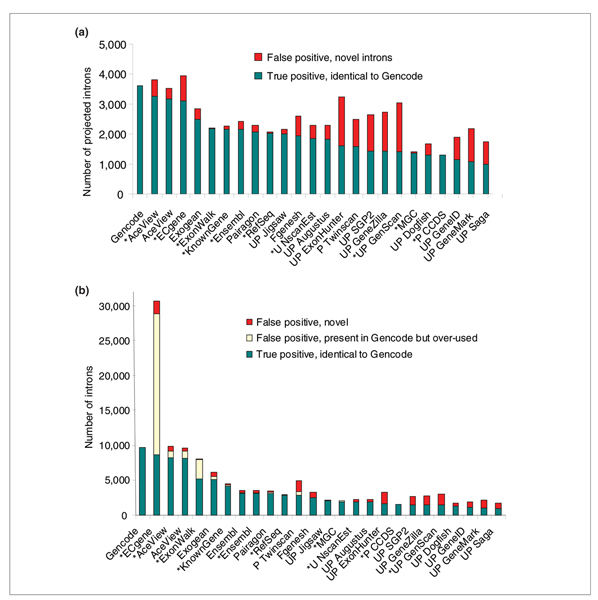
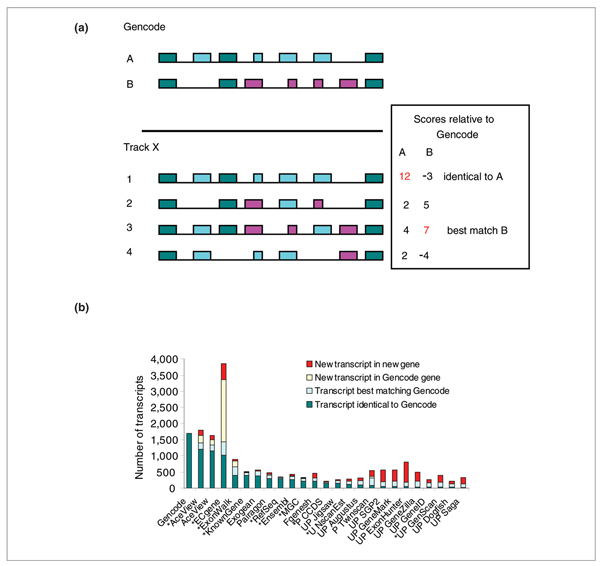
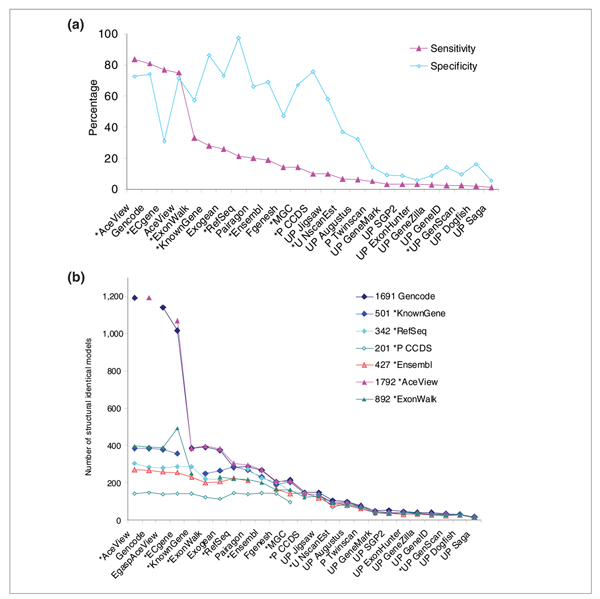
Background: Regions covering one percent of the genome, selected by ENCODE for extensive analysis, were annotated by the HAVANA/Gencode group with high quality transcripts, thus defining a benchmark. The ENCODE Genome Annotation Assessment Project (EGASP) competition aimed at reproducing Gencode and finding new genes. The organizers evaluated the protein predictions in depth. We present a complementary analysis of the mRNAs, including alternative transcript variants. Results: We evaluate 25 gene tracks from the University of California Santa Cruz (UCSC) genome browser. We either distinguish or collapse the alternative splice variants, and compare the genomic coordinates of exons, introns and nucleotides. Whole mRNA models, seen as chains of introns, are sorted to find the best matching pairs, and compared so that each mRNA is used only once. At the mRNA level, AceView is by far the closest to Gencode: the vast majority of transcripts of the two methods, including alternative variants, are identical. At the protein level, however, due to a lack of experimental data, our predictions differ: Gencode annotates proteins in only 41% of the mRNAs whereas AceView does so in virtually all. We describe the driving principles of AceView, and how, by performing hand-supervised automatic annotation, we solve the combinatorial splicing problem and summarize all of GenBank, dbEST and RefSeq into a genome-wide non-redundant but comprehensive cDNA-supported transcriptome. AceView accuracy is now validated by Gencode. Conclusion: Relative to a consensus mRNA catalog constructed from all evidence-based annotations, Gencode and AceView have 81% and 84% sensitivity, and 74% and 73% specificity, respectively. This close agreement validates a richer view of the human transcriptome, with three to five times more transcripts than in UCSC Known Genes (sensitivity 28%), RefSeq (sensitivity 21%) or Ensembl (sensitivity 19%).
Overview
The claims and statistics of this paper haven’t been checked yet.
Free: it reads the open-access text and checks the first 5 claims that cite a source we can check. Create a free account to check every claim.
Integrity signals
Registry
Cites
Statistics
Figures
Verification
Claims the paper makes
The claims and statistics of this paper haven’t been checked yet.
Free: it reads the open-access text and checks the first 5 claims that cite a source we can check. Create a free account to check every claim.
Claims other papers make about this one
Each is checked against this paper’s own text: does it say what the citing paper says it does?
The check wasn’t confident either way, so it gives no verdict — never disputed.
In the citing paper
“We also observed substantial but 12% lower agreement with TopHat2, regardless of whether it was run with or without gene model guided alignment 17 (Supplementary Figure 5a), giving a total of 1,110,550 junctions consistently found by all five analysis variants.”
From A comprehensive assessment of RNA-seq accuracy, reproducibility and information content by the Sequencing Quality Control Consortium (2014) · cites this paper as [17]
Experimental — accuracy not yet measured
Self-check
Percentages, sums and reported differences re-computed from the paper’s own numbers.
The self-check needs the paper’s full text.
Citations
Cites
Finishing the euchromatic sequence of the human genome
International Human Genome Sequencing Consortium (2004) · Nature · doi:10.1038/nature03001 · Cited by 4,971
The ENCODE (ENCyclopedia Of DNA Elements) Project
(2004) · Science · doi:10.1126/science.1105136 · Cited by 2,390 · cited 1×
“project [1], launched by the National Human Genome Research Institute, encourages a concentration of international efforts and expertise on 1% of the human genome, in 44 carefully selected regions taken as representative of the whole genome, in the hope that mature annotation techniques will be developed, validated, a…”
BackgroundThe UCSC Genome Browser Database: update 2006
Hinrichs, A. S. (2006) · Nucleic Acids Research · doi:10.1093/nar/gkj144 · Cited by 1,646 · cited 1×
“The UCSC genome browser [2] provides fast and open access to a highly configurable view of a wealth of sequence-based genome annotations.”
BackgroundFrom Birth to Death: The Complex Lives of Eukaryotic mRNAs
Moore, M. J. (2005) · Science · doi:10.1126/science.1111443 · Cited by 1,010 · cited 4×
“Indeed, activation of mRNA degradation by this pathway requires a pioneering round of translation that, due to the dual role of NMD proteins in activating translation, should be very efficient on transcripts still decorated with exon junction complexes (reviewed in [10,11]).”
BackgroundInfluentialComplete sequencing and characterization of 21,243 full-length human cDNAs
Ota, T., Suzuki, Y., Nishikawa, T., Otsuki, T., Sugiyama, T., Irie, R., Wakamatsu, A., Hayashi, K., Sato, H., Nagai, K., et al. (2004) · Nature Genetics · doi:10.1038/ng1285 · Cited by 925 · cited 1×
“Indeed, we compared the high quality full-length cDNA libraries made by Sugano using the oligo-capping method in either the nematode Caenorhabditis elegans or human (all sequences are in GenBank [7,9]).”
MethodPushing the limits of the scanning mechanism for initiation of translation
Kozak, M. (2002) · Gene · doi:10.1016/s0378-1119(02)01056-9 · Cited by 919 · cited 3×
“But it is difficult to conceive how the ribosomes would be aware of these rules, instead of following the scanning mechanism experimentally established by Kozak [14].”
BackgroundInfluentialMendell, J. T., Sharifi, N. A., Meyers, J. L., Martinez-Murillo, F., & Dietz, H. C. (2004) · Nature Genetics · doi:10.1038/ng1429 · Cited by 876
Kimura, K., Wakamatsu, A., Suzuki, Y., Ota, T., Nishikawa, T., Yamashita, R., Yamamoto, J.-I., Sekine, M., Tsuritani, K., Wakaguri, H., et al. (2006) · Genome Research · doi:10.1101/gr.4039406 · Cited by 506 · cited 1×
“…almost linearly with new cDNA sequences: the addition to GenBank in January 2006 of close to two million 5’ complete capped ESTs by the Japanese FLJ group [26] proportionately increased by 26% the number of alternative variants, and added 7% new spliced genes to the AceView collection [7].”
BackgroundKozak, M. (1989) · Molecular and Cellular Biology · doi:10.1128/mcb.9.11.5073 · Cited by 478 · cited 1×
“But if the mRNA appears to be complete, the CDS starts at the first AUG codon, unless there is, in the correct environment, an in frame NUG or ANG codon [14,17-20] at least 180 bp upstream of the first AUG.”
BackgroundEGASP: the human ENCODE Genome Annotation Assessment Project.
Guigó, R., Flicek, P., Abril, J. F., Reymond, A., Lagarde, J., Denœud, F., Antonarakis, S. E., Ashburner, M., Bajić, V. B., Birney, E., et al. (2006) · Genome biology · doi:10.1186/gb-2006-7-s1-s2 · Cited by 370
Cited by
Items 501–600 of 650
Hereditary Fusion Genes Are Associated with the Inheritance of Acute Myeloid LeukemiaPreprint
Ling, F., & Zhuo, D. (2022) · bioRxiv (Cold Spring Harbor Laboratory) · doi:10.1101/2022.10.31.514615 · Cited by 3
DNA-PK is a Potential Molecular Therapeutic Target for Glioblastoma
O., P., S., F., Godoy, P. R. D. V., Abbracchio, M. P., Jefferson Rocha de, A., Balajee, A. S., A., G., & T., E. (2013) · InTech eBooks · doi:10.5772/53181 · Cited by 2
“This TF, previously related to diseases such as diabetes and neoplasias [65-70], encodes a protein involved in the WNT signaling pathway [71].”
BackgroundIdentification of true EST alignments for recognising transcribed regions
Ma, C., Wang, J., Li, L., Duan, M.-J., & Zhou, Y. H. (2011) · International Journal of Data Mining and Bioinformatics · doi:10.1504/ijdmb.2011.043029 · Cited by 2
“The performance of EST processing tools was evaluated with the standard statistical methods of gene prediction accuracy (sensitivity and specificity at the nucleotide, exon and intron levels) (Guigo et al., 2006; Thierry-Mieg and Thierry-Mieg, 2006; Gross et al., 2007; Haas et al., 2008; Stanke et al., 2008).”
MethodSaravanaperumal, S. A., Pallotti, S., Pediconi, D., Renieri, C., & Terza, A. L. (2021) · Molecular Biology Reports · doi:10.1007/s11033-021-06486-8 · Cited by 2
Dynamic Evolution of Bacterial Ligand Recognition by Formyl Peptide Receptors
Paterson, N. M., Al-Zubieri, H., Ragona, J., Kohler, K. M., Tirado, J., Geisbrecht, B. V., & Barber, M. F. (2023) · Genome Biology and Evolution · doi:10.1093/gbe/evad175 · Cited by 2
Liu, G., Sun, L., Lv, P., Qiao, R., Wang, L., & Jin, A. (2025) · Frontiers in Genetics · doi:10.3389/fgene.2025.1524449 · Cited by 2
Hutchins, J. R. A. (2016) · Methods in molecular biology · doi:10.1007/978-1-4939-6622-6_10 · Cited by 4
Saldanha, P., Bolanle, I. O., Palmer, T. M., Nikitenko, L. L., & Rivero, F. (2022) · Cells · doi:10.3390/cells11152315 · Cited by 3
“AceView collates all public mRNA sequences: mRNAs from GenBank or RefSeq, single pass cDNA sequences from dbEST and Trace, and deep transcriptomics sequences from the Sequence Read Archive (SRA) and Gene Expression Omnibus (GEO) [29].”
BackgroundWong, V. A., Dinh, K. N., Chen, G., & Wrenshall, L. E. (2024) · Frontiers in Immunology · doi:10.3389/fimmu.2024.1369818 · Cited by 3
EFR3A, an Intriguing Gene, and Protein with a Scaffolding Function
Trybus, M., Hryniewicz‐Jankowska, A., Czogalla, A., & Sikorski, A. F. (2025) · Cells · doi:10.3390/cells14060445 · Cited by 5
“This homolog is expressed at the average level in various organs, tissues, and cells of primates and humans [9].”
Silva, I. A. L., Cox, C. J., Leite, R. B., Cancela, M. L., & Conceição, N. (2014) · Comparative Biochemistry and Physiology Part B Biochemistry and Molecular Biology · doi:10.1016/j.cbpb.2014.03.007 · Cited by 3
Hereditary primary lateral sclerosis with cone dysfunction
Gore, S. K., Carr, L., Moore, A. T., & Thompson, D. (2010) · Ophthalmic Genetics · doi:10.3109/13816810.2010.516055 · Cited by 4
Microarray analysis of gene expression profiles of pig muscle in response to cold stress
Zhang, D., Liu, D., Wang, L., Wang, W., He, X., & Yang, G. (2012) · The Indian Journal of Animal Sciences · doi:10.56093/ijans.v82i9.23678 · Cited by 2
Using CAGE Data for Quantitative Expression
de Hoon, M., Bertin, N., & Chalk, A. M. (2019) · doi:10.1201/9780429065750-9 · Cited by 2
Nematode C. elegans: Genetic Dissection of Pathways Regulating Seizure and Epileptic-Like Behaviors
Takayanagi-Kiya, S., & Jin, Y. (2017) · Elsevier eBooks · doi:10.1016/b978-0-12-804066-9.00023-7 · Cited by 3
Bog, M., Inoue, M., Klahr, A., Fuchs, J., Ivanenko, Y., Hori, K., Horn, K., Bennert, H. W., & Schnittler, M. (2022) · Molecular Phylogenetics and Evolution · doi:10.1016/j.ympev.2022.107587 · Cited by 2
Design and quality control of short interfering RNA
Grinev, V. V. (2012) · Molecular Biology · doi:10.1134/s0026893312050056 · Cited by 2
Holmes, R. S., & Cox, L. A. (2012) · Natural Science · doi:10.4236/ns.2012.412a142 · Cited by 2
“Structures for human and mouse LIPI isoforms were obtained using the AceView website to examine predicted gene and protein structures [19].”
TIPMaP: a web server to establish transcript isoform profiles from reliable microarray probes
Chitturi, N., Balagannavar, G. C., Chandrashekar, D. S., Abinaya, S., Srini, V. S., & Acharya, K. K. (2013) · BMC Genomics · doi:10.1186/1471-2164-14-922 · Cited by 2
“There are also links to other alternative splicing resources, ProSplicer [44], AceView [45], fast DB [46], ASG [47], SpliceMiner [48] and ASTRA [49].”
BackgroundDetection of ALK rearrangements in lung cancer patients using a homebrew PCR assay
Yu, H., Chang, J.-H., Liu, F., Wang, Q., Lu, Y.-M., Zhang, Z., Shen, J., Zhai, Q., Xia, M., Wang, J., et al. (2016) · Oncotarget · doi:10.18632/oncotarget.13886 · Cited by 3
Mejias, A., Diez‐Hermano, S., Ganfornina, M. D., Gutiérrez, G., & Sánchez, D. (2019) · PLoS ONE · doi:10.1371/journal.pone.0213206 · Cited by 4
Schiel, M. A. (2009) · IUScholarWorks (Indiana University) · doi:10.7912/c2/1839 · Cited by 2
López, N. (2009) · Rutgers University Community Repository (Rutgers University) · doi:10.7282/t3m61kdj · Cited by 2
The Hereditary and Epigenetic Fusion Gene Signatures of Multiple MyelomaPreprint
Fei, L., Zhuo, N., & Zhuo, D. (2022) · bioRxiv (Cold Spring Harbor Laboratory) · doi:10.1101/2022.12.05.519213 · Cited by 2
Mansisidor, A., Cecere, G., Hoersch, S., Jensen, M. B., Kawli, T., Kennedy, L. M., Chávez, V., Tan, M., Lieb, J. D., & Grishok, A. (2011) · PLoS Genetics · doi:10.1371/journal.pgen.1002299 · Cited by 8
“). However, for this open reading frame, no transcriptional evidence exists, neither from EST collections nor from deep sequencing runs undertaken in the context of the modENCODE project, and it therefore appears to be a mis-annotated gene”
BackgroundRaj, A. P. M. S., Selvakumar, G., Clement, J., Church, G. M., & Sivasubramaniam, S. (2025) · Human Genomics · doi:10.1186/s40246-025-00772-3 · Cited by 1
Li, X., Wang, Z., Yang, Y., Lin, R., & Wang, C. (2024) · American Journal of Medical Genetics Part C Seminars in Medical Genetics · doi:10.1002/ajmg.c.32085 · Cited by 1
Pereira, L. H. S., Alves, A. D. C., Lopes, G. F. M., da Silva, B. F., Vieira, M. S., Lopes, D. D. O., Ferreira, J. M. S., & dos Santos, L. L. (2024) · The Brazilian Journal of Infectious Diseases · doi:10.1016/j.bjid.2024.103873 · Cited by 1
“12,13 Studies have shown that the same individual can express more than one isoform of transcripts and synthesize their corresponding proteins.”
BackgroundMerrick, B. A., Brooks, A. M., Foley, J. F., Martin, N. P., Fannin, R. D., Gladwell, W., & Gerrish, K. (2025) · International Journal of Molecular Sciences · doi:10.3390/ijms26083607 · Cited by 1
“The mus musculus Slc22a11 transcript (mOat4) has not been cloned and, so far, has only been classified as a predicted gene, Gm50435, by the Havana group at the Sanger Institute [63,64].”
Cancer After Metastasis: The Second Transformation
Xu, Y., Cui, J., & Puett, D. (2014) · Springer eBooks · doi:10.1007/978-1-4939-1381-7_11 · Cited by 1
Khodabakhshi, A. H., Fejes, A. P., Birol, İ., & Jones, S. J. M. (2013) · BMC Bioinformatics · doi:10.1186/1471-2105-14-167 · Cited by 2
RecountDB: a database of mapped and count corrected transcribed sequences
Wijaya, E., Frith, M. C., Asai, K., & Horton, P. (2011) · Nucleic Acids Research · doi:10.1093/nar/gkr1172 · Cited by 2
“Typically gene expression levels are obtained from this data by first mapping reads to the reference genome, and then using gene annotation resources such as Aceview (19) or RefSeq (20) to obtain the expression levels of known genes.”
Anabolic signalling in skeletal muscle : impact of diet and disease
Gran, P. (2011) · Cited by 1
Large-Scale Regulatory Network Analysis from Microarray Data: Application to Seed Biology
Basu, A., & Sarkar, A. (2015) · Advances in bioinformatics and biomedical engineering book series · doi:10.4018/978-1-4666-6611-5.ch004 · Cited by 1
Increasing evidence for the presence of alternative proteins in human tissues and cell lines
Ramalho, R. F., & Carraro, D. M. (2017) · Applied cancer research/Applied Cancer Research · doi:10.1186/s41241-017-0013-0 · Cited by 1
“Thierry-Mieg D, Thierry-Mieg J. “AceView: a comprehensive cDNA-supported gene and transcripts annotation”.”
BackgroundMethodInfluentialA Review of Tools to Automatically Infer Chromosomal Positions From dbSNP and HGVS Genetic Variants
Kanterakis, A., Κάτσιλα, Θ., Potamias, G., Patrinos, G. P., & Swertz, M. A. (2018) · Elsevier eBooks · doi:10.1016/b978-0-12-809414-3.00007-3 · Cited by 1
Horowitz, A. (2010) · AfCS-Nature Molecule Pages · doi:10.1038/mp.a004189.01 · Cited by 1
Predicting functional riboSNitches in the context of alternative splicing
Ramya, G., Mitra, A., & Vinod, P. K. (2022) · Gene · doi:10.1016/j.gene.2022.146694 · Cited by 1
Choi, S. M., Park, H. J., Choi, E. A., Jung, K. C., & Lee, J. I. (2023) · Scientific Reports · doi:10.1038/s41598-023-41708-y · Cited by 1
Davies, K. A., Welch, S. R., Sorvillo, T. E., Coleman-McCray, J. D., Spiropoulou, C. F., & Spengler, J. R. (2025) · Journal of Virological Methods · doi:10.1016/j.jviromet.2025.115175 · Cited by 1
Sturgeon, X., & Gardiner, K. (2012) · Genomics · doi:10.1016/j.ygeno.2012.08.004 · Cited by 1
Comparative studies of vertebrate endothelin-converting enzyme-like 1 genes and proteins
Holmes, R. S., & Cox (2013) · Research and Reports in Biochemistry · doi:10.2147/rrbc.s39626 · Cited by 1
“15,21,22 This paper reports the predicted gene structures and amino acid sequences for several vertebrate ECEL1 genes and proteins, the predicted structures for vertebrate ECEL1 proteins, a number of potential sites for regulating human ECEL1 gene expression, and the structural, phylogenetic, and…”
Holmes, R. S. (2012) · Cited by 2
Activities Analysis and Polymorphisms Identification of GPIHBP1 Promoter Region in Porcine
Chen, J., Chen, Y., Wei, Y., Tao, X., Xu, H., Liu, Y., Zhu, L., Tang, G., Wen, A., Lv, D., et al. (2018) · Russian Journal of Genetics · doi:10.1134/s1022795418060042 · Cited by 1
Association between Leukemia and Exon 2 CD19 Gene Variants in a sample of Iraqi Patients
Ahmed, N. S., Al-Hadeithi, Z. S. M., Nada, S. M., & Hadi, Y. A. (2014) · Journal of the Faculty of Medicine Baghdad · doi:10.32007/jfacmedbagdad.564553 · Cited by 1
The application and challenges of RNA-sequencing to the study of circadian rhythms
Lahens, N. F. (2014) · ScholarlyCommons (University of Pennsylvania) · Cited by 1
Oduaran, O. H. (2015) · University of the Witwatersrand, Johannesburg Institutional Repository on DSpace (University of the Witwatersrand, Johannesburg) · Cited by 1
High‐Throughput Analysis of Alternative Splicing by RT‐PCR
Klinck, R., Chabot, B., & Elela, S. A. (2012) · Wiley eBooks · doi:10.1002/9783527636778.ch22 · Cited by 2
Computational Gene Prediction in Eukaryotic Genomes
Stanke, M. (2010) · Cellular origin and life in extreme habitats · doi:10.1007/978-90-481-3795-4_16 · Cited by 1
Cross-platform Comparison of Two Pancreatic Cancer Phenotypes
Scharpf, R. B., Iacobuzio–Donahue, C. A., Cope, L., Ruczinski, I., Garrett-Mayer, E. S., Lakkur, S. S., Campagna, D., & Parmigiani, G. (2010) · Cancer Informatics · doi:10.4137/cin.s5755 · Cited by 1
Testing the Coding Potential of Conserved Short Genomic Sequences
Wu, J. Q. (2010) · Advances in Bioinformatics · doi:10.1155/2010/287070 · Cited by 1
Lausch, V. (2013) · Universitätsbibliothek der FU Berlin Hochschulschriftenstelle u. Dokumentenserver · doi:10.17169/refubium-17346 · Cited by 4
Using Mixtures of Biological Samples as Process Controls for RNA-sequencing experimentsPreprint
Parsons, J., Munro, S. A., Pine, P. S., McDaniel, J., Mehaffey, M., & Salit, M. (2015) · bioRxiv (Cold Spring Harbor Laboratory) · doi:10.1101/015107 · Cited by 1
A CREBZF/Zhangfei isoform activates CHOP during prolonged cellular stressPreprint
Li, Y., Yip, W. K., Penney, J., Taylor, T., Zhang, Y., Zeng, M., Audas, T. E., & Lu, R. (2022) · bioRxiv (Cold Spring Harbor Laboratory) · doi:10.1101/2022.10.10.511668 · Cited by 1
“Using the online transcript mapping tool, Aceview (http://www.ncbi.nlm.nih.gov/IEB/Research/Acembly/) (Thierry-Mieg and Thierry-Mieg, 2006), we found that, although the unspliced variant a had the most (a total of 341) supporting cDNA clones, variant c had 177 supporting cDNA clones, which was…”
BackgroundMethodInfluentialKhamse, S., Alizadeh, S., Bernhart, S. H., Afshar, H., Delbari, A., & Ohadi, M. (2022) · Research Square · doi:10.21203/rs.3.rs-2197976/v1 · Cited by 1
The First Insight into the Epigenetic Fusion Gene Landscape of Acute Myeloid LeukemiaPreprint
Ling, F., Zhuo, N., & Zhuo, D. (2022) · bioRxiv (Cold Spring Harbor Laboratory) · doi:10.1101/2022.12.06.519396 · Cited by 1
The First Insight into the Hereditary Fusion Gene Landscape of Amyotrophic Lateral SclerosisPreprint
Yang, J., Yuan, F., Palovcak, A., Ling, F., Zhuo, N., Zhang, Y., & Zhuo, D. (2023) · medRxiv · doi:10.1101/2023.03.14.23287250 · Cited by 1
PositionMatcher: A Fast Custom-Annotation Tool for Short DNA Sequences.
Pitzer, E., Kim, J.-H., Patel, K., Galante, P. A. F., & Lucila Ohno-machado, A. (2010) · PubMed Central · Cited by 1
ABERRATIONS OF A PUTATIVE TUMOR SUPPRESSOR GENE SEL1L IN PANCREATIC DUCTAL ADENOCARCINOMA
Liu, Q. (2011) · Digital Commons-TMC (Texas Medical Center)
Investigating the role of nicotinamide phosphoribosyltransferase (NAMPT) in cartilage catabolism
Evans, L. (2013) · ORCA Online Research @Cardiff (Cardiff University)
Discovery of Novel Gene Elements Associated with Prostate Cancer Progression
Chinnaiyan, A. M. (2012) · Defense Technical Information Center (DTIC) · doi:10.21236/ada568345
SSX2IP (synovial sarcoma, X breakpoint 2 interacting protein)
Khan, G. N., & Guinn, B. (2012) · Atlas of Genetics and Cytogenetics in Oncology and Haematology · doi:10.4267/2042/47489
Beyne, E. (2008) · OpenGrey (Institut de l'Information Scientifique et Technique)
Cammen, K. M., Rosel, P. E., Wells, R. S., & Read, A. J. (2014) · Aquatic Toxicology · doi:10.1016/j.aquatox.2014.10.010 · Cited by 1
“Here, we use the exon numbers as reported in NCBI AceView (Thierry-Mieg and Thierry-Mieg, 2006) and the following literature (Ahmed et al.”
MethodEstimating the similarity of alternative Affymetrix probe sets using transcriptional networks
Bellis, M. (2013) · BMC Research Notes · doi:10.1186/1756-0500-6-107
“One developed in Python (PSAWNpy) recovers and organizes all the probe set information by interrogation of the Ensembl (http:// www.ensembl.org/index.xhtml) and AceView (http:// www.ncbi.nlm.nih.gov/IEB/Research/Acembly/ [15]) databases.”
MethodImproved prediction of transcription binding sites from chromatin modification data
Sato, K., Whitington, T., Bailey, T. L., & Horton, P. (2010) · IEEE Conference on Computational Intelligence in Bioinformatics and Computational Biology (CIBCB) · doi:10.1109/cibcb.2010.5510323 · Cited by 1
Sandie, R., Porter, C. J., Palidwor, G. A., Price, F., Krzyzanowski, P. M., Muro, E. M., Hoersch, S., Smith, M., Campbell, P. A., Perez-Iratxeta, C., et al. (2012) · BENTHAM SCIENCE PUBLISHERS eBooks · doi:10.2174/978160805025311201010193
Donaires, F. S. (2011) · Digital Library of Theses and Dissertations (Universidade de São Paulo) · doi:10.11606/d.17.2011.tde-26092011-111938
The Construction of Genome-Based Transcriptional Units
van Hooff, S. R., Köster, J., Hulsen, T., van Schaik, B. D. C., Roos, M., Batenburg, M. F. V., Versteeg, R., & van Kampen, A. H. C. (2009) · OMICS A Journal of Integrative Biology · doi:10.1089/omi.2008.0036
“AceView contains very few hybrids of any gap length, perhaps due to specific manual inspection of these cases.”
InfluentialLung Cancer: The Breathtaking Battle of TKIs and EGFR Mutants
Hodges, R. S., Ross, E., Simak, N., Solvang, K., & Vildaver, E. (2010) · Eukaryon · Cited by 1
Levin, S. (2009) · Eukaryon
The Coordination of Netrin Signal Transduction via TUBB3 and JNK1 in Axon Guidance
Qu, C. (2013) · OhioLink ETD Center (Ohio Library and Information Network)
Analysis of EDNRA: A gene connected to atherosclerosis
Vilmundarson, R. O. (2014)
Harte, R., Karolchik, D., Kuhn, R. M., Kent, W. J., & Haussler, D. H. (2009) · Springer eBooks · doi:10.1007/978-3-540-37654-5_44
Bouwer, S. (2010) · UWA Profiles and Research Repository (University of Western Australia)
Chen, T. (2016) · Digital Commons-TMC (Texas Medical Center)
Optimized Exon-Exon Junction Library and its Application on Rodents' Brain Transcriptome Analysis
Dou, T., Gao, Y., Chen, C., Xu, M., Fu, M., Zhang, L. N., & Zhou, Y. (2017) · Brazilian Archives of Biology and Technology · doi:10.1590/1678-4324-2016160240
Integration of Transcriptomic and Proteomic Data for Disease Insights
Sirdeshmukh, R., Jayaram, S., Gupta, M. K., Sonpatki, P., Singh, M., Ganesh, R. A., Amaresha, C. B., & Shah, N. (2017) · Neuromethods · doi:10.1007/978-1-4939-7119-0_20
What are the most influencing factors in reconstructing a reliable transcriptome assembly?Preprint
Ghaffari, N., Abante, J., Singh, R., Blood, P. D., Pipes, L., Mason, C. E., & Johnson, C. D. (2017) · bioRxiv (Cold Spring Harbor Laboratory) · doi:10.1101/220269
Complementing preclinical safety assessments through genomic analyses
Pande, P., Giambalvo, M., & Huang, Z. (2018) · Current Opinion in Toxicology · doi:10.1016/j.cotox.2019.01.002
Lin, Y.-C.-D., Huang, H., Chiew, M.-Y., Hsu, C., Shrestha, S., Wu, M., Lin, C., & Huang, H. (2019) · Taiwan Veterinary Journal · doi:10.1142/s1682648519500033
Power-law Behavior of the Alternative Splicing of Exons in Human Transcriptome
Grinev, V. V., Nazarov, P. V., & Климов, Е. А. (2019) · Annual Research & Review in Biology · doi:10.9734/arrb/2019/v32i630105
“[16], ECgene [17], NCBI RefSeq [18], UCSC Genome Browser [13] and VEGA [19].”
BackgroundRETRACTED: Temperament gene inheritance
Israfil, A., & Israfil, N. (2020) · Meta Gene · doi:10.1016/j.mgene.2020.100728
RetractedChatukuta, P. (2015) · Boloka Institutional Repository (North-west University)
Papenberg, B. W. (2020) · The Research Repository @ WVU (West Virginia University) · doi:10.33915/etd.7981
Prediction of pancreatic adenocarcinoma patient risk status using alternative splicing eventsPreprint
Kumar, R., Lathwal, A., & Raghava, G. P. S. (2021) · Research Square · doi:10.21203/rs.3.rs-411576/v1
Tandem repeats ubiquitously flank and select translation initiation sites.Preprint
Maddi, A. M. A., Kavousi, K., Arabfard, M., Ohadi, H., & Ohadi, M. (2021) · Research Square · doi:10.21203/rs.3.rs-832312/v1
“genes as examples (34,35) yielded predominant expression and functions in the human brain and skeletal muscle (e.”
BackgroundBrinzer, R. A., France, D. J., McMaster, C., Ruddell, S., Winter, A. D., & Page, A. P. (2021) · bioRxiv (Cold Spring Harbor Laboratory) · doi:10.1101/2021.10.22.465401 · Cited by 2
Mendes, M. A. R. (2012) · Portuguese National Funding Agency for Science, Research and Technology (RCAAP Project by FCT) · doi:10.34626/adzq-rq58
Lyons, L. S., & Burnstein, K. L. (2013) · Springer eBooks · doi:10.1007/978-1-4614-6828-8_6 · Cited by 2
Guaita-Céspedes, M., Grillo-Risco, R., Hidalgo, M. R., Fernández‐Veledo, S., Gómez-Cabañes, B., Anton-Bernat, G., Gómez-Martínez, H., Burks, D. J., de la Iglesia-Vayá, M., Galán, A., et al. (2021) · bioRxiv (Cold Spring Harbor Laboratory) · doi:10.1101/2021.12.04.471124
Williams, M. R., Macdonald, C., & Cordero, M. D. (2021) · Springer eBooks · doi:10.1007/978-3-030-68308-5_12
Hindmarsh, R. (2021) · eDiss (Georg-August-Universität Göttingen) · doi:10.53846/goediss-8838
Alizadeh, S., Khamse, S., Afshar, H., Khorram Khorshid, H. R., Delbari, A., & Ohadi, M. (2022) · Research Square · doi:10.21203/rs.3.rs-1565676/v1
Prediction of pancreatic adenocarcinoma patient risk status using alternative splicing eventsPreprint
Kumar, R., Lathwal, A., & Raghava, G. P. S. (2021) · bioRxiv (Cold Spring Harbor Laboratory) · doi:10.1101/2021.06.02.446780
“Exon numbers comprising the AS events were obtained from SpliceSeq and their corresponding coordinate information was retrieved using the AceView by selecting human species option in the dropdown menu (https://www.ncbi.nlm.nih.gov/IEB/Research/Acembly/) (Thierry-Mieg & Thierry-Mieg, 2006).”
MethodUsing CAGE Data for Quantitative Expression
de Hoon, M., Bertin, N., & Chalk, A. M. (2009) · Pan Stanford Publishing eBooks · doi:10.1201/b11146-10
Metadata
- Authors
- Thierry-Mieg, D., & Thierry-Mieg, J.
- Venue
- Genome Biology
- Published
- 2006-08-07
- Volume
- 7
- Issue
- S1
- Pages
- S12.1-14
- ISSN
- 1465-6906 (ISSN-L)
- 1474-760X
- PMC
- PMC1810549
- OpenAlex
- W2095907724
- Semantic Scholar
- 4337ea68f0395c054a12a88f1927f1ad98176606
- Cited by
- 629
- References
- 23
- Citations by year
- 2025: 10 · 2024: 22 · 2023: 21 · 2022: 22 · 2021: 26 · 2020: 23 · 2019: 15 · 2018: 21 · 2017: 45 · 2016: 39 · 2015: 40 · 2014: 58 · 2013: 47 · 2012: 57
- FWCI
- 12.36
- Type
- journal article
- Language
- en
- Open access
- gold
- doi.org
- Licence
- cc-by
- creativecommons.org/licenses/by/2.0/ (tdm)
- creativecommons.org/licenses/by/2.0/ (vor)
- Locations
- Genome biology (publishedVersion, cc-by)
- PubMed Central (publishedVersion, cc-by)
- PubMed (publishedVersion)
- Funders
- National Institutes of Health
- U.S. National Library of Medicine
- Topics
- Life Sciences › Biochemistry, Genetics and Molecular Biology › Molecular Biology › Genomics and Phylogenetic Studies
- Life Sciences › Biochemistry, Genetics and Molecular Biology › Molecular Biology › RNA Research and Splicing
- Life Sciences › Biochemistry, Genetics and Molecular Biology › Molecular Biology › Genomics and Chromatin Dynamics
- Keywords
- genome annotation, transcript annotation, alternative splicing, human transcriptome, ENCODE, GENCODE, UCSC Genome Browser, exon-intron structure
- MeSH terms
- Exons, Genes, Humans, Introns, Models, Genetic, Nucleotides, RNA, Messenger, Software, Sequence Analysis, DNA, Sequence Analysis, RNA, DNA, Complementary, Computational Biology, Sequence Analysis, Protein, Genomics
About these checks
Registry, retraction, Cites and statistics results are computed, not judged, with one exception: a printed reference that no index lists is read once by a model before it counts as a citation error. Claims are extracted by a model and kept only when their quote appears verbatim in the text; each cited source is then checked, with a model’s help, for whether it says what the claim relies on. Those verdicts can be wrong — read the claim’s quote and the cited source before relying on one.
Statistics and arithmetic are recomputed, not judged.
Confidence bands are shown only for fields calibrated on our annotated test set. None is calibrated yet, so no band is shown.
What counts as a claim ›How we measure confidence ›How we check this ›
Are you an author, or do you see a problem with this page? Request a review
Data sources
Bibliographic data: Semantic Scholar, OpenAlex, Crossref.
Contains information from the Semantic Scholar Academic Graph Datasets, made available under the ODC Attribution License (ODC-BY 1.0).
Semantic Scholar’s data is described in: Kinney, R., et al. (2023). The Semantic Scholar Open Data Platform. arXiv:2301.10140.
