

AceView: a comprehensive cDNA-supported gene and transcripts annotation
Open accessThe DOI matches its Crossref record; 23 of the 23 references it cites were found in a registry or an index.
Abstract
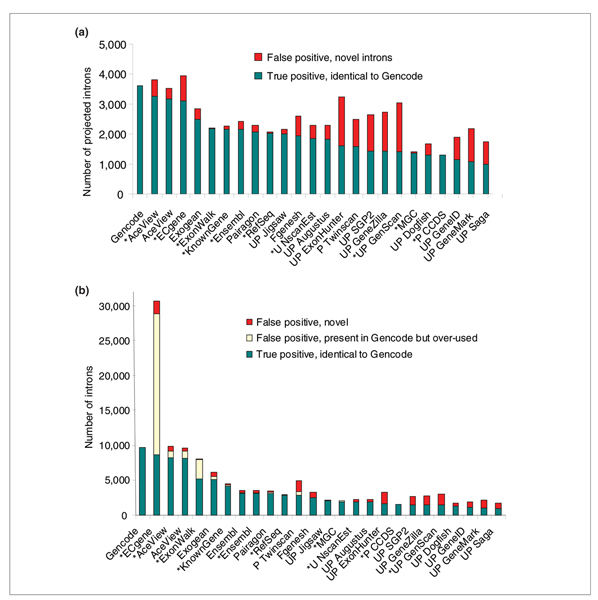
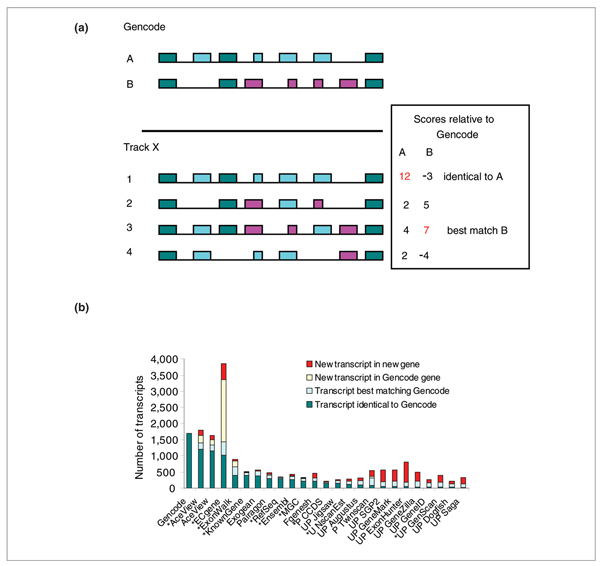
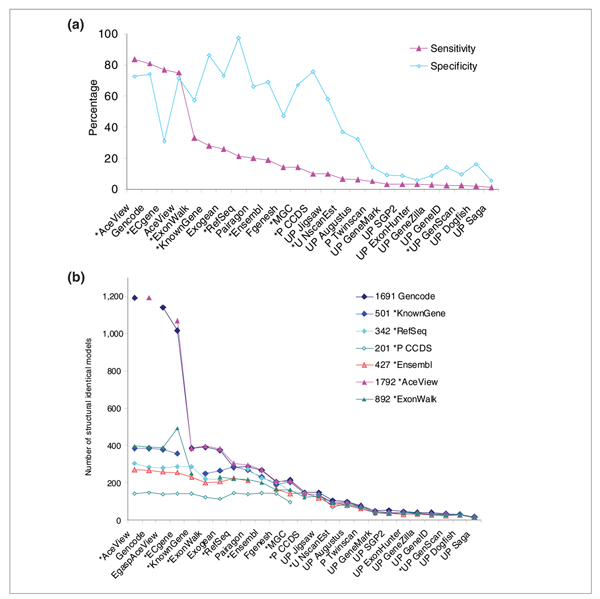
Background: Regions covering one percent of the genome, selected by ENCODE for extensive analysis, were annotated by the HAVANA/Gencode group with high quality transcripts, thus defining a benchmark. The ENCODE Genome Annotation Assessment Project (EGASP) competition aimed at reproducing Gencode and finding new genes. The organizers evaluated the protein predictions in depth. We present a complementary analysis of the mRNAs, including alternative transcript variants. Results: We evaluate 25 gene tracks from the University of California Santa Cruz (UCSC) genome browser. We either distinguish or collapse the alternative splice variants, and compare the genomic coordinates of exons, introns and nucleotides. Whole mRNA models, seen as chains of introns, are sorted to find the best matching pairs, and compared so that each mRNA is used only once. At the mRNA level, AceView is by far the closest to Gencode: the vast majority of transcripts of the two methods, including alternative variants, are identical. At the protein level, however, due to a lack of experimental data, our predictions differ: Gencode annotates proteins in only 41% of the mRNAs whereas AceView does so in virtually all. We describe the driving principles of AceView, and how, by performing hand-supervised automatic annotation, we solve the combinatorial splicing problem and summarize all of GenBank, dbEST and RefSeq into a genome-wide non-redundant but comprehensive cDNA-supported transcriptome. AceView accuracy is now validated by Gencode. Conclusion: Relative to a consensus mRNA catalog constructed from all evidence-based annotations, Gencode and AceView have 81% and 84% sensitivity, and 74% and 73% specificity, respectively. This close agreement validates a richer view of the human transcriptome, with three to five times more transcripts than in UCSC Known Genes (sensitivity 28%), RefSeq (sensitivity 21%) or Ensembl (sensitivity 19%).
Overview
The claims and statistics of this paper haven’t been checked yet.
Free: it reads the open-access text and checks the first 5 claims that cite a source we can check. Create a free account to check every claim.
Integrity signals
Registry
Cites
Statistics
Figures
Verification
Claims the paper makes
The claims and statistics of this paper haven’t been checked yet.
Free: it reads the open-access text and checks the first 5 claims that cite a source we can check. Create a free account to check every claim.
Claims other papers make about this one
Each is checked against this paper’s own text: does it say what the citing paper says it does?
The check wasn’t confident either way, so it gives no verdict — never disputed.
In the citing paper
“We also observed substantial but 12% lower agreement with TopHat2, regardless of whether it was run with or without gene model guided alignment 17 (Supplementary Figure 5a), giving a total of 1,110,550 junctions consistently found by all five analysis variants.”
From A comprehensive assessment of RNA-seq accuracy, reproducibility and information content by the Sequencing Quality Control Consortium (2014) · cites this paper as [17]
Experimental — accuracy not yet measured
Self-check
Percentages, sums and reported differences re-computed from the paper’s own numbers.
The self-check needs the paper’s full text.
Citations
Cites
Finishing the euchromatic sequence of the human genome
International Human Genome Sequencing Consortium (2004) · Nature · doi:10.1038/nature03001 · Cited by 4,971
The ENCODE (ENCyclopedia Of DNA Elements) Project
(2004) · Science · doi:10.1126/science.1105136 · Cited by 2,390 · cited 1×
“project [1], launched by the National Human Genome Research Institute, encourages a concentration of international efforts and expertise on 1% of the human genome, in 44 carefully selected regions taken as representative of the whole genome, in the hope that mature annotation techniques will be developed, validated, a…”
BackgroundThe UCSC Genome Browser Database: update 2006
Hinrichs, A. S. (2006) · Nucleic Acids Research · doi:10.1093/nar/gkj144 · Cited by 1,646 · cited 1×
“The UCSC genome browser [2] provides fast and open access to a highly configurable view of a wealth of sequence-based genome annotations.”
BackgroundFrom Birth to Death: The Complex Lives of Eukaryotic mRNAs
Moore, M. J. (2005) · Science · doi:10.1126/science.1111443 · Cited by 1,010 · cited 4×
“Indeed, activation of mRNA degradation by this pathway requires a pioneering round of translation that, due to the dual role of NMD proteins in activating translation, should be very efficient on transcripts still decorated with exon junction complexes (reviewed in [10,11]).”
BackgroundInfluentialComplete sequencing and characterization of 21,243 full-length human cDNAs
Ota, T., Suzuki, Y., Nishikawa, T., Otsuki, T., Sugiyama, T., Irie, R., Wakamatsu, A., Hayashi, K., Sato, H., Nagai, K., et al. (2004) · Nature Genetics · doi:10.1038/ng1285 · Cited by 925 · cited 1×
“Indeed, we compared the high quality full-length cDNA libraries made by Sugano using the oligo-capping method in either the nematode Caenorhabditis elegans or human (all sequences are in GenBank [7,9]).”
MethodPushing the limits of the scanning mechanism for initiation of translation
Kozak, M. (2002) · Gene · doi:10.1016/s0378-1119(02)01056-9 · Cited by 919 · cited 3×
“But it is difficult to conceive how the ribosomes would be aware of these rules, instead of following the scanning mechanism experimentally established by Kozak [14].”
BackgroundInfluentialMendell, J. T., Sharifi, N. A., Meyers, J. L., Martinez-Murillo, F., & Dietz, H. C. (2004) · Nature Genetics · doi:10.1038/ng1429 · Cited by 876
Kimura, K., Wakamatsu, A., Suzuki, Y., Ota, T., Nishikawa, T., Yamashita, R., Yamamoto, J.-I., Sekine, M., Tsuritani, K., Wakaguri, H., et al. (2006) · Genome Research · doi:10.1101/gr.4039406 · Cited by 506 · cited 1×
“…almost linearly with new cDNA sequences: the addition to GenBank in January 2006 of close to two million 5’ complete capped ESTs by the Japanese FLJ group [26] proportionately increased by 26% the number of alternative variants, and added 7% new spliced genes to the AceView collection [7].”
BackgroundKozak, M. (1989) · Molecular and Cellular Biology · doi:10.1128/mcb.9.11.5073 · Cited by 478 · cited 1×
“But if the mRNA appears to be complete, the CDS starts at the first AUG codon, unless there is, in the correct environment, an in frame NUG or ANG codon [14,17-20] at least 180 bp upstream of the first AUG.”
BackgroundEGASP: the human ENCODE Genome Annotation Assessment Project.
Guigó, R., Flicek, P., Abril, J. F., Reymond, A., Lagarde, J., Denœud, F., Antonarakis, S. E., Ashburner, M., Bajić, V. B., Birney, E., et al. (2006) · Genome biology · doi:10.1186/gb-2006-7-s1-s2 · Cited by 370
Cited by
Items 201–300 of 650
Ryan, M. C., Zeeberg, B. R., Caplen, N. J., Cleland, J. A., Kahn, A. B., Liu, H., & Weinstein, J. N. (2008) · BMC Bioinformatics · doi:10.1186/1471-2105-9-313 · Cited by 41
“Several publicly-accessible websites provide data and utilities for investigating alternative splicing: AceView [6], Alternative Splicing Annotation Project database (ASAP II) [7], Alternative Splicing and Transcript Diversity Database (ATSD) [8], Friendly Alternative Splicing and Transcript Database (fastdb2) [9], Ho…”
Single-Cell Mapping of GLP-1 and GIP Receptor Expression in the Dorsal Vagal Complex
Ludwig, M. Q., Todorov, P. V., Egerod, K. L., Olson, D. P., & Pers, T. H. (2021) · Diabetes · doi:10.2337/dbi21-0003 · Cited by 38
Naranđa, J., Gradišnik, L., Gorenjak, M., Vogrin, M., & Maver, U. (2017) · PeerJ · doi:10.7717/peerj.3079 · Cited by 40
RNF13: an emerging RING finger ubiquitin ligase important in cell proliferation
Jin, X., He, C., Chen, J., & Zhu, D. (2010) · FEBS Journal · doi:10.1111/j.1742-4658.2010.07925.x · Cited by 44
Profile analysis and prediction of tissue-specific CpG island methylation classes
Previti, C., Harari, O., Zwir, I. J. S., & del Val, C. (2009) · BMC Bioinformatics · doi:10.1186/1471-2105-10-116 · Cited by 41
Modulation of TRIM5α Activity in Human Cells by Alternatively Spliced TRIM5 Isoforms
Battivelli, E., Migraine, J., Lecossier, D., Matsuoka, S., Perez-Bercoff, D., Saragosti, S., Clavel, F., & Hance, A. J. (2011) · Journal of Virology · doi:10.1128/jvi.00648-11 · Cited by 54
“TRIM5 isoforms supported by cDNA sequences in GenBank as curated by AceView (45) that include exons 2 to 4 are shown and are identified by the nomenclature used in this study, by AceView nomenclature, and by the Celera genome annotation (47).”
MethodSantana-Quintero, L. V., Dingerdissen, H., Thierry‐Mieg, J., Mazumder, R., & Simonyan, V. V. (2014) · PLoS ONE · doi:10.1371/journal.pone.0099033 · Cited by 43
“A number of the previously mentioned performance-enhancing ideas have been borrowed from the AceView Magic [23] alignment algorithm, and further integration of these tools is intended to continue; we therefore avoided inclusion of AceView Magic in this direct comparison but will follow-up with full…”
MethodSelf-citationTheißen, J., Oberthuer, A., Hombach, A., Volland, R., Hertwig, F., Fischer, M., Spitz, R., Zapatka, M., Brors, B., Ortmann, M., et al. (2014) · Genes Chromosomes and Cancer · doi:10.1002/gcc.22174 · Cited by 46
“To determine differentially expressed genes (DEG) annotated by the AceView 2011 database (Thierry-Mieg and Thierry-Mieg, 2006), pairwise comparison of subgroups was performed using one-way ANOVA with Benjamini–Hochberg correction for multiple testing.”
MethodGenome-wide transcriptome analysis in murine neural retina using high-throughput RNA sequencing
Uzun, E. D. G., Ouyang, Q., Schmidt, M., Nagpal, S., & Morrow, E. M. (2011) · Genomics · doi:10.1016/j.ygeno.2011.09.003 · Cited by 41
“Gene annotations were derived from the Aceview database (Mouse Jun07) [19].”
MethodWu, C., Tsai, F., Shyu, R., Tsai, Y.-M., Wang, C., & Jiang, S. (2011) · BMC Cancer · doi:10.1186/1471-2407-11-175 · Cited by 47
CDKN3 mRNA as a Biomarker for Survival and Therapeutic Target in Cervical Cancer
Barrón-Palma, E. V., Román‐Bassaure, E., Sánchez-Sandoval, A. L., Espinosa-García, A. M., Guardado-Estrada, M., Medina, I., Juárez, E., Alfaro, A., Bermúdez, M., Zamora-Alvarado, R., et al. (2015) · PLoS ONE · doi:10.1371/journal.pone.0137397 · Cited by 39
Inamo, J., Suzuki, K., Takeshita, M., Kassai, Y., Takiguchi, M., Kurisu, R., Okuzono, Y., Tasaki, S., Yoshimura, A., & Takeuchi, T. (2020) · Arthritis Research & Therapy · doi:10.1186/s13075-020-02248-2 · Cited by 44
Redirecting splicing with bifunctional oligonucleotides
Brosseau, J., Lucier, J., Lamarche, A.-A., Shkreta, L., Gendron, D., Lapointe, E., Thibault, P., Paquet, É. R., Perreault, J., Elela, S. A., et al. (2013) · Nucleic Acids Research · doi:10.1093/nar/gkt1287 · Cited by 50
“First, each prediction is submitted to a Blast analysis (43) against an in silico generated transcriptome database derived from the Aceview annotation (44).”
MethodSubunit NDUFV3 is present in two distinct isoforms in mammalian complex I
Bridges, H. R., Mohammed, K., Harbour, M. E., & Hirst, J. (2017) · Biochimica et Biophysica Acta (BBA) - Bioenergetics · doi:10.1016/j.bbabio.2016.12.001 · Cited by 38
L-type calcium channel auto-regulation of transcription
Satin, J., Schroder, E. A., & Crump, S. M. (2011) · Cell Calcium · doi:10.1016/j.ceca.2011.01.001 · Cited by 51
“In human there are 7 predicted alternative promoters with variations in the mRNA including 5′ and 3′ truncations[26].”
BackgroundKirilyuk, A., Shimoji, M., Catania, J., Sahu, G., Pattabiraman, N., Giordano, A., Albanese, C., Mocchetti, I., Toretsky, J. A., Uversky, V. N., et al. (2012) · PLoS ONE · doi:10.1371/journal.pone.0048243 · Cited by 38
Greger, L., Su, J., Rung, J., Ferreira, P. G., Lappalainen, T., Dermitzakis, E. T., & Brāzma, A. (2014) · PLoS ONE · doi:10.1371/journal.pone.0104567 · Cited by 38
“Finally, the novelty of the fusions was assessed via queries against known annotation databases for read-through events: ConjoinG [7], AceView [22] and literature search.”
MethodNevo, J., Mattila, E., Pellinen, T. S., Yamamoto, D. L., Sara, H., Iljin, K., Kallioniemi, O., Bono, P., Heikkilä, P., Joensuu, H., et al. (2009) · Clinical Cancer Research · doi:10.1158/1078-0432.ccr-09-0773 · Cited by 46
“MDGI is expressed at least in 39 different tissues, including the heart, brain, lung, and breast (2).”
BackgroundHuppke, P., Brendel, C., Korenke, G. C., Marquardt, I., Donsante, A., Yi, L., Hicks, J. D., Steinbach, P. J., Wilson, C. J., Elpeleg, O. N., et al. (2012) · Human Mutation · doi:10.1002/humu.22099 · Cited by 40
“The cDNA sequences, coaligned on the genome and clustered in a minimal nonredundant way by the manually supervised AceView program, support at least seven splice variants [Thierry-Mieg and Thierry-Mieg, 2006].”
MethodSalas, A., Pardo‐Seco, J., Cebey‐López, M., Gómez‐Carballa, A., Obando-Pacheco, P., Calle, I. R., Currás-Tuala, M. J., Amigo, J., Rial, J. G., Martinón‐Torres, F., et al. (2017) · Scientific Reports · doi:10.1038/s41598-017-15752-4 · Cited by 41
Grzenda, A. L., Lomberk, G. A., Svingen, P. A., Mathison, A., Calvo, E. L., Iovanna, J., Xiong, Y., Faubion, W. A., & Urrutia, R. A. (2013) · Epigenetics & Chromatin · doi:10.1186/1756-8935-6-3 · Cited by 41
GSEA-SNP identifies genes associated with Johne’s disease in cattle
Neibergs, H. L., Settles, M. L., Whitlock, R. H., & Taylor, J. F. (2010) · Mammalian Genome · doi:10.1007/s00335-010-9278-2 · Cited by 35
“The PIK3RI gene encodes the phosphoinositide-3-kinase regulatory subunit 1 alpha protein that is involved in insulin signaling, B-cell differentiation, and immune response (Thierry-Mieg and Thierry-Mieg 2006).”
BackgroundOnea, A. S., & Jazirehi, A. R. (2016) · PubMed Central · Cited by 47
Soluble fibrinogen like protein 2 (sFGL2), the novel effector molecule for immunoregulation
Liu, X., Liu, Y., & Chen, F. (2016) · Oncotarget · doi:10.18632/oncotarget.12533 · Cited by 36
“Transcription of human flg2 gene can produce 4 different mRNAs, 3 alternatively spliced variants, and 1 unspliced form [30].”
BackgroundHolmes, R. S., Spradling‐Reeves, K. D., & Cox, L. A. (2017) · Journal of Data Mining in Genomics & Proteomics · doi:10.4172/2153-0602.1000211 · Cited by 38
Application of single-cell RNA sequencing on human testicular samples: a comprehensive review
Dong, F., Ping, P., Ma, Y., & Chen, X. (2023) · International Journal of Biological Sciences · doi:10.7150/ijbs.82191 · Cited by 39
“Gene expression data of testes using GTEx, Ace-View [221] and BioGPS [222-224] 3.”
MethodDlugos, A. M., Hamidovic, A., Hodgkinson, C. A., Goldman, D. A., Palmer, A. A., & de Wit, H. (2009) · Neuropsychopharmacology · doi:10.1038/npp.2009.166 · Cited by 39
Identification of exon skipping events associated with Alzheimer’s disease in the human hippocampus
Initiative, A. D. N., Han, S., Miller, J. E., Byun, S., Kim, D., Risacher, S. L., Saykin, A. J., Lee, Y., & Nho, K. T. (2019) · BMC Medical Genomics · doi:10.1186/s12920-018-0453-8 · Cited by 36
“browser: mRNAs from GenBank [32], Ensembl Gene Predictions [33], AceView Gene Models [34], and UCSC known genes [35] and a set of predicted hexameric SRE motifs, as described in detail in previous publications [26, 27].”
Awad, A., Glousker, G., Lamm, N., Tawil, S., Hourvitz, N., Smoom, R., Revy, P., & Tzfati, Y. (2020) · Nucleic Acids Research · doi:10.1093/nar/gkaa503 · Cited by 40
The many faces of the helicase RTEL1 at telomeres and beyond
Hourvitz, N., Awad, A., & Tzfati, Y. (2023) · Trends in Cell Biology · doi:10.1016/j.tcb.2023.07.002 · Cited by 36
Mammalian carboxylesterase 5: Comparative biochemistry and genomics
Holmes, R. S., Cox, L. A., & VandeBerg, J. L. (2008) · Comparative Biochemistry and Physiology Part D Genomics and Proteomics · doi:10.1016/j.cbd.2008.05.002 · Cited by 41
Structure and promoter characterization of aldo–keto reductase family 1 B10 gene
Liu, Z., Zhong, L., Krishack, P. A., Robbins, S., Cao, J. X., Zhao, Y., Chung, S., & Cao, D. (2009) · Gene · doi:10.1016/j.gene.2009.02.007 · Cited by 33
Hess, J., & Glatt, S. J. (2013) · American Journal of Medical Genetics Part B Neuropsychiatric Genetics · doi:10.1002/ajmg.b.32207 · Cited by 35
“More questions arise when accounting for the larger series of ZNF804A transcripts reported in the AceView [Thierry-Mieg and Thierry-Mieg, 2006] database (Fig.”
BackgroundMethodNEIBank: genomics and bioinformatics resources for vision research.
Wistow, G. J., Peterson, K. M., Gao, J., Buchoff, P., Jaworski, C. J., Rickman, C. B., Ebright, J. N., Hauser, M. A., & Hoover, D. (2008) · PubMed Central · Cited by 34
Chiba‐Falek, O., Nichols, M., Suchindran, S., Guyton, J. R., Ginsburg, G. S., Barrett-Connor, E. L., & McCarthy, J. J. (2010) · BMC Medical Genetics · doi:10.1186/1471-2350-11-9 · Cited by 36
“Additional splice forms have been described in genomic databases such as Entrez Gene Aceview[ 40 ], including one form that differs dramatically in the 3’ end of the gene, missing both exons 12 and 13 and retaining a large segment of intron 11 as coding.”
MethodVladimirova, U., Rumyantsev, P. O., Zolotovskaia, M., Albert, E. A., Abrosimov, A., Slashchuk, K. Y., Алексеевич, Н. П., Chukhacheva, O. S., Гайфуллин, Н., Suntsova, M., et al. (2021) · Heliyon · doi:10.1016/j.heliyon.2021.e06408 · Cited by 35
“Detailed annotation of RNA sequencing reads mapping statistic produced by STAR aligner [89] and quality control metrics produced by NCBI MAGIC software [79] are shown in the Supplementary file 2.”
MethodResultDang, X., Eliceiri, B. P., Baird, A., & Costantini, T. W. (2015) · The FASEB Journal · doi:10.1096/fj.14-268037 · Cited by 34
“The CHRFAM7A transcript 2 present in gene expression databases like AceView (39) and purported to encode yet another human-specific variant of CHRNA7 was not detected.”
BackgroundParaoan, L., Hiscott, P. S., Gosden, C. M., & Grierson, I. (2009) · Vision Research · doi:10.1016/j.visres.2009.10.022 · Cited by 35
Text Mining in Cancer Gene and Pathway Prioritization
Luo, Y., Riedlinger, G., & Szolovits, P. (2014) · Cancer Informatics · doi:10.4137/cin.s13874 · Cited by 37
Internally Deleted Human tRNA Synthetase Suggests Evolutionary Pressure for Repurposing
Xu, Z., Wei, Z., Zhou, J. J., Ye, F., Lo, W.-S., Wang, F., Lau, C.-F., Wu, J., Nangle, L. A., Chiang, K. P., et al. (2012) · Structure · doi:10.1016/j.str.2012.08.001 · Cited by 39
“Previous work annotated a number of alternative mRNA variants of the gene for human HisRS by sequencing of cDNA clones (Thierry-Mieg and Thierry-Mieg, 2006).”
BackgroundWay, G. P., Allaway, R. J., Bouley, S. J., Fadul, C. E., Sánchez, Y., & Greene, C. S. (2017) · BMC Genomics · doi:10.1186/s12864-017-3519-7 · Cited by 37
Newman, J. R. B., Conesa, A., Mika, M., New, F. N., Önengüt-Gümüşcü, S., Atkinson, M. A., Rich, S. S., McIntyre, L. M., & CONCANNON, P. J. (2017) · Genome Research · doi:10.1101/gr.217984.116 · Cited by 34
“…includes 28,502 AceView “ cloud genes, ” often-monoexon cDNA clones of unknown biological significance that have not yet been assigned to a known gene) (Thierry-Mieg and Thierry-Mieg 2006), of which 87% were expressed in all three cell types, 6% in at least two cell types, and 7% in only one cell…”
Larsen, P. E., Trivedi, G., Sreedasyam, A., Lu, V., Podila, G. K., & Collart, F. (2010) · PLoS ONE · doi:10.1371/journal.pone.0009780 · Cited by 32
“, . The two approaches are complementary and there is a general consensus for structural annotation derived using the EST or RNA-seq data”
BackgroundDaburon, V., Mella, S., Plouhinec, J.-L., Mazan, S., Crozatier, M., & Vincent, A. (2008) · BMC Evolutionary Biology · doi:10.1186/1471-2148-8-131 · Cited by 43
“However, we could not find evidence for H2d exon skipping in gnathostome COE proteins, either by surveying ESTs annotated in the databanks (AceView; [26]) or by PCR amplification of this coding region in mouse coe1, coe2 and coe4, using specifically designed primers with mRNA from several different tissues (data not s…”
BackgroundMethodInfluentialIntegration of Mouse and Human Genome-Wide Association Data Identifies KCNIP4 as an Asthma Gene
Himes, B. E., Sheppard, K., Berndt, A., Leme, A. S., Myers, R. A., Gignoux, C. R., Levin, A. M., Gauderman, W. J., Yang, J. J., Mathias, R. A., et al. (2013) · PLoS ONE · doi:10.1371/journal.pone.0056179 · Cited by 34
IGFBP7's susceptibility to proteolysis is altered by A‐to‐I RNA editing of its transcript
Sie, C. G., Hesler, S. J., Maas, S., & Kuchka, M. R. (2012) · FEBS Letters · doi:10.1016/j.febslet.2012.06.037 · Cited by 33
“The IGFBP7 pre-mRNA is alternatively spliced, but the functionality of the several splice variants remains to be evaluated [26].”
BackgroundA naturally occurring transcript variant of MARCO reveals the SRCR domain is critical for function
Novakowski, K. E., Huynh, A., Han, S., Dorrington, M. G., Yin, C., Tu, Z., Pelka, P., Whyte, P., Guarné, A., Sakamoto, K., et al. (2016) · Immunology and Cell Biology · doi:10.1038/icb.2016.20 · Cited by 34
Holmes, R. S. (2009) · Comparative Biochemistry and Physiology Part D Genomics and Proteomics · doi:10.1016/j.cbd.2009.09.004 · Cited by 34
Multimerin-1 and cancer: a review
Posner, M. G. (2022) · Bioscience Reports · doi:10.1042/bsr20211248 · Cited by 34
“code for six different isoforms (163); exon skip events for platelet MMRN1 have been”
BackgroundSuknuntha, K., Ishii, Y., Tao, L., Hu, K., McIntosh, B. E., Yang, D. T., Swanson, S. A., Stewart, R. M., Wang, J. Y. J., Thomson, J. L., et al. (2015) · Stem Cell Research · doi:10.1016/j.scr.2015.10.015 · Cited by 35
“According to AceView analysis [37], transcription of human OLFM4 produces 5 different mRNAs (OLFM4a-OLFM4e)”
Hurst, D. R., Xie, Y., Edmonds, M. D., & Welch, D. R. (2008) · Clinical & Experimental Metastasis · doi:10.1007/s10585-008-9216-9 · Cited by 33
“gov/IEB/Research/Acembly/) [20] contains multiple splice variants of BRMS1.”
Molecular signatures of thyroid follicular neoplasia
Borup, R., Rossing, M., Henao, R., Yamamoto, Y., Krogdahl, A., Godballe, C., Winther, O., Kiss, K., Christensen, L. H., Høgdall, E. V. S., et al. (2010) · Endocrine Related Cancer · doi:10.1677/erc-09-0288 · Cited by 34
“The function of every differentially expressed factor was derived from the comprehensive cDNAsupported gene and transcript annotation Ace View (Thierry-Mieg & Thierry-Mieg 2006) (http://www. ncbi.nlm.nih.gov/IEB/Research/Acembly/index.html), and was substantiated by a search in PubMed and Google.”
Cardon, T., Salzet, M., Franck, J., & Fournier, I. (2019) · Biochimica et Biophysica Acta (BBA) - General Subjects · doi:10.1016/j.bbagen.2019.05.009 · Cited by 33
“Indeed, only the longest open reading frame (ORF) (so-called reference ORF, RefORF) or protein-coding sequences (CDSs) is considered per transcript in the databases (e.g. Ensembl [15] and GENCODE [16]), other ORFs being excluded from annotation [17].”
Chen, G., Chen, J., Liu, H., Chen, S., Zhang, Y., Li, P., Thierry‐Mieg, D., Thierry‐Mieg, J., Mattes, W. B., Ning, B., et al. (2019) · Frontiers in Cell and Developmental Biology · doi:10.3389/fcell.2019.00299 · Cited by 35
“Here we systematically explored human SPs based on the comprehensive protein set derived from UniProt (The UniProt C, 2017), Ensembl (Aken et al., 2016), AceView (Thierry-Mieg and Thierry-Mieg, 2006), and RefSeq (Pruitt et al., 2014) databases.”
MethodSelf-citationBabik, W., Stuglik, M., Qi, W., Künzli-Gontarczyk, M., Kuduk, K., Koteja, P., & Radwan, J. (2010) · BMC Genomics · doi:10.1186/1471-2164-11-390 · Cited by 31
“60% of such sequences showed homology to viral or transposon proteins (Table 5). Contigs and singletons without hits in ECMT were blasted against the mouse and rat genomes as well as the AceView [ 32 ] nonredundant database of mouse transcripts.”
MethodDhar, S. S., Liang, H., & Wong‐Riley, M. T. T. (2009) · Biochimica et Biophysica Acta (BBA) - Molecular Cell Research · doi:10.1016/j.bbamcr.2009.07.001 · Cited by 32
“In mice, five alternatively spliced variants and one unspliced form encoding five different isoforms of protein have been reported, and our NRF-1 core binding sequence matched two of the splice variants, aSep07Nos1 and bSep07Nos1, found also in vivo [29].”
Hubé, F., Ulveling, D., Sureau, A., Forveille, S., & Francastel, C. (2017) · Nucleic Acids Research · doi:10.1093/nar/gkw1341 · Cited by 33
“The gene locus appears to be very complex in that it contains around 50 introns, of which, interestingly, 11 are alternatively spliced (72).”
Farmahin, R., Gannon, A. M., Gagné, R., Rowan‐Carroll, A., Kuo, B. Y.-L., Williams, A., Curran, I. H., & Yauk, C. L. (2018) · Food and Chemical Toxicology · doi:10.1016/j.fct.2018.12.032 · Cited by 31
A comprehensive rat transcriptome built from large scale RNA-seq-based annotation
Ji, X., Li, P., Fuscoe, J. C., Chen, G., Xiao, W., Shi, L. M., Ning, B., Liu, Z., Hong, H., Wu, J., et al. (2020) · Nucleic Acids Research · doi:10.1093/nar/gkaa638 · Cited by 33
“For example, the transcriptomes of zebrafish, human and fission yeast released by Ensembl, ENCODE (11), AceView (12) and Broad Institute (13), respectively, have been re-annotated with RNA-seq analysis.”
MethodYu, Y., Zhao, C., Su, Z., Wang, C., Fuscoe, J. C., Tong, W., & Shi, L. M. (2014) · Scientific Data · doi:10.1038/sdata.2014.13 · Cited by 30
Holmes, R. S., Cox, L. A., & VandeBerg, J. L. (2010) · Comparative Biochemistry and Physiology Part D Genomics and Proteomics · doi:10.1016/j.cbd.2010.05.004 · Cited by 29
“mouse Lipa, Lipf, Lipk, Lipm, Lipn and Lipo1 genes(Thierry-Mieg and Thierry-Mieg, 2006).”
InfluentialRahman, F. A., Aziz, N., & Coverley, D. (2010) · BMC Cancer · doi:10.1186/1471-2407-10-482 · Cited by 38
“Additional file 2: Figure S1. Schematic representation of predicted human Ciz1 alternatively spliced transcripts assembled by AceView from 865 mRNA and ESTs submitted to GenBank [ 17 ].”
MethodSensitivity, specificity, and reproducibility of RNA-Seq differential expression calls
Łabaj, P. P., & Kreil, D. P. (2016) · Biology Direct · doi:10.1186/s13062-016-0169-7 · Cited by 40
Follistatin-like 1 and its paralogs in heart development and cardiovascular disease
Horak, M., Fairweather, D., Kokkonen, P., Bednář, D., & Vašků, J. B. (2022) · Heart Failure Reviews · doi:10.1007/s10741-022-10262-6 · Cited by 33
Wu, D. J., Gu, R., Sarin, R., Zavodovskaya, R., Chen, C.-P., Christiansen, B., & Adamopoulos, I. E. (2016) · Journal of Autoimmunity · doi:10.1016/j.jaut.2016.06.004 · Cited by 28
“However, we found onlyWDFY3 isoform a (3508 amino acids) is expressed in bone marrow while other isoforms mainly express in other tissues such as brain and testis using NCBI database [21].”
Larriba, E., & del Mazo, J. (2018) · Scientific Reports · doi:10.1038/s41598-018-31032-1 · Cited by 27
Dong, L., Jensen, R. V., Rienzo, A. D., Gordon, G. J., Xu, Y. O., Sugarbaker, D. J., & Bueno, R. (2009) · BMC Medical Genetics · doi:10.1186/1471-2350-10-149 · Cited by 27
“, UCSC known genes, RefSeq or Ensemble) [16].”
BackgroundMethodInfluentialProbing mammalian touch transduction
Bautista, D. M., & Lumpkin, E. A. (2011) · The Journal of General Physiology · doi:10.1085/jgp.201110637 · Cited by 32
Gorenjak, M., Gradišnik, L., Trapečar, M., Pistello, M., Kozmus, C. P., Škorjanc, D., Skok, P., Langerholc, T., & Čenčič, A. (2014) · PubMed · Cited by 34
Epigenetics of the myotonic dystrophy-associated DMPK gene neighborhood
Buckley, L., Lacey, M., & Ehrlich, M. (2016) · Epigenomics · doi:10.2217/epi.15.104 · Cited by 27
Splicing regulation and dysregulation of cholinergic genes expressed at the neuromuscular junction
Ohno, K., Rahman, M. A., Nazim, M., Nasrin, F., Lin, Y., Takeda, J., & Masuda, A. (2017) · Journal of Neurochemistry · doi:10.1111/jnc.13954 · Cited by 29
“According to the most extensive AceView gene annotation database (Thierry-Mieg and Thierry-Mieg 2006), 13 of the 16 genes are alternatively spliced, whereas CHRNE, CHRNG, and SCN4A are not.”
MethodMicroRNAs and other mechanisms regulate interleukin-17 cytokines and receptors
Yang, X. (2012) · Frontiers in Bioscience-Elite · doi:10.2741/e474 · Cited by 30
Identification of 4438 novel lincRNAs involved in mouse pre-implantation embryonic development
Lv, J., Liu, H., Yu, S., Liu, H., Cui, W., Gao, Y., Zheng, T., Qin, G., Guo, J., Zeng, T.-B., et al. (2014) · Molecular Genetics and Genomics · doi:10.1007/s00438-014-0952-z · Cited by 28
Chen, G., Wang, C., Shi, L. M., Qu, X., Chen, J., Yang, J., Shi, C., Chen, L., Zhou, P., Ning, B., et al. (2013) · RNA · doi:10.1261/rna.037473.112 · Cited by 28
“Several public databases annotate genes and isoforms in the human genome, such as RefSeq (Pruitt et al. 2012), Ensembl (Flicek et al. 2011), GENCODE (Harrow et al. 2012), and AceView (Thierry-Mieg and Thierry-Mieg 2006).”
BackgroundFull exome sequencing of 11 families with Hidradenitis suppurativa
Riis, P. T., Loft, I. C., Yazdanyar, S., Andersen, R. K., Pedersen, O. B., Ring, H. C., Huber, R. M., Sultan, M., Loesche, C., Saunte, D. M. L., et al. (2021) · Journal of the European Academy of Dermatology and Venereology · doi:10.1111/jdv.17095 · Cited by 29
Lou, H., Li, H., Yeager, M., Im, K. M., Gold, B., Schneider, T. D., Fraumeni, J. F., Chanock, S. J., Anderson, S. K., & Dean, M. C. (2012) · Human Genetics · doi:10.1007/s00439-012-1182-2 · Cited by 26
“utilize exons from both genes (Thierry and Thierry 2006), and (4) MSMB-NCOA4 fusion transcripts were identified in a recent study of read-through gene fusions in PCa (Nacu et al.”
BackgroundUTRome.org: a platform for 3'UTR biology in C. elegans
Mangone, M., MacMenamin, P., Zegar, C., Piano, F., & Gunsalus, K. C. (2007) · Nucleic Acids Research · doi:10.1093/nar/gkm946 · Cited by 31
“The set of tabs opens by default on a ‘Locus Information’ page providing general information for the given gene or 30UTR (Figure 1B): a gene description, a list of alternate 30UTR isoforms for this gene (if any), 30UTR sequence in FASTA format (if annotated), a graphical display of the locus along with annotated funct…”
BackgroundStructural and Biochemical Characterization of a Novel Aminopeptidase from Human Intestine
Tykvart, J., Bařinka, C., Svoboda, M., Navrátil, V., Souček, R., Hubálek, M., Hradílek, M., Šácha, P., Lubkowski, J. T., & Konvalinka, J. (2015) · Journal of Biological Chemistry · doi:10.1074/jbc.m114.628149 · Cited by 25
“Data from the AceView database also support a high degree of alternative splicing of the NAALADL1 transcript, describing more than 15 different splice variants (27).”
BackgroundComparative genomics, molecular evolution and computational modeling of ALDH1B1 and ALDH2
Jackson, B. C., Holmes, R. S., Backos, D. S., Reigan, P., Thompson, D. C., & Vasiliou, V. (2012) · Chemico-Biological Interactions · doi:10.1016/j.cbi.2012.11.022 · Cited by 25
“G e n e e xp r e ss i on l e v e l s f o r A L DH 2 g e n e s a r e t a k e n fr o m [ 20 ] ; N o t e t h e p r e s e n ce o f t h r ee”
MethodSuo, C., Deng, W., Vu, T. N., Li, M., Shi, L. M., & Pawitan, Y. (2018) · Biology Direct · doi:10.1186/s13062-018-0218-5 · Cited by 27
“In parallel to the CNA analysis, we obtain gene expression data for 60,776 genes derived from RNA-Seq, which are measured in FPKM using Magic-AceView (MAV) pipeline [16].”
Bodnar, B. H., DeGruttola, A. K., Zhu, Y., Lin, Y., Zhang, Y., Mo, X., & Hu, W. (2020) · Translational research · doi:10.1016/j.trsl.2020.05.001 · Cited by 29
Ma, X., Jin, W. Y., Zhao, C., Wang, X., & Wang, K. (2022) · Molecular Therapy — Nucleic Acids · doi:10.1016/j.omtn.2022.03.006 · Cited by 26
“cn OVERVIEW OF THE GENOMIC STRUCTURE AND FUNCTIONS OF CRNDE The CRNDE gene spans from 54,952,779 to 54,963,101 on the reverse strand of chromosome 16.(12) The upstream and downstream genes are the protein-coding genes iroquois homeobox 5 (IRX5) and iroquois homeobox (IRX3), respectively.”
BackgroundSystematic characterization of cancer transcriptome at transcript resolution
Hu, W., Wu, Y., Shi, Q., Wu, J., Kong, D., Wu, X., He, X., Liu, T., & Li, S. (2022) · Nature Communications · doi:10.1038/s41467-022-34568-z · Cited by 30
Holmes, R. S., VandeBerg, J. L., & Cox, L. A. (2011) · Comparative Biochemistry and Physiology Part D Genomics and Proteomics · doi:10.1016/j.cbd.2011.04.003 · Cited by 31
“Structures for human and mouse isoforms (splicing variants) were obtained using the AceView website to examine predicted gene and protein structures (Thierry-Mieg and Thierry-Mieg, 2006) (http://www.”
MethodInfluentialJafarian, Z., Khamse, S., Afshar, H., Khorshid, H. R. K., Delbari, A., & Ohadi, M. (2021) · Scientific Reports · doi:10.1038/s41598-021-98725-y · Cited by 28
Mammalian carboxylesterase 3: comparative genomics and proteomics
Holmes, R. S., Cox, L. A., & VandeBerg, J. L. (2010) · Genetica · doi:10.1007/s10709-010-9438-z · Cited by 27
“…obtained using the AceView website (http://www.ncbi.nlm.nih.gov/IEB/Research/Acembly/ index.html?human) to examine predicted gene and protein structures using the human CES3 cDNA sequence (GenBank NM024922) to interrogate this database of human mRNA sequences (Thierry-Mieg and Thierry-Mieg 2006).”
InfluentialAlternative mRNA fates identified in microRNA-associated transcriptome analysis
Carroll, A. P., Tran, N., Tooney, P. A., & Cairns, M. J. (2012) · BMC Genomics · doi:10.1186/1471-2164-13-561 · Cited by 29
Nishimura, E. O., Zhang, J. C., Werts, A. D., Goldstein, B., & Lieb, J. D. (2015) · PLoS Genetics · doi:10.1371/journal.pgen.1005117 · Cited by 31
“The full dataset including each reviewer’s response, the combined overall score, and links to publicly available images [34, 93] is included as S3 Dataset.”
MethodLin, P., Kuo, P., Chen, C., Wu, J., Gau, S. S., Wu, Y., & Liu, S.-K. (2013) · PLoS ONE · doi:10.1371/journal.pone.0072056 · Cited by 27
“Another gene located in the same region, EXPH5 (exophilin 5) is a cerebellum-expressed gene [28].”
BackgroundDiversification of TOLLIP isoforms in mouse and man
Lo, Y.-L.-S., Beckhouse, A. G., Boulus, S. L., & Wells, C. A. (2009) · Mammalian Genome · doi:10.1007/s00335-009-9188-3 · Cited by 25
“Expressed sequence tag (EST) alignments to the mouse Tollip and human TOLLIP genes were assessed against AceView (Thierry-Mieg and Thierry-Mieg 2006) and Vega (Taylor et al.”
MethodSardina, J. M., Walters, A. R., Singh, K. E., Owen, R. X., & Kimonis, V. E. (2014) · American Journal of Medical Genetics Part A · doi:10.1002/ajmg.a.36494 · Cited by 24
“…comprised of 930,203 base pairs and can be alternatively spliced into 22 distinct mRNA transcripts (68 alternative exons and 38 introns in total), although it is unclear which of these transcripts is critically involved in protein function [Thierry-Mieg and Thierry-Mieg, 2006; Flicek et al., 2013].”
BackgroundInfluentialANKRD13C Acts as a Molecular Chaperone for G Protein-coupled Receptors
Parent, A. V., Roy, S. J., Iorio‐Morin, C., Lépine, M., Labrecque, P., Gallant, M. A., Slipetz, D. M., & Parent, J. (2010) · Journal of Biological Chemistry · doi:10.1074/jbc.m110.142257 · Cited by 30
Curating Clinically Relevant Transcripts for the Interpretation of Sequence Variants
DiStefano, M. T., Hemphill, S. E., Cushman, B. J., Bowser, M., Hynes, E. D., Grant, A. R., Siegert, R. K., Oza, A. M., Gonzalez, M., Amr, S. S., et al. (2018) · Journal of Molecular Diagnostics · doi:10.1016/j.jmoldx.2018.06.005 · Cited by 24
Borsics, T., Lundberg, E. K., Geerts, D., Koomoa, D. T., Köster, J., Wester, K., & Bachmann, A. S. (2010) · Cancer Science · doi:10.1111/j.1349-7006.2010.01570.x · Cited by 24
Belchikov, N., Hsu, J., Li, X. J., Jarroux, J., Hu, W., Joglekar, A., & Tilgner, H. (2024) · Genome Research · doi:10.1101/gr.279640.124 · Cited by 33
Messina, G., Celauro, E., Atterrato, M. T., Giordano, E., Iwashita, S., & Dimitri, P. (2014) · Chromosoma · doi:10.1007/s00412-014-0503-8 · Cited by 24
Kumbrink, J., & Kirsch, K. H. (2012) · Neoplasia · doi:10.1593/neo.111760 · Cited by 26
“In Silico Analysis Analyses of BCAR1 and the exon 1 mRNA and protein variants were conducted using database resources and software from AceView [34], the EMBL–European Bioinformatics Institute, Genomatix [35], and the National Center for Biotechnology Information.”
MethodLv, J., Huang, Z., Liu, H., Liu, H., Cui, W., Bao, L., He, H., Guo, J., Liu, Q., Zhang, Y., et al. (2014) · Molecular Genetics and Genomics · doi:10.1007/s00438-014-0882-9 · Cited by 35
“Publicly available annotations In this study, we also used the RefSeq (Pruitt et al. 2012) and Ensembl (Flicek et al. 2013) gene annotations, which were downloaded from the UCSC database (Lee 2013; Meyer et al. 2013) and the AceView (Thierry-Mieg and Thierry-Mieg 2006) genes from NCBI (Sayers et al. 2012).”
MethodGupta, Y., Pathak, A. K., Singh, K., Mantri, S. S., Singh, S. P., & Tuli, R. (2015) · BMC Genomics · doi:10.1186/s12864-015-1248-3 · Cited by 24
“Interestingly, the qRT-PCR analysis (Figure 5a; Additional file 10) suggested preferentially lower expression of the orthologous genes such as Clavata-3 (regulates seed formation [47]), Abnormal Suspensor-2 (involved in embryogenesis [48]), Embryo Defective-1144 (role in embryo development [49]), Embryo Defective-2742…”
BackgroundChocu, S., Evrard, B., Lavigne, R., Rolland, A. D., Aubry, F., Jégou, B., Chalmel, F., & Pineau, C. (2014) · Biology of Reproduction · doi:10.1095/biolreprod.114.122416 · Cited by 30
Metadata
- Authors
- Thierry-Mieg, D., & Thierry-Mieg, J.
- Venue
- Genome Biology
- Published
- 2006-08-07
- Volume
- 7
- Issue
- S1
- Pages
- S12.1-14
- ISSN
- 1465-6906 (ISSN-L)
- 1474-760X
- PMC
- PMC1810549
- OpenAlex
- W2095907724
- Semantic Scholar
- 4337ea68f0395c054a12a88f1927f1ad98176606
- Cited by
- 629
- References
- 23
- Citations by year
- 2025: 10 · 2024: 22 · 2023: 21 · 2022: 22 · 2021: 26 · 2020: 23 · 2019: 15 · 2018: 21 · 2017: 45 · 2016: 39 · 2015: 40 · 2014: 58 · 2013: 47 · 2012: 57
- FWCI
- 12.36
- Type
- journal article
- Language
- en
- Open access
- gold
- doi.org
- Licence
- cc-by
- creativecommons.org/licenses/by/2.0/ (tdm)
- creativecommons.org/licenses/by/2.0/ (vor)
- Locations
- Genome biology (publishedVersion, cc-by)
- PubMed Central (publishedVersion, cc-by)
- PubMed (publishedVersion)
- Funders
- National Institutes of Health
- U.S. National Library of Medicine
- Topics
- Life Sciences › Biochemistry, Genetics and Molecular Biology › Molecular Biology › Genomics and Phylogenetic Studies
- Life Sciences › Biochemistry, Genetics and Molecular Biology › Molecular Biology › RNA Research and Splicing
- Life Sciences › Biochemistry, Genetics and Molecular Biology › Molecular Biology › Genomics and Chromatin Dynamics
- Keywords
- genome annotation, transcript annotation, alternative splicing, human transcriptome, ENCODE, GENCODE, UCSC Genome Browser, exon-intron structure
- MeSH terms
- Exons, Genes, Humans, Introns, Models, Genetic, Nucleotides, RNA, Messenger, Software, Sequence Analysis, DNA, Sequence Analysis, RNA, DNA, Complementary, Computational Biology, Sequence Analysis, Protein, Genomics
About these checks
Registry, retraction, Cites and statistics results are computed, not judged, with one exception: a printed reference that no index lists is read once by a model before it counts as a citation error. Claims are extracted by a model and kept only when their quote appears verbatim in the text; each cited source is then checked, with a model’s help, for whether it says what the claim relies on. Those verdicts can be wrong — read the claim’s quote and the cited source before relying on one.
Statistics and arithmetic are recomputed, not judged.
Confidence bands are shown only for fields calibrated on our annotated test set. None is calibrated yet, so no band is shown.
What counts as a claim ›How we measure confidence ›How we check this ›
Are you an author, or do you see a problem with this page? Request a review
Data sources
Bibliographic data: Semantic Scholar, OpenAlex, Crossref.
Contains information from the Semantic Scholar Academic Graph Datasets, made available under the ODC Attribution License (ODC-BY 1.0).
Semantic Scholar’s data is described in: Kinney, R., et al. (2023). The Semantic Scholar Open Data Platform. arXiv:2301.10140.
