

Transposable elements reveal a stem cell-specific class of long noncoding RNAs
Open accessThe DOI matches its Crossref record; 92 of the 92 references it cites were found in a registry or an index.
Abstract
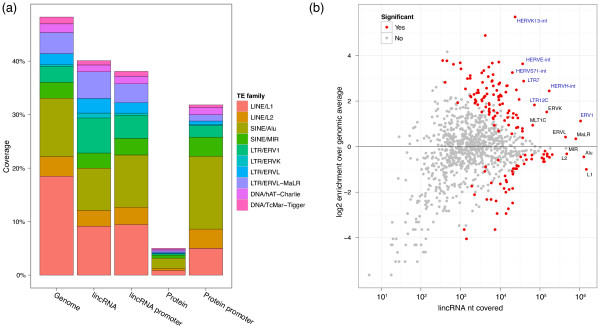
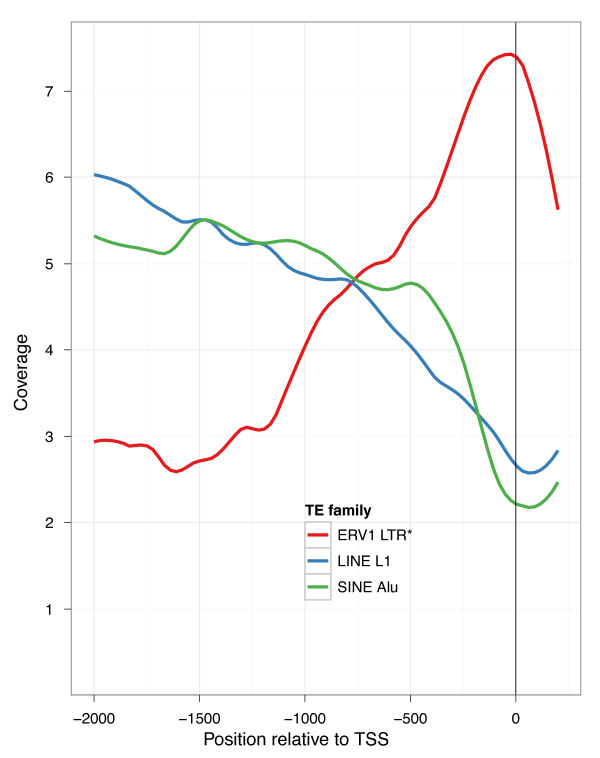
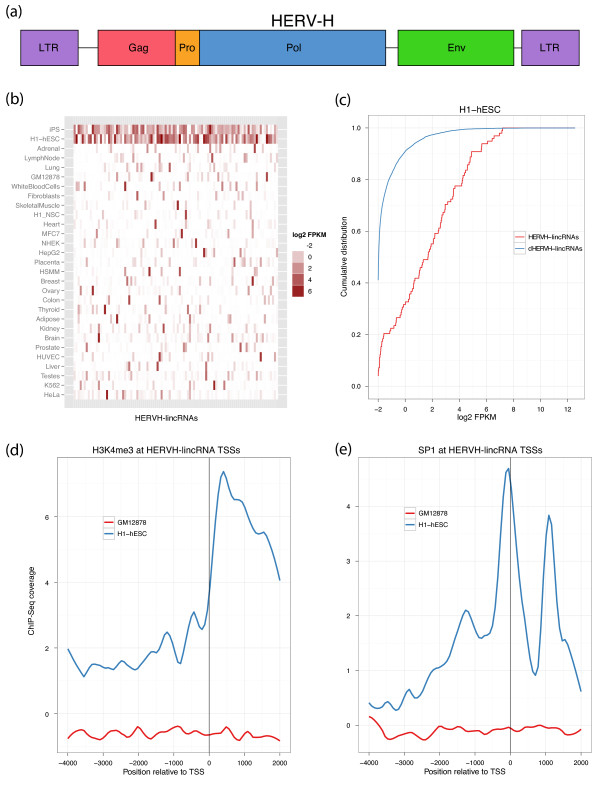
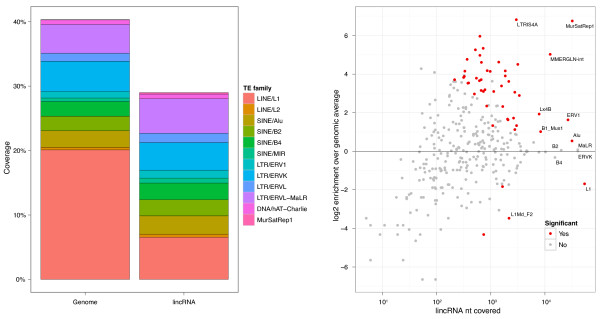
Background: Numerous studies over the past decade have elucidated a large set of long intergenic noncoding RNAs (lincRNAs) in the human genome. Research since has shown that lincRNAs constitute an important layer of genome regulation across a wide spectrum of species. However, the factors governing their evolution and origins remain relatively unexplored. One possible factor driving lincRNA evolution and biological function is transposable element (TE) insertions. Here, we comprehensively characterize the TE content of lincRNAs relative to genomic averages and protein coding transcripts. Results: Our analysis of the TE composition of 9,241 human lincRNAs revealed that, in sharp contrast to protein coding genes, 83% of lincRNAs contain a TE, and TEs comprise 42% of lincRNA sequence. lincRNA TE composition varies significantly from genomic averages - L1 and Alu elements are depleted and broad classes of endogenous retroviruses are enriched. TEs occur in biased positions and orientations within lincRNAs, particularly at their transcription start sites, suggesting a role in lincRNA transcriptional regulation. Accordingly, we observed a dramatic example of HERVH transcriptional regulatory signals correlating strongly with stem cell-specific expression of lincRNAs. Conversely, lincRNAs devoid of TEs are expressed at greater levels than lincRNAs with TEs in all tissues and cell lines, particularly in the testis. Conclusions: TEs pervade lincRNAs, dividing them into classes, and may have shaped lincRNA evolution and function by conferring tissue-specific expression from extant transcriptional regulatory signals.
Overview
The claims and statistics of this paper haven’t been checked yet.
Free: it reads the open-access text and checks the first 5 claims that cite a source we can check. Create a free account to check every claim.
Integrity signals
Registry
Cites
Statistics
Figures
Verification
Claims the paper makes
The claims and statistics of this paper haven’t been checked yet.
Free: it reads the open-access text and checks the first 5 claims that cite a source we can check. Create a free account to check every claim.
Claims other papers make about this one
Each is checked against this paper’s own text: does it say what the citing paper says it does?
The cited source doesn’t support the claim as written.
In the citing paper
“Indeed, lincRNAs containing REs showed much more tissue-specific pattern of expression in comparison with lincRNAs devoid of REs 17.”
From Are human endogenous retroviruses pathogenic? An approach to testing the hypothesis (2013) · cites this paper as [17]
Checked by a reasoning model — may be wrong.
Experimental — accuracy not yet measuredThe cited source says what the claim attributes to it.
In the citing paper
“Over 80% of lincRNAs were found to contain a RE, particularly enriched in HERVs, and more frequently inserted at the transcription start of the lincRNA 17.”
From Are human endogenous retroviruses pathogenic? An approach to testing the hypothesis (2013) · cites this paper as [17]
Self-check
Percentages, sums and reported differences re-computed from the paper’s own numbers.
The self-check needs the paper’s full text.
Citations
Cites
Controlling the False Discovery Rate: A Practical and Powerful Approach to Multiple Testing
Benjamini, Y., & Hochberg, Y. (1995) · Journal of the Royal Statistical Society Series B: Statistical Methodology · doi:10.1111/j.2517-6161.1995.tb02031.x · Cited by 109,482 · cited 1×
“P-values in all experiments were corrected for multiple hypothesis testing using Benjamini and Hochberg’s false discovery rate procedure [89].”
BEDTools: a flexible suite of utilities for comparing genomic features
Quinlan, A. R., & Hall, I. M. (2010) · Bioinformatics · doi:10.1093/bioinformatics/btq033 · Cited by 27,437
Initial sequencing and analysis of the human genome
International Human Genome Sequencing Consortium, Whitehead Institute for Biomedical Research, C. F. G. R., Lander, E. S., Linton, L. M., Birren, B., Nusbaum, C., Zody, M. C., Baldwin, J., Devon, K., Dewar, K., et al. (2001) · Nature · doi:10.1038/35057062 · Cited by 24,216
Ultrafast and memory-efficient alignment of short DNA sequences to the human genome.
Langmead, B., Trapnell, C., Pop, M., & Salzberg, S. L. (2009) · Genome Biology · doi:10.1186/gb-2009-10-3-r25 · Cited by 21,849 · cited 1×
“First, we mapped the reads to the genome using Bowtie [90] with the –best option to return the single best alignment per read.”
Model-based Analysis of ChIP-Seq (MACS)
Zhang, Y., Liu, T., Meyer, C. A., Eeckhoute, J., Johnson, D. S., Bernstein, B. E., Nusbaum, C., Myers, R. M., Brown, M., Li, W., et al. (2008) · Genome Biology · doi:10.1186/gb-2008-9-9-r137 · Cited by 18,386 · cited 1×
“Second, w e remapped the reads allowing up to twenty alignments and called peaks using the AREM softw are package, which implements an iterative algorithm to optimally allocate mult i- apping reads built on top of the MACS method[91, 92].”
Trapnell, C., Williams, B. A., Pertea, G., Mortazavi, A., Kwan, G., van Baren, M. J., Salzberg, S. L., Wold, B. J., & Pachter, L. (2010) · Nature Biotechnology · doi:10.1038/nbt.1621 · Cited by 15,556
On a Test of Whether one of Two Random Variables is Stochastically Larger than the Other
Mann, H. B., & Whitney, D. R. (1947) · The Annals of Mathematical Statistics · doi:10.1214/aoms/1177730491 · Cited by 14,320 · cited 1×
“For all comparisons of two sets of values where we were interested in whether one set was greater than another, we used a Mann-Whitney rank sum test [88].”
TopHat: discovering splice junctions with RNA-Seq
Trapnell, C., Pachter, L., & Salzberg, S. L. (2009) · Bioinformatics · doi:10.1093/bioinformatics/btp120 · Cited by 11,617
Long non-coding RNAs: insights into functions
Mercer, T. R., Dinger, M. E., & Mattick, J. S. (2009) · Nature Reviews Genetics · doi:10.1038/nrg2521 · Cited by 5,654 · cited 2×
“Background Recent comprehensive transcriptome sequencing studies uncovered a large class of previously unannotated long noncoding RNA (lncRNA) genes in various species with similar splicing and polyadenylation properties to mRNAs [1-8].”
Long non-coding RNA HOTAIR reprograms chromatin state to promote cancer metastasis
Gupta, R. A., Shah, N., Wang, K. C., Kim, J., Horlings, H. M., Wong, D. J., Tsai, M.-C., Hung, T., Argani, P., Rinn, J. L., et al. (2010) · Nature · doi:10.1038/nature08975 · Cited by 5,218 · cited 1×
“Accumulating evidence suggests lncRNAs are key regulators in cell differentiation and disease pathways[10-18].”
Self-citation
Cited by
Items 101–200 of 548
Function and evolution of local repeats in the Firre locus
Hacisuleyman, E., Shukla, C. J., Weiner, C. L., & Rinn, J. L. (2016) · Nature Communications · doi:10.1038/ncomms11021 · Cited by 106
“For example, there are now well-documented examples that show how TEs influence the expression and network dynamics of lncRNAs, as exemplified by the HERVH elements enriched in lncRNAs in stem cells 7,12,49,60 .”
Self-citationKelley, D. R., Hendrickson, D. G., Tenen, D., & Rinn, J. L. (2014) · Genome Biology · doi:10.1186/s13059-014-0537-5 · Cited by 89
“…that long noncoding RNAs (lncRNAs), a class of more than 10,000 genes with a rapidly growing list of critical functional roles [22,23], contain TEs at a rate near the high genomic average but in biased proportions of the various individual families, suggesting a possible functional role [24,25].”
Self-citationGlinsky, G. V. (2015) · Genome Biology and Evolution · doi:10.1093/gbe/evv081 · Cited by 101
“Kent WJ. 2002.”
Retroviral Transcriptional Regulation and Embryonic Stem Cells: War and Peace
Schlesinger, S., & Goff, S. P. (2015) · Molecular and Cellular Biology · doi:10.1128/mcb.01293-14 · Cited by 88
“Many ERVs directly control expression of cellular, coding mRNAs, but others drive expression of long noncoding RNAs (lncRNAs), which act on genes at a distance (58, 59).”
BackgroundGöke, J., & Ng, H. (2016) · EMBO Reports · doi:10.15252/embr.201642743 · Cited by 104
“D ERV-RNAs Differs by subfamily, coding potential is gradually reduced over time HERVK Embryogenesis [130] ALS/Motor neuron disease [183] Cancer [152,153] HERVH Pluripotency [99,104,120] A Enhancers”
InfluentialLncRNAs in polyploid cotton interspecific hybrids are derived from transposon neofunctionalization
Zhao, T., Tao, X., Feng, S., Wang, L., Hong, H., Ma, W., Shang, G.-D., Guo, S., He, Y., Zhou, B., et al. (2018) · Genome biology · doi:10.1186/s13059-018-1574-2 · Cited by 111
High-Quality Genome Assemblies Reveal Long Non-coding RNAs Expressed in Ant Brains
Shields, E. J., Sheng, L., Weiner, A. K., Garcia, B. A., & Bonasio, R. (2018) · Cell Reports · doi:10.1016/j.celrep.2018.05.014 · Cited by 85
“…(Cabili et al., 2011; Nam and Bartel, 2012; Young et al., 2012). lncRNAs in other genomes tend to overlap with transposable elements at a higher rate than protein-coding genes, suggesting a role for these sequences in their function and diversification (Kapusta et al., 2013; Kelley and Rinn, 2012).”
Long non-coding RNAs and transposable elements: A functional relationship
Fort, V., Khelifi, G., & Hussein, S. M. I. (2020) · Biochimica et Biophysica Acta (BBA) - Molecular Cell Research · doi:10.1016/j.bbamcr.2020.118837 · Cited by 99
Lv, Y., Hu, F., Zhou, Y., Wu, F., Zhou, L., & Gaut, B. S. (2019) · BMC Genomics · doi:10.1186/s12864-019-6245-5 · Cited by 105
“strated that most lincRNAs derive from TEs [7, 35].”
BackgroundTransposable element-derived sequences in vertebrate development
Etchegaray, E., Naville, M., Volff, J.-N., & Haftek-Terreau, Z. (2021) · Mobile DNA · doi:10.1186/s13100-020-00229-5 · Cited by 80
Mammalian genome innovation through transposon domestication
Modzelewski, A. J., Chong, J. G., Wang, T., & He, L. (2022) · Nature Cell Biology · doi:10.1038/s41556-022-00970-4 · Cited by 98
Vlachogiannis, N. I., Sachse, M., Georgiopoulos, G. A., Zormpas, E., Bampatsias, D., Delialis, D., Bonini, F., Galyfos, G. C., Sigala, F., Stamatelopoulos, K. S., et al. (2021) · Journal of Molecular and Cellular Cardiology · doi:10.1016/j.yjmcc.2021.07.005 · Cited by 85
Berrens, R. V., Andrews, S., Spensberger, D., Santos, F., Dean, W., Gould, P., Sharif, J., Olova, N., Chandra, T., Koseki, H., et al. (2017) · Cell Stem Cell · doi:10.1016/j.stem.2017.10.004 · Cited by 79
“Many TE families are associated with transcribed genes or lncRNAs in ESCs (Kelley and Rinn, 2012).”
BackgroundlncRNA in HNSCC: challenges and potential
Guglas, K., Bogaczyńska, M., Kolenda, T., Ryś, M., Teresiak, A., Bliźniak, R., Łasińska, I., Mackiewicz, J., & Lamperska, K. M. (2017) · Współczesna Onkologia · doi:10.5114/wo.2017.72382 · Cited by 85
“The choice of a suitable model is a problematic issue because of the lack of conservation at the nucleotide sequence level [16], tissue specific expression level [22], transcription initiation from regions rich in repeats [23] and mostly high isoform heterogeneity.”
BackgroundAre human endogenous retroviruses pathogenic? An approach to testing the hypothesis
Young, G. R., Stoye, J. P., & Kassiotis, G. (2013) · BioEssays · doi:10.1002/bies.201300049 · Cited by 78
Expressional activation and functional roles of human endogenous retroviruses in cancers
Zhang, M., Liang, J. Q., & Zheng, S. (2019) · Reviews in Medical Virology · doi:10.1002/rmv.2025 · Cited by 77
“Noncoding RNAs and functional peptides produc retroviral‐like microvesicles may also be involved in tumor growth and meta DNA methylation inhibitors or specific genes, may activate innate immuni from HERVs.(84) They believed that HERV‐Hs were responsible for the birth of new ncRNAs by inserting active promoters into p…”
BackgroundInfluentialHide and seek: how chromatin-based pathways silence retroelements in the mammalian germline
Molaro, A., & Malik, H. S. (2016) · Current Opinion in Genetics & Development · doi:10.1016/j.gde.2015.12.001 · Cited by 77
Ancient exapted transposable elements promote nuclear enrichment of human long noncoding RNAs
Carlevaro-Fita, J., Polidori, T., Das, M., Navarro, C., Zoller, T. I., & Johnson, R. (2019) · Genome Research · doi:10.1101/gr.229922.117 · Cited by 77
“These findings are consistent with previous analyses by Kelley and Rinn (2012) using the whole genome, rather than introns, as background.”
InfluentialQi, Y., Wu, F., Yan, Z., Li, J., Ma, T., Zhang, Y., Zhao, Y., Wang, Y., & Zhang, J. (2019) · BMC Plant Biology · doi:10.1186/s12870-018-1626-5 · Cited by 94
Long Non-Coding RNAs in Neuronal Aging
Fernandes, D. P., Bitar, M., Jacobs, F. M. J., & Barry, G. (2018) · Non-Coding RNA · doi:10.3390/ncrna4020012 · Cited by 82
“In certain families of TEs, such as the HERVH family, the regulation of lncRNA expression evolved in a tissue-and developmental phase-dependent way, highlighting the functional sophistication of lncRNAs [143].”
InfluentialLock, F. E., Rebollo, R., Miceli-Royer, K., Gagnier, L., Kuah, S., Babaian, A., Sistiaga-Poveda, M., Lai, C. B., Nemirovsky, O., Serrano, I., et al. (2014) · Proceedings of the National Academy of Sciences · doi:10.1073/pnas.1405507111 · Cited by 75
Long non‐coding RNAs in corticogenesis: deciphering the non‐coding code of the brain
Aprea, J., & Calegari, F. (2015) · The EMBO Journal · doi:10.15252/embj.201592655 · Cited by 76
“Whereas 5% of coding gene loci, and only 0.3% of coding sequences, are derived from TEs, the majority of human and mouse lncRNAs overlap at least one TE and more than 30% of their sequences are derived from TEs (Kelley & Rinn, 2012; Kapusta et al , 2013).”
Influentialde Cubas, A. A., Dunker, W., Zaninovich, A., Hongo, R. A., Bhatia, A., Panda, A., Beckermann, K. E., Bhanot, G., Ganesan, S., Karijolich, J. J., et al. (2020) · JCI Insight · doi:10.1172/jci.insight.137569 · Cited by 85
“To validate TE RNAseq data showing upregulation of a number of ERVs and LTR-retrotransposons, we quantified expression of several ERVs (ERV3-2, ERV4700, ERVFC1, and ERVFC2) by quantitative PCR (qPCR) in ccRCC cell lines (786-0, A498, and UMRC2) and normal HKC cells treated with decitabine or DMSO.”
BackgroundInfluentialLv, J., Liu, H., Huang, Z., Su, J., He, H., Xiu, Y., Zhang, Y., & Wu, Q. (2013) · Nucleic Acids Research · doi:10.1093/nar/gkt818 · Cited by 81
“Transposable elements were previously shown to be associated with lncRNAs (80).”
BackgroundChang, N.-C., Rovira, Q., Wells, J., Feschotte, C., & Vaquerizas, J. M. (2022) · Genome Research · doi:10.1101/gr.275655.121 · Cited by 70
“Reads mapping to TEs overlapping annotated exons, UTRs, or introns of expressed genes in the same orientation were considered as transcribed in a gene-dependent manner.”
BackgroundInfluentialTranscriptome sequencing reveals thousands of novel long non-coding RNAs in B cell lymphoma
Verma, A., Jiang, Y., Du, W., Fairchild, L., Melnick, A. M., & Elemento, O. (2015) · Genome Medicine · doi:10.1186/s13073-015-0230-7 · Cited by 92
“It has been reported by others that several lncRNAs contain transposable elements, for example, PCAT1 [35, 36].”
BackgroundP53 and the defenses against genome instability caused by transposons and repetitive elements
Levine, A. J., Ting, D. T., & Greenbaum, B. D. (2016) · BioEssays · doi:10.1002/bies.201600031 · Cited by 72
Emerging roles of macrosatellite repeats in genome organization and disease development
Dumbović, G., Forcales, S. V., & Perucho, M. (2017) · Epigenetics · doi:10.1080/15592294.2017.1318235 · Cited by 75
“Other examples demonstrate that transposable elements can regulate the expression of lncRNAs, dividing them into cell type-specific classes and possibly regulating their evolution.(33,34) Collectively, these data suggest an important and unforeseen role of distinct repeat classes as RNA and DNA regulatory elements.”
BackgroundA subset of conserved mammalian long non-coding RNAs are fossils of ancestral protein-coding genes
Hezroni, H., Perry, R. B., Meir, Z., Housman, G., Lubelsky, Y., & Ulitsky, I. (2017) · Genome biology · doi:10.1186/s13059-017-1293-0 · Cited by 78
Pimpinelli, S., & Piacentini, L. (2019) · Functional Ecology · doi:10.1111/1365-2435.13497 · Cited by 95
Repetitive elements in aging and neurodegeneration
Copley, K. E., & Shorter, J. (2023) · Trends in Genetics · doi:10.1016/j.tig.2023.02.008 · Cited by 70
“Long intergenic noncoding RNAs (lincRNAs) represent a potential mechanism by which tissue-speci fi c expression and impact of TEs is conferred. lincRNAs are much more likely to contain TEs versus protein-coding genes [175].”
BackgroundInfluentialLiving Organisms Author Their Read-Write Genomes in Evolution
Shapiro, J. A. (2017) · Biology · doi:10.3390/biology6040042 · Cited by 73
“A 2012 analysis reported that 97% of human lncRNAs are primate-specific and found mobile DNA element sequences in 83% of 9241 human lncRNAs, where they constituted 42% of total lncRNA sequence [558].”
BackgroundTan, J. Y., Smith, A., da Silva, M. F., Matthey-Doret, C., Rueedi, R., Sönmez, R., Ding, D., Kutalik, Z., Bergmann, S., & Marques, A. C. (2017) · Cell Reports · doi:10.1016/j.celrep.2017.02.009 · Cited by 73
“This observation could be the result of rapidly evolving repetitive elements within TR-lincRNAs (Kapusta et al., 2013; Kelley and Rinn, 2012).”
Rolling-Circle Transposons Catalyze Genomic Innovation in a Mammalian Lineage
Thomas, J., Phillips, C. D., Baker, R. J., & Pritham, E. J. (2014) · Genome Biology and Evolution · doi:10.1093/gbe/evu204 · Cited by 67
Hutchins, A. P., & Pei, D. (2015) · Science Bulletin · doi:10.1007/s11434-015-0905-x · Cited by 79
“Conversely, only 6 % of coding genes overlap with TEs [87, 88].”
BackgroundInfluentialActivation of an endogenous retrovirus-associated long non-coding RNA in human adenocarcinoma
Gibb, E. A., Warren, R. M., Wilson, G. W., Brown, S. D., Robertson, G., Morin, G. B., & Holt, R. A. (2015) · Genome Medicine · doi:10.1186/s13073-015-0142-6 · Cited by 75
“Similarly, changes in physiological or cellular conditions that promote classspecific ERV LTR expression could promote the activation of lncRNAs associated with that class, as has been observed for HERV-H LTRs in embryonic stem cells [18,28].”
BackgroundInfluentialZhou, B., Qi, F., Wu, F., Nie, H., Song, Y., Shao, L., Han, J., Wu, Z., Saiyin, H., Wei, G., et al. (2019) · mBio · doi:10.1128/mbio.00937-19 · Cited by 71
“Recently, it has been found that ERVs are significantly enriched in long noncoding RNA (lncRNA) exons relative to protein-coding gene exons (15, 16).”
Pluripotency and the endogenous retrovirus HERVH: Conflict or serendipity?
Izsvák, Z., Wang, J., Singh, M., Mager, D. L., & Hurst, L. D. (2016) · BioEssays · doi:10.1002/bies.201500096 · Cited by 66
“HERVHactivation is inversely correlatedwith the DNA methylation status [21, 27], and the activated copies are marked with transcriptionally active histonemarks (H3K4me1/ 2/3, H3K9ac, H3K36me3, and H3K79me2), while the repressive marks (H3K9me3 and H3K27me3) are rare [21, 28, 29].”
Noncoding RNAs: Stress, Glucocorticoids, and Posttraumatic Stress Disorder
Daskalakis, N. P., Provost, A. C., Hunter, R. G., & Guffanti, G. (2018) · Biological Psychiatry · doi:10.1016/j.biopsych.2018.01.009 · Cited by 65
Long Noncoding RNA Moderates MicroRNA Activity to Maintain Self-Renewal in Embryonic Stem Cells
Smith, K. N., Starmer, J., Miller, S. C., Sethupathy, P., & Magnuson, T. (2017) · Stem Cell Reports · doi:10.1016/j.stemcr.2017.05.005 · Cited by 68
“However, loss-of-function approaches can provide insight into roles for lncRNAs in the maintenance of self-renewal and pluripotency, reprogramming, and differentiation (Guttman et al., 2011; Kelley and Rinn, 2012; Kim et al., 2015; Lin et al., 2014; Loewer et al., 2010).”
BackgroundHashimoto, K., Suzuki, A. M., Dos Santos, A., Desterke, C., Collino, A., Ghisletti, S., Braun, E., Bonetti, A., Fort, A., Qin, X.-Y., et al. (2015) · Genome Research · doi:10.1101/gr.191031.115 · Cited by 64
“Other studies demonstrated a high activity of distinct LTR subfamilies in stem cells using several different methods, including RNA-seq (Kelley and Rinn 2012; St Laurent et al. 2013), DNase-seq (Jacques et al. 2013), and MeDIP-seq (Xie et al. 2013).”
MethodSciamanna, I., Luca, C. D., & Spadafora, C. (2016) · Frontiers in Chemistry · doi:10.3389/fchem.2016.00006 · Cited by 71
“…Bozzoni, 2014). lncRNAs also have tight connections with transposable elements of both the DNA-based and the retroelements families, which occur within nearly 80% of mature lncRNA transcripts and account for about 30–40% of total human lncRNA sequences (Kelley and Rinn, 2012; Kapusta et al., 2013).”
BackgroundDynamic and Widespread lncRNA Expression in a Sponge and the Origin of Animal Complexity
Gaiti, F., Fernandez-Valverde, S. L., Nakanishi, N., Calcino, A. D., Yanai, I., Tanurdzic, M., & Degnan, B. M. (2015) · Molecular Biology and Evolution · doi:10.1093/molbev/msv117 · Cited by 63
“2014), previous studies established that genomic sequence and gene structure conservation are rare at putative orthologous lncRNA loci, and that lncRNAs are subjected to rapid turnover during evolution (Wang et al. 2004; Pang et al. 2006; Guttman et al. 2009; Mercer et al. 2009; Ponting et al. 2009; Kelley and Rinn 20…”
Carter, T. A., Singh, M., Dumbović, G., Chobirko, J. D., Rinn, J. L., & Feschotte, C. (2022) · eLife · doi:10.7554/elife.76257 · Cited by 63
“…factors (TFs) bind and activate HERVH LTRs, including the pluripotency factors OCT4, NANOG, SP1, and SOX2 (Göke et al., 2015; Ito et al., 2017; Kelley and Rinn, 2012; Kunarso et al., 2010; Ohnuki et al., 2014; Pontis et al., 2019; Santoni et al., 2012), it remains unclear how TF binding…”
BackgroundSelf-citationLong non-coding RNA-mediated regulation of glucose homeostasis and diabetes.
Sun, X., & Wong, D. (2016) · Europe PMC (PubMed Central) · Cited by 70
The SINEB1 element in the long non-coding RNA Malat1 is necessary for TDP-43 proteostasis
Nguyen, T. M., Kabotyanski, E. B., Reineke, L. C., Shao, J., Xiong, F., Lee, J.-H., Dubrulle, J., Johnson, H. L., Stossi, F., Tsoi, P. S., et al. (2019) · Nucleic Acids Research · doi:10.1093/nar/gkz1176 · Cited by 70
“Moreover, HNRNPK dissociation causes Malat1 to mislocalize to the cytoplasm, hijacking TDP-43 to the cytoplasm (1), as implicated by the diffuse Malat1 speckle phenotype with cytoplasmic localization.”
BackgroundChen, L., Zhang, Y., Huang, G., Pan, X., Wang, S., Huang, T., & Cai, Y. (2017) · Molecular Genetics and Genomics · doi:10.1007/s00438-017-1372-7 · Cited by 66
“Recent publications have confirmed that only lncRNAs but not cirRNAs contain functional long transposable elements, implying that tandem sequences may also be differentially distributed in these two non-coding RNA subtypes (Kelley and Rinn 2012; Hadjiargyrou and Delihas 2013; Johnson and Guigo 2014).”
BackgroundResultLncRBase: An Enriched Resource for lncRNA Information
Chakraborty, S., Deb, A., Maji, R. K., Saha, S., & Ghosh, Z. (2014) · PLoS ONE · doi:10.1371/journal.pone.0108010 · Cited by 67
“This is in line with previous observation that intergenic lncRNAs tend to be associated with transposable elements [44].”
BackgroundResultLong non-coding RNAs in normal and malignant hematopoiesis
Nobili, L., Lionetti, M., & Neri, A. (2016) · Oncotarget · doi:10.18632/oncotarget.9308 · Cited by 70
“They have an overall relative lower level of sequence conservation among mammalian species than the protein coding genes [9].”
BackgroundRole of Transposable Elements in Gene Regulation in the Human Genome
Ali, A., Han, K., & Liang, P. (2021) · Life · doi:10.3390/life11020118 · Cited by 83
“It was found that 7700 lincRNAs overlapped with TEs, and 1530 lincRNAs were depleted of TEs, indicating 80% of lincRNA genes associated with TEs and TEs comprise 42% of the total lncRNA sequences [136].”
BackgroundInfluentialShao, W., & Wang, T. (2020) · Genome Research · doi:10.1101/gr.265173.120 · Cited by 67
“More than two thirds of mature long ncRNAs contain at least one TE and almost half of the total base pairs of long ncRNA are derived from TEs (Kelley and Rinn 2012; Kapusta et al. 2013; Veselovska et al. 2015).”
BackgroundGuffanti, G., Bartlett, A. A., Klengel, T., Klengel, C., Hunter, R. G., Glinsky, G. V., & Macciardi, F. M. (2018) · Molecular Biology and Evolution · doi:10.1093/molbev/msy143 · Cited by 66
“These observations are consistent with the previous study reporting that TE-lncRNAs have greater splicing complexity compared with conventional lncRNAs defined by the exons/transcript and isoforms/gene ratios (Kelley and Rinn 2012).”
ResultSpen links RNA-mediated endogenous retrovirus silencing and X chromosome inactivation
Carter, A. C., Xu, J., Nakamoto, M. Y., Wei, Y., Zarnegar, B. J., Shi, Q., Broughton, J. P., Ransom, R. C., Salhotra, A., Nagaraja, S., et al. (2020) · eLife · doi:10.7554/elife.54508 · Cited by 64
“Indeed, noncoding RNAs, including Xist, are enriched for TE content (Kelley and Rinn, 2012).”
BackgroundLv, J., Cui, W., Liu, H., He, H., Xiu, Y., Guo, J., Liu, H., Liu, Q., Zeng, T.-B., Chen, Y., et al. (2013) · PLoS ONE · doi:10.1371/journal.pone.0071152 · Cited by 70
“The association of repeats for lncRNAs implied that the evolution of lncRNAs may be driven by repeat elements, which was also proposed by a recent study [63].”
BackgroundEs-Haghi, M., Godakumara, K., Häling, A., Lättekivi, F., Lavrits, A., Viil, J., Andronowska, A., Nafee, T. M., James, V. H., Jaakma, Ü., et al. (2019) · Cell Communication and Signaling · doi:10.1186/s12964-019-0448-x · Cited by 60
Playfoot, C. J., Duc, J., Sheppard, S., Joye, S., Coudray, A., Planet, E., & Trono, D. (2021) · Genome Research · doi:10.1101/gr.275133.120 · Cited by 61
Sexual differences in the sialomes of the zebra tick, Rhipicephalus pulchellus
Tan, A. W. L., Francischetti, I. M. B., Slovák, M., Kini, R. M., & Ribeiro, J. M. C. (2015) · Journal of Proteomics · doi:10.1016/j.jprot.2014.12.014 · Cited by 69
“It was recently proposed that TEs are associated with gene expression regulation [43].”
Chishima, T., Iwakiri, J., & Hamada, M. (2018) · Genes · doi:10.3390/genes9010023 · Cited by 63
“Kelley and Rinn suggested that ERV LTRs also regulated the expression of lncRNAs, as ERV sequences were enriched at the transcription start sites (TSSs) of lncRNAs and tended to be in the same orientation as those lncRNAs [15].”
BackgroundResultInfluentialHigh-confidence coding and noncoding transcriptome maps
Yu, B., Yoon, S.-H., & Nam, J. (2017) · Genome Research · doi:10.1101/gr.214288.116 · Cited by 59
“The PhyloCSF score cutoff was derived from previous studies (Cabili et al. 2011; Kelley and Rinn 2012).”
MethodXiang, X., Tao, Y., DiRusso, J., Hsu, F., Zhang, J., Xue, Z., Pontis, J., Trono, D., Liu, W., & Clark, A. T. (2022) · Nature Communications · doi:10.1038/s41467-022-28105-1 · Cited by 55
Transposable Element Insertions in Long Intergenic Non-Coding RNA Genes
Kannan, S., Chernikova, D. A., Rogozin, I. B., Poliakov, E., Managadze, D., Koonin, E. V., & Milanesi, L. (2015) · Frontiers in Bioengineering and Biotechnology · doi:10.3389/fbioe.2015.00071 · Cited by 76
“Thus, it has been suggested that TES divide lincRNAs into classes and have contributed to lincRNA evolution and function by conferring tissue-specific expression from extant transcriptional regulatory signals (Kelley and Rinn, 2012).”
BackgroundInfluentialWan, S., Zhang, Y., Duan, M., Huang, L., Wang, W., Xu, Q., Yang, Y., & Yu, Y. (2020) · Frontiers in Plant Science · doi:10.3389/fpls.2020.00218 · Cited by 63
“For basic filtering, transcripts with a class code of “i,” “x,” “u,” “o,” and “e” (Lv et al., 2013), a length ≥ 200 bp, an exon number ≥ 2, and a fragments per kilobase of transcript per million mapped reads (FPKM) value ≥ 0.1 (Kelley and Rinn, 2012) were selected.”
InfluentialA first exon termination checkpoint preferentially suppresses extragenic transcription
Austenaa, L. M. I., Piccolo, V., Russo, M., Prosperini, E., Polletti, S., Polizzese, D., Ghisletti, S., Barozzi, I., Diaferia, G. R., & Natoli, G. (2021) · Nature Structural & Molecular Biology · doi:10.1038/s41594-021-00572-y · Cited by 62
Biological action in Read–Write genome evolution
Shapiro, J. A. (2017) · Interface Focus · doi:10.1098/rsfs.2016.0115 · Cited by 57
Li, X., Shahid, M. Q., Wen, M., Chen, S., Yu, H., Jiao, Y., Lu, Z., Li, Y., & Liu, X. (2020) · BMC Plant Biology · doi:10.1186/s12870-020-2290-0 · Cited by 84
“Another study reported that the expression levels of TElncRNAs were the highest in testis [61], and important in the biology of normal testis [62].”
BackgroundSzéll, M., Danis, J., Bata‐Csörgõ, Z., & Kemény, L. V. (2016) · Pflügers Archiv - European Journal of Physiology · doi:10.1007/s00424-016-1803-z · Cited by 57
“These elements very often make up a relatively large portion of the lncRNA genes [42].”
BackgroundThe role of endogenous retroviruses‐K in human cancer
Salavatiha, Z., Soleimani‐Jelodar, R., & Jalilvand, S. (2020) · Reviews in Medical Virology · doi:10.1002/rmv.2142 · Cited by 60
“Around 127 ncRNAs have been identified so far that arise from HERVs and could potentially exert beneficial or detrimental effects on the human genome.(93) One example is”
BackgroundSpectacle: fast chromatin state annotation using spectral learning
Song, J., & Chen, K. C. (2015) · Genome biology · doi:10.1186/s13059-015-0598-0 · Cited by 59
“We used long non-coding RNAs from [69], and conserved enhancer regions from the VISTA enhancer browser [70].”
MethodConserved expression of transposon-derived non-coding transcripts in primate stem cells
Ramsay, L., Marchetto, M. C., Caron, M., Chen, S., Busche, S., Kwan, T., Pastinen, T., Gage, F. H., & Bourque, G. (2017) · BMC Genomics · doi:10.1186/s12864-017-3568-y · Cited by 63
“Another well characterized example that appears in Table 1 is HERVH with 50 instances expressed in human, which is comparable to what was found in previous studies [11, 12, 14].”
BackgroundResultUnderstanding the Role of lncRNAs in Nervous System Development
Clark, B. S., & Blackshaw, S. (2017) · Advances in experimental medicine and biology · doi:10.1007/978-981-10-5203-3_9 · Cited by 58
Sytnikova, Y. A., Rahman, R., Chirn, G., Clark, J. P., & Lau, N. C. (2014) · Genome Research · doi:10.1101/gr.178129.114 · Cited by 56
Detecting Endogenous Retrovirus-Driven Tissue-Specific Gene Transcription
Pavličev, M., Hiratsuka, K., Swaggart, K. A., Dunn, C., & Muglia, L. J. (2015) · Genome Biology and Evolution · doi:10.1093/gbe/evv049 · Cited by 70
RNAi-dependent Polycomb repression controls transposable elements in Tetrahymena
Zhao, X., Xiong, J., Mao, F., Sheng, Y., Chen, X., Feng, L., Dui, W., Yang, W., Kapusta, A., Feschotte, C., et al. (2019) · Genes & Development · doi:10.1101/gad.320796.118 · Cited by 56
“Our results strongly supports TE-derived sequences as the template for many long ncRNA, which in other eukaryotic systems may or may not be cotranscriptionally processed or converted into small RNA (Kelley and Rinn 2012; Kapusta et al. 2013;Haet al. 2014).”
ResultDavis, M. P. A., Carrieri, C., Saini, H. K., van Dongen, S., Leonardi, T., Bussotti, G., Monahan, J., Auchynnikava, T., Bitetti, A., Rappsilber, J., et al. (2017) · EMBO Reports · doi:10.15252/embr.201744059 · Cited by 59
Glinsky, G. V., & Barakat, T. S. (2019) · Stem Cell Research · doi:10.1016/j.scr.2019.101456 · Cited by 45
“Transposable elements (TEs) represent a major evolutionary force contributing to the creation of species-specific regulatory networks in primate genomes by providing highly efficient alternative promoters, novel transcription factor-binding sites, potent enhancers, as well as small- and long-non-coding RNAs ((Bourque…”
BackgroundDing, Y., Ding, N., Zhang, Y., Xie, S., Huang, M., Ding, X., Dong, W., Zhang, Q., & Jiang, L. (2021) · Frontiers in Cell and Developmental Biology · doi:10.3389/fcell.2021.736864 · Cited by 52
“Transcripts with lengths greater than 200 nt and more than two exons were selected as lncRNA candidates and further screened (Kelley and Rinn, 2012).”
BackgroundExpression Specificity of Disease-Associated lncRNAs: Toward Personalized Medicine
Nguyen, Q. H., & Carninci, P. (2015) · Current topics in microbiology and immunology · doi:10.1007/82_2015_464 · Cited by 55
Soares, R., Maglieri, G., Gutschner, T., Diederichs, S., Lund, A. H., Nielsen, B. S., & Holmstrøm, K. (2017) · Nucleic Acids Research · doi:10.1093/nar/gkx946 · Cited by 55
“On average, lncRNAs are shorter and contain more repeats than mRNA molecules (21,22), and lncRNAs are generally expressed at lower levels than mRNAs (23), making the lncRNAs challenging to detect by in situ hybridization (ISH) methods.”
BackgroundSun, Z., Zhu, M., Lv, P., Cheng, L., Wang, Q., Tian, P., Yan, Z., & Wen, B. (2018) · Stem Cell Reports · doi:10.1016/j.stemcr.2018.08.001 · Cited by 53
Krichevsky, A. M., & Uhlmann, E. J. (2019) · Neurotherapeutics · doi:10.1007/s13311-018-00702-3 · Cited by 51
Balestrieri, E., Cipriani, C., Matteucci, C., Benvenuto, A., Coniglio, A., Argaw-Denboba, A., Toschi, N., Bucci, I., Miele, M. T., Grelli, S., et al. (2019) · Frontiers in Immunology · doi:10.3389/fimmu.2019.02244 · Cited by 52
“HERVs, due to their regulatory activity, could affect the expression of coding cellular genes acting as enhancers, and also could modulate the activity of lncRNAs since HERVs are associated with a variety of lncRNA, overlapping in the transcriptional start sites (42).”
BackgroundThe Role of Transposable Elements of the Human Genome in Neuronal Function and Pathology
Chesnokova, E., Beletskiy, A., & Kolosov, P. M. (2022) · International Journal of Molecular Sciences · doi:10.3390/ijms23105847 · Cited by 51
How to tame an endogenous retrovirus: HERVH and the evolution of human pluripotency
Römer, C., Singh, M., Hurst, L. D., & Izsvák, Z. (2017) · Current Opinion in Virology · doi:10.1016/j.coviro.2017.07.001 · Cited by 50
Retrotransposons evolution and impact on lncRNA and protein coding genes in pigs
Chen, C., Wang, W., Wang, X., Shen, D., Wang, S., Wang, Y., Gao, B., Wimmers, K., Mao, J., Li, K., et al. (2019) · Mobile DNA · doi:10.1186/s13100-019-0161-8 · Cited by 50
Babarinde, I. A., Ma, G., Li, Y., Deng, B., Luo, Z., Liu, H., Abdul, M. M., Ward, C., Chen, M., Fu, X., et al. (2021) · Nucleic Acids Research · doi:10.1093/nar/gkab710 · Cited by 52
“Previous reports show that TE sequences constitute a major part of lncRNAs (17,18).”
BackgroundResultGlobal and cell-type specific properties of lincRNAs with ribosome occupancy
Wang, H., Wang, Y., Xie, S., Liu, Y., & Xie, Z. (2016) · Nucleic Acids Research · doi:10.1093/nar/gkw909 · Cited by 50
“Given that proteincoding genes were severely depleted for TEs (48), this observation provided evidence that some lincRNAs may function through encoded products.”
BackgroundInfluentialHuman copy number variants are enriched in regions of low mappability
Monlong, J., Cossette, P., Meloche, C., Rouleau, G. A., Girard, S., & Bourque, G. (2018) · Nucleic Acids Research · doi:10.1093/nar/gky538 · Cited by 53
“This sub-family has been shown to be expressed and important in human embryonic stem cells (66,67).”
Garland, W., & Jensen, T. H. (2020) · WIREs RNA · doi:10.1002/wrna.1572 · Cited by 45
“Curiously, in comparison to mRNAs, exonic TEs appear to be overrepresented in lncRNAs with estimates of ~40 and ~83%, respectively (Kelley & Rinn, 2012).”
BackgroundYu, C., Lei, X., Chen, F., Mao, S., Lv, L., Liu, H., Hu, X., Wang, R., Shen, L., Zhang, N., et al. (2022) · Nature Communications · doi:10.1038/s41467-022-31197-4 · Cited by 56
Ramos, É., Cardoso, A. L., Brown, J., Marques, D. F., Fantinatti, B. E. A., Cabral-de-Mello, D. C., de Oliveira, R. A., O'Neill, R. J. W., & Martins, C. (2016) · Chromosoma · doi:10.1007/s00412-016-0601-x · Cited by 49
“Furthermore, lncRNAs can be originated from transposable element (TEs) exonic domains (Kelley and Rinn 2012; Johnson and Guigó 2014).”
BackgroundLong non-coding RNA exchange during the oocyte-to-embryo transition in mice
Karlić, R., Ganesh, S., Franke, V., Táborská, E., Urbanova, J., Suzuki, Y., Aoki, F., Vlahoviček, K., & Svoboda, P. (2017) · DNA Research · doi:10.1093/dnares/dsw058 · Cited by 58
Functional annotation of the vlinc class of non-coding RNAs using systems biology approach
Laurent, G. S., Vyatkin, Y. V., Антонец, Д., Ri, M., Yao, Q., Saik, O., Shtokalo, D. N., de Hoon, M., Kawaji, H., Itoh, M., et al. (2016) · Nucleic Acids Research · doi:10.1093/nar/gkw162 · Cited by 46
“Activation of ncRNA derived from retrotransposon promoters and enhancers has been previously reported by us (3) and other groups (23,27).”
BackgroundLee, H.-E., Ayarpadikannan, S., & Kim, H. (2015) · Genes & Genetic Systems · doi:10.1266/ggs.15-00016 · Cited by 51
Li, M. A., Amaral, P., Cheung, P., Bergmann, J. H., Kinoshita, M., Kalkan, T., Ralser, M., Robson, S. C., von Meyenn, F., Paramor, M., et al. (2017) · eLife · doi:10.7554/elife.23468 · Cited by 44
“Non-coding transcripts harbouring TE sequences are enriched in ESCs and early embryo development in both mouse and human (Fort et al., 2014; Göke et al., 2015; Kelley and Rinn, 2012) and in several instances have been proposed to regulate pluripotency (Durruthy-Durruthy et al.”
BackgroundResultInfluentialThe essential but enigmatic regulatory role of HERVH in pluripotency
Sexton, C. E., Tillett, R. L., & Han, M. (2021) · Trends in Genetics · doi:10.1016/j.tig.2021.07.007 · Cited by 49
“In addition, the histone modifications H3K4me3 and H3K27ac are significantly enriched in LTR7 elements [2,9,18,23,24].”
BackgroundThe Dynamic Genome: Transposons and Environmental Adaptation in the Nervous System
Lapp, H. E., & Hunter, R. G. (2016) · Epigenomics · doi:10.2217/epi.15.107 · Cited by 47
Hu, T., Pi, W., Zhu, X., Yu, M., Ha, H., Shi, H., Choi, J.-H., & Tuan, D. Y. H. (2017) · Nucleic Acids Research · doi:10.1093/nar/gkx055 · Cited by 51
“Indeed, a recent survey of long, intergenic, noncoding lncRNAs (aka lincRNAs) finds that over 80% of human lncRNAs contain retrotransposon sequences (4).”
BackgroundCharacterisation and functional predictions of canine long non-coding RNAs
Béguec, C. L., Wucher, V., Lagoutte, L., Cadieu, É., Botherel, N., Hédan, B., Brito, C. D., Guillory, A.-S., André, C., Derrien, T., et al. (2018) · Scientific Reports · doi:10.1038/s41598-018-31770-2 · Cited by 48
Transposable elements and their role in aging
Yushkova, E., & Moskalev, A. (2023) · Ageing Research Reviews · doi:10.1016/j.arr.2023.101881 · Cited by 41
Isolation and cultivation of naive-like human pluripotent stem cells based on HERVH expression
Wang, J., Singh, M., Sun, C., Besser, D., Prigione, A., Ivics, Z., Hurst, L. D., & Izsvák, Z. (2016) · Nature Protocols · doi:10.1038/nprot.2016.016 · Cited by 43
Metadata
- Authors
- Kelley, D., & Rinn, J.
- Affiliations
- Broad Institute (US)
- Corresponding author
- Rinn, John
- Venue
- Genome Biology
- Published
- 2012-11-26
- Volume
- 13
- Issue
- 11
- Pages
- R107-R107
- ISSN
- 1465-6906 (ISSN-L)
- 1474-760X
- PMC
- PMC3580499
- OpenAlex
- W2107454957
- Semantic Scholar
- bb26db77ce3ef32a87225cd0d27691a0db872b24
- Cited by
- 531
- References
- 92
- Citations by year
- 2026: 19 · 2025: 14 · 2024: 32 · 2023: 30 · 2022: 45 · 2021: 58 · 2020: 38 · 2019: 36 · 2018: 49 · 2017: 38 · 2016: 52 · 2015: 59 · 2014: 37 · 2013: 24
- FWCI
- 43.76
- Type
- journal article
- Language
- en
- Open access
- gold
- doi.org
- Licence
- cc-by
- creativecommons.org/licenses/by/2.0/ (tdm)
- creativecommons.org/licenses/by/2.0/ (vor)
- Locations
- Genome biology (publishedVersion, cc-by)
- Europe PMC (PubMed Central) (publishedVersion, cc-by)
- PubMed Central (publishedVersion, cc-by)
- PubMed (publishedVersion)
- Funders
- Damon Runyon Cancer Research Foundation
- Richard and Susan Smith Family Foundation
- Israel National Institute for Health Policy Research
- National Institutes of Health (DP2OD006670, GM099117)
- National Heart, Lung, and Blood Institute (T32HL007893)
- National Human Genome Research Institute (P50HG006193)
- National Institute of General Medical Sciences (P01GM099117)
- Topics
- Life Sciences › Biochemistry, Genetics and Molecular Biology › Genetics › Chromosomal and Genetic Variations
- Life Sciences › Biochemistry, Genetics and Molecular Biology › Cancer Research › Cancer-related molecular mechanisms research
- Life Sciences › Biochemistry, Genetics and Molecular Biology › Molecular Biology › Genomics and Chromatin Dynamics
- Keywords
- long intergenic non-coding RNA, transposable elements, endogenous retroviruses, HERV-H, transcriptional regulation, testis expression, Alu elements, tissue-specific gene expression
- MeSH terms
- Gene Expression Regulation, Humans, Organ Specificity, Stem Cells, Genome, Human, Retroelements, Endogenous Retroviruses, RNA, Long Noncoding
About these checks
Registry, retraction, Cites and statistics results are computed, not judged, with one exception: a printed reference that no index lists is read once by a model before it counts as a citation error. Claims are extracted by a model and kept only when their quote appears verbatim in the text; each cited source is then checked, with a model’s help, for whether it says what the claim relies on. Those verdicts can be wrong — read the claim’s quote and the cited source before relying on one.
Statistics and arithmetic are recomputed, not judged.
Confidence bands are shown only for fields calibrated on our annotated test set. None is calibrated yet, so no band is shown.
What counts as a claim ›How we measure confidence ›How we check this ›
Are you an author, or do you see a problem with this page? Request a review
Data sources
Bibliographic data: Semantic Scholar, OpenAlex, Crossref.
Contains information from the Semantic Scholar Academic Graph Datasets, made available under the ODC Attribution License (ODC-BY 1.0).
Semantic Scholar’s data is described in: Kinney, R., et al. (2023). The Semantic Scholar Open Data Platform. arXiv:2301.10140.
