

Transposable elements reveal a stem cell-specific class of long noncoding RNAs
Open accessThe DOI matches its Crossref record; 92 of the 92 references it cites were found in a registry or an index.
Abstract
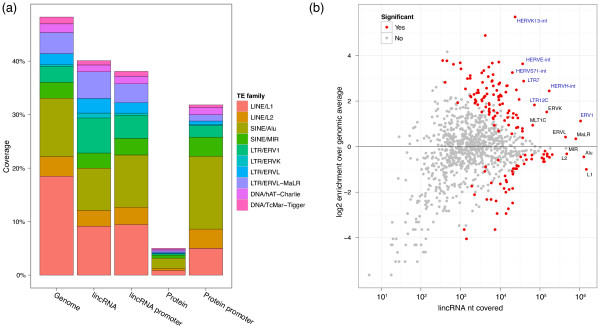
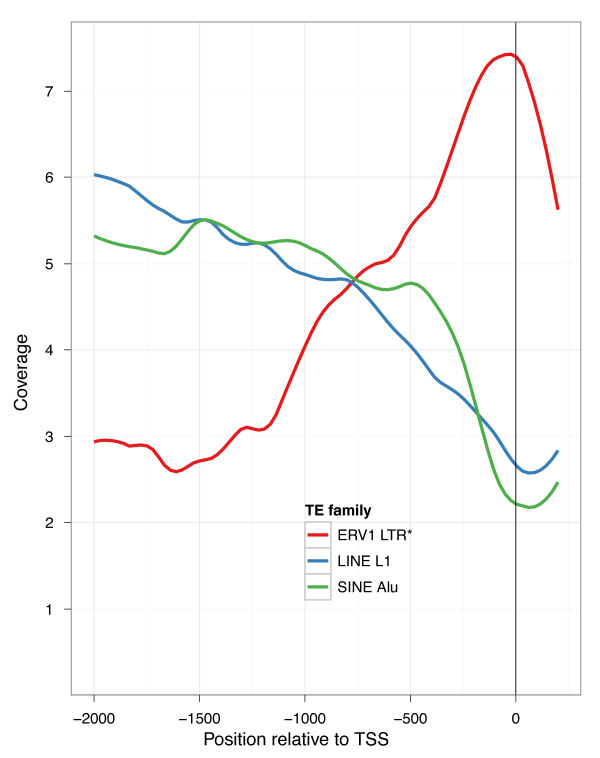
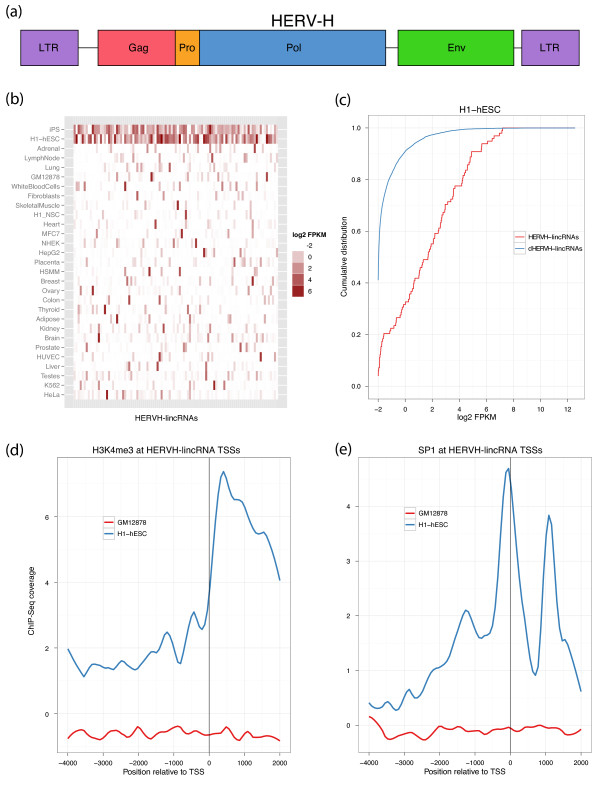
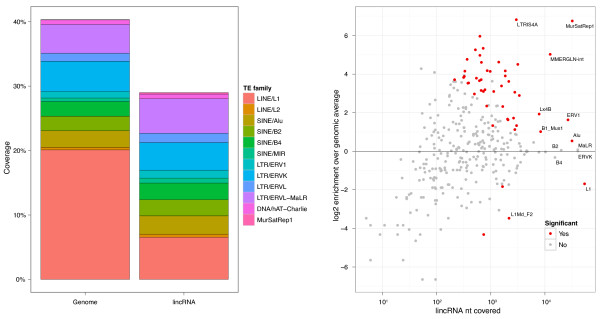
Background: Numerous studies over the past decade have elucidated a large set of long intergenic noncoding RNAs (lincRNAs) in the human genome. Research since has shown that lincRNAs constitute an important layer of genome regulation across a wide spectrum of species. However, the factors governing their evolution and origins remain relatively unexplored. One possible factor driving lincRNA evolution and biological function is transposable element (TE) insertions. Here, we comprehensively characterize the TE content of lincRNAs relative to genomic averages and protein coding transcripts. Results: Our analysis of the TE composition of 9,241 human lincRNAs revealed that, in sharp contrast to protein coding genes, 83% of lincRNAs contain a TE, and TEs comprise 42% of lincRNA sequence. lincRNA TE composition varies significantly from genomic averages - L1 and Alu elements are depleted and broad classes of endogenous retroviruses are enriched. TEs occur in biased positions and orientations within lincRNAs, particularly at their transcription start sites, suggesting a role in lincRNA transcriptional regulation. Accordingly, we observed a dramatic example of HERVH transcriptional regulatory signals correlating strongly with stem cell-specific expression of lincRNAs. Conversely, lincRNAs devoid of TEs are expressed at greater levels than lincRNAs with TEs in all tissues and cell lines, particularly in the testis. Conclusions: TEs pervade lincRNAs, dividing them into classes, and may have shaped lincRNA evolution and function by conferring tissue-specific expression from extant transcriptional regulatory signals.
Overview
The claims and statistics of this paper haven’t been checked yet.
Free: it reads the open-access text and checks the first 5 claims that cite a source we can check. Create a free account to check every claim.
Integrity signals
Registry
Cites
Statistics
Figures
Verification
Claims the paper makes
The claims and statistics of this paper haven’t been checked yet.
Free: it reads the open-access text and checks the first 5 claims that cite a source we can check. Create a free account to check every claim.
Claims other papers make about this one
Each is checked against this paper’s own text: does it say what the citing paper says it does?
The cited source doesn’t support the claim as written.
In the citing paper
“Indeed, lincRNAs containing REs showed much more tissue-specific pattern of expression in comparison with lincRNAs devoid of REs 17.”
From Are human endogenous retroviruses pathogenic? An approach to testing the hypothesis (2013) · cites this paper as [17]
Checked by a reasoning model — may be wrong.
Experimental — accuracy not yet measuredThe cited source says what the claim attributes to it.
In the citing paper
“Over 80% of lincRNAs were found to contain a RE, particularly enriched in HERVs, and more frequently inserted at the transcription start of the lincRNA 17.”
From Are human endogenous retroviruses pathogenic? An approach to testing the hypothesis (2013) · cites this paper as [17]
Self-check
Percentages, sums and reported differences re-computed from the paper’s own numbers.
The self-check needs the paper’s full text.
Citations
Cites
Controlling the False Discovery Rate: A Practical and Powerful Approach to Multiple Testing
Benjamini, Y., & Hochberg, Y. (1995) · Journal of the Royal Statistical Society Series B: Statistical Methodology · doi:10.1111/j.2517-6161.1995.tb02031.x · Cited by 109,482 · cited 1×
“P-values in all experiments were corrected for multiple hypothesis testing using Benjamini and Hochberg’s false discovery rate procedure [89].”
BEDTools: a flexible suite of utilities for comparing genomic features
Quinlan, A. R., & Hall, I. M. (2010) · Bioinformatics · doi:10.1093/bioinformatics/btq033 · Cited by 27,437
Initial sequencing and analysis of the human genome
International Human Genome Sequencing Consortium, Whitehead Institute for Biomedical Research, C. F. G. R., Lander, E. S., Linton, L. M., Birren, B., Nusbaum, C., Zody, M. C., Baldwin, J., Devon, K., Dewar, K., et al. (2001) · Nature · doi:10.1038/35057062 · Cited by 24,216
Ultrafast and memory-efficient alignment of short DNA sequences to the human genome.
Langmead, B., Trapnell, C., Pop, M., & Salzberg, S. L. (2009) · Genome Biology · doi:10.1186/gb-2009-10-3-r25 · Cited by 21,849 · cited 1×
“First, we mapped the reads to the genome using Bowtie [90] with the –best option to return the single best alignment per read.”
Model-based Analysis of ChIP-Seq (MACS)
Zhang, Y., Liu, T., Meyer, C. A., Eeckhoute, J., Johnson, D. S., Bernstein, B. E., Nusbaum, C., Myers, R. M., Brown, M., Li, W., et al. (2008) · Genome Biology · doi:10.1186/gb-2008-9-9-r137 · Cited by 18,386 · cited 1×
“Second, w e remapped the reads allowing up to twenty alignments and called peaks using the AREM softw are package, which implements an iterative algorithm to optimally allocate mult i- apping reads built on top of the MACS method[91, 92].”
Trapnell, C., Williams, B. A., Pertea, G., Mortazavi, A., Kwan, G., van Baren, M. J., Salzberg, S. L., Wold, B. J., & Pachter, L. (2010) · Nature Biotechnology · doi:10.1038/nbt.1621 · Cited by 15,556
On a Test of Whether one of Two Random Variables is Stochastically Larger than the Other
Mann, H. B., & Whitney, D. R. (1947) · The Annals of Mathematical Statistics · doi:10.1214/aoms/1177730491 · Cited by 14,320 · cited 1×
“For all comparisons of two sets of values where we were interested in whether one set was greater than another, we used a Mann-Whitney rank sum test [88].”
TopHat: discovering splice junctions with RNA-Seq
Trapnell, C., Pachter, L., & Salzberg, S. L. (2009) · Bioinformatics · doi:10.1093/bioinformatics/btp120 · Cited by 11,617
Long non-coding RNAs: insights into functions
Mercer, T. R., Dinger, M. E., & Mattick, J. S. (2009) · Nature Reviews Genetics · doi:10.1038/nrg2521 · Cited by 5,654 · cited 2×
“Background Recent comprehensive transcriptome sequencing studies uncovered a large class of previously unannotated long noncoding RNA (lncRNA) genes in various species with similar splicing and polyadenylation properties to mRNAs [1-8].”
Long non-coding RNA HOTAIR reprograms chromatin state to promote cancer metastasis
Gupta, R. A., Shah, N., Wang, K. C., Kim, J., Horlings, H. M., Wong, D. J., Tsai, M.-C., Hung, T., Argani, P., Rinn, J. L., et al. (2010) · Nature · doi:10.1038/nature08975 · Cited by 5,218 · cited 1×
“Accumulating evidence suggests lncRNAs are key regulators in cell differentiation and disease pathways[10-18].”
Self-citation
Cited by
Items 301–400 of 548
Localization is the key to action: regulatory peculiarities of lncRNAs
Poloni, J. D. F., de Oliveira, F. H. S., & Feltes, B. C. (2024) · Frontiers in Genetics · doi:10.3389/fgene.2024.1478352 · Cited by 21
High expression of lncRNA-SNHG7 is associated with poor prognosis in hepatocellular carcinoma
Shen, A., Ma, J.-P., Xiao-lin, H., & Cui, X. (2020) · Oncology Letters · doi:10.3892/ol.2020.11490 · Cited by 16
“Originally considered as ‘background noise’ or ‘junk DNA’, lncRNAs were deemed as useless RNAs, which exert no influence on the transcription and translation of proteins (7,8).”
BackgroundLong Non-Coding RNAs: Role in Testicular Cancers
Bresesti, C., Vezzoli, V., Cangiano, B., & Bonomi, M. (2021) · Frontiers in Oncology · doi:10.3389/fonc.2021.605606 · Cited by 16
“In fact, it has been estimated that 41% of lncRNA nucleotides derive from TEs and 83% of lncRNAs contain at least part of a TE (14).”
BackgroundRegulation of gene expression via retrotransposon insertions and the noncoding RNA 4.5S RNAH
Ishida, K., Miyauchi, K., Kimura, Y., Mito, M., Okada, S., Suzuki, T., & Nakagawa, S. (2015) · Genes to Cells · doi:10.1111/gtc.12280 · Cited by 16
Coding and Non-coding RNAs: Molecular Basis of Forest-Insect Outbreaks
Zhang, S., Shen, S., Yang, Z., Kong, X., Liu, F., & Zhang, Z. (2020) · Frontiers in Cell and Developmental Biology · doi:10.3389/fcell.2020.00369 · Cited by 16
“Those transcripts exceeding 200 nt in length, and having more than two exons, were selected as lncRNA candidates (Kelley and Rinn, 2012; Lv et al., 2013); these were further screened using CPC/CNCI/Pfam/CPAT, which has the ability to distinguish not only proteincoding from non-coding genes but also…”
MethodMammalian Endogenous Retroviruses
Mager, D. L., & Stoye, J. P. (2015) · ASM Press eBooks · doi:10.1128/9781555819217.ch47 · Cited by 26
Transposable elements as genome regulators in normal and malignant haematopoiesis
Prokopov, D., Tunbak, H., Leddy, E., Drylie, B., Camera, F., & Deniz, Ö. (2025) · Blood Cancer Journal · doi:10.1038/s41408-025-01295-9 · Cited by 19
“In contrast to protein coding genes, 83% of lncRNAs contain TE sequences with TEs comprising 30 – 42% of lncRNA sequence lengths [45, 46].”
Basu, S., Hadzhiev, Y., Petrosino, G., Nepal, C., Gehrig, J., Armant, O., Ferg, M., Strähle, U., Sanges, R., & Müller, F. (2016) · Scientific Reports · doi:10.1038/srep33210 · Cited by 15
Xu, H., Nelson, A. D. L., & Shippen, D. E. (2015) · PLoS Genetics · doi:10.1371/journal.pgen.1005281 · Cited by 15
“In the 200,000 years since Col-0 and Ler-0 diverged, at least 200 TEs have been active, and the unique insertions/deletions between the two accessions have biological implications [30].”
BackgroundInfluentialMarasca, F., Gasparotto, E., Polimeni, B., Vadalà, R., Ranzani, V., & Bodega, B. (2020) · International Journal of Molecular Sciences · doi:10.3390/ijms21093201 · Cited by 15
“The 5′ end of LTR7 element induces the expression of the pro-oncogenic lncRNA ROR [45] in different cancer types [127] while a HERVK 11 ncRNA binds to polypyrimidine tractbinding protein-associated splicing factor, inhibiting the repression of proto-oncogene transcription and consequently leading to cell transformatio…”
BackgroundShang, F., Ding, B., Zhang, Y.-T., Wu, J., Pan, S.-T., & Wang, J. (2021) · Insect Biochemistry and Molecular Biology · doi:10.1016/j.ibmb.2021.103666 · Cited by 18
Radio-lncRNAs: Biological Function and Potential Use as Biomarkers for Personalized Oncology
Kozłowska-Masłoń, J., Guglas, K., Paszkowska, A., Kolenda, T., Podralska, M., Teresiak, A., Bliźniak, R., & Lamperska, K. M. (2022) · Journal of Personalized Medicine · doi:10.3390/jpm12101605 · Cited by 13
“The main challenges in understanding the mechanisms of action of lncRNAs stem from the varying levels of expression depending on tissue localization [16], the frequent heterogeneity of isoforms, and the numerous repeats in regions of transcription initiation [17].”
BackgroundUnravelling the impact of aging on the human endothelial lncRNA transcriptome
Drekolia, M.-K., Talyan, S., Emídio, R. C., Boon, R. A., Günther, S., Looso, M., Dumbović, G., & Bibli, S. (2022) · Frontiers in Genetics · doi:10.3389/fgene.2022.1035380 · Cited by 14
“HERVH has been of great interest due to its high expression in both human embryonic stem cells (hESCs) and induced pluripotent stem cells (iPSCs) (Loewer et al., 2010; Kelley and Rinn, 2012; Santoni et al., 2012; Fort et al., 2014; Wang et al., 2014; Zhang et al., 2019).”
BackgroundДемин, Д. Э., Murashko, M. M., Uvarova, A. N., Stasevich, E. M., Shyrokova, L., Ge, G., Zaretsky, A. R., Korneev, K. V., Ustiugova, A. S., Tkachenko, E. A., et al. (2023) · International Journal of Cancer · doi:10.1002/ijc.34396 · Cited by 14
“Finally, the sequences of most lncRNAs contain repetitive elements (REs) such as LINE, SINE and LTR, which are also frequently found in introns.(5,6) Thus, transcripts capable of complementary interactions with sequences of two different genomic loci are more likely to be found among lncRNAs.”
BackgroundNew twists on long noncoding RNAs: from mobile elements to motile cancer cells
Nguyen, T. M., Alchalabi, S., Adewunmi, O., Ropri, A. S., Herschkowitz, J. I., & Rosen, J. M. (2020) · RNA Biology · doi:10.1080/15476286.2020.1760535 · Cited by 14
Glinsky, G. V. (2021) · Frontiers in Oncology · doi:10.3389/fonc.2021.638363 · Cited by 15
“However, the reported analyses of the relative abundance of TE-encoded transcript packaged in cancer-associated EVs were limited to the RNAs with extended ORFs.”
InfluentialIdentification and characterization of ERV transcripts in goat embryos
Deng, R., Han, C., Zhao, L., Zhang, Q., Yan, B., Cheng, R., Wei, B., Meng, P., Mao, T., Zhang, Y., et al. (2018) · Reproduction · doi:10.1530/rep-18-0336 · Cited by 16
“…derived from transposable elements in early embryos and embryonic stem cells were significantly higher than those of other sequences in adult cells and tissues, suggesting the important role of lncRNAs derived from transposable elements in regulating pluripotency (Kelley & Rinn 2012, Fadloun et al.”
BackgroundGuffanti, G., Bartlett, A. A., DeCrescenzo, P., Macciardi, F. M., & Hunter, R. G. (2019) · Current topics in behavioral neurosciences · doi:10.1007/7854_2019_112 · Cited by 17
Guo, A., Nie, H., Li, H., Li, B., Cheng, C., Jiang, K., Zhu, S., Zhao, N., & Hua, J. (2024) · Journal of Integrative Plant Biology · doi:10.1111/jipb.13802 · Cited by 12
“(II) To eliminate transcriptional noise and obtain reliable lncRNA datasets, transcripts with two or more exons were selected as lncRNA candidates (Kelley and Rinn, 2012; Pauli et al., 2012; Lv et al., 2013).”
SINE‐Associated LncRNA SAWPA Regulates Porcine Zygotic Genome Activation
He, T., Peng, J., Yang, S., Liu, D., Gao, S., Zhu, Y., Chai, Z., Lee, B. C., Wei, R., Wang, J., et al. (2023) · Advanced Science · doi:10.1002/advs.202307505 · Cited by 16
Long noncoding RNAs and their epigenetic function in hematological diseases
Huang, H.-Y., Sun, J., Sun, Y., Wang, C., Gao, S., Li, W., & Hu, J. (2018) · Hematological Oncology · doi:10.1002/hon.2534 · Cited by 14
“LncRNAs are more conservative than the neutrally evolving regions of the genome but less than the protein coding genes.(4) They play a major”
BackgroundTransposable Elements in Pluripotent Stem Cells and Human Disease
Ma, G., Babarinde, I. A., Zhou, X., & Hutchins, A. P. (2022) · Frontiers in Genetics · doi:10.3389/fgene.2022.902541 · Cited by 15
“Indeed, noncoding RNAs are rich in TE-derived sequences (Kelley and Rinn, 2012; Kapusta et al., 2013).”
BackgroundGultyaev, A. P., Koster, C., van Batenburg, D. C., Sistermans, T., van Belle, N., Vijfvinkel, D., & Roussis, A. (2023) · NAR Genomics and Bioinformatics · doi:10.1093/nargab/lqad091 · Cited by 12
Systematically profiling and annotating long intergenic non-coding RNAs in human embryonic stem cell
Tang, X., Hou, M. L., Ding, Y., Li, Z., Ren, L., & Gao, G. (2013) · BMC Genomics · doi:10.1186/1471-2164-14-s5-s3 · Cited by 13
“Satellite, low complexity, and simple repeats were then excluded [28].”
BackgroundResultSpicuglia, S., Maqbool, M. A., Puthier, D., & Andrau, J. (2013) · Methods · doi:10.1016/j.ymeth.2013.04.003 · Cited by 19
Enlightening the contribution of the dark matter to the X chromosome inactivation process in mammals
Casanova, M., Ali, T. M. L., & Rougeulle, C. (2016) · Seminars in Cell and Developmental Biology · doi:10.1016/j.semcdb.2016.05.003 · Cited by 13
Helitrons , the Eukaryotic Rolling-circle Transposable Elements
Thomas, J., & Pritham, E. J. (2015) · ASM Press eBooks · doi:10.1128/9781555819217.ch40 · Cited by 21
Navigating the brain and aging: exploring the impact of transposable elements from health to disease
Breton, A. L., Bettencourt, M. P., & Gendrel, A.-V. (2024) · Frontiers in Cell and Developmental Biology · doi:10.3389/fcell.2024.1357576 · Cited by 13
Liu, G., Fu, D., Duan, X., Zhou, J., Chang, H., Xu, R., Wang, B., & Wang, Y. (2024) · International Journal of Molecular Sciences · doi:10.3390/ijms25189860 · Cited by 12
“Transcripts in the basic screening process should meet the following conditions: (i) class_code is “i”, “x”, “u”, “o”, or “e” (ii) length ≥ 200 bp, and exon number ≥ 2 (iii) FPKM ≥ 0.1 [48,49].”
InfluentialXu, M., Shan, Y., Luo, X., Xu, M., Hu, G., He, Z., Yang, X., & Gao, R. (2025) · PLoS ONE · doi:10.1371/journal.pone.0317710 · Cited by 12
Prabhakar, B., Lee, S., Bochanis, A., Wu, H., Manautou, J. E., & Rasmussen, T. P. (2021) · Cell Proliferation · doi:10.1111/cpr.12978 · Cited by 10
Telonis, A. G., & Rigoutsos, I. (2021) · BMC Biology · doi:10.1186/s12915-020-00928-8 · Cited by 12
Influence of retroelements on oncogenes and tumor suppressors in carcinogenesis: A review
Mustafin, R. N. (2021) · Journal of Modern Oncology · doi:10.26442/18151434.2021.4.201199 · Cited by 13
“Большинство (83%) всех известных зрелых длинных нкРНК содержит не менее одного фрагмента транспозонов [23].”
Kolenda, T., Paszkowska, A., Braska, A., Kozłowska-Masłoń, J., Guglas, K., Poter, P., Wojtczak, P., Bliźniak, R., Lamperska, K. M., & Teresiak, A. (2023) · Reports of Practical Oncology & Radiotherapy · doi:10.5603/rpor.a2023.0006 · Cited by 16
“The main challenges in understanding the mechanisms of lncRNAs behavior are caused by different expression levels depending on tissue localization [10], frequent heterogeneity of isoforms, and numerous repeats in transcriptional initiation regions [11].”
BackgroundLiu, G., Fu, D., Zhong, C., Zong, J., Zhou, J., Chang, H., Wang, B., & Wang, Y. (2023) · Scientia Horticulturae · doi:10.1016/j.scienta.2023.112505 · Cited by 13
Zhang, Y., Ding, N., Xie, S., Ding, Y., Huang, M., Ding, X., & Jiang, L. (2021) · Extracellular Vesicles and Circulating Nucleic Acids · doi:10.20517/evcna.2021.02 · Cited by 14
Molecular genetics of idiopathic pulmonary fibrosis
Mustafin, R. N. (2022) · Vavilov Journal of Genetics and Breeding · doi:10.18699/vjgb-22-37 · Cited by 14
Glinsky, G. V. (2022) · Molecular Genetics and Genomics · doi:10.1007/s00438-022-01954-7 · Cited by 13
“2017; Kelley and Rinn, 2012; Kunarso et al.”
BackgroundInfluentialGlinsky, G. V. (2015) · Oncoscience · doi:10.18632/oncoscience.237 · Cited by 11
“HERV subfamily H (HERVH) RNA expression is markedly increased in hESCs [2, 3], and an enhanced rate of insertion of LTR7/ HERVH sequences appears to be associated with binding sites for pluripotency core transcription factors [1, 2, 4] and long noncoding RNAs [5].”
BackgroundResultInfluentialZeng, L., Wang, M., Zhou, J., Wang, X., Zhang, Y., & Su, P. (2022) · Gene · doi:10.1016/j.gene.2022.146229 · Cited by 9
The human genome contains over a million autonomous exons
Stepankiw, N., Yang, A. W. H., & Hughes, T. R. (2023) · Genome Research · doi:10.1101/gr.277792.123 · Cited by 14
“We speculate that lncRNAs, whose promoters often overlap with endogenous retroviral LTRs and enhancers (Kelley and Rinn 2012; Engreitz et al. 2016), may result from coupling promoter-like sequences to randomly arising autonomous exons in the surrounding DNA.”
BackgroundRegulatory roles of long non-coding RNAs in short-term heat stress in adult worker bees
Zhang, B., Zhang, C., Zhang, J., Lu, S., Zhao, H., Jiang, Y., & Ma, W. (2024) · BMC Genomics · doi:10.1186/s12864-024-10399-8 · Cited by 10
“Transcripts with more than two exons and exceeding 200 bp in length were further analyzed to identify lncRNAs [37].”
BackgroundHERVH-derived lncRNAs negatively regulate chromatin targeting and remodeling mediated by CHD7
Hsieh, F., Ji, F., Damle, M., Sadreyev, R. I., & Kingston, R. E. (2021) · Life Science Alliance · doi:10.26508/lsa.202101127 · Cited by 10
“HERVH lncRNAs are highly expressed in hESCs and their expression level is closely correlated with cell pluripotency (Kelley & Rinn, 2012; Lu et al, 2014; Ohnuki et al, 2014; Wang et al, 2014a).”
Species-Specific Variation Among Mammals
Pera, R. A. R., & Prezotto, L. D. (2016) · Current topics in developmental biology/Current Topics in Developmental Biology · doi:10.1016/bs.ctdb.2016.05.003 · Cited by 12
Absence of CG methylation alters the long noncoding transcriptome landscape in multiple species
Zhao, T., Mei, H., Cao, Z., Wang, L., Tao, X., Feng, S., Fang, L., & Guan, X. (2021) · FEBS Letters · doi:10.1002/1873-3468.14100 · Cited by 12
Onoguchi, M., Zeng, C., Matsumaru, A., & Hamada, M. (2021) · NAR Genomics and Bioinformatics · doi:10.1093/nargab/lqab055 · Cited by 10
“HERVS71(1-42) sequence in the first intron of DET1 gene is indicated in the UCSC genome browser (hg38).”
BackgroundMethodInfluentialZhang, X., Zhu, Y., Chen, B., & Kang, L. (2022) · RNA Biology · doi:10.1080/15476286.2021.2024032 · Cited by 9
“These findings highlight the contribution of TEs to the regulatory circuity of lncRNAs in locust phase changes.”
BackgroundInfluentialXue, C., Zhang, X., Zhang, H., Ferguson, J. F., Wang, Y., Hinkle, C. C., Li, M., & Reilly, M. P. (2017) · Physiological Genomics · doi:10.1152/physiolgenomics.00001.2017 · Cited by 9
Discovery of a Novel Long Noncoding RNA Lx8-SINE B2 as a Marker of Pluripotency
Chen, F., Zhang, M., Feng, X. M., Li, X., Sun, H., & Lu, X. (2021) · Stem Cells International · doi:10.1155/2021/6657597 · Cited by 9
“TEs within lncRNAs regulate the tissuespecific expression of lncRNAs [4, 28].”
BackgroundLiu, D., Hong, Z., Gui, L., Zhao, L., Zhou, W., Wang, Y., Sun, S., & Li, M. (2023) · Biomolecules · doi:10.3390/biom13030460 · Cited by 8
“LncRNAs were predicted by CPC2, CNCI, Pfam, and PLEK.”
InfluentialThe porcine piRNA transcriptome response to Senecavirus a infection
Wang, C., Chen, Y., Yang, X., Du, Y., Xu, Z., Zhou, Y., Xu, Y., Wang, X., Zhang, C., Li, S., et al. (2023) · Frontiers in Veterinary Science · doi:10.3389/fvets.2023.1126277 · Cited by 8
“Approximately 66% of lncRNAs are known to contain reversed possum sequences, so it is speculated that lncRNAs are most likely regulated by piRNAs (23).”
BackgroundRetrotransposon-derived transcripts and their functions in immunity and disease
Ueda, M. T. (2023) · Genes & Genetic Systems · doi:10.1266/ggs.23-00187 · Cited by 8
A New View of Genome Organization Through RNA Directed Interactions
Khelifi, G., & Hussein, S. M. I. (2020) · Frontiers in Cell and Developmental Biology · doi:10.3389/fcell.2020.00517 · Cited by 8
“For example, lncRNAs generally possess a large number of transposable elements (TEs) and other repeated sequences (Johnson and Guigó, 2014), and 83% of lncRNAs contain one or more TEs, compared to only 6% of mRNAs (Kelley and Rinn, 2012).”
BackgroundField, A. R., Jacobs, F. M. J., Fiddes, I. T., Phillips, A. P. R., Reyes-Ortiz, A. M., LaMontagne, E., Whitehead, L., Meng, V., Rosenkrantz, J. L., Haeussler, M., et al. (2017) · bioRxiv (Cold Spring Harbor Laboratory) · doi:10.1101/232553 · Cited by 8
Syntenic lncRNA locus exhibits DNA regulatory functions with sequence evolution
Ranjan, G., Scaria, V., & Sivasubbu, S. (2024) · Gene · doi:10.1016/j.gene.2024.148988 · Cited by 7
Izsvák, Z., Ma, J., Singh, M., & Hurst, L. D. (2025) · Mobile DNA · doi:10.1186/s13100-025-00361-0 · Cited by 11
“The investigation into HERVH’s co-opted functions began with the observation that HERVH has binding sites for multiple key pluripotency factors (POU5F1/OCT4, NANOG, TFCP2L1/LBP9, SOX2, and KLF4) [51, 52, 54, 55].”
Quan, C., Li, Y., Chen, G., Tian, X., Jia, Z., Tu, J., Shen, J., Yi, B., Fu, T., Ma, C., et al. (2022) · Genomics · doi:10.1016/j.ygeno.2022.110505 · Cited by 7
Tu, Z., Bassal, M. A., Bell, G. W., Zhang, Y., Hu, Y. P., Quintana, L. M., Gokul, D., Tenen, D. G., & Karnoub, A. E. (2024) · Molecular Cell · doi:10.1016/j.molcel.2024.09.025 · Cited by 10
HERV reactivation by adenovirus infection is associated with viral immune regulation
Liang, W., Stubbe, M., Pleninger, L., Hofferek, A., Stubbe, H. C., Mai, J., Özer, S., Frishman, D., Schreiner, S., & Vincendeau, M. (2024) · Microbes and Infection · doi:10.1016/j.micinf.2024.105466 · Cited by 9
Elevated Alu retroelement copy number among workers exposed to diesel engine exhaust
Wong, J. Y. Y., Cawthon, R., Dai, Y., Vermeulen, R. C. H., Bassig, B. A., Hu, W., Duan, H., Niu, Y., Downward, G. S., Leng, S., et al. (2021) · Occupational and Environmental Medicine · doi:10.1136/oemed-2021-107462 · Cited by 7
Stockwell, P. A., Lynch‐Sutherland, C. F., Chatterjee, A., Macaulay, E. C., & Eccles, M. R. (2021) · Current Protocols · doi:10.1002/cpz1.206 · Cited by 10
“…literature to support the widespread function of transposable elements, not just as genes and gene promoters, but as enhancers and other regulatory non-coding RNAs (ncRNAs), often in a species-and/or cell-specific manner (Chuong et al., 2013; Jacques, Jeyakani, & Bourque, 2013; Kelley & Rinn, 2012”
BackgroundVariety of Non-Coding RNAs in Eukaryotic Genomes
Nazipova, N. N. (2021) · Mathematical Biology and Bioinformatics · doi:10.17537/2021.16.256 · Cited by 10
Viral Mimicry Response Is Associated With Clinical Outcome in Pleural Mesothelioma
Sun, S., Qi, W., Rehrauer, H., Ronner, M., Hariharan, A., Wipplinger, M., Meiller, C., Stahel, R. A., Früh, M., Cerciello, F., et al. (2022) · JTO Clinical and Research Reports · doi:10.1016/j.jtocrr.2022.100430 · Cited by 9
TE composition of human long noncoding RNAs and their expression patterns in human tissues
Kang, D., Kim, Y., Hong, K., & Han, K. (2014) · Genes & Genomics · doi:10.1007/s13258-014-0232-7 · Cited by 8
“(Cordaux and Batzer 2009; Kelley and Rinn 2012).”
Epigenomic reprogramming of repetitive noncoding RNAs and IFN-stimulated genes by mutant KRASPreprint
Reggiardo, R. E., Maroli, S. V., Halasz, H., Ozen, M. O., Carrillo, D., LaMontagne, E., Whitehead, L., Kim, E., Malik, S., Fernandes, J. D., et al. (2020) · bioRxiv (Cold Spring Harbor Laboratory) · doi:10.1101/2020.11.04.367771 · Cited by 7
“Additionally, TEs contribute substantially to the noncoding transcriptome and are present in the exonic sequences of thousands of long noncoding RNAs (lncRNAs) (4, 5).”
BackgroundLi, P., Cheng, W., Pubu, Z., Shang, P., Zhang, H., & Zhang, B. (2025) · BMC Genomics · doi:10.1186/s12864-025-11783-8 · Cited by 6
“(2) Transcripts with a length of ≥ 200 bp and an exon number of ≥ 2 were selected [29].”
InfluentialBai, L., Zhou, H., He, J., Tao, J., & Hickford, J. G. H. (2024) · Animals · doi:10.3390/ani14192862 · Cited by 6
“Research in sheep suggests a prevalence of long intergenic non-coding RNA (lincRNA) genes near these KRTAP13-n genes [3], and in humans, lincRNAs are known to contain a higher proportion of transposable element-derived sequences [16].”
BackgroundBoem, F., Ratti, E., Andreoletti, M., & Boniolo, G. (2016) · Studies in History and Philosophy of Science Part C Studies in History and Philosophy of Biological and Biomedical Sciences · doi:10.1016/j.shpsc.2016.04.005 · Cited by 6
Zou, Y., Tang, H., Li, T., Sun, M., Qu, X., Zhou, J., Yang, C., Yang, M., Jiang, Q., Liu, Y., et al. (2020) · Genetica · doi:10.1007/s10709-020-00087-2 · Cited by 8
Wang, Y., Zhao, B., Choi, J., & Lee, E. A. (2021) · Mobile DNA · doi:10.1186/s13100-021-00250-2 · Cited by 9
Carlevaro-Fita, J., Rahim, A., Guigó, R., Vardy, L. A., & Johnson, R. (2015) · bioRxiv (Cold Spring Harbor Laboratory) · doi:10.1101/013508 · Cited by 6
“We observed a relationship between the presence of Alu and transcript 309 expression in K562: Alu are enriched amongst detected compared to undetected filtered 310 lncRNAs (P=6e-7, Hypergeometric test), as recently described for human tissues (34).”
BackgroundLong non-coding RNAs in wild wheat progenitorsPreprint
Pieri, A., Pè, M. E., & Bertolini, E. (2018) · bioRxiv (Cold Spring Harbor Laboratory) · doi:10.1101/301804 · Cited by 6
“In human and mouse, it has been shown that a large fraction of lincRNA exonic regions derive from transposable elements (Kelley and Rinn 2012; Kapusta et al. 2013), leading to the hypothesis that exonic TE could serve as functional RNA”
BackgroundFort, A., & Fish, R. J. (2017) · Methods in molecular biology · doi:10.1007/978-1-4939-6716-2_5 · Cited by 4
Liu, K., Ma, X., Zhao, L., Lai, X., Chen, J., Lang, X., Han, Q., Wan, X., & Li, C. (2023) · BMC Plant Biology · doi:10.1186/s12870-023-04374-w · Cited by 5
“The remained unknown transcripts with lengths more than 200 nt and more than two exons were selected as lncRNA candidates [87].”
BackgroundChen, X., Li, J., Guan, X., Bai, Y., & Wang, K. (2024) · Heliyon · doi:10.1016/j.heliyon.2024.e32857 · Cited by 6
“In addition to mRNA, L1 can also reveal long noncoding RNAs transcription in stem cells [30].”
Long Non-coding RNAs Diversity in Form and Function: From Microbes to Humans
Chávez‐Calvillo, G., Gan, H., & Sztuba-Solińska, J. (2020) · RNA technologies · doi:10.1007/978-3-030-44743-4_1 · Cited by 6
Memon, D., Bi, J., & Miller, C. J. (2019) · Scientific Reports · doi:10.1038/s41598-019-43758-7 · Cited by 6
Zeng, C., Takeda, A., Sekine, K., Osato, N., Fukunaga, T., & Hamada, M. (2022) · Methods in molecular biology · doi:10.1007/978-1-0716-2380-0_19 · Cited by 4
A single-cell atlas of mouse olfactory bulb chromatin accessibility
Chen, Y., Ding, X., Wang, S., Ding, P., Xu, Z., Li, J., Wang, M., Xiang, R., Wang, X., Wang, H., et al. (2021) · Journal of genetics and genomics/Journal of Genetics and Genomics · doi:10.1016/j.jgg.2021.02.007 · Cited by 5
Leveraging omic features with F3UTER enables identification of unannotated 3’UTRs for synaptic genes
Sethi, S., Zhang, D., Guelfi, S., Chen, Z., García-Ruiz, S., Olagbaju, E. O., Ryten, M., Saini, H. K., & Botía, J. A. (2022) · Nature Communications · doi:10.1038/s41467-022-30017-z · Cited by 3
Ancient exapted transposable elements promote nuclear enrichment of human long noncoding RNAsPreprint
Carlevaro-Fita, J., Polidori, T., Das, M., Navarro, C., Zoller, T. I., & Johnson, R. (2017) · bioRxiv (Cold Spring Harbor Laboratory) · doi:10.1101/189753 · Cited by 6
Babarinde, I. A., Fu, X., Ma, G., Li, Y., Liang, Z., Xu, J., Xiao, Z., Qiao, Y., Zheng, L., Oleynikova, K., et al. (2025) · Nature Communications · doi:10.1038/s41467-025-63080-3 · Cited by 8
Glinsky, G. V. (2025) · Academia molecular biology and genomics. · doi:10.20935/acadmolbiogen7754 · Cited by 8
D’Agostino, S., Tettey‐Matey, A., Volpe, M., Pierattini, B., D’Agostino, M., Smělá, D., Ansaloni, F., Broglia, L., Lau, P., Peruzzo, O., et al. (2025) · Nucleic Acids Research · doi:10.1093/nar/gkaf788 · Cited by 10
“TEs comprise a significant fraction of lncRNA sequences [ 33 , 34 ], potentially exerting their function as independent domains [ 20 , 35 , 36 ] through specific RNA–RNA and RNA–protein interactions [ 37 , 38 ].”
Wang, H., Chen, X., Li, Y., Xiao, S., Teng, T., Yang, S., Wang, K., & Zhang, M. (2025) · Non-coding RNA Research · doi:10.1016/j.ncrna.2025.08.006 · Cited by 5
Hu, S., Hu, Y., Mei, H., Li, J., Xuan, W., Jeyaraj, A., Zhao, Z., Zhao, Y., Han, R., Chen, X., et al. (2023) · Frontiers in Plant Science · doi:10.3389/fpls.2023.1080427 · Cited by 6
Deep annotation of long noncoding RNAs by assembling RNA-seq and small RNA-seq data
Zhang, J., Hou, W., Zhao, Q., Xiao, S., Linghu, H., Zhang, L., Du, J., Cui, H., Xu, Y., Ling, S., et al. (2023) · Journal of Biological Chemistry · doi:10.1016/j.jbc.2023.105130 · Cited by 4
“(2023) 299(9) 105130 reference regions (55).”
BackgroundMethodCell-specific housekeeping role of lncRNAs in COVID-19-infected and recovered patients
Chattopadhyay, P., Mehta, P., Soni, J., Tardalkar, K., Joshi, M. G., & Pandey, R. (2024) · NAR Genomics and Bioinformatics · doi:10.1093/nargab/lqae023 · Cited by 6
“The intergenic space in the human genome is mainly occupied by noncoding genes and transposable elements ( 5–7 , 70 , 71 ).”
BackgroundLi, Y., Qian, F., Zhang, G., Li, X., Zhou, L., Yu, Z., Liu, W., Wang, Q., & Li, C. (2024) · Briefings in Bioinformatics · doi:10.1093/bib/bbae623 · Cited by 5
Transposable Elements Contribute to the Regulation of Long Noncoding RNAs in Drosophila melanogaster
Gan, Y., Wang, L., Liu, G., Guo, X., Zhou, Y., Chang, K., Zhang, Z., Fang, Y. M., Liu, Q., & Chen, B. (2024) · Insects · doi:10.3390/insects15120950 · Cited by 5
Primate-specific retrotransposons and the evolution of circadian networks in the human brain
Li, M., & Larsen, P. A. (2021) · Neuroscience & Biobehavioral Reviews · doi:10.1016/j.neubiorev.2021.09.049 · Cited by 5
Azad, F. M., Bajgan, E. T., Naeli, P., Rudov, A. V., Moghaddam, M. B., Akhtar, M. S., Gholipour, A., Mowla, S. J., & Malakootian, M. (2022) · PubMed Central · doi:10.22074/cellj.2022.8205 · Cited by 4
“TE derived sequences are considered as functional domains of lncRNAs which enable them to interact with and regulate RNA species and proteins (36).”
BackgroundDi, R., Zhang, R., Mwacharo, J. M., Wang, X., He, X., Liu, Y., Zhang, J., Gong, Y., Zhang, X., & Chu, M. (2022) · Frontiers in Genetics · doi:10.3389/fgene.2022.1078049 · Cited by 4
“found that lncRNA sequences in human testes tissue contain many retrotransposon sequences (Kelley and Rinn, 2012).”
BackgroundStévant, I., Gonen, N., & Poulat, F. (2024) · Frontiers in Cell and Developmental Biology · doi:10.3389/fcell.2023.1327410 · Cited by 4
Influence of Endogenous Viral Sequences on Gene Expression
Sofuku, K., & Honda, T. (2018) · InTech eBooks · doi:10.5772/intechopen.71864 · Cited by 5
“lincRNA-RoR modulates reprograming and is indeed expressed at much higher levels in the embryonic stem cell line, H1-hESC, and human-induced pluripotent stem cells than in any other tissue or cell line [36, 37].”
Basu, S., & Larsson, E. (2018) · G3 Genes Genomes Genetics · doi:10.1534/g3.118.200296 · Cited by 4
“Since lncRNAs are significantly enriched for repeats like transposable elements (Kelley and Rinn 2012) we excluded multi-mapping reads and discordant read pairs to reduce erroneous quantification.”
BackgroundShehata, S. I., Spradlin, S., Pashos, A. R. S., Wheeler, G. E., Das, A., Corbet, G. A., Nebenfuehr, B., Ahrens, D., Tauber, D., Lennon, S. R., et al. (2021) · PLoS ONE · doi:10.1371/journal.pone.0237055 · Cited by 4
Self-citationThe Long Terminal Repeats of ERV6 Are Activated in Pre-Implantation Embryos of Cynomolgus Monkey
Duan, K., Si, C.-Y., Zhao, S., Ai, Z., Niu, B.-H., Yin, Y., Xiang, L., Ding, H., & Zheng, Y. (2021) · Cells · doi:10.3390/cells10102710 · Cited by 5
Liu, Y., Xu, L., Zhang, T., Sod, B., Xu, Y., Li, M., Kang, J., Yang, Q., Li, X., & Long, R. (2024) · Agriculture · doi:10.3390/agriculture14060930 · Cited by 3
Ma, K., Zhang, Q., Cheng, T., & Wang, J. (2018) · Molecular Genetics and Genomics · doi:10.1007/s00438-018-1449-y · Cited by 4
Metadata
- Authors
- Kelley, D., & Rinn, J.
- Affiliations
- Broad Institute (US)
- Corresponding author
- Rinn, John
- Venue
- Genome Biology
- Published
- 2012-11-26
- Volume
- 13
- Issue
- 11
- Pages
- R107-R107
- ISSN
- 1465-6906 (ISSN-L)
- 1474-760X
- PMC
- PMC3580499
- OpenAlex
- W2107454957
- Semantic Scholar
- bb26db77ce3ef32a87225cd0d27691a0db872b24
- Cited by
- 531
- References
- 92
- Citations by year
- 2026: 19 · 2025: 14 · 2024: 32 · 2023: 30 · 2022: 45 · 2021: 58 · 2020: 38 · 2019: 36 · 2018: 49 · 2017: 38 · 2016: 52 · 2015: 59 · 2014: 37 · 2013: 24
- FWCI
- 43.76
- Type
- journal article
- Language
- en
- Open access
- gold
- doi.org
- Licence
- cc-by
- creativecommons.org/licenses/by/2.0/ (tdm)
- creativecommons.org/licenses/by/2.0/ (vor)
- Locations
- Genome biology (publishedVersion, cc-by)
- Europe PMC (PubMed Central) (publishedVersion, cc-by)
- PubMed Central (publishedVersion, cc-by)
- PubMed (publishedVersion)
- Funders
- Damon Runyon Cancer Research Foundation
- Richard and Susan Smith Family Foundation
- Israel National Institute for Health Policy Research
- National Institutes of Health (DP2OD006670, GM099117)
- National Heart, Lung, and Blood Institute (T32HL007893)
- National Human Genome Research Institute (P50HG006193)
- National Institute of General Medical Sciences (P01GM099117)
- Topics
- Life Sciences › Biochemistry, Genetics and Molecular Biology › Genetics › Chromosomal and Genetic Variations
- Life Sciences › Biochemistry, Genetics and Molecular Biology › Cancer Research › Cancer-related molecular mechanisms research
- Life Sciences › Biochemistry, Genetics and Molecular Biology › Molecular Biology › Genomics and Chromatin Dynamics
- Keywords
- long intergenic non-coding RNA, transposable elements, endogenous retroviruses, HERV-H, transcriptional regulation, testis expression, Alu elements, tissue-specific gene expression
- MeSH terms
- Gene Expression Regulation, Humans, Organ Specificity, Stem Cells, Genome, Human, Retroelements, Endogenous Retroviruses, RNA, Long Noncoding
About these checks
Registry, retraction, Cites and statistics results are computed, not judged, with one exception: a printed reference that no index lists is read once by a model before it counts as a citation error. Claims are extracted by a model and kept only when their quote appears verbatim in the text; each cited source is then checked, with a model’s help, for whether it says what the claim relies on. Those verdicts can be wrong — read the claim’s quote and the cited source before relying on one.
Statistics and arithmetic are recomputed, not judged.
Confidence bands are shown only for fields calibrated on our annotated test set. None is calibrated yet, so no band is shown.
What counts as a claim ›How we measure confidence ›How we check this ›
Are you an author, or do you see a problem with this page? Request a review
Data sources
Bibliographic data: Semantic Scholar, OpenAlex, Crossref.
Contains information from the Semantic Scholar Academic Graph Datasets, made available under the ODC Attribution License (ODC-BY 1.0).
Semantic Scholar’s data is described in: Kinney, R., et al. (2023). The Semantic Scholar Open Data Platform. arXiv:2301.10140.
