

Transposable elements reveal a stem cell-specific class of long noncoding RNAs
Open accessThe DOI matches its Crossref record; 92 of the 92 references it cites were found in a registry or an index.
Abstract
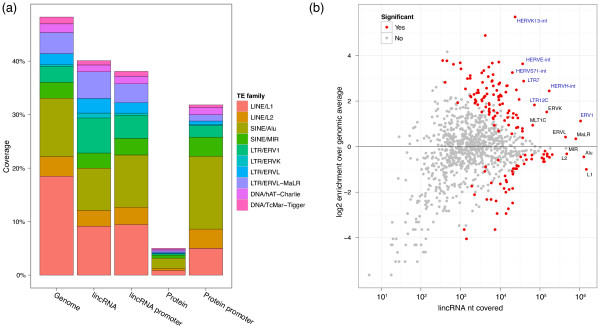
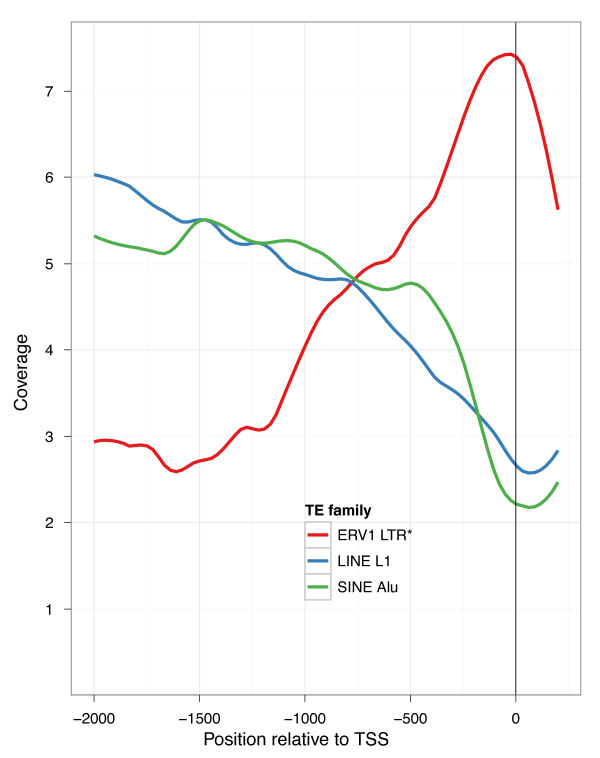
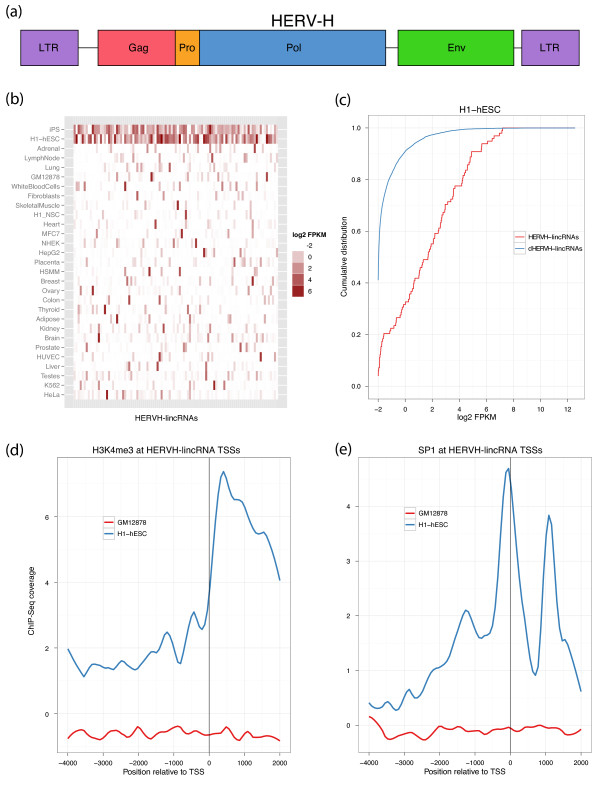
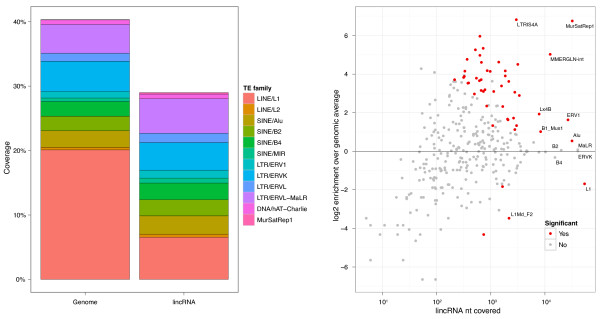
Background: Numerous studies over the past decade have elucidated a large set of long intergenic noncoding RNAs (lincRNAs) in the human genome. Research since has shown that lincRNAs constitute an important layer of genome regulation across a wide spectrum of species. However, the factors governing their evolution and origins remain relatively unexplored. One possible factor driving lincRNA evolution and biological function is transposable element (TE) insertions. Here, we comprehensively characterize the TE content of lincRNAs relative to genomic averages and protein coding transcripts. Results: Our analysis of the TE composition of 9,241 human lincRNAs revealed that, in sharp contrast to protein coding genes, 83% of lincRNAs contain a TE, and TEs comprise 42% of lincRNA sequence. lincRNA TE composition varies significantly from genomic averages - L1 and Alu elements are depleted and broad classes of endogenous retroviruses are enriched. TEs occur in biased positions and orientations within lincRNAs, particularly at their transcription start sites, suggesting a role in lincRNA transcriptional regulation. Accordingly, we observed a dramatic example of HERVH transcriptional regulatory signals correlating strongly with stem cell-specific expression of lincRNAs. Conversely, lincRNAs devoid of TEs are expressed at greater levels than lincRNAs with TEs in all tissues and cell lines, particularly in the testis. Conclusions: TEs pervade lincRNAs, dividing them into classes, and may have shaped lincRNA evolution and function by conferring tissue-specific expression from extant transcriptional regulatory signals.
Overview
The claims and statistics of this paper haven’t been checked yet.
Free: it reads the open-access text and checks the first 5 claims that cite a source we can check. Create a free account to check every claim.
Integrity signals
Registry
Cites
Statistics
Figures
Verification
Claims the paper makes
The claims and statistics of this paper haven’t been checked yet.
Free: it reads the open-access text and checks the first 5 claims that cite a source we can check. Create a free account to check every claim.
Claims other papers make about this one
Each is checked against this paper’s own text: does it say what the citing paper says it does?
The cited source doesn’t support the claim as written.
In the citing paper
“Indeed, lincRNAs containing REs showed much more tissue-specific pattern of expression in comparison with lincRNAs devoid of REs 17.”
From Are human endogenous retroviruses pathogenic? An approach to testing the hypothesis (2013) · cites this paper as [17]
Checked by a reasoning model — may be wrong.
Experimental — accuracy not yet measuredThe cited source says what the claim attributes to it.
In the citing paper
“Over 80% of lincRNAs were found to contain a RE, particularly enriched in HERVs, and more frequently inserted at the transcription start of the lincRNA 17.”
From Are human endogenous retroviruses pathogenic? An approach to testing the hypothesis (2013) · cites this paper as [17]
Self-check
Percentages, sums and reported differences re-computed from the paper’s own numbers.
The self-check needs the paper’s full text.
Citations
Cites
Controlling the False Discovery Rate: A Practical and Powerful Approach to Multiple Testing
Benjamini, Y., & Hochberg, Y. (1995) · Journal of the Royal Statistical Society Series B: Statistical Methodology · doi:10.1111/j.2517-6161.1995.tb02031.x · Cited by 109,482 · cited 1×
“P-values in all experiments were corrected for multiple hypothesis testing using Benjamini and Hochberg’s false discovery rate procedure [89].”
BEDTools: a flexible suite of utilities for comparing genomic features
Quinlan, A. R., & Hall, I. M. (2010) · Bioinformatics · doi:10.1093/bioinformatics/btq033 · Cited by 27,437
Initial sequencing and analysis of the human genome
International Human Genome Sequencing Consortium, Whitehead Institute for Biomedical Research, C. F. G. R., Lander, E. S., Linton, L. M., Birren, B., Nusbaum, C., Zody, M. C., Baldwin, J., Devon, K., Dewar, K., et al. (2001) · Nature · doi:10.1038/35057062 · Cited by 24,216
Ultrafast and memory-efficient alignment of short DNA sequences to the human genome.
Langmead, B., Trapnell, C., Pop, M., & Salzberg, S. L. (2009) · Genome Biology · doi:10.1186/gb-2009-10-3-r25 · Cited by 21,849 · cited 1×
“First, we mapped the reads to the genome using Bowtie [90] with the –best option to return the single best alignment per read.”
Model-based Analysis of ChIP-Seq (MACS)
Zhang, Y., Liu, T., Meyer, C. A., Eeckhoute, J., Johnson, D. S., Bernstein, B. E., Nusbaum, C., Myers, R. M., Brown, M., Li, W., et al. (2008) · Genome Biology · doi:10.1186/gb-2008-9-9-r137 · Cited by 18,386 · cited 1×
“Second, w e remapped the reads allowing up to twenty alignments and called peaks using the AREM softw are package, which implements an iterative algorithm to optimally allocate mult i- apping reads built on top of the MACS method[91, 92].”
Trapnell, C., Williams, B. A., Pertea, G., Mortazavi, A., Kwan, G., van Baren, M. J., Salzberg, S. L., Wold, B. J., & Pachter, L. (2010) · Nature Biotechnology · doi:10.1038/nbt.1621 · Cited by 15,556
On a Test of Whether one of Two Random Variables is Stochastically Larger than the Other
Mann, H. B., & Whitney, D. R. (1947) · The Annals of Mathematical Statistics · doi:10.1214/aoms/1177730491 · Cited by 14,320 · cited 1×
“For all comparisons of two sets of values where we were interested in whether one set was greater than another, we used a Mann-Whitney rank sum test [88].”
TopHat: discovering splice junctions with RNA-Seq
Trapnell, C., Pachter, L., & Salzberg, S. L. (2009) · Bioinformatics · doi:10.1093/bioinformatics/btp120 · Cited by 11,617
Long non-coding RNAs: insights into functions
Mercer, T. R., Dinger, M. E., & Mattick, J. S. (2009) · Nature Reviews Genetics · doi:10.1038/nrg2521 · Cited by 5,654 · cited 2×
“Background Recent comprehensive transcriptome sequencing studies uncovered a large class of previously unannotated long noncoding RNA (lncRNA) genes in various species with similar splicing and polyadenylation properties to mRNAs [1-8].”
Long non-coding RNA HOTAIR reprograms chromatin state to promote cancer metastasis
Gupta, R. A., Shah, N., Wang, K. C., Kim, J., Horlings, H. M., Wong, D. J., Tsai, M.-C., Hung, T., Argani, P., Rinn, J. L., et al. (2010) · Nature · doi:10.1038/nature08975 · Cited by 5,218 · cited 1×
“Accumulating evidence suggests lncRNAs are key regulators in cell differentiation and disease pathways[10-18].”
Self-citation
Cited by
Items 201–300 of 548
Podbevšek, P., Fasolo, F., Bon, C., Cimatti, L., Reißer, S., Carninci, P., Bussi, G., Zucchelli, S., Plavec, J., & Gustincich, S. (2018) · Scientific Reports · doi:10.1038/s41598-017-14908-6 · Cited by 48
Deep Sequencing Analysis of the Ixodes ricinus Haemocytome
Kotsyfakis, M., Kopáček, P., Franta, Z., Pedra, J. H. F., & Ribeiro, J. M. C. (2015) · PLoS neglected tropical diseases · doi:10.1371/journal.pntd.0003754 · Cited by 46
“TE expression has been associated with transcriptional regulation [31] and could therefore be involved in regulation of gene expression in haemocytes.”
Reawakening the Developmental Origins of Cancer Through Transposable Elements
Lynch‐Sutherland, C. F., Chatterjee, A., Stockwell, P. A., Eccles, M. R., & Macaulay, E. C. (2020) · Frontiers in Oncology · doi:10.3389/fonc.2020.00468 · Cited by 45
“Some TE-derived lincRNAs show stem cell-specific expression, which is consistent with the idea that these elements have high tissue specificity and are biased toward early developmental stages (62).”
BackgroundWang, Z., Schwacke, R., & Kunze, R. (2016) · Molecular Plant · doi:10.1016/j.molp.2016.04.015 · Cited by 39
“This is half as much as in the human and mouse genomes, where 83% and 66% of lincRNAs overlap with TEs, respectively (Kelley and Rinn, 2012).”
BackgroundInfluentialEndogenous Retroviruses Activity as a Molecular Signature of Neurodevelopmental Disorders
Balestrieri, E., Matteucci, C., Cipriani, C., Grelli, S., Ricceri, L., Calamandrei, G., & Vallebona, P. S. (2019) · International Journal of Molecular Sciences · doi:10.3390/ijms20236050 · Cited by 41
Human Endogenous Retroviruses as Pathogenic Factors in the Development of Schizophrenia
Slokar, G., & Hasler, G. (2016) · Frontiers in Psychiatry · doi:10.3389/fpsyt.2015.00183 · Cited by 42
“HERVs are associated with a large number of long non-coding RNAs (lncRNAs), where they mainly overlap with transcriptional start sites (66).”
BackgroundChen, S., Hu, X., Cui, I. H., Wu, S., Dou, C., Liu, Y., Sun, Z., Xue, S., Geng, T., Liu, Z., et al. (2019) · Antiviral Research · doi:10.1016/j.antiviral.2019.104571 · Cited by 36
Glinsky, G. V. (2016) · Cancer Letters · doi:10.1016/j.canlet.2016.08.001 · Cited by 37
Dumbović, G., Biayna, J., Banús, J., Samuelsson, J., Roth, A., Diederichs, S., Alonso, S., Buschbeck, M., Perucho, M., & Forcales, S. V. (2018) · Nucleic Acids Research · doi:10.1093/nar/gky263 · Cited by 37
“We considered a group of transposon elements (TE), located adjacent to NBL2 repeats and upstream of TNBL transcriptional direction, as the initial suspects for promoting TNBL expression, since they share features of putative promoters for some lncRNAs (65).”
BackgroundGlinsky, G. V., Durruthy-Durruthy, J., Wossidlo, M., Grow, E. J., Weirather, J. L., Au, K. F., Wysocka, J., & Sebastiano, V. (2018) · Heliyon · doi:10.1016/j.heliyon.2018.e00667 · Cited by 39
“Precise spatio-temporal activation of primate-specific transposable genetic elements (TGE), and particularly of regulatory sequences derived from human endogenous retroviruses (HERVs), have been associated with the induction and maintenance of human pluripotency, functional identity and integrity of naïve-state embryo…”
BackgroundLncRNA Biomarkers of Inflammation and Cancer
Reggiardo, R. E., Maroli, S. V., & Kim, D. H. (2022) · Advances in experimental medicine and biology · doi:10.1007/978-3-030-92034-0_7 · Cited by 43
Noncoding origins of anthropoid traits and a new null model of transposon functionalization
del Rosario, R. C. H., Rayan, N. A., & Prabhakar, S. (2014) · Genome Research · doi:10.1101/gr.168963.113 · Cited by 37
“…question using biochemical technologies such as ChIP-seq, DNase-seq, and DNA methylation profiling (Johnson et al. 2006; Mari~ no-Ram ırez and Jordan 2006; Wang et al. 2007; Kunarso et al. 2010; Kelley and Rinn 2012; Schmidt et al. 2012; Chuong et al. 2013; Jacques et al. 2013; Xie et al. 2013).”
BackgroundMethodJia, Y., Zhao, H., Niu, Y., & Wang, Y. (2022) · Horticulture Research · doi:10.1093/hr/uhac277 · Cited by 52
The Talented LncRNAs: Meshing into Transcriptional Regulatory Networks in Cancer
Segal, D., & Dostie, J. (2023) · Cancers · doi:10.3390/cancers15133433 · Cited by 42
“Interestingly, they are also enriched in transposable element (TE) sequences, which appear to have tremendously influenced lncRNA gene makeup throughout evolution [13,15,21].”
BackgroundHe, S., Gu, W., Li, Y., & Zhu, H. (2013) · BMC Evolutionary Biology · doi:10.1186/1471-2148-13-247 · Cited by 43
“Although human ANRIL is known to contain transposons [32] and transposons are known to have contributed significantly to human and vertebrate lncRNAs [33,34], this report provides the first in-depth analysis showing that the insertion of multiple transposons into ANRIL in simians may have been essential for the evolut…”
BackgroundNoncoding RNA Ginir functions as an oncogene by associating with centrosomal proteins
Panda, S., Setia, M., Kaur, N., Shepal, V., Arora, V., Singh, D. K., Mondal, A., Teli, A., Tathode, M., Gajula, R. P., et al. (2018) · PLoS Biology · doi:10.1371/journal.pbio.2004204 · Cited by 41
Wang, L., Yang, X., Zhu, Y., Zhan, S., Chao, Z., Zhong, T., Guo, J., Wang, Y., Li, L., & Zhang, H. (2019) · Cells · doi:10.3390/cells8080904 · Cited by 43
“During the process of RNA-seq data processing, single exon transcripts are generally filtered out, because the single-exon transcript assembly sequence has low reliability [27,48].”
BackgroundYamamoto, N., Nishida, N., Yamamoto, R., Gojobori, T., Shimotohno, K., Mizokami, M., & Ariumi, Y. (2021) · Genes · doi:10.3390/genes12101572 · Cited by 38
“A growing body of evidence that Alus play an important regulatory role in gene expression in a wide range of physiological processes is accumulating [59].”
BackgroundThe pluripotency transcription factor network at work in reprogramming
Niwa, H. (2014) · Current Opinion in Genetics & Development · doi:10.1016/j.gde.2014.08.004 · Cited by 33
Casanova, M., Moscatelli, M., Chauvière, L., Huret, C., Samson, J., Ali, T. M. L., Rosspopoff, O., & Rougeulle, C. (2019) · Nature Communications · doi:10.1038/s41467-019-13551-1 · Cited by 40
Babaian, A., Thompson, I. R., Lever, J., Gagnier, L., Karimi, M. M., & Mager, D. L. (2019) · Bioinformatics · doi:10.1093/bioinformatics/btz130 · Cited by 37
RNA as a fundamental component of interphase chromosomes: could repeats prove key?
Hall, L. L., & Lawrence, J. B. (2016) · Current Opinion in Genetics & Development · doi:10.1016/j.gde.2016.04.005 · Cited by 35
Computational Methods for Mapping, Assembly and Quantification for Coding and Non-coding Transcripts
Babarinde, I. A., Li, Y., & Hutchins, A. P. (2019) · Computational and Structural Biotechnology Journal · doi:10.1016/j.csbj.2019.04.012 · Cited by 35
“In the case of short RNAs such as miRNAs, the short RNA molecules are size-selected using gel electrophoresis [31].”
BackgroundInfluentialMeng, L., Yuan, G., Chen, M., Dou, W., Jing, T., Zheng, L., Peng, M., Bai, W., & Wang, J. (2021) · Pest Management Science · doi:10.1002/ps.6256 · Cited by 37
Non-coding RNAs and retroviruses
Zhang, X., Ma, X., Jing, S., Zhang, H., & Zhang, Y. (2018) · Retrovirology · doi:10.1186/s12977-018-0403-8 · Cited by 42
Glinsky, G. V. (2016) · Cancer Letters · doi:10.1016/j.canlet.2016.04.014 · Cited by 32
“Furthermore, nearly 10% of transcripts driven by HERVH are annotated as long noncoding RNAs [4].”
BackgroundResultInfluentialThe Complexity of the Ovine and Caprine Keratin-Associated Protein Genes
Zhou, H., Gong, H., Wang, J., Luo, Y., Li, S., Tao, J., & Hickford, J. G. H. (2021) · International Journal of Molecular Sciences · doi:10.3390/ijms222312838 · Cited by 31
Pan‐genome: A promising resource for noncoding RNA discovery in plants
Qamar, M. T. U., Zhu, X.-T., Khan, M. S., Feng, X., & Chen, L. (2020) · The Plant Genome · doi:10.1002/tpg2.20046 · Cited by 31
“…show that a large number of lncRNAs and circRNAs originate from TE transcripts (Figure 3b,c), thus reinforcing the dynamic evolutionary role of TEs in ncRNAbiogenesis (Chen et al., 2018; Kapusta et al., 2013; Kelley & Rinn, 2012; Liang & Wilusz, 2014; Liu et al., 2012; Z. P. Wang et al., 2017).”
BackgroundTrigiante, G., Ruiz, N. B., & Cerase, A. (2021) · Frontiers in Cell and Developmental Biology · doi:10.3389/fcell.2021.735527 · Cited by 34
SINEUPs: a novel toolbox for RNA therapeutics
Espinoza, S., Bon, C., Valentini, P., Pierattini, B., Tettey‐Matey, A., Damiani, D., Pulcrano, S., Sanges, R., Persichetti, F., Takahashi, H., et al. (2021) · Essays in Biochemistry · doi:10.1042/ebc20200114 · Cited by 38
Exploring the read-write genome: mobile DNA and mammalian adaptation
Shapiro, J. A. (2017) · Critical Reviews in Biochemistry and Molecular Biology · doi:10.1080/10409238.2016.1226748 · Cited by 30
“Many complex mammalian characteristics are certain to involve lncRNAs transcribed from “non-coding” DNA regions (Table 1), and we have seen that lncRNAs are composed to a significant degree of mobile DNA (between 30 and 40% of human lncRNA sequences) (Kapusta et al., 2013; Kelley & Rinn, 2012).”
BackgroundInfluentialSahu, S., Rao, A. R., Pandey, J., Gaikwad, K., Ghoshal, S., & Mohapatra, T. (2018) · Gene · doi:10.1016/j.gene.2018.05.027 · Cited by 33
Chang, Z., Ajayi, O. E., Guo, D., & Wu, Q. (2019) · Insect Science · doi:10.1111/1744-7917.12707 · Cited by 44
“There is evidence that TEs are abundantly but non-randomly inserted into lncRNA exons (Sela et al., 2010; Kelley & Rinn, 2012; Kapusta et al., 2013).”
BackgroundThe RNA‐binding protein ILF3 binds to transposable element sequences in SINEUP lncRNAs
Fasolo, F., Patrucco, L., Volpe, M., Bon, C., Peano, C., Mignone, F., Carninci, P., Persichetti, F., Santoro, C., Zucchelli, S., et al. (2019) · The FASEB Journal · doi:10.1096/fj.201901618rr · Cited by 35
“Interestingly, TEs compose a significant proportion of the lncRNAs, constituting, on average, 40% of the lncRNA nucleotide sequences (18, 19).”
BackgroundLncRNAs in domesticated animals: from dog to livestock species
Lagarrigue, S., Lorthiois, M., Degalez, F., Gilot, D., & Derrien, T. (2021) · Mammalian Genome · doi:10.1007/s00335-021-09928-7 · Cited by 40
“One of the most intriguing aspects of lncRNA biology lies in the observation that their sequences are highly enriched in transposable elements (TEs), that is, repetitive mobile elements capable of copying and moving into genomes.”
BackgroundInfluentialLi, N., Liu, T., Guo, F., Yang, J., Shi, Y., Wang, S., & Sun, D. (2022) · Frontiers in Plant Science · doi:10.3389/fpls.2022.1011064 · Cited by 37
“, 2013) were combined to screen RNA with no coding function from transcripts longer 200 nucleotides (nt) and with exon number greater than two (Kelley and Rinn, 2012).”
BackgroundRestrictor synergizes with Symplekin and PNUTS to terminate extragenic transcription
Russo, M., Piccolo, V., Polizzese, D., Prosperini, E., Borriero, C., Polletti, S., Bedin, F., Marenda, M., Michieletto, D., Mandana, G. M., et al. (2023) · Genes & Development · doi:10.1101/gad.351057.123 · Cited by 31
“…activity, they were frequently exapted as promoters or enhancers, with the LTR12 elements and in particular the LTR12C representing a prominent subgroup in terms of frequency of exaptation (Kelley and Rinn 2012; Kapusta et al. 2013) and strength of promoter activity (van Are-nsbergen et al. 2017).”
BackgroundIdentification of LINE retrotransposons and long non-coding RNAs expressed in the octopus brain
Petrosino, G., Ponte, G., Volpe, M., Zarrella, I., Ansaloni, F., Langella, C., Cristina, G. D., Finaurini, S., Russo, M. T., Basu, S., et al. (2022) · BMC Biology · doi:10.1186/s12915-022-01303-5 · Cited by 33
“Transposable elements (TEs) have contributed to the evolution of specific functions in a variety of biological systems and have given birth to a large fraction of vertebrate long non-coding RNAs (lncRNAs) (Kazazian 2004; Kelley and Rinn 2012; Kapusta et al. 2013).”
BackgroundShaker, F. H., Sanad, E. F., Elghazaly, H. A., Hsia, S., & Hamdy, N. Μ. (2024) · Naunyn-Schmiedeberg s Archives of Pharmacology · doi:10.1007/s00210-024-03308-z · Cited by 33
“A global analysis of the transposon dispersion in the human genome revealed that 83.4% of lncRNAs overlap with the minimum of one transposon, compared to only 6.2% of protein-coding sequences (Kelley and Rinn 2012).”
InfluentialIdentification of long non-coding transcripts with feature selection: a comparative study
Ventola, G. M., Noviello, T., D’Aniello, S., Spagnuolo, A., Ceccarelli, M., & Cerulo, L. (2017) · BMC Bioinformatics · doi:10.1186/s12859-017-1594-z · Cited by 35
“In particular, lncRNAs are enriched in ∼ 83% of their sequence by TEs, against 39% of protein coding sequences [35].”
BackgroundTongyoo, P., Avihingsanon, Y., Prom–on, S., Mutirangura, A., Mhuantong, W., & Hirankarn, N. (2017) · PLoS ONE · doi:10.1371/journal.pone.0177119 · Cited by 32
The domain structure and distribution of Alu elements in long noncoding RNAs and mRNAs
Kim, E. Z., Wespiser, A. R., & Caffrey, D. R. (2015) · RNA · doi:10.1261/rna.048280.114 · Cited by 30
“They appear to be transcribed by RNA polymerase II and can be both capped and polyadenylated (Guttman et al. 2009; Khalil et al. 2009).”
Retrotransposon-associated long non-coding RNAs in mice and men
Ganesh, S., & Svoboda, P. (2016) · Pflügers Archiv - European Journal of Physiology · doi:10.1007/s00424-016-1818-5 · Cited by 34
Drawing a fine line on endogenous retroelement activity
Castro-Díaz, N., Friedli, M., & Trono, D. (2015) · Mobile Genetic Elements · doi:10.1080/2159256x.2015.1006109 · Cited by 32
Regulatory roles of LINE-1-encoded reverse transcriptase in cancer onset and progression
Sciamanna, I., Gualtieri, A., Piazza, P. V., & Spadafora, C. (2014) · Oncotarget · doi:10.18632/oncotarget.2504 · Cited by 32
“Importantly, a relevant regulatory role has been assigned to HERVH-containing lncRNAs expressed in embryonic stem cells (ESCs) [56, 57] and to other lncRNAs enriched in LTRs, the expression of which is implicated in pluripotency of ESCs [60, 61].”
BackgroundRetrotransposons in pluripotent cells: Impact and new roles in cellular plasticity
Macia, Á., Blanco-Jimenez, E., & Garcia-Perez, J. L. (2014) · Biochimica et Biophysica Acta (BBA) - Gene Regulatory Mechanisms · doi:10.1016/j.bbagrm.2014.07.007 · Cited by 31
Long and small noncoding RNAs during oocyte-to-embryo transition in mammals
Svoboda, P. (2017) · Biochemical Society Transactions · doi:10.1042/bst20170033 · Cited by 31
The Role of Long Noncoding RNAs in the Biology of Pituitary Adenomas
Beylerli, O., Фанилевич, Г. И., Павлов, В. Н., Chen, X., & Zhao, S. (2019) · World Neurosurgery · doi:10.1016/j.wneu.2019.10.137 · Cited by 34
The pluripotent stem cell-specific transcript ESRG is dispensable for human pluripotency
Takahashi, K., Nakamura, M., Okubo, C., Kliesmete, Z., Ohnuki, M., Narita, M., Watanabe, A., Ueda, M., Takashima, Y., Hellmann, I., et al. (2021) · PLoS Genetics · doi:10.1371/journal.pgen.1009587 · Cited by 28
“3 Introduction 33 Human pluripotent stem cells (PSCs) express several types of human endogenous retroviruses (HERV) 34 [1-3].”
BackgroundTransposons: Unexpected players in cancer
Pradhan, R. K., & Ramakrishna, W. (2021) · Gene · doi:10.1016/j.gene.2021.145975 · Cited by 36
Diverging RNPs: Toward Understanding lncRNA-Protein Interactions and Functions
Sauvageau, M. (2019) · Advances in experimental medicine and biology · doi:10.1007/978-3-030-31434-7_10 · Cited by 28
Identification of 4438 novel lincRNAs involved in mouse pre-implantation embryonic development
Lv, J., Liu, H., Yu, S., Liu, H., Cui, W., Gao, Y., Zheng, T., Qin, G., Guo, J., Zeng, T.-B., et al. (2014) · Molecular Genetics and Genomics · doi:10.1007/s00438-014-0952-z · Cited by 28
Long noncoding RNAs in the model species Brachypodium distachyon
Quattro, C. D., Pè, M. E., & Bertolini, E. (2017) · Scientific Reports · doi:10.1038/s41598-017-11206-z · Cited by 29
Cancer development and therapy resistance: spotlights on the dark side of the genome
Leucci, E. (2018) · Pharmacology & Therapeutics · doi:10.1016/j.pharmthera.2018.04.001 · Cited by 28
Valle, F. D., Thimma, M., Caiazzo, M., Pulcrano, S., Celii, M., Adroub, S. A., Liu, P., Alanis‐Lobato, G., Broccoli, V., & Orlando, V. (2020) · Stem Cell Reports · doi:10.1016/j.stemcr.2019.12.002 · Cited by 27
“influencing somatic gene regulatory networks (Chuong et al., 2016; Han and Boeke, 2005; Johnson and Guigo, 2014; Kapusta et al., 2013; Kelley and Rinn, 2012; Kunarso et al., 2010; Sundaram et al., 2014).”
BackgroundLocalization of RNAs in the nucleus: cis - and trans - regulation
Tong, C., & Yin, Y. (2021) · RNA Biology · doi:10.1080/15476286.2021.1894025 · Cited by 29
“and TEs comprise 42% of lncRNA sequences [89].”
BackgroundA Deluge of Complex Repeats: The Solanum Genome
Mehra, M., Gangwar, I., & Shankar, P. R. (2015) · PLoS ONE · doi:10.1371/journal.pone.0133962 · Cited by 31
Koziol, U., Radío, S., Smircich, P., Zarowiecki, M., Fernández, C., & Brehm, K. (2015) · Genome Biology and Evolution · doi:10.1093/gbe/evv126 · Cited by 33
“…and as a source of new lncRNA has been described for many individual examples, and also at a large global scale for model organisms such as humans, mice, and Drosophila (Peaston et al. 2004; Cohen et al. 2009; Faulkner et al. 2009; Kelley and Rinn 2012; Lenhard et al. 2012; Batut et al. 2013).”
BackgroundRetroelement-derived RNA and its role in the brain
Evans, T. A., & Erwin, J. A. (2020) · Seminars in Cell and Developmental Biology · doi:10.1016/j.semcdb.2020.11.001 · Cited by 28
Kirov, I. V., Dudnikov, M., Merkulov, P., Shingaliev, A. S., Omarov, M., Kolganova, E., Sigaeva, A., Karlov, G. I., & Soloviev, A. (2020) · Plants · doi:10.3390/plants9121794 · Cited by 26
Engel, K., Wieland, L., Krüger, A., Volkmer, I., Cynis, H., Emmer, A., & Staege, M. S. (2021) · Frontiers in Oncology · doi:10.3389/fonc.2021.637981 · Cited by 27
“HERV can act as cis-regulatory elements (24, 25), produce non-coding RNAs that influence nearby genes and/or the global transcriptome in trans (26, 27), and alternate the epigenetic landscape in cancer cells (28, 29).”
BackgroundLoss of p53-inducible long non-coding RNA LINC01021 increases chemosensitivity
Kaller, M., Götz, U., & Hermeking, H. (2017) · Oncotarget · doi:10.18632/oncotarget.22245 · Cited by 25
“Transposable elements (TEs) are a major source for regulatory sequences in the vertebrate genome [20, 21], and transcription of a substantial fraction of lncRNAs is induced by TEs [22, 23].”
BackgroundWard, M. C., Zhao, S., Luo, K., Pavlovic, B. J., Karimi, M. M., Stephens, M., & Gilad, Y. (2018) · eLife · doi:10.7554/elife.33084 · Cited by 28
“Indeed, TEs can serve as primate-specific regulatory sequence (22, 23), act as 65 enhancer elements (24-26), carry transcription factor binding sites (27-30), and contribute 66 themselves to the transcriptome (31-33).”
BackgroundInfluentialHsu, P., Yu, S., Tsai, Y., Chang, J.-Y., Tsai, L., Ye, C.-H., Song, N.-Y., Yau, L.-C., & Lin, S. (2021) · Journal of Biomedical Science · doi:10.1186/s12929-021-00754-2 · Cited by 26
Lv, J., Huang, Z., Liu, H., Liu, H., Cui, W., Bao, L., He, H., Guo, J., Liu, Q., Zhang, Y., et al. (2014) · Molecular Genetics and Genomics · doi:10.1007/s00438-014-0882-9 · Cited by 35
“3d, S1), which was generally in accordance with previous studies (Kelley and Rinn 2012; Kapusta et al. 2013).”
BackgroundResultLong Intergenic Non-Coding RNAs: Novel Drivers of Human Lymphocyte Differentiation
Panzeri, I., Rossetti, G., Abrignani, S., & Pagani, M. (2015) · Frontiers in Immunology · doi:10.3389/fimmu.2015.00175 · Cited by 29
“Canonically induce the degradation of perfectly complementary target RNAs (17, 18) tiRNAs Transcription initiation RNAs 15–30 Enriched immediately downstream transcriptional start sites (TSSs) of highly expressed genes.”
BackgroundInfluentialSun, Q., Wang, J., Wang, G., Wang, H., & Liu, H. (2021) · BMC Genomics · doi:10.1186/s12864-021-07969-5 · Cited by 24
“According to the above standard, transcripts longer than 200 nucleotide (nt) and that have two or more exons [50] were”
BackgroundFrancescatto, M., Vitezic, M., Heutink, P., & Saxena, A. (2014) · The International Journal of Biochemistry & Cell Biology · doi:10.1016/j.biocel.2014.06.014 · Cited by 25
“…microarray dataset and RNA-seq data were filtered to retain only those multi-mapping reads that mapped to less than 50 places with high confidence (Kelley and Rinn, 2012)), differences in data analyses (we restricted our analyses to 100 bp upstream of start sites and Kelley and Rinn (2012) looked…”
BackgroundMethodResultInfluentialDotAligner: identification and clustering of RNA structure motifs
Smith, M. A., Seemann, S. E., Quek, X. C., & Mattick, J. S. (2017) · Genome biology · doi:10.1186/s13059-017-1371-3 · Cited by 23
“For example, there is evidence that sequence and structure components of transposable elements, which are frequent in lncRNAs [15, 16], have been co-opted into mammalian gene regulatory networks [17, 18].”
BackgroundRetrotransposons in pluripotent stem cells
Wang, J., Huang, J., & Shi, G. W. (2020) · Cell Regeneration · doi:10.1186/s13619-020-00046-4 · Cited by 25
The Killer’s Web: Interconnection between Inflammation, Epigenetics and Nutrition in Cancer
Mecca, M., Picerno, S., & Cortellino, S. (2024) · International Journal of Molecular Sciences · doi:10.3390/ijms25052750 · Cited by 31
“LncRNA transcripts are longer than 200nt and regulate chromatin architecture and transcription, splicing, protein translation, and localization through RNA-RNA, RNA-DNA, and RNA-protein interactions [127–129] (Figure 2).”
BackgroundNon-coding yet non-trivial: a review on the computational genomics of lincRNAs
Ching, T. H., Masaki, J., Weirather, J. L., & Garmire, L. X. (2015) · BioData Mining · doi:10.1186/s13040-015-0075-z · Cited by 20
“It is also known that Retrotransposon and tandem repeat sequences are more common within lincRNAs compared to protein-coding genes [64].”
BackgroundShapiro, J. A. (2016) · Biology · doi:10.3390/biology5020027 · Cited by 28
Landscape of the long non-coding RNA transcriptome in human heart
Jiang, C., Ding, N., Li, J., Jin, X., Li, X., Pan, T., Huo, C., Li, Y., Xu, J., & Li, X. (2019) · Briefings in Bioinformatics · doi:10.1093/bib/bby052 · Cited by 24
Stress, Adaptation, and the Deep Genome: Why Transposons Matter
Hunter, R. G. (2020) · Integrative and Comparative Biology · doi:10.1093/icb/icaa050 · Cited by 22
Lambert, K. G., Hunter, R. G., Bartlett, A. A., Lapp, H. E., & Kent, M. (2019) · Frontiers in Neuroendocrinology · doi:10.1016/j.yfrne.2019.100802 · Cited by 23
Lecuelle, J., Favier, L., Fraisse, C., Lagrange, A., Kaderbhaï, C., Boidot, R., Chevrier, S., Joubert, P., Routy, B., Truntzer, C., et al. (2022) · Journal for ImmunoTherapy of Cancer · doi:10.1136/jitc-2021-004241 · Cited by 25
Hypermethylated LTR retrotransposon exhibits enhancer activity
Hu, T., Zhu, X., Pi, W., Yu, M., Shi, H., & Tuan, D. Y. H. (2017) · Epigenetics · doi:10.1080/15592294.2017.1289300 · Cited by 23
Apavaloaei, A., Hesnard, L., Hardy, M., Benabdallah, B., Ehx, G., Thériault, C., Laverdure, J., Durette, C., Lanoix, J., Courcelles, M., et al. (2022) · Cell Reports · doi:10.1016/j.celrep.2022.111241 · Cited by 32
Basu, S., Müller, F., & Sanges, R. (2013) · BMC Bioinformatics · doi:10.1186/1471-2105-14-s7-s14 · Cited by 21
“It is now becoming evident that repeats are enriched in lncRNAs [39,40] At the light of such considerations, we decided to combine the 2 measures in order to select significantly conserved lncRNAs, avoiding to obtain low complexity regions in the set of results.”
BackgroundExaptation at the molecular genetic level
Brosius, J. (2018) · Science China Life Sciences · doi:10.1007/s11427-018-9447-8 · Cited by 24
“scripts which have the potential for exaptations (Brosius, 1999c, 2005b; Brosius and Gould, 1992; Brosius and Tiedge, 1995; Kelley and Rinn, 2012; Kent et al., 2003; Medstrand et al., 2001; van de Lagemaat et al., 2003).”
BackgroundZhang, Y., Su, W., Zhang, B., Ling, Y., Kim, W. K., & Zhang, H. (2021) · Journal of Animal Science and Biotechnology/Journal of animal science and biotechnology · doi:10.1186/s40104-021-00582-2 · Cited by 22
“The basic screening included: (1) Selecting the class-code of transcripts as "i", "x", "u", "o", "e" [19]; (2) Selecting transcripts with length ≥ 200 bp and exon number ≥ 2 [20]; (3) Selecting transcripts with FPKM ≥ 0.”
MethodLong noncoding RNAs: from identification to functions and mechanisms
Huarte, M., & Marín-Béjar, O. (2015) · Advances in Genomics and Genetics · doi:10.2147/agg.s61842 · Cited by 25
“50,51 It has been proposed that TE may have played a major role in the generation of alternative promoters, and thus of novel lncRNAs.”
Transposable elements in the Anopheles funestus transcriptome
Fernández-Medina, R. D., Carareto, C. M. A., Struchiner, C. J., & Ribeiro, J. M. C. (2017) · Genetica · doi:10.1007/s10709-017-9964-z · Cited by 18
“2011; Kelley and Rinn 2012).”
BackgroundInfluentialLiu, W., Tsai, Z. T., & Tsai, H. (2017) · BMC Genomics · doi:10.1186/s12864-017-4156-x · Cited by 18
“262 Besides, TEs could be an alternative explanation for the high intronic coverage 263 because TEs are known to locate in introns more than in exons [8, 34], and a high TE 264 composition are reported in lincRNAs [8, 27, 28].”
BackgroundlncRNAs in fertility: redefining the gene expression paradigm?
Tzur, Y. B. (2022) · Trends in Genetics · doi:10.1016/j.tig.2022.05.013 · Cited by 20
The evolutionary landscape and expression pattern of plant lincRNAs
Chen, L., & Zhu, Q. (2022) · RNA Biology · doi:10.1080/15476286.2022.2144609 · Cited by 18
“In humans, TEs drive tissue-specific expression in stem cells and thus shape the function and evolution of lincRNAs [62].”
BackgroundTransposons, stress and the functions of the deep genome
Bartlett, A. A., & Hunter, R. G. (2018) · Frontiers in Neuroendocrinology · doi:10.1016/j.yfrne.2018.03.002 · Cited by 20
Gualandi, N., Iperi, C., Esposito, M., Ansaloni, F., Gustincich, S., & Sanges, R. (2022) · Biology · doi:10.3390/biology11060826 · Cited by 24
“The significant enrichment of transcribed TEs inside all regions of the gene body (UTRs, introns, and exons) is expected because exonized TE fragments represent an important fraction of the human transcriptome [49,50].”
BackgroundDelihas, N. (2018) · PLoS ONE · doi:10.1371/journal.pone.0195702 · Cited by 20
An overview on stress neurobiology: Fundamental concepts and its consequences
Doewes, R. I., Gangadhar, L., & Subburaj, S. (2021) · Neuroscience Informatics · doi:10.1016/j.neuri.2021.100011 · Cited by 25
Zhang, T., Zheng, R., Mao, L., Yan, C., Lan, X., Tong, B., Lu, P., & Jiang, W. (2022) · Nucleic Acids Research · doi:10.1093/nar/gkac265 · Cited by 21
Mattick, J. S. (2022) · Trends in Genetics · doi:10.1016/j.tig.2022.11.001 · Cited by 17
Enigma of Retrotransposon Biology in Mammalian Early Embryos and Embryonic Stem Cells
Yin, Y., Zhou, L., & Yuan, S. (2018) · Stem Cells International · doi:10.1155/2018/6239245 · Cited by 18
Systematic Identification of Non-coding RNAs
Xiao, Y., Hu, J. R., & Yin, W. (2018) · Advances in experimental medicine and biology · doi:10.1007/978-981-13-0719-5_2 · Cited by 17
The transcriptome of human pluripotent stem cells
Au, K. F., & Sebastiano, V. (2014) · Current Opinion in Genetics & Development · doi:10.1016/j.gde.2014.09.012 · Cited by 17
Exosomal ncRNAs in liquid biopsy: a new paradigm for early cancer diagnosis and monitoring
Ghani, M. U., Du, L., Moqbel, A. Q., Zhao, E., Cui, H., Yang, L., & Ke, X. (2025) · Frontiers in Oncology · doi:10.3389/fonc.2025.1615433 · Cited by 21
“However, it is assumed that a considerable proportion of lncRNA transcripts may contain transposable elements (TEs), implying that they formed via TE insertion into the genetic makeup (67, 68).”
Implication of repeat insertion domains in the trans -activity of the long non-coding RNA ANRIL
Alfeghaly, C., Sanchez, A., Rouget, R., Thuillier, Q., Bourguignon‐Igel, V., Marchand, V., Branlant, C., Motorin, Y., Behm‐Ansmant, I., & Maenner, S. (2021) · Nucleic Acids Research · doi:10.1093/nar/gkab245 · Cited by 24
“Overall, our data suggest that purine-rich DNA regions and some TEs may be used by ANRIL as anchors for the recognition of specific genomic regions.”
InfluentialBidirectional lncRNA Transfer between Cuscuta Parasites and Their Host Plant
Wu, Y., Luo, D., Fang, L., Zhou, Q., Liu, W., & Liu, Z. (2022) · International Journal of Molecular Sciences · doi:10.3390/ijms23010561 · Cited by 17
“LncRNAs were identified based on their characteristics, according to the pipeline (Figure 2a) as follows [73,74]: (1) the class_code of transcripts was selected as “i”, “x”, “u”, “o” or “e”; (2) transcripts with length ≥200 nt and exon count ≥2 were selected; (3) transcripts with FPKM ≥0.”
MethodMutant KRAS regulates transposable element RNA and innate immunity via KRAB zinc-finger genes
Reggiardo, R. E., Maroli, S. V., Halasz, H., Ozen, M. O., Hrabeta‐Robinson, E., Behera, A. K., Peddu, V., Carrillo, D., LaMontagne, E., Whitehead, L., et al. (2022) · Cell Reports · doi:10.1016/j.celrep.2022.111104 · Cited by 24
“, 2001), and TEs contribute substantially to the noncoding transcriptome (Kelley and Rinn, 2012; Rinn and Chang, 2020).”
Background
Metadata
- Authors
- Kelley, D., & Rinn, J.
- Affiliations
- Broad Institute (US)
- Corresponding author
- Rinn, John
- Venue
- Genome Biology
- Published
- 2012-11-26
- Volume
- 13
- Issue
- 11
- Pages
- R107-R107
- ISSN
- 1465-6906 (ISSN-L)
- 1474-760X
- PMC
- PMC3580499
- OpenAlex
- W2107454957
- Semantic Scholar
- bb26db77ce3ef32a87225cd0d27691a0db872b24
- Cited by
- 531
- References
- 92
- Citations by year
- 2026: 19 · 2025: 14 · 2024: 32 · 2023: 30 · 2022: 45 · 2021: 58 · 2020: 38 · 2019: 36 · 2018: 49 · 2017: 38 · 2016: 52 · 2015: 59 · 2014: 37 · 2013: 24
- FWCI
- 43.76
- Type
- journal article
- Language
- en
- Open access
- gold
- doi.org
- Licence
- cc-by
- creativecommons.org/licenses/by/2.0/ (tdm)
- creativecommons.org/licenses/by/2.0/ (vor)
- Locations
- Genome biology (publishedVersion, cc-by)
- Europe PMC (PubMed Central) (publishedVersion, cc-by)
- PubMed Central (publishedVersion, cc-by)
- PubMed (publishedVersion)
- Funders
- Damon Runyon Cancer Research Foundation
- Richard and Susan Smith Family Foundation
- Israel National Institute for Health Policy Research
- National Institutes of Health (DP2OD006670, GM099117)
- National Heart, Lung, and Blood Institute (T32HL007893)
- National Human Genome Research Institute (P50HG006193)
- National Institute of General Medical Sciences (P01GM099117)
- Topics
- Life Sciences › Biochemistry, Genetics and Molecular Biology › Genetics › Chromosomal and Genetic Variations
- Life Sciences › Biochemistry, Genetics and Molecular Biology › Cancer Research › Cancer-related molecular mechanisms research
- Life Sciences › Biochemistry, Genetics and Molecular Biology › Molecular Biology › Genomics and Chromatin Dynamics
- Keywords
- long intergenic non-coding RNA, transposable elements, endogenous retroviruses, HERV-H, transcriptional regulation, testis expression, Alu elements, tissue-specific gene expression
- MeSH terms
- Gene Expression Regulation, Humans, Organ Specificity, Stem Cells, Genome, Human, Retroelements, Endogenous Retroviruses, RNA, Long Noncoding
About these checks
Registry, retraction, Cites and statistics results are computed, not judged, with one exception: a printed reference that no index lists is read once by a model before it counts as a citation error. Claims are extracted by a model and kept only when their quote appears verbatim in the text; each cited source is then checked, with a model’s help, for whether it says what the claim relies on. Those verdicts can be wrong — read the claim’s quote and the cited source before relying on one.
Statistics and arithmetic are recomputed, not judged.
Confidence bands are shown only for fields calibrated on our annotated test set. None is calibrated yet, so no band is shown.
What counts as a claim ›How we measure confidence ›How we check this ›
Are you an author, or do you see a problem with this page? Request a review
Data sources
Bibliographic data: Semantic Scholar, OpenAlex, Crossref.
Contains information from the Semantic Scholar Academic Graph Datasets, made available under the ODC Attribution License (ODC-BY 1.0).
Semantic Scholar’s data is described in: Kinney, R., et al. (2023). The Semantic Scholar Open Data Platform. arXiv:2301.10140.
