

Transposable elements reveal a stem cell-specific class of long noncoding RNAs
Open accessThe DOI matches its Crossref record; 92 of the 92 references it cites were found in a registry or an index.
Abstract
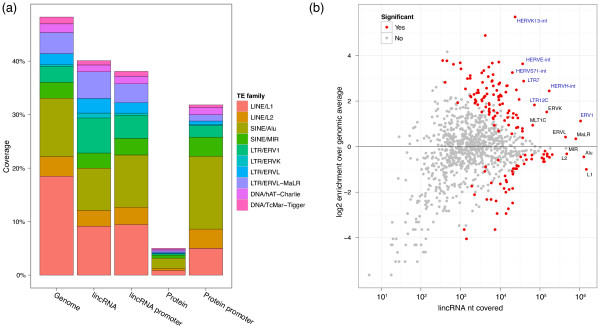
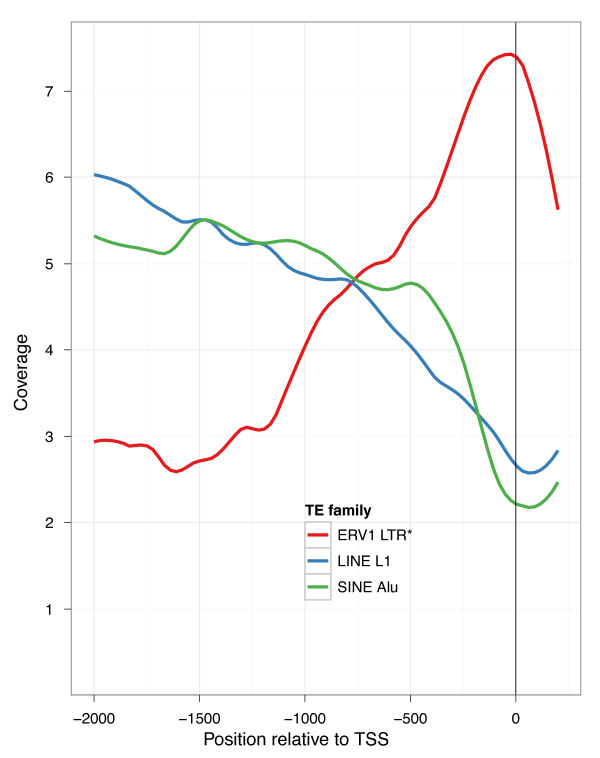
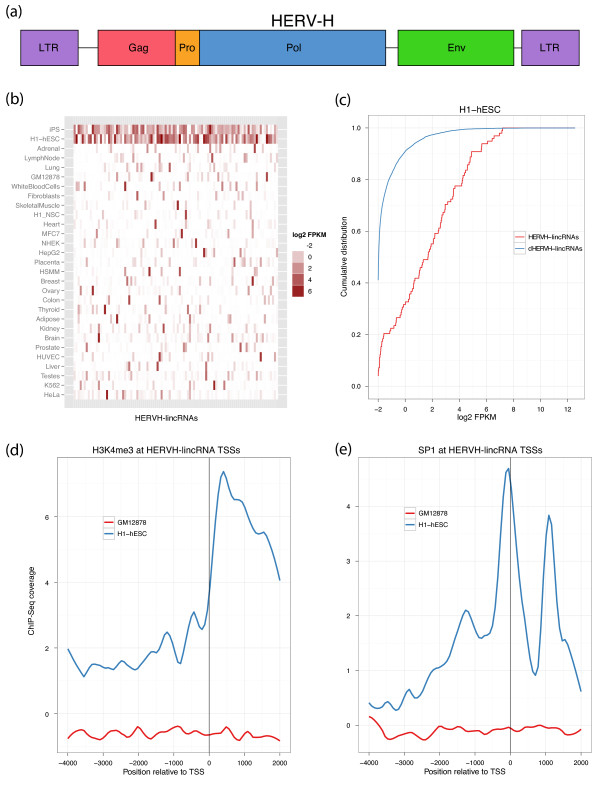
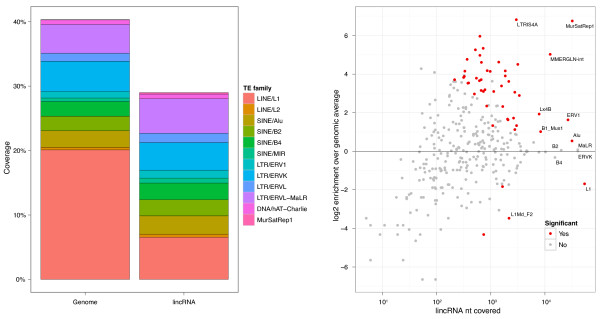
Background: Numerous studies over the past decade have elucidated a large set of long intergenic noncoding RNAs (lincRNAs) in the human genome. Research since has shown that lincRNAs constitute an important layer of genome regulation across a wide spectrum of species. However, the factors governing their evolution and origins remain relatively unexplored. One possible factor driving lincRNA evolution and biological function is transposable element (TE) insertions. Here, we comprehensively characterize the TE content of lincRNAs relative to genomic averages and protein coding transcripts. Results: Our analysis of the TE composition of 9,241 human lincRNAs revealed that, in sharp contrast to protein coding genes, 83% of lincRNAs contain a TE, and TEs comprise 42% of lincRNA sequence. lincRNA TE composition varies significantly from genomic averages - L1 and Alu elements are depleted and broad classes of endogenous retroviruses are enriched. TEs occur in biased positions and orientations within lincRNAs, particularly at their transcription start sites, suggesting a role in lincRNA transcriptional regulation. Accordingly, we observed a dramatic example of HERVH transcriptional regulatory signals correlating strongly with stem cell-specific expression of lincRNAs. Conversely, lincRNAs devoid of TEs are expressed at greater levels than lincRNAs with TEs in all tissues and cell lines, particularly in the testis. Conclusions: TEs pervade lincRNAs, dividing them into classes, and may have shaped lincRNA evolution and function by conferring tissue-specific expression from extant transcriptional regulatory signals.
Overview
The claims and statistics of this paper haven’t been checked yet.
Free: it reads the open-access text and checks the first 5 claims that cite a source we can check. Create a free account to check every claim.
Integrity signals
Registry
Cites
Statistics
Figures
Verification
Claims the paper makes
The claims and statistics of this paper haven’t been checked yet.
Free: it reads the open-access text and checks the first 5 claims that cite a source we can check. Create a free account to check every claim.
Claims other papers make about this one
Each is checked against this paper’s own text: does it say what the citing paper says it does?
The cited source doesn’t support the claim as written.
In the citing paper
“Indeed, lincRNAs containing REs showed much more tissue-specific pattern of expression in comparison with lincRNAs devoid of REs 17.”
From Are human endogenous retroviruses pathogenic? An approach to testing the hypothesis (2013) · cites this paper as [17]
Checked by a reasoning model — may be wrong.
Experimental — accuracy not yet measuredThe cited source says what the claim attributes to it.
In the citing paper
“Over 80% of lincRNAs were found to contain a RE, particularly enriched in HERVs, and more frequently inserted at the transcription start of the lincRNA 17.”
From Are human endogenous retroviruses pathogenic? An approach to testing the hypothesis (2013) · cites this paper as [17]
Self-check
Percentages, sums and reported differences re-computed from the paper’s own numbers.
The self-check needs the paper’s full text.
Citations
Cites
Controlling the False Discovery Rate: A Practical and Powerful Approach to Multiple Testing
Benjamini, Y., & Hochberg, Y. (1995) · Journal of the Royal Statistical Society Series B: Statistical Methodology · doi:10.1111/j.2517-6161.1995.tb02031.x · Cited by 109,482 · cited 1×
“P-values in all experiments were corrected for multiple hypothesis testing using Benjamini and Hochberg’s false discovery rate procedure [89].”
BEDTools: a flexible suite of utilities for comparing genomic features
Quinlan, A. R., & Hall, I. M. (2010) · Bioinformatics · doi:10.1093/bioinformatics/btq033 · Cited by 27,437
Initial sequencing and analysis of the human genome
International Human Genome Sequencing Consortium, Whitehead Institute for Biomedical Research, C. F. G. R., Lander, E. S., Linton, L. M., Birren, B., Nusbaum, C., Zody, M. C., Baldwin, J., Devon, K., Dewar, K., et al. (2001) · Nature · doi:10.1038/35057062 · Cited by 24,216
Ultrafast and memory-efficient alignment of short DNA sequences to the human genome.
Langmead, B., Trapnell, C., Pop, M., & Salzberg, S. L. (2009) · Genome Biology · doi:10.1186/gb-2009-10-3-r25 · Cited by 21,849 · cited 1×
“First, we mapped the reads to the genome using Bowtie [90] with the –best option to return the single best alignment per read.”
Model-based Analysis of ChIP-Seq (MACS)
Zhang, Y., Liu, T., Meyer, C. A., Eeckhoute, J., Johnson, D. S., Bernstein, B. E., Nusbaum, C., Myers, R. M., Brown, M., Li, W., et al. (2008) · Genome Biology · doi:10.1186/gb-2008-9-9-r137 · Cited by 18,386 · cited 1×
“Second, w e remapped the reads allowing up to twenty alignments and called peaks using the AREM softw are package, which implements an iterative algorithm to optimally allocate mult i- apping reads built on top of the MACS method[91, 92].”
Trapnell, C., Williams, B. A., Pertea, G., Mortazavi, A., Kwan, G., van Baren, M. J., Salzberg, S. L., Wold, B. J., & Pachter, L. (2010) · Nature Biotechnology · doi:10.1038/nbt.1621 · Cited by 15,556
On a Test of Whether one of Two Random Variables is Stochastically Larger than the Other
Mann, H. B., & Whitney, D. R. (1947) · The Annals of Mathematical Statistics · doi:10.1214/aoms/1177730491 · Cited by 14,320 · cited 1×
“For all comparisons of two sets of values where we were interested in whether one set was greater than another, we used a Mann-Whitney rank sum test [88].”
TopHat: discovering splice junctions with RNA-Seq
Trapnell, C., Pachter, L., & Salzberg, S. L. (2009) · Bioinformatics · doi:10.1093/bioinformatics/btp120 · Cited by 11,617
Long non-coding RNAs: insights into functions
Mercer, T. R., Dinger, M. E., & Mattick, J. S. (2009) · Nature Reviews Genetics · doi:10.1038/nrg2521 · Cited by 5,654 · cited 2×
“Background Recent comprehensive transcriptome sequencing studies uncovered a large class of previously unannotated long noncoding RNA (lncRNA) genes in various species with similar splicing and polyadenylation properties to mRNAs [1-8].”
Long non-coding RNA HOTAIR reprograms chromatin state to promote cancer metastasis
Gupta, R. A., Shah, N., Wang, K. C., Kim, J., Horlings, H. M., Wong, D. J., Tsai, M.-C., Hung, T., Argani, P., Rinn, J. L., et al. (2010) · Nature · doi:10.1038/nature08975 · Cited by 5,218 · cited 1×
“Accumulating evidence suggests lncRNAs are key regulators in cell differentiation and disease pathways[10-18].”
Self-citation
Cited by
Items 401–500 of 548
To Build or To Break: The Dual Impact of Interspersed Transposable Elements in Cancer
Moreira, D. A., de Lanna, C. A., da Cruz, J. G. V., & Boroni, M. (2021) · Springer eBooks · doi:10.1007/978-3-030-73151-9_8 · Cited by 3
Mosquito long non-coding RNAs are enriched with Transposable Elements
de Melo, E. S., & Wallau, G. L. (2022) · Genetics and Molecular Biology · doi:10.1590/1678-4685-gmb-2021-0215 · Cited by 3
Louro, A. F., Virgolini, N., Paiva, M. S. A., Isidro, I. A., Alves, P. M., Gomes‐Alves, P., & Serra, M. (2022) · Frontiers in Physiology · doi:10.3389/fphys.2022.926528 · Cited by 3
“In fact, HERVH repeats contained in lincRNAs exhibit a stem cell-specific expression pattern (Kelley and Rinn, 2012), and are required for pluripotency maintenance (Lu et al.”
BackgroundSchettini, G. P., Morozyuk, M., & Biase, F. H. (2024) · BMC Genomics · doi:10.1186/s12864-024-10685-5 · Cited by 4
“Notwithstanding, TE have been involved in the origin of new lncRNA [99, 100], and have been identified in several protein-coding sequences [101–103], which supports our findings.”
ResultLong non-coding RNA — perspectives?
Beylerli, O., & Фанилевич, Г. И. (2020) · Russian Journal of Preventive Medicine · doi:10.17116/profmed202023021124 · Cited by 3
The Complexity of the Mammalian Transcriptome
Salama, S. R. (2022) · Advances in experimental medicine and biology · doi:10.1007/978-3-030-92034-0_2 · Cited by 5
Spectacle: Faster and more accurate chromatin state annotation using spectral learningPreprint
Song, J., & Chen, K. C. (2014) · bioRxiv (Cold Spring Harbor Laboratory) · doi:10.1101/002725 · Cited by 3
“…et al. 2012, version 10, May 2012), RNA Poly-merase2 (Pol2), P300 and CTCF ChIP-seq data, and polyA RNA-seq data from ENCODE, long intergenic non-coding RNA (lincRNA) RNA-seq data from (Kelley and Rinn 2012), and conserved enhancer regions from the VISTA enhancer browser (Visel et al. 2007).”
MethodThe pluripotent stem cell-specific transcript ESRG is dispensable for human pluripotencyPreprint
Takahashi, K., Nakamura, M., Narita, M., Watanabe, A., Ueda, M., Takashima, Y., & Yamanaka, S. (2020) · bioRxiv (Cold Spring Harbor Laboratory) · doi:10.1101/2020.11.25.397935 · Cited by 3
Xu, W., Ren, L., Zheng, C., & Cai, J. (2021) · bioRxiv (Cold Spring Harbor Laboratory) · doi:10.1101/2021.04.28.441894 · Cited by 3
“The TEs are not only major signals essential for the origin and diversification of lncRNAs, but also contribute to regulation roles of many lncRNAs (Kelley and Rinn 2012).”
BackgroundD’Agostino, S., Tettey‐Matey, A., Volpe, M., Pierattini, B., Ansaloni, F., Lau, P., Bon, C., Peruzzo, O., Braccia, C., Armirotti, A., et al. (2023) · Research Square · doi:10.1101/2023.05.25.542260 · Cited by 3
Human lncRNAs harbor conserved modules embedded in different sequence contexts
Ballesio, F., Pepe, G., Ausiello, G., Novelletto, A., Helmer‐Citterich, M., & Gherardini, P. F. (2024) · Non-coding RNA Research · doi:10.1016/j.ncrna.2024.06.013 · Cited by 4
“However, lncRNAs are significantly more likely to contain repetitive sequences, particularly transposable elements (TEs) [15,16].”
BackgroundZhao, L., Gong, F., Lou, K., Wang, L., Wang, J., Hong, S., Wang, D., Shi, Y., & Wang, Z. (2024) · International Journal of Biological Macromolecules · doi:10.1016/j.ijbiomac.2024.136224 · Cited by 2
Zhuang, Q. K.-W., Bauermeister, K., Gálvez, J. H., AlOgayil, N., Batdorj, E., de Villena, F. P., Taketo, T., Bourque, G., & Naumova, A. K. (2025) · Genome biology · doi:10.1186/s13059-025-03547-0 · Cited by 2
“TEs may be expressed as part of lncRNAs, represent about 40% of their exonic sequences [47], and potentially contribute to their function [48].”
D’Alessandre, N. D. R., Pessoa, B. S., Guardia, G. D. A., Marques, J. M., Galante, P. A. F., & Batista, R. L. (2025) · Reviews in Endocrine and Metabolic Disorders · doi:10.1007/s11154-025-10008-3 · Cited by 3
Remodeling of XIST regulatory landscape during primate evolution
Cazottes, E., Alfeghaly, C., Rognard, C., Necşulea, A., Loda, A., Castel, G., Villacorta, L., Dong, M. X., Heard, É., Aksoy, I., et al. (2026) · Science Advances · doi:10.1126/sciadv.adw5839 · Cited by 7
Expression spectrum of TE-driven transcripts in human adult tissues
Miao, B., Luo, X., Ademovic, A., Yang, Y., Wu, T. P., & Zhang, B. A. (2026) · Genome biology · doi:10.1186/s13059-025-03898-8 · Cited by 4
“Among TE-driven TSSs, SINE elements accounted for nearly half of those associated with protein-coding genes, while LTR elements contributed about half of the TSSs for lincRNA genes, consistent with previous findings that LTRs are a major source of lin-cRNAs in the mammalian genome [56, 57].”
Liu, J., Li, Z., Zhao, S., Li, H., Zhang, B., Liu, C., Zhang, W., Mao, H., Huang, L., Dong, Z., et al. (2026) · Plant Communications · doi:10.1016/j.xplc.2026.101887 · Cited by 2
“In both humans and mice, a considerable portion of lncRNAs overlap with at least one TE (Kelley and Rinn, 2012).”
Can epigenetic changes cause COPD? Canaries in the coal mines
Grouse, L. D. (2013) · Europe PMC (PubMed Central) · doi:10.3978/j.issn.2072-1439.2013.01.08 · Cited by 2
Transposable Elements Shaping the Epigenome
Giménez-Orenga, K., & Oltra, E. (2022) · Elsevier eBooks · doi:10.1016/b978-0-323-91909-8.00035-9 · Cited by 4
Lynch‐Sutherland, C. F., McDougall, L. I., Stockwell, P. A., Almomani, S. N., Weeks, R. J., Ludgate, J. L., Gamage, T. K. J. B., Chatterjee, A., James, J. L., Eccles, M. R., et al. (2023) · Molecular Genetics and Genomics · doi:10.1007/s00438-023-02033-1 · Cited by 4
“There are now documented examples of TEs that function as protein-coding genes, long non-coding (lnc) RNAs, promoters, enhancers, insulators and boundary elements for topologically associated domains (Kelley and Rinn 2012; Chuong et al.”
BackgroundLuo, H., Yang, L., Zhang, G., Bao, X., Ma, D., Li, B., Cao, L., Cao, S., Liu, S., Bao, L., et al. (2024) · Genes & Genomics · doi:10.1007/s13258-024-01504-y · Cited by 2
“…“i,” “x,” “u,” “o,” and “e” were selected (Lv et al. 2013); transcripts meeting the criteria of length ≥ 200 bp and exons ≥ 2 were chosen (Kelley and Rinn 2012); transcripts with fragments per kilobase of transcript per million mapped reads (FPKM) ≥ 0.1 were included (Kelley and Rinn 2012).”
InfluentialFu, J., Hao, A., Zhang, X., Wang, D., Liu, W., Zhang, C., 赵达卓, Zhao, Z., Zhang, L., & Sun, F. (2024) · Current Issues in Molecular Biology · doi:10.3390/cimb46090570 · Cited by 2
“Three parts of the transcript with fragments per kilobase of transcript per million fragments mapped (FPKM) ≥ 0.1 were selected [21].”
MethodInfluentialHidden magicians of genome evolution.
Kumar, C. S., Qureshi, S. F., Ali, A., Satyanarayana, M. L., Rangaraju, A., Venkateshwari, A., & Nallari, P. (2013) · PubMed Central · Cited by 5
In Silico Methods to Identify Exapted Transposable Element Families
Ramsay, L., & Bourque, G. (2016) · Methods in molecular biology · doi:10.1007/978-1-4939-3372-3_3 · Cited by 2
“Long non-coding RNAs (lncRNAs) are an important genomic regulatory element for many species [12].”
BackgroundStress, Transposons, and the Brain Epigenome
Hunter, R. G. (2016) · Epigenetics and human health · doi:10.1007/978-3-319-24493-8_8 · Cited by 3
Zhang, J., Wang, H., Niu, G., Liu, Y., Wang, Y., Zhang, L., Pei, Y., Zhu, H., Dai, P., & Chen, C. (2018) · Artificial Cells Nanomedicine and Biotechnology · doi:10.1080/21691401.2018.1533849 · Cited by 2
“Repetitive elements are located in the 50UTR and 30UTRs of many mRNAs and are major components of long noncoding RNAs (lncRNAs) [30,31].”
Background3D COMBO chrRNA–DNA–ImmunoFISH
Marasca, F., Cortesi, A., & Bodega, B. (2020) · Methods in molecular biology · doi:10.1007/978-1-0716-0664-3_16 · Cited by 3
Functional Characteristics of Long Noncoding RNAs Containing Sequences of Mobile Genetic Elements
Tatosyan, K. A., Zinevich, L. S., Демин, Д. Э., & Schwartz, A. M. (2020) · Molecular Biology · doi:10.1134/s0026893320050106 · Cited by 2
A New Link to Primate Heart Development
Nelakanti, R. V., & Xiao, A. (2020) · Developmental Cell · doi:10.1016/j.devcel.2020.09.009 · Cited by 2
Noncoding RNA and Epigenetic Change in Hematopoietic Stem Cell Aging
Garrick, D., David, A., Freitas, C., Djeghloul, D., & Goodhardt, M. (2019) · Springer eBooks · doi:10.1007/978-3-319-99375-1_99 · Cited by 2
Ji, Y., Marra, N. J., & DeWoody, J. A. (2015) · Gene · doi:10.1016/j.gene.2015.02.058 · Cited by 2
Roles and regulation of endogenous retroviruses in pluripotency and early development
Schlesinger, S., Branco, M. R., & Mermoud, J. E. (2020) · Elsevier eBooks · doi:10.1016/b978-0-12-814085-7.00007-6 · Cited by 2
SCARs: endogenous human stem cell-associated retroviruses and therapy-resistant malignant tumorsPreprint
Glinsky, G. V. (2015) · arXiv (Cornell University) · doi:10.48550/arxiv.1508.02022 · Cited by 2
“Human endogenous retrovirus subfamily H (HERVH) RNA expression is markedly increased in hESCs [2, 3], and an enhanced rate of insertion of LTR7/HERVH sequences appears to be associated with binding sites for pluripotency core transcription factors [1, 2, 4] and long noncoding RNAs [5].”
BackgroundResultA genomic portrait of zebrafish transposable elements and their spatiotemporal embryonic expressionPreprint
Chang, N., Rovira, Q., Wells, J. N., Feschotte, C., & Vaquerizas, J. M. (2021) · bioRxiv (Cold Spring Harbor Laboratory) · doi:10.1101/2021.04.08.439009 · Cited by 3
“Reads mapping to TEs overlapping annotated exons, UTRs, or introns of expressed genes in the same orientation were considered as transcribed in a gene-dependent manner.”
BackgroundInfluentialExtensive remodelling of XIST regulatory networks during primate evolutionPreprint
Cazottes, E., Alfeghaly, C., Rognard, C., Loda, A., Castel, G., Villacorta, L., Dong, M. X., Heard, É., Aksoy, I., Savatier, P., et al. (2023) · bioRxiv (Cold Spring Harbor Laboratory) · doi:10.1101/2023.12.04.569904 · Cited by 2
Transposable Elements in the Evolution of Gene Regulatory Networks
Пирогов, С. А., Maksimenko, O. G., & Georgiev, P. G. (2019) · Russian Journal of Genetics · doi:10.1134/s1022795419010113 · Cited by 4
“For instance, about 40% of all lncRNA sequences are derived from TEs [115].”
BackgroundTransposons as Environmental Stress Detectors, Are Eukaryotic Genomes Evolved to Evolve?
Hunter, R. G. (2024) · Springer eBooks · doi:10.1007/978-3-031-59286-7_13 · Cited by 1
Li, W., Huang, Y., Xia, Y., Liu, T., & Cai, Q. (2025) · Journal of Agricultural and Food Chemistry · doi:10.1021/acs.jafc.5c03045 · Cited by 1
Epigenetic lockdown of type I interferon sensing and signalling in human pluripotent cells
Holt, J. H., Enriquez-Gasca, R., Wilson, R. P., Bochukova, E. G., Maillard, P. V., & Rowe, H. M. (2026) · Nature Communications · doi:10.1038/s41467-026-74147-0 · Cited by 3
“…without retrotransposition through diverse mechanisms, including controlling cell type-speci fi c gene transcription 14 , acting as enhancers 15 – 17 , generating novel isotypes via exonisation of genes 18 , contributingtolongnoncodingRNA(lncRNA) 19 ,andevengivingriseto entirely novel genes 20,21 .”
Arkhipova, K., & Drukker, M. (2025) · Molecular Biology and Evolution · doi:10.1093/molbev/msaf265 · Cited by 2
“Intergenic lncRNAs are much more enriched in TEs compared to protein-coding genes (Hezroni et al. 2015) and the most common TE type in lncRNAs is ERVs, while SINEs and LINEs are depleted (Kelley and Rinn 2012).”
Sohn, E. J., & Oh, S.-O. (2026) · Analytical Cellular Pathology · doi:10.1155/ancp/2283163 · Cited by 1
“Transposable elements (TEs) and the lncRNA core promoter that might affect the lncRNA regulatory network are responsible for tissue-speci fi c lncRNA regulation [64 – 66].”
Epigenetic Deregulation of Transposable Elements Links Developmental Processes and Tumorigenesis
Lynch‐Sutherland, C. F., Stockwell, P. A., Chatterjee, A., Eccles, M. R., & Macaulay, E. C. (2026) · International Journal of Molecular Sciences · doi:10.3390/ijms27062690 · Cited by 2
“There is certainly mounting evidence suggesting that TE-derived genes might be more tightly regulated and have more tissue-restricted expression patterns [21], which in some respect makes their recurrent reactivation in cancer surprising.”
InfluentialThe canine X chromosome is a sink for canine endogenous retrovirus transposition
Mariano, R., & vonHoldt, B. M. (2016) · Gene Reports · doi:10.1016/j.genrep.2016.05.003 · Cited by 1
On the Concept Of Retrotransposons: Controlling Genome and Making Stress Memories
Noutsopoulos, D. (2016) · Journal of Biochemistry and Molecular Biology Research · doi:10.17554/j.issn.2313-7177.2016.02.32 · Cited by 1
Campos-Sánchez, R., & Sandoval-Carvajal, I. (2018) · IEEE International Work Conference on Bioinspired Intelligence (IWOBI) · doi:10.1109/iwobi.2018.8464183 · Cited by 1
“We also verified if our transcripts overlapped with lncRNAs, because transposable elements such as ERVs, are associated with lncRNAs [38], [39].”
BackgroundThe epigenetics of pluripotent stem cells
Battle, S. L., & Hawkins, R. D. (2020) · Elsevier eBooks · doi:10.1016/b978-0-12-814085-7.00002-7 · Cited by 2
Reynoso, M. A., Blanco, F. A., & Zanetti, M. E. (2023) · IUBMB Life · doi:10.1002/iub.2712 · Cited by 1
Therapeutic targeting non-coding RNAs
Ray, R. M., Lazăr, A. D., Balahura, L.-R., Dobranici, A., Costache, M., & Dinescu, S. (2023) · Elsevier eBooks · doi:10.1016/b978-0-323-90406-3.00006-3 · Cited by 2
Noncoding RNA Regulation of Health and Disease
Léveillé, N., Melo, C. A., & Melo, S. A. (2015) · Elsevier eBooks · doi:10.1016/b978-0-12-800140-0.00005-4 · Cited by 2
Identification of intergenic long noncoding RNA by deep sequencing
Hu, G., & Zhao, K. (2015) · Elsevier eBooks · doi:10.1016/b978-0-12-799958-6.00010-x · Cited by 1
A human haploid gene trap collection to study lncRNAs with unusual RNA biology
Kornienko, A. E., Vlatkovic, I., Neesen, J., Barlow, D. P., & Pauler, F. M. (2015) · RNA Biology · doi:10.1080/15476286.2015.1110676 · Cited by 1
Long Noncoding RNA as Novel Cancer Diagnostic and Effective Therapeutic Targets
Leucci, E. (2018) · Springer eBooks · doi:10.1007/978-981-10-8372-3_12 · Cited by 1
Popov, M., Kolotova, T. Y., & Davidenko, M. (2018) · The Journal of V N Karazin Kharkiv National University series Medicine · doi:10.26565/2313-6693-2018-36-12 · Cited by 1
“LTR elements of HERVH containing lncPHK genes bind with OCT4 and NANOG pluripotency transcription factors [49].”
BackgroundInfluentialEndogenous Retroelements in Cancer: Molecular Roles and Clinical Approach
Lee, K.-H., & Cho, J. (2021) · IntechOpen eBooks · doi:10.5772/intechopen.93370 · Cited by 2
“Despite the limited contribution of L1 and Alu to lncRNAs, a close association between HERVs and ncRNAs was reported by Kelley and Rinn [110].”
BackgroundLi, Z., Wang, Q., Lv, N., Xu, G., Yang, X., & Zhu, B. (2023) · mLife · doi:10.1002/mlf2.12074
“We divided the identi fi ed NeoERV sequences into four classes, ERV1, ERVK, ERVL, and ERVL ‐ MaLR, using the Repbase database 29 , which is used to classify all mammalian ERVs (Table 1).”
BackgroundMethodThomas, J., Perron, H., & Feschotte, C. (2018) · bioRxiv · doi:10.1101/382630 · Cited by 2
Zeng, L., Pederson, S., Cao, D., Qu, Z., Hu, Z., Adelson, D. L., & Wei, C. (2017) · bioRxiv (Cold Spring Harbor Laboratory) · doi:10.1101/142018 · Cited by 1
“may also drive the evolution of lincRNAs and alter their biological functions (Kelley and Rinn 2012).”
InfluentialTransposable elements contribute to regulatory hub stress-related long noncoding RNAs in MaizePreprint
Lv, Y., Hu, F., Zhou, Y., Wu, F., Zhou, L., & Gaut, B. S. (2019) · bioRxiv (Cold Spring Harbor Laboratory) · doi:10.1101/801704 · Cited by 1
“Although a large fraction of lncRNA derive from TEs [7, 36], leading to the hypothesis that TEs have shaped functional domains of lncRNAs [37], this previous paper”
BackgroundBabarinde, I. A., Ma, G., Li, Y., Deng, B., Luo, Z., Liu, H., Abdul, M. M., Ward, C., Chen, M., Fu, X., et al. (2020) · bioRxiv (Cold Spring Harbor Laboratory) · doi:10.1101/2020.07.26.220608 · Cited by 1
“TEs wire the lncRNA complement of hPSCs Previous reports show that TEs constitute a major part of lncRNAs (Kelley and Rinn 2012; Kapusta et al. 2013).”
BackgroundInfluentialIdentification of LINE retrotransposons and long non-coding RNAs expressed in the octopus brainPreprint
Petrosino, G., Ponte, G., Volpe, M., Zarrella, I., Langella, C., Cristina, G. D., Finaurini, S., Russo, M. T., Basu, S., Musacchia, F., et al. (2021) · bioRxiv (Cold Spring Harbor Laboratory) · doi:10.1101/2021.01.24.427974 · Cited by 1
Fu, J., Hao, A., Zhang, X., Wang, D., Liu, W., Zhang, C., Zhao, D., Zhao, Z., Zhang, L., & Sun, F. (2023) · Preprints.org · doi:10.20944/preprints202311.1959.v1
Dissecting human CNS gene expression
Francescatto, M. (2015) · Portuguese National Funding Agency for Science, Research and Technology (RCAAP Project by FCT) · doi:10.34626/jffj-3355
Influência de dois elementos de transposição na arquitetura do genoma de Schistosoma mansoni
Jacinto, D. S. (2014) · Digital Library of Theses and Dissertations (Universidade de São Paulo) · doi:10.11606/t.76.2014.tde-26062014-151100
Transposable Elements and Human Pluripotency
Wang, J. (2015) · Universitätsbibliothek der FU Berlin Hochschulschriftenstelle u. Dokumentenserver · doi:10.17169/refubium-13333
Integrative Characterization of Human Long Non-Coding RNAs
Cabili, M. N. (2014) · Digital Access to Scholarship at Harvard (DASH) (Harvard University)
Long non-coding RNAs: new players in cell differentiation and development
Elena, V. R. (2013)
Analysis of Long Noncoding RNAs in RNA-Seq Data
Niazi, F., & Valadkhan, S. (2016) · Springer eBooks · doi:10.1007/978-3-319-31350-4_7
Ren, H., Wang, G., Jiang, J., Liu, L., Li, N., Li, J., Fu, L. N., Zhang, H., Na, R., Huang, Y., et al. (2016) · bioRxiv (Cold Spring Harbor Laboratory) · doi:10.1101/079871
“…TSS (transcription start site) (Fig 2) which are similar with that of the lincRNAs in recent studies (Cabili et al. 2011; Derrien et al. 2012; Kelley and Rinn 2012; Li et al. 2012; Nam and Bartel 2012; Billerey et al. 2014; Ren et al. 2016), strongly suggest this group of novel transcripts…”
BackgroundDurruthy-Durruthy, J., Wossidlo, M., Sebastiano, V., & Glinsky, G. V. (2016) · bioRxiv (Cold Spring Harbor Laboratory) · doi:10.1101/084087
“Precise spatio-temporal activation of species-specific transposable elements (TrE), and particularly of regulatory sequences derived from human endogenous retroviruses (HERVs), have been associated with the induction and maintenance of human pluripotency, functional identity and integrity of naïve-state embryonic stem…”
BackgroundGenome-wide identification and evolutionary analysis of long non-coding RNAs in cereals
Sun, Y., Rogers, W. L., Devos, K. M., Cai, L., & Malmberg, R. L. (2016) · IEEE International Conference on Computational Advances in Bio and Medical Sciences · doi:10.1109/iccabs.2016.7802791
“(2012) revealed that in sharp contrast to protein coding genes, 83% of human lincRNAs are associated with TEs and TEs comprise 42% of human lincRNA sequences (Kelley and Rinn 2012).”
BackgroundInfluentialAccurate Identification of Adenosine Deamination
Wilson, G. W. (2016) · TSpace (University of Toronto)
Retrotransposon-Derived Regulatory Regions and Transcripts in Stemness
Su, Z., & Bourque, G. (2017) · Springer eBooks · doi:10.1007/978-3-319-48344-3_8
Noncoding RNA and Epigenetic Change in Hematopoietic Stem Cell Aging
Garrick, D., David, A., Freitas, C., Djeghloul, D., & Goodhardt, M. (2017) · Springer eBooks · doi:10.1007/978-3-319-64597-1_99-1
Identification and characterisation of novel cancer testis antigens in human cancer cells
Alsiwiehri, N. O. (2017) · Bangor University Research Portal (Bangor University)
Solovyeva, A. I., Levakin, I. A., & Podgornaya, O. I. (2019) · IEEE International Conference on Bioinformatics and Biomedicine (BIBM) · doi:10.1109/bibm47256.2019.8983314
From Exaptation to Adaptation: Stress, Transposons, and Functions of the Deep Genome
Bartlett, A. A., & Hunter, R. G. (2020) · Elsevier eBooks · doi:10.1016/b978-0-12-813156-5.00010-8 · Cited by 1
Relationship of Peptides and Long Non-Coding RNAs with Aging
Mustafin, R. N. (2021) · Advances in Gerontology · doi:10.1134/s2079057021040081
“Moreover, activated TEs are drivers for the regulation of expression of PCGs in different tissues [55], which can explain similar peculiarities for lncRNAs, since TEs are the most important sources of the emergence of lncRNAs in evolution [27, 29].”
BackgroundInfluentialBabarinde, I. A., & Hutchins, A. P. (2022) · bioRxiv (Cold Spring Harbor Laboratory) · doi:10.1101/2022.01.30.478357
Glinsky, G. V. (2022) · bioRxiv (Cold Spring Harbor Laboratory) · doi:10.1101/2022.04.19.488808
“…sites for master pluripotency transcription factors OCT4, NANOG, SP1, and SOX2 which bind HERVH/LTRs and activate their expression (Glinsky, 2015; Göke et al., 2015; Ito et al., 2017; Kelley and Rinn, 2012; Kunarso et al., 2010; Ohnuki et al., 2014; Pontis et al., 2019; Santoni et al., 2012).”
BackgroundInfluentialARID1A loss derepresses human endogenous retrovirus-H to modulate BRD4-dependent transcriptionPreprint
Yu, C., Lei, X., Chen, F., Mao, S., Lv, L., Liu, H., Hu, X., Wang, R., Shen, L., Zhang, N., et al. (2021) · bioRxiv (Cold Spring Harbor Laboratory) · doi:10.1101/2021.06.28.450127
Investigations on cytosolic nucleic acid fragment induced innate immune functions of keratinocytes
Danis, J. (2018) · SZTE Repository of Dissertations (University of Szeged) · doi:10.14232/phd.9806
“classification is rather complicated (42,43).”
(2013) · Bone and Joint 360 · doi:10.1302/2048-0105.21.360117
Teichmann, S. A., & Hagai, T. (2018) · Faculty Opinions – Post-Publication Peer Review of the Biomedical Literature · doi:10.3410/f.733031339.793546344
Mechanism of cytosolic nucleic acid induced IL-23 expression of human keratinocytes
Kelemen, E. (2022) · SZTE Repository of Dissertations (University of Szeged) · doi:10.14232/phd.11290
Transposon hypothesis of carcinogenesis
Mustafin, R. N. (2021) · Genes and Cells · doi:10.23868/202110002
The probable role of retroelements in the development of Wilms’ tumor in chromosomal syndromes
Mustafin, R. N. (2022) · Cancer Urology · doi:10.17650/1726-9776-2022-18-4-99-107
Glinsky, G. V. (2023) · bioRxiv (Cold Spring Harbor Laboratory) · doi:10.1101/2023.08.06.552206
Lam, F. (2023) · Publication Server of Goethe University Frankfurt am Main (Goethe University Frankfurt) · doi:10.21248/gups.79931
Relationship of transposable elements with long non-coding RNAs and peptides in carcinogenesis
Mustafin, R. N. (2023) · Advances in molecular oncology · doi:10.17650/2313-805x-2023-10-4-21-30 · Cited by 1
Schettini, G. P., Morozyuk, M., & Biase, F. H. (2024) · bioRxiv (Cold Spring Harbor Laboratory) · doi:10.1101/2024.03.15.585311
Zhang, Y., Su, W., Zhang, B., Ling, Y., Kim, W. K., & Zhang, H. (2021) · Figshare · doi:10.6084/m9.figshare.14527661
Zhang, Y., Su, W., Zhang, B., Ling, Y., Kim, W. K., & Zhang, H. (2021) · Figshare · doi:10.6084/m9.figshare.14527655
Sun, Q., Wang, J., Wang, G., Wang, H., & Liu, H. (2021) · Figshare · doi:10.6084/m9.figshare.16608998
Sun, Q., Wang, J., Wang, G., Wang, H., & Liu, H. (2021) · Figshare · doi:10.6084/m9.figshare.16608989
Zhang, Y., Su, W., Zhang, B., Ling, Y., Kim, W. K., & Zhang, H. (2021) · Figshare · doi:10.6084/m9.figshare.14527679
Zhang, Y., Su, W., Zhang, B., Ling, Y., Kim, W. K., & Zhang, H. (2021) · Figshare · doi:10.6084/m9.figshare.14527676
Sun, Q., Wang, J., Wang, G., Wang, H., & Liu, H. (2021) · Figshare · doi:10.6084/m9.figshare.16608983
Zhang, Y., Su, W., Zhang, B., Ling, Y., Kim, W. K., & Zhang, H. (2021) · Figshare · doi:10.6084/m9.figshare.14527658
Metadata
- Authors
- Kelley, D., & Rinn, J.
- Affiliations
- Broad Institute (US)
- Corresponding author
- Rinn, John
- Venue
- Genome Biology
- Published
- 2012-11-26
- Volume
- 13
- Issue
- 11
- Pages
- R107-R107
- ISSN
- 1465-6906 (ISSN-L)
- 1474-760X
- PMC
- PMC3580499
- OpenAlex
- W2107454957
- Cited by
- 531
- References
- 92
- Citations by year
- 2026: 19 · 2025: 14 · 2024: 32 · 2023: 30 · 2022: 45 · 2021: 58 · 2020: 38 · 2019: 36 · 2018: 49 · 2017: 38 · 2016: 52 · 2015: 59 · 2014: 37 · 2013: 24
- FWCI
- 43.76
- Type
- journal article
- Language
- en
- Open access
- gold
- doi.org
- Licence
- cc-by
- creativecommons.org/licenses/by/2.0/ (tdm)
- creativecommons.org/licenses/by/2.0/ (vor)
- Locations
- Genome biology (publishedVersion, cc-by)
- Europe PMC (PubMed Central) (publishedVersion, cc-by)
- PubMed Central (publishedVersion, cc-by)
- PubMed (publishedVersion)
- Funders
- Damon Runyon Cancer Research Foundation
- Richard and Susan Smith Family Foundation
- Israel National Institute for Health Policy Research
- National Institutes of Health (DP2OD006670, GM099117)
- National Heart, Lung, and Blood Institute (T32HL007893)
- National Human Genome Research Institute (P50HG006193)
- National Institute of General Medical Sciences (P01GM099117)
- Topics
- Life Sciences › Biochemistry, Genetics and Molecular Biology › Genetics › Chromosomal and Genetic Variations
- Life Sciences › Biochemistry, Genetics and Molecular Biology › Cancer Research › Cancer-related molecular mechanisms research
- Life Sciences › Biochemistry, Genetics and Molecular Biology › Molecular Biology › Genomics and Chromatin Dynamics
- Keywords
- long intergenic non-coding RNA, transposable elements, endogenous retroviruses, HERV-H, transcriptional regulation, testis expression, Alu elements, tissue-specific gene expression
- MeSH terms
- Gene Expression Regulation, Humans, Organ Specificity, Stem Cells, Genome, Human, Retroelements, Endogenous Retroviruses, RNA, Long Noncoding
About these checks
Registry, retraction, Cites and statistics results are computed, not judged, with one exception: a printed reference that no index lists is read once by a model before it counts as a citation error. Claims are extracted by a model and kept only when their quote appears verbatim in the text; each cited source is then checked, with a model’s help, for whether it says what the claim relies on. Those verdicts can be wrong — read the claim’s quote and the cited source before relying on one.
Statistics and arithmetic are recomputed, not judged.
Confidence bands are shown only for fields calibrated on our annotated test set. None is calibrated yet, so no band is shown.
What counts as a claim ›How we measure confidence ›How we check this ›
Are you an author, or do you see a problem with this page? Request a review
Data sources
Bibliographic data: Semantic Scholar, OpenAlex, Crossref.
Contains information from the Semantic Scholar Academic Graph Datasets, made available under the ODC Attribution License (ODC-BY 1.0).
Semantic Scholar’s data is described in: Kinney, R., et al. (2023). The Semantic Scholar Open Data Platform. arXiv:2301.10140.
