

P2X7 receptors exert a permissive effect on the activation of presynaptic AMPA receptors in rat trigeminal caudal nucleus glutamatergic nerve terminals
Open accessThe DOI matches its Crossref record; 62 of the 62 references it cites were found in a registry or an index.
Abstract
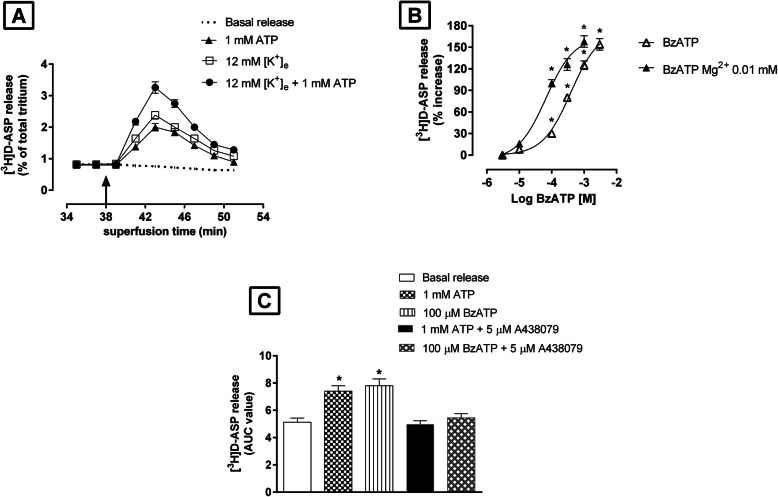
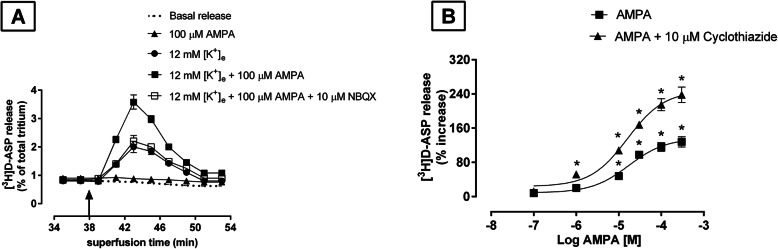
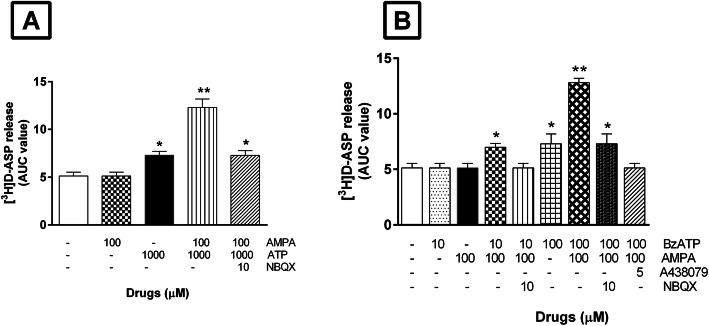
Background: Purine receptors play roles in peripheral and central sensitization and are associated with migraine headache. We investigated the possibility that ATP plays a permissive role in the activation of AMPA receptors thus inducing Glu release from nerve terminals isolated from the rat trigeminal caudal nucleus (TCN). Methods: Nerve endings isolated from the rat TCN were loaded with [3 H]D-aspartic acid ([3 H]D-ASP), layered into thermostated superfusion chambers, and perfused continuously with physiological medium, alone or with various test drugs. Radioactivity was measured to assess [3 H]D-ASP release under different experimental conditions. Results: Synaptosomal [3 H]D-ASP spontaneous release was stimulated by ATP and to an even greater extent by the ATP analogue benzoylbenzoylATP (BzATP). The stimulation of [3 H]D-ASP basal release by the purinergic agonists was prevented by the selective P2X7 receptor antagonist A438079. AMPA had no effect on basal [3 H]D-ASP release, but the release observed when synaptosomes were exposed to AMPA plus a purinoceptor agonist exceeded that observed with ATP or BzATP alone. The selective AMPA receptor antagonist NBQX blocked this “excess” release. Co-exposure to AMPA and BzATP, each at a concentration with no release-stimulating effects, evoked a significant increase in [3 H]D-ASP basal release, which was prevented by exposure to a selective AMPA antagonist. Conclusions: P2X7 receptors expressed on glutamatergic nerve terminals in the rat TCN can mediate Glu release directly and indirectly by facilitating the activation of presynaptic AMPA receptors. The high level of glial ATP that occurs during chronic pain states can promote widespread release of Glu as well as can increase the function of AMPA receptors. In this manner, ATP contributes to the AMPA receptor activation involved in the onset and maintenance of the central sensitization associated with chronic pain.
Overview
The claims and statistics of this paper haven’t been checked yet.
Free: it reads the open-access text and checks the first 5 claims that cite a source we can check. Create a free account to check every claim.
Integrity signals
Registry
Cites
Statistics
Figures
Verification
Claims the paper makes
The claims and statistics of this paper haven’t been checked yet.
Free: it reads the open-access text and checks the first 5 claims that cite a source we can check. Create a free account to check every claim.
Claims other papers make about this one
Each is checked against this paper’s own text: does it say what the citing paper says it does?
The source backs part of the claim, not all of it — or backs it for a different population, condition or comparison.
In the citing paper
“ATP can increase the expression of amino-3-hydroxy-5-methyl-4-isoxazole propionic acid receptors (AMPARs) by stimulating P2X 7 R and increasing the amplitude of miniature excitatory postsynaptic currents. 196”
From Major depressive disorder: hypothesis, mechanism, prevention and treatment (2024) · cites this paper as [196]
Experimental — accuracy not yet measured
Self-check
Percentages, sums and reported differences re-computed from the paper’s own numbers.
The self-check needs the paper’s full text.
Citations
Cites
Cellular and Molecular Mechanisms of Pain
Basbaum, A. I., Bautista, D. M., Scherrer, G., & Julius, D. (2009) · Cell · doi:10.1016/j.cell.2009.09.028 · Cited by 4,344 · cited 1×
“It contains second-order neurons whose nerve endings project into higher nerve centers and excitatory and inhibitory interneurons [15].”
BackgroundNeuronal plasticity: Increasing the gain in pain
Woolf, C. J., & Salter, M. W. (2000) · Science · doi:10.1126/science.288.5472.1765 · Cited by 3,781 · cited 1×
“intracytoplasmic receptors to the membrane and in part by phosphorylation-mediated increase in receptor/ion channel function [38, 39].”
BackgroundCentral sensitization and LTP: do pain and memory share similar mechanisms?
Ji, R.-R., Kohno, T., Moore, K. A., & Woolf, C. J. (2003) · Trends in Neurosciences · doi:10.1016/j.tins.2003.09.017 · Cited by 1,463 · cited 1×
“intracytoplasmic receptors to the membrane and in part by phosphorylation-mediated increase in receptor/ion channel function [38, 39].”
BackgroundPurine and pyrimidine receptors
Burnstock, G. (2007) · Cellular and Molecular Life Sciences · doi:10.1007/s00018-007-6497-0 · Cited by 929
P2X receptors as cell-surface ATP sensors in health and disease
Khakh, B. S., & Alan North, R. (2006) · Nature · doi:10.1038/nature04886 · Cited by 856 · cited 1×
“Furthermore, P2X7 receptors, that are ligand-gated ion channels that conduct Na and Ca [28], can trigger the exocytotic release of Glu, a features which is also compatible with their putative role in determining the susceptibility to the spreading depolarization.”
Disruption of the P2X7 purinoceptor gene abolishes chronic inflammatory and neuropathic pain
Chessell, I. P., Hatcher, J. P., Bountra, C., Michel, A. D., Hughes, J. P., Green, P., Egerton, J., Murfin, M., Richardson, J., Peck, W. L., et al. (2005) · Pain · doi:10.1016/j.pain.2005.01.002 · Cited by 789 · cited 1×
“P2X7-knockout mice display a lack of hypersensitivity to mechanical and thermal stimuli [5], and P2X7-specific antagonists have consistently been found to produce protective effects in animal models of inflammatory and neuropathic pain [6].”
BackgroundPharmacology of Cloned P2X Receptors
North, R. A., & Surprenant, A. (2000) · Annual Review of Pharmacology and Toxicology · doi:10.1146/annurev.pharmtox.40.1.563 · Cited by 701 · cited 5×
“Since such concentrations are likely to have multiple actions, our subsequent experiments were performed with BzATP, which is more potent than ATP in activating the P2X7 receptor subtype [34].”
BackgroundMethodInfluentialKhakh, B. S., Burnstock, G., Kennedy, C., King, B. F., North, R. A., Séguéla, P., Voigt, M., & Humphrey, P. P. A. (2001) · Pharmacological Reviews · doi:10.1016/s0031-6997(24)01482-0 · Cited by 667
Subunit-specific temporal and spatial patterns of AMPA receptor exocytosis in hippocampal neurons
Passafaro, M., Piëch, V., & Sheng, M. (2001) · Nature Neuroscience · doi:10.1038/nn0901-917 · Cited by 655 · cited 1×
“AMPA receptors containing the GluA2 subunits are continuously inserted into synapses, whereas synaptic activity is required for insertion of those containing the GluA1 subunit [52, 53].”
BackgroundSpreading Depression Triggers Headache by Activating Neuronal Panx1 Channels
Karatas, H., Erdener, S. E., Gursoy-Ozdemir, Y., Lule, S., Eren-Koçak, E., Sen, Z. D., & Dalkara, T. (2013) · Science · doi:10.1126/science.1231897 · Cited by 513 · cited 1×
“Notably, migraine aura-related cortical spreading depression is associated with the opening of PANX1 channels, which are tightly coupled to P2X7 receptors, suggesting that a massive release of ATP occurs during a migraine attack [26, 27].”
BackgroundActivation of ATP P2X receptors elicits glutamate release from sensory neuron synapses
Gu, J. G., & MacDermott, A. B. (1997) · Nature · doi:10.1038/39639 · Cited by 491
P2X 7 Receptor-Mediated Release of Excitatory Amino Acids from Astrocytes
Duan, S., Anderson, C. M., Keung, E. C., Chen, Y., Chen, Y., & Swanson, R. A. (2003) · The Journal of Neuroscience · doi:10.1523/jneurosci.23-04-01320.2003 · Cited by 489 · cited 2×
“Since P2X7 receptor activation can also trigger Glu release from astrocytes [13], it is reasonable to hypothesize that ATP and Glu released by glial cells influence the neuronal release of Glu via their coactivation of presynaptic AMPA receptors.”
BackgroundPostsynaptic organisation and regulation of excitatory synapses
Scannevin, R. H., & Huganir, R. L. (2000) · Nature Reviews Neuroscience · doi:10.1038/35039075 · Cited by 460 · cited 1×
“A dynamic equilibrium is normally maintained between the number of AMPA receptors expressed at the cell membrane and cytosolic compartments [47].”
BackgroundYamada, K., & Tang, C. (1993) · The Journal of Neuroscience · doi:10.1523/jneurosci.13-09-03904.1993 · Cited by 441 · cited 1×
“In the rat TCN, AMPA receptors located on glutamatergic nerve endings have been shown to facilitate [(3)H]D-ASP release during terminal depolarization [10], and their activity can be modulated by CTZ, which inhibits the rapid desensitization typical of AMPA receptors inhibiting receptor endocytosis [46].”
BackgroundP2X7 receptor: an emerging target in central nervous system diseases
Sperlágh, B., & Illes, P. (2014) · Trends in Pharmacological Sciences · doi:10.1016/j.tips.2014.08.002 · Cited by 390 · cited 1×
“In addition, selective centrally penetrant P2X7 antagonists are emerging as promising therapeutic agents, since the density of P2X7 receptors in healthy tissue is quite low [7].”
BackgroundNorepinephrine triggers release of glial ATP to increase postsynaptic efficacy
Gordon, G. R. J., Baimoukhametova, D. V., Hewitt, S. A., Rajapaksha, W. R. A. K. J. S., Fisher, T. E., & Bains, J. S. (2005) · Nature Neuroscience · doi:10.1038/nn1498 · Cited by 374 · cited 1×
“It has been shown that ATP released from glial cells in response to the activation of α1-adrenoceptors reportedly increases the strength of glutamatergic synapses by promoting the phosphatidylinositol 3-kinase (PI3K)dependent insertion of postsynaptic AMPA receptors [55].”
BackgroundP2X7 receptors in the nervous system
SPERLAGH, B., VIZI, E., WIRKNER, K., & ILLES, P. (2006) · Progress in Neurobiology · doi:10.1016/j.pneurobio.2006.03.007 · Cited by 373 · cited 2×
“, inflammation, trauma, stress), characterized by metabolic distress or cellular damage favoring an ATP-rich extracellular milieu near the receptors [60, 61].”
BackgroundNeuromodulation by Extracellular ATP and P2X Receptors in the CNS
Khakh, B. S., & North, R. A. (2012) · Neuron · doi:10.1016/j.neuron.2012.09.024 · Cited by 341 · cited 1×
“Last but not least, the response to ATP was abolished by the selective P2X7 antagonist A438079, and the response to BzATP was potentiated by the reduction of extracellular Mg levels [35, 43].”
BackgroundP2X7 receptor-Pannexin1 complex: pharmacology and signaling
Iglesias, R., Locovei, S., Roque, A., Alberto, A. P., Dahl, G., Spray, D. C., & Scemes, E. (2008) · American Journal of Physiology-Cell Physiology · doi:10.1152/ajpcell.00228.2008 · Cited by 331 · cited 1×
“pannexin-1 (PANX1) but also connexins [3].”
Effects of divalent cations, protons and calmidazolium at the rat P2X7 receptor
Virginio, C., Church, D., North, R. A., & Surprenant, A. (1997) · Neuropharmacology · doi:10.1016/s0028-3908(97)00141-x · Cited by 312 · cited 2×
“The activities of the various types of P2X receptors are known to be influenced by divalent cation concentrations [35].”
BackgroundThe Trigeminovascular Pathway: Role of CGRP and CGRP Receptors in Migraine
Edvinsson, L. (2017) · Headache: The Journal of Head and Face Pain · doi:10.1111/head.13081 · Cited by 295 · cited 1×
“receptors interact with calcitonin gene-related peptide (CGRP), a central player in migraine pathogenesis [20], to trigger and amplify migraine pain.”
BackgroundDeuchars, S. A., Atkinson, L., Brooke, R. E., Musa, H., Milligan, C. J., Batten, T. F. C., Buckley, N. J., Parson, S. H., & Deuchars, J. (2001) · The Journal of Neuroscience · doi:10.1523/jneurosci.21-18-07143.2001 · Cited by 287
Chizh, B. A., & Illes, P. (2001) · Pharmacological Reviews · doi:10.1016/s0031-6997(24)01512-6 · Cited by 271
Central Sensitization Theory of Migraine: Clinical Implications
Dodick, D., & Silberstein, S. (2006) · Headache: The Journal of Head and Face Pain · doi:10.1111/j.1526-4610.2006.00602.x · Cited by 270 · cited 1×
“The nucleus caudalis of the trigeminal spinal tract is widely acknowledged to play an integral role in the brain stem processing of orofacial and head nociceptive signals, including those involved in migraine headache [16].”
BackgroundReanalysis of P2X7Receptor Expression in Rodent Brain
Sim, J. A., Young, M. T., Sung, H.-Y., North, R. A., & Surprenant, A. (2004) · The Journal of Neuroscience · doi:10.1523/jneurosci.1469-04.2004 · Cited by 264 · cited 1×
“P2X7 receptors are widely expressed by several cell types involved in pain transmission, including the neurons, microglia, satellite glial cells, and astrocytes located in the dorsal root ganglia, the trigeminal ganglia, and in the dorsal horn of the spinal cord [4].”
BackgroundCunha, R. A., Vizi, E. S., Ribeiro, J. A., & Sebastião, A. M. (1996) · Journal of Neurochemistry · doi:10.1046/j.1471-4159.1996.67052180.x · Cited by 260 · cited 1×
“during states of augmented neuronal activity capable of triggering more sustained ATP release, P2X7 receptors could activate AMPA receptors and facilitate the release of Glu [58, 59].”
BackgroundStimulation-dependent release of adenosine triphosphate from hippocampal slices
Wieraszko, A., Goldsmith, G., & Seyfried, T. N. (1989) · Brain Research · doi:10.1016/0006-8993(89)90567-2 · Cited by 239 · cited 1×
“during states of augmented neuronal activity capable of triggering more sustained ATP release, P2X7 receptors could activate AMPA receptors and facilitate the release of Glu [58, 59].”
BackgroundBurnstock, G. (2004) · Current Opinion in Pharmacology · doi:10.1016/j.coph.2003.08.001 · Cited by 215
Synaptosomes Still Viable after 25 Years of Superfusion
Raiteri, L., & Raiteri, M. (2000) · Neurochemical Research · doi:10.1023/a:1007648229795 · Cited by 206 · cited 2×
“release-regulating presynaptic receptors [33].”
MethodP2X3 Receptor Involvement in Pain States
Wirkner, K., Sperlagh, B., & Illes, P. (2007) · Molecular Neurobiology · doi:10.1007/s12035-007-0033-y · Cited by 183 · cited 1×
“Among P2X receptors, P2X3 receptors are almost exclusively expressed in nociceptive neurons, suggesting that they are involved specifically in the transmission of pain signals [18, 19].”
BackgroundPurinergic Mechanisms and Pain
Burnstock, G. (2016) · Advances in Pharmacology · doi:10.1016/bs.apha.2015.09.001 · Cited by 176 · cited 1×
“transmission through the spinal nociceptive circuits [1].”
Martire, M., Castaldo, P., D'Amico, M., Preziosi, P., Annunziato, L., & Taglialatela, M. (2004) · The Journal of Neuroscience · doi:10.1523/jneurosci.3143-03.2004 · Cited by 175 · cited 1×
“The lateralmost portions (right and left) of this tissue block, which contained the TCN, were used to prepare crude synaptosomes, as previously described [30].”
MethodSelf-citationFabbretti, E., D'Arco, M., Fabbro, A., Simonetti, M., Nistri, A., & Giniatullin, R. (2006) · Journal of Neuroscience · doi:10.1523/jneurosci.0647-06.2006 · Cited by 173 · cited 1×
“CGRP causes sensitization of the nociceptive P2X3 receptors in the TG [23].”
BackgroundPICK1 is a calcium‐sensor for NMDA‐induced AMPA receptor trafficking
Hanley, J. G., & Henley, J. M. (2005) · The EMBO Journal · doi:10.1038/sj.emboj.7600801 · Cited by 164 · cited 1×
“The cytosolic proteins involved in AMPA receptor trafficking are Ca sensors [54], which raises the possibility that Ca”
BackgroundInhibition of the P2X7–PANX1 complex suppresses spreading depolarization and neuroinflammation
Chen, S., Qin, T., Seidel, J. L., Zheng, Y. Z., Eikermann, M., Ferrari, M. D., van den Maagdenberg, A. M. J. M., Moskowitz, M. A., Ayata, C., & Eikermann‐Haerter, K. (2017) · Brain · doi:10.1093/brain/awx085 · Cited by 146 · cited 1×
“Notably, migraine aura-related cortical spreading depression is associated with the opening of PANX1 channels, which are tightly coupled to P2X7 receptors, suggesting that a massive release of ATP occurs during a migraine attack [26, 27].”
BackgroundThe Role of Glutamate and its Receptors in Migraine
Vikelis, M., & Mitsikostas, D. D. (2007) · CNS & Neurological Disorders - Drug Targets · doi:10.2174/187152707781387279 · Cited by 130 · cited 1×
“Glutamate plays major roles in the transmission and modulation of pain information in the trigeminal sensory system [37].”
BackgroundLocalization of P2X2 and P2X3 receptors in rat trigeminal ganglion neurons
Staikopoulos, V., Sessle, B. J., Furness, J. B., & Jennings, E. A. (2006) · Neuroscience · doi:10.1016/j.neuroscience.2006.09.035 · Cited by 128 · cited 1×
“The trigeminal sensory neurons that innervate the meninges usually contain CGRP and express P2X3 receptors in their peripheral and central terminals as well [21].”
BackgroundKerr, R., Maxwell, & Todd (1998) · European Journal of Neuroscience · doi:10.1046/j.1460-9568.1998.00048.x · Cited by 113 · cited 1×
“Under basal conditions, excitatory neurons appear to express mostly the non– Ca-permeable GluA2 subunit [50, 51].”
BackgroundAndó, R., Méhész, B., Gyires, K., Illes, P., & Sperlágh, B. (2010) · British Journal of Pharmacology · doi:10.1111/j.1476-5381.2009.00596.x · Cited by 96 · cited 1×
“P2X7-knockout mice display a lack of hypersensitivity to mechanical and thermal stimuli [5], and P2X7-specific antagonists have consistently been found to produce protective effects in animal models of inflammatory and neuropathic pain [6].”
BackgroundHao, J., & Xiaojun, X. (1996) · Pain · doi:10.1016/0304-3959(96)03019-9 · Cited by 86 · cited 1×
“However, the therapeutic implications of these findings are limited in that blockade of AMPA receptors with competitive antagonists also affects basal peripheral sensitivity and causes sedation [41, 42].”
Physiological and pathological functions of P2X7 receptor in the spinal cord
Cotrina, M. L., & Nedergaard, M. (2009) · Purinergic Signalling · doi:10.1007/s11302-009-9138-2 · Cited by 82 · cited 1×
“, inflammation, trauma, stress), characterized by metabolic distress or cellular damage favoring an ATP-rich extracellular milieu near the receptors [60, 61].”
BackgroundPark, J.-S., Yaster, M., Guan, X., Xu, J.-T., Shih, M.-H., Guan, Y., Raja, S. N., & Tao, Y.-X. (2008) · Molecular Pain · doi:10.1186/1744-8069-4-67 · Cited by 82 · cited 2×
“However, the therapeutic implications of these findings are limited in that blockade of AMPA receptors with competitive antagonists also affects basal peripheral sensitivity and causes sedation [41, 42].”
BackgroundAtkinson, L., Batten, T. F. C., Moores, T. S., Varoqui, H., Erickson, J. D., & Deuchars, J. (2004) · Neuroscience · doi:10.1016/j.neuroscience.2003.08.065 · Cited by 80 · cited 1×
“In the rat brain, P2X7 receptors are co-localized in nerve terminals with the vesicular Glu transporters vGLUT1 and vGLUT2 [12], and they have been shown to trigger Glu release by astrocytes [13] as well as neurons [14].”
BackgroundExpression of AMPA Receptor Subunits at Synapses in Laminae I–III of the Rodent Spinal Dorsal Horn
Polgár, E., Watanabe, M., Hartmann, B., Grant, S. G., & Todd, A. J. (2008) · Molecular Pain · doi:10.1186/1744-8069-4-5 · Cited by 76 · cited 1×
“In the spinal cord, the largest AMPA receptor populations consist of the GluA1/GluA2 and GluA2/GluA3 heteromers [49].”
BackgroundFunctional Pharmacology in Human Brain
Raiteri, M. (2006) · Pharmacological Reviews · doi:10.1124/pr.58.2.5 · Cited by 74 · cited 1×
“Exogenously loaded [(3)H]D-ASP is widely used in synaptosomal release experiments as a marker for endogenously formed Glu since the two substances are similarly released, via an exocytotic Ca-dependent process, in response to 12 mM [K]e) [31].”
MethodMarcoli, M., Cervetto, C., Paluzzi, P., Guarnieri, S., Alloisio, S., Thellung, S., Nobile, M., & Maura, G. (2008) · Journal of Neurochemistry · doi:10.1111/j.1471-4159.2008.05322.x · Cited by 70 · cited 1×
“In the rat brain, P2X7 receptors are co-localized in nerve terminals with the vesicular Glu transporters vGLUT1 and vGLUT2 [12], and they have been shown to trigger Glu release by astrocytes [13] as well as neurons [14].”
BackgroundBarnes, J. M., Dev, K. K., & Henley, J. M. (1994) · British Journal of Pharmacology · doi:10.1111/j.1476-5381.1994.tb16902.x · Cited by 70 · cited 1×
“Glutamatergic axon terminals in the rat brain express facilitatory AMPA autoreceptors capable of enhancing Glu release [44, 45].”
BackgroundYegutkin, G. G., Guerrero-Toro, C., Kılınç, E., Koroleva, K., Ishchenko, Y., Abushik, P. A., Giniatullina, R., Fayuk, D. A., & Giniatullin, R. A. (2016) · Purinergic Signalling · doi:10.1007/s11302-016-9521-8 · Cited by 60 · cited 1×
“In addition, CGRP increases the levels of the pronociceptive nucleotides ATP and ADP in various parts of the trigeminal nociceptive system and enhances the responses induced by low concentrations of ATP [24].”
BackgroundTong, C., & MacDermott, A. B. (2006) · The Journal of Physiology · doi:10.1113/jphysiol.2006.110072 · Cited by 59
Raiteri, L., Zappettini, S., Milanese, M., Fedele, E., Raiteri, M., & Bonanno, G. (2007) · Journal of Neurochemistry · doi:10.1111/j.1471-4159.2007.04784.x · Cited by 56 · cited 1×
“Use of this mild depolarizing stimulus allows us to obtain a “clean” estimation of Cadependent Glu exocytosis, without the component mediated by the transporter reversal, which can occur when the extracellular Na level is reduced to compensate for the increase in K in the depolarizing medium [32].”
BackgroundPiccini, A., & Malinow, R. (2002) · The Journal of Neuroscience · doi:10.1523/jneurosci.22-13-05387.2002 · Cited by 52 · cited 1×
“AMPA receptors containing the GluA2 subunits are continuously inserted into synapses, whereas synaptic activity is required for insertion of those containing the GluA1 subunit [52, 53].”
BackgroundPATEL, D. R., & Croucher, M. J. (1997) · European Journal of Pharmacology · doi:10.1016/s0014-2999(97)01077-7 · Cited by 50 · cited 1×
“Glutamatergic axon terminals in the rat brain express facilitatory AMPA autoreceptors capable of enhancing Glu release [44, 45].”
BackgroundJones, T. L., & Sorkin, L. S. (2004) · Journal of Pharmacology and Experimental Therapeutics · doi:10.1124/jpet.103.064741 · Cited by 45 · cited 1×
“Inhibition of spinal AMPA receptors has been shown to reverse the mechanical allodynia and the thermal and mechanical hypersensitivities associated with the development and maintenance of various types of pain [40, 41].”
BackgroundThe role of purinergic signaling in the etiology of migraine and novel antimigraine treatment
Cieślak, M., Czarnecka, J., Roszek, K., & Komoszyński, M. (2015) · Purinergic Signalling · doi:10.1007/s11302-015-9453-8 · Cited by 43 · cited 1×
“pression, and fast transmission in neurons and glial cells [17].”
BackgroundDavies, A. J., & North, R. A. (2009) · Pain · doi:10.1016/j.pain.2009.07.038 · Cited by 43
Pittaluga, A., Feligioni, M., Longordo, F., Luccini, E., & Raiteri, M. (2005) · Neuropharmacology · doi:10.1016/j.neuropharm.2005.09.004 · Cited by 40 · cited 1×
“It has been proposed that AMPA receptors move from and to presynaptic membranes [48], as they reportedly do at the postsynaptic level.”
BackgroundHaanes, K. A., Labastida‐Ramírez, A., Blixt, F. W., Rubio‐Beltrán, E., Dirven, C. M. F., Danser, A. H. J., Edvinsson, L. I., & MaassenVanDenBrink, A. (2019) · Cephalalgia · doi:10.1177/0333102419851810 · Cited by 40 · cited 2×
“While P2X3 receptors are involved in the initiation and transmission of a migraine attack, the metabotropic P2Y receptors seems to play modulatory roles in migraine pathophysiology [25].”
BackgroundHan, S.-M., Ahn, D. K., & Youn, D. (2007) · Journal of Neuroscience Methods · doi:10.1016/j.jneumeth.2007.08.011 · Cited by 37 · cited 1×
“4 cm below the obex to isolate the brainstem segment containing the TCN [29].”
Backgroundregenerative-loop potentiation of glutamate synaptic transmission by microglia and astrocytes
Bennett, M. R., Farnell, L., & Gibson, W. G. (2009) · Journal of Theoretical Biology · doi:10.1016/j.jtbi.2009.07.024 · Cited by 33 · cited 1×
“P2X7 receptors have been proposed as central players in the synergic crosstalk that occurs between the neural network and nearby glial cells and serves to ensure the high-level synaptic transmission that reinforces pain signals [62].”
BackgroundDHE Repression of ATP‐Mediated Sensitization of Trigeminal Ganglion Neurons
Masterson, C. G., & Durham, P. L. (2010) · Headache The Journal of Head and Face Pain · doi:10.1111/j.1526-4610.2010.01714.x · Cited by 28
Kato, A., & Witkin, J. M. (2017) · Biochemical Pharmacology · doi:10.1016/j.bcp.2017.09.015 · Cited by 22 · cited 1×
“In addition, the auxiliary subunits that regulate AMPA-receptor trafficking in several brain areas have been proposed as valuable therapeutic targets [56].”
BackgroundD’Amico, M., Samengo, I. A., Navarra, P., Taglialatela, M., & Martire, M. (2010) · Neurochemistry International · doi:10.1016/j.neuint.2010.07.009 · Cited by 15 · cited 2×
“TCN express autoreceptors for AMPA that can potentiate the [(3)H]D-ASP release induced by depolarization [10].”
BackgroundSelf-citation
Cited by
Major depressive disorder: hypothesis, mechanism, prevention and treatment
Cui, L., Li, S., Wang, S., Wu, X., Liu, Y., Yu, W., Wang, Y., Tang, Y., Xia, M., & Li, B. (2024) · Signal Transduction and Targeted Therapy · doi:10.1038/s41392-024-01738-y · Cited by 1,244
Involvement of P2X7 receptors in chronic pain disorders
Ren, W., & Illés, P. (2021) · Purinergic Signalling · doi:10.1007/s11302-021-09796-5 · Cited by 68
“Nerve endings isolated from the rat trigeminal caudal nucleus were loaded with tritiated aspartic acid in order to model the endogenous glutamate secretion [53].”
MethodAstrocytic and Oligodendrocytic P2X7 Receptors Determine Neuronal Functions in the CNS
Zhao, Y., Tang, Y., & Illés, P. (2021) · Frontiers in Molecular Neuroscience · doi:10.3389/fnmol.2021.641570 · Cited by 65
“More convincing evidence for the existence of presynaptic P2X7Rs was supplied, when pinched-off nerve terminals (synaptosomes) were prepared from various parts of the rodent and human brain (mouse cerebellum, Sanchez-Nogueiro et al., 2005; rat caudal brainstem, D’Amico et al., 2010; Curro et al., 2020; neocortex of ep…”
Esparza, T. J., Su, S., Francescutti, C. M., Rodionova, E., Kim, J. H., & Brody, D. L. (2023) · Fluids and Barriers of the CNS · doi:10.1186/s12987-023-00462-z · Cited by 51
“Brain P2X7 receptor activation has been implicated in the pathophysiology of traumatic brain injury, posttraumatic headache, ischemic and hemorrhagic stroke, multiple sclerosis, neurodegenerative disorders, depression, and other conditions [48] [49] [50] [51] [52] [53] [54] [55] [56] [57] [58].”
BackgroundPresynaptic AMPA Receptors in Health and Disease
Zanetti, L., Regoni, M., Ratti, E., Valtorta, F., & Sassone, J. (2021) · Cells · doi:10.3390/cells10092260 · Cited by 33
“The authors isolated nerve endings from the rat TCN, loaded them with [3H]D-aspartate and measured radioactivity to assess [3H]D-aspartate release under different experimental conditions.”
Influential
Metadata
- Authors
- Currò, D., Navarra, P., Samengo, I., & Martire, M.
- Affiliations
- Università Cattolica del Sacro Cuore (IT)
- Corresponding author
- Martire, Maria
- Venue
- The Journal of Headache and Pain
- Published
- 2020-07-02
- Volume
- 21
- Issue
- 1
- Pages
- 83-83
- ISSN
- 1129-2369 (ISSN-L)
- 1129-2377
- PMC
- PMC7330953
- OpenAlex
- W3039993279
- Cited by
- 18
- References
- 62
- Citations by year
- 2026: 2 · 2025: 3 · 2024: 3 · 2023: 5 · 2022: 2 · 2021: 3
- FWCI
- 1.57
- Type
- journal article
- Language
- en
- Open access
- gold
- doi.org
- Licence
- cc-by
- creativecommons.org/licenses/by/4.0 (tdm)
- creativecommons.org/licenses/by/4.0 (vor)
- Locations
- The Journal of Headache and Pain (publishedVersion, cc-by)
- PubMed Central (publishedVersion, cc-by)
- PubMed (publishedVersion)
- DOAJ (DOAJ: Directory of Open Access Journals) (submittedVersion, cc-by-sa)
- PubliCatt (Università Cattolica del Sacro Cuore) (submittedVersion, cc-by)
- Funders
- Fondi di Ateneo D1 2019 (R4124500867)
- Topics
- Life Sciences › Biochemistry, Genetics and Molecular Biology › Physiology › Adenosine and Purinergic Signaling
- Life Sciences › Neuroscience › Cellular and Molecular Neuroscience › Neuroscience and Neuropharmacology Research
- Health Sciences › Medicine › Physiology (medical) › Pain Mechanisms and Treatments
- Keywords
- P2X7 receptor, ATP release, A438079, NBQX, central sensitization, chronic pain, migraine, purinergic signaling, synaptic transmission
- MeSH terms
- Animals, Male, Nerve Endings, Synaptic Transmission, Synaptosomes, Trigeminal Caudal Nucleus, Receptors, Presynaptic, Receptors, AMPA, Excitatory Amino Acid Antagonists, Rats, Receptors, Purinergic P2X7, Purinergic P2X Receptor Agonists, Purinergic P2X Receptor Antagonists
About these checks
Registry, retraction, Cites and statistics results are computed, not judged, with one exception: a printed reference that no index lists is read once by a model before it counts as a citation error. Claims are extracted by a model and kept only when their quote appears verbatim in the text; each cited source is then checked, with a model’s help, for whether it says what the claim relies on. Those verdicts can be wrong — read the claim’s quote and the cited source before relying on one.
Statistics and arithmetic are recomputed, not judged.
Confidence bands are shown only for fields calibrated on our annotated test set. None is calibrated yet, so no band is shown.
What counts as a claim ›How we measure confidence ›How we check this ›
Are you an author, or do you see a problem with this page? Request a review
Data sources
Bibliographic data: Semantic Scholar, OpenAlex, Crossref.
Contains information from the Semantic Scholar Academic Graph Datasets, made available under the ODC Attribution License (ODC-BY 1.0).
Semantic Scholar’s data is described in: Kinney, R., et al. (2023). The Semantic Scholar Open Data Platform. arXiv:2301.10140.
