

Air pollution and children’s health—a review of adverse effects associated with prenatal exposure from fine to ultrafine particulate matter
Open accessThe DOI matches its Crossref record; 223 of the 224 references it cites were found in a registry or an index; 210 of the 276 sources its claims cite were checked for support.
Abstract
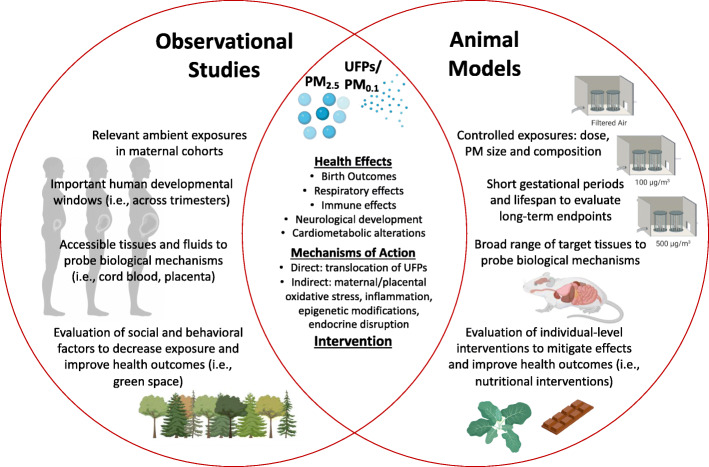
Background Particulate matter (PM), a major component of ambient air pollution, accounts for a substantial burden of diseases and fatality worldwide. Maternal exposure to PM during pregnancy is particularly harmful to children’s health since this is a phase of rapid human growth and development. Method In this review, we synthesize the scientific evidence on adverse health outcomes in children following prenatal exposure to the smallest toxic components, fine (PM 2.5 ) and ultrafine (PM 0.1 ) PM. We highlight the established and emerging findings from epidemiologic studies and experimental models. Results Maternal exposure to fine and ultrafine PM directly and indirectly yields numerous adverse birth outcomes and impacts on children’s respiratory systems, immune status, brain development, and cardiometabolic health. The biological mechanisms underlying adverse effects include direct placental translocation of ultrafine particles, placental and systemic maternal oxidative stress and inflammation elicited by both fine and ultrafine PM, epigenetic changes, and potential endocrine effects that influence long-term health. Conclusion Policies to reduce maternal exposure and health consequences in children should be a high priority. PM 2.5 levels are regulated, yet it is recognized that minority and low socioeconomic status groups experience disproportionate exposures. Moreover, PM 0.1 levels are not routinely measured or currently regulated. Consequently, preventive strategies that…
Overview
CoChat Summary
## TL;DR
This review synthesizes evidence that prenatal exposure to fine (PM2.5) and ultrafine (PM0.1) particulate matter is associated with adverse outcomes in children, especially birth, respiratory, neurodevelopmental, immune, and cardiometabolic effects. It also argues that placental translocation, oxidative stress/inflammation, epigenetic changes, and endocrine disruption are key mechanisms, and that reducing maternal exposure should be a public health priority.
## Key findings
- Human epidemiologic evidence summarized in the paper links prenatal PM2.5 exposure with adverse birth outcomes, including low birth weight and preterm birth; effect estimates for every 10 μg/m³ increase in PM2.5 were reported as birth-weight reductions ranging from −15.9 to −23.4 g.
- For stillbirth, one Ohio cohort found that third-trimester “high” PM2.5 exposure was associated with a 42% increased stillbirth risk, while PM2.5 was not significant in the cited meta-analyses.
- In respiratory/immune outcomes, a review of 18 studies found increased risk of wheeze and asthma with prenatal exposure to multiple air pollutants, but only a weak association in the 5 studies specifically evaluating prenatal PM2.5.
- The paper reports that a meta-analysis of European birth cohorts found consistent evidence for an association between air pollution and pneumonia in early childhood, and that prenatal UFP exposure was independently associated with childhood asthma in emerging epidemiologic studies.
- In the cardiometabolic section, the paper cites human studies linking developmental air pollution exposure with higher adipokines, altered β-cell function and insulin sensitivity, higher BMI at 18 years, insulin resistance at 10 years, and increased blood pressure risk; animal studies similarly showed offspring cardiac dysfunction, altered glucose homeostasis, and increased blood pressure.
## Methods
- Narrative review of epidemiologic and experimental literature on prenatal exposure to fine (PM2.5) and ultrafine (PM0.1) particulate matter and child health outcomes.
- Study selection used five PubMed literature searches plus four additional searches on oxidative stress, inflammation, epigenetics, and endocrine disruption; two independent reviewers screened titles/abstracts and full texts.
- Included original studies on ambient PM2.5 or PM0.1, categorized by endpoint (birth outcomes, respiratory/immune, brain, cardiometabolic) and by human versus nonhuman evidence.
## Limitations
- The paper states that human evidence on the specific effects of prenatal UFP (PM0.1) exposure is limited, in part because of lack of monitoring and exposure models.
- It notes that animal studies vary by species, strain, timing, exposure route, and dose, which can limit comparability and translational interpretation; this is stated in the paper.
- Evident from the text: much of the review relies on a small number of studies for some endpoints, and several sections explicitly say that additional research is needed to confirm findings and clarify mechanisms.
Model-written summary of a shortened version of the paper’s full text (it is longer than we read). Check it against the paper before relying on it.
Integrity signals
Registry
Cites
Statistics
Figures
Verification
Claims the paper makes
181 Valid · 7 Not valid · 53 Not checked · 53 Own results and interpretations
Some cited sources support this claim and some don’t — read each source’s verdict below.
In the paper
“In a cohort study, exposure to PM2.5 during the first trimester was significantly associated with decreased (2.2%) global DNA methylation in placenta tissue [178] and was also significantly correlated with gene expression of S-adenosylmethionine (SAM), a key substrate involved in methyl group transfers [184].”
§ Air pollution and children’s health—a review of adverse effects associated with prenatal exposure from fine to ultrafine particulate matter > Biological mechanisms underlying adverse effects > Epigenetic alterations
What the sources say
- Partly supportedcites [178] Janssen BG Godderis L Pieters N Poels K Kiciński M Cuypers A Fierens F Penders J Plusquin M Gyselaers W Placental DNA hypomethylation in association with particulate air pollution in early life Part Fibre Toxicol 2013 10 1 22 10.1186/1743-8977-10-22 23742113 PMC3686623 sourceExperimental — accuracy not yet measured
The Results section reports a significant association between first-trimester PM2.5 exposure and lower global DNA methylation in placental tissue. The stated 2.2% decrease corresponds to the whole-pregnancy estimate (2.19%), however; the first-trimester estimate was 2.13% per 5 μg/m3 increase in the multi-lag model, or 2.41% in the trimester-specific analysis. (LLM, conf=0.87)
- Disputedcites [184] Maghbooli Z, Hossein-nezhad A, Adabi E, Asadollah-pour E, Sadeghi M, Mohammad-nabi S, Rad LZ, Hosseini A-aM, Radmehr M, Faghihi F: Air pollution during pregnancy and placental adaptation in the levels of global DNA methylation. Plos One 2018, 13(7):e0199772. PMC6034814 29979694 sourceExperimental — accuracy not yet measured
The Results (Table 3; page not available) report a significant positive correlation between first-trimester PM2.5 and placental global DNA methylation (rho = 0.26, p = 0.01), contrary to the claimed decrease. The Discussion also describes the correlation as positive, and the cited results do not report a 2.2% decrease. (LLM, conf=0.90)
Checked by a reasoning model — may be wrong.
plainstates an association- Asserted: passes — The authors put it forward as true.
- Checkable: passes — It can be checked against evidence.
- Load-bearing: unclear — It is unclear whether the paper’s conclusions depend on it.
- Based: passes — The paper gives a reason why it holds.
- Partly supported
The cited sources support only part of this claim — read each source’s verdict below.
In the paper
“DeFranco et al. [14] also observed the greatest risk for preterm birth (19% increased risk) in the third trimester.”
§ Air pollution and children’s health—a review of adverse effects associated with prenatal exposure from fine to ultrafine particulate matter > Human evidence from epidemiologic studies > Adverse birth outcomes There is a strong body of human evidence from epidemiological studies associating PM, in particular PM2.5, with adverse birth outcomes. Systematic reviews with meta-analyses [10–13], summarized in Table 1, demonstrate positive, and often significant, associations between PM2.5 exposure across the entire pregnancy and increased risk of preterm birth and infant low birth weight. Effect estimates for every 10 μg/m3 increase in PM2.5 exhibit similar ranges across analyses for reductions in birth weight from −15.9 to −23.4 g. Studies have also interrogated the impact of exposure during specific trimesters to identify critical windows of susceptibility. Overall, the results are mixed; however, a common theme of increased impact appears for exposure later in pregnancy. DeFranco et al. [14] also observed the greatest risk for preterm birth (19% increased risk) in the third trimester. Percy et al. [15] demonstrated increasing exposure to PM2.5 during the third trimester, in particular between 30 and 35 weeks of gestation, was associated with an increased risk for small for gestational age babies. In an observational natural experiment, infants whose 8th month of gestation occurred during the 2008 Beijing Olympics, when air pollution levels drastically deceased, were born 23 g heavier on average compared to infants whose 8th month occurred over the same dates the year prior (2007) or after (2009) [16]. It is plausible exposure later in pregnancy, during periods of rapid fetal weight gain, has a larger impact on infant birth weight. Likewise, stressors closer to delivery could affect preterm birth. However, for other adverse outcomes, such as cognitive effects, earlier exposure during neurogenesis may be considered the critical window. Continued research incorporating smaller windows, such as weeks, may help further illuminate critical windows of susceptibility. The risk of stillbirth has also been investigated in association with prenatal exposure to PM2.5. A meta-analysis including 13 studies cited exposure to ambient air pollution increases the risk of stillbirth; however, PM2.5 alone was neither found to be statistically significant [17], nor was it significant in the meta-analysis performed by Zhu et al. [11]. Similarly, in an Ohio cohort, “high” PM2.5 exposure, defined as greater than or equal to the mean PM2.5 level during the study period (13.3 μg/m3) plus the IQR for the specific time period measured for each birth) was not associated with increase in stillbirth risk through pregnancy, first or second trimester; however, high PM2.5 exposure during the third trimester was associated with 42% increased stillbirth risk [18]. Further epidemiological and mechanistic studies are needed to validate the causal linkage between PM2.5 exposure and stillbirth risk.
What the sources say
- Partly supportedcites [14] DeFranco E Moravec W Xu F Hall E Hossain M Haynes EN Muglia L Chen A Exposure to airborne particulate matter during pregnancy is associated with preterm birth: a population-based cohort study Environ Health 2016 15 6 10.1186/s12940-016-0094-3 26768419 PMC4714531 sourceExperimental — accuracy not yet measured
The Results (Table 4) and Abstract Results identify high third-trimester PM2.5 exposure as having the greatest trimester-specific association with preterm birth. But its adjusted odds ratio is 1.28 (28% higher odds), not 1.19; the 1.19 estimate applies to exposure averaged over the entire pregnancy. The paper reports odds ratios rather than a direct measure of risk. (LLM, conf=0.90)
plainstates an association- Asserted: passes — The authors put it forward as true.
- Checkable: passes — It can be checked against evidence.
- Load-bearing: unclear — It is unclear whether the paper’s conclusions depend on it.
- Based: passes — The paper gives a reason why it holds.
- Partly supported
Every source the paper cites for this claim was checked and supports it.
In the paper
“In a meta-analysis of multiple European birth cohorts, MacIntyre et al. [19] concluded there was consistent evidence for an association between air pollution and pneumonia in early childhood.”
§ Air pollution and children’s health—a review of adverse effects associated with prenatal exposure from fine to ultrafine particulate matter > Human evidence from epidemiologic studies > Respiratory effects and impact on the immune system
What the sources say
- Supportedcites [19] EA MI Gehring U Molter A Fuertes E Klumper C Kramer U Quass U Hoffmann B Gascon M Brunekreef B Air pollution and respiratory infections during early childhood: an analysis of 10 European birth cohorts within the ESCAPE Project Environ Health Perspect 2014 122 1 107 113 10.1289/ehp.1306755 24149084 PMC3888562 source
The Conclusion states that the meta-analysis of 10 European birth cohorts found consistent evidence for an association between traffic-related air pollution and pneumonia. The Discussion specifies that this finding concerned the first two years of life, matching the claim's early-childhood scope. (LLM, conf=0.95)
plainstates an association- Asserted: passes — The authors put it forward as true.
- Checkable: passes — It can be checked against evidence.
- Load-bearing: unclear — It is unclear whether the paper’s conclusions depend on it.
- Based: passes — The paper gives a reason why it holds.
- Supported
Every source the paper cites for this claim was checked and supports it.
In the paper
“Percy et al. [15] demonstrated increasing exposure to PM2.5 during the third trimester, in particular between 30 and 35 weeks of gestation, was associated with an increased risk for small for gestational age babies.”
§ Air pollution and children’s health—a review of adverse effects associated with prenatal exposure from fine to ultrafine particulate matter > Human evidence from epidemiologic studies > Adverse birth outcomes There is a strong body of human evidence from epidemiological studies associating PM, in particular PM2.5, with adverse birth outcomes. Systematic reviews with meta-analyses [10–13], summarized in Table 1, demonstrate positive, and often significant, associations between PM2.5 exposure across the entire pregnancy and increased risk of preterm birth and infant low birth weight. Effect estimates for every 10 μg/m3 increase in PM2.5 exhibit similar ranges across analyses for reductions in birth weight from −15.9 to −23.4 g. Studies have also interrogated the impact of exposure during specific trimesters to identify critical windows of susceptibility. Overall, the results are mixed; however, a common theme of increased impact appears for exposure later in pregnancy. DeFranco et al. [14] also observed the greatest risk for preterm birth (19% increased risk) in the third trimester. Percy et al. [15] demonstrated increasing exposure to PM2.5 during the third trimester, in particular between 30 and 35 weeks of gestation, was associated with an increased risk for small for gestational age babies. In an observational natural experiment, infants whose 8th month of gestation occurred during the 2008 Beijing Olympics, when air pollution levels drastically deceased, were born 23 g heavier on average compared to infants whose 8th month occurred over the same dates the year prior (2007) or after (2009) [16]. It is plausible exposure later in pregnancy, during periods of rapid fetal weight gain, has a larger impact on infant birth weight. Likewise, stressors closer to delivery could affect preterm birth. However, for other adverse outcomes, such as cognitive effects, earlier exposure during neurogenesis may be considered the critical window. Continued research incorporating smaller windows, such as weeks, may help further illuminate critical windows of susceptibility. The risk of stillbirth has also been investigated in association with prenatal exposure to PM2.5. A meta-analysis including 13 studies cited exposure to ambient air pollution increases the risk of stillbirth; however, PM2.5 alone was neither found to be statistically significant [17], nor was it significant in the meta-analysis performed by Zhu et al. [11]. Similarly, in an Ohio cohort, “high” PM2.5 exposure, defined as greater than or equal to the mean PM2.5 level during the study period (13.3 μg/m3) plus the IQR for the specific time period measured for each birth) was not associated with increase in stillbirth risk through pregnancy, first or second trimester; however, high PM2.5 exposure during the third trimester was associated with 42% increased stillbirth risk [18]. Further epidemiological and mechanistic studies are needed to validate the causal linkage between PM2.5 exposure and stillbirth risk.
What the sources say
- Supportedcites [15] Percy Z DeFranco E Xu F Hall ES Haynes EN Jones D Muglia LJ Chen A Trimester specific PM2.5 exposure and fetal growth in Ohio, 2007-2010 Environ Res 2019 171 111 118 10.1016/j.envres.2019.01.031 30660917 PMC6382528 source
The Conclusions report a modestly increased risk of delivering small-for-gestational-age babies with increasing third-trimester PM2.5 exposure, and identify weeks 30–35 as a particular window of vulnerability. The Discussion’s General Findings likewise identifies weeks 30–35 based on distributed lag models. (LLM, conf=0.94)
boostedstates an association- Asserted: passes — The authors put it forward as true.
- Checkable: passes — It can be checked against evidence.
- Load-bearing: unclear — It is unclear whether the paper’s conclusions depend on it.
- Based: passes — The paper gives a reason why it holds.
- Supported
The cited sources support only part of this claim — read each source’s verdict below.
In the paper
“Prenatal PM2.5 exposure has also been correlated with reduced fundamental cognitive abilities, including working memory and conflict attentional network [29].”
§ Air pollution and children’s health—a review of adverse effects associated with prenatal exposure from fine to ultrafine particulate matter > Human evidence from epidemiologic studies > Effects on neurological development The importance of cognitive function and increasing prevalence of neurodevelopment disorders, including developmental delay, attention deficit hyperactivity disorder (ADHD), and autism spectrum disorders (ASD) has spurred a large amount of research examining early life exposure to ambient air pollution [7, 25, 26]. In general, epidemiological studies have investigated the impact of prenatal exposure to PM2.5 on structural alterations, cognitive function, and risk of clinically defined disorders. In a study examining prenatal PM2.5 exposure, children presented with thin cortex in many regions of the brain and an impaired inhibitory control. Impaired inhibitory control is related to other mental health problems, including addictive behavior and ADHD [27]. Mortamais et al. [28] estimated prenatal PM2.5 levels at maternal residential addresses during the 3rd trimester of pregnancy and observed an increase of 7 μg/m3 was significantly associated with a decreased corpus collosum (the bridge connecting the two hemispheres) body volume. This decreased volume was linked with higher hyperactivity scores, indicative of behavioral issues. Prenatal PM2.5 exposure has also been correlated with reduced fundamental cognitive abilities, including working memory and conflict attentional network [29]. In a systematic review of multiple airborne pollutants and ASD risk, Lam et al. [26] concluded the strongest evidence was between prenatal exposure to PM2.5. However, the small number of studies (n = 3) in the meta-analysis and unexplained heterogeneity signified that the effect could be larger or smaller than those studies estimate, supporting the need for additional research on PM2.5 exposure and ASD risk. Overall, the mounting human evidence suggests developmental PM2.5 exposure effects neurobehavioral function and contributes to cognitive impairment. Advancing air pollution policy for the protection of children’s health and promotion of healthy brains, similar to prevention of lead poisoning and mitigation of cognitive deficits, is warranted on the basis of this burgeoning epidemiological evidence [9].
What the sources say
- Partly supportedcites [29] Rivas I Basagana X Cirach M Lopez-Vicente M Suades-Gonzalez E Garcia-Esteban R Alvarez-Pedrerol M Dadvand P Sunyer J Association between early life exposure to air pollution and working memory and attention Environ Health Perspect 2019 127 5 57002 10.1289/EHP3169 31070940 PMC6791117 sourceExperimental — accuracy not yet measured
The Abstract Results associate prenatal PM2.5 exposure with poorer conflict-network performance, but identify the fifth and sixth postnatal years—not prenatal exposure—as the windows associated with reduced working memory. The Discussion also links cumulative prenatal-plus-childhood exposure to working memory, which does not establish an association for prenatal exposure alone. (LLM, conf=0.90)
plainstates an association- Asserted: passes — The authors put it forward as true.
- Checkable: passes — It can be checked against evidence.
- Load-bearing: passes — The paper’s conclusions depend on it.
- Based: passes — The paper gives a reason why it holds.
- Partly supported
146 more claims · 90 with their cited sources checked
Create a free account to see all 294 claims and to verify the 3 references still open.
- Probably not a substantial claim. 28
- It may state two separate claims as one. 128
- The quote only partly states this claim. 3
Citations
Cites
Items 201–223 of 223
de Planell‐Saguer, M., Lovinsky‐Desir, S., & Miller, R. L. (2014) · Environmental and Molecular Mutagenesis · doi:10.1002/em.21836 · Cited by 32 · cited 1×
“have reported positive associations [6, 20].”
Woodward, N. C., Crow, A. L., Zhang, Y., Epstein, S., Hartiala, J., Johnson, R., Kocalis, H., Saffari, A., Sankaranarayanan, I., Akbari, O., et al. (2019) · Scientific Reports · doi:10.1038/s41598-018-37704-2 · Cited by 32
Reiprich, M., Rudzok, S., Schütze, N., Simon, J. C., Lehmann, I., Trump, S., & Polte, T. (2013) · Allergy · doi:10.1111/all.12121 · Cited by 31 · cited 3×
“[103] demonstrated protection conferred from endotoxin (LPS) on offspring OVAinduced asthma was erased if dams were co-exposed to diesel exhaust PM during pregnancy.”
BackgroundInfluentialReduction of PM2.5 toxicity on human alveolar epithelial cells A549 by tea polyphenols
Zhang, Y., Darland, D. C., He, Y., Yang, L.-X., Dong, X., & Chang, Y. (2018) · Journal of Food Biochemistry · doi:10.1111/jfbc.12496 · Cited by 31
Environmental exposures during pregnancy: Mechanistic effects on immunity
Rychlik, K. A., & Sillé, F. C. M. (2019) · Birth Defects Research · doi:10.1002/bdr2.1469 · Cited by 31 · cited 1×
“5 also affects the immune system, although only a handful of human studies relevant to early life exposure are published to date [21, 22].”
BackgroundStephenson, E. J., Ragauskas, A., Jaligama, S., Redd, J. R., Parvathareddy, J., Peloquin, M. J., Saravia, J., Han, J. C., Cormier, S. A., & Bridges, D. (2016) · American Journal of Physiology-Endocrinology and Metabolism · doi:10.1152/ajpendo.00521.2015 · Cited by 30
Jedrychowski, W., Perera, F., Mrozek-Budzyn, D., Flak, E., Mroz, E., Sochacka-Tatara, E., Jacek, R., Kaim, I., Skolicki, Z., & Spengler, J. D. (2010) · Annals of Nutrition and Metabolism · doi:10.1159/000275918 · Cited by 29 · cited 1×
“[213] demonstrated higher maternal exposure to PM2.”
Li, Z., Chadalapaka, G., Ramesh, A., Khoshbouei, H., Maguire, M., Safe, S., Rhoades, R. E., Clark, R., Jules, G., McCallister, M., et al. (2012) · Toxicological Sciences · doi:10.1093/toxsci/kfr261 · Cited by 29 · cited 5×
“PAHs can also be activated to reactive metabolites via cytochrome (CYP) P450 metabolism.”
BackgroundInfluentialPrenatal Particulate Matter/Tobacco Smoke Increases Infants' Respiratory Infections: COCOA Study
Yang, S.-I., Kim, B.-J., Lee, S.-Y., Kim, H.-B., Lee, C. M., Yu, J., Kang, M.-J., Yu, H.-S., Lee, E., Jung, Y.-H., et al. (2015) · Allergy, Asthma & Immunology Research · doi:10.4168/aair.2015.7.6.573 · Cited by 29 · cited 1×
“5 was significantly modified by polymorphisms in the maternal Nrf2 gene [145].”
BackgroundXie, P., Zhao, C., Huang, W., Yong, T., Chung, A. C. K., He, K., Chen, X., & Cai, Z. (2019) · Science of The Total Environment · doi:10.1016/j.scitotenv.2018.12.007 · Cited by 28 · cited 1×
“[90], although in this model offspring exhibited sustained growth inhibitory effects, and not obesity.”
BackgroundMoody, E. C., Cantoral, A., Tamayo-Ortiz, M., Pizano-Zárate, M. L., Schnaas, L., Kloog, I., Oken, E., Coull, B., Baccarelli, A., Téllez-Rojo, M. M., et al. (2019) · JAMA Network Open · doi:10.1001/jamanetworkopen.2019.17643 · Cited by 27
Tang, W., Huang, S., Du, L., Sun, W., Yu, Z., Zhou, Y., Chen, J., Li, X., Li, X., Yu, B., et al. (2018) · Chemico-Biological Interactions · doi:10.1016/j.cbi.2017.12.016 · Cited by 26 · cited 1×
“) injection of particles [94] are much less commonly used; however, Johnson et al.”
MethodSelf-citationGoodson, J. M., Weldy, C. S., MacDonald, J. W., Liu, Y., Bammler, T. K., Chien, W., & Chin, M. T. (2017) · The FASEB Journal · doi:10.1096/fj.201700032r · Cited by 25 · cited 2×
“[124] subsequently demonstrated in utero exposure to DE altered DNA methylation in cultured neonate cardiomyocytes.”
BackgroundOnoda, A., Takeda, K., & Umezawa, M. (2017) · Nanotoxicology · doi:10.1080/17435390.2017.1388864 · Cited by 25 · cited 1×
“In an ICR mouse model, gestational exposure to carbon black nanoparticles dose-dependently induced offspring astrogliosis, evidenced by increased reactive astrocytes with glial fibrillary acidic protein (GFAP) and aquaporin-4 overexpression [219].”
BackgroundMiranda, R. A., Franco, C. C. D. S., Previate, C., Alves, V. S., Francisco, F. A., Moreira, V. M., de Moraes, A. M. P., Gomes, R. M., Picinato, M. C., Natali, M. R. M., et al. (2018) · Cellular Physiology and Biochemistry · doi:10.1159/000492901 · Cited by 19 · cited 1×
“Oral gavage [93] and intraperitoneal (i.”
Effects of Fetal Exposure to Urban Particulate Matter on the Immune System of Male Mouse Offspring
Yoshida, S., Takano, H., Nishikawa, M., He, M., & Ichinose, T. (2012) · Biological and Pharmaceutical Bulletin · doi:10.1248/bpb.b110708 · Cited by 18 · cited 1×
“1 [91, 92] dosing using particles collected in urban environments.”
BackgroundHogervorst, J. G. F., Madhloum, N., Saenen, N. D., Janssen, B. G., Penders, J., Vanpoucke, C., De Vivo, I., Vrijens, K., & Nawrot, T. S. (2019) · Environmental Research · doi:10.1016/j.envres.2018.08.032 · Cited by 16
Wu, M., Ries, J.-J., Proietti, E., Vogt, D., Hahn, S., & Hoesli, I. (2016) · Fetal Diagnosis and Therapy · doi:10.1159/000381802 · Cited by 14
Calderón‐Garcidueñas, L., Chávez, V. S. J., Vacaseydel-Aceves, N., Calderón-Sánchez, R., Escobedo, E. H. M., Frías, C., Giacometto, M., Velásquez, L., Félix-Villarreal, R., Martin, J. D., et al. (2016) · Frontiers in Pharmacology · doi:10.3389/fphar.2016.00232 · Cited by 14 · cited 1×
“[215] has also reviewed the potential benefit of cocoa flavonols to mitigate PM-associated cognitive and metabolic effects.”
BackgroundMouse Models of Allergic Airway Disease
Meyer-Martin, H., Reuter, S., & Taube, C. (2014) · Methods in molecular biology · doi:10.1007/978-1-4939-1212-4_13 · Cited by 11
Small but Mighty: Prenatal Ultrafine Particle Exposure Linked to Childhood Asthma Incidence
Wright, R. J., & Coull, B. A. (2019) · American Journal of Respiratory and Critical Care Medicine · doi:10.1164/rccm.201903-0506ed · Cited by 10 · cited 1×
“In general, there is a lack of human evidence on the specific effects from prenatal exposure to UFPs, in part due to the lack of monitoring and models to estimate UFP exposure [47].”
BackgroundHarrigan, J., Ravi, D., Ricks, J., & Rosenfeld, M. E. (2017) · Cardiovascular Toxicology · doi:10.1007/s12012-017-9399-x · Cited by 6 · cited 2×
“[100] C57Bl/6 (ApoE −/−) mice Diesel exhaust particles PM2.”
Background(2002) · PubMed
Research works printed but not linked: 1
- The impact of green space on heat and air pollution in urban communities: a meta-narrative systematic review. https://davidsuzuki.org/wp-content/uploads/2017/09/impact-green-space-heat-air-pollution-urban-communities.pdf. Accessed 10 Feb 2020.
Cited by
Outdoor Air Pollution and Childhood Respiratory Disease: The Role of Oxidative Stress
Dondi, A., Carbone, C., Manieri, E., Zama, D., Bono, C. D., Betti, L., Biagi, C., & Lanari, M. (2023) · International Journal of Molecular Sciences · doi:10.3390/ijms24054345 · Cited by 152
“Furthermore, pollutant damage probably starts with prenatal exposure, as much research shows that exposure to pollutants during pregnancy can affect fetal development and babies’ long-term respiratory health [15].”
BackgroundAir Quality, Pollution and Sustainability Trends in South Asia: A Population-Based Study
Jabbar, S. A., Qadar, L. T., Ghafoor, S., Rasheed, L., Sarfraz, Z., Sarfraz, A., Sarfraz, M., Félix, M., & Chérrez-Ojeda, I. (2022) · International Journal of Environmental Research and Public Health · doi:10.3390/ijerph19127534 · Cited by 143
The impacts of nature connectedness on children's well-being: Systematic literature review
Arola, T., Aulake, M., Ott, A., Lindholm, M., Kouvonen, P., Virtanen, P., & Paloniemi, R. (2022) · Journal of Environmental Psychology · doi:10.1016/j.jenvp.2022.101913 · Cited by 145
Advanced human developmental toxicity and teratogenicity assessment using human organoid models
Li, M., Gong, J., Gao, L., Zou, T., Kang, J., & Xu, H. (2022) · Ecotoxicology and Environmental Safety · doi:10.1016/j.ecoenv.2022.113429 · Cited by 84
Dusza, H. M., van Boxel, J., van Duursen, M. B. M., Forsberg, M., Legler, J., & Vähäkangas, K. (2022) · The Science of The Total Environment · doi:10.1016/j.scitotenv.2022.160403 · Cited by 101
Metadata
- Authors
- Johnson, N. M., Hoffmann, A. R., Behlen, J. C., Lau, C., Pendleton, D., Harvey, N., Shore, R., Li, Y., Chen, J., Tian, Y., & Zhang, R.
- Affiliations
- Texas A&M University (US)
- Corresponding author
- Johnson, Natalie M.
- ORCID
- Venue
- Environmental Health and Preventive Medicine
- Published
- 2021-07-12
- Volume
- 26
- Issue
- 1
- Pages
- 72-72
- ISSN
- 1342-078X (ISSN-L)
- 1347-4715
- PMC
- PMC8274666
- OpenAlex
- W3182113876
- Cited by
- 339
- References
- 224
- Citations by year
- 2026: 52 · 2025: 93 · 2024: 90 · 2023: 49 · 2022: 47 · 2021: 8
- FWCI
- 4.63
- Type
- journal article
- Language
- en
- Open access
- gold
- doi.org
- Licence
- cc-by
- creativecommons.org/licenses/by/4.0 (tdm)
- creativecommons.org/licenses/by/4.0 (vor)
- Locations
- Environmental Health and Preventive Medicine (publishedVersion, cc-by)
- PubMed Central (publishedVersion, cc-by)
- PubMed (publishedVersion)
- Funders
- National Institute of Environmental Health Sciences (ES028866)
- Topics
- Physical Sciences › Environmental Science › Health, Toxicology and Mutagenesis › Air Quality and Health Impacts
- Social Sciences › Sociology and Political Science › Environmental Justice and Health Disparities
- Physical Sciences › Environmental Science › Health, Toxicology and Mutagenesis › Indoor Air Quality and Microbial Exposure
- Keywords
- particulate matter, ultrafine particles, PM2.5, prenatal air pollution exposure, maternal exposure, child health, birth outcomes, respiratory health, immune system development, brain development, cardiometabolic health, oxidative stress, inflammation, epigenetic modifications, endocrine effects, health disparities, air pollution regulation
- MeSH terms
- Child Health, Adult, Air Pollutants, Air Pollution, Animals, Cardiovascular Diseases, Child, Preschool, Disease Models, Animal, Endocrine System Diseases, Female, Humans, Immune System Diseases, Infant, Infant, Newborn, Male, Nervous System Diseases, Particle Size, Placenta, Pregnancy, Pregnancy Outcome, Prenatal Exposure Delayed Effects, Respiratory Tract Diseases, Oxidative Stress, Maternal Exposure, Particulate Matter, Young Adult, Epigenomics
About these checks
Registry, retraction, Cites and statistics results are computed, not judged, with one exception: a printed reference that no index lists is read once by a model before it counts as a citation error. Claims are extracted by a model and kept only when their quote appears verbatim in the text; each cited source is then checked, with a model’s help, for whether it says what the claim relies on. Those verdicts can be wrong — read the claim’s quote and the cited source before relying on one.
The claim verdicts this report counts are experimental: their accuracy is not yet measured.
A language model drew the claims from the paper on 2026-10-10, under version 3 of the claim definition (model deepseek-v4.1-flash, prompt extract-v3).
A second model labelled each claim on 2026-10-10 (model jev-1.13-20260917, definition revision gold-guideline-v0.2).
Cited sources are checked with a language model’s help (gpt-6-sol).
Statistics and arithmetic are recomputed, not judged.
Confidence bands are shown only for fields calibrated on our annotated test set. None is calibrated yet, so no band is shown.
What counts as a claim ›How we measure confidence ›How we check this ›
Are you an author, or do you see a problem with this page? Request a review
Data sources
Bibliographic data: Semantic Scholar, OpenAlex, Crossref.
Contains information from the Semantic Scholar Academic Graph Datasets, made available under the ODC Attribution License (ODC-BY 1.0).
Semantic Scholar’s data is described in: Kinney, R., et al. (2023). The Semantic Scholar Open Data Platform. arXiv:2301.10140.
