

BTR: training asynchronous Boolean models using single-cell expression data
Open accessThe DOI matches its Crossref record; 51 of the 53 references it cites were found in a registry or an index.
Abstract
Background: Rapid technological innovation for the generation of single-cell genomics data presents new challenges and opportunities for bioinformatics analysis. One such area lies in the development of new ways to train gene regulatory networks. The use of single-cell expression profiling technique allows the profiling of the expression states of hundreds of cells, but these expression states are typically noisier due to the presence of technical artefacts such as drop-outs. While many algorithms exist to infer a gene regulatory network, very few of them are able to harness the extra expression states present in single-cell expression data without getting adversely affected by the substantial technical noise present. Results: Here we introduce BTR, an algorithm for training asynchronous Boolean models with single-cell expression data using a novel Boolean state space scoring function. BTR is capable of refining existing Boolean models and reconstructing new Boolean models by improving the match between model prediction and expression data. We demonstrate that the Boolean scoring function performed favourably against the BIC scoring function for Bayesian networks. In addition, we show that BTR outperforms many other network inference algorithms in both bulk and single-cell synthetic expression data. Lastly, we introduce two case studies, in which we use BTR to improve published Boolean models in order to generate potentially new biological insights. Conclusions: BTR provides a novel way to refine or reconstruct Boolean models using single-cell expression data. Boolean model is particularly useful for network reconstruction using single-cell data because it is more robust to the effect of drop-outs. In addition, BTR does not assume any relationship in the expression states among cells, it is useful for reconstructing a gene regulatory network with as few assumptions as possible. Given the simplicity of Boolean models and the rapid adoption of single-cell genomics by biologists, BTR has the potential to make an impact across many fields of biomedical research.
Overview
The claims and statistics of this paper haven’t been checked yet.
Free: it reads the open-access text and checks the first 5 claims that cite a source we can check. Create a free account to check every claim.
Integrity signals
Registry
Cites
Statistics
Figures
Verification
Claims the paper makes
The claims and statistics of this paper haven’t been checked yet.
Free: it reads the open-access text and checks the first 5 claims that cite a source we can check. Create a free account to check every claim.
Claims other papers make about this one
Each is checked against this paper’s own text: does it say what the citing paper says it does?
In the citing paper
“The resulting state-graph provides insight into key TFs involved in state changes, and can be used to predict the effect of over-expression or knock-down of a TF.”
From Mapping gene regulatory networks from single-cell omics data (2018) · cites this paper as [29]
Self-check
Percentages, sums and reported differences re-computed from the paper’s own numbers.
The self-check needs the paper’s full text.
Citations
Cites
Cytoscape: A software Environment for integrated models of biomolecular interaction networks
Shannon, P., Markiel, A., Ozier, O., Baliga, N. S., Wang, J. T., Ramage, D., Amin, N., Schwikowski, B., & Ideker, T. (2003) · Genome Research · doi:10.1101/gr.1239303 · Cited by 51,888 · cited 1×
“Plots in this study were generated using ggplot2 [45], except network plots that were generated using Cytos-cape [46] and heat maps that were generated using gplots [47].”
Methodggplot2: Elegant Graphics for Data Analysis
Wickham, H. (2009) · doi:10.1007/978-0-387-98141-3 · Cited by 14,447
mRNA-Seq whole-transcriptome analysis of a single cell
Tang, F., Barbacioru, C., Wang, Y., Nordman, E., Lee, C., Xu, N., Wang, X., Bodeau, J., Tuch, B. B., Siddiqui, A., et al. (2009) · Nature Methods · doi:10.1038/nmeth.1315 · Cited by 3,969 · cited 1×
“Protocols for the single-cell equivalent of micro-array [5], qPCR [6] and RNA sequencing [7] have been developed.”
MethodModeling and Simulation of Genetic Regulatory Systems: A Literature Review
de Jong, H. (2002) · Journal of Computational Biology · doi:10.1089/10665270252833208 · Cited by 2,663
Advances in Neural Information Processing Systems 27 (NIPS 2014)
Zhong, M., Goddard, N., & Sutton, C. A. (2014) · Cited by 2,636
Margolin, A. A., Nemenman, I., Basso, K., Wiggins, C., Stolovitzky, G., Favera, R. D., & Califano, A. (2006) · BMC Bioinformatics · doi:10.1186/1471-2105-7-s1-s7 · Cited by 2,420 · cited 2×
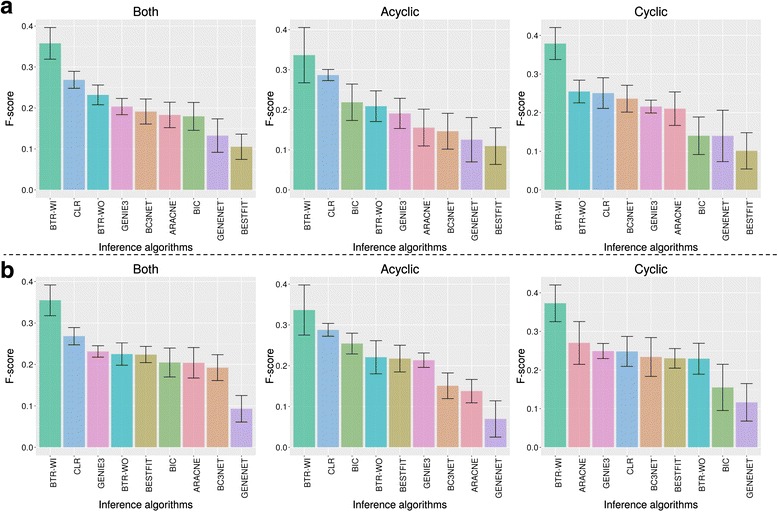
“The additional network inference algorithms included in the comparison are BestFit [29], ARACNE [30], CLR [31], bc3net [32], GeneNet [33] and Genie3 [34] (See Methods for brief details on the algorithms).”
MethodMargolin, A. A., Nemenman, I. M., Basso, K., Wiggins, C. H., Stolovitzky, G. A., Favera, R. D., & Califano, A. (2006) · BMC Bioinformatics · doi:10.7916/d8g15zbp · Cited by 2,246
Unbiased classification of sensory neuron types by large-scale single-cell RNA sequencing
Usoskin, D., Furlan, A., Islam, S., Abdo, H., Lönnerberg, P., Lou, D., Hjerling-Leffler, J., Haeggström, J., Kharchenko, O., Kharchenko, P. V., et al. (2015) · Nature Neuroscience · doi:10.1038/nn.3881 · Cited by 2,136 · cited 1×
“In addition, obtaining the expression profiles of single cells is very useful for dissecting the heterogeneity within seemingly homogenous cell populations [2, 8 – 12].”
BackgroundInferring Regulatory Networks from Expression Data Using Tree-Based Methods
Huynh-Thu, V. A., Irrthum, A., Wehenkel, L., & Geurts, P. (2010) · PLoS ONE · doi:10.1371/journal.pone.0012776 · Cited by 2,131 · cited 2×
“The additional network inference algorithms included in the comparison are BestFit [29], ARACNE [30], CLR [31], bc3net [32], GeneNet [33] and Genie3 [34] (See Methods for brief details on the algorithms).”
MethodBeyond Accuracy, F-Score and ROC: A Family of Discriminant Measures for Performance Evaluation
Sokolova, M., Japkowicz, N., & Szpakowicz, S. (2006) · Lecture Notes in Computer Science · doi:10.1007/11941439_114 · Cited by 1,974
Cited by
Benchmarking algorithms for gene regulatory network inference from single-cell transcriptomic data
Pratapa, A., Jalihal, A. P., Law, J. N., Bharadwaj, A., & Murali, T. M. (2020) · Nature Methods · doi:10.1038/s41592-019-0690-6 · Cited by 792
“Other publications presented approaches to reverse engineer Boolean networks from single cell transcriptomic data [11, 17–19].”
BackgroundMethodStatistics or biology: the zero-inflation controversy about scRNA-seq data
Jiang, R., Sun, T., Song, D., & Li, J. J. (2022) · Genome Biology · doi:10.1186/s13059-022-02601-5 · Cited by 614
“Although binarized counts eliminate the expression differences between highly and lowly expressed genes, they highlight the co-expression patterns of genes, i.e., whether two genes are co-expressed in a cell, which have been used in marker gene selection [12] and gene network construction [114–116].”
BackgroundMatsumoto, H., Kiryu, H., Furusawa, C., Ko, M. S. H., Ko, S. B. H., Gouda, N., Hayashi, T., & Nikaido, I. (2017) · Bioinformatics · doi:10.1093/bioinformatics/btx194 · Cited by 439
Mapping gene regulatory networks from single-cell omics data
Fiers, M. W. E. J., Minnoye, L., Aibar, S., Bravo González-Blas, C., Kalender Atak, Z., & Aerts, S. (2018) · Briefings in Functional Genomics · doi:10.1093/bfgp/elx046 · Cited by 235
Chen, S., & Mar, J. C. (2018) · BMC Bioinformatics · doi:10.1186/s12859-018-2217-z · Cited by 235
Papili Gao, N., Ud-Dean, S. M. M., Gandrillon, O., & Gunawan, R. (2018) · Bioinformatics · doi:10.1093/bioinformatics/btx575 · Cited by 235
“Examples of such algorithms include SCNS [28], SingleCellNet [27] and BTR [29].”
MethodSingle-cell transcriptomics unveils gene regulatory network plasticity
Iacono, G., Massoni-Badosa, R., & Heyn, H. (2019) · Genome Biology · doi:10.1186/s13059-019-1713-4 · Cited by 218
A comprehensive survey of regulatory network inference methods using single cell RNA sequencing data
Nguyen, H., Tran, D., Tran, B., Pehlivan, B., & Nguyen, T. (2021) · Briefings in Bioinformatics · doi:10.1093/bib/bbaa190 · Cited by 177
Gene regulatory network inference resources: A practical overview
Mercatelli, D., Scalambra, L., Triboli, L., Ray, F., & Giorgi, F. M. (2020) · Biochimica et Biophysica Acta (BBA) - Gene Regulatory Mechanisms · doi:10.1016/j.bbagrm.2019.194430 · Cited by 161
Single-cell network biology for resolving cellular heterogeneity in human diseases
Cha, J., & Lee, I. (2020) · Experimental & Molecular Medicine · doi:10.1038/s12276-020-00528-0 · Cited by 161
Zhang, S., Pyne, S., Pietrzak, S., Halberg, S., McCalla, S. G., Siahpirani, A. F., Sridharan, R., & Roy, S. (2023) · Nature Communications · doi:10.1038/s41467-023-38637-9 · Cited by 133
“[14] Chee Yee Lim, Huange Wang, Steven Woodhouse, Nir Piterman, Lorenz Wernisch, Jasmin Fisher, 1150 and Berthold Göttgens.”
Wang, M., Song, W., Chen, M., Wang, Q., Zhou, X., Xu, P., Krek, A., Yoon, Y., Ho, L., Orr, M. E., et al. (2022) · Molecular Neurodegeneration · doi:10.1186/s13024-022-00517-z · Cited by 110
Woodhouse, S., Piterman, N., Wintersteiger, C. M., Göttgens, B., & Fisher, J. (2018) · BMC Systems Biology · doi:10.1186/s12918-018-0581-y · Cited by 92
“BTR is a more comparable method, which uses single-cell expression data to refine an existing Boolean network for a system [22].”
MethodSelf-citationWhat are the applications of single-cell RNA sequencing in cancer research: a systematic review
Li, L., Xiong, F., Wang, Y., Zhang, S., Gong, Z., Li, X., He, Y., Shi, L., Wang, F., Liao, Q., et al. (2021) · Journal of Experimental & Clinical Cancer Research · doi:10.1186/s13046-021-01955-1 · Cited by 112
Machine Intelligence in Single-Cell Data Analysis: Advances and New Challenges
Liu, J., Fan, Z., Zhao, W., & Zhou, X. (2021) · Frontiers in Genetics · doi:10.3389/fgene.2021.655536 · Cited by 105
“Network modeling has long been employed as a powerful tool to understand and interpret complex biological systems (Huynh-Thu et al., 2010; Lim et al., 2016; Matsumoto et al., 2017; Woodhouse et al., 2018; Moerman et al., 2019; Mohammadi et al., 2019).”
MethodNetwork modeling of single-cell omics data: challenges, opportunities, and progresses
Blencowe, M., Arneson, D., Ding, J., Chen, Y.-W., Saleem, Z., & Yang, X. (2019) · Emerging Topics in Life Sciences · doi:10.1042/etls20180176 · Cited by 73
WASABI: a dynamic iterative framework for gene regulatory network inference
Bonnaffoux, A., Herbach, U., Richard, A., Guillemin, A., Gonin-Giraud, S., Gros, P.-A., & Gandrillon, O. (2019) · BMC Bioinformatics · doi:10.1186/s12859-019-2798-1 · Cited by 58
Inferring Gene Regulatory Networks Using the Improved Markov Blanket Discovery Algorithm
Liu, W., Jiang, Y., Li, P., Sun, X., Gan, W., Zhao, Q., & Tang, H. (2021) · Interdisciplinary Sciences Computational Life Sciences · doi:10.1007/s12539-021-00478-9 · Cited by 68
McCalla, S. G., Siahpirani, A. F., Li, J., Pyne, S., Stone, M., Periyasamy, V., Shin, J., & Roy, S. (2023) · G3 Genes Genomes Genetics · doi:10.1093/g3journal/jkad004 · Cited by 58
A geometric approach to characterize the functional identity of single cells
Mohammadi, S., Ravindra, V., Gleich, D. F., & Grama, A. (2018) · Nature Communications · doi:10.1038/s41467-018-03933-2 · Cited by 51
“We iteratively removed nonzero elements at random, with the probability of removal being inversely proportional to the expression value, following previous work 14 .”
Béal, J., Pantolini, L., Noël, V., Barillot, E., & Calzone, L. (2021) · PLoS Computational Biology · doi:10.1371/journal.pcbi.1007900 · Cited by 53
“Although it is an imperfect proxy of pathway activity, RNA has already been used in modeling approaches [38, 39].”
MethodConstructing local cell-specific networks from single-cell data
Wang, X., Choi, D. S., & Roeder, K. (2021) · Proceedings of the National Academy of Sciences · doi:10.1073/pnas.2113178118 · Cited by 47
The Human Cell Atlas: Technical approaches and challenges
Hon, C.-C., Shin, J. W., Carninci, P., & Stubbington, M. J. T. (2018) · Briefings in Functional Genomics · doi:10.1093/bfgp/elx029 · Cited by 43
Single cell genomics as a transformative approach for aquaculture research and innovation
Daniels, R. R., Taylor, R. S., Robledo, D., & Macqueen, D. J. (2023) · Reviews in Aquaculture · doi:10.1111/raq.12806 · Cited by 39
Inference of gene regulatory networks using pseudo-time series data
Zhang, Y., Chang, X., & Liu, X. (2021) · Bioinformatics · doi:10.1093/bioinformatics/btab099 · Cited by 37
Learning regulatory models for cell development from single cell transcriptomic data
Babtie, A. C., Chan, T. E., & Stumpf, M. P. H. (2017) · Current Opinion in Systems Biology · doi:10.1016/j.coisb.2017.07.013 · Cited by 35
Dysregulation of haematopoietic stem cell regulatory programs in acute myeloid leukaemia
Basilico, S., & Göttgens, B. (2017) · Journal of Molecular Medicine · doi:10.1007/s00109-017-1535-3 · Cited by 31
Self-citationBoolean network sketches: a unifying framework for logical model inference
Beneš, N., Brim, L., Huvar, O., Pastva, S., & Šafránek, D. (2023) · Bioinformatics · doi:10.1093/bioinformatics/btad158 · Cited by 29
“Asynchronous dynamics is supported in, e.g. Gao et al. (2020) (gen-etic programming) or Lim et al. (2016) (state-space scoring).”
Ambrosi, T. H., Taheri, S., Chen, K., Sinha, R., Wang, Y., Hunt, E. J., Goodnough, L. H., Murphy, M. P., Steininger, H. M., Hoover, M. Y., et al. (2025) · Cell stem cell · doi:10.1016/j.stem.2025.02.013 · Cited by 32
ATEN: And/Or tree ensemble for inferring accurate Boolean network topology and dynamics
Shi, N., Zhu, Z., Tang, K., Parker, D., & He, S. (2019) · Bioinformatics · doi:10.1093/bioinformatics/btz563 · Cited by 30
Gao, S., Sun, C., Xiang, C., Qin, K., & Lee, T. H. (2020) · IEEE Transactions on Cybernetics · doi:10.1109/tcyb.2020.3022430 · Cited by 30
“Despite its simplicity, execution of a BN provides important insights into the dynamics as well as the steady-state behavior of GRNs [5], [16].”
BackgroundMethodResultInfluentialTrinh, H.-C., & Kwon, Y. (2021) · Bioinformatics · doi:10.1093/bioinformatics/btab295 · Cited by 25
NSCGRN: a network structure control method for gene regulatory network inference
Liu, W., Sun, X., Yang, L., Li, K., Yu, Y., & Fu, X. (2022) · Briefings in Bioinformatics · doi:10.1093/bib/bbac156 · Cited by 26
Inferring single-cell gene regulatory network by non-redundant mutual information
Zeng, Y., He, Y., Zheng, R., & Li, M. (2023) · Briefings in Bioinformatics · doi:10.1093/bib/bbad326 · Cited by 25
Data integration in logic-based models of biological mechanisms
Hall, B. A., & Niarakis, A. (2021) · Current Opinion in Systems Biology · doi:10.1016/j.coisb.2021.100386 · Cited by 27
Single Cell Gene Expression to Understand the Dynamic Architecture of the Heart
Massaia, A., Cháves, P., Samari, S., Miragaia, R. J., Meyer, K. B., Teichmann, S. A., & Noseda, M. (2018) · Frontiers in Cardiovascular Medicine · doi:10.3389/fcvm.2018.00167 · Cited by 22
RWRNET: A Gene Regulatory Network Inference Algorithm Using Random Walk With Restart
Liu, W., Sun, X., Li, P., Zhou, L., Lin, H. L., & Jiang, Y. (2020) · Frontiers in Genetics · doi:10.3389/fgene.2020.591461 · Cited by 22
“The Boolean network model is a simple discrete model that contributes to understanding various states of cells, such as proliferation, differentiation and apoptosis (Huang, 1999; Lim et al., 2016; Zhou et al., 2016).”
BackgroundReconstructing gene regulatory networks in single-cell transcriptomic data analysis
Dai, H., 200031,中国, 国., Jin, Q., Li, L., Chen, L., 201210,中国, 张., 100049,中国, 中., 201210,中国, 上., 310024,中国, 中. 杭., & 650223,中国, 中. 昆. (2020) · 动物学研究 · doi:10.24272/j.issn.2095-8137.2020.215 · Cited by 20
GRNUlar: A Deep Learning Framework for Recovering Single-Cell Gene Regulatory Networks
Shrivastava, H., Zhang, X., Song, L., & Aluru, S. (2022) · Journal of Computational Biology · doi:10.1089/cmb.2021.0437 · Cited by 24
“…data have been applied (Irrthum et al., 2010; Huynh-Thu and Sanguinetti, 2015; Kim, 2015; Moerman et al., 2019) or adapted (Chen et al., 2015; Lim et al., 2016; Hamey et al., 2017; Woodhouse et al., 2018) to single-cell data, and new methods have been developed specifically for it (Aibar et…”
scSGL: kernelized signed graph learning for single-cell gene regulatory network inference
Karaaslanli, A., Saha, S., Aviyente, S., & Maiti, T. (2022) · Bioinformatics · doi:10.1093/bioinformatics/btac288 · Cited by 22
Decoding the principle of cell-fate determination for its reverse control
Lee, J., Kim, N., & Cho, K. (2024) · npj Systems Biology and Applications · doi:10.1038/s41540-024-00372-2 · Cited by 18
“To construct a logical dynamic model, methods such as BTR (BoolTraineR) 41 and SCNS (single cell network synthesis) 42 can be employed.”
MethodBi, X.-P., 深圳518083,中国, 深., BGI-Shenzhen, S., Zhang, G.-J., 650223,中国, 中. 昆., 650223,中国, 中. 昆., Villum Center for Biodiversity Genomics, S. F. E. A. E., Center for Excellence in Animal Evolution and Genetics, C. A. O. S., State Key Laboratory of Genetic Resources and Evolution, K. I. O. Z., & Villum Center for Biodiversity Genomics, S. F. E. A. E. (2021) · Zoological Research · doi:10.24272/j.issn.2095-8137.2021.066 · Cited by 15
Artificial Intelligence and Bioinformatics
Nicolas, J. (2020) · Springer eBooks · doi:10.1007/978-3-030-06170-8_7 · Cited by 19
Studying temporal dynamics of single cells: expression, lineage and regulatory networks
Pan, X., & Zhang, X. (2023) · Biophysical Reviews · doi:10.1007/s12551-023-01090-5 · Cited by 14
“GRN inference methods can be summarized into a few major categories (Nguyen et al. 2020): Boolean models (Hamey et al. 2017; Lim et al. 2016; Wood-house et al. 2018) that model gene regulations as logical operations.”
Shin, D., Gong, J., Jeong, S. K., Cho, Y.-W., Kim, H., Kim, T., & Cho, K. (2025) · Advanced Science · doi:10.1002/advs.202412503 · Cited by 16
Luo, E., Wei, L., Hao, M., Zhang, X., & Liu, Q. (2026) · Nature Communications · doi:10.1038/s41467-026-71744-x · Cited by 14
“…(GRN) studies, which primarily rely on co-expression patterns 52,53 , chromatin interaction maps 54,55 , or pre-de fi ned enhancer-promoter links 56,57 , the DCA in our approach enables genes and peaks to interact in low-dimensional latent spaces, allowing the model to learn regulatory…”
Inferring regulators of cell identity in the human adult pancreas
Vanheer, L., Fantuzzi, F., To, S. K., Schiavo, A. A., Haele, M. V., Ostyn, T., Haesen, T., Yi, X., Janiszewski, A., Chappell, J., et al. (2023) · NAR Genomics and Bioinformatics · doi:10.1093/nargab/lqad068 · Cited by 12
Executable models of immune signaling pathways in HIV-associated atherosclerosis
Palshikar, M. G., Palli, R., Tyrell, A., Maggirwar, S. B., Schifitto, G., Singh, M. V., & Thakar, J. (2022) · npj Systems Biology and Applications · doi:10.1038/s41540-022-00246-5 · Cited by 13
Approaches for Benchmarking Single-Cell Gene Regulatory Network Methods
Karamveer, K., & Uzun, Y. (2024) · Bioinformatics and Biology Insights · doi:10.1177/11779322241287120 · Cited by 12
Recurrent Neural Network for Gene Regulation Network Construction on Time Series Expression Data
Zhao, Y., Joshi, P., & Shin, D. (2019) · IEEE International Conference on Bioinformatics and Biomedicine (BIBM) · doi:10.1109/bibm47256.2019.8983068 · Cited by 11
“An Boolean network-based algorithms for inferring GRN from single-cell data has been given by [5].”
MethodChevalier, S., Becker, J., Gui, Y., Noël, V., Su, C., Jung, S., Calzone, L., Zinovyev, A. Y., del Sol, A., Pang, J., et al. (2025) · npj Systems Biology and Applications · doi:10.1038/s41540-025-00569-z · Cited by 10
“SCNS 3 , BTR 79 and SgpNet 76 interpretthesetofsingle-cellmeasurementsasastatespacereachedfroman initialstateinanasynchronousBooleannetwork.”
Bittrich, S., Heinke, F., & Labudde, D. (2016) · Communications in computer and information science · doi:10.1007/978-3-319-34099-9_32 · Cited by 7
A probabilistic Boolean model on hair follicle cell fate regulation by TGF- β
Dinh, K., & Wang, Q. (2022) · Biophysical Journal · doi:10.1016/j.bpj.2022.05.035 · Cited by 10
Advances in modeling cellular state dynamics: integrating omics data and predictive techniques
Jung, S. (2025) · Animal Cells and Systems · doi:10.1080/19768354.2024.2449518 · Cited by 7
“…or reprogramming processes, thereby elucidating dynamic pathways and transitions between distinct cellular states (Huynh-Thu et al. 2010; Lim et al. 2016; Mat-sumoto and Kiryu 2016; Aibar et al. 2017; Chan et al. 2017; Matsumoto et al. 2017; Specht and Li 2017; Papili Gao et al. 2018;…”
Das, S., Pradhan, U. K., & Rai, S. N. (2022) · Current Bioinformatics · doi:10.2174/1574893617666220823114108 · Cited by 5
WENDY: Covariance dynamics based gene regulatory network inference
Wang, Y., Zheng, P., Cheng, Y., Wang, Z., & Aravkin, A. Y. (2024) · Mathematical Biosciences · doi:10.1016/j.mbs.2024.109284 · Cited by 5
Reconstructing Dynamic Gene Regulatory Networks Using f-Divergence from Time-Series scRNA-Seq Data
Wang, Y., Zhang, L., Si, T., Roberts, S., Wang, Y., & Gong, H. (2025) · Current Issues in Molecular Biology · doi:10.3390/cimb47060408 · Cited by 6
MKG: a mutual information based method to infer single cell gene regulatory network
Zeng, Y., Yan, X., Liang, Z., Zheng, R., & Li, M. (2021) · IEEE International Conference on Bioinformatics and Biomedicine (BIBM) · doi:10.1109/bibm52615.2021.9669880 · Cited by 3
Inference of Gene Networks from Single Cell Data through Quantified Inductive Logic Programming
Buchet, S., Carbone, F., Magnin, M., Ménager, M. M., & Roux, O. H. (2021) · doi:10.1145/3486713.3486746 · Cited by 3
“Like BTR , a scoring function is used to induce the model, but our method performs locally instead of considering the state space of the system.”
MethodModélisation stochastique de l'expression des gènes et inférence de réseaux de régulation
Herbach, U. (2018) · theses.fr (ABES) · doi:10.70675/891893e9z94a8z4733z97dfz7e3508b89aaa · Cited by 5
Fan, X., Xiang, G., Liao, W., Xiao, L., He, S., Luo, N., Lu, H., & Yan, X. (2025) · Synthetic and Systems Biotechnology · doi:10.1016/j.synbio.2025.06.005 · Cited by 3
Mao, G., & Liu, J. (2023) · IEEE International Conference on Bioinformatics and Biomedicine (BIBM) · doi:10.1109/bibm58861.2023.10385528 · Cited by 2
“Boolean network methods [21], [22] use logical values (0, 1) to represent the state of a gene (expressed, non-expressed) and represent the gene regulation process by a logical function.”
MethodTong, Y., Hong, R., Yang, N., Chen, P., Peng, H., Tang, H., & Liu, R. (2026) · PeerJ · doi:10.7717/peerj.20860 · Cited by 2
“…& Alta fi ni, 2007 ); Boolean network approaches simplify gene states into binary variables and model regulatory interactions using logical rules ( Lim et al., 2016 ); regression models treat GRN inference as a feature selection problem to identify potential key regulators ( Omranian et al., 2016…”
Statistical Methods for Single‐Cell RNA‐Sequencing
Andrews, T. S., Kiselev, V. Y., & Hemberg, M. (2019) · Wiley eBooks · doi:10.1002/9781119487845.ch26 · Cited by 2
Modelling techniques for biomolecular networksPreprint
Mayer, G. (2020) · arXiv (Cornell University) · doi:10.48550/arxiv.2003.00327 · Cited by 2
Wei, P.-J., Bao, J.-J., Gao, Z., Tan, J.-Y., Cao, R., Su, Y., Zheng, C.-H., & Deng, L. (2024) · Computers in Biology and Medicine · doi:10.1016/j.compbiomed.2024.108835 · Cited by 1
Single-cell analysis of gene regulatory networks in the mammary glands of P4HA1-knockout mice
Gupta, A., Huang, L., Liu, J., Chen, K., Xu, R., & Wu, W. (2025) · PLoS Genetics · doi:10.1371/journal.pgen.1011505 · Cited by 1
“The Boolean networks method models genes as binary variables, and their interactions are modeled using logical operators; this method captures the dynamic behavior of GRNs by simulating state transitions through asynchronous updates [14].”
Using probabilistic graphical models to reconstruct biological networks and linkage maps
Wang, H. (2017) · doi:10.18174/410875
Self-citationRôle de la stochasticité de l’expression des gènes dans les processus de différenciation
Guillemin, A. (2018) · theses.fr (ABES) · doi:10.70675/20f01994z6784z4c79z931ez7b1e65244fce
Inference of Gene Regulatory Networks from Multi‐scale Dynamic Data
Bonnaffoux, A. (2023) · Wiley eBooks · doi:10.1002/9781394229086.ch1
Connecting Logical Models to Omics Data
Béal, J., Rémy, É., & Calzone, L. (2023) · Wiley eBooks · doi:10.1002/9781394229086.ch4
Glazer, B. J., Lifferth, J., & Lopez, C. F. (2023) · Frontiers in Cell and Developmental Biology · doi:10.3389/fcell.2023.1198359
Corridori, C., Romeike, M., Nicoletti, G., Buecker, C., Suweis, S. S., Azaele, S., & Martello, G. (2026) · PLoS Computational Biology · doi:10.1371/journal.pcbi.1014067 · Cited by 1
“The Boolean network approach has been applied not only to bulk RNA-seq data (as done with RE:IN), but also to single-cell data [27–30].”
Principles, methods and applications of gene regulatory network inference
Jiang, Y., Liu, Z., Zhang, Q., Chen, Z., Zan, Z., Lü, Q., Wang, J., Zhu, J., Zhang, J., & Wei, X. (2025) · Scientia Sinica Vitae · doi:10.1360/ssv-2025-0070
Computational approaches for single-cell omics and multi-omics data
Adossa, N. A. (2023) · UTUPub (University of Turku)
Zhang, L., Si, T., Koch, L., & Gong, H. (2025) · International Conference on Bioinformatics Research and Applications (ICBRA) · doi:10.1145/3774976.3774995 · Cited by 1
Inférence de réseaux de régulation de gènes à partir de données dynamiques multi-échelles
Bonnaffoux, A. (2018) · theses.fr (ABES) · doi:10.70675/2ffff267zef51z40dbzbd5fz1e090da2e930
Modular Response Analysis Theory and Applications
Mekedem, M. (2022) · theses.fr (ABES) · doi:10.70675/7c6adb06z6cfaz4925za632zf691378adca7
Studying a stochastic gene regulatory network driving the germinal center B cell differentiation
Koshkin, A. (2021) · theses.fr (ABES) · doi:10.70675/4c8904ecz95e6z443czbb0ez7aaa9dabe7f6
Bouguéon, M., Wray, J. P., Enver, T., & Hall, B. A. (2026) · bioRxiv (Cold Spring Harbor Laboratory) · doi:10.64898/2026.05.21.724796
“It is increasingly recognized that different biological systems need sophisticated and bespoke concurrency schemes [47, 48].”
Metadata
- Authors
- Lim, C. Y., Wang, H., Woodhouse, S., Piterman, N., Wernisch, L., Fisher, J., & Göttgens, B.
- Affiliations
- Wellcome/MRC Cambridge Stem Cell Institute (GB)
- University of Leicester (GB)
- MRC Biostatistics Unit (GB)
- University of Cambridge (GB)
- Corresponding author
- Göttgens, Berthold
- Venue
- BMC Bioinformatics
- Published
- 2016-09-06
- Volume
- 17
- Issue
- 1
- Pages
- 355-355
- ISSN
- 1471-2105 (ISSN-L)
- PMC
- PMC5012073
- OpenAlex
- W2460857593
- Cited by
- 81
- References
- 53
- Citations by year
- 2026: 3 · 2025: 9 · 2024: 4 · 2023: 11 · 2022: 8 · 2021: 15 · 2020: 9 · 2019: 7 · 2018: 7 · 2017: 7 · 2016: 1
- FWCI
- 3.81
- Type
- journal article
- Language
- en
- Open access
- gold
- doi.org
- Licence
- cc-by
- creativecommons.org/licenses/by/4.0 (tdm)
- creativecommons.org/licenses/by/4.0 (vor)
- Locations
- BMC Bioinformatics (publishedVersion, cc-by)
- PubMed Central (publishedVersion, cc-by)
- PubMed (publishedVersion)
- Figshare (submittedVersion, cc-by)
- Leicester Research Archive (University of Leicester) (submittedVersion, cc-by)
- Queen Mary Research Online (Queen Mary University of London) (submittedVersion, cc-by)
- Apollo (University of Cambridge) (submittedVersion, cc-by)
- Apollo (cc-by)
- Funders
- Bloodwise (12029)
- Biotechnology and Biological Sciences Research Council (BB/I00050X/1)
- Cambridge Institute for Medical Research, University of Cambridge (RP-PG-0310-1002)
- Microsoft Research (2012-023)
- Wellcome Trust (100140/Z/12/Z; 097922/Z/11/Z)
- Topics
- Life Sciences › Biochemistry, Genetics and Molecular Biology › Molecular Biology › Gene Regulatory Network Analysis
- Life Sciences › Biochemistry, Genetics and Molecular Biology › Molecular Biology › Single-cell and spatial transcriptomics
- Life Sciences › Biochemistry, Genetics and Molecular Biology › Molecular Biology › Microbial Metabolic Engineering and Bioproduction
- Keywords
- gene regulatory networks, single-cell gene expression
- MeSH terms
- Algorithms, Animals, Bayes Theorem, Cells, Humans, Models, Genetic, Computational Biology, Gene Expression Profiling, Gene Regulatory Networks, Single-Cell Analysis
About these checks
Registry, retraction, Cites and statistics results are computed, not judged, with one exception: a printed reference that no index lists is read once by a model before it counts as a citation error. Claims are extracted by a model and kept only when their quote appears verbatim in the text; each cited source is then checked, with a model’s help, for whether it says what the claim relies on. Those verdicts can be wrong — read the claim’s quote and the cited source before relying on one.
Statistics and arithmetic are recomputed, not judged.
Confidence bands are shown only for fields calibrated on our annotated test set. None is calibrated yet, so no band is shown.
What counts as a claim ›How we measure confidence ›How we check this ›
Are you an author, or do you see a problem with this page? Request a review
Data sources
Bibliographic data: Semantic Scholar, OpenAlex, Crossref.
Contains information from the Semantic Scholar Academic Graph Datasets, made available under the ODC Attribution License (ODC-BY 1.0).
Semantic Scholar’s data is described in: Kinney, R., et al. (2023). The Semantic Scholar Open Data Platform. arXiv:2301.10140.
