

BTR: training asynchronous Boolean models using single-cell expression data
Open accessThe DOI matches its Crossref record; 51 of the 53 references it cites were found in a registry or an index.
Abstract
Background: Rapid technological innovation for the generation of single-cell genomics data presents new challenges and opportunities for bioinformatics analysis. One such area lies in the development of new ways to train gene regulatory networks. The use of single-cell expression profiling technique allows the profiling of the expression states of hundreds of cells, but these expression states are typically noisier due to the presence of technical artefacts such as drop-outs. While many algorithms exist to infer a gene regulatory network, very few of them are able to harness the extra expression states present in single-cell expression data without getting adversely affected by the substantial technical noise present. Results: Here we introduce BTR, an algorithm for training asynchronous Boolean models with single-cell expression data using a novel Boolean state space scoring function. BTR is capable of refining existing Boolean models and reconstructing new Boolean models by improving the match between model prediction and expression data. We demonstrate that the Boolean scoring function performed favourably against the BIC scoring function for Bayesian networks. In addition, we show that BTR outperforms many other network inference algorithms in both bulk and single-cell synthetic expression data. Lastly, we introduce two case studies, in which we use BTR to improve published Boolean models in order to generate potentially new biological insights. Conclusions: BTR provides a novel way to refine or reconstruct Boolean models using single-cell expression data. Boolean model is particularly useful for network reconstruction using single-cell data because it is more robust to the effect of drop-outs. In addition, BTR does not assume any relationship in the expression states among cells, it is useful for reconstructing a gene regulatory network with as few assumptions as possible. Given the simplicity of Boolean models and the rapid adoption of single-cell genomics by biologists, BTR has the potential to make an impact across many fields of biomedical research.
Overview
The claims and statistics of this paper haven’t been checked yet.
Free: it reads the open-access text and checks the first 5 claims that cite a source we can check. Create a free account to check every claim.
Integrity signals
Registry
Cites
Statistics
Figures
Verification
Claims the paper makes
The claims and statistics of this paper haven’t been checked yet.
Free: it reads the open-access text and checks the first 5 claims that cite a source we can check. Create a free account to check every claim.
Claims other papers make about this one
Each is checked against this paper’s own text: does it say what the citing paper says it does?
In the citing paper
“The resulting state-graph provides insight into key TFs involved in state changes, and can be used to predict the effect of over-expression or knock-down of a TF.”
From Mapping gene regulatory networks from single-cell omics data (2018) · cites this paper as [29]
Self-check
Percentages, sums and reported differences re-computed from the paper’s own numbers.
The self-check needs the paper’s full text.
Citations
Cites
Cytoscape: A software Environment for integrated models of biomolecular interaction networks
Shannon, P., Markiel, A., Ozier, O., Baliga, N. S., Wang, J. T., Ramage, D., Amin, N., Schwikowski, B., & Ideker, T. (2003) · Genome Research · doi:10.1101/gr.1239303 · Cited by 51,888 · cited 1×
“Plots in this study were generated using ggplot2 [45], except network plots that were generated using Cytos-cape [46] and heat maps that were generated using gplots [47].”
Methodggplot2: Elegant Graphics for Data Analysis
Wickham, H. (2009) · doi:10.1007/978-0-387-98141-3 · Cited by 14,447
mRNA-Seq whole-transcriptome analysis of a single cell
Tang, F., Barbacioru, C., Wang, Y., Nordman, E., Lee, C., Xu, N., Wang, X., Bodeau, J., Tuch, B. B., Siddiqui, A., et al. (2009) · Nature Methods · doi:10.1038/nmeth.1315 · Cited by 3,969 · cited 1×
“Protocols for the single-cell equivalent of micro-array [5], qPCR [6] and RNA sequencing [7] have been developed.”
MethodModeling and Simulation of Genetic Regulatory Systems: A Literature Review
de Jong, H. (2002) · Journal of Computational Biology · doi:10.1089/10665270252833208 · Cited by 2,663
Advances in Neural Information Processing Systems 27 (NIPS 2014)
Zhong, M., Goddard, N., & Sutton, C. A. (2014) · Cited by 2,636
Margolin, A. A., Nemenman, I., Basso, K., Wiggins, C., Stolovitzky, G., Favera, R. D., & Califano, A. (2006) · BMC Bioinformatics · doi:10.1186/1471-2105-7-s1-s7 · Cited by 2,420 · cited 2×
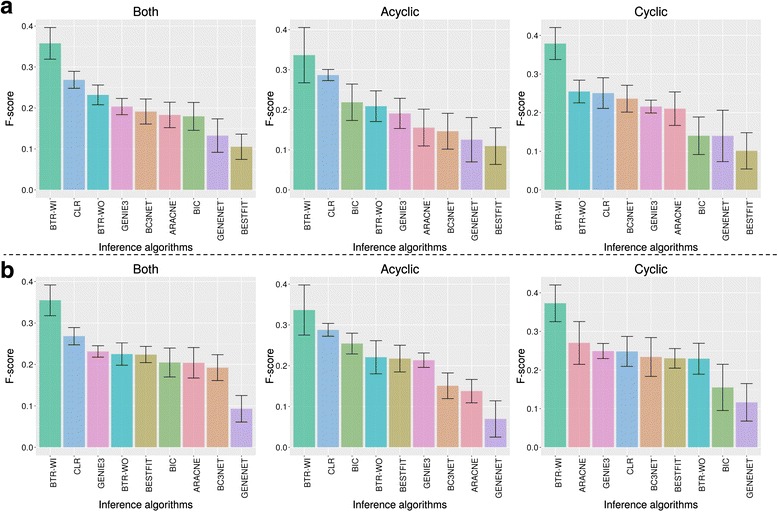
“The additional network inference algorithms included in the comparison are BestFit [29], ARACNE [30], CLR [31], bc3net [32], GeneNet [33] and Genie3 [34] (See Methods for brief details on the algorithms).”
MethodMargolin, A. A., Nemenman, I. M., Basso, K., Wiggins, C. H., Stolovitzky, G. A., Favera, R. D., & Califano, A. (2006) · BMC Bioinformatics · doi:10.7916/d8g15zbp · Cited by 2,246
Unbiased classification of sensory neuron types by large-scale single-cell RNA sequencing
Usoskin, D., Furlan, A., Islam, S., Abdo, H., Lönnerberg, P., Lou, D., Hjerling-Leffler, J., Haeggström, J., Kharchenko, O., Kharchenko, P. V., et al. (2015) · Nature Neuroscience · doi:10.1038/nn.3881 · Cited by 2,136 · cited 1×
“In addition, obtaining the expression profiles of single cells is very useful for dissecting the heterogeneity within seemingly homogenous cell populations [2, 8 – 12].”
BackgroundInferring Regulatory Networks from Expression Data Using Tree-Based Methods
Huynh-Thu, V. A., Irrthum, A., Wehenkel, L., & Geurts, P. (2010) · PLoS ONE · doi:10.1371/journal.pone.0012776 · Cited by 2,131 · cited 2×
“The additional network inference algorithms included in the comparison are BestFit [29], ARACNE [30], CLR [31], bc3net [32], GeneNet [33] and Genie3 [34] (See Methods for brief details on the algorithms).”
MethodBeyond Accuracy, F-Score and ROC: A Family of Discriminant Measures for Performance Evaluation
Sokolova, M., Japkowicz, N., & Szpakowicz, S. (2006) · Lecture Notes in Computer Science · doi:10.1007/11941439_114 · Cited by 1,974
Single-cell RNA-Seq profiling of human preimplantation embryos and embryonic stem cells
Yan, L., Yang, M., Guo, H., Yang, L., Wu, J., Li, R., Liu, P., Lian, Y., Zheng, X., Yan, J., et al. (2013) · Nature Structural & Molecular Biology · doi:10.1038/nsmb.2660 · Cited by 1,740 · cited 1×
“In addition, obtaining the expression profiles of single cells is very useful for dissecting the heterogeneity within seemingly homogenous cell populations [2, 8 – 12].”
BackgroundLearning Bayesian Networks with the bnlearnR Package
Scutari, M. (2010) · Journal of Statistical Software · doi:10.18637/jss.v035.i03 · Cited by 1,733 · cited 2×
“…d , is modelled using the following equation: Where c = a constant (in this study, c = 6), and y = a reading of the expression level of a particular gene, The lists of modified networks were generated in R using the bnlearn package [43] for Bayesian networks and the BTR package for Boolean models.”
MethodWisdom of crowds for robust gene network inference
The DREAM5 Consortium, Marbach, D., Costello, J. C., Küffner, R., Vega, N. M., Prill, R. J., Camacho, D. M., Allison, K. R., Kellis, M., Collins, J. J., et al. (2012) · Nature Methods · doi:10.1038/nmeth.2016 · Cited by 1,667 · cited 3×
“Many network inference algorithms are available [13], which are based on regression, correlation, mutual information and Bayesian networks.”
BackgroundMethodInfluentialA genomic regulatory network for development
Davidson, E. H., Rast, J. P., Oliveri, P., Ransick, A., Calestani, C., Yuh, C.-H., Minokawa, T., Amore, G., Hinman, V., Arenas-Mena, C., et al. (2002) · Science · doi:10.1126/science.1069883 · Cited by 1,567 · cited 1×
“More complex models such as differential equation-based models offer high precision predictions, and have been used to describe gene regulatory networks [14 – 17].”
MethodFaith, J. J., Hayete, B., Thaden, J. T., Mogno, I., Wierzbowski, J., Cottarel, G., Kasif, S., Collins, J. J., & Gardner, T. S. (2007) · PLoS Biology · doi:10.1371/journal.pbio.0050008 · Cited by 1,563 · cited 2×
“The additional network inference algorithms included in the comparison are BestFit [29], ARACNE [30], CLR [31], bc3net [32], GeneNet [33] and Genie3 [34] (See Methods for brief details on the algorithms).”
MethodBayesian approach to single-cell differential expression analysis
Kharchenko, P. V., Silberstein, L., & Scadden, D. T. (2014) · Nature Methods · doi:10.1038/nmeth.2967 · Cited by 1,348 · cited 1×
“This leads to two major sources of technical noise, which are PCR amplification bias and drop-outs [24].”
Backgroundgplots: Various R Programming Tools for Plotting Data
Warnes, G. R., Bolker, B., Bonebakker, L., Gentleman, R., Huber, W., Liaw, A., Lumley, T., Maechler, M., Magnusson, A., Moeller, S., et al. (2005) · CRAN: Contributed Packages · doi:10.32614/cran.package.gplots · Cited by 1,228
Single-cell sequencing-based technologies will revolutionize whole-organism science
Shapiro, E., Biezuner, T., & Linnarsson, S. (2013) · Nature Reviews Genetics · doi:10.1038/nrg3542 · Cited by 1,177 · cited 1×
“By contrast, recent technological improvements have made it possible to perform expression profiling in single cells (See [4] for review).”
BackgroundBuettner, F., Natarajan, K. N., Casale, F. P., Proserpio, V., Scialdone, A., Theis, F. J., Teichmann, S. A., Marioni, J. C., & Stegle, O. (2015) · Nature Biotechnology · doi:10.1038/nbt.3102 · Cited by 1,136 · cited 1×
“addition, obtaining the expression profiles of single cells is very useful for dissecting the heterogeneity within seemingly homogenous cell populations [2, 8–12].”
BackgroundThe yeast cell-cycle network is robustly designed
Li, F., Long, T., Lu, Y., Ouyang, Q., & Tang, C. (2004) · Proceedings of the National Academy of Sciences · doi:10.1073/pnas.0305937101 · Cited by 1,108 · cited 1×
“Boolean models were first used to study gene regulatory networks by Kauffman in the 1970s, and since then have been used extensively to study different biological systems [20 – 23].”
MethodWilson, N. K., Foster, S. D., Wang, X., Knezevic, K., Schütte, J., Kaimakis, P., Chilarska, P. M., Kinston, S., Ouwehand, W. H., Dzierzak, E., et al. (2010) · Cell stem cell · doi:10.1016/j.stem.2010.07.016 · Cited by 728
Self-citationDynamical analysis of a generic Boolean model for the control of the mammalian cell cycle
Fauré, A., Naldi, A., Chaouiya, C., & Thieffry, D. (2006) · Bioinformatics · doi:10.1093/bioinformatics/btl210 · Cited by 642 · cited 1×
“Boolean models were first used to study gene regulatory networks by Kauffman in the 1970s, and since then have been used extensively to study different biological systems [20–23].”
MethodFisher, J., & Henzinger, T. A. (2007) · Nature Biotechnology · doi:10.1038/nbt1356 · Cited by 538 · cited 1×
“In contrast, a Boolean model is one of the simplest models that can describe the dynamics of a system without the need of many parameters (For reviews, see [18, 19]).”
BackgroundSelf-citationGeneNetWeaver: in silico benchmark generation and performance profiling of network inference methods
Schaffter, T., Marbach, D., & Floreano, D. (2011) · Bioinformatics · doi:10.1093/bioinformatics/btr373 · Cited by 535
Wilson, N. K., Kent, D. G., Buettner, F., Shehata, M., Macaulay, I. C., Calero-Nieto, F. J., Sánchez Castillo, M., Oedekoven, C. A., Diamanti, E., Schulte, R., et al. (2015) · Cell Stem Cell · doi:10.1016/j.stem.2015.04.004 · Cited by 466 · cited 2×
“A single-cell qPCR data and a single-cell RNA-Seq data, both obtained from Wilson et al. [10], were used for model learning.”
MethodSelf-citationBoolNet—an R package for generation, reconstruction and analysis of Boolean networks
Müssel, C., Hopfensitz, M., & Kestler, H. A. (2010) · Bioinformatics · doi:10.1093/bioinformatics/btq124 · Cited by 429 · cited 1×
“BestFit [29] is an algorithm for inferring Boolean models under synchronous framework implemented in BoolNet [44].”
MethodThe FANTOM Consortium, & Riken Omics Science Center (2009) · Nature Genetics · doi:10.1038/ng.375 · Cited by 427 · cited 1×
“Moreover, dysregulation of gene expression can lead to disease development, including malignant disease such as leukaemia [3].”
BackgroundOpgen-Rhein, R., & Strimmer, K. (2007) · BMC Systems Biology · doi:10.1186/1752-0509-1-37 · Cited by 381
Moignard, V., Woodhouse, S., Haghverdi, L., Lilly, A. J., Tanaka, Y., Wilkinson, A. C., Buettner, F., Macaulay, I. C., Jawaid, W., Diamanti, E., et al. (2015) · Nature Biotechnology · doi:10.1038/nbt.3154 · Cited by 380
Self-citationDefining an essential transcription factor program for naïve pluripotency
Dunn, S.-J., Martello, G., Yordanov, B., Emmott, S., & Smith, A. G. (2014) · Science · doi:10.1126/science.1248882 · Cited by 370 · cited 1×
“Boolean models were first used to study gene regulatory networks by Kauffman in the 1970s, and since then have been used extensively to study different biological systems [20–23].”
MethodSynchronous versus asynchronous modeling of gene regulatory networks
Garg, A., Di Cara, A., Xenarios, I., Mendoza, L., & De Micheli, G. (2008) · Bioinformatics · doi:10.1093/bioinformatics/btn336 · Cited by 305 · cited 1×
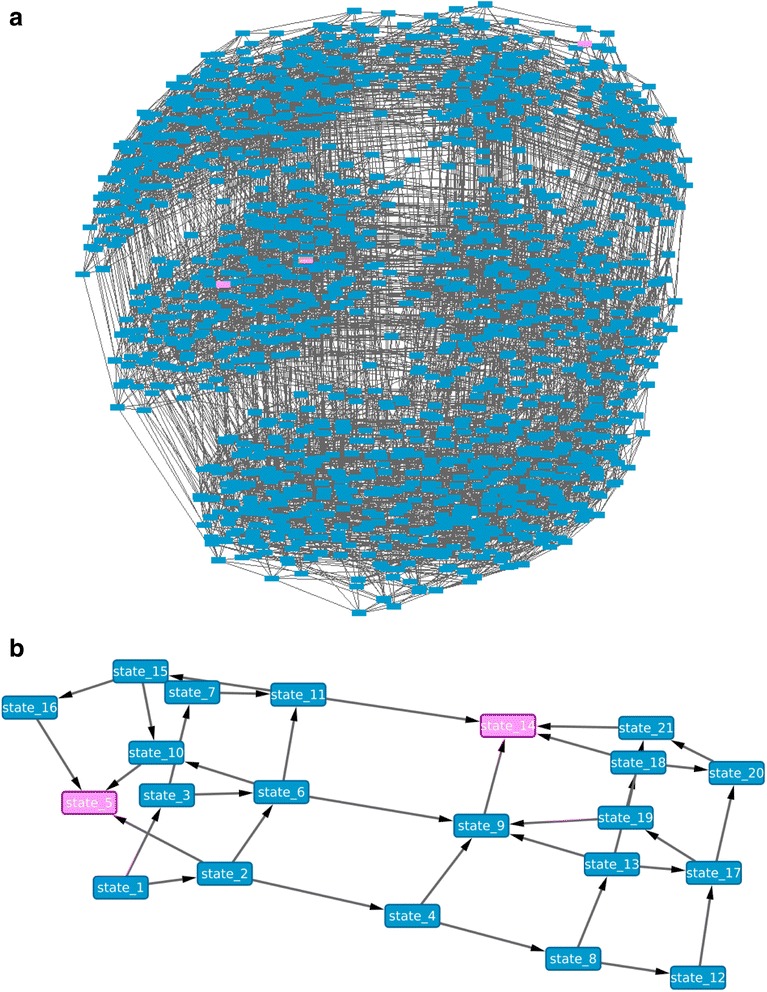
“Steady state analysis was performed using genYsis [48], which search for steady states reachable from all possible initial states.”
MethodOn Learning Gene Regulatory Networks Under the Boolean Network Model
Lähdesmäki, H., Shmulevich, I., & Yli-Harja, O. (2003) · Machine Learning · doi:10.1023/a:1023905711304 · Cited by 296 · cited 2×
“BestFit [29] is an algorithm for inferring Boolean models under synchronous framework implemented in BoolNet [44].”
MethodMoignard, V., Macaulay, I. C., Swiers, G., Buettner, F., Schütte, J., Calero-Nieto, F. J., Kinston, S., Joshi, A., Hannah, R., Theis, F. J., et al. (2013) · Nature Cell Biology · doi:10.1038/ncb2709 · Cited by 268
Self-citationMahata, B., Zhang, X., Kolodziejczyk, A. A., Proserpio, V., Haim-Vilmovsky, L., Taylor, A. E., Hebenstreit, D., Dingler, F. A., Moignard, V., Göttgens, B., et al. (2014) · Cell Reports · doi:10.1016/j.celrep.2014.04.011 · Cited by 212 · cited 1×
“addition, obtaining the expression profiles of single cells is very useful for dissecting the heterogeneity within seemingly homogenous cell populations [2, 8–12].”
BackgroundSelf-citationBolouri, H., & Davidson, E. H. (2003) · Proceedings of the National Academy of Sciences · doi:10.1073/pnas.1533293100 · Cited by 212 · cited 1×
“More complex models such as differential equation-based models offer high precision predictions, and have been used to describe gene regulatory networks [14–17].”
MethodLi, C., & Wang, J. (2013) · PLoS Computational Biology · doi:10.1371/journal.pcbi.1003165 · Cited by 192 · cited 1×
“More complex models such as differential equation-based models offer high precision predictions, and have been used to describe gene regulatory networks [14–17].”
MethodHierarchical Differentiation of Myeloid Progenitors Is Encoded in the Transcription Factor Network
Krumsiek, J., Marr, C., Schroeder, T., & Theis, F. J. (2011) · PLoS ONE · doi:10.1371/journal.pone.0022649 · Cited by 179 · cited 3×
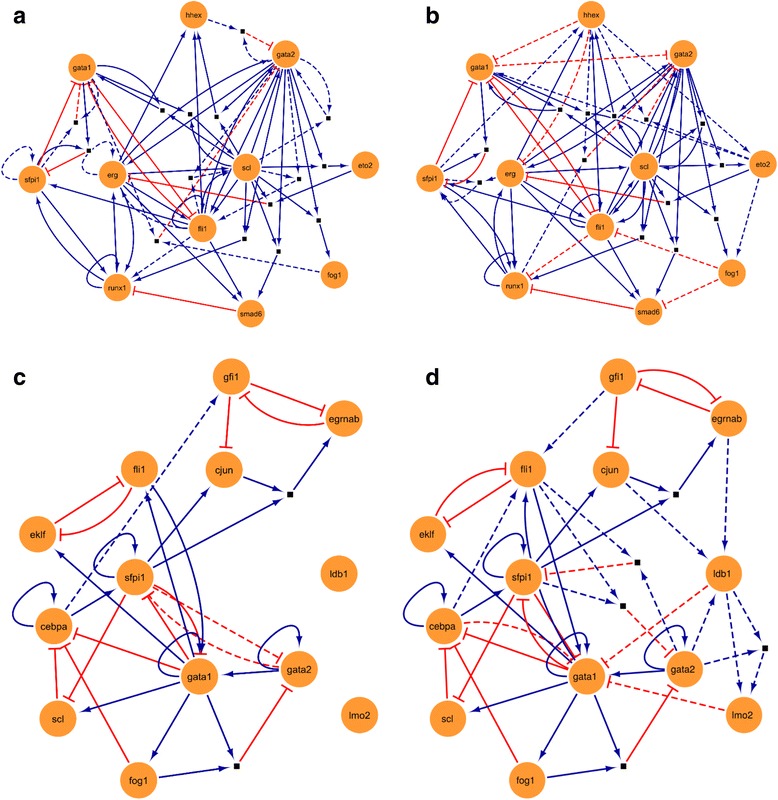
“Two Boolean models of haematopoiesis were used as initial models for model learning in this study, namely Krumsiek [39] and Bonzanni models [38].”
BackgroundMethodInferring rules of lineage commitment in haematopoiesis
Pina, C., Fugazza, C., Tipping, A. J., Brown, J., Soneji, S., Teles, J., Peterson, C., & Enver, T. (2012) · Nature Cell Biology · doi:10.1038/ncb2442 · Cited by 162 · cited 1×
“Haematopoiesis research has provided many paradigms for modern biological research, and was one of the first fields to embrace single cell expression profiling [5, 36, 37].”
BackgroundBagging Statistical Network Inference from Large-Scale Gene Expression Data
Simoes, R. D. M., & Emmert‐Streib, F. (2012) · PLoS ONE · doi:10.1371/journal.pone.0033624 · Cited by 154
Li, L., Jothi, R., Cui, K., Lee, J. Y., Cohen, T., Gorivodsky, M., Tzchori, I., Zhao, Y., Hayes, S. M., Bresnick, E. H., et al. (2010) · Nature Immunology · doi:10.1038/ni.1978 · Cited by 126 · cited 1×
“Previous studies have shown that genome-wide binding profiles for Lmo2 , Gata2 and Fli1 show significant overlaps [40], and that Ldb1 also occupies nearly all of the binding sites of Gata2 [41], consistent with a model where these TFs engage in combinatorial interactions.”
BackgroundEmpirical evaluation of scoring functions for Bayesian network model selection
Liu, Z., Malone, B., & Yuan, C. (2012) · BMC Bioinformatics · doi:10.1186/1471-2105-13-s15-s14 · Cited by 125 · cited 1×
“These scoring functions include log-likelihood, Bayesian information criterion (BIC), Bayesian Dirichlet and K2 (See [26, 27] for reviews).”
MethodSingle-cell gene expression profiling using reverse transcription quantitative real-time PCR
Ståhlberg, A., & Bengtsson, M. (2010) · Methods · doi:10.1016/j.ymeth.2010.01.002 · Cited by 121 · cited 1×
“Protocols for the single-cell equivalent of microarray [5], qPCR [6] and RNA sequencing [7] have been developed.”
MethodA Boolean Model of the Gene Regulatory Network Underlying Mammalian Cortical Area Development
Giacomantonio, C. E., & Goodhill, G. J. (2010) · PLoS Computational Biology · doi:10.1371/journal.pcbi.1000936 · Cited by 109 · cited 1×
“Boolean models were first used to study gene regulatory networks by Kauffman in the 1970s, and since then have been used extensively to study different biological systems [20–23].”
MethodHard-wired heterogeneity in blood stem cells revealed using a dynamic regulatory network model
Bonzanni, N., Garg, A., Feenstra, K. A., Schütte, J., Kinston, S., Miranda-Saavedra, D., Heringa, J., Xenarios, I., & Göttgens, B. (2013) · Bioinformatics · doi:10.1093/bioinformatics/btt243 · Cited by 91 · cited 3×
“Krumsiek [39] and Bonzanni models [38].”
BackgroundMethodSelf-citationAndrecut, M., Halley, J. D., Winkler, D. A., & Huang, S. (2011) · PLoS ONE · doi:10.1371/journal.pone.0019358 · Cited by 59 · cited 1×
“More complex models such as differential equation-based models offer high precision predictions, and have been used to describe gene regulatory networks [14–17].”
MethodEvidence for Diversity in Transcriptional Profiles of Single Hematopoietic Stem Cells
Ramos, C. A., Bowman, T. V., Boles, N. C., Merchant, A. A., Zheng, Y., Parra, I., Fuqua, S. A. W., Shaw, C. A., & Goodell, M. A. (2006) · PLoS Genetics · doi:10.1371/journal.pgen.0020159 · Cited by 57 · cited 2×
“Haematopoiesis research has provided many paradigms for modern biological research, and was one of the first fields to embrace single cell expression profiling [5, 36, 37].”
BackgroundMethodMarkov Networks for Detecting Overalpping Elements in Sequence Data
Craven, M. W., & Bockhorst, J. P. (2004) · neural information processing systems · Cited by 53
Study of Grain Yield Stability of Durum Wheat Genotypes using AMMI
Ghaedrahmati, M., pour, T. H., & Ahmadi, A. (2017) · Journal of Crop Breeding · doi:10.29252/jcb.9.23.67 · Cited by 49
Chen, H., Guo, J., Mishra, S. K., Robson, P., Niranjan, M., & Zheng, J. (2015) · Bioinformatics · doi:10.1093/bioinformatics/btu777 · Cited by 45 · cited 2×
“Two recent studies reported algorithms for inferring Boolean models from single-cell expression data [2, 25].”
BackgroundMethodToward a complete in silico , multi‐layered embryonic stem cell regulatory network
Xu, H., Schaniel, C., Lemischka, I. R., & Ma’ayan, A. (2010) · WIREs Systems Biology and Medicine · doi:10.1002/wsbm.93 · Cited by 29 · cited 1×
“The control of gene expression is tightly regulated by complex gene regulatory networks to achieve cell type specific expression, for example in embryonic [1] and blood development [2].”
BackgroundScoring functions for learning Bayesian networks INESC-ID Tec. Rep. 54/2009 Apr 2009
Carvalho, A. M. (2009) · Cited by 21
Cited by
Benchmarking algorithms for gene regulatory network inference from single-cell transcriptomic data
Pratapa, A., Jalihal, A. P., Law, J. N., Bharadwaj, A., & Murali, T. M. (2020) · Nature Methods · doi:10.1038/s41592-019-0690-6 · Cited by 792
“Other publications presented approaches to reverse engineer Boolean networks from single cell transcriptomic data [11, 17–19].”
BackgroundMethodStatistics or biology: the zero-inflation controversy about scRNA-seq data
Jiang, R., Sun, T., Song, D., & Li, J. J. (2022) · Genome Biology · doi:10.1186/s13059-022-02601-5 · Cited by 614
“Although binarized counts eliminate the expression differences between highly and lowly expressed genes, they highlight the co-expression patterns of genes, i.e., whether two genes are co-expressed in a cell, which have been used in marker gene selection [12] and gene network construction [114–116].”
BackgroundMatsumoto, H., Kiryu, H., Furusawa, C., Ko, M. S. H., Ko, S. B. H., Gouda, N., Hayashi, T., & Nikaido, I. (2017) · Bioinformatics · doi:10.1093/bioinformatics/btx194 · Cited by 439
Mapping gene regulatory networks from single-cell omics data
Fiers, M. W. E. J., Minnoye, L., Aibar, S., Bravo González-Blas, C., Kalender Atak, Z., & Aerts, S. (2018) · Briefings in Functional Genomics · doi:10.1093/bfgp/elx046 · Cited by 235
Chen, S., & Mar, J. C. (2018) · BMC Bioinformatics · doi:10.1186/s12859-018-2217-z · Cited by 235
Metadata
- Authors
- Lim, C. Y., Wang, H., Woodhouse, S., Piterman, N., Wernisch, L., Fisher, J., & Göttgens, B.
- Affiliations
- Wellcome/MRC Cambridge Stem Cell Institute (GB)
- University of Leicester (GB)
- MRC Biostatistics Unit (GB)
- University of Cambridge (GB)
- Corresponding author
- Göttgens, Berthold
- Venue
- BMC Bioinformatics
- Published
- 2016-09-06
- Volume
- 17
- Issue
- 1
- Pages
- 355-355
- ISSN
- 1471-2105 (ISSN-L)
- PMC
- PMC5012073
- OpenAlex
- W2460857593
- Cited by
- 81
- References
- 53
- Citations by year
- 2026: 3 · 2025: 9 · 2024: 4 · 2023: 11 · 2022: 8 · 2021: 15 · 2020: 9 · 2019: 7 · 2018: 7 · 2017: 7 · 2016: 1
- FWCI
- 3.81
- Type
- journal article
- Language
- en
- Open access
- gold
- doi.org
- Licence
- cc-by
- creativecommons.org/licenses/by/4.0 (tdm)
- creativecommons.org/licenses/by/4.0 (vor)
- Locations
- BMC Bioinformatics (publishedVersion, cc-by)
- PubMed Central (publishedVersion, cc-by)
- PubMed (publishedVersion)
- Figshare (submittedVersion, cc-by)
- Leicester Research Archive (University of Leicester) (submittedVersion, cc-by)
- Queen Mary Research Online (Queen Mary University of London) (submittedVersion, cc-by)
- Apollo (University of Cambridge) (submittedVersion, cc-by)
- Apollo (cc-by)
- Funders
- Bloodwise (12029)
- Biotechnology and Biological Sciences Research Council (BB/I00050X/1)
- Cambridge Institute for Medical Research, University of Cambridge (RP-PG-0310-1002)
- Microsoft Research (2012-023)
- Wellcome Trust (100140/Z/12/Z; 097922/Z/11/Z)
- Topics
- Life Sciences › Biochemistry, Genetics and Molecular Biology › Molecular Biology › Gene Regulatory Network Analysis
- Life Sciences › Biochemistry, Genetics and Molecular Biology › Molecular Biology › Single-cell and spatial transcriptomics
- Life Sciences › Biochemistry, Genetics and Molecular Biology › Molecular Biology › Microbial Metabolic Engineering and Bioproduction
- Keywords
- gene regulatory networks, single-cell gene expression
- MeSH terms
- Algorithms, Animals, Bayes Theorem, Cells, Humans, Models, Genetic, Computational Biology, Gene Expression Profiling, Gene Regulatory Networks, Single-Cell Analysis
About these checks
Registry, retraction, Cites and statistics results are computed, not judged, with one exception: a printed reference that no index lists is read once by a model before it counts as a citation error. Claims are extracted by a model and kept only when their quote appears verbatim in the text; each cited source is then checked, with a model’s help, for whether it says what the claim relies on. Those verdicts can be wrong — read the claim’s quote and the cited source before relying on one.
Statistics and arithmetic are recomputed, not judged.
Confidence bands are shown only for fields calibrated on our annotated test set. None is calibrated yet, so no band is shown.
What counts as a claim ›How we measure confidence ›How we check this ›
Are you an author, or do you see a problem with this page? Request a review
Data sources
Bibliographic data: Semantic Scholar, OpenAlex, Crossref.
Contains information from the Semantic Scholar Academic Graph Datasets, made available under the ODC Attribution License (ODC-BY 1.0).
Semantic Scholar’s data is described in: Kinney, R., et al. (2023). The Semantic Scholar Open Data Platform. arXiv:2301.10140.
