

Data-driven multiple-level analysis of gut-microbiome-immune-joint interactions in rheumatoid arthritis
Open accessThe DOI matches its Crossref record; 43 of the 43 references it cites were found in a registry or an index.
Abstract
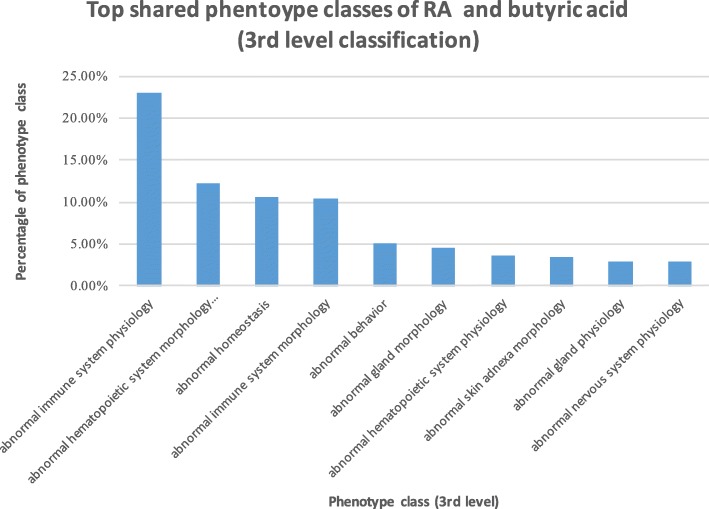
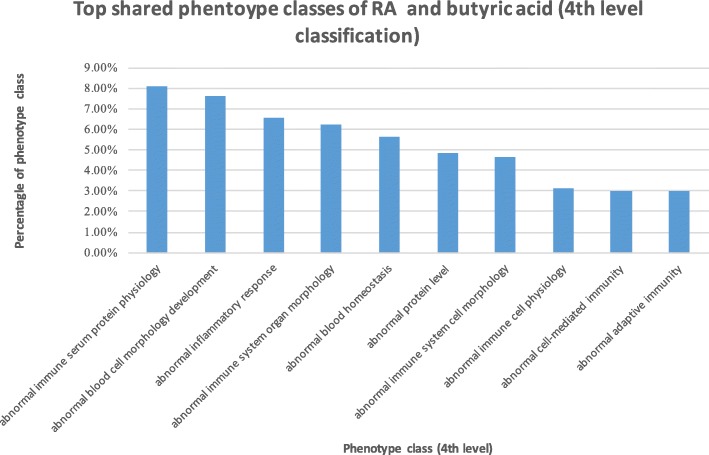
BACKGROUND: Rheumatoid arthritis (RA) is the most common autoimmune disease and affects about 1% of the population. The cause of RA remains largely unknown and could result from a complex interaction between genes and environment factors. Recent studies suggested that gut microbiota and their collective metabolic outputs exert profound effects on the host immune system and are implicated in RA. However, which and how gut microbial metabolites interact with host genetics in contributing to RA pathogenesis remains unknown. In this study, we present a data-driven study to understand how gut microbial metabolites contribute to RA at the genetic, functional and phenotypic levels. RESULTS: We used publicly available disease genetics, chemical genetics, human metabolome, genetic signaling pathways, mouse genome-wide mutation phenotypes, and mouse phenotype ontology data. We identified RA-associated microbial metabolites and prioritized them based on their genetic, functional and phenotypic relevance to RA. We evaluated the prioritization methods using short-chain fatty acids (SCFAs), which were previously shown to be involved in RA etiology. We validate the algorithms by showing that SCFAs are highly associated with RA at genetic, functional and phenotypic levels: SCFAs ranked at top 3.52% based on shared genes with RA, top 5.69% based on shared genetic pathways, and top 16.94% based on shared phenotypes. Based on the genetic-level analysis, human gut microbial metabolites directly interact with many RA-associated genes (as many as 18.1% of all 166 RA genes). Based on the functional-level analysis, human gut microbial metabolites participate in many RA-associated genetic pathways (as many as 71.4% of 311 genetic pathways significantly enriched for RA), including immune system pathways. Based on the phenotypic-level analysis, gut microbial metabolites affect many RA-related phenotypes (as many as 51.3% of 978 phenotypes significantly enriched for RA), including many immune system phenotypes. CONCLUSIONS: Our study demonstrates strong gut-microbiome-immune-joint interactions in RA, which converged on both genetic, functional and phenotypic levels.
Overview
The claims and statistics of this paper haven’t been checked yet.
Free: it reads the open-access text and checks the first 5 claims that cite a source we can check. Create a free account to check every claim.
Integrity signals
Registry
Cites
Statistics
Figures
Verification
Claims the paper makes
The claims and statistics of this paper haven’t been checked yet.
Free: it reads the open-access text and checks the first 5 claims that cite a source we can check. Create a free account to check every claim.
Claims other papers make about this one
Each is checked against this paper’s own text: does it say what the citing paper says it does?
The cited source says what the claim attributes to it.
In the citing paper
“Microbiome-derived metabolites, most notably SCFAs, interact with a variety of immune pathways implicated in RA.173”
From Interaction between microbiota and immunity in health and disease (2020) · cites this paper as [173]
Self-check
Percentages, sums and reported differences re-computed from the paper’s own numbers.
The self-check needs the paper’s full text.
Citations
Cites
Molecular signatures database (MSigDB) 3.0
Liberzon, A., Subramanian, A., Pinchback, R., Thorvaldsdóttir, H., Tamayo, P., & Mesirov, J. P. (2011) · Bioinformatics · doi:10.1093/bioinformatics/btr260 · Cited by 7,111
Gut flora metabolism of phosphatidylcholine promotes cardiovascular disease
Wang, Z., Klipfell, E., Bennett, B. J., Koeth, R., Levison, B. S., DuGar, B., Feldstein, A. E., Britt, E. B., Fu, X., Chung, Y.-M., et al. (2011) · Nature · doi:10.1038/nature09922 · Cited by 5,597
The Pathogenesis of Rheumatoid Arthritis
McInnes, I. B., & Schett, G. (2011) · New England Journal of Medicine · doi:10.1056/nejmra1004965 · Cited by 5,514
Host-gut microbiota metabolic interactions
Nicholson, J. K., Holmes, E., Kinross, J., Burcelin, R., Gibson, G., Jia, W., & Pettersson, S. (2012) · Science · doi:10.1126/science.1223813 · Cited by 4,760
Functional interactions between the gut microbiota and host metabolism
Tremaroli, V., & Bäckhed, F. (2012) · Nature · doi:10.1038/nature11552 · Cited by 4,387
Formation of short chain fatty acids by the gut microbiota and their impact on human metabolism
Morrison, D. J., & Preston, T. (2016) · Gut Microbes · doi:10.1080/19490976.2015.1134082 · Cited by 3,781
Evolving concepts of rheumatoid arthritis
Firestein, G. S. (2003) · Nature · doi:10.1038/nature01661 · Cited by 3,605
Regulation of inflammatory responses by gut microbiota and chemoattractant receptor GPR43
Maslowski, K. M., Vieira, A. T., Ng, A., Kranich, J., Sierro, F., Yu, D., Schilter, H. C., Rolph, M. S., Mackay, F., Artis, D., et al. (2009) · Nature · doi:10.1038/nature08530 · Cited by 3,241
HMDB 3.0—The Human Metabolome Database in 2013
Wishart, D. S., Jewison, T., Guo, A. C., Wilson, M., Knox, C., Liu, Y., Djoumbou, Y., Mandal, R., Aziat, F., Dong, E., et al. (2012) · Nucleic Acids Research · doi:10.1093/nar/gks1065 · Cited by 2,845 · cited 1×
“HMDB contains detailed information about small molecule metabolites found in the human body [35].”
BackgroundClinVar: public archive of interpretations of clinically relevant variants
Landrum, M. J., Lee, J. M., Benson, M., Brown, G., Chao, C., Chitipiralla, S., Gu, B., Hart, J., Hoffman, D., Hoover, J., et al. (2016) · Nucleic Acids Research · doi:10.1093/nar/gkv1222 · Cited by 2,758
Amberger, J. S., Bocchini, C. A., Schiettecatte, F., Scott, A. F., & Hamosh, A. (2015) · Nucleic Acids Research · doi:10.1093/nar/gku1205 · Cited by 2,691
Intestinal Short Chain Fatty Acids and their Link with Diet and Human Health
Ríos-Covián, D., Ruas-Madiedo, P., Margolles, A., Gueimonde, M., de los Reyes-Gavilán, C. G., & Salazar, N. (2016) · Frontiers in Microbiology · doi:10.3389/fmicb.2016.00185 · Cited by 2,179
The new NHGRI-EBI Catalog of published genome-wide association studies (GWAS Catalog)
MacArthur, J., Bowler, E., Cerezo, M., Gil, L., Hall, P., Hastings, E., Junkins, H., McMahon, A., Milano, A., Morales, J., et al. (2017) · Nucleic Acids Research · doi:10.1093/nar/gkw1133 · Cited by 2,161
Expansion of intestinal Prevotella copri correlates with enhanced susceptibility to arthritis
Scher, J. U., Sczesnak, A., Longman, R. S., Segata, N., Ubeda, C., Bielski, C., Rostron, T., Cerundolo, V., Pamer, E. G., Abramson, S. B., et al. (2013) · eLife · doi:10.7554/elife.01202 · Cited by 2,047
Zhang, X., Zhang, D., Jia, H., Feng, Q., Wang, D., Liang, D., Wu, X., Li, J., Tang, L., Li, Y., et al. (2015) · Nature Medicine · doi:10.1038/nm.3914 · Cited by 1,690
STITCH 5: augmenting protein–chemical interaction networks with tissue and affinity data
Szklarczyk, D., Santos, A., von Mering, C., Jensen, L. J., Bork, P., & Kuhn, M. (2016) · Nucleic Acids Research · doi:10.1093/nar/gkv1277 · Cited by 1,687
Gut-Residing Segmented Filamentous Bacteria Drive Autoimmune Arthritis via T Helper 17 Cells
Wu, H.-J., Ivanov, I. I., Darce, J., Hattori, K., Shima, T., Umesaki, Y., Littman, D. R., Benoist, C., & Mathis, D. (2010) · Immunity · doi:10.1016/j.immuni.2010.06.001 · Cited by 1,577
Diet, gut microbiota and immune responses
Maslowski, K. M., & Mackay, C. R. (2011) · Nature Immunology · doi:10.1038/ni0111-5 · Cited by 1,261
Tang, W. H. W., Wang, Z., Kennedy, D. J., Wu, Y., Buffa, J. A., Agatisa-Boyle, B., Li, X. S., Levison, B. S., & Hazen, S. L. (2015) · Circulation Research · doi:10.1161/circresaha.116.305360 · Cited by 1,223 · cited 1×
“Both human studies have shown that TMAO is mechanistically involved in cardiovascular diseases [28], renal disease [29] and colorectal cancer [30].”
BackgroundCurrent Understanding of Dysbiosis in Disease in Human and Animal Models
DeGruttola, A. K., Low, D., Mizoguchi, A., & Mizoguchi, E. (2016) · Inflammatory Bowel Diseases · doi:10.1097/mib.0000000000000750 · Cited by 1,122
Diet, metabolites, and “western-lifestyle” inflammatory diseases
Thorburn, A. N., Macia, L., & Mackay, C. R. (2014) · Immunity · doi:10.1016/j.immuni.2014.05.014 · Cited by 879
The role of the gut microbiome in systemic inflammatory disease
Clemente, J. C., Manasson, J., & Scher, J. U. (2018) · BMJ · doi:10.1136/bmj.j5145 · Cited by 568
Abdollahi-Roodsaz, S., Joosten, L. A. B., Koenders, M. I., Devesa, I., Roelofs, M. F., Radstake, T. R. D. J., Heuvelmans-Jacobs, M., Akira, S., Nicklin, M. J. H., Ribeiro-Dias, F., et al. (2008) · Journal of Clinical Investigation · doi:10.1172/jci32639 · Cited by 527
The microbiome and rheumatoid arthritis
Scher, J. U., & Abramson, S. B. (2011) · Nature Reviews Rheumatology · doi:10.1038/nrrheum.2011.121 · Cited by 474
Forbes, J. D., Chen, C.-Y., Knox, N. C., Marrie, R.-A., El-Gabalawy, H., de Kievit, T., Alfa, M., Bernstein, C. N., & Van Domselaar, G. (2018) · Microbiome · doi:10.1186/s40168-018-0603-4 · Cited by 450
The Mouse Genome Database (MGD): facilitating mouse as a model for human biology and disease
Eppig, J. T., Blake, J. A., Bult, C. J., Kadin, J. A., Richardson, J. E., & The Mouse Genome Database Group (2015) · Nucleic Acids Research · doi:10.1093/nar/gku967 · Cited by 357 · cited 1×
“The Mouse Genome Database (MGD) made available large amounts of phenotypic descriptions of systematic genetic knockouts in mouse models [38].”
MethodBae, S., Ulrich, C. M., Neuhouser, M. L., Malysheva, O., Bailey, L. B., Xiao, L., Brown, E. C., Cushing-Haugen, K. L., Zheng, Y., Cheng, T.-Y. D., et al. (2014) · Cancer Research · doi:10.1158/0008-5472.can-14-1835 · Cited by 253 · cited 1×
“Both human studies have shown that TMAO is mechanistically involved in cardiovascular diseases [28], renal disease [29] and colorectal cancer [30].”
BackgroundPicchianti-Diamanti, A., Panebianco, C., Salemi, S., Sorgi, M. L., Di Rosa, R., Tropea, A., Sgrulletti, M., Salerno, G., Terracciano, F., D’Amelio, R., et al. (2018) · International Journal of Molecular Sciences · doi:10.3390/ijms19102938 · Cited by 223
Xu, R., Wang, Q., & Li, L. (2015) · BMC Genomics · doi:10.1186/1471-2164-16-s7-s4 · Cited by 193 · cited 1×
“On the other hand, trimethylamine-n-oxide is highly related to colorectal cancer through many cancer-related pathways [24, 26].”
BackgroundSelf-citationWang, L., de Zoeten, E. F., Greene, M. I., & Hancock, W. W. (2009) · Nature Reviews Drug Discovery · doi:10.1038/nrd3031 · Cited by 186
Environmental and Gene-Environment Interactions and Risk of Rheumatoid Arthritis
Karlson, E. W., & Deane, K. (2012) · Rheumatic Disease Clinics of North America · doi:10.1016/j.rdc.2012.04.002 · Cited by 176
Towards understanding brain-gut-microbiome connections in Alzheimer’s disease
Xu, R., & Wang, Q. (2016) · BMC Systems Biology · doi:10.1186/s12918-016-0307-y · Cited by 175
Self-citationArthritis susceptibility and the gut microbiome
Taneja, V. (2014) · FEBS Letters · doi:10.1016/j.febslet.2014.05.034 · Cited by 128
Gut Microbiota Regulates K/BxN Autoimmune Arthritis through Follicular Helper T but Not Th17 Cells
Block, K. E., Zheng, Z., Dent, A. L., Kee, B. L., & Huang, H. (2016) · The Journal of Immunology · doi:10.4049/jimmunol.1501904 · Cited by 99
Nagaraj, A. B., Wang, Q. Q., Joseph, P., Zheng, C., Chen, Y., Kovalenko, O., Singh, S., Armstrong, A., Resnick, K., Zanotti, K., et al. (2018) · Oncogene · doi:10.1038/onc.2017.328 · Cited by 93
Self-citationGut Microbiota and Immune Responses
Dong, L., Xie, J., Wang, Y., & Zuo, D. (2020) · Advances in experimental medicine and biology · doi:10.1007/978-981-15-2385-4_10 · Cited by 31
Wang, Q., Li, L., & Xu, R. (2018) · Scientific Reports · doi:10.1038/s41598-018-24315-0 · Cited by 22
Self-citationChen, Y., Gao, Z., Wang, B., & Xu, R. (2016) · BMC Genomics · doi:10.1186/s12864-016-2908-7 · Cited by 19
Self-citationChen, Y., Cai, X., & Xu, R. (2015) · PubMed · Cited by 18
Self-citationEvaluating class III antiarrhythmic agents as novel MYC targeting drugs in ovarian cancer
Nagaraj, A. B., Joseph, P. L., Kovalenko, O., Wang, Q., Xu, R., & DiFeo, A. V. (2018) · Gynecologic Oncology · doi:10.1016/j.ygyno.2018.09.019 · Cited by 14
Self-citationWang, Q., & Xu, R. (2017) · Journal of Biomedical Informatics · doi:10.1016/j.jbi.2017.06.002 · Cited by 11
Self-citationChen, Y., & Xu, R. (2019) · BMC Medical Genomics · doi:10.1186/s12920-018-0459-2 · Cited by 9 · cited 1×
“In one of our recent studies, we developed network-based systems approach to investigate food-metabolite interactions in Alzheimer’s disease [31].”
BackgroundSelf-citationMicrobial metabolites as mimickers of human molecules
Ray, K. (2017) · Nature Reviews Gastroenterology & Hepatology · doi:10.1038/nrgastro.2017.131 · Cited by 4
Cited by
Interaction between microbiota and immunity in health and disease
Zheng, D., Liwinski, T., & Elinav, E. (2020) · Cell Research · doi:10.1038/s41422-020-0332-7 · Cited by 3,947
Interaction between drugs and the gut microbiome
Weersma, R. K., Zhernakova, A., & Fu, J. (2020) · Gut · doi:10.1136/gutjnl-2019-320204 · Cited by 961
Yang, W., & Cong, Y. (2021) · Cellular & Molecular Immunology · doi:10.1038/s41423-021-00661-4 · Cited by 679
“The link between gut microbiota, gut microbiota-derived metabolites, and RA has been established in recent decades.(139,162,192,193) A recent study demonstrated that SCFAs were positively associated with RA at the genetic, functional, and phenotypic levels.”
BackgroundThe Dynamic Interplay between the Gut Microbiota and Autoimmune Diseases
Xu, H., Liu, M., Cao, J., Li, X., Fan, D., Xia, Y., Lu, X., Li, J., Ju, D., & Zhao, H. (2019) · Journal of Immunology Research · doi:10.1155/2019/7546047 · Cited by 194
“3% ofRA-related phenotypes, including immune system pathways and phenotypes; this in turn demonstrated that the gut microbiota and its metabolites contribute to RA at genetic, functional, and phenotypic levels [55].”
BackgroundGut microbiota and immunity relevance in eubiosis and dysbiosis
Al-Rashidi, H. E. (2022) · Saudi Journal of Biological Sciences · doi:10.1016/j.sjbs.2021.10.068 · Cited by 105
Metadata
- Authors
- Wang, Q., & Xu, R.
- Affiliations
- Case Western Reserve University (US)
- Corresponding author
- Xu, Rong
- ORCID
- Xu, Rong
- Venue
- BMC Genomics
- Published
- 2019-02-11
- Volume
- 20
- Issue
- 1
- Pages
- 124-124
- ISSN
- 1471-2164 (ISSN-L)
- PMC
- PMC6371598
- OpenAlex
- W2922325004
- Cited by
- 46
- References
- 43
- Citations by year
- 2026: 3 · 2025: 2 · 2024: 7 · 2023: 9 · 2022: 2 · 2021: 10 · 2020: 9 · 2019: 3
- FWCI
- 2.07
- Type
- journal article
- Language
- en
- Open access
- gold
- doi.org
- Licence
- cc-by
- creativecommons.org/licenses/by/4.0/ (tdm)
- creativecommons.org/licenses/by/4.0/ (vor)
- Locations
- BMC Genomics (publishedVersion, cc-by)
- Europe PMC (PubMed Central) (publishedVersion, other-oa)
- PubMed Central (publishedVersion, cc-by)
- PubMed (publishedVersion)
- DOAJ (DOAJ: Directory of Open Access Journals) (submittedVersion, cc-by-sa)
- Funders
- Eunice Kennedy Shriver National Institute of Child Health and Human Development (DP2HD084068)
- National Institute on Aging (R01 AG057557-01, R01 AG061388-01, R56 AG062272-01)
- Pfizer (WI206753)
- National Institutes of Health (1UL1TR002548-01)
- Topics
- Life Sciences › Biochemistry, Genetics and Molecular Biology › Molecular Biology › Gut microbiota and health
- Health Sciences › Medicine › Rheumatology › Rheumatoid Arthritis Research and Therapies
- Life Sciences › Biochemistry, Genetics and Molecular Biology › Genetics › Genetic Associations and Epidemiology
- Keywords
- rheumatoid arthritis, gut microbiota, microbial metabolites, short-chain fatty acids, host-microbe interactions, immune system, joint diseases, disease genetics, chemical genetics, gene pathways, phenotypes
- MeSH terms
- Gastrointestinal Microbiome, Arthritis, Rheumatoid, Humans, Joints, Mutation, Phenotype, Signal Transduction, Computational Biology, Metabolomics
About these checks
Registry, retraction, Cites and statistics results are computed, not judged, with one exception: a printed reference that no index lists is read once by a model before it counts as a citation error. Claims are extracted by a model and kept only when their quote appears verbatim in the text; each cited source is then checked, with a model’s help, for whether it says what the claim relies on. Those verdicts can be wrong — read the claim’s quote and the cited source before relying on one.
Statistics and arithmetic are recomputed, not judged.
Confidence bands are shown only for fields calibrated on our annotated test set. None is calibrated yet, so no band is shown.
What counts as a claim ›How we measure confidence ›How we check this ›
Are you an author, or do you see a problem with this page? Request a review
Data sources
Bibliographic data: Semantic Scholar, OpenAlex, Crossref.
Contains information from the Semantic Scholar Academic Graph Datasets, made available under the ODC Attribution License (ODC-BY 1.0).
Semantic Scholar’s data is described in: Kinney, R., et al. (2023). The Semantic Scholar Open Data Platform. arXiv:2301.10140.
