

A qualitative study of the acceptability of cognitive bias modification for paranoia (CBM-pa) in patients with psychosis
Open accessThe DOI matches its Crossref record; 41 of the 43 references it cites were found in a registry or an index; 16 of the 32 sources its claims cite were checked for support.
Abstract
Background: Cognitive Bias Modification (CBM) has been used successfully as a computer-based intervention in disorders such as anxiety. However, CBM to modify interpretations of ambiguous information relevant to paranoia has not yet been tested. We conducted a qualitative investigation of a novel intervention called CBM for paranoia (CBM-pa) to examine its acceptability in patients with psychosis. Methods: Eight participants with psychosis who completed CBM-pa were identified by purposive sampling and invited for a semi-structured interview to explore the facilitators and barriers to participation, optimum form of delivery, perceived usefulness of CBM-pa and their opinions on applying CBM-pa as a computerised intervention. The interviews were transcribed and analysed using thematic analysis by researchers working in collaboration with service users. Results: Themes emerged relating to participants' perception about delivery, engagement, programme understanding, factors influencing experience, perceived impact and application of CBM-pa. CBM-pa was regarded as easy, straightforward and enjoyable. It was well-accepted among those we interviewed, who understood the procedure as a psychological intervention. Patients reported that it increased their capacity for adopting alternative interpretations of emotionally ambiguous scenarios. Although participants all agreed on the test-like nature of the current CBM-pa format, they considered that taking part in sessions had improved their overall wellbeing. Most of them valued the computer-based interface of CBM-pa but favoured the idea of combining CBM-pa with some form of human interaction. Conclusions: CBM-pa is an acceptable intervention that was well-received by our sample of patients with paranoia. The current findings reflect positively on the acceptability and experience of CBM-pa in the target population. Patient opinion supports further development and testing of CBM-pa as a possible adjunct treatment for paranoia. © 2019 The Author(s).
Overview
CoChat Summary
## TL;DR
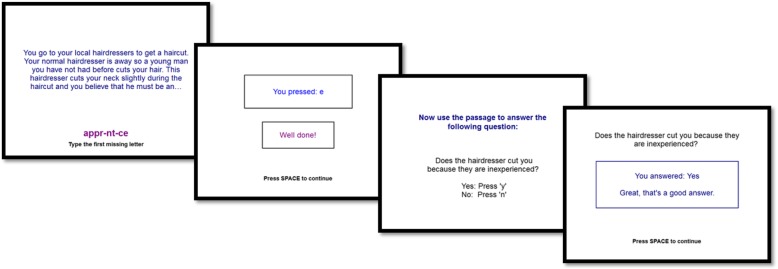
This qualitative study interviewed 8 people with psychosis who had completed CBM-pa to assess acceptability, delivery, and perceived effects. Participants generally found CBM-pa easy, enjoyable, and helpful, but many experienced it as a performance test and wanted more human interaction alongside the computer task.
## Key findings
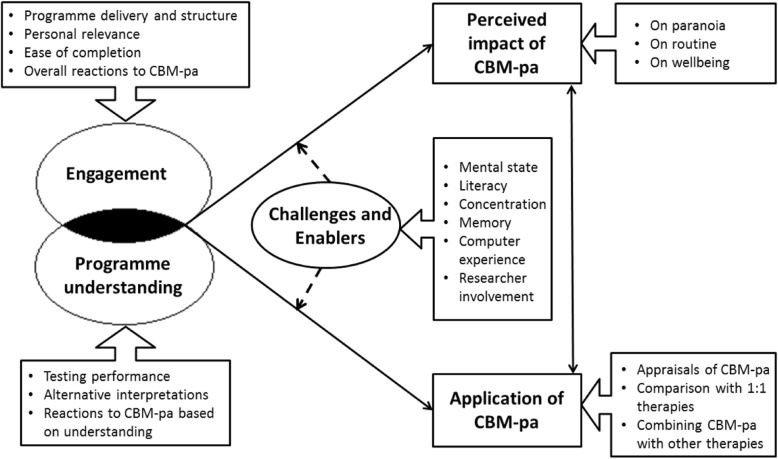
- Thematic analysis of interviews with 8 participants yielded five themes: Engagement; Programme understanding; Challenges and enablers; Perceived impact of CBM-pa; Application of CBM-pa.
- Participants generally described CBM-pa as “easy, straightforward and enjoyable” and said the scenarios were personally relevant; all participants indicated the text display and length were clear and adequate.
- Participants commonly understood CBM-pa as a test of performance; when they thought they were doing well they felt competent, but “wrong” answers could trigger self-doubt.
- Participants reported perceived benefits: increased capacity for alternative interpretations, improved insight into paranoid thoughts, and improved overall wellbeing; the paper states all participants reported wellbeing improved to some extent.
- Most participants preferred combining CBM-pa with some form of human interaction/talking therapy, rather than using the computer task alone.
## Methods
- Design: Qualitative descriptive study using semi-structured interviews and thematic analysis, with some elements of framework analysis; analysis was done collaboratively with service users/LEAP members.
- Sample/data: 8 participants with psychosis who had completed CBM-pa were purposively sampled from the treatment arm of a feasibility RCT; participants were 18–65 years, had clinically significant paranoid symptoms, and were interviewed after the final 3-month follow-up assessment.
- Main analysis: Interviews were audio-recorded, transcribed verbatim, coded in Excel, and iteratively analyzed to generate themes; the study reports adherence to COREQ and CONSORT where applicable.
## Limitations
- The paper states that having two interviewers could create a power imbalance and increase socially desirable responding; overlap between interviewers and intervention supporters could also increase this risk.
- The sample was generally stable in mental state, so findings may not represent people with severe persecutory delusions or those in acute psychotic states.
- The researchers were also developers of CBM-pa, so researcher bias may exist.
- The study reflects acceptability in a research setting with a researcher present, not necessarily for home-based/self-administered use without researcher presence.
Model-written summary. Check it against the paper before relying on it.
Integrity signals
Registry
Cites
Statistics
Figures
Verification
Claims the paper makes
12 Valid · 4 Not valid · 11 Not checked · 118 Own results and interpretations
Every source the paper cites for this claim was checked and supports it.
In the paper
“To the best of our knowledge, only two qualitative studies to date have examined patients’ subjective experience of CBM, focussing on social anxiety [6, 17].”
§ A qualitative study of the acceptability of cognitive bias modification for paranoia (CBM-pa) in patients with psychosis > Background
What the sources say
- Supportedcites [6] Beard C Weisberg RB Primack J Socially anxious primary care patients’ attitudes toward cognitive bias modification (CBM): a qualitative study Behav Cogn Psychother 2012 40 618 633 22127022 PMC3816754 source
The paper describes its qualitative examination of socially anxious primary-care patients’ impressions of CBM after a brief explanation and demonstration. It therefore supports its citation as one of the qualitative studies identified in the citing sentence. (LLM, conf=0.90)
- Supportedcites [17] Kuckertz JM Schofield CA Clerkin EM Primack J Boettcher H Weisberg RB Attentional bias modification for social anxiety disorder: what do patients think and why does it matter? Behav Cogn Psychother 2019 47 16 38 29729676 PMC6219938 source
This citation identifies one of the qualitative works described, rather than serving as a count of all such studies. Study 1 Method reports interviews with participants diagnosed with social anxiety disorder about their perceptions of a CBM package; Study 2 Results also reports qualitative data on participants’ perceptions. The paper therefore is a qualitative examination of patients’ experience of CBM in social anxiety. (LLM, conf=0.88)
hedged- Asserted: passes — The authors put it forward as true.
- Checkable: passes — It can be checked against evidence.
- Load-bearing: passes — The paper’s conclusions depend on it.
- Based: passes — The paper gives a reason why it holds.
- Supported
The cited sources that could be checked couldn’t confirm or dispute this claim.
In the paper
“CBM-pa was developed based on previous empirical evidence of the presence of paranoia-relevant interpretation biases in people with clinical [3] and subclinical [4] paranoia as well as in those in the At Risk Mental State (ARMS) [15].”
§ A qualitative study of the acceptability of cognitive bias modification for paranoia (CBM-pa) in patients with psychosis > Background
What the sources say
- Not checked — no full text of the sourcecites [3] Savulich G Shergill SS Yiend J Interpretation biases in clinical paranoia Clin Psychol Sci 2017 5 6 985 1000 source
- Not checked — no full text of the sourcecites [4] Savulich G Freeman D Shergill S Yiend J Interpretation biases in paranoia Behav Ther 2015 46 1 110 124 25526839 source
- Could not verifycites [15] Yiend J, Allen P, Lopez N, Falkenberg I, Tseng H-H, McGuire P. Negative interpretation biases precede the onset of psychosis. Behav Ther. 2018; Available from: https://linkinghub.elsevier.com/retrieve/pii/S0005789418301497. 31208682 sourceExperimental — accuracy not yet measured
The available passages contain the paper’s title, bibliographic details, and keywords, including “at risk mental state,” but no findings about paranoia-relevant interpretation biases in people in the ARMS. Searches for ARMS interpretation biases and empirical evidence returned no passage that establishes the attributed claim. (LLM, conf=0.70)
plainstates a cause- Asserted: passes — The authors put it forward as true.
- Checkable: passes — It can be checked against evidence.
- Load-bearing: passes — The paper’s conclusions depend on it.
- Based: passes — The paper gives a reason why it holds.
Every source the paper cites for this claim was checked and supports it.
In the paper
“This converged with Beard’s findings [6], in which participants felt the need to understand the purpose and relevance of the task to their anxiety.”
§ A qualitative study of the acceptability of cognitive bias modification for paranoia (CBM-pa) in patients with psychosis > Discussion > Main findings
What the sources say
- Supportedcites [6] Beard C Weisberg RB Primack J Socially anxious primary care patients’ attitudes toward cognitive bias modification (CBM): a qualitative study Behav Cogn Psychother 2012 40 618 633 22127022 PMC3816754 source
The Results section, under “Need to understand CBM,” says participants’ lack of understanding of the tasks’ purpose and relevance to their anxiety reduced their perceived helpfulness. The Discussion also reports that most participants wanted to better understand the purpose of the CBM-A task. (LLM, conf=0.95)
plain- Asserted: passes — The authors put it forward as true.
- Checkable: passes — It can be checked against evidence.
- Load-bearing: unclear — It is unclear whether the paper’s conclusions depend on it.
- Based: passes — The paper gives a reason why it holds.
- Supported
The cited sources support only part of this claim — read each source’s verdict below.
In the paper
“The participants were purposively selected to represent the sample variation in the following priority order: gender, severity of paranoia, severity of bias, age and ethnicity [21].”
§ A qualitative study of the acceptability of cognitive bias modification for paranoia (CBM-pa) in patients with psychosis > Methods > Participant selection and recruitment procedure The complete sample of participants was recruited from a range of local sources, including: Institute of Psychiatry, Psychology and Neuroscience (IoPPN) and South London and Maudsley (SLaM) research registers; SLaM NHS Foundation Trust services; service users’ networks and voluntary sector organisations. Eight participants who completed CBM-pa were recruited to the current qualitative study. Participants were aged 18 to 65 and diagnosed with clinically significant paranoid symptoms by a trained clinical psychologist (AT) using the Structured Clinical Interview for DSM-5 (SCID-5) [18]. To assess the severity of psychotic symptoms, the Positive and Negative Syndrome Scale (PANSS) [19] was used. Only those scoring 3 or above on Item 6 (suspiciousness/ persecution) were included in the study. Participants also had to display a baseline interpretation bias on the eight-item version of the Similarity Rating Task (SRT) by scoring 1 or less. The SRT is a standard measure of interpretation bias which depicts ambiguous social scenarios that permit either paranoid or non-paranoid interpretations [4]. Scores on the SRT can range from − 3 to 3, with a lower score indicating greater negative interpretation bias [3]. This cut-off was adopted to ensure those taking part in the trial had appropriate levels of pre-existing negative interpretation bias (the target mechanism of the intervention). Additionally, participants, for whom it was relevant, had to be stable on medication for at least 3 months and expected to be so throughout the study duration. This was an ethical and practical requirement to ensure participants remained in a sufficiently stable mental state to participate in the study without undue risk and to ensure symptoms were sufficiently controlled to permit full engagement with CBM-pa [20]. Participants were required to have the capacity to consent (assessed by CM and AT) and to speak English fluently to be eligible for the interview. Exclusion criteria were severe cognitive impairment, illiteracy, major physical illness (such as cancer, heart disease, stroke) and major substance or alcohol misuse (screened by using SCID-5). Those who were receiving, had recent experience (in the last 3 months) or expected to receive psychological therapy targeting paranoid beliefs were also excluded. Details of the trial methodology are published in a separate paper [13]. Qualitative interviews were conducted after the end of all quantitative data collection (i.e. after the final three-month follow up assessment). The eight participants (24%) were anonymously shortlisted from the 30 participants of the treatment arm by two members of the research team unfamiliar with the participants (JY and TK). The participants were purposively selected to represent the sample variation in the following priority order: gender, severity of paranoia, severity of bias, age and ethnicity [21]. In doing so we hoped to explore the applicability of CBM-pa as an intervention to participants of different backgrounds and characteristics. Despite a relatively small sample size, participants did represent almost one quarter of those who received the intervention. We intended that this, together with purposive sampling, would ensure data saturation was achieved. At a participant level data saturation was ensured by ending the interview when no additional new information was forthcoming. The selected participants were de-anonymised, contacted and invited to interview. One participant chose not to take part and was replaced. Participant characteristics are shown in Table 1.
What the sources say
- Partly supportedcites [21] Palinkas LA Horwitz SM Green CA Wisdom JP Duan N Hoagwood K Purposeful sampling for qualitative data collection and analysis in mixed method implementation research Adm Policy Ment Health 2015 42 5 533 544 24193818 PMC4012002 sourceExperimental — accuracy not yet measured
The passage on maximum variation sampling (indexed as Abstract; page unavailable) supports purposively selecting participants to capture variation. It does not report that the citing study selected participants by gender, paranoia severity, bias severity, age, or ethnicity, or in that priority order. (LLM, conf=0.84)
plain- Asserted: passes — The authors put it forward as true.
- Checkable: passes — It can be checked against evidence.
- Load-bearing: passes — The paper’s conclusions depend on it.
- Based: passes — The paper gives a reason why it holds.
- Partly supported
Every source the paper cites for this claim was checked and supports it.
In the paper
“but in Beard’s study [6], CBM was perceived to be less credible after participants experienced the trial.”
§ A qualitative study of the acceptability of cognitive bias modification for paranoia (CBM-pa) in patients with psychosis > Discussion > Main findings
What the sources say
- Supportedcites [6] Beard C Weisberg RB Primack J Socially anxious primary care patients’ attitudes toward cognitive bias modification (CBM): a qualitative study Behav Cogn Psychother 2012 40 618 633 22127022 PMC3816754 source
The Discussion states that participants’ beliefs about CBM’s credibility decreased after a demonstration. The Method (CBM Programs) specifies that participants experienced approximately one to two minutes of task trials before giving their reactions. (LLM, conf=0.91)
plainstates a cause- Asserted: passes — The authors put it forward as true.
- Checkable: passes — It can be checked against evidence.
- Load-bearing: unclear — It is unclear whether the paper’s conclusions depend on it.
- Based: passes — The paper gives a reason why it holds.
- Supported
76 more claims
Create a free account to see all 145 claims and every source verdict.
- Probably not a substantial claim. 36
- It may state two separate claims as one. 35
Claims other papers make about this one
Each is checked against this paper’s own text: does it say what the citing paper says it does?
The source backs part of the claim, not all of it — or backs it for a different population, condition or comparison.
In the citing paper
“Finally, numerous studies have shown that existing CBM programs are generally deemed acceptable and feasible addon treatments by clients and clinicians alike (Beard et al., 2012; Leung et al., 2019; Rozenman et al., 2011).”
From Acceptability and Co-Development of an Online Cognitive Bias Modification Intervention for Emerging Adults With Hazardous Alcohol Use and Social Anxiety: A Mixed Methods Study (2020) · cites this paper as Leung et al., 2019
Experimental — accuracy not yet measured
Citations
Cites
Using thematic analysis in psychology
Braun, V., & Clarke, V. (2006) · Qualitative Research in Psychology · doi:10.1191/1478088706qp063oa · Cited by 194,414
Ryan, R. M., & Deci, E. L. (2000) · American Psychologist · doi:10.1037//0003-066x.55.1.68 · Cited by 54,599
Tong, A., Sainsbury, P., & Craig, J. (2007) · International Journal for Quality in Health Care · doi:10.1093/intqhc/mzm042 · Cited by 42,509 · cited 1×
“Reporting of this study adheres to the CONSORT guidelines (where applicable [27]) and COREQ guidelines [28].”
The Positive and Negative Syndrome Scale (PANSS) for schizophrenia.
Kay, S. R., Fiszbein, A., & Opler, L. A. (1987) · Schizophrenia Bulletin · doi:10.1093/schbul/13.2.261 · Cited by 21,378
CONSORT 2010 Statement: updated guidelines for reporting parallel group randomised trials
the CONSORT Group, Schulz, K. F., Altman, D. G., & Moher, D. (2010) · BMC Medicine · doi:10.1186/1741-7015-8-18 · Cited by 13,371
(1994) · Cited by 13,126
Palinkas, L. A., Horwitz, S. M., Green, C. A., Wisdom, J. P., Duan, N., & Hoagwood, K. (2015) · Administration and Policy in Mental Health and Mental Health Services Research · doi:10.1007/s10488-013-0528-y · Cited by 12,038
Gale, N. K., Heath, G., Cameron, E., Rashid, S., & Redwood, S. (2013) · BMC Medical Research Methodology · doi:10.1186/1471-2288-13-117 · Cited by 10,865
CONSORT 2010 Statement: updated guidelines for reporting parallel group randomised trials
Schulz, K. F., Altman, D. G., Moher, D., & for the CONSORT Group (2010) · BMJ · doi:10.1136/bmj.c332 · Cited by 9,329
Discovering the Neural Basis of Human Social Anxiety: A Diagnostic and Therapeutic Imperative
Charney, D. S. (2004) · American Journal of Psychiatry · doi:10.1176/appi.ajp.161.1.1 · Cited by 1,428
A cognitive model of persecutory delusions
Freeman, D., Garety, P. A., Kuipers, E., Fowler, D., & Bebbington, P. E. (2002) · British Journal of Clinical Psychology · doi:10.1348/014466502760387461 · Cited by 888
Mental Health Smartphone Apps: Review and Evidence-Based Recommendations for Future Developments
Bakker, D., Kazantzis, N., Rickwood, D., & Rickard, N. (2016) · JMIR Mental Health · doi:10.2196/mental.4984 · Cited by 886
Practice Guideline for the Treatment of Patients With Schizophrenia Second Edition
(2007) · APA Practice Guidelines for the Treatment of Psychiatric Disorders: Comprehensive Guidelines and Guideline Watches · doi:10.1176/appi.books.9780890423363.45859 · Cited by 737
Treatment engagement of individuals experiencing mental illness: review and update
Dixon, L. B., Holoshitz, Y., & Nossel, I. (2016) · World Psychiatry · doi:10.1002/wps.20306 · Cited by 550 · cited 1×
“It is of utmost importance to explore patients’ subjective experience of CBM-pa because adherence and engagement with treatment can fundamentally improve the outcome of intervention [14].”
BackgroundCognitive bias modification: A review of meta-analyses
Jones, E. B., & Sharpe, L. (2017) · Journal of Affective Disorders · doi:10.1016/j.jad.2017.07.034 · Cited by 338
Introduction to the special section on cognitive bias modification in emotional disorders
Koster, E. H. W., Fox, E., & MacLeod, C. (2009) · Journal of Abnormal Psychology · doi:10.1037/a0014379 · Cited by 272
Menne-Lothmann, C., Viechtbauer, W., Höhn, P., Kasanova, Z., Haller, S. P., Drukker, M., van Os, J., Wichers, M., & Lau, J. Y. F. (2014) · PLoS ONE · doi:10.1371/journal.pone.0100925 · Cited by 235
Donkin, L., & Glozier, N. (2012) · Journal of Medical Internet Research · doi:10.2196/jmir.2100 · Cited by 212
Cognitive impairments in psychotic disorders: common mechanisms and measurement
Barch, D. M., & Sheffield, J. M. (2014) · World Psychiatry · doi:10.1002/wps.20145 · Cited by 154
Brosan, L., Hoppitt, L., Shelfer, L., Sillence, A., & Mackintosh, B. (2011) · Journal of Behavior Therapy and Experimental Psychiatry · doi:10.1016/j.jbtep.2010.12.006 · Cited by 139
Gearing, R. E., Schwalbe, C. S. J., Lee, R., & Hoagwood, K. E. (2013) · Depression and Anxiety · doi:10.1002/da.22118 · Cited by 136
Combined cognitive bias modification treatment for social anxiety disorder: a pilot trial
Beard, C., Weisberg, R. B., & Amir, N. (2011) · Depression and Anxiety · doi:10.1002/da.20873 · Cited by 124
Beard, C., Weisberg, R. B., & Primack, J. (2012) · Behavioural and Cognitive Psychotherapy · doi:10.1017/s1352465811000671 · Cited by 124
Negative symptoms in first episode non‐affective psychosis
Malla, A. K., Takhar, J. J., Norman, R. M. G., Manchanda, R., Cortese, L., Haricharan, R., Verdi, M., & Ahmed, R. (2002) · Acta Psychiatrica Scandinavica · doi:10.1034/j.1600-0447.2002.02139.x · Cited by 118
Attitudes towards computerized CBT for depression amongst a student population
Mitchell, N., & Gordon, P. K. (2007) · Behavioural and Cognitive Psychotherapy · doi:10.1017/s1352465807003700 · Cited by 106
A qualitative exploration of Internet-based treatment for comorbid depression and alcohol misuse
Darvell, M. J., Kavanagh, D. J., & Connolly, J. M. (2015) · Internet Interventions · doi:10.1016/j.invent.2015.03.003 · Cited by 69
Cognitive mechanisms underlying the emotional effects of bias modification
Hoppitt, L., Mathews, A., Yiend, J., & Mackintosh, B. (2010) · Applied Cognitive Psychology · doi:10.1002/acp.1678 · Cited by 64
Self-citationInterpretation Biases in Paranoia
Savulich, G., Freeman, D., Shergill, S., & Yiend, J. (2015) · Behavior Therapy · doi:10.1016/j.beth.2014.08.002 · Cited by 53
Self-citationCognitive impairment as a risk factor for psychosis
Reichenberg, A. (2005) · Dialogues in Clinical Neuroscience · doi:10.31887/dcns.2005.7.1/areichenberg · Cited by 49
Steel, C., Wykes, T., Ruddle, A., Smith, G. M., Shah, D. M., & Holmes, E. A. (2010) · Psychiatry Research · doi:10.1016/j.psychres.2010.04.042 · Cited by 48
Savulich, G., Shergill, S., & Yiend, J. (2012) · Journal of Experimental Psychopathology · doi:10.5127/jep.016711 · Cited by 43
Self-citationLysaker, P. H., Davis, L. W., Buck, K. D., Outcalt, S., & Ringer, J. M. (2011) · Journal of Nervous & Mental Disease · doi:10.1097/nmd.0b013e31820c73eb · Cited by 37
Hardy, V., O’Connor, Y., Heavin, C., Mastellos, N., Tran, T., O’Donoghue, J., Fitzpatrick, A. L., Ide, N., Wu, T.-S. J., Chirambo, G. B., et al. (2017) · Trials · doi:10.1186/s13063-017-2213-z · Cited by 33
Turner, R., Hoppitt, L., Hodgekins, J., Wilkinson, J., Mackintosh, B., & Fowler, D. (2011) · Behavioural and Cognitive Psychotherapy · doi:10.1017/s1352465810000706 · Cited by 31
Kuckertz, J. M., Schofield, C. A., Clerkin, E. M., Primack, J., Boettcher, H., Weisberg, R. B., Amir, N., & Beard, C. (2019) · Behavioural and Cognitive Psychotherapy · doi:10.1017/s1352465818000231 · Cited by 30
Cognitive Bias Modification for paranoia (CBM-pa): study protocol for a randomised controlled trial
Yiend, J., Trotta, A., Meek, C., Dzafic, I., Baldus, N., Crane, B., Kabir, T., Stahl, D. R., Heslin, M., Shergill, S. S., et al. (2017) · Trials · doi:10.1186/s13063-017-2037-x · Cited by 26
Self-citationInterpretation Biases in Clinical Paranoia
Savulich, G., Shergill, S. S., & Yiend, J. (2017) · Clinical Psychological Science · doi:10.1177/2167702617718180 · Cited by 26
Self-citationNegative Interpretation Biases Precede the Onset of Psychosis
Yiend, J., Allen, P., Lopez, N. D., Falkenberg, I., Tseng, H.-H., & McGuire, P. (2019) · Behavior Therapy · doi:10.1016/j.beth.2018.11.002 · Cited by 14 · cited 2×
“The final ambiguous scenarios were developed from transcripts of service users’ real-life experiences of paranoia, plus some previously validated test items [3, 4, 15].”
BackgroundMethodSelf-citation(2016) · World Psychiatry · doi:10.1002/wps.20372 · Cited by 2
Fenigstein, A. (2001) · Elsevier eBooks · doi:10.1016/b978-012267805-9/50027-4 · Cited by 1
(2000) · doi:10.1002/1098-240x(200008)23:4<334::aid-nur9>3.0.co;2-g
Research works printed but not linked: 1
- First MB Williams JBW Karg RS Spitzer RL Structured clinical interview for DSM-5—research version (SCID-5 for DSM-5, research version; SCID-5-RV) 2015 Arlington American Psychiatric Association
Cited by
Vrijsen, J. N., Grafton, B., Koster, E. H. W., Lau, J. Y. F., Wittekind, C. E., Bar‐Haim, Y., Becker, E. S., Brotman, M. A., Joormann, J., Lazarov, A., et al. (2024) · Behaviour Research and Therapy · doi:10.1016/j.brat.2024.104557 · Cited by 47
Yiend, J., Lam, C. L. M., Schmidt, N. B., Crane, B., Heslin, M., Kabir, T., McGuire, P. K., Meek, C., Mouchlianitis, E. D., PETERS, E. R., et al. (2022) · Psychological Medicine · doi:10.1017/s0033291722001520 · Cited by 24
“Additionally, the acceptability of CBM-pa has been evaluated qualitatively in a separate report (Leung et al., 2019).”
Self-citationAlyahya, N. M., Munro, I., & Moss, C. (2020) · Journal of Psychiatric and Mental Health Nursing · doi:10.1111/jpm.12696 · Cited by 28
Prior, K., Salemink, E., Wiers, R. W., Teachman, B. A., Piggott, M., Newton, N. C., Teesson, M., Baillie, A. J., Campbell, S., & Stapinski, L. A. (2020) · Alcoholism: Clinical and Experimental Research · doi:10.1111/acer.14452 · Cited by 16
“This echoes the feedback provided in previous CBM acceptability studies (Beard et al., 2012; Leung et al., 2019).”
BackgroundMethodResultHsu, C.-W., Stahl, D. R., Mouchlianitis, E. D., PETERS, E. R., Vamvakas, G., Keppens, J., Watson, M., Schmidt, N. B., Jacobsen, P. C., McGuire, P. K., et al. (2023) · JMIR Human Factors · doi:10.2196/45453 · Cited by 14
“First, CBM can be self-administered and disseminated over numerous settings [29], thereby reducing the need for mental health professionals.”
BackgroundSelf-citation
Metadata
- Authors
- Leung, C. J., Fosuaah, A., Frerichs, J., Heslin, M., Kabir, T., Lee, T. M. C., McGuire, P., Meek, C., Mouchlianitis, E., Nath, A. S., Peters, E., Shergill, S., Stahl, D., Trotta, A., & Yiend, J.
- Affiliations
- King's College London (GB)
- McPin Foundation (GB)
- University of Hong Kong (HK)
- Corresponding author
- Yiend, J.
- ORCID
- Venue
- BMC Psychiatry
- Published
- 2019-07-23
- Volume
- 19
- Issue
- 1
- Pages
- 225-225
- ISSN
- 1471-244X (ISSN-L)
- PMC
- PMC6651961
- OpenAlex
- W2963839319
- Cited by
- 20
- References
- 43
- Citations by year
- 2026: 4 · 2025: 4 · 2024: 4 · 2023: 2 · 2022: 2 · 2021: 2 · 2020: 2
- FWCI
- 1.19
- Type
- journal article
- Language
- en
- Open access
- gold
- doi.org
- Licence
- cc-by
- creativecommons.org/licenses/by/4.0/ (tdm)
- creativecommons.org/licenses/by/4.0/ (vor)
- Locations
- BMC Psychiatry (publishedVersion, cc-by)
- PubMed Central (publishedVersion, cc-by)
- PubMed (publishedVersion)
- Research Portal (King's College London) (acceptedVersion, cc-by)
- Open Access at Essex (University of Essex) (acceptedVersion)
- DOAJ (DOAJ: Directory of Open Access Journals) (submittedVersion, cc-by-sa)
- Kent Academic Repository (University of Kent) (submittedVersion)
- Funders
- Research for Patient Benefit Programme (PB-PG-0214-33007)
- Topics
- Health Sciences › Medicine › Psychiatry and Mental health › Schizophrenia research and treatment
- Social Sciences › Psychology › Applied Psychology › Digital Mental Health Interventions
- Social Sciences › Psychology › Experimental and Cognitive Psychology › Anxiety, Depression, Psychometrics, Treatment, Cognitive Processes
- Keywords
- paranoia, psychosis, acceptability, computer-based intervention, patient experience, interpretation bias, adjunct treatment, service user perspectives
- MeSH terms
- Adult, Female, Humans, Male, Paranoid Disorders, Patient Acceptance of Health Care, Psychotic Disorders, User-Computer Interface, Cognitive Behavioral Therapy, Qualitative Research
About these checks
Registry, retraction, Cites and statistics results are computed, not judged, with one exception: a printed reference that no index lists is read once by a model before it counts as a citation error. Claims are extracted by a model and kept only when their quote appears verbatim in the text; each cited source is then checked, with a model’s help, for whether it says what the claim relies on. Those verdicts can be wrong — read the claim’s quote and the cited source before relying on one.
The claim verdicts this report counts are experimental: their accuracy is not yet measured.
A language model drew the claims from the paper on 2026-10-11, under version 3 of the claim definition (model deepseek-v4.1-flash, prompt extract-v3).
A second model labelled each claim on 2026-10-11 (model jev-1.13-20260917, definition revision gold-guideline-v0.2).
Cited sources are checked with a language model’s help (gpt-6-sol).
Statistics and arithmetic are recomputed, not judged.
Confidence bands are shown only for fields calibrated on our annotated test set. None is calibrated yet, so no band is shown.
What counts as a claim ›How we measure confidence ›How we check this ›
Are you an author, or do you see a problem with this page? Request a review
Data sources
Bibliographic data: Semantic Scholar, OpenAlex, Crossref.
Contains information from the Semantic Scholar Academic Graph Datasets, made available under the ODC Attribution License (ODC-BY 1.0).
Semantic Scholar’s data is described in: Kinney, R., et al. (2023). The Semantic Scholar Open Data Platform. arXiv:2301.10140.
