

'I didn't know what to expect': Exploring patient perspectives to identify targets for change to improve telephone-delivered psychological interventions
Open accessThe DOI matches its Crossref record; 40 of the 41 references it cites were found in a registry or an index; 20 of the 29 sources its claims cite were checked for support.
Abstract
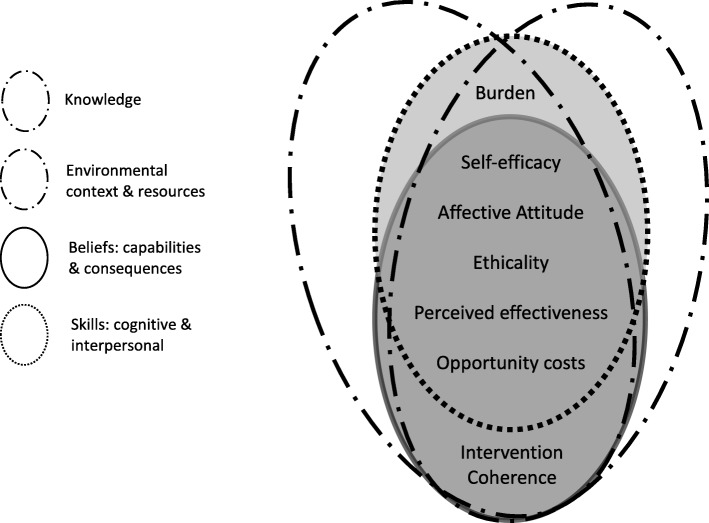
Background: Remote delivery of psychological interventions to meet growing demand has been increasing worldwide. Telephone-delivered psychological treatment has been shown to be equally effective and as satisfactory to patients as face-to-face treatment. Despite robust research evidence, however, obstacles remain to the acceptance of telephone-delivered treatment in practice. This study aimed to explore those issues using a phenomenological approach from a patient perspective to identify areas for change in current provision through the use of theoretically based acceptability and behaviour change frameworks. Methods: Twenty-eight semi-structured interviews with patients experiencing symptoms of common mental health problems, waiting, receiving or having recently received telephone-delivered psychological treatment via the UK National Health Service's Improving Access to Psychological Therapies (IAPT) programme. Interviews were recorded, transcribed verbatim, and analysed using the Theoretical Domains Framework (TDF) and Theoretical Framework of Acceptability (TFA). Results: The majority of data clustered within five key domains of the TDF (knowledge, skills, cognitive and interpersonal, environmental context and resources, beliefs about capabilities, beliefs about consequences) and mapped to all constructs of the TFA (affective attitude, ethicality, intervention coherence, self-efficacy, burden, opportunity costs, and perceived effectiveness). Themes highlighted that early stages of treatment can be affected by lack of patient knowledge and understanding, reservations about treatment efficacy, and practical obstacles such as absent non-verbal communication, which is deemed important in the development of therapeutic alliance. Yet post-treatment, patients can reflect more positively, and report gaining benefit from treatment. However, despite this, many patients say that if they were to return for future treatment, they would choose to see a practitioner face-to-face. Conclusions: Using a combination of theoretically underpinned models has allowed the identification of key targets for change. Addressing knowledge deficits to shift attitudes, highlighting the merits of telephone delivered treatment and addressing skills and practical issues may increase acceptability of, and engagement with, telephone-delivered treatment. © 2020 The Author(s).
Overview
CoChat Summary
## TL;DR
This qualitative study of 28 UK IAPT patients found that telephone-delivered psychological treatment was often initially viewed with uncertainty, skepticism, and lower acceptability, largely because of limited knowledge, concerns about practitioner skill, and the lack of visual/non-verbal cues. Patients’ views often became more positive after treatment, but many still preferred face-to-face care for future treatment.
## Key findings
- The study identified four key target areas for change after cross-mapping the TDF and TFA: patient knowledge and understanding, patient and practitioner skills, practical and environmental factors, and beliefs.
- Patient understanding was often poor at referral: many expected face-to-face “talking” therapy and had preconceptions about needing a “listening ear” or “lying on a couch,” contributing to low prospective acceptability.
- A lack of visual/non-verbal cues was central to concerns about communication, therapeutic alliance, and trust; participants said body language, facial expressions, and eye contact mattered, and some felt telephone treatment was more rigid or “scripted.”
- Despite early reservations, many patients reported that expectations were “surpassed” and that treatment became more acceptable over time; however, some still said they would choose face-to-face treatment in future.
## Methods
- Design: Qualitative phenomenological study using semi-structured interviews; analysis combined the Theoretical Domains Framework (TDF) and the Theoretical Framework of Acceptability (TFA).
- Sample/data: 28 patients with common mental health problems who had been offered or received telephone-delivered psychological treatment in the previous 12 months through UK NHS IAPT services; 4 interviews were face-to-face and 24 were by telephone.
- Analysis: Interviews were recorded and transcribed verbatim, then thematically analyzed in a two-stage process with NVivo; themes were coded, mapped to the TDF, then cross-mapped to the TFA.
## Limitations
- The paper states that findings were limited by retrospective accounts: treatment may have been received up to 12 months before interview.
- The paper states that over 75% of participants were interviewed by telephone, which could bias responses toward telephone communication.
- The paper states the sample was predominantly White British, and that the views of patients who chose not to wait for telephone treatment were not sought.
- Evident from the text: the study is based on a small, self-selected convenience sample from IAPT and recruitment was stopped at data saturation, so the findings are not designed to be statistically generalizable.
Model-written summary. Check it against the paper before relying on it.
Integrity signals
Registry
Cites
Statistics
Figures
Verification
Claims the paper makes
13 Valid · 2 Not valid · 4 Not checked · 94 Own results and interpretations
The cited sources support only part of this claim — read each source’s verdict below.
In the paper
“Existing literature on patients’ perspectives on remote health care has explored sociodemographic and clinical factors with less attention paid to individual viewpoints or system influences (human-technology, organisational, social, task and environmental factors [18]).”
§ ‘I didn’t know what to expect’: Exploring patient perspectives to identify targets for change to improve telephone-delivered psychological interventions > Background
What the sources say
- Partly supportedcites [18] Or CKL Karsh B-T A systematic review of patient acceptance of consumer health information technology J Am Med Inform Assoc 2009 16 4 550 560 10.1197/jamia.M2888 19390112 PMC2705259 sourceExperimental — accuracy not yet measured
The Discussion says studies of patient acceptance of consumer health information technology focused largely on sociodemographic, health, and treatment-related variables, while examining fewer human–technology, organisational, and environmental factors and no task or social factors. It also says few studies examined perceived usefulness or ease of use, supporting the point about individual viewpoints. The review concerns acceptance of consumer health information technology, however, not patients’ perspectives on remote health care generally. (LLM, conf=0.83)
plain- Asserted: passes — The authors put it forward as true.
- Checkable: passes — It can be checked against evidence.
- Load-bearing: passes — The paper’s conclusions depend on it.
- Based: passes — The paper gives a reason why it holds.
- Partly supported
Every source the paper cites for this claim was checked and supports it.
In the paper
“Low intensity (step 2) interventions (i.e. guided self-help) are delivered through a variety of modalities (face-to-face, telephone, groups, online), and large scale IAPT data sets show comparable outcomes between completed face-to-face and telephone treatments [20].”
§ ‘I didn’t know what to expect’: Exploring patient perspectives to identify targets for change to improve telephone-delivered psychological interventions > Background
What the sources say
- Supportedcites [20] Hammond GC Comparative effectiveness of cognitive therapies delivered face-to-face or over the telephone: an observational study using propensity methods PLoS One 2012 7 9 e42916 10.1371/journal.pone.0042916 23028436 PMC3460939 source
The Results (Patient flow, follow-up, and sample characteristics; page unavailable) identify completed face-to-face and telephone treatment groups in the IAPT dataset. The Discussion reports equivalent effectiveness on anxiety, depression, and functioning after propensity adjustment, while noting an exception for the most severely affected patients. (LLM, conf=0.90)
plain- Asserted: passes — The authors put it forward as true.
- Checkable: passes — It can be checked against evidence.
- Load-bearing: unclear — It is unclear whether the paper’s conclusions depend on it.
- Based: passes — The paper gives a reason why it holds.
- Supported
The cited sources support only part of this claim — read each source’s verdict below.
In the paper
“It has been increasingly acknowledged that consideration of patient acceptability using theories of behaviour change are key to effective evaluation, design and implementation of healthcare interventions [23–25] .”
§ ‘I didn’t know what to expect’: Exploring patient perspectives to identify targets for change to improve telephone-delivered psychological interventions > Background
What the sources say
- Partly supportedcites [23] Sekhon M Cartwright M Francis JJ Acceptability of healthcare interventions: an overview of reviews and development of a theoretical framework BMC Health Serv Res 2017 17 1 88 10.1186/s12913-017-2031-8 28126032 PMC5267473 sourceExperimental — accuracy not yet measured
The Background says acceptability is a key consideration in designing, evaluating and implementing healthcare interventions, and that applying theory enhances those activities. It does not specifically say that patient acceptability must be considered using theories of behaviour change; its framework theorises acceptability and addresses both intervention recipients and deliverers. (LLM, conf=0.84)
- Partly supportedcites [24] Michie S Making psychological theory useful for implementing evidence based practice: a consensus approach Qual Saf Health Care 2005 14 1 26 33 10.1136/qshc.2004.011155 15692000 PMC1743963 sourceExperimental — accuracy not yet measured
The Discussion says the paper develops a psychological-theory framework to explain failures to implement evidence-based practice and to design interventions for improved implementation. But the Abstract and piloting sections focus on changing healthcare professionals’ behaviour; they do not establish that considering patient acceptability is key to evaluating, designing, or implementing healthcare interventions. (LLM, conf=0.88)
- Partly supportedcites [25] Cane J O’Connor D Michie S Validation of the theoretical domains framework for use in behaviour change and implementation research Implement Sci 2012 7 1 37 10.1186/1748-5908-7-37 22530986 PMC3483008 sourceExperimental — accuracy not yet measured
The Background (page unavailable) says theory-informed behaviour-change interventions may be more effective and discusses using theory to design and evaluate implementation interventions. It mentions patient behaviours, but does not say that assessing patient acceptability is key to effective evaluation, design, or implementation. (LLM, conf=0.84)
plainstates a cause- Asserted: passes — The authors put it forward as true.
- Checkable: passes — It can be checked against evidence.
- Load-bearing: passes — The paper’s conclusions depend on it.
- Based: passes — The paper gives a reason why it holds.
- Partly supported
Every source the paper cites for this claim was checked and supports it.
In the paper
“The TDF facilitated in mapping the study findings into coherent areas to target for change providing a theoretically robust premise for later-stage implementation studies [24, 25].”
§ ‘I didn’t know what to expect’: Exploring patient perspectives to identify targets for change to improve telephone-delivered psychological interventions > Discussion > Strengths and limitations
What the sources say
- Supportedcites [24] Michie S Making psychological theory useful for implementing evidence based practice: a consensus approach Qual Saf Health Care 2005 14 1 26 33 10.1136/qshc.2004.011155 15692000 PMC1743963 source
The Discussion (page not provided) says the framework groups behaviour-change explanations into theoretical domains and that findings from exploring those domains may help design interventions. The paper supports the TDF as a theory-grounded basis for identifying areas to target; the mapping of this citing study’s own findings is the citing authors’ application, not a result attributed to Michie. (LLM, conf=0.88)
- Supportedcites [25] Cane J O’Connor D Michie S Validation of the theoretical domains framework for use in behaviour change and implementation research Implement Sci 2012 7 1 37 10.1186/1748-5908-7-37 22530986 PMC3483008 source
The Discussion describes the TDF as a set of clearly specified domains for assessing influences on behaviour and linking them to behaviour-change techniques. It says the framework can be applied to study data and provides a foundation for theoretically informed interventions. The citing authors’ reference to their own study findings is an application of that framework, not a finding attributed to Cane et al. (LLM, conf=0.88)
plainstates a cause- Asserted: passes — The authors put it forward as true.
- Checkable: passes — It can be checked against evidence.
- Load-bearing: passes — The paper’s conclusions depend on it.
- Based: passes — The paper gives a reason why it holds.
- Supported
The cited sources support only part of this claim — read each source’s verdict below.
In the paper
“The use of the telephone for the delivery of psychological interventions has undoubtedly enabled wider access to treatment for patients [10–12].”
§ ‘I didn’t know what to expect’: Exploring patient perspectives to identify targets for change to improve telephone-delivered psychological interventions > Discussion
What the sources say
- Not checked — no full text of the sourcecites [10] Turner J Brown JC Carpenter DT Telephone-based CBT and the therapeutic relationship: the views and experiences of IAPT practitioners in a low-intensity service J Psychiatr Ment Health Nurs 2018 25 5–6 285 296 10.1111/jpm.12440 29117458 source
- Not checked — no full text of the sourcecites [11] Bee PE You can’t get anything perfect: “user perspectives on the delivery of cognitive behavioural therapy by telephone” Soc Sci Med 2010 71 7 1308 1315 10.1016/j.socscimed.2010.06.031 20675026 source
- Partly supportedcites [12] Bee P Embedding telephone therapy in statutory mental health services: a qualitative, theory-driven analysis BMC Psychiatry 2016 16 1 56 10.1186/s12888-016-0761-5 26932326 PMC4774117 sourceExperimental — accuracy not yet measured
The Background describes telephone-supported therapy as a proposed response to inequitable access, and the Results (Coherence) report professionals’ views that it could increase access for people unable to attend face-to-face sessions. These passages support the access rationale, but do not establish that telephone delivery has already widened patient access as definitively as the citing sentence states. (LLM, conf=0.85)
boostedstates a cause- Asserted: passes — The authors put it forward as true.
- Checkable: passes — It can be checked against evidence.
- Load-bearing: unclear — It is unclear whether the paper’s conclusions depend on it.
- Based: passes — The paper gives a reason why it holds.
45 more claims · 1 with their cited sources checked
Create a free account to see all 113 claims and every source verdict.
- Probably not a substantial claim. 23
- It may state two separate claims as one. 51
Citations
Cites
Using thematic analysis in psychology
Braun, V., & Clarke, V. (2006) · Qualitative Research in Psychology · doi:10.1191/1478088706qp063oa · Cited by 194,414
Tong, A., Sainsbury, P., & Craig, J. (2007) · International Journal for Quality in Health Care · doi:10.1093/intqhc/mzm042 · Cited by 42,509
A simplest systematics for the organization of turn-taking for conversation
Sacks, H., Schegloff, E. A., & Jefferson, G. (1974) · Language · doi:10.2307/412243 · Cited by 11,350 · cited 1×
“via conversation analysis [38], Rushton et al.”
Cane, J., O’Connor, D., & Michie, S. (2012) · Implementation Science · doi:10.1186/1748-5908-7-37 · Cited by 4,888
Sekhon, M., Cartwright, M., & Francis, J. J. (2017) · BMC Health Services Research · doi:10.1186/s12913-017-2031-8 · Cited by 3,938
Making psychological theory useful for implementing evidence based practice: a consensus approach
Michie, S. (2005) · Quality and Safety in Health Care · doi:10.1136/qshc.2004.011155 · Cited by 3,440
Estimating the true global burden of mental illness
Vigo, D., Thornicroft, G., & Atun, R. (2016) · The Lancet Psychiatry · doi:10.1016/s2215-0366(15)00505-2 · Cited by 2,494
Resources for mental health: scarcity, inequity, and inefficiency
Saxena, S., Thornicroft, G., Knapp, M., & Whiteford, H. (2007) · The Lancet · doi:10.1016/s0140-6736(07)61239-2 · Cited by 1,789
Dissemination and Implementation Research in HealthTranslating Science to Practice
Brownson, R. C., Colditz, G. A., & Proctor, E. K. (2012) · doi:10.1093/acprof:oso/9780199751877.001.0001 · Cited by 1,355 · cited 1×
“Disseminating and implementing research into health care practice can be challenging [36], and thus practitioner involvement in this study design will help bridge the gap between research and practice [37].”
BackgroundPatient compliance with paper and electronic diaries
Stone, A. A., Shiffman, S., Schwartz, J. E., Broderick, J. E., & Hufford, M. R. (2003) · Controlled Clinical Trials · doi:10.1016/s0197-2456(02)00320-3 · Cited by 910
Clark, D. M. (2011) · International Review of Psychiatry · doi:10.3109/09540261.2011.606803 · Cited by 699
A Systematic Review of Patient Acceptance of Consumer Health Information Technology
Or, C. K. L., & Karsh, B.-T. (2009) · Journal of the American Medical Informatics Association · doi:10.1197/jamia.m2888 · Cited by 586
Dissemination and Implementation Research in Health
(2017) · Oxford Scholarship Online · doi:10.1093/oso/9780190683214.001.0001 · Cited by 396
Perceived barriers to psychological treatments and their relationship to depression
Mohr, D. C., Ho, J., Duffecy, J., Baron, K. G., Lehman, K. A., Jin, L., & Reifler, D. (2010) · Journal of Clinical Psychology · doi:10.1002/jclp.20659 · Cited by 347
Developing and evaluating complex interventions
Craig, P., Dieppe, P. A., Macintyre, S., Michie, S., Nazareth, I., & Petticrew, M. P. (2009) · LSHTM Research Online (London School of Hygiene and Tropical Medicine) · Cited by 294
Barriers to psychotherapy among depressed and nondepressed primary care patients
Mohr, D. C., Hart, S. L., Howard, I., Julian, L., Vella, L., Catledge, C., & Feldman, M. D. (2006) · Annals of Behavioral Medicine · doi:10.1207/s15324796abm3203_12 · Cited by 276
Diabetes knowledge, medication adherence and glycemic control among patients with type 2 diabetes
Al-Qazaz, H. K., Sulaiman, S. A., Hassali, M. A., Shafie, A. A., Sundram, S., Al-Nuri, R., & Saleem, F. (2011) · International Journal of Clinical Pharmacy · doi:10.1007/s11096-011-9582-2 · Cited by 221
Media frames of mental illnesses: The potential impact of negative frames
SIEFF, E. (2003) · Journal of Mental Health · doi:10.1080/0963823031000118249 · Cited by 221
Psychotherapy mediated by remote communication technologies: a meta-analytic review
Bee, P. E., Bower, P., Lovell, K., Gilbody, S., Richards, D., Gask, L., & Roach, P. (2008) · BMC Psychiatry · doi:10.1186/1471-244x-8-60 · Cited by 189
Self-citationDeveloping and evaluating complex interventions
Sutton, C. (2014) · Maternal & Child Nutrition · doi:10.1111/mcn.12127 · Cited by 173 · cited 1×
“Discussion Best practice in intervention development is underpinned by strong evidence and appropriate theory [29].”
BackgroundLovell, K., Cox, D., Haddock, G., Jones, C., Raines, D., Garvey, R., Roberts, C., & Hadley, S. (2006) · BMJ · doi:10.1136/bmj.38940.355602.80 · Cited by 162 · cited 1×
“In addition, patients report high levels of acceptance of telephone delivered psychological interventions [11] and when compared with the same treatment face-to-face, report equal satisfaction [14, 15].”
BackgroundSelf-citationTurner, C. M., Mataix-Cols, D., Lovell, K., Krebs, G., Lang, K., Byford, S., & Heyman, I. (2014) · Journal of the American Academy of Child & Adolescent Psychiatry · doi:10.1016/j.jaac.2014.09.012 · Cited by 111
Self-citationThe impact of education on knowledge, adherence and quality of life among patients on haemodialysis
Alikari, V., Tsironi, M., Matziou, V. N., Tzavella, F., Stathoulis, J. D., Babatsikou, F., Fradelos, Ε. C., & Zyga, S. (2018) · Quality of Life Research · doi:10.1007/s11136-018-1989-y · Cited by 110
Hammond, G. C., Croudace, T. J., Radhakrishnan, M., Lafortune, L., Watson, A., McMillan-Shields, F., & Jones, P. B. (2012) · PLoS ONE · doi:10.1371/journal.pone.0042916 · Cited by 79
Castro, A., Gili, M., Ricci-Cabello, I., Roca, M., Gilbody, S., Perez-Ara, M. Á., Seguí, A., & McMillan, D. (2020) · Journal of Affective Disorders · doi:10.1016/j.jad.2019.09.023 · Cited by 78
(2005) · PsycEXTRA Dataset · doi:10.1037/e542072009-033 · Cited by 69
Damme, S. V., Deyk, K. V., Budts, W., Verhamme, P. B., & Moons, P. (2010) · Heart & Lung · doi:10.1016/j.hrtlng.2009.11.005 · Cited by 61
The Mental Health Professional and the New Technologies: A Handbook for Practice Today
Maheu, M. M., Pulier, M. L., Wilhelm, F. H., McMenamin, J. P., & Brown-Connolly, N. E. (2004) · Routledge eBooks · doi:10.4324/9781410611444 · Cited by 56
Bee, P. E., Lovell, K., Lidbetter, N., Easton, K., & Gask, L. (2010) · Social Science & Medicine · doi:10.1016/j.socscimed.2010.06.031 · Cited by 50
Self-citationDiffusion theory and knowledge dissemination, utilization and integration
Green, L. W., Ottoson, J. M., García, C., Hiatt, R. A., & Roditis, M. L. (2014) · University of Kentucky · doi:10.13023/fphssr.0301.03 · Cited by 49 · cited 1×
“Disseminating and implementing research into health care practice can be challenging [36], and thus practitioner involvement in this study design will help bridge the gap between research and practice [37].”
BackgroundOxford Guide to Low Intensity CBT Interventions
(2015) · Oxford Clinical Psychology · doi:10.1093/med:psych/9780199590117.001.0001 · Cited by 40
Bee, P., Lovell, K., Airnes, Z., & Pruszynska, A. (2016) · BMC Psychiatry · doi:10.1186/s12888-016-0761-5 · Cited by 38
Self-citationMaier, J. A., Gentile, D. A., Vogel, D. L., & Kaplan, S. A. (2014) · Psychology of Popular Media Culture · doi:10.1037/a0034504 · Cited by 38
Turner, J., Brown, J. C., & Carpenter, D. T. (2018) · Journal of Psychiatric and Mental Health Nursing · doi:10.1111/jpm.12440 · Cited by 37
Cavanagh, K., Belnap, B. H., Rothenberger, S. D., Abebe, K. Z., & Rollman, B. L. (2017) · Internet Interventions · doi:10.1016/j.invent.2017.10.005 · Cited by 36
Peter, D., Baxter, J., Peter, D., et al. (1970) · Irish Journal of Medical Science (1971 -) · doi:10.1007/bf02958976 · Cited by 24
Dobkin, R. D., Durland, L., Interian, A., & Pretzer‐Aboff, I. (2014) · Smart Homecare Technology and TeleHealth · doi:10.2147/shtt.s45044 · Cited by 22 · cited 1×
“Whilst there is a robust evidence base for psychological therapies, access is problematic due to a shortage of resources, inequalities in their distribution and inefficiencies in the utilisation of available means [2, 3].”
BackgroundHaller, E., Besson, N., & Watzke, B. (2019) · BMC Health Services Research · doi:10.1186/s12913-019-4495-1 · Cited by 13
Patient Knowledge and Clinic Attendance in Adolescent Patients with Cystic Fibrosis
Kazmerski, T. M., Miller, E. P., Abebe, K. Z., Matisko, J., Schachner, D., & Spahr, J. E. (2015) · Pediatric Allergy Immunology and Pulmonology · doi:10.1089/ped.2014.0475 · Cited by 9 · cited 1×
“The influence of knowledge on patient attitudes and behaviour towards treatment compliance and attendance has been well documented in a variety of long term conditions including diabetes [31], kidney disease [32], heart disease [33] and cystic fibrosis [34].”
BackgroundDurland, L., Interian, A., Pretzer-Aboff, I., & Dobkin, R. D. (2014) · Dove Medical Press (Taylor and Francis Group) · Cited by 9
Research works printed but not linked: 2
- Darzi A. High Qulaity Care for All - NHS Next Stage Review Final Report. London: Department of Health; 2008. p. 47.
- QSR Nvivo qualitative data analysis software: version 12.0 2018
Cited by
Berardi, C., Antonini, M., Jordan, Z., Wechtler, H., Paolucci, F., & Hinwood, M. (2024) · BMC Health Services Research · doi:10.1186/s12913-023-10536-1 · Cited by 190
“…tailoring and cus-tomisation of the medium, which could increase con-trol over users’ experience according to their needs and demographic profile [37, 49, 53–56, 59, 68, 71, 82, 92, 98, 100, 103, 108, 109, 113, 115], implementation of person-centred models of care [70, 73], and inclusion of…”
BackgroundInfluentialThomas, R. J., O’Hare, G. M. P., & Coyle, D. (2023) · Technological Forecasting and Social Change · doi:10.1016/j.techfore.2023.122374 · Cited by 148
Evidence of phone vs video-conferencing for mental health treatments: A review of the literature.
Chen, P. V., Helm, A., Caloudas, S. G., Ecker, A., Day, G., Hogan, J., & Lindsay, J. (2022) · Current Psychiatry Reports · doi:10.1007/s11920-022-01359-8 · Cited by 73
Toll, K., Spark, L. C., Neo, B., Norman, R., Elliott, S. A., Wells, L., Nesbitt, J., Frean, I., & Robinson, S. (2022) · PLoS ONE · doi:10.1371/journal.pone.0273935 · Cited by 77
Paynter, C., McDonald, C. E., Story, D., & Francis, J. (2023) · British Journal of Health Psychology · doi:10.1111/bjhp.12677 · Cited by 44
Metadata
- Authors
- Rushton, K., Ardern, K., Hopkin, E., Welsh, C., Gellatly, J., Faija, C., Armitage, C. J., Lidbetter, N., Lovell, K., Bower, P., & Bee, P.
- Affiliations
- Manchester Academic Health Science Centre (GB)
- University of Sheffield (GB)
- Corresponding author
- Rushton, Kelly
- ORCID
- Venue
- BMC Psychiatry
- Published
- 2020-04-07
- Volume
- 20
- Issue
- 1
- Pages
- 156-156
- ISSN
- 1471-244X (ISSN-L)
- PMC
- PMC7137505
- OpenAlex
- W3014432463
- Cited by
- 36
- References
- 41
- Citations by year
- 2026: 6 · 2025: 4 · 2024: 7 · 2023: 9 · 2022: 5 · 2021: 3 · 2020: 2
- FWCI
- 4.29
- Type
- journal article
- Language
- en
- Open access
- gold
- doi.org
- Licence
- cc-by
- creativecommons.org/licenses/by/4.0/ (tdm)
- creativecommons.org/licenses/by/4.0/ (vor)
- Locations
- BMC Psychiatry (publishedVersion, cc-by)
- PubMed Central (publishedVersion, cc-by)
- PubMed (publishedVersion)
- DOAJ (DOAJ: Directory of Open Access Journals) (submittedVersion, cc-by-sa)
- Research Explorer (The University of Manchester) (submittedVersion, other-oa)
- Funders
- Programme Grants for Applied Research (RP-PG-1016-20010)
- Topics
- Social Sciences › Psychology › Applied Psychology › Digital Mental Health Interventions
- Health Sciences › Medicine › Public Health, Environmental and Occupational Health › Telemedicine and Telehealth Implementation
- Social Sciences › Psychology › Clinical Psychology › Psychotherapy Techniques and Applications
- Keywords
- acceptability, patient perspectives, Theoretical Domains Framework, Theoretical Framework of Acceptability, common mental disorders, Improving Access to Psychological Therapies, therapeutic relationship, nonverbal communication, treatment engagement, patient knowledge and attitudes
- MeSH terms
- Psychosocial Intervention, Humans, State Medicine, Telephone, Treatment Outcome, Self Efficacy
About these checks
Registry, retraction, Cites and statistics results are computed, not judged, with one exception: a printed reference that no index lists is read once by a model before it counts as a citation error. Claims are extracted by a model and kept only when their quote appears verbatim in the text; each cited source is then checked, with a model’s help, for whether it says what the claim relies on. Those verdicts can be wrong — read the claim’s quote and the cited source before relying on one.
The claim verdicts this report counts are experimental: their accuracy is not yet measured.
A language model drew the claims from the paper on 2026-10-11, under version 3 of the claim definition (model deepseek-v4.1-flash, prompt extract-v3).
A second model labelled each claim on 2026-10-11 (model jev-1.13-20260917, definition revision gold-guideline-v0.2).
Cited sources are checked with a language model’s help (gpt-6-sol).
Statistics and arithmetic are recomputed, not judged.
Confidence bands are shown only for fields calibrated on our annotated test set. None is calibrated yet, so no band is shown.
What counts as a claim ›How we measure confidence ›How we check this ›
Are you an author, or do you see a problem with this page? Request a review
Data sources
Bibliographic data: Semantic Scholar, OpenAlex, Crossref.
Contains information from the Semantic Scholar Academic Graph Datasets, made available under the ODC Attribution License (ODC-BY 1.0).
Semantic Scholar’s data is described in: Kinney, R., et al. (2023). The Semantic Scholar Open Data Platform. arXiv:2301.10140.
