

Longitudinal relationships among problematic mobile phone use, bedtime procrastination, sleep quality and depressive symptoms in Chinese college students: a cross-lagged panel analysis
Open accessThe DOI matches its Crossref record; 102 of the 102 references it cites were found in a registry or an index.
Abstract
Background: Cross-sectional and longitudinal studies have found that problematic mobile phone use, bedtime procrastination, sleep quality, and depressive symptoms are strongly associated. However, studies are inconsistent regarding whether problematic mobile phone use predicts depressive symptoms or vice versa, and sleep factors have been infrequently focused on in this regard. In addition, few studies have examined the longitudinal associations and directions of effects between these factors. Therefore, this study aims to explore the longitudinal relationship among problematic mobile phone use, bedtime procrastination, sleep quality, and depressive symptoms in college students. Methods: Overall, 1181 college students completed questionnaires on problematic mobile phone use, bedtime procrastination, sleep quality, and depressive symptoms at two time points 12 months apart. A cross-lagged model was used to examine the longitudinal relationship between these factors. Results: Cross-lagged analyses showed significant bidirectional relationships of problematic mobile phone use with bedtime procrastination and depressive symptoms. Additionally, there were also significant bidirectional relationships of sleep quality with bedtime procrastination and depressive symptoms. Problematic mobile phone use predicted subsequent sleep quality one-way, and bedtime procrastination predicted subsequent depressive symptoms one-way. Conclusions: This study further expands our understanding of the longitudinal and bidirectional relationships among problematic mobile phone use, bedtime procrastination, sleep quality and depressive symptoms and helps school mental health educators design targeted interventions to reduce problematic mobile phone use, sleep problems, and depressive symptoms among college students.
Overview
The claims and statistics of this paper haven’t been checked yet.
Free: it reads the open-access text and checks the first 5 claims that cite a source we can check. Create a free account to check every claim.
Integrity signals
Registry
Cites
Statistics
Figures
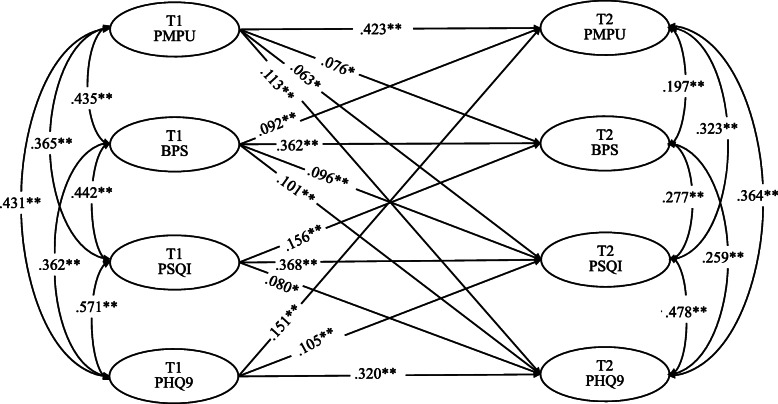
Verification
Claims the paper makes
The claims and statistics of this paper haven’t been checked yet.
Free: it reads the open-access text and checks the first 5 claims that cite a source we can check. Create a free account to check every claim.
Claims other papers make about this one
Each is checked against this paper’s own text: does it say what the citing paper says it does?
The source backs part of the claim, not all of it — or backs it for a different population, condition or comparison.
In the citing paper
“Sleep quality, a known predictor of EF (Xie et al., 2019), is directly decreased by problematic phone usage (Cui et al., 2021).”
From The Relationship Between TikTok Usage and Executive Function Is Mediated by Problematic Social Media Use (2025) · cites this paper as Cui et al., 2021
Experimental — accuracy not yet measured
Self-check
Percentages, sums and reported differences re-computed from the paper’s own numbers.
The self-check needs the paper’s full text.
Citations
Cites
Hu, L., & Bentler, P. M. (1999) · Structural Equation Modeling A Multidisciplinary Journal · doi:10.1080/10705519909540118 · Cited by 108,788
The Pittsburgh Sleep Quality Index: a new instrument for psychiatric practice and research
Buysse, D. J., Reynolds, C. F., Monk, T. H., Berman, S. R., & Kupfer, D. J. (1989) · Psychiatry Research · doi:10.1016/0165-1781(89)90047-4 · Cited by 35,234
Sensitivity of Goodness of Fit Indexes to Lack of Measurement Invariance
Chen, F. F. (2007) · Structural Equation Modeling: A Multidisciplinary Journal · doi:10.1080/10705510701301834 · Cited by 12,217
Schermelleh-Engel, K., Moosbrugger, H., & Müller, H. (2003) · Department of Psychology - University of Koblenz-Landau · doi:10.23668/psycharchives.12784 · Cited by 8,975
Measurement Invariance, Factor Analysis and Factorial Invariance
Meredith, W. (1993) · Psychometrika · doi:10.1007/bf02294825 · Cited by 4,536 · cited 1×
“First, we evaluated the longitudinal measurement invariance of the four scales used in this study, including configural invariance, metric invariance, and scalar invariance [70].”
MethodThe Strength Model of Self-Control
Baumeister, R. F., Vohs, K. D., & Tice, D. M. (2007) · Current Directions in Psychological Science · doi:10.1111/j.1467-8721.2007.00534.x · Cited by 3,567 · cited 2×
“Moreover, according to the Strength Model of Self-Control [49], individuals with PMPU need to access limited and domain-general psychological resources in order to develop self-control.”
MethodSteel, P. (2007) · Psychological bulletin · doi:10.1037/0033-2909.133.1.65 · Cited by 3,417 · cited 1×
“According to Steel’s Temporary Motivation Theory (TMT) [87], whether an individual exhibits procrastination depends on the perceived utility of the task to that individual, and this comprehensive variable is related to value, expectation, and delay.”
MethodThe Smartphone addiction scale: development and validation of a short version for adolescents
Kwon, M., Kim, D.-J., Cho, H., & Yang, S. (2013) · PLoS ONE · doi:10.1371/journal.pone.0083558 · Cited by 2,177
Executive functions and self-regulation
Hofmann, W., Schmeichel, B. J., & Baddeley, A. D. (2012) · Trends in Cognitive Sciences · doi:10.1016/j.tics.2012.01.006 · Cited by 1,965
Sleep disturbance and psychiatric disorders: A longitudinal epidemiological study of young Adults
Breslau, N., Roth, T., Rosenthal, L., & Andreski, P. (1996) · Biological Psychiatry · doi:10.1016/0006-3223(95)00188-3 · Cited by 1,831 · cited 1×
“was an important predictor of depression in young adults [78].”
BackgroundElhai, J. D., Dvorak, R. D., Levine, J. C., & Hall, B. J. (2017) · Journal of Affective Disorders · doi:10.1016/j.jad.2016.08.030 · Cited by 1,689 · cited 2×
“There have been many studies looking at mediators of the relationship (from self-esteem [32] and self-determination [33] to personality traits such as mindfulness [34], attachment variables [35], interpersonal relationships [36], and stress and burnout [5], among others).”
BackgroundLöwe, B., Kroenke, K., Herzog, W., & Gräfe, K. (2004) · Journal of Affective Disorders · doi:10.1016/s0165-0327(03)00198-8 · Cited by 1,558 · cited 1×
“depressive symptoms over the past two weeks [68].”
BackgroundDemirci, K., Akgönül, M., & Akpinar, A. (2015) · Journal of Behavioral Addictions · doi:10.1556/2006.4.2015.010 · Cited by 1,529 · cited 1×
“However, there have also been studies with conflicting results, in which depressive symptoms played a mediating role between PMPU and sleep quality [45].”
ResultPsychological Predictors of Problem Mobile Phone Use
Bianchi, A., & Phillips, J. G. (2005) · CyberPsychology & Behavior · doi:10.1089/cpb.2005.8.39 · Cited by 1,514
Wang, W., Bian, Q., Zhao, Y., Li, X., Wang, W., Du, J., Zhang, G., Zhou, Q., & Zhao, M. (2014) · General Hospital Psychiatry · doi:10.1016/j.genhosppsych.2014.05.021 · Cited by 1,480
Billieux, J., Maurage, P., Lopez-Fernandez, O., Kuss, D. J., & Griffiths, M. D. (2015) · Current Addiction Reports · doi:10.1007/s40429-015-0054-y · Cited by 1,205 · cited 1×
“panic, restlessness, and irritability when separated from their mobile phone) [18].”
BackgroundDepression in sleep disturbance: A review on a bidirectional relationship, mechanisms and treatment
Fang, H., Tu, S., Sheng, J., & Shao, A. (2019) · Journal of Cellular and Molecular Medicine · doi:10.1111/jcmm.14170 · Cited by 1,141
Sleep and circadian rhythm disruption in psychiatric and neurodegenerative disease
Wulff, K., Gatti, S., Wettstein, J. G., & Foster, R. G. (2010) · Nature Reviews Neuroscience · doi:10.1038/nrn2868 · Cited by 1,055 · cited 1×
“Studies have shown that in individuals with PMPU, constant exposure to blue light can inhibit the secretion of melatonin, and cause sleep and circadian rhythm disorders [40, 41], which might be an important factor in the generation of psychopathological symptoms such as depression [42].”
BackgroundTice, D. M., & Baumeister, R. F. (1997) · Psychological Science · doi:10.1111/j.1467-9280.1997.tb00460.x · Cited by 888 · cited 1×
“This may explain why T1 sleep quality can predict T2 bedtime procrastination, since procrastination was considered to be the result of the failure and reduced resources of selfregulation according to the self-regulation view of procrastination [99, 100].”
BackgroundProblematic use of the mobile phone: A literature review and a pathways model
Billieux, J. (2012) · Current Psychiatry Reviews · doi:10.2174/157340012803520522 · Cited by 794
Procrastination and the Priority of Short-Term Mood Regulation: Consequences for Future Self
Sirois, F., & Pychyl, T. (2013) · Social and Personality Psychology Compass · doi:10.1111/spc3.12011 · Cited by 696 · cited 2×
“crastination was associated with guilt, shame, and negative self-evaluation [101]; these adverse psycho-”
BackgroundMethodBusch, P. A., & McCarthy, S. (2021) · Computers in Human Behavior · doi:10.1016/j.chb.2020.106414 · Cited by 657
Development and validation of the Smartphone Addiction Inventory (SPAI)
Lin, Y.-H., Chang, L.-R., Lee, Y.-H., Tseng, H.-W., Kuo, T. B. J., & Chen, S.-H. (2014) · PLoS ONE · doi:10.1371/journal.pone.0098312 · Cited by 611
Sleep disturbance as transdiagnostic: Consideration of neurobiological mechanisms
Harvey, A. G., Murray, G., Chandler, R. A., & Soehner, A. (2011) · Clinical Psychology Review · doi:10.1016/j.cpr.2010.04.003 · Cited by 609 · cited 1×
“From the perspective of neurobiology, sleep/circadian rhythm is related to dopaminergic and serotonergic functions [80], and these neurotransmitters play an important role in emotion regulation and the pathogenesis of depression.”
BackgroundFunctional Imaging of Working Memory after 24 Hr of Total Sleep Deprivation
Chee, M. W. L., & Choo, W. C. (2004) · The Journal of Neuroscience · doi:10.1523/jneurosci.0007-04.2004 · Cited by 509
What type of content are smartphone users addicted to?: SNS vs. games
Jeong, S.-H., Kim, H., Yum, J.-Y., & Hwang, Y. (2016) · Computers in Human Behavior · doi:10.1016/j.chb.2015.07.035 · Cited by 500
Procrastination: When Good Things Don’t Come to Those Who Wait
Klingsieck, K. B. (2013) · European Psychologist · doi:10.1027/1016-9040/a000138 · Cited by 483 · cited 1×
“This may explain why T1 sleep quality can predict T2 bedtime procrastination, since procrastination was considered to be the result of the failure and reduced resources of selfregulation according to the self-regulation view of procrastination [99, 100].”
BackgroundInternet Gratifications and Internet Addiction: On the Uses and Abuses of New Media
Song, I., Larose, R., Eastin, M. S., & Lin, C. A. (2004) · CyberPsychology & Behavior · doi:10.1089/cpb.2004.7.384 · Cited by 457
Addictive Personality and Problematic Mobile Phone Use
Takao, M., Takahashi, S., & Kitamura, M. (2009) · CyberPsychology & Behavior · doi:10.1089/cpb.2009.0022 · Cited by 423
Bedtime procrastination: introducing a new area of procrastination
Kroese, F. M., De Ridder, D. T. D., Evers, C., & Adriaanse, M. A. (2014) · Frontiers in Psychology · doi:10.3389/fpsyg.2014.00611 · Cited by 404
Yang, J., Fu, X., Liao, X., & Li, Y. (2020) · Psychiatry Research · doi:10.1016/j.psychres.2019.112686 · Cited by 377
Self-citationLess effective executive functioning after one night's sleep deprivation
NILSSON, J. P., SÖDERSTRÖM, M., KARLSSON, A. U., LEKANDER, M., ÅKERSTEDT, T., LINDROTH, N. E., & AXELSSON, J. (2005) · Journal of Sleep Research · doi:10.1111/j.1365-2869.2005.00442.x · Cited by 360
A daytime nap containing solely non-REM sleep enhances declarative but not procedural memory
TUCKER, M., HIROTA, Y., WAMSLEY, E., LAU, H., CHAKLADER, A., & FISHBEIN, W. (2006) · Neurobiology of Learning and Memory · doi:10.1016/j.nlm.2006.03.005 · Cited by 343
Chen, L., Yan, Z., Tang, W., Yang, F., Xie, X., & He, J. (2016) · Computers in Human Behavior · doi:10.1016/j.chb.2015.10.030 · Cited by 334 · cited 1×
“There have been many studies looking at mediators of the relationship (from self-esteem [32] and self-determination [33] to personality traits such as mindfulness [34], attachment variables [35], interpersonal relationships [36], and stress and burnout [5], among others).”
BackgroundSelf-citationElhai, J. D., Levine, J. C., Alghraibeh, A. M., Alafnan, A. A., Aldraiweesh, A. A., & Hall, B. J. (2018) · Computers in Human Behavior · doi:10.1016/j.chb.2018.08.020 · Cited by 330
Thomée, S. (2018) · International Journal of Environmental Research and Public Health · doi:10.3390/ijerph15122692 · Cited by 323
Li, Y., Li, G., Liu, L., & Wu, H. (2020) · Journal of Behavioral Addictions · doi:10.1556/2006.2020.00057 · Cited by 307
Self-citation“I'll look after my health, later”: an investigation of procrastination and health
Sirois, F. M., Melia-Gordon, M. L., & Pychyl, T. A. (2003) · Personality and Individual Differences · doi:10.1016/s0191-8869(02)00326-4 · Cited by 292 · cited 1×
“In addition, according to the Procrastination-Health Model [61], habitual procrastinators will experience pressure caused by missed deadlines or completing tasks at the last moment, and may participate in various unhealthy behaviors (such as using mobile phone before bedtime) that can provide immediate satisfaction.”
MethodLatent class analysis on internet and smartphone addiction in college students
Choi, S.-W., Mok, J. Y., Kim, D.-J., Choi, J.-S., Lee, J.-W., Ahn, H.-J., Choi, E.-J., & Song, W.-Y. (2014) · Neuropsychiatric Disease and Treatment · doi:10.2147/ndt.s59293 · Cited by 292
Touitou, Y., Touitou, D., & Reinberg, A. (2016) · Journal of Physiology-Paris · doi:10.1016/j.jphysparis.2017.05.001 · Cited by 290
Problematic Mobile Phone and Smartphone Use Scales: A Systematic Review
Harris, B., Regan, T., Schueler, J., & Fields, S. A. (2020) · Frontiers in Psychology · doi:10.3389/fpsyg.2020.00672 · Cited by 275
Kroese, F. M., Evers, C., Adriaanse, M. A., & de Ridder, D. T. (2016) · Journal of Health Psychology · doi:10.1177/1359105314540014 · Cited by 272
Zhang, M. X., & Wu, A. M. S. (2020) · Addictive Behaviors · doi:10.1016/j.addbeh.2020.106552 · Cited by 265 · cited 2×
“Although this has not been reported in the literature, a cross-sectional study used a mediation model to preliminarily analyze the directions of the effect: PMPU indirectly affects sleep quality by affecting bedtime procrastination [53].”
BackgroundMethodPrefrontal Hypoactivation and Recovery in Insomnia
(2008) · Sleep · doi:10.5665/sleep/31.9.1271 · Cited by 259
The displacement effect: assessing the relation between television viewing and reading performance
Neuman, S. B. (1988) · Reading Research Quarterly · doi:10.2307/747641 · Cited by 238 · cited 2×
“According to the Displacement Hypothesis of The Internet [48], everyone’s time is constant.”
BackgroundWong, M. L., Lau, E. Y. Y., Wan, J. H. Y., Cheung, S. F., Hui, C. H., & MOK, D. S. Y. (2013) · Journal of Psychosomatic Research · doi:10.1016/j.jpsychores.2012.08.014 · Cited by 236 · cited 1×
“Bedtime procrastination means that college students’ sleep time may be reduced, and a previous study has confirmed that short sleep increases the risk of mental disorders in young adults aged 17–25 years [58].”
BackgroundSirois, F. M. (2007) · Personality and Individual Differences · doi:10.1016/j.paid.2006.11.003 · Cited by 230 · cited 1×
“This finding also supports Sirois’s view that procrastination increases individuals’ health risks [86].”
ResultTamura, H., Nishida, T., Tsuji, A., & Sakakibara, H. (2017) · International Journal of Environmental Research and Public Health · doi:10.3390/ijerph14070701 · Cited by 224 · cited 1×
“associated with short sleep duration and insomnia [83].”
BackgroundJun, S. (2016) · Computers in Human Behavior · doi:10.1016/j.chb.2015.12.061 · Cited by 208 · cited 2×
“For example, a three-year follow-up study of 1877 Korean adolescents using autoregressive cross-lagged model analysis found a bidirectional longitudinal relationship between PMPU and depressive symptoms [37]; however, a longitudinal study in China found that depressive symptoms at baseline predicted follow-up PMPU, bu…”
BackgroundMobile phone addiction and adolescents’ anxiety and depression: the moderating role of mindfulness
Yang, X., Zhou, Z., Liu, Q., & Fan, C. (2019) · Journal of Child and Family Studies · doi:10.1007/s10826-018-01323-2 · Cited by 205 · cited 1×
“There have been many studies looking at mediators of the relationship (from self-esteem [32] and self-determination [33] to personality traits such as mindfulness [34], attachment variables [35], interpersonal relationships [36], and stress and burnout [5], among others).”
BackgroundMerlo, L. J., Stone, A. M., & Bibbey, A. (2013) · Journal of Addiction · doi:10.1155/2013/912807 · Cited by 194
Rozgonjuk, D., Kattago, M., & Täht, K. (2018) · Computers in Human Behavior · doi:10.1016/j.chb.2018.08.003 · Cited by 176 · cited 1×
“In addition, studies have also found that trait procrastination and general procrastination may lead to PMPU [54, 55].”
BackgroundMustafaoglu, R., Yasaci, Z., Zirek, E., Griffiths, M. D., & Ozdincler, A. R. (2021) · The Korean Journal of Pain · doi:10.3344/kjp.2021.34.1.72 · Cited by 172
Working in our sleep: Sleep and self-regulation in organizations
Barnes, C. M. (2012) · Organizational Psychology Review · doi:10.1177/2041386612450181 · Cited by 164
Problematic smartphone use: Digital approaches to an emerging public health problem
van Velthoven, M. H., Powell, J., & Powell, G. (2018) · DIGITAL HEALTH · doi:10.1177/2055207618759167 · Cited by 162
Coyne, S. M., Stockdale, L., & Summers, K. (2019) · Computers in Human Behavior · doi:10.1016/j.chb.2019.02.014 · Cited by 156 · cited 1×
“However, there have also been longer than 1 year longitudinal studies that found only a one-way relationship [38, 77].”
BackgroundLapierre, M. A., Zhao, P., & Custer, B. E. (2019) · Journal of Adolescent Health · doi:10.1016/j.jadohealth.2019.06.001 · Cited by 144
Development of the Mobile Phone Addiction Tendency Scale for College Students
Zong, Z. (2012) · Zhongguo xinli weisheng zazhi · Cited by 139
Zhang, G., Yang, X., Tu, X., Ding, N., & Lau, J. T. F. (2020) · Journal of Affective Disorders · doi:10.1016/j.jad.2019.09.047 · Cited by 133 · cited 1×
“In some studies, it was also referred to as mobile phone dependence [11], mobile phone addiction [12], and smartphone addiction [13].”
BackgroundSleep quality as a mediator of problematic smartphone use and clinical health symptoms
Xie, X., Dong, Y., & Wang, J. (2018) · Journal of Behavioral Addictions · doi:10.1556/2006.7.2018.40 · Cited by 129
Elhai, J. D., & Contractor, A. A. (2018) · Computers in Human Behavior · doi:10.1016/j.chb.2018.01.010 · Cited by 121 · cited 1×
“For example, when mobile phones were used to contact families and friends, provide social support, or when learning or working with an aim to increase productivity or self-improvement (such as participating in online work conferences, browsing online learning resources, information retrieval, and schedules) [16], the…”
Backgroundvan Noordt, S. J. R., & Segalowitz, S. J. (2012) · Frontiers in Human Neuroscience · doi:10.3389/fnhum.2012.00197 · Cited by 117
Kühnel, J., Bledow, R., & Feuerhahn, N. (2016) · Journal of Organizational Behavior · doi:10.1002/job.2084 · Cited by 112
Lee, S.-Y., Lee, D., Nam, C. R., Kim, D. Y., Park, S., Kwon, J.-G., Kweon, Y.-S., Lee, Y., Kim, D. J., & Choi, J.-S. (2018) · Journal of Behavioral Addictions · doi:10.1556/2006.7.2018.28 · Cited by 112
Park, S., Yang, S., Shin, C.-S., Jang, H., & Park, S.-Y. (2019) · International Journal of Environmental Research and Public Health · doi:10.3390/ijerph16193584 · Cited by 107
Zheng, B., Li, M., Wang, K. L., & Lv, J. (2016) · PubMed · Cited by 106
Elhai, J. D., Yang, H., & Montag, C. (2019) · Current Addiction Reports · doi:10.1007/s40429-019-00260-4 · Cited by 106 · cited 2×
“or motivation for use is evasion of reality, failure to regulate stress and negative emotions, and boredom, fear of missing out [14] or specific personality traits such as shyness [10].”
BackgroundA tethered generation: Exploring the role of mobile phones in the daily life of young people
Mihailidis, P. (2014) · Mobile Media & Communication · doi:10.1177/2050157913505558 · Cited by 99
Jin Jeong, Y., Suh, B., & Gweon, G. (2020) · Behaviour & Information Technology · doi:10.1080/0144929x.2019.1604805 · Cited by 99
Zhou, H., Dang, L., Lam, L. W., Zhang, M. X., & Wu, A. M. S. (2021) · Addictive Behaviors · doi:10.1016/j.addbeh.2021.106978 · Cited by 99
Prolonged mobile phone use is associated with depressive symptoms in Chinese adolescents
Liu, J., Liu, C. X., Wu, T., Liu, B.-P., Jia, C.-X., & Liu, X. (2019) · Journal of Affective Disorders · doi:10.1016/j.jad.2019.08.017 · Cited by 98 · cited 1×
“Previous studies have explored the mediating role of sleep quality between PMPU and depressive symptoms using crosssectional study designs [43, 44].”
BackgroundSelf-citationMa, X., Meng, D., Zhu, L., Xu, H., Guo, J., Yang, L., Yu, L., Fu, Y., & Mu, L. (2020) · Journal of American College Health · doi:10.1080/07448481.2020.1785474 · Cited by 98
Lee, J. E., Jang, S.-I., Ju, Y. J., Kim, W., Lee, H. J., & Park, E.-C. (2017) · Journal of Korean Medical Science · doi:10.3346/jkms.2017.32.7.1166 · Cited by 88
Li, C., Liu, D., & Dong, Y. H. (2019) · Frontiers in Psychology · doi:10.3389/fpsyg.2019.02872 · Cited by 88
Raudsepp, L. (2019) · Journal of Adolescence · doi:10.1016/j.adolescence.2019.09.005 · Cited by 83
Mobile Phones for Teaching and Learning: Implementation and Students’ and Teachers’ Attitudes
AlTameemy, F. A. Q. (2017) · Journal of Educational Technology Systems · doi:10.1177/0047239516659754 · Cited by 79
Procrastination as a self-regulation failure: The role of inhibition, negative affect, and gender
Rebetez, M. M. L., Rochat, L., Barsics, C., & der Linden, M. V. (2016) · Personality and Individual Differences · doi:10.1016/j.paid.2016.06.049 · Cited by 75
Kang, Y., Liu, S., Yang, L., Xu, B., Lin, L., Xie, L., Zhang, W., Zhang, J., & Zhang, B. (2020) · Frontiers in Psychiatry · doi:10.3389/fpsyt.2020.00634 · Cited by 75
Wang, W., Du, X., Guo, Y., Li, W., Teopiz, K. M., Shi, J., Guo, L., Lu, C., & McIntyre, R. S. (2021) · Sleep Medicine · doi:10.1016/j.sleep.2021.03.009 · Cited by 75
Hong, W., Liu, R., Ding, Y., Jiang, S., Yang, X., & Sheng, X. (2021) · Addictive Behaviors · doi:10.1016/j.addbeh.2021.106993 · Cited by 73
Delayed sleep onset in depressed young people
Glozier, N., O’Dea, B., McGorry, P. D., Pantelis, C., Amminger, G. P., Hermens, D. F., Purcell, R., Scott, E., & Hickie, I. B. (2014) · BMC Psychiatry · doi:10.1186/1471-244x-14-33 · Cited by 72
The impact of bedtime procrastination on depression symptoms in Chinese medical students
Guo, J., Meng, D., Ma, X., Zhu, L., Yang, L., & Mu, L. (2020) · Sleep And Breathing · doi:10.1007/s11325-020-02079-0 · Cited by 72
Márquez‐Hernández, V. V., Gutiérrez‐Puertas, L., Gámez, G. G., Gutiérrez‐Puertas, V., & Aguilera‐Manrique, G. (2020) · Nurse Education in Practice · doi:10.1016/j.nepr.2020.102910 · Cited by 72
Ben-Yehuda, L., Greenberg, L., & Weinstein, A. (2016) · Journal of Reward Deficiency Syndrome and Addiction Science · doi:10.17756/jrdsas.2016-024 · Cited by 66
van Eerde, W., & Venus, M. (2018) · Frontiers in Psychology · doi:10.3389/fpsyg.2018.02029 · Cited by 66
Yang, X., Wang, P., & Hu, P. (2020) · Frontiers in Psychology · doi:10.3389/fpsyg.2020.614660 · Cited by 64
Assessing awareness and use of mobile phone technology for health and wellness: Insights from India
Pai, R. R., & Alathur, S. (2019) · Health Policy and Technology · doi:10.1016/j.hlpt.2019.05.011 · Cited by 61
Zhang, C., Li, G., Fan, Z., Tang, X., & Zhang, F. (2021) · Psychology Research and Behavior Management · doi:10.2147/prbm.s304635 · Cited by 61
The trait approach to personality
Deary, I. J. (2012) · Cambridge University Press eBooks · doi:10.1017/cbo9780511596544.009 · Cited by 57
Zou, L., Wu, X., Tao, S., Xu, H., Xie, Y., Yang, Y., & Tao, F. (2019) · Frontiers in Psychiatry · doi:10.3389/fpsyt.2019.00822 · Cited by 57
Development of Infant Reaching Strategies to Tactile Targets on the Face
Chinn, L. K., Noonan, C. F., Hoffmann, M., & Lockman, J. J. (2019) · Frontiers in Psychology · doi:10.3389/fpsyg.2019.00009 · Cited by 55
Do procrastinators get worse sleep? Cross-sectional study of US adolescents and young adults
Li, X., Buxton, O. M., Kim, Y., Haneuse, S., & Kawachi, I. (2020) · SSM - Population Health · doi:10.1016/j.ssmph.2019.100518 · Cited by 49
Peltz, J. S., Rogge, R. D., Bodenlos, J. S., Kingery, J. N., & Pigeon, W. R. (2020) · Journal of Contextual Behavioral Science · doi:10.1016/j.jcbs.2019.12.003 · Cited by 47 · cited 1×
“In addition, longitudinal studies show that insufficient sleep and suboptimal sleep quality can predict subsequent depressive symptoms [46, 47].”
BackgroundTochigi, M., Usami, S., Matamura, M., Kitagawa, Y., Fukushima, M., Yonehara, H., Togo, F., Nishida, A., & Sasaki, T. (2015) · Sleep Medicine · doi:10.1016/j.sleep.2015.08.024 · Cited by 43
Komarov, O., Ko, L., & Jung, T. (2020) · IEEE Transactions on Neural Systems and Rehabilitation Engineering · doi:10.1109/tnsre.2020.2972812 · Cited by 43
The Role of Depression and Attachment Styles in Predicting Students' Addiction to Cell Phones.
Ghasempour, A., & Mahmoodi-Aghdam, M. (2015) · PubMed Central · Cited by 41
Alghnam, S. A., Towhari, J., Alkelya, M., Alsaif, A., Alrowaily, M., Rabeeah, F. A., & Albabtain, I. T. (2019) · International Journal of Environmental Research and Public Health · doi:10.3390/ijerph16152706 · Cited by 34
Kater, M., & Schlarb, A. A. (2020) · Somnologie - Schlafforschung und Schlafmedizin · doi:10.1007/s11818-020-00272-7 · Cited by 29
Li, G., Xie, J., An, L., Hou, G., Hu, J., & Wang, W. (2019) · Frontiers in Psychiatry · doi:10.3389/fpsyt.2019.00241 · Cited by 29
Amini, M., Saboory, E., Derafshpour, L., Fakhari, A., Wu, J. C., Bruggeman, R., Asgharzadeh, F., & Ahmadalipour, A. (2020) · Neuroscience Letters · doi:10.1016/j.neulet.2020.135254 · Cited by 19
Jang, S.-H., & Ha, Y. (2019) · Journal of Digital Convergence · doi:10.14400/jdc.2019.17.1.269 · Cited by 8
Yu, S. J., Cao, Y., & Ma, D. D. (2018) · PubMed · doi:10.3760/cma.j.issn.1001-9391.2018.11.016 · Cited by 8
Research works printed but not linked: 1
- Tao J Luo C Huang J Liang L Meta analysis of mobile phone dependence of Chinese college students Chin J School Health 2018 39 6 1391 1394
Cited by
Johansson, F., Rozental, A., Edlund, K., Côté, P., Sundberg, T., Onell, C., Rudman, A., & Skillgate, E. (2023) · JAMA Network Open · doi:10.1001/jamanetworkopen.2022.49346 · Cited by 124
Hill, V. M., Rebar, A. L., Ferguson, S. A., Shriane, A. E., & Vincent, G. E. (2022) · Sleep Medicine Reviews · doi:10.1016/j.smrv.2022.101697 · Cited by 134
Sánchez-Fernández, M., & Borda-Mas, M. (2023) · Education and Information Technologies · doi:10.1007/s10639-022-11437-2 · Cited by 98
Bauducco, S., Pillion, M., Bartel, K., Reynolds, C., Kahn, M., & Gradisar, M. (2024) · Sleep Medicine Reviews · doi:10.1016/j.smrv.2024.101933 · Cited by 102
“BP can be defined as a delaying going to bed at the intended time, without any external circumstances causing the delay [82 – 84], and has been investigated with predominantly smart phones [84,85].”
BackgroundLiu, F., Xu, Y., Yang, T., Li, Z., Dong, Y., Chen, L., & Sun, X. (2022) · Psychology Research and Behavior Management · doi:10.2147/prbm.s373095 · Cited by 60
“In a longitudinal study, Cui found that problematic mobile phone use was associated with bedtime procrastination.(30) The more time individuals spend using their mobile phones, the less time they spend on other activities (such as sleeping), which leads to procrastination.”
BackgroundSelf-citation
Metadata
- Authors
- Cui, G., Yin, Y., Li, S., Chen, L., Liu, X., Tang, K., & Li, Y.
- Affiliations
- Shandong University of Traditional Chinese Medicine (CN)
- Central South University (CN)
- Corresponding author
- Yin, Yongtian
- Li, Shaojie
- Venue
- BMC Psychiatry
- Published
- 2021-09-10
- Volume
- 21
- Issue
- 1
- Pages
- 449-449
- ISSN
- 1471-244X (ISSN-L)
- PMC
- PMC8431882
- OpenAlex
- W3198662686
- Semantic Scholar
- 90c19b6ea267285c23d18645ce335d08f4bb3edd
- Cited by
- 171
- References
- 102
- Citations by year
- 2026: 37 · 2025: 40 · 2024: 43 · 2023: 30 · 2022: 20 · 2021: 1
- FWCI
- 32.92
- Type
- journal article
- Language
- en
- Open access
- gold
- doi.org
- Licence
- cc-by
- creativecommons.org/licenses/by/4.0 (tdm)
- creativecommons.org/licenses/by/4.0 (vor)
- Locations
- BMC Psychiatry (publishedVersion, cc-by)
- PubMed Central (publishedVersion, cc-by)
- PubMed (publishedVersion)
- DOAJ (DOAJ: Directory of Open Access Journals) (submittedVersion, cc-by-sa)
- Topics
- Social Sciences › Sociology and Political Science › Impact of Technology on Adolescents
- Social Sciences › Psychology › Experimental and Cognitive Psychology › Sleep and related disorders
- Social Sciences › Education › Youth Substance Use and School Attendance
- Keywords
- problematic mobile phone use, bedtime procrastination, sleep quality, depressive symptoms, university students, bidirectional relationship, longitudinal associations, smartphone addiction, sleep disorders
- MeSH terms
- Procrastination, Cell Phone Use, China, Cross-Sectional Studies, Depression, Humans, Sleep, Students
About these checks
Registry, retraction, Cites and statistics results are computed, not judged, with one exception: a printed reference that no index lists is read once by a model before it counts as a citation error. Claims are extracted by a model and kept only when their quote appears verbatim in the text; each cited source is then checked, with a model’s help, for whether it says what the claim relies on. Those verdicts can be wrong — read the claim’s quote and the cited source before relying on one.
Statistics and arithmetic are recomputed, not judged.
Confidence bands are shown only for fields calibrated on our annotated test set. None is calibrated yet, so no band is shown.
What counts as a claim ›How we measure confidence ›How we check this ›
Are you an author, or do you see a problem with this page? Request a review
Data sources
Bibliographic data: Semantic Scholar, OpenAlex, Crossref.
Contains information from the Semantic Scholar Academic Graph Datasets, made available under the ODC Attribution License (ODC-BY 1.0).
Semantic Scholar’s data is described in: Kinney, R., et al. (2023). The Semantic Scholar Open Data Platform. arXiv:2301.10140.
