

The effectiveness of psychological support interventions for those exposed to mass infectious disease outbreaks: a systematic review
Open accessThe DOI matches its Crossref record; 56 of the 56 references it cites were found in a registry or an index.
Abstract
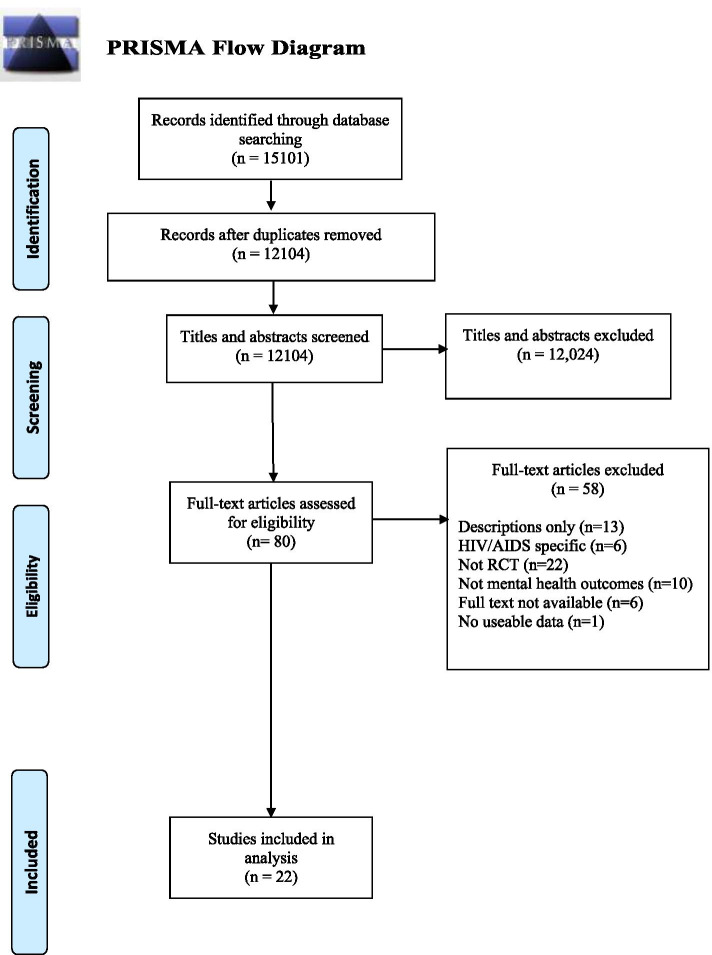
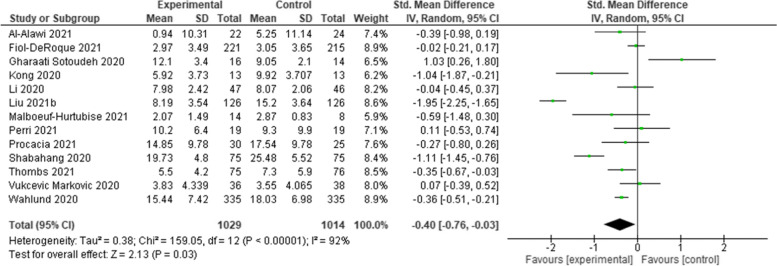
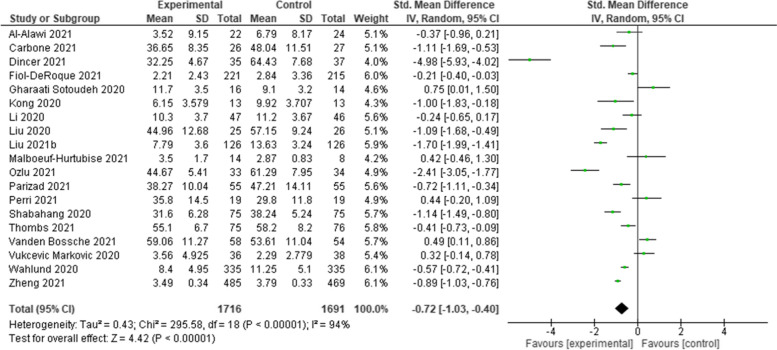
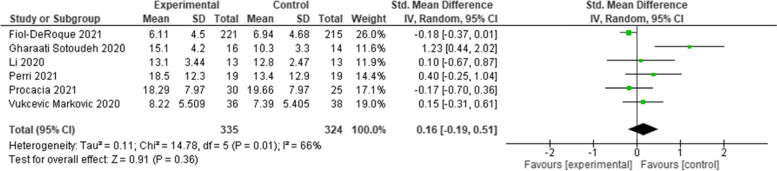
Background: Mass outbreaks such as pandemics are associated with mental health problems requiring effective psychological interventions. Although several forms of psychological interventions may be advocated or used, some may lack strong evidence of efficacy and some may not have been evaluated in mass infectious disease outbreaks. This paper reports a systematic review of published studies (PROSPERO CRD:42020182094. Registered: 24.04.2020) examining the types and effectiveness of psychological support interventions for the general population and healthcare workers exposed to mass infectious disease outbreaks. Methods: A systematic review was conducted. Randomised Controlled Trials (RCT) were identified through searches of electronic databases: Medline (Ovid), Embase (Ovid), PsycINFO (EBSCO) and the Cochrane Library Database from inception to 06.05.2021 using an agreed search strategy. Studies were included if they assessed the effectiveness of interventions providing psychological support to the general population and / or healthcare workers exposed to mass infectious disease outbreaks. Studies were excluded if they focused on man-made or natural disasters or if they included armed forces, police, fire-fighters or coastguards. Results: Twenty-two RCTs were included after screening. Various psychological interventions have been used: therapist-guided therapy (n = 1); online counselling (n = 1); ‘Emotional Freedom Techniques’ (n = 1); mobile phone apps (n = 2); brief crisis intervention (n = 1); psychological-behavioural intervention (n = 1); Cognitive Behavioural Therapy (n = 3); progressive muscle relaxation (n = 2); emotional-based directed drawing (n = 1); psycho-educational debriefing (n = 1); guided imagery (n = 1); Eye Movement Desensitization and Reprocessing (EMDR) (n = 1); expressive writing (n = 2); tailored intervention for patients with a chronic medical conditions (n = 1); community health workers (n = 1); self-guided psychological intervention (n = 1), and a digital behaviour change intervention (n = 1). Meta-analyses showed that psychological interventions had a statistically significant benefit in managing depression (Standardised Mean Difference [SMD]: -0.40; 95% Confidence Interval [CI]: − 0.76 to − 0.03), and anxiety (SMD: -0.72; 95% CI: − 1.03 to − 0.40). The effect on stress was equivocal (SMD: 0.16; 95% CI: − 0.19 to 0.51). The heterogeneity of studies, studies’ high risk of bias, and the lack of available evidence means uncertainty remains. Conclusions: Further RCTs and intervention studies involving representative study populations are needed to inform the development of targeted and tailored psychological interventions for those exposed to mass infectious disease outbreaks.
Overview
The claims and statistics of this paper haven’t been checked yet.
Free: it reads the open-access text and checks the first 5 claims that cite a source we can check. Create a free account to check every claim.
Integrity signals
Registry
Cites
Statistics
Figures
Verification
Claims the paper makes
The claims and statistics of this paper haven’t been checked yet.
Free: it reads the open-access text and checks the first 5 claims that cite a source we can check. Create a free account to check every claim.
Claims other papers make about this one
Each is checked against this paper’s own text: does it say what the citing paper says it does?
The source backs part of the claim, not all of it — or backs it for a different population, condition or comparison.
In the citing paper
“Similarly, findings for interventions that were studied during other epidemics (e.g. Ebola) [22, 23] may also only have limited informative value in the present pandemic context, because of differences in the characteristics of the pathogen and its harmfulness, in the spread of disease, and in containment measures and their duration [23–25].”
From Interventions to build resilience and to ameliorate negative psychosocial effects of the COVID-19 pandemic on children and adolescents: a systematic review and meta-analysis (2024) · cites this paper as [25]
Experimental — accuracy not yet measured
Self-check
Percentages, sums and reported differences re-computed from the paper’s own numbers.
The self-check needs the paper’s full text.
Citations
Cites
Preferred Reporting Items for Systematic Reviews and Meta-Analyses: the PRISMA statement
Moher, D., Liberati, A., Tetzlaff, J., Altman, D. G., & for the PRISMA Group (2009) · BMJ · doi:10.1136/bmj.b2535 · Cited by 83,823
Preferred Reporting Items for Systematic Reviews and Meta-Analyses: The PRISMA Statement
Moher, D., Liberati, A., Tetzlaff, J., Altman, D. G., & The PRISMA Group (2009) · PLoS Medicine · doi:10.1371/journal.pmed.1000097 · Cited by 64,042 · cited 1×
“2020), following established PRISMA guidance and reporting standards [32, 33].”
Preferred reporting items for systematic reviews and meta-analyses: the PRISMA Statement.
(2009) · PubMed Central · Cited by 44,859
Cochrane Handbook for Systematic Reviews of Interventions
(2019) · doi:10.1002/9781119536604 · Cited by 14,828
Developing and evaluating complex interventions: the new Medical Research Council guidance
Craig, P., Dieppe, P., Macintyre, S., Michie, S., Nazareth, I., & Petticrew, M. (2008) · BMJ · doi:10.1136/bmj.a1655 · Cited by 10,995
Holmes, E. A., O'Connor, R. C., Perry, V. H., Tracey, I., Wessely, S., Arseneault, L., Ballard, C., Christensen, H., Cohen Silver, R., Everall, I., et al. (2020) · The Lancet Psychiatry · doi:10.1016/s2215-0366(20)30168-1 · Cited by 5,715 · cited 1×
“It is evident that the effects of the COVID-19 pandemic are pervasive affecting the mental health of many of those exposed [6, 7], including healthcare workers [8–11].”
BackgroundPappa, S., Ntella, V., Giannakas, T., Giannakoulis, V. G., Papoutsi, E., & Katsaounou, P. (2020) · Brain Behavior and Immunity · doi:10.1016/j.bbi.2020.05.026 · Cited by 3,617
COVID-19 pandemic and mental health consequences: Systematic review of the current evidence
Vindegaard, N., & Benros, M. E. (2020) · Brain, Behavior, and Immunity · doi:10.1016/j.bbi.2020.05.048 · Cited by 3,221 · cited 1×
“It is evident that the effects of the COVID-19 pandemic are pervasive affecting the mental health of many of those exposed [6, 7], including healthcare workers [8–11].”
BackgroundManaging mental health challenges faced by healthcare workers during covid-19 pandemic
Greenberg, N., Docherty, M., Gnanapragasam, S., & Wessely, S. (2020) · BMJ · doi:10.1136/bmj.m1211 · Cited by 2,135 · cited 3×
“A mass outbreak puts healthcare workers in unprecedented situations including dilemmas over how to balance their own physical and mental healthcare needs along with those of their patients [13].”
BackgroundMaunder, R., Hunter, J., Vincent, L. H., Bennett, J. P., Peladeau, N., Leszcz, M., Sadavoy, J., Verhaeghe, L. M., Steinberg, R. J., & Mazzulli, T. (2003) · Europe PMC (PubMed Central) · Cited by 1,781
Epidemic of COVID-19 in China and associated psychological problems.
Ahmed, M. Z., Ahmed, O., Aibao, Z., Hanbin, S., Siyu, L., & Ahmad, A. (2020) · Asian Journal of Psychiatry · doi:10.1016/j.ajp.2020.102092 · Cited by 1,390
The effect of COVID-19 on youth mental health
Liang, L., Ren, H., Cao, R., Hu, Y., Qin, Z., Li, C., & Mei, S. (2020) · Psychiatric Quarterly · doi:10.1007/s11126-020-09744-3 · Cited by 971 · cited 1×
“Such uncertainties call for the development and implementation of effective targeted interventions for all those exposed to mass infectious disease outbreaks [11, 16, 26].”
BackgroundDe Kock, J. H., Latham, H. A., Leslie, S. J., Grindle, M., Munoz, S.-A., Ellis, L., Polson, R., & O’Malley, C. M. (2021) · BMC Public Health · doi:10.1186/s12889-020-10070-3 · Cited by 940
Muller, A. E., Hafstad, E. V., Himmels, J. P. W., Smedslund, G., Flottorp, S., Stensland, S. Ø., Stroobants, S., Van de Velde, S., & Vist, G. E. (2020) · Psychiatry Research · doi:10.1016/j.psychres.2020.113441 · Cited by 895
COVID 19 and its mental health consequences
Kumar, A., & Nayar, K. R. (2021) · Journal of Mental Health · doi:10.1080/09638237.2020.1757052 · Cited by 883 · cited 3×
“For example, healthcare workers continuously working long hours in stressful and resource constrained settings [12] require organisational-level interventions to improve their working environments and thereby decrease associated stressors, yet there is limited evidence of preventative measures or organisational level…”
BackgroundSerrano-Ripoll, M. J., Meneses-Echavez, J. F., Ricci-Cabello, I., Fraile-Navarro, D., Fiol-deRoque, M. A., Pastor-Moreno, G., Castro, A., Ruiz-Pérez, I., Zamanillo Campos, R., & Gonçalves-Bradley, D. C. (2020) · Journal of Affective Disorders · doi:10.1016/j.jad.2020.08.034 · Cited by 592
Impact of viral epidemic outbreaks on mental health of healthcare workers: a rapid systematic review
(2020) · doi:10.1101/2020.04.02.20048892 · Cited by 591
Taxonomy of approaches to developing interventions to improve health: a systematic methods overview
O’Cathain, A., Croot, L., Sworn, K., Duncan, E., Rousseau, N., Turner, K., Yardley, L., & Hoddinott, P. (2019) · Pilot and Feasibility Studies · doi:10.1186/s40814-019-0425-6 · Cited by 576
Zhang, J., Wu, W., Zhao, X., & Zhang, W. (2020) · Precision Clinical Medicine · doi:10.1093/pcmedi/pbaa006 · Cited by 554
Effects of progressive muscle relaxation on anxiety and sleep quality in patients with COVID-19
Liu, K., Chen, Y., Wu, D., Lin, R., Wang, Z., & Pan, L. (2020) · Complementary Therapies in Clinical Practice · doi:10.1016/j.ctcp.2020.101132 · Cited by 408 · cited 3×
“Six studies had no post-intervention follow-up [36, 37, 42, 43, 51, 53].”
BackgroundStuijfzand, S., Deforges, C., Sandoz, V., Sajin, C.-T., Jaques, C., Elmers, J., & Horsch, A. (2020) · BMC Public Health · doi:10.1186/s12889-020-09322-z · Cited by 336 · cited 2×
“Such uncertainties call for the development and implementation of effective targeted interventions for all those exposed to mass infectious disease outbreaks [11, 16, 26].”
BackgroundMaunder, R. G., Leszcz, M., Savage, D., Adam, M. A., Peladeau, N., Romano, D., Rose, M., & Schulman, R. B. (2008) · Canadian Journal of Public Health · doi:10.1007/bf03403782 · Cited by 282 · cited 3×
“During the SARS outbreak many healthcare workers reduced their working hours and face-to-face involvement with patients [14, 15].”
BackgroundFiol-DeRoque, M. A., Serrano-Ripoll, M. J., Jiménez, R., Zamanillo-Campos, R., Yáñez-Juan, A. M., Bennasar-Veny, M., Leiva, A., Gervilla, E., García-Buades, M. E., García-Toro, M., et al. (2021) · JMIR mHealth and uHealth · doi:10.2196/27039 · Cited by 190 · cited 10×
“Only one study included staff from primary care settings [38].”
BackgroundMethodInfluentialDincer, B., & Inangil, D. (2021) · EXPLORE · doi:10.1016/j.explore.2020.11.012 · Cited by 179 · cited 8×
“Interventions for healthcare workers Four studies explored interventions for healthcare workers exposed to COVID-19 [37, 38, 49, 50].”
BackgroundMethodInfluentialLiu, Z., Qiao, D., Xu, Y., Zhao, W., Yang, Y., Wen, D., Li, X., Nie, X., Dong, Y., Tang, S., et al. (2021) · Journal of Medical Internet Research · doi:10.2196/26883 · Cited by 169 · cited 6×
“Various psychological interventions have been used: therapist-guided therapy (n = 1); online counselling (n = 1); ‘Emotional Freedom Techniques’ (n = 1); mobile phone apps (n = 2); brief crisis intervention (n = 1); psychological-behavioural intervention (n = 1); Cognitive Behavioural Therapy (n = 3); progressive musc…”
BackgroundInfluential'Resilience training for hospital workers in anticipation of an influenza pandemic'
Aiello, A., Khayeri, M. Y.-E., Raja, S., Peladeau, N., Romano, D., Leszcz, M., Maunder, R. G., Rose, M., Adam, M. A., Pain, C., et al. (2011) · Journal of Continuing Education in the Health Professions · doi:10.1002/chp.20096 · Cited by 159 · cited 1×
“Background Over a decade before the outbreak of the COVID-19 pandemic in 2020, healthcare organisations across the world were preparing for an influenza pandemic of unpredictable scale and impact [1–5], involving increased rates of morbidity and mortality among the general population, high healthcare demands, and cons…”
BackgroundLi, J., Li, X., Jiang, J., Xu, X., Wu, J., Xu, Y., Lin, X., Hall, J., Xu, H., Xu, J., et al. (2020) · Frontiers in Psychiatry · doi:10.3389/fpsyt.2020.580827 · Cited by 157
Lake, J. K., Jachyra, P., Volpe, T., Lunsky, Y., Magnacca, C., Marcinkiewicz, A., & Hamdani, Y. (2021) · Journal of Mental Health Research in Intellectual Disabilities · doi:10.1080/19315864.2021.1892890 · Cited by 109
Wahlund, T., Mataix-Cols, D., Olofsdotter Lauri, K., de Schipper, E., Ljótsson, B., Aspvall, K., & Andersson, E. (2021) · Psychotherapy and Psychosomatics · doi:10.1159/000512843 · Cited by 105 · cited 10×
“Two studies were assessed as being of low risk of bias [54, 55].”
BackgroundInfluentialEffect of Psychological–Behavioral Intervention on the Depression and Anxiety of COVID-19 Patients
Kong, X., Kong, F., Zheng, K., Tang, M., Chen, Y., Zhou, J., Li, Y., Diao, L., Wu, S., Jiao, P., et al. (2020) · Frontiers in Psychiatry · doi:10.3389/fpsyt.2020.586355 · Cited by 101
The current status of psychological debriefing
Kenardy, J. (2000) · BMJ · doi:10.1136/bmj.321.7268.1032 · Cited by 91 · cited 3×
“; PTSD: Post-Traumatic Shock Disorder; RCT : Randomised Controlled Trial; RoB2: Risk of bias assessment; SARS: Severe Acute Respiratory Syndrome; SARS-CoV-2: A virus that can cause COVID-19, a mass infectious disease; SMART : ‘Strength-Focused and Meaning-Orientated Approach for Resilience and Transformation’; UMIC: U…”
BackgroundShifting Focus from Burnout and Wellness toward Individual and Organizational Resilience
Vercio, C., Loo, L. K., Green, M., Kim, D. I., & Beck Dallaghan, G. L. (2021) · Teaching and Learning in Medicine · doi:10.1080/10401334.2021.1879651 · Cited by 81 · cited 1×
“Such uncertainties call for the development and implementation of effective targeted interventions for all those exposed to mass infectious disease outbreaks [11, 16, 26].”
BackgroundParizad, N., Goli, R., Faraji, N., Mam-Qaderi, M., Mirzaee, R., Gharebaghi, N., Baghaie, R., Feizipour, H., & Haghighi, M. (2021) · Complementary Therapies in Clinical Practice · doi:10.1016/j.ctcp.2021.101335 · Cited by 81 · cited 4×
“These interventions included: a brief crisis mental health intervention package [39]; a psychological behavioural intervention [40]; Cognitive Behaviour Therapy [41]; progressive muscle relaxation exercises [42, 47]; a group intervention [43]; computerised Cognitive Behavioural Therapy [44]; guided imagery under a psy…”
BackgroundInfluentialMalboeuf-Hurtubise, C., Léger-Goodes, T., Mageau, G. A., Taylor, G., Herba, C. M., Chadi, N., & Lefrançois, D. (2021) · Child and Adolescent Psychiatry and Mental Health · doi:10.1186/s13034-021-00367-5 · Cited by 79 · cited 7×
“The follow-up for the remaining six studies was unclear [41, 45, 47, 48, 50, 56].”
BackgroundInfluentialZheng, Y., Wang, W., Zhong, Y., Wu, F., Zhu, Z., Tham, Y.-C., Lamoureux, E., Xiao, L., Zhu, E., Liu, H., et al. (2021) · Journal of Medical Internet Research · doi:10.2196/24316 · Cited by 73
Boldt, K., Coenen, M., Movsisyan, A., Voss, S., Rehfuess, E., Kunzler, A. M., Lieb, K., & Jung-Sievers, C. (2021) · International Journal of Environmental Research and Public Health · doi:10.3390/ijerph18052361 · Cited by 72
Al-Alawi, M., McCall, R. K., Sultan, A., Al Balushi, N., Al-Mahrouqi, T., Al Ghailani, A., Al Sabti, H., Al-Maniri, A., Panchatcharam, S. M., & Al Sinawi, H. (2021) · JMIR Mental Health · doi:10.2196/26683 · Cited by 71 · cited 6×
“Nine of these studies’ countries were high-income countries (HICs) [35, 36, 38, 45, 46, 49, 50, 53, 55] and 12 were upper-middle-income countries (UMICs) [37, 39–44, 47, 48, 51, 54, 56].”
BackgroundInfluentialBrooks, S. K., Dunn, R., Amlôt, R., Greenberg, N. L., & Rubin, G. J. (2018) · Journal of Mental Health · doi:10.1080/09638237.2018.1437610 · Cited by 70
Ng, S. M., Chan, T. H. Y., Chan, C. L. W., Lee, A. M., Yau, J. K. Y., Chan, C. H. Y., & Lau, J. (2006) · Community Mental Health Journal · doi:10.1007/s10597-005-9002-y · Cited by 61 · cited 21×
“Maunder R, Hunter J, Vincent L, Bennett J, Peladeau N, Leszcz M, et al. The immediate psychological and occupational impact of the 2003 SARS outbreak in a teaching hospital.”
BackgroundMethodInfluentialPerri, R., Castelli, P., La Rosa, C., Zucchi, T., & Onofri, A. (2021) · Brain Sciences · doi:10.3390/brainsci11050579 · Cited by 61 · cited 8×
“Interventions for healthcare workers Four studies explored interventions for healthcare workers exposed to COVID-19 [37, 38, 49, 50].”
BackgroundMethodInfluentialProcaccia, R., Segre, G., Tamanza, G., & Manzoni, G. M. (2021) · Frontiers in Psychology · doi:10.3389/fpsyg.2021.624176 · Cited by 58 · cited 9×
“One intervention involved the use of an audio-recording played under supervision [47], and one intervention involved a writing task conducted alone at home [50].”
BackgroundMethodInfluentialReview article: Debriefing critical incidents in the emergency department
Magyar, J., & Theophilos, T. (2010) · Emergency Medicine Australasia · doi:10.1111/j.1742-6723.2010.01345.x · Cited by 56
Vukčević Marković, M., Bjekić, J., & Priebe, S. (2020) · Frontiers in Psychology · doi:10.3389/fpsyg.2020.587282 · Cited by 56
Özlü, İ., Öztürk, Z., Karaman Özlü, Z., Tekin, E., & Gür, A. (2021) · Perspectives in Psychiatric Care · doi:10.1111/ppc.12750 · Cited by 52 · cited 5×
“One intervention involved the use of an audio-recording played under supervision [47], and one intervention involved a writing task conducted alone at home [50].”
BackgroundInfluentialPost-disaster psychosocial services across Europe: The TENTS project
Witteveen, A. B., Bisson, J. I., Ajduković, D., Arnberg, F. K., Johannesson, K. B., Bolding, H. B., Elklit, A., Jehel, L., Johansen, V. A., Lis‐Turlejska, M., et al. (2012) · Social Science & Medicine · doi:10.1016/j.socscimed.2012.06.017 · Cited by 51
Brake, H. T., & Dückers, M. (2013) · European Journal of Psychotraumatology · doi:10.3402/ejpt.v4i0.19093 · Cited by 48
Gharaati Sotoudeh, H., Alavi, S. S., Akbari, Z., Jannatifard, F., & Artounian, V. (2020) · Iranian Journal of Psychiatry · doi:10.18502/ijps.v15i3.3812 · Cited by 39
A comparison of tar, carbon monoxide and pH levels in smoke from marihuana and tobacco cigarettes.
Ws, R., Jc, R., & Rogers, B. (1983) · PubMed · Cited by 38
Thombs, B. D., Kwakkenbos, L., Levis, B., Bourgeault, A., Henry, R. S., Levis, A. W., Harb, S., Tao, L., Carrier, M.-E., Bustamante, L., et al. (2021) · The Lancet Rheumatology · doi:10.1016/s2665-9913(21)00060-6 · Cited by 37
Bossche, D. V., Lagaert, S., Willems, S. J. T., & Decat, P. (2021) · International Journal of Environmental Research and Public Health · doi:10.3390/ijerph18063097 · Cited by 35
Liu, Y., Yang, Y., Liu, Y., Pei, S.-L., Yang, H.-H., Wu, J., & Luo, C. (2021) · Psychology Health & Medicine · doi:10.1080/13548506.2021.1916956 · Cited by 33
Carbone, G. A., Zarfati, A., Nicoli, M. S., Paulis, A., Tourjansky, G., Valenti, G., Valenti, E. M., Massullo, C., Farina, B., & Imperatori, C. (2021) · Clinical Psychology & Psychotherapy · doi:10.1002/cpp.2608 · Cited by 20 · cited 7×
“Six studies had no post-intervention follow-up [36, 37, 42, 43, 51, 53].”
BackgroundInfluentialShabahang, R. (2020) · Psychiatria i Psychologia Kliniczna · doi:10.15557/pipk.2020.0011 · Cited by 12 · cited 7×
“Six studies had no post-intervention follow-up [36, 37, 42, 43, 51, 53].”
BackgroundInfluential[Post-traumatic stress disorder and psychological debriefing: a controversial topic].
Debabèche, C., Ansseau, M., & Pitchot, W. (2012) · PubMed · Cited by 5
Garrido, S. E., & Sanagustín, D. (2019) · Archivos de Prevención de Riesgos Laborales · doi:10.12961/aprl.2019.22.01.5 · Cited by 4
Prieto-Callejero, B., Gómez-Salgado, J. C., Gómez, F. A., Días, A., García‐Iglesias, J. J., & Ruíz-Frutos, C. (2020) · PubMed · doi:10.12961/aprl.2019.22.01.05 · Cited by 3
Research works printed but not linked: 7
- Canada Public Health Association Canadian pandemic influenza plan for the health sector 2006
- Department of Health UK UK influenza pandemic contingency plan 2005
- Brooks L Psychologist tells frontline NHS staff ‘it’s OK not to be OK’ 2020 The Guardian
- National Institute of Health & Social Care Excellence (NICE) Post-traumatic stress disorder NG116 2018 31211536
- World Health Organisation Psychological debriefing in people exposed to a recent traumatic event 2012
- NHS England NHS strengthens mental health support for staff 2020
- United Nations Policy Brief: Covid-19 and the need for action on mental health 2020
Cited by
Remote mental health care interventions during the COVID-19 pandemic: An umbrella review
Witteveen, A. B., Young, S. Y., Cuijpers, P. J., Ayuso‐Mateos, J. L., Barbui, C., Bertolini, F., Cabello, M., Cadorin, C., Downes, N., Franzoi, D., et al. (2022) · Behaviour Research and Therapy · doi:10.1016/j.brat.2022.104226 · Cited by 110
Oswald, T. K., Nguyen, M. T., Mirza, L., Lund, C., Jones, H. G., Crowley, G., Aslanyan, D., Dean, K., Schofield, P., Hotopf, M. H., et al. (2024) · Psychological Medicine · doi:10.1017/s0033291724000333 · Cited by 94
Wendel, F., Bender, S., Breitinger, E., Coenen, M., Hummel, J., Immich, G., Kirschneck, M., Klünder, V., Kunzler, A. M., Lieb, K., et al. (2024) · European Child & Adolescent Psychiatry · doi:10.1007/s00787-023-02280-y · Cited by 19
Semerci, M., & Uzun, S. (2023) · Asian Journal of Psychiatry · doi:10.1016/j.ajp.2023.103615 · Cited by 23
Peng, M., Xiao, T., Carter, B., Chen, P., & Shearer, J. (2022) · International Journal of Environmental Research and Public Health · doi:10.3390/ijerph192315847 · Cited by 16
“The current understanding of which psychological interventions and care models can improve mental wellbeing in disasters/emergencies is incomplete, based on insufficiently robust and clear evidence [25].”
Background
Metadata
- Authors
- Doherty, A., Benedetto, V., Harris, C., Boland, P., Christian, D. L., Hill, J., Bhutani, G., & Clegg, A. J.
- Affiliations
- University of Lancashire (GB)
- University of Liverpool (GB)
- Corresponding author
- Doherty, Alison
- ORCID
- Venue
- BMC Psychiatry
- Published
- 2021-11-24
- Volume
- 21
- Issue
- 1
- Pages
- 592-592
- ISSN
- 1471-244X (ISSN-L)
- PMC
- PMC8610770
- OpenAlex
- W3216662165
- Cited by
- 15
- References
- 55
- Citations by year
- 2025: 2 · 2024: 3 · 2023: 6 · 2022: 4
- FWCI
- 0.43
- Type
- journal article
- Language
- en
- Open access
- gold
- doi.org
- Licence
- cc-by
- creativecommons.org/licenses/by/4.0 (tdm)
- creativecommons.org/licenses/by/4.0 (vor)
- Locations
- BMC Psychiatry (publishedVersion, cc-by)
- PubMed Central (publishedVersion, cc-by)
- PubMed (publishedVersion)
- CLOK (University of Central Lancashire) (acceptedVersion)
- DOAJ (DOAJ: Directory of Open Access Journals) (submittedVersion, cc-by-sa)
- Topics
- Social Sciences › Psychology › Clinical Psychology › COVID-19 and Mental Health
- Social Sciences › Psychology › Clinical Psychology › Posttraumatic Stress Disorder Research
- Health Sciences › Health Professions › Emergency Medical Services › Disaster Response and Management
- Keywords
- psychological intervention, mental health during pandemic, healthcare workers, depression, anxiety, stress, cognitive behavioral therapy, EMDR, expressive writing, progressive muscle relaxation, guided imagery, mobile phone app, online counseling, intervention effectiveness, community health workers, digital behaviour change interventions, Emotional Freedom Technique, self-guided intervention
- MeSH terms
- Psychosocial Intervention, Counseling, Disease Outbreaks, Humans, Cognitive Behavioral Therapy, Eye Movement Desensitization Reprocessing
About these checks
Registry, retraction, Cites and statistics results are computed, not judged, with one exception: a printed reference that no index lists is read once by a model before it counts as a citation error. Claims are extracted by a model and kept only when their quote appears verbatim in the text; each cited source is then checked, with a model’s help, for whether it says what the claim relies on. Those verdicts can be wrong — read the claim’s quote and the cited source before relying on one.
Statistics and arithmetic are recomputed, not judged.
Confidence bands are shown only for fields calibrated on our annotated test set. None is calibrated yet, so no band is shown.
What counts as a claim ›How we measure confidence ›How we check this ›
Are you an author, or do you see a problem with this page? Request a review
Data sources
Bibliographic data: Semantic Scholar, OpenAlex, Crossref.
Contains information from the Semantic Scholar Academic Graph Datasets, made available under the ODC Attribution License (ODC-BY 1.0).
Semantic Scholar’s data is described in: Kinney, R., et al. (2023). The Semantic Scholar Open Data Platform. arXiv:2301.10140.
