

The DOI matches its Crossref record; 127 of the 128 references it cites were found in a registry or an index; 43 of the 119 sources its claims cite were checked for support.
Eye movement desensitization and reprocessing (EMDR) therapy or supportive counseling prior to exposure therapy in patients with panic disorder: study protocol for a multicenter randomized controlled trial (IMPROVE)
Open accessAbstract
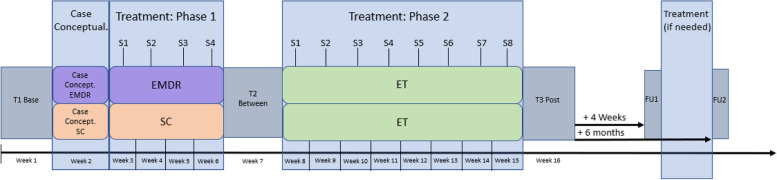
Background: Exposure-based therapy is the treatment of choice for anxiety disorders, but many patients do not benefit sufficiently from it. Distressing images of threat related to the future or past may maintain the anxiety symptomatology or impede exposure therapy. An intervention that targets threat-related imagery is eye movement desensitization and reprocessing (EMDR) therapy. The main goal of this multicenter randomized controlled trial is to investigate whether EMDR therapy plus exposure therapy, relative to supportive counseling plus exposure therapy, improves treatment efficacy, tolerability, and adherence in patients with panic disorder. In addition, we will examine potential predictors of optimal treatment allocation, mechanisms of change as well as the long term effects of treatment. Finally, we will assess cost-effectiveness. Methods: A multicenter randomized controlled trial mixed design will be conducted. Participants will be 50 patients, aged ≥ 18, diagnosed with a panic disorder. They will be randomly assigned to one of two conditions: EMDR therapy (i.e., flashforward strategy) or supportive counseling (each consisting of four weekly sessions of 90 min each) prior to exposure therapy (consisting of eight weekly sessions of 90 min each). Assessments will be made pre-treatment (T1), between-treatments (T2), post-treatment (T3), one month post-treatment (FU1) and six months post-treatment (FU2) by an assessor blind to treatment condition. The primary outcome measure is severity of panic-related symptoms. Secondary outcome measures are: tolerability of exposure therapy (initial avoidance, willingness to start exposure therapy, considered drop-out; no-show and drop-out), related symptomatology (generalized anxiety, depression), and functional impairment. Discussion: The primary goals of this research are to compare the efficacy, tolerability, and adherence of EMDR therapy plus exposure therapy and supportive counseling plus exposure therapy and to identify predictors, moderators, and mediators for treatment success. This multi-center research aims to make a significant contribution to our understanding as to how treatment for patients with anxiety disorders can be optimized, and elucidate who can benefit most from this novel approach. Trial registration: ISRCTN—ISRCTN29668369: Improving anxiety treatment by modifying emotional memories before real-life exposure. Registered 27 June 2022—retrospectively registered. ISRCTN—ISRCTN29668369. © 2023, The Author(s).
Overview
CoChat Summary
## TL;DR
This is a study protocol for a multicenter randomized controlled trial (IMPROVE) testing whether EMDR therapy before exposure therapy improves outcomes in 50 adults with panic disorder compared with supportive counseling before exposure therapy. The trial will also examine tolerability, adherence, predictors/moderators, mechanisms, long-term effects, and cost-effectiveness.
## Key findings
- Not stated in the paper.
- The planned trial will enroll 50 patients aged ≥ 18 with DSM-5 panic disorder and randomize them to 4 weekly 90-minute EMDR sessions or 4 weekly 90-minute supportive counseling sessions, each followed by 8 weekly 90-minute exposure therapy sessions.
- Primary outcome: severity of panic-related symptoms; secondary outcomes include tolerability of exposure therapy, generalized anxiety, depression, and functional impairment.
- The protocol states the study is powered for a medium effect size (f = 0.25); the original target was 100 participants, but the sample was reduced to 50 for feasibility after COVID-19 reduced referrals.
## Methods
- Design: Multicenter, single-blind, randomized controlled trial with a two-arm mixed factorial design; assessments at T1 baseline, T2 between treatments, T3 post-treatment, FU1 one month, and FU2 six months post-treatment.
- Sample/data: Adults ≥ 18 years with primary panic disorder (with or without agoraphobia) recruited from two specialized treatment centers in the Netherlands; final inclusion continues until 50 participants complete post-treatment.
- Main analysis: Intention-to-treat and completer analyses; primary and secondary outcomes analyzed with mixed regression models using baseline scores as covariates, and count outcomes (e.g., no-show, drop-out) analyzed with Poisson or negative binomial regression.
## Limitations
- The paper states there is no waiting list control group, which it notes could be considered a limitation, although the authors argue it is not necessary for this study.
- The paper states there is no direct comparison between EMDR therapy and exposure therapy; EMDR is only tested as a prelude to exposure therapy.
- The paper states follow-up is only six months, not one or two years, and after FU1 participants may receive additional treatment, so long-term effects cannot be attributed solely to the trial interventions.
- Evident from the protocol: this is a study protocol, so no results are reported yet.
Model-written summary. Check it against the paper before relying on it.
Integrity signals
Registry
Cites
Statistics
Figures

Verification
Claims the paper makes
28 Valid · 5 Not valid · 26 Not checked · 34 Own results and interpretations
The cited sources support only part of this claim — read each source’s verdict below.
In the paper
“previous research showed that anxiety patients often report vivid and distressing mental images of threat [23, 24], related to past aversive events (“flash-backs”) or, likely more importantly, anticipated future threat (i.e., “flash-forwards”) [25, 26].”
§ Eye movement desensitization and reprocessing (EMDR) therapy or supportive counseling prior to exposure therapy in patients with panic disorder: study protocol for a multicenter randomized controlled trial (IMPROVE) > Background
What the sources say
- Partly supportedcites [23] Çili S, Stopa L. Intrusive mental imagery in psychological disorders: Is the self the key to understanding maintenance? Front Psychiatry. 2015;6:103. https://doi.org/10.3389/fpsyt.2015.00103. sourceExperimental — accuracy not yet measured
The Characteristics and Origin of Intrusive Images sections describe vivid, distressing images linked to feared outcomes and past adverse experiences in several anxiety disorders. The paper’s explicit example of a future-oriented “flash-forward” concerns depression, however; it does not establish that anticipated future threats are more important than past events for anxiety patients. It also notes that images can be brief and infrequent in generalized anxiety disorder. (LLM, conf=0.86)
- Not checked — no full text of the sourcecites [24] Saulsman LM, Ji JL, McEvoy PM. The essential role of mental imagery in cognitive behaviour therapy: what is old is new again. Aust Psychol. 2019 [cited 2023 Jan 4];54(4):237–44. Available from: https://onlinelibrary-wiley-com.proxy.library.uu.nl/doi/full/10.1111/ap.12406. source
- Not checked — no full text of the sourcecites [25] Deeprose C, Holmes EA. An exploration of prospective imagery: the impact of future events scale. Behav Cogn Psychother. 2010;38(2):201–9. https://doi.org/10.1017/S1352465809990671. source
- Not checked — no full text of the sourcecites [26] Engelhard IM, van den Hout MA, Janssen WC, van der Beek J. Eye movements reduce vividness and emotionality of “ flashforwards.” Behav Res Ther. 2010;48(5):442–7. source
plain- Asserted: passes — The authors put it forward as true.
- Checkable: passes — It can be checked against evidence.
- Load-bearing: passes — The paper’s conclusions depend on it.
- Based: passes — The paper gives a reason why it holds.
- Partly supported
The cited sources support only part of this claim — read each source’s verdict below.
In the paper
“about 10–20% of patients drop out prematurely [12–14]”
§ Eye movement desensitization and reprocessing (EMDR) therapy or supportive counseling prior to exposure therapy in patients with panic disorder: study protocol for a multicenter randomized controlled trial (IMPROVE) > Background
What the sources say
- Not checked — no full text of the sourcecites [12] Issakidis C, Andrews G. Pretreatment attrition and dropout in an outpatient clinic for anxiety disorders. Acta Psychiatr Scand. 2004;109(6):426–33. https://doi.org/10.1111/j.1600-0047.2004.00264.x. source
- Not checked — no full text of the sourcecites [13] White K, Allen L, Barlow D, Gorman J, Shear M, Woods SW. Attrition in a multicenter clinical trial for panic disorder. J Nerv Ment Dis. 2010;198(9):665–71. source
- Partly supportedcites [14] Bentley KH, Cohen ZD, Kim T, Bullis JR, Nauphal M, Cassiello-Robbins C, et al. The nature, timing, and symptom trajectories of dropout from transdiagnostic and single-diagnosis cognitive-behavioral therapy for anxiety disorders. Behav Ther. 2021. https://doi.org/10.1016/j.beth.2021.03.007. sourceExperimental — accuracy not yet measured
The Results (‘Describing treatment attendance across conditions’; page unavailable) report 20.0% dropout overall and 10.5% in transdiagnostic CBT, consistent with the stated range. But dropout was 29.2% in single-diagnosis CBT, and the Discussion says exposure was a component of those protocols; the paper does not establish a 10–20% dropout rate specifically for exposure therapy. (LLM, conf=0.88)
plain- Asserted: passes — The authors put it forward as true.
- Checkable: passes — It can be checked against evidence.
- Load-bearing: passes — The paper’s conclusions depend on it.
- Based: passes — The paper gives a reason why it holds.
The cited sources support only part of this claim — read each source’s verdict below.
In the paper
“Exposure-based therapy is the treatment of choice for anxiety disorders, but many patients do not benefit sufficiently from it.”
§ Eye movement desensitization and reprocessing (EMDR) therapy or supportive counseling prior to exposure therapy in patients with panic disorder: study protocol for a multicenter randomized controlled trial (IMPROVE) > Abstract > Background
What the sources say
- Partly supportedcites [9] Carpenter JK, Andrews LA, Witcraft SM, Powers MB, Smits JAJ, Hofmann SG. Cognitive behavioral therapy for anxiety and related disorders: A meta-analysis of randomized placebo-controlled trials. Depress Anxiety. 2018;35(6):502–14. https://doi.org/10.1002/da.22728. sourceExperimental — accuracy not yet measured
The Discussion (page unavailable) says that CBT leaves room for improvement, especially for PTSD, social anxiety disorder, and panic disorder. The Results (page unavailable) show that most treatments studied included exposure, but the paper does not establish that many patients fail to benefit sufficiently from exposure-based therapy specifically. (LLM, conf=0.82)
- Not checked — no full text of the sourcecites [11] Garcia-Palacios A, Botella C, Hoffman H, Fabregat S. Comparing acceptance and refusal rates of virtual reality exposure vs. in vivo exposure by patients with specific phobias. Cyberpsychol Behav. 2007;10(5):722–4. https://doi.org/10.1089/cpb.2007.9962. source
- Not checked — no full text of the sourcecites [12] Issakidis C, Andrews G. Pretreatment attrition and dropout in an outpatient clinic for anxiety disorders. Acta Psychiatr Scand. 2004;109(6):426–33. https://doi.org/10.1111/j.1600-0047.2004.00264.x. source
- Not checked — no full text of the sourcecites [15] Loerinc AG, Meuret AE, Twohig MP, Rosenfield D, Bluett EJ, Craske MG. Response rates for CBT for anxiety disorders: Need for standardized criteria. Clin Psychol Rev. 2015;42:72–82. https://doi.org/10.1016/j.cpr.2015.08.004. source
plain- Asserted: passes — The authors put it forward as true.
- Checkable: passes — It can be checked against evidence.
- Load-bearing: passes — The paper’s conclusions depend on it.
- Based: passes — The paper gives a reason why it holds.
- Partly supported
The sources with a verdict support this claim; the rest weren’t checked yet, have no full text we could read, or their verdicts aren’t rated yet.
In the paper
“Several randomized controlled trials found that EMDR therapy focused on past aversive events reduces anxiety symptoms [39, 40]”
§ Eye movement desensitization and reprocessing (EMDR) therapy or supportive counseling prior to exposure therapy in patients with panic disorder: study protocol for a multicenter randomized controlled trial (IMPROVE) > Background
What the sources say
- Supportedcites [39] Horst F, Den Oudsten B, Zijlstra W, de Jongh A, Lobbestael J, De Vries J. Cognitive behavioral therapy vs. eye movement desensitization and reprocessing for treating panic disorder a randomized controlled trial. Front Psychol. 2017;8:1409. https://doi.org/10.3389/fpsyg.2017.01409. source
The Treatment section describes EMDR targeting memories of distressing past events. The Results table shows lower anxiety-related cognition and fear-of-bodily-sensation scores after EMDR treatment and at three-month follow-up. This trial supports the claim for patients with panic disorder; the cited passages do not establish the same effect for anxiety disorders generally. Page numbers are not available in our copy. (LLM, conf=0.88)
- Not checked — no full text of the sourcecites [40] Yunitri N, Kao C-C, Chu H, Voss J, Chiu H-L, Liu D, et al. The effectiveness of eye movement desensitization and reprocessing toward anxiety disorder: a meta-analysis of randomized controlled trials. J Psychiatr Res. 2020;123:102–13. https://doi.org/10.1016/j.jpsychires.2020.01.005. source
plainstates a cause- Asserted: passes — The authors put it forward as true.
- Checkable: passes — It can be checked against evidence.
- Load-bearing: passes — The paper’s conclusions depend on it.
- Based: passes — The paper gives a reason why it holds.
- Supported
The cited sources support only part of this claim — read each source’s verdict below.
In the paper
“A protocol was developed based on the protocols used by Bryant and colleagues (1998) [50] and Boelen and colleagues (2007) [62], to match session duration in the EMDR therapy condition and other non-specific treatment effects, such as therapeutic alliance, time and contact with a therapist [63].”
§ Eye movement desensitization and reprocessing (EMDR) therapy or supportive counseling prior to exposure therapy in patients with panic disorder: study protocol for a multicenter randomized controlled trial (IMPROVE) > Methods/design > Interventions
What the sources say
- Not checked — no full text of the sourcecites [50] Bryant RA, Harvey AG, Dang ST, Sackville T, Basten C. Treatment of acute stress disorder: a comparison of cognitive- behavioral therapy and supportive counseling. J Consult Clin Psychol. 1998 [cited 2022 Oct 10];66(5):862–6. source
- Not checked — no full text of the sourcecites [62] Boelen PA, de Keijser J, van den Hout MA, van den Bout J. Treatment of complicated grief: a comparison between cognitive-behavioral therapy and supportive counseling. J Consult Clin Psychol. 2007;75(2):277–84. https://doi.org/10.1037/0022-006X.75.2.277. source
- Partly supportedcites [63] Herbert JD, Gaudiano BA, Rheingold AA, Moitra E, Myers VH, Dalrymple KL, et al. Cognitive behavior therapy for generalized social anxiety disorder in adolescents: a randomized controlled trial. J Anxiety Disord. 2009;23(2):167–77. https://doi.org/10.1016/j.janxdis.2008.06.004. sourceExperimental — accuracy not yet measured
The Method section describes psychoeducational-supportive therapy with the same two-hour session duration and two-therapist format as group CBT, supporting the use of a supportive condition to match treatment time and therapist contact. It does not address EMDR or say that this protocol was designed to match therapeutic alliance; the cited paper’s supportive protocol was based on Heimberg et al., not the protocols named in the sentence. Page numbers are unavailable in our copy. (LLM, conf=0.84)
plainstates a cause- Asserted: passes — The authors put it forward as true.
- Checkable: passes — It can be checked against evidence.
- Load-bearing: passes — The paper’s conclusions depend on it.
- Based: passes — The paper gives a reason why it holds.
30 more claims · 11 with their cited sources checked
Create a free account to see all 93 claims and every source verdict.
- It may state two separate claims as one. 26
- Probably not a substantial claim. 44
Self-check
Percentages, sums and reported differences re-computed from the paper’s own numbers.
Self-check results appear here once an independent check has confirmed them.
Cited works that were retracted
Works this paper cites that were later retracted, from the retraction notices publishers deposit. Major when the notice came out before this paper was published.
Rated major: it would touch a result — a value a result rests on, reported and recomputed p-values on opposite sides of the significance level, two passages that conflict with no sign which is right, or a cited work retracted before this paper was published.
In the paper
“Stratified randomization will be used to reduce bias by treatment center [55], to guarantee a balanced distribution of participants across conditions.”
Cited work 10.4103/0974-1208.82352 · retracted 2017-01-01 · notice 10.4103/0974-1208.170593 · this paper published 2023-03-14
Citations
Cites
1 retracted
An overview of randomization techniques: An unbiased assessment of outcome in clinical research
Suresh, K. (2011) · Journal of Human Reproductive Sciences · doi:10.4103/0974-1208.82352 · Cited by 1,070 · cited 1×
“Stratified randomization will be used to reduce bias by treatment center [55], to guarantee a balanced distribution of participants across conditions.”
MethodRetractedHarris, P. A., Taylor, R., Thielke, R., Payne, J., Gonzalez, N., & Conde, J. G. (2009) · Journal of Biomedical Informatics · doi:10.1016/j.jbi.2008.08.010 · Cited by 51,384 · cited 4×
“ASI Anxiety Sensitivity Index ATPTM Attitudes Toward Psychotherapy Treatment Manuals BSQ Bodily Sensation Questionnaire CBT Cognitive behavioral therapy CEQ Dutch credibility and expectancy scale CS Credibility Scale CSQ-8 Client Satisfaction Questionnaire EBPAS Evidence-Based Practice Attitude Scale EMDR Eye movement…”
MethodInfluentialStatistical power analyses using G∗Power 3.1: tests for correlation and regression analyses
Faul, F., Erdfelder, E., Buchner, A., & Lang, A.-G. (2009) · Behavior Research Methods · doi:10.3758/brm.41.4.1149 · Cited by 37,615 · cited 1×
“1 [56] using a 2 (groups) × 2 (time) repeated-measures ANOVA.”
RoB 2: a revised tool for assessing risk of bias in randomised trials
Sterne, J. A. C., Savović, J., Page, M. J., Elbers, R. G., Blencowe, N. S., Boutron, I., Cates, C. J., Cheng, H.-Y., Corbett, M. S., Eldridge, S. M., et al. (2019) · BMJ · doi:10.1136/bmj.l4898 · Cited by 34,787 · cited 1×
“Third, it can create ethical dilemmas [125, 130] and potentially raise the threshold to participate in a trial resulting in selection bias [127, 131].”
BackgroundThe REDCap consortium: building an international community of software platform partners
Harris, P. A., Taylor, R., Minor, B. L., Elliott, V., Fernandez, M., O'Neal, L., McLeod, L., Delacqua, G., Delacqua, F., Kirby, J., et al. (2019) · Journal of Biomedical Informatics · doi:10.1016/j.jbi.2019.103208 · Cited by 24,013 · cited 4×
“ASI Anxiety Sensitivity Index ATPTM Attitudes Toward Psychotherapy Treatment Manuals BSQ Bodily Sensation Questionnaire CBT Cognitive behavioral therapy CEQ Dutch credibility and expectancy scale CS Credibility Scale CSQ-8 Client Satisfaction Questionnaire EBPAS Evidence-Based Practice Attitude Scale EMDR Eye movement…”
MethodInfluentialDiagnostic and Statistical Manual of Mental Disorders
American Psychiatric Association (2022) · doi:10.1176/appi.books.9780890425787 · Cited by 23,476
(1998) · PubMed · Cited by 10,216
Vos, T., Flaxman, A. D., Naghavi, M., Lozano, R., Michaud, C., Ezzati, M., Shibuya, K., Salomon, J. A., Abdalla, S., Aboyans, V., et al. (2012) · The Lancet · doi:10.1016/s0140-6736(12)61729-2 · Cited by 8,291 · cited 1×
“Their key elements are excessive fear in anticipation or the presence of the feared (innocuous) stimulus/stimuli and avoidance of disorder-related situations [2], which cause personal suffering and/or functional impairment [3].”
BackgroundImpact of Event Scale: A Measure of Subjective Stress
Horowitz, M., Wilner, N., & Alvarez, W. (1979) · Psychosomatic Medicine · doi:10.1097/00006842-197905000-00004 · Cited by 7,813 · cited 3×
“ASI Anxiety Sensitivity Index ATPTM Attitudes Toward Psychotherapy Treatment Manuals BSQ Bodily Sensation Questionnaire CBT Cognitive behavioral therapy CEQ Dutch credibility and expectancy scale CS Credibility Scale CSQ-8 Client Satisfaction Questionnaire EBPAS Evidence-Based Practice Attitude Scale EMDR Eye movement…”
Method
Research works printed but not linked: 5
- Parker Z, Waller G, Dugne PGZ, Dawon J. The role of exposure treatment in anxiety disorders: a meta-analysis. Int J Psychol Psychol. 2018;18(1):111–41.
- Davey GCL. A conditioning model of phobias. In: Davey GCL, editor. Phobias—A handbook of theory, research and treatment: Wiley; 1997. p. 301–22.
- Shapiro, F. Eye Movement Desensitization and Reprocessing: Basic Principles, Protocols and Procedures, 3rd ed.; Guilford Press: New York, NY, USA, 2018.Vereniging EMDR Nederland. EMDR standaardprotocol 2021. 2021. https://www.emdr.nl/. Accessed September 2021
- de Beurs E, den Hollander M, van Rood YR, Zitman F. The Dutch version of the Panic Disorder Severity Scale: Reliability and validity. In: Levin JK, Torterolo AD, editors. Panic Disorder: Symptoms, Treatment and Prevention. Hauppauge: Nova Science; 2011;35(5):293–6.
- Stinckens N, Ulburghs A, Claes L. De werkalliantie als sleutelelement in het therapiegebeuren. Meting met behulp van de WAV 12 de Nederlandse vertaling van de working alliance inventory. Tijdschr Klin Psychol. 2009;39:44–60.
Cited by
No Evidence for Decreased Generalization of Fear Extinction in High-Trait Anxious Individuals
Endhoven, B., Krypotos, A. M., Mertens, G., & Engelhard, I. M. (2024) · Journal of Experimental Psychopathology · doi:10.1177/20438087241272700 · Cited by 1
“…Lee et al., 2018; Wong et al., 2020), whereas a differential paradigm might be more suited to evoke ambiguity in a clinical population with de fi cient extinction learning such as patients with anxiety disorders who do not bene fi t suf fi ciently from exposure therapy (e.g., Endhoven et al., 2023).”
Self-citationJong, H. J. B.-D., Dejonckheere, E., Smeets, T., Lodder, P., & Karreman, A. (2025) · Cognition & Emotion · doi:10.1080/02699931.2025.2508400 · Cited by 1
“Until now, no research has been conducted to test whether EMDR, or dual tasking specifically, enhances acceptability or adherence to exposure-based therapy (Endhoven et al., 2023).”
Suh, J., Chang, S., & Park, H. J. (2025) · Applied Sciences · doi:10.3390/app15020934
ПЕРСПЕКТИВИ ВІРТУАЛЬНОЇ РЕАЛЬНОСТІ ЯК ІНСТРУМЕНТУ ТЕРАПІЇ ПОСТТРАВМАТИЧНОГО СТРЕСОВОГО РОЗЛАДУ
Боцьва, Т., & Kukharuk, O. (2025) · ГРААЛЬ НАУКИ · doi:10.36074/grail-of-science.10.01.2025.067
“…технологій також створює умови до ширшого системного підходу до оцінки та лікування ПТСР, покращення розуміння механізмів та прогностичних моделей та відкриває двері до додаткових терапевтичних цілей, включаючи більш індивідуальні плани лікування та перехід до персоналізованої медицини [10;14].”
Metadata
- Authors
- Endhoven, B., De Cort, K., Matthijssen, S. J. M. A., de Jongh, A., van Minnen, A., Duits, P., Schruers, K. R. J., van Dis, E. A. M., Krypotos, A. M., Gerritsen, L., & Engelhard, I. M.
- Affiliations
- Utrecht University (NL)
- Maastricht University (NL)
- Corresponding author
- Endhoven, Bart
- ORCID
- Venue
- BMC Psychiatry
- Published
- 2023-03-14
- Volume
- 23
- Issue
- 1
- Pages
- 157-157
- ISSN
- 1471-244X (ISSN-L)
- PMC
- PMC10011792
- OpenAlex
- W4324149029
- Cited by
- 4
- References
- 128
- Citations by year
- 2025: 3 · 2024: 1
- FWCI
- 1.03
- Type
- journal article
- Language
- en
- Open access
- gold
- doi.org
- Licence
- cc-by
- creativecommons.org/licenses/by/4.0 (tdm)
- creativecommons.org/licenses/by/4.0 (vor)
- Locations
- BMC Psychiatry (publishedVersion, cc-by)
- PubMed Central (publishedVersion, cc-by)
- PubMed (publishedVersion)
- Research Publications (Maastricht University) (publishedVersion, cc-by)
- VU Research Portal (publishedVersion, other-oa)
- Lirias (submittedVersion, cc-by)
- Radboud Repository (Radboud University) (submittedVersion)
- DOAJ (DOAJ: Directory of Open Access Journals) (submittedVersion, cc-by-sa)
- Utrecht University Repository (Utrecht University) (submittedVersion, other-oa)
- Radboud Repository (Radboud University) (submittedVersion, other-oa)
- Research Publications (Maastricht University) (submittedVersion, cc-by)
- Data Archiving and Networked Services (DANS) (submittedVersion, other-oa)
- Funders
- Nederlandse Organisatie voor Wetenschappelijk Onderzoek (453-15-005))
- Topics
- Social Sciences › Psychology › Experimental and Cognitive Psychology › Anxiety, Depression, Psychometrics, Treatment, Cognitive Processes
- Social Sciences › Psychology › Clinical Psychology › Posttraumatic Stress Disorder Research
- Social Sciences › Psychology › Clinical Psychology › Psychotherapy Techniques and Applications
- Keywords
- panic disorder, EMDR, exposure therapy, supportive counseling, anxiety disorders, treatment tolerability, medication adherence, predictors of treatment response, mechanisms of change, cost-effectiveness
- MeSH terms
- Counseling, Eye Movements, Humans, Implosive Therapy, Stress Disorders, Post-Traumatic, Multicenter Studies as Topic, Randomized Controlled Trials as Topic, Panic Disorder, Treatment Outcome, Eye Movement Desensitization Reprocessing
About these checks
Registry, retraction, Cites and statistics results are computed, not judged, with one exception: a printed reference that no index lists is read once by a model before it counts as a citation error. Claims are extracted by a model and kept only when their quote appears verbatim in the text; each cited source is then checked, with a model’s help, for whether it says what the claim relies on. Those verdicts can be wrong — read the claim’s quote and the cited source before relying on one.
The claim verdicts this report counts are experimental: their accuracy is not yet measured.
A language model drew the claims from the paper on 2026-10-11, under version 3 of the claim definition (model deepseek-v4.1-flash, prompt extract-v3).
A second model labelled each claim on 2026-10-11 (model jev-1.13-20260917, definition revision gold-guideline-v0.2).
Cited sources are checked with a language model’s help (gpt-6-sol).
Statistics and arithmetic are recomputed, not judged.
Confidence bands are shown only for fields calibrated on our annotated test set. None is calibrated yet, so no band is shown.
What counts as a claim ›How we measure confidence ›How we check this ›
Are you an author, or do you see a problem with this page? Request a review
How to cite
Cite CoChat for the checks on this page, and the paper for its own findings.
- This page
- CoChat. (2026). Citation check: Eye movement desensitization and reprocessing (EMDR) therapy or supportive counseling prior to exposure therapy in patients with panic disorder: study protocol for a multicenter randomized controlled trial (IMPROVE). https://app.cochat.ai/papers/10.1186/s12888-022-04320-4
- The paper
- Endhoven, B., De Cort, K., Matthijssen, S. J. M. A., de Jongh, A., van Minnen, A., Duits, P., Schruers, K. R. J., van Dis, E. A. M., Krypotos, A. M., Gerritsen, L., & Engelhard, I. M. (2023). Eye movement desensitization and reprocessing (EMDR) therapy or supportive counseling prior to exposure therapy in patients with panic disorder: study protocol for a multicenter randomized controlled trial (IMPROVE). BMC Psychiatry. https://doi.org/10.1186/s12888-022-04320-4
Data sources
Bibliographic data: Semantic Scholar, OpenAlex, Crossref.
Contains information from the Semantic Scholar Academic Graph Datasets, made available under the ODC Attribution License (ODC-BY 1.0).
Semantic Scholar’s data is described in: Kinney, R., et al. (2023). The Semantic Scholar Open Data Platform. arXiv:2301.10140.
