

Eye movement desensitization and reprocessing (EMDR) therapy or supportive counseling prior to exposure therapy in patients with panic disorder: study protocol for a multicenter randomized controlled trial (IMPROVE)
Open accessThe DOI matches its Crossref record; 128 of the 128 references it cites were found in a registry or an index; 43 of the 119 sources its claims cite were checked for support.
Abstract
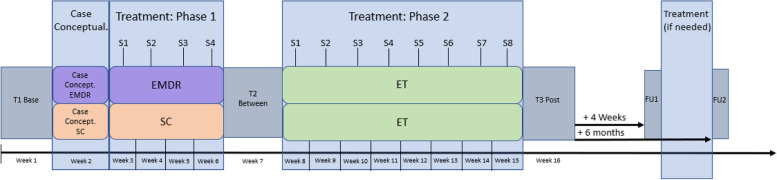
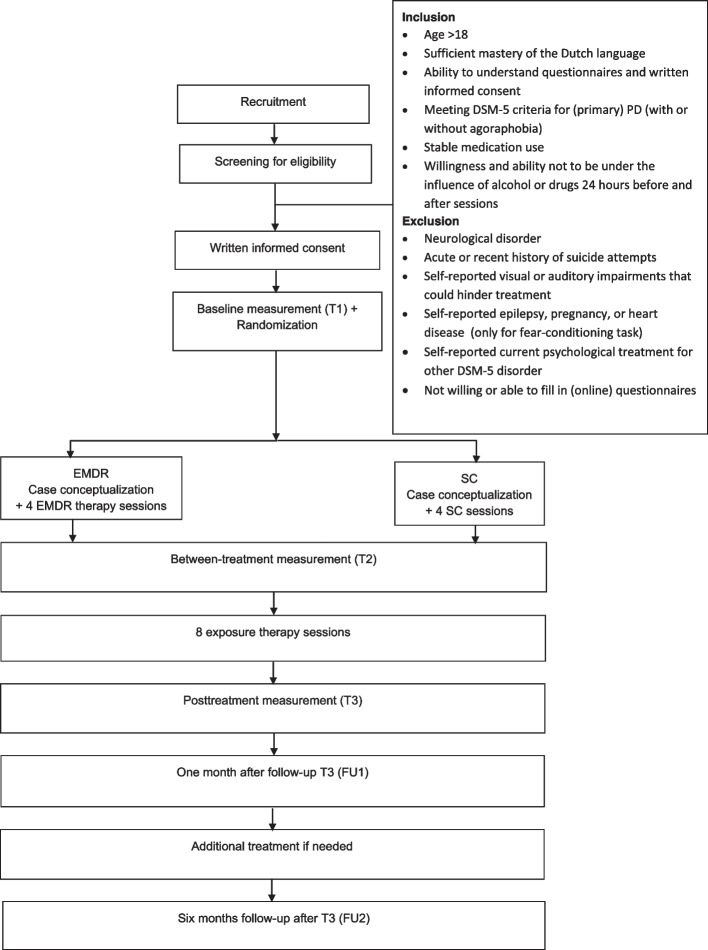
Background: Exposure-based therapy is the treatment of choice for anxiety disorders, but many patients do not benefit sufficiently from it. Distressing images of threat related to the future or past may maintain the anxiety symptomatology or impede exposure therapy. An intervention that targets threat-related imagery is eye movement desensitization and reprocessing (EMDR) therapy. The main goal of this multicenter randomized controlled trial is to investigate whether EMDR therapy plus exposure therapy, relative to supportive counseling plus exposure therapy, improves treatment efficacy, tolerability, and adherence in patients with panic disorder. In addition, we will examine potential predictors of optimal treatment allocation, mechanisms of change as well as the long term effects of treatment. Finally, we will assess cost-effectiveness. Methods: A multicenter randomized controlled trial mixed design will be conducted. Participants will be 50 patients, aged ≥ 18, diagnosed with a panic disorder. They will be randomly assigned to one of two conditions: EMDR therapy (i.e., flashforward strategy) or supportive counseling (each consisting of four weekly sessions of 90 min each) prior to exposure therapy (consisting of eight weekly sessions of 90 min each). Assessments will be made pre-treatment (T1), between-treatments (T2), post-treatment (T3), one month post-treatment (FU1) and six months post-treatment (FU2) by an assessor blind to treatment condition. The primary outcome measure is severity of panic-related symptoms. Secondary outcome measures are: tolerability of exposure therapy (initial avoidance, willingness to start exposure therapy, considered drop-out; no-show and drop-out), related symptomatology (generalized anxiety, depression), and functional impairment. Discussion: The primary goals of this research are to compare the efficacy, tolerability, and adherence of EMDR therapy plus exposure therapy and supportive counseling plus exposure therapy and to identify predictors, moderators, and mediators for treatment success. This multi-center research aims to make a significant contribution to our understanding as to how treatment for patients with anxiety disorders can be optimized, and elucidate who can benefit most from this novel approach. Trial registration: ISRCTN—ISRCTN29668369: Improving anxiety treatment by modifying emotional memories before real-life exposure. Registered 27 June 2022—retrospectively registered. ISRCTN—ISRCTN29668369. © 2023, The Author(s).
Overview
CoChat Summary
## TL;DR
This is a study protocol for a multicenter randomized controlled trial (IMPROVE) testing whether EMDR therapy before exposure therapy improves outcomes in 50 adults with panic disorder compared with supportive counseling before exposure therapy. The trial will also examine tolerability, adherence, predictors/moderators, mechanisms, long-term effects, and cost-effectiveness.
## Key findings
- Not stated in the paper.
- The planned trial will enroll 50 patients aged ≥ 18 with DSM-5 panic disorder and randomize them to 4 weekly 90-minute EMDR sessions or 4 weekly 90-minute supportive counseling sessions, each followed by 8 weekly 90-minute exposure therapy sessions.
- Primary outcome: severity of panic-related symptoms; secondary outcomes include tolerability of exposure therapy, generalized anxiety, depression, and functional impairment.
- The protocol states the study is powered for a medium effect size (f = 0.25); the original target was 100 participants, but the sample was reduced to 50 for feasibility after COVID-19 reduced referrals.
## Methods
- Design: Multicenter, single-blind, randomized controlled trial with a two-arm mixed factorial design; assessments at T1 baseline, T2 between treatments, T3 post-treatment, FU1 one month, and FU2 six months post-treatment.
- Sample/data: Adults ≥ 18 years with primary panic disorder (with or without agoraphobia) recruited from two specialized treatment centers in the Netherlands; final inclusion continues until 50 participants complete post-treatment.
- Main analysis: Intention-to-treat and completer analyses; primary and secondary outcomes analyzed with mixed regression models using baseline scores as covariates, and count outcomes (e.g., no-show, drop-out) analyzed with Poisson or negative binomial regression.
## Limitations
- The paper states there is no waiting list control group, which it notes could be considered a limitation, although the authors argue it is not necessary for this study.
- The paper states there is no direct comparison between EMDR therapy and exposure therapy; EMDR is only tested as a prelude to exposure therapy.
- The paper states follow-up is only six months, not one or two years, and after FU1 participants may receive additional treatment, so long-term effects cannot be attributed solely to the trial interventions.
- Evident from the protocol: this is a study protocol, so no results are reported yet.
Model-written summary. Check it against the paper before relying on it.
Integrity signals
Registry
Cites
Statistics
Figures
Verification
Claims the paper makes
28 Valid · 5 Not valid · 26 Not checked · 34 Own results and interpretations
The cited sources support only part of this claim — read each source’s verdict below.
In the paper
“previous research showed that anxiety patients often report vivid and distressing mental images of threat [23, 24], related to past aversive events (“flash-backs”) or, likely more importantly, anticipated future threat (i.e., “flash-forwards”) [25, 26].”
§ Eye movement desensitization and reprocessing (EMDR) therapy or supportive counseling prior to exposure therapy in patients with panic disorder: study protocol for a multicenter randomized controlled trial (IMPROVE) > Background
What the sources say
- Partly supportedcites [23] Çili S Stopa L Intrusive mental imagery in psychological disorders: Is the self the key to understanding maintenance? Front Psychiatry. 2015 6 103 10.3389/fpsyt.2015.00103 26236244 PMC4505071 sourceExperimental — accuracy not yet measured
The Characteristics and Origin of Intrusive Images sections describe vivid, distressing images linked to feared outcomes and past adverse experiences in several anxiety disorders. The paper’s explicit example of a future-oriented “flash-forward” concerns depression, however; it does not establish that anticipated future threats are more important than past events for anxiety patients. It also notes that images can be brief and infrequent in generalized anxiety disorder. (LLM, conf=0.86)
- Not checked — no full text of the sourcecites [24] Saulsman LM, Ji JL, McEvoy PM. The essential role of mental imagery in cognitive behaviour therapy: what is old is new again. Aust Psychol. 2019 [cited 2023 Jan 4];54(4):237–44. Available from: https://onlinelibrary-wiley-com.proxy.library.uu.nl/doi/full/10.1111/ap.12406. source
- Not checked — no full text of the sourcecites [25] Deeprose C Holmes EA An exploration of prospective imagery: the impact of future events scale Behav Cogn Psychother 2010 38 2 201 209 10.1017/S1352465809990671 20074386 source
- Not checked — no full text of the sourcecites [26] Engelhard IM, van den Hout MA, Janssen WC, van der Beek J. Eye movements reduce vividness and emotionality of “ flashforwards.” Behav Res Ther. 2010;48(5):442–7. 20129601 source
plain- Asserted: passes — The authors put it forward as true.
- Checkable: passes — It can be checked against evidence.
- Load-bearing: passes — The paper’s conclusions depend on it.
- Based: passes — The paper gives a reason why it holds.
- Partly supported
The cited sources support only part of this claim — read each source’s verdict below.
In the paper
“about 10–20% of patients drop out prematurely [12–14]”
§ Eye movement desensitization and reprocessing (EMDR) therapy or supportive counseling prior to exposure therapy in patients with panic disorder: study protocol for a multicenter randomized controlled trial (IMPROVE) > Background
What the sources say
- Not checked — no full text of the sourcecites [12] Issakidis C Andrews G Pretreatment attrition and dropout in an outpatient clinic for anxiety disorders Acta Psychiatr Scand 2004 109 6 426 433 10.1111/j.1600-0047.2004.00264.x 15117287 source
- Not checked — no full text of the sourcecites [13] White K, Allen L, Barlow D, Gorman J, Shear M, Woods SW. Attrition in a multicenter clinical trial for panic disorder. J Nerv Ment Dis. 2010;198(9):665–71. 20823729 source
- Partly supportedcites [14] Bentley KH Cohen ZD Kim T Bullis JR Nauphal M Cassiello-Robbins C The nature, timing, and symptom trajectories of dropout from transdiagnostic and single-diagnosis cognitive-behavioral therapy for anxiety disorders Behav Ther 2021 10.1016/j.beth.2021.03.007 34656192 PMC8531532 sourceExperimental — accuracy not yet measured
The Results (‘Describing treatment attendance across conditions’; page unavailable) report 20.0% dropout overall and 10.5% in transdiagnostic CBT, consistent with the stated range. But dropout was 29.2% in single-diagnosis CBT, and the Discussion says exposure was a component of those protocols; the paper does not establish a 10–20% dropout rate specifically for exposure therapy. (LLM, conf=0.88)
plain- Asserted: passes — The authors put it forward as true.
- Checkable: passes — It can be checked against evidence.
- Load-bearing: passes — The paper’s conclusions depend on it.
- Based: passes — The paper gives a reason why it holds.
The cited sources support only part of this claim — read each source’s verdict below.
In the paper
“Exposure-based therapy is the treatment of choice for anxiety disorders, but many patients do not benefit sufficiently from it.”
§ Eye movement desensitization and reprocessing (EMDR) therapy or supportive counseling prior to exposure therapy in patients with panic disorder: study protocol for a multicenter randomized controlled trial (IMPROVE) > Abstract > Background
What the sources say
- Partly supportedcites [9] Carpenter JK Andrews LA Witcraft SM Powers MB Smits JAJ Hofmann SG Cognitive behavioral therapy for anxiety and related disorders: A meta-analysis of randomized placebo-controlled trials Depress Anxiety 2018 35 6 502 514 10.1002/da.22728 29451967 PMC5992015 sourceExperimental — accuracy not yet measured
The Discussion (page unavailable) says that CBT leaves room for improvement, especially for PTSD, social anxiety disorder, and panic disorder. The Results (page unavailable) show that most treatments studied included exposure, but the paper does not establish that many patients fail to benefit sufficiently from exposure-based therapy specifically. (LLM, conf=0.82)
- Not checked — no full text of the sourcecites [11] Garcia-Palacios A Botella C Hoffman H Fabregat S Comparing acceptance and refusal rates of virtual reality exposure vs. in vivo exposure by patients with specific phobias Cyberpsychol Behav 2007 10 5 722 4 10.1089/cpb.2007.9962 17927544 source
- Not checked — no full text of the sourcecites [12] Issakidis C Andrews G Pretreatment attrition and dropout in an outpatient clinic for anxiety disorders Acta Psychiatr Scand 2004 109 6 426 433 10.1111/j.1600-0047.2004.00264.x 15117287 source
- Not checked — no full text of the sourcecites [15] Loerinc AG Meuret AE Twohig MP Rosenfield D Bluett EJ Craske MG Response rates for CBT for anxiety disorders: Need for standardized criteria Clin Psychol Rev 2015 42 72 82 10.1016/j.cpr.2015.08.004 26319194 source
plain- Asserted: passes — The authors put it forward as true.
- Checkable: passes — It can be checked against evidence.
- Load-bearing: passes — The paper’s conclusions depend on it.
- Based: passes — The paper gives a reason why it holds.
- Partly supported
The sources with a verdict support this claim; the rest weren’t checked yet, have no full text we could read, or their verdicts aren’t rated yet.
In the paper
“Several randomized controlled trials found that EMDR therapy focused on past aversive events reduces anxiety symptoms [39, 40]”
§ Eye movement desensitization and reprocessing (EMDR) therapy or supportive counseling prior to exposure therapy in patients with panic disorder: study protocol for a multicenter randomized controlled trial (IMPROVE) > Background
What the sources say
- Supportedcites [39] Horst F Den Oudsten B Zijlstra W de Jongh A Lobbestael J De Vries J Cognitive behavioral therapy vs. eye movement desensitization and reprocessing for treating panic disorder a randomized controlled trial Front Psychol. 2017 8 1409 10.3389/fpsyg.2017.01409 28868042 PMC5563354 source
The Treatment section describes EMDR targeting memories of distressing past events. The Results table shows lower anxiety-related cognition and fear-of-bodily-sensation scores after EMDR treatment and at three-month follow-up. This trial supports the claim for patients with panic disorder; the cited passages do not establish the same effect for anxiety disorders generally. Page numbers are not available in our copy. (LLM, conf=0.88)
- Not checked — no full text of the sourcecites [40] Yunitri N Kao C-C Chu H Voss J Chiu H-L Liu D The effectiveness of eye movement desensitization and reprocessing toward anxiety disorder: a meta-analysis of randomized controlled trials J Psychiatr Res 2020 123 102 113 10.1016/j.jpsychires.2020.01.005 32058073 source
plainstates a cause- Asserted: passes — The authors put it forward as true.
- Checkable: passes — It can be checked against evidence.
- Load-bearing: passes — The paper’s conclusions depend on it.
- Based: passes — The paper gives a reason why it holds.
- Supported
The cited sources support only part of this claim — read each source’s verdict below.
In the paper
“A protocol was developed based on the protocols used by Bryant and colleagues (1998) [50] and Boelen and colleagues (2007) [62], to match session duration in the EMDR therapy condition and other non-specific treatment effects, such as therapeutic alliance, time and contact with a therapist [63].”
§ Eye movement desensitization and reprocessing (EMDR) therapy or supportive counseling prior to exposure therapy in patients with panic disorder: study protocol for a multicenter randomized controlled trial (IMPROVE) > Methods/design > Interventions
What the sources say
- Not checked — no full text of the sourcecites [50] Bryant RA, Harvey AG, Dang ST, Sackville T, Basten C. Treatment of acute stress disorder: a comparison of cognitive- behavioral therapy and supportive counseling. J Consult Clin Psychol. 1998 [cited 2022 Oct 10];66(5):862–6. 9803707 source
- Not checked — no full text of the sourcecites [62] Boelen PA de Keijser J van den Hout MA van den Bout J Treatment of complicated grief: a comparison between cognitive-behavioral therapy and supportive counseling J Consult Clin Psychol 2007 75 2 277 284 10.1037/0022-006X.75.2.277 17469885 source
- Partly supportedcites [63] Herbert JD Gaudiano BA Rheingold AA Moitra E Myers VH Dalrymple KL Cognitive behavior therapy for generalized social anxiety disorder in adolescents: a randomized controlled trial J Anxiety Disord 2009 23 2 167 177 10.1016/j.janxdis.2008.06.004 18653310 PMC4356535 sourceExperimental — accuracy not yet measured
The Method section describes psychoeducational-supportive therapy with the same two-hour session duration and two-therapist format as group CBT, supporting the use of a supportive condition to match treatment time and therapist contact. It does not address EMDR or say that this protocol was designed to match therapeutic alliance; the cited paper’s supportive protocol was based on Heimberg et al., not the protocols named in the sentence. Page numbers are unavailable in our copy. (LLM, conf=0.84)
plainstates a cause- Asserted: passes — The authors put it forward as true.
- Checkable: passes — It can be checked against evidence.
- Load-bearing: passes — The paper’s conclusions depend on it.
- Based: passes — The paper gives a reason why it holds.
30 more claims · 11 with their cited sources checked
Create a free account to see all 93 claims and every source verdict.
- It may state two separate claims as one. 26
- Probably not a substantial claim. 44
Claims other papers make about this one
Each is checked against this paper’s own text: does it say what the citing paper says it does?
In the citing paper
“So, a single cue paradigm might be suited to evoke ambiguity in a healthy sample (e.g., Lee et al., 2018;Wong et al., 2020), whereas a differential paradigm might be more suited to evoke ambiguity in a clinical population with deficient extinction learning”
From No Evidence for Decreased Generalization of Fear Extinction in High-Trait Anxious Individuals (2024) · cites this paper as Endhoven et al., 2023
Self-check
Percentages, sums and reported differences re-computed from the paper’s own numbers.
Self-check results appear here once an independent check has confirmed them.
Cited works that were retracted
Works this paper cites that were later retracted, from the retraction notices publishers deposit. Major when the notice came out before this paper was published.
Rated major: it would touch a result — a value a result rests on, reported and recomputed p-values on opposite sides of the significance level, two passages that conflict with no sign which is right, or a cited work retracted before this paper was published.
In the paper
“Stratified randomization will be used to reduce bias by treatment center [55], to guarantee a balanced distribution of participants across conditions.”
Cited work 10.4103/0974-1208.82352 · retracted 2017-01-01 · notice 10.4103/0974-1208.170593 · this paper published 2023-03-14
Citations
Cites
1 retracted
An overview of randomization techniques: An unbiased assessment of outcome in clinical research
Suresh, K. (2011) · Journal of Human Reproductive Sciences · doi:10.4103/0974-1208.82352 · Cited by 1,070 · cited 1×
“Stratified randomization will be used to reduce bias by treatment center [55], to guarantee a balanced distribution of participants across conditions.”
MethodRetractedHarris, P. A., Taylor, R., Thielke, R., Payne, J., Gonzalez, N., & Conde, J. G. (2009) · Journal of Biomedical Informatics · doi:10.1016/j.jbi.2008.08.010 · Cited by 51,384 · cited 4×
“ASI Anxiety Sensitivity Index ATPTM Attitudes Toward Psychotherapy Treatment Manuals BSQ Bodily Sensation Questionnaire CBT Cognitive behavioral therapy CEQ Dutch credibility and expectancy scale CS Credibility Scale CSQ-8 Client Satisfaction Questionnaire EBPAS Evidence-Based Practice Attitude Scale EMDR Eye movement…”
MethodInfluentialStatistical power analyses using G∗Power 3.1: tests for correlation and regression analyses
Faul, F., Erdfelder, E., Buchner, A., & Lang, A.-G. (2009) · Behavior Research Methods · doi:10.3758/brm.41.4.1149 · Cited by 37,615 · cited 1×
“1 [56] using a 2 (groups) × 2 (time) repeated-measures ANOVA.”
RoB 2: a revised tool for assessing risk of bias in randomised trials
Sterne, J. A. C., Savović, J., Page, M. J., Elbers, R. G., Blencowe, N. S., Boutron, I., Cates, C. J., Cheng, H.-Y., Corbett, M. S., Eldridge, S. M., et al. (2019) · BMJ · doi:10.1136/bmj.l4898 · Cited by 34,787 · cited 1×
“Third, it can create ethical dilemmas [125, 130] and potentially raise the threshold to participate in a trial resulting in selection bias [127, 131].”
BackgroundThe REDCap consortium: building an international community of software platform partners
Harris, P. A., Taylor, R., Minor, B. L., Elliott, V., Fernandez, M., O'Neal, L., McLeod, L., Delacqua, G., Delacqua, F., Kirby, J., et al. (2019) · Journal of Biomedical Informatics · doi:10.1016/j.jbi.2019.103208 · Cited by 24,013 · cited 4×
“ASI Anxiety Sensitivity Index ATPTM Attitudes Toward Psychotherapy Treatment Manuals BSQ Bodily Sensation Questionnaire CBT Cognitive behavioral therapy CEQ Dutch credibility and expectancy scale CS Credibility Scale CSQ-8 Client Satisfaction Questionnaire EBPAS Evidence-Based Practice Attitude Scale EMDR Eye movement…”
MethodInfluentialDiagnostic and Statistical Manual of Mental Disorders
American Psychiatric Association (2022) · doi:10.1176/appi.books.9780890425787 · Cited by 23,476
(1998) · PubMed · Cited by 10,216
Vos, T., Flaxman, A. D., Naghavi, M., Lozano, R., Michaud, C., Ezzati, M., Shibuya, K., Salomon, J. A., Abdalla, S., Aboyans, V., et al. (2012) · The Lancet · doi:10.1016/s0140-6736(12)61729-2 · Cited by 8,291 · cited 1×
“Their key elements are excessive fear in anticipation or the presence of the feared (innocuous) stimulus/stimuli and avoidance of disorder-related situations [2], which cause personal suffering and/or functional impairment [3].”
BackgroundImpact of Event Scale: A Measure of Subjective Stress
Horowitz, M., Wilner, N., & Alvarez, W. (1979) · Psychosomatic Medicine · doi:10.1097/00006842-197905000-00004 · Cited by 7,813 · cited 3×
“ASI Anxiety Sensitivity Index ATPTM Attitudes Toward Psychotherapy Treatment Manuals BSQ Bodily Sensation Questionnaire CBT Cognitive behavioral therapy CEQ Dutch credibility and expectancy scale CS Credibility Scale CSQ-8 Client Satisfaction Questionnaire EBPAS Evidence-Based Practice Attitude Scale EMDR Eye movement…”
MethodDevelopment and validation of the Penn State Worry Questionnaire
Meyer, T. J., Miller, M. L., Metzger, R. L., & Borkovec, T. D. (1990) · Behaviour Research and Therapy · doi:10.1016/0005-7967(90)90135-6 · Cited by 5,099 · cited 3×
“ASI Anxiety Sensitivity Index ATPTM Attitudes Toward Psychotherapy Treatment Manuals BSQ Bodily Sensation Questionnaire CBT Cognitive behavioral therapy CEQ Dutch credibility and expectancy scale CS Credibility Scale CSQ-8 Client Satisfaction Questionnaire EBPAS Evidence-Based Practice Attitude Scale EMDR Eye movement…”
MethodDevelopment and validation of the working alliance inventory
Horvath, A. O., & Greenberg, L. S. (1989) · Journal of Counseling Psychology · doi:10.1037//0022-0167.36.2.223 · Cited by 3,520 · cited 4×
“ASI Anxiety Sensitivity Index ATPTM Attitudes Toward Psychotherapy Treatment Manuals BSQ Bodily Sensation Questionnaire CBT Cognitive behavioral therapy CEQ Dutch credibility and expectancy scale CS Credibility Scale CSQ-8 Client Satisfaction Questionnaire EBPAS Evidence-Based Practice Attitude Scale EMDR Eye movement…”
MethodInfluentialAnxiety, sensitivity, anxiety frequency, and the prediction of fearfulness
Reiss, S., Peterson, R. A., Gursky, D. M., & McNally, R. J. (1986) · Behaviour Research and Therapy · doi:10.1016/0005-7967(86)90143-9 · Cited by 3,169 · cited 3×
“ASI Anxiety Sensitivity Index ATPTM Attitudes Toward Psychotherapy Treatment Manuals BSQ Bodily Sensation Questionnaire CBT Cognitive behavioral therapy CEQ Dutch credibility and expectancy scale CS Credibility Scale CSQ-8 Client Satisfaction Questionnaire EBPAS Evidence-Based Practice Attitude Scale EMDR Eye movement…”
MethodPsychometric properties of the credibility/expectancy questionnaire
Devilly, G. J., & Borkovec, T. D. (2000) · Journal of Behavior Therapy and Experimental Psychiatry · doi:10.1016/s0005-7916(00)00012-4 · Cited by 2,295 · cited 3×
“ASI Anxiety Sensitivity Index ATPTM Attitudes Toward Psychotherapy Treatment Manuals BSQ Bodily Sensation Questionnaire CBT Cognitive behavioral therapy CEQ Dutch credibility and expectancy scale CS Credibility Scale CSQ-8 Client Satisfaction Questionnaire EBPAS Evidence-Based Practice Attitude Scale EMDR Eye movement…”
BackgroundAddis, D. R., Wong, A. T., & Schacter, D. L. (2007) · Neuropsychologia · doi:10.1016/j.neuropsychologia.2006.10.016 · Cited by 1,949 · cited 1×
“Because similar neural mechanisms are involved in past and future memories [45], EMDR therapy may also be effective to modulate fear-related future memories.”
BackgroundBrief standard self-rating for phobic patients
Marks, I. M., & Mathews, A. M. (1979) · Behaviour Research and Therapy · doi:10.1016/0005-7967(79)90041-x · Cited by 1,801 · cited 2×
“Fear Questionnaire‐Agoraphobia (FQ‐A): The FQ-5 [76, 77] is a 5-item questionnaire to assess avoidance behavior for various places (e.”
BackgroundThe client satisfaction questionnaire
Attkisson, C. C., & Zwick, R. (1982) · Evaluation and Program Planning · doi:10.1016/0149-7189(82)90074-x · Cited by 1,743
Cost of disorders of the brain in Europe 2010
Gustavsson, A., Svensson, M., Jacobi, F., Allgulander, C., Alonso, J., Beghi, E., Dodel, R., Ekman, M., Faravelli, C., Fratiglioni, L., et al. (2011) · European Neuropsychopharmacology · doi:10.1016/j.euroneuro.2011.08.008 · Cited by 1,723
Löwe, B., Kroenke, K., Herzog, W., & Gräfe, K. (2004) · Journal of Affective Disorders · doi:10.1016/s0165-0327(03)00198-8 · Cited by 1,558
Global prevalence of anxiety disorders: a systematic review and meta-regression
Baxter, A. J., Scott, K. M., Vos, T., & Whiteford, H. A. (2013) · Psychological Medicine · doi:10.1017/s003329171200147x · Cited by 1,537
The intolerance of uncertainty scale: psychometric properties of the English version
Buhr, K., & Dugas, M. J. (2002) · Behaviour Research and Therapy · doi:10.1016/s0005-7967(01)00092-4 · Cited by 1,391 · cited 3×
“ASI Anxiety Sensitivity Index ATPTM Attitudes Toward Psychotherapy Treatment Manuals BSQ Bodily Sensation Questionnaire CBT Cognitive behavioral therapy CEQ Dutch credibility and expectancy scale CS Credibility Scale CSQ-8 Client Satisfaction Questionnaire EBPAS Evidence-Based Practice Attitude Scale EMDR Eye movement…”
MethodChambless, D. L., Caputo, G. C., Bright, P., & Gallagher, R. (1984) · Journal of Consulting and Clinical Psychology · doi:10.1037/0022-006x.52.6.1090 · Cited by 1,247 · cited 3×
“ASI Anxiety Sensitivity Index ATPTM Attitudes Toward Psychotherapy Treatment Manuals BSQ Bodily Sensation Questionnaire CBT Cognitive behavioral therapy CEQ Dutch credibility and expectancy scale CS Credibility Scale CSQ-8 Client Satisfaction Questionnaire EBPAS Evidence-Based Practice Attitude Scale EMDR Eye movement…”
MethodThe economic burden of anxiety disorders in the 1990s
Greenberg, P. E., Sisitsky, T., Kessler, R. C., Finkelstein, S. N., Berndt, E. R., Davidson, J. R. T., Ballenger, J. C., & Fyer, A. J. (1999) · The Journal of Clinical Psychiatry · doi:10.4088/jcp.v60n0702 · Cited by 1,242 · cited 1×
“Annual societal costs associated with anxiety-related disorders are estimated at about €74 billion in the European Union [4] and $42 billion in the United States [5].”
BackgroundPrevalence and incidence studies of anxiety disorders: A systematic review of the literature
Somers, J. M., Goldner, E. M., Waraich, P., & Hsu, L. (2006) · The Canadian Journal of Psychiatry · doi:10.1177/070674370605100206 · Cited by 1,114 · cited 1×
“Furthermore, panic disorder is prevalent, which enhances the study’s feasibility [51].”
BackgroundDutch Tariff for the Five-Level Version of EQ-5D
M. Versteegh, M., M. Vermeulen, K., M. A. A. Evers, S., de Wit, G. A., Prenger, R., & A. Stolk, E. (2016) · Value in Health · doi:10.1016/j.jval.2016.01.003 · Cited by 1,113 · cited 4×
“ASI Anxiety Sensitivity Index ATPTM Attitudes Toward Psychotherapy Treatment Manuals BSQ Bodily Sensation Questionnaire CBT Cognitive behavioral therapy CEQ Dutch credibility and expectancy scale CS Credibility Scale CSQ-8 Client Satisfaction Questionnaire EBPAS Evidence-Based Practice Attitude Scale EMDR Eye movement…”
MethodInfluentialLOWE, B. (2004) · Journal of Affective Disorders · doi:10.1016/s0165-0327(02)00237-9 · Cited by 1,060
Phenomenal characteristics of memories for perceived and imagined autobiographical events.
Johnson, M. K., Foley, M. A., Suengas, A. G., & Raye, C. L. (1988) · Journal of Experimental Psychology General · doi:10.1037//0096-3445.117.4.371 · Cited by 1,046 · cited 1×
“It is structured and combines sections of the Waterloo Images and Memories Interview (WIMI) [111], the imagery interview by Boterhoven de Haan and colleagues [112] and the Memory Characteristics Questionnaire [113].”
MethodMental imagery in emotion and emotional disorders
Holmes, E. A., & Mathews, A. (2010) · Clinical Psychology Review · doi:10.1016/j.cpr.2010.01.001 · Cited by 976 · cited 2×
“Such imagery shares similarities with traumatic memories in posttraumatic stress disorder (PTSD) [21, 22].”
BackgroundEfficacy of the eye movement desensitization procedure in the treatment of traumatic memories
Shapiro, F. (1989) · Journal of Traumatic Stress · doi:10.1002/jts.2490020207 · Cited by 964 · cited 1×
“EMDR therapy was developed to alleviate the distress associated with traumatic memories [41].”
BackgroundKennedy-Martin, T., Curtis, S., Faries, D., Robinson, S., & Johnston, J. (2015) · Trials · doi:10.1186/s13063-015-1023-4 · Cited by 878 · cited 1×
“No strict exclusion criteria are used and clinics are in large cities across the Netherlands, which enhances the external validity of our results [119, 120].”
BackgroundCarpenter, J. K., Andrews, L. A., Witcraft, S. M., Powers, M. B., Smits, J. A. J., & Hofmann, S. G. (2018) · Depression and Anxiety · doi:10.1002/da.22728 · Cited by 846 · cited 4×
“Given the active control condition, we expect a medium effect size [9].”
BackgroundMethodInfluentialThe National Collaborating Centre for Mental Health
Kendall, T., & Pilling, S. (2004) · UCL Discovery (University College London) · Cited by 840
The Role of Common Factors in Psychotherapy Outcomes
Cuijpers, P., Reijnders, M., & Huibers, M. J. H. (2019) · Annual Review of Clinical Psychology · doi:10.1146/annurev-clinpsy-050718-095424 · Cited by 748 · cited 3×
“Hereby, identifying predictors, mediators and moderators of treatment that could help us develop new theoretical models and aid diagnostic- and treatment decision-making [64, 116], paving the way into the era of personalized medicine [118].”
BackgroundMethodAssessment of patient satisfaction: Development and refinement of a Service Evaluation Questionnaire
Nguyen, T. D., Attkisson, C. C., & Stegner, B. L. (1983) · Evaluation and Program Planning · doi:10.1016/0149-7189(83)90010-1 · Cited by 736
Foster, E. D., & Deardorff, A. (2017) · Journal of the Medical Library Association · doi:10.5195/jmla.2017.88 · Cited by 715 · cited 2×
“Data analysis strategies for the secondary goals (goals 2–4) will be pre-registered in prior to analysis in Open Science Framework [52].”
BackgroundMethodFear Extinction and Relapse: State of the Art
Vervliet, B., Craske, M. G., & Hermans, D. (2013) · Annual Review of Clinical Psychology · doi:10.1146/annurev-clinpsy-050212-185542 · Cited by 671 · cited 1×
“Additionally, laboratory research has shown that even when exposure-based training is initially successful, learned fear can later return [19].”
BackgroundThe Lancet Psychiatry Commission on psychological treatments research in tomorrow's science
Holmes, E. A., Ghaderi, A., Harmer, C. J., Ramchandani, P. G., Cuijpers, P., Morrison, A. P., Roiser, J. P., Bockting, C. L. H., O'Connor, R. C., Shafran, R., et al. (2018) · The Lancet Psychiatry · doi:10.1016/s2215-0366(17)30513-8 · Cited by 624 · cited 2×
“Hereby, identifying predictors, mediators and moderators of treatment that could help us develop new theoretical models and aid diagnostic- and treatment decision-making [64, 116], paving the way into the era of personalized medicine [118].”
BackgroundMethodMental Imagery and Emotion: A Special Relationship?
Holmes, E. A., & Mathews, A. (2005) · Emotion · doi:10.1037/1528-3542.5.4.489 · Cited by 612
Response rates for CBT for anxiety disorders: need for standardized criteria
Loerinc, A. G., Meuret, A. E., Twohig, M. P., Rosenfield, D., Bluett, E. J., & Craske, M. G. (2015) · Clinical Psychology Review · doi:10.1016/j.cpr.2015.08.004 · Cited by 592 · cited 1×
“, the percentage of patients showing significant clinical improvement) is around 50% [15].”
BackgroundMohr, D. C., Spring, B., Freedland, K. E., Beckner, V., Arean, P., Hollon, S. D., Ockene, J., & Kaplan, R. (2009) · Psychotherapy and Psychosomatics · doi:10.1159/000228248 · Cited by 565 · cited 3×
“First, effect sizes for EMDR therapy, supportive counseling and CBT in anxiety disorders have already been established [9, 38, 40], so a benchmark is not needed and could artificially inflate effect sizes [126, 127].”
BackgroundFurukawa, T. A., Noma, H., Caldwell, D. M., Honyashiki, M., Shinohara, K., Imai, H., Chen, P., Hunot, V., & Churchill, R. (2014) · Acta Psychiatrica Scandinavica · doi:10.1111/acps.12275 · Cited by 521 · cited 1×
“Second, it could also result in unwanted nocebo effects [125, 128, 129].”
BackgroundPanic—Psychological perspectives
Lindsay, S. (1989) · Behaviour Research and Therapy · doi:10.1016/0005-7967(89)90021-1 · Cited by 476
Bryant, R. A., Harvey, A. G., Dang, S. T., Sackville, T., & Basten, C. (1998) · Journal of Consulting and Clinical Psychology · doi:10.1037/0022-006x.66.5.862 · Cited by 471 · cited 3×
“A protocol was developed based on the protocols used by Bryant and colleagues (1998) [50] and Boelen and colleagues (2007) [62], to match session duration in the EMDR therapy condition and other non-specific treatment effects, such as therapeutic alliance, time and contact with a therapist [63].”
BackgroundMethodBoelen, P. A., de Keijser, J., van den Hout, M. A., & van den Bout, J. (2007) · Journal of Consulting and Clinical Psychology · doi:10.1037/0022-006x.75.2.277 · Cited by 454 · cited 2×
“A protocol was developed based on the protocols used by Bryant and colleagues (1998) [50] and Boelen and colleagues (2007) [62], to match session duration in the EMDR therapy condition and other non-specific treatment effects, such as therapeutic alliance, time and contact with a therapist [63].”
BackgroundMethodGarcia-Palacios, A., Botella, C., Hoffman, H., & Fabregat, S. (2007) · CyberPsychology & Behavior · doi:10.1089/cpb.2007.9962 · Cited by 410 · cited 1×
“First, about 25–30% of patients refuse to start exposure therapy, because they find it too aversive [11, 12].”
BackgroundReliability of the self-report version of the panic disorder severity scale
Houck, P. R., Spiegel, D. A., Shear, M. K., & Rucci, P. (2002) · Depression and Anxiety · doi:10.1002/da.10049 · Cited by 406
Bouwmans, C., De Jong, K., Timman, R., Zijlstra-Vlasveld, M., Van der Feltz-Cornelis, C., Tan, S. S., & Hakkaart-van Roijen, L. (2013) · BMC Health Services Research · doi:10.1186/1472-6963-13-217 · Cited by 401 · cited 4×
“ASI Anxiety Sensitivity Index ATPTM Attitudes Toward Psychotherapy Treatment Manuals BSQ Bodily Sensation Questionnaire CBT Cognitive behavioral therapy CEQ Dutch credibility and expectancy scale CS Credibility Scale CSQ-8 Client Satisfaction Questionnaire EBPAS Evidence-Based Practice Attitude Scale EMDR Eye movement…”
BackgroundInfluentialReliability and validity of the Panic Disorder Severity Scale: replication and extension
Shear, M. K., Rucci, P., Williams, J., Frank, E., Grochocinski, V., Vander Bilt, J., Houck, P., & Wang, T. (2001) · Journal of Psychiatric Research · doi:10.1016/s0022-3956(01)00028-0 · Cited by 360
van Dis, E. A. M., van Veen, S. C., Hagenaars, M. A., Batelaan, N. M., Bockting, C. L. H., van den Heuvel, R. M., Cuijpers, P., & Engelhard, I. M. (2020) · JAMA Psychiatry · doi:10.1001/jamapsychiatry.2019.3986 · Cited by 335
Self-citationBandelow, B. (1995) · International Clinical Psychopharmacology · doi:10.1097/00004850-199506000-00003 · Cited by 314 · cited 5×
“ASI Anxiety Sensitivity Index ATPTM Attitudes Toward Psychotherapy Treatment Manuals BSQ Bodily Sensation Questionnaire CBT Cognitive behavioral therapy CEQ Dutch credibility and expectancy scale CS Credibility Scale CSQ-8 Client Satisfaction Questionnaire EBPAS Evidence-Based Practice Attitude Scale EMDR Eye movement…”
BackgroundInfluentialCONSORT Revised—Improving the Reporting of Randomized Trials
Rennie, D. (2001) · JAMA · doi:10.1001/jama.285.15.2006 · Cited by 294 · cited 2×
“The study will be conducted according to the principles of the Declaration of Helsinki (64th version, October 2013) [134], following the Medical Research Involving Human Subjects Act (WMO) and reported in line with the CONSORT guidelines [135].”
MethodConstruct Validation of the Dutch Version of the Impact of Event Scale.
van der Ploeg, E., Mooren, T. T. M., Kleber, R. J., van der Velden, P. G., & Brom, D. (2004) · Psychological Assessment · doi:10.1037/1040-3590.16.1.16 · Cited by 294
van Minnen, A., Hendriks, L., & Olff, M. (2010) · Behaviour Research and Therapy · doi:10.1016/j.brat.2009.12.003 · Cited by 282 · cited 2×
“Demographics and expertise: Based on earlier studies [106, 107], we will assess age, gender, years of expertise, main profession, clinical orientation, and memberships of professional associations.”
MethodImagery rescripting as a clinical intervention for aversive memories: A meta-analysis
Morina, N., Lancee, J., & Arntz, A. (2017) · Journal of Behavior Therapy and Experimental Psychiatry · doi:10.1016/j.jbtep.2016.11.003 · Cited by 282
Donker, T., van Straten, A., Marks, I., & Cuijpers, P. (2011) · Psychiatry Research · doi:10.1016/j.psychres.2011.01.016 · Cited by 273 · cited 3×
“ASI Anxiety Sensitivity Index ATPTM Attitudes Toward Psychotherapy Treatment Manuals BSQ Bodily Sensation Questionnaire CBT Cognitive behavioral therapy CEQ Dutch credibility and expectancy scale CS Credibility Scale CSQ-8 Client Satisfaction Questionnaire EBPAS Evidence-Based Practice Attitude Scale EMDR Eye movement…”
BackgroundResearcher allegiance in psychotherapy outcome research: An overview of reviews
Munder, T., Brütsch, O., Leonhart, R., Gerger, H., & Barth, J. (2013) · Clinical Psychology Review · doi:10.1016/j.cpr.2013.02.002 · Cited by 260 · cited 1×
“Researcher allegiance bias is problematic in psychotherapy research [121, 122], including studies about EMDR therapy efficacy in anxiety disorders [38, 40].”
BackgroundAndrews, G., Bell, C., Boyce, P., Gale, C., Lampe, L., Marwat, O., Rapee, R., & Wilkins, G. (2018) · Australian & New Zealand Journal of Psychiatry · doi:10.1177/0004867418799453 · Cited by 243 · cited 1×
“, [6]], and it typically includes a combination of cognitive restructuring and behavioral (e.”
BackgroundEmotional Mental Imagery as Simulation of Reality: Fear and Beyond—A Tribute to Peter Lang
Ji, J. L., Heyes, S. B., MacLeod, C., & Holmes, E. A. (2016) · Behavior Therapy · doi:10.1016/j.beth.2015.11.004 · Cited by 234
Anxiety sensitivity and interoceptive exposure: A transdiagnostic construct and change strategy
Boswell, J. F., Farchione, T. J., Sauer-Zavala, S., Murray, H. W., Fortune, M. R., & Barlow, D. H. (2013) · Behavior Therapy · doi:10.1016/j.beth.2013.03.006 · Cited by 232 · cited 1×
“, self-induced dizziness, accelerated heart rate and hyperventilation or physical exercises) [79].”
BackgroundLonsdorf, T. B., & Merz, C. J. (2017) · Neuroscience & Biobehavioral Reviews · doi:10.1016/j.neubiorev.2017.07.007 · Cited by 231 · cited 1×
“De novo fear conditioning task: Individual differences in fear extinction will be assessed with a differential fear conditioning computer task, including four phases: 1) habituation; 2) acquisition; using a scream as aversive stimulus [103]; 3) extinction; 4) generalization of extinction.”
MethodConceptual, methodological, and ethical problems of placebo groups in psychotherapy research.
O'Leary, K. D., & Borkovec, T. D. (1978) · American Psychologist · doi:10.1037//0003-066x.33.9.821 · Cited by 229 · cited 1×
“Third, it can create ethical dilemmas [125, 130] and potentially raise the threshold to participate in a trial resulting in selection bias [127, 131].”
BackgroundOptimizing exposure therapy with an inhibitory retrieval approach and the OptEx Nexus
Craske, M. G., Treanor, M., Zbozinek, T. D., & Vervliet, B. (2022) · Behaviour Research and Therapy · doi:10.1016/j.brat.2022.104069 · Cited by 195 · cited 3×
“To maximize expectancy violation, cognitive techniques prior to exposure are not used, as recommended by Craske and colleagues [8].”
BackgroundMethodInfluentialLandin-Romero, R., Moreno-Alcazar, A., Pagani, M., & Amann, B. L. (2018) · Frontiers in Psychology · doi:10.3389/fpsyg.2018.01395 · Cited by 188
Hackmann, A., & Holmes, E. (2004) · Memory · doi:10.1080/09658210444000133 · Cited by 180 · cited 4×
“It is not directly aimed at the second factor: the threat intensity representation [21] such as vivid and upsetting mental imagery of having a heart attack in a supermarket.”
BackgroundInfluentialAllegiance in psychotherapy outcome research: Separating association from bias.
Leykin, Y., & DeRubeis, R. J. (2009) · Clinical Psychology: Science and Practice · doi:10.1111/j.1468-2850.2009.01143.x · Cited by 170 · cited 2×
“Therefore, we follow recommendations to reduce research allegiance bias, such as having a collaborative team with mixed allegiances [121].”
BackgroundMethodThe survey of autobiographical memory (SAM): A novel measure of trait mnemonics in everyday life
Palombo, D. J., Williams, L. J., Abdi, H., & Levine, B. (2012) · Cortex · doi:10.1016/j.cortex.2012.08.023 · Cited by 168 · cited 3×
“ASI Anxiety Sensitivity Index ATPTM Attitudes Toward Psychotherapy Treatment Manuals BSQ Bodily Sensation Questionnaire CBT Cognitive behavioral therapy CEQ Dutch credibility and expectancy scale CS Credibility Scale CSQ-8 Client Satisfaction Questionnaire EBPAS Evidence-Based Practice Attitude Scale EMDR Eye movement…”
MethodCuijpers, P., Veen, S. C. V., Sijbrandij, M., Yoder, W., & Cristea, I. A. (2020) · Cognitive Behaviour Therapy · doi:10.1080/16506073.2019.1703801 · Cited by 159 · cited 3×
“Several randomized controlled trials found that EMDR therapy focused on past aversive events reduces anxiety symptoms [39, 40], but the majority have methodological limitations, including the risk of bias, small samples, and the lack of an active control condition [38, 40].”
BackgroundPretreatment attrition and dropout in an outpatient clinic for anxiety disorders
Issakidis, C., & Andrews, G. (2004) · Acta Psychiatrica Scandinavica · doi:10.1111/j.1600-0047.2004.00264.x · Cited by 149 · cited 1×
“First, about 25–30% of patients refuse to start exposure therapy, because they find it too aversive [11, 12].”
BackgroundImagery Rescripting of Early Traumatic Memories in Social Phobia
Wild, J., & Clark, D. M. (2011) · Cognitive and Behavioral Practice · doi:10.1016/j.cbpra.2011.03.002 · Cited by 147
Eye movements reduce vividness and emotionality of “flashforwards”
Engelhard, I. M., van den Hout, M. A., Janssen, W. C., & van der Beek, J. (2010) · Behaviour Research and Therapy · doi:10.1016/j.brat.2010.01.003 · Cited by 142 · cited 2×
“As suggested by Clark [117], our research started with phenomenological observations [21, 22] followed by years of experimental research in our lab exploring the mechanisms involved [26, 46, 47], so our intervention is strongly grounded in theory as well as experimental research [42–44].”
BackgroundSelf-citationThe work and social adjustment scale: Reliability, sensitivity and value
Zahra, D., Qureshi, A., Henley, W., Taylor, R., Quinn, C., Pooler, J., Hardy, G., Newbold, A., & Byng, R. (2014) · International Journal of Psychiatry in Clinical Practice · doi:10.3109/13651501.2014.894072 · Cited by 141 · cited 3×
“ASI Anxiety Sensitivity Index ATPTM Attitudes Toward Psychotherapy Treatment Manuals BSQ Bodily Sensation Questionnaire CBT Cognitive behavioral therapy CEQ Dutch credibility and expectancy scale CS Credibility Scale CSQ-8 Client Satisfaction Questionnaire EBPAS Evidence-Based Practice Attitude Scale EMDR Eye movement…”
BackgroundMoscovitch, D. A., Gavric, D. L., Merrifield, C., Bielak, T., & Moscovitch, M. (2011) · Behaviour Research and Therapy · doi:10.1016/j.brat.2011.05.009 · Cited by 136 · cited 2×
“ASI Anxiety Sensitivity Index ATPTM Attitudes Toward Psychotherapy Treatment Manuals BSQ Bodily Sensation Questionnaire CBT Cognitive behavioral therapy CEQ Dutch credibility and expectancy scale CS Credibility Scale CSQ-8 Client Satisfaction Questionnaire EBPAS Evidence-Based Practice Attitude Scale EMDR Eye movement…”
MethodIntolerance of Uncertainty in Adolescents: Correlations With Worry, Social Anxiety, and Depression
Boelen, P. A., Vrinssen, I., & van Tulder, F. (2010) · Journal of Nervous & Mental Disease · doi:10.1097/nmd.0b013e3181d143de · Cited by 132
Herbert, J. D., Gaudiano, B. A., Rheingold, A. A., Moitra, E., Myers, V. H., Dalrymple, K. L., & Brandsma, L. L. (2009) · Journal of Anxiety Disorders · doi:10.1016/j.janxdis.2008.06.004 · Cited by 125 · cited 2×
“In earlier randomized controlled trials, supportive counseling slightly lowered anxiety symptoms in patients [63], so it has been used as a credible active control intervention.”
MethodHuibers, M. J. H., Lorenzo-Luaces, L., Cuijpers, P., & Kazantzis, N. (2021) · Frontiers in Psychiatry · doi:10.3389/fpsyt.2020.607508 · Cited by 125 · cited 1×
“Hereby, identifying predictors, mediators and moderators of treatment that could help us develop new theoretical models and aid diagnostic- and treatment decision-making [64, 116], paving the way into the era of personalized medicine [118].”
BackgroundClark, D. M. (2004) · Behaviour Research and Therapy · doi:10.1016/j.brat.2004.05.002 · Cited by 123 · cited 2×
“As suggested by Clark [117], our research started with phenomenological observations [21, 22] followed by years of experimental research in our lab exploring the mechanisms involved [26, 46, 47], so our intervention is strongly grounded in theory as well as experimental research [42–44].”
BackgroundHow to prove that your therapy is effective, even when it is not: a guideline
Cuijpers, P., & Cristea, I. A. (2016) · Epidemiology and Psychiatric Sciences · doi:10.1017/s2045796015000864 · Cited by 122 · cited 1×
“First, effect sizes for EMDR therapy, supportive counseling and CBT in anxiety disorders have already been established [9, 38, 40], so a benchmark is not needed and could artificially inflate effect sizes [126, 127].”
BackgroundRosmalen, J. G. M., Bos, E. H., & de Jonge, P. (2012) · Psychological Medicine · doi:10.1017/s0033291712000608 · Cited by 116 · cited 3×
“ASI Anxiety Sensitivity Index ATPTM Attitudes Toward Psychotherapy Treatment Manuals BSQ Bodily Sensation Questionnaire CBT Cognitive behavioral therapy CEQ Dutch credibility and expectancy scale CS Credibility Scale CSQ-8 Client Satisfaction Questionnaire EBPAS Evidence-Based Practice Attitude Scale EMDR Eye movement…”
BackgroundA cross-national validation of the client satisfaction questionnaire: the Dutch experience
De Brey, H. (1983) · Evaluation and Program Planning · doi:10.1016/0149-7189(83)90018-6 · Cited by 109
Engelhard, I. M., van den Hout, M. A., Dek, E. C. P., Giele, C. L., van der Wielen, J.-W., Reijnen, M. J., & van Roij, B. (2011) · Journal of Anxiety Disorders · doi:10.1016/j.janxdis.2011.01.009 · Cited by 104 · cited 2×
“As suggested by Clark [117], our research started with phenomenological observations [21, 22] followed by years of experimental research in our lab exploring the mechanisms involved [26, 46, 47], so our intervention is strongly grounded in theory as well as experimental research [42–44].”
BackgroundSelf-citationTreatment for anxiety disorders: Efficacy to effectiveness to implementation
Craske, M. G., Roy-Byrne, P. P., Stein, M. B., Sullivan, G., Sherbourne, C., & Bystritsky, A. (2009) · Behaviour Research and Therapy · doi:10.1016/j.brat.2009.07.012 · Cited by 98 · cited 1×
“Finally, as this study is an efficacy trial, highly trained and supervised professionals provide the treatment, therefore effectiveness research is still needed after the trial [133].”
BackgroundAddis, M. E., & Carpenter, K. M. (1999) · Journal of Clinical Psychology · doi:10.1002/(sici)1097-4679(199907)55:7<881::aid-jclp9>3.0.co;2-e · Cited by 97
The use of waitlists as control conditions in anxiety disorders research
Patterson, B., Boyle, M. H., Kivlenieks, M., & Van Ameringen, M. (2016) · Journal of Psychiatric Research · doi:10.1016/j.jpsychires.2016.08.015 · Cited by 94 · cited 3×
“Second, it could also result in unwanted nocebo effects [125, 128, 129].”
BackgroundA meta-analysis of relapse rates in cognitive-behavioral therapy for anxiety disorders
Levy, H. C., O’Bryan, E. M., & Tolin, D. F. (2021) · Journal of Anxiety Disorders · doi:10.1016/j.janxdis.2021.102407 · Cited by 91 · cited 1×
“Finally, little research has focused on relapse after (exposure-based) CBT [16–18], but recent findings suggest that it occurs in about 14% of cases [17].”
BackgroundPedersen, G., Kvarstein, E. H., & Wilberg, T. (2017) · Personality and Mental Health · doi:10.1002/pmh.1382 · Cited by 90 · cited 3×
“ASI Anxiety Sensitivity Index ATPTM Attitudes Toward Psychotherapy Treatment Manuals BSQ Bodily Sensation Questionnaire CBT Cognitive behavioral therapy CEQ Dutch credibility and expectancy scale CS Credibility Scale CSQ-8 Client Satisfaction Questionnaire EBPAS Evidence-Based Practice Attitude Scale EMDR Eye movement…”
BackgroundVujanovic (2007) · doi:10.1177/1073191106295053 · Cited by 89
Disappointment and drop-out rate after being allocated to control group in a smoking cessation trial
Lindström, D., Sundberg-Petersson, I., Adami, J., & Tönnesen, H. (2010) · Contemporary Clinical Trials · doi:10.1016/j.cct.2009.09.003 · Cited by 83 · cited 1×
“Finally, it can reduce study or treatment satisfaction [127, 132] which may influence attrition rates [132].”
BackgroundAn Exploration of Prospective Imagery: The Impact of Future Events Scale
Deeprose, C., & Holmes, E. A. (2010) · Behavioural and Cognitive Psychotherapy · doi:10.1017/s1352465809990671 · Cited by 83 · cited 3×
“ASI Anxiety Sensitivity Index ATPTM Attitudes Toward Psychotherapy Treatment Manuals BSQ Bodily Sensation Questionnaire CBT Cognitive behavioral therapy CEQ Dutch credibility and expectancy scale CS Credibility Scale CSQ-8 Client Satisfaction Questionnaire EBPAS Evidence-Based Practice Attitude Scale EMDR Eye movement…”
MethodSteinert, C., Stadter, K., Stark, R., & Leichsenring, F. (2017) · Clinical Psychology & Psychotherapy · doi:10.1002/cpp.2032 · Cited by 83 · cited 1×
“Limitations No waiting list control group is used, which could be considered a limitation [124, 125], given that it can serve as a valuable benchmark in pilot studies for a new intervention [123], but it is not necessary in this study for at least four reasons.”
BackgroundThe “Flashforward Procedure”: Confronting the Catastrophe
Logie, R. D. J., & Jongh, A. D. (2014) · Journal of EMDR Practice and Research · doi:10.1891/1933-3196.8.1.25 · Cited by 82 · cited 2×
“For the processing of patients’ flashforwards with EMDR therapy, the Flashforward procedure will be used [48].”
BackgroundMethodSelf-citationAdding imagery rescripting during extinction leads to less ABA renewal
Dibbets, P., Poort, H., & Arntz, A. (2012) · Journal of Behavior Therapy and Experimental Psychiatry · doi:10.1016/j.jbtep.2011.08.006 · Cited by 81
The Fear Questionnaire: Some Data on Validity, Reliability and Layout
Van Zuuren, F. J. (1988) · British Journal of Psychiatry · doi:10.1192/bjp.153.5.659 · Cited by 79
Excessive generalisation of conditioned fear in trait anxious individuals under ambiguity
Wong, A. H. K., & Lovibond, P. F. (2018) · Behaviour Research and Therapy · doi:10.1016/j.brat.2018.05.012 · Cited by 74
Limitations of Randomized Control Designs in Psychotherapy Research
Shean, G. (2014) · Advances in Psychiatry · doi:10.1155/2014/561452 · Cited by 72 · cited 1×
“No strict exclusion criteria are used and clinics are in large cities across the Netherlands, which enhances the external validity of our results [119, 120].”
BackgroundRetrieving and Modifying Traumatic Memories: Recent Research Relevant to Three Controversies
Engelhard, I. M., McNally, R. J., & van Schie, K. (2019) · Current Directions in Psychological Science · doi:10.1177/0963721418807728 · Cited by 71
Self-citationBlackwell, S. E. (2021) · International Journal of Cognitive Therapy · doi:10.1007/s41811-021-00102-0 · Cited by 71 · cited 1×
“The primary aim of the present study is to test the efficacy, tolerability, and adherence of this promising approach [23, 49].”
BackgroundA review on mental imagery in fear conditioning research 100 years since the ‘Little Albert’ study
Mertens, G., Krypotos, A.-M., & Engelhard, I. M. (2020) · Behaviour Research and Therapy · doi:10.1016/j.brat.2020.103556 · Cited by 69
Self-citationYunitri, N., Kao, C.-C., Chu, H., Voss, J., Chiu, H.-L., Liu, D., Shen, S.-T. H., Chang, P.-C., Kang, X. L., & Chou, K.-R. (2020) · Journal of Psychiatric Research · doi:10.1016/j.jpsychires.2020.01.005 · Cited by 64 · cited 3×
“Several randomized controlled trials found that EMDR therapy focused on past aversive events reduces anxiety symptoms [39, 40], but the majority have methodological limitations, including the risk of bias, small samples, and the lack of an active control condition [38, 40].”
BackgroundLorimer, B., Kellett, S., Nye, A., & Delgadillo, J. (2021) · Cognitive Behaviour Therapy · doi:10.1080/16506073.2020.1812709 · Cited by 62 · cited 1×
“Although knowledge of the long-term effects of CBT is urgently needed [16, 18] only a six month instead of a one- or two-year follow-up measurement is included.”
BackgroundHergueta, T., & Weiller, E. (2013) · International Journal of Bipolar Disorders · doi:10.1186/2194-7511-1-21 · Cited by 58
Parent training for Attention-Deficit Hyperactivity Disorder: Parental and child outcome
Weinberg, H. A. (1999) · Journal of Clinical Psychology · doi:10.1002/(sici)1097-4679(199907)55:7<907::aid-jclp11>3.0.co;2-3 · Cited by 57
Matthijssen, S. J. M. A., Brouwers, T. C., van Roozendaal, C., Vuister, T., & de Jongh, A. (2021) · European Journal of Psychotraumatology · doi:10.1080/20008198.2021.1956793 · Cited by 57
Self-citationFactors related to psychotherapists' self-assessment when treating anxiety and other disorders
Parker, Z. J., & Waller, G. (2014) · Behaviour Research and Therapy · doi:10.1016/j.brat.2014.12.010 · Cited by 54 · cited 1×
“Demographics and expertise: Based on earlier studies [106, 107], we will assess age, gender, years of expertise, main profession, clinical orientation, and memberships of professional associations.”
The essential role of mental imagery in cognitive behaviour therapy: What is old is new again
Saulsman, L. M., Ji, J. L., & Mcevoy, P. M. (2019) · Australian Psychologist · doi:10.1111/ap.12406 · Cited by 49 · cited 1×
“Indeed, previous research showed that anxiety patients often report vivid and distressing mental images of threat [23, 24], related to past aversive events (“flash-backs”) or, likely more importantly, anticipated future threat (i.”
BackgroundThe Current Status of EMDR Therapy, Specific Target Areas, and Goals for the Future
Matthijssen, S. J. M. A., Lee, C. W., de Roos, C., Barron, I. G., Jarero, I., Shapiro, E., Hurley, E. C., Schubert, S. J., Baptist, J., Amann, B. L., et al. (2020) · Journal of EMDR Practice and Research · doi:10.1891/emdr-d-20-00039 · Cited by 48 · cited 3×
“Study therapists are trained and supervised for the same amount of time for all treatment conditions, and treatment integrity will be checked [123].”
BackgroundSelf-citationFu, Q., Hoijtink, H., & Moerbeek, M. (2021) · Behavior Research Methods · doi:10.3758/s13428-020-01408-1 · Cited by 47 · cited 1×
“Although no formal method is available to determine a repeated-measures ANOVA sample size using Bayesian statistics, approximations for t-test are available [57].”
MethodÇili, S., & Stopa, L. (2015) · Frontiers in Psychiatry · doi:10.3389/fpsyt.2015.00103 · Cited by 45
Attrition in a Multicenter Clinical Trial for Panic Disorder
White, K. S., Allen, L. B., Barlow, D. H., Gorman, J. M., Shear, M. K., & Woods, S. W. (2010) · Journal of Nervous & Mental Disease · doi:10.1097/nmd.0b013e3181ef3627 · Cited by 42
Boterhoven de Haan, K. L., Lee, C. W., Fassbinder, E., Voncken, M. J., Meewisse, M., Van Es, S. M., Menninga, S., Kousemaker, M., & Arntz, A. (2017) · BMC Psychiatry · doi:10.1186/s12888-017-1330-2 · Cited by 41 · cited 1×
“It is structured and combines sections of the Waterloo Images and Memories Interview (WIMI) [111], the imagery interview by Boterhoven de Haan and colleagues [112] and the Memory Characteristics Questionnaire [113].”
MethodStrachan, L. P., Hyett, M. P., & McEvoy, P. M. (2020) · Current Psychiatry Reports · doi:10.1007/s11920-020-1139-4 · Cited by 40
Mertens, G., Lund, M., & Engelhard, I. M. (2021) · Acta Psychologica · doi:10.1016/j.actpsy.2021.103424 · Cited by 40
Self-citationHorst, F., Den Oudsten, B., Zijlstra, W., de Jongh, A., Lobbestael, J., & De Vries, J. (2017) · Frontiers in Psychology · doi:10.3389/fpsyg.2017.01409 · Cited by 38 · cited 1×
“Several randomized controlled trials found that EMDR therapy focused on past aversive events reduces anxiety symptoms [39, 40], but the majority have methodological limitations, including the risk of bias, small samples, and the lack of an active control condition [38, 40].”
BackgroundNormative data for the Dutch version of the Penn State Worry Questionnaire
van der Heiden, C., Muris, P., Bos, A. E. R., van der Molen, H., & Oostra, M. (2009) · Netherlands Journal of Psychology · doi:10.1007/bf03080129 · Cited by 37 · cited 3×
“ASI Anxiety Sensitivity Index ATPTM Attitudes Toward Psychotherapy Treatment Manuals BSQ Bodily Sensation Questionnaire CBT Cognitive behavioral therapy CEQ Dutch credibility and expectancy scale CS Credibility Scale CSQ-8 Client Satisfaction Questionnaire EBPAS Evidence-Based Practice Attitude Scale EMDR Eye movement…”
MethodBentley, K. H., Cohen, Z. D., Kim, T., Bullis, J. R., Nauphal, M., Cassiello-Robbins, C., Sauer-Zavala, S., Sbi, S., Gallagher, M. W., Farchione, T. J., et al. (2021) · Behavior Therapy · doi:10.1016/j.beth.2021.03.007 · Cited by 37
Induction of conditioned avoidance via mental imagery
Krypotos, A.-M., Mertens, G., Leer, A., & Engelhard, I. M. (2020) · Behaviour Research and Therapy · doi:10.1016/j.brat.2020.103652 · Cited by 36 · cited 1×
“If patients with anxiety disorders experience intense threat imagery, they might be too anxious [27, 28] or unwilling to confront feared stimuli [28–30], which could explain the low attrition rates in exposure therapy.”
BackgroundSelf-citationZbozinek, T. D., & Craske, M. G. (2018) · Behaviour Research and Therapy · doi:10.1016/j.brat.2018.05.009 · Cited by 33
Choking under Pressure: Degrading Flashforwards Related to Performance Anxiety
Engelhard, I. M., Sijbrandij, M., van den Hout, M. A., Rutherford, N. M., Rahim, H. F., & Kocak, F. (2012) · Journal of Experimental Psychopathology · doi:10.5127/jep.024111 · Cited by 31 · cited 2×
“As suggested by Clark [117], our research started with phenomenological observations [21, 22] followed by years of experimental research in our lab exploring the mechanisms involved [26, 46, 47], so our intervention is strongly grounded in theory as well as experimental research [42–44].”
BackgroundSelf-citationEye movements during recall of aversive memory decreases conditioned fear
Leer, A., Engelhard, I. M., Altink, A., & van den Hout, M. A. (2013) · Behaviour Research and Therapy · doi:10.1016/j.brat.2013.07.004 · Cited by 29
Self-citationFuture-Oriented Positive Mental Imagery Reduces Anxiety for Exposure to Public Speaking
Landkroon, E., van Dis, E. A. M., Meyerbröker, K., Salemink, E., Hagenaars, M. A., & Engelhard, I. M. (2022) · Behavior Therapy · doi:10.1016/j.beth.2021.06.005 · Cited by 28
Self-citationMeasuring Practitioner Attitudes Toward Evidence-Based Treatments: A Validation Study
Ashcraft, R. G. P., Foster, S. L., Lowery, A. E., Henggeler, S. W., Chapman, J. E., & Rowland, M. D. (2011) · Journal of Child & Adolescent Substance Abuse · doi:10.1080/1067828x.2011.555276 · Cited by 26 · cited 4×
“ASI Anxiety Sensitivity Index ATPTM Attitudes Toward Psychotherapy Treatment Manuals BSQ Bodily Sensation Questionnaire CBT Cognitive behavioral therapy CEQ Dutch credibility and expectancy scale CS Credibility Scale CSQ-8 Client Satisfaction Questionnaire EBPAS Evidence-Based Practice Attitude Scale EMDR Eye movement…”
MethodInfluentialThe Other Side of the Coin: Nocebo Effects and Psychotherapy
Locher, C., Koechlin, H., Gaab, J., & Gerger, H. (2019) · Frontiers in Psychiatry · doi:10.3389/fpsyt.2019.00555 · Cited by 25 · cited 1×
“Second, it could also result in unwanted nocebo effects [125, 128, 129].”
BackgroundAttitudes towards psychotherapy manuals among clinicians treating eating disorders
Waller, G., Mountford, V. A., Tatham, M., Turner, H., Gabriel, C., & Webber, R. (2013) · Behaviour Research and Therapy · doi:10.1016/j.brat.2013.10.004 · Cited by 22 · cited 4×
“ASI Anxiety Sensitivity Index ATPTM Attitudes Toward Psychotherapy Treatment Manuals BSQ Bodily Sensation Questionnaire CBT Cognitive behavioral therapy CEQ Dutch credibility and expectancy scale CS Credibility Scale CSQ-8 Client Satisfaction Questionnaire EBPAS Evidence-Based Practice Attitude Scale EMDR Eye movement…”
MethodInfluentialConstrained statistical inference: sample-size tables for ANOVA and regression
Vanbrabant, L., Van De Schoot, R., & Rosseel, Y. (2015) · Frontiers in Psychology · doi:10.3389/fpsyg.2014.01565 · Cited by 21 · cited 1×
“To increase the feasibility of the study, we formulated directional hypotheses and decided to use one-sided testing, which reduces our sample size to 50 participants [58].”
MethodThe Role of Safety Behaviors in Panic Disorder Treatment: Self-Regulation or Self-Defeat?
Aafjes-van Doorn, K., Zilcha-Mano, S., Graham, K., Caldari, A., Barber, J. P., Chambless, D. L., & Milrod, B. (2019) · Journal of Contemporary Psychotherapy · doi:10.1007/s10879-019-09432-9 · Cited by 15 · cited 1×
“(SAFE‐A): The SAFE-A is a 40-item questionnaire to assess the frequency of subtle avoidance behavior in agoraphobia [74, 75], using a 5-point Likert scale (0 = never, 5 = always) and when safety behavior is performed on a 3-point Likert scale (1 = before the situation, 2 = during the situation, 3 = during a panic atta…”
MethodNilsson, J.-E., Knutsson, J., Jalamo, B.-S., & Lundh, L.-G. (2019) · Journal of Behavior Therapy and Experimental Psychiatry · doi:10.1016/j.jbtep.2019.101491 · Cited by 13
Funayama, T., Furukawa, T. A., Nakano, Y., Noda, Y., Ogawa, S., Watanabe, N., Chen, J., & Noguchi, Y. (2013) · Psychiatry and Clinical Neurosciences · doi:10.1111/pcn.12061 · Cited by 12 · cited 1×
“(SAFE‐A): The SAFE-A is a 40-item questionnaire to assess the frequency of subtle avoidance behavior in agoraphobia [74, 75], using a 5-point Likert scale (0 = never, 5 = always) and when safety behavior is performed on a 3-point Likert scale (1 = before the situation, 2 = during the situation, 3 = during a panic atta…”
MethodSolomonov, N., Doorn, K. A., Lipner, L. M., Gorman, B. S., Milrod, B. L., Rudden, M. G., Chambless, D. L., & Barber, J. P. (2019) · Journal of Contemporary Psychotherapy · doi:10.1007/s10879-019-09434-7 · Cited by 11
Kampman, M., Keijsers, G. P. J., Hendriks, G. J., Keijsers, G., Minnen, A. V., Verbraak, M., Hoogduin, K. A. L., & Emmelkamp, P. M. G. (2017) · Radboud Repository (Radboud University) · Cited by 1
Research works printed but not linked: 5
- Parker Z Waller G Dugne PGZ Dawon J The role of exposure treatment in anxiety disorders: a meta-analysis Int J Psychol Psychol 2018 18 1 111 141
- Davey GCL. A conditioning model of phobias. In: Davey GCL, editor. Phobias—A handbook of theory, research and treatment: Wiley; 1997. p. 301–22.
- Shapiro, F. Eye Movement Desensitization and Reprocessing: Basic Principles, Protocols and Procedures, 3rd ed.; Guilford Press: New York, NY, USA, 2018.Vereniging EMDR Nederland. EMDR standaardprotocol 2021. 2021. https://www.emdr.nl/. Accessed September 2021
- de Beurs E, den Hollander M, van Rood YR, Zitman F. The Dutch version of the Panic Disorder Severity Scale: Reliability and validity. In: Levin JK, Torterolo AD, editors. Panic Disorder: Symptoms, Treatment and Prevention. Hauppauge: Nova Science; 2011;35(5):293–6.
- Stinckens N Ulburghs A Claes L De werkalliantie als sleutelelement in het therapiegebeuren. Meting met behulp van de WAV 12 de Nederlandse vertaling van de working alliance inventory Tijdschr Klin Psychol 2009 39 44 60
Cited by
No Evidence for Decreased Generalization of Fear Extinction in High-Trait Anxious Individuals
Endhoven, B., Krypotos, A. M., Mertens, G., & Engelhard, I. M. (2024) · Journal of Experimental Psychopathology · doi:10.1177/20438087241272700 · Cited by 1
“…Lee et al., 2018; Wong et al., 2020), whereas a differential paradigm might be more suited to evoke ambiguity in a clinical population with de fi cient extinction learning such as patients with anxiety disorders who do not bene fi t suf fi ciently from exposure therapy (e.g., Endhoven et al., 2023).”
Self-citationJong, H. J. B.-D., Dejonckheere, E., Smeets, T., Lodder, P., & Karreman, A. (2025) · Cognition & Emotion · doi:10.1080/02699931.2025.2508400 · Cited by 1
“Until now, no research has been conducted to test whether EMDR, or dual tasking specifically, enhances acceptability or adherence to exposure-based therapy (Endhoven et al., 2023).”
Suh, J., Chang, S., & Park, H. J. (2025) · Applied Sciences · doi:10.3390/app15020934
ПЕРСПЕКТИВИ ВІРТУАЛЬНОЇ РЕАЛЬНОСТІ ЯК ІНСТРУМЕНТУ ТЕРАПІЇ ПОСТТРАВМАТИЧНОГО СТРЕСОВОГО РОЗЛАДУ
Боцьва, Т., & Kukharuk, O. (2025) · ГРААЛЬ НАУКИ · doi:10.36074/grail-of-science.10.01.2025.067
“…технологій також створює умови до ширшого системного підходу до оцінки та лікування ПТСР, покращення розуміння механізмів та прогностичних моделей та відкриває двері до додаткових терапевтичних цілей, включаючи більш індивідуальні плани лікування та перехід до персоналізованої медицини [10;14].”
Metadata
- Authors
- Endhoven, B., De Cort, K., Matthijssen, S. J. M. A., de Jongh, A., van Minnen, A., Duits, P., Schruers, K. R. J., van Dis, E. A. M., Krypotos, A. M., Gerritsen, L., & Engelhard, I. M.
- Affiliations
- Utrecht University (NL)
- Maastricht University (NL)
- Corresponding author
- Endhoven, Bart
- ORCID
- Venue
- BMC Psychiatry
- Published
- 2023-03-14
- Volume
- 23
- Issue
- 1
- Pages
- 157-157
- ISSN
- 1471-244X (ISSN-L)
- PMC
- PMC10011792
- OpenAlex
- W4324149029
- Cited by
- 4
- References
- 128
- Citations by year
- 2025: 3 · 2024: 1
- FWCI
- 1.03
- Type
- journal article
- Language
- en
- Open access
- gold
- doi.org
- Licence
- cc-by
- creativecommons.org/licenses/by/4.0 (tdm)
- creativecommons.org/licenses/by/4.0 (vor)
- Locations
- BMC Psychiatry (publishedVersion, cc-by)
- PubMed Central (publishedVersion, cc-by)
- PubMed (publishedVersion)
- Research Publications (Maastricht University) (publishedVersion, cc-by)
- VU Research Portal (publishedVersion, other-oa)
- Lirias (submittedVersion, cc-by)
- Radboud Repository (Radboud University) (submittedVersion)
- DOAJ (DOAJ: Directory of Open Access Journals) (submittedVersion, cc-by-sa)
- Utrecht University Repository (Utrecht University) (submittedVersion, other-oa)
- Radboud Repository (Radboud University) (submittedVersion, other-oa)
- Research Publications (Maastricht University) (submittedVersion, cc-by)
- Data Archiving and Networked Services (DANS) (submittedVersion, other-oa)
- Funders
- Nederlandse Organisatie voor Wetenschappelijk Onderzoek (453-15-005))
- Topics
- Social Sciences › Psychology › Experimental and Cognitive Psychology › Anxiety, Depression, Psychometrics, Treatment, Cognitive Processes
- Social Sciences › Psychology › Clinical Psychology › Posttraumatic Stress Disorder Research
- Social Sciences › Psychology › Clinical Psychology › Psychotherapy Techniques and Applications
- Keywords
- panic disorder, EMDR, exposure therapy, supportive counseling, anxiety disorders, treatment tolerability, medication adherence, predictors of treatment response, mechanisms of change, cost-effectiveness
- MeSH terms
- Counseling, Eye Movements, Humans, Implosive Therapy, Stress Disorders, Post-Traumatic, Multicenter Studies as Topic, Randomized Controlled Trials as Topic, Panic Disorder, Treatment Outcome, Eye Movement Desensitization Reprocessing
About these checks
Registry, retraction, Cites and statistics results are computed, not judged, with one exception: a printed reference that no index lists is read once by a model before it counts as a citation error. Claims are extracted by a model and kept only when their quote appears verbatim in the text; each cited source is then checked, with a model’s help, for whether it says what the claim relies on. Those verdicts can be wrong — read the claim’s quote and the cited source before relying on one.
The claim verdicts this report counts are experimental: their accuracy is not yet measured.
A language model drew the claims from the paper on 2026-10-11, under version 3 of the claim definition (model deepseek-v4.1-flash, prompt extract-v3).
A second model labelled each claim on 2026-10-11 (model jev-1.13-20260917, definition revision gold-guideline-v0.2).
Cited sources are checked with a language model’s help (gpt-6-sol).
Statistics and arithmetic are recomputed, not judged.
Confidence bands are shown only for fields calibrated on our annotated test set. None is calibrated yet, so no band is shown.
What counts as a claim ›How we measure confidence ›How we check this ›
Are you an author, or do you see a problem with this page? Request a review
Data sources
Bibliographic data: Semantic Scholar, OpenAlex, Crossref.
Contains information from the Semantic Scholar Academic Graph Datasets, made available under the ODC Attribution License (ODC-BY 1.0).
Semantic Scholar’s data is described in: Kinney, R., et al. (2023). The Semantic Scholar Open Data Platform. arXiv:2301.10140.
