

It's ok that I feel like this": a qualitative study of adolescents' and parents' experiences of facilitators, mechanisms of change and outcomes in a joint emotion regulation group skills training
Open accessThe DOI matches its Crossref record; 61 of the 62 references it cites were found in a registry or an index.
Abstract
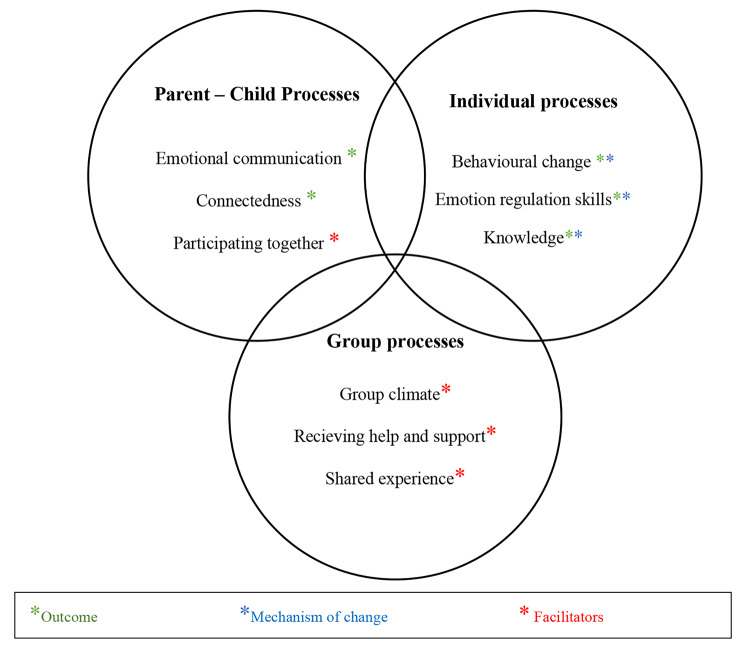
BACKGROUND: Emotion regulation difficulties underlie several psychiatric conditions, and treatments that focus on improving emotion regulation can have an effect on a broad range of symptoms. However, participants' in-depth experiences of participating in emotion regulation treatments have not been much studied. In this qualitative study, we investigated participants' experiences of a joint emotion regulation group skills training in a child and adolescent psychiatric outpatient setting. METHODS: Twenty-one participants (10 adolescents and 11 parents) were interviewed about their experiences after they had participated in a seven-session transdiagnostic emotion regulation skills training for adolescents and parents. The aim of the skills training was to decrease emotion regulation difficulties, increase emotional awareness, reduce psychiatric symptoms, and enhance quality of life. The skills training consisted of psychoeducation about emotions and skills for regulating emotions. The interviews were transcribed and analysed using reflexive thematic analysis. RESULTS: The analysis resulted in three overarching themes: Parent - Child processes, Individual processes, and Group processes. The result showed that participants considered an improved parent-child relationship to be the main outcome. Increased knowledge, emotion regulation skills and behavioural change were conceptualised as both mechanisms of change and outcomes. The group format, and the fact that parents and adolescents participated together, were seen as facilitators. Furthermore, the participants experienced targeting emotions in skills training as meaningful and helpful. CONCLUSION: The results highlight the potential benefits of providing emotion regulation skills training for adolescents and parents together in a group format to improve the parent-child relationship and enable the opportunity to learn skills.
Overview
The claims and statistics of this paper haven’t been checked yet.
Free: it reads the open-access text and checks the first 5 claims that cite a source we can check. Create a free account to check every claim.
Integrity signals
Registry
Cites
Statistics
Figures
Verification
Claims the paper makes
The claims and statistics of this paper haven’t been checked yet.
Free: it reads the open-access text and checks the first 5 claims that cite a source we can check. Create a free account to check every claim.
Claims other papers make about this one
Each is checked against this paper’s own text: does it say what the citing paper says it does?
The cited source says what the claim attributes to it.
In the citing paper
“ER skills, behavioral change and knowledge were interpreted as both mechanisms of change and outcomes (28).”
From An emotion regulation skills training for adolescents and parents: perceptions and acceptability of methodological aspects (2024) · cites this paper as [28]
The cited source says what the claim attributes to it.
In the citing paper
“The group format and the fact that the adolescents and parents participated together were interpreted as facilitators for change.”
From An emotion regulation skills training for adolescents and parents: perceptions and acceptability of methodological aspects (2024) · cites this paper as [28]
The cited source says what the claim attributes to it.
In the citing paper
“Results showed that the participants considered the improved parent-child relationship as the main outcome.”
From An emotion regulation skills training for adolescents and parents: perceptions and acceptability of methodological aspects (2024) · cites this paper as [28]
The cited source says what the claim attributes to it.
In the citing paper
“A qualitative analysis of 21 interviews with participants who had taken part in the extended seven-session ER group skills training described here focused on process-related variables.”
From An emotion regulation skills training for adolescents and parents: perceptions and acceptability of methodological aspects (2024) · cites this paper as [28]
Self-check
Percentages, sums and reported differences re-computed from the paper’s own numbers.
The self-check needs the paper’s full text.
Citations
Cites
Using thematic analysis in psychology
Braun, V., & Clarke, V. (2006) · Qualitative Research in Psychology · doi:10.1191/1478088706qp063oa · Cited by 194,414
Tong, A., Sainsbury, P., & Craig, J. (2007) · International Journal for Quality in Health Care · doi:10.1093/intqhc/mzm042 · Cited by 42,509
Kessler, R. C., Berglund, P., Demler, O., Jin, R., Merikangas, K. R., & Walters, E. E. (2005) · Archives of General Psychiatry · doi:10.1001/archpsyc.62.6.593 · Cited by 20,391
Emotion-regulation strategies across psychopathology: A meta-analytic review
Aldao, A., Nolen-Hoeksema, S., & Schweizer, S. (2010) · Clinical Psychology Review · doi:10.1016/j.cpr.2009.11.004 · Cited by 6,686 · cited 2×
“Findings from an earlier meta-analysis in the role of emotion regulation in psychopathology indicate that heightened levels of maladaptive emotion regulation strategies predict greater psychopathology, even when adaptive strategies are present [7].”
BackgroundResultThematic Analysis: A Practical Guide
Braun, V., & Clarke, V. (2022) · QMiP Bulletin · doi:10.53841/bpsqmip.2022.1.33.46 · Cited by 5,438
Cognitive and affective development in adolescence
Steinberg, L. (2005) · Trends in Cognitive Sciences · doi:10.1016/j.tics.2004.12.005 · Cited by 2,978 · cited 1×
“A maladaptive shift in emotion regulation has been seen in adolescents aged 12–15 years, compared to both younger and older adolescents [17–19].”
ResultCompas, B. E., Jaser, S. S., Bettis, A. H., Watson, K. H., Gruhn, M. A., Dunbar, J. P., Williams, E., & Thigpen, J. C. (2017) · Psychological Bulletin · doi:10.1037/bul0000110 · Cited by 1,555
Acceptance and commitment therapy.
Hayes, S. C., & Lillis, J. (2012) · American Psychological Association eBooks · doi:10.1037/17335-000 · Cited by 1,543
(2014) · Cited by 1,541
Social Psychiatry and Psychiatric Epidemiology
(2013) · Social Psychiatry and Psychiatric Epidemiology · doi:10.1007/127.1433-9285 · Cited by 1,307
Emotion, Emotion Regulation, and Psychopathology: An Affective Science Perspective
Gross, J. J., & Jazaieri, H. (2014) · Clinical Psychological Science · doi:10.1177/2167702614536164 · Cited by 1,087
(2010) · Cited by 874
Barlow, D. H., Farchione, T. J., Bullis, J. R., Gallagher, M. W., Murray-Latin, H., Sauer-Zavala, S., Bentley, K. H., Thompson-Hollands, J., Conklin, L. R., Boswell, J. F., et al. (2017) · JAMA Psychiatry · doi:10.1001/jamapsychiatry.2017.2164 · Cited by 853
Unified Protocol for Transdiagnostic Treatment of Emotional Disorders: A Randomized Controlled Trial
Farchione, T. J., Fairholme, C. P., Ellard, K. K., Boisseau, C. L., Thompson-Hollands, J., Carl, J. R., Gallagher, M. W., & Barlow, D. H. (2012) · Behavior Therapy · doi:10.1016/j.beth.2012.01.001 · Cited by 746 · cited 2×
“A further example is Barlow’s transdiagnostic treatment Unified Protocol (UP [23]), with promising effects on anxiety and depression for adults in both individual and group format [28, 38, 39].”
BackgroundMethodUnderstanding how and why psychotherapy leads to change
Kazdin, A. E. (2009) · Psychotherapy Research · doi:10.1080/10503300802448899 · Cited by 728 · cited 1×
“When developing effective treatments, it is important to examine mechanisms of change [44].”
BackgroundAcceptance and Commitment Therapy as a Unified Model of Behavior Change
Hayes, S. C., Pistorello, J., & Levin, M. E. (2012) · The Counseling Psychologist · doi:10.1177/0011000012460836 · Cited by 718 · cited 1×
“…by the first and last author informed by evidence-based CBT treatments with emotion regulation as a core component, such as DBT [30], Emotion Regulation Group Therapy [34], Acceptance and Commitment Therapy [53], Unified Protocol [23], and from clinical experiences of treating adolescents in CAP.”
BackgroundSCHULENBERG, J. E., SAMEROFF, A. J., & CICCHETTI, D. (2004) · Development and Psychopathology · doi:10.1017/s0954579404040015 · Cited by 663 · cited 1×
“Adolescence is a sensitive period in life with rapid development changes [16].”
BackgroundAldao, A., Gee, D. G., De Los Reyes, A., & Seager, I. (2016) · Development and Psychopathology · doi:10.1017/s0954579416000638 · Cited by 636
Zimmer-Gembeck, M. J., & Skinner, E. A. (2011) · International Journal of Behavioral Development · doi:10.1177/0165025410384923 · Cited by 631
Gratz, K. L., & Gunderson, J. G. (2006) · Behavior Therapy · doi:10.1016/j.beth.2005.03.002 · Cited by 618 · cited 2×
“Another example is Emotion Regulation Group Therapy (ERGT [34]) which is based on DBT and Acceptance and Commitment Therapy (ACT [35]) and was developed for BPD and self-harm.”
BackgroundMethodMehlum, L., Tørmoen, A. J., Ramberg, M., Haga, E., Diep, L. M., Laberg, S., Larsson, B. S., Stanley, B. H., Miller, A. L., Sund, A. M., et al. (2014) · Journal of the American Academy of Child & Adolescent Psychiatry · doi:10.1016/j.jaac.2014.07.003 · Cited by 616 · cited 1×
“DBT has showed promising results as a transdiagnostic treatment for depression and anxiety [31, 32], and has also been tested in randomised controlled trials for adolescents [27, 33].”
BackgroundDevelopment of Parent–Adolescent Relationships: Conflict Interactions as a Mechanism of Change
Branje, S. (2018) · Child Development Perspectives · doi:10.1111/cdep.12278 · Cited by 570 · cited 1×
“During adolescence, children tend to strive for autonomy and less parental involvement [57].”
BackgroundMcCauley, E., Berk, M. S., Asarnow, J. R., Adrian, M., Cohen, J., Korslund, K., Avina, C., Hughes, J., Harned, M., Gallop, R., et al. (2018) · JAMA Psychiatry · doi:10.1001/jamapsychiatry.2018.1109 · Cited by 531
Cognitive-behavioral treatment of borderline personality disorder
Brasfield, C. R. (1994) · Behaviour Research and Therapy · doi:10.1016/0005-7967(94)90183-x · Cited by 515
Lim, M. H., Eres, R., & Vasan, S. (2020) · Social Psychiatry and Psychiatric Epidemiology · doi:10.1007/s00127-020-01889-7 · Cited by 438
Neacsiu, A. D., Eberle, J. W., Kramer, R., Wiesmann, T., & Linehan, M. M. (2014) · Behaviour Research and Therapy · doi:10.1016/j.brat.2014.05.005 · Cited by 394 · cited 1×
“DBT has showed promising results as a transdiagnostic treatment for depression and anxiety [31, 32], and has also been tested in randomised controlled trials for adolescents [27, 33].”
BackgroundGarnefski, N., Kraaij, V., & van Etten, M. (2005) · Journal of Adolescence · doi:10.1016/j.adolescence.2004.12.009 · Cited by 315
Emotion Dysregulation and Emerging Psychopathology: A Transdiagnostic, Transdisciplinary Perspective
Beauchaine, T. P., & Cicchetti, D. (2019) · Development and Psychopathology · doi:10.1017/s0954579419000671 · Cited by 301 · cited 2×
“Emotion regulation (ER) difficulties can be an underlying factor in many psychiatric conditions [1–3].”
BackgroundEmotion regulation across childhood and adolescence: evidence for a maladaptive shift in adolescence
Cracco, E., Goossens, L., & Braet, C. (2017) · European Child & Adolescent Psychiatry · doi:10.1007/s00787-017-0952-8 · Cited by 271 · cited 2×
“Cracco’s [17] findings showed a reduced use of adaptive emotion regulation strategies and increased use of maladaptive strategies in adolescents during this age period.”
BackgroundResultFamily-based treatment of childhood anxiety disorders
Ginsburg, G. S., & Schlossberg, M. C. (2002) · International Review of Psychiatry · doi:10.1080/09540260220132662 · Cited by 255 · cited 1×
“…socialisation of emotions and in the development of ER strategies, and the fact that there are advantages for treatment outcome when adolescents and parents can learn and practice new skills together [47], the skills training was delivered in a group format jointly with adolescents and parents.”
BackgroundEmotion dysregulation: A theme in search of definition
Thompson, R. A. (2019) · Development and Psychopathology · doi:10.1017/s0954579419000282 · Cited by 245 · cited 2×
“Lack of adaptive emotion regulation strategies can lead to dysregulated emotions, namely an emotional experience or expression that interferes with appropriate goal-directed activity [3, 4, 6].”
BackgroundGratz, K. L., Tull, M. T., & Levy, R. (2014) · Psychological Medicine · doi:10.1017/s0033291713002134 · Cited by 194 · cited 1×
“Positive results for ERGT have been observed in treatment studies [26, 36], with increased emotion regulation skills and overall quality of life, and reduced selfharm, symptoms of BPD and depression [37].”
BackgroundDBT skills manual for adolescents
Watkins, B. (2016) · Advances in Eating Disorders · doi:10.1080/21662630.2015.1129582 · Cited by 174
The Oxford Handbook of Emotion Dysregulation
(2020) · doi:10.1093/oxfordhb/9780190689285.001.0001 · Cited by 171
Bullis, J. R., Sauer-Zavala, S., Bentley, K. H., Thompson-Hollands, J., Carl, J. R., & Barlow, D. H. (2015) · Behavior Modification · doi:10.1177/0145445514553094 · Cited by 161
Nook, E. C., Sasse, S. F., Lambert, H. K., McLaughlin, K. A., & Somerville, L. H. (2018) · Psychological Science · doi:10.1177/0956797618773357 · Cited by 160
Emotion Regulation in Youth with Emotional Disorders: Implications for a Unified Treatment Approach
Trosper, S. E., Buzzella, B. A., Bennett, S. M., & Ehrenreich, J. T. (2009) · Clinical Child and Family Psychology Review · doi:10.1007/s10567-009-0043-6 · Cited by 128 · cited 2×
“There is some support for the observation that the child’s ability to regulate emotions improves when parents support the child’s emotional expression [11, 15].”
BackgroundCavicchioli, M., Tobia, V., & Ogliari, A. L. (2022) · Research on Child and Adolescent Psychopathology · doi:10.1007/s10802-022-00980-8 · Cited by 118 · cited 1×
“Maladaptive emotion regulation seems to be associated with a of risk of developing psychopathology [20] and psychiatric disorders often have their onset during adolescence [21].”
BackgroundGratz, K. L., & Tull, M. T. (2011) · Personality Disorders: Theory, Research, and Treatment · doi:10.1037/a0022144 · Cited by 115
Gratz, K. L., Bardeen, J. R., Levy, R., Dixon-Gordon, K. L., & Tull, M. T. (2015) · Behaviour Research and Therapy · doi:10.1016/j.brat.2014.12.005 · Cited by 102 · cited 3×
“Positive results for ERGT have been observed in treatment studies [26, 36], with increased emotion regulation skills and overall quality of life, and reduced self-harm, symptoms of BPD and depression [37].”
BackgroundResultEmotion Regulation and Psychopathology in Children and Adolescents
(2017) · Oxford Clinical Psychology · doi:10.1093/med:psych/9780198765844.001.0001 · Cited by 102
Moderators, mediators and mechanisms of change in psychotherapy
Kazdin, A. E. (2014) · Quantitative and Qualitative Methods in Psychotherapy Research · doi:10.4324/9780203386071-6 · Cited by 99 · cited 1×
“Understanding why and how treatment works are important challenges in psychotherapy research [63].”
BackgroundBjureberg, J., Sahlin, H., Hedman-Lagerlöf, E., Gratz, K. L., Tull, M. T., Jokinen, J., Hellner, C., & Ljótsson, B. (2018) · BMC Psychiatry · doi:10.1186/s12888-018-1885-6 · Cited by 96 · cited 2×
“A qualitative study of the online treatment Emotion Regulation Individual Therapy for Adolescents (ERITA; [24]) showed that decreased difficulties with emotion regulation was a valuable treat-ment outcome for adolescents [51].”
BackgroundMethodEkas, N. V., Lickenbrock, D. M., & Braungart‐Rieker, J. M. (2012) · Infancy · doi:10.1111/infa.12003 · Cited by 91 · cited 1×
“If parents experience difficulties in this domain, it can influence the child’s ability to develop emotion regulation strategies [13, 14].”
BackgroundBjureberg, J., Sahlin, H., Hellner, C., Hedman-Lagerlöf, E., Gratz, K. L., Bjärehed, J., Jokinen, J., Tull, M. T., & Ljótsson, B. (2017) · BMC Psychiatry · doi:10.1186/s12888-017-1527-4 · Cited by 84 · cited 2×
“The above-mentioned studies were all originally developed for adults but have been modified for adolescents [40–42].”
BackgroundMethodGratz, K. L., Levy, R., & Tull, M. T. (2012) · Journal of Cognitive Psychotherapy · doi:10.1891/0889-8391.26.4.365 · Cited by 69 · cited 1×
“Changes in emotion regulation has also been shown to mediate improvement in NSSI [29].”
BackgroundMehlum, L. (2021) · Current Opinion in Psychology · doi:10.1016/j.copsyc.2020.08.017 · Cited by 58 · cited 3×
“In DBT, for example, emotion regulation skills that help to down-regulate emotional reactions seem to be one mechanism that influences treatment outcome [45].”
BackgroundResultSahlin, H., Bjureberg, J., Gratz, K. L., Tull, M. T., Hedman, E., Bjärehed, J., Jokinen, J., Lundh, L.-G., Ljótsson, B., & Hellner, C. (2017) · BMJ Open · doi:10.1136/bmjopen-2017-016220 · Cited by 50 · cited 1×
“Positive results for ERGT have been observed in treatment studies [26, 36], with increased emotion regulation skills and overall quality of life, and reduced self-harm, symptoms of BPD and depression [37].”
BackgroundThe Impact of the Unified Protocol for Emotional Disorders on Quality of Life
Gallagher, M. W., Sauer-Zavala, S. E., Boswell, J. F., Carl, J. R., Bullis, J., Farchione, T. J., & Barlow, D. H. (2013) · International Journal of Cognitive Therapy · doi:10.1521/ijct.2013.6.1.57 · Cited by 47 · cited 1×
“A further example is Barlow’s transdiagnostic treatment Unified Protocol (UP [23]), with promising effects on anxiety and depression for adults in both individual and group format [28, 38, 39].”
MethodHolmqvist Larsson, K., Andersson, G., Stern, H., & Zetterqvist, M. (2020) · Clinical Child Psychology and Psychiatry · doi:10.1177/1359104519869782 · Cited by 43 · cited 2×
“The aim of the skills training was to decrease emotion regulation difficulties by learning emotion regulation skills, decrease impulsive behaviours, reduce psychiatric symptoms, and enhance quality of life [46].”
BackgroundEmotion Dysregulation as a Vulnerability to Psychopathology
Cole, P. M., Hall, S. E., & Hajal, N. J. (2017) · Child and Adolescent Psychopathology, Third Edition · doi:10.1002/9781394258932.ch11 · Cited by 41
Simonsson, O., Engberg, H., Bjureberg, J., Ljótsson, B., Stensils, J., Sahlin, H., & Hellner, C. (2021) · JMIR Formative Research · doi:10.2196/17910 · Cited by 33 · cited 5×
“In accordance with earlier treatment research that focused on skills in general, and emotion regulation skills in particular, participants in the current study experienced the emotion regulation skills as helpful [48, 51, 59].”
BackgroundResultInfluentialMeyer, J., Öster, C., Ramklint, M., & Isaksson, J. (2020) · Scandinavian Journal of Psychology · doi:10.1111/sjop.12655 · Cited by 30 · cited 1×
“Since earlier research has found that participants overall seem to appreciate skills training in a group setting [48, 49], we wanted to examine how participants experienced a joint group skills training where adolescents and parents participate together.”
BackgroundChronis-Tuscano, A. M., Bui, H. N. T., & Lorenzo, N. E. (2021) · Research on Child and Adolescent Psychopathology · doi:10.1007/s10802-021-00872-3 · Cited by 30 · cited 1×
“Parents play a significant role in the development of children’s emotion regulation strategies [9, 11, 15, 58].”
BackgroundThe association of process with outcomes in child group therapy
Shechtman, Z., & Leichtentritt, J. (2010) · Psychotherapy Research · doi:10.1080/10503300902926562 · Cited by 27 · cited 1×
“This is in line with previous research showing that group functioning and bonding with group members and leaders, were associated with reduced anxiety, aggression and social competence [61].”
ResultAn evaluation of the skills group component of DBT-A for parent/guardians: a mixed methods study
Flynn, D., Gillespie, C., Joyce, M., & Spillane, A. (2020) · Irish Journal of Psychological Medicine · doi:10.1017/ipm.2019.62 · Cited by 26 · cited 5×
“In accordance with earlier treatment research that focused on skills in general, and emotion regulation skills in particular, participants in the current study experienced the emotion regulation skills as helpful [48, 51, 59].”
BackgroundResultInfluentialBarrio‐Martínez, S., González‐Blanch, C., Priede, A., Muñoz‐Navarro, R., Medrano, L. A., Moriana, J. A., Carpallo-González, M., Ventura, L., Ruiz‐Rodríguez, P., & Vindel, A. C. (2022) · Behavior Therapy · doi:10.1016/j.beth.2022.01.007 · Cited by 20 · cited 2×
“Research has shown that emotion regulation is one important mechanism underlying the effects of some psychological treatments [22].”
BackgroundResultAdolescent experience of radically open dialectical behaviour therapy: a qualitative study
Baudinet, J., Watson, C., Brothwood, P. L., Parham, R., Smith, L., Snowden, N., Konstantellou, A., Hunt, K., & Simic, M. (2022) · BMC Psychiatry · doi:10.1186/s12888-022-04114-8 · Cited by 20 · cited 1×
“These findings have implications for the development of clinical treatments, as it is common practice to deliver skills training separately to adolescents and parents [50, 51].”
BackgroundNavas, J. M. M., Taubner, S., Mota, C. P., Henriques, M. I. R. S., Saliba, A., Heinonen, E. O., Ramos, S., Moreno-Peral, P., Volkert, J., Adler, A., et al. (2022) · Frontiers in Psychiatry · doi:10.3389/fpsyt.2021.730921 · Cited by 13 · cited 1×
“Earlier research has shown that improved family relationships and communication are mechanisms of change in the treatment of adolescent externalising behaviour [56], and it would be interesting to further investigate the relationship between family functioning and emotion regulation skills.”
BackgroundExperiences of change in Emotion Regulation Group Therapy. A mixed-methods study of six patients
Dahlberg, A., Wetterberg, E., Lundh, L., & Sahlin, H. (2018) · Journal for Person-Oriented Research · doi:10.17505/jpor.2018.02 · Cited by 5 · cited 1×
“In accordance with earlier treatment research that focused on skills in general, and emotion regulation skills in particular, participants in the current study experienced the emotion regulation skills as helpful [48, 51, 59].”
ResultCultural and social aspects of emotion regulation
Koydemir, S., & Essau, C. A. (2017) · Emotion Regulation and Psychopathology in Children and Adolescents · doi:10.1093/med:psych/9780198765844.003.0004 · Cited by 4
Research works printed but not linked: 3
- LeBlanc S Essau CA Ollendick TH Essau CA LeBlanc S Ollendick TH Emotion regulation: an introduction 2017 1 New York, NY Oxford University Press 3 17
- Neacsiu AD Bohus M Linehan MM Gross JJ Dialectical Behavior Therapy: an intevention for emotion dysregulation 2014 2 New York Guilford Press 491 507
- Ehrenreich-May J Queen AH Bilek EL Remmes CS Marciel KK Ehrenreich-May J Chu BC Ehrenreich-May J Chu BC The unified protocols for the treatment of emotional disorders in children and adolescents 2014 New York Guilford Press 267 92
Cited by
Holmqvist Larsson, K., & Zetterqvist, M. (2024) · Frontiers in Psychiatry · doi:10.3389/fpsyt.2024.1448529 · Cited by 7
Pokowitz, E. L., Prakash, N., Planaj, D., Oprandi, S., & Deldin, P. J. (2024) · Behavioral Sciences · doi:10.3390/bs14030252 · Cited by 5
“Qualitative data provides a unique lens into the lived experiences of clients in a treatment program, allowing researchers to explore the salient processes, experiences, and changes experienced in therapy from the perspective of the individual engaging in the therapeutic process (e.g., [13,14]).”
BackgroundOrsolini, L., Longo, G., & Volpe, U. (2025) · International Review of Psychiatry · doi:10.1080/09540261.2025.2570445 · Cited by 5
“…could include a tailored psychoeducational programs for adolescents and young adults specifically addressing emotions and emotion regulation (Holmqvist Larsson et al., 2023; Sökmen & Karaca, 2023), cognitive behaviour therapy (CBT) approaches, including dialectical behaviour therapy (DBT)…”
Larsson, K. H., Falkenström, F., Andersson, G., Stern, H., Bolmgren, L., Engström, T., Källström, V., Nilsson, M., Pettersson, E., Seesing, F., et al. (2026) · Child and Adolescent Psychiatry and Mental Health · doi:10.1186/s13034-026-01098-1 · Cited by 1
“The participants reported that the skill of identifying and labelling emotions was a prerequisite for improved emotional communication between family members [54].”
Factors contributing to learning losses among primary school children: a scoping review
Pek, L. S., Nadarajan, N.-T. M., Khusni, H. K., Mee, R. W. M., Ismail, M. R., Adha, N. S. Q. S., & Arma, A. E. S. A. J. (2024) · Journal of Education and Learning (EduLearn) · doi:10.11591/edulearn.v18i3.21305 · Cited by 5
“Parents and other guardians are crucial in helping children regulate emotional arousal, develop coping mechanisms, and effectively manage their behavior [44], [45].”
Background
Metadata
- Authors
- Holmqvist Larsson, K., Thunberg, M., Münger, A.-C., Andersson, G., Falkenström, F., & Zetterqvist, M.
- Affiliations
- Region Östergötland (SE)
- Linköping University (SE)
- Venue
- BMC Psychiatry
- Published
- 2023-08-15
- Volume
- 23
- Issue
- 1
- Pages
- 591-591
- ISSN
- 1471-244X (ISSN-L)
- PMC
- PMC10428531
- OpenAlex
- W4385828615
- Cited by
- 9
- References
- 62
- Citations by year
- 2026: 4 · 2025: 2 · 2024: 3
- FWCI
- 2.61
- Type
- journal article
- Language
- en
- Open access
- gold
- doi.org
- Licence
- cc-by
- creativecommons.org/licenses/by/4.0 (tdm)
- creativecommons.org/licenses/by/4.0 (vor)
- Locations
- BMC Psychiatry (publishedVersion, cc-by)
- PubMed Central (publishedVersion, cc-by)
- PubMed (publishedVersion)
- Diva portal (Dalarna University Library) (submittedVersion, other-oa)
- KTH Publication Database DiVA (KTH Royal Institute of Technology) (submittedVersion, other-oa)
- DOAJ (DOAJ: Directory of Open Access Journals) (submittedVersion, cc-by-sa)
- Funders
- Linköping University
- Topics
- Social Sciences › Psychology › Clinical Psychology › Child and Adolescent Psychosocial and Emotional Development
- Social Sciences › Psychology › Clinical Psychology › Personality Disorders and Psychopathology
- Social Sciences › Psychology › Clinical Psychology › Psychotherapy Techniques and Applications
- Keywords
- emotion regulation, group skills training, adolescents, parents, parent-adolescent relationships, mechanisms of change, facilitators, transdiagnostic treatment, child and adolescent psychiatry, psychoeducation, emotional awareness, quality of life, psychiatric symptoms
- MeSH terms
- Emotional Regulation, Adolescent, Emotions, Humans, Parent-Child Relations, Parents, Quality of Life
About these checks
Registry, retraction, Cites and statistics results are computed, not judged, with one exception: a printed reference that no index lists is read once by a model before it counts as a citation error. Claims are extracted by a model and kept only when their quote appears verbatim in the text; each cited source is then checked, with a model’s help, for whether it says what the claim relies on. Those verdicts can be wrong — read the claim’s quote and the cited source before relying on one.
Statistics and arithmetic are recomputed, not judged.
Confidence bands are shown only for fields calibrated on our annotated test set. None is calibrated yet, so no band is shown.
What counts as a claim ›How we measure confidence ›How we check this ›
Are you an author, or do you see a problem with this page? Request a review
Data sources
Bibliographic data: Semantic Scholar, OpenAlex, Crossref.
Contains information from the Semantic Scholar Academic Graph Datasets, made available under the ODC Attribution License (ODC-BY 1.0).
Semantic Scholar’s data is described in: Kinney, R., et al. (2023). The Semantic Scholar Open Data Platform. arXiv:2301.10140.
