

Are pit latrines in urban areas of Sub-Saharan Africa performing? A review of usage, filling, insects and odour nuisances
Open accessThe DOI matches its Crossref record; 89 of the 95 references it cites were found in a registry or an index, and 1 are not checked yet; 16 of the 157 sources its claims cite were checked for support.
Abstract
BACKGROUND: A pit latrine is the most basic form of improved sanitation which is currently used by a number of people around the globe. In spite of the wide spread use, known successes and advantages associated with pit latrines, they have received little attention in form of research and development. This review focuses on the usage and performance (filling, smell and insect nuisance) of pit latrines in urban areas of sub-Saharan Africa (SSA) and proposes approaches for their improvements and sustainability. METHODS: Current pit latrine usage within urban SSA was calculated from Joint Monitoring Programme (JMP) water and sanitation country-files. We conducted a literature search and review of documents on pit latrine usage, filling, smell and insect nuisances in urban areas of SSA. Findings of the review are presented and discussed in this paper. RESULTS AND DISCUSSION: Pit latrines are in use by more than half the urban population in SSA and especially among low income earners. An additional 36 million people in urban areas of SSA have adopted the pit latrine since 2007. However, their performance is unsatisfactory. Available literature shows that contributions have been made to address shortfalls related to pit latrine use in terms of science and technological innovations. However, further research is still needed. CONCLUSION: Any technology and process management innovations to pit latrines should involve scientifically guided approaches. In addition, development, dissemination and enforcement of minimum pit latrine design standards are important while the importance of hygienic latrines should also be emphasized.
Verified 2026-11-25 · 1 reference not checked yet
Overview
CoChat Summary
TL;DR
This review finds that pit latrines are still used by more than half of the urban population in Sub-Saharan Africa, but their performance in filling, smell, and insect nuisance is often unsatisfactory. It argues that better design standards, scientifically guided innovations, and improved sanitation system management are needed.
Key findings
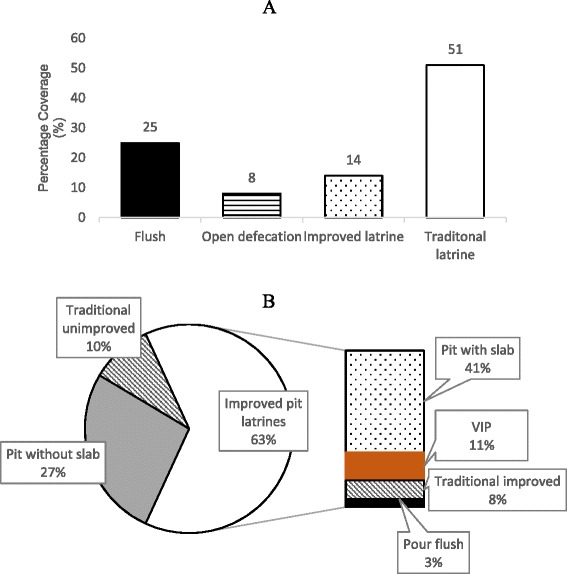
- The paper estimates that pit latrines provide sanitation for about 198 million (52.7%) of the urban population in SSA; in 2007 the figure was 65% or about 162 million people, so 36 million additional urban users adopted pit latrines since 2007.
- Access to improved pit latrines in urban SSA is reported at about 63%, up from 14% in 2007; the commonest improved type is the simple pit latrine with a concrete slab, while VIP and pour-flush use remains low.
- The review says pit latrines are filling faster than expected; reported sludge accumulation/filling rates range from 40–90 ℓ/capita/year in proposed design values, with later studies reporting 25.5 ℓ/capita/year, 10–120.5 ℓ/capita/year, and even 1–264 ℓ/capita/year.
- Specific studies cited in the review found substantial filling problems: 35% abandoned because filled up in Kampala, 15% full and still in use there, 31% full in Ashanti (Ghana), and 40% full or nearly full in Dar es Salaam (Tanzania).
Methods
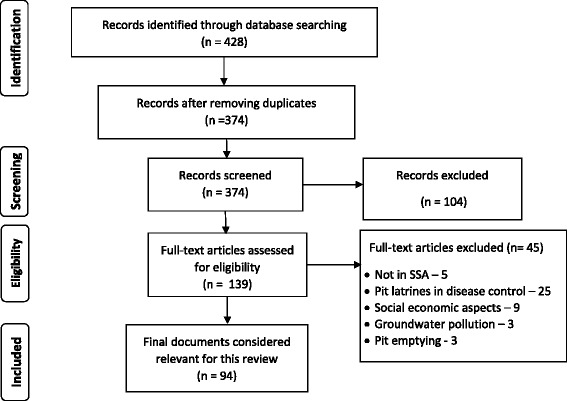
- This is a review paper combining a literature search with analysis of sanitation-coverage data; the authors state they followed PRISMA guidelines and searched Google, Google Scholar, and ScienceDirect with pit-latrine-related keywords.
- Urban SSA pit-latrine usage was calculated from JMP water and sanitation country files and WHO/UNICEF survey data; the paper also reviewed published and unpublished documents on usage, filling, smell, and insect nuisance.
- The authors extracted findings from selected documents and discussed them qualitatively, including historical development, design types, and performance issues.
Limitations
- The paper states that research directly linking full pit latrines, smell, insect nuisance, disease, and health is limited.
- It also states that the actual composition of malodorous gases and the processes in pit latrines are not well understood, and that further research is still needed.
- Evident from the text: many conclusions are based on a narrative review of heterogeneous studies and secondary data rather than a single standardized empirical dataset, so comparisons across countries and studies are not fully uniform (said in the paper’s methods and shown by the varied sources).
Model-written summary. Check it against the paper before relying on it.
Integrity signals
Registry
Cites
Statistics
Figures
Verification
Claims the paper makes
15 Valid · 9 Not valid · 114 Not checked · 45 Own results and interpretations
At least one cited source doesn’t support this claim or points to a different paper, and none confirmed it — see the verdicts below.
In the paper
“A possible mass - volume reduction of 50–75 % [54] or up to 80 % [18, 67] after well-established degradation has been reported.”
§ Are pit latrines in urban areas of Sub-Saharan Africa performing? A review of usage, filling, insects and odour nuisances > Results and Discussion > Performance of pit latrines There is a clear link between proper excreta disposal and improved health [20]. The appropriateness of pit latrines at providing improved sanitation thus lies in its ability to safely dispose human excreta in such a way that there is minimal or no contact with humans. Furthermore, the excreta should not be accessible to insects or animals and the facility should be free from odours [18, 47]. Research directly linking full pit latrines, their smell and insect nuisances to disease and health is limited. However, it has been reported that full and/or over flowing improved pit latrines do not meet the criteria for hygienic, safe and sustainable sanitation systems [35]. It is not only difficult to use full or overflowing pit latrines as the waste splashes on to the users but also the excreta poses a health risk since it is in closer contact with humans. Additionally, smell and insects nuisances of pit latrine use are the main cause of disturbance of people who come in contact with them. In the past, smell and insects significantly affected the user satisfaction, although the problem did not impact on pit latrine use [19, 48]. More recently, bad smell has been frequently mentioned as a reason for dissatisfaction with shared toilets [40, 49], discouraging their use and subsequent use of polyethylene bags [37]. Foul smell has also been noted as a barrier for acquiring and using latrines [50]. Smell and insects have been associated with the hygienic nature of the pit latrine. For example, in a survey by IK Tumwebaze and H-J Mosler [51], respondents considered clean latrines as those free from smell and insects. The subsequent sections detail pit latrine performance in terms of filling, smell and insect nuisances.
What the sources say
- Not matchedcites [54] Bakare BF Scientific and management support for ventilated improved pit latrines (VIP) sludge content 2014 Durban University of KwaZulu Natal (UKZN)
We searched by its title and found no matching paper.
- Not checked — no full text of the sourcecites [18] Wagner EG Lanoix JN Excreta disposal for rural areas and small communities 1958 13581743 source
- Disputedcites [67] Zavala MAL, Funamizu N, Takakuwa T: Characterization of feces for describing the aerobic biodegradation of feces. J Environ Syst Eng, JSCE 2002;720/VII-25:99–105. sourceExperimental — accuracy not yet measured
The paper’s Additional information section reports that about 44% of total solids remained after biodegradation, implying about 56% solids-mass reduction—not 80%. Its Results and Discussion section identifies 80% as the slowly biodegradable fraction measured in COD terms, not a measured mass or volume reduction. No page numbers are available in our copy. (LLM, conf=0.84)
Checked by a reasoning model — may be wrong.
hedgedstates a possible cause- Asserted: passes — The authors put it forward as true.
- Checkable: passes — It can be checked against evidence.
- Load-bearing: unclear — It is unclear whether the paper’s conclusions depend on it.
- Based: passes — The paper gives a reason why it holds.
- Not matched
The cited sources support only part of this claim — read each source’s verdict below.
In the paper
“However, it has been reported that full and/or over flowing improved pit latrines do not meet the criteria for hygienic, safe and sustainable sanitation systems [35].”
§ Are pit latrines in urban areas of Sub-Saharan Africa performing? A review of usage, filling, insects and odour nuisances > Results and Discussion > Performance of pit latrines There is a clear link between proper excreta disposal and improved health [20]. The appropriateness of pit latrines at providing improved sanitation thus lies in its ability to safely dispose human excreta in such a way that there is minimal or no contact with humans. Furthermore, the excreta should not be accessible to insects or animals and the facility should be free from odours [18, 47]. Research directly linking full pit latrines, their smell and insect nuisances to disease and health is limited. However, it has been reported that full and/or over flowing improved pit latrines do not meet the criteria for hygienic, safe and sustainable sanitation systems [35]. It is not only difficult to use full or overflowing pit latrines as the waste splashes on to the users but also the excreta poses a health risk since it is in closer contact with humans. Additionally, smell and insects nuisances of pit latrine use are the main cause of disturbance of people who come in contact with them. In the past, smell and insects significantly affected the user satisfaction, although the problem did not impact on pit latrine use [19, 48]. More recently, bad smell has been frequently mentioned as a reason for dissatisfaction with shared toilets [40, 49], discouraging their use and subsequent use of polyethylene bags [37]. Foul smell has also been noted as a barrier for acquiring and using latrines [50]. Smell and insects have been associated with the hygienic nature of the pit latrine. For example, in a survey by IK Tumwebaze and H-J Mosler [51], respondents considered clean latrines as those free from smell and insects. The subsequent sections detail pit latrine performance in terms of filling, smell and insect nuisances.
What the sources say
- Partly supportedcites [35] Jenkins M Cumming O Scott B Cairncross S Beyond ‘improved’towards ‘safe and sustainable’urban sanitation: assessing the design, management and functionality of sanitation in poor communities of Dar es Salaam, Tanzania J Water Sanit Hyg Dev 2014 4 1 131 41 10.2166/washdev.2013.180 sourceExperimental — accuracy not yet measured
In “Access to safe and sustainable facilities” (page unavailable), the paper says flood-out drain pipes cause facilities to fail its hygienically safe and sustainable design criteria. Its functionality indicators also exclude completely full pits. But “Access to safe and sustainable sanitation systems” defines system access by facility design and access to safe emptying, with functionality assessed separately; the claim therefore overstates what a full pit alone means for system classification. (LLM, conf=0.83)
hedged- Asserted: passes — The authors put it forward as true.
- Checkable: passes — It can be checked against evidence.
- Load-bearing: passes — The paper’s conclusions depend on it.
- Based: passes — The paper gives a reason why it holds.
- Partly supported
The cited sources support only part of this claim — read each source’s verdict below.
In the paper
“M Jenkins, et al. [35] noted that 40 % of the latrines were full or nearly full in Dar es Salaam, Tanzania.”
§ Are pit latrines in urban areas of Sub-Saharan Africa performing? A review of usage, filling, insects and odour nuisances > Results and Discussion > Performance of pit latrines There is a clear link between proper excreta disposal and improved health [20]. The appropriateness of pit latrines at providing improved sanitation thus lies in its ability to safely dispose human excreta in such a way that there is minimal or no contact with humans. Furthermore, the excreta should not be accessible to insects or animals and the facility should be free from odours [18, 47]. Research directly linking full pit latrines, their smell and insect nuisances to disease and health is limited. However, it has been reported that full and/or over flowing improved pit latrines do not meet the criteria for hygienic, safe and sustainable sanitation systems [35]. It is not only difficult to use full or overflowing pit latrines as the waste splashes on to the users but also the excreta poses a health risk since it is in closer contact with humans. Additionally, smell and insects nuisances of pit latrine use are the main cause of disturbance of people who come in contact with them. In the past, smell and insects significantly affected the user satisfaction, although the problem did not impact on pit latrine use [19, 48]. More recently, bad smell has been frequently mentioned as a reason for dissatisfaction with shared toilets [40, 49], discouraging their use and subsequent use of polyethylene bags [37]. Foul smell has also been noted as a barrier for acquiring and using latrines [50]. Smell and insects have been associated with the hygienic nature of the pit latrine. For example, in a survey by IK Tumwebaze and H-J Mosler [51], respondents considered clean latrines as those free from smell and insects. The subsequent sections detail pit latrine performance in terms of filling, smell and insect nuisances.
What the sources say
- Partly supportedcites [35] Jenkins M Cumming O Scott B Cairncross S Beyond ‘improved’towards ‘safe and sustainable’urban sanitation: assessing the design, management and functionality of sanitation in poor communities of Dar es Salaam, Tanzania J Water Sanit Hyg Dev 2014 4 1 131 41 10.2166/washdev.2013.180 sourceExperimental — accuracy not yet measured
The Facility condition section reports that over 40% of facilities were full or nearly full. But the paper describes its study as covering some of Dar es Salaam’s poorest unplanned settlements, not latrines across the city as a whole. (LLM, conf=0.84)
plain- Asserted: passes — The authors put it forward as true.
- Checkable: passes — It can be checked against evidence.
- Load-bearing: unclear — It is unclear whether the paper’s conclusions depend on it.
- Based: passes — The paper gives a reason why it holds.
- Partly supported
The cited sources support only part of this claim — read each source’s verdict below.
In the paper
“Adult and larvae of Chrysomya putoria, Chrysomya marginalis, Musca spp, Lucilia cuprina, Sarcophaga spp have been reported [80–82].”
§ Are pit latrines in urban areas of Sub-Saharan Africa performing? A review of usage, filling, insects and odour nuisances > Results and Discussion > Performance of pit latrines There is a clear link between proper excreta disposal and improved health [20]. The appropriateness of pit latrines at providing improved sanitation thus lies in its ability to safely dispose human excreta in such a way that there is minimal or no contact with humans. Furthermore, the excreta should not be accessible to insects or animals and the facility should be free from odours [18, 47]. Research directly linking full pit latrines, their smell and insect nuisances to disease and health is limited. However, it has been reported that full and/or over flowing improved pit latrines do not meet the criteria for hygienic, safe and sustainable sanitation systems [35]. It is not only difficult to use full or overflowing pit latrines as the waste splashes on to the users but also the excreta poses a health risk since it is in closer contact with humans. Additionally, smell and insects nuisances of pit latrine use are the main cause of disturbance of people who come in contact with them. In the past, smell and insects significantly affected the user satisfaction, although the problem did not impact on pit latrine use [19, 48]. More recently, bad smell has been frequently mentioned as a reason for dissatisfaction with shared toilets [40, 49], discouraging their use and subsequent use of polyethylene bags [37]. Foul smell has also been noted as a barrier for acquiring and using latrines [50]. Smell and insects have been associated with the hygienic nature of the pit latrine. For example, in a survey by IK Tumwebaze and H-J Mosler [51], respondents considered clean latrines as those free from smell and insects. The subsequent sections detail pit latrine performance in terms of filling, smell and insect nuisances.
What the sources say
- Not checked — no full text of the sourcecites [80] Curtis C Hawkins PM Entomological studies of on-site sanitation systems in Botswana and Tanzania Trans R Soc Trop Med Hyg 1982 76 1 99 108 10.1016/0035-9203(82)90031-1 6123168 source
- Not checked — no full text of the sourcecites [81] Emerson PM Simms VM Makalo P Bailey RL Household pit latrines as a potential source of the fly Musca sorbens–a one year longitudinal study from The Gambia Trop Med Int Health 2005 10 7 706 9 10.1111/j.1365-3156.2005.01432.x 15960710 source
- Partly supportedcites [82] Lindsay TC Jawara M D’Alessandro U Pinder M Lindsay SW Development of odour-baited flytraps for sampling the African latrine fly, Chrysomya putoria, a putative vector of enteric diseases PLoS One 2012 7 11 e50505 10.1371/journal.pone.0050505 23226296 PMC3511572 sourceExperimental — accuracy not yet measured
The Results (page not available) report trap catches of all five named fly groups. But the Study Sites section describes field trapping, including at a communal open-defaecation area; the paper does not report larvae of these groups or establish that all five were found in pit latrines. (LLM, conf=0.89)
plain- Asserted: passes — The authors put it forward as true.
- Checkable: passes — It can be checked against evidence.
- Load-bearing: unclear — It is unclear whether the paper’s conclusions depend on it.
- Based: passes — The paper gives a reason why it holds.
Every source the paper cites for this claim was checked and supports it.
In the paper
“It was concluded that commercial pit latrine additives did not accelerate the rate of decomposition of pit latrine contents.”
§ Are pit latrines in urban areas of Sub-Saharan Africa performing? A review of usage, filling, insects and odour nuisances > Results and Discussion > Performance of pit latrines There is a clear link between proper excreta disposal and improved health [20]. The appropriateness of pit latrines at providing improved sanitation thus lies in its ability to safely dispose human excreta in such a way that there is minimal or no contact with humans. Furthermore, the excreta should not be accessible to insects or animals and the facility should be free from odours [18, 47]. Research directly linking full pit latrines, their smell and insect nuisances to disease and health is limited. However, it has been reported that full and/or over flowing improved pit latrines do not meet the criteria for hygienic, safe and sustainable sanitation systems [35]. It is not only difficult to use full or overflowing pit latrines as the waste splashes on to the users but also the excreta poses a health risk since it is in closer contact with humans. Additionally, smell and insects nuisances of pit latrine use are the main cause of disturbance of people who come in contact with them. In the past, smell and insects significantly affected the user satisfaction, although the problem did not impact on pit latrine use [19, 48]. More recently, bad smell has been frequently mentioned as a reason for dissatisfaction with shared toilets [40, 49], discouraging their use and subsequent use of polyethylene bags [37]. Foul smell has also been noted as a barrier for acquiring and using latrines [50]. Smell and insects have been associated with the hygienic nature of the pit latrine. For example, in a survey by IK Tumwebaze and H-J Mosler [51], respondents considered clean latrines as those free from smell and insects. The subsequent sections detail pit latrine performance in terms of filling, smell and insect nuisances.
What the sources say
- Supportedcites [71] Foxon K, Mkhize S, Reddy M, Buckley C. Laboratory protocols for testing the efficacy of commercial pit latrine additives. Water SA 2009, 35(2)228–35. source
The Conclusions state that treatment with commercial pit-latrine additives did not accelerate biodegradation or mass loss within pit-latrine contents. This directly supports the citing sentence as a summary of the paper’s conclusion. (LLM, conf=0.94)
boosted- Asserted: passes — The authors put it forward as true.
- Checkable: passes — It can be checked against evidence.
- Load-bearing: passes — The paper’s conclusions depend on it.
- Based: passes — The paper gives a reason why it holds.
- Supported
113 more claims · 6 with their cited sources checked
Create a free account to see all 183 claims and to verify the 49 references still open.
- Probably not a substantial claim. 45
- It may state two separate claims as one. 26
Citations
Cites
Preferred Reporting Items for Systematic Reviews and Meta-Analyses: the PRISMA statement
Moher, D., Liberati, A., Tetzlaff, J., Altman, D. G., & for the PRISMA Group (2009) · BMJ · doi:10.1136/bmj.b2535 · Cited by 83,823
Preferred reporting items for systematic reviews and meta-analyses: the PRISMA Statement.
(2009) · PubMed Central · Cited by 44,859
Preferred reporting items for systematic reviews and meta-analyses: The PRISMA statement
Moher, D., Liberati, A., Tetzlaff, J., Altman, D. G., & the PRISMA Group* (2009) · Annals of Internal Medicine · doi:10.7326/0003-4819-151-4-200908180-00135 · Cited by 37,554
Preferred Reporting Items for Systematic Reviews and Meta-Analyses: The PRISMA Statement
Moher, D., Liberati, A., Tetzlaff, J., & Altman, D. G. (2009) · Journal of Clinical Epidemiology · doi:10.1016/j.jclinepi.2009.06.005 · Cited by 19,575
Tsing, A. (2000) · Cultural Anthropology · doi:10.1525/can.2000.15.3.327 · Cited by 1,200
Sanitation and disease: Health aspects of excreta and wastewater management
Feachem, R., Bradley, D., Garelick, H., & Mara, D. (1983) · doi:10.1016/0043-1354(85)90337-9 · Cited by 1,014
Sanitation and disease: health aspects of excreta and wastewater management.
Feachem, R. G., Bradley, D. J., Garelick, H., & Mara, D. D. (1983) · Cited by 657
Chemical Ecology and Behavioral Aspects of Mosquito Oviposition
Bentley, M. D., & Day, J. F. (1989) · Annual Review of Entomology · doi:10.1146/annurev.en.34.010189.002153 · Cited by 588 · cited 1×
“Skatole (3-methylindole) Indole 4-metylindole have been cited as the most active pheromones attracting mosquitoes [102–105].”
Background(2008) · reroDoc Digital Library · Cited by 491
Pit Latrines and Their Impacts on Groundwater Quality: A Systematic Review
Graham, J. P., & Polizzotto, M. L. (2013) · Environmental Health Perspectives · doi:10.1289/ehp.1206028 · Cited by 431 · cited 1×
“77 billion use some form of pit latrine as their primary means of excreta disposal [12].”
Background
Research works printed but not linked: 22
- Jha P Recycling and reuse of human excreta from public toilets through biogas generation to improve sanitation, community health and environment 2005 India Sulabh International
- WSP. A review of EcoSan experience in eastern and southern Africa. Field Note. In. Nairobi, Kenya: Water and Sanitation Program (WSP), World Bank; 2005.
- Pickford J Low-Cost Sanitation. A survey of practical experience 2006 London ITDG Publishing
- Thrift C Sanitation policy in Ghana: Key factors and the potential for ecological sanitation solutions 2007 Stockholm Stockholm Environment Institute
- Solsona F The South African Sanplat. An alternative low-cost pit latrine system for rural and peri-urban areas. Technical guide 1995 South Africa CSIR Pretoria
- Morella E Foster V Banerjee SG Climbing the Ladder: The State of Sanitation in Sub-Saharan Africa 2008 Washington, DC The World Bank
- Kariuki M Collignon B Taisne R Valfrey B Plummer J Better Water and Sanitation for the Urban Poor: Good Practice from Sub-Saharan Africa 2003 Kenya Water utility partnership for capacity building (WUP) Africa
- WIN-SA, WRC. What Happens When the pit is full? Developments in on-site faecal sludge management (FSM). In: 1st faecal sludge management conference. Durban, South Africa: Water Information Network South Africa/Water Research Commission; 2011.
- Morgan P Ecological Toilets: Start Simple and Upgrade from Arborloo to VIP EcoSanRes Programme 2009 Stockholm Stockholm Environment Institute
- Macleod N WIN-SA, WRC Opening address and introduction What happens when the pit is full? Developments in on-site Faecal Sludge Management (FSM) 2011 South Africa WIN-SA. WRC
- Still DA After the pit latrine is fill … What then? Effective options for pit latrine management WISA Biennial Conference 19–23 May: 2002 2002 Durban Water Institute of Southern Africa (WISA)
- Buckley CA Foxon KM Brouckaert CJ Rodda N Nwaneri CF Balboni E Scientific support for the design and operation of ventilated improved pit latrines (VIPS) and the efficacy of pit latrine addtives. In 2008 South Africa Water Research Commission
- Torondel B. Sanitation Ventures Literature Review: on-site sanitation waste characteristics. In. London, UK: London School of Hygiene & Tropical Medicine; 2010.
- Taljaard L Venter A Gorton D Commission SAWR An Evaluation of Different Commercial Microbial Or Microbially-derived Products for the Treatment of Organic Waste in Pit Latrines: Water Research Commission 2003
- Kassam FF Assessment of the performance of a novel, on-site, worm based sanitation system for peri-urban environments Civil and Environmental Engineering Student Conference 25–26 June: 2012 2012 London Imperial College London
- Lin J, Aoll J, Niclass Y, Velazco MI, Wünsche L, Pika J, et al. Qualitative and Quantitative Analysis of Volatile Constituents from Latrines: Supporting Information. Environ Sci Technol. 2013;47(14):7876–82. available at http://pubs.acs.org/doi/suppl/7810.1021/es401677q/suppl_file/es401677q_si_401001.pdf accessed August 4 2013. 23829328 · doi:10.1021/es401677q/suppl_file/es401677q_si_401001.pdf
- Curtis C. Alternatives to conventional insecticides for urban vector and pest control. In: Proceedings of the First International Conference on Insect Pests in the Urban Environment 1993; Cambridge; 1993.
- Nwaneri CF. Physico-chemical charactristics and biodegradibility of contents of ventilated improved pit latrines (VIPs) in eThekwini Municipality. In. South Africa; Master's Thesis: University of KwaZulu-Natal; 2009.
- Nwaneri CF Foxon KM Bakare BF Buckley CA Biological degradation processes within a pit latrine WISA Biennial Conference & Exhibition 18–22 May 2008 2008 Sun City Water Institute of Southern Africa (WISA)
- Ryan BA, Mara DD, Mundial B. Pit latrine ventilation; field investigation methodology. TAG Technical Note. vol. 4. In. Washington, DC: World Bank; 1983.
- Morgan PR, Mara DD, Mundial B. Ventilated improved pit-latrines: recent development in Zimbabwe (Technical Note No. 2) vol. 3. In. Washington, D.C: World Bank; 1982.
- Still DA, Foxon K. Tackling the challenges of full pit latrines. Volume 1: Understanding sludge accumulation in VIPs and strategies for emptying full pits In., vol. 1. South Africa: WRC; 2012.
Cited by
The history, geography, and sociology of slums and the health problems of people who live in slums
Ezeh, A., Oyebode, O., Satterthwaite, D., Chen, Y.-F., Ndugwa, R., Sartori, J., Mberu, B., Melendez-Torres, G. J., Haregu, T., Watson, S. I., et al. (2017) · The Lancet · doi:10.1016/s0140-6736(16)31650-6 · Cited by 769
Improving the health and welfare of people who live in slums
Lilford, R. J., Oyebode, O., Satterthwaite, D., Melendez-Torres, G. J., Chen, Y.-F., Mberu, B., Watson, S. I., Sartori, J., Ndugwa, R., Caiaffa, W., et al. (2017) · The Lancet · doi:10.1016/s0140-6736(16)31848-7 · Cited by 305
“12 congested slum neighbourhoods.(59) Where adequately quality assured piped water cannot be 302”
Strande, L., Schoebitz, L., Bischoff, F., Ddiba, D., Okello, F., Englund, M., Ward, B. J., & Niwagaba, C. B. (2018) · Journal of Environmental Management · doi:10.1016/j.jenvman.2018.06.100 · Cited by 120
Self-citationStructural Injustice: Power, Advantage, and Human Rights
Powers, M., & Faden, R. (2019) · doi:10.1093/oso/9780190053987.001.0001 · Cited by 176
Wastewater surveillance for Covid-19: An African perspective
Street, R. A., Malema, S., Mahlangeni, N. T., & Mathee, A. (2020) · The Science of The Total Environment · doi:10.1016/j.scitotenv.2020.140719 · Cited by 112
Wang, X., Daigger, G. T., VRIES, W. D., Kroeze, C., Yang, M., Ren, N., Liu, J., & Butler, D. (2019) · Nature Communications · doi:10.1038/s41467-019-10445-0 · Cited by 99
Bishoge, O. K. (2021) · Local Environment · doi:10.1080/13549839.2021.1931074 · Cited by 94
“…Dar es Salaam, Maputo, Sierra Leone, and Nairobi, have been partly responsible for diarrhoeal disease, cholera outbreaks, and high infant mortality, especially in informal settlements and poor unplanned areas (Jenkins, Cumming, and Cairncross 2015; Nakagiri et al. 2016; Weststrate et al. 2019).”
BackgroundThe impact of water crises and climate changes on the transmission of protozoan parasites in Africa
Ahmed, S. A. A., Flórez, M. G., & Karanis, P. (2018) · Pathogens and Global Health · doi:10.1080/20477724.2018.1523778 · Cited by 89
“toilets directly into the streams and throw their waste into the waterways [60].”
BackgroundManga, M., Ngobi, T. G., Okeny, L. O., Acheng, P. O., Namakula, H., Kyaterekera, E., Nansubuga, I., & Kibwami, N. (2021) · ENVIRONMENTAL SYSTEMS RESEARCH · doi:10.1186/s40068-021-00221-9 · Cited by 72
Gwenzi, W., Marumure, J., Makuvara, Z., Simbanegavi, T. T., Njomou-Ngounou, E. L., Nya, E. L., Kaetzl, K., Noubactep, C., & Rzymski, P. (2023) · The Science of The Total Environment · doi:10.1016/j.scitotenv.2023.163179 · Cited by 69
Leshargie, C. T., Alebel, A., Negesse, A., Mengistu, G., Wondemagegn, A. T., Mulugeta, H., Tesfaye, B., Alamirew, N. M., Wagnew, F., Belay, Y. A., et al. (2018) · BMC Public Health · doi:10.1186/s12889-018-5798-6 · Cited by 58
Banks, E. W., Cook, P. G., Owor, M. M., Okullo, J., Kebede, S., Nedaw, D., Mleta, P., Fallas, H., Gooddy, D. C., MacAllister, D. J., et al. (2020) · Journal of Hydrology · doi:10.1016/j.jhydrol.2020.125753 · Cited by 54
Conaway, K., Lebu, S., Heilferty, K., Salzberg, A. A., & Manga, M. (2023) · Hygiene and Environmental Health Advances · doi:10.1016/j.heha.2023.100050 · Cited by 56
Johnson, J., Zakaria, F., Nkurunziza, A. G., et al. (2022) · Communications Earth & Environment · doi:10.1038/s43247-022-00413-w · Cited by 44
Zhou, X., Simha, P., Perez-Mercado, L. F., et al. (2021) · Resources Conservation and Recycling · doi:10.1016/j.resconrec.2021.106100 · Cited by 43
Semiyaga, S., Okure, M. A. E., Niwagaba, C. B., Nyenje, P. M., & Kansiime, F. (2016) · International Journal of Environmental Science and Technology · doi:10.1007/s13762-016-1134-9 · Cited by 45
“Pit latrines are the most common technologies in urban areas of SSA used by over 80 % of the population in countries such as Uganda, Tanzania, Rwanda, Democratic Republic of Congo, Central African Republic and Mali (Nakagiri et al. 2016).”
BackgroundSelf-citationTidwell, J. B., Chipungu, J., Bosomprah, S., Aunger, R. V., Curtis, V., & Chilengi, R. (2019) · The Lancet Planetary Health · doi:10.1016/s2542-5196(19)30036-1 · Cited by 54
Eekert, M. H. A. V., Gibson, W., Torondel, B., Abilahi, F., Liseki, B., Schuman, E., Sumpter, C., & Ensink, J. H. J. (2019) · Water Science & Technology · doi:10.2166/wst.2019.220 · Cited by 37
Decision-making on shared sanitation in the informal settlements of Kisumu, Kenya
Simiyu, S., Swilling, M., & Cairncross, S. (2017) · International Journal of Environmental Health Research · doi:10.1080/09603123.2017.1350261 · Cited by 36
“In the informal settlements of most developing countries, sanitation facilities are often shared among a number of households, and the most dominant sanitation technology is the pit latrine (traditional pit latrine, simple pit latrine or ventilated improved pit latrine) (Nakagiri et al. 2016).”
Simiyu, S. N., Swilling, M., Rheingans, R., & Cairncross, S. (2017) · International Journal of Environmental Research and Public Health · doi:10.3390/ijerph14010049 · Cited by 43
“Depending on these factors, the frequency of emptying varies, with studies indicating that some pits are emptied as often as every one to six months [13,69], while others are emptied only after a couple of years [70] (It was not possible to estimate the pit latrine emptying frequency because of differences in recall,…”
BackgroundYeasmin, F., Luby, S. P., Saxton, R. E., Nizame, F. A., Alam, M.-U., Dutta, N. C., Masud, A.-A., Yeasmin, D., Layden, A., Rahman, H., et al. (2017) · BMC Public Health · doi:10.1186/s12889-017-4693-x · Cited by 34
“Manual emptying is common in many settings: destroying the squatting slab and digging the sludge out with hand tools such as spades, shovels and buckets [7, 8].”
BackgroundBeukes, L. S., King, T. L. B., & Schmidt, Š. (2017) · International Journal of Hygiene and Environmental Health · doi:10.1016/j.ijheh.2017.08.002 · Cited by 31
Household latrine utilization and associated factors in semi-urban areas of northeastern Ethiopia
Asnake, D., & Adane, M. (2020) · PLoS ONE · doi:10.1371/journal.pone.0241270 · Cited by 38
Dalton, P., Claeson, A., & Horenziak, S. (2020) · Atmosphere · doi:10.3390/atmos11020126 · Cited by 34
“In rural India, malodors resulting from poor sanitation in pit latrines can indirectly result in open defecation and thus spark a variety of new community-wide health hazards, including compounded malodor issues [6–8].”
BackgroundNasim, N., El‐Zein, A., & Thomas, J. (2022) · International Journal of Hygiene and Environmental Health · doi:10.1016/j.ijheh.2022.113992 · Cited by 43
Simiyu, S. N. (2017) · International Journal of Urban Sustainable Development · doi:10.1080/19463138.2017.1325366 · Cited by 31
“which pose public health risks and are a nuisance to users (Nakagiri et al. 2016).”
BackgroundWanda, C., Kengne, E. S., Wafo, G. V. D., Nzouebet, W. A. L., Nbendah, P., Ngandjui, Y. A. T., Zapfack, L., & Noumsi, I. M. K. (2021) · Environmental Challenges · doi:10.1016/j.envc.2021.100236 · Cited by 28
Estimating the Health Risk Associated with the Use of Ecological Sanitation Toilets in Malawi
Kumwenda, S., Msefula, C. L., Kadewa, W., Ngwira, B. M., & Morse, T. (2017) · Journal of Environmental and Public Health · doi:10.1155/2017/3931802 · Cited by 28
“Of those using some form of pit latrines, 65% are found in Sub-Saharan Africa [1].”
BackgroundEjigu, A. K., & Yeshitela, K. (2024) · Frontiers in Environmental Science · doi:10.3389/fenvs.2024.1371659 · Cited by 37
Fecal Sludge Management in Low Income Settlements: Case Study of Nakuru, Kenya
Simiyu, S. N., Chumo, I., & Mberu, B. U. (2021) · Frontiers in Public Health · doi:10.3389/fpubh.2021.750309 · Cited by 34
“In most Sub-Saharan Africa (SSA) countries, on-site sanitation facilities such as latrines and septic tanks are common than sewer systems (2) and the use of these on-site facilities varies considerably within countries, with low-income urban settlements mainly using pit latrines (3).”
BackgroundGudda, F. O., Moturi, W. N., Oduor, S. O., Muchiri, E., & Ensink, J. H. J. (2019) · BMC Public Health · doi:10.1186/s12889-019-6403-3 · Cited by 32
The Status of Sanitation in Malawi: Is SDG6.2 Achievable?
Hinton, R., Macleod, C. J. A., Troldborg, M., Kanjaye, M. B., & Kalin, R. M. (2023) · International Journal of Environmental Research and Public Health · doi:10.3390/ijerph20156528 · Cited by 22
“Slabs are a significant driver of latrine cleanliness; it is recommended that pit-latrines have concrete slabs to enable easy cleaning [48,49].”
BackgroundResultInfluentialBurke, H. M., Packer, C. A., Wando, L., Wandiembe, S. P., Muwereza, N., Pradhan, S., Zingani, A., & Ngwira, B. M. (2020) · Reproductive Health · doi:10.1186/s12978-020-00964-1 · Cited by 18
Senanu, B. M., Boakye, P., Oduro–Kwarteng, S., Sewu, D. D., Awuah, E., Obeng, P. A., & Afful, K. (2021) · Scientific Reports · doi:10.1038/s41598-021-97016-w · Cited by 24
Cookey, P. E., Kugedera, Z., Alamgir, M., & Brdjanović, D. (2020) · Humanities and Social Sciences Communications · doi:10.1057/s41599-020-00662-0 · Cited by 39
O’Donovan, J., Thompson, A., Stiles, C. E., Opintan, J. A., Kabali, K., Willis, I., Mutimba, M. E., Nalweyiso, E., Mugabi, H., Kateete, D. P., et al. (2020) · Health Promotion International · doi:10.1093/heapro/daz127 · Cited by 30
“Often the barrier to good hygiene and sanitation reflects a mix of ingrained cultural beliefs and socioeconomic constraints (Nakagiri et al., 2015; Thys et al., 2015; Wasonga et al., 2016).”
BackgroundValorisation of Human Excreta for Recovery of Energy and High-Value Products: A Mini-Review
Somorin, T. O. (2020) · Green energy and technology · doi:10.1007/978-3-030-38032-8_17 · Cited by 20
Nakagiri, A., Niwagaba, C. B., Nyenje, P. M., Kulabako, R. N., Tumuhairwe, J. B., & Kansiime, F. (2017) · Journal of Water Sanitation and Hygiene for Development · doi:10.2166/washdev.2017.085 · Cited by 17
Self-citationGwenzi, W., Adelodun, B., Kumar, P., et al. (2024) · The Science of The Total Environment · doi:10.1016/j.scitotenv.2024.170214 · Cited by 15
Luo, Q., Zhang, M., Yao, W., Yan-fen, F., Wei, H., Tao, Y., Liu, J., & Yao, H. (2018) · International Journal of Environmental Research and Public Health · doi:10.3390/ijerph15112510 · Cited by 18
Tidwell, J. B. (2020) · Journal of Water Sanitation and Hygiene for Development · doi:10.2166/washdev.2020.072 · Cited by 15
Nakyagaba, G. N., Lawhon, M., & Lwasa, S. (2023) · Area · doi:10.1111/area.12861 · Cited by 13
Mubatsi, J. B., Wafula, S. T., Etajak, S., Ssekamatte, T., Isunju, J. B., Kimbugwe, C., Olweny, M., Kayiwa, D., Mselle, J. S., Halage, A. A., et al. (2021) · Journal of Water Sanitation and Hygiene for Development · doi:10.2166/washdev.2021.032 · Cited by 18
Fecal sludge management: Insights from selected cities in Sub-Saharan Africa
Odey, E. A., Abo, B. O., Giwa, A. S., & Li, Z. (2019) · Archives of Environmental Protection · doi:10.24425/aep.2019.127984 · Cited by 16
Halla, F. F., Massawa, S. M., Joseph, E. K., Acharya, K., Sabai, S. M., Mgana, S. M., & Werner, D. (2022) · Environment International · doi:10.1016/j.envint.2022.107429 · Cited by 13
Ijaz, U. Z., Gundogdu, O., Keating, C., Eekert, M. H. A. V., Gibson, W., Parkhill, J., Abilahi, F., Liseki, B., Nguyen, L. T. K., Sudgen, S., et al. (2022) · Frontiers in Microbiology · doi:10.3389/fmicb.2022.960747 · Cited by 13
“Some pit latrines can be covered with concrete slabs, and more advanced versions include: pour flush; borehole pit latrines; and odor controlling versions such as the Ventilated Improved (VIP) and Reed Odorless Earth Closet (ROEC; Nakagiri et al., 2016).”
BackgroundInfluentialCha, S., Jung, S., Bizuneh, D. B., Abera, T., Doh, Y.-A., Seong, J., & Ross, I. (2020) · International Journal of Environmental Research and Public Health · doi:10.3390/ijerph17145068 · Cited by 15
Types and distribution of improved sanitation technologies in sub-Saharan Africa
Munamati, M., Nhapi, I., & Misi, S. N. (2017) · Journal of Water Sanitation and Hygiene for Development · doi:10.2166/washdev.2017.123 · Cited by 14
Aung, P. L., Soe, M. T., Oo, T. L., Khin, A., Thi, A., Zhao, Y., Cao, Y., Cui, L., Kyaw, M. P., & Parker, D. M. (2021) · Infectious Diseases of Poverty · doi:10.1186/s40249-020-00787-z · Cited by 13
Semiyaga, S., Okure, M. A. E., Niwagaba, C. B., Nyenje, P. M., & Kansiime, F. (2017) · Environmental Technology & Innovation · doi:10.1016/j.eti.2017.03.005 · Cited by 13
Self-citationOrner, K. D., Naughton, C. C., & Stenström, T. (2019) · Michigan State University eBooks · doi:10.14321/waterpathogens.56 · Cited by 16
“For example, latrines may overflow due to continued use or abandoned without new latrine construction (Nakagiri et al., 2015; Blackett et al., 2014).”
Roxburgh, H., Hampshire, K., Tilley, E., Oliver, D. M., & Quilliam, R. S. (2020) · Resources Conservation & Recycling X · doi:10.1016/j.rcrx.2020.100041 · Cited by 10
“Human excreta is widely available from on-site sanitation systems such as pit latrines, although currently, the majority of this excreta does not have a safe or productive destination (Nakagiri et al., 2015; Peal et al., 2020).”
BackgroundA historical and critical review of latrine-siting guidelines
Nenninger, C., Cunningham, J. A., & Mihelcic, J. R. (2023) · Journal of Water Sanitation and Hygiene for Development · doi:10.2166/washdev.2023.140 · Cited by 11
Sarat, N., Salim, A., Pal, S., et al. (2023) · Scientific Reports · doi:10.1038/s41598-023-46938-8 · Cited by 9
Characterisation of pit latrine sludge from shackleton, a peri-urban residential area of Zimbabwe
Changara, M. C., Bangira, C., Sanyika, W., & Misi, S. N. (2018) · Journal of Water Sanitation and Hygiene for Development · doi:10.2166/washdev.2018.041 · Cited by 9
Asaolu, S. O., & Ofoezie, I. E. (2019) · Michigan State University eBooks · doi:10.14321/waterpathogens.41 · Cited by 15
Ismail, H. A. H. A., Cha, S., Jin, Y., & Hong, S. (2023) · Life · doi:10.3390/life13041049 · Cited by 9
Are Vulnerable Communities Thoroughly Informed on Mosquito Bio-Ecology and Burden?
Buxton, M., Machekano, H., Gotcha, N., Nyamukondiwa, C., & Wasserman, R. J. (2020) · International Journal of Environmental Research and Public Health · doi:10.3390/ijerph17218196 · Cited by 9
Kipkoech, R., Takase, M., Aliyu, A., Kibet, J., & Mugah, F. (2023) · Journal of Water Sanitation and Hygiene for Development · doi:10.2166/washdev.2023.197 · Cited by 9
Pit emptying subsidy vouchers: a two-phased targeting and structuring experiment in Blantyre, Malawi
Mpanang’ombe, W., Bray, B., & Tilley, E. (2021) · International Journal of Urban Sustainable Development · doi:10.1080/19463138.2021.1981910 · Cited by 8
Njalam’mano, J. B. J., & Chirwa, E. M. N. (2018) · Annals of Microbiology · doi:10.1007/s13213-018-1408-1 · Cited by 9
Experimental Determination of Moisture Sorption Isotherm of Fecal Sludge
Bourgault, C., Lessard, P., Remington, C., et al. (2019) · Water · doi:10.3390/w11020303 · Cited by 7
“In low-income countries, the most common forms for excreta disposal are on-site, non-sewered sanitation systems (NSS) [1].”
BackgroundInfluentialObong’o, B. O., Ogutu, F. O., Hurley, S. K., Okiko, G., & Mahony, J. (2024) · Viruses · doi:10.3390/v16121897 · Cited by 6
“These unplanned settlements and associated infrastructure pose significant health risks to communities relying on groundwater for drinking water [33,34].”
Turner, H., Rogers, B., Kneebone, S., Ramirez, D., French, M., Sawailau, M. J., Volavola, F., Baran, S., Matavesi, K., Newton, O., et al. (2025) · Sustainability Science · doi:10.1007/s11625-025-01638-2 · Cited by 10
Obeng, P. A., Donkor, E. A., Awere, E., Obeng, P. A., Oduro-Kwarteng, S., & Awuah, E. (2023) · Journal of the Ghana Institution of Engineering (JGhIE) · doi:10.56049/jghie.v23i1.48 · Cited by 6
Mills, F., Foster, T., Kome, A., Munankami, R., Halcrow, G., Ndungu, A., Evans, B., & Willetts, J. (2024) · npj Clean Water · doi:10.1038/s41545-024-00353-2 · Cited by 12
Progress and slippage of sanitation and hygiene targets in Malawi: is SDG6.2 achievable?
Hinton, R., Tremblay-Lévesque, L.-C., Macleod, C. J. A., Troldborg, M., Kanjaye, M. B., & Kalin, R. M. (2024) · Journal of Water Sanitation and Hygiene for Development · doi:10.2166/washdev.2024.263 · Cited by 9
Spatial model of groundwater contamination risks from pit-latrines in a low-income country
Hinton, R., Kalin, R. M., Kanjaye, M. B., Mleta, P., Macleod, C. J. A., & Troldborg, M. (2024) · Water Research · doi:10.1016/j.watres.2024.122734 · Cited by 14
Tomoi, H., Ingumba, B. B., Simiyu, S. N., Otteng, E., Osewe, J., Majiwa, H., Braun, L., Cumming, O., & Moriyasu, T. (2025) · International Journal of Hygiene and Environmental Health · doi:10.1016/j.ijheh.2025.114595 · Cited by 6
“Pit filling rates and sludge accumulation rates also vary significantly by regions and usage (Nakagiri et al., 2016).”
Obeng, P. A., Obeng, P. A., & Awere, E. (2019) · Water Practice and Technology · doi:10.2166/wpt.2019.067 · Cited by 6
Byansi, J. Z., Semiyaga, S., Kansiime, F., & Kulabako, R. N. (2025) · BMC Public Health · doi:10.1186/s12889-025-21789-2 · Cited by 12
“…was categorized as clean when the floor and wall surfaces did not have visible excreta, stagnant dirty water or urine else it was considered dirty [48] The first questionnaire, administered to Head Teachers, gathered information on school types and the planning and prioritization of sanitation…”
Self-citationAffordable housing in Nigeria’s slums: combating infectious diseases and advancing SDG 3
Ebekozien, A., Ebekozien, E. O., Ahmed, M. A. H., Aigbavboa, C. O., Samsurijan, M. S., Nwaole, A. N. C., Ebekozien, O. A., Aliu, J., Edigan, B. I., & Shaib, O. I. (2025) · Property Management · doi:10.1108/pm-08-2024-0092 · Cited by 13
Melesse, M. F., & Aynalem, B. Y. (2022) · SAGE Open Medicine · doi:10.1177/20503121221074780 · Cited by 5
Cha, S., Jung, S., Abera, T., Beyene, E. T., Schmidt, W., Ross, I., Jin, Y., & Bizuneh, D. B. (2024) · Global Health Science and Practice · doi:10.9745/ghsp-d-22-00541 · Cited by 8
“1 To dispose of human excreta safely, the pit content should not come into direct contact with humans, insects, or animals.”
BackgroundResultInfluentialSmith, D. (2020) · Journal of Archaeological Method and Theory · doi:10.1007/s10816-020-09459-6 · Cited by 7
“This is not just for privacy, it keeps ground and rainwater out of the pit, preventing overflow and fouling (Nakagiri et al. 2015, 2016).”
BackgroundInfluentialImproving management of manually emptied pit latrine waste in Nairobi’s urban informal settlements
Brands, J. B. J., Rhodes-Dicker, L., Mwalugongo, W., Rosenberg, R., Stradley, L. S. L., & Auerbach, D. A. D. (2021) · Waterlines · doi:10.3362/1756-3488.20-00003 · Cited by 6
Sakaya, R., Niwagaba, C. B., Katukiza, A. Y., et al. (2025) · World Water Policy · doi:10.1002/wwp2.70028 · Cited by 4
Self-citationGhangrekar, M. M. (2022) · Springer eBooks · doi:10.1007/978-981-19-4048-4_19 · Cited by 6
Odirile, P., Thukwi, I., Dintwa, O., & Mbongwe, B. (2018) · Journal of Environmental Protection · doi:10.4236/jep.2018.92010 · Cited by 5
“Household habits influence the material composition of pit sludge and these materials are largely made up of degradable materials [6] and they influence the characteristics of the faecal sludge and filling, smell and nuisance [7].”
BackgroundImpact of sanitation monitoring approaches on sanitation estimates in Sub-Saharan Africa
Munamati, M., Nhapi, I., & Misi, S. N. (2018) · Journal of Water Sanitation and Hygiene for Development · doi:10.2166/washdev.2018.175 · Cited by 5
RETRACTED: Will the extraction of COVID-19 from wastewater help flatten the curve?
Atangana, E., Oberholster, P. J., & Turton, A. R. (2021) · Chemosphere · doi:10.1016/j.chemosphere.2020.129429 · Cited by 6
RetractedQuarshie, A. M., Gyasi, S. F., Kuranchie, F. A., et al. (2021) · Journal of Environmental and Public Health · doi:10.1155/2021/2672491 · Cited by 3
Vasquez, L. A., & Mladenov, N. (2023) · Scientific Reports · doi:10.1038/s41598-023-35110-x · Cited by 3
“Biochemical changes were characterized under four scenarios of non-dilute fecal waste introduction: (1) mixing (MX) after waste introduction using a plunging mechanism to increase microbial contact to available substrate within ADs17,18,30, (2) unmixed OSS operation (static = ST) with stratification occurring between…”
MethodOdour assessment of school toilets in Gauteng, South Africa – before and after bioremediation
Evans, M., Bowman, G., & Odgers, K. (2021) · The Journal of Geography Education in Africa · doi:10.46622/jogea_2020_3_32-50 · Cited by 3
“On-site treatment mechanisms include pit latrines (often found in underdeveloped regions with access to little water or a functioning sewer network), or septic tank systems (in regions where there is access to water but not to a functioning sewer network) (Nakagiri et al., 2016).”
BackgroundInfluentialMurebwayire, M. L., Nilsson, E. D., Nhapi, I., & Wali, U. G. (2025) · Sustainability · doi:10.3390/su17177588 · Cited by 5
Obeng, P. A. (2019) · International Journal of Energy and Water Resources · doi:10.1007/s42108-019-00046-4 · Cited by 3
“In Sub-Saharan Africa, for example, pit latrines account for more than half of the sanitation coverage (Nakagiri et al. 2016).”
BackgroundSalvatory, S., Machunda, R. L., & Mwamila, T. B. (2022) · Sustainability · doi:10.3390/su14095526 · Cited by 4
Bidira, F., Yesuf, M. B., Schaefer, N., Friedle, M., & Alemayehu, E. (2024) · Environmental Health Engineering and Management · doi:10.34172/ehem.2024.36 · Cited by 3
Aluko, O. O. (2024) · Transactions of the Royal Society of Tropical Medicine and Hygiene · doi:10.1093/trstmh/trae101 · Cited by 3
Powers, M. (2019) · Oxford University Press eBooks · doi:10.1093/oso/9780190053987.003.0006 · Cited by 2
Tsinda, A., Abbott, P., & Chenoweth, J. (2021) · SSRN Electronic Journal · doi:10.2139/ssrn.3981338 · Cited by 3
Hinton, R., Kalin, R. M., Kanjaye, M. B., Mleta, P., Macleod, C. J. A., & Troldborg, M. (2024) · Research Square · doi:10.21203/rs.3.rs-3604573/v2 · Cited by 2
From privies to disease: Parasites and pollen from 19th century Québec City
Barbera, A. R., Pouliot, G., Lavoie, M., Bhiry, N., Bain, A., & Taché, K. (2025) · International Journal of Paleopathology · doi:10.1016/j.ijpp.2025.03.003 · Cited by 1
Bae, S., Dahiya, B., & Kittipongvises, S. (2025) · Space and Culture India · doi:10.20896/mhmsyn13 · Cited by 1
Research progress and future prospects of smellscape: a bibliometric analysis
Ban, Y., Chen, J., Wang, X., Zhou, X., & Bei, X. (2025) · Landscape and Ecological Engineering · doi:10.1007/s11355-025-00684-3 · Cited by 2
“…urban odors involves rectifying sewage in urban rivers (Guida Johnson et al. 2015), screening and marking of urban odor (Kiechle 2016), enhancing the environment in low-income areas (Mahbub-Ul et al. 2017), and upgrading toilets in less developed countries (Nakagiri et al. 2015, 2016, 2017).”
Mremi, A., Kimwaga, R. J., Mulungu, D. M. M., & Izdori, F. (2026) · Scientific Reports · doi:10.1038/s41598-025-34683-z · Cited by 3
“During droughts, faecal sludge tends to accumulate in pits, particularly in water closet systems, increasing hygiene risks due to flies, foul odour, inadequate emptying, and potential environmental contamination 35,40–45 .”
Kiprop, C. J., Rutto, J. J., & Kagendo, D. K. (2025) · African Journal of Science Technology and Social Sciences · doi:10.58506/ajstss.v4i2.224 · Cited by 1
Asante-Aboagye, D., Awere, E., Odoi-Yorke, F., Bonso, N. K., Obeng, P. A., Amanor, W. K., Quaye, S. A., Bonoli, A., & Pennellini, S. (2026) · Discover Civil Engineering · doi:10.1007/s44290-026-00463-5 · Cited by 2
Murebwayire, M. L., Nilsson, E., Wali, U. G., & Nhapi, I. (2026) · Frontiers in Public Health · doi:10.3389/fpubh.2026.1795680 · Cited by 1
“These findings further align with studies from Kenya and Uganda that pointed to poorly regulated pit latrine construction as a driver of poorly performing facilities and environmental contamination (44, 45).”
InfluentialAgweibab, F., & Agweibab, F. (2023) · Journal of the Cameroon academy of sciences · doi:10.4314/jcas.v19i1.2 · Cited by 1
Metadata
- Authors
- Nakagiri, A., Niwagaba, C. B., Nyenje, P. M., Kulabako, R. N., Tumuhairwe, J. B., & Kansiime, F.
- Affiliations
- Makerere University (UG)
- Corresponding author
- Nakagiri, Anne
- Venue
- BMC Public Health
- Published
- 2015-12
- Volume
- 16
- Issue
- 1
- Pages
- 120-120
- ISSN
- 1471-2458 (ISSN-L)
- PMC
- PMC4743102
- OpenAlex
- W2258981829
- Semantic Scholar
- 8b142cfcb6e4cdcfd7943a4b000a9cec14eddeda
- Cited by
- 133
- References
- 95
- Citations by year
- 2026: 6 · 2025: 13 · 2024: 13 · 2023: 15 · 2022: 10 · 2021: 15 · 2020: 14 · 2019: 22 · 2018: 10 · 2017: 9 · 2016: 4
- FWCI
- 5.35
- Type
- journal article
- Language
- en
- Open access
- gold
- doi.org
- Licence
- cc-by
- creativecommons.org/licenses/by/4.0/ (tdm)
- creativecommons.org/licenses/by/4.0/ (vor, 65 d)
- Locations
- BMC Public Health (publishedVersion, cc-by)
- PubMed (publishedVersion)
- PubMed Central (submittedVersion, cc-by)
- Funders
- Bill and Melinda Gates Foundation (OPP1029019)
- Topics
- Health Sciences › Nursing › Nutrition and Dietetics › Child Nutrition and Water Access
- Health Sciences › Medicine › Public Health, Environmental and Occupational Health › Global Health and Epidemiology
- Life Sciences › Immunology and Microbiology › Microbiology › Vibrio bacteria research studies
- Keywords
- pit latrines, urban sanitation, sub-Saharan Africa, odour nuisance, low-income populations
- MeSH terms
- Animals, Humans, Hygiene, Insecta, Odorants, Socioeconomic Factors, Toilet Facilities, Urban Population, Africa South of the Sahara
About these checks
Registry, retraction, Cites and statistics results are computed, not judged, with one exception: a printed reference that no index lists is read once by a model before it counts as a citation error. Claims are extracted by a model and kept only when their quote appears verbatim in the text; each cited source is then checked, with a model’s help, for whether it says what the claim relies on. Those verdicts can be wrong — read the claim’s quote and the cited source before relying on one.
The claim verdicts this report counts are experimental: their accuracy is not yet measured.
A language model drew the claims from the paper on 2026-10-11, under version 3 of the claim definition (model deepseek-v4.1-flash, prompt extract-v3).
A second model labelled each claim on 2026-10-11 (model jev-1.13-20260917, definition revision gold-guideline-v0.2).
Cited sources are checked with a language model’s help (gpt-6-sol).
Statistics and arithmetic are recomputed, not judged.
Confidence bands are shown only for fields calibrated on our annotated test set. None is calibrated yet, so no band is shown.
What counts as a claim ›How we measure confidence ›How we check this ›
Are you an author, or do you see a problem with this page? Request a review
Data sources
Bibliographic data: Semantic Scholar, OpenAlex, Crossref.
Contains information from the Semantic Scholar Academic Graph Datasets, made available under the ODC Attribution License (ODC-BY 1.0).
Semantic Scholar’s data is described in: Kinney, R., et al. (2023). The Semantic Scholar Open Data Platform. arXiv:2301.10140.
