

Effectiveness of online mindfulness interventions on medical students’ mental health: a systematic review
Open accessThe DOI matches its Crossref record; 63 of the 64 references it cites were found in a registry or an index, and 1 are not checked yet; 58 of the 80 sources its claims cite were checked for support.
Abstract
Background: Medical school typically presents students with a combination of academic and personal stressors that may lead to substandard mental health wellbeing. Meditation practices such as mindfulness facilitate a greater awareness of one's thoughts and feelings, thereby decreasing emotional reactivity. The use of mindfulness-based interventions delivered online has considerable potential in fostering self-care and helping medical students to handle mental health challenges. We examined the available evidence on the use of online mindfulness interventions in order to determine whether they are feasible and effective for improving medical students’ mental health. Methods: We performed a systematic review guided by PRISMA guidelines and utilised the following databases: ProQuest, Medline, PubMed, PsycINFO, Web of Science, IEEE Explore, Cochrane, and CINAHL. The key search terms used include mindfulness, cognitive behavioural therapy, acceptance and commitment therapy, online, web, virtual, internet cyber, app, medical students, residency students, and residents. English-language articles published in the last ten years that described online interventions for medical students or residents were included in the review. Results: Two studies describing the impact of online mindfulness interventions on medical students’ mental health were identified. Research in this domain is nascent; available qualitative and quantitative evidence suggests benefits in self-compassion, perceived stress, cognitive skill use, mindfulness, creating coping mechanisms, and greater awareness of emotions and feelings. There was no evidence of the effectiveness of online mindfulness interventions on depression, anxiety and burnout. There was, however, general low program usage and participation tended to diminish near the conclusion of the interventions. Conclusions: The evidence found in the systematic review exhibits the potential for online mindfulness interventions to be effective in addressing some mental health challenges of medical students. There was insufficient evidence to support the use of online mindfulness interventions for burnout, depression, and anxiety. Longitudinal studies with randomised controlled trials are required to generate stronger and robust evidence. © 2021, The Author(s).
Verified 2026-11-22 · 1 reference not checked yet
Overview
CoChat Summary
TL;DR
This systematic review found only 2 eligible studies on online mindfulness interventions for medical students, suggesting possible benefits for stress, self-compassion, mindfulness, and empathy, but no evidence for depression, anxiety, or burnout. The evidence base was very small and weak, so the authors conclude that randomized controlled trials are needed.
Key findings
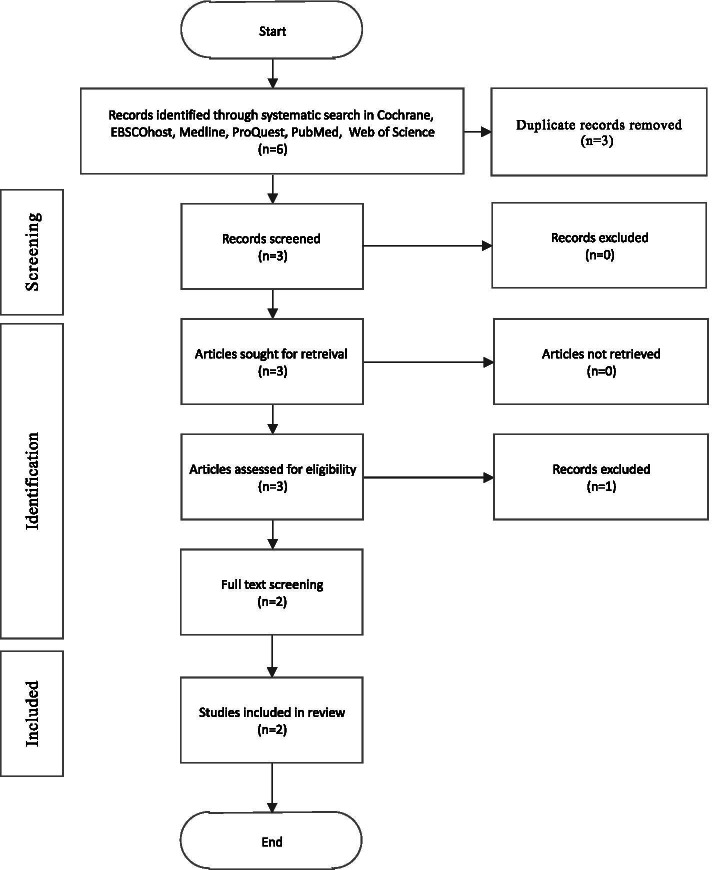
- The review screened 6 articles, removed 3 duplicates, and included 2 studies for analysis.
- In Moore et al., perceived stress scale (PSS) scores decreased by 2 points at the 4-month follow-up, and self-compassion scale (SCS) scores increased by 6.3 points by the end of the 8-week program and 5.5 points at 4 months; Compassion Scale scores did not change significantly.
- In Danilewitz et al., burnout subscales showed no significant change: Personal Achievement (p=0.55), Emotional Exhaustion (p=0.51), and Depersonalisation (p=0.71); JSE-S also did not change significantly (p=0.06), but the “describe” and “observe” facets of mindfulness increased significantly (16.7 ± 0.5 to 18.4 ± 0.6, p<0.001; 12.0 ± 0.5 to 15.1 ± 0.5, p<0.001), and self-compassion increased (35.0 ± 1.2 to 39.3 ± 1.3, p=0.001).
- Across the included studies, the authors report general low program usage; in Danilewitz et al., 32% of participants practiced at least once weekly at 4 months, and 89% practiced for 10 minutes or less per session.
Methods
- Systematic review guided by PRISMA, searching 8 databases: ProQuest, Medline, PubMed, PsycINFO, Web of Science, IEEE Explore, Cochrane, and CINAHL.
- Included English-language articles published in the last 10 years that described online interventions for medical students or residents; the final review included 2 studies.
- Main synthesis was narrative; no meta-analysis was conducted because of the paucity of articles and differences in study design, variables, and exposures.
Limitations
- The authors state that the search was limited to English-language studies, so relevant studies in other languages may have been missed.
- The authors state that comparing results was difficult because of the paucity of research and variation in outcome measurement tools.
- Evident from the text: the evidence base is very small (2 studies), both studies lacked randomization and control groups, and the review protocol was not registered.
Model-written summary. Check it against the paper before relying on it.
Integrity signals
Registry
Cites
Statistics
Figures
Verification
Claims the paper makes
37 Valid · 7 Not valid · 6 Not checked · 23 Own results and interpretations
Every source the paper cites for this claim was checked and supports it.
In the paper
“Medical students notice signs of burnout and psychological distress even before graduation and suffer from more psychological distress than those with a similar age profile [2].”
§ Effectiveness of online mindfulness interventions on medical students’ mental health: a systematic review > Introduction
What the sources say
- Supportedcites [2] van Dijk I Lucassen PL Speckens AE Mindfulness training for medical students in their clinical clerkships: two cross-sectional studies exploring interest and participation BMC Med Educ 2015 15 24 25888726 PMC4348100 source
The Background states that medical students report psychological distress and burnout before graduation and experience more psychological distress than age-matched peers. This directly supports the attributed comparison. (LLM, conf=0.95)
plainstates an association- Asserted: passes — The authors put it forward as true.
- Checkable: passes — It can be checked against evidence.
- Load-bearing: passes — The paper’s conclusions depend on it.
- Based: passes — The paper gives a reason why it holds.
- Supported
Every source the paper cites for this claim was checked and supports it.
In the paper
“The heightened levels of stress that accompany medical training and the subsequent junior doctor years can lead to anxiety, burnout, depression, suicidal thoughts, and alcohol abuse [1].”
§ Effectiveness of online mindfulness interventions on medical students’ mental health: a systematic review > Introduction
What the sources say
- Supportedcites [1] Moore S Determining the feasibility and effectiveness of brief online mindfulness training for rural medical students: a pilot study BMC Med Educ 2020 20 1 104 32252750 PMC7137339 source
The Background states that medical students experience high stress during training, that it continues into their junior doctor years, and that it may result in depression, anxiety, burnout, alcohol abuse, and suicidal thinking. The claim preserves that qualified relationship. (LLM, conf=0.95)
plainstates a cause- Asserted: passes — The authors put it forward as true.
- Checkable: passes — It can be checked against evidence.
- Load-bearing: passes — The paper’s conclusions depend on it.
- Based: passes — The paper gives a reason why it holds.
- Supported
Every source the paper cites for this claim was checked and supports it.
In the paper
“The PSS scores of participants had significantly decreased by two points at the four-month follow-up.”
§ Effectiveness of online mindfulness interventions on medical students’ mental health: a systematic review > Studies’ designs and outcomes > Intervention effects on mental health outcomes
What the sources say
- Supportedcites [1] Moore S Determining the feasibility and effectiveness of brief online mindfulness training for rural medical students: a pilot study BMC Med Educ 2020 20 1 104 32252750 PMC7137339 source
The Results section (‘Changes in PSS, SCS, and CS scores’) reports that participants’ PSS scores were significantly reduced at the four-month follow-up compared with baseline, with an estimated change of −2 points (95% CI −3.9 to −0.1). (LLM, conf=0.95)
plainstates a cause- Asserted: passes — The authors put it forward as true.
- Checkable: passes — It can be checked against evidence.
- Load-bearing: unclear — It is unclear whether the paper’s conclusions depend on it.
- Based: passes — The paper gives a reason why it holds.
- Supported
The cited sources support only part of this claim — read each source’s verdict below.
In the paper
“Systematic reviews conducted on the effectiveness of meditation programs and mindfulness-based intervention programs led to improvements in resilience to stress, anxiety and depression among university students and other populations, whether delivered offline [9] or online [10–14].”
§ Effectiveness of online mindfulness interventions on medical students’ mental health: a systematic review > Introduction
What the sources say
- Partly supportedcites [9] Galante J A mindfulness-based intervention to increase resilience to stress in university students (the Mindful Student Study): a pragmatic randomised controlled trial Lancet Public Health 2018 3 2 e72 e81 29422189 PMC5813792 sourceExperimental — accuracy not yet measured
The Introduction reports that systematic reviews found evidence of improvement in depression and anxiety symptoms, but describes the evidence for university students as preliminary and inconsistent. The Methods describe this paper’s own intervention as face-to-face, and the Introduction defines reduced examination-period distress as an indicator of resilience to stress. Thus the paper supports the offline intervention’s relevance, but it is a randomised trial—not itself a systematic review establishing improvements in all three outcomes. (LLM, conf=0.86)
- Not matchedcites [10] Ahmad F Wang JJ El Morr C El Morr C Online mindfulness interventions: a systematic review Novel applications of virtual communities in healthcare settings 2018 Hershey IGI Global 1 27
We searched by its title and found no matching paper.
- Not checked — no full text of the sourcecites [11] Ritvo P A mindfulness-based intervention for student depression, anxiety, and stress: randomized controlled trial JMIR Ment Health 2021 8 1 e23491 33264098 PMC7833974 source
- Partly supportedcites [12] El Morr C Effectiveness of an 8-week web-based mindfulness virtual community intervention for university students on symptoms of stress, anxiety, and depression: randomized controlled trial JMIR Ment Health 2020 7 7 e18595 32554380 PMC7395254 sourceExperimental — accuracy not yet measured
The Introduction and Discussion’s ‘Comparison With Prior Work’ report that a systematic review found online mindfulness interventions decreased stress, depression, and anxiety symptoms. But this source is itself a randomized trial, not a systematic review; its Abstract Conclusions report reduced depression and anxiety symptoms in university students, with no significant effect on perceived stress. (LLM, conf=0.84)
- Partly supportedcites [13] El Morr C Design of a mindfulness virtual community: a focus-group analysis Health Informatics J 2020 26 3 1560 1576 31709878 sourceExperimental — accuracy not yet measured
The Introduction (p. n/a, 'Mindfulness is an emerging mental health approach...') does report review-level evidence that mindfulness-based interventions positively impact psychological health ('decline in mood disturbance, reduction in psychological symptoms and emotional reactivity, improvement in behavioral regulation'), citing Keng et al.'s review and meta-analyses listed in its References (Hofmann on anxiety and depression, Vollestad systematic review/meta-analysis, Chiesa & Serretti on stress management, Grossman, Sedlmeier/Eberth), and it frames these as holding promise for 'students' mental health challenges on campuses' with both brick-and-mortar and Internet-based delivery discussed. However, our copy nowhere mentions 'resilience' (searched: resilience/coping/stress buffer), so that outcome is not attributable to this source; nor does it present systematic-review evidence for online delivery — the online work it cites (refs 42–52) is individual trials, and it explicitly notes that of the health virtual communities studied 'none has used mindfulness techniques.' The paper is also a focus-group design study rather than a systematic review itself, so it supports the paraphrase only as secondary background. (LLM, conf=0.72)
- Partly supportedcites [14] Ahmad F An eight-week, web-based mindfulness virtual community intervention for students’ mental health: randomized controlled trial JMIR Ment Health 2020 7 2 e15520 32074061 PMC7055779 sourceExperimental — accuracy not yet measured
The Introduction (Background; page unavailable) reports that reviews found in-person mindfulness interventions improved students’ stress, anxiety, and depression, and the Discussion (Conclusions; page unavailable) reports reductions in those symptoms in this paper’s web-based student trial. The paper is a randomized trial, not a systematic review of online programs, and these passages do not establish improved resilience as a distinct outcome or the online result in other populations. (LLM, conf=0.88)
plainstates a cause- Asserted: passes — The authors put it forward as true.
- Checkable: passes — It can be checked against evidence.
- Load-bearing: passes — The paper’s conclusions depend on it.
- Based: passes — The paper gives a reason why it holds.
- Partly supported
The cited sources support only part of this claim — read each source’s verdict below.
In the paper
“Mental health programs delivered online can substantially increase accessibility to mental health interventions remotely for a wide geographic area, overcoming limitations of distance and time, and online mindfulness offers an opportunity to circumvent those limitations [21].”
§ Effectiveness of online mindfulness interventions on medical students’ mental health: a systematic review > Introduction
What the sources say
- Partly supportedcites [21] McCall HC, Richardson CG, Helgadottir FD, Chen FS. Evaluating a Web-Based Social Anxiety Intervention Among University Students: Randomized Controlled Trial. J Med Internet Res. 2018;20(3):e91. 10.2196/jmir.8630. PMC5885061 29563078 sourceExperimental — accuracy not yet measured
The Introduction (Background; page unavailable) says computer-delivered therapy holds promise for increasing access and can reach people facing geographic barriers to in-person treatment. It does not specifically say that online delivery overcomes time limitations or discuss online mindfulness. (LLM, conf=0.87)
plainstates a cause- Asserted: passes — The authors put it forward as true.
- Checkable: passes — It can be checked against evidence.
- Load-bearing: passes — The paper’s conclusions depend on it.
- Based: passes — The paper gives a reason why it holds.
- Partly supported
22 more claims · 14 with their cited sources checked
Create a free account to see all 73 claims and to verify the 3 references still open.
- Probably not a substantial claim. 28
- It may state two separate claims as one. 29
- The quote only partly states this claim. 1
Claims other papers make about this one
Each is checked against this paper’s own text: does it say what the citing paper says it does?
The source backs part of the claim, not all of it — or backs it for a different population, condition or comparison.
In the citing paper
“However, feasibility trials of app-based psychological interventions for medical students also indicate that maintaining engagement in this accessible medium can be challenging [63,68].”
From Evaluation of an App-Delivered Psychological Flexibility Skill Training Intervention for Medical Student Burnout and Well-being: Randomized Controlled Trial (2023) · cites this paper as [63]
Experimental — accuracy not yet measuredThe source backs part of the claim, not all of it — or backs it for a different population, condition or comparison.
In the citing paper
“As medical students use smartphones frequently [63], stand-alone app–delivered interventions have the potential for cost-effective scalability [39,64] and can offset known accessibility barriers by providing anonymous and private access to medical students concerned about mental health stigma [11,32,64].”
From Evaluation of an App-Delivered Psychological Flexibility Skill Training Intervention for Medical Student Burnout and Well-being: Randomized Controlled Trial (2023) · cites this paper as [63]
Experimental — accuracy not yet measuredThe cited source says what the claim attributes to it.
In the citing paper
“As stress is a risk factor for burnout among medical students [63]”
From Evaluation of an App-Delivered Psychological Flexibility Skill Training Intervention for Medical Student Burnout and Well-being: Randomized Controlled Trial (2023) · cites this paper as [63]
The cited source says what the claim attributes to it.
In the citing paper
“App-delivered approaches provide medical students with an intervention that they can access in brief segments at a time and place that suits them, using a technology medium with which they are comfortable [63] and that allows them to maintain privacy [11,32,64].”
From Evaluation of an App-Delivered Psychological Flexibility Skill Training Intervention for Medical Student Burnout and Well-being: Randomized Controlled Trial (2023) · cites this paper as [63]
The cited source says what the claim attributes to it.
In the citing paper
“previous research suggests that medical student engagement in digital interventions may be improved by the incorporation of face-to-face training components [63]”
From Evaluation of an App-Delivered Psychological Flexibility Skill Training Intervention for Medical Student Burnout and Well-being: Randomized Controlled Trial (2023) · cites this paper as [63]
Citations
Cites
(2008) · Medical Entomology and Zoology · Cited by 7,477
COVID-19 and mental health: A review of the existing literature
Rajkumar, R. P. (2020) · Asian Journal of Psychiatry · doi:10.1016/j.ajp.2020.102066 · Cited by 3,574
The outbreak of COVID-19 coronavirus and its impact on global mental health
Torales, J., O’Higgins, M., Castaldelli-Maia, J. M., & Ventriglio, A. (2020) · International Journal of Social Psychiatry · doi:10.1177/0020764020915212 · Cited by 3,013
Loades, M. E., Chatburn, E., Higson-Sweeney, N., Reynolds, S., Shafran, R., Brigden, A., Linney, C., McManus, M. N., Borwick, C., & Crawley, E. (2020) · Journal of the American Academy of Child & Adolescent Psychiatry · doi:10.1016/j.jaac.2020.05.009 · Cited by 2,906 · cited 1×
“Specifically, isolation had a major impact on the mental health of the population in general [49] and medical students in particular [50], so studying the effect of the sense of belonging to a community and the sense of isolation on mental health outcomes appears to be paramount.”
BackgroundRotenstein, L. S., Ramos, M. A., Torre, M., Segal, J. B., Peluso, M. J., Guille, C., Sen, S., & Mata, D. A. (2016) · JAMA · doi:10.1001/jama.2016.17324 · Cited by 2,479
Progression of Mental Health Services during the COVID-19 Outbreak in China
Li, W., Yang, Y., Liu, Z.-H., Zhao, Y.-J., Zhang, Q., Zhang, L., Cheung, T., & Xiang, Y.-T. (2020) · International Journal of Biological Sciences · doi:10.7150/ijbs.45120 · Cited by 1,213
Mindfulness-Based Cognitive Therapy for Depression
Segal, Z. (2023) · PsycTHERAPY Dataset · doi:10.1037/v00751-001 · Cited by 1,029
Mental health outcomes of the CoViD-19 pandemic
Talevi, D., Socci, V., Carai, M., Carnaghi, G., Faleri, S., Trebbi, E., di Bernardo, A., Capelli, F., & Pacitti, F. (2020) · Rivista di Psichiatria · doi:10.1708/3382.33569 · Cited by 821
Saraswathi, I., Saikarthik, J., Senthil Kumar, K., Madhan Srinivasan, K., Ardhanaari, M., & Gunapriya, R. (2020) · PeerJ · doi:10.7717/peerj.10164 · Cited by 608
Galante, J., Dufour, G., Vainre, M., Wagner, A. P., Stochl, J., Benton, A., Lathia, N., Howarth, E., & Jones, P. B. (2018) · The Lancet Public Health · doi:10.1016/s2468-2667(17)30231-1 · Cited by 516 · cited 1×
“Systematic reviews conducted on the effectiveness of meditation programs and mindfulness-based intervention programs led to improvements in resilience to stress, anxiety and depression among university students and other populations, whether delivered offline [9] or online [10–14].”
BackgroundMeo, S. A., Abukhalaf, D. A. A., Alomar, A. A., Sattar, K., & Klonoff, D. C. (2020) · Pakistan Journal of Medical Sciences · doi:10.12669/pjms.36.covid19-s4.2809 · Cited by 309 · cited 1×
“Specifically, isolation had a major impact on the mental health of the population in general [49] and medical students in particular [50], so studying the effect of the sense of belonging to a community and the sense of isolation on mental health outcomes appears to be paramount.”
BackgroundOnline-Learning due to COVID-19 Improved Mental Health Among Medical Students
Bolatov, A. K., Seisembekov, T. Z., Askarova, A. Z., Baikanova, R. K., Smailova, D. S., & Fabbro, E. (2021) · Medical Science Educator · doi:10.1007/s40670-020-01165-y · Cited by 235
Levin, M. E., Haeger, J. A., Pierce, B. G., & Twohig, M. P. (2017) · Behavior Modification · doi:10.1177/0145445516659645 · Cited by 207 · cited 1×
“Additionally, web-based acceptance and commitment therapy (ACT), a form of cognitive behavioural therapy, was found to be successful in alleviating the academic worries and wellbeing of a group of college students [18].”
BackgroundOthman, N., Ahmad, F., El Morr, C., & Ritvo, P. (2019) · International Journal of Mental Health Systems · doi:10.1186/s13033-019-0275-x · Cited by 177
Aherne, D., Farrant, K., Hickey, L., Hickey, E., McGrath, L., & McGrath, D. (2016) · BMC Medical Education · doi:10.1186/s12909-016-0728-8 · Cited by 158 · cited 2×
“The combination of academic and personal stressors can give rise to elevated levels of depressive symptoms, which can culminate in poor mental wellbeing [3].”
BackgroundEl Morr, C., Ritvo, P., Ahmad, F., Moineddin, R., & MVC Team (2020) · JMIR Mental Health · doi:10.2196/18595 · Cited by 145 · cited 1×
“While in one study online forums were incorporated but were not effectively used by online community members [12, 38, 39], the sense of online community and its effect on mental health outcomes have not been addressed in any study.”
BackgroundArima, M., Takamiya, Y., Furuta, A., Siriratsivawong, K., Tsuchiya, S., & Izumi, M. (2020) · BMJ Open · doi:10.1136/bmjopen-2020-043728 · Cited by 138
Knowledge Management in Healthcare
El Morr, C., & Subercaze, J. (2010) · Handbook of Research on Developments in E-Health and Telemedicine · doi:10.4018/978-1-61520-670-4.ch023 · Cited by 105
Self-citationAhmad, F., El Morr, C., Ritvo, P., Othman, N., Moineddin, R., & MVC Team (2020) · JMIR Mental Health · doi:10.2196/15520 · Cited by 100
Essangri, H., Sabir, M., Benkabbou, A., Majbar, M. A., Amrani, L., Ghannam, A., Lekehal, B., Mohsine, R., & Souadka, A. (2021) · The American Journal of Tropical Medicine and Hygiene · doi:10.4269/ajtmh.20-1302 · Cited by 100
Effectiveness of ICT-based intimate partner violence interventions: a systematic review
El Morr, C., & Layal, M. (2020) · BMC Public Health · doi:10.1186/s12889-020-09408-8 · Cited by 90 · cited 1×
“While in one study online forums were incorporated but were not effectively used by online community members [12, 38, 39], the sense of online community and its effect on mental health outcomes have not been addressed in any study.”
BackgroundShaygan, M., Yazdani, Z., & Valibeygi, A. (2021) · BMC Psychiatry · doi:10.1186/s12888-021-03085-6 · Cited by 83
Ritvo, P., Ahmad, F., El Morr, C., Pirbaglou, M., Moineddin, R., & MVC Team (2021) · JMIR Mental Health · doi:10.2196/23491 · Cited by 75 · cited 1×
“Online communities [27, 28], whether static or mobile, proved to play a major role in digital health [29– 31], including mental health [11, 32, 33].”
McCall, H. C., Richardson, C. G., Helgadottir, F. D., & Chen, F. S. (2018) · Journal of Medical Internet Research · doi:10.2196/jmir.8630 · Cited by 71
Moore, S., Barbour, R., Ngo, H., Sinclair, C., Chambers, R., Auret, K., Hassed, C., & Playford, D. (2020) · BMC Medical Education · doi:10.1186/s12909-020-02015-6 · Cited by 65
Terp, U., Hjärthag, F., & Bisholt, B. (2019) · Nurse Educator · doi:10.1097/nne.0000000000000492 · Cited by 55 · cited 1×
“Cognitive behavioural stress management programs are shown to be effective in increasing perceived stress management competency, self-efficacy, and self-esteem [16, 17].”
BackgroundOmidi, A., Mohammadkhani, P., Mohammadi, A., & Zargar, F. (2013) · Iranian Red Crescent Medical Journal · doi:10.5812/ircmj.8018 · Cited by 52 · cited 1×
“While mindfulness can modify one’s attitude towards thoughts leading to less influence of thoughts on one’s subsequent feelings and behaviors, cognitive behaviour therapy (CBT) aims at restructuring cognition to develop more balanced and functional ways of approaching the environment [6, 7].”
BackgroundSaleh, S., Farah, A., El Arnaout, N., Dimassi, H., El Morr, C., Muntaner, C., Ammar, W., Hamadeh, R., & Alameddine, M. (2018) · Journal of Public Health · doi:10.1093/pubmed/fdy172 · Cited by 52 · cited 1×
“E-Health has been effective in providing health services in distributed and rural areas [22], and online interventions can be especially beneficial for students learning in distributed or rural facilities [1].”
BackgroundSelf-citationA therapist-guided smartphone app for major depression in young adults: A randomized clinical trial
Raevuori, A., Vahlberg, T., Korhonen, T., Hilgert, O., Aittakumpu-Hyden, R., & Forman-Hoffman, V. (2021) · Journal of Affective Disorders · doi:10.1016/j.jad.2021.02.007 · Cited by 52
Feasibility and effectiveness of an online mindfulness meditation program for medical students
Danilewitz, M., Koszycki, D., Maclean, H., Sanchez-Campos, M., Gonsalves, C., Archibald, D., & Bradwejn, J. (2018) · Canadian Medical Education Journal · doi:10.36834/cmej.43041 · Cited by 50 · cited 13×
“At the four-month follow-up, 32% of the participants practiced at least once weekly; however, 89% practiced for 10 minutes or less per session [23].”
BackgroundMethodInfluentialCoyle, C., Ghazi, H., & Georgiou, I. (2021) · Irish Journal of Medical Science (1971 -) · doi:10.1007/s11845-020-02423-z · Cited by 43
Cordeiro, J., de la Camp, O., Missikoff, M. M., Maciaszek, L. A., & Hammoudi, S. (2008) · Lecture notes in business information processing · doi:10.1007/978-3-319-62386-3 · Cited by 41
Christo, E. M., & Layal, M. (2019) · Studies in health technology and informatics · doi:10.3233/978-1-61499-951-5-103 · Cited by 38 · cited 1×
“While in one study online forums were incorporated but were not effectively used by online community members [12, 38, 39], the sense of online community and its effect on mental health outcomes have not been addressed in any study.”
BackgroundDescriptive, Predictive, and Prescriptive Analytics
El Morr, C., & Ali-Hassan, H. (2019) · SpringerBriefs in Health Care Management and Economics · doi:10.1007/978-3-030-04506-7_3 · Cited by 35
van Dijk, I., Lucassen, P. L., & Speckens, A. E. (2015) · BMC Medical Education · doi:10.1186/s12909-015-0302-9 · Cited by 32 · cited 2×
“Medical students notice signs of burnout and psychological distress even before graduation and suffer from more psychological distress than those with a similar age profile [2].”
BackgroundAn open trial of internet-based cognitive behavioral therapy for first year medical students
Lattie, E. G., Kashima, K. J., & Duffecy, J. L. (2019) · Internet Interventions · doi:10.1016/j.invent.2019.100279 · Cited by 32 · cited 2×
“It is also important to note that most medical students are accustomed to using technology and regularly consult the internet to obtain information relating to their health [15]; the ease with which they use technology makes them ideal consumers who would be able to derive the full benefit from online mindfulness inte…”
BackgroundDesign of a Mindfulness Virtual Community: A focus-group analysis
El Morr, C., Maule, C., Ashfaq, I., Ritvo, P., & Ahmad, F. (2020) · Health Informatics Journal · doi:10.1177/1460458219884840 · Cited by 31
Chung, A., Felber, R., Han, E., Mathew, T., Rebillot, K., & Likourezos, A. (2018) · Western Journal of Emergency Medicine · doi:10.5811/westjem.2018.4.37018 · Cited by 30 · cited 1×
“Mindfulness meditation uses various techniques to attain a state of mindfulness and was proven to be a means to reduce emotional reactivity by guiding one’s attention to their thoughts and feelings [8].”
BackgroundVirtual Community Building and the Information Society: Current and Future Directions
Morr, C. E., & Maret, P. (2011) · IGI Global eBooks · doi:10.4018/978-1-60960-869-9 · Cited by 25
Self-citationTrottier, C. F., Lieffers, J. R. L., Johnson, S. T., Mota, J. F., Gill, R. K., & Prado, C. M. (2021) · JMIR Research Protocols · doi:10.2196/24534 · Cited by 24
El Morr, C., AlHamzah, M., Ng, P., Purewal, A., & Al-Omran, M. (2017) · Vascular · doi:10.1177/1708538116689355 · Cited by 23 · cited 1×
“They have been proven to be effective in knowledge dissemination [34], health monitoring [35], self-management of health conditions [36] and chronic disease management [37].”
BackgroundHealthcare, Data Analytics, and Business Intelligence
El Morr, C., & Ali-Hassan, H. (2019) · SpringerBriefs in Health Care Management and Economics · doi:10.1007/978-3-030-04506-7_1 · Cited by 23 · cited 1×
“Analytics can drive intelligent indicators [63] to build smart mindfulness virtual communities [64] that display indicators and predictors using user-friendly visualisation tools [65].”
Self-citationMorr, C. E., & Ali‐Hassan, H. (2019) · SpringerBriefs in health care management and economics · doi:10.1007/978-3-030-04506-7 · Cited by 20
Self-citationA Student-Centered Mental Health Virtual Community Needs and Features: A Focus Group Study
Christo, E. M., Catherine, M., Iqra, A., Paul, R., & Farah, A. (2017) · Studies in Health Technology and Informatics · doi:10.3233/978-1-61499-742-9-104 · Cited by 18 · cited 1×
“Moreover, compared to traditional interventions, online programs provide more privacy and flexibility [20]; since the programs are online, students have the option to access them at any time from the privacy of their rooms if they wish to [23].”
BackgroundSelf-citationTerp, U., Bisholt, B. K. M., & Hjärthag, F. (2019) · Health Education & Behavior · doi:10.1177/1090198119865319 · Cited by 18 · cited 1×
“Cognitive behavioural stress management programs are shown to be effective in increasing perceived stress management competency, self-efficacy, and self-esteem [16, 17].”
BackgroundNovel Applications of Virtual Communities in Healthcare Settings
(2018) · Advances in Healthcare Information Systems and Administration · doi:10.4018/978-1-5225-2958-3 · Cited by 14
Self-citationHealth Care Virtual Communities: Challenges and Opportunities
El Morr, C. (2010) · Handbook of Research on Developments in E-Health and Telemedicine · doi:10.4018/978-1-61520-670-4.ch013 · Cited by 13 · cited 1×
“Online communities [27, 28], whether static or mobile, proved to play a major role in digital health [29– 31], including mental health [11, 32, 33].”
BackgroundIntroduction to Health Informatics: A Canadian Perspective
MacVane Phipps, F. (2019) · International Journal of Health Governance · doi:10.1108/ijhg-03-2019-073 · Cited by 13
A Health Virtual Community for Patients with Chronic Kidney Disease
Morr, C. E., Cole, C., & Perl, J. (2014) · Procedia Computer Science · doi:10.1016/j.procs.2014.08.049 · Cited by 12 · cited 1×
“They have been proven to be effective in knowledge dissemination [34], health monitoring [35], self-management of health conditions [36] and chronic disease management [37].”
BackgroundSelf-citationA Virtual Knowledge Community for Human Rights Monitoring for People with Disabilities.
Morr, C. E., Subercaze, J., Maret, P., & Rioux, M. H. (2008) · Cited by 11
Self-citationEl Morr, C. (2019) · International Journal of Extreme Automation and Connectivity in Healthcare · doi:10.4018/ijeach.2019010102 · Cited by 10 · cited 1×
“Online communities [27, 28], whether static or mobile, proved to play a major role in digital health [29– 31], including mental health [11, 32, 33].”
BackgroundEvaluation Frameworks for Health Virtual Communities
El Morr, C., & Eftychiou, L. (2017) · The Digitization of Healthcare · doi:10.1057/978-1-349-95173-4_6 · Cited by 9 · cited 2×
“It is important to note that frameworks to evaluate the successful implementation and adoption of online communities do exist [57].”
BackgroundHealthcare Analytics Applications
Morr, C. E., & Ali‐Hassan, H. (2019) · SpringerBriefs in health care management and economics · doi:10.1007/978-3-030-04506-7_4 · Cited by 6
Self-citationSaleh, K. A., Morr, C. E., Mourtada, A., et al. (2003) · International Conference on Internet Computing · Cited by 5
Self-citationMobile Virtual Communities in Healthcare The Chronic Disease Management Case
El Morr, C. (2010) · Ubiquitous Health and Medical Informatics · doi:10.4018/978-1-61520-777-0.ch013 · Cited by 5
Enabling Virtual Knowledge Networks for Human Rights Monitoring for People with Disabilities
Morr, C. E., Dinca-Panaitescu, M., Rioux, M. H., Subercaze, J., Maret, P., & Bogdan, N. (2012) · International Journal of Virtual Communities and Social Networking · doi:10.4018/jvcsn.2012040101 · Cited by 4
Self-citationMobile Mental Health Virtual Communities: Challenges and Opportunities
Eftychiou, L., & El Morr, C. (2017) · The Digitization of Healthcare · doi:10.1057/978-1-349-95173-4_15 · Cited by 3 · cited 2×
“Online communities [27, 28], whether static or mobile, proved to play a major role in digital health [29– 31], including mental health [11, 32, 33].”
BackgroundAccessibility Monitoring for People with Disabilities: A Collaborative Virtual Community
Saraswat, I., Brahim, A., Halifax, N. V. D., & El Morr, C. (2020) · International Journal of Extreme Automation and Connectivity in Healthcare · doi:10.4018/ijeach.2020010108 · Cited by 3
Towards Successful Virtual Communities
Subercaze, J., Morr, C. E., Maret, P., Joly, A., Koivisto, M., Antoniadis, P., & Ihara, M. (2009) · Lecture notes in business information processing · doi:10.1007/978-3-642-01347-8_56 · Cited by 3
El Morr, C., & Ali-Hassan, H. (2019) · SpringerBriefs in Health Care Management and Economics · doi:10.1007/978-3-030-04506-7_2 · Cited by 2
Morr, C. E., & Ali‐Hassan, H. (2019) · SpringerBriefs in health care management and economics · doi:10.1007/978-3-030-04506-7_5 · Cited by 2
Self-citationA mobile‐agent platform and a game application specifications using M‐UML
Saleh, K. A., Morr, C. E., Mourtada, A., et al. (2004) · The Electronic Library · doi:10.1108/02640470410520096 · Cited by 1 · cited 1×
“There are advanced techniques that might become useful in online communities, such as online agents [51, 52] that allow notification based on user preferences [27, 35, 53–56].”
Self-citationEl Morr, C. (2008) · Virtual Technologies · doi:10.4018/978-1-59904-955-7.ch097 · Cited by 1
Self-citationInsight into Health Care Outcomes for Persons Living with Heart Failure Using Health Data Analytics
Christo, E. M., Liane, G., Seungree, N., Wendy, C., Heather, B., Asmaa, M., Nancy, C., Helene, L. C., & Susan, W. (2019) · Studies in Health Technology and Informatics · doi:10.3233/978-1-61499-951-5-98
Self-citation
Research works printed but not linked: 2
- El Morr, C., et al. A virtual knowledge network for human rights monitoring, in 10th IFIP Working Conference on Virtual Enterprises (PRO-VE’09)- Workshop on Web Intelligence and Virtual Enterprises (WIVE’09), Oct. 7-9, 2009. 2009: Thessaloniki, Greece.
- El Morr C Ali-Hassan H Tan JK Analytics in healthcare: a practical introduction SpringerBriefs in health care management and economics 2019 Cham Springer International Publishing 105
Cited by
Gong, X., Wang, L., Rong, G., Zhang, D.-N., Zhang, A.-Y., & Liu, C. (2023) · Frontiers in Psychology · doi:10.3389/fpsyg.2023.1073647 · Cited by 86
Pascual, K. J., Fredman, A., Naum, A., Patil, C., & Sikka, N. K. (2022) · Workplace Health & Safety · doi:10.1177/21650799221123258 · Cited by 58
“In a 2021 systematic review of online MBIs, Yogeswaran and El Morr (2021) made note of how long-term program usage by medical students was minimal and participation typically diminished during the interventions.”
BackgroundAlrashdi, D. H., Chen, K. K., Meyer, C., & Gould, R. L. (2023) · Journal of Technology in Behavioral Science · doi:10.1007/s41347-023-00321-6 · Cited by 50
“…reviews have reported the effectiveness of MBIs for promoting university students’ mental health (Bamber & Morpeth, 2019; Chiodelli et al., 2020; Daya & Hearn, 2018; Halladay et al., 2019; McConville et al., 2017; O'Driscoll et al., 2017; Reangsing et al., 2022; Yogeswaran & El Morr, 2021).”
Sperling, E. L., Hulett, J. M., Sherwin, L. B., Thompson, S., & Bettencourt, B. A. (2023) · PLoS ONE · doi:10.1371/journal.pone.0286387 · Cited by 79
Pan, Y., Li, F., Liang, H., Shen, X., Bing, Z., Cheng, L., & Dong, Y. (2024) · Evidence-based Complementary and Alternative Medicine · doi:10.1155/2024/8872685 · Cited by 93
Metadata
- Authors
- Yogeswaran, V., & El Morr, C.
- Affiliations
- York University (CA)
- Venue
- BMC Public Health
- Published
- 2021-12-18
- Volume
- 21
- Issue
- 1
- Pages
- 2293-2293
- ISSN
- 1471-2458 (ISSN-L)
- PMC
- PMC8683314
- OpenAlex
- W4200422771
- Semantic Scholar
- fe9d5f6f517057c72d1d2c36e39053629dfe1f7e
- Cited by
- 62
- References
- 63
- Citations by year
- 2026: 14 · 2025: 16 · 2024: 15 · 2023: 14 · 2022: 3
- FWCI
- 0.92
- Type
- journal article
- Language
- en
- Open access
- gold
- doi.org
- Licence
- cc-by
- creativecommons.org/licenses/by/4.0 (tdm)
- creativecommons.org/licenses/by/4.0 (vor)
- Locations
- BMC Public Health (publishedVersion, cc-by)
- PubMed Central (publishedVersion, cc-by)
- PubMed (publishedVersion)
- DOAJ (DOAJ: Directory of Open Access Journals) (submittedVersion, cc-by-sa)
- Topics
- Social Sciences › Psychology › Clinical Psychology › Mindfulness and Compassion Interventions
- Social Sciences › Psychology › Applied Psychology › Digital Mental Health Interventions
- Health Sciences › Health Professions › General Health Professions › Healthcare professionals’ stress and burnout
- Keywords
- online mindfulness intervention, medical students, mental health, medical education, self-compassion, perceived stress, coping strategies, burnout, depression, anxiety, program participation, self-care
- MeSH terms
- Internet-Based Intervention, Humans, Mental Health, Students, Medical, Mindfulness, Acceptance and Commitment Therapy
About these checks
Registry, retraction, Cites and statistics results are computed, not judged, with one exception: a printed reference that no index lists is read once by a model before it counts as a citation error. Claims are extracted by a model and kept only when their quote appears verbatim in the text; each cited source is then checked, with a model’s help, for whether it says what the claim relies on. Those verdicts can be wrong — read the claim’s quote and the cited source before relying on one.
The claim verdicts this report counts are experimental: their accuracy is not yet measured.
A language model drew the claims from the paper on 2026-10-11, under version 3 of the claim definition (model deepseek-v4.1-flash, prompt extract-v3).
A second model labelled each claim on 2026-10-11 (model jev-1.13-20260917, definition revision gold-guideline-v0.2).
Cited sources are checked with a language model’s help (gpt-6-sol and qwen3.8-omni-flash).
Statistics and arithmetic are recomputed, not judged.
Confidence bands are shown only for fields calibrated on our annotated test set. None is calibrated yet, so no band is shown.
What counts as a claim ›How we measure confidence ›How we check this ›
Are you an author, or do you see a problem with this page? Request a review
Data sources
Bibliographic data: Semantic Scholar, OpenAlex, Crossref.
Contains information from the Semantic Scholar Academic Graph Datasets, made available under the ODC Attribution License (ODC-BY 1.0).
Semantic Scholar’s data is described in: Kinney, R., et al. (2023). The Semantic Scholar Open Data Platform. arXiv:2301.10140.
