

Socioeconomic status impacts Chinese late adolescents’ internalizing problems: risk role of psychological insecurity and cognitive fusion
Open accessThe DOI matches its Crossref record; 64 of the 65 references it cites were found in a registry or an index; 5 of the 20 sources its claims cite were checked for support.
Abstract
Introduction: Low socioeconomic status (SES) has been shown to be associated with more internalizing problems, but the mechanism of this relationship has not been investigated in Chinese late adolescents. Methods: High school students (N = 780, 54.45% girls) were recruited to complete questionnaires to assess SES, anxiety, depression, and cognitive fusion. We tested the hypotheses that this association would be mediated by the psychological insecurity and moderated by their cognitive fusion. Results: Regression-based analyses indicated that (1) psychological insecurity fully mediated the relationship between SES and internalizing problems; (2) late adolescents with high vs. low cognitive fusion showed a stronger positive association between psychological insecurity and internalizing problems. Discussion: The results highlight the important effects of psychological security and family resources on late adolescents’ mental health and give implications for interventions aimed to reduce adolescent internalizing problems through acceptance and commitment therapy. © The Author(s) 2025.
Overview
CoChat Summary
## TL;DR
In a convenience sample of 780 Chinese 11th-grade students, low socioeconomic status (SES) was linked to more internalizing problems indirectly through higher psychological insecurity, not through a direct SES–internalizing association. Cognitive fusion strengthened the insecurity-to-internalizing link, suggesting a moderated mediation pattern.
## Key findings
- The sample included 780 high school students, 54.45% girls; 28 students were excluded from the initial 808 participants based on polygraph items.
- SES was negatively related to psychological insecurity (β = -.04, t = −3.36, p < .001).
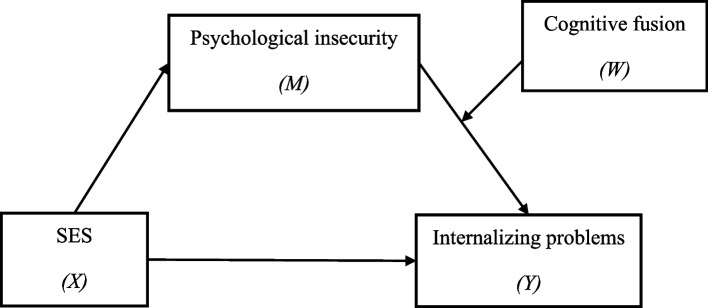
- Psychological insecurity was positively related to internalizing problems (β = .51, t = 18.50, p < .001), while the direct path from SES to internalizing problems was not significant (β = .01, t = 0.72, p = .47).
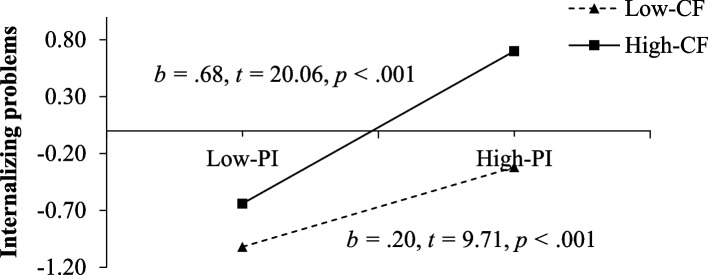
- Cognitive fusion had a significant positive correlation with internalizing problems (β = .35, t = 12.10, p < .001) and significantly amplified the insecurity–internalizing association (interaction β = .16, t = 7.68, p < .001).
- The indirect effect of SES on internalizing problems via psychological insecurity was significant at both low cognitive fusion (indirect effect = .01, SE = .00, 95% CI [-.03, -.00]) and high cognitive fusion (indirect effect = .03, SE = .01, 95% CI [-.05, -.01]), with a stronger insecurity–internalizing slope at higher fusion (β = .68 vs .35 in the simple slopes test as reported).
## Methods
- Design: Cross-sectional questionnaire study tested with a moderated mediation model (PROCESS Model 14) and 95% bias-corrected bootstrap CIs based on 5000 samples.
- Sample/data: Convenience sample of all 11th-grade students from one high school in a second-tier city in southern China, surveyed in December 2020 during sporadic COVID-19 outbreaks; analyses used 780 valid cases.
- Main measures/analysis: SES (family per capita income, parents’ education, home location), internalizing problems (YSR anxious/depression subscales), psychological insecurity (Security Questionnaire), and cognitive fusion (Cognitive Fusion Questionnaire); gender and age were controlled.
## Limitations
- The paper states that data were collected during the COVID-19 pandemic, so participants may have had higher psychological insecurity and internalizing problems than before the epidemic, limiting generalizability to the current social context.
- The authors note that they tested only cognitive fusion as a moderator, while other ACT-related moderators such as committed action and acceptance could also be examined.
- The paper says the findings came from late adolescents only, so it is unclear whether they extend to other age groups; it also calls for longitudinal and cross-lagged designs to confirm the relationships.
- Evident from the text: the study is cross-sectional and from a convenience sample at one high school in one city, so causal claims and broader generalization are limited.
Model-written summary. Check it against the paper before relying on it.
Integrity signals
Registry
Cites
Statistics
Figures
Verification
Claims the paper makes
3 Valid · 1 Not valid · 9 Not checked · 20 Own results and interpretations
The cited sources support only part of this claim — read each source’s verdict below.
In the paper
“A meta-analysis including 120 effects showed that SES was significantly, negatively associated with mental health problems in adolescents [13].”
§ Socioeconomic status impacts Chinese late adolescents’ internalizing problems: risk role of psychological insecurity and cognitive fusion > Introduction
What the sources say
- Partly supportedcites [13] Peverill M, Dirks MA, Narvaja T, Herts KL, Comer JS, McLaughlin KA. Socioeconomic status and child psychopathology in the United States: a meta-analysis of population-based studies. Clin Psychol Rev. 2020;83:101933. 10.1016/j.cpr.2020.101933. 33278703 PMC7855901 sourceExperimental — accuracy not yet measured
The Abstract reports a meta-analysis of 120 estimates and an association between lower SES and higher psychopathology; the Results section also reports a pooled association. But the 26,715 participants were aged 3–19, so the reported overall finding is not specific to adolescents. Page numbers were not supplied. (LLM, conf=0.87)
plainstates an association- Asserted: passes — The authors put it forward as true.
- Checkable: passes — It can be checked against evidence.
- Load-bearing: passes — The paper’s conclusions depend on it.
- Based: passes — The paper gives a reason why it holds.
- Partly supported
A result the paper reports from its own data — it cites no other source for it, so there is none to check. The quote shows it is in the paper.
In the paper
“the indirect pathways between SES and internalizing problems via psychological insecurity were both significant in adolescents with low cognitive fusion (indirect effect =.01, SE =.00, 95% CI [-.03, -.00])”
§ Socioeconomic status impacts Chinese late adolescents’ internalizing problems: risk role of psychological insecurity and cognitive fusion > Results > Testing for moderated mediation
plainstates an association- Asserted: passes — The authors put it forward as true.
- Checkable: passes — It can be checked against evidence.
- Load-bearing: passes — The paper’s conclusions depend on it.
- Based: passes — The paper gives a reason why it holds.
A result the paper reports from its own data — it cites no other source for it, so there is none to check. The quote shows it is in the paper.
In the paper
“The results showed that SES was negatively correlated with psychological insecurity.”
- Also stated in: § Testing for moderated mediation · plain
“Model’s results showed that SES was negatively related to psychological insecurity (β = -.04, t = − 3.36, p <.001, Table 2)”
§ Socioeconomic status impacts Chinese late adolescents’ internalizing problems: risk role of psychological insecurity and cognitive fusion > Results > Preliminary analyses
plainstates an association- Asserted: passes — The authors put it forward as true.
- Checkable: passes — It can be checked against evidence.
- Load-bearing: passes — The paper’s conclusions depend on it.
- Based: passes — The paper gives a reason why it holds.
- Also stated in: § Testing for moderated mediation · plain
A result the paper reports from its own data — it cites no other source for it, so there is none to check. The quote shows it is in the paper.
In the paper
“Although no significant correlation was found between SES and internalizing problems, this does not rule out the possibility of a mediating pathway.”
- Also stated in: § Testing for moderated mediation · plain
“but the residual direct pathway of SES and internalizing problems was not significant (β =.01, t = 0.72, p =.47)”
- Also stated in: § Discussion · plain
“our results did not support Hypothesis 1”
§ Socioeconomic status impacts Chinese late adolescents’ internalizing problems: risk role of psychological insecurity and cognitive fusion > Results > Preliminary analyses
plain- Asserted: passes — The authors put it forward as true.
- Checkable: passes — It can be checked against evidence.
- Load-bearing: passes — The paper’s conclusions depend on it.
- Based: passes — The paper gives a reason why it holds.
- Also stated in: § Testing for moderated mediation · plain
A result the paper reports from its own data — it cites no other source for it, so there is none to check. The quote shows it is in the paper.
In the paper
“late adolescents with high vs. low cognitive fusion showed a stronger positive association between psychological insecurity and internalizing problems.”
- Also stated in: § Testing for moderated mediation · plain
“the moderating effect of cognitive fusion was significant because psychological insecurity and cognitive fusion had a significant positive interactive effect on internalizing problems (β =.16, t = 7.68, p <.001)”
- Also stated in: § Discussion · plain
“Consistent with Hypothesis 3, cognitive fusion moderates the association between psychological insecurity and internalizing problems.”
§ Socioeconomic status impacts Chinese late adolescents’ internalizing problems: risk role of psychological insecurity and cognitive fusion > Abstract > Results
plainstates an association- Asserted: passes — The authors put it forward as true.
- Checkable: passes — It can be checked against evidence.
- Load-bearing: passes — The paper’s conclusions depend on it.
- Based: passes — The paper gives a reason why it holds.
- Also stated in: § Testing for moderated mediation · plain
12 more claims
Create a free account to see all 33 claims and every source verdict.
- It may state two separate claims as one. 9
- Probably not a substantial claim. 9
Citations
Cites
Maslow, A. H. (1943) · Psychological Review · doi:10.1037/h0054346 · Cited by 21,563 · cited 1×
“Adolescents with high psychological insecurity may view neutral cues as aggressive and threatening, and therefore they may perceive people and environments as full of danger [21, 24].”
Poverty impedes cognitive function.
Mani, A., Mullainathan, S., Shafir, E., & Zhao, J. (2013) · Science · doi:10.1126/science.1238041 · Cited by 2,967 · cited 1×
“Low income and low parent education are two common contributors to poverty [2], and living in poverty early in life has been shown to predict developmental trajectories of physical, externalizing, and cognitive disorders [3–5].”
Hayes, S. C. (2004) · Behavior Therapy · doi:10.1016/s0005-7894(04)80013-3 · Cited by 2,493 · cited 1×
“As the third wave of cognitive-behavioral therapy, Acceptance and Commitment Therapy (ACT) [32] regards psychological inflexibility as a key mechanism of psychopathology and regards enhanced psychological flexibility as the central goal of treatment [33, 34].”
The classification of child psychopathology: A review and analysis of empirical efforts.
Achenbach, T. M., & EDELBROCK, C. S. (1978) · Psychological Bulletin · doi:10.1037//0033-2909.85.6.1275 · Cited by 1,526 · cited 1×
“The term internalizing was first proposed by [8] to describe psychopathological spectrums of developmental problems.”
The development and initial validation of the cognitive fusion questionnaire
Gillanders, D. T., Bolderston, H., Bond, F. W., Dempster, M., Flaxman, P. E., Campbell, L., Kerr, S., Tansey, L., Noel, P., Ferenbach, C., et al. (2014) · Behavior Therapy · doi:10.1016/j.beth.2013.09.001 · Cited by 837 · cited 2×
“It is described as a psychological phenomenon in which one’s emotions and behaviors are inflexibly regulated and dominated by the literal meaning of one’s thoughts [38].”
Acceptance and Commitment Therapy as a Unified Model of Behavior Change
Hayes, S. C., Pistorello, J., & Levin, M. E. (2012) · The Counseling Psychologist · doi:10.1177/0011000012460836 · Cited by 718 · cited 1×
“As the third wave of cognitive-behavioral therapy, Acceptance and Commitment Therapy (ACT) [32] regards psychological inflexibility as a key mechanism of psychopathology and regards enhanced psychological flexibility as the central goal of treatment [33, 34].”
Achenbach, T. M., Ivanova, M. Y., Rescorla, L. A., Turner, L. V., & Althoff, R. R. (2016) · Journal of the American Academy of Child & Adolescent Psychiatry · doi:10.1016/j.jaac.2016.05.012 · Cited by 673 · cited 1×
“Internalizing problems refer to a continuum of symptoms of excessive control or excessive concern for the inner self (e.g. anxiety, depression, social withdrawal, and physical discomfort) [9].”
State of the Art Review: Poverty and the Developing Brain
Johnson, S. B., Riis, J. L., & Noble, K. G. (2016) · Pediatrics · doi:10.1542/peds.2015-3075 · Cited by 624
Preventive psychiatry: a blueprint for improving the mental health of young people
Fusar‐Poli, P., Correll, C. U., Arango, C., Berk, M., Patel, V., & Ioannidis, J. P. A. (2021) · World Psychiatry · doi:10.1002/wps.20869 · Cited by 497 · cited 1×
“These problems have been shown to have a negative impact on public health and place youth at risk for future mental health problems (e.g., suicide attempts and bipolar mood disorder) [11].”
Grayson, D. S., & Fair, D. A. (2017) · NeuroImage · doi:10.1016/j.neuroimage.2017.01.079 · Cited by 411 · cited 1×
“Youth from families with low-socioeconomic status (SES) may show defects in brain development [6], including brain structure and functions that subserve executive function and emotion regulation [7].”
Child emotional security and interparental conflict.
Davies, P. T., Harold, G. T., Goeke‐Morey, M. C., Cummings, E. M., Shelton, K. H., & Rasi, J. A. (2002) · PubMed · Cited by 408
Examining psychological inflexibility as a transdiagnostic process across psychological disorders
Levin, M. E., MacLane, C., Daflos, S., Seeley, J. R., Hayes, S. C., Biglan, A., & Pistorello, J. (2014) · Journal of Contextual Behavioral Science · doi:10.1016/j.jcbs.2014.06.003 · Cited by 400 · cited 1×
“Cognitive fusion may also lead people to obstinately act in accordance with their intrusive thoughts [45], Individuals whose behaviors are closely tied to thoughts about environmental and interpersonal risks may opt out of activities to avoid potential unmanageable risks and the possibility of…”
Peverill, M., Dirks, M. A., Narvaja, T., Herts, K. L., Comer, J. S., & McLaughlin, K. A. (2021) · Clinical Psychology Review · doi:10.1016/j.cpr.2020.101933 · Cited by 348
DBT, FAP, and ACT: How empirically oriented are the new behavior therapy technologies?
Hayes, S. C., Masuda, A., Bissett, R., Luoma, J., & Guerrero, L. F. (2004) · Behavior Therapy · doi:10.1016/s0005-7894(04)80003-0 · Cited by 342 · cited 2×
“As the third wave of cognitive-behavioral therapy, Acceptance and Commitment Therapy (ACT) [32] regards psychological inflexibility as a key mechanism of psychopathology and regards enhanced psychological flexibility as the central goal of treatment [33, 34].”
Davies, P. T., Forman, E. M., Rasi, J. A., & Stevens, K. I. (2002) · Child Development · doi:10.1111/1467-8624.00423 · Cited by 228 · cited 1×
“Given that low SES might be associated with higher interpersonal insecurity and a sense of the environment as uncontrollable, psychological insecurity could be a mediator of the association between a stressful environment and psychological maladjustment [27].”
Socioeconomic Context, Social Support, and Adolescent Mental Health: A Multilevel Investigation
Wight, R. G., Botticello, A. L., & Aneshensel, C. S. (2006) · Journal of Youth and Adolescence · doi:10.1007/s10964-005-9009-2 · Cited by 218 · cited 1×
“Simply put, SES may directly affect late adolescents’ mental health or indirectly contribute to psychological risks through cumulative stress, damage to social support networks, and prolonged environmental pressures [55, 56].”
Multiple measures of socio-economic position and psychosocial health: proximal and distal measures
Singh-Manoux, A., Clarke, P., & Marmot, M. (2002) · International Journal of Epidemiology · doi:10.1093/ije/31.6.1192 · Cited by 215 · cited 2×
“Meanwhile, adolescents still depend on their families and are unable to change the current unsafe situation; thus, they may experience more helplessness and hopelessness [56].”
Bardeen, J. R., & Fergus, T. A. (2016) · Journal of Contextual Behavioral Science · doi:10.1016/j.jcbs.2016.02.002 · Cited by 213 · cited 1×
“Specifically, cognitive fusion may exacerbate the impact of insecure cognition (e.g. always worrying about something bad happening) on adolescent mental health [43, 44].”
Lee, I.-C., Pratto, F., & Johnson, B. T. (2011) · Psychological Bulletin · doi:10.1037/a0025410 · Cited by 204
Chen, X., Qi, H., Liu, R., Feng, Y., Li, W., Xiang, M., Cheung, T., Jackson, T., Wang, G., & Xiang, Y.-T. (2021) · Translational Psychiatry · doi:10.1038/s41398-021-01271-4 · Cited by 184 · cited 1×
“Among them, anxiety and depression have had a high prevalence in recent years [10].”
Cummings, E. M., Koss, K. J., & Davies, P. T. (2015) · Journal of Abnormal Child Psychology · doi:10.1007/s10802-014-9926-1 · Cited by 176 · cited 4×
“However, adolescents in low-SES families may suffer more family conflict, which blocks them from perceiving positive emotions and safety [21].”
InfluentialMaslow, A. H. (1948) · The Journal of Psychology · doi:10.1080/00223980.1948.9917386 · Cited by 172 · cited 1×
“We believe that the concept of psychological insecurity should include not only the sense of feelings of rejection and the anxiety of isolation but also the feelings of uncertainty and not being able to control the environment [19, 20].”
How Long Will It Take to Lift One Billion People Out of Poverty?
Ravallion, M. (2013) · The World Bank Research Observer · doi:10.1093/wbro/lkt003 · Cited by 150 · cited 1×
“Many countries were successful in reducing poverty in the last few decades [1], but the poverty rate has increased since the inception of COVID-19.”
Cummings, E. M., & Miller‐Graff, L. E. (2015) · Current Directions in Psychological Science · doi:10.1177/0963721414561510 · Cited by 150 · cited 2×
“Youth living in low SES families may tend to have a low threshold for judging situations as threatening, and this long-term insecure psychological state is related to higher adrenocortical reactivity [57].”
Salameh, P., Hajj, A., Badro, D. A., Selwan, C. A., Aoun, R., & Sacre, H. (2020) · Psychiatry Research · doi:10.1016/j.psychres.2020.113520 · Cited by 145 · cited 2×
“A study in developing countries has already shown that individuals who felt psychologically insecure reported higher levels of anxiety and depression [31].”
Psychosocial stress and asthma morbidity
Yonas, M. A., Lange, N. E., & Celedón, J. C. (2012) · Current Opinion in Allergy & Clinical Immunology · doi:10.1097/aci.0b013e32835090c9 · Cited by 133 · cited 1×
“At the same time, adolescents in low-income urban areas are more likely to suffer from chronic environmental stress, such as community violence [23].”
Children's Patterns of Preserving Emotional Security in the Interparental Subsystem
Davies, P. T., & Forman, E. M. (2002) · Child Development · doi:10.1111/1467-8624.t01-1-00512 · Cited by 129 · cited 2×
“Further, psychologically insecure late adolescents may spend psychological resources to seek and maintain their psychological security in a threatening environment [30].”
Viskovich, S., & Pakenham, K. I. (2020) · Journal of Clinical Psychology · doi:10.1002/jclp.22848 · Cited by 123 · cited 1×
“In contrast, a key component of the ACT therapeutic framework is the reduction of cognitive fusion, which can be alleviated by the psychological intervention [65, 66].”
Jia, J., Li, D., Li, X., Zhou, Y., Wang, Y., Sun, W., & Zhao, L. (2018) · Computers in Human Behavior · doi:10.1016/j.chb.2018.03.042 · Cited by 114 · cited 2×
“Previous interpretations of psychological insecurity were not uniform [17, 18].”
Cookson, C., Luzon, O., Newland, J., & Kingston, J. (2020) · Psychology and Psychotherapy Theory Research and Practice · doi:10.1111/papt.12233 · Cited by 98 · cited 1×
“Previous studies have consistently shown that cognitive fusion is positively associated with internalizing problems [39, 40], depression and anxiety [41], and alexithymia [42].”
Adolescent food insecurity: A review of contextual and behavioral factors
Dush, J. L. (2020) · Public Health Nursing · doi:10.1111/phn.12708 · Cited by 95 · cited 1×
“Low SES also includes the potential insecurity of material conditions such as food and housing, and each type of material environment in parenting can independently lower adolescents’ mental health levels [59, 60].”
Joyce, S., Shand, F., Bryant, R. A., Lal, T. J., & Harvey, S. B. (2018) · Journal of Medical Internet Research · doi:10.2196/10326 · Cited by 87 · cited 1×
“In contrast, a key component of the ACT therapeutic framework is the reduction of cognitive fusion, which can be alleviated by the psychological intervention [65, 66].”
Brody, G. H., Yu, T., Nusslock, R., Barton, A. W., Miller, G. E., Chen, E., Holmes, C., McCormick, M., & Sweet, L. H. (2019) · Psychological Science · doi:10.1177/0956797619847989 · Cited by 82 · cited 1×
“Youth from families with low-socioeconomic status (SES) may show defects in brain development [6], including brain structure and functions that subserve executive function and emotion regulation [7].”
Lappalainen, R., Lappalainen, P., Puolakanaho, A., Hirvonen, R., Eklund, K., Ahonen, T., Muotka, J., & Kiuru, N. (2021) · Journal of Contextual Behavioral Science · doi:10.1016/j.jcbs.2021.01.007 · Cited by 69 · cited 1×
“For example, a randomized controlled trial on 243 adolescents found that after a 5-week web intervention based on ACT, participants showed a significant decrease in cognitive fusion and depression symptoms and showed a significant increase in psychological flexibility and well-being [67].”
Wu, X., Li, X., Lu, Y., & Hout, M. (2021) · Research in Social Stratification and Mobility · doi:10.1016/j.rssm.2021.100584 · Cited by 64 · cited 1×
“Family economic stress increased the unpredictability of family environments and the risks to youth in low-SES families [15].”
Transdiagnostic perspective on psychological inflexibility and emotional dysregulation
Faustino, B. (2021) · Behavioural and Cognitive Psychotherapy · doi:10.1017/s1352465820000600 · Cited by 62 · cited 2×
“Previous studies have consistently shown that cognitive fusion is positively associated with internalizing problems [39, 40], depression and anxiety [41], and alexithymia [42].”
Comeau, J., & Boyle, M. H. (2018) · SSM - Population Health · doi:10.1016/j.ssmph.2017.11.012 · Cited by 57 · cited 1×
“Low income and low parent education are two common contributors to poverty [2], and living in poverty early in life has been shown to predict developmental trajectories of physical, externalizing, and cognitive disorders [3–5].”
Waldeck, D., Tyndall, I., Riva, P., & Chmiel, N. (2017) · Journal of Contextual Behavioral Science · doi:10.1016/j.jcbs.2017.09.001 · Cited by 55 · cited 1×
“Specifically, cognitive fusion may exacerbate the impact of insecure cognition (e.g. always worrying about something bad happening) on adolescent mental health [43, 44].”
Hanson, J. L., Albert, W. D., Skinner, A. T., Shen, S. H., Dodge, K. A., & Lansford, J. E. (2019) · Development and Psychopathology · doi:10.1017/s0954579419000592 · Cited by 53 · cited 1×
“In addition, adolescents’ sensitivity to threats brought by high psychological insecurity may decrease the coupling of the amygdala and vmPFC, making adolescents less able to suppress their fear of threatening information [58].”
Inequalities in the Pathway to College in China: When Do Students from Poor Areas Fall Behind?
Loyalka, P. K., Chu, J., Wei, J., Johnson, N. E., & Reniker, J. (2017) · The China Quarterly · doi:10.1017/s0305741016001594 · Cited by 49 · cited 1×
“Psychological insecurity is a maladaptive cognitive pattern that includes the perception that the outside world and other people are threatening, untrustworthy, and uncontrollable [62].”
Hu, Y., Ye, B., & Tan, J. (2021) · Frontiers in Psychology · doi:10.3389/fpsyg.2021.707079 · Cited by 47 · cited 1×
“Meanwhile, parents’ unemployment and other social system barriers may cause adolescents to predict future turbulence in the family’s economic situation, resulting in a greater sense of psychological insecurity [29].”
Cheung, R. Y. M. (2020) · Journal of Child and Family Studies · doi:10.1007/s10826-020-01851-w · Cited by 44
Terrier, C., Chen, D. L., & Sutter, M. (2021) · Proceedings of the National Academy of Sciences · doi:10.1073/pnas.2110891118 · Cited by 39 · cited 1×
“In addition, a previous study suggested that COVID-19 has had a worse impact on mental health in groups with low SES [68].”
The effects of social exclusion on the ERN and the cognitive control of action monitoring
Themanson, J. R., Ball, A. B., Khatcherian, S. M., & Rosen, P. J. (2014) · Psychophysiology · doi:10.1111/psyp.12172 · Cited by 38 · cited 1×
“Previous interpretations of psychological insecurity were not uniform [17, 18].”
Kiuru, N. H., Puolakanaho, A., Lappalainen, P., Keinonen, K., Mauno, S., Muotka, J. S., & Lappalainen, R. I. (2021) · Journal of Vocational Behavior · doi:10.1016/j.jvb.2021.103578 · Cited by 38 · cited 1×
“…ACT to cultivate an individual’s psychological flexibility, it is possible to counteract psychological insecurity, reduce negative emotions and inner conflicts in adolescents, and lessen their uncertainty when facing unknown environments, thereby alleviating their internalized issues [46, 47].”
Dynamics of attachment and emotion regulation in daily life: uni- and bidirectional associations
Tammilehto, J., Bosmans, G., Kuppens, P., Flykt, M. S., Peltonen, K., Kerns, K. A., & Lindblom, J. (2022) · Cognition & Emotion · doi:10.1080/02699931.2022.2081534 · Cited by 36 · cited 1×
“This group may report higher rumination, a behavior that can increase depressive symptoms [26].”
Reuman, L., Jacoby, R. J., & Abramowitz, J. S. (2016) · International Journal of Cognitive Therapy · doi:10.1521/ijct_2016_09_13 · Cited by 34 · cited 1×
“In addition, cognitive fusion makes psychological insecurity more harmful, as people with high cognitive fusion are more likely to fuse these insecure thoughts with seemingly uncontrollable actions based on these thoughts [63, 64].”
López-Pinar, C., Lara-Merín, L., & Macías, J. (2025) · Journal of Affective Disorders · doi:10.1016/j.jad.2024.09.076 · Cited by 34 · cited 1×
“…ACT to cultivate an individual’s psychological flexibility, it is possible to counteract psychological insecurity, reduce negative emotions and inner conflicts in adolescents, and lessen their uncertainty when facing unknown environments, thereby alleviating their internalized issues [46, 47].”
Plonsker, R., Gavish Biran, D., Zvielli, A., & Bernstein, A. (2017) · Cognition and Emotion · doi:10.1080/02699931.2016.1211993 · Cited by 31
Gong, X., Huebner, E. S., & Tian, L. (2021) · Research on Child and Adolescent Psychopathology · doi:10.1007/s10802-020-00752-2 · Cited by 26 · cited 1×
“The YSR has been used to measure internalizing problems and showed great reliability and validity in a previous Chinese study [50].”
Poverty and adolescent depressive symptoms.
Butler, A. C. (2014) · American Journal of Orthopsychiatry · doi:10.1037/h0098735 · Cited by 26 · cited 3×
“The family investment model maintains that parents with low SES face difficulties in affording adequate housing in safe communities, and their limited time and energy create challenges in accompanying their children [14].”
InfluentialMoustgaard, H., Avendaño, M., & Martikainen, P. (2018) · American Journal of Epidemiology · doi:10.1093/aje/kwy084 · Cited by 25
Li, C., Jiang, S., & Yin, X. (2018) · Journal of Child and Family Studies · doi:10.1007/s10826-017-0960-9 · Cited by 24 · cited 2×
“Therefore, adolescents with low psychological security may not focus on solving problems but instead stay in a state of sadness [12].”
Liu, Y., Li, D., Jia, J., Zhou, Y., Zhao, L., Wang, Y., & Sun, W. (2021) · Psychology of Addictive Behaviors · doi:10.1037/adb0000684 · Cited by 24 · cited 2×
“The Chinese version of the Security Questionnaire [51] was used to measure psychological insecurity.”
Hekmati, I., Abdollahpour Ranjbar, H., Eskin, M., Drake, C. E., & Jobson, L. (2023) · Current Psychology · doi:10.1007/s12144-021-01539-4 · Cited by 22 · cited 1×
“Previous studies have consistently shown that cognitive fusion is positively associated with internalizing problems [39, 40], depression and anxiety [41], and alexithymia [42].”
Haidar, A., Khoei, A. A., Alex, S. E., Blick, C., Lopez, E., Wendt, S., Ghanta, R. B., Almohamad, M., Cousins, S., Noyola, J., et al. (2020) · Journal of Nutrition Education and Behavior · doi:10.1016/j.jneb.2020.10.003 · Cited by 21
Housing cost, consistency, and context and their relationship to health
Yun, J., & Hatch, M. E. (2023) · Housing Studies · doi:10.1080/02673037.2023.2266391 · Cited by 20 · cited 1×
“Low SES also includes the potential insecurity of material conditions such as food and housing, and each type of material environment in parenting can independently lower adolescents’ mental health levels [59, 60].”
López, V., del Valle, L. R.-C., López-Concha, R., Ascorra, P., Álvarez, J. P., Aguilar, C. L. C., Jervis, P., Squicciarini, A. M., Simonsohn, A., Contreras-Villalobos, T., et al. (2022) · Frontiers in Psychology · doi:10.3389/fpsyg.2022.853057 · Cited by 17 · cited 1×
“For example, suggest that school efforts to safeguard equitable access to digital connectivity, and provide emotional support to students, are beneficial to improve equity and inclusion, then increase the well-being of adolescents in low-SES families [69].”
DaYuan, W. A. N. G. (2016) · Chinese Science Bulletin (Chinese Version) · doi:10.1360/n972015-01395 · Cited by 15
Effect of Urban-Rural Income Gap on the Population Peri-Urbanization Rate in China
Han, B., Ma, Z., Liu, Y., et al. (2021) · Land · doi:10.3390/land10111255 · Cited by 10 · cited 1×
“As of 2019, China’s urbanization has reached 60 %, and the cost of living in urban areas is higher than in rural areas [54].”
How are Experiential Avoidance and Cognitive Fusion Associated with Alexithymia?
Celikbas, Z., Batmaz, S., Yavuz, K. F., Akpinar Aslan, E., Yesilyaprak, N., Kocakaya, H., Oran Demir, M., Songur, E., & Yildiz, M. (2021) · Journal of Rational-Emotive & Cognitive-Behavior Therapy · doi:10.1007/s10942-020-00359-y · Cited by 9 · cited 1×
“Previous studies have consistently shown that cognitive fusion is positively associated with internalizing problems [39, 40], depression and anxiety [41], and alexithymia [42].”
Sequeda, G., Acosta-López, J. E., Diaz-Camargo, E., Torres-Santos, E.-A., López-Ramírez, V., & Rivera-Porras, D. (2024) · Behavioral Sciences · doi:10.3390/bs14121192 · Cited by 7 · cited 1×
“ACT has been proven to be widely effective in intervening with various mental health issues in adolescents, such as anxiety, depression, trichotillomania, and substance abuse, and it can significantly improve adolescents’ well-being [35–37].”
Lund, I. O., Andersen, N., Handal, M., Ask, H., Skurtveit, S. O., Ystrøm, E., & Andreas, J. B. (2022) · Scandinavian Journal of Public Health · doi:10.1177/14034948221076212 · Cited by 4 · cited 1×
“Low income and low parent education are two common contributors to poverty [2], and living in poverty early in life has been shown to predict developmental trajectories of physical, externalizing, and cognitive disorders [3–5].”
Lappalainen, A.-L., Keinonen, K., Lappalainen, P., Lappalainen, R., Kaipainen, K., Puolakanaho, A., & Kiuru, N. (2025) · Child & Family Behavior Therapy · doi:10.1080/07317107.2024.2437637 · Cited by 3
Acceptance-Enhanced Behavior Therapy for Trichotillomania in Youth
Petersen, J. (2024) · Journal of Cognitive Psychotherapy · doi:10.1891/jcp-2023-0012 · Cited by 1
Research works printed but not linked: 4
- Cong Z, An LJ. Developing of safety questionnaire and its reliability and validity. Chin Ment Health J. 2004;18(2):97–9.
- Lund B. The questionnaire method in systems research: an overview of sample sizes, response rates and statistical approaches utilized in studies. VINE J Inf Knowl Manag Syst. 2023;53(1):1–10.
- Achenbach TM. Manual for the Youth Self-Report and 1991 Profiles. Burlington: University of Vermont Department of Psychiatry; 1991.
- Gan M, Wang M, Lin L. Effect of psychological abuse and neglect on non-suicidal self-injury: the chain mediating role of ruminant thinking and cognitive fusion. China J Health Psychol. 2021;29(5):787–91.
Cited by
Ou, Z., Wei, J., Guo, Y., Chen, L., & Huang, C. (2026) · Scientific Reports · doi:10.1038/s41598-025-34279-7 · Cited by 8
“This finding indicated that reduced cognitive rigidity could mitigate the negative effects of IO on HL, consistent with previous studies 16 .”
Liao, S., Wang, D., Zhang, K., & Wang, J. (2025) · Behavioral Sciences · doi:10.3390/bs15121679 · Cited by 2
“Notably, family economic hardship and emotional neglect constitute primary ecological risks and are robust predictors of depressive symptoms (Tao et al., 2025; Xu et al., 2025).”
Metadata
- Authors
- Tao, Z., Wang, Z., Lan, Y., Zhang, W., & Qiu, B.
- Affiliations
- South China Normal University (CN)
- Guangzhou Medical University (CN)
- Corresponding author
- Qiu, Boyu
- Venue
- BMC Public Health
- Published
- 2025-04-16
- Volume
- 25
- Issue
- 1
- Pages
- 1427-1427
- ISSN
- 1471-2458 (ISSN-L)
- PMC
- PMC12001708
- OpenAlex
- W4409487146
- Cited by
- 3
- References
- 65
- Citations by year
- 2026: 2 · 2025: 1
- FWCI
- 3.53
- Type
- journal article
- Language
- en
- Open access
- gold
- doi.org
- Licence
- cc-by
- creativecommons.org/licenses/by/4.0 (tdm)
- creativecommons.org/licenses/by/4.0 (vor)
- Locations
- BMC Public Health (publishedVersion, cc-by)
- PubMed Central (publishedVersion, cc-by)
- PubMed (publishedVersion)
- DOAJ (DOAJ: Directory of Open Access Journals) (submittedVersion, cc-by-sa)
- Funders
- Guangzhou Basic and Applied Research Project 2024 Annual Fund (#2024A04J5080)
- Topics
- Social Sciences › Psychology › Clinical Psychology › Child and Adolescent Psychosocial and Emotional Development
- Social Sciences › Psychology › Clinical Psychology › Mindfulness and Compassion Interventions
- Social Sciences › Psychology › Clinical Psychology › Psychology and Mental Health
- Keywords
- socioeconomic status, internalizing problems, psychological insecurity, cognitive fusion, anxiety, depression, late adolescence, Chinese adolescents, mediation, moderation, family resources, adolescent mental health, acceptance and commitment therapy
- MeSH terms
- East Asian People, Adolescent, Anxiety, China, Cognition, Depression, Female, Humans, Male, Surveys and Questionnaires, Risk Factors, Social Class
About these checks
Registry, retraction, Cites and statistics results are computed, not judged, with one exception: a printed reference that no index lists is read once by a model before it counts as a citation error. Claims are extracted by a model and kept only when their quote appears verbatim in the text; each cited source is then checked, with a model’s help, for whether it says what the claim relies on. Those verdicts can be wrong — read the claim’s quote and the cited source before relying on one.
The claim verdicts this report counts are experimental: their accuracy is not yet measured.
A language model drew the claims from the paper on 2026-10-11, under version 3 of the claim definition (model deepseek-v4.1-flash, prompt extract-v3).
A second model labelled each claim on 2026-10-11 (model jev-1.13-20260917, definition revision gold-guideline-v0.2).
Cited sources are checked with a language model’s help (gpt-6-sol).
Statistics and arithmetic are recomputed, not judged.
Confidence bands are shown only for fields calibrated on our annotated test set. None is calibrated yet, so no band is shown.
What counts as a claim ›How we measure confidence ›How we check this ›
Are you an author, or do you see a problem with this page? Request a review
Data sources
Bibliographic data: Semantic Scholar, OpenAlex, Crossref.
Contains information from the Semantic Scholar Academic Graph Datasets, made available under the ODC Attribution License (ODC-BY 1.0).
Semantic Scholar’s data is described in: Kinney, R., et al. (2023). The Semantic Scholar Open Data Platform. arXiv:2301.10140.
