

The DOI matches its Crossref record; 34 of the 34 references it cites were found in a registry or an index; none of the 28 sources its claims cite is checked for support yet.
Arthropod steroid hormone (20-Hydroxyecdysone) suppresses IL-1β- induced catabolic gene expression in cartilage
Open accessAbstract
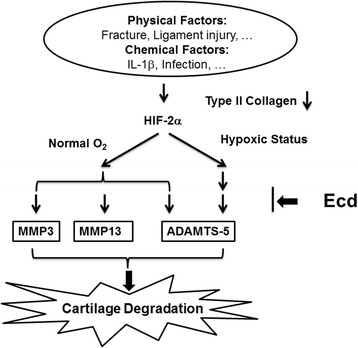
BACKGROUND: In osteoarthritis (OA), the imbalance of chondrocytes' anabolic and catabolic factors can induce cartilage destruction. Interleukin-1 beta (IL-1β) is a potent pro-inflammatory cytokine that is capable of inducing chondrocytes and synovial cells to synthesize MMPs. The hypoxia-inducible factor-2alpha (HIF-2alpha, encoded by Epas1) is the catabolic transcription factor in the osteoarthritic process. The purpose of this study is to validate the effects of ecdysteroids (Ecd) on IL-1β-induced cartilage catabolism and the possible role of Ecd in treatment or prevention of early OA. METHODS: Chondrocytes and articular cartilage was harvested from newborn ICR mice. Ecd effect on chondrocytes viability was tested and the optimal concentration was determined by MTT assay. The effect of HIF-2α (EPAS1) in cartilage catabolism simulated by IL-1β (5 ng/ml) was evaluated by articular cartilage explants culture. The effects of Ecd on IL-1β-induced inflammatory conditions and their related catabolic genes expression were analyzed. RESULTS: Interleukin-1β (IL-1β) treatment on primary mouse articular cartilage explants enhanced their Epas1, matrix metalloproteinases (MMP-3, MMP-13) and ADAMTS-5 genes expression and down-regulated collagen type II (Col2a1) gene expression. With the pre-treatment of 10(-8) M Ecd, the catabolic effects of IL-1β on articular cartilage were scavenged. CONCLUSION: In conclusions, Ecd can reduce the IL-1β-induced inflammatory effect of the cartilage. Ecd may suppress IL-1β-induced cartilage catabolism via HIF-2α pathway.
Overview
AI snapshot
Written from the paper’s full text.
TL;DR
In newborn ICR mouse chondrocytes and articular cartilage explants, IL-1β (5 ng/ml) increased Epas1, MMP-3, MMP-13, and ADAMTS-5 and decreased Col2a1; pretreatment with 10−8 M 20-hydroxyecdysone suppressed these catabolic changes. The authors conclude that Ecd has chondroprotective effects via the HIF-2α pathway, but call for further in vivo and translational work.
Key findings
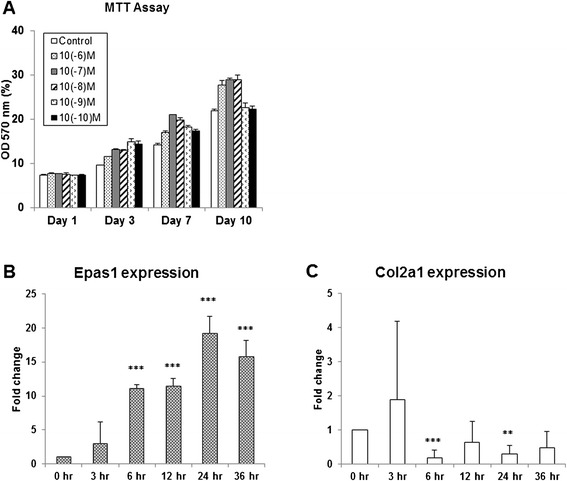
- Ecd enhanced chondrocyte viability, with maximal benefit at 10−8 M after 10 days of culture (p < 0.01); significant differences from control were observed at tested Ecd concentrations (p < 0.05), and 10−8 M was chosen for further experiments.
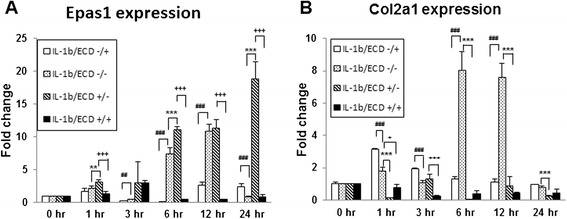
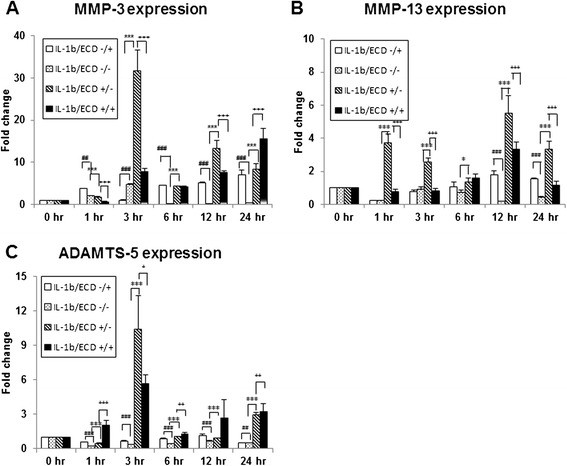
- IL-1β treatment enhanced Epas1 mRNA and suppressed Col2a1 in chondrocytes; in articular cartilage explants, IL-1β up-regulated MMP-3, MMP-13, and ADAMTS-5 and down-regulated Col2a1. Pretreatment with 10−8 M Ecd eliminated the IL-1β-enhanced Epas1 expression and down-regulated the catabolic genes, but did not affect Col2a1 in the conditions shown in Figure 2.
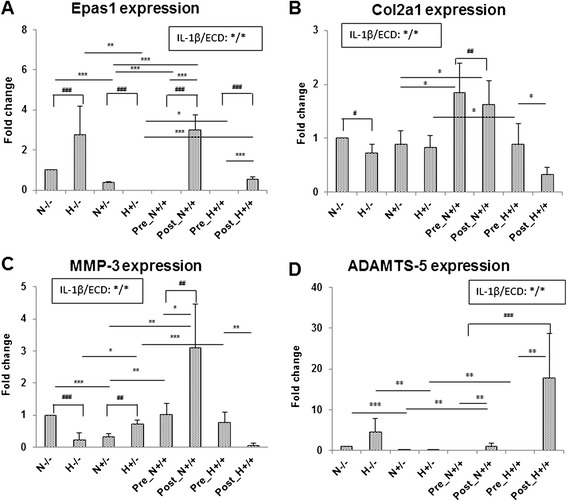
- Under hypoxic conditions (3.5% O2), Epas1 expression was higher; Ecd suppressed IL-1β-induced Epas1 and ADAMTS-5 under both hypoxic and normoxic conditions, while MMP-3 was down-regulated only under normoxic conditions. Under hypoxia, IL-1β-mediated ADAMTS-5 up-regulation was the main catabolic mediator, and no significant MMP13 expression was found (data not shown).
Methods
- Primary chondrocytes and articular cartilage explants were harvested from newborn ICR mice (3 days old); chondrocytes were isolated by collagenase digestion and cultured. Viability was tested by MTT assay with Ecd at 10−6 to 10−10 M on days 1, 3, 7, and 10 (n = 8).
- Cartilage explants were pre-incubated with or without Ecd (10−8 M), then treated with IL-1β (5 ng/ml); Ecd was added 24 hours before or after IL-1β, and explants were incubated under hypoxic (3.5% O2) or normoxic conditions.
- Gene expression was analyzed by RT-PCR for Col2a1, MMP-3, MMP-13, ADAMTS5, EPAS1, and β-actin at 0, 3, 6, 12, 24, and 36 hours after Ecd addition. Experiments were performed at least in triplicate; results were analyzed by two-way ANOVA with Dunnett’s test at p < 0.05.
Limitations
- The authors state that further in vivo HIF-1alpha gene knock-down and translational medicine studies are mandatory for possible clinical application.
- Evident from the text: the study is limited to in vitro mouse chondrocyte cultures and articular cartilage explants, with no in vivo osteoarthritis model, protein/activity assays, or histological outcomes reported.
- Evident from the text: Ecd did not affect Col2a1 in Figure 2, and MMP13 expression under hypoxic conditions was not shown, limiting conclusions about full phenotypic recovery and hypoxic MMP13 involvement.
Model-written summary. Check it against the paper before relying on it.
Integrity signals
Registry
Cites
Statistics
Figures
Verification
Claims the paper makes
22 Own result · 15 Not checked yet · 9 Own interpretation · 2 Own method · 1 No basis given
A result the paper reports from its own data — it cites no other source for it, so there is none to check. The quote shows it is in the paper.
In the paper
“Under hypoxic condition, IL-1β mediates HIF-2α–induced up-regulation of ADAMTS-5 gene (but not MMP3 or MMP13 genes) in articular cartilage (Figure 4C and D)”
§ Arthropod steroid hormone (20-Hydroxyecdysone) suppresses IL-1β- induced catabolic gene expression in cartilage > Results > Ecd protect cartilage explants both in hypoxic and normoxic condition
plaindirectn = 8- Asserted: passes — The authors put it forward as true.
- Checkable: passes — It can be checked against evidence.
- Load-bearing: passes — The paper’s conclusions depend on it.
- Based: passes — The paper gives a reason why it holds.
A result the paper reports from its own data — it cites no other source for it, so there is none to check. The quote shows it is in the paper.
In the paper
“there was no significant expression on MMP13 gene under hypoxic condition (data not shown).”
§ Arthropod steroid hormone (20-Hydroxyecdysone) suppresses IL-1β- induced catabolic gene expression in cartilage > Results > Ecd protect cartilage explants both in hypoxic and normoxic condition
plain- Asserted: passes — The authors put it forward as true.
- Checkable: passes — It can be checked against evidence.
- Load-bearing: passes — The paper’s conclusions depend on it.
- Based: passes — The paper gives a reason why it holds.
A result the paper reports from its own data — it cites no other source for it, so there is none to check. The quote shows it is in the paper.
In the paper
“with the pretreatment of 10−8M Ecd, the catabolic factor genes upregulated by IL-1β treatment are eliminated.”
§ Arthropod steroid hormone (20-Hydroxyecdysone) suppresses IL-1β- induced catabolic gene expression in cartilage > Results > Ecd pre-treatment reduce the catabolic effect of IL-1β on the cartilage explants
plaindirectn = 8 ·- Asserted: passes — The authors put it forward as true.
- Checkable: passes — It can be checked against evidence.
- Load-bearing: passes — The paper’s conclusions depend on it.
- Based: passes — The paper gives a reason why it holds.
A result the paper reports from its own data — it cites no other source for it, so there is none to check. The quote shows it is in the paper.
In the paper
“Under hypoxic condition, IL-1β mediates HIF-2α–induced up-regulation of ADAMTS-5 gene (but not MMP3 or MMP13 genes) in articular cartilage (Figure 4C and D)”
§ Arthropod steroid hormone (20-Hydroxyecdysone) suppresses IL-1β- induced catabolic gene expression in cartilage > Results > Ecd protect cartilage explants both in hypoxic and normoxic condition
plainn = 8- Asserted: passes — The authors put it forward as true.
- Checkable: passes — It can be checked against evidence.
- Load-bearing: passes — The paper’s conclusions depend on it.
- Based: passes — The paper gives a reason why it holds.
A result the paper reports from its own data — it cites no other source for it, so there is none to check. The quote shows it is in the paper.
In the paper
“Same as noted above, IL-1β enhances Epas1 mRNA expression and suppresses collagen type II (Col2a1) gene expression.”
§ Arthropod steroid hormone (20-Hydroxyecdysone) suppresses IL-1β- induced catabolic gene expression in cartilage > Results > Ecd pre-treatment reduce the catabolic effect of IL-1β on the cartilage explants
plaindirectn = 8- Asserted: passes — The authors put it forward as true.
- Checkable: passes — It can be checked against evidence.
- Load-bearing: passes — The paper’s conclusions depend on it.
- Based: passes — The paper gives a reason why it holds.
A result the paper reports from its own data — it cites no other source for it, so there is none to check. The quote shows it is in the paper.
In the paper
“with the pretreatment of 10−8M Ecd, the catabolic factor genes upregulated by IL-1β treatment are eliminated.”
§ Arthropod steroid hormone (20-Hydroxyecdysone) suppresses IL-1β- induced catabolic gene expression in cartilage > Results > Ecd pre-treatment reduce the catabolic effect of IL-1β on the cartilage explants
plaindirectn = 8 ·- Asserted: passes — The authors put it forward as true.
- Checkable: passes — It can be checked against evidence.
- Load-bearing: passes — The paper’s conclusions depend on it.
- Based: passes — The paper gives a reason why it holds.
A result the paper reports from its own data — it cites no other source for it, so there is none to check. The quote shows it is in the paper.
In the paper
“In this study, there is significant difference observed between treated cells with that of the control (p < 0.05).”
- Also stated in: § Ecd treatment enhance chondrocytes viability · plain
“Chondrocytes at every concentration proliferate actively, with significant statistical differences observed between chondrocytes treated with Ecd and that of the control.”
§ Arthropod steroid hormone (20-Hydroxyecdysone) suppresses IL-1β- induced catabolic gene expression in cartilage > Results > Ecd treatment enhance chondrocytes viability
plaindirectn = 8 ·- Asserted: passes — The authors put it forward as true.
- Checkable: passes — It can be checked against evidence.
- Load-bearing: unclear — It is unclear whether the paper’s conclusions depend on it.
- Based: passes — The paper gives a reason why it holds.
- Also stated in: § Ecd treatment enhance chondrocytes viability · plain
A result the paper reports from its own data — it cites no other source for it, so there is none to check. The quote shows it is in the paper.
In the paper
“We chose 10−8 M Ecd for the further evaluation because there is maximal viability of chondrocytes at this concentration (p < 0.01) at the 10th day’s culture.”
§ Arthropod steroid hormone (20-Hydroxyecdysone) suppresses IL-1β- induced catabolic gene expression in cartilage > Results > Ecd treatment enhance chondrocytes viability
plaincorrelationaln = 8 ·- Asserted: passes — The authors put it forward as true.
- Checkable: passes — It can be checked against evidence.
- Load-bearing: passes — The paper’s conclusions depend on it.
- Based: passes — The paper gives a reason why it holds.
A result the paper reports from its own data — it cites no other source for it, so there is none to check. The quote shows it is in the paper.
In the paper
“interleukin-1β (IL-1β) treatment of primary mouse articular chondrocyte cultures enhance Epas1 mRNA expression, while suppress collagen type II (Col2a1) gene expression (Figure 1B, C).”
§ Arthropod steroid hormone (20-Hydroxyecdysone) suppresses IL-1β- induced catabolic gene expression in cartilage > Results > IL-1β induce HIF-2α (encoded by Epas1) gene expression in chondrocytes
plaindirect- Asserted: passes — The authors put it forward as true.
- Checkable: passes — It can be checked against evidence.
- Load-bearing: passes — The paper’s conclusions depend on it.
- Based: passes — The paper gives a reason why it holds.
A result the paper reports from its own data — it cites no other source for it, so there is none to check. The quote shows it is in the paper.
In the paper
“while in hypoxic condition, Ecd pre-treatment eliminates the IL-1β-induced Col2a1 gene down-regulation (Figure 4B).”
§ Arthropod steroid hormone (20-Hydroxyecdysone) suppresses IL-1β- induced catabolic gene expression in cartilage > Results > Ecd protect cartilage explants both in hypoxic and normoxic condition
plaindirect- Asserted: passes — The authors put it forward as true.
- Checkable: passes — It can be checked against evidence.
- Load-bearing: passes — The paper’s conclusions depend on it.
- Based: passes — The paper gives a reason why it holds.
- The quote only partly states this claim. 1
- It may state two separate claims as one. 5
- Probably not a substantial claim. 13
A result the paper reports from its own data — it cites no other source for it, so there is none to check. The quote shows it is in the paper.
In the paper
“but there is also no effect on Col2a1 gene expression (Figure 2).”
- Also stated in: § Discussion · plain
“but there is no ability to recover the cartilage phenotype as Col2a1 gene was not affected (Figure 4).”
§ Arthropod steroid hormone (20-Hydroxyecdysone) suppresses IL-1β- induced catabolic gene expression in cartilage > Results > Ecd pre-treatment reduce the catabolic effect of IL-1β on the cartilage explants
plainn = 8- Asserted: passes — The authors put it forward as true.
- Checkable: passes — It can be checked against evidence.
- Load-bearing: passes — The paper’s conclusions depend on it.
- Based: passes — The paper gives a reason why it holds.
The quote only partly states this claim.
- Also stated in: § Discussion · plain
None of the sources cited for this claim have been checked yet.
In the paper
“In ovariectomized rats, pure Ecd supplementation significantly increased in the thickness of joint cartilage and presented beneficial effects in bones.”
§ Arthropod steroid hormone (20-Hydroxyecdysone) suppresses IL-1β- induced catabolic gene expression in cartilage > Background
What the sources say
- Not checked yetcites [13] Kapur P, Wuttke W, Jarry H, Seidlova-Wuttke D. Beneficial effects of beta-Ecdysone on the joint, epiphyseal cartilage tissue and trabecular bone in ovariectomized rats. Phytomedicine. 2010;17(5):350–5. source
- Not checked yetcites [14] Zhang X, Xu X, Xu T, Qin S. β-Ecdysterone suppresses interleukin-1β-induced apoptosis and inflammation in rat chondrocytes via inhibition of NF-κB signaling pathway. Drug Dev Res. 2014;75(3):195–201. source
- Not checked yetcites [15] He CC, Hui RR, Tezuka Y, Kadota S, Li JX. Osteoprotective effect of extract from Achyranthes bidentata in ovariectomized rats. J Ethnopharmacol. 2010;127(2):229–34. source
plaindirect- Asserted: passes — The authors put it forward as true.
- Checkable: passes — It can be checked against evidence.
- Load-bearing: passes — The paper’s conclusions depend on it.
- Based: passes — The paper gives a reason why it holds.
It may state two separate claims as one.
None of the sources cited for this claim have been checked yet.
In the paper
“Instead, IL-1β and certain other inflammatory mediators promote activation of latent ADAMTS-5, as does hypertrophic differentiation in chondrocytes [3,4].”
§ Arthropod steroid hormone (20-Hydroxyecdysone) suppresses IL-1β- induced catabolic gene expression in cartilage > Discussion
What the sources say
- Not checked yetcites [3] Saito T, Fukai A, Mabuchi A, Ikeda T, Yano F, Ohba S, et al. Transcriptional regulation of endochondral ossification by HIF-2alpha during skeletal growth and osteoarthritis development. Nat Med. 2010;16(6):678–86. source
- Not checked yetcites [4] Yang S, Kim J, Ryu JH, Oh H, Chun CH, Kim BJ, et al. Hypoxia-inducible factor-2alpha is a catabolic regulator of osteoarthritic cartilage destruction. Nat Med. 2010;16(6):687–93. source
plaindirect- Asserted: passes — The authors put it forward as true.
- Checkable: passes — It can be checked against evidence.
- Load-bearing: fails — The paper’s conclusions may not depend on it.
- Based: passes — The paper gives a reason why it holds.
Probably not a substantial claim. The paper’s conclusions may not depend on it.
In the paper
“In spite of a large variability of expression levels among different patients, MMP-3 appeared to be strongly expressed in normal and early degenerative cartilage and down-regulated in the late disease stages.”
§ Arthropod steroid hormone (20-Hydroxyecdysone) suppresses IL-1β- induced catabolic gene expression in cartilage > Discussion
What the sources say
- Not checked yetcites [31] Aigner T, Zien A, Hanisch D, Zimmer R. Gene expression in chondrocytes assessed with use of microarrays. J Bone Joint Surg Am. 2003;85-A Suppl 2:117–23. source
hedgedcorrelational- Asserted: passes — The authors put it forward as true.
- Checkable: passes — It can be checked against evidence.
- Load-bearing: fails — The paper’s conclusions may not depend on it.
- Based: passes — The paper gives a reason why it holds.
Probably not a substantial claim. The paper’s conclusions may not depend on it. It may state two separate claims as one.
In the paper
“The Ecd is frequently used by body builders and from these users it is known that Ecd has no known adverse effects even when taken up in gram (~1 g) quantities [16].”
§ Arthropod steroid hormone (20-Hydroxyecdysone) suppresses IL-1β- induced catabolic gene expression in cartilage > Background
What the sources say
- Not checked yetcites [16] Dinan L, Lafont R. Effects and applications of arthropod steroid hormones (ecdysteroids) in mammals. J Endocrinol. 2006;191(1):1–8. source
boosted- Asserted: passes — The authors put it forward as true.
- Checkable: passes — It can be checked against evidence.
- Load-bearing: fails — The paper’s conclusions may not depend on it.
- Based: passes — The paper gives a reason why it holds.
Probably not a substantial claim. The paper’s conclusions may not depend on it.
None of the sources cited for this claim have been checked yet.
In the paper
“It is reported that HIF-2α (like IL-1β) does not induce transcription of ADAMTS5 [3,4].”
§ Arthropod steroid hormone (20-Hydroxyecdysone) suppresses IL-1β- induced catabolic gene expression in cartilage > Discussion
What the sources say
- Not checked yetcites [3] Saito T, Fukai A, Mabuchi A, Ikeda T, Yano F, Ohba S, et al. Transcriptional regulation of endochondral ossification by HIF-2alpha during skeletal growth and osteoarthritis development. Nat Med. 2010;16(6):678–86. source
- Not checked yetcites [4] Yang S, Kim J, Ryu JH, Oh H, Chun CH, Kim BJ, et al. Hypoxia-inducible factor-2alpha is a catabolic regulator of osteoarthritic cartilage destruction. Nat Med. 2010;16(6):687–93. source
plain- Asserted: passes — The authors put it forward as true.
- Checkable: passes — It can be checked against evidence.
- Load-bearing: fails — The paper’s conclusions may not depend on it.
- Based: passes — The paper gives a reason why it holds.
Probably not a substantial claim. The paper’s conclusions may not depend on it.
None of the sources cited for this claim have been checked yet.
In the paper
“According to this paradigm, a stress-induced increase in the activity of HIF-2α will overshadow the beneficial effects of the closely related HIF-1α, then push the chondrocytes in the joint toward a more differentiated state known as hypertrophy, which then drives osteoarthritis changes [6,7].”
§ Arthropod steroid hormone (20-Hydroxyecdysone) suppresses IL-1β- induced catabolic gene expression in cartilage > Background
What the sources say
- Not checked yetcites [6] Husa M, Liu-Bryan R, Terkeltaub R. Shifting HIFs in osteoarthritis. Nat Med. 2010;16(6):641–4. source
- Not checked yetcites [7] Ryu JH, Shin Y, Huh YH, Yang S, Chun CH, Chun JS. Hypoxia-inducible factor-2α regulates Fas-mediated chondrocyte apoptosis during osteoarthritic cartilage destruction. Cell Death Differ. 2012;19(3):440–50. source
plaindirect- Asserted: passes — The authors put it forward as true.
- Checkable: passes — It can be checked against evidence.
- Load-bearing: passes — The paper’s conclusions depend on it.
- Based: passes — The paper gives a reason why it holds.
Probably not a substantial claim.
In the paper
“Together, these findings implicate hypoxic signaling as a central regulator of skeletal biology and disease [32].”
§ Arthropod steroid hormone (20-Hydroxyecdysone) suppresses IL-1β- induced catabolic gene expression in cartilage > Discussion
What the sources say
- Not checked yetcites [32] Rankin EB, Giaccia AJ, Schipani E. A central role for hypoxic signaling in cartilage, bone, and hematopoiesis. Curr Osteoporos Rep. 2011;9(2):46–52. source
hedgeddirect- Asserted: passes — The authors put it forward as true.
- Checkable: passes — It can be checked against evidence.
- Load-bearing: fails — The paper’s conclusions may not depend on it.
- Based: passes — The paper gives a reason why it holds.
Probably not a substantial claim. The paper’s conclusions may not depend on it.
A conclusion the paper draws from its own results — it cites no other source for it, so there is none to check. The quote shows it is in the paper.
In the paper
“The findings of our study are consistent with the observations that inflammation of articular cartilage stimulates ADAMTS5 activation.”
§ Arthropod steroid hormone (20-Hydroxyecdysone) suppresses IL-1β- induced catabolic gene expression in cartilage > Discussion
plaindirect- Asserted: passes — The authors put it forward as true.
- Checkable: passes — It can be checked against evidence.
- Load-bearing: fails — The paper’s conclusions may not depend on it.
- Based: passes — The paper gives a reason why it holds.
Probably not a substantial claim. The paper’s conclusions may not depend on it.
None of the sources cited for this claim have been checked yet.
In the paper
“During OA, ADAMTS-4 (aggrecanase 1) [28] and ADAMTS-5 (aggrecanase 2) [29,30] have been implicated prominently in cartilage breakdown.”
§ Arthropod steroid hormone (20-Hydroxyecdysone) suppresses IL-1β- induced catabolic gene expression in cartilage > Discussion
What the sources say
- Not checked yetcites [28] Poole AR, Nelson F, Dahlberg L, Tchetina E, Kobayashi M, Yasuda T, et al. Proteolysis of the collagen fibril in osteoarthritis. Biochem Soc Symp. 2003;70:115–23. source
- Not checked yetcites [29] Tortorella MD, Burn TC, Pratta MA, Abbaszade I, Hollis JM, Liu R, et al. Purification and cloning of aggrecanase-1: a member of the ADAMTS family of proteins. Science. 1999;284(5420):1664–6. source
- Not checked yetcites [30] Pattoli MA, MacMaster JF, Gregor KR, Burke JR. Collagen and aggrecan degradation is blocked in interleukin-1-treated cartilage explants by an inhibitor of IkappaB kinase through suppression of metalloproteinase expression. J Pharmacol Exp Ther. 2005;315(1):382–8. source
plaincorrelational- Asserted: passes — The authors put it forward as true.
- Checkable: passes — It can be checked against evidence.
- Load-bearing: fails — The paper’s conclusions may not depend on it.
- Based: passes — The paper gives a reason why it holds.
Probably not a substantial claim. The paper’s conclusions may not depend on it.
In the paper
“The degradation of aggrecan by aggrecanases has gained special interest, because it constitutes an early event in osteoarthritic cartilage damage and is followed by the irreversible loss of collagens [27].”
§ Arthropod steroid hormone (20-Hydroxyecdysone) suppresses IL-1β- induced catabolic gene expression in cartilage > Discussion
What the sources say
- Not checked yetcites [27] Brooks PM. The burden of musculoskeletal disease–a global perspective. Clin Rheumatol. 2006;25(6):778–81. source
plaindirect- Asserted: passes — The authors put it forward as true.
- Checkable: passes — It can be checked against evidence.
- Load-bearing: fails — The paper’s conclusions may not depend on it.
- Based: passes — The paper gives a reason why it holds.
Probably not a substantial claim. The paper’s conclusions may not depend on it. It may state two separate claims as one.
What the paper did — it cites no source for this, so there is none to check. The quote shows it is in the paper.
In the paper
“For each genes analysis, the experiments were repeated at least three times.”
§ Arthropod steroid hormone (20-Hydroxyecdysone) suppresses IL-1β- induced catabolic gene expression in cartilage > Methods > Gene expression analysis
plain- Asserted: passes — The authors put it forward as true.
- Checkable: passes — It can be checked against evidence.
- Load-bearing: fails — The paper’s conclusions may not depend on it.
- Based: passes — The paper gives a reason why it holds.
Probably not a substantial claim. The paper’s conclusions may not depend on it.
None of the sources cited for this claim have been checked yet.
In the paper
“In mammals, Ecd has protein anabolic effects and increases muscle mass of unexercised and exercised muscle [11,12].”
§ Arthropod steroid hormone (20-Hydroxyecdysone) suppresses IL-1β- induced catabolic gene expression in cartilage > Background
What the sources say
- Not checked yetcites [11] Báthori M, Tóth N, Hunyadi A, Márki A, Zádor E. Phytoecdysteroids and anabolic-androgenic steroids–structure and effects on humans. Curr Med Chem. 2008;15(1):75–91. source
- Not checked yetcites [12] Gorelick-Feldman J, Maclean D, Ilic N, Poulev A, Lila MA, Cheng D, et al. Phytoecdysteroids increase protein synthesis in skeletal muscle cells. J Agric Food Chem. 2008;56(10):3532–7. source
plaindirect- Asserted: passes — The authors put it forward as true.
- Checkable: passes — It can be checked against evidence.
- Load-bearing: fails — The paper’s conclusions may not depend on it.
- Based: passes — The paper gives a reason why it holds.
Probably not a substantial claim. The paper’s conclusions may not depend on it. It may state two separate claims as one.
What the paper did — it cites no source for this, so there is none to check. The quote shows it is in the paper.
In the paper
“All experiments were performed at least in triplicate.”
§ Arthropod steroid hormone (20-Hydroxyecdysone) suppresses IL-1β- induced catabolic gene expression in cartilage > Methods > Statistical analysis
plain- Asserted: passes — The authors put it forward as true.
- Checkable: passes — It can be checked against evidence.
- Load-bearing: fails — The paper’s conclusions may not depend on it.
- Based: passes — The paper gives a reason why it holds.
Probably not a substantial claim. The paper’s conclusions may not depend on it.
None of the sources cited for this claim have been checked yet.
In the paper
“In the early phases of OA, MMP-13 is predominantly expressed in the lower intermediate and deep layers of human and mouse cartilage, whereas aggrecanases are expressed in the superficial cartilage [25,26].”
§ Arthropod steroid hormone (20-Hydroxyecdysone) suppresses IL-1β- induced catabolic gene expression in cartilage > Discussion
What the sources say
- Not checked yetcites [25] Brew CJ, Clegg PD, Boot-Handford RP, Andrew JG, Hardingham T. Gene expression in human chondrocytes in late osteoarthritis is changed in both fibrillated and intact cartilage without evidence of generalised chondrocyte hypertrophy. Ann Rheum Dis. 2010;69(1):234–40. source
- Not checked yetcites [26] Little CB, Barai A, Burkhardt D, Smith SM, Fosang AJ, Werb Z, et al. Matrix metalloproteinase 13-deficient mice are resistant to osteoarthritic cartilage erosion but not chondrocyte hypertrophy or osteophyte development. Arthritis Rheum. 2009;60(12):3723–33. source
plaincorrelational- Asserted: passes — The authors put it forward as true.
- Checkable: passes — It can be checked against evidence.
- Load-bearing: fails — The paper’s conclusions may not depend on it.
- Based: passes — The paper gives a reason why it holds.
Probably not a substantial claim. The paper’s conclusions may not depend on it. It may state two separate claims as one.
The paper relies on this without support.
Epas1 gene expression is a valid proxy for HIF-2α activity.
“The hypoxia-inducible factor-2alpha (HIF-2α, encoded by Epas1) is a catabolic transcription factor in the osteoarthritic process.”
The paper relies on this without support.
Findings in mouse articular cartilage explants are relevant to human OA.
“The purpose of this study is to validate the effects of Ecd on IL-1β- induced cartilage destruction and also the possible role of Ecd in treatment or prevention of early OA.”
Claims other papers make about this one
Each is checked against this paper’s own text: does it say what the citing paper says it does?
The source backs part of the claim, not all of it — or backs it for a different population, condition or comparison.
In the citing paper
“In addition, 20E scavenged the increase in catabolic processes and decrease in anabolic processes and largely restored the balance in primary explanted articular chondrocytes [39], confirming a protective effect in OA.”
From Molecular Targets of 20-Hydroxyecdysone in Mammals, Mechanism of Action: Is It a Calorie Restriction Mimetic and Anti-Aging Compound? (2025) · cites this paper as [39]
Experimental — accuracy not yet measured
Citations
Cites
Goldring, M. B., & Goldring, S. R. (2007) · Journal of Cellular Physiology · doi:10.1002/jcp.21258 · Cited by 1,179
Purification and Cloning of Aggrecanase-1: A Member of the ADAMTS Family of Proteins
Tortorella, M. D., Burn, T. C., Pratta, M. A., Abbaszade, I., Hollis, J. M., Liu, R., Rosenfeld, S. A., Copeland, R. A., Decicco, C. P., Wynn, R., et al. (1999) · Science · doi:10.1126/science.284.5420.1664 · Cited by 686
Little, C. B., Barai, A., Burkhardt, D., Smith, S. M., Fosang, A. J., Werb, Z., Shah, M., & Thompson, E. W. (2009) · Arthritis & Rheumatism · doi:10.1002/art.25002 · Cited by 642
Cartilage in normal and osteoarthritis conditions
Martel‐Pelletier, J., Boileau, C., Pelletier, J., & Roughley, P. J. (2008) · Best Practice & Research Clinical Rheumatology · doi:10.1016/j.berh.2008.02.001 · Cited by 556
The burden of musculoskeletal disease—a global perspective
Brooks, P. M. (2006) · Clinical Rheumatology · doi:10.1007/s10067-006-0240-3 · Cited by 545
Saito, T., Fukai, A., Mabuchi, A., Ikeda, T., Yano, F., Ohba, S., Nishida, N., Akune, T., Yoshimura, N., Nakagawa, T., et al. (2010) · Nature Medicine · doi:10.1038/nm.2146 · Cited by 532
Hypoxia-inducible factor-2α is a catabolic regulator of osteoarthritic cartilage destruction
Yang, S., Kim, J., Ryu, J.-H., Oh, H., Chun, C.-H., Kim, B. J., Min, B. H., & Chun, J.-S. (2010) · Nature Medicine · doi:10.1038/nm.2153 · Cited by 527
Insurer and out‐of‐pocket costs of osteoarthritis in the US: Evidence from national survey data
Kotlarz, H., Gunnarsson, C., Fang, H., & Rizzo, J. A. (2009) · Arthritis & Rheumatism · doi:10.1002/art.24984 · Cited by 440
The Interleukin 1β Pathway in the Pathogenesis of Osteoarthritis
Daheshia, M., & Yao, J. Q. (2008) · The Journal of Rheumatology · doi:10.3899/jrheum.080346 · Cited by 420
Calcification of articular cartilage in human osteoarthritis
Fuerst, M., Bertrand, J., Lammers, L., Dreier, R., Echtermeyer, F. G., Nitschke, Y., Rutsch, F., Schäfer, F. K. W., Niggemeyer, O., Steinhagen, J., et al. (2009) · Arthritis & Rheumatism · doi:10.1002/art.24774 · Cited by 322
Cited by
Sorted by citations
Items 101–182 of 182
Vankwani, S., Ansari, A., Azhar, A., & Galani, S. (2021) · Molecular Biology Reports · doi:10.1007/s11033-021-06889-7 · Cited by 9
Zeitoun, H., Salem, R. A., Guink, N. E., Tolba, N. S., & Mohamed, N. M. (2024) · BMC Microbiology · doi:10.1186/s12866-024-03512-0 · Cited by 11
Elucidation of terpenoid metabolism in Scoparia dulcis by RNA-seq analysis
Yamamura, Y., Kurosaki, F., & Lee, J. (2017) · Scientific Reports · doi:10.1038/srep43311 · Cited by 9
Combined treatment with alendronate and Drynaria rhizome extracts
Chen, L., Tao, Z.-S., Chen, H., Zhou, K., & Zhou, D. (2017) · Zeitschrift für Gerontologie und Geriatrie · doi:10.1007/s00391-017-1326-z · Cited by 9
Salehi, S., Sadeghi, G., & Karimi, A. (2021) · Italian Journal of Animal Science · doi:10.1080/1828051x.2021.1941335 · Cited by 9
Sun, X., Ren, Z., Pan, Y., & Zhang, C. (2016) · Biochemical and Biophysical Research Communications · doi:10.1016/j.bbrc.2016.06.121 · Cited by 9
Desipramine rescues age-related phenotypes in depression-like rats induced by chronic mild stress
Xie, X., Chen, Y., Wang, Q., Shen, Q., Ma, L., Huang, L., Wu, T., & Fu, Z. (2017) · Life Sciences · doi:10.1016/j.lfs.2017.08.020 · Cited by 8
Raza, A., Mahmood, R., Habib, S., Talha, M., Khan, A. A., Hashmi, M. A., Mohammad, T., & Ali, A. (2022) · Journal of Biomolecular Structure and Dynamics · doi:10.1080/07391102.2022.2098820 · Cited by 8
da Silva, C. M., Caetano, F. H., Pereira, F. D. C., Marin‐Morales, M. A., Sakane, K. K., & Moraes, K. C. M. (2019) · BMC Complementary and Alternative Medicine · doi:10.1186/s12906-019-2591-8 · Cited by 8
Chemical Constituents of Rhododendron anthopogonoides
Gui, L., Tao, Y., Wei-dong, W., Shao, Y., Wang, Q., Chan, X.-P., & Mei, L. (2020) · Chemistry of Natural Compounds · doi:10.1007/s10600-020-02962-y · Cited by 8
Yang, T., Aimaiti, M., Su, D., Miao, W., Zhou, B., Maimaitiyiming, D., Yusup, A., Upur, H., & Aikemu, A. (2017) · BMC Complementary and Alternative Medicine · doi:10.1186/s12906-017-1685-4 · Cited by 7
Zhang, H., Chen, Z., Wu, J., Chen, N., Xu, W., Li, T., & Liu, S. (2018) · Journal of Biophotonics · doi:10.1002/jbio.201700262 · Cited by 7
Lu, Y., Guo, Y., Liang, X. M., Huang, H., Xue, L., Su, Z., & Liang, Y. (2022) · Analytical Methods · doi:10.1039/d2ay00492e · Cited by 7
Jabeen, Q., Haider, S. I., Asif, A., Rasheed, R., Gul, S., & Arshad, S. (2022) · Dose-Response · doi:10.1177/15593258221112649 · Cited by 7
Peng, W., Liang, S., Hu, J., Chen, Z., & Zheng, X. (2016) · Journal of Natural Medicines · doi:10.1007/s11418-016-0982-4 · Cited by 7
Catharanthus roseus: The Cancer-Fighting Medicine
Prabhu, D., & Rajeswari, V. D. (2017) · Springer eBooks · doi:10.1007/978-3-319-51620-2_7 · Cited by 7
Assessment of the efficacy of Chinese patent medicine on treating pain caused by prostate cancer
Gong, X., Wang, J., Yu, X., Liu, R., Chu, L.-Y., Li, Y., Yi, L., & Li, H. (2019) · Medicine · doi:10.1097/md.0000000000017820 · Cited by 7
Keshtmand, Z., Sayadi, S., & Kashfi, H. S. (2025) · Journal of Pharmaceutical Innovation · doi:10.1007/s12247-025-09961-y · Cited by 6
Aroma-active compounds of Melaleuca cajuputi essential oil, a potent flavor on Cajuputs Candy
Septiana, S., Yuliana, N. D., Bachtiar, B. M., & Wijaya, C. H. (2020) · AIMS Agriculture and Food · doi:10.3934/agrfood.2020.2.292 · Cited by 6
Gew, L. T., Teoh, W. J., Lein, L. L., Lim, M. W., Cognet, P., & Aroua, M. K. (2024) · PeerJ Analytical Chemistry · doi:10.7717/peerj-achem.30 · Cited by 6
Aydemir, E., Sarıyer, E., Akyıldız, E., Düzgün, A. Ö., Camadan, Y., & Saral, A. (2021) · Oriental Pharmacy and Experimental Medicine · doi:10.1007/s13596-021-00602-6 · Cited by 6
Arega, M., Nardos, A., Debella, A., Degefa, B. D., Terefe, L., & Abebe, A. (2023) · Journal of Experimental Pharmacology · doi:10.2147/jep.s432615 · Cited by 6
Anti-Osteoarthritis Effect of Enriched Boswellia serrata Gum Resin Extract in SW1353 Chondrocytes
Jung, J. I., Lee, H. S., Kim, R., & Kim, E. J. (2023) · Journal of the Korean Society of Food Science and Nutrition · doi:10.3746/jkfn.2023.52.5.460 · Cited by 6
Ghanbari, A., Fard, P. D., Azarmehr, N., Mahmoudi, R., Roozbehi, A., Zibara, K., & Hosseini, E. (2024) · Molecular Neurobiology · doi:10.1007/s12035-024-04546-1 · Cited by 5
Functional nucleic acids for the treatment of diabetic complications
Wen, W., Wei, Y., & Gao, S. (2023) · Nanoscale Advances · doi:10.1039/d3na00327b · Cited by 5
Acupuncture for pain caused by prostate cancer
Wang, J., Yi, L., Bao, B., Yu, X., Dai, H., Chen, F., Li, H., & Wang, B. (2019) · Medicine · doi:10.1097/md.0000000000013954 · Cited by 5
Non-responder phenotype reveals apparent microbiome-wide antibiotic tolerance in the murine gut
Diener, C., Hoge, A. C. H., Kearney, S. M., Kusebauch, U., Patwardhan, S., Moritz, R. L., Erdman, S. E., & Gibbons, S. M. (2021) · Communications Biology · doi:10.1038/s42003-021-01841-8 · Cited by 6
Dharavath, S. B., Chirumamilla, P., & Taduri, S. (2022) · Vegetos · doi:10.1007/s42535-022-00481-5 · Cited by 5
Dehydroepiandrosterone and Experimental Osteoarthritis
Huang, K., Wu, L., & Bao, J. (2018) · Vitamins and hormones · doi:10.1016/bs.vh.2018.01.021 · Cited by 5
Therapeutic Targeting of Pattern Recognition Receptors to Modulate Inflammation in Atherosclerosis
Su, H., Wang, X., Wang, L., & Yuan, N. (2024) · Cell Biochemistry and Biophysics · doi:10.1007/s12013-024-01481-9 · Cited by 4
Sen, S., Mukhopadhyay, N., Singh, S., Kaki, V. R., Somabattini, R. A., Nanjappan, S. K., & Dikundwar, A. G. (2025) · Journal of Computational Biophysics and Chemistry · doi:10.1142/s273741652550022x · Cited by 4
Sarıoğlu, A. O., Feizi‐Dehnayebi, M., Birimoğlu, T., Kahraman, D. T., Güler, S., Köse, A., & Sönmez, M. (2025) · Journal of Coordination Chemistry · doi:10.1080/00958972.2025.2563851 · Cited by 4
Quality of Life in Patients Receiving Medical Cannabis
Tsampoula, I., Zartaloudi, A., Dousis, E., Koutelekos, I. G., Pavlatou, N., Toulia, G., Kalogianni, A., & Polikandrioti, M. (2023) · Advances in experimental medicine and biology · doi:10.1007/978-3-031-31986-0_39 · Cited by 4
Boaro, B. L., de Lima, E. P., Maria, D. A., Rici, R. E. G., Araújo, A. C., Guiguer, É. L., Pereira, E. D. S. B. M., Lamas, C. B., Detregiachi, C. R. P., Fiorini, A. M. R., et al. (2025) · Naunyn-Schmiedeberg s Archives of Pharmacology · doi:10.1007/s00210-025-03902-9 · Cited by 4
Roychoudhury, S., Choudhury, B. P., Choudhury, A. P., Pal, M., Kosgi, R. G., Sr., & Mandal, S. C. (2021) · Elsevier eBooks · doi:10.1016/b978-0-323-85852-6.00004-4 · Cited by 4
Inhibition of pathological angiogenesis of Chinese medicine against liver fibrosis
Liu, P. (2016) · Chinese Journal of Integrative Medicine · doi:10.1007/s11655-016-2468-3 · Cited by 4
Psychological Experiences Associated with Robotic Chair Massage: A Pilot Study
Lee, S. A., Murphy, C. L., & Taylor, V. M. (2017) · Psychological Studies · doi:10.1007/s12646-017-0404-z · Cited by 4
Sahebi, Z., Emtyazjoo, M., Mostafavi, P. G., & Bonakdar, S. (2020) · Anti-Cancer Agents in Medicinal Chemistry · doi:10.2174/1871520620666200612144912 · Cited by 4
Jung, J. I., Kim, R., & Kim, E. J. (2023) · Journal of Nutrition and Health · doi:10.4163/jnh.2023.56.3.231 · Cited by 4
Chemoinformatics in Natural Product Research
Kaserer, T., Schuster, D., & Rollinger, J. M. (2018) · Wiley eBooks · doi:10.1002/9783527806539.ch6c · Cited by 4
Unveiling of Breeding Status and Potential of Ornamental Gingers: Alpinia Under Spotlight
Malakar, M., Jayasavitha, K., & Nithya, R. (2025) · Advances in plant breeding strategies · doi:10.1007/978-3-031-77900-8_4 · Cited by 3
Nauroze, T., Ali, S., Andleeb, S., Ara, C., Kanwal, L., Mumtaz, S., Summer, M., & Ullah, R. (2024) · Toxicon · doi:10.1016/j.toxicon.2024.108102 · Cited by 3
Apriliana, T. W., Permana, I. G., Despal, D., Amirroenas, D. E., & Rohaeni, E. S. (2025) · BIO Web of Conferences · doi:10.1051/bioconf/202517101003 · Cited by 3
Sawada, Y., Sugimoto, A., Osaki, T., & Okamoto, Y. (2018) · Experimental and Therapeutic Medicine · doi:10.3892/etm.2018.5981 · Cited by 3
Karim, K., Giribabu, N., & Salleh, N. B. (2023) · Applied Biochemistry and Biotechnology · doi:10.1007/s12010-023-04515-9 · Cited by 3
Pamungkaningtyas, F. H., & Leonardi, R. (2024) · IOP Conference Series Earth and Environmental Science · doi:10.1088/1755-1315/1352/1/012083 · Cited by 3
Lagu, I. J. L., Letoluo, R., Kamau, S. W., Kuria, J., Musila, F. M., Kungurtsev, V., Nyamai, D. W., & Njeru, S. N. (2026) · BMC Complementary Medicine and Therapies · doi:10.1186/s12906-026-05321-6 · Cited by 3
The safety and efficacy of acupuncture for epididymitis protocol for a systematic review
Wang, J., Han, L., Bao, B., Yu, X., Zhang, K., Dai, H., Li, X., Wang, B., & Li, H. (2019) · Medicine · doi:10.1097/md.0000000000013934 · Cited by 3
Acupuncture for premature ejaculation
Zhao, Q., Dai, H., Gong, X.-H., Wang, L., Cao, M., Li, H., & Wang, B. (2018) · Medicine · doi:10.1097/md.0000000000011980 · Cited by 3
Wagh, V. V., & Sharma, A. (2025) · Genetic Resources and Crop Evolution · doi:10.1007/s10722-025-02620-8 · Cited by 2
Ngoc, P. H., An, T. C., Dũng, L. V., Dũng, L. T., & Trung, P. V. (2025) · RSC Advances · doi:10.1039/d5ra05096k · Cited by 2
Appraisal of Medicinal Plants for Pharmacological Properties
Koçak, M. Z., & Kaysım, M. G. (2023) · Springer eBooks · doi:10.1007/978-3-031-28780-0_44 · Cited by 2
Self-assembled PHEA-based block copolymers for the synthesis of gold nanoparticles
Hermosillo‐Ochoa, E., Cortez-Lemus, N. A., & Reynoso‐Soto, E. A. (2024) · New Journal of Chemistry · doi:10.1039/d3nj04925f · Cited by 2
The Systematics and Biogeography of Genus Bidens
Abdullah, S., Munir, M., Javed, B., Ahmad, M., Abbasi, B. A., Dawood, S., & Zhang, L. (2025) · Springer eBooks · doi:10.1007/978-981-96-4257-1_1 · Cited by 2
Traditional Chinese medicine on treating epididymitis
Yi, L., Yang, J., Li, Y., Yu, X., Deng, S., Xue, C., Zheng, W., Shang, J., & Xue, Y. (2019) · Medicine · doi:10.1097/md.0000000000015975 · Cited by 2
Bioactive Compounds and Biological Activities of Arum L.
Kozuharova, E. K., Pasdaran, A., Hamedi, A., Batovska, D. I., Georgiev, M. I., Marchev, A. S., Attard, E., & Gibernau, M. (2024) · Reference series in phytochemistry · doi:10.1007/978-3-031-44746-4_6 · Cited by 2
Bioactive Compounds and Biological Activities of Curcuma Species
Devi, S. T., & Sanatombi, K. (2024) · Reference series in phytochemistry · doi:10.1007/978-3-031-44746-4_19 · Cited by 2
Li, W., Bian, L.-H., Li, W.-H., Yin, Y., Li, J., Wang, S., & Guo, J. (2025) · Journal of Essential Oil Bearing Plants · doi:10.1080/0972060x.2025.2465581 · Cited by 2
Isolation of Valuable Bioactive Compounds from Aerial Parts of Black Wattle, a Forest Solid Waste
Prietsch, A. V. D. G., Weimer, P., Spies, L. M., Haubert, R., Nunes, A. J. D. S., Kreutz, O. C., Morisso, F. D. P., Maluf, R. W., Moura, Â. B. D., Ziulkoski, A. L., et al. (2021) · Waste and Biomass Valorization · doi:10.1007/s12649-021-01355-8 · Cited by 2
Rahmi, N., Nurainas, & Syamsuardi, S. (2023) · IOP Conference Series Earth and Environmental Science · doi:10.1088/1755-1315/1255/1/012030 · Cited by 2
Ghosh, A. K., Panda, S. K., Hu, H., Schoofs, L., & Luyten, W. H. M. L. (2023) · International Microbiology · doi:10.1007/s10123-023-00468-5 · Cited by 2
Mai, P. T. N., Van, N. T. H., Truyền, C. Q., Thang, T. D., Toàn, T. Q., Long, P. Q., Ính, C. T., Dao, T. P., Hien, T. T., & Ngan, T. T. K. (2020) · Asian Journal of Chemistry · doi:10.14233/ajchem.2020.22560 · Cited by 2
Prabhu, K. N., Rodrigues, V., Kumar, A., Kumar, M., Srivastava, S. K., Shukla, A. K., & Sundaresan, V. (2023) · Horticulture Environment and Biotechnology · doi:10.1007/s13580-022-00466-y · Cited by 1
Al-Bishri, W. M., & Al-Habeeb, R. S. (2025) · International Microbiology · doi:10.1007/s10123-025-00743-7 · Cited by 1
Badawy, M. E. I., Rabea, E. I., & Abdelgaleil, S. A. M. (2019) · The Natural Products Journal · doi:10.2174/2210315509666190117150153 · Cited by 1
Bioactive Compounds and Biological Activities of Arum L.
Kozuharova, E. K., Pasdaran, A., Hamedi, A., Batovska, D. I., Georgiev, M. I., Marchev, A. S., Attard, E., & Gibernau, M. (2023) · Reference series in phytochemistry · doi:10.1007/978-3-031-29006-0_6-1 · Cited by 1
Acupuncture for inpatients with ischemic stroke in Southern Taiwan: real-world data
Zheng, L.-C., Wang, Y.-F., Yin, C.-H., Chen, J.-S., Chen, Y.-S., Hsieh, Y.-P., & Lin, P. (2026) · BMC Complementary Medicine and Therapies · doi:10.1186/s12906-025-05239-5 · Cited by 1
Luo, T.-T., He, L.-X., Yin, Q., Wang, Z.-F., & Zuo, J. (2026) · Journal of Inflammation Research · doi:10.2147/jir.s600186 · Cited by 1
Research advance on stable mechanism of endophytic fungi to red wine colour during the aging
Nan, L., Li, Y., Cui, C., Ning, N., Huang, J., Xu, C., Fang, T., & Zhang, J. (2018) · AIP conference proceedings · doi:10.1063/1.5034277 · Cited by 1
Lv, M., Huang, J., Hu, J., Yu, W., Liu, P., Zhang, K., & Wang, F. (2022) · Journal of Food Quality · doi:10.1155/2022/5933348 · Cited by 1
Phenolic Compounds Diversity of Genus Bidens
Javed, B., Munir, M., Abdullah, S., Ahmad, M., Abbasi, B. A., Dawood, S., & Zhang, L. (2025) · Springer eBooks · doi:10.1007/978-981-96-4257-1_8 · Cited by 1
Caksana, P. S., Kawiyana, I. K. S., Dusak, I. W. S., & Nindhia, T. G. T. (2019) · IOP Conference Series Materials Science and Engineering · doi:10.1088/1757-899x/622/1/012021
Yuan, Z., Zeng, C., Yu, B., Zhang, Y., Wang, T., Wu, X.-P., Yang, Y., & Wu, H. (2021) · Natural Product Communications · doi:10.1177/1934578x21991714
Research Progress on the Effect of Exercise Rehabilitation on Functional Level and Physical Fitness
Yin, L., Zheng, Y. P., Lijuan, W. U., Ni, X., & Chen, L. (2021) · Rehabilitation Medicine · doi:10.3724/sp.j.1329.2021.05013
Flavonoids as an Alternative Option to Treat Cancer
Arora, S., Srivastava, S., Verma, U., Sheoran, S., & Kumar, N. (2024) · Interdisciplinary cancer research · doi:10.1007/16833_2024_482
Phytochemical and Bioactive Properties of Methanolic Leaf Extracts of Piper Betle (L.) from Sabah
Haris, M. A. M., Sani, S. A., Sabullah, M. K., Faik, A. A. M., Sudi, S. B., & Najmuddin, S. U. F. S. (2024) · The Open Biotechnology Journal · doi:10.2174/0118740707298679240426104623
Benine, C., Boutlelis, D. A., Laiche, A. T., Amara, D. G., Atoki, A. V., Zahnit, W., & Messaoudi, M. (2025) · Natural Product Communications · doi:10.1177/1934578x241309770
Flavonoids Isolated from Bidens Species
Afzal, T. (2025) · Springer eBooks · doi:10.1007/978-981-96-4257-1_11
Kiros, T., & Dekebo, A. (2025) · Interdisciplinary biotechnological advances · doi:10.1007/978-981-96-8590-5_1
Krolikowski, T. C., Borszcz, F. K., Panza, V. P., Bevilacqua, L. M., Nichele, S., da Silva, E. L., Amboni, R. D. M. C., Guglielmo, L. G. A., Phillips, S. M., de Lucas, R. D., et al. (2022) · Figshare · doi:10.6084/m9.figshare.20329789
High PPC impairs female reproduction by inhibiting the 20E-Vg/VgR pathway
Jiang, G.-H., Luo, C., & Xu, J. (2026) · Molecular and Cellular Endocrinology · doi:10.1016/j.mce.2026.112867
Metadata
- Authors
- Sheu, S.-Y., Ho, S.-R., Sun, J.-S., Chen, C.-Y., & Ke, C.-J.
- Affiliations
- Taipei Medical University (TW)
- National Yang Ming Chiao Tung University (TW)
- National Taiwan University (TW)
- Corresponding author
- Sun, Jui-Sheng
- Venue
- BMC Complementary and Alternative Medicine
- Published
- 2015-01-24
- Volume
- 15
- Issue
- 1
- Pages
- 1-1
- ISSN
- 1472-6882 (ISSN-L)
- PMC
- PMC4310028
- OpenAlex
- W2005726309
- Semantic Scholar
- 2d21a907221820c599a0466437d4df9f7688707f
- Cited by
- 181
- References
- 34
- Citations by year
- 2026: 4 · 2025: 18 · 2024: 15 · 2023: 14 · 2022: 11 · 2021: 29 · 2020: 16 · 2019: 19 · 2018: 17 · 2017: 19 · 2016: 17 · 2015: 2
- FWCI
- 15.36
- Type
- journal article
- Language
- en
- Open access
- gold
- doi.org
- Locations
- BMC Complementary and Alternative Medicine (publishedVersion, cc-by)
- PubMed Central (publishedVersion, cc-by)
- PubMed (publishedVersion)
- Funders
- National Science Council
- National Taiwan University Hospital
- National Taiwan University
- Topics
- Health Sciences › Medicine › Rheumatology › Osteoarthritis Treatment and Mechanisms
- Life Sciences › Biochemistry, Genetics and Molecular Biology › Cell Biology › Proteoglycans and glycosaminoglycans research
- Life Sciences › Biochemistry, Genetics and Molecular Biology › Cancer Research › Protease and Inhibitor Mechanisms
- Keywords
- 20-hydroxyecdysone, ecdysteroids, osteoarthritis, cartilage catabolism, IL-1β, HIF-2α, EPAS1, chondrocytes, matrix metalloproteinases, ADAMTS5, type II collagen, articular cartilage, inflammation
- MeSH terms
- Endothelial PAS Domain-Containing Protein 1, Animals, Arthropods, Cartilage, Cartilage, Articular, Cells, Cultured, Ecdysterone, Male, Mice, Inbred ICR, Osteoarthritis, Synovial Membrane, Transcription Factors, Down-Regulation, Gene Expression, Cytokines, Matrix Metalloproteinase 3, Chondrocytes, Collagen Type II, Basic Helix-Loop-Helix Proteins, Matrix Metalloproteinase 13, Interleukin-1beta
About these checks
Registry, retraction, Cites and statistics results are computed, not judged, with one exception: a printed reference that no index lists is read once by a model before it counts as a citation error. Claims are extracted by a model and kept only when their quote appears verbatim in the text; each cited source is then checked, with a model’s help, for whether it says what the claim relies on. Those verdicts can be wrong — read the claim’s quote and the cited source before relying on one.
A language model drew the claims from the paper on 2026-10-10, under version 3 of the claim definition (model deepseek-v4.1-flash, prompt extract-v3).
A second model labelled each claim on 2026-10-10 (model jev-1.13-20260917, definition revision gold-guideline-v0.2).
Statistics and arithmetic are recomputed, not judged.
Confidence bands are shown only for fields calibrated on our annotated test set. None is calibrated yet, so no band is shown.
What counts as a claim ›How we measure confidence ›How we check this ›
Are you an author, or do you see a problem with this page? Request a review
