

Denisovan and Neanderthal archaic introgression differentially impacted the genetics of complex traits in modern populations
Open accessThe DOI matches its Crossref record; 73 of the 74 references it cites were found in a registry or an index; 60 of the 69 sources its claims cite were checked for support.
Abstract
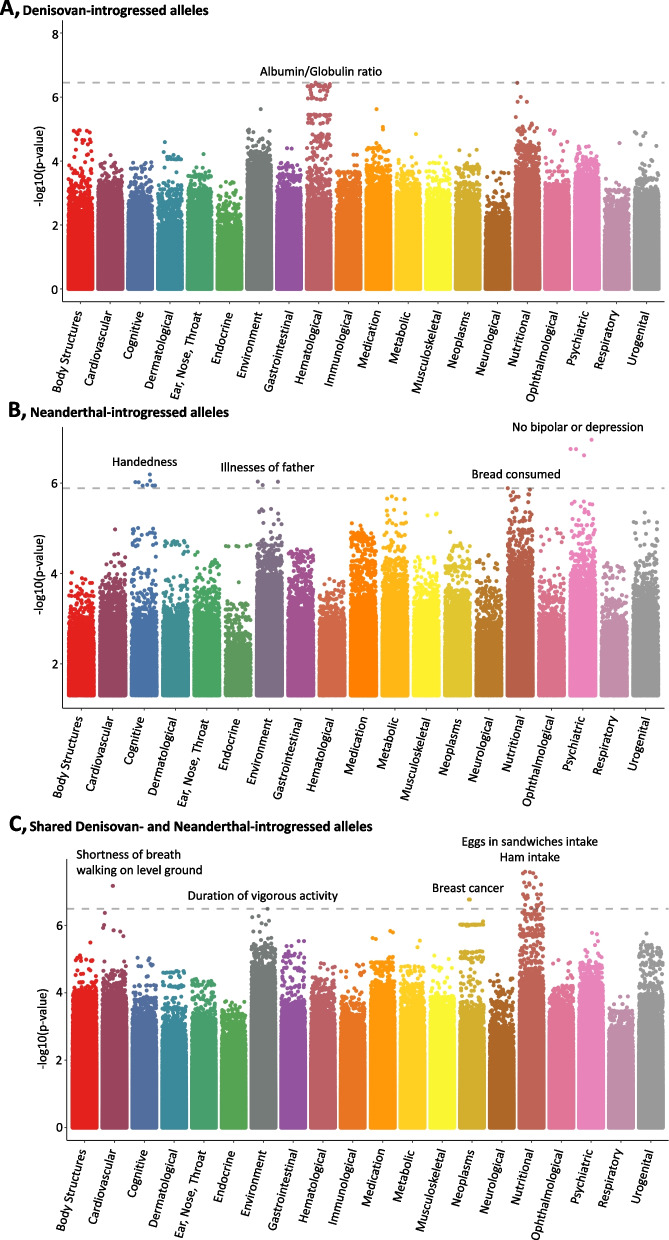
Background: Introgression from extinct Neanderthal and Denisovan human species has been shown to contribute to the genetic pool of modern human populations and their phenotypic spectrum. Evidence of how Neanderthal introgression shaped the genetics of human traits and diseases has been extensively studied in populations of European descent, with signatures of admixture reported for instance in genes associated with pigmentation, immunity, and metabolic traits. However, limited information is currently available about the impact of archaic introgression on other ancestry groups. Additionally, to date, no study has been conducted with respect to the impact of Denisovan introgression on the health and disease of modern populations. Here, we compare the way evolutionary pressures shaped the genetics of complex traits in East Asian and European populations, and provide evidence of the impact of Denisovan introgression on the health of East Asian and Central/South Asian populations. Results: Leveraging genome-wide association statistics from the Biobank Japan and UK Biobank, we assessed whether Denisovan and Neanderthal introgression together with other evolutionary genomic signatures were enriched for the heritability of physiological and pathological conditions in populations of East Asian and European descent. In EAS, Denisovan-introgressed loci were enriched for coronary artery disease heritability (1.69-fold enrichment,p=0.003). No enrichment for archaic introgression was observed in EUR. We also performed a phenome-wide association study of Denisovan and Neanderthal alleles in six ancestry groups available in the UK Biobank. In EAS, the Denisovan-introgressed SNP rs62391664 in the major histocompatibility complex region was associated with albumin/globulin ratio (beta=−0.17,p=3.57×10⁻⁷). Neanderthal-introgressed alleles were associated with psychiatric and cognitive traits in EAS (e.g., “No Bipolar or Depression”-rs79043717 beta=−1.5,p=1.1×10⁻⁷), and with blood biomarkers (e.g., alkaline phosphatase-rs11244089 beta=0.1,p=3.69×10−116) and red hair color (rs60733936 beta=−0.86,p=4.49×10−165) in EUR. In the other ancestry groups, Neanderthal alleles were associated with several traits, also including the use of certain medications (e.g., Central/South East Asia: indapamide – rs732632 beta=−2.38,p=5.22×10⁻⁷). Conclusions: Our study provides novel evidence regarding the impact of archaic introgression on the genetics of complex traits in worldwide populations, highlighting the specific contribution of Denisovan introgression in EAS populations.
Overview
CoChat Summary
TL;DR
This study used partitioned heritability and phenome-wide association analyses to test whether Denisovan and Neanderthal introgressed loci contribute to complex traits in East Asian, European, and other UK Biobank ancestry groups. It reports Denisovan-introgressed loci enriched for coronary artery disease heritability in East Asians and multiple archaic-allele associations with metabolic, psychiatric, cognitive, and biomarker phenotypes, while noting limited power in non-European groups.
Key findings
- In East Asians (EAS), Denisovan-introgressed loci were enriched for coronary artery disease SNP-h2 (1.69-fold enrichment, p=0.003); no enrichment for archaic introgression was observed in Europeans (EUR).
- In the EAS PheWAS, Denisovan-introgressed SNP rs62391664 in the major histocompatibility complex region was associated with albumin/globulin ratio (beta=−0.17, p=3.57×10⁻⁷); Neanderthal-introgressed alleles were associated with psychiatric/cognitive traits, e.g., “No Bipolar or Depression” rs79043717 (beta=−1.5, p=1.1×10⁻⁷).
- In EUR, Neanderthal-introgressed alleles were associated with 82 phenotypes, including red hair color (rs60733936*A beta=−0.86, p=1.81×10−157) and alkaline phosphatase (rs11244089*A beta=−0.10, p=1.44×10−109); EUR-Neanderthal associations were over-represented for metabolic traits (27.52-fold enrichment, p=6.61×10⁻⁷).
- In other ancestry groups, Neanderthal alleles were associated with several traits including medication use, e.g., Central/South Asian indapamide rs732632 (beta=−2.38, p=5.22×10⁻⁷); no association survived multiple testing correction in Admixed American (AMR).
Methods
- Partitioned SNP-h2 analysis using LDSC with baseline and evolutionary annotations (Denisovan, Neanderthal, positive/negative selection, genic and LoF-intolerant regions) in Biobank Japan EAS and UK Biobank EUR GWAS; traits with SNP-h2 z-score ≥7 were analyzed, with FDR q≤0.05.
- PheWAS of Denisovan (N=6,515), Neanderthal (N=49,793), and shared Denisovan/Neanderthal (N=22,787) introgressed loci across UK Biobank ancestry groups: EUR N=420,531, CSA N=8,876, EAS N=2,709, MID N=1,599, AMR N=980; 7,221 phenotypes tested, FDR q<0.01, excluding variants with MAF≤0.05 and low-confidence flags.
- Gene Ontology enrichment (ShinyGO, FDR q<0.05) and hypergeometric over-representation tests for phenotypic domains.
Limitations
- Stated: results are strongly affected by the overrepresentation of EUR populations in genetic research; analyses were more statistically powerful in EUR than EAS, so stronger EUR enrichments may reflect larger sample size rather than genetic differences, and limited sample size is available for other UK Biobank ancestry groups. Further studies are needed to disentangle environment, demography, and natural selection.
- Evident: PheWAS sample sizes for CSA, EAS, MID, and AMR were much smaller than EUR, and no African-descent group was analyzed because no archaic introgression is present; Denisovan introgression was tested only in EAS and CSA.
- Evident: some association statistics differ between the abstract and results (e.g., alkaline phosphatase and red hair color p-values), which may complicate interpretation.
Model-written summary. Check it against the paper before relying on it.
Integrity signals
Registry
Cites
Statistics
Figures
Verification
Claims the paper makes
31 Valid · 1 Not valid · 7 Not checked · 68 Own results and interpretations
Some cited sources support this claim and some don’t — read each source’s verdict below.
In the paper
“EAS populations also show evidence of introgression from Denisovans [18, 19, 31].”
§ Denisovan and Neanderthal archaic introgression differentially impacted the genetics of complex traits in modern populations > Background
What the sources say
- Supportedcites [18] Sankararaman S Mallick S Patterson N Reich D The combined landscape of denisovan and neanderthal ancestry in present-day humans Curr Biol 2016 26 1241 1247 27032491 PMC4864120 source
In Results and Discussion, under “Denisovan and Neanderthal introgression maps” (page not provided), the paper reports more Denisovan ancestry in East Eurasians than in West Eurasians. It also discusses Denisovan ancestry in East Asians, supporting the cited claim. (LLM, conf=0.91)
- Supportedcites [19] Vernot B Tucci S Kelso J Schraiber JG Wolf AB Gittelman RM Excavating Neandertal and Denisovan DNA from the genomes of Melanesian individuals Science 2016 352 235 239 26989198 PMC6743480 source
The passage labeled Abstract (Fig. 2B; fig. S8 and table S6) reports that a small fraction of introgressed sequences in East Asians are predicted to be Denisovan. That supports the claim that East Asian populations show evidence of Denisovan introgression, while qualifying that the predicted fraction is under 1%. (LLM, conf=0.92)
- Disputedcites [31] Reich D Green RE Kircher M Krause J Patterson N Durand EY Genetic history of an archaic hominin group from Denisova Cave in Siberia Nature 2010 468 1053 1060 21179161 PMC4306417 sourceExperimental — accuracy not yet measured
The Discussion says Denisovan relatives contributed genes to present-day Melanesians but not to Han Chinese or Mongolians. The population-history model likewise places Denisovan admixture in the ancestors of Melanesians, not other non-African populations. These passages contradict the claim about East Asian populations. (LLM, conf=0.89)
Checked by a reasoning model — may be wrong.
plainstates an association- Asserted: passes — The authors put it forward as true.
- Checkable: passes — It can be checked against evidence.
- Load-bearing: passes — The paper’s conclusions depend on it.
- Based: passes — The paper gives a reason why it holds.
- Supported
The cited sources support only part of this claim — read each source’s verdict below.
In the paper
“In our evolution-focused SNP-h2 enrichment analysis, we detected an overabundance of genic and LoF intolerant loci in both EAS and EUR, suggesting that functionally important regions of the genome contribute to SNP-h2 to a different extent compared to the other annotations tested [10, 33, 40, 44].”
§ Denisovan and Neanderthal archaic introgression differentially impacted the genetics of complex traits in modern populations > Discussion
What the sources say
- Supportedcites [10] Wendt FR Pathak GA Overstreet C Tylee DS Gelernter J Atkinson EG Characterizing the effect of background selection on the polygenicity of brain-related traits Genomics 2021 113 1 Pt 1 111 119 33278486 PMC7855394 source
The Discussion (page unavailable) says that an overabundance of genic and loss-of-function-intolerant loci contributing to SNP-h2 implies that functionally important regions contribute the most. The Results section reports SNP-h2 enrichment for those annotations, supporting the cited interpretation. The EAS and EUR findings are presented as the citing authors’ own results, not attributed to this source. (LLM, conf=0.90)
- Partly supportedcites [33] Lek M Karczewski KJ Minikel EV Samocha KE Banks E Fennell T Analysis of protein-coding genetic variation in 60,706 humans Nature 2016 536 285 291 27535533 PMC5018207 sourceExperimental — accuracy not yet measured
The ‘Inferring variant deleteriousness and gene constraint’ section (page not provided) reports that highly constrained genes are enriched within genome-wide significant trait-associated loci. That supports a relationship between functionally important genes and trait-associated variation, but the paper does not compare their contributions to SNP heritability with those of the other annotations tested. (LLM, conf=0.83)
- Partly supportedcites [40] McArthur E Rinker DC Capra JA Quantifying the contribution of Neanderthal introgression to the heritability of complex traits Nat Commun 2021 12 4481 34294692 PMC8298587 sourceExperimental — accuracy not yet measured
The Results section reports that regions with Neanderthal ancestry are depleted for contribution to complex-trait heritability and notes that previous studies found less evidence of molecular function in those regions. This supports the general link between genomic function and differing heritability contributions, but the paper does not establish the claimed comparison of functionally important regions with the other annotations tested in the citing analysis. (LLM, conf=0.78)
- Supportedcites [44] Pardiñas AF Holmans P Pocklington AJ Escott-Price V Ripke S Carrera N Common schizophrenia alleles are enriched in mutation-intolerant genes and in regions under strong background selection Nat Genet 2018 50 381 389 29483656 PMC5918692 source
The Results (Mutation-intolerant genes) report different contributions to schizophrenia SNP-based heritability: genic SNPs and LoF-intolerant genes were enriched, while genes not classed as LoF intolerant were depleted. The Methods (Partitioned heritability analysis of gene sets) say these annotations were tested jointly with other genomic annotations. The EAS and EUR finding is the citing authors’ own result, not a finding attributed to this source. (LLM, conf=0.90)
hedgedstates an association- Asserted: passes — The authors put it forward as true.
- Checkable: passes — It can be checked against evidence.
- Load-bearing: passes — The paper’s conclusions depend on it.
- Based: passes — The paper gives a reason why it holds.
- Supported
The cited sources support only part of this claim — read each source’s verdict below.
In the paper
“Introgression from extinct Neanderthal and Denisovan human species has been shown to contribute to the genetic pool of modern human populations and their phenotypic spectrum.”
- Also stated in: § Background · plain
“Introgression from Neanderthals and Denisovans, the only archaic humans sequenced to date, also contributes to the genetic pool of modern populations [13, 14] and consequently to the human phenotypic spectrum [15, 16].”
§ Denisovan and Neanderthal archaic introgression differentially impacted the genetics of complex traits in modern populations > Abstract > Background
What the sources say
- Partly supportedcites [13] Meyer M Kircher M Gansauge M-T Li H Racimo F Mallick S A high-coverage genome sequence from an archaic denisovan individual Science 2012 338 222 226 22936568 PMC3617501 sourceExperimental — accuracy not yet measured
The Abstract and “Denisovan and Neandertal gene flow” section report genetic contributions from both groups to present-day populations, with Denisovan ancestry concentrated in island Southeast Asia and Oceania. The paper does not establish that this introgression contributes to the phenotypic spectrum of modern humans; its discussion of phenotypes concerns other genomic differences and says their functional consequences are difficult to predict. No page numbers are available in our copy. (LLM, conf=0.88)
- Partly supportedcites [14] Prüfer K Racimo F Patterson N Jay F Sankararaman S Sawyer S The complete genome sequence of a Neanderthal from the Altai Mountains Nature 2014 505 43 49 24352235 PMC4031459 sourceExperimental — accuracy not yet measured
The sections ‘Neandertal gene flow into modern humans’ and ‘Denisovan gene flow in mainland Asia’ report contributions from both groups to present-day human genomes. The section ‘Neandertal gene flow into Denisovans’ says archaic HLA alleles have been suggested to have functional relevance in modern humans, but the paper does not establish a contribution to the broader phenotypic spectrum claimed. Page numbers are unavailable in our copy. (LLM, conf=0.86)
- Partly supportedcites [15] Simonti CN Vernot B Bastarache L Bottinger E Carrell DS Chisholm RL The phenotypic legacy of admixture between modern humans and Neandertals Science 2016 351 737 741 26912863 PMC4849557 sourceExperimental — accuracy not yet measured
The opening passage (section labeled Abstract; page unavailable) reports interbreeding involving Neanderthals and Denisovans and identifies Neanderthal DNA in modern Eurasian genomes. The Abstract also reports associations between Neanderthal alleles and human phenotypes. It does not directly establish a Denisovan contribution to modern humans’ phenotypic variation, although it cites a study of Denisovan-like DNA and altitude adaptation. (LLM, conf=0.79)
- Partly supportedcites [16] Dannemann M Kelso J The contribution of Neanderthals to phenotypic variation in modern humans Am J Human Genet 2017 101 578 589 28985494 PMC5630192 sourceExperimental — accuracy not yet measured
The Introduction states that Neanderthal interbreeding contributed DNA to present-day non-Africans, and the Discussion reports phenotypic variation linked to Neanderthal introgression. The paper does not establish the same claim for Denisovan introgression; Denisovan DNA appears in a cited study and a haplotype-tree method, not as a finding of this analysis. Page numbers were not provided in our copy. (LLM, conf=0.88)
boostedstates a cause- Asserted: passes — The authors put it forward as true.
- Checkable: passes — It can be checked against evidence.
- Load-bearing: passes — The paper’s conclusions depend on it.
- Based: passes — The paper gives a reason why it holds.
- Also stated in: § Background · plain
The cited sources support only part of this claim — read each source’s verdict below.
In the paper
“Additionally, signatures of archaic introgression have been reported in genes associated with hair and skin pigmentation, immunity [16, 17, 19, 20, 22], neoplasms and metabolic traits [19, 23, 24], and male sterility [17, 18].”
§ Denisovan and Neanderthal archaic introgression differentially impacted the genetics of complex traits in modern populations > Background
What the sources say
- Partly supportedcites [16] Dannemann M Kelso J The contribution of Neanderthals to phenotypic variation in modern humans Am J Human Genet 2017 101 578 589 28985494 PMC5630192 sourceExperimental — accuracy not yet measured
The Introduction (page unavailable) reports introgressed variants in genes related to immunity, skin and hair pigmentation, and metabolism. The Results (page unavailable) also identify Neanderthal haplotypes associated with pigmentation. The cited paper does not report neoplasms; male sterility is attributed to different citations in the citing sentence. (LLM, conf=0.86)
- Partly supportedcites [17] Sankararaman S Mallick S Dannemann M Prüfer K Kelso J Pääbo S The genomic landscape of Neanderthal ancestry in present-day humans Nature 2014 507 354 357 24476815 PMC4072735 sourceExperimental — accuracy not yet measured
The paper’s main text (page unavailable) reports Neandertal ancestry in genes involved in keratin filaments, alleles associated with immune-related conditions and type 2 diabetes, and evidence consistent with male hybrid sterility. It does not establish an association with hair or skin pigmentation specifically, and the passages examined do not report neoplasms. (LLM, conf=0.84)
- Partly supportedcites [19] Vernot B Tucci S Kelso J Schraiber JG Wolf AB Gittelman RM Excavating Neandertal and Denisovan DNA from the genomes of Melanesian individuals Science 2016 352 235 239 26989198 PMC6743480 sourceExperimental — accuracy not yet measured
The passage on candidate adaptive introgression (indexed under Abstract; page unavailable) reports high-frequency archaic haplotypes overlapping metabolism-related genes and spanning or adjoining immune-related genes. It does not report associations with hair or skin pigmentation, neoplasms, or male sterility, so it supports only part of the attributed sentence. (LLM, conf=0.86)
- Could not verifycites [20] Vernot B Akey JM Resurrecting surviving neandertal lineages from modern human genomes Science 2014 343 1017 1021 24476670 sourceExperimental — accuracy not yet measured
The citation attached to this source appears in the male-sterility citation group. The Reports (pp. 1–2) describe uneven Neandertal ancestry and introgressed regions associated with skin phenotypes, but the passages found when searching for sterility, infertility, and testis genes do not address male sterility. (LLM, conf=0.75)
- Partly supportedcites [22] McArthur E, Rinker D, Capra JA. Quantifying the contribution of Neanderthal introgression to the heritability of complex traits. Nat Commun. 2021;12:4481. PMC8298587 34294692 sourceExperimental — accuracy not yet measured
The Introduction (page unavailable) reports introgressed alleles affecting hair and skin, immunity, and metabolism; the Results also report associations with skin pigmentation and immunologic traits. The passages found do not establish associations with neoplasms or male sterility, so the full attributed claim is not supported. (LLM, conf=0.84)
- Partly supportedcites [23] Skov L Coll Macià M Sveinbjörnsson G Mafessoni F Lucotte EA Einarsdóttir MS The nature of Neanderthal introgression revealed by 27,566 Icelandic genomes Nature 2020 582 78 83 32494067 sourceExperimental — accuracy not yet measured
The ‘Phenotypic effects of archaic fragments’ section (page unavailable) reports an archaic variant associated with prostate-specific antigen and notes a reported link to reduced prostate-cancer risk. That supports the neoplasm-related part of the cited phrase, but the passages found do not establish an association with metabolic traits. (LLM, conf=0.83)
- Supportedcites [24] Dannemann M The population-specific impact of Neandertal introgression on human disease Genome Biol Evol 2021 13 evaa250 33247712 PMC7851588 source
The Introduction (page not available) states that Neandertal variants are associated with autoimmune diseases, prostate cancer, and type 2 diabetes. Those findings support the neoplasms-and-metabolic-traits clause, where this source is cited; the other clauses carry separate citation groups. (LLM, conf=0.92)
- Supportedcites [18] Sankararaman S Mallick S Patterson N Reich D The combined landscape of denisovan and neanderthal ancestry in present-day humans Curr Biol 2016 26 1241 1247 27032491 PMC4864120 source
This source is cited for the male-sterility portion of the sentence, not the pigmentation, immunity, neoplasm, or metabolic-trait portions. In Results and Discussion, the paper reports reduced archaic ancestry on chromosome X and in genes disproportionately expressed in testes, which it interprets as evidence consistent with reduced fertility in male hybrids. (LLM, conf=0.88)
plainstates an association- Asserted: passes — The authors put it forward as true.
- Checkable: passes — It can be checked against evidence.
- Load-bearing: passes — The paper’s conclusions depend on it.
- Based: passes — The paper gives a reason why it holds.
- Partly supported
The cited sources support only part of this claim — read each source’s verdict below.
In the paper
“In line with previous studies [10, 33], the strongest enrichments in both ancestry groups were observed for annotations related to genic and LoF intolerant regions.”
§ Denisovan and Neanderthal archaic introgression differentially impacted the genetics of complex traits in modern populations > Results > Partitioned heritability analysis
What the sources say
- Partly supportedcites [10] Wendt FR Pathak GA Overstreet C Tylee DS Gelernter J Atkinson EG Characterizing the effect of background selection on the polygenicity of brain-related traits Genomics 2021 113 1 Pt 1 111 119 33278486 PMC7855394 sourceExperimental — accuracy not yet measured
The Results section (‘Enrichment of Genic and Loss-of-Function Intolerance’; page unavailable) reports significant enrichment for genic and LoF-intolerant loci across many phenotypes. It does not establish that these were the strongest annotations in both ancestry groups. The Datasets section describes a European LD reference panel, not a comparison of enrichment results between two ancestry groups. (LLM, conf=0.87)
- Partly supportedcites [33] Lek M Karczewski KJ Minikel EV Samocha KE Banks E Fennell T Analysis of protein-coding genetic variation in 60,706 humans Nature 2016 536 285 291 27535533 PMC5018207 sourceExperimental — accuracy not yet measured
The ‘Inferring variant deleteriousness and gene constraint’ section reports that highly constrained genes are enriched within genome-wide significant trait-associated loci, supporting a connection between LoF intolerance and enrichment. It does not report that genic and LoF-intolerant annotations had the strongest enrichments in both ancestry groups. (LLM, conf=0.77)
plainstates an association- Asserted: passes — The authors put it forward as true.
- Checkable: passes — It can be checked against evidence.
- Load-bearing: unclear — It is unclear whether the paper’s conclusions depend on it.
- Based: passes — The paper gives a reason why it holds.
- Partly supported
61 more claims · 7 with their cited sources checked
Create a free account to see all 107 claims and to verify the 4 references still open.
- Probably not a substantial claim. 30
- It may state two separate claims as one. 11
- The quote only partly states this claim. 1
Self-check
Percentages, sums and reported differences re-computed from the paper’s own numbers.
Each contradiction between two passages listed here was confirmed by an independent check.
Rated major: it would touch a result — a value a result rests on, reported and recomputed p-values on opposite sides of the significance level, two passages that conflict with no sign which is right, or a cited work retracted before this paper was published.
In the paper
§ Denisovan and Neanderthal archaic introgression differentially impacted the genetics of complex traits in modern populations > Abstract > Results
“alkaline phosphatase-rs11244089 beta=0.1, p=3.69×10−116”
§ Denisovan and Neanderthal archaic introgression differentially impacted the genetics of complex traits in modern populations > Results > Phenome-wide association study of Archaic introgressed loci
“alkaline phosphatase (rs11244089*A beta=−0.10, p=1.44×10−109)”
Rated minor: it would not touch a result — a value no result rests on, a p-value that stays on the same side of the significance level, or a conflict that is clerical, resolved elsewhere in the paper, or outside its own findings.
In the paper
§ Denisovan and Neanderthal archaic introgression differentially impacted the genetics of complex traits in modern populations > Abstract > Results
“red hair color (rs60733936 beta=−0.86, p=4.49×10−165)”
§ Denisovan and Neanderthal archaic introgression differentially impacted the genetics of complex traits in modern populations > Results > Phenome-wide association study of Archaic introgressed loci
“red hair color (rs60733936*A beta=−0.86, p=1.81×10−157)”
Citations
Cites
Controlling the False Discovery Rate: A Practical and Powerful Approach to Multiple Testing
Benjamini, Y., & Hochberg, Y. (1995) · Journal of the Royal Statistical Society Series B: Statistical Methodology · doi:10.1111/j.2517-6161.1995.tb02031.x · Cited by 109,482 · cited 2×
“01 [59] accounting for the number of phenotypes, variants, and ancestries tested to identify associations surviving multiple testing correction.”
BackgroundMethodA global reference for human genetic variation
The 1000 Genomes Project Consortium, authors, C., Auton, A., Abecasis, G. R., Steering committee, Altshuler, D. M., Durbin, R. M., Abecasis, G. R., Bentley, D. R., Chakravarti, A., et al. (2015) · Nature · doi:10.1038/nature15393 · Cited by 18,247
Second-generation PLINK: rising to the challenge of larger and richer datasets
Chang, C. C., Chow, C. C., Tellier, L. C., Vattikuti, S., Purcell, S. M., & Lee, J. J. (2015) · Gigascience · doi:10.1186/s13742-015-0047-8 · Cited by 12,709
Analysis of protein-coding genetic variation in 60,706 humans
Exome Aggregation Consortium, Lek, M., Karczewski, K. J., Minikel, E. V., Samocha, K. E., Banks, E., Fennell, T., O’Donnell-Luria, A. H., Ware, J. S., Hill, A. J., et al. (2016) · Nature · doi:10.1038/nature19057 · Cited by 9,587 · cited 8×
“In our evolution-focused SNP-h2 enrichment analysis, we detected an overabundance of genic and LoF intolerant loci in both EAS and EUR, suggesting that functionally important regions of the genome contribute to SNP-h2 to a different extent compared to the other annotations tested [10, 33, 40, 44].”
BackgroundMethodResultInfluentialThe UK Biobank resource with deep phenotyping and genomic data
Bycroft, C., Freeman, C., Petkova, D., Band, G., Elliott, L. T., Sharp, K., Motyer, A., Vukcevic, D., Delaneau, O., O’Connell, J., et al. (2018) · Nature · doi:10.1038/s41586-018-0579-z · Cited by 8,876 · cited 17×
“Abbreviations AMR: Individuals of Admixed American ancestry; BBJ: Biobank Japan; CSA: Individuals of Central/South‑Asian ancestry; EAS: Individuals of East Asian descent; eMERGE: Electronic Medical Records and Genomics; EUR: Individu‑ als of European descent; ExAC: Exome Aggregation Consortium; FDR: False Discovery Ra…”
BackgroundMethodInfluentialLD Score regression distinguishes confounding from polygenicity in genome-wide association studies
Schizophrenia Working Group of the Psychiatric Genomics Consortium, Bulik-Sullivan, B. K., Loh, P.-R., Finucane, H. K., Ripke, S., Yang, J., Patterson, N., Daly, M. J., Price, A. L., & Neale, B. M. (2015) · Nature Genetics · doi:10.1038/ng.3211 · Cited by 5,559
ShinyGO: a graphical gene-set enrichment tool for animals and plants
Ge, S. X., Jung, D., & Yao, R. (2020) · Bioinformatics · doi:10.1093/bioinformatics/btz931 · Cited by 5,270 · cited 1×
“Gene Ontology Enrichment The significant genes identified in each PheWAS were analyzed for gene ontology enrichment using the ShinyGO toolset [63] using all protein-coding genes in the genome as background set and functional and molecular annotations (e.”
MethodMETAL: fast and efficient meta-analysis of genomewide association scans
Willer, C. J., Li, Y., & Abecasis, G. R. (2010) · Bioinformatics · doi:10.1093/bioinformatics/btq340 · Cited by 5,205 · cited 1×
“each binary trait, the effective sample size was calculated as recommended previously [57].”
MethodCommon polygenic variation contributes to risk of schizophrenia and bipolar disorder
The International Schizophrenia Consortium (2009) · Nature · doi:10.1038/nature08185 · Cited by 4,821
Common SNPs explain a large proportion of the heritability for human height
Yang, J., Benyamin, B., McEvoy, B. P., Gordon, S., Henders, A. K., Nyholt, D. R., Madden, P. A., Heath, A. C., Martin, N. G., Montgomery, G. W., et al. (2010) · Nature Genetics · doi:10.1038/ng.608 · Cited by 4,446
Fry, A., Littlejohns, T. J., Sudlow, C., Doherty, N., Adamska, L., Sprosen, T., Collins, R., & Allen, N. E. (2017) · American Journal of Epidemiology · doi:10.1093/aje/kwx246 · Cited by 3,979 · cited 1×
“Our PheWAS conducted in the UKBB, which is a middle-aged sample healthier and wealthier than the general population [38].”
MethodThe Gene Ontology resource: enriching a GOld mine
The Gene Ontology Consortium, Carbon, S., Douglass, E., Good, B. M., Unni, D. R., Harris, N. L., Mungall, C. J., Basu, S., Chisholm, R. L., Dodson, R. J., et al. (2021) · Nucleic Acids Research · doi:10.1093/nar/gkaa1113 · Cited by 3,555
A Map of Recent Positive Selection in the Human Genome
Voight, B. F., Kudaravalli, S., Wen, X., & Pritchard, J. K. (2006) · PLoS Biology · doi:10.1371/journal.pbio.0040072 · Cited by 2,893 · cited 1×
“Positive selection was tested based on the integrated haplotype score (iHS) for Asian populations, which reports detection of positive selection during the last ~30,000 years based on the detection of abnormally long haplotypes [56].”
MethodPartitioning heritability by functional annotation using genome-wide association summary statistics
ReproGen Consortium, Finucane, H. K., Schizophrenia Working Group of the Psychiatric Genomics Consortium, The RACI Consortium, Bulik-Sullivan, B., Gusev, A., Trynka, G., Reshef, Y., Loh, P.-R., Anttila, V., et al. (2015) · Nature Genetics · doi:10.1038/ng.3404 · Cited by 2,604 · cited 4×
“, the proportion of phenotypic variance explained by additive effects of common genetic variation) of human phenotypes is enriched for specific genomic features via a partitioned heritability analysis [6].”
BackgroundMethodInfluentialThe complete genome sequence of a Neanderthal from the Altai Mountains
Prüfer, K., Racimo, F., Patterson, N., Jay, F., Sankararaman, S., Sawyer, S., Heinze, A., Renaud, G., Sudmant, P. H., de Filippo, C., et al. (2014) · Nature · doi:10.1038/nature12886 · Cited by 2,254 · cited 1×
“Introgression from Neanderthals and Denisovans, the only archaic humans sequenced to date, also contributes to the genetic pool of modern populations [13, 14] and consequently to the human phenotypic spectrum [15, 16].”
BackgroundGenome-wide detection and characterization of positive selection in human populations
The International HapMap Consortium, Sabeti, P. C., Varilly, P., Fry, B., Lohmueller, J., Hostetter, E., Cotsapas, C., Xie, X., Byrne, E. H., McCarroll, S. A., et al. (2007) · Nature · doi:10.1038/nature06250 · Cited by 2,131 · cited 5×
“Cross-population extended haplotype homozygosity (XP-EHH) comparing EAS and EUR ancestries based on 1000 Genomes was also used to detect differential selective pressure since the two populations diverged [35].”
MethodResultInfluentialGenetic history of an archaic hominin group from Denisova Cave in Siberia
Reich, D., Green, R. E., Kircher, M., Krause, J., Patterson, N., Durand, E. Y., Viola, B., Briggs, A. W., Stenzel, U., Johnson, P. L. F., et al. (2010) · Nature · doi:10.1038/nature09710 · Cited by 1,991 · cited 3×
“EAS populations also show evidence of introgression from Denisovans [18, 19, 31].”
BackgroundA high-coverage genome sequence from an archaic denisovan individual
Meyer, M., Kircher, M., Gansauge, M.-T., Li, H., Racimo, F., Mallick, S., Schraiber, J. G., Jay, F., Prüfer, K., de Filippo, C., et al. (2012) · Science · doi:10.1126/science.1224344 · Cited by 1,967
GERAD1 Consortium, Pardiñas, A. F., CRESTAR Consortium, Holmans, P., Pocklington, A. J., Escott-Price, V., Ripke, S., Carrera, N., Legge, S. E., Bishop, S., et al. (2018) · Nature Genetics · doi:10.1038/s41588-018-0059-2 · Cited by 1,552 · cited 2×
“In our evolution-focused SNP-h2 enrichment analysis, we detected an overabundance of genic and LoF intolerant loci in both EAS and EUR, suggesting that functionally important regions of the genome contribute to SNP-h2 to a different extent compared to the other annotations tested [10, 33, 40, 44].”
BackgroundResultThe Missing Diversity in Human Genetic Studies
Sirugo, G., Williams, S. M., & Tishkoff, S. A. (2019) · Cell · doi:10.1016/j.cell.2019.02.048 · Cited by 1,516
A global overview of pleiotropy and genetic architecture in complex traits
Watanabe, K., Stringer, S., Frei, O., Umićević Mirkov, M., de Leeuw, C., Polderman, T. J. C., van der Sluis, S., Andreassen, O. A., Neale, B. M., & Posthuma, D. (2019) · Nature Genetics · doi:10.1038/s41588-019-0481-0 · Cited by 1,332 · cited 2×
“These phenotypic categories are similar to the ones used in the GWAS Atlas [60].”
MethodAltitude adaptation in Tibetans caused by introgression of Denisovan-like DNA
Huerta-Sánchez, E., Jin, X., Asan, Bianba, Z., Peter, B. M., Vinckenbosch, N., Liang, Y., Yi, X., He, M., Somel, M., et al. (2014) · Nature · doi:10.1038/nature13408 · Cited by 1,208 · cited 2×
“Huerta‑Sánchez E, Jin X, Null A, Bianba Z, Peter BM, Vinckenbosch N, et al. Altitude adaptation in Tibetans caused by introgression of Denisovan‑like DNA.”
BackgroundThe genomic landscape of Neanderthal ancestry in present-day humans
Sankararaman, S., Mallick, S., Dannemann, M., Prüfer, K., Kelso, J., Pääbo, S., Patterson, N., & Reich, D. (2014) · Nature · doi:10.1038/nature12961 · Cited by 1,107 · cited 1×
“Additionally, signatures of archaic introgression have been reported in genes associated with hair and skin pigmentation, immunity [16, 17, 19, 20, 22], neoplasms and metabolic traits [19, 23, 24], and male sterility [17, 18].”
BackgroundEnhancer Evolution across 20 Mammalian Species
Villar, D., Berthelot, C., Aldridge, S., Rayner, T. F., Lukk, M., Pignatelli, M., Park, T. J., Deaville, R., Erichsen, J. T., Jasinska, A. J., et al. (2015) · Cell · doi:10.1016/j.cell.2015.01.006 · Cited by 825
Kanai, M., Akiyama, M., Takahashi, A., Matoba, N., Momozawa, Y., Ikeda, M., Iwata, N., Ikegawa, S., Hirata, M., Matsuda, K., et al. (2018) · Nature Genetics · doi:10.1038/s41588-018-0047-6 · Cited by 801 · cited 12×
“Leveraging data generated from large-scale GWAS conducted in Biobank Japan (BBJ) [29, 30], we analyzed the genetic background of individuals of East Asian descent (EAS).”
BackgroundMethodInfluentialVujkovic, M., Keaton, J. M., Lynch, J. A., Miller, D. R., Zhou, J., Tcheandjieu, C., Huffman, J. E., Assimes, T. L., Lorenz, K., Zhu, X., et al. (2020) · Nature Genetics · doi:10.1038/s41588-020-0637-y · Cited by 741
Unoki, H., Takahashi, A., Kawaguchi, T., Hara, K., Horikoshi, M., Andersen, G., Ng, D. P. K., Holmkvist, J., Borch-Johnsen, K., Jørgensen, T., et al. (2008) · Nature Genetics · doi:10.1038/ng.208 · Cited by 725
The major genetic risk factor for severe COVID-19 is inherited from Neanderthals
Zeberg, H., & Pääbo, S. (2020) · Nature · doi:10.1038/s41586-020-2818-3 · Cited by 636
Resurrecting Surviving Neandertal Lineages from Modern Human Genomes
Vernot, B., & Akey, J. M. (2014) · Science · doi:10.1126/science.1245938 · Cited by 562 · cited 1×
“Additionally, signatures of archaic introgression have been reported in genes associated with hair and skin pigmentation, immunity [16, 17, 19, 20, 22], neoplasms and metabolic traits [19, 23, 24], and male sterility [17, 18].”
BackgroundGazal, S., Finucane, H. K., Furlotte, N. A., Loh, P.-R., Palamara, P. F., Liu, X., Schoech, A., Bulik-Sullivan, B., Neale, B. M., Gusev, A., et al. (2017) · Nature Genetics · doi:10.1038/ng.3954 · Cited by 525
A Composite of Multiple Signals Distinguishes Causal Variants in Regions of Positive Selection
Grossman, S. R., Shylakhter, I., Karlsson, E. K., Byrne, E. H., Morales, S., Frieden, G., Hostetter, E., Angelino, E., Garber, M., Zuk, O., et al. (2010) · Science · doi:10.1126/science.1183863 · Cited by 512 · cited 1×
“We created additional genome-wide annotations for Denisovan [51, 52] and Neanderthal [18, 51–53]-introgressed, positively selected [12, 35, 54], negatively selected [1, 55], genic and LoF intolerant [33] positions using the publicly available datasets from the original publications.”
MethodAken, B. L., Achuthan, P., Akanni, W., Amode, M. R., Bernsdorff, F., Bhai, J., Billis, K., Carvalho-Silva, D., Cummins, C., Clapham, P., et al. (2017) · Nucleic Acids Research · doi:10.1093/nar/gkw1104 · Cited by 512
Ishigaki, K., Akiyama, M., Kanai, M., Takahashi, A., Kawakami, E., Sugishita, H., Sakaue, S., Matoba, N., Low, S.-K., Okada, Y., et al. (2020) · Nature Genetics · doi:10.1038/s41588-020-0640-3 · Cited by 508 · cited 12×
“Leveraging data generated from large-scale GWAS conducted in Biobank Japan (BBJ) [29, 30], we analyzed the genetic background of individuals of East Asian descent (EAS).”
BackgroundMethodInfluentialGenetic adaptation and Neandertal admixture shaped the immune system of human populations
Quach, H., Rotival, M., Pothlichet, J., Loh, Y.-H. E., Dannemann, M., Zidane, N., Laval, G., Patin, E., Harmant, C., Lopez, M., et al. (2016) · Cell · doi:10.1016/j.cell.2016.09.024 · Cited by 475
The Combined Landscape of Denisovan and Neanderthal Ancestry in Present-Day Humans
Sankararaman, S., Mallick, S., Patterson, N., & Reich, D. (2016) · Current Biology · doi:10.1016/j.cub.2016.03.037 · Cited by 465 · cited 5×
“Phenome‑wide association study of Archaic introgressed loci Although we observed only SNP-h2 enrichment with respect to Denisovan-introgressed loci for coronary artery disease in EAS, single loci inherited from Neanderthals and Denisovans can still contribute to the phenotypic variation of human populations [15].”
BackgroundMethodInfluentialExcavating Neandertal and Denisovan DNA from the genomes of Melanesian individuals
Vernot, B., Tucci, S., Kelso, J., Schraiber, J. G., Wolf, A. B., Gittelman, R. M., Dannemann, M., Grote, S., McCoy, R. C., Norton, H., et al. (2016) · Science · doi:10.1126/science.aad9416 · Cited by 459 · cited 4×
“EAS populations also show evidence of introgression from Denisovans [18, 19, 31].”
BackgroundSelf-citationWidespread Genomic Signatures of Natural Selection in Hominid Evolution
McVicker, G., Gordon, D., Davis, C., & Green, P. (2009) · PLoS Genetics · doi:10.1371/journal.pgen.1000471 · Cited by 456 · cited 3×
“Background Genetic variation across worldwide populations reflects the widespread impact of human evolutionary history, including processes related to natural selection and demographic history [1].”
BackgroundMethodSignatures of negative selection in the genetic architecture of human complex traits
Zeng, J., de Vlaming, R., Wu, Y., Robinson, M. R., Lloyd-Jones, L. R., Yengo, L., Yap, C. X., Xue, A., Sidorenko, J., McRae, A. F., et al. (2018) · Nature Genetics · doi:10.1038/s41588-018-0101-4 · Cited by 391
Bayesian inference analyses of the polygenic architecture of rheumatoid arthritis
Diabetes Genetics Replication and Meta-analysis Consortium, Stahl, E. A., Myocardial Infarction Genetics Consortium, Wegmann, D., Trynka, G., Gutierrez-Achury, J., Do, R., Voight, B. F., Kraft, P., Chen, R., et al. (2012) · Nature Genetics · doi:10.1038/ng.2232 · Cited by 388
Analysis of Human Sequence Data Reveals Two Pulses of Archaic Denisovan Admixture
Browning, S. R., Browning, B. L., Zhou, Y., Tucci, S., & Akey, J. M. (2018) · Cell · doi:10.1016/j.cell.2018.02.031 · Cited by 381 · cited 1×
“We created additional genome-wide annotations for Denisovan [51, 52] and Neanderthal [18, 51–53]-introgressed, positively selected [12, 35, 54], negatively selected [1, 55], genic and LoF intolerant [33] positions using the publicly available datasets from the original publications.”
MethodSelf-citationIdentifying Recent Adaptations in Large-Scale Genomic Data
Grossman, S. R., Andersen, K. G., Shlyakhter, I., Tabrizi, S., Winnicki, S., Yen, A., Park, D. J., Griesemer, D., Karlsson, E. K., Wong, S. H., et al. (2013) · Cell · doi:10.1016/j.cell.2013.01.035 · Cited by 368 · cited 1×
“We created additional genome-wide annotations for Denisovan [51, 52] and Neanderthal [18, 51–53]-introgressed, positively selected [12, 35, 54], negatively selected [1, 55], genic and LoF intolerant [33] positions using the publicly available datasets from the original publications.”
MethodThe evolution of lateral asymmetries, language, tool use, and intellect
(1993) · Choice Reviews Online · doi:10.5860/choice.31-0288 · Cited by 366
Electronic Medical Records for Genetic Research: Results of the eMERGE Consortium
Kho, A. N., Pacheco, J. A., Peissig, P. L., Rasmussen, L., Newton, K. M., Weston, N., Crane, P. K., Pathak, J., Chute, C. G., Bielinski, S. J., et al. (2011) · Science Translational Medicine · doi:10.1126/scitranslmed.3001807 · Cited by 336 · cited 1×
“Conversely, the previous PheWAS was conducted in the Electronic Medical Records and Genomics (eMERGE) Network [39] which is a sample combining participants enrolled from multiple healthcare systems.”
MethodThe phenotypic legacy of admixture between modern humans and Neandertals
Simonti, C. N., Vernot, B., Bastarache, L., Bottinger, E., Carrell, D. S., Chisholm, R. L., Crosslin, D. R., Hebbring, S. J., Jarvik, G. P., Kullo, I. J., et al. (2016) · Science · doi:10.1126/science.aad2149 · Cited by 330 · cited 5×
“loci Although we observed only SNP-h2 enrichment with respect to Denisovan-introgressed loci for coronary artery disease in EAS, single loci inherited from Neanderthals and Denisovans can still contribute to the phenotypic variation of human populations [15].”
BackgroundInfluentialPrognostic Significance of Dyspnea in Patients Referred for Cardiac Stress Testing
Abidov, A., Rozanski, A., Hachamovitch, R., Hayes, S. W., Aboul-Enein, F., Cohen, I., Friedman, J. D., Germano, G., & Berman, D. S. (2005) · New England Journal of Medicine · doi:10.1056/nejmoa042741 · Cited by 297 · cited 1×
“In our EAS PheWAS of introgressed loci matching Denisovan/Neanderthal loci, we identified an association with “shortness of breath walking on level ground”, which is a trait related to cardiovascular health [36].”
BackgroundSNPnexus: a web server for functional annotation of human genome sequence variation (2020 update)
Oscanoa, J., Sivapalan, L., Gadaleta, E., Dayem Ullah, A. Z., Lemoine, N. R., & Chelala, C. (2020) · Nucleic Acids Research · doi:10.1093/nar/gkaa420 · Cited by 280 · cited 1×
“The significant LDindependent variants were annotated to genes using the SNP Nexus variant annotation tool [62].”
MethodExtreme Polygenicity of Complex Traits Is Explained by Negative Selection
O'Connor, L. J., Schoech, A. P., Hormozdiari, F., Gazal, S., Patterson, N., & Price, A. L. (2019) · The American Journal of Human Genetics · doi:10.1016/j.ajhg.2019.07.003 · Cited by 268 · cited 1×
“Genic and LoF intolerant regions are strongly under negative selection [46].”
BackgroundIdentifying and Interpreting Apparent Neanderthal Ancestry in African Individuals
Chen, L., Wolf, A. B., Fu, W., Li, L., & Akey, J. M. (2020) · Cell · doi:10.1016/j.cell.2020.01.012 · Cited by 254
Influence of Sex Hormones on Cancer Progression
Folkerd, E. J., & Dowsett, M. (2010) · Journal of Clinical Oncology · doi:10.1200/jco.2009.27.4290 · Cited by 229 · cited 1×
“This may suggest that variants introgressed from archaic genomes may play a role in the pathogenesis of cancers linked to sex hormone regulation [43].”
BackgroundLimits of long-term selection against Neandertal introgression
Petr, M., Pääbo, S., Kelso, J., & Vernot, B. (2019) · Proceedings of the National Academy of Sciences · doi:10.1073/pnas.1814338116 · Cited by 211
Genomic insights into population history and biological adaptation in Oceania
Choin, J., Mendoza-Revilla, J., Arauna, L. R., Cuadros-Espinoza, S., Cassar, O., Larena, M., Ko, A. M.-S., Harmant, C., Laurent, R., Verdu, P., et al. (2021) · Nature · doi:10.1038/s41586-021-03236-5 · Cited by 208 · cited 1×
“Although few studies investigated archaic introgression in non-EURdescent groups such as Pacific [25], East Asian [26], Tibetan [27], and Island South East [28] populations, to our knowledge no investigation systematically explored the impact of archaic introgression across human traits and diseases across multiple an…”
BackgroundThe Contribution of Neanderthals to Phenotypic Variation in Modern Humans
Dannemann, M., & Kelso, J. (2017) · The American Journal of Human Genetics · doi:10.1016/j.ajhg.2017.09.010 · Cited by 193 · cited 2×
“Introgression from Neanderthals and Denisovans, the only archaic humans sequenced to date, also contributes to the genetic pool of modern populations [13, 14] and consequently to the human phenotypic spectrum [15, 16].”
BackgroundArchaic Hominin Admixture Facilitated Adaptation to Out-of-Africa Environments
Gittelman, R. M., Schraiber, J. G., Vernot, B., Mikacenic, C., Wurfel, M. M., & Akey, J. M. (2016) · Current Biology · doi:10.1016/j.cub.2016.10.041 · Cited by 181
Zeng, J., Xue, A., Jiang, L., Lloyd-Jones, L. R., Wu, Y., Wang, H., Zheng, Z., Yengo, L., Kemper, K. E., Goddard, M. E., et al. (2021) · Nature Communications · doi:10.1038/s41467-021-21446-3 · Cited by 144
Hubisz, M. J., Williams, A. L., & Siepel, A. (2020) · PLOS Genetics · doi:10.1371/journal.pgen.1008895 · Cited by 130
Detecting recent selective sweeps while controlling for mutation rate and background selection
Huber, C. D., DeGiorgio, M., Hellmann, I., & Nielsen, R. (2016) · Molecular Ecology · doi:10.1111/mec.13351 · Cited by 129 · cited 2×
“We created additional genome-wide annotations for Denisovan [51, 52] and Neanderthal [18, 51–53]-introgressed, positively selected [12, 35, 54], negatively selected [1, 55], genic and LoF intolerant [33] positions using the publicly available datasets from the original publications.”
BackgroundMethodThe nature of Neanderthal introgression revealed by 27,566 Icelandic genomes
Skov, L., Coll Macià, M., Sveinbjörnsson, G., Mafessoni, F., Lucotte, E. A., Einarsdóttir, M. S., Jonsson, H., Halldorsson, B., Gudbjartsson, D. F., Helgason, A., et al. (2020) · Nature · doi:10.1038/s41586-020-2225-9 · Cited by 125 · cited 1×
“Additionally, signatures of archaic introgression have been reported in genes associated with hair and skin pigmentation, immunity [16, 17, 19, 20, 22], neoplasms and metabolic traits [19, 23, 24], and male sterility [17, 18].”
BackgroundHand to Mouth in a Neandertal: Right-Handedness in Regourdou 1
Volpato, V., Macchiarelli, R., Guatelli-Steinberg, D., Fiore, I., Bondioli, L., & Frayer, D. W. (2012) · PLoS ONE · doi:10.1371/journal.pone.0043949 · Cited by 100 · cited 1×
“Neanderthal hominins appear to be right-handed in line with manual lateralization and brain functional asymmetry that is also present in modern humans [42].”
BackgroundGLP-1R as a Target for the Treatment of Diabetic Retinopathy: Friend or Foe?
Simó, R., & Hernández, C. (2017) · Diabetes · doi:10.2337/db16-1364 · Cited by 86
Signatures of Purifying and Local Positive Selection in Human miRNAs
Quach, H., Barreiro, L. B., Laval, G., Zidane, N., Patin, E., Kidd, K. K., Kidd, J. R., Bouchier, C., Veuille, M., Antoniewski, C., et al. (2009) · The American Journal of Human Genetics · doi:10.1016/j.ajhg.2009.01.022 · Cited by 85 · cited 1×
“MiRNA seed regions are under significant background selection [47] and their function can be affected by variants introgressed from Neanderthals [48].”
BackgroundThe Evolution of Lateral Asymmetries, Language, Tool Use, and Intellect
Corballis, M. C., Bradshaw, J. L., & Rogers, L. J. (1994) · The American Journal of Psychology · doi:10.2307/1423294 · Cited by 78
Quantifying the contribution of Neanderthal introgression to the heritability of complex traits
McArthur, E., Rinker, D. C., & Capra, J. A. (2021) · Nature Communications · doi:10.1038/s41467-021-24582-y · Cited by 71 · cited 2×
“In our evolution-focused SNP-h2 enrichment analysis, we detected an overabundance of genic and LoF intolerant loci in both EAS and EUR, suggesting that functionally important regions of the genome contribute to SNP-h2 to a different extent compared to the other annotations tested [10, 33, 40, 44].”
ResultThe evolution of lateral asymmetries, language, tool use, and intellect
Bradshaw, J., & Rogers, L. (1992) · doi:10.1163/9789004658639 · Cited by 60
Teixeira, J. C., Jacobs, G. S., Stringer, C., Tuke, J., Hudjashov, G., Purnomo, G. A., Sudoyo, H., Cox, M. P., Tobler, R., Turney, C. S. M., et al. (2021) · Nature Ecology & Evolution · doi:10.1038/s41559-021-01408-0 · Cited by 51 · cited 1×
“Although few studies investigated archaic introgression in non-EURdescent groups such as Pacific [25], East Asian [26], Tibetan [27], and Island South East [28] populations, to our knowledge no investigation systematically explored the impact of archaic introgression across human traits and diseases across multiple an…”
BackgroundA statistical model for reference-free inference of archaic local ancestry
Durvasula, A., & Sankararaman, S. (2019) · PLOS Genetics · doi:10.1371/journal.pgen.1008175 · Cited by 46 · cited 1×
“The contribution of archaic ancestry was also assessed by another method that identifies segments of archaic ancestry in modern human genomes without the need for archaic reference genomes [18, 53].”
MethodDetermining the Effect of Natural Selection on Linked Neutral Divergence across Species
Phung, T. N., Huber, C. D., & Lohmueller, K. E. (2016) · PLOS Genetics · doi:10.1371/journal.pgen.1006199 · Cited by 45 · cited 1×
“Most of the traits tested were also enriched in CpG content, which is known to be positively correlated with genic content [45].”
BackgroundTRAP1 in Oxidative Stress and Neurodegeneration
Ramos Rego, I., Santos Cruz, B., Ambrósio, A. F., & Alves, C. H. (2021) · Antioxidants · doi:10.3390/antiox10111829 · Cited by 44 · cited 1×
“The associated variants locus, rs77589994 mapped to the TRAP1 gene that encodes a protein regulating cellular stress responses [37].”
BackgroundThe Population-Specific Impact of Neandertal Introgression on Human Disease
Dannemann, M. (2021) · Genome Biology and Evolution · doi:10.1093/gbe/evaa250 · Cited by 33 · cited 3×
“another study investigating Neanderthal-introgressed SNPs in EAS and EUR found multiple associations with autoimmune diseases, prostate cancer, and type 2 diabetes [24].”
BackgroundLopez-Valenzuela, M., Ramirez, O., Rosas, A., Garcia-Vargas, S., de la Rasilla, M., Lalueza-Fox, C., & Espinosa-Parrilla, Y. (2012) · Molecular Biology and Evolution · doi:10.1093/molbev/mss023 · Cited by 31 · cited 5×
“Phenome‑wide association study of Archaic introgressed loci Although we observed only SNP-h2 enrichment with respect to Denisovan-introgressed loci for coronary artery disease in EAS, single loci inherited from Neanderthals and Denisovans can still contribute to the phenotypic variation of human populations [15].”
BackgroundInfluentialCharacterizing the effect of background selection on the polygenicity of brain-related traits
Wendt, F. R., Pathak, G. A., Overstreet, C., Tylee, D. S., Gelernter, J., Atkinson, E. G., & Polimanti, R. (2021) · Genomics · doi:10.1016/j.ygeno.2020.11.032 · Cited by 27 · cited 3×
“In line with previous studies [10, 33], the strongest enrichments in both ancestry groups were observed for annotations related to genic and LoF intolerant regions.”
BackgroundResultSelf-citationSignatures of Recent Positive Selection in Enhancers Across 41 Human Tissues
Moon, J. M., Capra, J. A., Abbot, P., & Rokas, A. (2019) · G3 Genes|Genomes|Genetics · doi:10.1534/g3.119.400186 · Cited by 24 · cited 1×
“Genomic regions including enhancers have been shown to present an accelerated evolutionary rate, which is a signature of positive selection [11].”
BackgroundTaskent, O., Lin, Y. L., Patramanis, I., Pavlidis, P., & Gokcumen, O. (2020) · Genetics · doi:10.1534/genetics.120.303167 · Cited by 20 · cited 11×
“Leveraging data generated from large-scale GWAS conducted in Biobank Japan (BBJ) [29, 30], we analyzed the genetic background of individuals of East Asian descent (EAS).”
BackgroundInfluentialYao, Y., Yang, J., Xie, Y., Liao, H., Yang, B., Xu, Q., & Rao, S. (2020) · Schizophrenia Bulletin · doi:10.1093/schbul/sbz048 · Cited by 10 · cited 3×
“However, similar to previous studies [34, 35], none of the positive-selection annotations tested was significant in the two populations tested.”
MethodResultSprime results for 1000 Genomes non-African populations and SGDP Papuans
Browning, S. R. (2018) · Data Archiving and Networked Services (DANS) · doi:10.17632/y7hyt83vxr.1 · Cited by 4 · cited 2×
“Denisovan (N=6515) and Altai Neanderthal-introgressed (N=49,793) positions were derived from the Sprime dataset [52], which identified these archaic-introgressed positions from the 1000 Genome Project with respect to the Japanese population sample (i.”
Method
Research works printed but not linked: 1
- McArthur E Rinker DC Capra JA Quantifying the contribution of Neanderthal introgression to the heritability of complex traits Nat Commun 2021 12 4481 34294692 PMC8298587 · DOI · Paper page
Cited by
Peñaherrera‐Aguirre, M., Sarraf, M. A., Menie, M. A. W. O., & Miller, G. F. (2023) · Intelligence · doi:10.1016/j.intell.2023.101795 · Cited by 14
Denisovan admixture facilitated environmental adaptation in Papua New Guinean populations
Yermakovich, D., André, M., Brucato, N., Kariwiga, J., Leavesley, M., Pankratov, V., Mondal, M., Ricaut, F.-X., & Dannemann, M. (2024) · Proceedings of the National Academy of Sciences · doi:10.1073/pnas.2405889121 · Cited by 12
Archaic hominin admixture and its consequences for modern humans
Tagore, D., & Akey, J. M. (2024) · Current Opinion in Genetics & Development · doi:10.1016/j.gde.2024.102280 · Cited by 17
Lisi, A., & Campbell, M. C. (2024) · Bioinformatics · doi:10.1093/bioinformatics/btae616 · Cited by 5
“…from archaic hominins, such as Neanderthals and Denisovans (Qin and Stoneking 2015, S � anchez-Quinto and Lalueza-Fox 2015, Sankararaman et al. 2016, Wall and Yoshihara Caldeira Brandt 2016, Browning et al. 2018, Vyas and Mulligan 2019, Koller et al. 2022, Vespasiani et al. 2022, Witt et al. 2023).”
Metadata
- Authors
- Koller, D., Wendt, F. R., Pathak, G. A., De Lillo, A., De Angelis, F., Cabrera-Mendoza, B., Tucci, S., & Polimanti, R.
- Affiliations
- Yale University (US)
- Corresponding author
- Polimanti, Renato
- Venue
- BMC Biology
- Published
- 2022-11-07
- Volume
- 20
- Issue
- 1
- Pages
- 249-249
- ISSN
- 1741-7007 (ISSN-L)
- PMC
- PMC9641937
- OpenAlex
- W4308638143
- Cited by
- 27
- References
- 65
- Citations by year
- 2026: 5 · 2025: 5 · 2024: 10 · 2023: 7
- FWCI
- 38.18
- Type
- journal article
- Language
- en
- Open access
- gold
- doi.org
- Licence
- cc-by
- creativecommons.org/licenses/by/4.0 (tdm)
- creativecommons.org/licenses/by/4.0 (vor)
- Locations
- BMC Biology (publishedVersion, cc-by)
- PubMed Central (publishedVersion, cc-by)
- PubMed (publishedVersion)
- DOAJ (DOAJ: Directory of Open Access Journals) (submittedVersion, cc-by-sa)
- Archivio Istituzionale della Ricerca - Università degli Studi della Campania "Luigi Vanvitelli" (submittedVersion)
- Funders
- National Institute of Mental Health
- National Institute on Drug Abuse
- National Institute on Deafness and Other Communication Disorders
- H2020 Marie Skłodowska-Curie Actions
- Topics
- Social Sciences › Anthropology › Pleistocene-Era Hominins and Archaeology
- Life Sciences › Biochemistry, Genetics and Molecular Biology › Genetics › Genetic Associations and Epidemiology
- Life Sciences › Biochemistry, Genetics and Molecular Biology › Genetics › Forensic and Genetic Research
- Keywords
- Denisovan introgression, Neanderthal introgression, archaic human admixture, complex traits, major histocompatibility complex, psychiatric traits, cognitive characteristics, blood biomarkers, East Asian populations, European populations, phenome-wide association study
- MeSH terms
- Animals, Humans, Genome, Human, Multifactorial Inheritance, Asian People, Genome-Wide Association Study, Neanderthals
About these checks
Registry, retraction, Cites and statistics results are computed, not judged, with one exception: a printed reference that no index lists is read once by a model before it counts as a citation error. Claims are extracted by a model and kept only when their quote appears verbatim in the text; each cited source is then checked, with a model’s help, for whether it says what the claim relies on. Those verdicts can be wrong — read the claim’s quote and the cited source before relying on one.
The claim verdicts this report counts are experimental: their accuracy is not yet measured.
A language model drew the claims from the paper on 2026-10-10, under version 3 of the claim definition (model deepseek-v4.1-flash, prompt extract-v3).
A second model labelled each claim on 2026-10-10 (model jev-1.13-20260917, definition revision gold-guideline-v0.2).
Cited sources are checked with a language model’s help (gpt-6-sol).
Statistics and arithmetic are recomputed, not judged.
Confidence bands are shown only for fields calibrated on our annotated test set. None is calibrated yet, so no band is shown.
What counts as a claim ›How we measure confidence ›How we check this ›
Are you an author, or do you see a problem with this page? Request a review
Data sources
Bibliographic data: Semantic Scholar, OpenAlex, Crossref.
Contains information from the Semantic Scholar Academic Graph Datasets, made available under the ODC Attribution License (ODC-BY 1.0).
Semantic Scholar’s data is described in: Kinney, R., et al. (2023). The Semantic Scholar Open Data Platform. arXiv:2301.10140.
