

New horizons in tumor microenvironment biology: challenges and opportunities
Open accessThe DOI matches its Crossref record; 105 of the 105 references it cites were found in a registry or an index.
Abstract
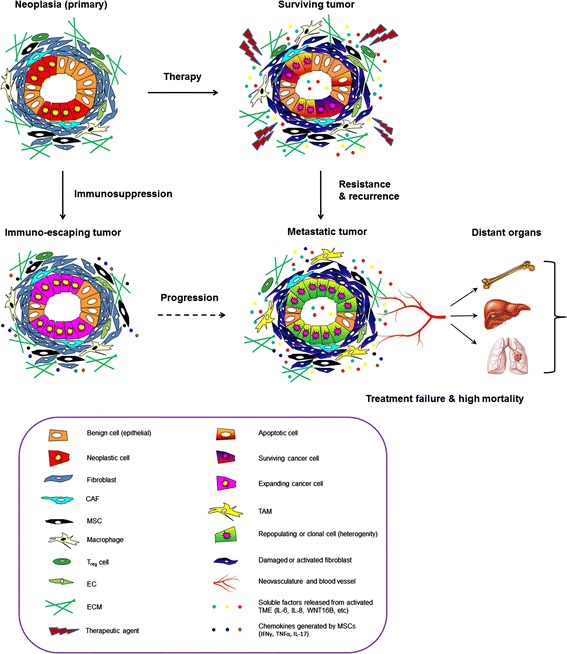
The tumor microenvironment (TME) is being increasingly recognized as a key factor in multiple stages of disease progression, particularly local resistance, immune-escaping, and distant metastasis, thereby substantially impacting the future development of frontline interventions in clinical oncology. An appropriate understanding of the TME promotes evaluation and selection of candidate agents to control malignancies at both the primary sites as well as the metastatic settings. This review presents a timely outline of research advances in TME biology and highlights the prospect of targeting the TME as a critical strategy to overcome acquired resistance, prevent metastasis, and improve therapeutic efficacy. As benign cells in TME niches actively modulate response of cancer cells to a broad range of standard chemotherapies and targeted agents, cancer-oriented therapeutics should be combined with TME-targeting treatments to achieve optimal clinical outcomes. Overall, a body of updated information is delivered to summarize recently emerging and rapidly progressing aspects of TME studies, and to provide a significant guideline for prospective development of personalized medicine, with the long term aim of providing a cure for cancer patients.
Overview
The claims and statistics of this paper haven’t been checked yet.
Free: it reads the open-access text and checks the first 5 claims that cite a source we can check. Create a free account to check every claim.
Integrity signals
Registry
Cites
Statistics
Figures
Verification
Claims the paper makes
The claims and statistics of this paper haven’t been checked yet.
Free: it reads the open-access text and checks the first 5 claims that cite a source we can check. Create a free account to check every claim.
Claims other papers make about this one
Each is checked against this paper’s own text: does it say what the citing paper says it does?
The cited source says what the claim attributes to it.
In the citing paper
“As a result, solid tumors are inherently heterogeneous and structurally complex [18].”
From Microfluidic modelling of the tumor microenvironment for anti-cancer drug development (2019) · cites this paper as [18]
Self-check
Percentages, sums and reported differences re-computed from the paper’s own numbers.
The self-check needs the paper’s full text.
Citations
Cites
PD-1 and PD-L1 Immune Checkpoint Blockade to Treat Breast Cancer
Hartkopf, A. D., Taran, F.-A., Wallwiener, M., Walter, C. B., Krämer, B., Grischke, E.-M., & Brucker, S. Y. (2016) · Breast Care · doi:10.1159/000453569 · Cited by 30,845
The blockade of immune checkpoints in cancer immunotherapy
Pardoll, D. M. (2012) · Nature Reviews Cancer · doi:10.1038/nrc3239 · Cited by 13,838 · cited 1×
“For example, T cell activation involves both positive and negative checkpoint signals to finely tune responses to prevent excessive pathological changes [17,18].”
BackgroundMicroenvironmental regulation of tumor progression and metastasis
Quail, D. F., & Joyce, J. A. (2013) · Nature Medicine · doi:10.1038/nm.3394 · Cited by 7,994 · cited 1×
“Tumor dormancy is regulated by several mechanisms, driven partially by the TME, including cellular dormancy (cells arrested in G0), tumor mass dormancy (proliferation refrained by apoptosis), or immune dormancy (an equilibrium maintained by immunosurveillance) [92].”
BackgroundThe distribution of secondary growths in cancer of the breast.
Paget, S. (1889) · The Lancet · doi:10.1016/s0140-6736(00)49915-0 · Cited by 5,277
The immune contexture in human tumours: impact on clinical outcome
Fridman, W. H., Pagès, F., Sautès-Fridman, C., & Galon, J. (2012) · Nature reviews. Cancer · doi:10.1038/nrc3245 · Cited by 4,981 · cited 2×
“For instance, when defining predictive markers that will eventually aid in the selection of patients who most likely benefit from intervention, analysis based on the entire TME is an essential step of utmost importance to determine specific therapies to employ [17,103,104].”
BackgroundCancer drug resistance: an evolving paradigm
Holohan, C., Van Schaeybroeck, S., Longley, D. B., & Johnston, P. G. (2013) · Nature Reviews Cancer · doi:10.1038/nrc3599 · Cited by 4,681 · cited 1×
“TME-mediated resistance can be initiated by multiple cell lineages and structural components in the stroma, including but not limited to fibroblasts, endothelial cells, pericytes, smooth muscle cells, neutrophils, macrophages, integrins, fibronectins, and collagens [26,30].”
BackgroundTumor-Associated Macrophages: From Mechanisms to Therapy
Noy, R., & Pollard, J. W. (2014) · Immunity · doi:10.1016/j.immuni.2014.06.010 · Cited by 4,089 · cited 1×
“Furthermore, type II tumor-associated macrophages (TAMs) drastically affect tumorigenesis, angiogenesis, and intravasation, and can prevent immune attack by natural killer (NK) and T cells during tumor development and after recovery from chemo- and/or immunotherapy [23].”
BackgroundTumor Metastasis: Molecular Insights and Evolving Paradigms
Valastyan, S., & Weinberg, R. A. (2011) · Cell · doi:10.1016/j.cell.2011.09.024 · Cited by 4,011 · cited 2×
“Metastasis accounts for approximately 90% of overall mortality among solid tumor patients [78].”
BackgroundMelanoma exosomes educate bone marrow progenitor cells toward a pro-metastatic phenotype through MET
Peinado, H., Alečković, M., Lavotshkin, S., Matei, I., Costa-Silva, B., Moreno-Bueno, G., Hergueta-Redondo, M., Williams, C., García-Santos, G., Ghajar, C. M., et al. (2012) · Nature Medicine · doi:10.1038/nm.2753 · Cited by 3,715 · cited 1×
“As supporting evidence, several studies demonstrated that exosomes derived from BM-MSCs can induce progenitor cells to undergo mesenchymal-to-epithelial transition (MET), indicating active message delivery between cancer cells and the bone marrow TME [72,73].”
Cancer stem cells in solid tumours: accumulating evidence and unresolved questions
Visvader, J. E., & Lindeman, G. J. (2008) · Nature Reviews Cancer · doi:10.1038/nrc2499 · Cited by 3,429 · cited 1×
“In such cases, CSCs represent the potential source of eventual tumor relapse following therapy, which are typically therapy-resistant due to decreased oxidative stress response, increased genomic stability, and expression of multiple drug resistance transporters [35].”
BackgroundInfluential
Research works printed but not linked: 1
- Paget S The distribution of secondary growths in cancer of the breast. 1889 Canc Metastasis Rev 1989 8 98 101 2673568
Cited by
Items 401–500 of 723
Liang, H., Chu, X., Zhao, J., Xing, G., & Si, Y. (2018) · Oncology Letters · doi:10.3892/ol.2018.8424 · Cited by 14
“studies have demonstrated that tumor cells surviving from immune surveillance acquire various (6) capacities to change constitution and/or function of immune and stromal cells at the tumor site, creating topical immunosuppressive milieu, thus the concept of tumor microenvironment (TME) was proposed (7), which could pa…”
BackgroundSverdlov, E. D. (2018) · BioEssays · doi:10.1002/bies.201800079 · Cited by 12
Nanoparticles drug-delivery systems and antiangiogenic approaches in the treatment of gliomas
Caffo, M., Cardali, S., Fazzari, E., Barresi, V., & Caruso, G. (2018) · Glioma · doi:10.4103/glioma.glioma_43_18 · Cited by 12
“These abnormalities lead to an abnormal tumor microenvironment characterized by interstitial hypertension, hypoxia, and acidosis.[23] Vascular endothelial growth factor (VEGF) and angiopoietin families are predominant angiogenic factors in glioblastoma.”
BackgroundChen, D., Xiong, L., Zhang, L., Yu, H., Xu, Y., Wang, M., Jiang, X., & Xiong, Z. (2021) · Pharmacogenomics and Personalized Medicine · doi:10.2147/pgpm.s301303 · Cited by 15
Zhang, S., Huang, H., Handley, M., Griffin, N., Bai, X., & Shan, F. (2021) · International Immunopharmacology · doi:10.1016/j.intimp.2021.107999 · Cited by 13
Kavitha, R., Prabhu, S., Prakash, N., Amalraj, S., Ayyanar, M., Kadaikunnan, S., Kalaimathi, K., Ceasar, S. A., Priya, S. P., Gurav, S. S., et al. (2024) · Journal of Molecular Structure · doi:10.1016/j.molstruc.2024.140536 · Cited by 11
GSH-responsive magnetic imaging for in situ monitoring of tumor chemodynamic therapy
Lu, J. G., Jiang, Z., Chen, X., Zhang, W., Li, P., Tang, Y., Zhang, W., Wang, H., & Tang, B. (2025) · Chemical Science · doi:10.1039/d5sc04436g · Cited by 11
Lu, Y., Li, A., Liu, A., Li, M., & Wang, M. (2026) · Biomedicines · doi:10.3390/biomedicines14020416 · Cited by 14
Prognostic value and immunological role of FOXM1 in human solid tumors
Wei, G., Yang, X., Lu, H., Zhang, L., Wei, Y., Li, H., Zhu, M., & Xin Min, Z. H. O. U. (2022) · Aging · doi:10.18632/aging.204394 · Cited by 12
Royal Society Scientific Meeting: Extracellular vesicles in the tumour microenvironment
Pink, R. C., Elmusrati, A., Lambert, D., & Carter, D. R. F. (2017) · Philosophical Transactions of the Royal Society B Biological Sciences · doi:10.1098/rstb.2017.0066 · Cited by 12
“One important concept that has only recently gained broad acceptance is the role of the tumour microenvironment (TME) [6].”
Procancerogenic activity of senescent cells: A case of the peritoneal mesothelium
Mikuła‐Pietrasik, J., Stryczyński, Ł., Uruski, P., Tykarski, A., & Książek, K. (2018) · Ageing Research Reviews · doi:10.1016/j.arr.2018.01.002 · Cited by 12
Keller, S., Borde, T., Brangsch, J., Reimann, C., Kader, A., Schulze, D., Buchholz, R., Kaufmann, J. O., Kärst, U., Schellenberger, E. A., et al. (2020) · Scientific Reports · doi:10.1038/s41598-020-77624-8 · Cited by 11
Dabbour, N. M., Salama, A. M., Donia, T., Al-Deeb, R. T., Elghane, A. M. A., Badry, K. H., & Loutfy, S. A. (2021) · Journal of Drug Delivery Science and Technology · doi:10.1016/j.jddst.2021.103022 · Cited by 13
Nie, Z., Pu, T., Han, Z., Wang, C., Pan, C., Li, P., Ma, X., Yao, Y., Zhao, Y., Wang, C., et al. (2022) · Frontiers in Oncology · doi:10.3389/fonc.2022.930647 · Cited by 11
Gu, X., Jiang, C., Zhao, J., Qiao, Q., Wu, M., & Cai, B. (2022) · Frontiers in Cell and Developmental Biology · doi:10.3389/fcell.2022.883059 · Cited by 13
“The TIME consists of stromal cells, immune cells, and an external matrix (Chen et al., 2015).”
BackgroundEpithelial-Mesenchymal Transition in Tumor Microenvironment Induced by Hypoxia
Eskiizmir, G., & Özgür, E. (2018) · IntechOpen eBooks · doi:10.5772/intechopen.78717 · Cited by 13
“It mediates aberrant tissue function and modulates subsequent progression in solid cancers [1].”
BackgroundRoles of circRNA dysregulation in esophageal squamous cell carcinoma tumor microenvironment
Li, J., Song, Y., Cai, H., Zhou, B., & Ma, J. (2023) · Frontiers in Oncology · doi:10.3389/fonc.2023.1153207 · Cited by 10
“The TME plays a significant role in carcinoma progression, including proliferation, metastasis, immune evasion, and chemoradiation resistance (20).”
BackgroundFundamentals to clinical application of nanoparticles in cancer immunotherapy and radiotherapy
Selvaraj, V. K., & Gudipudi, D. K. (2020) · ecancermedicalscience · doi:10.3332/ecancer.2020.1095 · Cited by 15
Endocrine-Disrupting Chemicals and Vitamin D Deficiency in the Pathogenesis of Uterine Fibroids
Elkafas, H., Badary, O. A., Morsy, E. M. E., Kamel, R., Yang, Q., & Al-Hendy, A. A. (2021) · Journal of Advanced Pharmacy Research · doi:10.21608/aprh.2021.66748.1124 · Cited by 14
Exosomal miRNAs in the microenvironment of pancreatic cancer
Zou, X., Huang, Z., Guan, C., Shi, W., Gao, J., Wang, J., Cui, Y., Wang, M., Xu, Y., & Zhong, X. (2023) · Clinica Chimica Acta · doi:10.1016/j.cca.2023.117360 · Cited by 10
Bakkalci, D., Al-Badri, G., Yang, W., Nam, A., Liang, Y., Khurram, S. A., Heavey, S., Fedele, S., & Cheema, U. (2023) · Materials Today Bio · doi:10.1016/j.mtbio.2023.100923 · Cited by 10
Li, M., Wang, J., Zhao, Y., Lin, C., Miao, J., Ma, X., Ye, Z., Chen, C., Tao, K., Zhu, P., et al. (2024) · Frontiers in Immunology · doi:10.3389/fimmu.2024.1344637 · Cited by 14
Targeting Microenvironment of Melanoma and Head and Neck Cancers in Photodynamic Therapy
Ratkaj, I., Mušković, M., & Malatesti, N. (2021) · Current Medicinal Chemistry · doi:10.2174/0929867328666210709113032 · Cited by 10
Roberto, M., Carconi, C., Cerreti, M., Schipilliti, F. M., Botticelli, A., Mazzuca, F., & Marchetti, P. (2021) · Frontiers in Immunology · doi:10.3389/fimmu.2021.704942 · Cited by 10
Abdolahinia, E. D., Fathi, M., Pirdel, Z., Jafari, S., Samiei, M., Adibkia, K., Sefat, F., Dizaj, S. M., & Sharifi, S. (2022) · OpenNano · doi:10.1016/j.onano.2022.100100 · Cited by 10
Souza, A. D., Tinguely, M., Burghart, D. R., Berisha, A., Mertz, K. D., & Kempf, W. (2016) · Journal of Cutaneous Pathology · doi:10.1111/cup.12719 · Cited by 10
Surikova, E. I., Goroshinskaya, I. A., Nerodo, G. A., Frantsiyants, E. M., Malejko, M. L., Shalashnaya, E. V., Kachesova, P. S., Nemashkalova, L. A., & Leonova, A. (2016) · Biomeditsinskaya Khimiya · doi:10.18097/pbmc20166202187 · Cited by 10
Molecular Targeting of Integrins and Integrin-Associated Signaling Networks in Radiation Oncology
Vehlow, A., Storch, K., Matzke, D., & Cordes, N. (2016) · Recent results in cancer research/Recent Results in Cancer Research · doi:10.1007/978-3-662-49651-0_4 · Cited by 11
Comparison of Burnet's clonal selection theory with tumor cell-clone development
Arneth, B. (2018) · Theranostics · doi:10.7150/thno.24083 · Cited by 11
“Despite the enormous amount of money, resources, and effort expended in the last two decades, successful control and eradication of the disease have remained elusive [3, 4].”
BackgroundDoes tumor stroma ratio of breast cancer trucut biopsy determine response to neoadjuvant therapy?
Mallya, V., Singh, V. K., Kaur, N., Yadav, P., Mandal, S., Khurana, N., & Lal, P. (2020) · Indian Journal of Pathology and Microbiology · doi:10.4103/ijpm.ijpm_793_18 · Cited by 11
The Metabolic Remodelling in Lung Cancer and Its Putative Consequence in Therapy Response
Hipólito, A., Mendes, C., & Serpa, J. (2020) · Advances in experimental medicine and biology · doi:10.1007/978-3-030-34025-4_16 · Cited by 10
Are Synapse-Like Structures a Possible Way for Crosstalk of Cancer with Its Microenvironment?
Алексеенко, И. В., Чернов, И. П., Kostrov, S. V., & Sverdlov, E. D. (2020) · Cancers · doi:10.3390/cancers12040806 · Cited by 10
Prognostic and Immunological Roles of Cell Cycle Regulator CDCA5 in Human Solid Tumors
He, J., Xin Min, Z. H. O. U., Wang, X., Zhang, Q. H., Zhang, L., Wang, T., Zhu, W., Liu, P., & Zhu, M. (2022) · International Journal of General Medicine · doi:10.2147/ijgm.s389275 · Cited by 10
“In particular, the tumor microenvironment (TME), which mainly consists of stromal fibroblasts, together with infiltrating immune cells and the extracellular matrix, indeed plays an essential role.(14,15) Moreover, in many different types of tumors, tumor-infiltrating lymphocytes could provide prognostic and predictive…”
BackgroundHu, Q., Zuo, X., Gu, X., Liu, L., Tang, Y., Niu, X., Shi, Y., & Li-ping, H. (2025) · Scientific Reports · doi:10.1038/s41598-025-05435-w · Cited by 11
Self-citationILIOPOULOS, A. C., Beis, G., Apostolou, P., & Papasotiriou, I. (2019) · Current Bioinformatics · doi:10.2174/1574893614666191017093504 · Cited by 9
Yadav, M., Uikey, B. N., Rathore, S. S., Gupta, P. S., Kashyap, D., Kumar, C., Shukla, D., Vijayamahantesh, V., Chandel, A. K. S., Ahirwar, B., et al. (2023) · Frontiers in Oncology · doi:10.3389/fonc.2023.1235711 · Cited by 10
Yadav, P., Rana, K., Nardini, V., Khan, A., Pani, T., Kar, A., Jain, D., Chakraborty, R., Singh, R., Jha, S. K., et al. (2024) · Journal of Controlled Release · doi:10.1016/j.jconrel.2024.03.009 · Cited by 10
Barzegari, A., Salemi, F., Kamyab, A., Aratikatla, A., Nejati, N., Valizade, M., Eltouny, E., & Ebrahimi, A. (2024) · Journal of bone oncology · doi:10.1016/j.jbo.2024.100635 · Cited by 9
“…and non-cancerous tumor cells, including cells derived from bone marrow, immune and inflammatory cells, endothelial and pericytes that constitute the tumor vasculature, cancer-associated fibroblasts (CAFs), and extracellular matrix (ECM) that interacts intricately with the tumor [181,182].”
Mei, P., Huang, L., Lu, L., Chen, Y., & Guo, X. (2025) · Frontiers in Oncology · doi:10.3389/fonc.2025.1394154 · Cited by 11
Tumor Site-Dependent Transport Properties Determine Nanotherapeutics Delivery and Its Efficacy
Kai, M., Žiemys, A., Liu, Y. T., Kojić, M., Ferrari, M., & Yokoi, K. (2019) · Translational Oncology · doi:10.1016/j.tranon.2019.05.011 · Cited by 9
Chen, D., Wang, M., Jiang, X., & Xiong, Z. (2022) · Discover Oncology · doi:10.1007/s12672-022-00487-0 · Cited by 10
“1 3 Recently, TME is emerging as a crucial factor in multiple stages of cancer progression, specifically distant metastasis, immune escape, and local resistance, thus affecting the development of frontline interventions in clinical oncology [28].”
BackgroundZhang, W., Hu, X., & Jiang, Z. (2022) · Cells · doi:10.3390/cells11111780 · Cited by 9
“Moreover, sEVs combined with TAMs can promote the development of colorectal cancer.”
BackgroundInfluentialWhat Are the Roles of Proprotein Convertases in the Immune Escape of Tumors?
Mehranzadeh, E., Crende, O., Badiola, I., & García-Gallastegui, P. (2022) · Biomedicines · doi:10.3390/biomedicines10123292 · Cited by 9
“Moreover, TME includes non-malignant tumor cells such as cancer-associated fibroblasts (CAFs), endothelial cells and pericytes composing tumor angiogenesis, immune and inflammatory cells, bone marrow-derived cells, and the extracellular matrix (ECM) organizing a sophisticated cross-talk with tumor cells [7].”
BackgroundMcGue, J. J., Edwards, J., Griffith, B. D., & Frankel, T. L. (2023) · Methods in molecular biology · doi:10.1007/978-1-0716-3163-8_16 · Cited by 9
Babaei, A., Tiraihi, T., Ai, J., & Baheiraei, N. (2023) · Bioimpacts · doi:10.34172/bi.2023.24266 · Cited by 8
Quenching thirst with poison? Paradoxical effect of anticancer drugs
Chai, K., Wang, C., Zhou, J., Mu, W., Gao, M., Fan, Z., & Lv, G. (2023) · Pharmacological Research · doi:10.1016/j.phrs.2023.106987 · Cited by 11
Alotaibi, B. S., El-Masry, T. A., Elekhnawy, E., Mokhtar, F. A., El-Seadawy, H. M., & Negm, W. A. (2024) · Artificial Cells Nanomedicine and Biotechnology · doi:10.1080/21691401.2024.2306529 · Cited by 8
“All such methods have been commonly utilized for combating such fatal illnesses [2,3].”
Exosomal noncoding RNAs: decoding their role in thyroid cancer progression
Sun, W., Jiang, C., Liu, Q., Wang, N., Huang, R., Jiang, G., & Yang, Y. (2024) · Frontiers in Endocrinology · doi:10.3389/fendo.2024.1337226 · Cited by 8
Unveiling the “Dark Matter” of platelet involvement in tumor microenvironment
Zhang, P., Zu, R., Zhang, X., Ren, H., Rao, L., Wang, D., Li, T. X., Leng, P., & Luo, H. (2025) · Journal of Pharmaceutical Analysis · doi:10.1016/j.jpha.2025.101218 · Cited by 9
“However, the diverse structural and functional characteristics of the various cell types present in the tumor microenvironment highlight the promising prospects of targeted therapies based on the micro-environment [2 e 5], which have demonstrated potential in over-coming tumor drug resistance [6].”
Interleukin-33 (IL-33) promotes DNA damage-resistance in lung cancer
Luo, H., Liu, L., Liu, X., Xie, Y., Huang, X., Yang, M., Shao, C., & Li, D. (2025) · Cell Death and Disease · doi:10.1038/s41419-025-07624-x · Cited by 8
“Accumulating evidence suggests that the complex interplay among diverse cell types within tumors can dramatically impact the therapeutic outcomes of standard chemotherapeutic agents and radiotherapy [1, 2].”
Zhou, L., Si, C., Li, D., Lu, M., Zhong, W., Xie, Z., Guo, L., Zhang, S., & Xu, M. (2017) · European Journal of Pharmaceutical Sciences · doi:10.1016/j.ejps.2017.12.020 · Cited by 8
Cysteine cathepsins: structure, physiological functions and their role in carcinogenesis
Gureeva, T. A., Timoshenko, O. S., Kugaevskaya, E. V., & Solovyova, N. I. (2021) · Biomeditsinskaya Khimiya · doi:10.18097/pbmc20216706453 · Cited by 8
Gharib, A. F., Askary, A. E., Almehmadi, M. M., Alhuthali, H. M., Elsawy, W. H., Allam, H. H., Elsayyad, L. K., Ayoub, M. A., & Shafie, A. (2022) · European Journal of Inflammation · doi:10.1177/1721727x221106507 · Cited by 8
“Inflammation is considered a key component of the malignant microenvironment, as immune cells and cytokines produced as part of the inflammatory process have a direct influence on malignant cell growth and migration.(52,53) In this study, a significant increase in serum levels of IL-6, TNF-α and chemerin was found in…”
ResultDeep Learning in Barrett’s Esophagus Diagnosis: Current Status and Future Directions
Cui, R., Wang, L., Lin, L., Li, J., Lu, R., Liu, S., Liu, B., Gu, Y., Zhang, H., Shang, Q., et al. (2023) · Bioengineering · doi:10.3390/bioengineering10111239 · Cited by 10
“Cell detection is usually the first crucial step in the automated image analysis of pathological slides [59,60].”
BackgroundSelf-citationEl-Rebey, H. S., Abdou, A. G., Sultan, M. M., Ibrahim, S. H., & Holah, N. S. (2020) · Applied immunohistochemistry & molecular morphology · doi:10.1097/pai.0000000000000865 · Cited by 8
Chen, X., Wu, C. H., Zhong, J., Shen, Y., & Zu, X. (2020) · Experimental Cell Research · doi:10.1016/j.yexcr.2020.112192 · Cited by 10
Suresh, P. K., Banerjee, A., & Singh, P. (2023) · OpenNano · doi:10.1016/j.onano.2023.100134 · Cited by 8
The neuroscience in breast cancer: Current insights and clinical opportunities
Wang, J.-F., Wang, M., Jiang, L.-L., & Lin, N.-M. (2025) · Heliyon · doi:10.1016/j.heliyon.2025.e42293 · Cited by 7
Characterizing RNA Oligomers Using Stochastic Titration Constant-pH Metadynamics Simulations
Silva, T. F. D., & Bussi, G. (2025) · Journal of Chemical Information and Modeling · doi:10.1021/acs.jcim.4c02185 · Cited by 8
“3,4 Usually, nucleic acids are not particularly sensitive to small physiological pH changes because the p K a of nucleotides is quite far from the physiological range, and it is even further in common canonically base-paired nucleotides.”
Targeting cuproptosis in liver cancer: Molecular mechanisms and therapeutic implications
Zhou, Y., Zhu, Y., Hao, M.-Y., Li, H., Han, H.-S., Li, Y., Si, W.-R., Jiang, Q., & Wu, D. (2025) · APOPTOSIS · doi:10.1007/s10495-025-02150-9 · Cited by 7
“The former encompasses regulatory T cells (Tregs), myeloid-derived suppressor cells, and tumor-associated macrophages (predominantly M2 phenotype), while the latter comprises B lymphocytes, cytotoxic T cells, NK cells, and dendritic cells (DCs) [128].”
Eustace, A. J., Madden, S. F., Fay, J., Collins, D. M., Kay, E. W., Sheehan, K. M., Furney, S. J., Moran, B., Fagan, A., Morris, P. G., et al. (2021) · Breast Cancer Research and Treatment · doi:10.1007/s10549-021-06244-1 · Cited by 7
Karpińska, K., Gielata, M., Gwiazdowska, A., Boryń, Ł. M., & Kobielak, A. (2021) · International Journal of Molecular Sciences · doi:10.3390/ijms23010140 · Cited by 7
“These cells include cancer-associated fibroblasts (CAFs), which in the head and neck area are neural-crest-derived, adipose cells, immune-inflammatory cells as well as nerve, blood, and lymphatic vascular networks [7,8].”
BackgroundFeng, D., Li, W., Wu, W. D., Kahlert, U. D., Gao, P., Hu, G., Huang, X., Shi, W., & Li, H. (2023) · Journal of Oncology · doi:10.1155/2023/2736932 · Cited by 7
“Te tumor microenvironment (TME), consisting of extracellular matrix, stromal cells, and immune cells [13], is important in cancer initiation, progression, and therapy [14].”
BackgroundSelf-citationDesmosome mutations impact the tumor microenvironment to promote melanoma proliferation
Baron, M., Tagore, M. M., Wall, P., Zheng, F., Barkley, D., Yanai, I., Yang, J., Kiuru, M. H., White, R. M., & Ideker, T. (2025) · Nature Genetics · doi:10.1038/s41588-025-02163-9 · Cited by 8
Emerging technologies for genetic control systems in cellular therapies
de Rossi, J., Arefeayne, Y., Robinson, A. J., & Segatori, L. (2022) · Current Opinion in Biotechnology · doi:10.1016/j.copbio.2022.102833 · Cited by 7
Young, S. A., Griego-Fullbright, C., Wagner, A., Chargin, A., Patterson, B. K., & Chabot‐Richards, D. (2018) · American Journal of Clinical Pathology · doi:10.1093/ajcp/aqy063 · Cited by 7
Monocyták és neutrophil granulocyták fagocitafunkciója ovariumcarcinomában
Kovács, A. R., Pál, L., Szűcs, S., Lukács, L., Póka, R., & Lampé, R. (2018) · Orvosi Hetilap · doi:10.1556/650.2018.31142 · Cited by 7
“A TME a tumorsejtek és a normális sejtek közötti interakciók hatására alakul ki, feladata pedig a tumor növekedésének és progressziójának segítése [30].”
Antitumor effect of cell therapy with mesenchymal stem cells on murine melanoma B16-F10
de Menezes, F. C., Cabral, L. G. D. S., Petrellis, M. C., Neto, C. F., & Maria, D. A. (2020) · Biomedicine & Pharmacotherapy · doi:10.1016/j.biopha.2020.110294 · Cited by 7
Zeng, F., Cao, J., Liao, S., Chen, Y., Qian, H., Lei, Y., Xu, J., & Zhou, Y. (2025) · Cell Death Discovery · doi:10.1038/s41420-025-02724-1 · Cited by 7
“The tumor microenvironment (TME) is a complex ecosystem that tumors depend on for survival and growth, comprising tumor cells, stromal cells, and various immune cells, as well as their secreted products like cytokines and chemokines [16 – 18].”
Gao, L., Luo, Z., Dong, L., Gao, C., Zhang, X., Yong, X., Yang, H., Zhou, Y. F., Li, Y., Liu, T., et al. (2025) · ACS Nano · doi:10.1021/acsnano.5c16178 · Cited by 7
Amazing roles of extrachromosomal DNA in cancer progression
Zhao, L., Jiang, Y., Lei, X., & Yang, X. (2022) · Biochimica et Biophysica Acta (BBA) - Reviews on Cancer · doi:10.1016/j.bbcan.2022.188843 · Cited by 7
Cambria, D., Longhitano, L., Spina, E. L., Giallongo, S., Orlando, L., Giuffrida, R., Tibullo, D., Fontana, P., Barbagallo, I. A., Nicoletti, V. G., et al. (2023) · Life · doi:10.3390/life13020259 · Cited by 8
Zhang, Y., Xing, A., He, J., Wang, F., Li, Z., & Sun, B. (2023) · BMC Oral Health · doi:10.1186/s12903-023-03660-1 · Cited by 7
“It has been ascertained that the micro-environment assumes a crucial role in the growth or apoptosis of residual cells subsequent to tumor resection, and modifications in the tumor micro-environment can notably lessen the likelihood of tumor recurrence [30, 31].”
BackgroundDai, L., Lou, N., Huang, L., Li, L., Tang, L. M., Shi, Y., & Han, X. (2025) · Cancer Immunology Immunotherapy · doi:10.1007/s00262-025-03968-7 · Cited by 6
“Extended author information available on the last page of the article stromal cells, and infiltrating immune cells, including fibroblasts and macrophages, which play critical roles in tumor progression and immune evasion [4].”
Self-citationLin, L., Li, T., Wang, Y., Chen, Y., Li, Z., & Feng, L. (2025) · ACS Applied Nano Materials · doi:10.1021/acsanm.4c06635 · Cited by 6
Self-citationHefteh, N., Welch, O., Sheikh, M., Caze, A. L., & Parat, M. (2025) · British Journal of Cancer · doi:10.1038/s41416-025-03014-4 · Cited by 6
Singh, A., Pillai, L., Danes, D., Umar, S., & Balakrishnan, S. (2025) · Molecular Biology Reports · doi:10.1007/s11033-025-10517-z · Cited by 6
“A key factor influencing cancer progression and recur - rence is the tumor microenvironment (TME), which significantly impacts tumor initiation, growth, metastasis, and drug resistance [6, 7].”
The role and regulation of cell death in cancer
Quang, M. T., Nguyen, M. N., & Than, V. T. (2025) · Progress in molecular biology and translational science · doi:10.1016/bs.pmbts.2025.06.014 · Cited by 8
Huang, X., Huang, X., Xie, Y., Wang, K., Bai, H., Ning, R., Zhu, X., Huang, D., & Jin, G. (2025) · BMC Medical Imaging · doi:10.1186/s12880-025-01828-5 · Cited by 10
“The peritumoral region, which includes tumor microenvironment components such as angiogenesis, immune infiltration, and fibrosis, critically influences treatment response and prognosis [39, 40].”
Improving therapeutic resistance: beginning with targeting the tumor microenvironment
Guan, X., Guan, X., & Jiao, Z. (2021) · Journal of Chemotherapy · doi:10.1080/1120009x.2021.2011661 · Cited by 6
Jin, Q., Liu, S., & Zhang, Z. (2024) · Cancer Cell International · doi:10.1186/s12935-024-03216-5 · Cited by 6
“TME is composed of Extracellular matrix (ECM), stromal cells and immune cells (including T lymphocytes, B lymphocytes, tumor-associated macrophages, etc.) [13].”
BackgroundWang, J., Liu, K., Li, J., Zhang, H., Gong, X., Song, X., Wei, M., Hu, Y., & Li, J. (2024) · Frontiers in Immunology · doi:10.3389/fimmu.2024.1371831 · Cited by 6
“The tumor microenvironment (TME) has attracted increasing attention due to its important role in tumor immunosuppression, distant metastasis and drug resistance (23).”
BackgroundThe cytotoxic effect of Baeckea frustescens extracts in eliminating hypoxic breast cancer cells
Shahruzaman, S. H., Yusof, F. Z. M., Maniam, S., Fakurazi, S., & Maniam, S. (2021) · BMC Complementary Medicine and Therapies · doi:10.1186/s12906-021-03417-9 · Cited by 6
“A typical tumour microenvironment consists of fibroblasts, myofibroblasts, neuroendocrine cells, adipose cells, immune and inflammatory cells, blood and lymphatic vascular networks, and the extracellular matrix [37].”
BackgroundYeh, Y., Lin, P., Su, W., & Shen, M.-R. (2021) · International Journal of Molecular Sciences · doi:10.3390/ijms222212565 · Cited by 6
“The most dominant and import immune infiltrates in the tumor microenvironment are macrophages, which are often termed as tumor-associated macrophages [3].”
BackgroundStrategies for cancer therapy: targeting tumor microenvironment and nanotechnology
Abdel-Halim, A. H. (2023) · Egyptian Pharmaceutical Journal · doi:10.4103/epj.epj_188_22 · Cited by 6
Ouyang, Y., Yu, M., Liu, T., Suo, M., Qiao, J., Wang, L., & Li, N. (2023) · International Journal of Molecular Sciences · doi:10.3390/ijms242115959 · Cited by 6
“TME is an admixture of cellular components mainly comprising immune and inflammatory cells, cancer-associated fibrob-lasts, and the blood and lymphatic vascular networks, as well as non-cellular components including extracellular matrix [9,10].”
BackgroundWu, H., Lin, R., & Hong, L. (2023) · Aging · doi:10.18632/aging.205299 · Cited by 7
Li, H., Li, J., Qu, X., Dai, H., Liu, J., Ma, M., Wang, J., Dong, W., & Wang, W. (2023) · Journal of Cancer Research and Clinical Oncology · doi:10.1007/s00432-023-05477-5 · Cited by 6
“Current studies have suggested that the TME plays an important role in tumor progression, metastasis, local drug resistance, and immune escape (Chen et al. 2015).”
BackgroundMu, X., Fang, C., Zhou, J., Xi, Y., Zhang, L., Wei, Y., Yi, T., Wu, Y., & Zhao, X. (2015) · Journal of Cancer Research and Clinical Oncology · doi:10.1007/s00432-015-2002-6 · Cited by 6
Research progress on immune checkpoint inhibitors in intrahepatic cholangiocarcinoma
Yin, Z. Q., Zhang, L., Li, J., Tan, H., & Ma, B. (2025) · Annals of Medicine · doi:10.1080/07853890.2025.2584667 · Cited by 6
A, S. T., Gupta, S., Kiyawat, P., Darshan, Y., Sambhav, K., & Shamshadali, S. S. (2025) · Cureus · doi:10.7759/cureus.100320 · Cited by 10
“Through the secretion of growth factors, cytokines, and enzymes such as matrix metalloproteinases (MMPs), CAFs actively remodel the ECM, promoting tumor growth, motility, and invasion [16,22].”
A human pathophysiological 3D-bone marrow model reveals immune and stromal cell heterogeneity
Giannini, M., Campione, G., Torcq, L., Donadelli, S., Bencheikh, M., Bounaud, S., Jeanpierre, S., Geistlich, K., Maguer‐Satta, V., Lefort, S., et al. (2026) · Communications Biology · doi:10.1038/s42003-025-09433-6 · Cited by 5
“This microenvironment, or stroma, comprises both cellular and non-cellular components that form a complexanddynamicecosystem 1,2 .”
Chen, L., Zhang, M., Zhou, J., Zhang, L., & Liang, C. Y. (2022) · Cancer Medicine · doi:10.1002/cam4.4776 · Cited by 6
Wang, X., Yang, J., Bian, H., & Yang, H. (2023) · Frontiers in Pediatrics · doi:10.3389/fped.2023.1067187 · Cited by 5
Bersano, J., Lashuk, K., Edinger, A., & Schüler, J. B. (2023) · Cells · doi:10.3390/cells12212539 · Cited by 5
“Our approach to better characterize the CRC cytokine profile in vitro comprised the analysis of 20 CRC lines representing different subtypes of the disease in the presence or absence of fibroblasts and macrophages in 2D and 3D [20,21].”
MethodA novel therapeutic strategy: the significance of exosomal miRNAs in acute myeloid leukemia
Salehi, A. (2024) · Medical Oncology · doi:10.1007/s12032-023-02286-1 · Cited by 5
Kong, L., Liu, M., Yang, H., Yan, P., Luo, Y., Xiang, S., Huang, Z., & Shen, A. (2024) · Translational Cancer Research · doi:10.21037/tcr-23-1890 · Cited by 6
“The TIME is composed of stromal cells, immune cells, and the extracellular matrix (21).”
BackgroundXu, S., Xu, Y., Chai, W.-J., Liu, X., Li, J., Lei, S., Pan, H., & Yan, M. (2024) · Journal of Thoracic Disease · doi:10.21037/jtd-24-8 · Cited by 9
“Over the past decade, the TME has become a key factor influencing tumor development, treatment resistance and prognosis (35-37).”
Liu, L., Guo, X., Ye, W., & Liu, Y. (2024) · International Journal of General Medicine · doi:10.2147/ijgm.s487525 · Cited by 5
“56 There are currently relatively few studies on the role of inflammatory markers in CRC. Zhao et al found that PIV is associated with the tumor stage of CRC patients and is one of the possible indicators for preoperative adjuvant assessment of CRC. 26 Pre-treatment inflammatory indexes are…”
BackgroundHe, S., Ji, J., Zhu, K., Chen, Y., & Xu, X. (2025) · Frontiers in Pharmacology · doi:10.3389/fphar.2025.1527871 · Cited by 5
Metadata
- Authors
- Chen, F., Zhuang, X., Lin, L., Yu, P., Wang, Y., Shi, Y., Hu, G., & Sun, Y.
- Affiliations
- Shanghai Jiao Tong University (CN)
- Corresponding author
- Sun, Yu
- Venue
- BMC Medicine
- Published
- 2015-03-05
- Volume
- 13
- Issue
- 1
- Pages
- 45-45
- ISSN
- 1741-7015 (ISSN-L)
- PMC
- PMC4350882
- OpenAlex
- W2127686099
- Semantic Scholar
- b55be59deaf313855dba891ef8ed0f4aadc7f777
- Cited by
- 704
- References
- 105
- Citations by year
- 2026: 24 · 2025: 49 · 2024: 63 · 2023: 76 · 2022: 79 · 2021: 98 · 2020: 83 · 2019: 65 · 2018: 64 · 2017: 47 · 2016: 37 · 2015: 19
- FWCI
- 5.99
- Type
- journal article
- Language
- en
- Open access
- gold
- doi.org
- Locations
- BMC Medicine (publishedVersion, cc-by)
- Europe PMC (PubMed Central) (publishedVersion, cc-by)
- PubMed Central (publishedVersion, cc-by)
- PubMed (publishedVersion)
- Funders
- U.S. Department of Defense (PC111703)
- University of Washington (WA 98195)
- National Natural Science Foundation of China (81330046, 81472709, 31371409)
- Chinese Academy of Sciences (215123, XDA01040107, XDA01040110)
- Soochow University (215123)
- Shanghai Rising-Star Program
- Directorate for Biological Sciences
- School of Medicine, Shanghai Jiao Tong University
- Congressionally Directed Medical Research Programs
- Topics
- Health Sciences › Medicine › Oncology › Cancer Cells and Metastasis
- Health Sciences › Medicine › Oncology › Cancer Immunotherapy and Biomarkers
- Life Sciences › Biochemistry, Genetics and Molecular Biology › Cancer Research › Cancer, Hypoxia, and Metabolism
- Keywords
- tumor microenvironment, acquired drug resistance, immune evasion, metastasis, cancer immunotherapy, chemoresistance, personalized medicine, cancer therapy
- MeSH terms
- Humans, Medical Oncology, Neoplasms, Tumor Microenvironment
About these checks
Registry, retraction, Cites and statistics results are computed, not judged, with one exception: a printed reference that no index lists is read once by a model before it counts as a citation error. Claims are extracted by a model and kept only when their quote appears verbatim in the text; each cited source is then checked, with a model’s help, for whether it says what the claim relies on. Those verdicts can be wrong — read the claim’s quote and the cited source before relying on one.
Statistics and arithmetic are recomputed, not judged.
Confidence bands are shown only for fields calibrated on our annotated test set. None is calibrated yet, so no band is shown.
What counts as a claim ›How we measure confidence ›How we check this ›
Are you an author, or do you see a problem with this page? Request a review
Data sources
Bibliographic data: Semantic Scholar, OpenAlex, Crossref.
Contains information from the Semantic Scholar Academic Graph Datasets, made available under the ODC Attribution License (ODC-BY 1.0).
Semantic Scholar’s data is described in: Kinney, R., et al. (2023). The Semantic Scholar Open Data Platform. arXiv:2301.10140.
