

New horizons in tumor microenvironment biology: challenges and opportunities
Open accessThe DOI matches its Crossref record; 105 of the 105 references it cites were found in a registry or an index.
Abstract
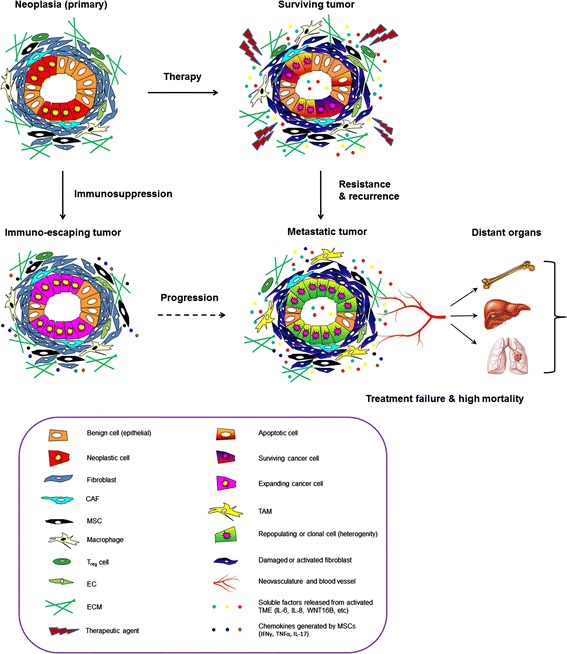
The tumor microenvironment (TME) is being increasingly recognized as a key factor in multiple stages of disease progression, particularly local resistance, immune-escaping, and distant metastasis, thereby substantially impacting the future development of frontline interventions in clinical oncology. An appropriate understanding of the TME promotes evaluation and selection of candidate agents to control malignancies at both the primary sites as well as the metastatic settings. This review presents a timely outline of research advances in TME biology and highlights the prospect of targeting the TME as a critical strategy to overcome acquired resistance, prevent metastasis, and improve therapeutic efficacy. As benign cells in TME niches actively modulate response of cancer cells to a broad range of standard chemotherapies and targeted agents, cancer-oriented therapeutics should be combined with TME-targeting treatments to achieve optimal clinical outcomes. Overall, a body of updated information is delivered to summarize recently emerging and rapidly progressing aspects of TME studies, and to provide a significant guideline for prospective development of personalized medicine, with the long term aim of providing a cure for cancer patients.
Overview
The claims and statistics of this paper haven’t been checked yet.
Free: it reads the open-access text and checks the first 5 claims that cite a source we can check. Create a free account to check every claim.
Integrity signals
Registry
Cites
Statistics
Figures
Verification
Claims the paper makes
The claims and statistics of this paper haven’t been checked yet.
Free: it reads the open-access text and checks the first 5 claims that cite a source we can check. Create a free account to check every claim.
Claims other papers make about this one
Each is checked against this paper’s own text: does it say what the citing paper says it does?
The cited source says what the claim attributes to it.
In the citing paper
“As a result, solid tumors are inherently heterogeneous and structurally complex [18].”
From Microfluidic modelling of the tumor microenvironment for anti-cancer drug development (2019) · cites this paper as [18]
Self-check
Percentages, sums and reported differences re-computed from the paper’s own numbers.
The self-check needs the paper’s full text.
Citations
Cites
PD-1 and PD-L1 Immune Checkpoint Blockade to Treat Breast Cancer
Hartkopf, A. D., Taran, F.-A., Wallwiener, M., Walter, C. B., Krämer, B., Grischke, E.-M., & Brucker, S. Y. (2016) · Breast Care · doi:10.1159/000453569 · Cited by 30,845
The blockade of immune checkpoints in cancer immunotherapy
Pardoll, D. M. (2012) · Nature Reviews Cancer · doi:10.1038/nrc3239 · Cited by 13,838 · cited 1×
“For example, T cell activation involves both positive and negative checkpoint signals to finely tune responses to prevent excessive pathological changes [17,18].”
BackgroundMicroenvironmental regulation of tumor progression and metastasis
Quail, D. F., & Joyce, J. A. (2013) · Nature Medicine · doi:10.1038/nm.3394 · Cited by 7,994 · cited 1×
“Tumor dormancy is regulated by several mechanisms, driven partially by the TME, including cellular dormancy (cells arrested in G0), tumor mass dormancy (proliferation refrained by apoptosis), or immune dormancy (an equilibrium maintained by immunosurveillance) [92].”
BackgroundThe distribution of secondary growths in cancer of the breast.
Paget, S. (1889) · The Lancet · doi:10.1016/s0140-6736(00)49915-0 · Cited by 5,277
The immune contexture in human tumours: impact on clinical outcome
Fridman, W. H., Pagès, F., Sautès-Fridman, C., & Galon, J. (2012) · Nature reviews. Cancer · doi:10.1038/nrc3245 · Cited by 4,981 · cited 2×
“For instance, when defining predictive markers that will eventually aid in the selection of patients who most likely benefit from intervention, analysis based on the entire TME is an essential step of utmost importance to determine specific therapies to employ [17,103,104].”
BackgroundCancer drug resistance: an evolving paradigm
Holohan, C., Van Schaeybroeck, S., Longley, D. B., & Johnston, P. G. (2013) · Nature Reviews Cancer · doi:10.1038/nrc3599 · Cited by 4,681 · cited 1×
“TME-mediated resistance can be initiated by multiple cell lineages and structural components in the stroma, including but not limited to fibroblasts, endothelial cells, pericytes, smooth muscle cells, neutrophils, macrophages, integrins, fibronectins, and collagens [26,30].”
BackgroundTumor-Associated Macrophages: From Mechanisms to Therapy
Noy, R., & Pollard, J. W. (2014) · Immunity · doi:10.1016/j.immuni.2014.06.010 · Cited by 4,089 · cited 1×
“Furthermore, type II tumor-associated macrophages (TAMs) drastically affect tumorigenesis, angiogenesis, and intravasation, and can prevent immune attack by natural killer (NK) and T cells during tumor development and after recovery from chemo- and/or immunotherapy [23].”
BackgroundTumor Metastasis: Molecular Insights and Evolving Paradigms
Valastyan, S., & Weinberg, R. A. (2011) · Cell · doi:10.1016/j.cell.2011.09.024 · Cited by 4,011 · cited 2×
“Metastasis accounts for approximately 90% of overall mortality among solid tumor patients [78].”
BackgroundMelanoma exosomes educate bone marrow progenitor cells toward a pro-metastatic phenotype through MET
Peinado, H., Alečković, M., Lavotshkin, S., Matei, I., Costa-Silva, B., Moreno-Bueno, G., Hergueta-Redondo, M., Williams, C., García-Santos, G., Ghajar, C. M., et al. (2012) · Nature Medicine · doi:10.1038/nm.2753 · Cited by 3,715 · cited 1×
“As supporting evidence, several studies demonstrated that exosomes derived from BM-MSCs can induce progenitor cells to undergo mesenchymal-to-epithelial transition (MET), indicating active message delivery between cancer cells and the bone marrow TME [72,73].”
Cancer stem cells in solid tumours: accumulating evidence and unresolved questions
Visvader, J. E., & Lindeman, G. J. (2008) · Nature Reviews Cancer · doi:10.1038/nrc2499 · Cited by 3,429 · cited 1×
“In such cases, CSCs represent the potential source of eventual tumor relapse following therapy, which are typically therapy-resistant due to decreased oxidative stress response, increased genomic stability, and expression of multiple drug resistance transporters [35].”
BackgroundInfluential
Research works printed but not linked: 1
- Paget S The distribution of secondary growths in cancer of the breast. 1889 Canc Metastasis Rev 1989 8 98 101 2673568
Cited by
Mao, X., Xu, J., Wang, W., Liang, C., Hua, J., Liu, J., Zhang, B., Meng, Q., Yu, X., & Shi, S. (2021) · Molecular Cancer · doi:10.1186/s12943-021-01428-1 · Cited by 2,290
Role of hypoxia in cancer therapy by regulating the tumor microenvironment
Jing, X., Yang, F., Shao, C., Wei, K., Xie, M., Shen, H., & Shu, Y. (2019) · Molecular Cancer · doi:10.1186/s12943-019-1089-9 · Cited by 2,054
“The TME decreases drug penetration and confers the advantage of proliferation and antiapoptosis to surviving cells, facilitating resistance and common modifications in disease morphology [4, 5].”
BackgroundThe Science and Translation of Lactate Shuttle Theory
Brooks, G. A. (2018) · Cell Metabolism · doi:10.1016/j.cmet.2018.03.008 · Cited by 1,486
“Lactate Influences Acidity of the Tumor Microenvironment (TME) The TME is an active niche that shapes tumor pathogenesis and evolution (Chen et al., 2015).”
BackgroundRole of tumor microenvironment in tumorigenesis
Wang, M., Zhao, J., Zhang, L., Wei, F., Lian, Y., Wu, Y., Gong, Z., Zhang, S., Zhou, J., Cao, K., et al. (2017) · Journal of Cancer · doi:10.7150/jca.17648 · Cited by 1,404
Arneth, B. (2019) · Medicina · doi:10.3390/medicina56010015 · Cited by 1,250
“For instance, understanding the role of the naïve stroma will help caregivers determine how the TME influences the physiological homeostasis of normal tissues [12,14,15].”
BackgroundTargeting Tumor Microenvironment for Cancer Therapy
Roma-Rodrigues, C., Mendes, R., Baptista, P. V., & Fernandes, A. R. (2019) · International Journal of Molecular Sciences · doi:10.3390/ijms20040840 · Cited by 1,187
“The TME consists of extracellular matrix (ECM), stromal cells (such as fibroblasts, mesenchymal stromal cells, pericytes, occasionally adipocytes, blood and lymphatic vascular networks) and immune cells (including T and B lymphocytes, natural killer cells and Tumor-associated macrophages) [6].”
BackgroundRole of interleukin-6 in cancer progression and therapeutic resistance
Kumari, N., Dwarakanath, B. S., Das, A., & Bhatt, A. N. (2016) · Tumor Biology · doi:10.1007/s13277-016-5098-7 · Cited by 1,092
“therapeutic gain and tumour-free survival [163].”
Kalyane, D., Raval, N., Maheshwari, R., Tambe, V., Kalia, K., & Tekade, R. K. (2019) · Materials Science and Engineering: C · doi:10.1016/j.msec.2019.01.066 · Cited by 849
Obesity, Inflammation, and Cancer
Deng, T., Lyon, C. J., Bergin, S., Caligiuri, M. A., & Hsueh, W. A. (2016) · Annual Review of Pathology: Mechanisms of Disease · doi:10.1146/annurev-pathol-012615-044359 · Cited by 794
Carcinoma-associated fibroblasts: orchestrating the composition of malignancy
Gascard, P., & Tlsty, T. D. (2016) · Genes & Development · doi:10.1101/gad.279737.116 · Cited by 732
“…2011; Lecomte et al. 2012; McDonald et al. 2015), adipocytes (Bochet et al. 2013), endothelial cells (Zeisberg et al. 2007), or even, perhaps, epithelial cells (Radisky et al. 2007) that undergo mesenchymal transition when instructed by systemic factors secreted by the tumor (Chen et al. 2015a).”
BackgroundSan-Millán, I., & Brooks, G. A. (2016) · Carcinogenesis · doi:10.1093/carcin/bgw127 · Cited by 610
“describe, the tumor microenvironment is a pathologically active niche that shapes tumor evolution (189).”
BackgroundA peek into cancer-associated fibroblasts: origins, functions and translational impact
LeBleu, V. S., & Kalluri, R. (2018) · Disease Models & Mechanisms · doi:10.1242/dmm.029447 · Cited by 537
“Tumor microenvironment (TME): noncancer cells and ECM found in a tumor, which includes CAFs, blood vessels and immune cells (reviewed in Balkwill et al., 2012; Chen et al., 2015; Quail and Joyce, 2013).”
BackgroundCruceriu, D., Baldasici, O., Balacescu, O., & Berindan-Neagoe, I. (2020) · Cellular Oncology · doi:10.1007/s13402-019-00489-1 · Cited by 524
A history of exploring cancer in context
Maman, S., & Witz, I. P. (2018) · Nature Reviews Cancer · doi:10.1038/s41568-018-0006-7 · Cited by 502
Targeting the microenvironment in solid tumors
Belli, C., Trapani, D., Viale, G., D'Amico, P., Duso, B. A., Della Vigna, P., Orsi, F., & Curigliano, G. (2018) · Cancer Treatment Reviews · doi:10.1016/j.ctrv.2018.02.004 · Cited by 496
Tumor microenvironment and cancer therapy resistance
Sun, Y. (2016) · Cancer Letters · doi:10.1016/j.canlet.2015.07.044 · Cited by 381
Self-citationAlteration of the Antitumor Immune Response by Cancer-Associated Fibroblasts
Ziani, L., Chouaib, S., & Thiery, J. (2018) · Frontiers in Immunology · doi:10.3389/fimmu.2018.00414 · Cited by 381
“Consequently, different elements such as angiogenesis, hypoxia, ECM remodeling, interstitial pressure, metabolism changes have received recent attention as key determinants of the TME modifying cancer cell behavior and disease progression, with potential clinical applications (2, 3).”
BackgroundGonzalez-Avila, G., Sommer, B., Mendoza-Posada, D. A., Ramos, C., Garcia-Hernandez, A. A., & Falfan-Valencia, R. (2019) · Critical Reviews in Oncology/Hematology · doi:10.1016/j.critrevonc.2019.02.010 · Cited by 373
Symbiotic Macrophage-Glioma Cell Interactions Reveal Synthetic Lethality in PTEN-Null Glioma
Chen, P., Zhao, D., Li, J., Liang, X., Li, J., Chang, A., Henry, V. K., Lan, Z., Spring, D. J., Rao, G., et al. (2019) · Cancer Cell · doi:10.1016/j.ccell.2019.05.003 · Cited by 339
“Detailed explorations of the cellular and molecular composition of the GBM TME have catalogued the diverse signaling molecules and cell types including immunocytes and endothelial cells (Quail and Joyce, 2013) which are increasingly recognized as a potential source of therapeutic targets (Chen et al., 2015; Hambardzum…”
Self-citationZhong, X., He, X., Wang, Y., Hu, Z., Huang, H., Zhao, S., Wei, P., & Li, D. (2022) · Journal of Hematology & Oncology · doi:10.1186/s13045-022-01358-5 · Cited by 329
“Abbreviations 2DG: 2-Deoxy-d-glucose; 2PG: 2-Phosphoglycerate; 3PG: 3-Phosphoglycerate; ABC: ATP-binding cassette; ALDH: Aldehyde dehydrogenase; AMPK: 5’Adenosine monophosphate-activated protein kinase; bFGF: Basic fibroblast growth factor; CAFs: Carcinoma-associated fibroblasts; CAIX: Carbonic anhydrase IX; CAXII: Ca…”
BackgroundInfluentialSelf-citationYang, N., Xiao, W., Song, X., Wang, W., & Dong, X. (2020) · Nano-Micro Letters · doi:10.1007/s40820-019-0347-0 · Cited by 324
Tumor microenvironment targeted nanotherapeutics for cancer therapy and diagnosis: A review
Thakkar, S., Sharma, D., Kalia, K., & Tekade, R. K. (2020) · Acta Biomaterialia · doi:10.1016/j.actbio.2019.09.009 · Cited by 316
Emerging mechanisms and targeted therapy of ferroptosis in cancer
Wang, H., Cheng, Y., Mao, C., Liu, S., Xiao, D., Huang, J., & Tao, Y. (2021) · Molecular Therapy · doi:10.1016/j.ymthe.2021.03.022 · Cited by 312
Extracellular vesicles in the tumor microenvironment: old stories, but new tales
Han, L., Lam, E. W.-F., & Sun, Y. (2019) · Molecular Cancer · doi:10.1186/s12943-019-0980-8 · Cited by 294
“Cancer cells have evolved together with components of the surrounding microenvironment with strategies that counteract or circumvent cell apoptosis [22, 23].”
BackgroundSelf-citationCarbonic Anhydrases: Role in pH Control and Cancer
Mboge, M., Mahon, B., McKenna, R., & Frost, S. (2018) · Metabolites · doi:10.3390/metabo8010019 · Cited by 281
“Primary tumors are often described as heterogeneous, in that cells of different types, metabolic states, and stages within the cell cycle can exist at any given time-point [65,66].”
BackgroundTumor-derived exosomes, myeloid-derived suppressor cells, and tumor microenvironment
Tian, X., Shen, H., Li, Z., Wang, T., & Wang, S. (2019) · Journal of Hematology & Oncology · doi:10.1186/s13045-019-0772-z · Cited by 264
The function and mechanism of ferroptosis in cancer
Wang, Y., Wei, Z., Pan, K., Li, J., & Chen, Q. (2020) · Apoptosis · doi:10.1007/s10495-020-01638-w · Cited by 263
“The tumor microenvironment (TME) functions as “fertile soil” for cancer growth and progression, therapeutic responses involving noncancer cells (stromal cells, immune cells, adipocytes, and endothelial cells) and the extracellular matrix [81].”
BackgroundSelf-citationRoles of circRNAs in the tumour microenvironment
Zhang, Q., Wang, W., Zhou, Q., Chen, C., Yuan, W., Liu, J., Li, X., & Sun, Z. (2020) · Molecular Cancer · doi:10.1186/s12943-019-1125-9 · Cited by 260
“sion, metastasis and chemoresistance [23].”
Molecular imaging of the tumor microenvironment
Zhou, Z., & Lu, Z.-R. (2017) · Advanced Drug Delivery Reviews · doi:10.1016/j.addr.2016.07.012 · Cited by 253
“The TME also contributes to tumor drug resistance by increasing the drug transporting barriers and directly reprogramming tumor cells towards amore malignant phenotype [4,48,49].”
BackgroundMicrofluidic modelling of the tumor microenvironment for anti-cancer drug development
Shang, M., Soon, R. H., Lim, C. T., Khoo, B. L., & Han, J. (2019) · Lab on a Chip · doi:10.1039/c8lc00970h · Cited by 227
Designing Stimuli‐Responsive Upconversion Nanoparticles that Exploit the Tumor Microenvironment
Ovais, M., Mukherjee, S., Pramanik, A., Das, D., Mukherjee, A., Raza, A., & Chen, C. (2020) · Advanced Materials · doi:10.1002/adma.202000055 · Cited by 215
New opportunities for nanoparticles in cancer immunotherapy
Park, W., Heo, Y.-J., & Han, D. K. (2018) · Biomaterials Research · doi:10.1186/s40824-018-0133-y · Cited by 216
Anti-CD73 in Cancer Immunotherapy: Awakening New Opportunities
Antonioli, L., Yegutkin, G. G., Pacher, P., Blandizzi, C., & Haskó, G. (2016) · Trends in Cancer · doi:10.1016/j.trecan.2016.01.003 · Cited by 213
Adaptive Mechanisms of Tumor Therapy Resistance Driven by Tumor Microenvironment
Wu, P., Gao, W., Su, M., Nice, E. C., Zhang, W., Lin, J., & Xie, N. (2021) · Frontiers in Cell and Developmental Biology · doi:10.3389/fcell.2021.641469 · Cited by 209
“Macrophages, adipocytes, and fibroblasts in the TME can also act as a sanctuary for tumor cells to escape immune elimination (Hui and Chen, 2015).”
BackgroundThe Anti-Inflammatory Effects of Vitamin D in Tumorigenesis
Liu, W., Zhang, L., Xu, H.-J., Li, Y., Hu, C.-M., Yang, J.-Y., & Sun, M.-Y. (2018) · International Journal of Molecular Sciences · doi:10.3390/ijms19092736 · Cited by 199
“Cytokines and immune cells in the inflammatory microenvironment essentially serve as direct growth and migratory factors for cancer cells [5,6].”
BackgroundSignals from the Adipose Microenvironment and the Obesity–Cancer Link—A Systematic Review
Himbert, C., Delphan, M., Scherer, D., Bowers, L. W., Hursting, S., & Ulrich, C. M. (2017) · Cancer Prevention Research · doi:10.1158/1940-6207.capr-16-0322 · Cited by 195
“The interactions between an evolving tumor and its microenvironment are known to involve a complex interplay among multiple cells, local and systemic secreted mediators, and other components (4, 5).”
BackgroundTumor Microenvironment, a Paradigm in Hepatocellular Carcinoma Progression and Therapy
Tahmasebi Birgani, M., & Carloni, V. (2017) · International Journal of Molecular Sciences · doi:10.3390/ijms18020405 · Cited by 193
“Normally, stroma maintains the tissue homeostasis and acts as a barrier toward tumor formation; however, when a cell starts to be cancerous, its surrounding matrix changes in a way to support cancer development [45,46].”
BackgroundTumour-Associated Macrophages (TAMs) in Colon Cancer and How to Reeducate Them
Yahaya, M. A. F., Lila, M. A. M., Ismail, S., Zainol, M., & Afizan, N. A. R. N. M. (2019) · Journal of Immunology Research · doi:10.1155/2019/2368249 · Cited by 187
“[17], TME consists of extracellular matrix (ECM), myofibroblasts, and a number of cellular players (e.”
BackgroundNew Insights Into the Cancer–Microbiome–Immune Axis: Decrypting a Decade of Discoveries
Jain, T., Sharma, P., Are, A. C., Vickers, S. M., & Dudeja, V. (2021) · Frontiers in Immunology · doi:10.3389/fimmu.2021.622064 · Cited by 183
La Paglia, L., Listì, A., Caruso, S., Amodeo, V., Passiglia, F., Bazan, V., & Fanale, D. (2017) · PPAR Research · doi:10.1155/2017/8187235 · Cited by 174
“Several evidences suggested that tumor microenvironment plays a crucial role in multiple steps of tumor development and progression, including drug resistance, immuneescaping, distant metastasis, and angiogenesis [117].”
BackgroundTumor Microenvironment Targeted Nanotherapy
Fernandes, C., Suares, D., & Yergeri, M. C. (2018) · Frontiers in Pharmacology · doi:10.3389/fphar.2018.01230 · Cited by 161
“Thus, it is imperative to have an understanding of the tumor biology for designing effective therapeutic interventions to overcome acquired drug resistance, abrogate tumor progression, and prevent metastasis (Chen et al., 2015).”
BackgroundThe enteric nervous system in gastrointestinal disease etiology
Holland, A. M., Bon-Frauches, A. C., Keszthelyi, D., Melotte, V., & Boesmans, W. (2021) · Cellular and Molecular Life Sciences · doi:10.1007/s00018-021-03812-y · Cited by 161
Role of the nervous system in cancers: a review
Wang, H., Zheng, Q., Lu, Z., Wang, L., Ding, L., Xia, L., Zhang, H., Wang, M., Chen, Y., & Li, G. (2021) · Cell Death Discovery · doi:10.1038/s41420-021-00450-y · Cited by 160
Bhat, A. A., Yousuf, P., Wani, N. A., Rizwan, A., Chauhan, S. S., Siddiqi, M. A., Bedognetti, D., El-Rifai, W. M., Frenneaux, M. P., Batra, S. K., et al. (2021) · Signal Transduction and Targeted Therapy · doi:10.1038/s41392-020-00419-w · Cited by 183
“These studies suggest that TME dictates aberrant tissue function and plays a critical role in the subsequent evolution of more advanced malignancies.(35) HNSCC TME is infiltrated with lymphocytes (TILs) and their subsets such as CD8 cytotoxic T cells, CD4 helper T cells, CD163 and CD68 macrophages and MDSCs, CD57 NK c…”
BackgroundDrug-repositioning opportunities for cancer therapy: novel molecular targets for known compounds
Würth, R., Thellung, S., Bajetto, A., Mazzanti, M., Florio, T., & Barbieri, F. (2015) · Drug Discovery Today · doi:10.1016/j.drudis.2015.09.017 · Cited by 168
“25, 333–335 69 Chen, S. et al. (2014) Combined cancer therapy with non-conventional drugs: all roads lead to AMPK. Mini Rev. Med. Chem. 14, 642–654 70 Yue, W. et al. (2015) Metformin combined with aspirin significantly inhibit pancreatic cancer cell growth in vitro and in vivo by suppressing anti-apoptotic proteins Mc…”
InfluentialYY1 regulates cancer cell immune resistance by modulating PD-L1 expression
Hays, E., & Bonavida, B. (2019) · Drug Resistance Updates · doi:10.1016/j.drup.2019.04.001 · Cited by 153
Exhaustion of T lymphocytes in the tumor microenvironment: Significance and effective mechanisms
Gholami, M. D., Kardar, G. A., Saeedi, Y., Heidari, S., Garssen, J., & Falak, R. (2017) · Cellular Immunology · doi:10.1016/j.cellimm.2017.10.002 · Cited by 161
Tumour microenvironment responsive nanoconstructs for cancer theranostic
Gulzar, A., Xu, J., Wang, C., He, F., Yang, D., Gai, S., Yang, P., Lin, J., Jin, D., & Xing, B. (2019) · Nano Today · doi:10.1016/j.nantod.2019.03.007 · Cited by 139
Recent advances in drug delivery systems for enhancing drug penetration into tumors
He, B., Sui, X., Yu, B., Wang, S., Shen, Y., & Cong, H. (2020) · Drug Delivery · doi:10.1080/10717544.2020.1831106 · Cited by 134
“However, due to an immunosuppressive microenvironment in solid tumors, some immune cells or cytokines administered into the vascular system cannot successfully reach the tumor (Chen et al., 2015; Sun et al., 2020).”
BackgroundDevelopment and characterization of a microfluidic model of the tumour microenvironment
Ayuso, J. M., Virumbrales-Muñoz, M., Lacueva, A., Lanuza, P. M., Checa-Chavarria, E., Botella, P., Fernández, E., Doblare, M., Allison, S. J., Phillips, R. M., et al. (2016) · Scientific Reports · doi:10.1038/srep36086 · Cited by 134
Small extracellular vesicles in cancer
Abhange, K., Makler, A., Wen, Y., Ramnauth, N., Mao, W., Asghar, W., & Wan, Y. (2021) · Bioactive Materials · doi:10.1016/j.bioactmat.2021.03.015 · Cited by 131
Role of mTOR Signaling in Tumor Microenvironment: An Overview
Conciatori, F., Bazzichetto, C., Falcone, I., Pilotto, S., Bria, E., Cognetti, F., Milella, M., & Ciuffreda, L. (2018) · International Journal of Molecular Sciences · doi:10.3390/ijms19082453 · Cited by 138
“Non-malignant components consist of cancer-associated fibroblasts (CAF), myeloidderived suppressor cells (MDSCs), tumor-associated macrophages (TAM), and regulatory T cells (Treg); they all have a dynamic and tumor-promoting function during the carcinogenesis process [21,22].”
BackgroundHow clinical imaging can assess cancer biology
García‐Figueiras, R., Baleato‐González, S., Padhani, A. R., Luna, A., Casas, J. A. V., Sala, E., Vilanova, J. C., Koh, D., Herranz-Carnero, M., & Vargas, H. A. (2019) · Insights into Imaging · doi:10.1186/s13244-019-0703-0 · Cited by 145
Matrix Metalloproteinases’ Role in Tumor Microenvironment
González-Ávila, G., Sommer, B., García-Hernández, A. A., & Ramos, C. (2020) · Advances in experimental medicine and biology · doi:10.1007/978-3-030-40146-7_5 · Cited by 146
Subgroup-specific immune and stromal microenvironment in medulloblastoma
Bockmayr, M., Mohme, M., Klauschen, F., Winkler, B., Budczies, J., Rutkowski, S., & Schüller, U. (2018) · OncoImmunology · doi:10.1080/2162402x.2018.1462430 · Cited by 121
Role of Exosomes in Prostate Cancer Metastasis
Akoto, T., & Saini, S. (2021) · International Journal of Molecular Sciences · doi:10.3390/ijms22073528 · Cited by 136
“Tumor-derived exosomes from cells in the TME function as important participants or signals in maintaining cell-cell activity [17,105,106].”
BackgroundMoore, G., & Pidgeon, G. P. (2017) · International Journal of Molecular Sciences · doi:10.3390/ijms18020236 · Cited by 129
“However, in recent times, there has been a shift in research emphasis from efforts to target cancer cells directly to the attractive alternate or synergistic targeting of components within the tumour microenvironment (TME) [1,2].”
BackgroundSchwann cell plasticity‐roles in tissue homeostasis, regeneration, and disease
Stierli, S., Imperatore, V., & Lloyd, A. C. (2019) · Glia · doi:10.1002/glia.23643 · Cited by 133
“…tumor microenvironment is now well established as a critical component of a developing tumor and has emerged as an attractive therapeutic target because of the greater genetic stability of the nontumor cells (Arwert, Hoste, & Watt, 2012; Chen et al., 2015; Dvorak, 1986; Hanahan & Weinberg, 2011).”
BackgroundSun, Y., Zhu, D., Chen, F., Qian, M., Wei, H., Chen, W., & Xu, J. (2016) · Oncogene · doi:10.1038/onc.2015.494 · Cited by 116
“34 The canonical Wnt pathway medicated by β -catenin signaling has a crucial role in embryonic development, stem cell maintenance and tumor progression.”
Self-citationRetractedLi, W., Xu, M. L., Li, Y., Huang, Z., Zhou, J., Zhao, Q., Le, K., Dong, F., Wan, C., & Yi, P. (2020) · Journal of Translational Medicine · doi:10.1186/s12967-020-02267-2 · Cited by 127
Huang, M., Fu, M., Wang, J., Xia, C., Zhang, H., Xiong, Y., He, J., Liu, J., Liu, B., Pan, S., et al. (2021) · Biochemical Pharmacology · doi:10.1016/j.bcp.2021.114527 · Cited by 133
Inhibitors of gelatinases (MMP-2 and MMP-9) for the management of hematological malignancies
Das, S., Amin, S. A., & Jha, T. (2021) · European Journal of Medicinal Chemistry · doi:10.1016/j.ejmech.2021.113623 · Cited by 127
Combinatorial therapy in tumor microenvironment: Where do we stand?
Kumari, S., Advani, D., Sharma, S., Ambasta, R. K., & Kumar, P. (2021) · Biochimica et Biophysica Acta (BBA) - Reviews on Cancer · doi:10.1016/j.bbcan.2021.188585 · Cited by 130
Targeting the tumor biophysical microenvironment to reduce resistance to immunotherapy
Zhang, T., Jia, Y., Yu, Y., Zhang, B., Xu, F., & Guo, H. (2022) · Advanced Drug Delivery Reviews · doi:10.1016/j.addr.2022.114319 · Cited by 113
Asgharzadeh, M. R., Barar, J., Pourseif, M. M., Eskandani, M., Jafari Niya, M., Mashayekhi, M. R., & Omidi, Y. (2017) · BioImpacts · doi:10.15171/bi.2017.15 · Cited by 115
Atomic Force Microscopy on Biological Materials Related to Pathological Conditions
Stylianou, A., Kontomaris, S. V., Grant, C. A., & Alexandratou, E. (2019) · Scanning · doi:10.1155/2019/8452851 · Cited by 134
“Cancer progression has been associated with alterations in cancer cells and tumor microenviroment (TME) components [151, 152].”
BackgroundECM deposition is driven by caveolin-1–dependent regulation of exosomal biogenesis and cargo sorting
Albacete-Albacete, L., Navarro-Lérida, I., López, J. A., Martín-Padura, I., Astudillo, A. M., Ferrarini, A., Van-Der-Heyden, M., Balsinde, J., Orend, G., Vázquez, J., et al. (2020) · Journal of Cell Biology · doi:10.1083/jcb.202006178 · Cited by 114
Bourgot, I., Primac, I., Louis, T., Noël, A., & Maquoi, E. (2020) · Frontiers in Oncology · doi:10.3389/fonc.2020.01488 · Cited by 113
Sullivan, R., Maresh, G., Zhang, X., Salomon, C., Hooper, J., Margolin, D., & Li, L. (2017) · Frontiers in Endocrinology · doi:10.3389/fendo.2017.00194 · Cited by 112
“Nat Rev Drug Discov (2013) 12(5):347–57.”
BackgroundInfluentialEnergy balance and gastrointestinal cancer: risk, interventions, outcomes and mechanisms
Ulrich, C. M., Himbert, C., Holowatyj, A. N., & Hursting, S. D. (2018) · Nature Reviews Gastroenterology & Hepatology · doi:10.1038/s41575-018-0053-2 · Cited by 117
Zhu, Y., Li, X., Wang, L., Hong, X., & Yang, J. (2022) · Frontiers in Endocrinology · doi:10.3389/fendo.2022.988295 · Cited by 126
Targeting tumour microenvironment by tyrosine kinase inhibitor
Tan, H.-Y., Wang, N., Lam, W., Guo, W., Feng, Y., & Cheng, Y.-C. (2018) · Molecular Cancer · doi:10.1186/s12943-018-0800-6 · Cited by 107
“Either through re-sensitizing the tumour cells or reversing the immunological tolerance microenvironment, the emergence of these TME modulatory mechanism of TKIs supports the combinatory use of TKIs with current chemotherapy or immunotherapy for cancer therapy.”
BackgroundMethodInfluentialThe tumour microenvironment as an integrated framework to understand cancer biology
Burgos-Panadero, R., Lucantoni, F., Gamero-Sandemetrio, E., Cruz-Merino, L. D. L., Álvaro, T., & Noguera, R. (2019) · Cancer Letters · doi:10.1016/j.canlet.2019.07.010 · Cited by 105
Dual Relationship Between Stromal Cells and Immune Cells in the Tumor Microenvironment
Mun, J.-Y., Leem, S.-H., Lee, J. H., & Kim, H. S. (2022) · Frontiers in Immunology · doi:10.3389/fimmu.2022.864739 · Cited by 103
“The TME is composed of cellular components such as cancer-associated fibroblasts (CAFs), tumor-endothelial cells (TECs), cancer-associated adipocytes (CAAs), mesenchymal stem cells (MSCs), T cells, B cells, natural killer (NK) cells, and tumorassociated macrophages (TAMs) (2).”
BackgroundTumor microenvironment-responsive manganese-based nanomaterials for cancer treatment
Fan, H., & Guo, Z. (2023) · Coordination Chemistry Reviews · doi:10.1016/j.ccr.2023.215027 · Cited by 108
Present and future of cancer nano-immunotherapy: opportunities, obstacles and challenges
Wang, M., Yu, F., & Zhang, Y. (2025) · Molecular Cancer · doi:10.1186/s12943-024-02214-5 · Cited by 128
Tumor reactive stroma in cholangiocarcinoma: The fuel behind cancer aggressiveness
Brivio, S., Cadamuro, M., Strazzabosco, M., & Fabris, L. (2017) · World Journal of Hepatology · doi:10.4254/wjh.v9.i9.455 · Cited by 96
Shen, S., Zhang, Y., Chen, K., Luo, Y., & Wang, J. (2018) · Molecular Pharmaceutics · doi:10.1021/acs.molpharmaceut.7b00997 · Cited by 98
Yao, Y., Guo, Q., Cao, Y., Qiu, Y., Tan, R. X., Zhou, Y., Zhou, Y., & Lu, N. (2018) · Journal of Experimental & Clinical Cancer Research · doi:10.1186/s13046-018-0960-7 · Cited by 104
The tumour microenvironment shapes dendritic cell plasticity in a human organotypic melanoma culture
Blasio, S. D., van Wigcheren, G. F., Becker, A. M. D., van Duffelen, A., Gorris, M. A. J., Verrijp, K. N., Stefanini, I., Bakker, G., Bloemendal, M., Halilović, A., et al. (2020) · Nature Communications · doi:10.1038/s41467-020-16583-0 · Cited by 113
Tumor microenvironment as a complex milieu driving cancer progression: a mini review
Li, Z., Li, J., Bai, X., Huang, X., & Wang, Q. (2024) · Clinical & Translational Oncology · doi:10.1007/s12094-024-03697-w · Cited by 111
“The TME constitutes the intrinsic milieu for tumor-cell growth and evolution [6, 7].”
Jiang, T., Qiao, M., Zhao, C., Li, X., Gao, G., Su, C., Ren, S., & Zhou, C. (2018) · Cancer Immunology Immunotherapy · doi:10.1007/s00262-018-2126-z · Cited by 100
“The TME is being increasingly recognized as a significant element in cancer progression, immune-escaping and metastatic dissemination [67].”
BackgroundBiologically Relevant Heterogeneity: Metrics and Practical Insights
Gough, A., Stern, A. M., Maier, J., Lezon, T. R., Shun, T., Chennubhotla, C., Schurdak, M. E., Haney, S. A., & Taylor, D. L. (2017) · SLAS DISCOVERY · doi:10.1177/2472555216682725 · Cited by 111
“We expect, for example, that the mechanistic insights gained from comprehensive network-based singlecell analysis of heterogeneity will be applied to circulating tumor cells for the early detection of rare resistant subpopulations to inform precision therapeutic strategies.(59,128)”
BackgroundUmezu, T., Imanishi, S., Azuma, K., Kobayashi, C., Yoshizawa, S., Ohyashiki, K., & Ohyashiki, J. H. (2017) · Blood Advances · doi:10.1182/bloodadvances.2016003251 · Cited by 91
Li, Y., Zhang, Z., Hu, Y., Yan, X., Song, Q., Wang, G., Chen, R., Jiao, S., & Wang, J. (2020) · Frontiers in Oncology · doi:10.3389/fonc.2020.00654 · Cited by 98
Focused Ultrasound for Immunomodulation of the Tumor Microenvironment
Joiner, J. B., Pylayeva‐Gupta, Y., & Dayton, P. A. (2020) · The Journal of Immunology · doi:10.4049/jimmunol.1901430 · Cited by 99
“networks, and a variety of immune cell types (1, 2).”
BackgroundImmune Escape Mechanisms and Future Prospects for Immunotherapy in Neuroblastoma
Vanichapol, T., Chutipongtanate, S., Anurathapan, U., & Hongeng, S. (2018) · BioMed Research International · doi:10.1155/2018/1812535 · Cited by 99
“Moreover, depletion of immunosuppressive cell populations, Tregs,MDSCs, andTAMs, by specific antibodies has been shown to confer some benefits in immunotherapy for breast cancer, leukemia, myeloma, fibrosarcoma, colon adenocarcinoma, glioma, and lung cancer [79, 82].”
Effect of FGF/FGFR pathway blocking on lung adenocarcinoma and its cancer‐associated fibroblasts
Hegab, A. E., Ozaki, M., Kameyama, N., Gao, J., Kagawa, S., Yasuda, H., Soejima, K., Yin, Y., Guzy, R. D., Nakamura, Y., et al. (2019) · The Journal of Pathology · doi:10.1002/path.5290 · Cited by 90
“Given their extensive role in facilitating tumour growth, CAFs have emerged as an attractive additional therapeutic target for treating lung cancer [18,30].”
BackgroundChamseddine, A. N., Assi, T., Mir, O., & Chouaïb, S. (2021) · Pharmacology & Therapeutics · doi:10.1016/j.pharmthera.2021.107986 · Cited by 94
The Promise of Nanoparticles-Based Radiotherapy in Cancer Treatment
Haque, M., Shakil, M. S., & Mahmud, K. M. (2023) · Cancers · doi:10.3390/cancers15061892 · Cited by 104
“) that surrounds tumors and are nourished by blood and the lymphatic vascular network [96,97].”
BackgroundDevelopment of MicroRNAs as Potential Therapeutics against Cancer
Abd-Aziz, N., Kamaruzman, N. I., & Poh, C. L. (2020) · Journal of Oncology · doi:10.1155/2020/8029721 · Cited by 97
“It is crucial to understand the biology of the tumor to design an efficient drug treatment that can defeat drug resistance, abolish tumor progression, and hinder metastasis [110].”
BackgroundLu, Q., Wang, X., Zhu, J. J., Fei, X., Chen, H., & Li, C. G. (2020) · OncoTargets and Therapy · doi:10.2147/ott.s284192 · Cited by 87
Macrophages in tumor: An inflammatory perspective
Goswami, K. K., Bose, A., & Baral, R. (2021) · Clinical Immunology · doi:10.1016/j.clim.2021.108875 · Cited by 95
Targeting the Tumor Microenvironment in Neuroblastoma: Recent Advances and Future Directions
Joshi, S. (2020) · Cancers · doi:10.3390/cancers12082057 · Cited by 96
“Hence, the remodeling of TME has recently emerged as a novel strategy in treating solid cancers, including NB [7,13,14].”
BackgroundKim, B., Yi, E. H., & Ye, S. (2016) · Archives of Pharmacal Research · doi:10.1007/s12272-016-0795-8 · Cited by 87
“…microenvironment inhibits malignant cell growth, the tumor microenvironment has recently been recognized to be an important condition for cancer development and drug resistance (Mbeunkui and Johann 2009; Friedl and Alexander 2011; Fang and Declerck 2013; Tsai et al. 2014; Chen et al. 2015).”
InfluentialChemoresistance in Cancer Cells: Exosomes As Potential Regulators of Therapeutic Tumor Heterogeneity
Sharma, A. (2017) · Nanomedicine · doi:10.2217/nnm-2017-0184 · Cited by 81
Revolutionizing anti-tumor therapy: unleashing the potential of B cell-derived exosomes
Xiong, J., Chi, H., Yang, G., Zhao, S., Zhang, J., Tran, L. J., Xia, Z., Yang, F., & Tian, G. (2023) · Frontiers in Immunology · doi:10.3389/fimmu.2023.1188760 · Cited by 86
Selective depletion of metastatic stem cells as therapy for human colorectal cancer
Céspedes, M. V., Unzueta, U., Aviñó, A. M., Gallardo, A., Álamo, P., Sala, R., Sánchez‐Chardi, A., Casanova, I., Mangues, M. A., Pousa, A. L., et al. (2018) · EMBO Molecular Medicine · doi:10.15252/emmm.201708772 · Cited by 83
“This is relevant because metastases differ from primary tumors in their mutational or gene expression profiles (Rhodes & Chinnaiyan, 2005; Vignot et al, 2015) and response to drugs (Takebayashi et al, 2013; Chen et al, 2015).”
BackgroundTorres, Á., Erices, J. I., Sánchez, F. A., Ehrenfeld, P., Turchi, L., Virolle, T., Uribe, D., Niechi, I., Spichiger, C., Rocha, J. D., et al. (2019) · Cancer Letters · doi:10.1016/j.canlet.2019.01.004 · Cited by 84
Nanoparticle-mediated cancer cell therapy: basic science to clinical applications
Verma, J., Warsame, C., Seenivasagam, R. K., Katiyar, N. K., Aleem, E. A., & Goel, S. (2023) · Cancer and Metastasis Reviews · doi:10.1007/s10555-023-10086-2 · Cited by 88
“With the development of nanotechnology in the drug delivery field, creative strategies to combat the cancer threat have emerged [136, 137].”
Background
Metadata
- Authors
- Chen, F., Zhuang, X., Lin, L., Yu, P., Wang, Y., Shi, Y., Hu, G., & Sun, Y.
- Affiliations
- Shanghai Jiao Tong University (CN)
- Corresponding author
- Sun, Yu
- Venue
- BMC Medicine
- Published
- 2015-03-05
- Volume
- 13
- Issue
- 1
- Pages
- 45-45
- ISSN
- 1741-7015 (ISSN-L)
- PMC
- PMC4350882
- OpenAlex
- W2127686099
- Semantic Scholar
- b55be59deaf313855dba891ef8ed0f4aadc7f777
- Cited by
- 704
- References
- 105
- Citations by year
- 2026: 24 · 2025: 49 · 2024: 63 · 2023: 76 · 2022: 79 · 2021: 98 · 2020: 83 · 2019: 65 · 2018: 64 · 2017: 47 · 2016: 37 · 2015: 19
- FWCI
- 5.99
- Type
- journal article
- Language
- en
- Open access
- gold
- doi.org
- Locations
- BMC Medicine (publishedVersion, cc-by)
- Europe PMC (PubMed Central) (publishedVersion, cc-by)
- PubMed Central (publishedVersion, cc-by)
- PubMed (publishedVersion)
- Funders
- U.S. Department of Defense (PC111703)
- University of Washington (WA 98195)
- National Natural Science Foundation of China (81330046, 81472709, 31371409)
- Chinese Academy of Sciences (215123, XDA01040107, XDA01040110)
- Soochow University (215123)
- Shanghai Rising-Star Program
- Directorate for Biological Sciences
- School of Medicine, Shanghai Jiao Tong University
- Congressionally Directed Medical Research Programs
- Topics
- Health Sciences › Medicine › Oncology › Cancer Cells and Metastasis
- Health Sciences › Medicine › Oncology › Cancer Immunotherapy and Biomarkers
- Life Sciences › Biochemistry, Genetics and Molecular Biology › Cancer Research › Cancer, Hypoxia, and Metabolism
- Keywords
- tumor microenvironment, acquired drug resistance, immune evasion, metastasis, cancer immunotherapy, chemoresistance, personalized medicine, cancer therapy
- MeSH terms
- Humans, Medical Oncology, Neoplasms, Tumor Microenvironment
About these checks
Registry, retraction, Cites and statistics results are computed, not judged, with one exception: a printed reference that no index lists is read once by a model before it counts as a citation error. Claims are extracted by a model and kept only when their quote appears verbatim in the text; each cited source is then checked, with a model’s help, for whether it says what the claim relies on. Those verdicts can be wrong — read the claim’s quote and the cited source before relying on one.
Statistics and arithmetic are recomputed, not judged.
Confidence bands are shown only for fields calibrated on our annotated test set. None is calibrated yet, so no band is shown.
What counts as a claim ›How we measure confidence ›How we check this ›
Are you an author, or do you see a problem with this page? Request a review
Data sources
Bibliographic data: Semantic Scholar, OpenAlex, Crossref.
Contains information from the Semantic Scholar Academic Graph Datasets, made available under the ODC Attribution License (ODC-BY 1.0).
Semantic Scholar’s data is described in: Kinney, R., et al. (2023). The Semantic Scholar Open Data Platform. arXiv:2301.10140.
