

New horizons in tumor microenvironment biology: challenges and opportunities
Open accessThe DOI matches its Crossref record; 105 of the 105 references it cites were found in a registry or an index.
Abstract
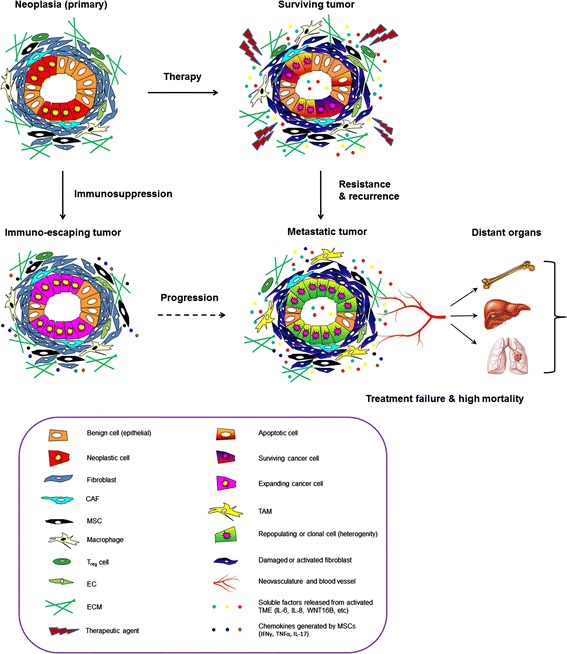
The tumor microenvironment (TME) is being increasingly recognized as a key factor in multiple stages of disease progression, particularly local resistance, immune-escaping, and distant metastasis, thereby substantially impacting the future development of frontline interventions in clinical oncology. An appropriate understanding of the TME promotes evaluation and selection of candidate agents to control malignancies at both the primary sites as well as the metastatic settings. This review presents a timely outline of research advances in TME biology and highlights the prospect of targeting the TME as a critical strategy to overcome acquired resistance, prevent metastasis, and improve therapeutic efficacy. As benign cells in TME niches actively modulate response of cancer cells to a broad range of standard chemotherapies and targeted agents, cancer-oriented therapeutics should be combined with TME-targeting treatments to achieve optimal clinical outcomes. Overall, a body of updated information is delivered to summarize recently emerging and rapidly progressing aspects of TME studies, and to provide a significant guideline for prospective development of personalized medicine, with the long term aim of providing a cure for cancer patients.
Overview
The claims and statistics of this paper haven’t been checked yet.
Free: it reads the open-access text and checks the first 5 claims that cite a source we can check. Create a free account to check every claim.
Integrity signals
Registry
Cites
Statistics
Figures
Verification
Claims the paper makes
The claims and statistics of this paper haven’t been checked yet.
Free: it reads the open-access text and checks the first 5 claims that cite a source we can check. Create a free account to check every claim.
Claims other papers make about this one
Each is checked against this paper’s own text: does it say what the citing paper says it does?
The cited source says what the claim attributes to it.
In the citing paper
“As a result, solid tumors are inherently heterogeneous and structurally complex [18].”
From Microfluidic modelling of the tumor microenvironment for anti-cancer drug development (2019) · cites this paper as [18]
Self-check
Percentages, sums and reported differences re-computed from the paper’s own numbers.
The self-check needs the paper’s full text.
Citations
Cites
PD-1 and PD-L1 Immune Checkpoint Blockade to Treat Breast Cancer
Hartkopf, A. D., Taran, F.-A., Wallwiener, M., Walter, C. B., Krämer, B., Grischke, E.-M., & Brucker, S. Y. (2016) · Breast Care · doi:10.1159/000453569 · Cited by 30,845
The blockade of immune checkpoints in cancer immunotherapy
Pardoll, D. M. (2012) · Nature Reviews Cancer · doi:10.1038/nrc3239 · Cited by 13,838 · cited 1×
“For example, T cell activation involves both positive and negative checkpoint signals to finely tune responses to prevent excessive pathological changes [17,18].”
BackgroundMicroenvironmental regulation of tumor progression and metastasis
Quail, D. F., & Joyce, J. A. (2013) · Nature Medicine · doi:10.1038/nm.3394 · Cited by 7,994 · cited 1×
“Tumor dormancy is regulated by several mechanisms, driven partially by the TME, including cellular dormancy (cells arrested in G0), tumor mass dormancy (proliferation refrained by apoptosis), or immune dormancy (an equilibrium maintained by immunosurveillance) [92].”
BackgroundThe distribution of secondary growths in cancer of the breast.
Paget, S. (1889) · The Lancet · doi:10.1016/s0140-6736(00)49915-0 · Cited by 5,277
The immune contexture in human tumours: impact on clinical outcome
Fridman, W. H., Pagès, F., Sautès-Fridman, C., & Galon, J. (2012) · Nature reviews. Cancer · doi:10.1038/nrc3245 · Cited by 4,981 · cited 2×
“For instance, when defining predictive markers that will eventually aid in the selection of patients who most likely benefit from intervention, analysis based on the entire TME is an essential step of utmost importance to determine specific therapies to employ [17,103,104].”
BackgroundCancer drug resistance: an evolving paradigm
Holohan, C., Van Schaeybroeck, S., Longley, D. B., & Johnston, P. G. (2013) · Nature Reviews Cancer · doi:10.1038/nrc3599 · Cited by 4,681 · cited 1×
“TME-mediated resistance can be initiated by multiple cell lineages and structural components in the stroma, including but not limited to fibroblasts, endothelial cells, pericytes, smooth muscle cells, neutrophils, macrophages, integrins, fibronectins, and collagens [26,30].”
BackgroundTumor-Associated Macrophages: From Mechanisms to Therapy
Noy, R., & Pollard, J. W. (2014) · Immunity · doi:10.1016/j.immuni.2014.06.010 · Cited by 4,089 · cited 1×
“Furthermore, type II tumor-associated macrophages (TAMs) drastically affect tumorigenesis, angiogenesis, and intravasation, and can prevent immune attack by natural killer (NK) and T cells during tumor development and after recovery from chemo- and/or immunotherapy [23].”
BackgroundTumor Metastasis: Molecular Insights and Evolving Paradigms
Valastyan, S., & Weinberg, R. A. (2011) · Cell · doi:10.1016/j.cell.2011.09.024 · Cited by 4,011 · cited 2×
“Metastasis accounts for approximately 90% of overall mortality among solid tumor patients [78].”
BackgroundMelanoma exosomes educate bone marrow progenitor cells toward a pro-metastatic phenotype through MET
Peinado, H., Alečković, M., Lavotshkin, S., Matei, I., Costa-Silva, B., Moreno-Bueno, G., Hergueta-Redondo, M., Williams, C., García-Santos, G., Ghajar, C. M., et al. (2012) · Nature Medicine · doi:10.1038/nm.2753 · Cited by 3,715 · cited 1×
“As supporting evidence, several studies demonstrated that exosomes derived from BM-MSCs can induce progenitor cells to undergo mesenchymal-to-epithelial transition (MET), indicating active message delivery between cancer cells and the bone marrow TME [72,73].”
Cancer stem cells in solid tumours: accumulating evidence and unresolved questions
Visvader, J. E., & Lindeman, G. J. (2008) · Nature Reviews Cancer · doi:10.1038/nrc2499 · Cited by 3,429 · cited 1×
“In such cases, CSCs represent the potential source of eventual tumor relapse following therapy, which are typically therapy-resistant due to decreased oxidative stress response, increased genomic stability, and expression of multiple drug resistance transporters [35].”
BackgroundInfluential
Research works printed but not linked: 1
- Paget S The distribution of secondary growths in cancer of the breast. 1889 Canc Metastasis Rev 1989 8 98 101 2673568
Cited by
Items 501–600 of 723
Zhuo, Y., Feng, X., Zhang, W., Du, J., Sun, X. D., Luo, X., Wang, W. T., Jiang, H., & Gu, H. (2025) · Journal of Translational Medicine · doi:10.1186/s12967-025-06752-4 · Cited by 5
“…a variety of cellular and non-cellular components, including immune cells, fibroblasts, vascular structures, and the extracellular matrix, and is now recognized as a critical regulator of tumor behavior, It significantly impacts tumor growth, invasion, metastasis, and treatment resistance [16–18].”
Fan, S., Li, B., Chen, Q., & Midia, M. (2018) · American Journal of Roentgenology · doi:10.2214/ajr.16.17677 · Cited by 6
Huang, B., Deng, W., Chen, P., Mao, Q., Chen, H., Zhuo, Z., Huang, Z., Chen, K., Huang, J., & Luo, Y. (2022) · Translational Cancer Research · doi:10.21037/tcr-22-607 · Cited by 5
“TME is recognized as a hotbed of tumor cells and consists of cell types such as tumor cells, endothelial cells, stromal cells, and immune cells and is a critical factor in multiple stages of tumor progression (16).”
Neurovascular Interactions in the Development of the Vasculature
Takara, K., Hayashi-Okada, Y., & Kidoya, H. (2022) · Life · doi:10.3390/life13010042 · Cited by 5
“In the TME, neuronal factors promote angiogenesis and tumour growth by acting on vascular endothelial cells.”
BackgroundInfluentialGong, M., Feng, S., Zhou, D., Luo, J., Lin, T., Qiu, S., Yuan, R., & Dong, W. (2023) · European journal of medical research · doi:10.1186/s40001-023-01422-x · Cited by 5
“In recent years, the tumor microenvironment (TME) has gained much attention and is considered to be a key factor affecting treatment resistance, tumor development and prognosis [30–32].”
BackgroundApplication of Nanomedicine in Tumor Targeting Inflammatory Pathway
Tan, F., Du, Z., Zhong, J., Wu, Y., Mou, J., Zhao, F., Liu, Y., Chen, J., Liang, Z., Zhou, Y., et al. (2024) · Current Medicinal Chemistry · doi:10.2174/0109298673277325231229093344 · Cited by 5
Teltsh, O., Porgador, A., & Rubin, E. (2015) · Oncotarget · doi:10.18632/oncotarget.5052 · Cited by 5
“Intimate interactions between the different cells of the microenvironment and the malignant cells greatly affect tumor development [5].”
Tipping Tumor Microenvironment against Drug Resistance
Chen, D., & Zhang, X. (2017) · Journal of Oncology Translational Research · doi:10.4172/2476-2261.1000106 · Cited by 7
“In this sense, the stromal cells within neoplastic tissues should thus be more susceptible to various therapeutic interventions, underscoring a rationale to target components in TME beyond cancer cells [12].”
BackgroundInfluentialCancer Stem Complex, Not a Cancer Stem Cell, Is the Driver of Cancer Evolution
Sverdlov, E. D., & Чернов, И. П. (2019) · Biochemistry (Moscow) · doi:10.1134/s0006297919090050 · Cited by 5
Fetal exposure to oncoantigen elicited antigen-specific adaptive immunity against tumorigenesis
Chen, J., Ou, L.-S., Kuo, M., Tseng, L.-Y., & Chang, H. (2020) · Journal for ImmunoTherapy of Cancer · doi:10.1136/jitc-2019-000137 · Cited by 5
Seminal Vesicle Tumor Microenvironment
Cimadamore, A., Montironi, R., Serni, S., & Campi, R. (2020) · Advances in experimental medicine and biology · doi:10.1007/978-3-030-59038-3_19 · Cited by 5
Chen, J., Wang, D., Chan, S., Yang, Q., Wang, C., Wang, X., Sun, R., Gui, Y., Yu, S., Yang, J., et al. (2023) · Aging · doi:10.18632/aging.204748 · Cited by 5
“The TME is consisting of stromal fibroblasts, infiltrating immune cells, blood vessels, lymphatics, and a noncellular component, such as the extracellular matrix (ECM) [36].”
Yin, X., Jiang, Y., Huang, J., Luo, J., Xu, L., & Yang, Q. (2025) · Frontiers in Immunology · doi:10.3389/fimmu.2025.1587947 · Cited by 5
Parvez, A., Rahman, M. A., Shimki, A. I., Biswas, P., Hasan, M. H., Imtiaz, M., Sultana, A., Islam, S., Faraque, A., Amin, M. F., et al. (2025) · Chemistry & Biodiversity · doi:10.1002/cbdv.202501413 · Cited by 5
Liu, Y., Wang, F., Deng, Y., Hu, Y., Shu, F., Jie, Y., Gou, G., Wen, M., Luo, C., Lu, X., et al. (2026) · International Journal of Molecular Medicine · doi:10.3892/ijmm.2026.5763 · Cited by 4
“…exhibit anti‑cancer potential, producing pro‑inflammatory cytokines such as IL‑6, IL‑8, IL‑12 and TNF‑ α , which collectively inhibit tumor growth (65,66). conversely, M2‑polarized macrophages secrete anti‑inflammatory cytokines such as IL‑4, IL‑10 and IL‑13, which are key for tumor progression,…”
Feng, X., Zhang, Y., Bajinka, O., Ouédraogo, S. Y., Zhang, Y., Li, N., & Zhan, X. (2026) · Journal of Ovarian Research · doi:10.1186/s13048-026-02050-9 · Cited by 5
“Concurrently, an abnormal vascular network supplies the tumor with oxygen, nutrients, and growth factors, while immune cells facilitate tumor immune escape through immuno-suppressive mechanisms [4].”
New insights into the role of circular RNAs in ovarian cancer
Xing, Y., Liang, X., Lv, X., Cheng, Y., Du, J., Liu, C., & Yang, Y. (2022) · Pathology - Research and Practice · doi:10.1016/j.prp.2022.154073 · Cited by 4
Anti-inflammatory and anti-cancer potential of pterostilbene: A review
Surien, O., Masre, S. F., Basri, D. F., & Ghazali, A. R. (2023) · Asian Pacific Journal of Tropical Biomedicine · doi:10.4103/2221-1691.391155 · Cited by 5
Global Literature Analysis of Tumor Organoid and Tumor-on-Chip Research
Shoji, J., Davis, R. P., Mummery, C. L., & Krauss, S. J. K. (2025) · Cancers · doi:10.3390/cancers17010108 · Cited by 5
Liu, S., Li, M., Guo, Z., & Chen, Z. (2025) · Strahlentherapie und Onkologie · doi:10.1007/s00066-025-02385-0 · Cited by 5
“The tumor microenvironment (TME) is composed of the extracellular matrix (ECM), immune cells, and stromal cells [50].”
Role of CD8 Cytotoxic T Lymphocytes in Hepatocellular Carcinoma: An Immunohistochemical Study
ASMAA G. ABDOU, M. D. ;. H. S. E.-R., HOLAH, M. D. M. S. S. N. S., & Ibrahim, S. H. (2019) · The Medical Journal of Cairo University/The Medical Journal of Cairo University · doi:10.21608/mjcu.2019.76624 · Cited by 4
Schweiger, M. W., & Tannous, B. A. (2020) · Advanced Biosystems · doi:10.1002/adbi.202000035 · Cited by 4
Drug Delivery Applications of Peptide Materials
Hamsici, S., Gunay, G., Kirit, H. A., Kamatar, A., Loving, K., & Acar, H. (2020) · Royal Society of Chemistry eBooks · doi:10.1039/9781839161148-00291 · Cited by 4
Cysteine Cathepsins: Structure, Physiological Functions, and the Role in Carcinogenesis
Gureeva, T. A., Timoshenko, O. S., Kugaevskaya, E. V., & Solovyeva, N. I. (2022) · Biochemistry (Moscow) Supplement Series B Biomedical Chemistry · doi:10.1134/s1990750822020056 · Cited by 4
The prospective potential of fluoroquinolones as anticancer agents
AbuBaih, R., Fawzy, M. A., & Nazmy, M. (2023) · Journal of Modern Research · doi:10.21608/jmr.2022.166535.1094 · Cited by 4
“Unfortunately, the genotoxic characteristics of the current chemotherapy in use or acquired resistance provide challenges (36).”
Recent Developments in the Study of the Microenvironment of Cancer and Drug Delivery
Chaudhary, B., Kumar, P., Arya, P., Singla, D., Kumar, V., Kumar, D., Roshan, S., Wadhwa, S., Gulati, M., Singh, S. K., et al. (2022) · Current Drug Metabolism · doi:10.2174/1389200224666230110145513 · Cited by 5
Zhou, L., Lu, M., Zhong, W., Junhou, Y., Yin, Y., Li, M., Li, D., Zhang, S., & Xu, M. (2019) · European Journal of Pharmaceutical Sciences · doi:10.1016/j.ejps.2019.105163 · Cited by 4
Advances in culture methods for acute myeloid leukemia research
Krishnapriya, S., Hassan, E. M., & Zou, S. (2021) · Oncoscience · doi:10.18632/oncoscience.540 · Cited by 4
Modelling stromal compartments to recapitulate the ameloblastoma tumour microenvironment
Bakkalci, D., Zubir, A. Z. A., Khurram, S. A., Pape, J., Heikinheimo, K., Fedele, S., & Cheema, U. (2022) · Matrix Biology Plus · doi:10.1016/j.mbplus.2022.100125 · Cited by 4
Hou, H., Wu, Y., Guo, J., Zhang, W., Wang, R., Yang, H., & Wang, Z. (2023) · Immunobiology · doi:10.1016/j.imbio.2023.152355 · Cited by 4
Iwata, M., Haraguchi, R., Kitazawa, R., Ito, C., Ogawa, K., Takada, Y., & Kitazawa, S. (2024) · Journal of Cellular and Molecular Medicine · doi:10.1111/jcmm.18193 · Cited by 4
5.17 Three-Dimensional Bioengineered Cancer Models
Pereira, B., Lister, N. L., De‐Juan‐Pardo, E. M., Risbridger, G. P., & Ellem, S. J. (2016) · Elsevier eBooks · doi:10.1016/b978-0-12-803581-8.09297-3 · Cited by 5
Bulutay, P., Firat, P., Zeren, E. H., Erus, S., Tanju, S., & Dilege, Ş. (2020) · TURKISH JOURNAL OF MEDICAL SCIENCES · doi:10.3906/sag-2004-61 · Cited by 4
Xin, Z., Wen, X., Zhou, M., Lin, H., & Liu, J. (2024) · Aging · doi:10.18632/aging.205482 · Cited by 4
Comprehensive bioinformatics analysis of human cytomegalovirus pathway genes in pan-cancer
Yan, T., Pang, X., Liang, B., Meng, Q., Wei, H., Li, W., Liu, D., & Hu, Y. (2024) · Human Genomics · doi:10.1186/s40246-024-00633-5 · Cited by 3
“The tumor immune microenvironment represents a highly complex system that is pivotal in driving immunosuppression, distant metastasis, local drug resistance, and response to targeted therapies [70– 73].”
BackgroundThijssen, M. S., Massen, M., van der Meer, J. R. M., Gijbels, M. J., Samarska, I. V., van Engeland, M., Weijenberg, M. P., van den Brandt, P. A., Smits, K. M., Boesmans, W., et al. (2025) · Journal of Neuropathology & Experimental Neurology · doi:10.1093/jnen/nlaf067 · Cited by 3
Nutritional modulation of metabolic signaling within the tumor microenvironment for cancer therapy
Aghdam, M. M., Rezagholizadeh, L., Fazaeli, A., Moradi, A., & Ojarudi, M. (2026) · Molecular and Cellular Biochemistry · doi:10.1007/s11010-025-05462-1 · Cited by 5
DANEELpath open source digital analysis tools for histopathological research in neuroblastoma models
Vieco-Martí, I., López-Carrasco, A., Navarro, S., Granados-Aparici, S., & Noguera, R. (2026) · Scientific Reports · doi:10.1038/s41598-026-37134-5 · Cited by 3
“Within the TME, the Extracellular Matrix (ECM) forms a complex network of fibrillar proteins, glycoproteins, and proteoglycans in cells to connect the cytoskeleton 7,8 .”
Antibody-nanoparticle conjugates for precision targeting of immunosuppressive tumor microenvironment
Fattahi, A. S., Jafari, M., Farahavar, G., Haghighi, E., Abolmaali, S. S., & Tamaddon, A. M. (2026) · Critical Reviews in Oncology/Hematology · doi:10.1016/j.critrevonc.2026.105219 · Cited by 4
Mishra, K., Puthli, A., & Tiwari, R. (2016) · Journal of Radiation and Cancer Research · doi:10.4103/jrcr.jrcr_7_17 · Cited by 3
Alladin, A., & Jechlinger, M. (2017) · Current Opinion in Systems Biology · doi:10.1016/j.coisb.2017.10.004 · Cited by 4
Tang, S., Sun, R., Tang, K., Xiang, W., Liu, M., & Zhang, H. (2023) · Clinical & Translational Oncology · doi:10.1007/s12094-023-03363-7 · Cited by 3
“The TME encompasses a diverse array of components, including lymphatics, stromal fibroblasts, blood vessels, infiltrating immune cells, and noncellular components like ECM [41].”
BackgroundThe microbiome and lung cancer: microbial effects on host immune responses and treatment outcomes
Bailey, A., Leuther, K. K., & Robinson, L. A. (2025) · Frontiers in Microbiomes · doi:10.3389/frmbi.2025.1606551 · Cited by 5
“Cytotoxicity is mediated by production of effectors, like IFN-g , through the advancement of tumor intrinsic pathways (Wellenstein and de Visser, 2018), by interacting with immune cells, and by interacting with the tumor stroma within the tumor microenvironment (Chen et al., 2015).”
Cancer-associated fibroblasts as a potential therapeutic target for thyroid cancers
Chakraborty, K., Rajendran, R. L., Kothiwal, S., Majhi, S., Dey, A., Ghosh, S., Chowdhury, A., Dhara, C., Batabyal, R., Biswas, S., et al. (2025) · International Journal of Surgery · doi:10.1097/js9.0000000000003352 · Cited by 3
“…to the interstitial environment around tumor cells, which includes not only the ECM, blood vessels, and factors, such as cytokines and growth factors, which affect tumor development, but also many kinds of cells, such as fibroblasts, immune cells, endothelial cells, and adipocytes [ 26 , 27 ] .”
Ovarian Cancers: Their Varied Origins and Pathologically Implicated Microenvironment
Sun, Y., & Auersperg, N. (2018) · Elsevier eBooks · doi:10.1016/b978-0-12-813209-8.00032-7 · Cited by 3
Self-citationImmunotherapy for HER2-Positive Breast Cancer: Changing the Paradigm
Soberino, J., Racca, F., Pérez-García, J. M., García‐Fernández, L., & Cortés, J. (2019) · Current Breast Cancer Reports · doi:10.1007/s12609-019-00332-4 · Cited by 4
Surikova, E. I., Goroshinskaja, I. A., Nerodo, G. A., Frantsiyants, E. M., Malejko, M. L., Shalashnaya, E. V., Kachesova, P. S., Nemashkalova, L. A., & Leonova, A. (2016) · Biochemistry (Moscow) Supplement Series B Biomedical Chemistry · doi:10.1134/s1990750816040089 · Cited by 3
Zhou, X., Aikemu, B., Li, S., Shao, Y., Jia, H., Huang, L., Hong, H., Zhang, S., Tang, Q., Pan, R., et al. (2022) · Frontiers in Genetics · doi:10.3389/fgene.2022.962575 · Cited by 4
Hua, H., Zheng, C., Fan, J., Li, X., Xie, W., Chen, J., & Yu, C. (2022) · BioMed Research International · doi:10.1155/2022/1916787 · Cited by 3
“TME is mostly made up of nonmalignant cells of the tumor such as immune cells, granulocytes, lymphocytes, and macrophages, which engage in a variety of immune responses and activities, and the ECM establishes a sophisticated link with tumor [40].”
Moeinzadeh, L., Ramezani, A., Mehdipour, F., Yazdanpanah‐Samani, M., & Razmkhah, M. (2023) · BioMed Research International · doi:10.1155/2023/7692726 · Cited by 3
Intercellular competitive growth dynamics with microenvironmental feedback
Liu, D., Wu, Z.-X., & Guan, J. (2023) · Physical review. E · doi:10.1103/physreve.108.054105 · Cited by 4
Radiogenomic landscape: Assessment of specific phagocytosis regulators in lower-grade gliomas
Maimaiti, A., Abulaiti, A., Tang, B., Dilixiati, Y., Li, X., Yakufu, S., Wang, Y., Jiang, L., & Shao, H. (2023) · Experimental Biology and Medicine · doi:10.1177/15353702231211939 · Cited by 3
“53 Even though the detected PRs-cluster can successfully predict the prognosis of LGG patients, the underlying transcriptome alterations in these subtypes are unknown.”
BackgroundSelf-citationSakr, T. M., Elsabagh, M. F., Fayez, H., Sarhan, M. O., Syam, Y. M., Anwar, M. M., Motaleb, M. A., & Zaghary, W. A. (2023) · DARU Journal of Pharmaceutical Sciences · doi:10.1007/s40199-023-00487-7 · Cited by 5
“While enhanced permeability and retention (EPR) effect describes this type of cancer tissue phenomena [2, 5–8].”
BackgroundZhou, J., Zhang, M., Wang, H., Zhong, X., & Yang, X. (2024) · Archives of Microbiology · doi:10.1007/s00203-024-03908-6 · Cited by 4
“It also includes immune cells, such as B and T cells, tumor-associated macrophages[TAMs], and natural killer cells(Chen et al. 2015).”
Modern concepts of the mycosis fungoides pathogenesis
Vorontsova, A. A., Karamova, A. Е., & Znamenskaya, L. F. (2018) · Oncohematology · doi:10.17650/1818-8346-2018-13-3-39-46 · Cited by 3
Prognostic Impact of Stromal Profiles Educated by Gastric Cancer
Takahashi, K., Shoda, K., Takiguchi, K., Higuchi, Y., Matsuoka, K., Nakayama, T., Saito, R., Maruyama, S., Nakata, Y., Furuya, S., et al. (2023) · Annals of Surgical Oncology · doi:10.1245/s10434-023-14522-z · Cited by 3
López-Carrasco, A., Parra-Haro, K., Vieco-Martí, I., Granados-Aparici, S., Díaz‐Martín, J., Salguero‐Aranda, C., Acevedo-León, D., de Álava, E., Navarro, S., & Noguera, R. (2024) · Cancers · doi:10.3390/cancers16193347 · Cited by 2
“Within the TME, the extracellular matrix (ECM) forms a complex network of fibrillar proteins, glycoproteins, and proteoglycans, which act as the scaffold for cellular embedding [10,11].”
BackgroundVarmazyari, S., Borhani, H., Moradipour, Z., Ziaei, H., & Rezaei, N. (2025) · Advances in experimental medicine and biology · doi:10.1007/978-3-032-03176-1_18 · Cited by 3
Immunosenescence and Cutaneous Malignancies
Cheng, J. Y., & Colegio, O. R. (2017) · Springer eBooks · doi:10.1007/978-3-319-68790-2_10 · Cited by 2
Baurain, J., Robert, C., Mortier, L., Neyns, B., Grange, F., Lebbé, C., Ulloa‐Montoya, F., Alves, P. M., Gillet, M., Louahed, J., et al. (2018) · ESMO Open · doi:10.1136/esmoopen-2018-000384 · Cited by 2
Targeting the Tumor Microenvironment to Overcome Resistance to Therapy
Qorri, B., & Szewczuk, M. R. (2019) · Resistance to targeted anti-cancer therapeutics · doi:10.1007/978-3-030-21477-7_2 · Cited by 2
A history of exploring cancer in context
Maman, S., & Witz, I. P. (2018) · Nature Reviews Drug Discovery · doi:10.1038/s41573-018-0024-x · Cited by 5
Wisdom Of The Crowd For Early Detection In Barrett’s Esophagus
Law, J. J., Paulson, T. G., Sanchez, C. A., Galipeau, P. C., Jansen, M., Stachler, M. D., Maley, C. C., & Yuan, Y. (2021) · IEEE International Symposium on Biomedical Imaging (ISBI) · doi:10.1109/isbi48211.2021.9433763 · Cited by 2
“Digital pathology presents a method to characterize and study tissue microenvironments (TME), which have been demonstrated to play an important role in cancer progression and treatment outcomes [4].”
MethodBusuioc, C.-I., Bîrlă, R., Mitrea, M., Ardeleanu, C. M., Panaitescu, E., Enache, S., & Iosif, C. (2022) · Chirurgia · doi:10.21614/chirurgia.2738 · Cited by 2
“The tumor microenvironment consists of mesenchymal stromal cells, blood vessels, and lymphatic and immune cells (macrophages, T-cells, B-cells, and NK-cells) (22) and it is involved in all the aspects of cancer progression (23).”
BackgroundFei, L., Lu, Z., Xu, Y., & Hou, G. (2022) · Frontiers in Genetics · doi:10.3389/fgene.2022.920897 · Cited by 2
“The tumor microenvironment (TME) encompasses tumor cells, immune cells, and stromal cells; it is affected by various factors including cytokines, reactive oxygen species, extracellular Matrix, metabolites, and inflammation (Chen et al., 2015; Balta et al., 2021).”
BackgroundVesuna, F., Penet, M., Mori, N., Bhujwalla, Z. M., & Raman, V. (2022) · Molecular and Cellular Biochemistry · doi:10.1007/s11010-022-04555-5 · Cited by 2
“There is significant interest as to how molecular alterations to the tumor microenvironment contribute to therapeutic efficacy, drug resistance, as well as predict clinical outcome [42].”
BackgroundFocused ultrasound therapy in cancer care
Romano, G., Ventura, E., Abraham, K. S., Cersosimo, F., & Giordano, A. (2022) · Annals of Research in Oncology · doi:10.48286/aro.2022.56 · Cited by 2
Huo, H., Feng, Y., & Tang, Q. (2024) · Molecular and Cellular Probes · doi:10.1016/j.mcp.2024.101971 · Cited by 2
Upadhyay, P., Goel, R., Gulwani, D., Sarangthem, V., & Singh, T. D. (2024) · Advanced Therapeutics · doi:10.1002/adtp.202400192 · Cited by 2
Neuroscience of cancer: Research progress and emerging of the field
AbuQeis, I., Zou, Y., Ba, Y., & Teeti, A. A. (2024) · Ibrain · doi:10.1002/ibra.12172 · Cited by 3
“Chen et al. 46 Extracellular matrix, fibroblasts, adipose cells, immune ‐ inflammatory cells, blood, and lymphatic vascular networks, all are contents of the tumor microenvironment which belong to tumor initiation, progression, and metastasis.”
BackgroundInfluentialAdams, D. L., & Cristofanilli, M. (2017) · Cancer drug discovery and develogment/Cancer drug discovery and development · doi:10.1007/978-3-319-50956-3_5 · Cited by 3
Single-Cell Multiomics: Dissecting Cancer
Sambath, J., Patel, K., Limaye, S. A., & Kumar, P. (2020) · Algorithms for intelligent systems · doi:10.1007/978-981-15-2445-5_14 · Cited by 2
Reprogramming of Tumor Microenvironment in Therapy
Jarosz–Biej, M., Smolarczyk, R., Cichoń, T., & Szala, S. (2020) · Springer eBooks · doi:10.1007/978-3-030-50287-4_22 · Cited by 3
Cancer research driven by cutting-edge multi-disciplinary technologies
Lyu, Q., Feng, Y., Shi, R., Wu, J., & Han, W. (2020) · Chinese Science Bulletin (Chinese Version) · doi:10.1360/tb-2020-0638 · Cited by 2
Obstructions in Nanoparticles Conveyance, Nano-Drug Retention, and EPR Effect in Cancer Therapies
Fakhri, K. U., Sultan, A., Mushtaque, M., Hasan, M. R., Nafees, S., Hafeez, Z. B., Zafaryab, M., Rizwanullah, M., Sharma, D., Bano, F., et al. (2020) · Advances in medical diagnosis, treatment, and care (AMDTC) book series · doi:10.4018/978-1-7998-6530-8.ch026 · Cited by 2
Nanomedicines for Solid Tumors: Current Status, Challenges, and Future Prospects
Gopi, J., Gopinath, M., Banerjee, A., Rupert, S., Vennila, R., & Pathak, S. (2021) · Springer eBooks · doi:10.1007/978-981-15-7564-8_4 · Cited by 2
Elsabagh, M. F., Sakr, T. M., fayez, M., Zaghary, W. A., & Fayez, H. (2021) · Egyptian Journal of Chemistry · doi:10.21608/ejchem.2021.85086.4150 · Cited by 2
Study of the neutralization of cell multiplication, in vitro, with Botulinum Neurotoxin Type A
Rodrigues, A. N., & Duarte, A. (2021) · International Journal of Advanced Engineering Research and Science · doi:10.22161/ijaers.88.43 · Cited by 2
Zhao, S., Peng, M., Wang, Z., Cao, J., Zhang, X., Yu, R., Huang, T., & Lian, W. (2022) · Disease Markers · doi:10.1155/2022/1014347 · Cited by 2
“Currently, the tumor microenvironment (TME), consisting of extracellular matrix, stromal cells, and tumor-in fi ltrating immune cells, is known to be involved in cancer development, distant metastasis, and immune escape [7].”
Kamran, N., Alam, S., Nasir, S., Ali, K., Bakhtiar, S., Khurshid, A., & Ullah, I. (2022) · Pakistan Journal of Medical and Health Sciences · doi:10.53350/pjmhs22167630 · Cited by 2
Tumor-immune trajectory context connects static tissue architecture to clinical outcomesPreprint
Cramer, E. M., Heiland, R. W., da Rocha, H. L., Bergman, D. R., Gray, J. W., Mills, G. B., Fertig, E. J., Macklin, P., Heiser, L. M., & Chang, Y. H. (2026) · bioRxiv (Cold Spring Harbor Laboratory) · doi:10.64898/2026.03.26.714521 · Cited by 2
“3,4 11 In triple-negative breast cancer (TNBC), for example, architectures of immune infiltration and measures of cell-cell interactions between tumor and immune cells have been linked to prognosis and immunotherapy response.”
Shu, Y., Huang, H., Gao, M., Xu, W., Cao, X. G., Jia, X., & Deng, B. (2023) · Biochemical Genetics · doi:10.1007/s10528-023-10457-y · Cited by 3
“The immune microenvironment has a close correlation with the survival rate of various tumor patients (Chen et al. 2015; Quail and Joyce 2013).”
BackgroundPrognostic value of cancer-associated fibroblasts-related genes in lung adenocarcinoma
Li, W., & Shi, S. (2023) · Translational Cancer Research · doi:10.21037/tcr-23-199 · Cited by 1
ALMatrafi, T. A. (2026) · Biochemistry and Biophysics Reports · doi:10.1016/j.bbrep.2026.102446 · Cited by 2
Dai, Y., Luo, X., Wu, H., Luo, Y., Deng, Z., Wu, J., Zhang, L., & Yan, J. (2026) · Discover Oncology · doi:10.1007/s12672-026-04546-8 · Cited by 2
“The tumor microenvironment (TME) is a complex ecosystem composed of various components, including immune cells, fibroblasts, endothelial cells, blood vessels, extracellular matrix, and soluble molecular factors such as chemokines and cytokines [15].”
Engineered MSCs enable bone marrow-targeted immunomodulation
Xu, S., Xu, J., Yang, Q., Zeng, J., Zhang, M., Wu, Y., Liu, Z., Wang, Q., You, Q., & Zhang, S. (2026) · Cell stem cell · doi:10.1016/j.stem.2026.03.003 · Cited by 1
Physiologically relevant 3D tumor models for therapeutic screening
Xie, R., Yang, J., Lu, X., Liu, F., Dey, M., Kaur, N., Peng, W., & Ozbolat, I. T. (2026) · Biomaterials · doi:10.1016/j.biomaterials.2026.124231 · Cited by 1
Saha, S., Chakraborty, S., & Nayak, A. (2026) · Critical Reviews in Oncology/Hematology · doi:10.1016/j.critrevonc.2026.105345 · Cited by 1
Shi, Z., Hu, C., & Sun, C. (2026) · Biomolecules · doi:10.3390/biom16060777 · Cited by 2
“The TME is central to tumor progression, immune evasion, and treatment response [6,7].”
Targeting the tumor microenvironment and mitochondrial dynamics: A theranostic frontier in cancer
Kumar, U., Tyagi, L., & Ghosh, K. (2026) · Tumor Discovery · doi:10.36922/td026010002 · Cited by 1
Gu, X., Fang, Q., Yu, J., Yu, T., Shi, H., Jin, K., Jiang, L., & Zhang, W. (2026) · Advanced Science · doi:10.1002/advs.202508001 · Cited by 1
Imaging-driven Digital Biomarkers
Capobianco, E. (2016) · Cancer translational medicine · doi:10.4103/2395-3977.181440 · Cited by 1
Introduction to Ex Vivo Cancer Models
Jenkins, R. W. (2016) · Cancer drug discovery and develogment/Cancer drug discovery and development · doi:10.1007/978-3-319-45397-2_1 · Cited by 1
Diffuse Low-Grade Glioma Associated Stem Cells
Caponnetto, F., Beltrami, A. P., Ius, T., Škrap, M., & Cesselli, D. (2017) · Springer eBooks · doi:10.1007/978-3-319-55466-2_9 · Cited by 2
Role of Kruppel-like Factor 8 (KLF8) in Cancer and Cardiomyopathy
Lahiri, S. K. (2016) · STARS (University of Central Florida) · Cited by 1
The activity of redox-regulatory systems in the primary and recurrence tumors in vulvar cancer
Surikova, E. I., Goroshinskaya, I. A., Frantsiyants, E. M., Shalashnaya, E. V., Nerodo, G. A., Neskubina, I. V., Kachesova, P. S., Nemashkalova, L. A., & Викторовна, Ч. А. (2017) · Biomeditsinskaya Khimiya · doi:10.18097/pbmc20176304321 · Cited by 1
Cell Metabolism in Cancer: An Energetic Switch
de Castro, I. P. (2019) · Learning materials in biosciences · doi:10.1007/978-3-030-11812-9_6 · Cited by 2
Circulating Biomarkers in Patients with Head and Neck Cancer and the Influence of Cigarette Smoking
Andersson, B. (2019) · Linköping University medical dissertations · doi:10.3384/diss.diva-162097 · Cited by 1
Adiponectin in Gastrointestinal Malignancies
Farran, B., Atiquah, I. Z., & Park, D. (2020) · Diagnostics and therapeutic advances in GI malignancies · doi:10.1007/978-981-15-5471-1_3 · Cited by 1
The use of immunotherapy for treatment of chemoresistant ovarian cancer
Agyemang, A. F., & Odunsi, K. O. (2020) · Elsevier eBooks · doi:10.1016/b978-0-12-819840-7.00004-2 · Cited by 1
Metadata
- Authors
- Chen, F., Zhuang, X., Lin, L., Yu, P., Wang, Y., Shi, Y., Hu, G., & Sun, Y.
- Affiliations
- Shanghai Jiao Tong University (CN)
- Corresponding author
- Sun, Yu
- Venue
- BMC Medicine
- Published
- 2015-03-05
- Volume
- 13
- Issue
- 1
- Pages
- 45-45
- ISSN
- 1741-7015 (ISSN-L)
- PMC
- PMC4350882
- OpenAlex
- W2127686099
- Semantic Scholar
- b55be59deaf313855dba891ef8ed0f4aadc7f777
- Cited by
- 704
- References
- 105
- Citations by year
- 2026: 24 · 2025: 49 · 2024: 63 · 2023: 76 · 2022: 79 · 2021: 98 · 2020: 83 · 2019: 65 · 2018: 64 · 2017: 47 · 2016: 37 · 2015: 19
- FWCI
- 5.99
- Type
- journal article
- Language
- en
- Open access
- gold
- doi.org
- Locations
- BMC Medicine (publishedVersion, cc-by)
- Europe PMC (PubMed Central) (publishedVersion, cc-by)
- PubMed Central (publishedVersion, cc-by)
- PubMed (publishedVersion)
- Funders
- U.S. Department of Defense (PC111703)
- University of Washington (WA 98195)
- National Natural Science Foundation of China (81330046, 81472709, 31371409)
- Chinese Academy of Sciences (215123, XDA01040107, XDA01040110)
- Soochow University (215123)
- Shanghai Rising-Star Program
- Directorate for Biological Sciences
- School of Medicine, Shanghai Jiao Tong University
- Congressionally Directed Medical Research Programs
- Topics
- Health Sciences › Medicine › Oncology › Cancer Cells and Metastasis
- Health Sciences › Medicine › Oncology › Cancer Immunotherapy and Biomarkers
- Life Sciences › Biochemistry, Genetics and Molecular Biology › Cancer Research › Cancer, Hypoxia, and Metabolism
- Keywords
- tumor microenvironment, acquired drug resistance, immune evasion, metastasis, cancer immunotherapy, chemoresistance, personalized medicine, cancer therapy
- MeSH terms
- Humans, Medical Oncology, Neoplasms, Tumor Microenvironment
About these checks
Registry, retraction, Cites and statistics results are computed, not judged, with one exception: a printed reference that no index lists is read once by a model before it counts as a citation error. Claims are extracted by a model and kept only when their quote appears verbatim in the text; each cited source is then checked, with a model’s help, for whether it says what the claim relies on. Those verdicts can be wrong — read the claim’s quote and the cited source before relying on one.
Statistics and arithmetic are recomputed, not judged.
Confidence bands are shown only for fields calibrated on our annotated test set. None is calibrated yet, so no band is shown.
What counts as a claim ›How we measure confidence ›How we check this ›
Are you an author, or do you see a problem with this page? Request a review
Data sources
Bibliographic data: Semantic Scholar, OpenAlex, Crossref.
Contains information from the Semantic Scholar Academic Graph Datasets, made available under the ODC Attribution License (ODC-BY 1.0).
Semantic Scholar’s data is described in: Kinney, R., et al. (2023). The Semantic Scholar Open Data Platform. arXiv:2301.10140.
