

Quantifying the impact of physical distance measures on the transmission of COVID-19 in the UK
Open accessPublished version of a preprint
The DOI matches its Crossref record; 33 of the 33 references it cites were found in a registry or an index.
Abstract
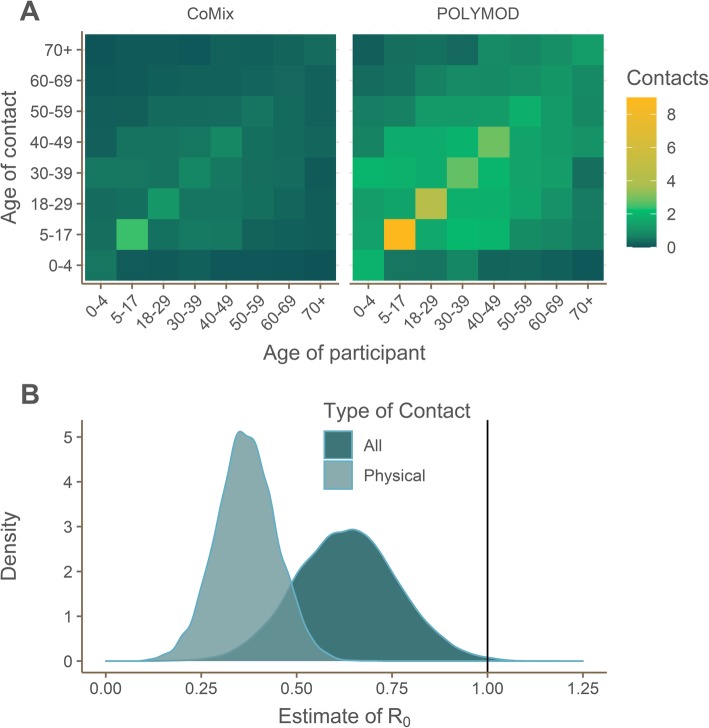
Background: To mitigate and slow the spread of COVID-19, many countries have adopted unprecedented physical distancing policies, including the UK. We evaluate whether these measures might be sufficient to control the epidemic by estimating their impact on the reproduction number ( R 0 , the average number of secondary cases generated per case). Methods: We asked a representative sample of UK adults about their contact patterns on the previous day. The questionnaire was conducted online via email recruitment and documents the age and location of contacts and a measure of their intimacy (whether physical contact was made or not). In addition, we asked about adherence to different physical distancing measures. The first surveys were sent on Tuesday, 24 March, 1 day after a “lockdown” was implemented across the UK. We compared measured contact patterns during the “lockdown” to patterns of social contact made during a non-epidemic period. By comparing these, we estimated the change in reproduction number as a consequence of the physical distancing measures imposed. We used a meta-analysis of published estimates to inform our estimates of the reproduction number before interventions were put in place. Results: We found a 74% reduction in the average daily number of contacts observed per participant (from 10.8 to 2.8). This would be sufficient to reduce R 0 from 2.6 prior to lockdown to 0.62 (95% confidence interval [CI] 0.37–0.89) after the lockdown, based on all types of contact and 0.37 (95% CI = 0.22–0.53) for physical (skin to skin) contacts only. Conclusions: The physical distancing measures adopted by the UK public have substantially reduced contact levels and will likely lead to a substantial impact and a decline in cases in the coming weeks. However, this projected decline in incidence will not occur immediately as there are significant delays between infection, the onset of symptomatic disease, and hospitalisation, as well as further delays to these events being reported. Tracking behavioural change can give a more rapid assessment of the impact of physical distancing measures than routine epidemiological surveillance.
Overview
The claims and statistics of this paper haven’t been checked yet.
Free: it reads the open-access text and checks the first 5 claims that cite a source we can check. Create a free account to check every claim.
Integrity signals
Registry
Cites
Statistics
Figures
Verification
Claims the paper makes
The claims and statistics of this paper haven’t been checked yet.
Free: it reads the open-access text and checks the first 5 claims that cite a source we can check. Create a free account to check every claim.
Claims other papers make about this one
Each is checked against this paper’s own text: does it say what the citing paper says it does?
The source backs part of the claim, not all of it — or backs it for a different population, condition or comparison.
In the citing paper
“we did not find substantial differences in social interactions between regions of high and low VOC 202012/01 prevalence, as measured by Google mobility (11) and social contact survey data (12) from September to December 2020 (Fig. 1, E and F).”
From Estimated transmissibility and impact of SARS-CoV-2 lineage B.1.1.7 in England (2021) · cites this paper as [12]
Experimental — accuracy not yet measuredThe check wasn’t confident either way, so it gives no verdict — never disputed.
In the citing paper
“These younger individuals tend to have more contacts than older age groups 33,34 .”
From Spread of a SARS-CoV-2 variant through Europe in the summer of 2020 (2021) · cites this paper as [34]
Experimental — accuracy not yet measured
Self-check
Percentages, sums and reported differences re-computed from the paper’s own numbers.
The self-check needs the paper’s full text.
Citations
Cites
R: A Language and Environment for Statistical Computing
R Core Team (2025) · doi:10.32614/r.manuals · Cited by 352,181
Wickham, H. (2016) · Use R! · doi:10.1007/978-3-319-24277-4 · Cited by 33,115
Early transmission dynamics in Wuhan, China, of novel coronavirus-infected pneumonia
Li, Q., Guan, X., Wu, P., Wang, X., Zhou, L., Tong, Y., Ren, R., Leung, K. S. M., Lau, E. H. Y., Wong, J. Y., et al. (2020) · New England Journal of Medicine · doi:10.1056/nejmoa2001316 · Cited by 16,575
ggplot2: Elegant Graphics for Data Analysis
Wickham, H. (2009) · doi:10.1007/978-0-387-98141-3 · Cited by 14,447
The effect of travel restrictions on the spread of the 2019 novel coronavirus (COVID-19) outbreak
Chinazzi, M., Davis, J. T., Ajelli, M., Gioannini, C., Litvinova, M., Merler, S., Pastore y Piontti, A., Mu, K., Rossi, L., Sun, K., et al. (2020) · Science · doi:10.1126/science.aba9757 · Cited by 3,694
Social Contacts and Mixing Patterns Relevant to the Spread of Infectious Diseases
Mossong, J., Hens, N., Jit, M., Beutels, P., Auranen, K., Mikolajczyk, R., Massari, M., Salmaso, S., Tomba, G. S., Wallinga, J., et al. (2008) · PLoS Medicine · doi:10.1371/journal.pmed.0050074 · Cited by 2,900
Self-citationF. T. Z. H. O. W. U. N. C. M. A. R. T., Jin, Y.-H., Cai, L., Cheng, Z.-S., Cheng, H., Deng, T., Fan, Y.-P., Fang, C., Huang, D., Huang, L.-Q., et al. (2020) · Military Medical Research · doi:10.1186/s40779-020-0233-6 · Cited by 2,254
The construction of next-generation matrices for compartmental epidemic models
Diekmann, O., Heesterbeek, J. A. P., & Roberts, M. G. (2010) · Journal of The Royal Society Interface · doi:10.1098/rsif.2009.0386 · Cited by 2,119
Zhao, S., Lin, Q., Ran, J., Musa, S. S., Yang, G., Wang, W., Lou, Y., Gao, D., Yang, L., He, D., et al. (2020) · International Journal of Infectious Diseases · doi:10.1016/j.ijid.2020.01.050 · Cited by 1,853
Riou, J., & Althaus, C. L. (2020) · Eurosurveillance · doi:10.2807/1560-7917.es.2020.25.4.2000058 · Cited by 1,297
Research works printed but not linked: 3
- 3. Acaps M. COVID-19: government measures. 2020.
- 4. Public Health England. Guidance on social distancing for everyone in the UK. gov.uk. 2020.
- 5. Savanta. Savanta coronavirus daily tracker - 30th March. Savanta coronavirus daily tracker. 2020.
Cited by
Items 101–200 of 719
Yin, H., Sun, T., Yao, L., Jiao, Y., Ma, L., Lin, L., Graff, J. C., Aleya, L., Postlethwaite, A. E., Gu, W., et al. (2021) · Environmental Science and Pollution Research · doi:10.1007/s11356-021-12364-4 · Cited by 75
What Is the Impact of Lockdowns on Dengue?
Brady, O. J., & Wilder‐Smith, A. (2021) · Current Infectious Disease Reports · doi:10.1007/s11908-020-00744-9 · Cited by 77
Mercer, C. H., Clifton, S., Riddell, J., Tanton, C., Freeman, L., Copas, A. J., Dema, E., Pérez, R. B., Gibbs, J., Macdowall, W. G., et al. (2021) · Sexually Transmitted Infections · doi:10.1136/sextrans-2021-055210 · Cited by 69
“…on sexual behaviour are unclear, reflecting how, for example, adherence to physical restrictions was not universal and may have changed over time, 8 and for those cohabiting, while the opportunity to have sex was theoretically unaffected, inclination to do so may have been altered by lifestyle…”
Murphy, C., Lim, W. W., Mills, C. L., Wong, J. Y., Chen, D., Xie, Y., Li, M., Gould, S., Xin, H., Cheung, J. K., et al. (2023) · Philosophical Transactions of the Royal Society A Mathematical Physical and Engineering Sciences · doi:10.1098/rsta.2023.0132 · Cited by 82
Ahmad, N., Hasan, M. G., & Barbhuiya, R. K. (2021) · Applied Soft Computing · doi:10.1016/j.asoc.2021.107642 · Cited by 72
Sun, K. S., Lau, T. S. M., Yeoh, E., Chung, V. C., Leung, Y. S., Yam, C. H. K., & Hung, C. T. (2022) · BMJ Open · doi:10.1136/bmjopen-2021-053938 · Cited by 71
Briggs, D., Ellis, A., Lloyd, A., & Telford, L. (2020) · International Journal of Sociology and Social Policy · doi:10.1108/ijssp-07-2020-0268 · Cited by 64
Fava, E. D., Cimentada, J., Perrotta, D., Grow, A., Rampazzo, F., Gil‐Clavel, S., & Zagheni, E. (2021) · BMJ Open · doi:10.1136/bmjopen-2021-050651 · Cited by 70
Modelling the COVID-19 pandemic in context: an international participatory approach
Aguas, R. J., White, L. J., Hupert, N., Shretta, R., Ngum, W. P., Celhay, O., Moldokmatova, A., Arifi, F., Mirzazadeh, A., Sharifi, H. P., et al. (2020) · BMJ Global Health · doi:10.1136/bmjgh-2020-003126 · Cited by 73
“Several recent studies have tried to estimate the impact of these different containment/suppression strategies in different countries, 4 47–52 but little insight has been gained into the optimal long term strategy, assuming that a vaccine may not be available before the end of the year.”
Heterogeneity matters: Contact structure and individual variation shape epidemic dynamics
Großmann, G., Backenköhler, M., & Wolf, V. (2021) · PLoS ONE · doi:10.1371/journal.pone.0250050 · Cited by 66
Mathematical modelling to inform New Zealand's COVID‐19 response
Hendy, S. C., Steyn, N., James, A., Plank, M. J., Hannah, K., Binny, R. N., & Lustig, A. G. (2021) · Journal of the Royal Society of New Zealand · doi:10.1080/03036758.2021.1876111 · Cited by 65
“For example, Jarvis et al. (2020) reported a 74% reduction in Reff (from a mean of 2.6–0.62), as a result of physical distancing during lockdown in the UK.”
BackgroundInfluentialThe impact of mask-wearing and shelter-in-place on COVID-19 outbreaks in the United States
Zhang, K., VILCHES, T. N., Tariq, M., Galvani, A. P., & Moghadas, S. M. (2020) · International Journal of Infectious Diseases · doi:10.1016/j.ijid.2020.10.002 · Cited by 67
Linking excess mortality to mobility data during the first wave of COVID-19 in England and Wales
Basellini, U., Alburez‐Gutierrez, D., Fava, E. D., Perrotta, D., Bonetti, M., Camarda, C. G., & Zagheni, E. (2021) · SSM - Population Health · doi:10.1016/j.ssmph.2021.100799 · Cited by 72
“This is also consistent with an US-based study, where mobility reductions assessed via mobile phone data were found to anticipate the exponential decay of COVID-deaths by a median of 3 – 4 weeks (Kogan et al., 2021).”
Early epidemiological signatures of novel SARS-CoV-2 variants: establishment of B.1.617.2 in EnglandPreprint
Challen, R., Dyson, L., Overton, C. E., Guzman-Rincon, L. M., Hill, E. M., Stage, H. B., Brooks‐Pollock, E., Pellis, L., Scarabel, F., Pascall, D. J., et al. (2021) · medRxiv · doi:10.1101/2021.06.05.21258365 · Cited by 64
Dharmarajan, G., Li, R., Chanda, E., Dean, K. R., Dirzo, R., Jakobsen, K. S., Khan, I., Leirs, H., Shi, Z., WOLFE, N. D., et al. (2022) · Zoonoses · doi:10.15212/zoonoses-2021-0028 · Cited by 68
“Non-pharmaceutical interventions, such as case isolation, contact tracing, travel restrictions, and cancellation of mass gatherings, were crucial in the early response to the rapid diffusion of the pandemic [132-136].”
BackgroundAbduljabbar, R. L., Liyanage, S., & Dia, H. (2022) · Cities · doi:10.1016/j.cities.2022.103770 · Cited by 61
Sociodemographic determinants of intraurban variations in COVID-19 incidence: the case of Barcelona
López‐Gay, A., Spijker, J., Cole, H. V. S., Marques, A. G., Mas, M. T., Anguelovski, I., Marí-Dell’Olmo, M., Cabrerizo, J. A. M., Álamo-Junquera, D., López‐Gallego, F., et al. (2021) · Journal of Epidemiology & Community Health · doi:10.1136/jech-2020-216325 · Cited by 65
Wong, C. K. H., Wong, J. Y. H., Tang, E. H. M., Au, C. H., Lau, K. T. K., & Wai, A. K. C. (2020) · Journal of Medical Internet Research · doi:10.2196/19904 · Cited by 56
“The initial transmission rate (R 0 ) was reduced from 2.6 to 0.62 (95% CI 0.37-0.89) due to the stay-at-home order in the United Kingdom [14].”
InfluentialColetti, P., Libin, P., Petrof, O., Willem, L., Abrams, S., Herzog, S. A., Faes, C., Wambua, J., Kuylen, E., COVID-19 team the SIMID, et al. (2021) · BMC Infectious Diseases · doi:10.1186/s12879-021-06092-w · Cited by 61
“Timing Work School Mobility Mobility Leisure start/end & transportation contacts (%) adults (%) children(%) & other contacts (%) contacts (%) Lockdown 14-03/04-05 <10 0 <10 0 <10 Phase 1 (work) 04-05/17-05 20 [10-40] 0 20 [10-40] 0 10 Phase 2 (school) 18-05/07-06 20 [10-40] 20 [10-40] 20 [10-40] 20 [10-40] 10 Phase 3…”
Effects of latency and age structure on the dynamics and containment of COVID-19
Blyuss, K. B., & Kyrychko, Y. N. (2021) · Journal of Theoretical Biology · doi:10.1016/j.jtbi.2021.110587 · Cited by 60
“Interactions between different age groups are modelled using three different types of age-specific mixing matrices for the UK population [9, 10, 20], including one obtained very recently after the lockdown was introduced in the UK.”
InfluentialRacial Disparity in Potential Occupational Exposure to COVID-19
Asfaw, A. (2021) · Journal of Racial and Ethnic Health Disparities · doi:10.1007/s40615-021-01110-8 · Cited by 53
Social distancing, population density, and spread of COVID-19 in England: a longitudinal study
Tammes, P. (2020) · BJGP Open · doi:10.3399/bjgpopen20x101116 · Cited by 52
“Studies on the US and UK concluded that introducing social distancing regulations reduced contact rate and physical proximity to others, resulting in reductions in COVID-19 incidence rates.(14,16) Since areas with high population density tend to have or be close to major airports or travel hubs, regulations restrictin…”
BackgroundAlmulhim, A. I., & Aina, Y. A. (2022) · Water · doi:10.3390/w14030314 · Cited by 56
Lives saved and hospitalizations averted by COVID-19 vaccination in New York City: a modeling study
Shoukat, A., VILCHES, T. N., Moghadas, S. M., Sah, P., Schneider, E. C., Shaff, J., Zucker, J. R., Quinn, C., Chokshi, D. A., & Galvani, A. P. (2021) · The Lancet Regional Health - Americas · doi:10.1016/j.lana.2021.100085 · Cited by 61
Bacon, S. L., Lavoie, K. L., Boyle, J., Stojanovic, J., & Joyal-Desmarais, K. (2021) · BMJ Open · doi:10.1136/bmjopen-2020-046127 · Cited by 47
Optimal frequency setting of metro services in the age of COVID-19 distancing measures
Gkiotsalitis, K., & Cats, O. (2021) · Transportmetrica A Transport Science · doi:10.1080/23249935.2021.1896593 · Cited by 53
Kühn, M. J., Abele, D., Mitra, T., Koslow, W., Abedi, M., Rack, K., Siggel, M., Khailaie, S., Klitz, M., Binder, S. C., et al. (2021) · Mathematical Biosciences · doi:10.1016/j.mbs.2021.108648 · Cited by 59
“Second, we include realistic contact patterns between different age groups [62,37,68,45,47].”
BackgroundInfluentialLima‐Costa, M. F., Mambrini, J. V. D. M., de Andrade, F. B., Peixoto, S. V., & Macinko, J. A. (2020) · Cadernos de Saúde Pública · doi:10.1590/0102-311x00193920 · Cited by 77
Wambua, J., Loedy, N., Jarvis, C. I., Wong, K. L., Faes, C., Grah, R., Prasse, B., Sandmann, F., Niehus, R., Johnson, H., et al. (2023) · BMC Public Health · doi:10.1186/s12889-023-16252-z · Cited by 52
“The survey started in March 2020 in the UK [34] and April 2020 in the Netherlands [35] and Belgium [31].”
Self-citationSteens, A., de Blasio, B. F., Veneti, L., Gimma, A., Edmunds, W. J., van Zandvoort, K., Jarvis, C. I., Forland, F., & Robberstad, B. (2020) · Eurosurveillance · doi:10.2807/1560-7917.es.2020.25.37.2001607 · Cited by 48
“…response rate and that therefore mainly those that are health-conscious participated in later waves, or the fact that people in older age groups have fewer contacts [8,9] and might not have defined their lack of contacts as ‘quarantine/isolation’, or whether this is a real effect, is yet unknown.”
BackgroundSelf-citationNowcasting epidemics of novel pathogens: lessons from COVID-19
Wu, J. T. K., Leung, K. S. M., Lam, T. T., Ni, M. Y., Wong, C. K. H., Peiris, M. J. S., & Leung, G. M. (2021) · Nature Medicine · doi:10.1038/s41591-021-01278-w · Cited by 55
Abbass, K., Niazi, A. A. K., Qazi, T. F., Basit, A., & Song, H. (2021) · Library Hi Tech · doi:10.1108/lht-03-2021-0113 · Cited by 47
Successful contact tracing systems for COVID-19 rely on effective quarantine and isolation
James, A., Plank, M. J., Hendy, S. C., Binny, R. N., Lustig, A. G., Steyn, N., Nesdale, A., & Verrall, A. J. (2021) · PLoS ONE · doi:10.1371/journal.pone.0252499 · Cited by 49
Genomic Epidemiology of Severe Acute Respiratory Syndrome Coronavirus 2, Colombia
Laiton‐Donato, K., Villabona‐Arenas, C. J., Usme-Ciro, J. A., Franco-Muñoz, C., Álvarez-Díaz, D. A., Villabona-Arenas, L. S., Echeverría-Londoño, S., Cucunubá, Z. M., Franco‐Sierra, N. D., Floréz, A. C., et al. (2020) · Emerging infectious diseases · doi:10.3201/eid2612.202969 · Cited by 48
Munday, J. D., Jarvis, C. I., Gimma, A., Wong, K. L., van Zandvoort, K., CMMID COVID-19 Working Group, Liu, Y., Hellewell, J., Davies, N. G. M., Villabona‐Arenas, C. J., et al. (2021) · BMC Medicine · doi:10.1186/s12916-021-02107-0 · Cited by 54
“social contact survey [18] to compare contacts made during these two lockdown periods.”
BackgroundSelf-citationMunday, J. D., Sherratt, K., Meakin, S. R., Endo, A., Pearson, C. A. B., Hellewell, J., Abbott, S., Bosse, N. I., CMMID COVID-19 Working Group, Eggo, R. M., et al. (2021) · Nature Communications · doi:10.1038/s41467-021-22213-0 · Cited by 46
Self-citationModelling the potential impact of mask use in schools and society on COVID-19 control in the UK
Panovska‐Griffiths, J., Kerr, C. C., Waites, W., Stuart, R. M., Mistry, D., Foster, D., Klein, D. J., Viner, R., & Bonell, C. P. (2021) · Scientific Reports · doi:10.1038/s41598-021-88075-0 · Cited by 50
“Models have been used to evaluate the impact of the lockdown 29,30 , to explore the efficacy of different test-trace-isolate (TTI) strategies 26–28 , 31 and to consider the impact of masks Our previous work 28 , which used the detailed individual-based model called Covasim 36 , highlighted that…”
MethodResultImpacts of interpersonal distancing on-board trains during the COVID-19 emergency
Coppola, P., & Fabiis, F. D. (2021) · European Transport Research Review · doi:10.1186/s12544-021-00474-6 · Cited by 47
Contact tracing efficiency, transmission heterogeneity, and accelerating COVID-19 epidemics
Gardner, B. J., & Kilpatrick, A. M. (2021) · PLoS Computational Biology · doi:10.1371/journal.pcbi.1009122 · Cited by 52
“Pathogen reproductive number, Rt, plotted against the number of cases per contact tracer calls per day, for four different numbers of contacts per case (5, 10, 20, 30; these reflect the range of contacts before and during restrictions on social gatherings [39,45,46]).”
BackgroundUnderstanding how Victoria, Australia gained control of its second COVID-19 wave
Trauer, J. M., Lydeamore, M., Dalton, G. W., Pilcher, D. V., Meehan, M. T., McBryde, E. S., Cheng, A. C., Sutton, B. A., & Ragonnet, R. R. (2021) · Nature Communications · doi:10.1038/s41467-021-26558-4 · Cited by 49
Wahaibi, A. S. A., Manji, A. A., Al-Maani, A. S., Rawahi, B. A., Harthy, K. A., Alyaquobi, F., Al‐Jardani, A., Petersen, E., & Abri, S. A. (2020) · International Journal of Infectious Diseases · doi:10.1016/j.ijid.2020.08.039 · Cited by 45
Sypsa, V., Roussos, S., Paraskevis, D. N., Lytras, T., Tsiodras, S., & Hatzakis, A. E. (2021) · Emerging infectious diseases · doi:10.3201/eid2702.203412 · Cited by 46
van Bunnik, B. A. D., Morgan, A. L. K., Bessell, P. R., Calder-Gerver, G., Zhang, F., Haynes, S. J., Ashworth, J., Zhao, S., Cave, R. N. R., Perry, M. R., et al. (2021) · Philosophical Transactions of the Royal Society B Biological Sciences · doi:10.1098/rstb.2020.0275 · Cited by 43
“These are difficult to predict in advance though they can be monitored in close to real time [24]; and (iii) further, the relationships between behavioural changes and transmission rates are also difficult to predict so close monitoring of the epidemic remains essential.”
BackgroundShort-term forecasts to inform the response to the Covid-19 epidemic in the UKPreprint
Funk, S., Abbott, S., Atkins, B. D., Baguelin, M., Baillie, J. K., Birrell, P., Blake, J., Bosse, N. I., Burton, J., Carruthers, J., et al. (2020) · medRxiv · doi:10.1101/2020.11.11.20220962 · Cited by 51
Self-citationLeng, T., Hill, E. M., Holmes, A., Southall, E., Thompson, R. N., Tildesley, M. J., Keeling, M. J., & Dyson, L. (2022) · Nature Communications · doi:10.1038/s41467-022-28731-9 · Cited by 45
Zuo, X., Chen, Y., Ohno-Machado, L., & Xu, H. (2020) · Briefings in Bioinformatics · doi:10.1093/bib/bbaa331 · Cited by 46
The influence of risk perceptions on close contact frequency during the SARS-CoV-2 pandemic
Wambua, J., Hermans, L., Coletti, P., Verelst, F., Willem, L., Jarvis, C. I., Gimma, A., Wong, K. L., Lajot, A., Demarest, S. S., et al. (2022) · Scientific Reports · doi:10.1038/s41598-022-09037-8 · Cited by 41
Self-citationAn international initiative of predicting the SARS-CoV-2 pandemic using ensemble data assimilation
Evensen, G., Amezcua, J., Bocquet, M., Carrassi, A., Farchi, A., Fowler, A., Houtekamer, P. L., Jones, C. K. R. T., de Moraes, R. J., Pulido, M., et al. (2020) · Foundations of Data Science · doi:10.3934/fods.2021001 · Cited by 42
Endogenous social distancing and its underappreciated impact on the epidemic curve
Gosak, M., Kraemer, M. U. G., Nax, H. H., Perc, M., & Pradelski, B. (2021) · Scientific Reports · doi:10.1038/s41598-021-82770-8 · Cited by 45
“In particular, the UK COVID-19 lockdown is currently 284 estimated to reduce contacts by 75% (56), which is roughly double the reduction we recorded for healthy 285 individuals for the 2012 and 2013 influenza seasons (see Fig.”
Using a household-structured branching process to analyse contact tracing in the SARS-CoV-2 pandemic
Fyles, M., Fearon, E., Overton, C. E., University of Manchester COVID-19 Modelling Group, Wingfield, T., Medley, G. F., Hall, I., Pellis, L., & House, T. (2021) · Philosophical Transactions of the Royal Society B Biological Sciences · doi:10.1098/rstb.2020.0267 · Cited by 44
Akbari, M., Carriere, J., Meyer, T., Sloboda, R. S., Husain, S. M., Usmani, N., & Tavakoli, M. (2021) · Frontiers in Robotics and AI · doi:10.3389/frobt.2021.645424 · Cited by 43
O’Reilly, K. M., Sandman, F., Allen, D. J., Jarvis, C. I., Gimma, A., Douglas, A., Larkin, L., Wong, K. L., Baguelin, M., Baric, R. S., et al. (2021) · BMC Medicine · doi:10.1186/s12916-021-02153-8 · Cited by 41
“reduction in contact patterns in the community, as shown through self-reported contact rates collected using online surveys [2] and other metrics [3].”
MethodSelf-citationBanholzer, N., Lison, A., Özcelik, D., Stadler, T., Feuerriegel, S., & Vach, W. (2022) · European Journal of Epidemiology · doi:10.1007/s10654-022-00908-y · Cited by 45
“surveys evaluating compliance with mask mandates [65] or the number of daily contacts [104].”
BackgroundEales, O. D., Plank, M. J., Cowling, B. J., Howden, B. P., Kucharski, A. J., Sullivan, S. G., Vandemaele, K., Viboud, C. G., Riley, S., McCaw, J. M., et al. (2024) · Emerging infectious diseases · doi:10.3201/eid3002.230768 · Cited by 47
Projecting the impact of a two-dose COVID-19 vaccination campaign in Ontario, Canada
VILCHES, T. N., Zhang, K., Exan, R. V., Langley, J. M., & Moghadas, S. M. (2021) · Vaccine · doi:10.1016/j.vaccine.2021.03.058 · Cited by 48
“The daily number of contacts during lockdown or self-isolation was reduced by an average of 74%, based on a matrix derived from a representative sample population during COVID-19 lockdown [19].”
Franco, N., Coletti, P., Willem, L., Angeli, L., Lajot, A., Abrams, S., Beutels, P., Faes, C., & Hens, N. (2022) · PLoS Computational Biology · doi:10.1371/journal.pcbi.1009965 · Cited by 39
Mapping social distancing measures to the reproduction number for COVID-19
Brooks‐Pollock, E., Read, J. M., McLean, A. R., Keeling, M. J., & Danon, L. (2021) · Philosophical Transactions of the Royal Society B Biological Sciences · doi:10.1098/rstb.2020.0276 · Cited by 44
Jarvis, C. I., Coletti, P., Backer, J. A., Munday, J. D., Faes, C., Beutels, P., Althaus, C. L., Low, N. N., Wallinga, J., Hens, N., et al. (2024) · Epidemics · doi:10.1016/j.epidem.2024.100778 · Cited by 37
Self-citationGlobal COVID-19 pandemic demands joint interventions for the suppression of future waves
Li, R., Чэн, Б., Zhang, T., Ren, Z., Song, Y., Xiao, Y., Hou, L., Cai, J., Xu, B., Li, M., et al. (2020) · Proceedings of the National Academy of Sciences · doi:10.1073/pnas.2012002117 · Cited by 42
“Among them, social distancing and lockdown suppression appear to be the most effective actions (3 – 7).”
Time trends in social contacts before and during the COVID-19 pandemic: the CONNECT study
Drolet, M., Godbout, A., Mondor, M., Béraud, G., Drolet-Roy, L., Lemieux-Mellouki, P., Bureau, A., Demers, É., Boily, M., Sauvageau, C., et al. (2022) · BMC Public Health · doi:10.1186/s12889-022-13402-7 · Cited by 37
“For example, contacts decreased from 10.8 in 2006[5] to 2.8 contacts per day during the lockdown in United Kingdom [14].”
BackgroundInfluentialHsing, J. C., Ma, J., Barrero‐Castillero, A., Jani, S. G., Pulendran, U. P., Lin, B.-J., Thomas-Uribe, M., & Wang, C.-H. J. (2021) · Journal of Medical Internet Research · doi:10.2196/23720 · Cited by 40
“Recent studies have begun to assess adherence to COVID-19 guidelines, evaluating demographic characteristics and the impact of guideline duration [6-8].”
Mohammadi, Z., Cojocaru, M. G., & Thommes, E. W. (2022) · BMC Public Health · doi:10.1186/s12889-022-13921-3 · Cited by 43
Bellato, A. (2020) · Social Sciences & Humanities Open · doi:10.1016/j.ssaho.2020.100062 · Cited by 41
“Recent studies (see, for example Jarvis et al., 2020) have demonstrated that lockdown measures introduced by national governments have resulted effective in reducing the basic reproduction number (R 0 ), i.e., the average number of secondary cases generated by a single case of infection.”
Jalloh, M. F., Nur, S. A., Nur, S. A., Winters, M., Bedson, J., Pedi, D., Prybylski, D., Namageyo-Funa, A., Hageman, K., Baker, B. J., et al. (2021) · BMJ Global Health · doi:10.1136/bmjgh-2020-004450 · Cited by 36
“4 21–24 There have been numerous ongoing efforts to track the global implementation of PHSMs since the start of the COVID-19 pandemic.”
Wehrle, C. J., Lee, S. W., Devarakonda, A. K., & Arora, T. K. (2021) · JCO Clinical Cancer Informatics · doi:10.1200/cci.20.00183 · Cited by 38
Curmei, M., Ilyas, A., Evans, O., & Steinhardt, J. (2021) · International Journal of Epidemiology · doi:10.1093/ije/dyab108 · Cited by 36
Tran, T. N.-A., Wikle, N. B., Albert, E., Inam, H., Strong, E. R., Břinda, K., Leighow, S. M., Yang, F., Hossain, S., Pritchard, J. R., et al. (2021) · BMC Medicine · doi:10.1186/s12916-021-02038-w · Cited by 35
“To check the robustness of our conclusions to different mixing assumptions, we also parameterized the model using contact patterns measured in United Kingdom (UK) in March 2020 [25].”
MethodSullivan, O., Gershuny, J., Sevilla, A., Foliano, F., Vega-Rapun, M., Pérez, J. L. D. G., Harms, T. A., & Walthéry, P. (2021) · Proceedings of the National Academy of Sciences · doi:10.1073/pnas.2101724118 · Cited by 37
Quantifying contact patterns in response to COVID-19 public health measures in Canada
Brankston, G., Merkley, E., Fisman, D. N., Tuite, A. R., Poljak, Z., Loewen, P. J., & Greer, A. L. (2021) · BMC Public Health · doi:10.1186/s12889-021-12080-1 · Cited by 39
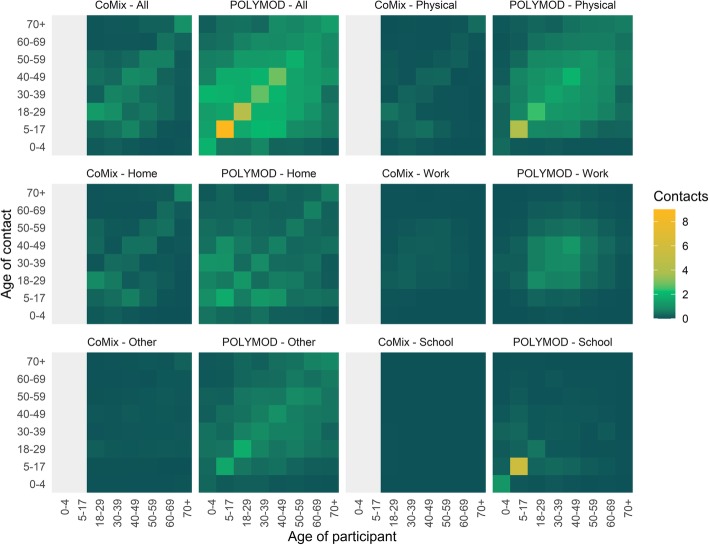
“POLYMOD UK and the observed matrices for all age groups surveyed in both studies, stratified by location of contact [11, 19].”
BackgroundMethodInfluentialKoltai, J., Vásárhelyi, O., Röst, G., & Karsai, M. (2022) · Scientific Reports · doi:10.1038/s41598-022-07488-7 · Cited by 40
“Nevertheless, their collection was rather spurious, expensive, and other than some recent studies 21,23,37,38 , they were collected during ’normal’ times, thus they commonly missed to capture changes in contact patterns during emergency periods.”
ResultGershuny, J., Sullivan, O., Sevilla, A., Vega-Rapun, M., Foliano, F., Pérez, J. L. D. G., Harms, T. A., & Walthéry, P. (2021) · PLoS ONE · doi:10.1371/journal.pone.0245551 · Cited by 36
“This type of information has been the main source for the formal modelling of infection spread; for example, contact-based surveys showed substantial decreases in physical contact following the imposition of first lockdown in the UK [8].”
BackgroundInfluentialMoghadas, S. M., Fitzpatrick, M. C., Shoukat, A., Zhang, K., & Galvani, A. P. (2021) · JAMA Network Open · doi:10.1001/jamanetworkopen.2021.7097 · Cited by 35
Lockdown impact on age-specific contact patterns and behaviours, France, April 2020
Bosetti, P., Huynh, B.-T., Abdou, A. Y., Sanchez, M., Eisenhauer, C., Courtejoie, N., Accardo, J., Salje, H., Guillemot, D., Moslonka‐Lefebvre, M., et al. (2021) · Eurosurveillance · doi:10.2807/1560-7917.es.2021.26.48.2001636 · Cited by 35
“Finally, the weighted global matrix depicts a higher intensity of within age group contacts and between-generation family-like contacts, consistent with previous findings [11,12].”
BackgroundResultInfluentialWhat’s the way out? Potential exit strategies from the COVID-19 lockdown
Sheikh, A., Sheikh, A., Sheikh, Z., Dhami, S., & Sridhar, D. (2020) · Journal of Global Health · doi:10.7189/jogh.10.010370 · Cited by 35
Booton, R. D., MacGregor, L., Vass, L., Looker, K. J., Hyams, C. J., Bright, P., Harding, I., Lazarus, R., Hamilton, F., Lawson, D. J., et al. (2021) · BMJ Open · doi:10.1136/bmjopen-2020-041536 · Cited by 37
Abdulmuhsin, A. A., Değirmenci, B., Efendioğlu, İ. H., & Durmaz, Y. (2021) · International Journal of Emerging Markets · doi:10.1108/ijoem-11-2020-1308 · Cited by 36
Walters, S. T., Businelle, M. S., Suchting, R., Li, X., Hébert, E. T., & Mun, E. (2021) · Journal of Substance Abuse Treatment · doi:10.1016/j.jsat.2021.108417 · Cited by 33
“…experiencing homelessness), may be one way to improve the delivery of alcohol treatment services while, at the same time, facilitating physical distancing to help reduce the spread of the virus (Jarvis et al., 2020; Wasserman, van der Gaag, & Wise, 2020; Zhang, Li, Zhang, Wang, & Molina, 2020).”
BackgroundNixon, E. J., Trickey, A., Christensen, H., Finn, A. H. R., Thomas, A. C., Relton, C. L., Montgomery, C., Hemani, G., Metz, J., Walker, J. G., et al. (2021) · Scientific Reports · doi:10.1038/s41598-021-91156-9 · Cited by 33
Shim, E. (2021) · International Journal of Environmental Research and Public Health · doi:10.3390/ijerph18147578 · Cited by 35
Akpan, I. J., Aguolu, O. G., Kobara, Y. M., Razavi, R., Akpan, A. A., & Shanker, M. S. (2021) · Journal of Medical Internet Research · doi:10.2196/28975 · Cited by 37
Liu, J., Ong, G. P., & Pang, V. J. (2022) · Transportation Research Part A Policy and Practice · doi:10.1016/j.tra.2022.05.003 · Cited by 46
Kranz, J. J., Zeiß, R., Beck, R., Gholami, R., Sarker, S., Watson, R. T., & Whitley, E. A. (2022) · Communications of the Association for Information Systems · doi:10.17705/1cais.05138 · Cited by 40
Kabito, G. G., Alemayehu, M., Mekonnen, T. H., Wami, S. D., Azanaw, J., Birhan, T. A., Azene, Z. N., Merid, M. W., Muluneh, A. G., Geberu, D. M., et al. (2020) · PLoS ONE · doi:10.1371/journal.pone.0242654 · Cited by 32
RetractedAdaptasi Strategi Gamifikasi Dalam Permainan Ular Tangga Online Sebagai Media Edukasi Covid-19
Ariessanti, H. D., Purwaningtyas, D. A., Soeparno, H., & Napitupulu, T. A. (2020) · e-Jurnal JUSITI (Jurnal Sistem Informasi dan Teknologi Informasi) · doi:10.36774/jusiti.v9i2.772 · Cited by 32
Ethics of selective restriction of liberty in a pandemic
Cameron, J., Williams, B. M., Ragonnet, R. R., Marais, B. J., Trauer, J. M., & Savulescu, J. (2021) · Journal of Medical Ethics · doi:10.1136/medethics-2020-107104 · Cited by 34
Sakti, A. M. T., Mohamad, E. M. W., & Azlan, A. A. (2021) · Journal of Medical Internet Research · doi:10.2196/28249 · Cited by 36
“A study measuring the effectiveness of physical distancing in England found that this method can significantly decrease the contact-level frequency up to 74% and was the key factor in decreasing the total confirmed cases in the country [4].”
Endo, A., Uchida, M., Hayashi, N., Liu, Y., Atkins, K. E., Kucharski, A. J., & Funk, S. (2021) · Proceedings of the National Academy of Sciences · doi:10.1073/pnas.2112605118 · Cited by 33
Watson, D., Baralle, N. L., Alagil, J., Anil, K., Ciccognani, S., Dewar-Haggart, R., Fearn, S., Groot, J., Knowles, K., Meagher, C., et al. (2022) · BMC Public Health · doi:10.1186/s12889-022-12657-4 · Cited by 33
Steijvers, L. C., Brinkhues, S., van Tilburg, T. G., Hoebe, C. J. P. A., Stijnen, M., de Vries, N. K., Crutzen, R., & Dukers–Muijrers, N. H. T. M. (2022) · BMC Public Health · doi:10.1186/s12889-022-14500-2 · Cited by 39
“In line with the reported loss of daily social contacts as a result of the implemented preventive measures, such as social distancing [5, 36], the current study demonstrated decreases in network size, including losses in the number of family members, friends, and others.”
ResultMeasuring teamwork for training in healthcare using eye tracking and pose estimation
Weiss, K. E., Kolbe, M., Lohmeyer, Q., & Meboldt, M. (2023) · Frontiers in Psychology · doi:10.3389/fpsyg.2023.1169940 · Cited by 36
“During data collection in March 2022 people were required to observe the social distance (Jarvis et al., 2020).”
BackgroundChapman, L. A. C., Kushel, M., Cox, S. N., Scarborough, A. P., Cawley, C. L., Nguyen, T. Q., Rodríguez-Barraquer, I., Greenhouse, B., Imbert, E., & Lo, N. C. (2021) · BMC Medicine · doi:10.1186/s12916-021-01965-y · Cited by 32
“Data is limited, but available evidence suggests that social distancing and reductions in super-spreading are likely to be key factors (42,44,49–51).”
The effect of control measures on COVID-19 transmission in South Korea
Lee, T., Kwon, H., & Lee, J. (2021) · PLoS ONE · doi:10.1371/journal.pone.0249262 · Cited by 31
Social-distancing fatigue: Evidence from real-time crowd-sourced traffic data
Shearston, J. A., Martinez, M. E., Nunez, Y., & Hilpert, M. (2021) · The Science of The Total Environment · doi:10.1016/j.scitotenv.2021.148336 · Cited by 36
Marchant, E., Griffiths, L. J., Crick, T., Fry, R. J., Hollinghurst, J., James, M., Cowley, L., Abbasizanjani, H., Torabi, F., Thompson, D., et al. (2022) · PLoS ONE · doi:10.1371/journal.pone.0264023 · Cited by 31
“Our finding is consistent with the evidence base regarding contact patterns where reducing number of contacts is associated with a reduction in the basic reproduction number (R0) [34].”
ResultNationally representative social contact patterns among U.S. adults, August 2020-April 2021
Nelson, K., Siegler, A. J., Sullivan, P. S., Bradley, H. M., Hall, E., Luisi, N., Hipp-Ramsey, P., Sanchez, T., Shioda, K., & Lopman, B. A. (2022) · Epidemics · doi:10.1016/j.epidem.2022.100605 · Cited by 31
The first two months of the COVID-19 pandemic in Bosnia and Herzegovina: Single-center experience
Arapović, J., & Skočibušić, S. (2020) · Biomolecules and Biomedicine · doi:10.17305/bjbms.2020.4838 · Cited by 39
“However, a recent study suggests that social distancing, hand wash hygiene, respiratory hygiene, and wearing masks, and gloves could help prevent the spread of COVID-19 [17].”
BackgroundDynamics of SARS-CoV-2 with waning immunity in the UK population
Crellen, T., Pi, L., Davis, E. L., Pollington, T. M., Lucas, T. C. D., Ayabina, D. V., Borlase, A., Toor, J., Prem, K., Medley, G. F., et al. (2021) · Philosophical Transactions of the Royal Society B Biological Sciences · doi:10.1098/rstb.2020.0274 · Cited by 33
Self-citationDorélien, A., Ramen, A., Swanson, I., & Hill, R. (2021) · BMC Infectious Diseases · doi:10.1186/s12879-021-06610-w · Cited by 34
Karam, M., Althuwaikh, S., Alazemi, M., Abul, A., Hayre, A., Alsaif, A., & Barlow, G. D. (2021) · JRSM Open · doi:10.1177/20542704211011837 · Cited by 29
Thindwa, D., Jambo, K., Ojal, J., MacPherson, P., Phiri, M. D., Pinsent, A., Khundi, M., Chiume, L., Gallagher, K. E., Heyderman, R. S., et al. (2022) · Epidemics · doi:10.1016/j.epidem.2022.100590 · Cited by 31
Metadata
- Authors
- CMMID COVID-19 working group, Jarvis, C. I., Van Zandvoort, K., Gimma, A., Prem, K., Klepac, P., Rubin, G. J., & Edmunds, W. J.
- Affiliations
- London School of Hygiene & Tropical Medicine (GB)
- King's College London (GB)
- Corresponding author
- Jarvis, Christopher I.
- Venue
- BMC Medicine
- Published
- 2020-05-07
- Volume
- 18
- Issue
- 1
- Pages
- 124-124
- ISSN
- 1741-7015 (ISSN-L)
- PMC
- PMC7202922
- OpenAlex
- W3021151406
- Cited by
- 720
- References
- 28
- Citations by year
- 2026: 21 · 2025: 25 · 2024: 46 · 2023: 80 · 2022: 134 · 2021: 279 · 2020: 135
- FWCI
- 24.98
- Type
- journal article
- Language
- en
- Open access
- gold
- doi.org
- Licence
- cc-by
- creativecommons.org/licenses/by/4.0/ (tdm)
- creativecommons.org/licenses/by/4.0/ (vor)
- Locations
- BMC Medicine (publishedVersion, cc-by)
- medRxiv (acceptedVersion, cc-by-nd)
- PubMed Central (publishedVersion, cc-by)
- PubMed (publishedVersion)
- LSHTM Research Online (London School of Hygiene and Tropical Medicine) (acceptedVersion)
- DOAJ (DOAJ: Directory of Open Access Journals) (submittedVersion, cc-by-sa)
- Informationszentrum Lebenswissenschaften (ZB MED) (submittedVersion, cc-by)
- Funders
- Horizon 2020 (101003688)
- Topics
- Physical Sciences › Mathematics › Modeling and Simulation › COVID-19 epidemiological studies
- Social Sciences › Sociology and Political Science › COVID-19 Prevention and Impact
- Health Sciences › Medicine › Infectious Diseases › SARS-CoV-2 and COVID-19 Research
- Keywords
- COVID-19 pandemic, social distancing, lockdown, social contact patterns, reproduction number, skin-to-skin contact, epidemic control, behavior change
- MeSH terms
- Betacoronavirus, COVID-19, SARS-CoV-2, Activities of Daily Living, Adult, United Kingdom, Health Policy, Humans, Interpersonal Relations, Models, Theoretical, Pneumonia, Viral, Surveys and Questionnaires, Social Isolation, Incidence, Contact Tracing, Coronavirus Infections, Basic Reproduction Number, Epidemics, Pandemics
About these checks
Registry, retraction, Cites and statistics results are computed, not judged, with one exception: a printed reference that no index lists is read once by a model before it counts as a citation error. Claims are extracted by a model and kept only when their quote appears verbatim in the text; each cited source is then checked, with a model’s help, for whether it says what the claim relies on. Those verdicts can be wrong — read the claim’s quote and the cited source before relying on one.
Statistics and arithmetic are recomputed, not judged.
Confidence bands are shown only for fields calibrated on our annotated test set. None is calibrated yet, so no band is shown.
What counts as a claim ›How we measure confidence ›How we check this ›
Are you an author, or do you see a problem with this page? Request a review
Data sources
Bibliographic data: Semantic Scholar, OpenAlex, Crossref.
Contains information from the Semantic Scholar Academic Graph Datasets, made available under the ODC Attribution License (ODC-BY 1.0).
Semantic Scholar’s data is described in: Kinney, R., et al. (2023). The Semantic Scholar Open Data Platform. arXiv:2301.10140.
