

Quantifying the impact of physical distance measures on the transmission of COVID-19 in the UK
Open accessPublished version of a preprint
The DOI matches its Crossref record; 33 of the 33 references it cites were found in a registry or an index.
Abstract
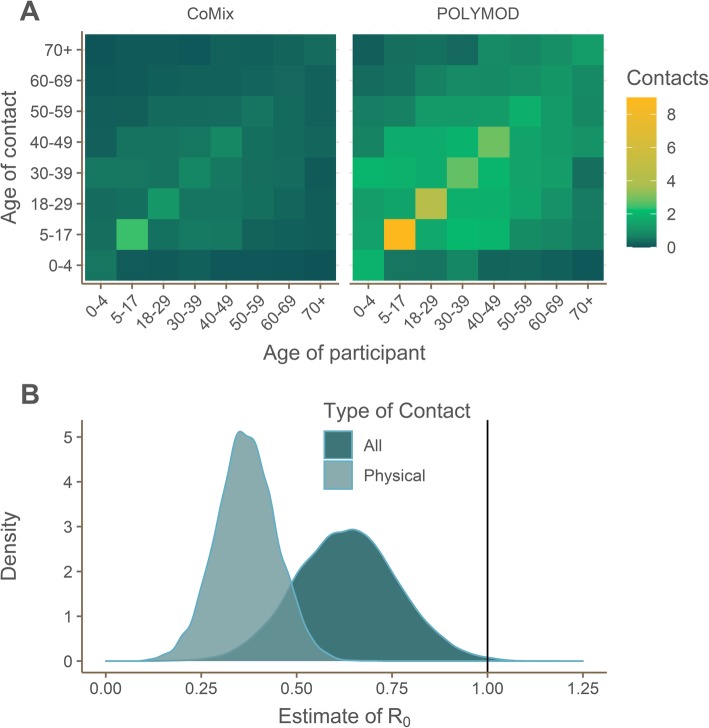
Background: To mitigate and slow the spread of COVID-19, many countries have adopted unprecedented physical distancing policies, including the UK. We evaluate whether these measures might be sufficient to control the epidemic by estimating their impact on the reproduction number ( R 0 , the average number of secondary cases generated per case). Methods: We asked a representative sample of UK adults about their contact patterns on the previous day. The questionnaire was conducted online via email recruitment and documents the age and location of contacts and a measure of their intimacy (whether physical contact was made or not). In addition, we asked about adherence to different physical distancing measures. The first surveys were sent on Tuesday, 24 March, 1 day after a “lockdown” was implemented across the UK. We compared measured contact patterns during the “lockdown” to patterns of social contact made during a non-epidemic period. By comparing these, we estimated the change in reproduction number as a consequence of the physical distancing measures imposed. We used a meta-analysis of published estimates to inform our estimates of the reproduction number before interventions were put in place. Results: We found a 74% reduction in the average daily number of contacts observed per participant (from 10.8 to 2.8). This would be sufficient to reduce R 0 from 2.6 prior to lockdown to 0.62 (95% confidence interval [CI] 0.37–0.89) after the lockdown, based on all types of contact and 0.37 (95% CI = 0.22–0.53) for physical (skin to skin) contacts only. Conclusions: The physical distancing measures adopted by the UK public have substantially reduced contact levels and will likely lead to a substantial impact and a decline in cases in the coming weeks. However, this projected decline in incidence will not occur immediately as there are significant delays between infection, the onset of symptomatic disease, and hospitalisation, as well as further delays to these events being reported. Tracking behavioural change can give a more rapid assessment of the impact of physical distancing measures than routine epidemiological surveillance.
Overview
The claims and statistics of this paper haven’t been checked yet.
Free: it reads the open-access text and checks the first 5 claims that cite a source we can check. Create a free account to check every claim.
Integrity signals
Registry
Cites
Statistics
Figures
Verification
Claims the paper makes
The claims and statistics of this paper haven’t been checked yet.
Free: it reads the open-access text and checks the first 5 claims that cite a source we can check. Create a free account to check every claim.
Claims other papers make about this one
Each is checked against this paper’s own text: does it say what the citing paper says it does?
The source backs part of the claim, not all of it — or backs it for a different population, condition or comparison.
In the citing paper
“we did not find substantial differences in social interactions between regions of high and low VOC 202012/01 prevalence, as measured by Google mobility (11) and social contact survey data (12) from September to December 2020 (Fig. 1, E and F).”
From Estimated transmissibility and impact of SARS-CoV-2 lineage B.1.1.7 in England (2021) · cites this paper as [12]
Experimental — accuracy not yet measuredThe check wasn’t confident either way, so it gives no verdict — never disputed.
In the citing paper
“These younger individuals tend to have more contacts than older age groups 33,34 .”
From Spread of a SARS-CoV-2 variant through Europe in the summer of 2020 (2021) · cites this paper as [34]
Experimental — accuracy not yet measured
Self-check
Percentages, sums and reported differences re-computed from the paper’s own numbers.
The self-check needs the paper’s full text.
Citations
Cites
R: A Language and Environment for Statistical Computing
R Core Team (2025) · doi:10.32614/r.manuals · Cited by 352,181
Wickham, H. (2016) · Use R! · doi:10.1007/978-3-319-24277-4 · Cited by 33,115
Early transmission dynamics in Wuhan, China, of novel coronavirus-infected pneumonia
Li, Q., Guan, X., Wu, P., Wang, X., Zhou, L., Tong, Y., Ren, R., Leung, K. S. M., Lau, E. H. Y., Wong, J. Y., et al. (2020) · New England Journal of Medicine · doi:10.1056/nejmoa2001316 · Cited by 16,575
ggplot2: Elegant Graphics for Data Analysis
Wickham, H. (2009) · doi:10.1007/978-0-387-98141-3 · Cited by 14,447
The effect of travel restrictions on the spread of the 2019 novel coronavirus (COVID-19) outbreak
Chinazzi, M., Davis, J. T., Ajelli, M., Gioannini, C., Litvinova, M., Merler, S., Pastore y Piontti, A., Mu, K., Rossi, L., Sun, K., et al. (2020) · Science · doi:10.1126/science.aba9757 · Cited by 3,694
Social Contacts and Mixing Patterns Relevant to the Spread of Infectious Diseases
Mossong, J., Hens, N., Jit, M., Beutels, P., Auranen, K., Mikolajczyk, R., Massari, M., Salmaso, S., Tomba, G. S., Wallinga, J., et al. (2008) · PLoS Medicine · doi:10.1371/journal.pmed.0050074 · Cited by 2,900
Self-citationF. T. Z. H. O. W. U. N. C. M. A. R. T., Jin, Y.-H., Cai, L., Cheng, Z.-S., Cheng, H., Deng, T., Fan, Y.-P., Fang, C., Huang, D., Huang, L.-Q., et al. (2020) · Military Medical Research · doi:10.1186/s40779-020-0233-6 · Cited by 2,254
The construction of next-generation matrices for compartmental epidemic models
Diekmann, O., Heesterbeek, J. A. P., & Roberts, M. G. (2010) · Journal of The Royal Society Interface · doi:10.1098/rsif.2009.0386 · Cited by 2,119
Zhao, S., Lin, Q., Ran, J., Musa, S. S., Yang, G., Wang, W., Lou, Y., Gao, D., Yang, L., He, D., et al. (2020) · International Journal of Infectious Diseases · doi:10.1016/j.ijid.2020.01.050 · Cited by 1,853
Riou, J., & Althaus, C. L. (2020) · Eurosurveillance · doi:10.2807/1560-7917.es.2020.25.4.2000058 · Cited by 1,297
Research works printed but not linked: 3
- 3. Acaps M. COVID-19: government measures. 2020.
- 4. Public Health England. Guidance on social distancing for everyone in the UK. gov.uk. 2020.
- 5. Savanta. Savanta coronavirus daily tracker - 30th March. Savanta coronavirus daily tracker. 2020.
Cited by
Items 201–300 of 719
Dynamics of non-household contacts during the COVID-19 pandemic in 2020 and 2021 in the Netherlands
Backer, J. A., Bogaardt, L., Beutels, P., Coletti, P., Edmunds, W. J., Gimma, A., van Hagen, C. C. E., Hens, N., Jarvis, C. I., Vos, E. R. A., et al. (2023) · Scientific Reports · doi:10.1038/s41598-023-32031-7 · Cited by 29
Self-citationYang, Q., Xiao, X., Gu, X., Dong, L., Cao, T., Mou, J., Huang, C., Chen, L., & Liu, J. (2021) · International Journal of Infectious Diseases · doi:10.1016/j.ijid.2021.02.027 · Cited by 32
COVID-19 Time Series Forecast Using Transmission Rate and Meteorological Parameters as Features
Mousavi, M., Salgotra, R., Holloway, D. S., & Gandomi, A. H. (2020) · IEEE Computational Intelligence Magazine · doi:10.1109/mci.2020.3019895 · Cited by 29
“Physical distancing measures can have a huge impact on the virus transmission rate [3], and in one such study the time taken for the daily number of new cases to double was reported to increase from 2 to 4 days [4].”
BackgroundMaishman, T., Schaap, S., Silk, D., Nevitt, S. J., Woods, D. C., & Bowman, V. E. (2022) · Statistical Methods in Medical Research · doi:10.1177/09622802221109506 · Cited by 31
Golding, N., Price, D. J., RYAN, G. E., McVernon, J., McCaw, J. M., & Shearer, F. M. (2023) · eLife · doi:10.7554/elife.78089 · Cited by 31
“Researchers and governments in many other countries have used such companies for rapid data collection to support pandemic response ( Jarvis et al., 2020 ; Atchison et al., 2021 ).”
Open problems in causal structure learning: A case study of COVID-19 in the UK
Constantinou, A. C., Kitson, N. K., Liu, Y., Chobtham, K., Hashemzadeh, A., Nanavati, P., Mbuvha, R., & Petrungaro, B. (2023) · Expert Systems with Applications · doi:10.1016/j.eswa.2023.121069 · Cited by 33
Wagner, A. L., Porth, J. M., Wu, Z., Boulton, M. L., Finlay, J., & Kobayashi, L. C. (2022) · Journal of Community Health · doi:10.1007/s10900-022-01064-w · Cited by 28
“Moreover, individuals could theoretically mitigate their risk through other risk-reduction behaviors, like social distancing[16] and mask wearing [17].”
BackgroundSiam, M. H. B., Nishat, N. H., Ahmed, A., & Hossain, M. S. (2020) · Journal of Pathogens · doi:10.1155/2020/9121429 · Cited by 29
Céspedes, N., Raigoso, D., Múnera, M., & Cifuentes, C. A. (2021) · Frontiers in Neurorobotics · doi:10.3389/fnbot.2021.612034 · Cited by 29
“Studies highlight the importance of these actions to decrease the transmission rate (Jarvis et al., 2020), reduce the peak incidence, delay the epidemic (Zhang et al.”
BackgroundNguyen, L. K. N., Howick, S., McLafferty, D., Anderson, G., Pravinkumar, S. J., Meer, R. V. D., & Megiddo, I. (2021) · American Journal of Infection Control · doi:10.1016/j.ajic.2021.07.001 · Cited by 28
Predictors of Severe Acute Respiratory Syndrome Coronavirus 2 Infection Following High-Risk Exposure
Andrejko, K. L., Pry, J. M., Myers, J. F., Openshaw, J. J., Watt, J., Birkett, N., DeGuzman, J. L., Barbaduomo, C. M., Dong, Z., Fang, A. T., et al. (2021) · Clinical Infectious Diseases · doi:10.1093/cid/ciab1040 · Cited by 30
Goldenbogen, B., Adler, S. O., Bodeit, O., Wodke, J. A. H., Escalera‐Fanjul, X., Korman, A., Krantz, M., Bonn, L., Morán‐Torres, R., Haffner, J., et al. (2022) · Advanced Science · doi:10.1002/advs.202200088 · Cited by 32
A structured model for COVID-19 spread: modelling age and healthcare inequities
James, A., Plank, M. J., Binny, R. N., Lustig, A. G., Hannah, K., Hendy, S. C., & Steyn, N. (2021) · Mathematical Medicine and Biology A Journal of the IMA · doi:10.1093/imammb/dqab006 · Cited by 28
Pharmacokinetics under the COVID‐19 storm
Reddy, V. P., El‐Khateeb, E., Jo, H., Giovino, N., Lythgoe, E., Sharma, S., Tang, W., Jamei, M., & Rostami‐Hodjegan, A. (2021) · British Journal of Clinical Pharmacology · doi:10.1111/bcp.14668 · Cited by 27
Transmission dynamics of the COVID-19 epidemic in England
Liu, Y., Tang, J. W.-T., & Lam, T. T. (2020) · International Journal of Infectious Diseases · doi:10.1016/j.ijid.2020.12.055 · Cited by 28
“This finding is consistent with a previous study which investigated the effect of the reduction of social contacts on transmissibility based on surveys (Jarvis et al., 2020).”
Zhang, A., Shi, W., Tong, C., Zhu, X., Liu, Y., Liu, Z., Yao, Y., & Shi, Z. (2022) · BMC Infectious Diseases · doi:10.1186/s12879-022-07274-w · Cited by 28
“This might be due to aggravated household transmission in larger households [36], since quarantine at home was allowed until November 2020.”
BackgroundMeta-analysis on Serial Intervals and Reproductive Rates for SARS-CoV-2
Hussein, M. H., Toraih, E. A., Elshazli, R. M., Fawzy, M. S., Houghton, A., Tatum, D. M., Killackey, M. T., Kandil, E. H., & Duchesne, J. C. (2020) · Annals of Surgery · doi:10.1097/sla.0000000000004400 · Cited by 27
Quantifying the Shift in Social Contact Patterns in Response to Non-Pharmaceutical Interventions
McCarthy, Z., Xiao, Y., Scarabel, F., Tang, B., Bragazzi, N. L., Nah, K., Heffernan, J. M., Asgary, A., Murty, V. K., Ogden, N. H., et al. (2020) · Journal of Mathematics in Industry · doi:10.1186/s13362-020-00096-y · Cited by 30
“Findings from these studies indicate that physical distancing measures have led to the reduction of daily social contact rates in China [11, 33], Luxembourg [13], and the UK [12], with varying degrees of reduction.”
BackgroundRodrigues, É. C., Mendonça, R. D. D., Camargo, P. P., de Menezes, M. C., de Carvalho, N. C., & Meireles, A. L. (2021) · Nutrition · doi:10.1016/j.nut.2021.111448 · Cited by 25
“With the beginning of the COVID-19 pandemic—a health tragedy that ravages Brazil, which is first in the world rankings of deaths and confirmed cases [4]—the federal government adopted measures of social distancing as a way to contain the infection and preserve the responsiveness of the health systems [5].”
BackgroundZhang, X. N., Owen, G. E., Green, M. A., Buchan, I. E., & Barr, B. (2022) · BMJ Open · doi:10.1136/bmjopen-2021-054101 · Cited by 25
Mask Mandates and COVID-19 Related Symptoms in the US
Nguyen, M. (2021) · ClinicoEconomics and Outcomes Research · doi:10.2147/ceor.s326728 · Cited by 55
Tizzani, M., Gaetano, A. D., Jarvis, C. I., Gimma, A., Wong, K. L., Edmunds, W. J., Beutels, P., Hens, N., Coletti, P., & Paolotti, D. (2023) · BMC Public Health · doi:10.1186/s12889-023-15846-x · Cited by 24
“Results have shown how in countries such as the UK [11], Belgium [12] and the Netherlands [13], the CoMix initiative was capable of capturing the evolution of contact patterns across the various phases of an ever-changing pandemic.”
BackgroundSelf-citationSchück, S., Foulquié, P., Mebarki, A., Faviez, C., Khadhar, M., Texier, N., Katsahian, S., Burgun, A., & Chen, X. (2021) · JMIR Formative Research · doi:10.2196/23593 · Cited by 25
“Similarly, lockdown measures adopted in Europe dramatically reduced viral transmission in Italy [5], Germany [6], and the United Kingdom [7], resulting in large reductions in the basic reproduction number, R0, from an average of 3.”
BackgroundInfluentialMcCreesh, N., Dlamini, V., Edwards, A., Olivier, S., Dayi, N., Dikgale, K., Nxumalo, V., Dreyer, J., Baisley, K. J., Siedner, M. J., et al. (2021) · BMC Infectious Diseases · doi:10.1186/s12879-021-06604-8 · Cited by 27
“It is also supported by the UK Medical Research Council (MRC) and the UK Department for International Development (DFID) under the MRC/DFID Concordat agreement that is also part of the EDCTP2 programme supported by the European Union (MR/P002404/1).”
BackgroundChoi, Y. H., & Miller, E. (2021) · BMJ Open · doi:10.1136/bmjopen-2020-045380 · Cited by 24
Matzinger, P., & Skinner, J. (2020) · medRxiv · doi:10.1101/2020.09.26.20202457 · Cited by 27
Knock, E., Whittles, L. K., Lees, J. A., Guzmán, P., Verity, R., FitzJohn, R. G., Gaythorpe, K. A. M., Imai, N., Hinsley, W. R., Okell, L., et al. (2020) · Spiral (Imperial College London) · doi:10.25561/85146 · Cited by 24
Pratomo, H. (2020) · Kesmas National Public Health Journal · doi:10.21109/kesmas.v15i2.4010 · Cited by 30
Trentini, F., Manna, A., Balbo, N., Marziano, V., Guzzetta, G., O’Dell, S., Kummer, A. G., Litvinova, M., Merler, S., Ajelli, M., et al. (2022) · Epidemics · doi:10.1016/j.epidem.2022.100601 · Cited by 23
Gaeta, A., Loia, V., & Orciuoli, F. (2021) · Applied Intelligence · doi:10.1007/s10489-020-02173-6 · Cited by 24
Model-free estimation of COVID-19 transmission dynamics from a complete outbreak
James, A., Plank, M. J., Hendy, S. C., Binny, R. N., Lustig, A. G., & Steyn, N. (2021) · PLoS ONE · doi:10.1371/journal.pone.0238800 · Cited by 23
Novakovic, A., & Marshall, A. H. (2022) · Pattern Recognition · doi:10.1016/j.patcog.2022.108790 · Cited by 24
Pouwels, K. B., House, T., Robotham, J. V., Birrell, P., Gelman, A., Bowers, N., Boreham, I., Thomas, H., Lewis, J., Bell, I., et al. (2020) · medRxiv · doi:10.1101/2020.07.06.20147348 · Cited by 24
Risk Perceptions and Protective Behaviors: Evidence from COVID-19 Pandemic
Bundorf, M. K., DeMatteis, J., Miller, G., Polyakova, M., Streeter, J. L., & Wivagg, J. (2021) · National Bureau of Economic Research · doi:10.3386/w28741 · Cited by 27
“Studies aimed at measuring the effect of government policies have used either microsimulation models (Davies et al., 2020; Ferguson et al., 2020; Jarvis et al., 2020; Ngonghala et al., 2020; Peak et al., 2020; Prem et al., 2020) or, increasingly, retrospective analyses of policy implementation…”
MethodMatching Theory and Evidence on COVID-19 Using a Stochastic Network SIR Model
Pesaran, M. H., & Yang, C. F. (2020) · Journal of Applied Econometrics · doi:10.1002/jae.2904 · Cited by 25
“For instance, the SUR estimates developed by Korolev (2020) may be biased downward if one neglects under-reporting of confirmed cases.”
Loedy, N., Coletti, P., Wambua, J., Hermans, L., Willem, L., Jarvis, C. I., Wong, K. L., Edmunds, W. J., Robert, A., Leclerc, Q. J., et al. (2023) · BMC Public Health · doi:10.1186/s12889-023-16193-7 · Cited by 28
“We sought to reduce this bias by setting up CoMix with an established online panel that did not focus on healthcare-related questions [12], and by ensuring participant anonymity.”
MethodSelf-citationKemeny-based testing for COVID-19
Yılmaz, Ş., Dudkina, E., Bin, M., Crisostomi, E., Ferraro, P., Murray‐Smith, R., Parisini, T., Stone, L., & Shorten, R. N. (2020) · PLoS ONE · doi:10.1371/journal.pone.0242401 · Cited by 29
Kondo, K. (2021) · Scientific Reports · doi:10.1038/s41598-021-97170-1 · Cited by 24
Zambelli, Z., Fidalgo, A. R., Halstead, E. J., & Dimitriou, D. (2021) · Journal of Health Psychology · doi:10.1177/1359105321995962 · Cited by 23
“In the United Kingdom (UK), measures included social distancing, closure of schools and public spaces, and a ‘stay at home’ order except in essential circumstances (Jarvis et al., 2020).”
BackgroundEffects of human mobility and behavior on disease transmission in a COVID-19 mathematical model
Gutiérrez-Jara, J. P., Vogt-Geisse, K., Cabrera, M., Córdova‐Lepe, F., & Muñoz-Quezada, M. T. (2022) · Scientific Reports · doi:10.1038/s41598-022-14155-4 · Cited by 24
Emerging data inputs for infectious diseases surveillance and decision making
Shausan, A., Nazarathy, Y., & Dyda, A. (2023) · Frontiers in Digital Health · doi:10.3389/fdgth.2023.1131731 · Cited by 27
“A UK contact tracing survey documented participants age, contact location and level of physical contact (27).”
BackgroundKummer, A. G., Zhang, J., Jiang, C., Litvinova, M., Ventura, P. C., García, M. A., Vespignani, A., Wu, H., Yu, H., & Ajelli, M. (2024) · Influenza and Other Respiratory Viruses · doi:10.1111/irv.13301 · Cited by 21
Rebooting medical education with virtual grand rounds during the COVID-19 pandemic
Sparkes, D., Leong, C. E., Sharrocks, K., Wilson, M. J., Moore, E., & Matheson, N. J. (2020) · Future Healthcare Journal · doi:10.7861/fhj.2020-0180 · Cited by 21
Fields, R., Humphrey, L., Flynn-Primrose, D., Mohammadi, Z., Nahirniak, M., Thommes, E. W., & Cojocaru, M. G. (2021) · Heliyon · doi:10.1016/j.heliyon.2021.e07905 · Cited by 21
Testing and tracking in the UK: A dynamic causal modelling study
Friston, K. J., Parr, T., Zeidman, P., Razi, A., Flandin, G., Jean Daunizeau, A., Hulme, O. J., Billig, A. J., Vladimir Litvak, A., Price, C. J., et al. (2020) · Wellcome Open Research · doi:10.12688/wellcomeopenres.16004.1 · Cited by 20
Reichmuth, M. L., Heron, L., Riou, J., Moser, A., Hauser, A., Low, N. N., & Althaus, C. L. (2023) · BMC Public Health · doi:10.1186/s12889-023-16405-0 · Cited by 25
“This study was conducted as part of the CoMix study, which is a longitudinal online survey about social contact patterns during the COVID-19 pandemic in more than 20 countries in Europe and is described in detail elsewhere [8, 9].”
MethodKhosravizadeh, O., Ahadinezhad, B., Maleki, A., Najafpour, Z., & Golmohammadi, R. (2021) · International Journal of Risk & Safety in Medicine · doi:10.3233/jrs-210037 · Cited by 23
“Many countries have adopted a policy of physical distancing to overcome this pandemic and mitigate its consequences [4].”
BackgroundPlank, M. J., James, A., Lustig, A. G., Steyn, N., Binny, R. N., & Hendy, S. C. (2022) · Mathematical Medicine and Biology A Journal of the IMA · doi:10.1093/imammb/dqac002 · Cited by 20
Zabadi, H. A., Yaseen, N., Alhroub, T., & Haj-Yahya, M. (2021) · Frontiers in Public Health · doi:10.3389/fpubh.2021.570242 · Cited by 23
“However, one thing is certain according to a rapid review on how to improve adherence with quarantine: quarantine does not work if people do not adhere to it (9, 10).”
BackgroundBernal, J. L., Sinnathamby, M., Elgohari, S., Zhao, H., Obi, C., Coughlan, L., Lampos, V., Simmons, R., Tessier, E., Campbell, H., et al. (2021) · Eurosurveillance · doi:10.2807/1560-7917.es.2021.26.11.2001062 · Cited by 21
“Survey evidence suggests that SPDM in the UK have substantially reduced contact levels [6].”
BackgroundAmirthalingam, G., Whitaker, H., Brooks, T. J. G., Brown, K. E., Höschler, K., Linley, E., Borrow, R., Brown, C. S., Watkins, N. A., Roberts, D. J., et al. (2021) · Emerging infectious diseases · doi:10.3201/eid2707.203167 · Cited by 19
“This pattern is consistent with data from other surveillance systems, including numbers of cases, hospitalizations, and deaths (15).”
ResultSun, J., Zheng, Y., Liang, W., Yang, Z., Zeng, Z., Li, T., Luo, J., Ng, M. T. A., He, J., & Zhong, N. (2021) · Value in Health · doi:10.1016/j.jval.2021.10.007 · Cited by 20
Chadi, M.-A., & Mousannif, H. (2022) · Applied Artificial Intelligence · doi:10.1080/08839514.2022.2031821 · Cited by 24
“Travel restriction, lockdown, social distancing, mask-wearing, and vaccination can considerably decrease the infection rate as explained in (Bergwerk et al. 2021; Chinazzi et al. 2020; Jarvis et al. 2020; Leech et al. 2021; Murano et al. 2021; Oraby et al. 2021).”
BackgroundOptimal COVID-19 lockdown strategies in an age-structured SEIR model of Northern Ireland
Abernethy, G. M., & Glass, D. H. (2022) · Journal of The Royal Society Interface · doi:10.1098/rsif.2021.0896 · Cited by 21
Zhou, F., Hu, T., Zhang, X., Lai, K., Chen, J., & Zhou, X. (2022) · Journal of Infection and Public Health · doi:10.1016/j.jiph.2022.03.011 · Cited by 22
Sonnenberg, P., Menezes, D., Freeman, L., Maxwell, K., Reid, D., Clifton, S., Tanton, C., Copas, A. J., Riddell, J., Dema, E., et al. (2022) · BMJ Open · doi:10.1136/bmjopen-2021-055284 · Cited by 19
The respiratory infection inhalation route continuum
Li, Y. (2021) · Indoor Air · doi:10.1111/ina.12806 · Cited by 19
“…have shown that close- range transmission of SARS- CoV- 2 seems to be most common, which probably explains why social distancing has been effective (Jarvis et al., 2020, Dehning et al., 2020).7,8 The mass wearing of face masks has also been shown to be effective (MacIntyre et al., 2020),9 but it…”
BackgroundPredictive Capacity of COVID-19 Test Positivity Rate
Fenga, L., & Gáspari, M. (2021) · Sensors · doi:10.3390/s21072435 · Cited by 18
Behavioral Changes Associated With COVID-19 Vaccination: Cross-National Online Survey
Gaetano, A. D., Bajardi, P., Gozzi, N., Perra, N., Perrotta, D., & Paolotti, D. (2023) · Journal of Medical Internet Research · doi:10.2196/47563 · Cited by 18
Inference of epidemic dynamics in the COVID-19 era and beyond
Cori, A., & Kucharski, A. J. (2024) · Epidemics · doi:10.1016/j.epidem.2024.100784 · Cited by 21
The Hand and Wrist Examination for Video Telehealth Encounters
Wright-Chisem, J. I., & Trehan, S. K. (2021) · HSS Journal® The Musculoskeletal Journal of Hospital for Special Surgery · doi:10.1177/1556331620975341 · Cited by 18
“Clinicians have responded to the challenge of coronavirus by fighting to create safe environments for patients and to preserve as much physical distance as possible [5,11,23].”
BackgroundDenford, S., Morton, K., Horwood, J. P., de Garang, R., & Yardley, L. (2021) · BMC Public Health · doi:10.1186/s12889-021-11666-z · Cited by 19
Li, Y., Wang, X., Campbell, H. J., & Nair, H. (2021) · The Lancet Digital Health · doi:10.1016/s2589-7500(21)00144-8 · Cited by 18
Frempong, N. K., Acheampong, T., Apenteng, O. O., Nakua, E. K., & Amuasi, J. (2021) · PLoS ONE · doi:10.1371/journal.pone.0258164 · Cited by 20
Amaechi, U. A., Sodipo, B. O., Nnaji, C. A., Owoyemi, A., Omitiran, K., Okedo‐Alex, I. N., Eboreime, E., & Ajumobi, O. O. (2020) · Pan African Medical Journal · doi:10.11604/pamj.supp.2020.37.1.25183 · Cited by 20
“We found emerging evidence that where they have been instituted, lockdowns may have contributed to a delay in incident cases, fewer cases, hospitalizations, and deaths [54-58].”
BackgroundData-driven resuscitation training using pose estimation
Weiss, K. E., Kolbe, M., Neff, A., Grande, B., Kalirajan, B., Meboldt, M., & Lohmeyer, Q. (2023) · Advances in Simulation · doi:10.1186/s41077-023-00251-6 · Cited by 19
“might be strongly influenced by the COVID-19 situation at the time of data collection, when everyone was encouraged to physically distance themselves from others [57], although the minimum distance required cannot be adhered to in resuscitation scenarios.”
BackgroundBolarinwa, O. A., Olagunju, O. S., Babalola, T. K., & Saeed, B. Q. (2020) · Journal of Public Health Research · doi:10.4081/jphr.2020.1864 · Cited by 19
Disease control across urban–rural gradients
Wells, K., Lurgi, M., Collins, B., Lucini, B., Kao, R. R., Lloyd, A. L., Frost, S. D. W., & Gravenor, M. B. (2020) · Journal of The Royal Society Interface · doi:10.1098/rsif.2020.0775 · Cited by 19
Fueling the Covid-19 pandemic: summer school holidays and incidence rates in German districts
Plümper, T., & Neumayer, E. (2021) · Journal of Public Health · doi:10.1093/pubmed/fdab080 · Cited by 18
Godbout, A., Drolet, M., Mondor, M., Simard, M., Sauvageau, C., Serres, G. D., & Brisson, M. (2022) · BMC Medicine · doi:10.1186/s12916-022-02398-x · Cited by 18
Qian, G., Toizumi, M., Clifford, S., Le, L. T., Papastylianou, T., Satzke, C., Quilty, B. J., Iwasaki, C., Kitamura, N., Takegata, M., et al. (2022) · PLoS Medicine · doi:10.1371/journal.pmed.1004016 · Cited by 18
“Most contact studies include few infants [3,9] or are conducted in specific environments that capture only a portion of their contacts [11].”
BackgroundHilton, J., Riley, H., Pellis, L., Aziza, R., Brand, S. P. C., Kombe, I. K., Ojal, J., Parisi, A., Keeling, M. J., Nokes, D. J., et al. (2022) · PLoS Computational Biology · doi:10.1371/journal.pcbi.1010390 · Cited by 17
“Since the highly influential POLYMOD study of Mossong et al. [16] these mixing patterns have increasingly been the subject of direct empirical observation, and this continued through the COVID-19 pandemic with studies such as CoMix [17].”
BackgroundContento, L., Castelletti, N., Raimúndez, E., Gleut, R. L., Schälte, Y., Stapor, P. L., Hinske, L. C., Höelscher, M., Wieser, A., Radon, K., et al. (2023) · Epidemics · doi:10.1016/j.epidem.2023.100681 · Cited by 18
“…(Streeck et al., 2020; Latsuzbaia et al., 2020; Siedner et al., 2020; Courtemanche et al., 2020), compartmental models based on ordinary differential equations (ODEs) (Barbarossa et al., 2020; Jarvis et al., 2020), and agent-based models (Lorch et al., 2022), and provide important insights.”
Mian, B. M., Siddiqui, S., & Ahmad, A. E. (2020) · Urologic Oncology Seminars and Original Investigations · doi:10.1016/j.urolonc.2020.10.013 · Cited by 16
“It is clear that without any effective therapies or effective vaccines on the horizon, mitigation through social distancing is the only effective strategy to control the spread of COVID-19 [2,3].”
BackgroundIngelbeen, B., Peckeu, L., Laga, M., Hendrix, I., Neven, I., van der Sande, M. A. B., & van Kleef, E. (2021) · Eurosurveillance · doi:10.2807/1560-7917.es.2021.26.7.2100065 · Cited by 17
Assessing the Optimality of a COVID Lockdown in the United States
Scherbina, A. D. (2021) · Economics of Disasters and Climate Change · doi:10.1007/s41885-021-00083-6 · Cited by 16
“Using a survey, Jarvis et al. (2020) assess that in the U.K. the Spring 2020 lockdown lead to a 76% reduction in the number of contacts, which they estimate to reduce the 21The projected fatality rate is lower than the assumed average IFR because of the effect of the vaccination program that…”
MethodShen, J., & Zhu, T. (2021) · The Seismic Record · doi:10.1785/0320210008 · Cited by 16
“Quantifying the response of human activity to different COVID-19 measures may serve as a potential way to evaluate the effectiveness of the measures and optimize them in the future (Gupta et al., 2020; Jarvis et al., 2020).”
BackgroundCaro, J. J., Möller, J., Santhirapala, V., Gill, H. S., Johnston, J., El‐Boghdadly, K., Santhirapala, R., Kelly, P. J., & McGuire, A. J. (2021) · Value in Health · doi:10.1016/j.jval.2021.05.023 · Cited by 17
Kohler, I. V., Kämpfen, F., Ciancio, A., Mwera, J., Mwapasa, V., & Kohler, H. (2021) · World Development · doi:10.1016/j.worlddev.2021.105753 · Cited by 19
Paoluzzi, M., Gnan, N., Grassi, F., Salvetti, M., Vanacore, N., & Crisanti, A. (2021) · Scientific Reports · doi:10.1038/s41598-021-03721-x · Cited by 18
Andrejko, K. L., Head, J. R., Lewnard, J. A., & Remais, J. V. (2022) · BMC Infectious Diseases · doi:10.1186/s12879-022-07218-4 · Cited by 18
Quantifying social contact patterns in Minnesota during stay-at-home social distancing order
Dorélien, A., Venkateswaran, N., Deng, J., Searle, K. M., Enns, E. A., Alarcón, G., & Kulasingam, S. (2023) · BMC Infectious Diseases · doi:10.1186/s12879-022-07968-1 · Cited by 16
Safe Blues: The case for virtual safe virus spread in the long-term fight against epidemics
Dandekar, R., Henderson, S. G., Jansen, H. M., McDonald, J., Moka, S., Nazarathy, Y., Rackauckas, C., Taylor, P., & Vuorinen, A. (2021) · Patterns · doi:10.1016/j.patter.2021.100220 · Cited by 18
How Robust are the Estimated Effects of Nonpharmaceutical Interventions against COVID-19?Preprint
Sharma, M., Mindermann, S., Brauner, J., Leech, G., Stephenson, A. B., Gavenčiak, T., Kulveit, J., Teh, Y. W., Chindelevitch, L., & Gal, Y. (2020) · arXiv (Cornell University) · doi:10.48550/arxiv.2007.13454 · Cited by 23
Secondary Teachers and Students’ Perspectives towards Online Learning amid the COVID-19 Outbreak
Thongbunma, J., Nuangchalerm, P., & Supakam, S. (2021) · Gagasan Pendidikan Indonesia · doi:10.30870/gpi.v2i1.10524 · Cited by 20
Duval, D., Evans, B., Sanders, A., Hill, J., Simbo, A., Kavoi, T., Lyell, I., Simmons, Z., Qureshi, M., Pearce‐Smith, N., et al. (2024) · Journal of Public Health · doi:10.1093/pubmed/fdae025 · Cited by 17
Modeling the effects of social distancing on the large-scale spreading of diseases
Ventura, P. C., Aleta, A., Rodrigues, F. A., & Moreno, Y. (2022) · Epidemics · doi:10.1016/j.epidem.2022.100544 · Cited by 17
Role of multiple factors likely contributing to severity-mortality of COVID-19
Singh, J., Alam, A., Samal, J., Maeurer, M. J., Ehtesham, N. Z., Chakaya, J. M., Hira, S., & Hasnain, S. E. (2021) · Infection Genetics and Evolution · doi:10.1016/j.meegid.2021.105101 · Cited by 17
Hybrid modelling and simulation of the effect of vaccination on the COVID-19 transmission
Angelopoulou, A., & Mykoniatis, K. (2022) · Journal of Simulation · doi:10.1080/17477778.2022.2062260 · Cited by 15
“The contact rate of mild and moderate symptomatic was set to 2.8 (Jarvis et al., 2020) to account for contact with household members, other people with social distancing in place, hospital staff, in case of hospitalisations, and people who do not comply with the health recommendations.”
BackgroundInfluentialWikle, N. B., Tran, T. N.-A., Gentilesco, B. J., Leighow, S. M., Albert, E., Strong, E. R., Břinda, K., Inam, H., Yang, F., Hossain, S., et al. (2022) · Science Advances · doi:10.1126/sciadv.abf9868 · Cited by 16
Wilasang, C., Suttirat, P., Chadsuthi, S., Wiratsudakul, A., & Modchang, C. (2022) · Journal of Theoretical Biology · doi:10.1016/j.jtbi.2022.111292 · Cited by 15
Transient dynamics of SARS-CoV-2 as England exited national lockdownPreprint
REACT Study Investigators, Riley, S., Ainslie, K. E. C., Eales, O. D., Walters, C. E., Wang, H., Atchison, C. J., Diggle, P. J., Ashby, D., Donnelly, C. A., et al. (2020) · medRxiv · doi:10.1101/2020.08.05.20169078 · Cited by 16
SARS-CoV-2 infection risk during delivery of childhood vaccination campaigns: a modelling study
Procter, S. R., Abbas, K., Flasche, S., Griffiths, U. K., Hagedorn, B., O’Reilly, K. M., CMMID COVID-19 Working Group, Waterlow, N. R., Villabona‐Arenas, C. J., Munday, J. D., et al. (2021) · BMC Medicine · doi:10.1186/s12916-021-02072-8 · Cited by 14
Self-citationHadley, L., Karachaliou, A., Christensen, H., Ramsay, M. E., & Trotter, C. L. (2023) · Epidemiology and Infection · doi:10.1017/s0950268823000870 · Cited by 16
“[14], direct contact was defined as ‘anyone who wasmet in person and with whom at least a few words were exchanged, or anyone with whom the participants had any sort of skin-to-skin contact’.”
BackgroundMethodInfluentialBacker, J. A., Vos, E. R. A., den Hartog, G., van Hagen, C. C. E., de Melker, H. E., van der Klis, F. R. M., & Wallinga, J. (2024) · Eurosurveillance · doi:10.2807/1560-7917.es.2024.29.43.2400143 · Cited by 14
Precision Physical Distancing for COVID-19: An Important Tool in Unlocking the Lockdown
Bausch, D. G. (2020) · American Journal of Tropical Medicine and Hygiene · doi:10.4269/ajtmh.20-0359 · Cited by 16
“reduction in transmission, but continued tracking and assessment of the contribution of specific measures will be essential in guiding policies on specific behaviors to keep transmission below levels that sustain the pandemic.(9,10) In addition to facilitating monitoring and enforcement, the more prescriptive approach…”
Backgroundvan Leeuwen, E., PHE Joint modelling group, & Sandmann, F. (2021) · Statistical Methods in Medical Research · doi:10.1177/09622802211037078 · Cited by 18
Should I Help? Prosocial Behaviour during the COVID-19 Pandemic
Wider, W., Lim, M. X., Wong, L. S., Chan, C. K., & Maidin, S. S. (2022) · International Journal of Environmental Research and Public Health · doi:10.3390/ijerph192316084 · Cited by 15
“During the COVID-19 outbreak, the physical separation and quarantine rules severely disrupted people’s normal daily social contacts and promoted social isolation, which stands in stark contrast to the natural need that people have to interact with one another [90].”
BackgroundDávid, B., Herke, B. L., Huszti, É., Tóth, G., Túry-Angyal, E., & Albert, F. (2023) · Social Inclusion · doi:10.17645/si.v11i1.6002 · Cited by 16
Alves, J. P., Eusébio, C., Carneiro, M. J., Teixeira, L. C., & Mesquita, S. (2023) · Journal of Outdoor Recreation and Tourism · doi:10.1016/j.jort.2023.100637 · Cited by 14
Metadata
- Authors
- CMMID COVID-19 working group, Jarvis, C. I., Van Zandvoort, K., Gimma, A., Prem, K., Klepac, P., Rubin, G. J., & Edmunds, W. J.
- Affiliations
- London School of Hygiene & Tropical Medicine (GB)
- King's College London (GB)
- Corresponding author
- Jarvis, Christopher I.
- Venue
- BMC Medicine
- Published
- 2020-05-07
- Volume
- 18
- Issue
- 1
- Pages
- 124-124
- ISSN
- 1741-7015 (ISSN-L)
- PMC
- PMC7202922
- OpenAlex
- W3021151406
- Cited by
- 720
- References
- 28
- Citations by year
- 2026: 21 · 2025: 25 · 2024: 46 · 2023: 80 · 2022: 134 · 2021: 279 · 2020: 135
- FWCI
- 24.98
- Type
- journal article
- Language
- en
- Open access
- gold
- doi.org
- Licence
- cc-by
- creativecommons.org/licenses/by/4.0/ (tdm)
- creativecommons.org/licenses/by/4.0/ (vor)
- Locations
- BMC Medicine (publishedVersion, cc-by)
- medRxiv (acceptedVersion, cc-by-nd)
- PubMed Central (publishedVersion, cc-by)
- PubMed (publishedVersion)
- LSHTM Research Online (London School of Hygiene and Tropical Medicine) (acceptedVersion)
- DOAJ (DOAJ: Directory of Open Access Journals) (submittedVersion, cc-by-sa)
- Informationszentrum Lebenswissenschaften (ZB MED) (submittedVersion, cc-by)
- Funders
- Horizon 2020 (101003688)
- Topics
- Physical Sciences › Mathematics › Modeling and Simulation › COVID-19 epidemiological studies
- Social Sciences › Sociology and Political Science › COVID-19 Prevention and Impact
- Health Sciences › Medicine › Infectious Diseases › SARS-CoV-2 and COVID-19 Research
- Keywords
- COVID-19 pandemic, social distancing, lockdown, social contact patterns, reproduction number, skin-to-skin contact, epidemic control, behavior change
- MeSH terms
- Betacoronavirus, COVID-19, SARS-CoV-2, Activities of Daily Living, Adult, United Kingdom, Health Policy, Humans, Interpersonal Relations, Models, Theoretical, Pneumonia, Viral, Surveys and Questionnaires, Social Isolation, Incidence, Contact Tracing, Coronavirus Infections, Basic Reproduction Number, Epidemics, Pandemics
About these checks
Registry, retraction, Cites and statistics results are computed, not judged, with one exception: a printed reference that no index lists is read once by a model before it counts as a citation error. Claims are extracted by a model and kept only when their quote appears verbatim in the text; each cited source is then checked, with a model’s help, for whether it says what the claim relies on. Those verdicts can be wrong — read the claim’s quote and the cited source before relying on one.
Statistics and arithmetic are recomputed, not judged.
Confidence bands are shown only for fields calibrated on our annotated test set. None is calibrated yet, so no band is shown.
What counts as a claim ›How we measure confidence ›How we check this ›
Are you an author, or do you see a problem with this page? Request a review
Data sources
Bibliographic data: Semantic Scholar, OpenAlex, Crossref.
Contains information from the Semantic Scholar Academic Graph Datasets, made available under the ODC Attribution License (ODC-BY 1.0).
Semantic Scholar’s data is described in: Kinney, R., et al. (2023). The Semantic Scholar Open Data Platform. arXiv:2301.10140.
