

Quantifying the impact of physical distance measures on the transmission of COVID-19 in the UK
Open accessPublished version of a preprint
The DOI matches its Crossref record; 33 of the 33 references it cites were found in a registry or an index.
Abstract
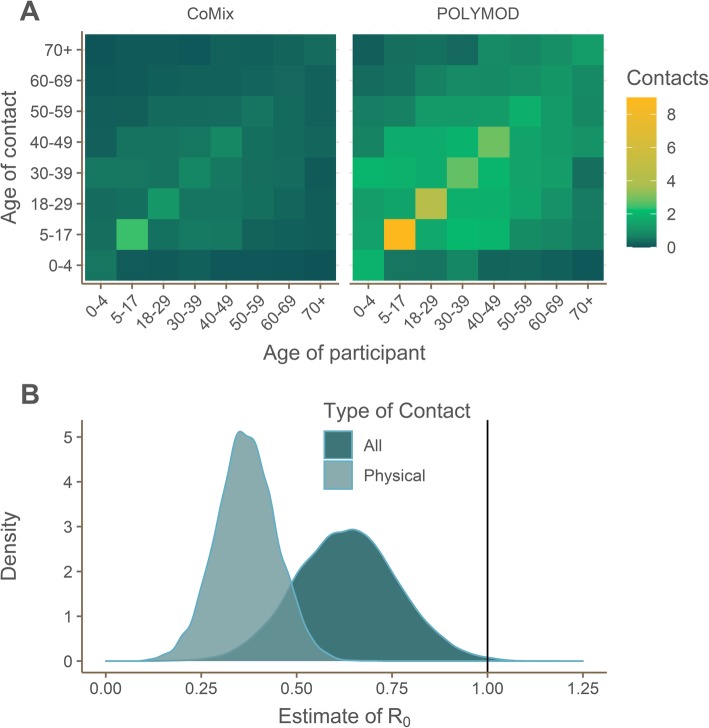
Background: To mitigate and slow the spread of COVID-19, many countries have adopted unprecedented physical distancing policies, including the UK. We evaluate whether these measures might be sufficient to control the epidemic by estimating their impact on the reproduction number ( R 0 , the average number of secondary cases generated per case). Methods: We asked a representative sample of UK adults about their contact patterns on the previous day. The questionnaire was conducted online via email recruitment and documents the age and location of contacts and a measure of their intimacy (whether physical contact was made or not). In addition, we asked about adherence to different physical distancing measures. The first surveys were sent on Tuesday, 24 March, 1 day after a “lockdown” was implemented across the UK. We compared measured contact patterns during the “lockdown” to patterns of social contact made during a non-epidemic period. By comparing these, we estimated the change in reproduction number as a consequence of the physical distancing measures imposed. We used a meta-analysis of published estimates to inform our estimates of the reproduction number before interventions were put in place. Results: We found a 74% reduction in the average daily number of contacts observed per participant (from 10.8 to 2.8). This would be sufficient to reduce R 0 from 2.6 prior to lockdown to 0.62 (95% confidence interval [CI] 0.37–0.89) after the lockdown, based on all types of contact and 0.37 (95% CI = 0.22–0.53) for physical (skin to skin) contacts only. Conclusions: The physical distancing measures adopted by the UK public have substantially reduced contact levels and will likely lead to a substantial impact and a decline in cases in the coming weeks. However, this projected decline in incidence will not occur immediately as there are significant delays between infection, the onset of symptomatic disease, and hospitalisation, as well as further delays to these events being reported. Tracking behavioural change can give a more rapid assessment of the impact of physical distancing measures than routine epidemiological surveillance.
Overview
The claims and statistics of this paper haven’t been checked yet.
Free: it reads the open-access text and checks the first 5 claims that cite a source we can check. Create a free account to check every claim.
Integrity signals
Registry
Cites
Statistics
Figures
Verification
Claims the paper makes
The claims and statistics of this paper haven’t been checked yet.
Free: it reads the open-access text and checks the first 5 claims that cite a source we can check. Create a free account to check every claim.
Claims other papers make about this one
Each is checked against this paper’s own text: does it say what the citing paper says it does?
The source backs part of the claim, not all of it — or backs it for a different population, condition or comparison.
In the citing paper
“we did not find substantial differences in social interactions between regions of high and low VOC 202012/01 prevalence, as measured by Google mobility (11) and social contact survey data (12) from September to December 2020 (Fig. 1, E and F).”
From Estimated transmissibility and impact of SARS-CoV-2 lineage B.1.1.7 in England (2021) · cites this paper as [12]
Experimental — accuracy not yet measuredThe check wasn’t confident either way, so it gives no verdict — never disputed.
In the citing paper
“These younger individuals tend to have more contacts than older age groups 33,34 .”
From Spread of a SARS-CoV-2 variant through Europe in the summer of 2020 (2021) · cites this paper as [34]
Experimental — accuracy not yet measured
Self-check
Percentages, sums and reported differences re-computed from the paper’s own numbers.
The self-check needs the paper’s full text.
Citations
Cites
R: A Language and Environment for Statistical Computing
R Core Team (2025) · doi:10.32614/r.manuals · Cited by 352,181
Wickham, H. (2016) · Use R! · doi:10.1007/978-3-319-24277-4 · Cited by 33,115
Early transmission dynamics in Wuhan, China, of novel coronavirus-infected pneumonia
Li, Q., Guan, X., Wu, P., Wang, X., Zhou, L., Tong, Y., Ren, R., Leung, K. S. M., Lau, E. H. Y., Wong, J. Y., et al. (2020) · New England Journal of Medicine · doi:10.1056/nejmoa2001316 · Cited by 16,575
ggplot2: Elegant Graphics for Data Analysis
Wickham, H. (2009) · doi:10.1007/978-0-387-98141-3 · Cited by 14,447
The effect of travel restrictions on the spread of the 2019 novel coronavirus (COVID-19) outbreak
Chinazzi, M., Davis, J. T., Ajelli, M., Gioannini, C., Litvinova, M., Merler, S., Pastore y Piontti, A., Mu, K., Rossi, L., Sun, K., et al. (2020) · Science · doi:10.1126/science.aba9757 · Cited by 3,694
Social Contacts and Mixing Patterns Relevant to the Spread of Infectious Diseases
Mossong, J., Hens, N., Jit, M., Beutels, P., Auranen, K., Mikolajczyk, R., Massari, M., Salmaso, S., Tomba, G. S., Wallinga, J., et al. (2008) · PLoS Medicine · doi:10.1371/journal.pmed.0050074 · Cited by 2,900
Self-citationF. T. Z. H. O. W. U. N. C. M. A. R. T., Jin, Y.-H., Cai, L., Cheng, Z.-S., Cheng, H., Deng, T., Fan, Y.-P., Fang, C., Huang, D., Huang, L.-Q., et al. (2020) · Military Medical Research · doi:10.1186/s40779-020-0233-6 · Cited by 2,254
The construction of next-generation matrices for compartmental epidemic models
Diekmann, O., Heesterbeek, J. A. P., & Roberts, M. G. (2010) · Journal of The Royal Society Interface · doi:10.1098/rsif.2009.0386 · Cited by 2,119
Zhao, S., Lin, Q., Ran, J., Musa, S. S., Yang, G., Wang, W., Lou, Y., Gao, D., Yang, L., He, D., et al. (2020) · International Journal of Infectious Diseases · doi:10.1016/j.ijid.2020.01.050 · Cited by 1,853
Riou, J., & Althaus, C. L. (2020) · Eurosurveillance · doi:10.2807/1560-7917.es.2020.25.4.2000058 · Cited by 1,297
Research works printed but not linked: 2
- Acaps M. COVID-19: government measures. 2020. https://www.acaps.org/special-report/covid-19-government-measures. Accessed 25 Mar 2020.
- Savanta. Savanta coronavirus daily tracker - 30th March. Savanta coronavirus daily tracker. 2020. https://cdn2.hubspot.net/hubfs/5043860/Covid-19%20assets/Full%20data%20set%20PDFs/Savanta%20Coronavirus%20Daily%20Tracker%20-%2030th%20March.pdf. Accessed 31 Mar 2020.
Cited by
Estimated transmissibility and impact of SARS-CoV-2 lineage B.1.1.7 in England
Davies, N. G., Abbott, S., Barnard, R. C., Jarvis, C. I., Kucharski, A. J., Munday, J. D., Pearson, C. A. B., Russell, T. W., Tully, D. C., Washburne, A. D., et al. (2021) · Science · doi:10.1126/science.abg3055 · Cited by 2,581
“031) 12 (11-12) 18 (18-18) 2a UK sequence separate-slopes binomial GLMM (1|LTLA/OBS) + REGION * DATE UK avg.”
BackgroundInfluentialSelf-citationChanges in contact patterns shape the dynamics of the COVID-19 outbreak in China
Zhang, J., Litvinova, M., Liang, Y., Wang, Y., Wang, W., Zhao, S., Wu, Q., Merler, S., Viboud, C., Vespignani, A., et al. (2020) · Science · doi:10.1126/science.abb8001 · Cited by 1,107
Inferring the effectiveness of government interventions against COVID-19
Brauner, J. M., Mindermann, S., Sharma, M., Johnston, D., Salvatier, J., Gavenčiak, T., Stephenson, A. B., Leech, G., Altman, G., Mikulik, V., et al. (2021) · Science · doi:10.1126/science.abd9338 · Cited by 1,065
Estimating the burden of SARS-CoV-2 in France
Salje, H., Tran Kiem, C., Lefrancq, N., Courtejoie, N., Bosetti, P., Paireau, J., Andronico, A., Hozé, N., Richet, J., Dubost, C.-L., et al. (2020) · Science · doi:10.1126/science.abc3517 · Cited by 1,038
Kucharski, A. J., Klepac, P., Conlan, A. J. K., Kissler, S. M., Tang, M. L., Fry, H., Gog, J. R., Edmunds, W. J., Emery, J. C., Medley, G., et al. (2020) · The Lancet Infectious Diseases · doi:10.1016/s1473-3099(20)30457-6 · Cited by 900
Self-citationTalic, S., Shah, S., Wild, H., Gasevic, D., Maharaj, A., Ademi, Z., Li, X., Xu, W., Mesa-Eguiagaray, I., Rostron, J., et al. (2021) · BMJ · doi:10.1136/bmj-2021-068302 · Cited by 787
Davies, N. G., Kucharski, A. J., Eggo, R. M., Gimma, A., Edmunds, W. J., Jombart, T., O'Reilly, K., Endo, A., Hellewell, J., Nightingale, E. S., et al. (2020) · The Lancet Public Health · doi:10.1016/s2468-2667(20)30133-x · Cited by 848
“However, as a point of comparison, recent empirical estimates of the reproduction number in the UK 32,33 are compatible with our assumptions concerning R 0 and the impact of lockdown measures (appendix p 13) .”
Self-citationModel-informed COVID-19 vaccine prioritization strategies by age and serostatus
Bubar, K. M., Reinholt, K., Kissler, S. M., Lipsitch, M., Cobey, S., Grad, Y. H., & Larremore, D. B. (2021) · Science · doi:10.1126/science.abe6959 · Cited by 775
“We used pre-pandemic contact matrices (21), reflecting the goal of a return to pre-pandemic routines once a vaccine is available, but more recent estimates of age-stratified contact rates could be valuable in modeling mid-pandemic scenarios (36, 37).”
The Impact of Vaccination on Coronavirus Disease 2019 (COVID-19) Outbreaks in the United States
Moghadas, S. M., Vilches, T. N., Zhang, K., Wells, C. R., Shoukat, A., Singer, B. H., Meyers, L. A., Neuzil, K. M., Langley, J. M., Fitzpatrick, M. C., et al. (2021) · Clinical Infectious Diseases · doi:10.1093/cid/ciab079 · Cited by 678
“The contact patterns during isolation were specified by an agedependent daily number of contacts based on a matrix derived from a representative sample population during COVID-19 lockdown [43].”
Estimated transmissibility and impact of SARS-CoV-2 lineage B.1.1.7 in England
Davies, N. G., Abbott, S., Barnard, R. C., Jarvis, C. I., Kucharski, A. J., Munday, J. D., Pearson, C. A. B., Russell, T. W., Tully, D. C., Washburne, A. D., et al. (2020) · doi:10.1101/2020.12.24.20248822 · Cited by 2,557
Self-citationNon-pharmaceutical interventions during the COVID-19 pandemic: A review
Perra, N. (2021) · Physics Reports · doi:10.1016/j.physrep.2021.02.001 · Cited by 531
“similar study conducted during the lockdown in the UK report consistent, though smaller, reduction contacts (a factor ) [27].”
BackgroundGkiotsalitis, K., & Cats, O. (2021) · Transport Reviews · doi:10.1080/01441647.2020.1857886 · Cited by 478
“In fact, the risk might increase exponentially for distances below 1 m and physical distancing policies of 1, 1.5, or 2 m try to ensure a low transmission risk (Jarvis et al., 2020).”
BackgroundInfluentialAskitas, N., Tatsiramos, K., & Verheyden, B. (2021) · Scientific Reports · doi:10.1038/s41598-021-81442-x · Cited by 311
Spread of a SARS-CoV-2 variant through Europe in the summer of 2020
Hodcroft, E. B., Zuber, M., Nadeau, S., Vaughan, T. G., Crawford, K. H. D., Althaus, C. L., Reichmuth, M. L., Bowen, J. E., Walls, A. C., Corti, D., et al. (2021) · Nature · doi:10.1038/s41586-021-03677-y · Cited by 425
Impact of lockdown on COVID-19 epidemic in Île-de-France and possible exit strategies
Di Domenico, L., Pullano, G., Sabbatini, C. E., Boëlle, P.-Y., & Colizza, V. (2020) · BMC Medicine · doi:10.1186/s12916-020-01698-4 · Cited by 396
“We compare the lockdown based on our reconstructed matrix with (i) a less stringent lockdown under the reduction of contacts measured in the UK [45], (ii) a more stringent lockdown under the reduction of contacts measured in China [46], (iii) a fit of the model during the lockdown phase, (iv) an additional version of…”
BackgroundMethodResultInfluentialIndividual variation in susceptibility or exposure to SARS-CoV-2 lowers the herd immunity threshold
Gomes, M. G. M., Ferreira, M. U., Corder, R. M., King, J. G., Souto-Maior, C., Penha-Gonçalves, C., Gonçalves, G., Chikina, M., Pegden, W., & Aguas, R. (2022) · Journal of Theoretical Biology · doi:10.1016/j.jtbi.2022.111063 · Cited by 329
Age groups that sustain resurging COVID-19 epidemics in the United States
Monod, M., Blenkinsop, A., Xi, X., Hebert, D., Bershan, S., Tietze, S., Baguelin, M., Bradley, V. C., Chen, Y., Coupland, H., et al. (2021) · Science · doi:10.1126/science.abe8372 · Cited by 331
“org (Page numbers not final at time of first release) 7 Briefly, we consider populations stratified by the 5-year age bands A, such that a ∈ A = {[0-4], [5-9], .”
BackgroundBenfer, E. A., Vlahov, D., Long, M. Y., Walker-Wells, E., Pottenger, J. L., Gonsalves, G., & Keene, D. E. (2021) · Journal of Urban Health · doi:10.1007/s11524-020-00502-1 · Cited by 313
“For these reasons, the Centers for Disease Control and Prevention’s (CDC) primary pandemic interventions, including social distancing, maintaining good hygiene practices, self-quarantining, cleaning masks and other personal protective equipment, and limiting or restricting indoor gatherings, have been effective in red…”
Teslya, A., Pham, T. M., Godijk, N. G., Kretzschmar, M. E., Bootsma, M. C. J., & Rozhnova, G. (2020) · PLOS Medicine · doi:10.1371/journal.pmed.1003166 · Cited by 314
“For example, a 73% reduction in the average daily number of contacts was observed during the lockdown in the United Kingdom [37], but the reduction could be different in countries with more or less stringent lockdown.”
BackgroundEmergence and spread of a SARS-CoV-2 variant through Europe in the summer of 2020
Hodcroft, E. B., Zuber, M., Nadeau, S., Vaughan, T. G., Crawford, K. H. D., Althaus, C. L., Reichmuth, M. L., Bowen, J. E., Walls, A. C., Corti, D., et al. (2020) · medRxiv · doi:10.1101/2020.10.25.20219063 · Cited by 323
Inferring high-resolution human mixing patterns for disease modeling
Mistry, D., Litvinova, M., Pastore y Piontti, A., Chinazzi, M., Fumanelli, L., Gomes, M. F. C., Haque, S. A., Liu, Q.-H., Mu, K., Xiong, X., et al. (2021) · Nature Communications · doi:10.1038/s41467-020-20544-y · Cited by 289
Effect of the social distancing measures on the spread of COVID-19 in 10 highly infected countries
Thu, T. P. B., Ngoc, P. N. H., Hai, N. M., & Tuan, L. A. (2020) · Science of The Total Environment · doi:10.1016/j.scitotenv.2020.140430 · Cited by 280
“Meanwhile, it took The U.K. and The U.S. about 4 weeks since the highest level of the social distancing measures were promulgated until the number of daily confirmed-cases started to stop rising.”
BackgroundInfluentialThe Global Dynamic Interventions Strategies for COVID-19 Collaborative Group, Chowdhury, R., Heng, K., Shawon, M. S. R., Goh, G., Okonofua, D., Ochoa-Rosales, C., Gonzalez-Jaramillo, V., Bhuiya, A., Reidpath, D., et al. (2020) · European Journal of Epidemiology · doi:10.1007/s10654-020-00649-w · Cited by 275
Hinch, R., Probert, W. J. M., Nurtay, A., Kendall, M., Wymant, C., Hall, M., Lythgoe, K., Bulas Cruz, A., Zhao, L., Stewart, A., et al. (2021) · PLOS Computational Biology · doi:10.1371/journal.pcbi.1009146 · Cited by 250
“33 of pre-lockdown levels; similar to values reported in [30] from the first wave in the UK).”
Prem, K., Zandvoort, K. V., Klepac, P., Eggo, R. M., Davies, N. G., Centre for the Mathematical Modelling of Infectious Diseases COVID-19 Working Group, Cook, A. R., & Jit, M. (2021) · PLOS Computational Biology · doi:10.1371/journal.pcbi.1009098 · Cited by 268
Self-citationWilliams, C. Y. K., Townson, A. T., Kapur, M., Ferreira, A. F., Nunn, R., Galante, J., Phillips, V., Gentry, S., & Usher-Smith, J. A. (2021) · PLOS ONE · doi:10.1371/journal.pone.0247139 · Cited by 250
Honein, M. A., Christie, A., Rose, D. A., Brooks, J. T., Meaney-Delman, D., Cohn, A., Sauber-Schatz, E. K., Walker, A., McDonald, L. C., Liburd, L. C., et al. (2020) · MMWR. Morbidity and Mortality Weekly Report · doi:10.15585/mmwr.mm6949e2 · Cited by 253
“49 1863 US Department of Health and Human Services/Centers for Disease Control and Prevention contacts by as much as 74% and reduced the reproductive number (R0, a measure of transmission, which describes the average number of persons infected by one infectious person) to <1 (8).”
BackgroundGupta, S., Nguyen, T., Rojas, F. L., Raman, S., Lee, B., Bento, A., Simon, K., & Wing, C. (2020) · National Bureau of Economic Research · doi:10.3386/w27027 · Cited by 229
COVID-19 Misinformation Trends in Australia: Prospective Longitudinal National Survey
Pickles, K., Cvejic, E., Nickel, B., Copp, T., Bonner, C., Leask, J., Ayre, J., Batcup, C., Cornell, S., Dakin, T., et al. (2021) · Journal of Medical Internet Research · doi:10.2196/23805 · Cited by 205
Optimal Control of the COVID-19 Pandemic with Non-pharmaceutical Interventions
Perkins, T. A., & España, G. (2020) · Bulletin of Mathematical Biology · doi:10.1007/s11538-020-00795-y · Cited by 199
“Maximum effect of control, umax A model incorporating survey data and age-based contact patterns estimated that social distancing could reduce transmission of SARSCoV-2 by 73% (Jarvis et al. 2020).”
BackgroundMethodInfluentialQuantifying population contact patterns in the United States during the COVID-19 pandemic
Feehan, D. M., & Mahmud, A. S. (2021) · Nature Communications · doi:10.1038/s41467-021-20990-2 · Cited by 175
Sandmann, F. G., Davies, N. G., Vassall, A., Edmunds, W. J., Jit, M., Sun, F. Y., Villabona-Arenas, C. J., Nightingale, E. S., Showering, A., Knight, G. M., et al. (2021) · The Lancet Infectious Diseases · doi:10.1016/s1473-3099(21)00079-7 · Cited by 176
Self-citationPouwels, K. B., House, T., Pritchard, E., Robotham, J. V., Birrell, P. J., Gelman, A., Vihta, K.-D., Bowers, N., Boreham, I., Thomas, H., et al. (2021) · The Lancet Public Health · doi:10.1016/s2468-2667(20)30282-6 · Cited by 176
Tracking COVID-19 using online search
Lampos, V., Majumder, M. S., Yom-Tov, E., Edelstein, M., Moura, S., Hamada, Y., Rangaka, M. X., McKendry, R. A., & Cox, I. J. (2021) · npj Digital Medicine · doi:10.1038/s41746-021-00384-w · Cited by 164
“The decrease in the web search scores was interpreted as an early signal of the impact of physical distancing 37 .”
Evaluation of COVID-19 vaccination strategies with a delayed second dose
Moghadas, S. M., Vilches, T. N., Zhang, K., Nourbakhsh, S., Sah, P., Fitzpatrick, M. C., & Galvani, A. P. (2021) · PLOS Biology · doi:10.1371/journal.pbio.3001211 · Cited by 154
Quaife, M., van Zandvoort, K., Gimma, A., Shah, K. C., McCreesh, N., Prem, K., Barasa, E., Mwanga, D. M., Kangwana, B. P., Pinchoff, J., et al. (2020) · BMC Medicine · doi:10.1186/s12916-020-01779-4 · Cited by 166
Self-citationHillary, L. S., Farkas, K., Maher, K. H., Lucaci, A. O., Thorpe, J. M., Distaso, M. A., Gaze, W. H., Paterson, S., Burke, T. A., Connor, T. R., et al. (2021) · Water Research · doi:10.1016/j.watres.2021.117214 · Cited by 154
Gimma, A., Munday, J. D., Wong, K. L., Coletti, P., van Zandvoort, K., Prem, K., CMMID COVID-19 working group, Klepac, P., Rubin, G. J., Funk, S., et al. (2022) · PLoS Medicine · doi:10.1371/journal.pmed.1003907 · Cited by 168
“…feedback for policy interventions to the UK government, been used as an early indicator of changes or potential changes to the basic reproduction number [10,12], and provides invaluable data to parameter-ise models and to inform future study of the transmission and control of respiratory diseases.”
InfluentialSelf-citationMurphy, B., Benson, T., McCloat, A., Mooney, E., Elliott, C. T., Dean, M., & Lavelle, F. (2020) · Nutrients · doi:10.3390/nu13010020 · Cited by 145
“In order to provide a cross-continental comparison, four countries (New Zealand, USA, Great Britain, and the Island of Ireland) were chosen as comparator countries as they have all reported concerns around a decline in home cooking and implemented interventions to try increase cooking and similar socio-economic profil…”
MethodInfluentialDavies, N. G., Barnard, R. C., Jarvis, C. I., Russell, T. W., Semple, M. G., Jit, M., & Edmunds, W. J. (2021) · The Lancet Infectious Diseases · doi:10.1016/s1473-3099(20)30984-1 · Cited by 142
“We measured the relationship between anonymised mobility data collected from smart-phone users by Google Community Mobility 12 and fine-grained social-contact survey data from the CoMix study, 13 which has been collecting data on UK residents’ daily interpersonal contacts since late March, 2020.”
Self-citationResponse strategies for COVID-19 epidemics in African settings: a mathematical modelling study
van Zandvoort, K., Jarvis, C. I., Pearson, C. A. B., Davies, N. G. M., CMMID COVID-19 working group, Nightingale, E., Munday, J. D., Gimma, A., Roselló, A., Villabona‐Arenas, C. J., et al. (2020) · BMC Medicine · doi:10.1186/s12916-020-01789-2 · Cited by 150
“0–100% relative reduction in transmission (we assumed that ‘lockdown’ measures would correspond to an 80% reduction) [35].”
BackgroundSelf-citationCoMix: comparing mixing patterns in the Belgian population during and after lockdown
Coletti, P., Wambua, J., Gimma, A., Willem, L., Vercruysse, S., Vanhoutte, B., Jarvis, C. I., van Zandvoort, K., Edmunds, J., Beutels, P., et al. (2020) · Scientific Reports · doi:10.1038/s41598-020-78540-7 · Cited by 152
Self-citationKey epidemiological drivers and impact of interventions in the 2020 SARS-CoV-2 epidemic in England
Knock, E., Whittles, L. K., Lees, J. A., Perez‐Guzman, P. N., Verity, R., FitzJohn, R. G., Gaythorpe, K. A. M., Imai, N., Hinsley, W. R., Okell, L., et al. (2021) · Science Translational Medicine · doi:10.1126/scitranslmed.abg4262 · Cited by 137
Rapid Review of Social Contact Patterns During the COVID-19 Pandemic
Liu, C. Y., Berlin, J., Kiti, M. C., Fava, E. D., Grow, A., Zagheni, E., Melegaro, A., Jenness, S. M., Omer, S. B., Lopman, B. A., et al. (2021) · Epidemiology · doi:10.1097/ede.0000000000001412 · Cited by 134
Cryptic transmission of SARS-CoV-2 and the first COVID-19 wave
Davis, J. T., Chinazzi, M., Perra, N., Mu, K., y Piontti, A. P., Ajelli, M., Dean, N. E., Gioannini, C., Litvinova, M., Merler, S., et al. (2021) · Nature · doi:10.1038/s41586-021-04130-w · Cited by 142
Impact of COVID-19 pandemic on people living with visual disability
Senjam, S. S. (2020) · Indian Journal of Ophthalmology · doi:10.4103/ijo.ijo_1513_20 · Cited by 129
“These measures are to minimize the risk of exposure to the virus causing the COVID‑19.”
BackgroundInfluentialQuantifying the impact of the COVID-19 lockdown on household water consumption patterns in England
Abu-Bakar, H., Williams, L., & Hallett, S. H. (2021) · npj Clean Water · doi:10.1038/s41545-021-00103-8 · Cited by 124
“The ongoing COVID-19 pandemic had its first confirmed case in the United Kingdom in late January 2020, but transmission increased rapidly leading to the government imposing a lockdown on the whole population, banning all “non-essential” travel and contact with people outside one’s home on 23 March 2020.(1) Globally, t…”
BackgroundSmith, T., Flaxman, S. R., Gallinat, A. S., Kinosian, S. P., Stemkovski, M., Unwin, H. J. T., Watson, O. J., Whittaker, C., Cattarino, L., Dorigatti, I., et al. (2021) · Proceedings of the National Academy of Sciences · doi:10.1073/pnas.2019284118 · Cited by 122
“Our results comparing SARS-CoV-2 transmission rate before and during lockdown support the idea that the major driver of transmission is public health policy (34, 48, 49) (Fig.”
Simulating COVID-19 in a university environment
Gressman, P. T., & Peck, J. (2020) · Mathematical Biosciences · doi:10.1016/j.mbs.2020.108436 · Cited by 127
“This is consistent with a number of surveys of the general public which found that participants’ self-reported average daily contacts fell in the range of 10 to 14 per day [14, 32].”
Mousa, A., Winskill, P., Watson, O. J., Ratmann, O., Monod, M., Ajelli, M., Diallo, A., Dodd, P. J., Grijalva, C. G., Kiti, M. C., et al. (2021) · eLife · doi:10.7554/elife.70294 · Cited by 134
CMMID COVID-19 working group, Jarvis, C. I., Gimma, A., van Zandvoort, K., Wong, K. L., & Edmunds, W. J. (2021) · BMC Medicine · doi:10.1186/s12916-021-01924-7 · Cited by 117
“Details of the CoMix study including the protocol and survey instrument have been published previously [2].”
MethodSelf-citationInoculum at the time of SARS-CoV-2 exposure and risk of disease severity
Guallar, M. P., Meirino, R. M., Donat‐Vargas, C., Corral, O. J., Jouve, N., & Soriano, V. (2020) · International Journal of Infectious Diseases · doi:10.1016/j.ijid.2020.06.035 · Cited by 119
“Since overall 80% of the contagions seem to have derived from only 10% of infected individuals (Jarvis et al., 2020), shifting the SARS-CoV-2 community transmission rate (R0) to less than 2 would require that less than half of the population would need to be infected to produce herd immunity (Fig.”
Resurgence of SARS-CoV-2: Detection by community viral surveillance
REACT study group, Riley, S., Ainslie, K. E. C., Eales, O. D., Walters, C. E., Wang, H., Atchison, C. J., Fronterrè, C., Diggle, P. J., Ashby, D., et al. (2021) · Science · doi:10.1126/science.abf0874 · Cited by 122
Leung, K. S. M., Wu, J. T. K., & Leung, G. M. (2021) · Nature Communications · doi:10.1038/s41467-021-21776-2 · Cited by 120
Accelerated vaccine rollout is imperative to mitigate highly transmissible COVID-19 variants
Sah, P., VILCHES, T. N., Moghadas, S. M., Fitzpatrick, M. C., Singer, B. H., Hotez, P. J., & Galvani, A. P. (2021) · EClinicalMedicine · doi:10.1016/j.eclinm.2021.100865 · Cited by 112
“Daily contacts between individuals were sampled from a negative-binomial distribution parameterized using an empirically-determined age-speci fi c contact network (Appendix, Table A2) [20,21].”
Backer, J. A., Mollema, L., Vos, E. R. A., Klinkenberg, D., van der Klis, F. R. M., de Melker, H. E., van den Hof, S., & Wallinga, J. (2021) · Eurosurveillance · doi:10.2807/1560-7917.es.2021.26.8.2000994 · Cited by 111
Clemente‐Suárez, V. J., Beltrán-Velasco, A. I., Ramos‐Campo, D. J., Mielgo‐Ayuso, J., Nikolaidis, P. Τ., Belando‐Pedreño, N., & Tornero-Aguilera, J. F. (2021) · Physiology & Behavior · doi:10.1016/j.physbeh.2021.113667 · Cited by 119
Villela, E. F. D. M., López, R. V. M., Sato, A. P. S., de Oliveira, F. M., Waldman, E. A., den Bergh, R. V., Fodjo, J. N. S., & Colebunders, R. (2021) · BMC Public Health · doi:10.1186/s12889-021-10222-z · Cited by 106
Khailaie, S., Mitra, T., Bandyopadhyay, A., Schips, M., Mascheroni, P., Vanella, P., Lange, B., Binder, S. C., & Meyer‐Hermann, M. (2021) · BMC Medicine · doi:10.1186/s12916-020-01884-4 · Cited by 104
Herd immunity thresholds for SARS-CoV-2 estimated from unfolding epidemics
Aguas, R., Gonçalves, G., Ferreira, M. U., & M. Gomes, M. G. (2020) · medRxiv · doi:10.1101/2020.07.23.20160762 · Cited by 96
Mathematical modelling of the dynamics and containment of COVID-19 in Ukraine
Kyrychko, Y. N., Blyuss, K. B., & Александрович, Б. И. (2020) · Scientific Reports · doi:10.1038/s41598-020-76710-1 · Cited by 103
Han, S., Cai, J., Yang, J., Zhang, J., Wu, Q., Zheng, W., Shi, H., Ajelli, M., Zhou, X., & Yu, H. (2021) · Nature Communications · doi:10.1038/s41467-021-24872-5 · Cited by 109
Haller, E., Ļubenko, J., Presti, G., Squatrito, V., Constantinou, M., Nicolaou, C., Papacostas, S., Aydın, G., Chong, Y. Y., Chien, W. T., et al. (2022) · Frontiers in Psychology · doi:10.3389/fpsyg.2021.775032 · Cited by 103
Shen, M., Zu, J., Fairley, C. K., Pagán, J. A., An, L., Du, Z., Guo, Y., Rong, L., Xiao, Y., Zhuang, G., et al. (2021) · Vaccine · doi:10.1016/j.vaccine.2021.02.056 · Cited by 101
The importance of non-pharmaceutical interventions during the COVID-19 vaccine rollout
Gozzi, N., Bajardi, P., & Perra, N. (2021) · PLoS Computational Biology · doi:10.1371/journal.pcbi.1009346 · Cited by 98
Quantifying the impact of COVID-19 control measures using a Bayesian model of physical distancing
Anderson, S. C., Edwards, A. M., Yerlanov, M., Mulberry, N., Stockdale, J. E., Iyaniwura, S. A., Falcão, R. C., Otterstatter, M. C., Irvine, M. A., Janjua, N. Z., et al. (2020) · PLoS Computational Biology · doi:10.1371/journal.pcbi.1008274 · Cited by 99
Gaythorpe, K. A. M., Bhatia, S., Mangal, T. D., Unwin, H. J. T., Imai, N., Cuomo-Dannenburg, G., Walters, C. E., Jauneikaite, E., Bayley, H., Kont, M. D., et al. (2021) · Scientific Reports · doi:10.1038/s41598-021-92500-9 · Cited by 103
Abrams, S., Wambua, J., Santermans, E., Willem, L., Kuylen, E., Coletti, P., Libin, P., Faes, C., Petrof, O., Herzog, S. A., et al. (2021) · Epidemics · doi:10.1016/j.epidem.2021.100449 · Cited by 110
Challenges for modelling interventions for future pandemics
Kretzschmar, M., Ashby, B., Fearon, E., Overton, C. E., Panovska‐Griffiths, J., Pellis, L., Quaife, M., Rozhnova, G., Scarabel, F., Stage, H. B., et al. (2022) · Epidemics · doi:10.1016/j.epidem.2022.100546 · Cited by 101
Ramchandani, A., Fan, C., & Mostafavi, A. (2020) · IEEE Access · doi:10.1109/access.2020.3019989 · Cited by 89
“distancing guidelines [15], [16], weather [17], population density [18], and demographics [19] affect the spread of COVID-19.”
BackgroundBechard, L., Bergelt, M., Neudorf, B., DeSouza, T. C., & Middleton, L. E. (2021) · Frontiers in Psychology · doi:10.3389/fpsyg.2021.609893 · Cited by 95
“Adherence to public health measures can limit the rate of transmission, thus reducing the number of cases and fatalities and the risk of overwhelming health systems (Jarvis et al., 2020; Tuite et al., 2020).”
BackgroundHow and When to End the COVID-19 Lockdown: An Optimization Approach
Rawson, T., Brewer, T., Veltcheva, D., Huntingford, C., & Bonsall, M. B. (2020) · Frontiers in Public Health · doi:10.3389/fpubh.2020.00262 · Cited by 95
“Additional measures proposed include: reopening local connections before connecting cities further apart (26), differential release times based on age (27–29), ongoing social distancing (9, 30, 31), contact tracing using mobile applications (32) and behavior monitoring (33), case-finding (34), and cyclic schedules (e.”
BackgroundEvolving social contact patterns during the COVID-19 crisis in Luxembourg
Latsuzbaia, A., Herold, M., Bertemes, J.-P., & Mossong, J. (2020) · PLoS ONE · doi:10.1371/journal.pone.0237128 · Cited by 89
“and 73% reduction in the average number of daily contacts, respectively [6, 7].”
BackgroundPost-lockdown abatement of COVID-19 by fast periodic switching
Bin, M., Cheung, P. Y. K., Crisostomi, E., Ferraro, P., Lhachemi, H., Murray‐Smith, R., Myant, C., Parisini, T., Shorten, R. N., Stein, S., et al. (2021) · PLoS Computational Biology · doi:10.1371/journal.pcbi.1008604 · Cited by 96
Purwadi, P., Saputra, W. N. E., Wahyudi, A., Supriyanto, A., Muyana, S., Rohmadheny, P. S., Ariyanto, R. D., & Kurniawan, S. J. (2021) · European Journal of Educational Research · doi:10.12973/eu-jer.10.3.1515 · Cited by 94
“The government implements social distancing or physical distancing, but this strategy's success depends on community compliance for its implementation (Jarvis et al., 2020).”
BackgroundVerelst, F., Hermans, L., Vercruysse, S., Gimma, A., Coletti, P., Backer, J. A., Wong, K. L., Wambua, J., van Zandvoort, K., Willem, L., et al. (2021) · BMC Medicine · doi:10.1186/s12916-021-02133-y · Cited by 83
“modelling SARS-CoV-2 transmission [7, 8].”
ResultInfluentialSelf-citationCOVID-19 Policy Differences across US States: Shutdowns, Reopening, and Mask Mandates
Zhang, X., & Warner, M. E. (2020) · International Journal of Environmental Research and Public Health · doi:10.3390/ijerph17249520 · Cited by 82
“Social distancing practices are the most efficient way to reduce COVID-19 spread and were implemented in China [3], South Korea [4], Singapore [5], the UK [6], Spain [7], and many countries in the European Union [8].”
BackgroundWork‐Related Psychosocial Risk Factors and Coping Resources during the COVID‐19 Crisis
Rigotti, T., Yang, L., Jiang, Z., Newman, A., Cuyper, N. D., & Sekiguchi, T. (2021) · Applied Psychology · doi:10.1111/apps.12307 · Cited by 93
Kretzschmar, M., Rozhnova, G., & van Boven, M. (2020) · Frontiers in Physics · doi:10.3389/fphy.2020.622485 · Cited by 87
Optimal Allocation of the Limited COVID-19 Vaccine Supply in South Korea
Shim, E. (2021) · Journal of Clinical Medicine · doi:10.3390/jcm10040591 · Cited by 90
Davis, E. L., Lucas, T. C. D., Borlase, A., Pollington, T. M., Abbott, S., Ayabina, D. V., Crellen, T., Hellewell, J., Pi, L., CMMID COVID-19 Working Group, et al. (2021) · Nature Communications · doi:10.1038/s41467-021-25531-5 · Cited by 90
Self-citationLee, W. D., Qian, M., & Schwanen, T. (2021) · Health & Place · doi:10.1016/j.healthplace.2021.102563 · Cited by 86
The impact of relaxing interventions on human contact patterns and SARS-CoV-2 transmission in China
Zhang, J., Litvinova, M., Liang, Y., Zheng, W., Shi, H., Vespignani, A., Viboud, C. G., Ajelli, M., & Yu, H. (2021) · Science Advances · doi:10.1126/sciadv.abe2584 · Cited by 79
Meng, L., Dong, D., Li, L., Niu, M., Bai, Y., Wang, M., Qiu, X., Zha, Y., & Tian, J. (2020) · IEEE Journal of Biomedical and Health Informatics · doi:10.1109/jbhi.2020.3034296 · Cited by 86
Aleta, A., Martín-Corral, D., Bakker, M. A., y Piontti, A. P., Ajelli, M., Litvinova, M., Chinazzi, M., Dean, N. E., Halloran, M. E., Longini, I. M., et al. (2022) · Proceedings of the National Academy of Sciences · doi:10.1073/pnas.2112182119 · Cited by 78
Variation in human mobility and its impact on the risk of future COVID-19 outbreaks in Taiwan
Chang, M.-C., Kahn, R. J., Li, Y.-A., Lee, C., Buckee, C. O., & Chang, H. (2021) · BMC Public Health · doi:10.1186/s12889-021-10260-7 · Cited by 83
Modelling that shaped the early COVID-19 pandemic response in the UK
Brooks-Pollock, E., Danon, L., Jombart, T., & Pellis, L. (2021) · Philosophical Transactions of the Royal Society B · doi:10.1098/rstb.2021.0001 · Cited by 76
Estimating unobserved SARS-CoV-2 infections in the United States
Perkins, T. A., Cavany, S., Moore, S. M., Oidtman, R. J., Lerch, A., & Poterek, M. L. (2020) · Proceedings of the National Academy of Sciences · doi:10.1073/pnas.2005476117 · Cited by 82
Kim, J., Roh, Y. H., Ahn, J. G., Kim, M. Y., Huh, K., Jung, J., & Kang, J. (2021) · International Journal of Infectious Diseases · doi:10.1016/j.ijid.2021.07.005 · Cited by 77
The effectiveness of social bubbles as part of a Covid-19 lockdown exit strategy, a modelling study
Leng, T., White, C., Hilton, J., Kucharski, A. J., Pellis, L., Stage, H. B., Davies, N. G. M., CMMID-Covid-19, W. G., Keeling, M. J., & Flasche, S. (2020) · Wellcome Open Research · doi:10.12688/wellcomeopenres.16164.2 · Cited by 81
Resende, P. C., Delatorre, E. O., Gräf, T., Mir, D., Motta, F. C., Appolinario, L., Paixão, A. C. D., Mendonça, A. C. D. F., Ogrzewalska, M., Caetano, B. C., et al. (2021) · Frontiers in Microbiology · doi:10.3389/fmicb.2020.615280 · Cited by 78
Head, J. R., Andrejko, K. L., Cheng, Q., Collender, P. A., Phillips, S., Boser, A., Heaney, A. K., Hoover, C. M., Wu, S. L., Northrup, G. R., et al. (2021) · Journal of The Royal Society Interface · doi:10.1098/rsif.2020.0970 · Cited by 76
Tomori, D. V., Rübsamen, N., Berger, T., Scholz, S. M., Walde, J., Wittenberg, I., Lange, B., Kuhlmann, A., Horn, J., Mikolajczyk, R., et al. (2021) · BMC Medicine · doi:10.1186/s12916-021-02139-6 · Cited by 77
“ies that examined social contact patterns under strict contact reduction measures [3, 4, 15, 36].”
BackgroundMethodResultInfluentialMcLean, C. P., Utpala, R., & Sharp, G. (2022) · Frontiers in Psychology · doi:10.3389/fpsyg.2022.926709 · Cited by 130
“For many countries, these COVID-19 mitigation measures have sustained long-term, such as social-distancing and PPE wearing, to prevent transmission of the disease, even once vaccination campaigns have ceased (Jarvis et al., 2020; Reinders Folmer et al., 2021).”
BackgroundDoes COVID-19 affect metro use in Taipei?
Chang, H., Lee, B., Yang, F.-A., & Liou, Y. (2021) · Journal of Transport Geography · doi:10.1016/j.jtrangeo.2021.102954 · Cited by 74
Model-based evaluation of school- and non-school-related measures to control the COVID-19 pandemic
Rozhnova, G., van Dorp, C. H., Bruijning-Verhagen, P. C. J. L., Bootsma, M., van de Wijgert, J. H. H. M., Bonten, M. J. M., & Kretzschmar, M. (2021) · Nature Communications · doi:10.1038/s41467-021-21899-6 · Cited by 73
Human Behaviour in Response to Canadian COVID-19 Public Health Measures in a Pre-Vaccine Era
Brankston, G. (2022) · The Atrium (University of Guelph) · doi:10.17269/s41997-021-00501-y
Achilleos, S., Quattrocchi, A., Gabel, J., Heraclides, A., Kolokotroni, O., Constantinou, C., Ugarte, M. P., Nicolaou, N., Rodriguez-Llanes, J. M., Bennett, C. M., et al. (2021) · International Journal of Epidemiology · doi:10.1093/ije/dyab123 · Cited by 71
Self-citationMandated and Voluntary Social Distancing During The COVID-19 Epidemic: A Review
Gupta, S., Simon, K. I., & Wing, C. (2020) · National Bureau of Economic Research · doi:10.3386/w28139 · Cited by 78
Yin, H., Sun, T., Yao, L., Jiao, Y., Ma, L., Lin, L., Graff, J. C., Aleya, L., Postlethwaite, A. E., Gu, W., et al. (2021) · Environmental Science and Pollution Research · doi:10.1007/s11356-021-12364-4 · Cited by 68
Metadata
- Authors
- CMMID COVID-19 working group, Jarvis, C. I., Van Zandvoort, K., Gimma, A., Prem, K., Klepac, P., Rubin, G. J., & Edmunds, W. J.
- Affiliations
- London School of Hygiene & Tropical Medicine (GB)
- King's College London (GB)
- Corresponding author
- Jarvis, Christopher I.
- Venue
- BMC Medicine
- Published
- 2020-05-07
- Volume
- 18
- Issue
- 1
- Pages
- 124-124
- ISSN
- 1741-7015 (ISSN-L)
- PMC
- PMC7202922
- OpenAlex
- W3021151406
- Cited by
- 720
- References
- 28
- Citations by year
- 2026: 21 · 2025: 25 · 2024: 46 · 2023: 80 · 2022: 134 · 2021: 279 · 2020: 135
- FWCI
- 24.98
- Type
- journal article
- Language
- en
- Open access
- gold
- doi.org
- Licence
- cc-by
- creativecommons.org/licenses/by/4.0/ (tdm)
- creativecommons.org/licenses/by/4.0/ (vor)
- Locations
- BMC Medicine (publishedVersion, cc-by)
- medRxiv (acceptedVersion, cc-by-nd)
- PubMed Central (publishedVersion, cc-by)
- PubMed (publishedVersion)
- LSHTM Research Online (London School of Hygiene and Tropical Medicine) (acceptedVersion)
- DOAJ (DOAJ: Directory of Open Access Journals) (submittedVersion, cc-by-sa)
- Informationszentrum Lebenswissenschaften (ZB MED) (submittedVersion, cc-by)
- Funders
- Horizon 2020 (101003688)
- Topics
- Physical Sciences › Mathematics › Modeling and Simulation › COVID-19 epidemiological studies
- Social Sciences › Sociology and Political Science › COVID-19 Prevention and Impact
- Health Sciences › Medicine › Infectious Diseases › SARS-CoV-2 and COVID-19 Research
- Keywords
- COVID-19 pandemic, social distancing, lockdown, social contact patterns, reproduction number, skin-to-skin contact, epidemic control, behavior change
- MeSH terms
- Betacoronavirus, COVID-19, SARS-CoV-2, Activities of Daily Living, Adult, United Kingdom, Health Policy, Humans, Interpersonal Relations, Models, Theoretical, Pneumonia, Viral, Surveys and Questionnaires, Social Isolation, Incidence, Contact Tracing, Coronavirus Infections, Basic Reproduction Number, Epidemics, Pandemics
About these checks
Registry, retraction, Cites and statistics results are computed, not judged, with one exception: a printed reference that no index lists is read once by a model before it counts as a citation error. Claims are extracted by a model and kept only when their quote appears verbatim in the text; each cited source is then checked, with a model’s help, for whether it says what the claim relies on. Those verdicts can be wrong — read the claim’s quote and the cited source before relying on one.
Statistics and arithmetic are recomputed, not judged.
Confidence bands are shown only for fields calibrated on our annotated test set. None is calibrated yet, so no band is shown.
What counts as a claim ›How we measure confidence ›How we check this ›
Are you an author, or do you see a problem with this page? Request a review
Data sources
Bibliographic data: Semantic Scholar, OpenAlex, Crossref.
Contains information from the Semantic Scholar Academic Graph Datasets, made available under the ODC Attribution License (ODC-BY 1.0).
Semantic Scholar’s data is described in: Kinney, R., et al. (2023). The Semantic Scholar Open Data Platform. arXiv:2301.10140.
