

Quantifying the impact of physical distance measures on the transmission of COVID-19 in the UK
Open accessPublished version of a preprint
The DOI matches its Crossref record; 33 of the 33 references it cites were found in a registry or an index.
Abstract
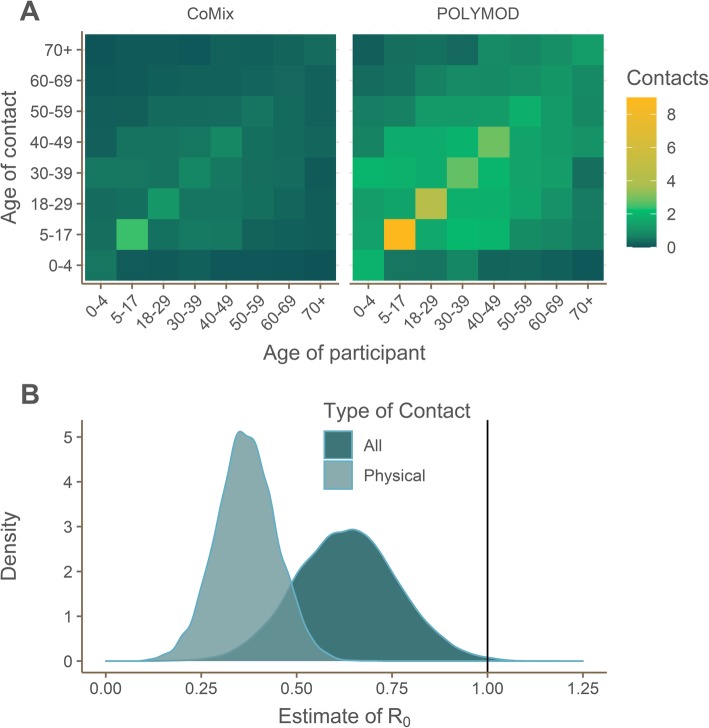
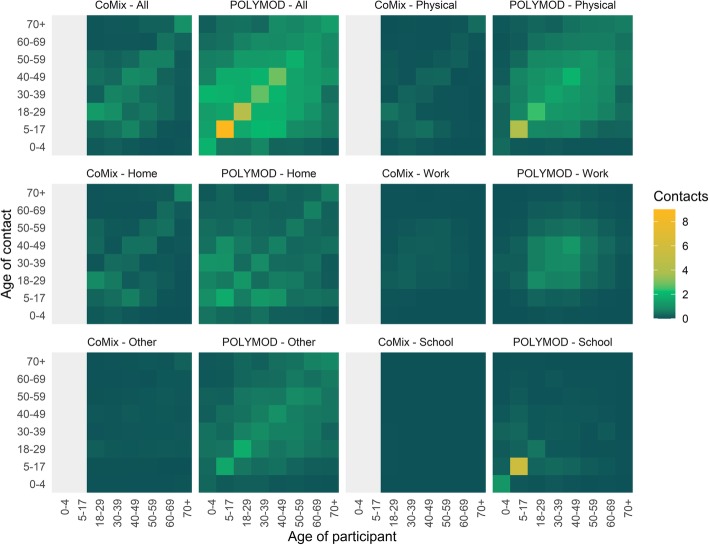
Background: To mitigate and slow the spread of COVID-19, many countries have adopted unprecedented physical distancing policies, including the UK. We evaluate whether these measures might be sufficient to control the epidemic by estimating their impact on the reproduction number ( R 0 , the average number of secondary cases generated per case). Methods: We asked a representative sample of UK adults about their contact patterns on the previous day. The questionnaire was conducted online via email recruitment and documents the age and location of contacts and a measure of their intimacy (whether physical contact was made or not). In addition, we asked about adherence to different physical distancing measures. The first surveys were sent on Tuesday, 24 March, 1 day after a “lockdown” was implemented across the UK. We compared measured contact patterns during the “lockdown” to patterns of social contact made during a non-epidemic period. By comparing these, we estimated the change in reproduction number as a consequence of the physical distancing measures imposed. We used a meta-analysis of published estimates to inform our estimates of the reproduction number before interventions were put in place. Results: We found a 74% reduction in the average daily number of contacts observed per participant (from 10.8 to 2.8). This would be sufficient to reduce R 0 from 2.6 prior to lockdown to 0.62 (95% confidence interval [CI] 0.37–0.89) after the lockdown, based on all types of contact and 0.37 (95% CI = 0.22–0.53) for physical (skin to skin) contacts only. Conclusions: The physical distancing measures adopted by the UK public have substantially reduced contact levels and will likely lead to a substantial impact and a decline in cases in the coming weeks. However, this projected decline in incidence will not occur immediately as there are significant delays between infection, the onset of symptomatic disease, and hospitalisation, as well as further delays to these events being reported. Tracking behavioural change can give a more rapid assessment of the impact of physical distancing measures than routine epidemiological surveillance.
Overview
The claims and statistics of this paper haven’t been checked yet.
Free: it reads the open-access text and checks the first 5 claims that cite a source we can check. Create a free account to check every claim.
Integrity signals
Registry
Cites
Statistics
Figures
Verification
Claims the paper makes
The claims and statistics of this paper haven’t been checked yet.
Free: it reads the open-access text and checks the first 5 claims that cite a source we can check. Create a free account to check every claim.
Claims other papers make about this one
Each is checked against this paper’s own text: does it say what the citing paper says it does?
The source backs part of the claim, not all of it — or backs it for a different population, condition or comparison.
In the citing paper
“we did not find substantial differences in social interactions between regions of high and low VOC 202012/01 prevalence, as measured by Google mobility (11) and social contact survey data (12) from September to December 2020 (Fig. 1, E and F).”
From Estimated transmissibility and impact of SARS-CoV-2 lineage B.1.1.7 in England (2021) · cites this paper as [12]
Experimental — accuracy not yet measuredThe check wasn’t confident either way, so it gives no verdict — never disputed.
In the citing paper
“These younger individuals tend to have more contacts than older age groups 33,34 .”
From Spread of a SARS-CoV-2 variant through Europe in the summer of 2020 (2021) · cites this paper as [34]
Experimental — accuracy not yet measured
Self-check
Percentages, sums and reported differences re-computed from the paper’s own numbers.
The self-check needs the paper’s full text.
Citations
Cites
R: A Language and Environment for Statistical Computing
R Core Team (2025) · doi:10.32614/r.manuals · Cited by 352,181
Wickham, H. (2016) · Use R! · doi:10.1007/978-3-319-24277-4 · Cited by 33,115
Early transmission dynamics in Wuhan, China, of novel coronavirus-infected pneumonia
Li, Q., Guan, X., Wu, P., Wang, X., Zhou, L., Tong, Y., Ren, R., Leung, K. S. M., Lau, E. H. Y., Wong, J. Y., et al. (2020) · New England Journal of Medicine · doi:10.1056/nejmoa2001316 · Cited by 16,575
ggplot2: Elegant Graphics for Data Analysis
Wickham, H. (2009) · doi:10.1007/978-0-387-98141-3 · Cited by 14,447
The effect of travel restrictions on the spread of the 2019 novel coronavirus (COVID-19) outbreak
Chinazzi, M., Davis, J. T., Ajelli, M., Gioannini, C., Litvinova, M., Merler, S., Pastore y Piontti, A., Mu, K., Rossi, L., Sun, K., et al. (2020) · Science · doi:10.1126/science.aba9757 · Cited by 3,694
Social Contacts and Mixing Patterns Relevant to the Spread of Infectious Diseases
Mossong, J., Hens, N., Jit, M., Beutels, P., Auranen, K., Mikolajczyk, R., Massari, M., Salmaso, S., Tomba, G. S., Wallinga, J., et al. (2008) · PLoS Medicine · doi:10.1371/journal.pmed.0050074 · Cited by 2,900
Self-citationF. T. Z. H. O. W. U. N. C. M. A. R. T., Jin, Y.-H., Cai, L., Cheng, Z.-S., Cheng, H., Deng, T., Fan, Y.-P., Fang, C., Huang, D., Huang, L.-Q., et al. (2020) · Military Medical Research · doi:10.1186/s40779-020-0233-6 · Cited by 2,254
The construction of next-generation matrices for compartmental epidemic models
Diekmann, O., Heesterbeek, J. A. P., & Roberts, M. G. (2010) · Journal of The Royal Society Interface · doi:10.1098/rsif.2009.0386 · Cited by 2,119
Zhao, S., Lin, Q., Ran, J., Musa, S. S., Yang, G., Wang, W., Lou, Y., Gao, D., Yang, L., He, D., et al. (2020) · International Journal of Infectious Diseases · doi:10.1016/j.ijid.2020.01.050 · Cited by 1,853
Riou, J., & Althaus, C. L. (2020) · Eurosurveillance · doi:10.2807/1560-7917.es.2020.25.4.2000058 · Cited by 1,297
Research works printed but not linked: 3
- 3. Acaps M. COVID-19: government measures. 2020.
- 4. Public Health England. Guidance on social distancing for everyone in the UK. gov.uk. 2020.
- 5. Savanta. Savanta coronavirus daily tracker - 30th March. Savanta coronavirus daily tracker. 2020.
Cited by
Items 301–400 of 719
Risk Perceptions and Private Protective Behaviors: Evidence from COVID-19 Pandemic
Bundorf, M. K., DeMatteis, J., Miller, G., Polyakova, M., Streeter, J. L., & Wivagg, J. (2025) · The Review of Economics and Statistics · doi:10.1162/rest_a_01309 · Cited by 19
Kiti, M. C., Aguolu, O. G., Zelaya, A., Chen, H., Ahmed, N., Batross, J., Liu, C. Y., Nelson, K., Jenness, S. M., Melegaro, A., et al. (2023) · Epidemics · doi:10.1016/j.epidem.2023.100727 · Cited by 14
Salvamani, S., Tan, H., Thang, W., Ter, H., Wan, M., Gunasekaran, B., & Rhodes, A. (2020) · British Journal of Biomedical Science · doi:10.1080/09674845.2020.1826136 · Cited by 14
Krägeloh, C. U., Alyami, M. M., Alyami, H., Alwaily, M. M., Alhuwaydi, A. M., & Henning, M. A. (2021) · International Journal of Mental Health and Addiction · doi:10.1007/s11469-021-00674-0 · Cited by 14
Jewell, N. P., & Lewnard, J. A. (2022) · Journal of the Royal Statistical Society Series A (Statistics in Society) · doi:10.1111/rssa.12860 · Cited by 18
“…assessments of the impacts of various non-pharmaceutical interventions aimed to reduce interactions in particular settings, both through analyses of the next-generation matrix (Jarvis et al., 2020; Van Den Driessche & Watmough, 2002) and empirically, based on ecological studies (Li et al., 2020).”
BackgroundSimons, D., Shahab, L., Brown, J., & Perski, O. (2021) · Qeios · doi:10.32388/ujr2aw.15 · Cited by 14
Dorélien, A., Simon, A. B., Hagge, S., Call, K. T., Enns, E. A., & Kulasingam, S. (2020) · Survey Practice · doi:10.29115/sp-2020-0007 · Cited by 13
“Other recent social contact surveys have asked questions such as attitudes towards COVID-19 and the effect of physical distancing measures and whether participants or household members had COVID-19 symptoms, were tested for COVID-19, or had contacts with known cases (Jarvis et al. 2020).”
BackgroundFaherty, L. J., de Lima, P. N., Lim, J. Z., Roberts, D. M., Karr, S., Lawson, E., & Willis, H. H. (2024) · Frontiers in Public Health · doi:10.3389/fpubh.2024.1426992 · Cited by 20
4P Model for Dynamic Prediction of COVID-19: a Statistical and Machine Learning Approach
Hasan, K. T., Rahman, M. M., Ahmmed, M. M., Chowdhury, A. A., & Islam, M. K. (2021) · Cognitive Computation · doi:10.1007/s12559-020-09786-6 · Cited by 14
Cheetham, N. J., Waites, W., Ebyarimpa, I., Leber, W., Brennan, K., & Panovska‐Griffiths, J. (2021) · Scientific Reports · doi:10.1038/s41598-021-84907-1 · Cited by 17
COVID-19 in Women's health: Epidemiology
Jardine, J. E., & Morris, E. (2021) · Best Practice & Research Clinical Obstetrics & Gynaecology · doi:10.1016/j.bpobgyn.2021.03.010 · Cited by 15
CALMS: Modelling the long-term health and economic impact of Covid-19 using agent-based simulation
Mintram, K. S., Anagnostou, A., Anokye, N., Okine, E., Groen, D., Saha, A., Abubakar, N. T., Islam, T., Daroge, H., Ghorbani, M., et al. (2022) · PLoS ONE · doi:10.1371/journal.pone.0272664 · Cited by 14
Youssef, D., Issa, O., Kanso, M. A., Youssef, J., Abbas, L. A., & Abboud, E. (2022) · Journal of Pharmaceutical Policy and Practice · doi:10.1186/s40545-022-00450-y · Cited by 15
“It is worth mentioning that evidence also supported the potential role of limiting contact measure with COVID-19 case, during his or her incubation period by reducing the frequency and the duration of contact, in reducing the average number of individuals to whom the virus was transmitted [11].”
BackgroundShafer, L. A., Nesca, M., & Balshaw, R. F. (2021) · PLoS ONE · doi:10.1371/journal.pone.0244537 · Cited by 14
“Self isolation may be affected by a number of factors, including public health responses [20] and awareness of ones own infection status.”
BackgroundYaesoubi, R., Havumaki, J., Chitwood, M. H., Menzies, N. A., Gonsalves, G., Salomon, J. A., Paltiel, A. D., & Cohen, T. (2021) · Medical Decision Making · doi:10.1177/0272989x21990371 · Cited by 17
Social Distancing and SARS-CoV-2 Transmission Potential Early in the Epidemic in Finland
Auranen, K. J., Shubin, M., Karhunen, M., Sivelä, J., Leino, T. M., & Nurhonen, M. (2021) · Epidemiology · doi:10.1097/ede.0000000000001344 · Cited by 13
Dangerfield, C. E., Fenichel, E. P., Finnoff, D., Hanley, N. D., Heap, S. H., Shogren, J. F., & Toxvaerd, F. (2022) · Epidemics · doi:10.1016/j.epidem.2022.100585 · Cited by 15
Banks, C. J., Colman, E. R., Doherty, T., Tearne, O., Arnold, M., Atkins, K. E., Balaz, D., Beaunée, G., Bessell, P. R., Enright, J. A., et al. (2022) · Wellcome Open Research · doi:10.12688/wellcomeopenres.17716.1 · Cited by 13
Infectious disease dynamics and restrictions on social gathering size
Boyer, C., Rumpler, É., Kissler, S. M., & Lipsitch, M. (2022) · Epidemics · doi:10.1016/j.epidem.2022.100620 · Cited by 13
Lu, D. Z., Aleta, A., Ajelli, M., Pastor‐Satorras, R., Vespignani, A., & Moreno, Y. (2021) · medRxiv · doi:10.1101/2021.03.19.21253974 · Cited by 16
Loedy, N., Wallinga, J., Hens, N., & Torneri, A. (2024) · Proceedings of the Royal Society B Biological Sciences · doi:10.1098/rspb.2024.1296 · Cited by 12
Osi, A., & Ghaffarzadegan, N. (2024) · Mathematical Biosciences · doi:10.1016/j.mbs.2024.109368 · Cited by 13
Contact data and SARS-CoV-2: Retrospective analysis of the estimated impact of the first UK lockdown
Kandiah, J., van Leeuwen, E., Birrell, P., & Angelis, D. D. (2025) · Journal of Theoretical Biology · doi:10.1016/j.jtbi.2025.112158 · Cited by 14
Alotaibi, N. E., Almutairi, S. M., Alotaibi, M., Alotaibi, M. M., & Alsufian, T. (2020) · Journal of Community Health · doi:10.1007/s10900-020-00936-3 · Cited by 12
“Furthermore, closing public places such as schools, restaurants, barbershops, and workplaces whilst letting people work remotely from home have also been introduced to reduce the spread of the virus [2, 9, 12, 13, 16, 17].”
BackgroundMeasuring close proximity interactions in summer camps during the COVID-19 pandemic
Leoni, E., Cencetti, G., Santin, G., Istomin, T., Molteni, D., Picco, G. P., Farella, E., Lepri, B., & Murphy, A. L. (2022) · EPJ Data Science · doi:10.1140/epjds/s13688-022-00316-y · Cited by 14
“During the COVID-19 pandemic, social contacts and in particular CPIs were significantly modified [19, 20, 21, 22] by several non-pharmaceutical interventions such as physical distancing measures (i.”
BackgroundSocial Contacts and Transmission of COVID-19 in British Columbia, Canada
Ringa, N., Otterstatter, M. C., Iyaniwura, S. A., Irvine, M. A., Adu, P., Janjua, N. Z., David, S., & Spencer, M. (2022) · Frontiers in Public Health · doi:10.3389/fpubh.2022.867425 · Cited by 12
“For instance, in (16), the authors analyzed United Kingdom contact survey data during periods before and after the March 2020 lockdown due to the COVID-19 pandemic, and found that a model-derived effective reproduction number declined by 75% as a response to a 74% reduction in average daily contacts.”
BackgroundHughes, H. M. F. B. R., Carneiro, R. A. V. D., Hillesheim, D., & Hallal, A. L. C. (2021) · Epidemiologia e Serviços de Saúde · doi:10.1590/s1679-49742021000400025 · Cited by 12
“62 in the estimated basic reproduction rate.(7) The results of a Brazilian study, which aimed to identify some of the potential determinants of levels of social distancing in the country, showed that norms imposing social distancing have more effect than perceived numbers of cases, suggesting that people respond bette…”
BackgroundSobek, E. A., & Elias, D. A. (2023) · PLoS ONE · doi:10.1371/journal.pone.0293504 · Cited by 12
“Infectious droplets typically travel one to two meters before settling onto surfaces, so to reduce transmission rates, health agencies implemented social distancing [5].”
BackgroundSensitivity of UK Covid-19 deaths to the timing of suppression measures and their relaxation
Dagpunar, J. S. (2020) · Infectious Disease Modelling · doi:10.1016/j.idm.2020.07.002 · Cited by 13
Niu, Z., & Scarciotti, G. (2022) · Scientific Reports · doi:10.1038/s41598-022-16532-5 · Cited by 12
“[44] conducted a survey which showed that the physical distancing could reduce the number of direct contacts by 74%.”
Shearer, F. M., Edwards, L., Kirk, M., Eales, O. D., Golding, N., Hassall, J., Liu, B. C., Lydeamore, M., Miller, C., Moss, R. G., et al. (2024) · Communicable Diseases Intelligence · doi:10.33321/cdi.2024.48.47 · Cited by 11
Phuong, H. T., Bartz, A., Jarynowski, A. K., Lange, B., Jarvis, C. I., Rübsamen, N., Mikolajczyk, R., Scholz, S. M., Berger, T., Heinsohn, T., et al. (2025) · BMC Infectious Diseases · doi:10.1186/s12879-025-10917-3 · Cited by 12
Self-citationTaube, J. C., Susswein, Z., Colizza, V., & Bansal, S. (2025) · The Lancet Digital Health · doi:10.1016/j.landig.2025.100888 · Cited by 14
“1,22,28,54 These broad scopes leave open questions about how contact patterns vary subnationally, across seasons, and between demographic and social classifications.”
Stigma and discrimination among doctors toward health-care staff working at COVID-19 sites
Kumar, P., Chanpa, N. B., Kotecha, I. S., Tiwari, D. S., Vasavada, D. A., & Bhatt, R. B. (2020) · Archives of Mental Health · doi:10.4103/amh.amh_48_20 · Cited by 11
Hitchings, M. D. T., Dean, N. E., García‐Carreras, B., Hladish, T. J., Huang, A. T., Yang, B., & Cummings, D. A. T. (2021) · American Journal of Epidemiology · doi:10.1093/aje/kwab023 · Cited by 12
Impact of treatment delays on vitiligo during the COVID ‐19 pandemic: A retrospective study
Xu, X., Zhang, C., Jiang, M., & Xiang, L. F. (2021) · Dermatologic Therapy · doi:10.1111/dth.15014 · Cited by 14
“However, virtually nothing is known about vitiligo in the context of COVID-19.”
BackgroundNgcamu, B. S., & Mantzaris, E. (2021) · Africa’s Public Service Delivery and Performance Review · doi:10.4102/apsdpr.v9i1.483 · Cited by 13
“A host of commentators (Jarvis et al. 2020) have recorded the pandemic as subsiding in developed countries such as China and Sweden, with other authors (Dehab et al.”
BackgroundResultSparks, R. S. J., Aspinall, W. P., Brooks‐Pollock, E., Cooke, R. M., Danon, L., Barclay, J., Scarrow, J. H., & Cox, J. (2021) · Royal Society Open Science · doi:10.1098/rsos.201566 · Cited by 11
Smith, L., POTTS, H. W. W., Amlôt, R., Fear, N. T., Michie, S., & Rubin, G. J. (2022) · Scientific Reports · doi:10.1038/s41598-022-14431-3 · Cited by 13
Self-citationAssessing Public Health and Social Measures Against COVID-19 in Japan From March to June 2021
Hayashi, K., Kayano, T., Anzai, A., Fujimoto, M., Linton, N. M., Sasanami, M., Suzuki, A., Kobayashi, T., Otani, K., Yamauchi, M., et al. (2022) · Frontiers in Medicine · doi:10.3389/fmed.2022.937732 · Cited by 15
Geospatial Technology-Based Analysis of Air Quality in India during the COVID-19 Pandemic
Taloor, A. K., Singh, A. K., Kumar, P., Kumar, A., Tripathi, J. N., Kumari, M., Kotlia, B. S., Kothyari, G. C., Tiwari, S. P., & Johnson, B. A. (2022) · Remote Sensing · doi:10.3390/rs14184650 · Cited by 11
Brooks‐Pollock, E., Northstone, K., Pellis, L., Scarabel, F., Thomas, A. C., Nixon, E. J., Matthews, D. A., Bowyer, V., García, M. P., Steves, C. J., et al. (2023) · BMC Medicine · doi:10.1186/s12916-022-02714-5 · Cited by 11
Real-time estimation of the effective reproduction number of COVID-19 from behavioral data
Bokányi, E., Vizi, Z., Koltai, J., Röst, G., & Karsai, M. (2023) · Scientific Reports · doi:10.1038/s41598-023-46418-z · Cited by 13
“Beyond official surveillance relying on detected case numbers and medical statistics, alternative methods can monitor the unfolding of a pandemic 47, 48 .”
MethodSuryantini, R., Atmodiwirjo, P., & Yatmo, Y. A. (2021) · Housing and Society · doi:10.1080/08882746.2021.1928854 · Cited by 11
“Physical distancing has become imperative in terms of lowering the risk of community transmission of COVID-19 through reducing social activity and limiting individuals’ daily errands to within the boundaries of the home (Djalante et al., 2020; Jarvis et al., 2020).”
BackgroundHu, W.-N., Li, D., Lam, W., Wang, Y., Wong, D. W., & Cheung, J. C. (2022) · International Journal of Environmental Research and Public Health · doi:10.3390/ijerph19137870 · Cited by 12
“Social distancing measures have induced physical inactivity and sedentary behaviours that could cause the next potential wave of physical health issues in the post-COVID-19 era [26,27].”
BackgroundDomenico, L. D., Bosetti, P., Sabbatini, C. E., Opatowski, L., & Colizza, V. (2026) · Nature Communications · doi:10.1038/s41467-026-68557-3 · Cited by 13
Abuhammad, S., Khabour, O. F., Alzoubi, K. H., El-zubi, F. K., & Hamaieh, S. H. (2022) · International Journal of Clinical Practice · doi:10.1155/2022/4495806 · Cited by 10
“Among such efforts include mandatory face masks when in public, frequent hand-sanitizing, and handwashing, social distances, avoiding public gatherings, remote working, and public event cancellation [4, 5].”
The effectiveness of vaccination, testing, and lockdown strategies against COVID-19
Fritz, M., Gries, T., & Redlin, M. (2023) · International Journal of Health Economics and Management · doi:10.1007/s10754-023-09352-1 · Cited by 9
The role of regular asymptomatic testing in reducing the impact of a COVID-19 wave
Silva, M., Fyles, M., Pi, L., Panovska‐Griffiths, J., House, T., Jay, C., & Fearon, E. (2023) · Epidemics · doi:10.1016/j.epidem.2023.100699 · Cited by 10
“For the twice weekly testing policy, increasing adherence to 100% leads to an increase in number of person days of isolation of 26% (0.8 days), 10.1% (0.4 days) and 8.8% (0.6 days) for the same growth rates, when using POLYMOD contact patterns, and 23.9% (0.8 days), 10.8% (0.5 days) and 6.5% (0.5 days), when using CoM…”
InfluentialVeneti, L., Robberstad, B., Steens, A., Forland, F., Winje, B. A., Vestrheim, D. F., Jarvis, C. I., Gimma, A., Edmunds, W. J., van Zandvoort, K., et al. (2024) · BMC Public Health · doi:10.1186/s12889-024-18853-8 · Cited by 12
“Details on the CoMix study, including the protocol and survey questionnaire have been published previously [19].”
Self-citationNakhaeizadeh, M., Eybpoosh, S., Jahani, Y., Gohari, M. A., Haghdoost, A. A., White, L. J., & Sharifi, H. P. (2021) · International Journal of Health Policy and Management · doi:10.34172/ijhpm.2021.48 · Cited by 13
“This is consistent with recent studies conducted in Wuhan, China, as well as in the UK, that respectively estimated an 85% and 74% reduction in the average number of daily contacts under physical distancing interventions [15, 16].”
Characterising social contacts under COVID-19 control measures in Africa
Dobreva, Z., Gimma, A., Rohan, H., Djoudalbaye, B., Tshangela, A., Jarvis, C. I., van Zandvoort, K., & Quaife, M. (2022) · BMC Medicine · doi:10.1186/s12916-022-02543-6 · Cited by 10
“Other studies also support the finding that most contacts occur in non-household settings [13, 18] and, when tighter restrictions are in place such as a national lockdown, the proportion of household contacts is higher than in other contact settings [33].”
ResultSelf-citationAl-Sayedahmed, H. (2020) · The Journal of Infection in Developing Countries · doi:10.3855/jidc.12943 · Cited by 10
Shoji, M., Cato, S., Iida, T., Ishida, K., Ito, A., & McElwain, K. M. (2021) · Economics of Disasters and Climate Change · doi:10.1007/s41885-021-00103-5 · Cited by 14
“Existing studies suggest that these domestic regulations can be an effective tool to control the infection spread (Gatto et al. 2020; Hoeben et al. 2021; Jarvis et al. 2020; Katafuchi et al. 2021).”
BackgroundCohort profile: the British Columbia COVID-19 Population Mixing Patterns Survey (BC-Mix)
Adu, P., Binka, M., Mahmood, B., Jeong, D., Buller-Taylor, T., Makuza, J. D., Iyaniwura, S. A., Ringa, N., García, H. A. V., Wong, S., et al. (2022) · BMJ Open · doi:10.1136/bmjopen-2021-056615 · Cited by 11
Schmid, N., Bicker, J., Hofmann, A. F., Wallrafen-Sam, K., Kerkmann, D., Wieser, A., Kühn, M. J., & Hasenauer, J. (2025) · Epidemics · doi:10.1016/j.epidem.2025.100836 · Cited by 13
Böff, L., Bartz, A., Harries, M., Strengert, M., Dulovic, A., Schneiderhan‐Marra, N., Castell, S., Heise, J.-K., Klett-Tammen, C., Krause, G., et al. (2025) · BMC Medicine · doi:10.1186/s12916-025-04211-x · Cited by 9
“The population-based recording of contact behaviour is essential to evaluate the spread of the virus and to assess changes in its transmission related to variations in contact frequency [11].”
InfluentialSelf-citationReina, J., Arcay, R. M., Busquets, M., & Machado, H. (2021) · Revista Española de Quimioterapia · doi:10.37201/req/017.2021 · Cited by 9
Walde, J., Chaturvedi, M., Berger, T., Bartz, A., Killewald, R., Tomori, D. V., Rübsamen, N., Lange, B., Scholz, S. M., Treskova, M., et al. (2023) · BMC Infectious Diseases · doi:10.1186/s12879-023-08175-2 · Cited by 9
Self-citationQuaife, M., Rueda, S. T., Dobreva, Z., van Zandvoort, K., Jarvis, C. I., Gimma, A., Zulfiqar, W., Khalid, M., & Vassall, A. (2023) · BMC Infectious Diseases · doi:10.1186/s12879-023-08305-w · Cited by 9
“[18], and implemented in UK [19] and Kenyan studies [20].”
BackgroundSelf-citationEstimating spread of contact-based contagions in a population through sub-sampling
Zeighami, S., Shahabi, C., & Krumm, J. C. (2021) · Proceedings of the VLDB Endowment · doi:10.14778/3461535.3461544 · Cited by 9
“infection during a contact increases with the duration of the contact, and decreases with the distance between individuals [3, 15, 18, 24].”
On COVID-19 country containment metrics: a new approach
Chen, R.-M. (2021) · Journal of Decision System · doi:10.1080/12460125.2021.1886625 · Cited by 9
“…for example, tracing the reproduction numbers of the viruses (Lai et al., 2020; Zhao et al., 2020), understanding the effect of physical distance (Jarvis et al., 2020), and creating mathematical dynamical systems (Agaba et al., 2017; Ferretti et al., 2020; Kyrychko et al., 2020; Liu et al.,…”
BackgroundDas, S., Pearson, M. W., Taylor, K., Bouchet, V., Møller, G. L., Hall, T. O., Strivens, M. A., Tzeng, K., & Gardner, S. (2021) · Frontiers in Digital Health · doi:10.3389/fdgth.2021.660809 · Cited by 9
Pro-environmental attitudes, altruism, and COVID-19 risk management behavior
Shrum, T., Nowak, S. A., Merrill, S. C., Hanley, J. P., Liu, T.-L., Clark, E. M., Zia, A., & Koliba, C. (2022) · Journal of Risk Research · doi:10.1080/13669877.2022.2067891 · Cited by 14
Junaedi, A., Ong, K. I. C., Rachmatullah, F., Shibanuma, A., Kiriya, J., & Jimba, M. (2022) · PLOS Global Public Health · doi:10.1371/journal.pgph.0000035 · Cited by 9
Núñez-Corrales, S., & Jakobsson, E. (2020) · medRxiv · doi:10.1101/2020.07.22.20159798 · Cited by 12
“COVID-19 has forced a frantic search for public policy measure combinations capable of containing viral transmission, and ideally quelling its progression altogether [13, 42, 47, 56, 67, 71, 89, 99, 106, 115, 116, 120].”
Adapting French COVID-19 vaccination campaign duration to variant disseminationPreprint
Pageaud, S., Ponthus, N., Gauchon, R., Pothier, C., Rigotti, C., Eyraud-Loisel, A., Bertoglio, J. P., Bienvenüe, A., Gueyffier, F., Vanhems, P., et al. (2021) · medRxiv · doi:10.1101/2021.03.17.21253739 · Cited by 9
Modelling COVID-19 in school settings to evaluate prevention and control protocols
Colosi, E., Bassignana, G., Barrat, A., & Colizza, V. (2022) · Anaesthesia Critical Care & Pain Medicine · doi:10.1016/j.accpm.2022.101047 · Cited by 9
Why We Are Losing the War Against COVID-19 on the Data Front and How to Reverse the Situation
Prieto‐Merino, D., Providencia, R. A., Gallestey, J. B., Sofat, R., Chung, S., & POTTS, H. W. W. (2021) · JMIRx Med · doi:10.2196/20617 · Cited by 8
“Data have also been collected to understand public behaviors [1], some of which was planned for [2].”
BackgroundCOVID-19 policies and recommendations for foodservice reopening: An integrative review
Zanetta, L. D., Hakim, M. P., & da Cunha, D. T. (2021) · Journal of Foodservice Business Research · doi:10.1080/15378020.2021.2006035 · Cited by 9
Kovvuri, V. R. R., Liu, S., Seisenberger, M., Fan, X., Müller, B., & Fu, H. (2022) · International Conference on Innovations in Intelligent Systems and Applications (INISTA) · doi:10.1109/inista55318.2022.9894147 · Cited by 9
“The impact of physical distancing measures in the UK was evaluated through comparing the contact patterns during the “lockdown” to patterns of social contact made before the epidemic [12].”
de Freitas, T. B. C., Belo, R. C. T., Siebra, S. M. D. S., Medeiros, A. D. M., de Brito, T. S., Carrillo, S. E. L., do Nascimento, I. J. B., Sakamoto, S. M., & de Moraes, M. (2022) · Nepal Journal of Epidemiology · doi:10.3126/nje.v12i2.43838 · Cited by 9
Dan, S., Chen, Y., Chen, Y., Monod, M., Jaeger, V. K., Bhatt, S., Karch, A., Ratmann, O., & on behalf of the Machine Learning & Global Health network (2023) · PLoS Computational Biology · doi:10.1371/journal.pcbi.1011191 · Cited by 9
“The COVIMOD questionnaire was based on the CoMix study and includes questions on demographics, the presence of a household member belonging to a high-risk group, attitudes towards COVID-19 as well as related government measures, and current preventative behaviors [9, 18].”
MethodPhylogenomic early warning signals for SARS-CoV-2 epidemic waves
Drake, K. O., Boyd, O., Franceschi, V. B., Colquhoun, R., Ellaby, N. A. F., & Volz, E. (2024) · EBioMedicine · doi:10.1016/j.ebiom.2023.104939 · Cited by 8
Reichmuth, M. L., Hodcroft, E. B., Riou, J., Neher, R. A., Hens, N., & Althaus, C. L. (2022) · Epidemics · doi:10.1016/j.epidem.2022.100654 · Cited by 10
Methods, Challenges, and Practical Issues of COVID-19 Projection: A Data Science Perspective
Kim, M., Gu, Z., Yu, S., Wang, G., & Wang, L. (2021) · Journal of Data Science · doi:10.6339/21-jds1013 · Cited by 8
Eyre, T. A., Peters, L., Andersson, M. I., Peniket, A. J., & Eyre, D. W. (2021) · British Journal of Haematology · doi:10.1111/bjh.17651 · Cited by 8
Shonchoy, A., Ishtiaq, K. S., Talukder, S. K., Ahmed, N. U., & Chowdhury, R. (2021) · Scientific Reports · doi:10.1038/s41598-021-93415-1 · Cited by 8
Filho, T. M. R., Moret, M. A., & Mendes, J. F. F. (2021) · Entropy · doi:10.3390/e23111530 · Cited by 9
“In order to quantify and qualify the degree of social distancing and its effects, some different approaches have been proposed: by survey questionnaires in the population in order to assess adherence to social distancing and to compare it to the growth of cases, or deaths [12], or by using mobility data from different…”
BackgroundZhao, Y., O’Dell, S., Yang, X., Liao, J., Yang, K., Fumanelli, L., Zhou, T., Lv, J., Ajelli, M., & Liu, Q.-H. (2022) · BMC Infectious Diseases · doi:10.1186/s12879-022-07455-7 · Cited by 7
“early phase of the COVID-19 pandemic [7,8,15].”
BackgroundMeiksin, A. A. (2022) · Mathematical Biosciences & Engineering · doi:10.3934/mbe.2022164 · Cited by 9
“The measured reduction may be subject to several biases [24]: there is a possibility of recall bias, as the study requested information about the previous day; the sample may be subject to selection bias if preferably people observing the lockdown replied to the survey; also children were not interviewed, so that chil…”
BackgroundMethodLedesma, J. R., Zou, L., Chrysanthopoulou, S. A., Giovenco, D., Khanna, A. S., & Lurie, M. N. (2022) · Epidemiology · doi:10.1097/ede.0000000000001553 · Cited by 7
Davies, R., Martin, A. F., Smith, L., Mowbray, F., Woodland, L., Amlôt, R., & Rubin, G. J. (2023) · JRSM Open · doi:10.1177/20542704231153563 · Cited by 7
Self-citationColonization and transmission of Staphylococcus aureus in schools: a citizen science project
van Tonder, A. J., McCullagh, F., McKeand, H., Thaw, S., Bellis, K., Raisen, C. L., Lay, L., Aggarwal, D., Holmes, M. A., Parkhill, J., et al. (2023) · Microbial Genomics · doi:10.1099/mgen.0.000993 · Cited by 8
Wavoice: An mmWave-Assisted Noise-Resistant Speech Recognition System
Liu, T., Wang, C., Li, Z., Huang, M.-C., Xu, W., & Lin, F. (2023) · ACM Transactions on Sensor Networks · doi:10.1145/3597457 · Cited by 14
“Especially since the COVID-19 pandemic [35], people avoid physical contact with public facilities out of safety concerns.”
A model-based strategy for the COVID-19 vaccine roll-out in the Philippines
Escosio, R. A. S., Cawiding, O. R., Hernandez, B. S., Mendoza, R., Mendoza, V. M. P., Mohammad, R. Z., Pilar-Arceo, C. P. C., Salonga, P. K. N., Suarez, F. L. E., Sy, P. W., et al. (2023) · Journal of Theoretical Biology · doi:10.1016/j.jtbi.2023.111596 · Cited by 7
Chai, D., Mossadeq, L. E., Raymond, M., & Courtier‐Orgogozo, V. (2023) · PLoS ONE · doi:10.1371/journal.pone.0289998 · Cited by 7
Ashcroft, T., McSwiggan, E., Agyei‐Manu, E., Nundy, M., Atkins, N., Kirkwood, J. R., Machiri, M. B. S., Vardhan, V., Lee, B., Kubat, E., et al. (2025) · Journal of Public Health · doi:10.1093/pubmed/fdaf017 · Cited by 7
“…39,46,48,49,56,65–67 ; isolation of contacts 30,66–69 ; test and release of cases 70,71 ; test and release of contacts 57,68,72–75 ; NPIs that limit social contacts 42,76–83 ; school-related NPIs 29,30,39,42,58,59,64,84–91 ; work-and retail-related NPIs 37,52,63,92 ; universal lockdown 89, 93–”
Almeida, J. F. D. F., Conceição, S. V., Pinto, L. R., Horta, C. J. G., Magalhães, V. S., & de Campos, F. C. C. (2021) · Sao Paulo Medical Journal · doi:10.1590/1516-3180.2020.0517.r1.0212020 · Cited by 7
Learning from adversity: Occupational therapy staff experiences of coping during Covid-19
Ingham, L., Jackson, E., & Purcell, C. (2022) · British Journal of Occupational Therapy · doi:10.1177/03080226211064490 · Cited by 8
“The rapid transmission of COVID-19 and limited effective treatments placed substantial strain on health and social care systems worldwide (Rathnayake et al., 2020), including the National Health Service (NHS) in the United Kingdom (Jeyabaladevan, 2020).”
Adu, P., Binka, M., Mahmood, B., Jeong, D., Buller-Tylor, T., Makuza, J. D., Iyaniwura, S. A., Ringa, N., Velásquez, H. A. G., Wong, S., et al. (2022) · International Journal of Infectious Diseases · doi:10.1016/j.ijid.2021.12.073 · Cited by 9
Estimating the Basic Reproductive Number of COVID-19 Cases in Ghana
Otoo, D., Donkoh, E. K., & Kessie, J. A. (2021) · European Journal of Pure and Applied Mathematics · doi:10.29020/nybg.ejpam.v14i1.3850 · Cited by 7
Lau, M. S. Y., Liu, C. Y., Siegler, A. J., Sullivan, P. S., Waller, L. A., Shioda, K., & Lopman, B. A. (2022) · Scientific Reports · doi:10.1038/s41598-022-08566-6 · Cited by 8
COVIDHunter: COVID-19 Pandemic Wave Prediction and Mitigation via Seasonality Aware Modeling
Alser, M., Kim, J. S., Alserr, N. A., Tell, S. W., & Mutlu, O. (2022) · Frontiers in Public Health · doi:10.3389/fpubh.2022.877621 · Cited by 8
The Trade-off Between Prioritization and Vaccination Speed Depends on Mitigation Measures
Agarwal, N., Komo, A., Patel, C., Pathak, P. A., & Ünver, M. U. (2021) · National Bureau of Economic Research · doi:10.3386/w28519 · Cited by 8
Chin, T., Feehan, D. M., Buckee, C. O., & Mahmud, A. S. (2021) · medRxiv · doi:10.1101/2021.09.25.21264082 · Cited by 9
“Since children, defined as <18 years old, were excluded from the BICS study, using methods previously developed and used (Klepac et al., 2020; Jarvis et al., 2020), we imputed the within age group average number of contacts for the youngest age group.”
MethodWong, K. L., Gimma, A., Paixão, E. S., CoMix Europe Working Group, Paolotti, D., Karch, A., Jaeger, V. K., Baruch, J., Melillo, T., Hudečková, H., et al. (2022) · BMC Pregnancy and Childbirth · doi:10.1186/s12884-022-05076-1 · Cited by 6
“Details of the CoMix study including the protocol, further methodological details and survey instrument for the UK panels have been published previously [17].”
MethodSelf-citationCOVID-19 in South Africa: Correcting the record
Lurie, M. N., Frank, D., & Williams, B. G. (2021) · Global Epidemiology · doi:10.1016/j.gloepi.2021.100056 · Cited by 6
Wood, R. M., Pratt, A. C., Murch, B. J., Powell, A. L., Booton, R. D., Thomas, D. G., Twigger, J., Diakou, E., Coleborn, S., Manning, T., et al. (2021) · Health Systems · doi:10.1080/20476965.2021.1973348 · Cited by 6
Pastor‐Satorras, R., & Castellano, C. (2022) · Scientific Reports · doi:10.1038/s41598-022-20152-4 · Cited by 7
Metadata
- Authors
- CMMID COVID-19 working group, Jarvis, C. I., Van Zandvoort, K., Gimma, A., Prem, K., Klepac, P., Rubin, G. J., & Edmunds, W. J.
- Affiliations
- London School of Hygiene & Tropical Medicine (GB)
- King's College London (GB)
- Corresponding author
- Jarvis, Christopher I.
- Venue
- BMC Medicine
- Published
- 2020-05-07
- Volume
- 18
- Issue
- 1
- Pages
- 124-124
- ISSN
- 1741-7015 (ISSN-L)
- PMC
- PMC7202922
- OpenAlex
- W3021151406
- Cited by
- 720
- References
- 28
- Citations by year
- 2026: 21 · 2025: 25 · 2024: 46 · 2023: 80 · 2022: 134 · 2021: 279 · 2020: 135
- FWCI
- 24.98
- Type
- journal article
- Language
- en
- Open access
- gold
- doi.org
- Licence
- cc-by
- creativecommons.org/licenses/by/4.0/ (tdm)
- creativecommons.org/licenses/by/4.0/ (vor)
- Locations
- BMC Medicine (publishedVersion, cc-by)
- medRxiv (acceptedVersion, cc-by-nd)
- PubMed Central (publishedVersion, cc-by)
- PubMed (publishedVersion)
- LSHTM Research Online (London School of Hygiene and Tropical Medicine) (acceptedVersion)
- DOAJ (DOAJ: Directory of Open Access Journals) (submittedVersion, cc-by-sa)
- Informationszentrum Lebenswissenschaften (ZB MED) (submittedVersion, cc-by)
- Funders
- Horizon 2020 (101003688)
- Topics
- Physical Sciences › Mathematics › Modeling and Simulation › COVID-19 epidemiological studies
- Social Sciences › Sociology and Political Science › COVID-19 Prevention and Impact
- Health Sciences › Medicine › Infectious Diseases › SARS-CoV-2 and COVID-19 Research
- Keywords
- COVID-19 pandemic, social distancing, lockdown, social contact patterns, reproduction number, skin-to-skin contact, epidemic control, behavior change
- MeSH terms
- Betacoronavirus, COVID-19, SARS-CoV-2, Activities of Daily Living, Adult, United Kingdom, Health Policy, Humans, Interpersonal Relations, Models, Theoretical, Pneumonia, Viral, Surveys and Questionnaires, Social Isolation, Incidence, Contact Tracing, Coronavirus Infections, Basic Reproduction Number, Epidemics, Pandemics
About these checks
Registry, retraction, Cites and statistics results are computed, not judged, with one exception: a printed reference that no index lists is read once by a model before it counts as a citation error. Claims are extracted by a model and kept only when their quote appears verbatim in the text; each cited source is then checked, with a model’s help, for whether it says what the claim relies on. Those verdicts can be wrong — read the claim’s quote and the cited source before relying on one.
Statistics and arithmetic are recomputed, not judged.
Confidence bands are shown only for fields calibrated on our annotated test set. None is calibrated yet, so no band is shown.
What counts as a claim ›How we measure confidence ›How we check this ›
Are you an author, or do you see a problem with this page? Request a review
Data sources
Bibliographic data: Semantic Scholar, OpenAlex, Crossref.
Contains information from the Semantic Scholar Academic Graph Datasets, made available under the ODC Attribution License (ODC-BY 1.0).
Semantic Scholar’s data is described in: Kinney, R., et al. (2023). The Semantic Scholar Open Data Platform. arXiv:2301.10140.
