

The DOI matches its Crossref record; 36 of the 36 references it cites were found in a registry or an index; 15 of the 19 sources its claims cite were checked for support.
CCDC22 mutations that impair COMMD binding cause attenuated 3C/Ritscher-Schinzel syndrome
Open accessAbstract
The CCC complex, composed of CCDC22, CCDC93, and ten proteins of the COMMD family, coordinates several critical steps required to recycle internalized plasma membrane proteins from endosomes to the cell surface. CCC interacts with Retriever, a trimeric cargo recognition complex comprising VPS35L, VPS26C, and VPS29, and works closely with the WASH complex, a crucial regulator of branched actin polymerization at endosomal membranes. Mutations in genes encoding subunits of these three complexes, CCDC22, VPS35L, and WASHC5, have been linked with a developmental syndrome known as 3 C (cranio-cerebello-cardiac) or Ritscher-Schinzel syndrome. Here, we report a new CCDC22 missense mutation, p.E208K, that results in attenuated 3 C syndrome, without cardiac or neuroanatomical abnormalities. We show that this mutation impairs CCC complex assembly by disrupting a conserved interaction surface required for CCDC22-COMMD4 binding. We also review previously described cases and identify that CCDC22 p.P172R has a similar attenuated phenotype and impairs complex assembly in a similar fashion as p.E208K. The characterization of these mutations adds to our understanding of the clinical and molecular spectrum of these disorders.
Overview
AI snapshot
Written from the paper’s full text.
TL;DR
A novel CCDC22 missense variant, p.E208K, causes attenuated 3C/Ritscher-Schinzel syndrome in two brothers by impairing CCDC22 binding to the COMMD ring. The previously reported CCDC22 p.P172R variant has a similar attenuated clinical and molecular phenotype, whereas R234C and Y557C did not significantly disrupt CCC/Retriever assembly in the assays used.
Key findings
- Two male siblings with moderate intellectual disability, seizures beginning at ~18 months, ASD Level 3 in proband #1, cerebral palsy in proband #2, normal cardiac function/no congenital anomalies, stature at the 10th percentile, normal head circumference, and elevated fasting total cholesterol (5.7 mmol/L or 220 mg/dL; 6.1 mmol/L or 236 mg/dL) carried a novel X-linked CCDC22 missense variant, p.E208K (X:49,243,370 G>A; ClinVar SCV005315736).
- E208K lies at the CCDC22–COMMD4 interface, contacting COMMD4 K180, and significantly reduced CCDC22 binding to COMMD4 and all COMMD ring proteins, as well as CCDC22 dimerization with CCDC93, binding to DENND10, and binding to Retriever subunit VPS35L; quantification was from n = 4 independent experiments, *p < 0.05 by ANOVA with Dunnett’s correction.
- CCDC22 p.P172R phenocopied E208K, reducing binding to COMMD proteins, CCDC93, DENND10, and VPS35L, while R234C and Y557C caused no statistically significant changes in these interactions.
- In the clinical comparison table, the E208K cases showed 2/2 intellectual disability, 2/2 seizures, 0/2 congenital heart disease, 2/2 posterior occipital-parietal white matter hypomyelination, and 2/2 digital anomalies; P172R showed 1/1 intellectual disability, 1/1 seizures, and 0/1 congenital heart disease.
Methods
- Clinical exome sequencing was performed by Victorian Clinical Genetics Services and later trio sequencing by Blueprint Genetics; targeted sequencing was done on maternal relatives, and plasma cholesterol/copper were measured as part of clinical care.
- Co-evolution among CCC, Retriever, and WASH complex genes was assessed using the machine-learning-based phylogenetic profiling portal MLPP; molecular modeling used a cryo-EM CCC complex model complemented by an experimentally validated AlphaFold2 model.
- HEK293T cells were transfected with HA-tagged CCDC22 wild-type or mutants E208K, P172R, R234C, and Y557C; interactions were tested by immunoprecipitation and immunoblotting, with quantification from n = 4 independent experiments and ANOVA with Dunnett’s correction.
Limitations
- The authors state that the impact of Y557C is impossible to determine from the cryo-EM structure due to resolution and inherent flexibility, that the mechanism for R234C is lacking, and that the overall function of the COMMD ring and the reason for strict conservation of all ten COMMD proteins remain unknown.
- Evident from the text: the clinical sample is very small (two affected siblings), and prior variant comparisons rely on single or few reported cases, limiting genotype–phenotype generalization.
- Evident from the text: functional conclusions rely on overexpression in HEK293T cells and binding assays, without patient-derived cells, rescue experiments, or in vivo models of endosomal recycling or organismal phenotypes.
Model-written summary. Check it against the paper before relying on it.
Integrity signals
Registry
Cites
Statistics
Figures
Verification
Claims the paper makes
22 Own result · 9 Own interpretation · 4 Partly supported · 3 Own method · 2 Supported · 1 Not checked yet · 1 No basis given · accuracy not yet measured
A result the paper reports from its own data — it cites no other source for it, so there is none to check. The quote shows it is in the paper.
In the paper
“Exome sequencing revealed that the probands shared a previously unreported variant in the X chromosome, X-49,243,370 G > A, resulting in a missense E208K substitution in the CCDC22 gene (ClinVar SCV005315736).”
§ CCDC22 mutations that impair COMMD binding cause attenuated 3C/Ritscher-Schinzel syndrome > Results
plain- Asserted: passes — The authors put it forward as true.
- Checkable: passes — It can be checked against evidence.
- Load-bearing: passes — The paper’s conclusions depend on it.
- Based: passes — The paper gives a reason why it holds.
A result the paper reports from its own data — it cites no other source for it, so there is none to check. The quote shows it is in the paper.
In the paper
“Concurrent sequencing of the parents confirmed that their mother, and not the father, was a carrier of the mutant allele (genotype GA).”
§ CCDC22 mutations that impair COMMD binding cause attenuated 3C/Ritscher-Schinzel syndrome > Results
plainSingle case- Asserted: passes — The authors put it forward as true.
- Checkable: passes — It can be checked against evidence.
- Load-bearing: unclear — It is unclear whether the paper’s conclusions depend on it.
- Based: passes — The paper gives a reason why it holds.
A result the paper reports from its own data — it cites no other source for it, so there is none to check. The quote shows it is in the paper.
In the paper
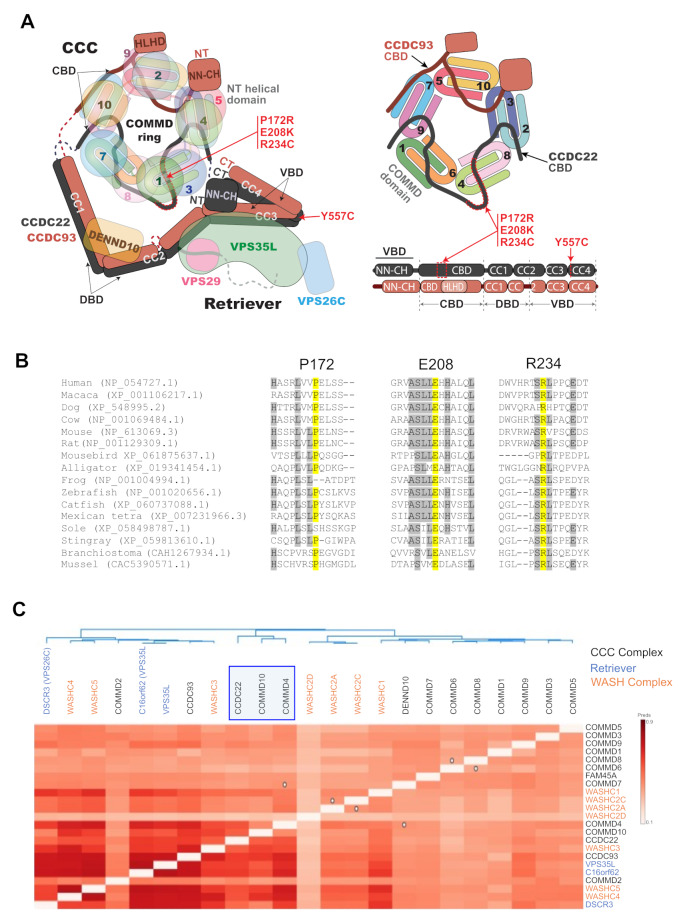
“From an evolutionary perspective, the encoding gene for a WASH complex subunit most closely co-evolved with Retriever and CCC is WASHC5 (Strumpellin), followed by WASHC4 (SWIP, Fig. 2C).”
§ CCDC22 mutations that impair COMMD binding cause attenuated 3C/Ritscher-Schinzel syndrome > Discussion
plaincorrelational- Asserted: passes — The authors put it forward as true.
- Checkable: passes — It can be checked against evidence.
- Load-bearing: unclear — It is unclear whether the paper’s conclusions depend on it.
- Based: passes — The paper gives a reason why it holds.
A result the paper reports from its own data — it cites no other source for it, so there is none to check. The quote shows it is in the paper.
In the paper
“The points of contact between CCDC22 CBD and COMMD4 and COMMD10 appear to be particularly critical in COMMD ring binding, as CCDC22 is most closely co-evolved with these 2 COMMD family members, compared to all other components of the CCC and Retriever complexes (Fig. 2C).”
§ CCDC22 mutations that impair COMMD binding cause attenuated 3C/Ritscher-Schinzel syndrome > Results
hedgedcorrelational- Asserted: passes — The authors put it forward as true.
- Checkable: passes — It can be checked against evidence.
- Load-bearing: unclear — It is unclear whether the paper’s conclusions depend on it.
- Based: passes — The paper gives a reason why it holds.
A result the paper reports from its own data — it cites no other source for it, so there is none to check. The quote shows it is in the paper.
In the paper
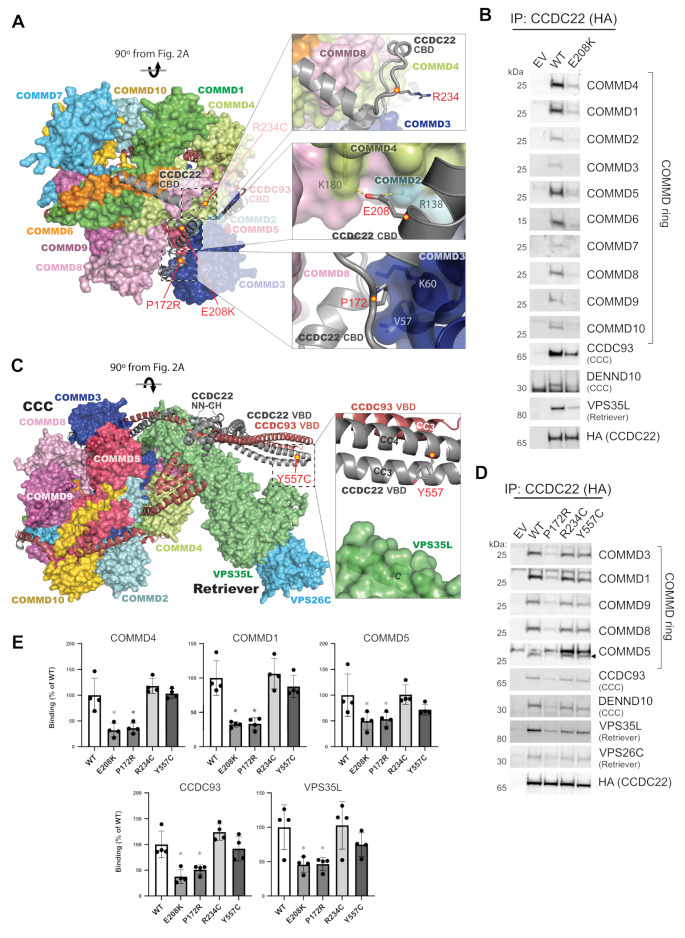
“Consistent with this role in protein-protein binding, we observed that CCDC22 E208K had a significantly reduced ability to bind to COMMD4 and all other COMMD proteins that form the COMMD ring (Fig. 3B).”
§ CCDC22 mutations that impair COMMD binding cause attenuated 3C/Ritscher-Schinzel syndrome > Results
plaindirect- Asserted: passes — The authors put it forward as true.
- Checkable: passes — It can be checked against evidence.
- Load-bearing: passes — The paper’s conclusions depend on it.
- Based: passes — The paper gives a reason why it holds.
A result the paper reports from its own data — it cites no other source for it, so there is none to check. The quote shows it is in the paper.
In the paper
“Cranial and skeletal abnormalities were noted in all CCDC22 mutations reported (Table 1).”
§ CCDC22 mutations that impair COMMD binding cause attenuated 3C/Ritscher-Schinzel syndrome > Results
plaincorrelational- Asserted: passes — The authors put it forward as true.
- Checkable: passes — It can be checked against evidence.
- Load-bearing: unclear — It is unclear whether the paper’s conclusions depend on it.
- Based: passes — The paper gives a reason why it holds.
A result the paper reports from its own data — it cites no other source for it, so there is none to check. The quote shows it is in the paper.
In the paper
“All the mutations in the CBD affect highly conserved residues (Fig. 2B).”
§ CCDC22 mutations that impair COMMD binding cause attenuated 3C/Ritscher-Schinzel syndrome > Results
plain- Asserted: passes — The authors put it forward as true.
- Checkable: passes — It can be checked against evidence.
- Load-bearing: unclear — It is unclear whether the paper’s conclusions depend on it.
- Based: passes — The paper gives a reason why it holds.
A result the paper reports from its own data — it cites no other source for it, so there is none to check. The quote shows it is in the paper.
In the paper
“We show that this mutation impairs CCC complex assembly by disrupting a conserved interaction surface required for CCDC22-COMMD4 binding.”
§ CCDC22 mutations that impair COMMD binding cause attenuated 3C/Ritscher-Schinzel syndrome > Abstract
plaindirect- Asserted: passes — The authors put it forward as true.
- Checkable: passes — It can be checked against evidence.
- Load-bearing: passes — The paper’s conclusions depend on it.
- Based: passes — The paper gives a reason why it holds.
A result the paper reports from its own data — it cites no other source for it, so there is none to check. The quote shows it is in the paper.
In the paper
“In contrast, R234C and Y557C had no statistically significant effects on CCDC22 binding with CCC or Retriever suggesting that the mechanism by which these mutations may cause disease does not involve CCC complex assembly or Retriever binding but probably is the result of altering interactions with other regulatory factors.”
§ CCDC22 mutations that impair COMMD binding cause attenuated 3C/Ritscher-Schinzel syndrome > Results
hedged- Asserted: passes — The authors put it forward as true.
- Checkable: passes — It can be checked against evidence.
- Load-bearing: passes — The paper’s conclusions depend on it.
- Based: passes — The paper gives a reason why it holds.
A result the paper reports from its own data — it cites no other source for it, so there is none to check. The quote shows it is in the paper.
In the paper
“No variants at this position are reported in gnomAD, suggesting an important role of glutamate at position 208 in protein function.”
§ CCDC22 mutations that impair COMMD binding cause attenuated 3C/Ritscher-Schinzel syndrome > Results
plain- Asserted: passes — The authors put it forward as true.
- Checkable: passes — It can be checked against evidence.
- Load-bearing: passes — The paper’s conclusions depend on it.
- Based: passes — The paper gives a reason why it holds.
- Probably not a substantial claim. 8
- It may state two separate claims as one. 19
The cited sources support only part of this claim — read each source’s verdict below.
In the paper
“Over the past decade, mutations in additional genes, CCDC22 and VPS35L, that also result in 3 C/Ritscher-Schinzel syndrome have been reported [3–7].”
§ CCDC22 mutations that impair COMMD binding cause attenuated 3C/Ritscher-Schinzel syndrome > Introduction
What the sources say
- Partly supportedcites [3] Starokadomskyy P, Gluck N, Li H, Chen B, Wallis M, Maine GN, et al. CCDC22 deficiency in humans blunts activation of Proinflammatory NF-kB signaling. J Clin Invest. 2013;123(5):2244–56. sourceExperimental — accuracy not yet measured
The section on CCDC22 and COMMD proteins (page unavailable) describes a CCDC22 mutation in a family with X-linked intellectual disability and other developmental abnormalities. It does not identify the condition as 3C/Ritscher-Schinzel syndrome. The searched passages also do not address VPS35L or WASHC5, so the source supports only the narrower point that CCDC22 mutations are associated with a developmental disorder. (LLM, conf=0.78)
- Not checked — no full text of the sourcecites [4] Kolanczyk M, Krawitz P, Hecht J, Hupalowska A, Miaczynska M, Marschner K, et al. Missense variant in CCDC22 causes X-linked recessive intellectual disability with features of Ritscher-Schinzel/3 C syndrome. Eur J Hum Genet. 2015;23(5):720. source
- Not checked — no full text of the sourcecites [5] Kato K, Oka Y, Muramatsu H, Vasilev FF, Otomo T, Oishi H, et al. Biallelic VPS35L pathogenic variants cause 3 C/Ritscher-Schinzel-like syndrome through dysfunction of retriever complex. J Med Genet. 2020;57(4):245–53. source
- Not checked — no full text of the sourcecites [6] Neri S, Maia N, Fortuna AM, Damasio J, Coale E, Willis M, et al. Expanding the pre- and postnatal phenotype of WASHC5 and CCDC22 -related Ritscher-Schinzel syndromes. Eur J Med Genet. 2022;65(11):104624. source
- Supportedcites [7] Otsuji S, Nishio Y, Tsujita M, Rio M, Huber C, Anton-Plagaro C, et al. Clinical diversity and molecular mechanism of VPS35L-associated Ritscher-Schinzel syndrome. J Med Genet. 2022;60(4):359–67. source
The Introduction identifies CCDC22 and WASHC5 as responsible genes for Ritscher-Schinzel syndrome, also called 3C syndrome, and VPS35L as the third responsible gene. The “What is already known on this topic” section states the same relationship directly. (LLM, conf=0.94)
plaindirect- Asserted: passes — The authors put it forward as true.
- Checkable: passes — It can be checked against evidence.
- Load-bearing: passes — The paper’s conclusions depend on it.
- Based: passes — The paper gives a reason why it holds.
Probably not a substantial claim.
- Partly supported
Every source the paper cites for this claim was checked and supports it.
In the paper
“Overlaying these mutations onto the recently derived models of the CCC complex [16–18], we identified that E208 is specifically located in the interface between CCDC22 and COMMD4, where it establishes a critical point of contact with K180 in COMMD4 (Fig. 3A).”
§ CCDC22 mutations that impair COMMD binding cause attenuated 3C/Ritscher-Schinzel syndrome > Results
What the sources say
- Supportedcites [16] Boesch DJ, Singla A, Han Y, Kramer DA, Liu Q, Suzuki K, et al. Structural organization of the retriever-CCC endosomal recycling complex. Nat Struct Mol Biol. 2024;31(6):910–24. source
The citation is attached to the recently derived models of the CCC complex, not to the citing authors’ own identification of the E208–K180 contact. The Results section (‘CCDC22-CCDC93 binds to COMMD oligomers’) describes this paper’s AFM model of the COMMD ring and its contacts with CCDC22, so it supports the model attribution. (LLM, conf=0.90)
- Supportedcites [17] Healy MD, McNally KE, Butkovic R, Chilton M, Kato K, Sacharz J, et al. Structure of the endosomal commander complex linked to Ritscher-Schinzel syndrome. Cell. 2023;186(10):2219–e3729. source
The citation is attached to the recently derived CCC-complex models, not to the citing authors’ own identification of the E208–K180 contact. The Results section (‘Structure of the twelve-subunit core CCC complex’; page unavailable) describes an AlphaFold2 model refined against a cryo-EM map, so this paper is a source for such a model. (LLM, conf=0.90)
- Supportedcites [18] Laulumaa S, Kumpula EP, Huiskonen JT, Varjosalo M. Structure and interactions of the endogenous human commander complex. Nat Struct Mol Biol. 2024;31(6):935–8. source
The citation is attached to the 'recently derived models of the CCC complex,' not to the citing authors’ subsequent identification of the E208–K180 contact. In the Results section ('CCDC93 and CCDC22 interweave within the COMMD-ring'; page not supplied), the source presents a structural model of the COMMD-ring with CCDC22 and CCDC93, so it supports that use of the citation. The residue-level contact is the citing authors’ own conclusion from overlaying mutations onto the models. (LLM, conf=0.88)
plaindirect- Asserted: passes — The authors put it forward as true.
- Checkable: passes — It can be checked against evidence.
- Load-bearing: passes — The paper’s conclusions depend on it.
- Based: passes — The paper gives a reason why it holds.
It may state two separate claims as one.
- Supported
The cited sources support only part of this claim — read each source’s verdict below.
In the paper
“It is worth noting that mutations in WASHC5, CCDC22 and VPS35L all result in hypercholesterolemia in humans thought to be due to abnormal LDL clearance secondary to defects in LDL receptor recycling, a phenotype also seen in mouse models of liver deficiency of Ccdc22, Vps35l and Commd1 [5, 7, 30–32].”
§ CCDC22 mutations that impair COMMD binding cause attenuated 3C/Ritscher-Schinzel syndrome > Discussion
What the sources say
- Not checked — no full text of the sourcecites [5] Kato K, Oka Y, Muramatsu H, Vasilev FF, Otomo T, Oishi H, et al. Biallelic VPS35L pathogenic variants cause 3 C/Ritscher-Schinzel-like syndrome through dysfunction of retriever complex. J Med Genet. 2020;57(4):245–53. source
- Partly supportedcites [7] Otsuji S, Nishio Y, Tsujita M, Rio M, Huber C, Anton-Plagaro C, et al. Clinical diversity and molecular mechanism of VPS35L-associated Ritscher-Schinzel syndrome. J Med Genet. 2022;60(4):359–67. sourceExperimental — accuracy not yet measured
The Results report hypercholesterolaemia in patients with VPS35L variants and show that VPS35L depletion reduces cell-surface LDL receptors and LDL uptake. The Discussion says the CCC and WASH complexes facilitate lipoprotein-receptor trafficking, but our copy does not establish that CCDC22 and WASHC5 variants also cause hypercholesterolaemia in humans through this mechanism. (LLM, conf=0.85)
- Partly supportedcites [30] Bartuzi P, Billadeau DD, Favier R, Rong S, Dekker D, Fedoseienko A, et al. CCC- and WASH-mediated endosomal sorting of LDLR is required for normal clearance of Circulating LDL. Nat Commun. 2016;7:10961. sourceExperimental — accuracy not yet measured
The Results sections on CCDC22 mutations and LDLR trafficking report elevated cholesterol in people with CCDC22 mutations and in one person with a KIAA0196 (strumpellin) mutation, alongside a proposed LDLR-trafficking mechanism. The section on hepatic Commd1 ablation reports elevated LDL in mice. The paper does not establish hypercholesterolaemia from human VPS35L mutations or report liver-deficient Ccdc22 or Vps35l mouse models; its Discussion instead calls for future study of the distinct gene VPS35. Page numbers are not available in our copy. (LLM, conf=0.90)
- Partly supportedcites [31] Fedoseienko A, Wijers M, Wolters JC, Dekker D, Smit M, Huijkman N, et al. The COMMD family regulates plasma LDL levels and attenuates atherosclerosis through stabilizing the CCC complex in endosomal LDLR trafficking. Circ Res. 2018;122(12):1648–60. sourceExperimental — accuracy not yet measured
The Discussion (page unavailable) reports that CCDC22 mutations are associated with hypercholesterolemia in humans and links CCC-complex deficiency to impaired LDLR trafficking and elevated LDL cholesterol in mice. The paper also reports a mouse model with hepatic Ccdc22 inactivation. Our copy does not establish the claimed human hypercholesterolemia for WASHC5 or VPS35L mutations, or the cited liver-deficient Vps35l mouse phenotype. (LLM, conf=0.89)
- Partly supportedcites [32] Vos DY, Wijers M, Smit M, Huijkman N, Kloosterhuis NJ, Wolters JC, et al. Cargo-Specific role for retriever subunit VPS26C in hepatocyte lipoprotein receptor recycling to control postprandial Triglyceride-Rich lipoproteins. Arterioscler Thromb Vasc Biol; 2022. sourceExperimental — accuracy not yet measured
The Discussion says mutations in CCDC22 and WASHC5 cause hypercholesterolemia, but explicitly says whether VPS35L mutations are associated with increased plasma lipid levels remains to be evaluated. The section on hepatic VPS35L loss links impaired LDL receptor recycling and increased cholesterol to mice, not to humans with VPS35L mutations. (LLM, conf=0.91)
hedgeddirect- Asserted: passes — The authors put it forward as true.
- Checkable: passes — It can be checked against evidence.
- Load-bearing: fails — The paper’s conclusions may not depend on it.
- Based: passes — The paper gives a reason why it holds.
Probably not a substantial claim. The paper’s conclusions may not depend on it. It may state two separate claims as one.
The cited sources support only part of this claim — read each source’s verdict below.
In the paper
“However, the structural model does not identify critical protein-protein interactions mediated by R234, which is in an extended surface loop that is unresolved in recent cryo-EM models but predicted not to contact the COMMD ring according to recent highly concordant AlphaFold2-based models (Fig. 3A) [16–18].”
§ CCDC22 mutations that impair COMMD binding cause attenuated 3C/Ritscher-Schinzel syndrome > Results
What the sources say
- Partly supportedcites [16] Boesch DJ, Singla A, Han Y, Kramer DA, Liu Q, Suzuki K, et al. Structural organization of the retriever-CCC endosomal recycling complex. Nat Struct Mol Biol. 2024;31(6):910–24. sourceExperimental — accuracy not yet measured
Split into 2 atoms — 0 confirmed, 2 partially supported, 0 disputed, 0 misattributed, 0 unverifiable. Expand the claim to see per-atom verdicts.
- Partly supportedcites [17] Healy MD, McNally KE, Butkovic R, Chilton M, Kato K, Sacharz J, et al. Structure of the endosomal commander complex linked to Ritscher-Schinzel syndrome. Cell. 2023;186(10):2219–e3729. sourceExperimental — accuracy not yet measured
Split into 2 atoms — 0 confirmed, 1 partially supported, 0 disputed, 0 misattributed, 1 unverifiable. Expand the claim to see per-atom verdicts.
- Partly supportedcites [18] Laulumaa S, Kumpula EP, Huiskonen JT, Varjosalo M. Structure and interactions of the endogenous human commander complex. Nat Struct Mol Biol. 2024;31(6):935–8. sourceExperimental — accuracy not yet measured
Split into 2 atoms — 0 confirmed, 2 partially supported, 0 disputed, 0 misattributed, 0 unverifiable. Expand the claim to see per-atom verdicts.
plain- Asserted: passes — The authors put it forward as true.
- Checkable: passes — It can be checked against evidence.
- Load-bearing: unclear — It is unclear whether the paper’s conclusions depend on it.
- Based: passes — The paper gives a reason why it holds.
It may state two separate claims as one.
- Partly supported
Every source the paper cites for this claim was checked and supports it.
In the paper
“In addition, this mutation also decreased the ability of CCDC22 to dimerize with CCDC93, bind to DENND10 (a CCC-associated protein), and bind to the Retriever subunit, VPS35L; this constellation of changes have been recently shown for other mutations that disturb CCDC22-COMMD ring binding [16].”
§ CCDC22 mutations that impair COMMD binding cause attenuated 3C/Ritscher-Schinzel syndrome > Results
What the sources say
- Supportedcites [16] Boesch DJ, Singla A, Han Y, Kramer DA, Liu Q, Suzuki K, et al. Structural organization of the retriever-CCC endosomal recycling complex. Nat Struct Mol Biol. 2024;31(6):910–24. source
The citation supports the sentence’s comparison with other mutations, not its finding about E208K. In the Results section, “CCDC22-CCDC93 binds to COMMD oligomers,” the paper reports that the COMMD-ring-contact mutations W142D and F164D reduced CCDC22 binding to CCDC93, DENND10, and Retriever. (LLM, conf=0.93)
plaindirect- Asserted: passes — The authors put it forward as true.
- Checkable: passes — It can be checked against evidence.
- Load-bearing: passes — The paper’s conclusions depend on it.
- Based: passes — The paper gives a reason why it holds.
It may state two separate claims as one.
- Supported
The cited sources support only part of this claim — read each source’s verdict below.
In the paper
“The WASH complex is regulated by the COMMD-CCDC22-CCDC93 or CCC complex [8], a 12-protein assembly that limits the endosomal localization and actin polymerization activity of the WASH complex [14].”
§ CCDC22 mutations that impair COMMD binding cause attenuated 3C/Ritscher-Schinzel syndrome > Introduction
What the sources say
- Partly supportedcites [8] Phillips-Krawczak CA, Singla A, Starokadomskyy P, Deng Z, Osborne DG, Li H, et al. COMMD1 is linked to the WASH complex and regulates endosomal trafficking of the copper transporter ATP7A. Mol Biol Cell. 2015;26(1):91–103. sourceExperimental — accuracy not yet measured
The Results (‘Identification of the CCC complex’; page unavailable) identify CCDC22 and CCDC93 and show that all ten human COMMD proteins interact with CCDC93. But the Discussion (page unavailable) also names C16orf62 as part of the CCC complex’s core composition, so the paper does not support describing it as an assembly composed of only those 12 proteins. (LLM, conf=0.88)
- Partly supportedcites [14] Singla A, Fedoseienko A, Giridharan SSP, Overlee BL, Lopez A, Jia D, et al. Endosomal PI(3)P regulation by the COMMD/CCDC22/CCDC93 (CCC) complex controls membrane protein recycling. Nat Commun. 2019;10(1):4271. sourceExperimental — accuracy not yet measured
The Introduction identifies CCDC22, CCDC93, and COMMD proteins as CCC components, and the Results ('Defining the CCC and retriever interactomes') report that all ten COMMD proteins co-purified with CCDC22 and CCDC93. But the Introduction says 'any of the 10 COMMD proteins,' while the Results also identify VPS35L as a shared subunit of CCC and retriever. The paper therefore supports the named components but not the precise claim that CCC is a 12-protein assembly consisting of exactly those proteins. (LLM, conf=0.85)
plain- Asserted: passes — The authors put it forward as true.
- Checkable: passes — It can be checked against evidence.
- Load-bearing: passes — The paper’s conclusions depend on it.
- Based: passes — The paper gives a reason why it holds.
Probably not a substantial claim.
- Partly supported
A result the paper reports from its own data — it cites no other source for it, so there is none to check. The quote shows it is in the paper.
In the paper
“Brain MRIs from both patients revealed large internal auditory meatus and foci of hypomyelination in the posterior occipital-parietal white matter.”
§ CCDC22 mutations that impair COMMD binding cause attenuated 3C/Ritscher-Schinzel syndrome > Results
plainn = 2- Asserted: passes — The authors put it forward as true.
- Checkable: passes — It can be checked against evidence.
- Load-bearing: unclear — It is unclear whether the paper’s conclusions depend on it.
- Based: passes — The paper gives a reason why it holds.
It may state two separate claims as one.
The paper states this without a source or data behind it here, so there is nothing to check it against. The quote shows it is in the paper.
In the paper
“We also review previously described cases and identify that CCDC22 p.P172R has a similar attenuated phenotype and impairs complex assembly in a similar fashion as p.E208K.”
§ CCDC22 mutations that impair COMMD binding cause attenuated 3C/Ritscher-Schinzel syndrome > Abstract
plaindirect- Asserted: passes — The authors put it forward as true.
- Checkable: passes — It can be checked against evidence.
- Load-bearing: passes — The paper’s conclusions depend on it.
- Based: passes — The paper gives a reason why it holds.
It may state two separate claims as one.
A result the paper reports from its own data — it cites no other source for it, so there is none to check. The quote shows it is in the paper.
In the paper
“In agreement with the molecular models, we found that P172R phenocopies the E208K mutations and results in reduced binding between CCDC22 and COMMD proteins, as well as reduced dimerization with CCDC93, reduced binding to DENND10, and decreased binding to the Retriever subunit VPS35L (Fig. 3D).”
§ CCDC22 mutations that impair COMMD binding cause attenuated 3C/Ritscher-Schinzel syndrome > Results
plaindirect- Asserted: passes — The authors put it forward as true.
- Checkable: passes — It can be checked against evidence.
- Load-bearing: passes — The paper’s conclusions depend on it.
- Based: passes — The paper gives a reason why it holds.
It may state two separate claims as one.
A result the paper reports from its own data — it cites no other source for it, so there is none to check. The quote shows it is in the paper.
In the paper
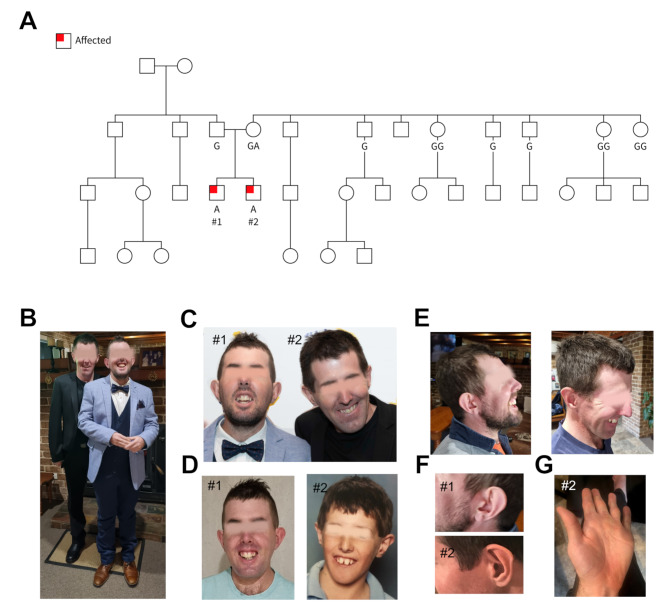
“Both siblings experienced the onset of seizures at ~ 18 months of age.”
§ CCDC22 mutations that impair COMMD binding cause attenuated 3C/Ritscher-Schinzel syndrome > Results
plainn = 2- Asserted: passes — The authors put it forward as true.
- Checkable: passes — It can be checked against evidence.
- Load-bearing: fails — The paper’s conclusions may not depend on it.
- Based: passes — The paper gives a reason why it holds.
Probably not a substantial claim. The paper’s conclusions may not depend on it.
A result the paper reports from its own data — it cites no other source for it, so there is none to check. The quote shows it is in the paper.
In the paper
“Two male siblings diagnosed with moderate intellectual disability were evaluated. They are the only affected individuals in a large extended pedigree (Fig. 1A).”
§ CCDC22 mutations that impair COMMD binding cause attenuated 3C/Ritscher-Schinzel syndrome > Results
plainn = 2- Asserted: passes — The authors put it forward as true.
- Checkable: passes — It can be checked against evidence.
- Load-bearing: unclear — It is unclear whether the paper’s conclusions depend on it.
- Based: passes — The paper gives a reason why it holds.
It may state two separate claims as one.
A result the paper reports from its own data — it cites no other source for it, so there is none to check. The quote shows it is in the paper.
In the paper
“In contrast, the P172R and R234C mutations, as well as the mutation described here, E208K, were associated with intellectual disability and seizures, but did not result in severe neuroanatomical abnormalities, which were seen only in the T17A and Y557C mutations (Table 1).”
§ CCDC22 mutations that impair COMMD binding cause attenuated 3C/Ritscher-Schinzel syndrome > Results
plaincorrelational- Asserted: passes — The authors put it forward as true.
- Checkable: passes — It can be checked against evidence.
- Load-bearing: passes — The paper’s conclusions depend on it.
- Based: passes — The paper gives a reason why it holds.
It may state two separate claims as one.
A result the paper reports from its own data — it cites no other source for it, so there is none to check. The quote shows it is in the paper.
In the paper
“As adults, both siblings share a stature in the 10th percentile (Fig. 1B), although their head circumferences are within the normal range.”
§ CCDC22 mutations that impair COMMD binding cause attenuated 3C/Ritscher-Schinzel syndrome > Results
plainn = 2- Asserted: passes — The authors put it forward as true.
- Checkable: passes — It can be checked against evidence.
- Load-bearing: unclear — It is unclear whether the paper’s conclusions depend on it.
- Based: passes — The paper gives a reason why it holds.
It may state two separate claims as one.
A result the paper reports from its own data — it cites no other source for it, so there is none to check. The quote shows it is in the paper.
In the paper
“In terms of metabolic or biochemical abnormalities, both individuals have modestly elevated fasting total cholesterol (5.7 mmol/L or 220 mg/dL, and 6.1 mmol/L or 236 mg/dL) and normal plasma copper concentration (16.3 and 16.8 µmol/L).”
§ CCDC22 mutations that impair COMMD binding cause attenuated 3C/Ritscher-Schinzel syndrome > Results
plain- Asserted: passes — The authors put it forward as true.
- Checkable: passes — It can be checked against evidence.
- Load-bearing: fails — The paper’s conclusions may not depend on it.
- Based: passes — The paper gives a reason why it holds.
Probably not a substantial claim. The paper’s conclusions may not depend on it. It may state two separate claims as one.
A result the paper reports from its own data — it cites no other source for it, so there is none to check. The quote shows it is in the paper.
In the paper
“On the other hand, neither R234C nor Y557C caused appreciable changes in any of these interactions.”
§ CCDC22 mutations that impair COMMD binding cause attenuated 3C/Ritscher-Schinzel syndrome > Results
plain- Asserted: passes — The authors put it forward as true.
- Checkable: passes — It can be checked against evidence.
- Load-bearing: passes — The paper’s conclusions depend on it.
- Based: passes — The paper gives a reason why it holds.
It may state two separate claims as one.
A result the paper reports from its own data — it cites no other source for it, so there is none to check. The quote shows it is in the paper.
In the paper
“Here, we report a new CCDC22 missense mutation, p.E208K, that results in attenuated 3 C syndrome, without cardiac or neuroanatomical abnormalities.”
§ CCDC22 mutations that impair COMMD binding cause attenuated 3C/Ritscher-Schinzel syndrome > Abstract
plaindirectSingle case- Asserted: passes — The authors put it forward as true.
- Checkable: passes — It can be checked against evidence.
- Load-bearing: passes — The paper’s conclusions depend on it.
- Based: passes — The paper gives a reason why it holds.
It may state two separate claims as one.
A conclusion the paper draws from its own results — it cites no other source for it, so there is none to check. The quote shows it is in the paper.
In the paper
“In contrast, R234C and Y557C had no statistically significant effects on CCDC22 binding with CCC or Retriever suggesting that the mechanism by which these mutations may cause disease does not involve CCC complex assembly or Retriever binding but probably is the result of altering interactions with other regulatory factors.”
§ CCDC22 mutations that impair COMMD binding cause attenuated 3C/Ritscher-Schinzel syndrome > Results
hedgedconditional- Asserted: passes — The authors put it forward as true.
- Checkable: passes — It can be checked against evidence.
- Load-bearing: passes — The paper’s conclusions depend on it.
- Based: passes — The paper gives a reason why it holds.
It may state two separate claims as one.
A result the paper reports from its own data — it cites no other source for it, so there is none to check. The quote shows it is in the paper.
In the paper
“In contrast, Y557 is located in the VPS35L binding domain (VBD), a region required for binding to Retriever (Fig. 2A).”
§ CCDC22 mutations that impair COMMD binding cause attenuated 3C/Ritscher-Schinzel syndrome > Results
plain- Asserted: passes — The authors put it forward as true.
- Checkable: passes — It can be checked against evidence.
- Load-bearing: passes — The paper’s conclusions depend on it.
- Based: passes — The paper gives a reason why it holds.
It may state two separate claims as one.
A conclusion the paper draws from its own results — it cites no other source for it, so there is none to check. The quote shows it is in the paper.
In the paper
“In contrast, Y557 is located at the sharp tip of the VBD fork (Fig. 3C).”
§ CCDC22 mutations that impair COMMD binding cause attenuated 3C/Ritscher-Schinzel syndrome > Results
plain- Asserted: passes — The authors put it forward as true.
- Checkable: passes — It can be checked against evidence.
- Load-bearing: fails — The paper’s conclusions may not depend on it.
- Based: passes — The paper gives a reason why it holds.
Probably not a substantial claim. The paper’s conclusions may not depend on it.
What the paper did — it cites no source for this, so there is none to check. The quote shows it is in the paper.
In the paper
“Repeat trio sequencing 10 years later (both parent and one of the probands) confirmed the same findings.”
§ CCDC22 mutations that impair COMMD binding cause attenuated 3C/Ritscher-Schinzel syndrome > Results
plainSingle case- Asserted: passes — The authors put it forward as true.
- Checkable: passes — It can be checked against evidence.
- Load-bearing: fails — The paper’s conclusions may not depend on it.
- Based: passes — The paper gives a reason why it holds.
Probably not a substantial claim. The paper’s conclusions may not depend on it.
A conclusion the paper draws from its own results — it cites no other source for it, so there is none to check. The quote shows it is in the paper.
In the paper
“This striking correlation between co-evolution and phenotypic expression of mutations in humans suggests that specific genes encoding WASH, CCC, and Retriever subunits play converging roles and may be associated with specific alterations of normal development and physiology, as in the case of 3 C syndrome, and probably other clinical manifestations yet to be described.”
§ CCDC22 mutations that impair COMMD binding cause attenuated 3C/Ritscher-Schinzel syndrome > Discussion
hedgedcorrelational- Asserted: passes — The authors put it forward as true.
- Checkable: passes — It can be checked against evidence.
- Load-bearing: unclear — It is unclear whether the paper’s conclusions depend on it.
- Based: passes — The paper gives a reason why it holds.
It may state two separate claims as one.
A conclusion the paper draws from its own results — it cites no other source for it, so there is none to check. The quote shows it is in the paper.
In the paper
“In contrast to this, the mutations impairing CCDC22 binding to the COMMD ring, E208K and P172R, cause an attenuated phenotype without structural brain or cardiovascular anomalies.”
§ CCDC22 mutations that impair COMMD binding cause attenuated 3C/Ritscher-Schinzel syndrome > Discussion
plaindirect- Asserted: passes — The authors put it forward as true.
- Checkable: passes — It can be checked against evidence.
- Load-bearing: passes — The paper’s conclusions depend on it.
- Based: passes — The paper gives a reason why it holds.
It may state two separate claims as one.
A conclusion the paper draws from its own results — it cites no other source for it, so there is none to check. The quote shows it is in the paper.
In the paper
“Altogether, the genetic, structural, and biochemical evidence confirmed the damaging nature of the E208K and P172R mutations and map their mechanism as disrupting the binding between CCDC22 and the COMMD ring.”
§ CCDC22 mutations that impair COMMD binding cause attenuated 3C/Ritscher-Schinzel syndrome > Results
boosteddirect- Asserted: passes — The authors put it forward as true.
- Checkable: passes — It can be checked against evidence.
- Load-bearing: passes — The paper’s conclusions depend on it.
- Based: passes — The paper gives a reason why it holds.
It may state two separate claims as one.
What the paper did — it cites no source for this, so there is none to check. The quote shows it is in the paper.
In the paper
“Quantification after normalization to the precipitated bait protein is presented as % compared with the wild-type CCDC22 (n = 4 independent experiments). * p < 0.05 by ANOVA with Dunnett’s correction”
§ CCDC22 mutations that impair COMMD binding cause attenuated 3C/Ritscher-Schinzel syndrome > Results
plainn = 4- Asserted: passes — The authors put it forward as true.
- Checkable: passes — It can be checked against evidence.
- Load-bearing: passes — The paper’s conclusions depend on it.
- Based: passes — The paper gives a reason why it holds.
Probably not a substantial claim. It may state two separate claims as one.
The paper relies on this without support.
The HEK293T overexpression system used for immunoprecipitation reflects the endogenous behavior of CCDC22 and its interactions.
“HEK293T cells were obtained from ATCC and cultured in DMEM supplemented with 10% FBS and l-glutamine. A standard Lipofectamine 2000 transfection protocol was used to transfect plasmids in HEK293T cells.”
The paper relies on this without support.
The antibodies used in immunoblotting specifically detect their intended target proteins.
“The antibodies used for immunoblotting are the following: COMMD1 (Novus Biologicals, NBP2-03755), COMMD2 (Custom made, UT-R 42), COMMD3 (Custom made, UT-R 43), COMMD4 (Custom made UT-691), COMMD5 (ProteinTech Group, 67043-1-IG), COMMD6 (Custom made, 051-AP), COMMD7 (Custom made, UT-R 47), COMMD8 (Custom made, UT-GP 135), COMMD9 (Custom made, 192-AP), COMMD10 (Santa Cruz, sc-398798), CCDC93 (Prote”
Self-check
Percentages, sums and reported differences re-computed from the paper’s own numbers.
Each contradiction between two passages listed here was confirmed by an independent check.
Rated minor: it would not touch a result — a value no result rests on, a p-value that stays on the same side of the significance level, or a conflict that is clerical, resolved elsewhere in the paper, or outside its own findings.
In the paper
§ CCDC22 mutations that impair COMMD binding cause attenuated 3C/Ritscher-Schinzel syndrome > Abstract
“without cardiac or neuroanatomical abnormalities.”
§ CCDC22 mutations that impair COMMD binding cause attenuated 3C/Ritscher-Schinzel syndrome > Results
“Brain MRIs from both patients revealed large internal auditory meatus and foci of hypomyelination in the posterior occipital-parietal white matter.”
Rated minor: it would not touch a result — a value no result rests on, a p-value that stays on the same side of the significance level, or a conflict that is clerical, resolved elsewhere in the paper, or outside its own findings.
In the paper
§ CCDC22 mutations that impair COMMD binding cause attenuated 3C/Ritscher-Schinzel syndrome > Results
“Kolanczyk, 2014 (4)”
§ CCDC22 mutations that impair COMMD binding cause attenuated 3C/Ritscher-Schinzel syndrome > References
“Kolanczyk M, Krawitz P, Hecht J, Hupalowska A, Miaczynska M, Marschner K, et al. Missense variant in CCDC22 causes X-linked recessive intellectual disability with features of Ritscher-Schinzel/3 C syndrome. Eur J Hum Genet. 2015;23(5):720.”
Citations
Cites
The Arp2/3 Activator WASH Controls the Fission of Endosomes through a Large Multiprotein Complex
Derivery, E., Sousa, C., Gautier, J. J., Lombard, B., Loew, D., & Gautreau, A. (2009) · Developmental Cell · doi:10.1016/j.devcel.2009.09.010 · Cited by 602
A FAM21-Containing WASH Complex Regulates Retromer-Dependent Sorting
Gomez, T. S., & Billadeau, D. D. (2009) · Developmental Cell · doi:10.1016/j.devcel.2009.09.009 · Cited by 521
Self-citationRetriever is a multiprotein complex for retromer-independent endosomal cargo recycling
McNally, K. E., Faulkner, R., Steinberg, F., Gallon, M., Ghai, R., Pim, D., Langton, P., Pearson, N., Danson, C. M., Nägele, H., et al. (2017) · Nature Cell Biology · doi:10.1038/ncb3610 · Cited by 346
Self-citationPhillips-Krawczak, C. A., Singla, A., Starokadomskyy, P., Deng, Z., Osborne, D. G., Li, H., Dick, C. J., Gomez, T. S., Koenecke, M., Zhang, J.-S., et al. (2015) · Molecular Biology of the Cell · doi:10.1091/mbc.e14-06-1073 · Cited by 246
Self-citationCellular functions of WASP family proteins at a glance
Alekhina, O., Burstein, E., & Billadeau, D. D. (2017) · Journal of Cell Science · doi:10.1242/jcs.199570 · Cited by 219
Self-citationCCC- and WASH-mediated endosomal sorting of LDLR is required for normal clearance of circulating LDL
Bartuzi, P., Billadeau, D. D., Favier, R., Rong, S., Dekker, D., Fedoseienko, A., Fieten, H., Wijers, M., Levels, J. H., Huijkman, N., et al. (2016) · Nature Communications · doi:10.1038/ncomms10961 · Cited by 205
Self-citationMutations in the KIAA0196 Gene at the SPG8 Locus Cause Hereditary Spastic Paraplegia
Valdmanis, P. N., Meijer, I. A., Reynolds, A., Lei, A., MacLeod, P., Schlesinger, D., Zatz, M., Reid, E., Dion, P. A., Drapeau, P., et al. (2007) · The American Journal of Human Genetics · doi:10.1086/510782 · Cited by 182
Fedoseienko, A., Wijers, M., Wolters, J. C., Dekker, D., Smit, M., Huijkman, N., Kloosterhuis, N., Klug, H., Schepers, A., Willems van Dijk, K., et al. (2018) · Circulation Research · doi:10.1161/circresaha.117.312004 · Cited by 126
Self-citationCCDC22 deficiency in humans blunts activation of proinflammatory NF-κB signaling
Starokadomskyy, P., Gluck, N., Li, H., Chen, B., Wallis, M., Maine, G. N., Mao, X., Zaidi, I. W., Hein, M. Y., McDonald, F. J., et al. (2013) · Journal of Clinical Investigation · doi:10.1172/jci66466 · Cited by 115
Self-citationSingla, A., Fedoseienko, A., Giridharan, S. S. P., Overlee, B. L., Lopez, A., Jia, D., Song, J., Huff-Hardy, K., Weisman, L., Burstein, E., et al. (2019) · Nature Communications · doi:10.1038/s41467-019-12221-6 · Cited by 113
Self-citationSystems-wide Studies Uncover Commander, a Multiprotein Complex Essential to Human Development
Mallam, A. L., & Marcotte, E. M. (2017) · Cell Systems · doi:10.1016/j.cels.2017.04.006 · Cited by 94
Structure of the endosomal Commander complex linked to Ritscher-Schinzel syndrome
Healy, M. D., McNally, K. E., Butkovič, R., Chilton, M., Kato, K., Sacharz, J., McConville, C., Moody, E. R. R., Shaw, S., Planelles-Herrero, V. J., et al. (2023) · Cell · doi:10.1016/j.cell.2023.04.003 · Cited by 91
Actin Polymerization Controls the Organization of WASH Domains at the Surface of Endosomes
Derivery, E., Helfer, E., Henriot, V., & Gautreau, A. (2012) · PLoS ONE · doi:10.1371/journal.pone.0039774 · Cited by 77
Ritscher, D., Schinzel, A., Boltshauser, E., Briner, J., Arbenz, U., & Sigg, P. (1987) · American Journal of Medical Genetics · doi:10.1002/ajmg.1320260227 · Cited by 76
Clemen, C. S., Tangavelou, K., Strucksberg, K.-H., Just, S., Gaertner, L., Regus-Leidig, H., Stumpf, M., Reimann, J., Coras, R., Morgan, R. O., et al. (2010) · Brain · doi:10.1093/brain/awq222 · Cited by 71
Elliott, A. M., Simard, L. R., Coghlan, G., Chudley, A. E., Chodirker, B. N., Greenberg, C. R., Burch, T., Ly, V., Hatch, G. M., & Zelinski, T. (2013) · Journal of Medical Genetics · doi:10.1136/jmedgenet-2013-101715 · Cited by 70
CCDC22: a novel candidate gene for syndromic X-linked intellectual disability
Voineagu, I., Huang, L., Winden, K., Lazaro, M., Haan, E., Nelson, J., McGaughran, J., Nguyen, L. S., Friend, K., Hackett, A., et al. (2012) · Molecular Psychiatry · doi:10.1038/mp.2011.95 · Cited by 61
Ritscher-Schinzel cranio-cerebello-cardiac (3C) syndrome: Report of four new cases and review
Leonardi, M. L., Pai, G. S., Wilkes, B., & Lebel, R. R. (2001) · American Journal of Medical Genetics · doi:10.1002/ajmg.1449 · Cited by 60
Kolanczyk, M., Krawitz, P., Hecht, J., Hupalowska, A., Miaczynska, M., Marschner, K., Schlack, C., Emmerich, D., Kobus, K., Kornak, U., et al. (2015) · European Journal of Human Genetics · doi:10.1038/ejhg.2014.109 · Cited by 54
Structural organization of the retriever–CCC endosomal recycling complex
Boesch, D. J., Singla, A., Han, Y., Kramer, D. A., Liu, Q., Suzuki, K., Juneja, P., Zhao, X., Long, X., Medlyn, M. J., et al. (2024) · Nature Structural & Molecular Biology · doi:10.1038/s41594-023-01184-4 · Cited by 52
Self-citationCourtland, J. L., Bradshaw, T. W., Waitt, G., Soderblom, E. J., Ho, T., Rajab, A., Vancini, R., Kim, I. H., & Soderling, S. H. (2021) · eLife · doi:10.7554/elife.61590 · Cited by 49
Structure and interactions of the endogenous human Commander complex
Laulumaa, S., Kumpula, E.-P., Huiskonen, J. T., & Varjosalo, M. (2024) · Nature Structural & Molecular Biology · doi:10.1038/s41594-024-01246-1 · Cited by 46
Kato, K., Oka, Y., Muramatsu, H., Vasilev, F. F., Otomo, T., Oishi, H., Kawano, Y., Kidokoro, H., Nakazawa, Y., Ogi, T., et al. (2020) · Journal of Medical Genetics · doi:10.1136/jmedgenet-2019-106213 · Cited by 42
Pure adult-onset spastic paraplegia caused by a novel mutation in the KIAA0196 (SPG8) gene
Bot, S. T., Vermeer, S., Buijsman, W., Heister, A., Voorendt, M., Verrips, A., Scheffer, H., Kremer, H. P. H., Warrenburg, B. P. C., & Kamsteeg, E.-J. (2013) · Journal of Neurology · doi:10.1007/s00415-013-6870-x · Cited by 39
Evidence for Ritscher‐Schinzel syndrome in Canadian native Indians
Marles, S. L., Chodirker, B. N., Greenberg, C. R., & Chudley, A. E. (1995) · American Journal of Medical Genetics · doi:10.1002/ajmg.1320560402 · Cited by 35
Co-evolution based machine-learning for predicting functional interactions between human genes
Stupp, D., Sharon, E., Bloch, I., Žitnik, M., Zuk, O., & Tabach, Y. (2021) · Nature Communications · doi:10.1038/s41467-021-26792-w · Cited by 30
Gjerulfsen, C. E., Møller, R. S., Fenger, C. D., Hammer, T. B., & Bayat, A. (2021) · European Journal of Medical Genetics · doi:10.1016/j.ejmg.2021.104246 · Cited by 25
Clinical diversity and molecular mechanism of VPS35L-associated Ritscher-Schinzel syndrome
Otsuji, S., Nishio, Y., Tsujita, M., Rio, M., Huber, C., Antón-Plágaro, C., Mizuno, S., Kawano, Y., Miyatake, S., Simon, M., et al. (2023) · Journal of Medical Genetics · doi:10.1136/jmg-2022-108602 · Cited by 19
Kolanczyk, M., Krawitz, P., Hecht, J., Hupalowska, A., Miaczynska, M., Marschner, K., Schlack, C., Emmerich, D., Kobus, K., Kornak, U., et al. (2015) · European Journal of Human Genetics · doi:10.1038/ejhg.2014.278 · Cited by 17
Vos, D. Y., Wijers, M., Smit, M., Huijkman, N., Kloosterhuis, N. J., Wolters, J. C., Tissink, J. J., Pronk, A. C. M., Kooijman, S., Rensen, P. C. N., et al. (2023) · Arteriosclerosis, Thrombosis, and Vascular Biology · doi:10.1161/atvbaha.122.318169 · Cited by 16
Expanding the pre- and postnatal phenotype of WASHC5 and CCDC22 -related Ritscher-Schinzel syndromes
Neri, S., Maia, N., Fortuna, A. M., Damasio, J., Coale, E., Willis, M., Jorge, P., Højte, A. F., Fenger, C. D., Møller, R. S., et al. (2022) · European Journal of Medical Genetics · doi:10.1016/j.ejmg.2022.104624 · Cited by 16
Assoum, M., Bruel, A., Crenshaw, M. L., Delanne, J., Wentzensen, I. M., McWalter, K., Dent, K. M., Vitobello, A., Kuentz, P., Thevenon, J., et al. (2020) · American Journal of Medical Genetics Part A · doi:10.1002/ajmg.a.61487 · Cited by 14
Clemen, C. S., Schmidt, A., Winter, L., Canneva, F., Wittig, I., Becker, L., Coras, R., Berwanger, C., Hofmann, A., Eggers, B., et al. (2021) · Neuropathology and Applied Neurobiology · doi:10.1111/nan.12750 · Cited by 10
Gangfuß, A., Czech, A., Hentschel, A., Münchberg, U., Horvath, R., Töpf, A., O'Heir, E., Lochmüller, H., Stehling, F., Kiewert, C., et al. (2022) · The Journal of Pathology · doi:10.1002/path.5812 · Cited by 10
Delineating the CCDC22‐related Ritscher–Schinzel syndrome phenotype in the original family
Rodgers, J., Richmond, C. M., & McGaughran, J. M. (2022) · American Journal of Medical Genetics Part A · doi:10.1002/ajmg.a.62963 · Cited by 6
Case report: A novel WASHC5 variant altering mRNA splicing causes spastic paraplegia in a patient
Gao, S.-Y., Liu, Y.-X., Dong, Y., Fan, L.-L., Ding, Q., & Liu, L. (2023) · Frontiers in Genetics · doi:10.3389/fgene.2023.1205052 · Cited by 2
Cited by
Sorted by citations
Phosphoinositide regulation by the CCC complex promotes phagosome maturation and host defensePreprint
Buck, H., Liu, Q., Singla, A., Kramer, D. A., Pereyria, R., Lee, W.-R., Burford, W. B., Yin, J., Davis, A., Tan, S., et al. (2025) · bioRxiv (Cold Spring Harbor Laboratory) · doi:10.64898/2025.12.15.694371
Self-citation
Metadata
- Authors
- Singla, A., Rogers, C., Touma, M.-J., El-Najjar, Y., Colley, A., Boesch, D. J., Billadeau, D. D., Gecz, J., Chen, B., & Burstein, E.
- Affiliations
- The University of Texas Southwestern Medical Center (US)
- Hunter Genetics (AU)
- Iowa State University (US)
- Mayo Clinic (US)
- Corresponding author
- Burstein, Ezra
- ORCID
- Venue
- BMC Medical Genomics
- Published
- 2025-05-30
- Volume
- 18
- Issue
- 1
- Pages
- 98-98
- ISSN
- 1755-8794 (ISSN-L)
- PMC
- PMC12125813
- OpenAlex
- W4410895080
- Cited by
- 1
- References
- 36
- Citations by year
- 2025: 1
- FWCI
- 0.32
- Type
- journal article
- Language
- en
- Open access
- gold
- doi.org
- Licence
- Locations
- BMC Medical Genomics (publishedVersion, cc-by-nc-nd)
- PubMed Central (publishedVersion, cc-by-nc-nd)
- PubMed (publishedVersion)
- Iowa State University Digital Repository (Iowa State University) (submittedVersion, cc-by-nc-nd)
- DOAJ (DOAJ: Directory of Open Access Journals) (submittedVersion, cc-by-sa)
- Funders
- National Institutes of Health (R01 DK107733, R35 GM128786)
- National Science Foundation (CDF 2047640)
- Topics
- Life Sciences › Biochemistry, Genetics and Molecular Biology › Cell Biology › Cellular transport and secretion
- Life Sciences › Biochemistry, Genetics and Molecular Biology › Genetics › Genomics and Rare Diseases
- Life Sciences › Biochemistry, Genetics and Molecular Biology › Genetics › Genetics and Neurodevelopmental Disorders
- Keywords
- missense mutations, protein-protein interaction, complex assembly, endosomal recycling, WASH complex, Retriever, genotype-phenotype correlation
- MeSH terms
- Abnormalities, Multiple, Female, Humans, Male, Mutation, Protein Binding, Mutation, Missense, Adaptor Proteins, Signal Transducing
About these checks
Registry, retraction, Cites and statistics results are computed, not judged, with one exception: a printed reference that no index lists is read once by a model before it counts as a citation error. Claims are extracted by a model and kept only when their quote appears verbatim in the text; each cited source is then checked, with a model’s help, for whether it says what the claim relies on. Those verdicts can be wrong — read the claim’s quote and the cited source before relying on one.
A language model drew the claims from the paper on 2026-11-09, under version 3 of the claim definition (model deepseek-v4.1-flash, prompt extract-v3).
A second model labelled each claim on 2026-11-09 (model jev-1.13-20260917, definition revision gold-guideline-v0.2).
Cited sources are checked with a language model’s help (gpt-6-sol).
Statistics and arithmetic are recomputed, not judged.
Confidence bands are shown only for fields calibrated on our annotated test set. None is calibrated yet, so no band is shown.
What counts as a claim ›How we measure confidence ›How we check this ›
Are you an author, or do you see a problem with this page? Request a review
