

Cardiovascular disease risk factor responses to a type 2 diabetes care model including nutritional ketosis induced by sustained carbohydrate restriction at 1 year: an open label, non-randomized, controlled study
Open accessPublished version of a preprint
The DOI matches its Crossref record; 84 of the 85 references it cites were found in a registry or an index.
Abstract
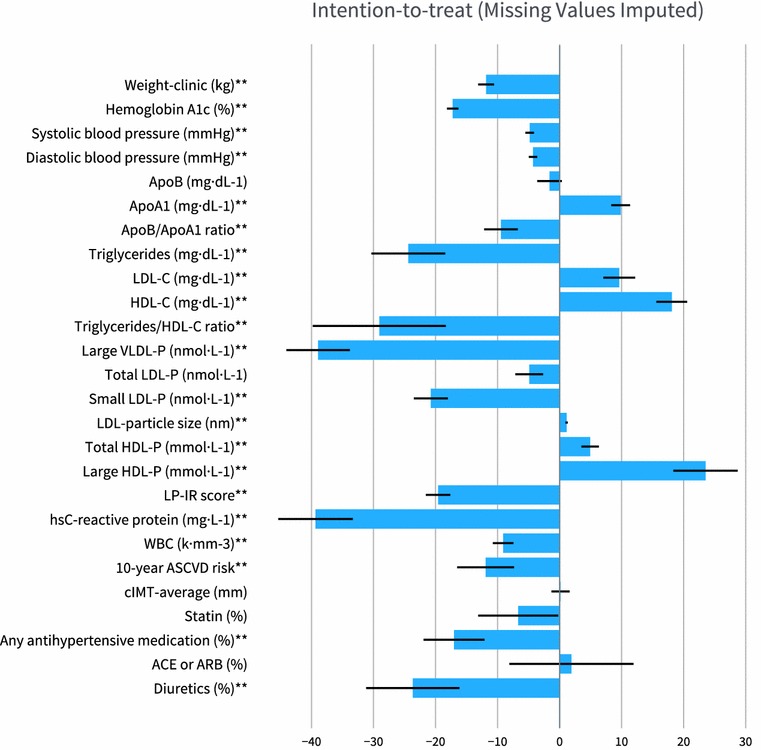
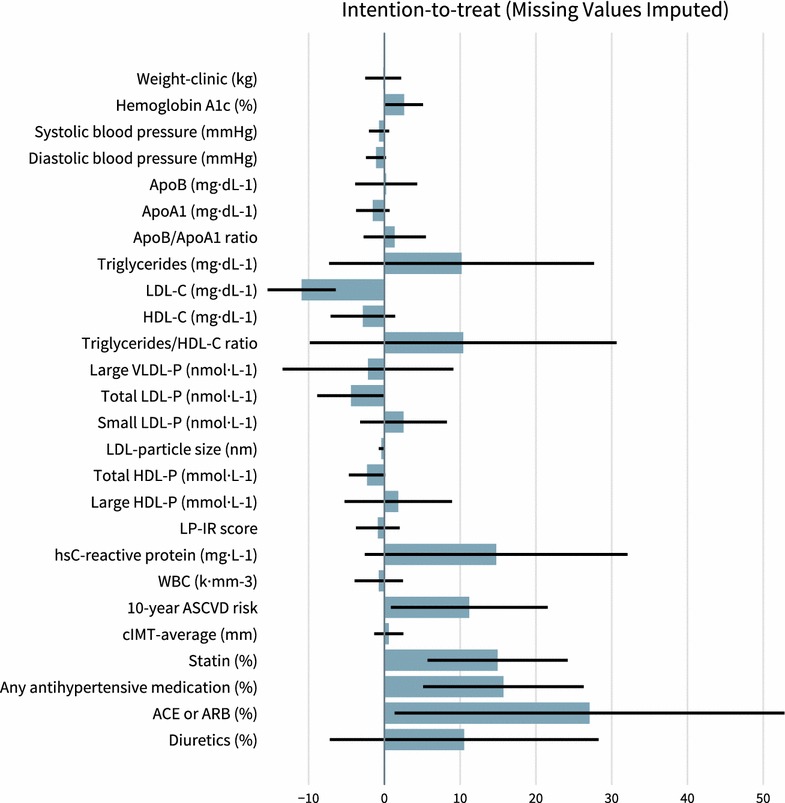
Background: Cardiovascular disease (CVD) is a leading cause of death among adults with type 2 diabetes mellitus (T2D). We recently reported that glycemic control in patients with T2D can be significantly improved through a continuous care intervention (CCI) including nutritional ketosis. The purpose of this study was to examine CVD risk factors in this cohort. Methods: We investigated CVD risk factors in patients with T2D who participated in a 1 year open label, non-randomized, controlled study. The CCI group (n = 262) received treatment from a health coach and medical provider. A usual care (UC) group (n = 87) was independently recruited to track customary T2D progression. Circulating biomarkers of cholesterol metabolism and inflammation, blood pressure (BP), carotid intima media thickness (cIMT), multi-factorial risk scores and medication use were examined. A significance level of P < 0.0019 ensured two-tailed significance at the 5% level when Bonferroni adjusted for multiple comparisons. Results: The CCI group consisted of 262 participants (baseline mean (SD): age 54 (8) year, BMI 40.4 (8.8) kg m −2 ). Intention-to-treat analysis (% change) revealed the following at 1-year: total LDL-particles (LDL-P) (− 4.9%, P = 0.02), small LDL-P (− 20.8%, P = 1.2 × 10 −12 ), LDL-P size (+ 1.1%, P = 6.0 × 10 −10 ), ApoB (− 1.6%, P = 0.37), ApoA1 (+ 9.8%, P < 10 −16 ), ApoB/ApoA1 ratio (− 9.5%, P = 1.9 × 10 −7 ), triglyceride/HDL-C ratio (− 29.1%, P < 10 −16 ), large VLDL-P (− 38.9%, P = 4.2 × 10 −15 ), and LDL-C (+ 9.9%, P = 4.9 × 10 −5 ). Additional effects were reductions in blood pressure, high sensitivity C-reactive protein, and white blood cell count (all P < 1 × 10 −7 ) while cIMT was unchanged. The 10-year atherosclerotic cardiovascular disease (ASCVD) risk score decreased − 11.9% (P = 4.9 × 10 −5 ). Antihypertensive medication use was discontinued in 11.4% of CCI participants (P = 5.3 × 10 −5 ). The UC group of 87 participants [baseline mean (SD): age 52 (10) year, BMI 36.7 (7.2) kg m −2 ] showed no significant changes. After adjusting for baseline differences when comparing CCI and UC groups, significant improvements for the CCI group included small LDL-P, ApoA1, triglyceride/HDL-C ratio, HDL-C, hsCRP, and LP-IR score in addition to other biomarkers that were previously reported. The CCI group showed a greater rise in LDL-C. Conclusions: A continuous care treatment including nutritional ketosis in patients with T2D improved most biomarkers of CVD risk after 1 year. The increase in LDL-cholesterol appeared limited to the large LDL subfraction. LDL particle size increased, total LDL-P and ApoB were unchanged, and inflammation and blood pressure decreased. Trial registration Clinicaltrials.gov: NCT02519309. Registered 10 August 2015
Overview
The claims and statistics of this paper haven’t been checked yet.
Free: it reads the open-access text and checks the first 5 claims that cite a source we can check. Create a free account to check every claim.
Integrity signals
Registry
Cites
Statistics
Figures
Verification
Claims the paper makes
The claims and statistics of this paper haven’t been checked yet.
Free: it reads the open-access text and checks the first 5 claims that cite a source we can check. Create a free account to check every claim.
Claims other papers make about this one
Each is checked against this paper’s own text: does it say what the citing paper says it does?
The source backs part of the claim, not all of it — or backs it for a different population, condition or comparison.
In the citing paper
“Despite the rise in LDL-cholesterol, the CCI cohort improved in 22 out of 26 CVD markers at 1 year (33).”
From Long-Term Effects of a Novel Continuous Remote Care Intervention Including Nutritional Ketosis for the Management of Type 2 Diabetes: A 2-Year Non-randomized Clinical Trial (2019) · cites this paper as [33]
Experimental — accuracy not yet measuredThe source backs part of the claim, not all of it — or backs it for a different population, condition or comparison.
In the citing paper
“Eighty-three percent of CCI participants remained enrolled at 1 year and 60% of completers achieved an HbA1c <6.5% while prescribed metformin or no diabetes medication.”
From Long-Term Effects of a Novel Continuous Remote Care Intervention Including Nutritional Ketosis for the Management of Type 2 Diabetes: A 2-Year Non-randomized Clinical Trial (2019) · cites this paper as [33]
Experimental — accuracy not yet measuredThe source backs part of the claim, not all of it — or backs it for a different population, condition or comparison.
In the citing paper
“from the current evidence, this eating pattern does not appear to increase overall cardiovascular risk, but longterm studies with clinical event outcomes are needed (113 -117).”
From Nutrition Therapy for Adults With Diabetes or Prediabetes: A Consensus Report (2019) · cites this paper as [113]
Experimental — accuracy not yet measuredThe cited source says what the claim attributes to it.
In the citing paper
“and an LDL-C increase is sometimes observed (30–33).”
The cited source says what the claim attributes to it.
In the citing paper
“Eighty-three percent of CCI participants remained enrolled at 1 year and 60% of completers achieved an HbA1c <6.5% while prescribed metformin or no diabetes medication.”
3 more claims about this paper
Create a free account to see every claim other papers make about this one.
Self-check
Percentages, sums and reported differences re-computed from the paper’s own numbers.
The self-check needs the paper’s full text.
Citations
Cites
Heart Disease and Stroke Statistics—2017 Update: A Report From the American Heart Association
Benjamin, E. J., Blaha, M. J., Chiuve, S. E., Cushman, M., Das, S. R., Deo, R., de Ferranti, S. D., Floyd, J., Fornage, M., Gillespie, C., et al. (2017) · Circulation · doi:10.1161/cir.0000000000000485 · Cited by 12,591 · cited 1×
“Background Despite advances in the prevention and treatment of cardiovascular disease (CVD), it remains the leading cause of death in adults across the world [1].”
BackgroundTurner, R. C., Fox, C., Matthews, McElroy, H. H., Cull, C. A., Holman, R. R., Neil, P., Hadden, D. R., Wright, D., Manley, E., et al. (1998) · The Lancet · Cited by 8,419
Whelton, P. K., Carey, R. M., Aronow, W. S., Casey, D. E., Collins, K. J., Dennison Himmelfarb, C., DePalma, S. M., Gidding, S., Jamerson, K. A., Jones, D. W., et al. (2018) · Hypertension · doi:10.1161/hyp.0000000000000065 · Cited by 7,391
(1998) · BMJ · doi:10.1136/bmj.317.7160.703 · Cited by 6,683 · cited 1×
“This included decreased CVD, stroke and microvascular complications [37].”
BackgroundRosuvastatin to Prevent Vascular Events in Men and Women with Elevated C-Reactive Protein
Ridker, P. M., Danielson, E., Fonseca, F. A. H., Genest, J., Gotto, A. M., Kastelein, J. J. P., Koenig, W., Libby, P., Lorenzatti, A. J., MacFadyen, J. G., et al. (2008) · New England Journal of Medicine · doi:10.1056/nejmoa0807646 · Cited by 6,674
Whelton, P. K., Carey, R. M., Aronow, W. S., Casey, D. E., Collins, K. J., Dennison Himmelfarb, C., DePalma, S. M., Gidding, S., Jamerson, K. A., Jones, D. W., et al. (2018) · Journal of the American College of Cardiology · doi:10.1016/j.jacc.2017.11.006 · Cited by 6,616
Stearne, M. R., Palmer, S. L., Hammersley, M. S., Franklin, S. L., Spivey, R. S., Lévy, J., Tidy, C. R., Bell, N. J., Steemson, J., Barrow, B. A., et al. (1998) · UCL Discovery (University College London) · Cited by 6,090
2013 ACC/AHA Guideline on the Assessment of Cardiovascular Risk
Goff, D. C., Lloyd-Jones, D. M., Bennett, G., Coady, S., D’Agostino, R. B., Gibbons, R., Greenland, P., Lackland, D. T., Levy, D., O’Donnell, C. J., et al. (2014) · Journal of the American College of Cardiology · doi:10.1016/j.jacc.2013.11.005 · Cited by 4,945
Gupta, A., & Uribarri, J. (2016) · Hormone Research in Paediatrics · doi:10.1159/000444053 · Cited by 4,006
Ettehad, D., Emdin, C. A., Kiran, A., Anderson, S. G., Callender, T., Emberson, J., Chalmers, J., Rodgers, A., & Rahimi, K. (2016) · The Lancet · doi:10.1016/s0140-6736(15)01225-8 · Cited by 3,755 · cited 1×
“Blood pressure goals were recently reduced [67] and strong evidence exists that elevated blood pressure is a primary cardiovascular risk factor [68].”
BackgroundGoff, D. C., Lloyd-Jones, D. M., Bennett, G., Coady, S., D’Agostino, R. B., Gibbons, R., Greenland, P., Lackland, D. T., Levy, D., O’Donnell, C. J., et al. (2014) · Circulation · doi:10.1161/01.cir.0000437741.48606.98 · Cited by 3,697
Rosuvastatin to Prevent Vascular Events in Men and Women With Elevated C-Reactive Protein
Ridker, P. M., Danielson, E., Fonseca, F. A. H., Genest, J., Gotto, A. M., Kastelein, J. J. P., Koenig, W., Libby, P., Lorenzatti, A. J., MacFadyen, J. G., et al. (2009) · Obstetrical & Gynecological Survey · doi:10.1097/01.ogx.0000344393.60303.0a · Cited by 3,641
Stein, J. H., Korcarz, C. E., Hurst, R. T., Lonn, E., Kendall, C. B., Mohler, E. R., Najjar, S. S., Rembold, C. M., & Post, W. S. (2008) · Journal of the American Society of Echocardiography · doi:10.1016/j.echo.2007.11.011 · Cited by 2,429
Inflammation in Atherosclerosis
Libby, P., Ridker, P. M., & Hansson, G. K. (2009) · Journal of the American College of Cardiology · doi:10.1016/j.jacc.2009.09.009 · Cited by 2,228 · cited 2×
“Inflammation is directly involved in all aspects of the pathogenesis of CVD [33].”
BackgroundThe ketone metabolite β-hydroxybutyrate blocks NLRP3 inflammasome-mediated inflammatory disease
Youm, Y.-H., Nguyen, K. Y., Grant, R. W., Goldberg, E. L., Bodogai, M., Kim, D., D'Agostino, D., Planavsky, N., Lupfer, C., Kanneganti, T. D., et al. (2015) · Nature Medicine · doi:10.1038/nm.3804 · Cited by 2,172
Low-Density Lipoprotein Subclass Patterns and Risk of Myocardial Infarction
Austin, M. A. (1988) · JAMA: The Journal of the American Medical Association · doi:10.1001/jama.1988.03410130125037 · Cited by 1,780
Law, M. R., Wald, N. J., & Rudnicka, A. R. (2003) · BMJ · doi:10.1136/bmj.326.7404.1423 · Cited by 1,720 · cited 1×
“Higher LDL-C is related to increased CVD risk [53, 54], but also is inversely correlated with mortality in two large prospective studies and a systemic review [55–57].”
BackgroundRidker, P. M., Buring, J. E., Shih, J., Matias, M., & Hennekens, C. H. (1998) · Circulation · doi:10.1161/01.cir.98.8.731 · Cited by 1,642
Albert, M. A., Danielson, E., Rifai, N., Ridker, P. M., & for the PRINCE Investigators (2001) · JAMA · doi:10.1001/jama.286.1.64 · Cited by 1,641
Kinaan, M., Ding, H., & Triggle, C. R. (2015) · Medical Principles and Practice · doi:10.1159/000381643 · Cited by 1,515
Hypertension and Antihypertensive Therapy as Risk Factors for Type 2 Diabetes Mellitus
Gress, T. W., Nieto, F. J., Shahar, E., Wofford, M. R., & Brancati, F. L. (2000) · New England Journal of Medicine · doi:10.1056/nejm200003303421301 · Cited by 1,202 · cited 1×
“Additionally, the antihypertensives that were primarily decreased in the current study were shown to increase the risk for diabetes [71].”
BackgroundJafar, T. H., Schmid, C. H., Landa, M., Giatras, I., Toto, R., Remuzzi, G., Maschio, G., Brenner, B. M., Kamper, A., Zucchelli, P., et al. (2001) · Annals of Internal Medicine · doi:10.7326/0003-4819-135-2-200107170-00007 · Cited by 1,092
Type 2 diabetes and cardiovascular disease: Have all risk factors the same strength?
Martín-Timón, I. (2014) · World Journal of Diabetes · doi:10.4239/wjd.v5.i4.444 · Cited by 976
Nordmann, A. J., Nordmann, A., Briel, M., Keller, U., Yancy, W. S., Brehm, B. J., & Bucher, H. C. (2006) · Archives of Internal Medicine · doi:10.1001/archinte.166.3.285 · Cited by 973 · cited 1×
“The mean 10 mg dL−1 change observed in the CCI group in this study is numerically higher than the upper range of values reported by meta-analysis of lipid changes over 1 year related to carbohydrate restriction (− 7 to + 7 mg dL−1) [52].”
ResultWhelton, P. K., Carey, R. M., Aronow, W. S., Casey, D. E., Collins, K. J., Dennison Himmelfarb, C., DePalma, S. M., Gidding, S., Jamerson, K. A., Jones, D. W., et al. (2018) · Journal of the American Society of Hypertension · doi:10.1016/j.jash.2018.06.010 · Cited by 947
Yarnell, J. W., Baker, I. A., Sweetnam, P. M., Bainton, D., O'Brien, J. R., Whitehead, P. J., & Elwood, P. C. (1991) · Circulation · doi:10.1161/01.cir.83.3.836 · Cited by 916
Goff, D. C., Lloyd‐Jones, D. M., Bennett, G. C., Coady, S., D’Agostino, R. B., Gibbons, R., Greenland, P., Lackland, D. T., Levy, D. A., O’Donnell, C. J., et al. (2014) · Carolina Digital Repository (University of North Carolina at Chapel Hill) · Cited by 851
Adiels, M., Olofsson, S.-O., Taskinen, M.-R., & Borén, J. (2008) · Arteriosclerosis, Thrombosis, and Vascular Biology · doi:10.1161/atvbaha.107.160192 · Cited by 820
High-Density Lipoprotein Subfractions - What the Clinicians Need to Know
Pirillo, A., Norata, G. D., & Catapano, A. L. (2013) · Cardiology · doi:10.1159/000346463 · Cited by 748
Lipoprotein Particle Analysis by Nuclear Magnetic Resonance Spectroscopy
Jeyarajah, E. J., Cromwell, W. C., & Otvos, J. D. (2006) · Clinics in Laboratory Medicine · doi:10.1016/j.cll.2006.07.006 · Cited by 732
Gardner, C. D., Trepanowski, J. F., Del Gobbo, L. C., Hauser, M. E., Rigdon, J., Ioannidis, J. P. A., Desai, M., & King, A. C. (2018) · JAMA · doi:10.1001/jama.2018.0245 · Cited by 709
Giugliano, R. P., Pedersen, T. R., Park, J.-G., De Ferrari, G. M., Gaciong, Z. A., Ceska, R., Toth, K., Gouni-Berthold, I., Lopez-Miranda, J., Schiele, F., et al. (2017) · The Lancet · doi:10.1016/s0140-6736(17)32290-0 · Cited by 682
Boden, G., Sargrad, K., Homko, C., Mozzoli, M., & Stein, T. P. (2005) · Annals of Internal Medicine · doi:10.7326/0003-4819-142-6-200503150-00006 · Cited by 542
Westman, E. C., Yancy, W. S., Mavropoulos, J. C., Marquart, M., & McDuffie, J. R. (2008) · Nutrition & Metabolism · doi:10.1186/1743-7075-5-36 · Cited by 475
BARTER, P. J., BALLANTYNE, C. M., CARMENA, R., CABEZAS, M. C., CHAPMAN, M. J., COUTURE, P., DE GRAAF, J., DURRINGTON, P. N., FAERGEMAN, O., FROHLICH, J., et al. (2006) · Journal of Internal Medicine · doi:10.1111/j.1365-2796.2006.01616.x · Cited by 464
Fruchart, J.-C., Sacks, F., Hermans, M. P., Assmann, G., Brown, W. V., Ceska, R., Chapman, M. J., Dodson, P. M., Fioretto, P., Ginsberg, H. N., et al. (2008) · The American Journal of Cardiology · doi:10.1016/j.amjcard.2008.10.002 · Cited by 463
Mortality Trends in Men and Women with Diabetes, 1971 to 2000
Gregg, E. W., Gu, Q., Cheng, Y. J., Venkat Narayan, K. M., & Cowie, C. C. (2007) · Annals of Internal Medicine · doi:10.7326/0003-4819-147-3-200708070-00167 · Cited by 463
New insights into the pathophysiology of dyslipidemia in type 2 diabetes
Taskinen, M.-R., & Borén, J. (2015) · Atherosclerosis · doi:10.1016/j.atherosclerosis.2015.01.039 · Cited by 440
Sampson, U. K., Fazio, S., & Linton, M. F. (2012) · Current Atherosclerosis Reports · doi:10.1007/s11883-011-0219-7 · Cited by 439 · cited 1×
“Inflammation is often observed in T2D concurrent with atherogenic dyslipidemia [34] and represents an additional CVD risk even in individuals with low to normal LDL-C [35, 36].”
BackgroundMansoor, N., Vinknes, K. J., Veierød, M. B., & Retterstøl, K. (2016) · British Journal of Nutrition · doi:10.1017/s0007114515004699 · Cited by 439
Cromwell, W. C., Otvos, J. D., Keyes, M. J., Pencina, M. J., Sullivan, L., Vasan, R. S., Wilson, P. W. F., & D’Agostino, R. B. (2007) · Journal of Clinical Lipidology · doi:10.1016/j.jacl.2007.10.001 · Cited by 425
Hallberg, S. J., McKenzie, A. L., Williams, P. T., Bhanpuri, N. H., Peters, A. L., Campbell, W. W., Hazbun, T. L., Volk, B. M., McCarter, J. P., Phinney, S. D., et al. (2018) · Diabetes Therapy · doi:10.1007/s13300-018-0373-9 · Cited by 406 · cited 10×
“Intensive lifestyle interventions with dietary carbohydrate restriction [5–8], including the recently described continuous remote care model, which helps patients with T2D sustain nutritional ketosis [9, 10], have demonstrated improved glycemic control concurrent with medication reduction.”
BackgroundMethodResultInfluentialSelf-citationCarbohydrate Restriction has a More Favorable Impact on the Metabolic Syndrome than a Low Fat Diet
Volek, J. S., Phinney, S. D., Forsythe, C. E., Quann, E. E., Wood, R. J., Puglisi, M. J., Kraemer, W. J., Bibus, D. M., Fernandez, M. L., & Feinman, R. D. (2009) · Lipids · doi:10.1007/s11745-008-3274-2 · Cited by 397
Self-citationClinical implications of discordance between low-density lipoprotein cholesterol and particle number
Otvos, J. D., Mora, S., Shalaurova, I., Greenland, P., Mackey, R. H., & Goff, D. C. (2011) · Journal of Clinical Lipidology · doi:10.1016/j.jacl.2011.02.001 · Cited by 384
Mertz, W., Tsui, J., Judd, J., Reiser, S., Hallfrisch, J., Morris, E., Steele, P., & Lashley, E. (1991) · The American Journal of Clinical Nutrition · doi:10.1093/ajcn/54.2.291 · Cited by 374
White blood cell count and cardiovascular disease. Insights from the Framingham Study
Kannel, W. B. (1992) · JAMA · doi:10.1001/jama.267.9.1253 · Cited by 365
Factors affecting blood glucose monitoring: sources of errors in measurement
Ginsberg, B. H. (2009) · Journal of Diabetes Science and Technology · doi:10.1177/193229680900300438 · Cited by 348
Ravnskov, U., Diamond, D. M., Hama, R., Hamazaki, T., Hammarskjöld, B., Hynes, N., Kendrick, M., Langsjoen, P. H., Malhotra, A., Mascitelli, L., et al. (2016) · BMJ Open · doi:10.1136/bmjopen-2015-010401 · Cited by 343
Volek, J. S., Fernandez, M. L., Feinman, R. D., & Phinney, S. D. (2008) · Progress in Lipid Research · doi:10.1016/j.plipres.2008.02.003 · Cited by 288 · cited 1×
“Atherogenic dyslipidemia, a known risk factor for CVD [13], is highly prevalent in patients with T2D [14] and tightly linked to high-carbohydrate diets [15].”
BackgroundSelf-citationAtherothrombosis, inflammation, and diabetes
Biondi-Zoccai, G. G. L., Abbate, A., Liuzzo, G., & Biasucci, L. M. (2003) · Journal of the American College of Cardiology · doi:10.1016/s0735-1097(03)00088-3 · Cited by 285
American Diabetes Association (2017) · Diabetes Care · doi:10.2337/dc17-s007 · Cited by 281
A low-carbohydrate, ketogenic diet to treat type 2 diabetes
Yancy, W. S., Foy, M., Chalecki, A. M., Vernon, M. C., & Westman, E. C. (2005) · Nutrition & Metabolism · doi:10.1186/1743-7075-2-34 · Cited by 270
Saslow, L. R., Mason, A. E., Kim, S., Goldman, V., Ploutz-Snyder, R., Bayandorian, H., Daubenmier, J., Hecht, F. M., & Moskowitz, J. T. (2017) · Journal of Medical Internet Research · doi:10.2196/jmir.5806 · Cited by 265
Folsom, A. R., Aleksic, N., Catellier, D., Juneja, H. S., & Wu, K. K. (2002) · American Heart Journal · doi:10.1067/mhj.2002.124054 · Cited by 227
Tremblay, A. J., Morrissette, H., Gagné, J.-M., Bergeron, J., Gagné, C., & Couture, P. (2004) · Clinical Biochemistry · doi:10.1016/j.clinbiochem.2004.03.008 · Cited by 225
Sniderman, A. D., St-Pierre, A. C., Cantin, B., Dagenais, G. R., Després, J.-P., & Lamarche, B. (2003) · The American Journal of Cardiology · doi:10.1016/s0002-9149(03)00262-5 · Cited by 224 · cited 1×
“Elevated concentrations of small LDL are often associated with increased total LDL particle number (LDL-P) and ApoB [19, 20].”
BackgroundDietary Intervention to Reverse Carotid Atherosclerosis
Shai, I., Spence, J. D., Schwarzfuchs, D., Henkin, Y., Parraga, G., Rudich, A., Fenster, A., Mallett, C., Liel-Cohen, N., Tirosh, A., et al. (2010) · Circulation · doi:10.1161/circulationaha.109.879254 · Cited by 213
Lipoprotein Insulin Resistance Index: A Lipoprotein Particle–Derived Measure of Insulin Resistance
Shalaurova, I., Connelly, M. A., Garvey, W. T., & Otvos, J. D. (2014) · Metabolic Syndrome and Related Disorders · doi:10.1089/met.2014.0050 · Cited by 176
McKenzie, A. L., Hallberg, S. J., Creighton, B. C., Volk, B. M., Link, T. M., Abner, M. K., Glon, R. M., McCarter, J. P., Volek, J. S., & Phinney, S. D. (2017) · JMIR Diabetes · doi:10.2196/diabetes.6981 · Cited by 176 · cited 5×
“Intensive lifestyle interventions with dietary carbohydrate restriction [5–8], including the recently described continuous remote care model, which helps patients with T2D sustain nutritional ketosis [9, 10], have demonstrated improved glycemic control concurrent with medication reduction.”
BackgroundMethodResultInfluentialSelf-citationSeshadri, P., Iqbal, N., Stern, L., Williams, M., Chicano, K. L., Daily, D. A., McGrory, J., Gracely, E. J., Rader, D. J., & Samaha, F. F. (2004) · The American Journal of Medicine · doi:10.1016/j.amjmed.2004.04.009 · Cited by 169
Volek, J. S., Sharman, M. J., Gómez, A. L., DiPasquale, C., Roti, M., Pumerantz, A., & Kraemer, W. J. (2004) · Journal of the American College of Nutrition · doi:10.1080/07315724.2004.10719359 · Cited by 164
Self-citationModification of Lipoproteins by Very Low-Carbohydrate Diets
Volek, J. S., Sharman, M. J., & Forsythe, C. E. (2005) · The Journal of Nutrition · doi:10.1093/jn/135.6.1339 · Cited by 159
Self-citationWong, N. D., Zhao, Y., Quek, R. G. W., Blumenthal, R. S., Budoff, M. J., Cushman, M., Garg, P., Sandfort, V., Tsai, M., & Lopez, J. A. G. (2017) · Journal of Clinical Lipidology · doi:10.1016/j.jacl.2017.06.015 · Cited by 140
Mechanisms of Diabetic Dyslipidemia: Relevance for Atherogenesis
Arca, M., Pigna, G., & Favoccia, C. (2012) · Current Vascular Pharmacology · doi:10.2174/157016112803520864 · Cited by 100
Orozco-Beltran, D., Gil-Guillen, V. F., Redon, J., Martin-Moreno, J. M., Pallares-Carratala, V., Navarro-Perez, J., Valls-Roca, F., Sanchis-Domenech, C., Fernandez-Gimenez, A., Perez-Navarro, A., et al. (2017) · PLOS ONE · doi:10.1371/journal.pone.0186196 · Cited by 99
Lorenz, M. W., Price, J. F., Robertson, C., Bots, M. L., Polak, J. F., Poppert, H., Kavousi, M., Dörr, M., Stensland, E., Ducimetiere, P., et al. (2015) · Diabetes Care · doi:10.2337/dc14-2732 · Cited by 88
Cromwell, W. C., & Otvos, J. D. (2006) · The American Journal of Cardiology · doi:10.1016/j.amjcard.2006.07.036 · Cited by 69
Statins and C‐Reactive Protein Levels
Asher, J., & Houston, M. (2007) · The Journal of Clinical Hypertension · doi:10.1111/j.1524-6175.2007.06639.x · Cited by 65
Cardiovascular risk in patients achieving low-density lipoprotein cholesterol and particle targets
Toth, P. P., Grabner, M., Punekar, R. S., Quimbo, R. A., Cziraky, M. J., & Jacobson, T. A. (2014) · Atherosclerosis · doi:10.1016/j.atherosclerosis.2014.05.914 · Cited by 62
Kuznik, A., & Mardekian, J. (2011) · Cardiovascular Diabetology · doi:10.1186/1475-2840-10-31 · Cited by 60
Tani, S., Yagi, T., Atsumi, W., Kawauchi, K., Matsuo, R., & Hirayama, A. (2017) · Cardiovascular Diabetology · doi:10.1186/s12933-017-0606-7 · Cited by 49
Doneen, A. L., & Bale, B. F. (2013) · Postgraduate Medicine · doi:10.3810/pgm.2013.03.2645 · Cited by 35
Renal protection with angiotensin receptor blockers: where do we stand
Schmieder, R. E., Ruilope, L. M., & Barnett, A. H. (2011) · Journal of Nephrology · doi:10.5301/jn.2011.6445 · Cited by 31
Sniderman, A. D., Toth, P. P., Thanassoulis, G., & Furberg, C. D. (2016) · Journal of Clinical Lipidology · doi:10.1016/j.jacl.2016.07.008 · Cited by 31
Riley, W. A. (2004) · Current Atherosclerosis Reports · doi:10.1007/s11883-004-0036-3 · Cited by 25
Apolipoprotein B and Apolipopotein A-I in Vascular Risk Prediction – A Review
Schmidt, C., & Bergström, G. M. L. (2014) · Current Pharmaceutical Design · doi:10.2174/1381612820666140620121828 · Cited by 24
Hallberg, S. J., McKenzie, A. L., Williams, P. T., Bhanpuri, N. H., Peters, A. L., Campbell, W. W., Hazbun, T. L., Volk, B. M., McCarter, J. P., Phinney, S. D., et al. (2018) · Diabetes Therapy · doi:10.1007/s13300-018-0386-4 · Cited by 19
Self-citationLipoprotein Metabolism Indicators Improve Cardiovascular Risk Prediction
van Schalkwijk, D. B., de Graaf, A. A., Tsivtsivadze, E., Parnell, L. D., der Vat, B. J. C. V. D. W.-V., van Ommen, B., van der Greef, J., & Ordovás, J. M. (2014) · PLoS ONE · doi:10.1371/journal.pone.0092840 · Cited by 18
Study of the Use of Lipid Panels as a Marker of Insulin Resistance to Determine Cardiovascular Risk
Bertsch, R. A., & Merchant, M. A. (2015) · The Permanente Journal · doi:10.7812/tpp/14-237 · Cited by 16
Combining LDL-C and HDL-C to predict survival in late life: The InChianti study
Zuliani, G., Volpato, S., Dugo, M., Vigna, G. B., Morieri, M. L., Maggio, M. G., Cherubini, A., Bandinelli, S., Guralnik, J. M., & Ferrucci, L. (2017) · PLoS ONE · doi:10.1371/journal.pone.0185307 · Cited by 15
Wood, T. R., Hansen, R. G., Sigurðsson, A. F., & Johannsson, G. (2016) · British Journal Of Nutrition · doi:10.1017/s0007114515005450 · Cited by 14
May, H. T., Anderson, J. L., Winegar, D. A., Rollo, J. S., Connelly, M. A., Otvos, J. D., & Muhlestein, J. B. (2016) · Clinical Biochemistry · doi:10.1016/j.clinbiochem.2016.09.004 · Cited by 7
Research works printed but not linked: 1
- 3. Centers for Disease Control and Prevention (CDC) National diabetes statistics report, 2017 2017 Atlanta Centers for Disease Control and Prevention 1 20
Cited by
Nutrition Therapy for Adults With Diabetes or Prediabetes: A Consensus Report
Evert, A. B., Dennison, M., Gardner, C. D., Garvey, W. T., Lau, K. H. K., MacLeod, J., Mitri, J., Pereira, R. F., Rawlings, K., Robinson, S., et al. (2019) · Diabetes Care · doi:10.2337/dci19-0014 · Cited by 1,496
Lechner, K., von Schacky, C., McKenzie, A. L., Worm, N., Nixdorff, U., Lechner, B., Kränkel, N., Halle, M., Krauss, R. M., & Scherr, J. (2020) · European Journal of Preventive Cardiology · doi:10.1177/2047487319869400 · Cited by 371
Self-citationKetone bodies: from enemy to friend and guardian angel
Kolb, H., Kempf, K., Röhling, M., Lenzen-Schulte, M., Schloot, N. C., & Martin, S. (2021) · BMC Medicine · doi:10.1186/s12916-021-02185-0 · Cited by 361
Athinarayanan, S. J., Adams, R. N., Hallberg, S. J., McKenzie, A. L., Bhanpuri, N. H., Campbell, W. W., Volek, J. S., Phinney, S. D., & McCarter, J. P. (2019) · Frontiers in Endocrinology · doi:10.3389/fendo.2019.00348 · Cited by 324
Self-citationCaprio, M., Infante, M., Moriconi, E., Armani, A., Fabbri, A., Mantovani, G., Mariani, S., Lubrano, C., Poggiogalle, E., Migliaccio, S., et al. (2019) · Journal of Endocrinological Investigation · doi:10.1007/s40618-019-01061-2 · Cited by 283
Metadata
- Authors
- Bhanpuri, N. H., Hallberg, S. J., Williams, P. T., McKenzie, A. L., Ballard, K. D., Campbell, W. W., McCarter, J. P., Phinney, S. D., & Volek, J. S.
- Affiliations
- Indiana University Health (US)
- Miami University (US)
- Purdue University West Lafayette (US)
- Washington University in St. Louis (US)
- The Ohio State University (US)
- Corresponding author
- Bhanpuri, Nasir H.
- ORCID
- Venue
- Cardiovascular Diabetology
- Published
- 2018-05-01
- Volume
- 17
- Issue
- 1
- Pages
- 56-56
- ISSN
- 1475-2840 (ISSN-L)
- PMC
- PMC5928595
- OpenAlex
- W2802155106
- Cited by
- 190
- References
- 85
- Citations by year
- 2026: 10 · 2025: 15 · 2024: 13 · 2023: 19 · 2022: 33 · 2021: 28 · 2020: 43 · 2019: 23 · 2018: 6
- FWCI
- 17.15
- Type
- journal article
- Language
- en
- Open access
- gold
- doi.org
- Licence
- cc-by
- creativecommons.org/licenses/by/4.0 (tdm)
- creativecommons.org/licenses/by/4.0 (vor)
- Locations
- Cardiovascular Diabetology (publishedVersion, cc-by)
- bioRxiv (Cold Spring Harbor Laboratory) (acceptedVersion)
- Europe PMC (PubMed Central) (publishedVersion, other-oa)
- PubMed Central (publishedVersion, cc-by)
- PubMed (publishedVersion)
- Digital Commons@Becker (Washington University School of Medicine) (submittedVersion, cc-by)
- DOAJ (DOAJ: Directory of Open Access Journals) (submittedVersion, cc-by-sa)
- Funders
- Virta Health
- Topics
- Health Sciences › Medicine › Physiology (medical) › Diet and metabolism studies
- Health Sciences › Medicine › Endocrinology, Diabetes and Metabolism › Diabetes, Cardiovascular Risks, and Lipoproteins
- Health Sciences › Medicine › Endocrinology, Diabetes and Metabolism › Diabetes Management and Research
- Keywords
- type 2 diabetes, cardiovascular risk factors, nutritional ketosis, carbohydrate restriction, LDL particle size, ApoB/ApoA1 ratio, triglyceride to HDL cholesterol ratio, carotid intima-media thickness, blood pressure, C-reactive protein, inflammation, cholesterol metabolism, health coaching, glycemic control, LDL cholesterol lowering, cardiovascular risk
- MeSH terms
- Adult, Blood Glucose, Blood Pressure, Cardiovascular Diseases, Combined Modality Therapy, Diabetes Mellitus, Type 2, Diet, Diabetic, Female, Humans, Hypoglycemic Agents, Indiana, Lipids, Male, Middle Aged, Nutritional Status, Prospective Studies, Risk Factors, Time Factors, Biomarkers, Diabetic Ketoacidosis, Treatment Outcome, Inflammation Mediators, Delivery of Health Care, Integrated, 3-Hydroxybutyric Acid, Diet, Carbohydrate-Restricted
About these checks
Registry, retraction, Cites and statistics results are computed, not judged, with one exception: a printed reference that no index lists is read once by a model before it counts as a citation error. Claims are extracted by a model and kept only when their quote appears verbatim in the text; each cited source is then checked, with a model’s help, for whether it says what the claim relies on. Those verdicts can be wrong — read the claim’s quote and the cited source before relying on one.
Statistics and arithmetic are recomputed, not judged.
Confidence bands are shown only for fields calibrated on our annotated test set. None is calibrated yet, so no band is shown.
What counts as a claim ›How we measure confidence ›How we check this ›
Are you an author, or do you see a problem with this page? Request a review
Data sources
Bibliographic data: Semantic Scholar, OpenAlex, Crossref.
Contains information from the Semantic Scholar Academic Graph Datasets, made available under the ODC Attribution License (ODC-BY 1.0).
Semantic Scholar’s data is described in: Kinney, R., et al. (2023). The Semantic Scholar Open Data Platform. arXiv:2301.10140.
