

Network meta-analysis on the effects of finerenone versus SGLT2 inhibitors and GLP-1 receptor agonists on cardiovascular and renal outcomes in patients with type 2 diabetes mellitus and chronic kidney disease
Open accessThe DOI matches its Crossref record; 84 of the 84 references it cites were found in a registry or an index; 23 of the 52 sources its claims cite were checked for support.
Abstract
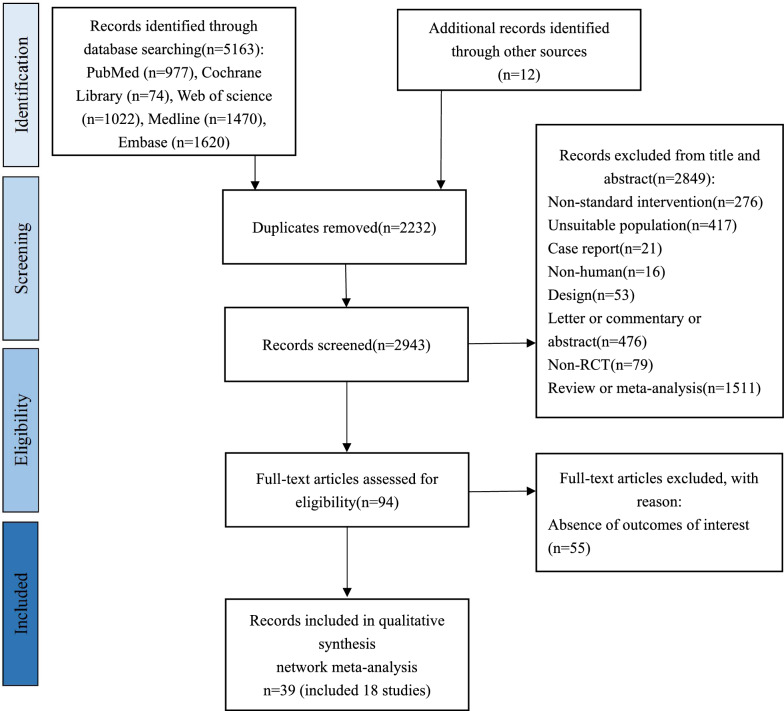
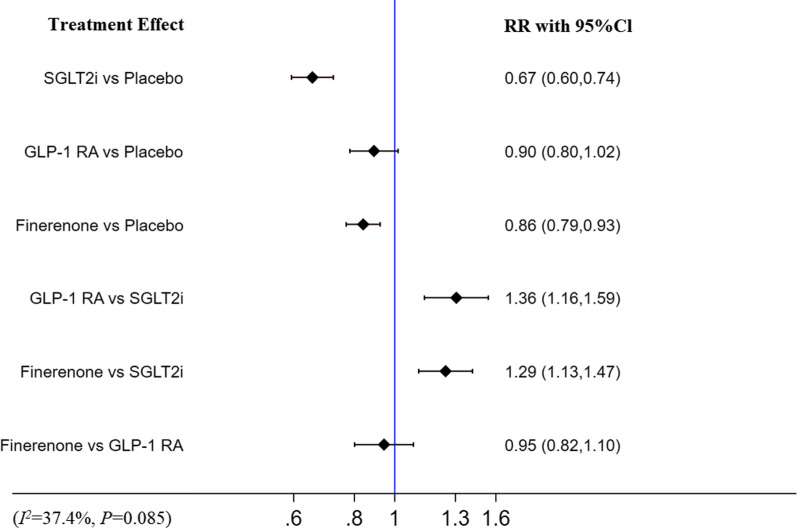
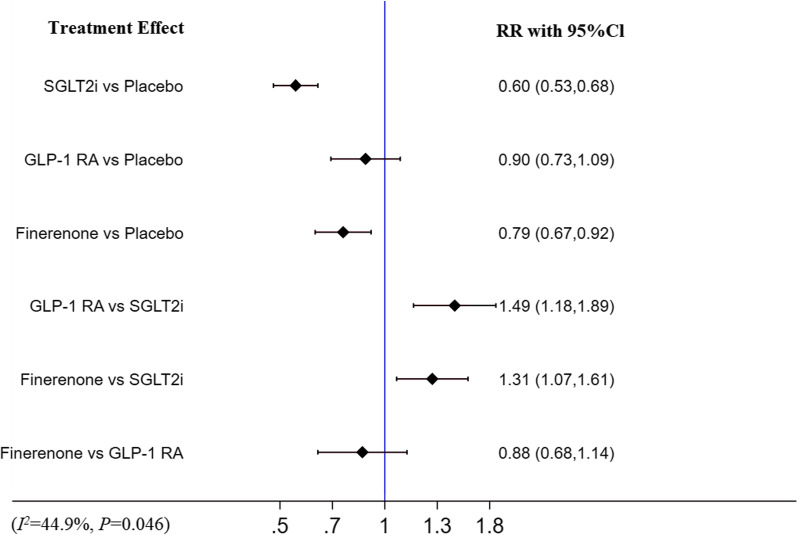
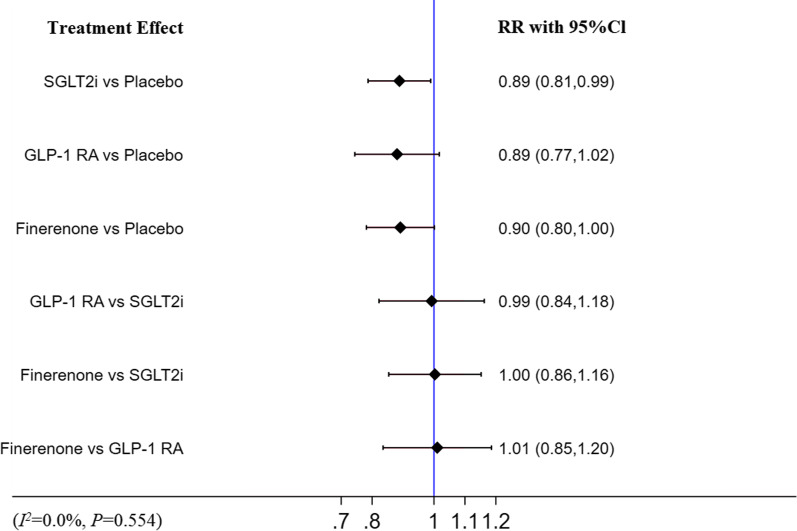
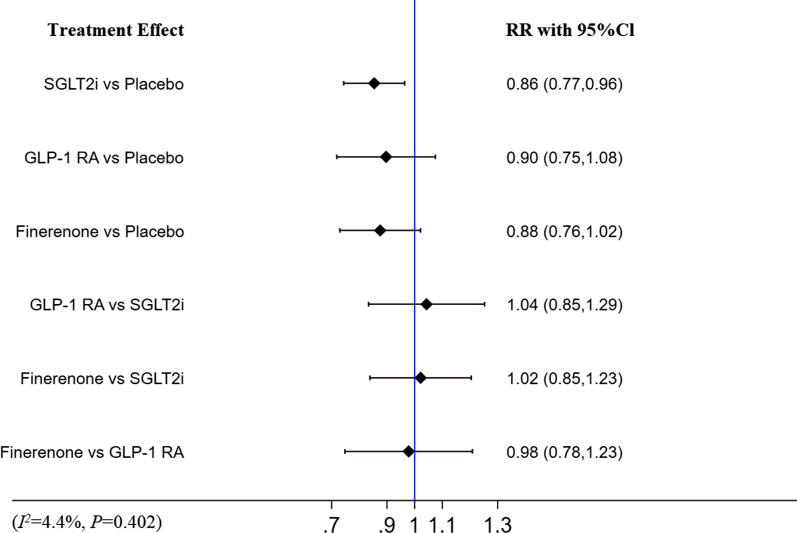
Objective: To evaluate the cardiovascular and renal benefits of finerenone, sodium-glucose cotransporter-2 inhibitors (SGLT2i) and glucagonlike peptide-1 receptor agonists (GLP-1 RA) in patients with Type 2 Diabetes Mellitus (T2DM) and chronic kidney disease (CKD) with network meta-analysis. Methods: Systematic literature searches were conducted of PubMed, Cochrane Library, Web of Science, Medline and Embase covering January 1, 2000 to December 30, 2021. Randomized control trials (RCTs) comparing finerenone, SGLT-2i and GLP-1 RA in diabetics with CKD were selected. We performed a network meta-analysis to compare the two drugs and finerenone indirectly. Results were reported as risk ratio (RR) with corresponding 95% confidence interval (CI). Results: 18 RCTs involving 51,496 patients were included. Finerenone reduced the risk of major adverse cardiovascular events (MACE), renal outcome and hospitalization for heart failure (HHF) (RR [95% CI]; 0.88 [0.80–0.97], 0.86 [0.79–0.93], 0.79 [0.67,0.92], respectively). SGLT-2i were associated with reduced risks of MACE (RR [95% CI]; 0.84 [0.78–0.90]), renal outcome (RR [95% CI]; 0.67 [0.60–0.74], HHF (RR [95% CI]; 0.60 [0.53–0.68]), all-cause death (ACD) (RR [95% CI]; 0.89 [0.81–0.91]) and cardiovascular death (CVD) (RR [95% CI]; 0.86 [0.77–0.96]) compared to placebo. GLP-1 RA were associated with a lower risk of MACE (RR [95% CI]; 0.86 [0.78–0.94]). SGLT2i had significant effect in comparison to finerenone (finerenone vs SGLT2i: RR [95% CI]; 1.29 [1.13–1.47], 1.31 [1.07–1.61], respectively) and GLP-1 RA (GLP-1 RA vs SGLT2i: RR [95% CI]; 1.36 [1.16–1.59], 1.49 [1.18–1.89], respectively) in renal outcome and HHF. Conclusions: In patients with T2DM and CKD, SGLT2i, GLP-1 RA and finerenone were comparable in MACE, ACD and CVD. SGLT2i significantly decreased the risk of renal events and HHF compared with finerenone and GLP-1 RA. Among GLP-1 RA, GLP-1 analogues showed significant effect in reducing cardiovascular events compared with exendin-4 analogues.
Overview
CoChat Summary
TL;DR
In adults with type 2 diabetes mellitus (T2DM) and chronic kidney disease (CKD), this network meta-analysis of 18 RCTs and 51,496 patients found that SGLT2 inhibitors, GLP-1 receptor agonists, and finerenone all reduced MACE versus placebo, while SGLT2 inhibitors also reduced renal outcome, hospitalization for heart failure (HHF), all-cause death (ACD), and cardiovascular death (CVD). SGLT2 inhibitors significantly outperformed finerenone and GLP-1 receptor agonists for renal outcome and HHF.
Key findings
- Finerenone reduced MACE (RR 0.88, 95% CI 0.80–0.97), renal outcome (RR 0.86, 95% CI 0.79–0.93), and HHF (RR 0.79, 95% CI 0.67–0.92) versus placebo, with a tendency to reduce ACD (RR 0.90, 95% CI 0.80–1.00).
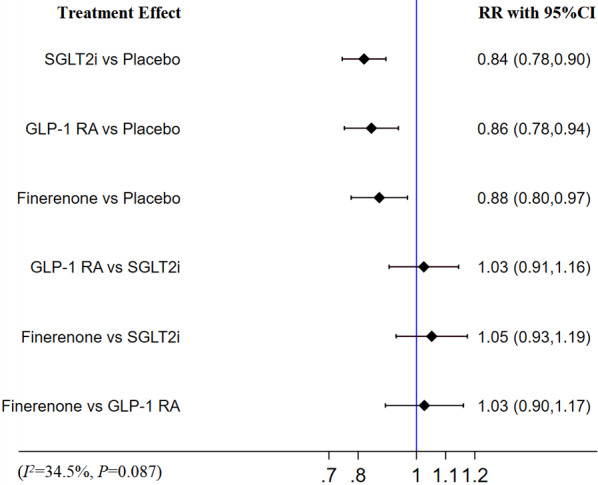
- SGLT2 inhibitors reduced MACE (RR 0.84, 95% CI 0.78–0.90), renal outcome (RR 0.67, 95% CI 0.60–0.74), HHF (RR 0.60, 95% CI 0.53–0.68), ACD (RR 0.89, 95% CI 0.81–0.99), and CVD (RR 0.86, 95% CI 0.77–0.96) versus placebo. GLP-1 receptor agonists reduced MACE (RR 0.86, 95% CI 0.78–0.94) but not renal outcome, HHF, ACD, or CVD versus placebo.
- SGLT2 inhibitors were significantly better than finerenone and GLP-1 receptor agonists for renal outcome and HHF: finerenone vs SGLT2i RR 1.29 (95% CI 1.13–1.47) for renal outcome and 1.31 (95% CI 1.07–1.61) for HHF; GLP-1 RA vs SGLT2i RR 1.36 (95% CI 1.16–1.59) for renal outcome and 1.49 (95% CI 1.18–1.89) for HHF. MACE, ACD, and CVD were comparable among the three drug classes.
- Among individual interventions, liraglutide ranked among the most effective for MACE (RR 0.69, 95% CI 0.58–0.82), ACD (RR 0.76, 95% CI 0.62–0.93), and CVD (RR 0.69, 95% CI 0.52–0.90); dapagliflozin, empagliflozin, and canagliflozin were among the most effective for renal outcome; ertugliflozin was among the most effective for HHF.
Methods
- Systematic searches of PubMed, Cochrane Library, Web of Science, Medline, and Embase from January 1, 2000 to December 30, 2021 identified randomized controlled trials comparing finerenone, SGLT2 inhibitors, or GLP-1 receptor agonists with placebo in adults with T2DM and/or CKD; 18 RCTs involving 51,496 patients were included.
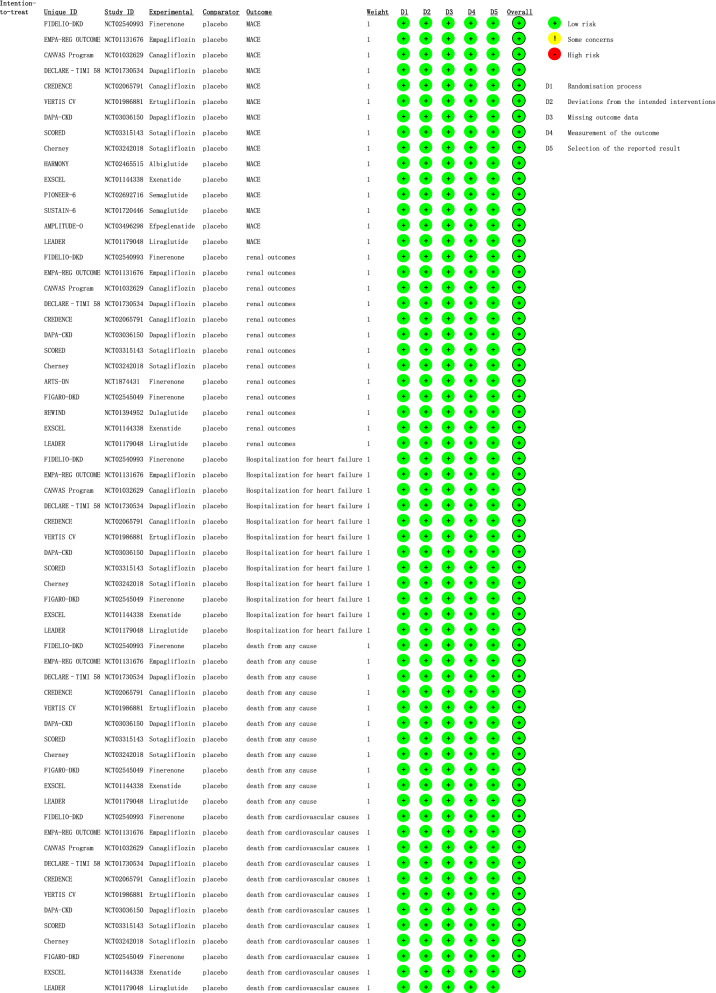
- Network meta-analysis was performed in Stata version 15.0, reporting risk ratios with 95% confidence intervals; outcomes were MACE, renal outcome, HHF, ACD, and CVD. Risk of bias was assessed with RoB 2.0, and evidence certainty with GRADE and a minimally contextualized framework.
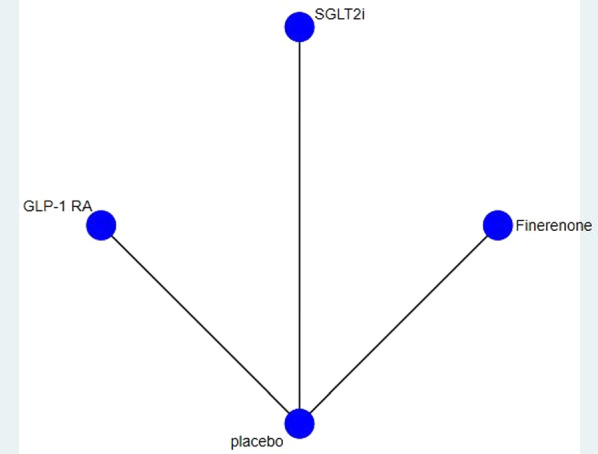
- No outcome had a closed loop, so comparisons among finerenone, SGLT2 inhibitors, and GLP-1 receptor agonists relied on indirect evidence; a sensitivity analysis excluded the Cherney 2021 trial because it enrolled patients with severe CKD (eGFR 15–30 ml/min/1.73 m²).
Limitations
- The authors state that the analysis was based on indirect comparisons and requires validation by head-to-head trials comparing finerenone with SGLT2 inhibitors and GLP-1 receptor agonists.
- The authors note that some included studies were subgroup analyses of RCTs, raising concern that patients with T2DM and CKD may not have been completely randomized; there were also more patients in SGLT2 inhibitor studies than in GLP-1 receptor agonist or finerenone studies, and baseline eGFR in Cherney 2021 differed from other studies.
- The authors did not assess albuminuria, so effects on albuminuria in patients with diabetes and CKD could not be investigated; the text also makes evident that GRADE downgraded SGLT2i vs finerenone and SGLT2i vs GLP-1 RA comparisons for intransitivity because only indirect evidence was available.
Model-written summary. Check it against the paper before relying on it.
Integrity signals
Registry
Cites
Statistics
Figures
Verification
Claims the paper makes
8 Valid · 0 Not valid · 14 Not checked · 159 Own results and interpretations
The cited sources support only part of this claim — read each source’s verdict below.
In the paper
“Even with current therapies available [6–10], patients with T2DM and chronic kidney disease (CKD) still experience a significant cardiovascular and renal morbidity and mortality.”
§ Network meta-analysis on the effects of finerenone versus SGLT2 inhibitors and GLP-1 receptor agonists on cardiovascular and renal outcomes in patients with type 2 diabetes mellitus and chronic kidney disease > Background
What the sources say
- Supportedcites [6] Alicic RZ Rooney MT Tuttle KR Diabetic kidney disease: challenges, progress, and possibilities Clin J Am Soc Nephrol 2017 12 12 2032 2045 28522654 PMC5718284 source
The Abstract says that despite current therapies, substantial risk of diabetic kidney disease onset and progression remains, and that most affected patients die from cardiovascular disease or infections before needing kidney replacement therapy. The Novel Therapies and Approaches passage likewise describes large residual risk despite current management, supporting the claim about ongoing cardiovascular and renal harm. (LLM, conf=0.92)
- Supportedcites [7] Perkovic V Jardine MJ Neal B CREDENCE Trial Investigators Canagliflozin and renal outcomes in type 2 diabetes and nephropathy N Engl J Med 2019 380 24 2295 2306 30990260 source
The Patients section says all participants with type 2 diabetes and CKD were receiving an ACE inhibitor or angiotensin-receptor blocker. The Secondary and Exploratory Outcomes table reports substantial renal and cardiovascular event rates in the placebo group despite that treatment, supporting the claim of continuing morbidity and mortality. (LLM, conf=0.90)
- Supportedcites [8] Agarwal R Anker SD Bakris G FIDELIO-DKD and FIGARO-DKD Investigators Investigating new treatment opportunities for patients with chronic kidney disease in type 2 diabetes: the role of finerenone Nephrol Dial Transplant 2020 10.1093/ndt/gfaa294 33280027 PMC9130026 source
The Introduction states that, despite ACE inhibitors or ARBs and concomitant SGLT2 inhibitors, residual risk of progression to end-stage kidney disease and cardiovascular morbidity and mortality remains in patients with CKD and type 2 diabetes. This supports the claim that substantial cardiorenal risks persist with current therapies. (LLM, conf=0.94)
- Partly supportedcites [9] Neuen BL Young T Heerspink HJL SGLT2 inhibitors for the prevention of kidney failure in patients with type 2 diabetes: a systematic review and meta-analysis Lancet Diabetes Endocrinol 2019 7 11 845 854 31495651 sourceExperimental — accuracy not yet measured
The Introduction says that, despite recommended ACE inhibitor or ARB treatment, residual kidney risk remains high in people with type 2 diabetes who have or are at risk of kidney disease. The Results include a combined outcome involving cardiovascular or kidney death, but do not establish significant cardiovascular morbidity and mortality specifically among patients with both type 2 diabetes and CKD despite current therapies. (LLM, conf=0.83)
- Not checked yetcites [10] Zelniker TA Wiviott SD Raz I Comparison of the effects of glucagon-like peptide receptor agonists and sodium-glucose cotransporter 2 inhibitors for prevention of major adverse cardiovascular and renal outcomes in type 2 diabetes mellitus Circulation 2019 139 17 2022 2031 30786725 source
plain- Asserted: passes — The authors put it forward as true.
- Checkable: passes — It can be checked against evidence.
- Load-bearing: passes — The paper’s conclusions depend on it.
- Based: passes — The paper gives a reason why it holds.
- Supported
The cited sources support only part of this claim — read each source’s verdict below.
In the paper
“According to two large randomized placebo-controlled trials targeted at T2DM and CKD patients, finerenone has been demonstrated to significantly reduce the occurrences of composite renal outcome”
§ Network meta-analysis on the effects of finerenone versus SGLT2 inhibitors and GLP-1 receptor agonists on cardiovascular and renal outcomes in patients with type 2 diabetes mellitus and chronic kidney disease > Background
What the sources say
- Partly supportedcites [16] Bakris GL Agarwal R Anker SD FIDELIO-DKD Investigators Effect of finerenone on chronic kidney disease outcomes in type 2 diabetes N Engl J Med 2020 383 23 2219 2229 33264825 sourceExperimental — accuracy not yet measured
The Methods describe one randomized, placebo-controlled trial of 5,734 patients with CKD and type 2 diabetes. The Primary and Key Secondary Outcomes section reports a significantly lower incidence of the composite kidney outcome with finerenone. This paper does not establish the claim's attribution to two trials; its discussion describes another finerenone trial as ongoing. (LLM, conf=0.90)
- Partly supportedcites [17] Pitt B Filippatos G Agarwal R FIGARO-DKD Investigators Cardiovascular events with finerenone in kidney disease and type 2 diabetes N Engl J Med 2021 385 24 2252 2263 34449181 sourceExperimental — accuracy not yet measured
The Introduction reports improved kidney outcomes in FIDELIO-DKD, and the Secondary and Exploratory Outcomes section reports a lower incidence of an exploratory kidney composite outcome in FIGARO-DKD. But FIGARO-DKD found no significant difference in its prespecified kidney composite outcome, so the claim overstates what the two trials demonstrated. (LLM, conf=0.90)
boostedstates a cause- Asserted: passes — The authors put it forward as true.
- Checkable: passes — It can be checked against evidence.
- Load-bearing: passes — The paper’s conclusions depend on it.
- Based: passes — The paper gives a reason why it holds.
- Partly supported
The cited sources support only part of this claim — read each source’s verdict below.
In the paper
“and composite cardiovascular outcome (defined as a composite of nonfatal MI, nonfatal stroke, death from cardiovascular causes, or hospitalization for heart failure [HHF]), regardless of patients with or without established cardiovascular disease [16, 17].”
§ Network meta-analysis on the effects of finerenone versus SGLT2 inhibitors and GLP-1 receptor agonists on cardiovascular and renal outcomes in patients with type 2 diabetes mellitus and chronic kidney disease > Background
What the sources say
- Partly supportedcites [16] Bakris GL Agarwal R Anker SD FIDELIO-DKD Investigators Effect of finerenone on chronic kidney disease outcomes in type 2 diabetes N Engl J Med 2020 383 23 2219 2229 33264825 sourceExperimental — accuracy not yet measured
The Methods and Primary and Key Secondary Outcomes sections describe one randomized placebo-controlled trial in patients with type 2 diabetes and CKD. It found a significant reduction in the stated cardiovascular composite (hazard ratio 0.86; P=0.03). This paper does not establish the claim about two trials or report that the reduction held regardless of established cardiovascular disease; no page number is available in our copy. (LLM, conf=0.86)
- Supportedcites [17] Pitt B Filippatos G Agarwal R FIGARO-DKD Investigators Cardiovascular events with finerenone in kidney disease and type 2 diabetes N Engl J Med 2021 385 24 2252 2263 34449181 source
The Results section reports a significantly lower composite cardiovascular outcome with finerenone than placebo in the FIGARO-DKD trial (hazard ratio 0.87; P=0.03). The Methods define the composite as the four events listed in the citing sentence, and the Results say the treatment effect was consistent across prespecified subgroups; the Statistical Analysis identifies cardiovascular-disease history as a stratification factor. The Discussion also describes cardiovascular benefits observed in both finerenone trials. (LLM, conf=0.88)
boostedstates a cause- Asserted: passes — The authors put it forward as true.
- Checkable: passes — It can be checked against evidence.
- Load-bearing: passes — The paper’s conclusions depend on it.
- Based: passes — The paper gives a reason why it holds.
- Partly supported
The cited sources support only part of this claim — read each source’s verdict below.
In the paper
“As a nonsteroidal, selective mineralocorticoid receptor antagonist, finerenone has been shown to have potent anti-inflammatory and antifibrotic effects while reducing the urinary albumin-to-creatinine ratio, which may be related to its benefits in renal outcome and HHF [67–70].”
§ Network meta-analysis on the effects of finerenone versus SGLT2 inhibitors and GLP-1 receptor agonists on cardiovascular and renal outcomes in patients with type 2 diabetes mellitus and chronic kidney disease > Discussion
What the sources say
- Partly supportedcites [67] Grune J Beyhoff N Smeir E Selective mineralocorticoid receptor cofactor modulation as molecular basis for finerenone’s antifibrotic activity Hypertension 2018 71 4 599 608 29437893 sourceExperimental — accuracy not yet measured
Our copy supports the pharmacology half: the Abstract reports that 'isoproterenol-induced cardiac fibrosis and macrophage invasion were potently blocked by finerenone, whereas eplerenone had no significant effect,' and the Discussion opens by stating 'different antifibrotic/anti-inflammatory properties of the nonsteroidal MRA finerenone' — but in a mouse model of cardiac (not renal) fibrosis, with no albumin-to-creatinine ratio measured. The clinical elements are not this paper's own findings: the Perspectives only recap others' trials (urinary albuminuria reduction vs spironolactone, credited to refs 3 and 10; the ARTS-HF composite of death, cardiovascular hospitalization or emergency worsening-HF presentation, credited to Filippatos et al. ref 27), and no renal-outcome or HHF benefit is reported. The hedged linkage is at best mirrored by the Perspectives suggestion that selective MR modulation 'may result in the induction of cardioprotective gene programs, thereby providing a potential mechanism for the observed clinical actions.' (LLM, conf=0.80)
- Not checked yetcites [68] Kolkhof P Delbeck M Kretschmer A Finerenone, a novel selective nonsteroidal mineralocorticoid receptor antagonist protects from rat cardiorenal injury J Cardiovasc Pharmacol 2014 64 1 69 78 24621652 source
- Not checked yetcites [69] Kolkhof P Jaisser F Kim SY Steroidal and novel non-steroidal mineralocorticoid receptor antagonists in heart failure and cardiorenal diseases: comparison at bench and bedside Handb Exp Pharmacol 2017 243 271 305 27830348 source
- Partly supportedcites [70] Agarwal R Kolkhof P Bakris G Steroidal and non-steroidal mineralocorticoid receptor antagonists in cardiorenal medicine Eur Heart J 2021 42 2 152 61 10.1093/eurheartj/ehaa736 33099609 PMC7813624 sourceExperimental — accuracy not yet measured
Our copy supports most of what the citing sentence attributes: the Conclusions call finerenone 'the novel, nonsteroidal, selective MRA', the 'Electrolyte effects vs. anti-fibrotic effects' section (and the DOCA–salt rat table) reports that finerenone reduced renal pro-inflammatory/pro-fibrotic gene expression, proteinuria and tubulointerstitial fibrosis — but only in preclinical models of kidney/cardiac injury, not in patients, and without the word 'potent' being established clinically. The 'Clinical development programme' section documents dose-dependent UACR reduction in ARTS-DN (placebo-corrected 38% at 20 mg/day, non-haemodynamic on post hoc analysis) and that in FIDELIO-DKD finerenone significantly reduced the primary renal composite and the secondary composite including HHF. What this source does not state is the tie the claim draws — that the anti-inflammatory/antifibrotic effects and UACR reduction 'may be related to' its renal and HHF benefits; the only such connection it offers is a meta-regression of other drug trials (its ref. 87, Heerspink et al.) linking 30% UACR reduction with 23.7% lower kidney-failure risk, plus the general framing that MR-driven inflammation and fibrosis promote cardiorenal progression. (LLM, conf=0.72)
hedgedstates a possible cause- Asserted: passes — The authors put it forward as true.
- Checkable: passes — It can be checked against evidence.
- Load-bearing: unclear — It is unclear whether the paper’s conclusions depend on it.
- Based: passes — The paper gives a reason why it holds.
- Partly supported
A result the paper reports from its own data — it cites no other source for it, so there is none to check. The quote shows it is in the paper.
In the paper
“18 RCTs involving 51,496 patients were included.”
- Also stated in: § Literature search and included studies · plain
“Finally, 39 articles (included 18 randomized controlled trials) were included in this network meta-analysis [7, 16, 17, 29–64].”
- Also stated in: § Baseline characteristics of included studies in patients with T2DM and CKD · plain
“The pooled population consisted of 51,496 patients with T2DM and CKD, 14,847 of them were in finerenone studies (7246 in the intervention group and 7601 in control group), 25,098 patients in SGLT-2i studies (13,260 in the intervention group and 11,838 in control group) and 11,551 patients in GLP-1 RA studies (5355 in the group treated with GLP-1 RA and 5796 in the control group).”
§ Network meta-analysis on the effects of finerenone versus SGLT2 inhibitors and GLP-1 receptor agonists on cardiovascular and renal outcomes in patients with type 2 diabetes mellitus and chronic kidney disease > Abstract > Results
plainn = 51,496- Asserted: passes — The authors put it forward as true.
- Checkable: passes — It can be checked against evidence.
- Load-bearing: passes — The paper’s conclusions depend on it.
- Based: passes — The paper gives a reason why it holds.
- Also stated in: § Literature search and included studies · plain
141 more claims
Create a free account to see all 181 claims and to verify the 29 references still open.
- Probably not a substantial claim. 25
- It may state two separate claims as one. 12
- The quote only partly states this claim. 2
Claims other papers make about this one
Each is checked against this paper’s own text: does it say what the citing paper says it does?
In the citing paper
“Similarly to sodium–glucose linked transporter-2 (SGLT2) inhibitors [14], GLP-1 RAs have demonstrated a surprising cardio and nephroprotective action since they significantly reduce major adverse cardiovascular events’ (MACEs) rate and the risk of kidney disease progression in patients with T2DM [15].”
From GLP-1 Receptor Agonists in Non-Alcoholic Fatty Liver Disease: Current Evidence and Future Perspectives (2023) · cites this paper as [15]
Self-check
Percentages, sums and reported differences re-computed from the paper’s own numbers.
Each contradiction between two passages listed here was confirmed by an independent check.
Rated major: it would touch a result — a value a result rests on, reported and recomputed p-values on opposite sides of the significance level, two passages that conflict with no sign which is right, or a cited work retracted before this paper was published.
In the paper
§ Network meta-analysis on the effects of finerenone versus SGLT2 inhibitors and GLP-1 receptor agonists on cardiovascular and renal outcomes in patients with type 2 diabetes mellitus and chronic kidney disease > Results > Renal outcome
“Compared with finerenone (finerenone vs SGLT2i: RR [95% CI]; 1.31 [1.07–1.61]) and GLP-1 RA (GLP-1 RA vs SGLT2i: RR [95% CI]; 1.49 [1.18–1.89]), SGLT-2i were associated with a decreased morbidity of renal outcome.”
§ Network meta-analysis on the effects of finerenone versus SGLT2 inhibitors and GLP-1 receptor agonists on cardiovascular and renal outcomes in patients with type 2 diabetes mellitus and chronic kidney disease > Abstract > Results
“SGLT2i had significant effect in comparison to finerenone (finerenone vs SGLT2i: RR [95% CI]; 1.29 [1.13–1.47], 1.31 [1.07–1.61], respectively) and GLP-1 RA (GLP-1 RA vs SGLT2i: RR [95% CI]; 1.36 [1.16–1.59], 1.49 [1.18–1.89], respectively) in renal outcome and HHF.”
Rated minor: it would not touch a result — a value no result rests on, a p-value that stays on the same side of the significance level, or a conflict that is clerical, resolved elsewhere in the paper, or outside its own findings.
In the paper
§ Network meta-analysis on the effects of finerenone versus SGLT2 inhibitors and GLP-1 receptor agonists on cardiovascular and renal outcomes in patients with type 2 diabetes mellitus and chronic kidney disease > Results > Renal outcome
“GLP-1 RA (RR [95% CI]; 0.90 [0.73–1.02]) did not.”
§ Network meta-analysis on the effects of finerenone versus SGLT2 inhibitors and GLP-1 receptor agonists on cardiovascular and renal outcomes in patients with type 2 diabetes mellitus and chronic kidney disease > Results > GRADE assessment
“| GLP-1 RA vs Placebo | 0.90 (0.80,1.02) | High | Not estimablea | – | 0.90 (0.80,1.02) | High |”
Rated minor: it would not touch a result — a value no result rests on, a p-value that stays on the same side of the significance level, or a conflict that is clerical, resolved elsewhere in the paper, or outside its own findings.
In the paper
§ Network meta-analysis on the effects of finerenone versus SGLT2 inhibitors and GLP-1 receptor agonists on cardiovascular and renal outcomes in patients with type 2 diabetes mellitus and chronic kidney disease > Results > Conclusions from minimally contextualized framework
“| | Empagliflozin | 0.58 (0.25,1.36) | 0.456 |”
§ Network meta-analysis on the effects of finerenone versus SGLT2 inhibitors and GLP-1 receptor agonists on cardiovascular and renal outcomes in patients with type 2 diabetes mellitus and chronic kidney disease > Results > Finerenone vs 10 interventions included in SGLT2i and GLP-1 RA
“| 0.89 (0.71,1.12) | 0.78 (0.68,0.89) | 0.92 (0.77,1.11)”
Rated minor: it would not touch a result — a value no result rests on, a p-value that stays on the same side of the significance level, or a conflict that is clerical, resolved elsewhere in the paper, or outside its own findings.
In the paper
“11,551 patients in GLP-1 RA studies (5355 in the group treated with GLP-1 RA and 5796 in the control group).”
§ Network meta-analysis on the effects of finerenone versus SGLT2 inhibitors and GLP-1 receptor agonists on cardiovascular and renal outcomes in patients with type 2 diabetes mellitus and chronic kidney disease > Results > Baseline characteristics of included studies in patients with T2DM and CKD
Reported 11551 · recomputed 11151
Rated minor: it would not touch a result — a value no result rests on, a p-value that stays on the same side of the significance level, or a conflict that is clerical, resolved elsewhere in the paper, or outside its own findings.
In the paper
“| AMPLITUDE-O | < 71.5 mg/ml/1.73 m2 | 2218 | 1037 | 666 |”
§ Network meta-analysis on the effects of finerenone versus SGLT2 inhibitors and GLP-1 receptor agonists on cardiovascular and renal outcomes in patients with type 2 diabetes mellitus and chronic kidney disease > Results > Baseline characteristics of included studies in patients with T2DM and CKD
Reported 2218 · recomputed 1703
2 more findings
Create a free account to see every finding of this check.
Citations
Cites
Preferred Reporting Items for Systematic Reviews and Meta-Analyses: the PRISMA statement
Moher, D., Liberati, A., Tetzlaff, J., Altman, D. G., & for the PRISMA Group (2009) · BMJ · doi:10.1136/bmj.b2535 · Cited by 83,823
Preferred reporting items for systematic reviews and meta-analyses: the PRISMA Statement.
(2009) · PubMed Central · Cited by 44,859
RoB 2: a revised tool for assessing risk of bias in randomised trials
Sterne, J. A. C., Savović, J., Page, M. J., Elbers, R. G., Blencowe, N. S., Boutron, I., Cates, C. J., Cheng, H.-Y., Corbett, M. S., Eldridge, S. M., et al. (2019) · BMJ · doi:10.1136/bmj.l4898 · Cited by 34,787
International Diabetes Federation 2017
Carracher, A. M., Marathe, P. H., & Close, K. L. (2018) · Journal of Diabetes · doi:10.1111/1753-0407.12644 · Cited by 13,418
Empagliflozin, Cardiovascular Outcomes, and Mortality in Type 2 Diabetes
Zinman, B., Wanner, C., Lachin, J. M., Fitchett, D., Bluhmki, E., Hantel, S., Mattheus, M., Devins, T., Johansen, O. E., Woerle, H. J., et al. (2015) · New England Journal of Medicine · doi:10.1056/nejmoa1504720 · Cited by 12,315
Heart Disease and Stroke Statistics—2023 Update: A Report From the American Heart Association
Tsao, C. W., Aday, A. W., Almarzooq, Z. I., Anderson, C. A. M., Arora, P., Avery, C. L., Baker-Smith, C. M., Beaton, A. Z., Boehme, A. K., Buxton, A. E., et al. (2023) · Circulation · doi:10.1161/cir.0000000000001123 · Cited by 8,300
Hutton, B., Salanti, G., Caldwell, D. M., Chaimani, A., Schmid, C. H., Cameron, C., Ioannidis, J. P. A., Straus, S., Thorlund, K., Jansen, J. P., et al. (2015) · Annals of Internal Medicine · doi:10.7326/m14-2385 · Cited by 8,269 · cited 1×
“Literature search Our search strategy was conducted in accordance with the PRISMA (Preferred Reporting Items for Systematic Reviews and Meta-Analyses) extension statement for network meta-analysis [20, 21].”
MethodCanagliflozin and Cardiovascular and Renal Events in Type 2 Diabetes
Neal, B., Perkovic, V., Mahaffey, K. W., de Zeeuw, D., Fulcher, G., Erondu, N., Shaw, W., Law, G., Desai, M., & Matthews, D. R. (2017) · New England Journal of Medicine · doi:10.1056/nejmoa1611925 · Cited by 7,830
Liraglutide and Cardiovascular Outcomes in Type 2 Diabetes
Marso, S. P., Daniels, G. H., Brown-Frandsen, K., Kristensen, P., Mann, J. F. E., Nauck, M. A., Nissen, S. E., Pocock, S., Poulter, N. R., Ravn, L. S., et al. (2016) · New England Journal of Medicine · doi:10.1056/nejmoa1603827 · Cited by 7,629
Dapagliflozin in Patients with Heart Failure and Reduced Ejection Fraction
McMurray, J. J. V., Solomon, S. D., Inzucchi, S. E., Køber, L., Kosiborod, M. N., Martinez, F. A., Ponikowski, P., Sabatine, M. S., Anand, I. S., Bělohlávek, J., et al. (2019) · New England Journal of Medicine · doi:10.1056/nejmoa1911303 · Cited by 7,140
Semaglutide and Cardiovascular Outcomes in Patients with Type 2 Diabetes
Marso, S. P., Bain, S. C., Consoli, A., Eliaschewitz, F. G., Jódar, E., Leiter, L. A., Lingvay, I., Rosenstock, J., Seufert, J., Warren, M. L., et al. (2016) · New England Journal of Medicine · doi:10.1056/nejmoa1607141 · Cited by 6,900 · cited 7×
“Out of 17 studies, 3 studies were compared nerenone [16,17,28-30] with placebo; 8 studies were compared SGLT2i (Empaglifozin [31-35], Canaglifozin [7,36-42], Dapaglifozin [43-47], Ertuglifozin [48-50], and Sotaglifozin [51,52]) with placebo; 6 studies compared GLP-1 RA (Dulaglutide [53,54], Albiglutide [55], Exenatide…”
MethodInfluentialDapagliflozin and Cardiovascular Outcomes in Type 2 Diabetes
Wiviott, S. D., Raz, I., Bonaca, M. P., Mosenzon, O., Kato, E. T., Cahn, A., Silverman, M. G., Zelniker, T. A., Kuder, J. F., Murphy, S. A., et al. (2019) · New England Journal of Medicine · doi:10.1056/nejmoa1812389 · Cited by 6,382
Canagliflozin and Renal Outcomes in Type 2 Diabetes and Nephropathy
Perkovic, V., Jardine, M. J., Neal, B., Bompoint, S., Heerspink, H. J. L., Charytan, D. M., Edwards, R., Agarwal, R., Bakris, G., Bull, S., et al. (2019) · New England Journal of Medicine · doi:10.1056/nejmoa1811744 · Cited by 6,189
Heart Disease and Stroke Statistics—2011 Update: A Report From the American Heart Association
Roger, V. L., Go, A. S., Lloyd-Jones, D. M., Adams, R. J., Berry, J. D., Brown, T. M., Carnethon, M. R., Dai, S., de Simone, G., Ford, E. S., et al. (2011) · Circulation · doi:10.1161/cir.0b013e3182009701 · Cited by 6,149 · cited 6×
“They also suggest the use of GLP-1 RA or SGLT-2i for individuals with T2DM with or at high risk for ASCVD, and/or CKD in the Pharmacologic Approaches to Glycemic Treatment: Standards of Medical Care in Diabetes-2022[15].”
BackgroundInfluentialDapagliflozin in Patients with Chronic Kidney Disease
Heerspink, H. J. L., Stefánsson, B. V., Correa-Rotter, R., Chertow, G. M., Greene, T., Hou, F.-F., Mann, J. F. E., McMurray, J. J. V., Lindberg, M., Rossing, P., et al. (2020) · New England Journal of Medicine · doi:10.1056/nejmoa2024816 · Cited by 5,618
Cardiovascular and renal outcomes with empagliflozin in heart failure
Packer, M., Anker, S. D., Butler, J., Filippatos, G., Pocock, S. J., Carson, P., Januzzi, J., Verma, S., Tsutsui, H., Brueckmann, M., et al. (2020) · New England Journal of Medicine · doi:10.1056/nejmoa2022190 · Cited by 5,206
Empagliflozin and Progression of Kidney Disease in Type 2 Diabetes
Wanner, C., Inzucchi, S. E., Lachin, J. M., Fitchett, D., von Eynatten, M., Mattheus, M., Johansen, O. E., Woerle, H. J., Broedl, U. C., & Zinman, B. (2016) · New England Journal of Medicine · doi:10.1056/nejmoa1515920 · Cited by 3,655
Gerstein, H. C., Colhoun, H. M., Dagenais, G. R., Diaz, R., Lakshmanan, M., Pais, P., Probstfield, J., Riesmeyer, J. S., Riddle, M. C., Rydén, L., et al. (2019) · The Lancet · doi:10.1016/s0140-6736(19)31149-3 · Cited by 3,163 · cited 1×
“Out of 18 studies, 3 studies were compared finerenone [16, 17, 29–31] with placebo; 8 studies were compared SGLT2i (Empaglifozin [32–36], Canaglifozin [7, 37–43], Dapaglifozin [44–48], Ertuglifozin [49–51], and Sotaglifozin [52, 53]) with placebo; 7 studies compared GLP-1 RA (Dulaglutide [54, 55], Albiglutide [56], Ex…”
MethodSelf-citationEffect of finerenone on chronic kidney disease outcomes in type 2 diabetes
Bakris, G. L., Agarwal, R., Anker, S. D., Pitt, B., Ruilope, L. M., Rossing, P., Kolkhof, P., Nowack, C., Schloemer, P., Joseph, A., et al. (2020) · New England Journal of Medicine · doi:10.1056/nejmoa2025845 · Cited by 2,935 · cited 1×
“According to two large randomized placebo-controlled trials targeted at T2DM and CKD patients, finerenone has been demonstrated to significantly reduce the occurrences of composite renal outcome (defined as a composite of a sustained decrease of at least 40% in the estimated glomerular filtration rate (eGFR) from the…”
MethodDiabetic Kidney Disease: Challenges, Progress, and Possibilities
Alicic, R. Z., Rooney, M. T., & Tuttle, K. R. (2017) · Clinical Journal of the American Society of Nephrology · doi:10.2215/cjn.11491116 · Cited by 2,898 · cited 1×
“Even with current therapies [6-10], patients with T2DM and chronic kidney disease (CKD) still experience signi cant residual cardiovascular and renal morbidity and mortality, the risk of patients developing cardiovascular and renal events increase as DM and CKD progresses [11].”
BackgroundChapter 9: Analysing Data and Undertaking Meta-Analyses
Deeks, J. J., Higgins, J. P. T., & Altman, D. G. (2008) · Cited by 2,782
Effects of once-weekly exenatide on cardiovascular outcomes in type 2 diabetes
Holman, R. R., Bethel, M. A., Mentz, R. J., Thompson, V. P., Lokhnygina, Y., Buse, J. B., Chan, J. C., Choi, J., Gustavson, S. M., Iqbal, N., et al. (2017) · New England Journal of Medicine · doi:10.1056/nejmoa1612917 · Cited by 2,162 · cited 7×
“Out of 17 studies, 3 studies were compared nerenone [16,17,28-30] with placebo; 8 studies were compared SGLT2i (Empaglifozin [31-35], Canaglifozin [7,36-42], Dapaglifozin [43-47], Ertuglifozin [48-50], and Sotaglifozin [51,52]) with placebo; 6 studies compared GLP-1 RA (Dulaglutide [53,54], Albiglutide [55], Exenatide…”
MethodInfluentialOral Semaglutide and Cardiovascular Outcomes in Patients with Type 2 Diabetes
Husain, M., Birkenfeld, A. L., Donsmark, M., Dungan, K., Eliaschewitz, F. G., Franco, D. R., Jeppesen, O. K., Lingvay, I., Mosenzon, O., Pedersen, S. D., et al. (2019) · New England Journal of Medicine · doi:10.1056/nejmoa1901118 · Cited by 1,997 · cited 7×
“Out of 17 studies, 3 studies were compared nerenone [16,17,28-30] with placebo; 8 studies were compared SGLT2i (Empaglifozin [31-35], Canaglifozin [7,36-42], Dapaglifozin [43-47], Ertuglifozin [48-50], and Sotaglifozin [51,52]) with placebo; 6 studies compared GLP-1 RA (Dulaglutide [53,54], Albiglutide [55], Exenatide…”
MethodInfluentialHernandez, A. F., Green, J. B., Janmohamed, S., D'Agostino, R. B., Granger, C. B., Jones, N. P., Leiter, L. A., Rosenberg, A. E., Sigmon, K. N., Somerville, M. C., et al. (2018) · The Lancet · doi:10.1016/s0140-6736(18)32261-x · Cited by 1,829 · cited 5×
“Out of 17 studies, 3 studies were compared nerenone [16,17,28-30] with placebo; 8 studies were compared SGLT2i (Empaglifozin [31-35], Canaglifozin [7,36-42], Dapaglifozin [43-47], Ertuglifozin [48-50], and Sotaglifozin [51,52]) with placebo; 6 studies compared GLP-1 RA (Dulaglutide [53,54], Albiglutide [55], Exenatide…”
MethodInfluentialSelf-citationCardiovascular events with finerenone in kidney disease and type 2 diabetes
Pitt, B., Filippatos, G., Agarwal, R., Anker, S. D., Bakris, G. L., Rossing, P., Joseph, A., Kolkhof, P., Nowack, C., Schloemer, P., et al. (2021) · New England Journal of Medicine · doi:10.1056/nejmoa2110956 · Cited by 1,814 · cited 1×
“According to two large randomized placebo-controlled trials targeted at T2DM and CKD patients, finerenone has been demonstrated to significantly reduce the occurrences of composite renal outcome (defined as a composite of a sustained decrease of at least 40% in the estimated glomerular filtration rate (eGFR) from the…”
MethodPuhan, M. A., Schunemann, H. J., Murad, M. H., Li, T., Brignardello-Petersen, R., Singh, J. A., Kessels, A. G., Guyatt, G. H., & for the GRADE Working Group (2014) · BMJ · doi:10.1136/bmj.g5630 · Cited by 1,812
Analysing Data and Undertaking Meta‐Analyses
Deeks, J. J., Higgins, J. P., & Altman, D. G. (2008) · Cochrane Handbook for Systematic Reviews of Interventions · doi:10.1002/9780470712184.ch9 · Cited by 1,800
9. Pharmacologic Approaches to Glycemic Treatment: Standards of Medical Care in Diabetes—2022
American Diabetes Association Professional Practice Committee (2022) · Diabetes Care · doi:10.2337/dc22-s009 · Cited by 1,555
Cardiovascular outcomes with ertugliflozin in type 2 diabetes
Cannon, C. P., Pratley, R., Dagogo-Jack, S., Mancuso, J., Huyck, S., Masiukiewicz, U., Charbonnel, B., Frederich, R., Gallo, S., Cosentino, F., et al. (2020) · New England Journal of Medicine · doi:10.1056/nejmoa2004967 · Cited by 1,514
Fox, C. S., Matsushita, K., Woodward, M., Bilo, H. J., Chalmers, J., Heerspink, H. J. L., Lee, B. J., Perkins, R. M., Rossing, P., Sairenchi, T., et al. (2012) · The Lancet · doi:10.1016/s0140-6736(12)61350-6 · Cited by 1,401
Cherney, D. Z. I., Perkins, B. A., Soleymanlou, N., Maione, M., Lai, V., Lee, A., Fagan, N. M., Woerle, H. J., Johansen, O. E., Broedl, U. C., et al. (2014) · Circulation · doi:10.1161/circulationaha.113.005081 · Cited by 1,329
Liraglutide and renal outcomes in type 2 diabetes
Mann, J. F. E., Ørsted, D. D., Brown-Frandsen, K., Marso, S. P., Poulter, N. R., Rasmussen, S., Tornøe, K., Zinman, B., & Buse, J. B. (2017) · New England Journal of Medicine · doi:10.1056/nejmoa1616011 · Cited by 1,253
Sotagliflozin in patients with diabetes and chronic kidney disease
Bhatt, D. L., Szarek, M., Pitt, B., Cannon, C. P., Leiter, L. A., McGuire, D. K., Lewis, J. B., Riddle, M. C., Inzucchi, S. E., Kosiborod, M. N., et al. (2021) · New England Journal of Medicine · doi:10.1056/nejmoa2030186 · Cited by 1,205 · cited 2×
“Out of 18 studies, 3 studies were compared finerenone [16, 17, 29–31] with placebo; 8 studies were compared SGLT2i (Empaglifozin [32–36], Canaglifozin [7, 37–43], Dapaglifozin [44–48], Ertuglifozin [49–51], and Sotaglifozin [52, 53]) with placebo; 7 studies compared GLP-1 RA (Dulaglutide [54, 55], Albiglutide [56], Ex…”
MethodNeuen, B. L., Young, T., Heerspink, H. J. L., Neal, B., Perkovic, V., Billot, L., Mahaffey, K. W., Charytan, D. M., Wheeler, D. C., Arnott, C., et al. (2019) · The Lancet Diabetes & Endocrinology · doi:10.1016/s2213-8587(19)30256-6 · Cited by 893
Cardiovascular and renal outcomes with efpeglenatide in type 2 diabetes
Gerstein, H. C., Sattar, N., Rosenstock, J., Ramasundarahettige, C., Pratley, R., Lopes, R. D., Lam, C. S. P., Khurmi, N. S., Heenan, L., Del Prato, S., et al. (2021) · New England Journal of Medicine · doi:10.1056/nejmoa2108269 · Cited by 829 · cited 1×
“Out of 18 studies, 3 studies were compared finerenone [16, 17, 29–31] with placebo; 8 studies were compared SGLT2i (Empaglifozin [32–36], Canaglifozin [7, 37–43], Dapaglifozin [44–48], Ertuglifozin [49–51], and Sotaglifozin [52, 53]) with placebo; 7 studies compared GLP-1 RA (Dulaglutide [54, 55], Albiglutide [56], Ex…”
MethodZelniker, T. A., Wiviott, S. D., Raz, I., Im, K., Goodrich, E. L., Furtado, R. H. M., Bonaca, M. P., Mosenzon, O., Kato, E. T., Cahn, A., et al. (2019) · Circulation · doi:10.1161/circulationaha.118.038868 · Cited by 781 · cited 1×
“Even with current therapies [6-10], patients with T2DM and chronic kidney disease (CKD) still experience signi cant residual cardiovascular and renal morbidity and mortality, the risk of patients developing cardiovascular and renal events increase as DM and CKD progresses [11].”
BackgroundNephropathy in Patients with Type 2 Diabetes Mellitus
Ritz, E., & Orth, S. R. (1999) · New England Journal of Medicine · doi:10.1056/nejm199910073411506 · Cited by 757 · cited 1×
“Patients with diabetes are at high risk for adverse outcomes from atherosclerotic cardiovascular disease (ASCVD) [2, 3], heart failure and renal disease [4, 5].”
BackgroundDiabetes and mortality following acute coronary syndromes
Donahoe, S. M., Stewart, G. C., McCabe, C. H., Mohanavelu, S., Murphy, S. A., Cannon, C. P., & Antman, E. M. (2007) · JAMA · doi:10.1001/jama.298.7.765 · Cited by 716 · cited 5×
“They also suggest the use of GLP-1 RA or SGLT-2i for individuals with T2DM with or at high risk for ASCVD, and/or CKD in the Pharmacologic Approaches to Glycemic Treatment: Standards of Medical Care in Diabetes-2022[15].”
BackgroundInfluentialBakris, G. L., Agarwal, R., Chan, J. C., Cooper, M. E., Gansevoort, R. T., Haller, H., Remuzzi, G., Rossing, P., Schmieder, R. E., Nowack, C., et al. (2015) · JAMA · doi:10.1001/jama.2015.10081 · Cited by 708
Gerstein, H. C., Colhoun, H. M., Dagenais, G. R., Diaz, R., Lakshmanan, M., Pais, P., Probstfield, J., Botros, F. T., Riddle, M. C., Rydén, L., et al. (2019) · The Lancet · doi:10.1016/s0140-6736(19)31150-x · Cited by 638 · cited 1×
“Out of 18 studies, 3 studies were compared finerenone [16, 17, 29–31] with placebo; 8 studies were compared SGLT2i (Empaglifozin [32–36], Canaglifozin [7, 37–43], Dapaglifozin [44–48], Ertuglifozin [49–51], and Sotaglifozin [52, 53]) with placebo; 7 studies compared GLP-1 RA (Dulaglutide [54, 55], Albiglutide [56], Ex…”
MethodSteroidal and non-steroidal mineralocorticoid receptor antagonists in cardiorenal medicine
Agarwal, R., Kolkhof, P., Bakris, G., Bauersachs, J., Haller, H., Wada, T., & Zannad, F. (2021) · European Heart Journal · doi:10.1093/eurheartj/ehaa736 · Cited by 638
Perkovic, V., de Zeeuw, D., Mahaffey, K. W., Fulcher, G., Erondu, N., Shaw, W., Barrett, T. D., Weidner-Wells, M., Deng, H., Matthews, D. R., et al. (2018) · The Lancet Diabetes & Endocrinology · doi:10.1016/s2213-8587(18)30141-4 · Cited by 637
Wheeler, D. C., Stefánsson, B. V., Jongs, N., Chertow, G. M., Greene, T., Hou, F. F., McMurray, J. J. V., Correa-Rotter, R., Rossing, P., Toto, R. D., et al. (2021) · The Lancet Diabetes & Endocrinology · doi:10.1016/s2213-8587(20)30369-7 · Cited by 556
Wanner, C., Lachin, J. M., Inzucchi, S. E., Fitchett, D., Mattheus, M., George, J., Woerle, H. J., Broedl, U. C., von Eynatten, M., & Zinman, B. (2018) · Circulation · doi:10.1161/circulationaha.117.028268 · Cited by 469
Kolkhof, P., Delbeck, M., Kretschmer, A., Steinke, W., Hartmann, E., Bärfacker, L., Eitner, F., Albrecht-Küpper, B., & Schäfer, S. (2014) · Journal of Cardiovascular Pharmacology · doi:10.1097/fjc.0000000000000091 · Cited by 430 · cited 1×
“As a nonsteroidal, selective mineralocorticoid receptor antagonist, nerenone has been shown to have potent anti-in ammatory and anti brotic effects while reducing the urinary albumin-to-creatinine ratio, which may be related to its bene ts in renal events and HHF [66-69].”
Background11. Chronic Kidney Disease and Risk Management: Standards of Medical Care in Diabetes—2022
American Diabetes Association Professional Practice Committee (2022) · Diabetes Care · doi:10.2337/dc22-s011 · Cited by 344
Brignardello-Petersen, R., Florez, I. D., Izcovich, A., Santesso, N., Hazlewood, G., Alhazanni, W., Yepes-Nuñez, J. J., Tomlinson, G., Schünemann, H. J., & Guyatt, G. H. (2020) · BMJ · doi:10.1136/bmj.m3900 · Cited by 320 · cited 1×
“Based on comparisons between pairs of interventions, if any intervention proves to be more effective than another category 1 intervention, then that corresponding intervention can be moved to a higher rated group (category 2) [63].”
BackgroundFinerenone and cardiovascular outcomes in patients with chronic kidney disease and type 2 diabetes
Filippatos, G., Anker, S. D., Agarwal, R., Pitt, B., Ruilope, L. M., Rossing, P., Kolkhof, P., Schloemer, P., Tornus, I., Joseph, A., et al. (2021) · Circulation · doi:10.1161/circulationaha.120.051898 · Cited by 294
Grune, J., Beyhoff, N., Smeir, E., Chudek, R., Blumrich, A., Ban, Z., Brix, S., Betz, I. R., Schupp, M., Foryst-Ludwig, A., et al. (2018) · Hypertension · doi:10.1161/hypertensionaha.117.10360 · Cited by 292
Mahaffey, K. W., Jardine, M. J., Bompoint, S., Cannon, C. P., Neal, B., Heerspink, H. J. L., Charytan, D. M., Edwards, R., Agarwal, R., Bakris, G., et al. (2019) · Circulation · doi:10.1161/circulationaha.119.042007 · Cited by 291
Neuen, B. L., Ohkuma, T., Neal, B., Matthews, D. R., de Zeeuw, D., Mahaffey, K. W., Fulcher, G., Desai, M., Li, Q., Deng, H., et al. (2018) · Circulation · doi:10.1161/circulationaha.118.035901 · Cited by 257
Zinman, B., Inzucchi, S. E., Lachin, J. M., Wanner, C., Ferrari, R., Fitchett, D., Bluhmki, E., Hantel, S., Kempthorne-Rawson, J., Newman, J., et al. (2014) · Cardiovascular Diabetology · doi:10.1186/1475-2840-13-102 · Cited by 239
Ojima, A., Matsui, T., Nishino, Y., Nakamura, N., & Yamagishi, S. (2015) · Hormone and Metabolic Research · doi:10.1055/s-0034-1395609 · Cited by 223
Glucagon-like peptide-1 analogues: An overview
Gupta, V. (2013) · Indian Journal of Endocrinology and Metabolism · doi:10.4103/2230-8210.111625 · Cited by 186 · cited 1×
“Moreover, exendin-4 analogues are resistant to inactivation of dipeptidyl peptidase-4, while GLP-1 analogues are partially metabolized to metabolites, which may be related to the better bene ts in cardioprotective effects of liraglutide than exenatide [79,80].”
BackgroundKolkhof, P., Jaisser, F., Kim, S.-Y., Filippatos, G., Nowack, C., & Pitt, B. (2016) · Handbook of Experimental Pharmacology · doi:10.1007/164_2016_76 · Cited by 180 · cited 1×
“As a nonsteroidal, selective mineralocorticoid receptor antagonist, nerenone has been shown to have potent anti-in ammatory and anti brotic effects while reducing the urinary albumin-to-creatinine ratio, which may be related to its bene ts in renal events and HHF [66-69].”
BackgroundJardine, M. J., Zhou, Z., Mahaffey, K. W., Oshima, M., Agarwal, R., Bakris, G., Bajaj, H. S., Bull, S., Cannon, C. P., Charytan, D. M., et al. (2020) · Journal of the American Society of Nephrology · doi:10.1681/asn.2019111168 · Cited by 168
Jiang, G., Luk, A. O. Y., Tam, C. H. T., Xie, F., Carstensen, B., Lau, E. S. H., Lim, C. K. P., Lee, H. M., Ng, A. C. W., Ng, M. C. Y., et al. (2019) · Kidney International · doi:10.1016/j.kint.2018.08.026 · Cited by 159 · cited 6×
“De nitions of ren events among included trials in patients with T2D and CKD Finerenone vs placebo FIDELIODKD RCT T2DM and CKD T2DM and CKD Multinational Finerenone 10/20 2.6years 25 to 75 ≤12 ≥40% eGFR decl renal death, ESRD eGFR 15 ml/min m2 FIGARODKD RCT T2DM and CKD T2DM and CKD Multinational Finerenone 10/20 3.4ye…”
BackgroundInfluentialYamada, T., Wakabayashi, M., Bhalla, A., Chopra, N., Miyashita, H., Mikami, T., Ueyama, H., Fujisaki, T., Saigusa, Y., Yamaji, T., et al. (2021) · Cardiovascular Diabetology · doi:10.1186/s12933-020-01197-z · Cited by 159 · cited 1×
“The result varied with a recent network meta-analysis [65].”
ResultChronic Kidney Disease as a Coronary Artery Disease Risk Equivalent
Briasoulis, A., & Bakris, G. L. (2013) · Current Cardiology Reports · doi:10.1007/s11886-012-0340-4 · Cited by 152
Mann, J. F. E., Fonseca, V., Mosenzon, O., Raz, I., Goldman, B., Idorn, T., von Scholten, B. J., Poulter, N. R., & The LEADER Publication Committee on behalf of the LEADER Trial Investigators (2018) · Circulation · doi:10.1161/circulationaha.118.036418 · Cited by 147
GLP-1 Receptor Agonists and Diabetic Kidney Disease: A Call of Attention to Nephrologists
Górriz, J. L., Soler, M. J., Navarro-González, J. F., García-Carro, C., Puchades, M. J., D’Marco, L., Martínez Castelao, A., Fernández-Fernández, B., Ortiz, A., Górriz-Zambrano, C., et al. (2020) · Journal of Clinical Medicine · doi:10.3390/jcm9040947 · Cited by 144 · cited 1×
“Moreover, exendin-4 analogues are resistant to inactivation of dipeptidyl peptidase-4, while GLP-1 analogues are partially metabolized to metabolites, which may be related to the better bene ts in cardioprotective effects of liraglutide than exenatide [79,80].”
BackgroundBakris, G., Oshima, M., Mahaffey, K. W., Agarwal, R., Cannon, C. P., Capuano, G., Charytan, D. M., de Zeeuw, D., Edwards, R., Greene, T., et al. (2020) · Clinical Journal of the American Society of Nephrology · doi:10.2215/cjn.10140620 · Cited by 142
Hypertension, Obesity, Diabetes, and Heart Failure–Free Survival
Ahmad, F. S., Ning, H., Rich, J. D., Yancy, C. W., Lloyd-Jones, D. M., & Wilkins, J. T. (2016) · JACC: Heart Failure · doi:10.1016/j.jchf.2016.08.001 · Cited by 138 · cited 1×
“Patients with diabetes are at high risk for adverse outcomes from atherosclerotic cardiovascular disease (ASCVD) [2, 3], heart failure and renal disease [4, 5].”
BackgroundHeerspink, H. J. L., Sjöström, C. D., Jongs, N., Chertow, G. M., Kosiborod, M., Hou, F. F., McMurray, J. J. V., Rossing, P., Correa-Rotter, R., Kurlyandskaya, R., et al. (2021) · European Heart Journal · doi:10.1093/eurheartj/ehab094 · Cited by 121
Self-citationChaudhuri, A., Ghanim, H., & Arora, P. (2022) · Diabetes, Obesity and Metabolism · doi:10.1111/dom.14601 · Cited by 120
Ye, N., Jardine, M. J., Oshima, M., Hockham, C., Heerspink, H. J. L., Agarwal, R., Bakris, G., Schutte, A. E., Arnott, C., Chang, T. I., et al. (2021) · Circulation · doi:10.1161/circulationaha.120.048740 · Cited by 115
Bethel, M. A., Mentz, R. J., Merrill, P., Buse, J. B., Chan, J. C., Goodman, S. G., Iqbal, N., Jakuboniene, N., Katona, B., Lokhnygina, Y., et al. (2020) · Diabetes Care · doi:10.2337/dc19-1065 · Cited by 112 · cited 7×
“Out of 17 studies, 3 studies were compared nerenone [16,17,28-30] with placebo; 8 studies were compared SGLT2i (Empaglifozin [31-35], Canaglifozin [7,36-42], Dapaglifozin [43-47], Ertuglifozin [48-50], and Sotaglifozin [51,52]) with placebo; 6 studies compared GLP-1 RA (Dulaglutide [53,54], Albiglutide [55], Exenatide…”
BackgroundInfluentialGRADE guidelines 33: Addressing imprecision in a network meta-analysis
Brignardello‐Petersen, R., Guyatt, G. H., Mustafa, R. A., Chu, D. K., Hultcrantz, M., Schünemann, H. J., & TOMLINSON, G. A. (2021) · Journal of Clinical Epidemiology · doi:10.1016/j.jclinepi.2021.07.011 · Cited by 110 · cited 1×
“The application of these criteria is used as an evaluation to create the summary of evidence table [24, 25].”
MethodAgarwal, R., Anker, S. D., Bakris, G., Filippatos, G., Pitt, B., Rossing, P., Ruilope, L., Gebel, M., Kolkhof, P., Nowack, C., et al. (2022) · Nephrology Dialysis Transplantation · doi:10.1093/ndt/gfaa294 · Cited by 103
Persson, F., Rossing, P., Vart, P., Chertow, G. M., Hou, F. F., Jongs, N., McMurray, J. J. V., Correa-Rotter, R., Bajaj, H. S., Stefansson, B. V., et al. (2021) · Diabetes Care · doi:10.2337/dc21-0300 · Cited by 78
New progress in drugs treatment of diabetic kidney disease
Wang, J., Xiang, H., Lu, Y., Wu, T., & Ji, G. (2021) · Biomedicine & Pharmacotherapy · doi:10.1016/j.biopha.2021.111918 · Cited by 74
Self-citationEfficacy and safety of sotagliflozin in patients with type 2 diabetes and severe renal impairment
Cherney, D. Z. I., Ferrannini, E., Umpierrez, G. E., Peters, A. L., Rosenstock, J., Carroll, A. K., Lapuerta, P., Banks, P. L., & Agarwal, R. (2021) · Diabetes Obesity and Metabolism · doi:10.1111/dom.14513 · Cited by 74 · cited 2×
“Out of 18 studies, 3 studies were compared finerenone [16, 17, 29–31] with placebo; 8 studies were compared SGLT2i (Empaglifozin [32–36], Canaglifozin [7, 37–43], Dapaglifozin [44–48], Ertuglifozin [49–51], and Sotaglifozin [52, 53]) with placebo; 7 studies compared GLP-1 RA (Dulaglutide [54, 55], Albiglutide [56], Ex…”
MethodImprialos, K. P., Sarafidis, P. A., & Karagiannis, A. I. (2015) · Journal of Hypertension · doi:10.1097/hjh.0000000000000719 · Cited by 71
GRADE Methods in traditional medicine
Liu, J. (2022) · Integrative Medicine Research · doi:10.1016/j.imr.2022.100836 · Cited by 52 · cited 1×
“The application of these criteria is used as an evaluation to create the summary of evidence table [24, 25].”
MethodYandrapalli, S., Jolly, G., Horblitt, A., Sanaani, A., & Aronow, W. S. (2017) · Postgraduate Medicine · doi:10.1080/00325481.2017.1358064 · Cited by 50
Wanner, C., Inzucchi, S. E., Zinman, B., Koitka‐Weber, A., Mattheus, M., George, J. T., von Eynatten, M., Hauske, S. J., & EMPA‐REG OUTCOME Investigators (2020) · Diabetes Obesity and Metabolism · doi:10.1111/dom.14158 · Cited by 37
Dagogo-Jack, S., Pratley, R. E., Cherney, D. Z. I., McGuire, D. K., Cosentino, F., Shih, W. J., Liu, J., Frederich, R., Mancuso, J. P., Raji, A., et al. (2021) · BMJ Open Diabetes Research & Care · doi:10.1136/bmjdrc-2021-002484 · Cited by 37 · cited 2×
“Finally, 38 articles (included 17 randomized controlled trials) were included in this network metaanalysis [7,16,17,28-62].”
BackgroundCherney, D. Z. I., McGuire, D. K., Charbonnel, B., Cosentino, F., Pratley, R., Dagogo-Jack, S., Frederich, R., Maldonado, M., Liu, J., Pong, A., et al. (2021) · Circulation · doi:10.1161/circulationaha.120.051901 · Cited by 33
Pang, B., Lian, F.-M., Zhao, X.-Y., Zhao, X.-M., Jin, D., Lin, Y.-Q., Zheng, Y.-J., Ni, Q., & Tong, X.-L. (2017) · Diabetes Research and Clinical Practice · doi:10.1016/j.diabres.2017.07.020 · Cited by 32 · cited 1×
“In this study, we also applied the Grading of Recommendations Assessment, Development, and Evaluation (GRADE) method in order to assess the quality of the evidence for each outcome, GRADE method can be found and accessed in GRADEpro GDT software [23].”
MethodKitada, M., Hirai, T., & Koya, D. (2020) · Diabetology International · doi:10.1007/s13340-020-00444-8 · Cited by 19
Sridhar, V. S., Liu, H., & Cherney, D. Z. I. (2021) · American Journal of Kidney Diseases · doi:10.1053/j.ajkd.2021.02.324 · Cited by 19 · cited 1×
“Consequently, in renin-angiotensin-aldosterone system (RAAS) inhibitions, nerenone represents a new frontier in the treatment of diabetic kidney disease [18].”
BackgroundZhao, L.-M., Zhan, Z.-L., Ning, J., & Qiu, M. (2022) · Frontiers in Pharmacology · doi:10.3389/fphar.2021.751496 · Cited by 18 · cited 1×
“Our study found that nerenone has the advantage reducing MACE risk, just as well as SGLT2i, such result varied with another recent network meta-analysis [64].”
ResultRen, D. Y., & Zhang, Y. (2018) · Current Drug Targets · doi:10.2174/1389450119666180531102227 · Cited by 8
Self-citationQiu, M., & Zhao, L. (2021) · Annals of Palliative Medicine · doi:10.21037/apm-21-2590 · Cited by 2 · cited 2×
“Finally, 38 articles (included 17 randomized controlled trials) were included in this network metaanalysis [7,16,17,28-62].”
Background
Research works printed but not linked: 1
- International Diabetes Federation IDF diabetes atlas 2021 10 Brussels International Diabetes Federation 35914061
Cited by
Nevola, R., Epifani, R., Imbriani, S., Tortorella, G., Aprea, C., Galiero, R., Rinaldi, L., Marfella, R., & Sasso, F. C. (2023) · International Journal of Molecular Sciences · doi:10.3390/ijms24021703 · Cited by 286
“Similarly to sodium–glucose linked transporter-2 (SGLT2) inhibitors [14], GLP-1 RAs have demonstrated a surprising cardio and nephroprotective action since they significantly reduce major adverse cardiovascular events’ (MACEs) rate and the risk of kidney disease progression in patients with T2DM [15].”
BackgroundNdumele, C. E., Rodríguez, F., Dixon, D. L., Khan, S. S., Mukherjee, D., Bajaj, M. S., Bangalore, S., Bozkurt, B., Breathett, K. K., Clarke, S. L., et al. (2026) · Circulation · doi:10.1161/cir.0000000000001453 · Cited by 161
Ndumele, C. E., Rodriguez, F., Dixon, D. L., Khan, S. S., Mukherjee, D., Bajaj, M., Bangalore, S., Bozkurt, B., Breathett, K., Clarke, S. L., et al. (2026) · JACC · doi:10.1016/j.jacc.2026.03.056 · Cited by 90
Kintscher, U., & Edelmann, F. (2023) · Cardiovascular Diabetology · doi:10.1186/s12933-023-01899-0 · Cited by 62
“A large network meta-analysis showed that in patients with T2DM and CKD, finerenone led to a risk reduction in MACE, renal outcomes and hospitalization for heart failure [44].”
BackgroundScheen, A. J. (2024) · Drugs · doi:10.1007/s40265-024-02090-9 · Cited by 59
“The Compared with GLP-1RAs and SGLT2is, the nonsteroidal mineralocorticoid receptor antagonist finerenone has also proven to have some cardiorenal protective effects in the FIDELIO-DKD and FIGARO-DKD clinical trials [135].”
Metadata
- Authors
- Zhang, Y., Jiang, L., Wang, J., Wang, T., Chien, C., Huang, W., Fu, X., Xiao, Y., Fu, Q., Wang, S., & Zhao, J.
- Affiliations
- Beijing University of Chinese Medicine (CN)
- Xiyuan Hospital (CN)
- University of Lucerne (CH)
- Dongzhimen Hospital Affiliated to Beijing University of Chinese Medicine (CN)
- Corresponding author
- Wang, Shidong
- Zhao, Jinxi
- Venue
- Cardiovascular Diabetology
- Published
- 2022-11-05
- Volume
- 21
- Issue
- 1
- Pages
- 232-232
- ISSN
- 1475-2840 (ISSN-L)
- PMC
- PMC9637313
- OpenAlex
- W4308246065
- Cited by
- 96
- References
- 83
- Citations by year
- 2026: 23 · 2025: 29 · 2024: 31 · 2023: 13
- FWCI
- 13.71
- Type
- journal article
- Language
- en
- Open access
- gold
- doi.org
- Licence
- cc-by
- creativecommons.org/licenses/by/4.0 (tdm)
- creativecommons.org/licenses/by/4.0 (vor)
- Locations
- Cardiovascular Diabetology (publishedVersion, cc-by)
- PubMed Central (publishedVersion, cc-by)
- PubMed (publishedVersion)
- DOAJ (DOAJ: Directory of Open Access Journals) (submittedVersion, cc-by-sa)
- Funders
- the National Natural Science Foundation of China (82074354)
- the Natural Science Foundation of Beijing Municipality (7222278)
- Topics
- Health Sciences › Medicine › Endocrinology, Diabetes and Metabolism › Diabetes Treatment and Management
- Health Sciences › Medicine › Nephrology › Chronic Kidney Disease and Diabetes
- Health Sciences › Medicine › Cardiology and Cardiovascular Medicine › Heart Failure Treatment and Management
- Keywords
- SGLT2 inhibitors, GLP-1 receptor agonists, type 2 diabetes, chronic kidney disease, major adverse cardiovascular events, heart failure hospitalization, all-cause mortality, cardiovascular mortality, renal outcomes, drug comparison, renin-angiotensin system blockade, mineralocorticoid receptor antagonists, renal protection, cardioprotection
- MeSH terms
- Glucagon-Like Peptide-1 Receptor, Network Meta-Analysis, Sodium-Glucose Transporter 2 Inhibitors, Glucagon-Like Peptide-1 Receptor Agonists, Cardiovascular Diseases, Diabetes Mellitus, Type 2, Humans, Hypoglycemic Agents, Naphthyridines, Renal Insufficiency, Chronic, Glucagon-Like Peptide 1
About these checks
Registry, retraction, Cites and statistics results are computed, not judged, with one exception: a printed reference that no index lists is read once by a model before it counts as a citation error. Claims are extracted by a model and kept only when their quote appears verbatim in the text; each cited source is then checked, with a model’s help, for whether it says what the claim relies on. Those verdicts can be wrong — read the claim’s quote and the cited source before relying on one.
The claim verdicts this report counts are experimental: their accuracy is not yet measured.
A language model drew the claims from the paper on 2026-10-04, under version 3 of the claim definition (model deepseek-v4.1-flash, prompt extract-v3).
A second model labelled each claim on 2026-10-04 (model jev-1.13-20260917, definition revision gold-guideline-v0.2).
Cited sources are checked with a language model’s help (gpt-6-sol and qwen3.8-omni-flash).
Statistics and arithmetic are recomputed, not judged.
Confidence bands are shown only for fields calibrated on our annotated test set. None is calibrated yet, so no band is shown.
What counts as a claim ›How we measure confidence ›How we check this ›
Are you an author, or do you see a problem with this page? Request a review
Data sources
Bibliographic data: Semantic Scholar, OpenAlex, Crossref.
Contains information from the Semantic Scholar Academic Graph Datasets, made available under the ODC Attribution License (ODC-BY 1.0).
Semantic Scholar’s data is described in: Kinney, R., et al. (2023). The Semantic Scholar Open Data Platform. arXiv:2301.10140.
