

The DOI matches its Crossref record; 38 of the 38 references it cites were found in a registry or an index.
CRISPR/Cas9 mediated targeted mutagenesis of the fast growing cyanobacterium Synechococcus elongatus UTEX 2973
Open accessAbstract
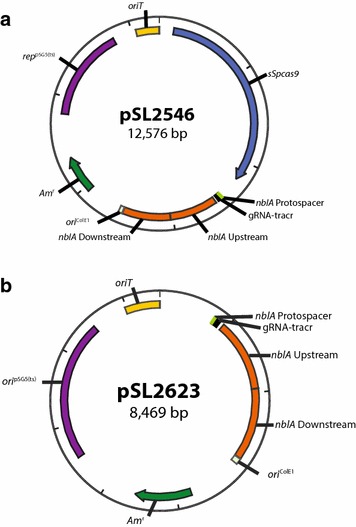
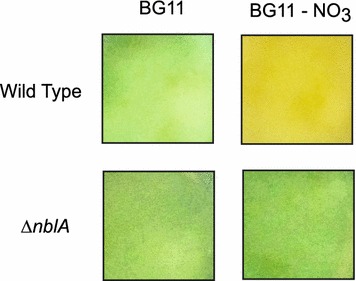
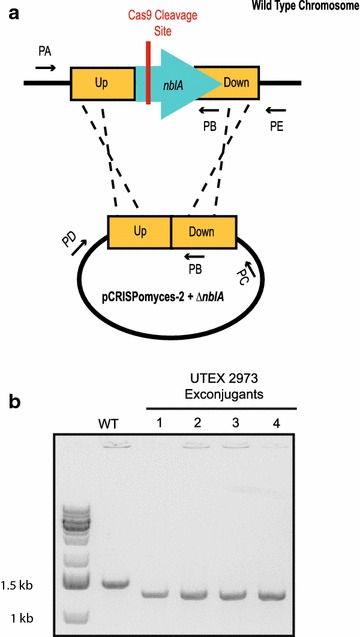
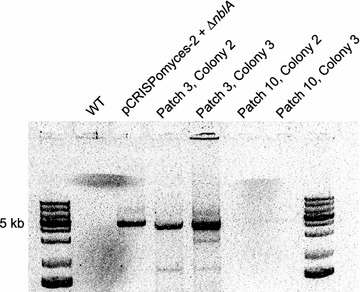
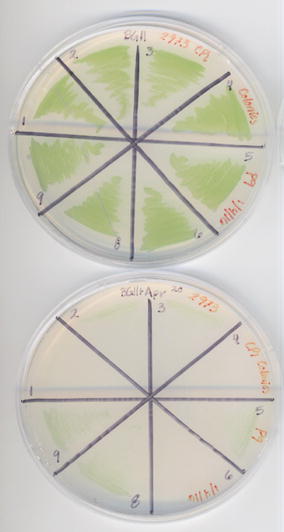
BACKGROUND: As autotrophic prokaryotes, cyanobacteria are ideal chassis organisms for sustainable production of various useful compounds. The newly characterized cyanobacterium Synechococcus elongatus UTEX 2973 is a promising candidate for serving as a microbial cell factory because of its unusually rapid growth rate. Here, we seek to develop a genetic toolkit that enables extensive genomic engineering of Synechococcus 2973 by implementing a CRISPR/Cas9 editing system. We targeted the nblA gene because of its important role in biological response to nitrogen deprivation conditions. RESULTS: First, we determined that the Streptococcus pyogenes Cas9 enzyme is toxic in cyanobacteria, and conjugational transfer of stable, replicating constructs containing the cas9 gene resulted in lethality. However, after switching to a vector that permitted transient expression of the cas9 gene, we achieved markerless editing in 100 % of cyanobacterial exconjugants after the first patch. Moreover, we could readily cure the organisms of antibiotic resistance, resulting in a markerless deletion strain. CONCLUSIONS: High expression levels of the Cas9 protein in Synechococcus 2973 appear to be toxic and result in cell death. However, introduction of a CRISPR/Cas9 genome editing system on a plasmid backbone that leads to transient cas9 expression allowed for efficient markerless genome editing in a wild type genetic background.
Overview
The claims and statistics of this paper haven’t been checked yet.
Run the check — free, no account needed. It reads the open-access text and checks the sources it cites.
Integrity signals
Registry
Cites
Statistics
Figures
Verification
Claims the paper makes
The claims and statistics of this paper haven’t been checked yet.
Run the check — free, no account needed. It reads the open-access text and checks the sources it cites.
Claims other papers make about this one
Each is checked against this paper’s own text: does it say what the citing paper says it does?
The cited source says what the claim attributes to it.
In the citing paper
“Over the past decade, significant progress has been achieved in the development of genetic tools for cyanobacterial metabolic engineering, including improved transformation methods, modular DNA assembly systems, synthetic promoters, and CRISPR-based genome editing technologies [10,16,17].”
From Cyanobacteria as a Photosynthetic Chassis for Metabolic Pathway Engineering with Heterologous Gene Expression (2026) · cites this paper as [17]
Self-check
Percentages, sums and reported differences re-computed from the paper’s own numbers.
The self-check needs the paper’s full text.
Citations
Cites
Multiplex Genome Engineering Using CRISPR/Cas Systems
Cong, L., Ran, F. A., Cox, D., Lin, S., Barretto, R., Habib, N., Hsu, P. D., Wu, X., Jiang, W., Marraffini, L. A., et al. (2013) · Science · doi:10.1126/science.1231143 · Cited by 15,339
Friedberg, E. C., Walker, G. C., Siede, W., Wood, R. D., Schultz, R. A., & Ellenberger, T. (2005) · doi:10.1128/9781555816704 · Cited by 5,683
CRISPR-Cas systems for editing, regulating and targeting genomes
Sander, J. D., & Joung, J. K. (2014) · Nature Biotechnology · doi:10.1038/nbt.2842 · Cited by 3,153
CRISPR RNA Maturation by Trans-Encoded Small RNA and Host Factor RNase III
Deltcheva, E., Chylinski, K., Sharma, C. M., Gonzales, K., Chao, Y., Pirzada, Z. A., Eckert, M. R., Vogel, J., & Charpentier, E. (2011) · Nature · doi:10.1038/nature09886 · Cited by 2,563
CRISPR/Cas, the Immune System of Bacteria and Archaea
Horvath, P., & Barrangou, R. (2010) · Science · doi:10.1126/science.1179555 · Cited by 2,471
RNA-guided editing of bacterial genomes using CRISPR-Cas systems
Jiang, W., Bikard, D., Cox, D., Zhang, F., & Marraffini, L. A. (2013) · Nature Biotechnology · doi:10.1038/nbt.2508 · Cited by 2,429
RNA-guided genetic silencing systems in bacteria and archaea
Wiedenheft, B., Sternberg, S. H., & Doudna, J. A. (2012) · Nature · doi:10.1038/nature10886 · Cited by 1,851
CRISPR-Cas Systems in Bacteria and Archaea: Versatile Small RNAs for Adaptive Defense and Regulation
Bhaya, D., Davison, M., & Barrangou, R. (2011) · Annual Review of Genetics · doi:10.1146/annurev-genet-110410-132430 · Cited by 914
Recombinational Repair of DNA Damage in Escherichia coli and Bacteriophage λ
Kuzminov, A. (1999) · Microbiology and Molecular Biology Reviews · doi:10.1128/mmbr.63.4.751-813.1999 · Cited by 897
Lindberg, P., Park, S., & Melis, A. (2010) · Metabolic Engineering · doi:10.1016/j.ymben.2009.10.001 · Cited by 596
Cited by
Sorted by citations
Calero, P., & Nikel, P. I. (2018) · Microbial Biotechnology · doi:10.1111/1751-7915.13292 · Cited by 331
Cpf1 Is a Versatile Tool for CRISPR Genome Editing Across Diverse Species of Cyanobacteria
Ungerer, J., & Pakrasi, H. B. (2016) · Scientific Reports · doi:10.1038/srep39681 · Cited by 308
Self-citationRecent Developments on Genetic Engineering of Microalgae for Biofuels and Bio‐Based Chemicals
Ng, I., Tan, S., Kao, P., Chang, Y.-K., & Chang, J. (2017) · Biotechnology Journal · doi:10.1002/biot.201600644 · Cited by 257
CRISPR-Cas9 for the genome engineering of cyanobacteria and succinate production
Li, H., Shen, C. R., Huang, C.-H., Sung, L., Wu, M., & Hu, Y. (2016) · Metabolic Engineering · doi:10.1016/j.ymben.2016.09.006 · Cited by 235
New applications of synthetic biology tools for cyanobacterial metabolic engineering
Santos-Merino, M., Singh, A. K., & Ducat, D. C. (2019) · Frontiers in Bioengineering and Biotechnology · doi:10.3389/fbioe.2019.00033 · Cited by 222
Development of a confinable gene drive system in the human disease vector Aedes aegypti
Li, M., Yang, T., Kandul, N. P., Bui, M., Gamez, S., Raban, R. R., Bennett, J. B., C., H. M. S., Lanzaro, G. C., Schmidt, H., et al. (2020) · eLife · doi:10.7554/elife.51701 · Cited by 217
Genetic engineering of microalgae for enhanced biorefinery capabilities
Fayyaz, M., Chew, K. W., Show, P. L., Ling, T. C., Ng, I.-S., & Chang, J.-S. (2020) · Biotechnology Advances · doi:10.1016/j.biotechadv.2020.107554 · Cited by 225
Application of different types of CRISPR/Cas-based systems in bacteria
Liu, Z., Dong, H., Cui, Y., Cong, L., & Zhang, D. (2020) · Microbial Cell Factories · doi:10.1186/s12934-020-01431-z · Cited by 185
Cyanogate: a modular cloning suite for engineering cyanobacteria based on the plant moclo syntax
Vasudevan, R., Gale, G. A. R., Schiavon, A. A., Puzorjov, A., Malin, J., Gillespie, M. D., Vavitsas, K., Zulkower, V., Wang, B., Howe, C. J., et al. (2019) · Plant Physiology · doi:10.1104/pp.18.01401 · Cited by 189
Current status and perspectives of genome editing technology for microalgae
Jeon, S., Lim, J.-M., Lee, H.-G., Shin, S.-E., Kang, N. K., Park, Y.-I., Oh, H.-M., Jeong, W.-J., Jeong, B.-R., & Chang, Y. K. (2017) · Biotechnology for Biofuels · doi:10.1186/s13068-017-0957-z · Cited by 154
CRISPR-Cas9/Cas12a biotechnology and application in bacteria
Yao, R., Liu, D., Jia, X., Zheng, Y., Liu, W. Y., & Xiao, Y. (2018) · Synthetic and Systems Biotechnology · doi:10.1016/j.synbio.2018.09.004 · Cited by 165
CRISPR technologies for bacterial systems: Current achievements and future directions
Choi, K. R., & Lee, S. Y. (2016) · Biotechnology Advances · doi:10.1016/j.biotechadv.2016.08.002 · Cited by 151
Development of a CRISPR/Cas9 genome editing toolbox for Corynebacterium glutamicum
Liu, J., Wang, Y., Lu, Y., Zheng, P., Sun, J., & Ma, Y. (2017) · Microbial Cell Factories · doi:10.1186/s12934-017-0815-5 · Cited by 143
Engineering Halomonas species TD01 for enhanced polyhydroxyalkanoates synthesis via CRISPRi
Wei, T., Lv, L., & Chen, G. (2017) · Microbial Cell Factories · doi:10.1186/s12934-017-0655-3 · Cited by 141
CRISPR-Based Technologies for Metabolic Engineering in Cyanobacteria
Behler, J., Vijay, D., Hess, W. R., & Akhtar, M. K. (2018) · Trends in biotechnology · doi:10.1016/j.tibtech.2018.05.011 · Cited by 143
Microalgae-based biotechnological sequestration of carbon dioxide for net zero emissions
Ma, Z., Cheah, W. Y., Ng, I., Chang, J., Zhao, M., & Show, P. L. (2022) · Trends in biotechnology · doi:10.1016/j.tibtech.2022.09.002 · Cited by 138
Ng, I., Keskin, B. B., & Tan, S. (2020) · Biotechnology Journal · doi:10.1002/biot.201900228 · Cited by 135
CRISPR/Cas-based genome engineering in natural product discovery
Tong, Y., Weber, T., & Lee, S. Y. (2018) · Natural Product Reports · doi:10.1039/c8np00089a · Cited by 131
Development of CRISPR/Cas9 system in Chlorella vulgaris FSP-E to enhance lipid accumulation
Lin, W., & Ng, I. (2019) · Enzyme and Microbial Technology · doi:10.1016/j.enzmictec.2019.109458 · Cited by 123
Niu, T., Lin, G., Xie, L.-R., Wang, Z.-Q., Xing, W., Zhang, J., & Zhang, C. (2018) · ACS Synthetic Biology · doi:10.1021/acssynbio.8b00437 · Cited by 119
Toolboxes for cyanobacteria: recent advances and future direction
Sun, T., Li, S., Song, X., Diao, J., Chen, L., & Zhang, W. (2018) · Biotechnology Advances · doi:10.1016/j.biotechadv.2018.04.007 · Cited by 116
Joyia, M. A. K., Ahmad, M., Chen, Y.-F., Mustaqeem, M., Ali, A., Abbas, A., & Gondal, M. A. (2024) · Energy Conversion and Management · doi:10.1016/j.enconman.2024.119037 · Cited by 119
Li, S., Sun, T., Xu, C., Chen, L., & Zhang, W. (2018) · Metabolic Engineering · doi:10.1016/j.ymben.2018.06.002 · Cited by 108
Engineering cyanobacteria for production of terpenoids
Lin, P.-C., & Pakrasi, H. B. (2018) · Planta · doi:10.1007/s00425-018-3047-y · Cited by 114
Self-citationCyanobacteria as photoautotrophic biofactories of high-value chemicals
Noreña-Caro, D., & Benton, M. G. (2018) · Journal of CO2 Utilization · doi:10.1016/j.jcou.2018.10.008 · Cited by 117
Lin, W., Tan, S., Hsiang, C., Sung, P.-K., & Ng, I. (2019) · Bioresource Technology · doi:10.1016/j.biortech.2019.121932 · Cited by 109
Metabolic Engineering of Oleaginous Yeasts for Production of Fuels and Chemicals
Shi, S., & Zhao, H. (2017) · Frontiers in Microbiology · doi:10.3389/fmicb.2017.02185 · Cited by 107
Self-citationAdvances in metabolic engineering in the microbial production of fuels and chemicals from C1 gas
Humphreys, C. M., & Minton, N. P. (2018) · Current Opinion in Biotechnology · doi:10.1016/j.copbio.2017.12.023 · Cited by 108
Advances and challenges in genetic engineering of microalgae
Fajardo, C., Donato, M. D., Carrasco-Reinado, R., Martı́nez-Rodrı́guez, G., Mancera, J. M., & Fernández‐Acero, F. J. (2019) · Reviews in Aquaculture · doi:10.1111/raq.12322 · Cited by 105
Systems and synthetic biology for the biotechnological application of cyanobacteria
Hagemann, M., & Hess, W. R. (2017) · Current Opinion in Biotechnology · doi:10.1016/j.copbio.2017.07.008 · Cited by 104
Wang, Q., & Coleman, J. J. (2019) · Computational and Structural Biotechnology Journal · doi:10.1016/j.csbj.2019.06.007 · Cited by 103
Zhu, H., & Liang, C. (2019) · Bioinformatics · doi:10.1093/bioinformatics/bty1061 · Cited by 88
Shabestary, K., & Hudson, E. P. (2016) · Metabolic Engineering Communications · doi:10.1016/j.meteno.2016.07.003 · Cited by 90
Editing streptomycete genomes in the CRISPR/Cas9 age
Alberti, F., & Corre, C. (2019) · Natural Product Reports · doi:10.1039/c8np00081f · Cited by 93
Cyanobacteria as Chassis for Industrial Biotechnology: Progress and Prospects
Al‐Haj, L., Lui, Y. T., Abed, R. M. M., Gomaa, M., & Purton, S. (2016) · Life · doi:10.3390/life6040042 · Cited by 96
Comparative Genomics of DNA Recombination and Repair in Cyanobacteria: Biotechnological Implications
Cassier‐Chauvat, C., Veaudor, T., & Chauvat, F. (2016) · Frontiers in Microbiology · doi:10.3389/fmicb.2016.01809 · Cited by 94
Cas9 off-target binding to the promoter of bacterial genes leads to silencing and toxicity
Rostain, W., Grebert, T., Vyhovskyi, D., Pizarro, P. T., Tshinsele-Van Bellingen, G., Cui, L., & Bikard, D. (2023) · Nucleic Acids Research · doi:10.1093/nar/gkad170 · Cited by 85
CRISPR Tools To Control Gene Expression in Bacteria
Vigouroux, A., & Bikard, D. (2020) · Microbiology and Molecular Biology Reviews · doi:10.1128/mmbr.00077-19 · Cited by 84
Recent advances in synthetic biology of cyanobacteria
Sengupta, A., Pakrasi, H. B., & Wangikar, P. P. (2018) · Applied Microbiology and Biotechnology · doi:10.1007/s00253-018-9046-x · Cited by 78
Self-citationApplication of the CRISPR/Cas system for genome editing in microalgae
Zhang, Y., Jiang, J., Shi, T., Sun, X., Zhao, Q., Huang, H., & Ren, L. (2019) · Applied Microbiology and Biotechnology · doi:10.1007/s00253-019-09726-x · Cited by 82
Development and Application of CRISPR/Cas in Microbial Biotechnology
Ding, W., Zhang, Y., & Shi, S. (2020) · Frontiers in Bioengineering and Biotechnology · doi:10.3389/fbioe.2020.00711 · Cited by 81
Solar-to-chemical and solar-to-fuel production from CO2 by metabolically engineered microorganisms
Woo, H. M. (2017) · Current Opinion in Biotechnology · doi:10.1016/j.copbio.2016.11.017 · Cited by 77
Choi, S. Y., & Woo, H. M. (2020) · ACS Synthetic Biology · doi:10.1021/acssynbio.0c00091 · Cited by 75
Metabolic engineering tools in model cyanobacteria
Carroll, A. L., Case, A. E., Zhang, A., & Atsumi, S. (2018) · Metabolic Engineering · doi:10.1016/j.ymben.2018.03.014 · Cited by 76
A CRISPR‐Cpf1‐Assisted Non‐Homologous End Joining Genome Editing System of Mycobacterium smegmatis
Sun, B., Yang, J., Yang, S., Ye, R. D., Chen, D., & Jiang, Y. (2018) · Biotechnology Journal · doi:10.1002/biot.201700588 · Cited by 76
Godbole, V., Pal, M. K., & Gautam, P. (2021) · Algal Research · doi:10.1016/j.algal.2021.102436 · Cited by 77
CRISPR-based metabolic pathway engineering
Zhao, D., Zhu, X., Zhou, H., Sun, N., Wang, T., Bi, C., & Zhang, X. (2020) · Metabolic Engineering · doi:10.1016/j.ymben.2020.10.004 · Cited by 70
Lee, H. J., Lee, J., Lee, S., Um, Y., Kim, Y., Sim, S. J., Choi, J., & Woo, H. M. (2017) · Journal of Agricultural and Food Chemistry · doi:10.1021/acs.jafc.7b03625 · Cited by 69
Progress and challenges in engineering cyanobacteria as chassis for light‐driven biotechnology
Hitchcock, A., Hunter, C. N., & Canniffe, D. P. (2019) · Microbial Biotechnology · doi:10.1111/1751-7915.13526 · Cited by 67
Progress of CRISPR‐Cas Based Genome Editing in Photosynthetic Microbes
Naduthodi, M. I. S., Barbosa, M. J., & John van der, O. O. S. T. (2018) · Biotechnology Journal · doi:10.1002/biot.201700591 · Cited by 64
Biocatalysis in Green and Blue: Cyanobacteria
Jodlbauer, J., Rohr, T., Oliver Spadiut, A., Mihovilovič, M. D., & Rudroff, F. (2021) · Trends in biotechnology · doi:10.1016/j.tibtech.2020.12.009 · Cited by 67
Emerging Species and Genome Editing Tools: Future Prospects in Cyanobacterial Synthetic Biology
Gale, G. A. R., Schiavon Osorio, A. A., Mills, L. A., Wang, B., Lea-Smith, D. J., & McCormick, A. J. (2019) · Microorganisms · doi:10.3390/microorganisms7100409 · Cited by 61
“Synechococcus elongatus UTEX 2973 SpCas9 episomal [58]”
BackgroundInfluentialGenome-Scale Fluxome of Synechococcus elongatus UTEX 2973 Using Transient 13 C-Labeling Data
Hendry, J. I., Gopalakrishnan, S., Ungerer, J. L., Pakrasi, H. B., Tang, Y., & Maranas, C. D. (2018) · PLANT PHYSIOLOGY · doi:10.1104/pp.18.01357 · Cited by 61
Self-citationOptimizing Systems for Cas9 Expression in Toxoplasma gondii
Markus, B. M., Bell, G. W., Lorenzi, H., & Lourido, S. (2019) · mSphere · doi:10.1128/msphere.00386-19 · Cited by 58
A Novel Biocontainment Strategy Makes Bacterial Growth and Survival Dependent on Phosphite
Hirota, R., Abe, K., Katsuura, Z.-I., Noguchi, R., Moribe, S., Motomura, K., Ishida, T., Alexandrov, M., Funabashi, H., Ikeda, T., et al. (2017) · Scientific Reports · doi:10.1038/srep44748 · Cited by 59
Knoot, C. J., Biswas, S., & Pakrasi, H. B. (2019) · ACS Synthetic Biology · doi:10.1021/acssynbio.9b00417 · Cited by 58
Self-citationIdentifying the Metabolic Differences of a Fast-Growth Phenotype in Synechococcus UTEX 2973
Mueller, T. J., Ungerer, J. L., Pakrasi, H. B., & Maranas, C. D. (2017) · Scientific Reports · doi:10.1038/srep41569 · Cited by 58
Self-citationSynthetic Biology Toolkits for Metabolic Engineering of Cyanobacteria
Xia, P., Ling, H., Foo, J. L., & Chang, M. W. (2019) · Biotechnology Journal · doi:10.1002/biot.201800496 · Cited by 57
Carbon-negative synthetic biology: challenges and emerging trends of cyanobacterial technology
Tan, C., Xu, P., & Tao, F. (2022) · Trends in biotechnology · doi:10.1016/j.tibtech.2022.09.012 · Cited by 55
Biology and applications of CRISPR–Cas12 and transposon-associated homologs
Wu, W. Y., Adiego-Pérez, B., & John van der, O. O. S. T. (2024) · Nature Biotechnology · doi:10.1038/s41587-024-02485-9 · Cited by 58
Emerging molecular biology tools and strategies for engineering natural product biosynthesis
Xu, W., Klumbys, E., Ang, E. L., & Zhao, H. (2019) · Metabolic Engineering Communications · doi:10.1016/j.mec.2019.e00108 · Cited by 55
Self-citationSengupta, A., Pritam, P., Jaiswal, D., Bandyopadhyay, A., Pakrasi, H. B., & Wangikar, P. P. (2020) · Metabolites · doi:10.3390/metabo10060250 · Cited by 53
Self-citationRegulatory systems for gene expression control in cyanobacteria
Till, P., Toepel, J., Bühler, B., Mach, R. L., & Mach-Aigner, A. R. (2020) · Applied Microbiology and Biotechnology · doi:10.1007/s00253-019-10344-w · Cited by 54
Feng, S., Xie, X., Liu, J., Li, A., Wang, Q., Guo, D., Li, S., Li, Y., Wang, Z., Guo, T., et al. (2023) · Journal of Nanobiotechnology · doi:10.1186/s12951-023-02139-z · Cited by 59
The primary transcriptome of the fast-growing cyanobacterium Synechococcus elongatus UTEX 2973
Tan, X., Hou, S., Song, K., Georg, J., Klähn, S., Lü, X., & Hess, W. R. (2018) · Biotechnology for Biofuels · doi:10.1186/s13068-018-1215-8 · Cited by 52
Targeted Nucleotide Editing Technologies for Microbial Metabolic Engineering
Arazoe, T., Kondo, A., & Nishida, K. (2018) · Biotechnology Journal · doi:10.1002/biot.201700596 · Cited by 54
Recent Progress and Challenges in CRISPR-Cas9 Engineered Algae and Cyanobacteria
Patel, V. K., Das, A., Kumari, R., & Kajla, S. (2023) · Algal Research · doi:10.1016/j.algal.2023.103068 · Cited by 50
Current Metabolic Engineering Strategies for Photosynthetic Bioproduction in Cyanobacteria
Satta, A., Esquirol, L., & Ebert, B. E. (2023) · Microorganisms · doi:10.3390/microorganisms11020455 · Cited by 51
The Synthetic Biology Toolkit for Photosynthetic Microorganisms
Vavitsas, K., Crozet, P., Vinde, M. H., Davies, F. K., Lemaire, S. D., & Vickers, C. E. (2019) · PLANT PHYSIOLOGY · doi:10.1104/pp.19.00345 · Cited by 57
Recent advances in synthetic biology of cyanobacteria for improved chemicals production
Wang, F., Gao, Y., & Yang, G. (2020) · Bioengineered · doi:10.1080/21655979.2020.1837458 · Cited by 49
Recent advances of Cas12a applications in bacteria
Meliawati, M., Schilling, C., & Schmid, J. (2021) · Applied Microbiology and Biotechnology · doi:10.1007/s00253-021-11243-9 · Cited by 51
Lee, T., Lin, J., Tsai, T.-H., Yang, R., & Ng, I. (2022) · Bioresource Technology · doi:10.1016/j.biortech.2022.128350 · Cited by 50
Efficient Cas9-based genome editing of Rhodobacter sphaeroides for metabolic engineering
Mougiakos, I., Orsi, E., Ghiffary, M. R., Post, W. B., Maria, A. D., Adiego-Pérez, B., Kengen, S. W. M., Weusthuis, R. A., & John van der, O. O. S. T. (2019) · Microbial Cell Factories · doi:10.1186/s12934-019-1255-1 · Cited by 44
Cui, J., Sun, H., Chen, R., Sun, J., Mo, G., Luan, G., & Lü, X. (2023) · Green Carbon · doi:10.1016/j.greenca.2023.11.004 · Cited by 48
Cui, J., Sun, T., Li, S., Xie, Y., Song, X., Wang, F., Chen, L., & Zhang, W. (2020) · Frontiers in Bioengineering and Biotechnology · doi:10.3389/fbioe.2020.00500 · Cited by 46
Engineering salt tolerance of photosynthetic cyanobacteria for seawater utilization
Cui, J., Sun, T., Chen, L., & Zhang, W. (2020) · Biotechnology Advances · doi:10.1016/j.biotechadv.2020.107578 · Cited by 48
Photosynthetic CO2 Conversion to Fatty Acid Ethyl Esters (FAEEs) Using Engineered Cyanobacteria
Lee, H. J., Choi, J., Lee, S., Um, Y., Sim, S. J., Kim, Y., & Woo, H. M. (2017) · Journal of Agricultural and Food Chemistry · doi:10.1021/acs.jafc.7b00002 · Cited by 46
Pattharaprachayakul, N., Lee, M., Incharoensakdi, A., & Woo, H. M. (2020) · Enzyme and Microbial Technology · doi:10.1016/j.enzmictec.2020.109619 · Cited by 43
A Cloning-Free Method for CRISPR/Cas9-Mediated Genome Editing in Fission Yeast
Zhang, X., He, J.-B., Wang, Y.-Z., & Du, L. (2018) · G3 Genes Genomes Genetics · doi:10.1534/g3.118.200164 · Cited by 43
SEVA-Cpf1, a CRISPR-Cas12a vector for genome editing in cyanobacteria
Baldanta, S., Guevara, G., & Navarro-Llorens, J. M. (2022) · Microbial Cell Factories · doi:10.1186/s12934-022-01830-4 · Cited by 42
Ajeng, A. A., Rosli, N. S. M., Abdullah, R., Yaacob, J. S., Qi, N. C., & Loke, S. P. (2022) · Journal of Biotechnology · doi:10.1016/j.jbiotec.2022.10.011 · Cited by 40
Regulatory Tools for Controlling Gene Expression in Cyanobacteria
Gordon, G. C., & Pfleger, B. F. (2018) · Advances in experimental medicine and biology · doi:10.1007/978-981-13-0854-3_12 · Cited by 42
Muthukrishnan, L. (2022) · Journal of Basic Microbiology · doi:10.1002/jobm.202100417 · Cited by 41
Liu, D., Johnson, V. M., & Pakrasi, H. B. (2020) · ACS Synthetic Biology · doi:10.1021/acssynbio.0c00106 · Cited by 38
Self-citationDoing synthetic biology with photosynthetic microorganisms
Vavitsas, K., Kugler, A., Satta, A., Hatzinikolaou, D. G., Lindblad, P. C., Fewer, D. P., Lindberg, P., Toivari, M. H., & Stensjö, K. (2021) · Physiologia Plantarum · doi:10.1111/ppl.13455 · Cited by 41
Natural transformation of the filamentous cyanobacterium Phormidium lacuna
Nies, F., Mielke, M., Pochert, J., & Lamparter, T. (2020) · PLoS ONE · doi:10.1371/journal.pone.0234440 · Cited by 38
CRISPR‐Enabled Tools for Engineering Microbial Genomes and Phenotypes
Tarasava, K., Oh, E. J., Eckert, C. A., & Gill, R. T. (2018) · Biotechnology Journal · doi:10.1002/biot.201700586 · Cited by 37
Characterization of Cas proteins for CRISPR‐Cas editing in streptomycetes
Yeo, W. L., Heng, E., Tan, L. L., Lim, Y. W., Lim, Y. H., Hoon, S. S., Zhao, H., Zhang, M. M., & Wong, F. T. (2019) · Biotechnology and Bioengineering · doi:10.1002/bit.27021 · Cited by 36
Self-citationDeveloping a Cas9‐based tool to engineer native plasmids in Synechocystis sp. PCC 6803
Xiao, Y., Wang, S., Rommelfanger, S. R., Balassy, A., Barba‐Ostria, C., Gu, P., Galazka, J. M., & Zhang, F. (2018) · Biotechnology and Bioengineering · doi:10.1002/bit.26747 · Cited by 36
Khan, A. Z., Bilal, M., Mehmood, S., Sharma, A. K., & Iqbal, H. M. N. (2019) · Life · doi:10.3390/life9030054 · Cited by 40
Verma, S., Thapa, S., Siddiqui, N. M., & Chakdar, H. (2022) · World Journal of Microbiology and Biotechnology · doi:10.1007/s11274-022-03285-6 · Cited by 38
Cengic, I., Cañadas, I. C., Minton, N. P., & Hudson, E. P. (2022) · ACS Synthetic Biology · doi:10.1021/acssynbio.2c00375 · Cited by 33
Czajka, J. J., Wang, Q., Wang, Y., & Tang, Y. (2017) · Applied Microbiology and Biotechnology · doi:10.1007/s00253-017-8489-9 · Cited by 35
Engineered Production of Hapalindole Alkaloids in the Cyanobacterium Synechococcus sp. UTEX 2973
Knoot, C. J., Khatri, Y., Hohlman, R. M., Sherman, D. H., & Pakrasi, H. B. (2019) · ACS Synthetic Biology · doi:10.1021/acssynbio.9b00229 · Cited by 37
Self-citationHeterologous production of cyanobacterial compounds
Dhakal, D., Chen, M., Luesch, H., & Ding, Y. (2021) · Journal of Industrial Microbiology and Biotechnology · doi:10.1093/jimb/kuab003 · Cited by 33
Krumbach, K., Sonntag, C. K., Eggeling, L., & Marienhagen, J. (2019) · ACS Synthetic Biology · doi:10.1021/acssynbio.9b00361 · Cited by 33
Synthetic Biology Toolbox for Nitrogen-Fixing Soil Microbes
Venkataraman, M., Yñigez‐Gutierrez, A. E., Infante, V., MacIntyre, A. M., Fernandes‐Júnior, P. I., Ané, J., & Pfleger, B. F. (2023) · ACS Synthetic Biology · doi:10.1021/acssynbio.3c00414 · Cited by 33
Knoot, C. J., & Pakrasi, H. B. (2019) · Scientific Reports · doi:10.1038/s41598-018-38124-y · Cited by 33
Self-citationAdvancing the design and delivery of CRISPR antimicrobials
Fagen, J. R., Collias, D., Singh, A. K., & Beisel, C. L. (2017) · Current Opinion in Biomedical Engineering · doi:10.1016/j.cobme.2017.10.001 · Cited by 32
Base editing for reprogramming cyanobacterium Synechococcus elongatus
Wang, S.-Y., Li, X., Wang, S.-G., & Xia, P.-F. (2023) · Metabolic Engineering · doi:10.1016/j.ymben.2022.11.005 · Cited by 31
Metadata
- Authors
- Wendt, K. E., Ungerer, J., Cobb, R. E., Zhao, H., & Pakrasi, H. B.
- Affiliations
- Washington University in St. Louis (US)
- University of Illinois Urbana-Champaign (US)
- Corresponding author
- Pakrasi, Himadri B.
- Venue
- Microbial Cell Factories
- Published
- 2016-06-23
- Volume
- 15
- Issue
- 1
- Pages
- 115-115
- ISSN
- 1475-2859 (ISSN-L)
- PMC
- PMC4917971
- OpenAlex
- W2470889463
- Cited by
- 232
- References
- 38
- Citations by year
- 2026: 15 · 2025: 15 · 2024: 24 · 2023: 17 · 2022: 29 · 2021: 23 · 2020: 22 · 2019: 34 · 2018: 31 · 2017: 16 · 2016: 6
- FWCI
- 15.07
- Type
- journal article
- Language
- en
- Open access
- gold
- doi.org
- Locations
- Microbial Cell Factories (publishedVersion, cc-by)
- Europe PMC (PubMed Central) (publishedVersion, cc-by)
- PubMed Central (publishedVersion, cc-by)
- PubMed (publishedVersion)
- OSTI OAI (U.S. Department of Energy Office of Scientific and Technical Information) (submittedVersion)
- Funders
- Office of Science
- National Institute of General Medical Sciences (GM077596)
- Topics
- Life Sciences › Biochemistry, Genetics and Molecular Biology › Molecular Biology › CRISPR and Genetic Engineering
- Life Sciences › Biochemistry, Genetics and Molecular Biology › Molecular Biology › Microbial Metabolic Engineering and Bioproduction
- Life Sciences › Biochemistry, Genetics and Molecular Biology › Genetics › Bacterial Genetics and Biotechnology
- Keywords
- CRISPR/Cas9, cyanobacteria, genome editing, conjugative transfer
- MeSH terms
- Endonucleases, Genetic Techniques, Mutagenesis, Synechococcus, Clustered Regularly Interspaced Short Palindromic Repeats
About these checks
Registry, retraction, Cites and statistics results are computed, not judged, with one exception: a printed reference that no index lists is read once by a model before it counts as a citation error. Claims are extracted by a model and kept only when their quote appears verbatim in the text; each cited source is then checked, with a model’s help, for whether it says what the claim relies on. Those verdicts can be wrong — read the claim’s quote and the cited source before relying on one.
Statistics and arithmetic are recomputed, not judged.
Confidence bands are shown only for fields calibrated on our annotated test set. None is calibrated yet, so no band is shown.
What counts as a claim ›How we measure confidence ›How we check this ›
Are you an author, or do you see a problem with this page? Request a review
